пятница, 7 июля 2023 г.

OHCHR ‘very concerned’ over militarization of public security in Honduras


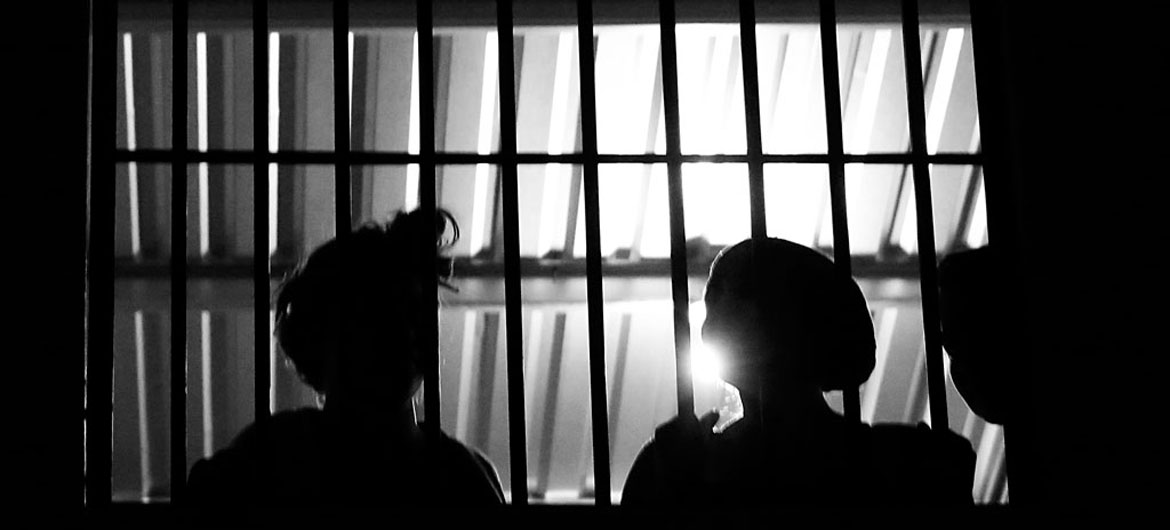
View of a prison in Honduras.
UN Photo/Evan Schneider
 
View of a prison in Honduras.
7 July 2023
Human Rights

The UN human rights office (OHCHR) has urged authorities in Honduras to reinforce the “internal and external oversight of military operations” in the country, following the extending of a national state of emergency. 

OHCHR Spokesperson Marta Hurtado told journalists in Geneva that the Government had issued a 45-day extension on Wednesday. 

“The state of emergency, in force in 17 of the 18 departments in Honduras, enables the military police to support the national police in carrying out public security tasks. It also derogates the right of personal liberty, freedom of association, assembly, and movement, and allows security and armed forces to carry out arrests and searches without a warrant,” she said.

Military operations   

The Spokesperson said that on 21 June, the authorities announced that the command and control of the entire Honduran prison system was being transferred to the military police. 

“This decision came in the wake of a violent incident at the national women’s prison in the town of Tamara, where 46 female inmates were killed when members of one gang attacked a part of the prison housing members of a rival gang,” said Ms. Hurtado. 

Rights violations

She also voiced concerns about human rights violations and adequate access to food, water, and the practice of subjecting inmates to sleep deprivation. Ms. Hurtado also reported ill treatment of inmates by the military police. 

“Initial monitoring by our Office, as well as information from civil society organizations and other sources with regard to military operations in prisons, indicates that inmates, in particular those allegedly associated with gangs, have been beaten and kicked by military police,” she said. 

Tweet URL

Criminal justice challenges 

She called on authorities to end the abuse, halt violence against inmates, and prevent further violations of human rights. She also called for accountability and prompt investigation of allegations of unnecessary or disproportionate use of force. 

“Efforts should immediately be redoubled to address long-standing criminal justice and prison challenges. These include the extensive use of incarceration, overcrowding, unsuitable living conditions, the lack of basic services, and inmates controlling some prisons,” Ms. Hurtado said.

“All efforts to address the prison challenge should be based on international human rights law and standards, including the UN Standard Minimum Rules for the Treatment of Prisoners (known as the Nelson Mandela Rules),” she said, empasizing that OHCHR in Honduras remains available to provide technical assistance.

https://news.un.org/en/story/2023/07/1138452


https://creativecommons.org/licenses/by/3.0/legalcode

UN relief chief calls for continued support for Syria and other crisis regions

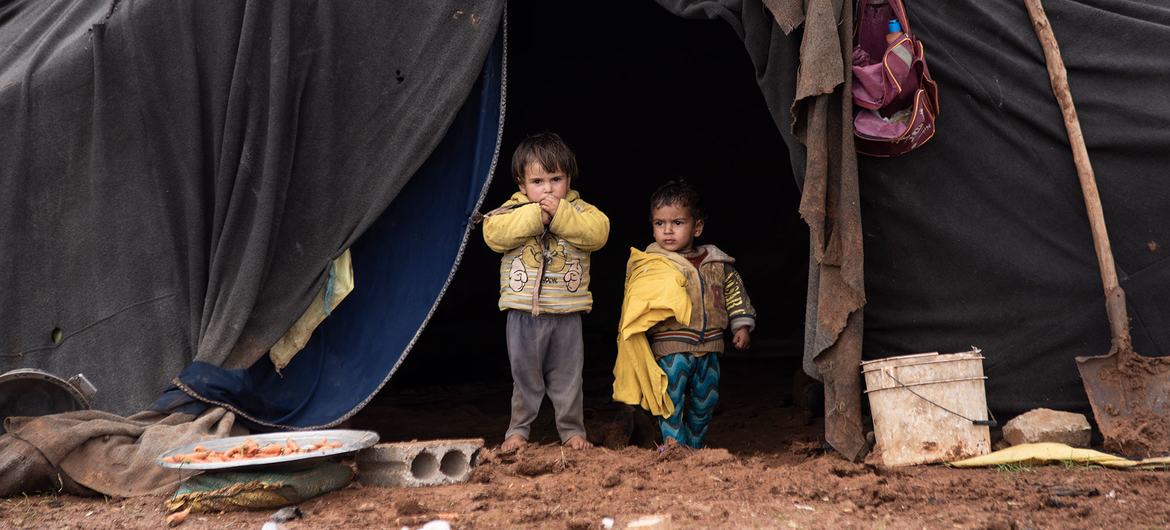
Displaced children stand in front of their family's tent in an informal camp in southern Syria.
© UNICEF/Hasan Belal
 
Displaced children stand in front of their family's tent in an informal camp in southern Syria.
7 July 2023
Humanitarian Aid

In a wide-ranging briefing on Friday, UN Humanitarian Coordinator Martin Griffiths highlighted the need to keep aid flowing into northwest Syria and to allow Ukrainian and Russian grain exports to reach global markets amid the ongoing war.  

The “relief chief” was speaking to journalists at UN Headquarters in New York just as these two separate lifesaving initiatives are set to expire in the coming days.

He also voiced concern over gender-based violence in countries such as the Democratic Republic of the Congo (DRC) and noted lack of hope over the crisis in Sudan.

Syria cross-border renewal

The northwest region is the last opposition stronghold in Syria, and aid has been delivered there from Türkiye through a cross-border mechanism first authorized by the UN Security Council in 2014. He said negotiations on its extension are at a critical juncture.

"We're three days away, I think, from the decision point for renewal of that resolution, which we are all very clear about,” he said.

Tweet URL

Mr. Griffiths also underscored the need to ensure increased humanitarian support for Syria, where a staggering 90 per cent of the population is living below the poverty line after more than a decade of war.

Severe funding shortfall

A $5.4 billion plan for aid operations this year is only 12 per cent funded, he added, and the fallout could include the World Food Programme (WFP) being forced to cut rations by 40 per cent.

“The big story for me on Syria, among many, many other aspects of the tragedy of that conflict, is this absence of sufficient aid,” he said.

Mr. Griffiths also touched on the Black Sea Grain Initiative, part of landmark UN-brokered accords signed last July with Russia, Ukraine, and Türkiye.  

Grain deal running out

The deal has facilitated the export of millions of tonnes of Ukrainian grain and foodstuffs and aims to ensure the same for Russian food and fertilizer. It is due to expire mid-month and Moscow has repeatedly said it sees no reason to continue participating.  

In a statement on Friday, UN Secretary-General António Guterres reiterated the importance of “full and continued implementation of the agreements”.

“The world has seen the value of the Black Sea initiative,” said Mr. Griffiths, responding to a journalist’s question. “So, this isn't something you chuck away.”

‘No hope’ in Sudan

Mr. Griffiths will travel to Ethiopia this weekend to participate in a meeting on Sudan, where fighting between rival military forces has displaced nearly three million people since mid-April.

“Sudan is a story that has not got any better in the last weeks at all,” he said, noting that access to the Darfur region “remains virtually nil”.

Although authorities in neighbouring Chad have been helpful in getting humanitarians into West Darfur, the security situation there remains extraordinarily dangerous, he said. Moving aid from Port Sudan on the Red Sea coast has also been challenging.

“Sudan is, from my perspective, a place of no hope at the moment and a place where there is only everything to do,” he said, referring to the need to mobilize funding and to ensure cross-border access from Egypt, Chad, and Ethiopia, as well as within the country.

Mr. Griffiths highlighted the critical role of civil society partners in delivering aid in Sudan, who “risk life and limb daily to help their local communities and their neighbourhoods”.

Gender-based violence

The humanitarian chief also addressed gender-based violence in the DRC, describing it as among the “terrible, terrible tragedies” in the country. He warned that there could be “an extraordinary” 125,000 cases this year if the current rate of incidence continues.

“We need to shine a light on this issue because it's not just the DRC,” he said. “The Secretary-General spoke about it in the context of Haiti. It's also in Sudan. But, the DRC for me epitomizes the appalling nature of man's inhumanity, mostly to women and girls.”

Climate change challenge

Turning to climate change, Mr. Griffiths pointed to the unprecedented drought in the Horn of Africa following six consecutive failed rainy seasons. Humanitarian response also continues in the wake of the earthquakes in Syria and Türkiye in February, and historic flooding in Pakistan last year.

He said humanitarians have stepped up their engagement in relation to UN climate change conferences, known as COPs, the latest of which will be held in the United Arab Emirates this November.

“Our emphasis…going into COP will be to try to maximize the use of climate funds for frontline communities around the world which are directly impacted by climate. So, it's about adaptation and resilience,” he said.


https://news.un.org/en/story/2023/07/1138462


https://creativecommons.org/licenses/by/3.0/legalcode

Iran nuclear deal: Despite differences, still ‘best available option’, Security Council hears

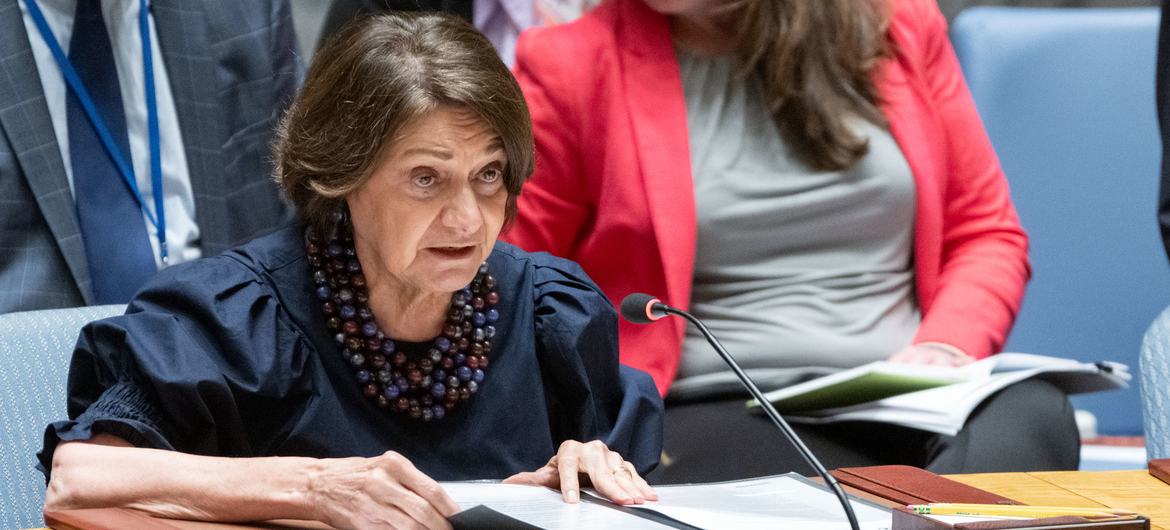
Rosemary DiCarlo, Under-Secretary-General for Political and Peacebuilding Affairs, briefs the Security Council meeting on non-proliferation.
UN Photo/Eskinder Debebe
 
Rosemary DiCarlo, Under-Secretary-General for Political and Peacebuilding Affairs, briefs the Security Council meeting on non-proliferation.


6 July 2023
Peace and Security

The international deal over Iran’s nuclear programme known as the Joint Comprehensive Plan of Action (JCPOA) has stalled, with the country’s enriched uranium stockpile now more than 20 times over the agreed limit, the UN political affairs chief Rosemary DiCarlo warned on Thursday. 

Briefing the Security Council on the state of the JCPOA, Ms. DiCarlo set the tone for the discussion by stating, “diplomacy is the only way to effectively address the Iranian nuclear issue.”

The 2015 deal sets out rules for monitoring Iran’s nuclear programme and paves the way for the lifting of UN sanctions. It was agreed by Iran, the five permanent members of the Security Council (China, France, Russia, the United Kingdom, the United States), plus Germany, together with the European Union.

The US left the deal in 2018 under former President Donald Trump and has been negotiating its return, so far without any agreement being reached.

The Under-Secretary-General for Political and Peacebuilding Affairs regretted that negotiations to restore the Plan remain stalled even though all participants, including the US, have reaffirmed that “a return to the full and effective implementation of the Plan” was the only viable option.

Devised and endorsed by the Security Council resolution 2231, the Plan offers a solution where Iran’s nuclear facilities are used only for peaceful purposes. In return, sanctions are to be lifted, bringing “tangible economic benefits for the Iranian people”, Ms. DiCarlo said. 

She reiterated the Secretary-General’s appeal to the US to lift or waive its sanctions and to extend waivers regarding the trade in oil with Iran. She also repeated the UN chief’s call on Iran to “reverse the steps it has taken that are not consistent with its nuclear-related commitments under the Plan”.

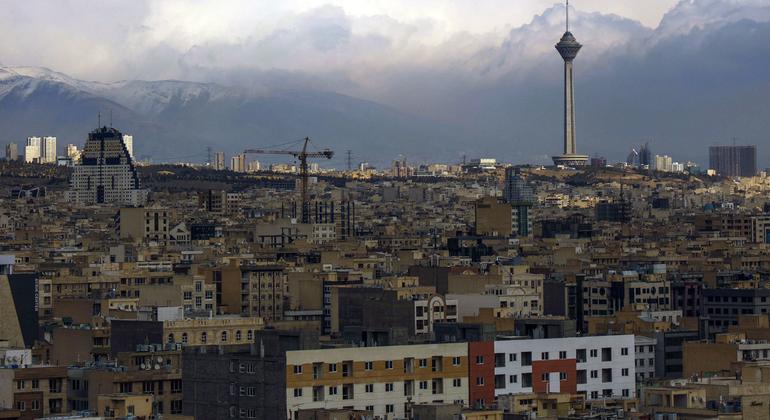
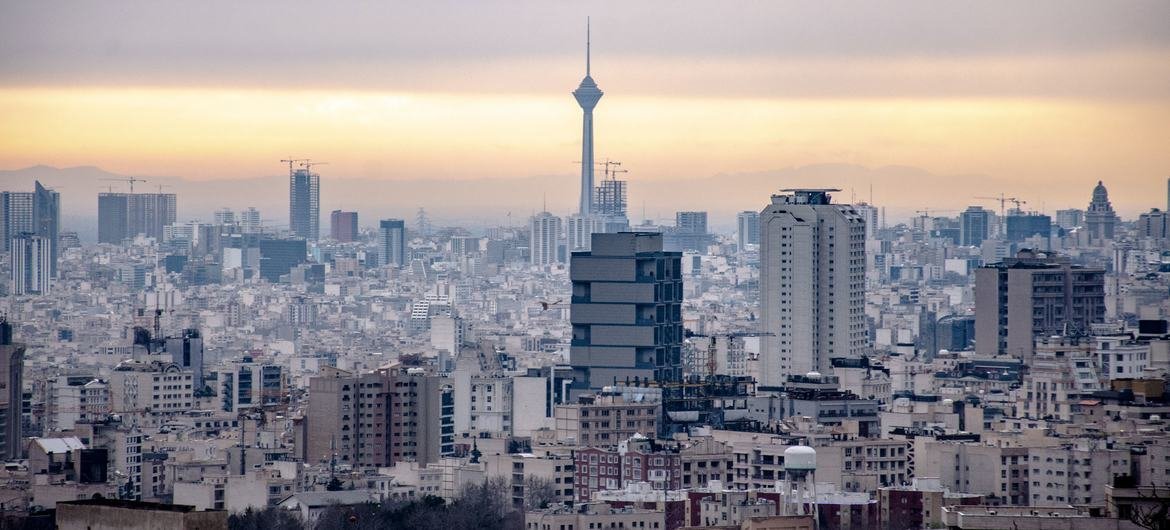
A view of a neighborhood in Tehran, Iran. Among other things, the JCPOA envisages lifting of sanctions, bringing “tangible economic benefits for the Iranian people”.
Unsplash/Anita Filabi
View of Tehran, Iran's capital. Among other things, the JCPOA envisages lifting of sanctions, bringing “tangible economic benefits for the Iranian people”. 

IAEA safeguards

She said following a “welcome” joint statement by the International Atomic Energy Agency (IAEA) and Iran in March, surveillance cameras were installed at workshops where centrifuge parts are manufactured.

The UN-backed nuclear watchdog also reported in May that it had no further concerns regarding the presence of highly enriched uranium, which had been detected at one location.

However, the UN is alarmed that the agency remains unable to verify the stockpile of enriched uranium in the country. Citing the IAEA estimates, Ms. DiCarlo said Iran now has a total enriched uranium stockpile of more than 20 times the allowable amount under the JCPOA. This includes increased quantities of uranium enriched to 20 per cent and 60 per cent. 

Divergent views

Addressing the deal’s ballistic missile-related provisions, she referred to the information received from France, Germany, Iran, Israel, Russia, and the UK about Iran's test flight of a space launch vehicle in March, as well as its testing and unveiling of two new ballistic missiles in May and June. 

“The letters received from Member States continue to reflect the divergent views as to whether this launch and missile developments are inconsistent with the resolution,” Ms. DiCarlo told ambassadors.

She also detailed information received on ballistic missile parts seized by the British Royal Navy in February in international waters in the Gulf of Iran.

While France, Germany, and the UK believe that some were controlled items originating from Iran and transferred contrary to resolution 2231, Iran and Russia said there was no evidence linking the intercepted vessel and its cargo to Tehran and no clear indication that the seized components were of Iranian origin. 

Alleged transfers to Russia, Yemen 

Ms. DiCarlo next detailed letters received from Member States concerning alleged transfers of drones or unmanned aerial vehicles (UAVs) from Iran to Russia, for use on the battlefield in Ukraine, in a manner inconsistent with paragraph 4 of annex B. 

She said their assessment had been determined by comparing debris from other such attacks in the Middle East and publicly available imagery of Iranian UAVs.

They have invited the UN Secretariat to examine debris now stored in Kyiv and elsewhere to make a determination.

Iran and Russia have disputed the imagery of the UAVs, “noting that the accusations were not substantiated by evidence”, said the political affairs chief.

Assuring that the UN “continues to examine the available information”, she added that the Government of Yemen has also invited the UN to examine debris from a cruise missile used in an attack by Houthi rebels on the Al-Dhaaba oil terminal last November.

‘Best available option’

Despite the strongly opposing views aired in the Council from States involved in the JCPOA, Ms. DiCarlo said it remained “the best available option for ensuring the exclusively peaceful nature of Iran’s nuclear programme, as well as for allowing Iran to reach its full economic potential”. 


 https://news.un.org/en/story/2023/07/1138432

https://creativecommons.org/licenses/by/3.0/legalcode

четверг, 6 июля 2023 г.

Myanmar atrocities and impunity must end: Türk


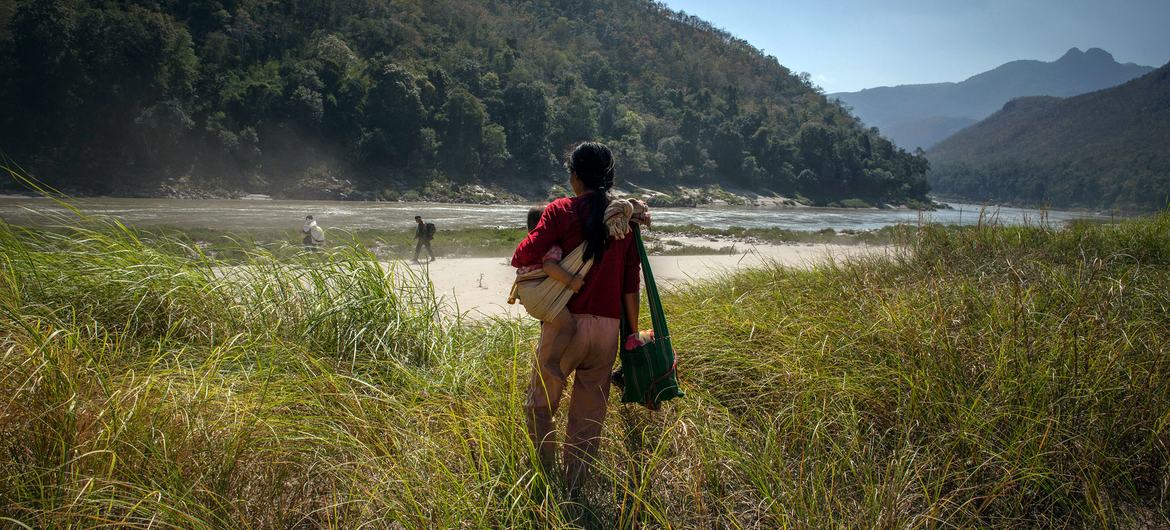
Maw Pray Myar holds her one-year-old daughter as she flees to safety towards the border with Thailand during a one week journey by foot in January 2022, in Kayah (Karenni) state, eastern Myanmar.
© UNOCHA/Siegfried Modola

 
Maw Pray Myar holds her one-year-old daughter as she flees to safety towards the border with Thailand during a one week journey by foot in January 2022, in Kayah (Karenni) state, eastern Myanmar.
6 July 2023

Human Rights

The Myanmar regime’s brutal violence against civilians and its denial of life-saving humanitarian aid reflect “utter contempt for humanity”, UN rights chief Volker Türk told the Human Rights Council on Thursday.

Repeated, horrific violations have been recorded by the UN human rights office, including mass killings, extra-judicial executions, and beheadings, Mr. Türk said, while the military has continued to carry out atrocities in Rakhine state, where the Rohingya minority are denied citizenship.

In an address to the Council, he called for an end to impunity by the ruling junta who overthrew the democratically elected Government in February 2021.

“I encourage States to consider a referral of the situation in Myanmar to the International Criminal Court (ICC). We also need to ensure accountability for possible crimes committed by different armed groups.”

‘Deadly freefall’

The High Commissioner said the country was continuing a “deadly freefall into even deeper violence and heartbreak”.

Tweet URL

Where once there had been optimism and hopes of a more peaceful and prosperous future, civilians were now living “at the whim of a reckless military authority that relies on systematic control tactics, fear and terror”.

He said the economy was spiralling, with the generals exploiting natural resources there “at dangerous rates, causing irreversible environmental harm”.

Voices of civil society and journalists have been strangled, while arbitrary arrests, enforced disappearances, and torture continue.

He said credible sources indicate that 3,747 people have died at the hands of the regime since taking power, with close to 24,000 arrested.

Barriers to life-saving aid

Mr. Türk’s report focuses on the systematic denial of life-saving aid for civilians, and he accused the military of putting in place “a raft of legal, financial and bureaucratic barriers”.

With a third of the population in need, he said the obstruction constituted a deliberate, targeted, and calculated denial of fundamental human rights.

He repeated his call for an immediate end to the “senseless violence” and for the release of over 19,000 political prisoners detained, including the State Counsellor Aung San Suu Kyi and President Win Mynt.

Toll on children immense: rights expert

The Special Rapporteur on Myanmar, Thomas Andrews, also advocated before the Council, calling for less rhetoric and more action by UN Member States to support the “heroic” people of Myanmar, and asking them to “deny the junta the three things that it needs to sustain its brutality and oppression: weapons, money, and legitimacy”.

More than 800 children have been killed or maimed since the coup began up to the end of 2022, he said, and most were victims of indiscriminate attacks by junta forces.

Speaking later at a press conference in Geneva, the UN-appointed independent expert said in addition to those killed, 3,087 children are behind bars as political prisoners.

“660,000 children are now displaced in Myanmar and 5.8 million children require humanitarian assistance. This is a disaster on top of a disaster, and it has the most profound impact on those that are most vulnerable, and that is the children of Myanmar.”

In a recent report, the Special Rapporteur detailed how the junta had imported more than $1 billion in weapons and related materials since the military coup, with the full knowledge that these arms could be used to kill thousands of innocent people and to commit probable war crimes and crimes against humanity.


 https://news.un.org/en/story/2023/07/1138402

https://creativecommons.org/licenses/by/3.0/legalcode

среда, 5 июля 2023 г.

Iran: Executions and detentions in spotlight at Human Rights Council


A view of Tehran, Iran's capital city.
© Unsplash/Hosein Charbaghi
 
A view of Tehran, Iran's capital city.
5 July 2023
Human Rights

Iran faced calls on Wednesday from top UN-appointed rights investigators to halt the executions of people sentenced to death in connection with anti-Government demonstrations that have continued since the death in custody of Mahsa Amini last September.

“We have expressed concerns” over the investigation into her death, said Viviana Krsticevic, a member of the Fact-Finding Mission on Iran, speaking at a press conference in Geneva: “in particular over the fact that today her family's right to truth and justice remains unfulfilled”. 

She added that the investigations had “fallen short of international human rights norms, and, moreover, efforts to shed light on the circumstances of her death have been hindered.”

Earlier, the Fact-Finding Mission told the Human Rights Council’s 47 Member States that the overall human rights situation in Iran risked deteriorating further amid reports that new legislation is being considered, that proposes harsher punishments on women and girls not wearing their veil according to strict rules.

The death of 22-year-old Ms. Amini after her arrest by Iran’s so-called morality police sparked mass protests across the country – and condemnation from independent UN human rights experts, who called her a victim of “Iran’s sustained repression and systematic discrimination against women”.

Tweet URL

‘Forced veiling’

“We have identified major risks of further erosion of women's and girls’ rights in Iran”, said Ms. Krsticevic. “We have expressed concern about the continuous repression of women and girls opposing forced veiling and their reported use of facial recognition technologies to identify and arrest them.” 

The rights expert also pointed to information indicating students were being suspended from classes, “or banned from dormitories for their defiance of the compulsory veiling law”.

Echoing concerns about the proposed use of flogging for those defying compulsory veiling rules, Sara Hossein, Chair of the Fact-Finding Mission, said some of the penalties were “clearly what would constitute inhuman punishment under international law”. 

The Fact-Finding Mission – established by the Human Rights Council in November 2022 - is also investigating whether alleged poisonings of girls in schools have been orchestrated as a way to punish or deter girls for their involvement in the protests.

“Just two months after the protests occurred, a series of alleged poisonings started in dozens of schools in 28 provinces”, said Ms. Krsticevic. “Reports said this may have been may have been orchestrated to punish girls or to turn them from involvement in the protests and are being duly investigated in the framework of our mandate.”

Ten months after Ms. Amini’s death, no official data has been made publicly available regarding those arrested, detained, charged or convicted in connection with the protests, the experts said.

But reports continue to emerge of arrests and detentions, including women and girls defying the country’s forced veiling law and of family members being harassed.

“The aftermath of those protests in the form of intimidation of families and of reprisals continue unabated,” said Shaheen Sardar Ali, member of the Fact-Finding Mission.

She added that according to the Iranian authorities, 22,000 people had been pardoned in connection with the protests.

“This suggests that many more were detained or charged. Unfortunately, no disaggregated data exists on the nature of the accusations against these people or on those convicted, still detained or charged for their involvement in the protests.”

Those involved in the protests reportedly continue to suffer harsh punishments, including for exercising rights protected under international human rights law, the experts said.

This is despite concerns over a lack transparency in legal proceedings and failure to meet basic fair trial and due process guarantees under international human rights law.

Death penalty surge

“Since November 2022, at least 26 individuals have reportedly been sentenced to death in connection with the protests and dozens more have been charged with offences carrying the death penalty,” said Ms. Sardar Ali. 

“Seven men have already been executed following these proceedings marred by serious allegations of fair trial violations, including confessions extracted under torture.”

To date, the Fact-Finding Mission has sent seven letters to the Iranian Government, including repeated requests for a visit to the country to gather information critical to its investigations, which have yet to be answered.

The experts met the lead Iranian officials on Tuesday, who have been appointed to the Government’s Special Committee investigating the protests.

The Fact-Finding Mission is preparing a comprehensive report on its findings to the Human Rights Council for its 55th session in March 2024.

Replying in the Council on Wednesday, Iran refuted the allegations made in the report of a disproportionate response by security forces to the protests.

 https://news.un.org/en/story/2023/07/1138377
https://creativecommons.org/licenses/by/3.0/legalcode

At Caribbean Summit, UN chief calls for climate action, debt relief, and urgent aid for Haiti


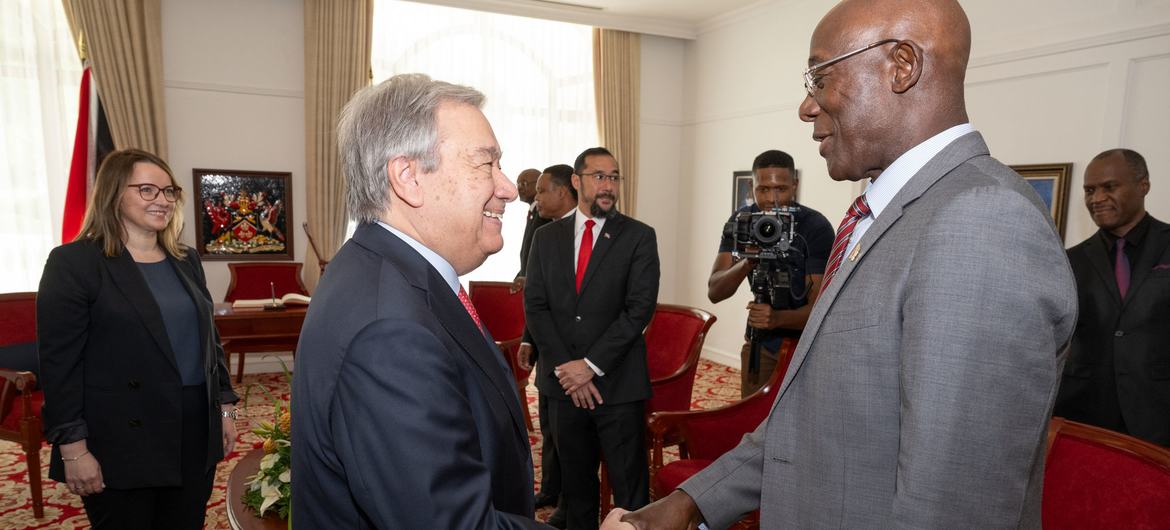
Secretary-General António Guterres (left) is greeted by Prime Minister Keith Rowley of Trinidad and Tobago where he came to address the 45th meeting of the Conference of the Heads of Government of the Caribbean Community (CARICOM).
UN Photo/Eskinder Debebe
 
Secretary-General António Guterres (left) is greeted by Prime Minister Keith Rowley of Trinidad and Tobago where he came to address the 45th meeting of the Conference of the Heads of Government of the Caribbean Community (CARICOM).
3 July 2023
Economic Development

The UN chief advocated for climate crisis solutions, debt relief mechanisms, and urgent assistance to Haiti, addressing world leaders on Monday at the Caribbean Community (CARICOM) Summit in Port-of-Spain, Trinidad and Tobago.

Haiti

The security situation in Haiti “is appalling,” said UN Secretary-General António Guterres, recalling his recent visit to the fragile nation. He called for swift action at a time when the humanitarian needs are “soaring”. And although “there is not yet the political solution in sight”, the UN chief expressed hope and optimism.

“It is impossible to look at the crisis without seeing the long shadow of centuries of colonial exploitation, extortion, dictatorship, and other screaming injustices,” he said. “We must help ease the suffering of the Haitian people.” 

Commending the critical efforts of CARICOM leaders in addressing the situation in Haiti, Mr. Guterres called for increased support from the international community.

He stressed that lasting security requires strengthened democratic institutions, emphasizing the need for drastic improvement in the security situation.

In this vein, he reiterated his call to the Security Council to authorize a "robust international security force" to help Haiti's National Police in combating and dismantling gangs wreaking havoc across the country.

Spirit of CARICOM

Challenges seen in Haiti require greater engagement and solidarity, he said. The Caribbean Community’s cooperation in economic and social development, fighting illegal drugs and arms trafficking, combatting non-communicable diseases and in advancing gender parity exemplify to him the “founding spirit of CARICOM”.

Climate action championship focusing attention on the plight of small island developing States is another manifestation of that spirit, he said. 

Yet, the challenges confronting the Caribbean are “enormous”, he added. Among them are the post-COVID-19 era that saw the collapse of the region’s tourism industry and export revenues.

Growing debt amid dried-up liquidity and escalating climate emergencies require action, he said.

Outdated financial system

“Today’s crisis has revealed an international financial system that is outdated, dysfunctional, and unfair,” the UN chief said. To replace it, he referred to a plan to redesign the global financial architecture, including the Bretton Woods system, that he put forward in preparation for the Summit of the Future. 

He urged world leaders to invest in sustainable development and climate action, improve debt relief mechanisms, and create new financial tools such as debt-for-investment swaps in climate adaptation.

He also called for a change in the business model of multilateral development banks, a shift away from fossil fuel subsidies, and a fairer approach to concessional financing for middle-income countries.

1.5°C limit still possible

Turning to the climate crisis, he said limiting the global temperature rise to 1.5°C is still attainable, but requires a 45 per cent reduction in carbon emissions by 2030. He said his proposal for a climate solidarity pact urges major emitters to intensify emissions cuts and wealthy nations to support emerging economies in their efforts. The Secretary-General reminded about an Acceleration Agenda that is aimed at this.

“I urge Governments to hit fast forward on their net-zero deadlines so that developed countries commit to reaching net-zero as close as possible to 2040 and emerging economies as close as possible to 2050,” he said.

Calling on governments to expedite their net-zero commitments, he also invited developed countries to “finally make good on their financial commitments to developing nations”, including by doubling adaptation finance and replenishing the Green Climate Fund.”


 https://news.un.org/en/story/2023/07/1138327
https://creativecommons.org/licenses/by/3.0/legalcode

Activating ‘citizen mode’ to support democracy from the ground up

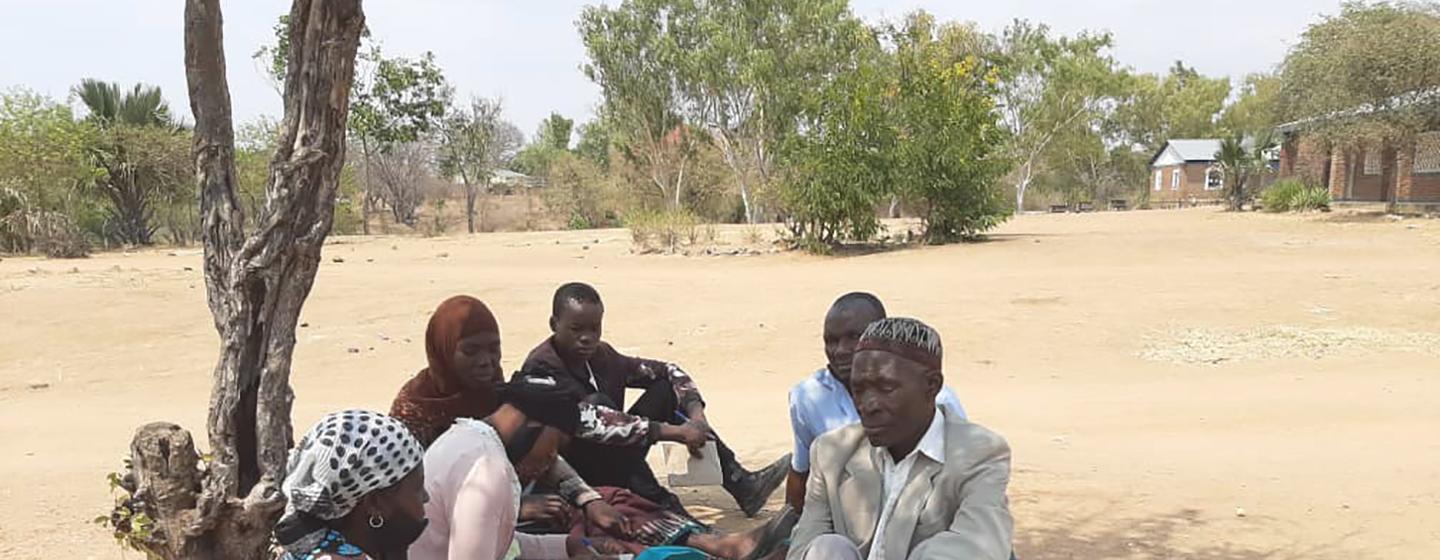
Villagers in Salima District, Malawi, take part in a UN-supported citizen’s assembly.


newDemocracy/Edwin Msewa. (file)
 
Villagers in Salima District, Malawi, take part in a UN-supported citizen’s assembly.
4 July 2023

SDGs

Against a backdrop of growing misinformation, political polarization, and a breakdown in trust between citizens and those who govern them, the UN is promoting the direct participation of citizens in decisions that affect them and their communities to rebuild trust in democracy.

People around the world should be able to play a more significant role in decision and policy-making processes that impact them and their communities in order to uphold democracy; that’s according to participants in a discussion at the UN focusing on strengthening democratic governance.

In recent years, the UN has increasingly been looking at ways to restore frayed links between people and their governments by encouraging greater citizen involvement.

Civil society organizations (CSOs), in collaboration with the UN, are finding that citizen’s assemblies are a highly effective way of bringing together diverse members of local communities to work on policies and projects that directly affect them.

Representatives of three CSOs recently came to UN Headquarters to share their experiences of running citizen’s assemblies: Cynthia Mbamalu is Director of Programs at Yiaga Africa, a CSO in Nigeria, Silvia Cervellini is the co-founder of Delibera Brasil, and Iain Walker is the Executive Director of the Australia-based newDemocracy Foundation.

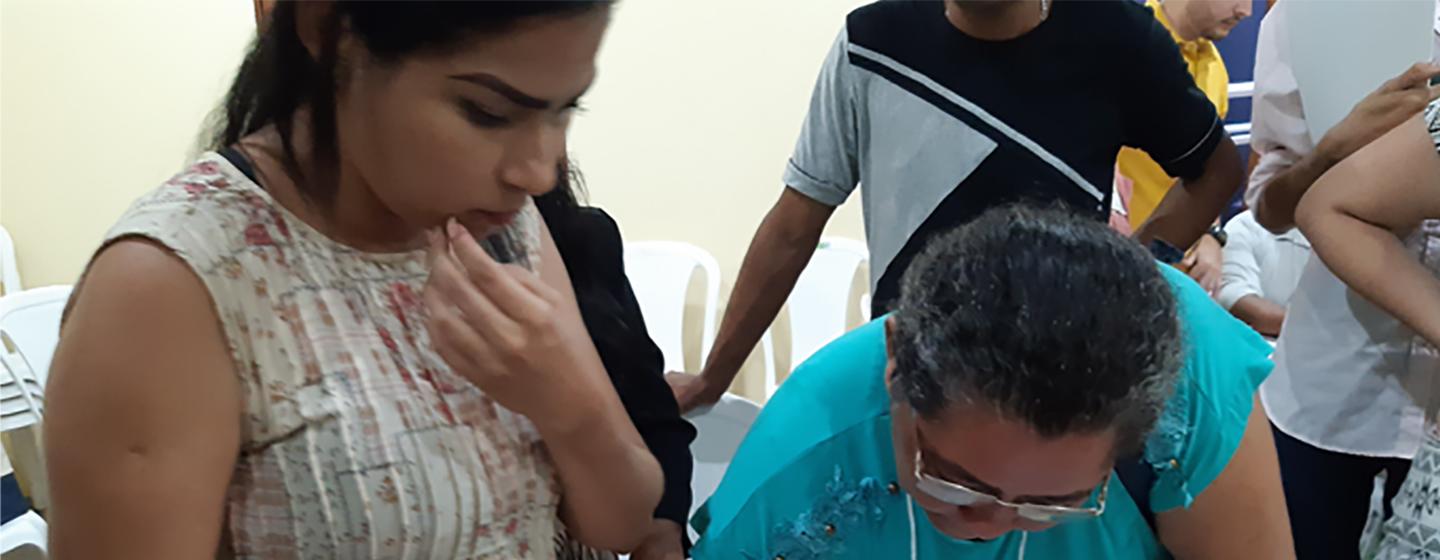
Citizens in Fortaleza, Brazil, take part in a UN-supported citizen’s assembly.
© Delibera Brasil
 
Citizens in Fortaleza, Brazil, take part in a UN-supported citizen’s assembly.

Cynthia Mbamalu: Nigeria has a growing and large youth population, and one of the things we've learned is that young people want to be part of the solution. They want to be heard. 

We create safe spaces for youth dialogue, where diverse groups of young people learn by having conversations about policies. Whatever decisions come out of those conversations can feed into government actions. 

But we need to go further, to help young people move from student union movements into mainstream politics, and learn how to advocate for policies that affect issues of concern to youth.

Silvia Cervellini: Brazil has a citizen’s constitution, which has led to the creation of important institutions, such as the National Conference of States and Municipal Councils, but there needs to be a constant effort to ensure that participation is truly universal.

In our experience, we repeatedly witness what we call “citizen mode” being activated, when different people work together to figure out the best possible solution for the common good, even in a time as polarized as ours.

Iain Walker We all want to have a say in the decisions which affect us as citizens. Citizens assemblies are a step to rounding out that role.

One reason is that they are a great chance to mix. We get people from all walks of life – old and young, white collar, blue collar, rich and poor – and put them into one room, to see what we can agree on.


Trust deficit

Cynthia Mbamalu: A lot of young people want to participate but, in Nigeria, there’s a huge trust deficit between citizens and the government.

SDG 16 promotes peaceful and inclusive societies.
United Nations
 
SDG 16 promotes peaceful and inclusive societies.

This is why we provide support for young people to promote the idea of electoral participation, so that they are the ones driving the conversation, and mobilizing their peers.

Silvia Cervellini: Trust goes both ways. We use any excuse to invite political leaders to trust the people, and when they see that citizens are involved in a participatory process, they trust them to give the best answers to a problem.

When you have the mayor, or city councillors saying, “I need your help to solve this”, people feel a sense of responsibility to make decisions for others who are not in the room.

And this is the magic of the “citizen’s mode”: they are not thinking about their individual interests or their preference. They are thinking, what's the best for everybody.

Iain Walker: We all tend to trust people a bit like us, yet parliamentarians often seem to be living in a remote and different world. 

Ireland has been a pioneer in creating projects that put randomly selected people and members of parliament in the same process: after spending several days together, they realize that the MPs aren’t that different from them. 

Politicians are used to people coming to them emphasizing disagreement, and we always see a breakthrough at citizen’s assemblies, when they say “wow, people really took this problem seriously, and worked to find an agreement”.

This is how we can rebuild trust in electoral democracy, 50 or 100 people at a time, to create a more trusted, cohesive society.

Cynthia Mbamalu, Silvia Cervellini and Iain Walker as well as Aleida Ferreyra, the UN Development Programme (UNDP) Global Lead for Democratic Institutions and Processes, were interviewed by Annemarie Hou, Executive Director of UN Partnerships and the UN Democracy Fund, for an episode of SDG Roundtables, a series of videos discussing themes related to the Sustainable Development Goals. 

How the UN supports civil society and human rights

This year marks 75 years since the adoption of the Universal Declaration of Human Rights, a landmark agreement aimed at ensuring a common future of dignity, freedom, and justice for all. 

The Office of the High Commissioner for Human Rights (OHCHR) has called for safe and open civic space that is inclusive, celebrates diversity, and incorporates an age and gender sensitive approach recognizing the role of civil society actors, especially women, human rights defenders and journalists.

Yiaga Africa works to increase the engagement of young people in the democratic process and, with UNDP, launched #SixtyPercentOfUs in May 2022, a project aimed at mobilizing at least 60 per cent youth voter registration.

Delibera Brasil, which organizes citizen’s assemblies backed by the UN Democracy Fund (UNDEF), enabling the residents of Brazilian cities to directly participate in policy making to address poverty and inequality.

The newDemocracy Foundation, which, with UNDEF funding, has helped countries bring underserved communities into the political system, and produced a handbook on so-called “democracy beyond elections”, explaining how the principles of representation and deliberation can be applied to nations at different levels of development.

UNDEF is a grant-making body described as a fund for CSOs, aimed at strengthening the voice of civil society, promoting human rights, and encouraging the participation of all groups in democratic processes. 


 https://news.un.org/en/story/2023/07/1138292

https://creativecommons.org/licenses/by/3.0/legalcode