Показаны сообщения с ярлыком Myanmar. Показать все сообщения

среда, 14 августа 2024 г.

‘Incredible brutality’ prevalent in battle for Myanmar


The silhouette of a 15-year-old child on crutches. He lost a leg after accidentally stepping on a landmine in a rice field.
© UNICEF/Minzayar Oo
 
The silhouette of a 15-year-old child on crutches. He lost a leg after accidentally stepping on a landmine in a rice field.


13 August 2024 

Conflict in Myanmar between the military junta and opposition forces is increasingly brutal, with both sides likely responsible for international crimes including summary executions, top independent rights investigators said on Tuesday.

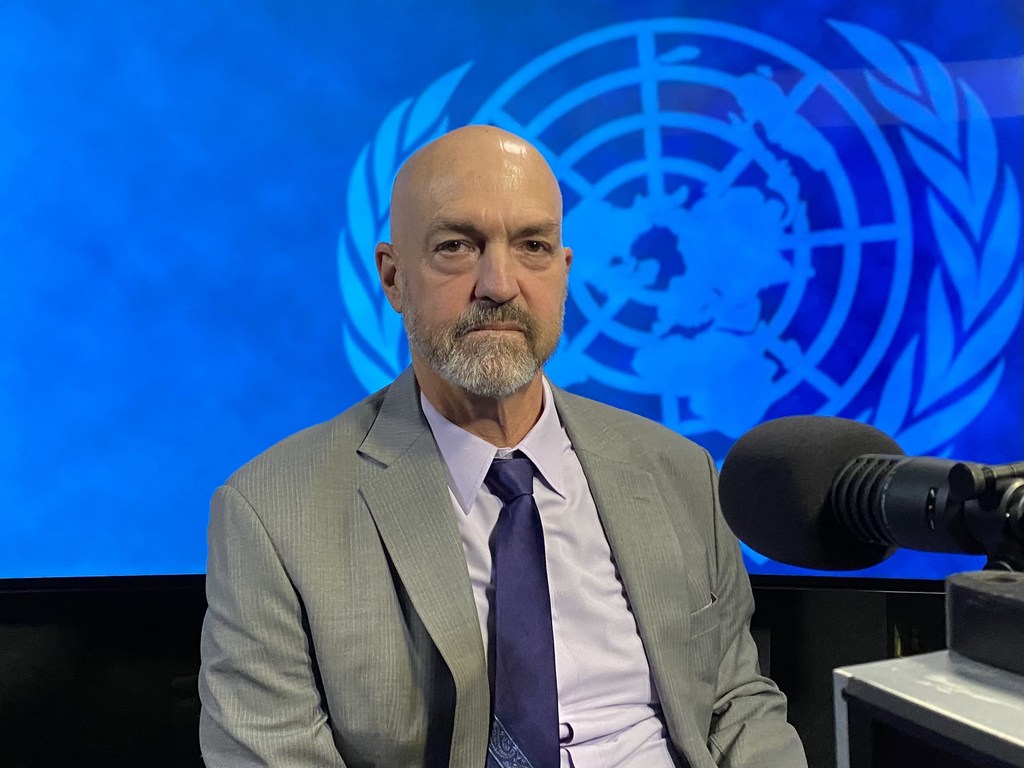
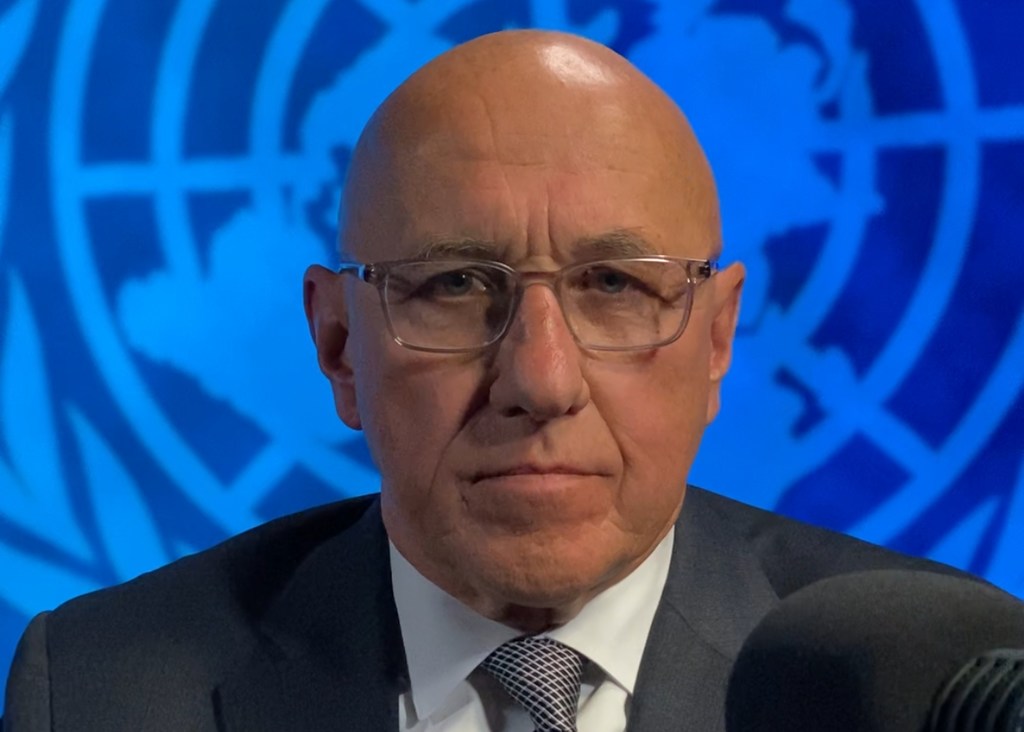
In a call to regional bloc ASEAN to help end the violence and support efforts to bring perpetrators to justice, the head of the Human Rights Council-appointed probe into the Myanmar emergency Nicholas Koumjian described an increasingly “desperate” junta whose devastating military tactics were being matched by opposition fighters acting with total impunity.

“Aerial bombings have increased very substantially in this last year,” Mr. Koumjian told journalists in Geneva. “In Kayah state in February of this year, four children were killed and around 10 injured when fighter jets dropped bombs and deployed machine gun fire on the school.”

Mr. Koumjian added that his investigators had also seen a video “that showed resistance forces beheading two captured soldiers in Loikaw in Kayah state in November, December of last year”, along with another video posted on social media of two young men being burned to death in Magway region. “So, this kind of incredible brutality is going on,” he said.

The Independent Investigative Mechanism for Myanmar (IIMM) was created by the Human Rights Council in 2018 to collect evidence of the most serious international crimes committed in Myanmar since 2011. It released its latest annual report on Tuesday.

Civilians frequently targeted

“Unfortunately, what our report conveys is that the number of these crimes is only increasing and the armed conflict is increasing in intensity and in brutality and crimes are happening more and more frequently,” Mr. Koumjian noted.

Nicholas Koumjian, Head of IIMM
UN News/Vibhu Mishra
 
Nicholas Koumjian, Head of IIMM

The veteran rights expert and former international criminal justice prosecutor expressed his opinion that the junta which seized power in Myanmar on 1 February 2021 was becoming more “desperate” over the period covered by the report from 1 July 2023 to 30 June 2024 - a time when armed conflicts increased across Myanmar as challenges to military rule intensified.

“The targets of these bombings are usually civilian targets,” Mr. Koumjian said. “Schools and churches and hospitals are often the only structures in the area and those are the structures…that are being bombed.”

ASEAN influence

In a direct appeal to the regional bloc ASEAN, Mr. Koumjian urged it to respond to “substantial evidence” that the Myanmar military was committing war crimes and crimes against humanity “at an alarming rate”, by putting pressure on the junta to halt the conflict.

ASEAN - a “very key player in Myanmar”, according to the human rights investigator – has drawn up a five-point consensus to end the fighting that has been signed by “the junta itself”.

Nonetheless, “we see instead an increase in violence and an increase in the violence targeting civilians,” he said. “So, I think absolutely, it's time for ASEAN to put some bite into its consensus. It's not enough simply to say we support ending the violence, there have to be steps taken to ensure that, in fact, the violence has ended.”

Broad reach

The head of the Independent Investigative Mechanism for Myanmar (IIMM) noted that the panel’s report was based on information and evidence collected from more than 900 sources, including more than 400 eyewitness testimonies, along with additional evidence such as photographs, videos, audio material, documents, maps, geospatial imagery, social media posts and forensic evidence.

Fighting impunity remains a core objective of the IIMM which has shared its findings and evidence with authorities at the International Criminal Court, the International Court of Justice and in Argentina, Mr. Koumjian said.


https://news.un.org/en/story/2024/08/1153131


https://creativecommons.org/licenses/by/4.0/legalcode

вторник, 13 августа 2024 г.

World News in Brief: Myanmar’s child victims, disenfranchisement in Thailand, aid breakthrough in Syria


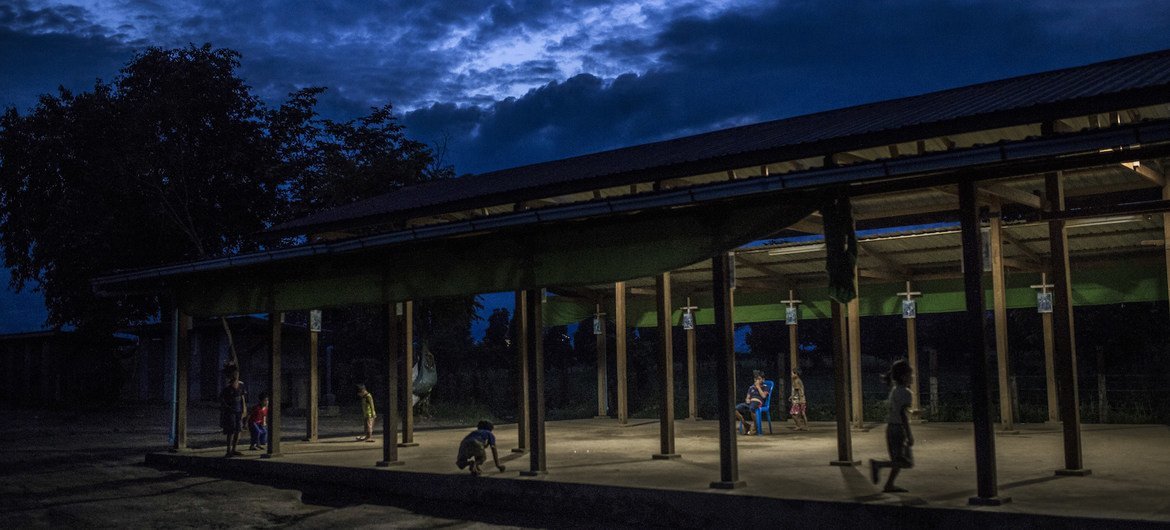
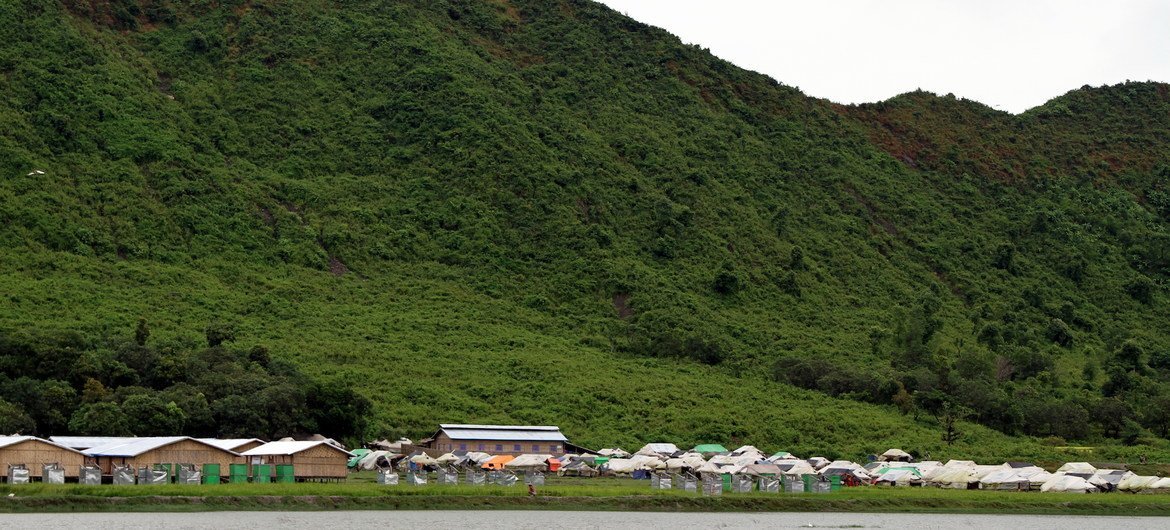
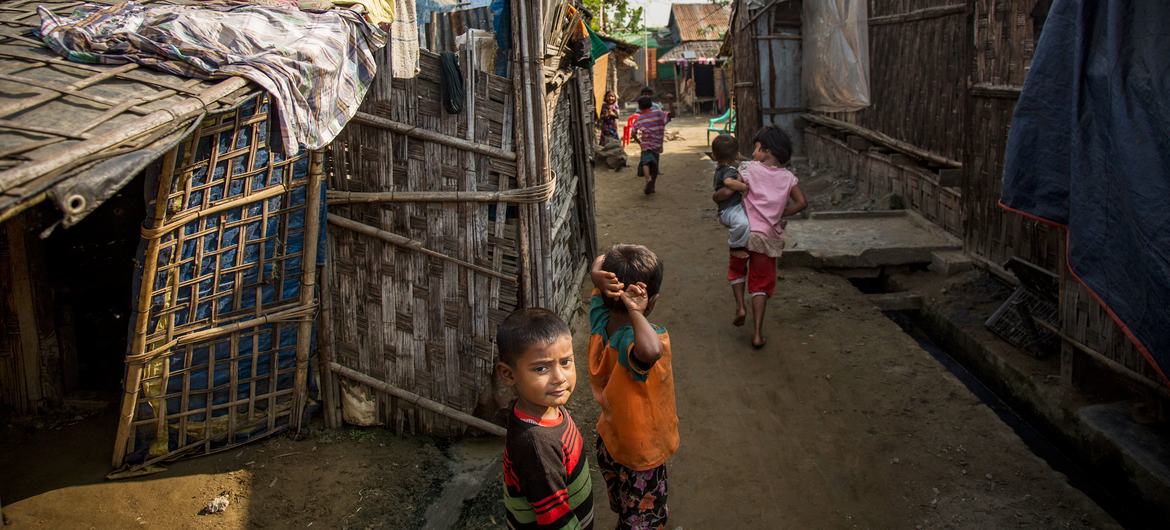
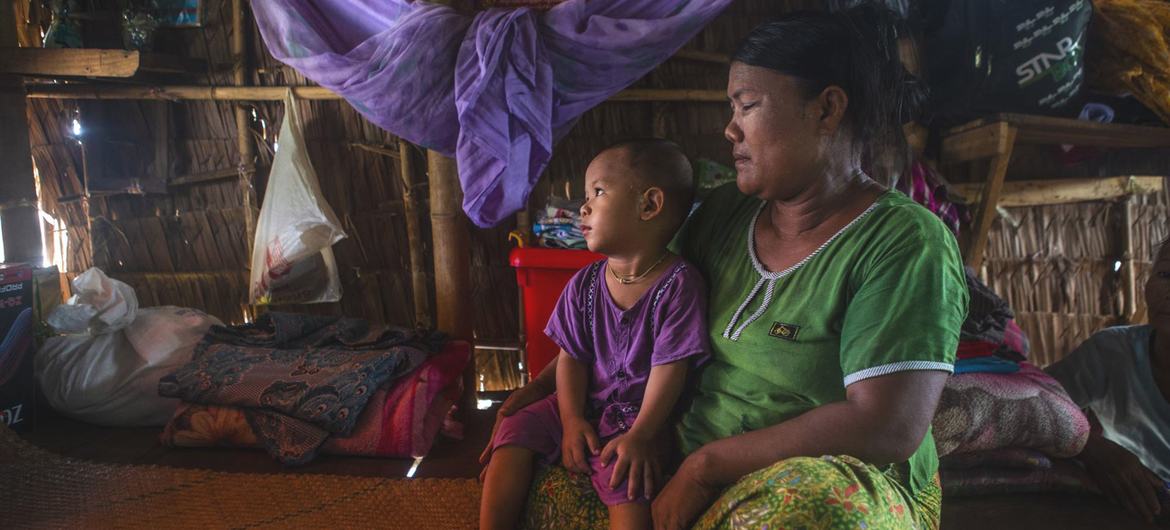
An IDP camp in northern Myanmar. (file photo)
UNICEF/Minzayar Oo
 
An IDP camp in northern Myanmar. (file photo)


12 August 2024 


Peace and Security

The UN on Monday condemned the ongoing escalation of violence in Myanmar that has led to heavy civilian casualties in recent weeks, including children and families.

Many were trying to flee the fighting in towns of Maungdaw in Rakhine state and Lashio in Shan state, UN Deputy Spokesperson Farhan Haq told journalists at the daily briefing in New York.

“These incidents are part of a deeply concerning trend in the intensifying conflict, with civilians bearing the brunt of a conflict that has upended millions of lives,” he said.

Fierce fighting broke out in early July in several parts of the country, ending a ceasefire between the military and a coalition of three ethnic armed groups that had banded together in October last year against the junta, which overthrew the elected government in February 2021.

Children bear the brunt

Children are bearing the brunt of the violence, according to the UN Children’s Fund (UNICEF)

“As violence escalates, families are being forced to make desperate attempts to escape – with reports that some have died or been killed in the process,” the agency said on Friday, underscoring the need for protection and support.

Tweet URL

“Access to critical services and assistance for civilians remains extremely challenging,” it added.

According to estimates, more than 18.6 million people in Myanmar need humanitarian assistance and protection, six million of them children.  

Mr. Haq reiterated the need for all parties to the conflict to abide by their obligations under international humanitarian law and protect civilians and civilian property.  

“Parties should also allow all communities to safely access humanitarian aid,” he said.

Rights experts concerned over dissolution of Thai political party

Staying in the region, two UN independent human rights experts on Monday warned that the recent dissolution of the largest political party in Thailand could disenfranchise millions of voters.

The country’s Constitutional Court on 7 August dissolved the Move Forward Party (MFP) and banned its senior figures, including leader Pita Limjaroenrat, from politics for 10 years.

The Court found that MFP’s efforts to amend article 112 of the Criminal Code (which deals with lèse-majesté crimes), including engaging in social media discussions or political protests over the royal family’s unimpeachable role, were aimed at overthrowing the monarchy.

“We are dismayed by the undemocratic use of the lèse-majesté law as a political tool to dissolve the party that won the largest number of seats in the last general election, and to remove its parliamentarians from politics,” Special Rapporteurs Irene Khan and Gina Romero said in a news release.

Tweet URL

“Political debates, even on sensitive topics, are the oxygen of a democratic society and should not be conflated with violence or sedition,” they stressed.

MFP had won the most seats in the May 2023 general elections in Thailand, securing 151 seats in the 500-member House of Representatives.

Its predecessor, the Future Forward Party, was also dissolved in 2020.

The experts warned that this new disbandment of the party “may well disenfranchise millions of voters”, the news release added.

Special Rapporteurs are appointed by the Geneva-based Human Rights Council and are independent of the United Nations, are not UN staff, and do not draw a salary.

Cross-border aid channels reauthorized in Syria

And to Syria, where the continued use of the Bab al-Salam and al-Rai border crossings points from Türkiye were reauthorized through 13 November.

The crossings are vital connections for the flow of cross-border aid to millions in need in northwest Syria.

“The cross-border operation from Türkiye – which also utilizes the Bab al-Hawa crossing – is a lifeline for aid to northwest Syria, where millions of people need humanitarian assistance, including food, nutrition, health, shelter, protection, education and other critical support,” UN Deputy Spokesperson Farhan Haq told journalists at the press briefing.

He said that for 2024 the UN and humanitarian partners are appealing for just over $4 billion to assist more than 10 million people throughout Syria.

But the UN’s ability to respond continues to be constrained by reductions in funding, with only 24 per cent – some $960 million – received to date, Mr. Haq added.

Fully funded, the plan aims to reach 10.8 million most vulnerable among the 16.7 million estimated to be in need in the country. Current funds, however, mean that only about 28 per cent have been reached thus far.


https://news.un.org/en/story/2024/08/1153111

https://creativecommons.org/licenses/by/4.0/legalcode

четверг, 11 июля 2024 г.

UN rights council condemns Myanmar abuses, urges immediate action


The silhouette of a 15-year-old child on crutches. He lost his left leg after accidentally stepping on a landmine in a rice field.
© UNICEF/Minzayar Oo
 
The silhouette of a 15-year-old child on crutches. He lost his left leg after accidentally stepping on a landmine in a rice field.

By Vibhu Mishra
10 July 2024 

The UN Human Rights Council on Wednesday reiterated its deep concern over the crisis in Myanmar, amid reports of widespread abuses by the military and opposition armed groups, including forced conscription of Rohingya community members and their use as human shields.

In a resolution adopted without a vote, the Council strongly condemned all violations and abuses of human rights in Myanmar, particularly following the military coup in February 2021.  

It called upon Myanmar “to end immediately all violence and violations of international law in the country, to ensure full protection of the human rights and fundamental freedoms of all persons in Myanmar, including Rohingya Muslims and other minorities”.

It also called for addressing the root causes of the crisis and forging a viable, lasting and durable solution, as well as eliminating statelessness and institutionalized discrimination against members of ethnic and religious minorities, particularly the Rohingya.

Tweet URL

Horrific violence

The predominantly Muslim Rohingya community suffered horrific violence at the hands of the country’s security forces in 2017, prompting the exodus of several hundred thousand into Bangladesh, where they continue to languish in refugee camps.

Despite provisional measures ordered by the International Court of Justice (ICJ) in January 2020, Rohingya in Myanmar, including women and children, continue to suffer from targeted killings and indiscriminate violence, including by airstrikes, shelling, burning, landmines and unexploded ordnance.

According to the UN Children’s Fund (UNICEF), 1,052 civilian casualties were recorded from landmine and explosive ordnance incidents during 2023 – more than three times the 390 fatalities the year before.

Over 20 per cent of the victims were children.

Credible, international investigations  

The 47-member Human Rights Council (HRC), UN’s highest intergovernmental forum on all rights-related matters, also highlighted the need international, independent, fair and transparent investigations for allegations of sexual and gender-based violence and abuses against women and children and alleged war crimes.

It reiterated the importance of holding accountable all those responsible for brutal acts and crimes against all persons to deliver justice to victims using all appropriate legal instruments and judicial mechanisms, including the ICJ and the International Criminal Court (ICC), as applicable.

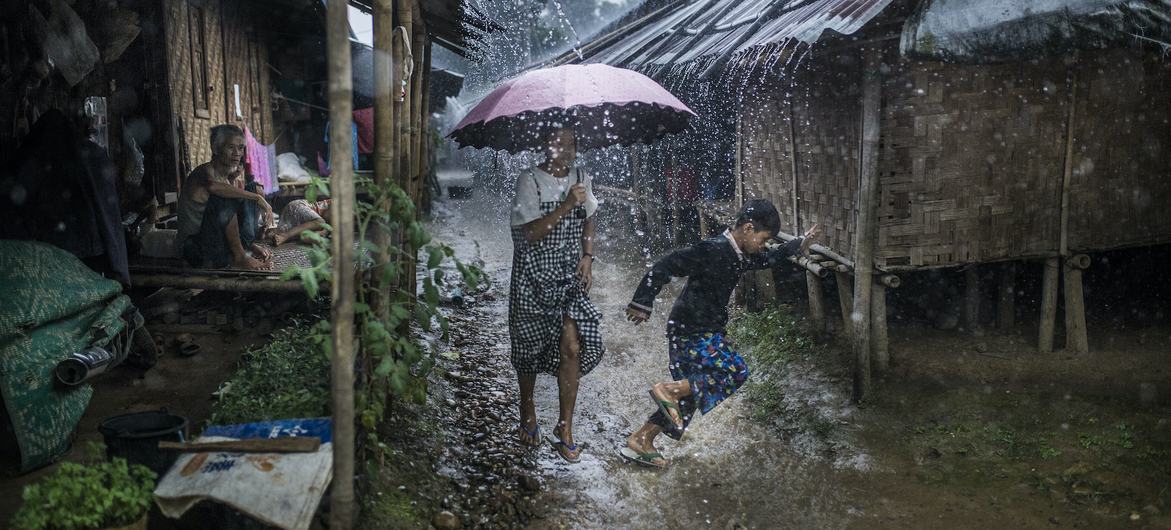
Rains lash an internally displaced persons camp in northern Myanmar. (file)
© UNICEF/Minzayar Oo
 
Rains lash an internally displaced persons camp in northern Myanmar. (file)

Conflict spillover worries

The Geneva-based Council further raised alarm over the cross-border spillover effect of the conflict in Myanmar, which has reportedly caused death and damage to property in Bangladesh and other bordering countries.

It underscored the need for immediate cessation of fighting and hostilities and the targeting of civilians.

It also called for an “inclusive and comprehensive” national political dialogue and nationwide reconciliation process while “ensuring the full, effective and meaningful participation” of all ethnic groups, including Rohingya and other minorities, women, young people and persons with disabilities, as well as civil society and religious leaders.

Stop hate speech

Also in the resolution, the HRC called on Myanmar to combat incitement to hatred and hate speech against Rohingya and other minorities, online and offline, including by enacting necessary anti-hate speech and crime laws.

It also urged the country to lift the shutdown of Internet and telecommunications services fully in all areas, including in Rakhine state, and to avoid further cutting of Internet and telecommunications access and stifling freedom of opinion and expression.


https://news.un.org/en/story/2024/07/1151966


https://creativecommons.org/licenses/by/4.0/legalcode

четверг, 27 июня 2024 г.

Rights expert urges banks to stop financing Myanmar junta weapons trade


A settlement in Rakhine province, northern Myanmar. (file photo)
OCHA/Pierre Peron
 
A settlement in Rakhine province, northern Myanmar. (file photo)


2 hours 29 minutes ago
 Human Rights

Foreign banks are allegedly helping Myanmar’s military junta acquire weapons and military supplies, facilitating a “campaign of violence and brutality” as the civil war there grinds on, according to an independent UN human rights expert on Wednesday.

Since the February 2021 coup, over 5,000 civilians have been killed, at least three million displaced. More than 20,000 political prisoners remain incarcerated. Military airstrikes against civilian targets have increased five-fold in the last six months, even as the junta loses military outposts, territory, and troops to resistance forces.

Potential enablers

In a new report, Tom Andrews, UN Special Rapporteur on Myanmar, identified 16 banks in seven countries that processed transactions linked to the junta’s military procurement over the past two years.  

Additionally, 25 banks provided correspondent banking services to Myanmar’s state-owned banks under junta control.

“With the junta on its heels, it is critical that financial institutions take their human rights obligations seriously and not facilitate the junta’s deadly transactions,” he said.

He highlighted that banks involved with Myanmar State-owned banks are at high risk of enabling military attacks on civilians and emphasized their fundamental obligation to avoid facilitating crimes, including war crimes and crimes against humanity.

Tom Andrews, Special Rapporteur on the situation of human rights in Myanmar
UN News/Vibhu Mishra
 
Tom Andrews, Special Rapporteur on the situation of human rights in Myanmar

Good and bad news

He noted a decline in the Myanmar military’s annual procurement of weapons and military supplies through the formal banking system, from $377 million to $253 million in the year ending March 2023.

However, he warned that the junta circumvents sanctions by exploiting gaps, shifting financial institutions, and leveraging inadequate coordination and enforcement among member states.

“The good news is that the junta is increasingly isolated … the bad news is that the junta is circumventing sanctions and other measures by exploiting gaps in sanctions regimes, shifting financial institutions, and taking advantage of the failure of Member States to fully coordinate and enforce actions,” the Special Rapporteur said.

Shift from Singapore to Thailand

The report Banking on the Death Trade: How Banks and Governments Enable the military Junta in Myanmar examined “a dramatic shift” in the role of two Association of Southeast Asian Nations (ASEAN) countries as sources of weapons and military supplies.  

Following last year’s identification of Singapore as a significant source, the Singaporean government investigated the entities involved, resulting in a 90 per cent drop in weapons flowing to Myanmar from Singapore-registered companies.

Conversely, military procurement through Thailand has moved in the opposite direction, the news release noted.  

The junta imported nearly $130 million in weapons and military supplies from Thailand-registered suppliers in the year ending March 2024 - more than double the total from the previous year.  

Thai banks have played a crucial role in this shift. The Siam Commercial Bank, for instance, facilitated just over $5 million in transactions related to Myanmar military in the year ending March 2023, but that number rose sharply to over $100 million the following year.

Political will needed

“Singapore’s example demonstrates that a Government with sufficient political will can make a significant difference toward shutting down the Myanmar death trade,” Mr. Andrews stressed.

“Thailand has an opportunity to follow this powerful example by taking action that will deal a huge blow to the junta’s capacity to sustain its escalating attacks on civilian targets. I urge it to do so,” he concluded.

Appointed by the Geneva-based UN Human Rights Council, and forming of a part of its Special Procedures, Special Rapporteurs are mandated to monitor and assess the rights situation in certain thematic or country situations.

They work voluntarily, are not UN staff and do not receive a salary.

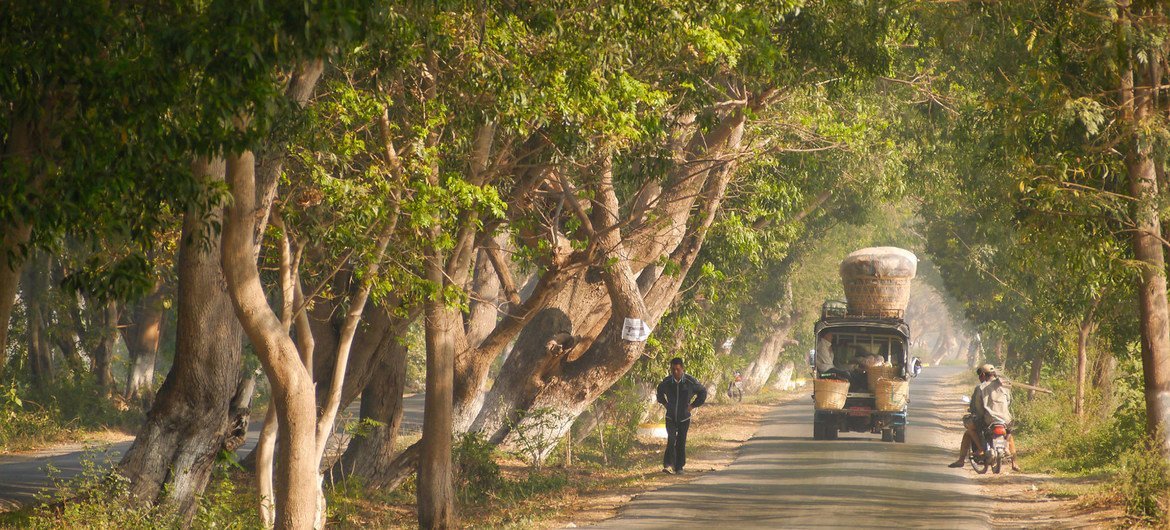
A rural road in Myanmar. (file photo)
Asian Development Bank
 
A rural road in Myanmar. (file photo)

UN food warehouse looted

Amidst the ongoing conflict, a warehouse of the UN emergency food relief agency was looted and set on fire in Maungdaw, northern Rakhine province last Saturday.

It was holding 1,175 metric tons of life-saving food and supplies, enough emergency food to sustain 64,000 people for one month. However, due to increased conflict in the region, its staff have not been able to access the warehouse since late May.

The UN World Food Programme (WFP) strongly condemned the incident, stressing that the seizure of humanitarian goods and destruction of facilities undermined its food support programme to conflict-affected populations in Myanmar.

It called on all parties to the conflict to uphold their obligations under international humanitarian law to respect and protect aid facilities and assets and ensure humanitarians have unfettered access.  

WFP is gathering details of the circumstances surrounding the incident, the agency said.


https://news.un.org/en/story/2024/06/1151541

https://creativecommons.org/licenses/by/4.0/legalcode

среда, 19 июня 2024 г.

Systematic terror, brutal atrocities rife in Myanmar: UN human rights chief


An IDP camp in northern Myanmar. (file photo)
UNICEF/Minzayar Oo
 
An IDP camp in northern Myanmar. (file photo)


18 June 2024
Human Rights

The UN’s top human rights official said on Tuesday that Myanmar is in “agonizing pain”, suffocated by an illegitimate military regime which uses “horrific war tactics” and commits brutal atrocity crimes.

Addressing the Geneva-based Human Rights Council, Volker Türk, UN High Commissioner for Human Rights emphasized that the crisis there is “emblematic of a decades-long legacy of military domination, the stifling of dissent, and division.”

He added that the same dynamics are playing out against the minority Muslim Rohingya and other communities in Rakhine province.

“We are hearing stories of horrific war tactics, such as beheadings. Midnight drone attacks. The burning of homes as people sleep. People being shot at as they flee for their lives.”

‘Forced conscription’

The situation in the southeast Asian nation has been in freefall since Myanmar’s military – known as the Tatmadaw – overthrew the democratically elected government and arrested key political and government leaders in February 2021.

Furthermore, fierce fighting has been reported between junta forces, and ethnic armed groups and those opposed to the coup, forcing thousands to flee their homes and worsening humanitarian crisis across the country.

“The military has lost control over a considerable amount of territory. So, it is resorting to increasingly extreme measures. Forced conscription. Indiscriminate bombardment of towns and villages. Brutal atrocity crimes,” Mr. Türk said.

Tweet URL
UN_HRC

The UN human rights office (OHCHR) is investigating several reported attacks against civilians in Rakhine and Sagaing over recent days with large numbers of civilians allegedly killed.

‘Shocking memories’

Mr. Türk also highlighted the dire situation in Rakhine’s Maungdaw town, with the Arakan Army warning residents, including many Rohingya, to evacuate.

“But Rohingya have no options. There is nowhere to flee,” he said, noting that in Buthidaung, a similar pattern of displacement and destruction has occurred.

The military also ordered ethnic Rakhine villages near provincial capital Sittwe to be vacated, conducting mass arrests. In the village of Byaing Phyu, men were separated, tortured, and killed, with women also raped and murdered.

The military also pressured and threatened young Rohingya men to join their ranks, Mr. Türk added, referring to reports that indicate that thousands of Rohingya youth have been conscripted into the same army that killed and displaced hundreds of thousands of their community in 2016 and 2017.

“These tactics have brought back the shocking images and memories from 2017 of systematic terrorization, persecution and forced displacement of populations,” the High Commissioner said.

‘A future is possible’

High Commissioner Türk informed the Human Rights Council, the UN’s highest body on human rights, of his visit to southeast Asia and meetings with key stakeholders, notably Myanmar’s civil society and its young people.

“These young people have strong expectations of the international community. They seek for the extent of Myanmar’s suffering to be genuinely acknowledged and given the attention it deserves,” he said.

He highlighted their efforts and those of groups within the country against decades of oppression and violence. New local governance structures have emerged, aiding hundreds of thousands of civilians in need and delivering vital protection services in the complete absence of a functioning public system.

“They have risked their lives and livelihoods to help communities in need and resist the repression by the military. And with them, a future is possible.”


https://creativecommons.org/licenses/by/3.0/legalcode

https://news.un.org/en/story/2024/06/1151186

пятница, 7 июня 2024 г.

UN chief condemns escalating violence and civilian attacks in Myanmar


A displaced persons camp in Sittwe, capital of Rakhine state in Myanmar. (file)
© UNICEF/Nyan Zay Htet
 
A displaced persons camp in Sittwe, capital of Rakhine state in Myanmar. (file)


6 June 2024
Peace and Security

The UN Secretary-General António Guterres is deeply concerned about escalating violence in Myanmar, he said in a statement released on Thursday.

UN Spokesperson Stéphane Dujarric said the Secretary-General “strongly condemns” recent attacks by the Myanmar military in Rakhine State and Sagaing Region that have reportedly claimed the lives of many civilians.

“The Secretary-General is deeply concerned about the widening regional ramifications of the deteriorating situation in Myanmar and reiterates his appeal for a unified approach,” Mr. Dujarric said.

Conflict in Myanmar

Myanmar’s Rakhine State has seen a spike in violence between the Myanmar military and the Arakan Army that has left tens of thousands homeless.

Many of the attacks reportedly targeted the minority Muslim Rohingya community, who have been based in Rakhine for generations but denied full citizenship. Hundreds of thousands were forced to flee into Bangladesh from there in 2017 following persecution by government forces.

Targeting ethnic Rakhine in Western Myanmar, and the ongoing persecution of the Rohingya, underlines the need for protection of all communities.

During the attacks, some members of this community experienced beheadings and burning of their homes. Recent data from the UN refugee agency (UNHCR) revealed that about 226,000 people from this community have been uprooted due to the violence who are in need of resettlement.

Even further, the UN High Commissioner for Human Rights (OHCHR) had previously reported cases of “shooting at unarmed fleeing villagers” and disappearances in Myanmar.

The country is now recognised as a hunger hotspot where “acute food insecurity is likely to deteriorate further in coming months.”

Being held accountable

Mr. Dujarric, said that recent incidents “targeting ethnic Rakhine in Western Myanmar, and the ongoing persecution of the Rohingya, underlines the need for protection of all communities.”

He said that aerial bombings and human rights violations are constantly reported in many parts of Myanmar and “those responsible must be held to account.”

Further, he said the Secretary-General “calls on all parties to the conflict to exercise maximum restraint, prioritise protection of civilians in accordance with international humanitarian law and prevent further incitement of communal tension and violence.”

Mr. Dujarric said that the Secretary-General is urging member states and stakeholders to support his newly appointed Special Envoy, Julie Bishop as she works on fostering sustainable peace through close cooperation with the Association of Southeast Asian Nations (ASEAN) and neighbouring countries.


https://news.un.org/en/story/2024/06/1150751


https://creativecommons.org/licenses/by/3.0/legalcode

пятница, 19 апреля 2024 г.

Myanmar: Rohingyas in firing line as Rakhine conflict intensifies

Fresh fighting in Rakhine, Myanmar, has displaced over 300,000 people. In this file photo, a child walks through an IDP settlement in the province.
© UNICEF/Patrick Brown
 
Fresh fighting in Rakhine, Myanmar, has displaced over 300,000 people. In this file photo, a child walks through an IDP settlement in the province.
19 April 2024
Peace and Security

The UN’s top human rights official on Friday raised alarm over the escalating violence in Myanmar’s Rakhine state between junta and opposition forces, amid reports of the military regime forcing members of the minority Muslim Rohingya community to join their ranks.

Rakhine was the site of a brutal crackdown on the Rohingyas by the military in 2017, leading to killing of some 10,000 men, women and newborns, and the exodus of nearly 750,000 community members – many of whom continue to languish in refugee camps in neighbouring Bangladesh.

“Rakhine state has once again become a battleground involving multiple actors, and civilians are paying a heavy price, with Rohingya at particular risk,” Volker Türk, UN High Commissioner for Human Rights said.

“What is particularly disturbing is that whereas in 2017, the Rohingya were targeted by one group, they are now trapped between two armed factions who have a track record of killing them. We must not allow the Rohingya to be targeted again.”

Tweet URL
UNHumanRights

Widespread fighting

The breakdown of a year-long informal ceasefire between the military and the Arakan Army (AA) last November has plunged 15 out of Rakhine’s 17 townships into conflict.

The military’s loss of territory to the AA in northern and central parts of the province has led to intensified fighting in the townships of Buthidaung and Maungdaw, setting the stage for a potential battle for the state capital, Sittwe.

The presence of large Rohingya populations in these areas further exacerbates the risks faced by civilians.

Forced conscription by military

“Facing defeat, the military has outrageously started to forcibly conscript, bribe and coerce Rohingya into joining their ranks,” Mr. Türk said.

“It is unconscionable that they should be targeted in this way, given the appalling events of six years ago, and the ongoing extreme discrimination against the Rohingya including the denial of citizenship”.

Reports also suggest that both Rohingya and ethnic Rakhine villagers have been coerced into burning each other’s homes and villages, escalating tensions and violence.

OHCHR is trying to verify the reports, a task complicated by a communications blackout throughout the state.

Alarm bells ringing

The High Commissioner also cited widespread disinformation and propaganda, pointing to claims that so called “Islamic terrorists” have taken Hindus and Buddhists hostages.

“This was the same kind of hateful narrative that fuelled communal violence in 2012 and the horrendous attacks against the Rohingya in 2017,” he said.

“Countries with influence on the Myanmar military and armed groups involved must act now to protect all civilians in Rakhine state and prevent another episode of horrendous persecution of the Rohingya,” he urged.


https://news.un.org/en/story/2024/04/1148746


https://creativecommons.org/licenses/by/3.0/legalcode

пятница, 12 апреля 2024 г.

Myanmar: Middle class ‘disappearing’ amid uptick in brutal fighting


The ongoing political crisis and conflict in Myanmar, coupled with disasters and COVID-19 impacts, has left the economy on the verge of collapse.


11 April 2024


Economic Development

The UN Development Programme (UNDP) has warned that poverty is surging and the middle class in Myanmar is “disappearing” amidst worsening insecurity and conflict. 

In a new report published on Thursday UNDP said that the middle class has shrunk by half, compared with before the 2021 military coup, and that three quarters of the country’s population is either living in poverty or “perilously close” to the national poverty line.

“The new data show that less than 25 per cent of the population in Myanmar manage to secure steady incomes to live above the poverty line. Without immediate interventions to provide cash transfers, food security and access to basic services, vulnerability will keep growing, and impacts will be felt across generations” said Achim Steiner, UNDP Administrator.

Tweet URL
UNDP

According to UNDP estimates, $4 billion per year is required to address ballooning poverty, via cash transfers and other means, to help families recover from the “L-shaped” recession amid plummeting economic activity and few signs of recovery.

“We call on all stakeholders – inside and outside Myanmar – to take action and preserve vulnerable households from slipping into irreversible poverty and despair” Mr. Steiner urged.

Zero spending on education

Polling over 12,000 households across Myanmar, the report also found that families and households have been forced to resort to various, often unsustainable, coping mechanisms.

Speaking to journalists at UN Headquarters in New York, Kanni Wignaraja, UNDP Regional Director for Asia and the Pacific, explained the dire situation.

“During the COVID-19 [pandemic], the spending on education was meagre - two to three per cent of household’s income - it is now close to zero,” she said, adding that families are pulling children out of school and unable to spend on healthcare and other basic services.

“We are going to see a whole generation that just has a learning and health deficit that is very scary,” she warned.

Regional picture

The report has also revealed an alarming picture at the provincial level.

The states with the lowest rates of per capita income are Kayah, Chin, and Sagaing – regions experiencing high levels of conflict between the junta forces and groups opposing.

In addition to heightened poverty levels, conflict-ridden were also marked by destruction of homes, restricted access to farmlands and an increase in internally displaced people (IDPs) – all leading to yet more hardship.

IDPs arriving in urban centres such as Yangon and Mandalay, both for safety and basic services, no longer have any safety net, Ms. Wignaraja said.

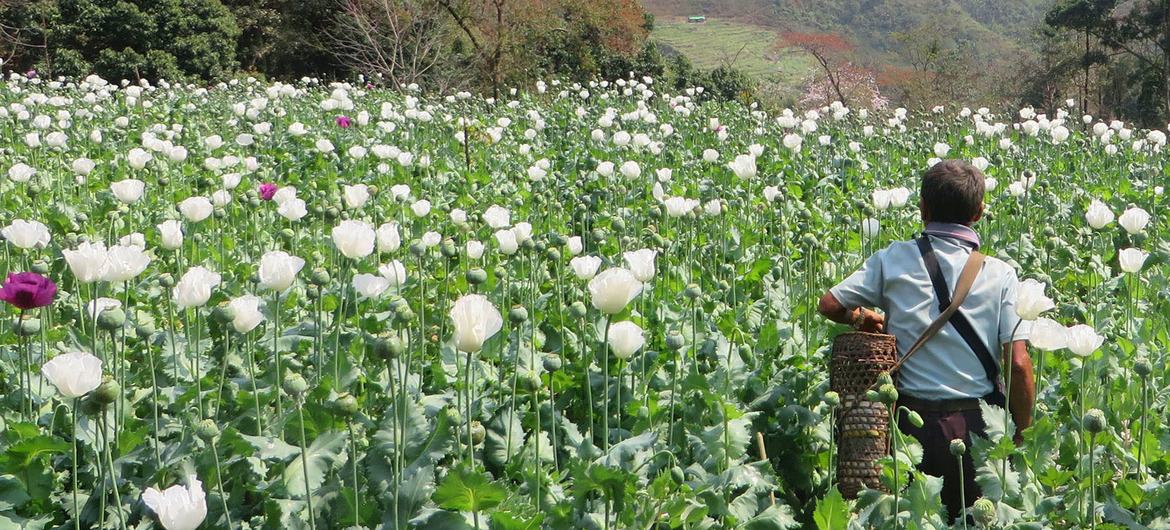
A poppy field in East Shan state, Myanmar.
© UNODC
 
A poppy field in East Shan state, Myanmar.

Proliferation of organized crime

The UNDP Regional Director also emphasized the challenges posed by skyrocketing criminality in the southeast Asian nation.

She cited recent findings by the UN Office on Drugs and Crimes (UNODC) that Myanmar is the largest producer of opium and the massive proliferation of organized crime, especially the so called “scam centres”.

“If these illegal economic activities – where there is a lot of money involved – are not curbed, and we cannot restart intensive international and regional mediation efforts to stop the ongoing war, the story of Myanmar is going to be of the disappeared middle [class],” Ms. Wignaraja said.

https://news.un.org/en/story/2024/04/1148456

https://creativecommons.org/licenses/by/3.0/legalcode

четверг, 4 апреля 2024 г.

Security Council: Myanmar


9595TH MEETING (AM)
SC/15652


(A complete summary of today's Security Council meeting on Myanmar will be made available after its conclusion.)

The Security Council met today to consider the situation in Myanmar.

Briefings

KHALED KHIARI, Assistant Secretary-General for Middle East, Asia and the Pacific, Departments of Political and Peacebuilding Affairs and Peace Operations, noted that more than three years have passed since the military overturned the democratically elected Government in Myanmar and detained its leaders, including President Win Myint and State Counsellor Aung San Suu Kyi. Underscoring the Secretary-General’s call for their immediate release and a unified international response, he said that the expansion of armed conflict throughout the country has deprived communities of basic needs and access to essential services.  Amid reports of indiscriminate aerial bombardments by the Myanmar Armed Forces and artillery shelling by various parties, the civilian toll keeps rising.  The United Nations condemns all forms of violence. 

He noted that in Rakhine State, fighting between the military and the Arakan Army has reached an unprecedented level of violence.  The Arakan Army has reportedly gained territorial control over most of central Rakhine.  Today, the National Unity Consultative Council, comprising various Myanmar stakeholders, convened their second People’s Assembly to further define their common vision for the country’s future.  “Addressing the root causes of the Rohingya crisis will be essential to establish a sustainable pathway out of the current crisis,” he emphasized, expressing concern about the surge in the number of desperate Rohingya refugees reportedly dying or going missing while taking risky boat journeys in the Andaman Sea and the Bay of Bengal.  While expressing appreciation to Bangladesh for generously hosting over a million Rohingya refugees, he called for collective support from the international community to the Joint Response Plan for the Rohingya Humanitarian Crisis.

Any solution to the current crisis requires conditions that permit the people of Myanmar to exercise their human rights freely and peacefully, including an end to the military’s campaign of violence and political repression, he said.  In this respect, the Secretary-General has highlighted concern about the military’s intention to move ahead with elections.  Relatedly, the State Administration Council’s announcement on the enforcement of the conscription law has intensified social unrest against the military and violence, including reports of attacks against village administrators, suicides of drafted young men, and a surging number of movements across Myanmar’s borders.  The country’s crisis continues to spill over. Myanmar has become a global epicentre of methamphetamine and opium production, along with a rapid expansion of global cyberscam operations, particularly in border areas.  “What began as a regional crime threat in South-East Asia is now a rampant human trafficking and illicit trade crisis with global implications,” he said, adding:  “There is a clear case for greater international unity and support to the region.”

As called for by the Security Council, the United Nations will continue to complement the work of the Association of Southeast Asian Nations (ASEAN) and support its efforts to implement its Five-Point Consensus on Myanmar, and actively engage with all relevant stakeholders, he said.  The Secretary-General plans to appoint a Special Envoy in the coming days to engage with ASEAN, Member States and all stakeholders to advance towards a Myanmar-led political solution to the crisis.  Neighbouring countries can leverage their influence to open humanitarian channels in line with international principles, end the violence, and seek a comprehensive political solution that leads to an inclusive and peaceful future for Myanmar.  The Security Council’s role and the implementation of resolution 2669 (2022) remain crucial.

LISA DOUGHTEN, Director, Financing and Partnerships Division, Office for the Coordination of Humanitarian Affairs, said that the continued escalation of the conflict in Myanmar — which has reached the highest levels of violence since 2021 — is affecting people in the country and in neighbouring States.  Since the recent implementation of the National Conscription Law, the Myanmar people have been living in daily fear for their lives.  She reported that 2.8 million people have been displaced, 90 per cent of them since the military takeover.  Furthermore, hunger is on the rise across the country and there is a risk of malnutrition among children and pregnant women.  An estimated 12 million people in Myanmar will need emergency health assistance in 2024, she reported, adding that disruption to health care has impeded routine immunizations for consecutive years.  Noting that interruptions to education have affected 12 million learners over the past three years, she added:  “Children are bearing the brunt of this crisis.”

In 2023, casualties resulting from landmines and explosive remnants of war jumped a staggering 270 per cent from 2022 to over 1,000, she said, also underscoring that 9.7 million women and girls need humanitarian assistance. Expressing concern over the rise in intercommunal tensions, she highlighted the impact of Cyclone Mocha in May 2023, which led to food and water shortages and increased prices of essential goods.  Stressing that 18.6 million people will need humanitarian assistance across the country in 2024 — a 19-fold increase from February 2021 — she said that the 2023 Humanitarian Response for Myanmar was funded at only 44 per cent but humanitarian organizations still delivered assistance to 3.2 million people. To bolster the response in 2023, the Emergency Relief Coordinator released $26 million from the Central Emergency Response Fund. 

“Today, we continue to play catch up as escalating needs are not met with adequate funding,” she added, noting that the 2024 Humanitarian Needs and Response Plan for Myanmar is only funded at 4 per cent.  In this context, she urged the Council to continue impressing on the parties the imperative for humanitarians to be able to reach all people in need in Myanmar.  Also noting that from January 2022 to February 2024 more than 155 aid workers have been arrested or detained by various parties, she demanded protection for humanitarian workers.  She called on Member States to ensure continuing humanitarian support, adding: “Only an end to the conflict will pave the way for an end to the humanitarian crisis in Myanmar.”

Statements

The representative of the United Kingdom condemned airstrikes across the country by the Myanmar Armed Forces, including in Rakhine State where communities are facing the dire impact of the escalating conflict.  Expressing deep concern about reports of forcible detention and recruitment of the Rohingya as a result of the military’s conscription announcement, she warned that this has the potential to further stoke high intercommunal tensions between the Rohingya and Rakhine communities.  Over a year since the adoption of Council resolution 2669 (2022), the military still refuses to engage meaningfully with international efforts to reach a peaceful solution to the crisis.  The Council has been clear in its unequivocal support for ASEAN’s Five-Point Consensus and the efforts to end all violence immediately.  It has also called for full, safe, and unhindered humanitarian access.  Since 2017, the United Kingdom has provided over $56 million in aid for Rohingya and other Muslim minorities in Rakhine State.  “We will not allow Myanmar to become a forgotten crisis,” she declared, underscoring the need to appoint a UN Special Envoy without further delay.

The representative of Japan condemned the repeated extensions of the state of emergency by the Myanmar military.  He also expressed concern over the announced conscription and voiced alarm over the ongoing military airstrikes, including the recent one in Minbya township in Rakhine State that caused many civilian casualties. Recalling that the Council has not been able to issue a press statement or any other Council products on the situation in Myanmar for more than 15 months, he added:  “We must represent the voice of the people of Myanmar.”  Calling on the Council to support ASEAN’s centrality, he encouraged the ASEAN Chair and its Special Envoy to engage with all stakeholders in Myanmar.  In March, Japan decided to provide $37 million in humanitarian assistance, including medical services and nutrition improvement for pregnant women and infants, among other aid, he added. 

The representative of the Russian Federation expressed regret that holding an open meeting on Myanmar prevents the Council from having a tranquil non-politicized discussion focused on seeking solutions to the problems, accusing Western delegations of departing from the established Council practice of holding meetings on Myanmar in a closed format.  Over the course of several decades of its rule over Myanmar, the United Kingdom has completely reshaped its state of affairs. Myanmar is a paragon of London’s favourite policy of divide and conquer.  There are abundant examples of this in South-East Asia, he said, citing examples of British invasions in present-day China, India, Pakistan, Bangladesh, Malaysia, Singapore, Brunei and Sri Lanka.  The indigenous population of Australia was on the brink of extermination.  “Myanmar does not pose a threat to international security,” he insisted, opposing the use of the Council to put pressure on Naypyidaw and condemning the attempts of Western delegations to politicize the Myanmar dossier.  What is promising is the trilateral consultative mechanism with the participation of Bangladesh, Myanmar and China within the framework of the Joint Working Group established in 2019.

The representative of the Republic of Korea, pointing to significant implications of the situation in Myanmar on neighbouring countries and the wider region, expressed regret over the lack of a UN Special Envoy, Resident Coordinator and regular Security Council meetings on this issue. He highlighted the development of Thailand’s cross-border humanitarian initiative with the involvement of the ASEAN Coordinating Centre for Humanitarian Assistance on Disaster Management, while noting that the prospects for return of Rohingya refugees have worsened. His Government has provided more than $36 million to support the Rohingya since 2017.  Stressing that the scale of the Myanmar crisis requires more than domestic, bilateral or regional efforts, he underscored the need for appointing a UN Special Envoy.  He spotlighted the central role of ASEAN, also recalling that 25,000 Myanmar people live in the Republic of Korea.

The representative of Switzerland warned that the security and humanitarian situations in Myanmar have continued to deteriorate.  “It is important not to forget Myanmar.  It is impossible to forget the plight of the Rohingya,” he said, sounding the alarm over the air strikes carried out by the military, in particular those on 18 March in Minbya township.  This is not an isolated one as the Independent Investigation Mechanism for Myanmar reports indicate that possible war crimes and crimes against humanity might have been committed, she added, highlighting the role of the International Criminal Court.  Addressing the needs on the ground requires determined and visible leadership from the UN to coordinate humanitarian, diplomatic and development efforts.  It is imperative to rapidly appoint a UN Special Envoy to engage with ASEAN.  The same applies to the position of UN Resident/Humanitarian Coordinator.  The Council must play a more active role, he said, expressing his delegation’s support for the 15-member body to develop “a new product”.

The representative of Algeria, noting that the situation in Myanmar has increased the number of refugees and displaced people in the region, underscored the importance of dialogue between all protagonists and urged them to cease all acts of violence.  He stressed the need for an effective humanitarian response to alleviate the suffering of the Rohingya people, calling on Member States to provide humanitarian aid in an unhindered manner.  Urging all stakeholders and parties to the conflict to prioritize dignified life for the people of Myanmar and tackle the root causes of the conflict, he added:  “We must also find a way to alleviate the sufferings of refugees and facilitate their return.”  Further, he reiterated the importance of regional activities, including the ASEAN initiative, to bolster dialogue, reconciliation, peace and stability in Myanmar. 

The representative of Sierra Leone said that the troika mechanism established by ASEAN should be fully utilized.  In the context of Chapter VIII of the UN Charter, the Council must fully support the implementation of ASEAN’s Five-Point Consensus by ensuring that all parties are committed to the consensus as a main reference point.  The cessation of hostilities across Myanmar is a key enabler for a peaceful, democratic process.  The parties must ensure the unhindered, unrestricted and unimpeded delivery of humanitarian assistance for the more than 18 million people in need.  He called on Council members to unite in addressing the urgent need for a peaceful resolution in Myanmar as well as the need for effective collaboration, monitoring and reporting mechanisms.

The representative of Guyana, expressing concern over the deteriorating situation in Rakhine State — following the attacks of 29 February — and in the north-west and south-east regions of the country, commended the recent announcement by Myanmar and Thailand of a pilot initiative to scale up humanitarian assistance to people in Kayin State.  While welcoming Myanmar’s announcement about granting humanitarian access to UN agencies and international humanitarian organizations in Rakhine State, she pointed to ongoing restrictions in accessing conflict areas.  She urged Member States to scale up support for the 2024 Humanitarian Needs and Response Plan, stressing that supply routes connecting Rakhine to other parts of Myanmar must be re-opened.  Calling for the dignified return of Rohingya refugees and other internally displaced persons, she underscored the importance of rapidly implementing ASEAN’s Five-Point Consensus. 

The representative of France expressed grave concern about the continuing violence and abuses committed by the junta against the Myanmar population.  The military regime continues to obstruct the delivery of urgently needed humanitarian assistance to the population in clear violation of international humanitarian law. It also continues its human rights violations, particularly the rights of women and girls.  Her country has increased its humanitarian aid to Myanmar to €6.5 million in 2023, more than double from 2022.  Together with its European partners, France is pursuing sanctions against the military regime that emerged from the coup d’état.  Commending the work of the Special Rapporteur on the human rights situation in Myanmar, she called for the swift appointment of a UN Special Envoy for the country.

The representative of Mozambique said that the prevailing military approach has proven ineffective and unsustainable, noting that the protracted conflict has led to a destabilizing regional spillover. Pointing to the humanitarian emergency in the country, he reported that only 5.3 million of the 18.6 million people requiring assistance are receiving it.  In this regard, he appealed for additional funding for the 2024 Humanitarian Response Plan, which is only 7 per cent funded.  Stressing that the protection of civilians is not an option but an imperative, he said women, girls and children continue to pay the highest price in this conflict.  He expressed support for ASEAN's ongoing facilitation efforts and the constructive roles played by regional stakeholders, urging all parties in Myanmar to implement ASEAN’s Five Point Consensus.  “Only through inclusive dialogue and a negotiated political settlement can this crisis be resolved,” he added. 

The representative of Slovenia welcomed ASEAN’s central role in facilitating a solution to the crisis and its efforts to implement the Five-Point Consensus Plan.  However, the situation in Myanmar is worsening and ASEAN should strengthen its efforts towards the restoration of peace, democracy and civilian rule in the country.  The ongoing situation in Myanmar merits regular discussions in the Council, she said, welcoming today’s briefing and the presence of countries from the region. She went on to condemn the military’s indiscriminate violence against the people of Myanmar, calling for an end to such acts, the release of all political prisoners and respect for human rights.  The military’s recent announcement of a compulsory military service law is worrisome as young women and men could be subjected to mandatory conscription without any appeal process.

The representative of Ecuador urged the military junta to end all attacks against civilians, release political prisoners, establish a definitive ceasefire and abide by the agreements established in the Five-Point Consensus.  The exacerbation of the conflict has made civilians vulnerable and led to a massive exodus, fuelled by human rights violations.  Noting that 6 million children are unable to access health-care services and education, he pointed to the growing number of children and young people recruited by the militias.  He called for ensuring the safe and free movement of UN humanitarian personnel, urging refugee-hosting countries to respect the principle of non-refoulement. In addition, he reiterated support for the Independent Investigative Mechanism for Myanmar and the UN teams on the ground.


https://press.un.org/en/2024/sc15652.doc.htm

https://creativecommons.org/licenses/by/3.0/legalcode

вторник, 19 марта 2024 г.

UN rights expert urges global action to halt Myanmar junta atrocities

Rains lash an internally displaced persons camp in northern Myanmar. (file)
© UNICEF/Minzayar Oo
 
Rains lash an internally displaced persons camp in northern Myanmar. (file)
19 March 2024
Human Rights

The UN independent human rights expert on Myanmar called on the international community on Tuesday to take strong, coordinated action to protect civilians from ongoing atrocities committed by the military junta’s forces.

In February 2021 the military overthrew the elected Government in Myanmar arresting hundreds of officials, political leaders and activists, including President Win Myint and State Counsellor Aung San Suu Kyi.

The takeover triggered an intensification of armed conflicts with separatists and opposition forces across the country, including indiscriminate air strikes which have killed numerous civilians.

There have been mass killings of detainees, including dismemberment and desecration of corpses, reports of rape and the deliberate burning of entire villages.

In the latter half of 2023, several armed resistance groups united in an alliance against the regime, attacking several key junta strongholds, pushing back the military and forcing soldiers to surrender.

Killings and suffering continue

Special Rapporteur Tom Andrews told members of the Human Rights Council – the UN’s paramount rights body – that despite some opposition successes, the junta remains “extremely dangerous”.

“The killing of civilians continues with sophisticated, powerful weapons of war obtained from abroad,” he added.

Tweet URL
UN_HRC

Over the last five months, there has been a five-fold increase in airstrikes against civilians. Across the country, about 2.7 million people are displaced and 18.6 million – including six million children – require humanitarian aid.

“Now the junta has begun a program of forced military recruitment, at times abducting young men on the streets. This is pushing young people into hiding, or to flee the country, or to join resistance forces – young people who are unwilling to be drafted into the junta’s campaign of brutality,” Mr. Andrews said.

Among the worst affected are members of the minority Muslim Rohingya community, who continue to be attacked and persecuted. Several hundred thousand Rohingya were forced to flee their homes in Rakhine state due to a widespread military operation in 2017, seeking refuge in neighboring Bangladesh.

Impacts beyond Myanmar

The Special Rapporteur said the actions of the junta are impacting not only the people of Myanmar but also the region and the wider world.

“Thousands of desperate people continue to flee into neighboring countries, while junta fighter jets have violated the airspace of Myanmar’s neighbors, bombs have landed across borders,” he said.

“International criminal networks have found safe haven in Myanmar, which is now the top opium producer in the world and a global center for cyber-scam operations that enslave tens of thousands and victimize untold numbers of people around the world.”

Violence must stop

He warned that the response of the international community to the developments in the Asian country using appeasement and engagement with the junta without conditions, is not working.

The “inevitable conclusion” is that for engagement to succeed, certain prerequisites are imperative, chiefly that the violence must stop.

“For this to become a reality, the international community must undermine the junta’s murderous campaign by denying it the weapons and the money it requires to carry on this campaign,” he said.

Mr. Andrews called for the “immediate convening” of a coalition of States to establish coordinated, targeted sanctions to protect Myanmar’s people.

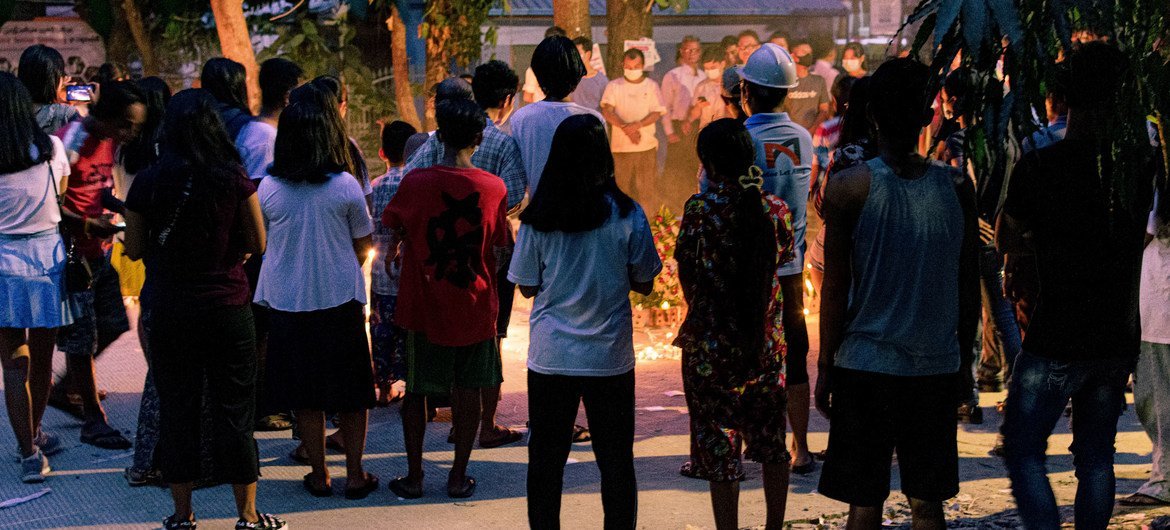
People across ethnic and religious divides hold vigil in Yangon, Myanmar. (file)
Unsplash/Zinko Hein
 
People across ethnic and religious divides hold vigil in Yangon, Myanmar. (file)

Tide is turning

In addition, he highlighted three crucial steps, which must be taken urgently. These include ensuring humanitarian aid reaches those in desperate need, ending impunity for war crimes and crimes against humanity, and investing in Myanmar’s transition.

“I urge support for those who are building a political framework that enfranchises Myanmar’s rich and diverse population, while affirming human rights, equality and justice as the pathway to peace,” he said.

“The tide is turning in Myanmar and it is turning because of the courage and tenacity of its people. It is time for the international community to pay attention to Myanmar and take the strong, coordinated action that will enable them to seize this moment,” Mr. Andrews concluded.

Independent human rights expert

Appointed by the Human Rights Council in 2020, Special Rapporteur Tom Andrews is tasked with impartially assessing, monitoring and reporting on the human rights situation in Myanmar.

Special Rapporteurs serve in their individual capacity, independent of the UN system and national governments. They are not UN staff and draw no salary.

The mandate of the Special Rapporteur on the situation of human rights in Myanmar was first established in 1992 under the then Commission on Human Rights and extended annually.

Special Rapporteur Andrews addresses the Human Rights Council

https://creativecommons.org/licenses/by/3.0/legalcode

https://news.un.org/en/story/2024/03/1147746

суббота, 2 марта 2024 г.

Myanmar: Unbearable levels of suffering and cruelty


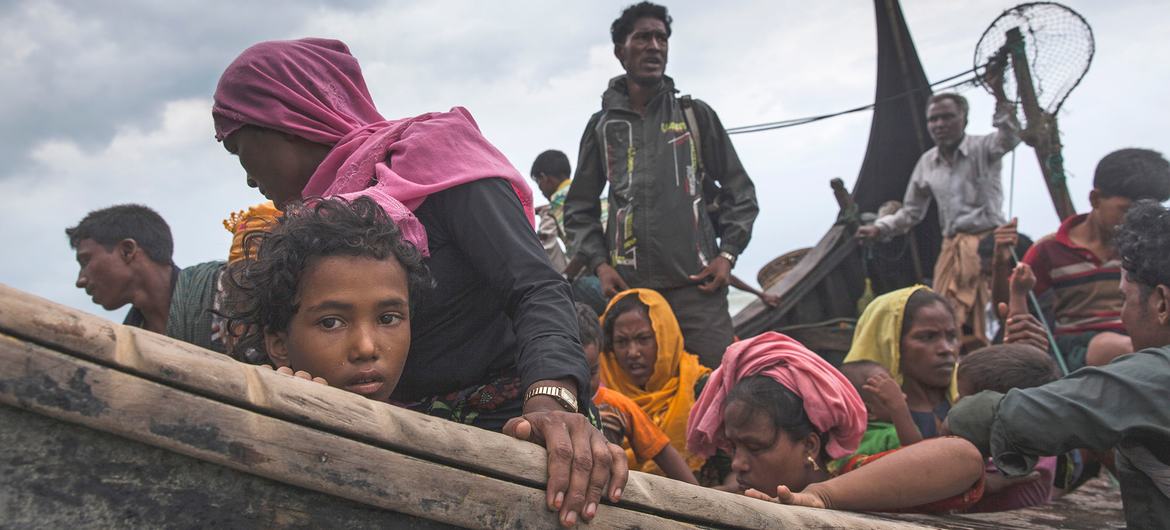
Rohingya refugees arrive by boat from Myanmar on the Bay of Bengal to Teknaf in Cox's Bazar District, Bangladesh. (file)
© UNICEF/Patrick Brown
 
Rohingya refugees arrive by boat from Myanmar on the Bay of Bengal to Teknaf in Cox's Bazar District, Bangladesh. (file)

1 March 2024

Human Rights

The crisis in Myanmar is a “never-ending nightmare” for the country’s people happening far away from the international spotlight, UN rights chief Volker Türk told the Human Rights Council on Friday. 

In a scheduled update to the UN’s top rights forum, the UN High Commissioner for Human Rights explained that the humanitarian emergency there linked to the 2021 coup had worsened in recent months. 

“Three years of military rule have inflicted – and continue to inflict – unbearable levels of suffering and cruelty on people in Myanmar,” he said, amid an escalation of armed conflict across the country which has claimed thousands of lives, including from aerial attacks on towns and cities.

Suppression of freedoms

Tweet URL
UN_HRC

Mr. Türk cited verified reports that more than 4,600 individuals have been killed by the military since February 2021, including hundreds of women and children. The actual death toll is likely to be much higher, the High Commissioner noted, as he referred to witness statements indicating that hundreds of civilians had been burnt alive or executed by the military, including women. 

This “chilling disregard for human life” had been accompanied by other “sweeping violations of fundamental rights and the rule of law” that continue across the country, Mr. Türk insisted.

Today in Myanmar, more than 20,000 opponents of the military, including 3,909 women, still languish in detention, the High Commissioner said. People fear they can be arrested for anything at any time, he continued, citing multiple accounts of ill-treatment and other violations.

“It is deeply shocking to read my Office’s reports of systemic use of torture against political detainees in police stations, military interrogation centres and prisons,” Mr. Türk said. 

Inter-ethnic tensions

The UN rights chief also maintained that the military had employed ultra-nationalist militias to stoke inter-ethnic tensions. Linked to this, violence had reached unprecedented levels in Rakhine state, with reports that civilians had been shelled and displaced en masse. 

Rakhine came to international prominence in 2017 when hundreds of thousands of ethnic Rohingya fled the state to neighbouring Bangladesh, after what former UN rights chief Zeid Ra’ad Al Hussein called a “textbook example of ethnic cleansing” by the Myanmar military.

Last year, up to 5,000 Rohingya undertook “perilous” boat journeys in their search for a safe haven and hundreds of others have been detained while trying to escape to other parts of Myanmar, Mr. Türk told the Council.

He also called for the immediate cessation of military operations targeting civilians, the release of political prisoners and full compliance with international human rights law. 

Mr. Türk emphasized the urgent need for global solidarity and support to end the human rights crisis gripping the nation, including limiting the military’s access to weapons supplies.

“For the last three years, people in Myanmar have sacrificed everything and kept alive their aspirations for a better and safer future. They need the entire international community to support them,” the UN rights chief insisted.


https://news.un.org/en/story/2024/03/1147122


https://creativecommons.org/licenses/by/3.0/legalcode

среда, 31 января 2024 г.

Myanmar demands greater focus urges UN rights chief, three years after coup

Essential child nutrition services have been expanded in Rakhine State, Myanmar.
© UNICEF/Nyan Zay Htet
 
Essential child nutrition services have been expanded in Rakhine State, Myanmar.


30 January 2024

Three years after the military deposed the elected Government in Myanmar, the ever-deteriorating human rights crisis in the country is now in freefall, the UN High Commissioner for Human Rights said on Tuesday, appealing for greater attention from the international community. 

“Amid all of the crises around the world, it is important no one is forgotten. The people of Myanmar have been suffering for too long,” Volker Türk said ahead of the anniversary of the coup on 1 February.

He explained that fighting between the military and armed opposition groups has resulted in mass displacement and civilian casualties, with the regime “launching waves of indiscriminate aerial bombardments and artillery strikes” after recent setbacks on the battlefield.

Tweet URL
UNHumanRights

Rise in deaths

Sources have verified that over 554 people have died since October, while the number of civilians reportedly killed by the military rose to over 1,600 in 2023, an increase of some 300 from the previous year. 

Overall, nearly 26,000 people have been arrested on political grounds. The majority, 19,973, remain in detention. Some reportedly have been subjected to torture and abuses, and with no hope of a fair trial, some 1,576 individuals have died over the past three years while in military custody. 

“Military tactics have consistently focused on the punishment of civilians who they view as supporting their enemies,” Mr. Türk said. “As a result, the military has routinely targeted civilians and protected objects under international humanitarian law, especially medical facilities and schools.” 

Concern for Rohingya community

He said Rakhine state has been especially hard hit since fighting restarted there in November, with the mostly Muslim Rohingya community particularly affected. 

Meanwhile Rohingya refugees living in dire humanitarian conditions in camps in Bangladesh “are again risking desperate and dangerous journeys by sea, finding few ports or communities in the region willing to accept or welcome them”. 

Accountability and sanctions 

Mr. Türk said the crisis in Myanmar will only be resolved by insisting on accountability for the military’s leadership, the release of political prisoners and the restoration of civilian rule. 

“I urge all Member States to take appropriate measures to address this crisis, including to consider imposing further targeted sanctions on the military to constrain their ability to commit serious violations and disregard international law, limiting access to weapons, jet fuel and foreign currency,” he said.

Invest more in human rights

Separately, Mr. Türk also called for a significant increase in funding for his office this year, warning that it remains woefully short of the funds needed to better promote human rights around the world.

Speaking to UN Member States in Geneva, he appealed for $500 million to support the work of rights office, OHCHR, amid immense challenges globally.

“Right now, we are living through profoundly divided times,” he said, pointing to concerns such as spiralling conflict in many parts of the world, climate impacts, rising disinformation and an increase in hunger, poverty and inequality.

Last year, OHCHR’s advocacy contributed to the release of more than 13,000 detainees. Staff also undertook some 3,664 human rights monitoring missions and monitored at least 1,088 trials, among other accomplishments.

Member States and other funding partners donated $283.2 million in voluntary contributions to the office last year. 

“Yet, we are still falling drastically short of the funding we need to provide human rights solutions that are more effective and wider reaching, solutions that we desperately need in today’s world marked by breakneck pace shifts and persistent, urgent challenges,” he said.


https://news.un.org/en/story/2024/01/1146037


https://creativecommons.org/licenses/by/3.0/legalcode

пятница, 25 августа 2023 г.

Secretary-General Calls for Comprehensive Solutions to Address Discrimination, Violence in Myanmar on Sixth Anniversary of Rohingya Displacement


SG/SM/21913

Secretary-General Calls for Comprehensive Solutions to Address Discrimination, Violence in Myanmar on Sixth Anniversary of Rohingya Displacement

The following statement was issued today by the Spokesperson for UN Secretary-General António Guterres:

25 August marks six years since the forced mass displacement of Rohingya people and other communities from Myanmar’s Rakhine State.  Rohingya people remain displaced domestically and abroad, including around 1 million Rohingya in Bangladesh.

The vulnerabilities faced by people of Myanmar, including the Rohingya, have been compounded by the ongoing conflict and by the devastation caused by Cyclone Mocha.  The United Nations will continue to support efforts to create conditions that would be conducive to the voluntary, safe, dignified and sustainable return of Rohingya refugees to their places of origin in Myanmar.

The Secretary-General calls on all stakeholders to redouble efforts to find comprehensive, inclusive and durable solutions that can adequately address the root causes of systemic discrimination and violence in Myanmar, and to respond to the growing protection crisis and humanitarian needs while strengthening refugee protection efforts in the region for those fleeing persecution and violence.

Bangladesh has demonstrated humanitarian commitments and generosity, which must be acknowledged through shared responsibility.  More must be done to support the Joint Response Plan and prevent a broader humanitarian crisis.

The United Nations is committed to working with all stakeholders, including regional actors, to help resolve the crisis and seek accountability and justice for victims towards a sustainable peace in Rakhine State and all of Myanmar.


https://press.un.org/en/2023/sgsm21913.doc.htm
https://creativecommons.org/licenses/by/3.0/legalcode

четверг, 20 июля 2023 г.

Funding ‘simply not enough’ for Rohingya refugees, UN agencies report

For many Rohingya refugees, WFP assistance is the only reliable source they can count on to meet their food needs.
© WFP/Sayed Asif Mahmud
 
For many Rohingya refugees, WFP assistance is the only reliable source they can count on to meet their food needs.
20 July 2023
Migrants and Refugees

Current funding for critical aid efforts supporting Rohingya refugees living in camps in southern Bangladesh is simply not enough, the UN World Food Programme (WFP) has said, as dwindling resources have forced the second ration cut in three months.

In March, the value of the food vouchers for camp residents was reduced from $12 per person per month to $10, and in June, to just $8; the equivalent of 27 cents a day.

“The ration cuts are our last resort. Many donors have stepped forward with funding but what we have received is simply not enough,” Dom Scalpelli, WFP Country Director in Bangladesh, said in a release on Wednesday.  

“It is absolutely critical that we give the Rohingya families back the full assistance they deserve. The longer we wait, the more hunger we will see in the camps – already we are seeing more children being admitted into malnutrition treatment programmes.”

Over 950,000 Rohingyas remain stranded in refugee camps in Cox’s Bazar, southern Bangladesh. Most of them fled their homes in northern Myanmar following widespread and systemic attacks in August 2017 by the country’s armed forces that former UN High Commissioner for Human Rights Zeid Ra’ad al-Hussein described as a “textbook example of ethnic cleansing”.

‘Only reliable source’

The UN refugee agency (UNHCR), which has been assisting the Rohingya refugees since the crisis erupted, said that the WFP food assistance is the “only reliable source they can count on to meet their basic food and nutrition needs.”

“But since the start of the year, this lifeline has been under severe pressure due to reduced donor funding.”

Alongside fresh food assistance, WFP implements nutrition programmes for pregnant and breastfeeding women and children under five years of age.  

Despite this additional support, vulnerable households are still struggling to make ends meet. The only solution to prevent the situation from deteriorating further is to restore the full rations for the entire Rohingya population immediately, UNHCR said.

Tweet URL

Falling donor funding

In addition to WFP, other UN entities and humanitarian agencies are feeling the impacts of falling funding from donors.

The 2023 Rohingya humanitarian crisis response plan, which requires about $875 million to reach the nearly one million refugees in need, is only a quarter funded.  

The impacts of such cuts are particularly devastating for women and children, who make up more than 75 per cent of the refugee population and face higher risks of abuse, exploitation and gender-based violence, UNHCR warned.

Without enough food and no means of generating a legal income, refugees have resorted to increasingly desperate measures to survive, such as child marriage and child labour, as well as embarking on dangerous boat journeys.

Livelihood programmes needed

As the situation of Rohingya refugees becomes protracted and needs continue growing, more support will be needed from the international community.

Johannes van der Klaauw, UNHCR Representative to Bangladesh, said the only way to prevent the humanitarian situation in the camps deteriorating further, is by investing in education, skills training and livelihood opportunities.

“This would allow refugees to become self-reliant and partially fulfill their basic needs through their own means – and above all, to prepare them for rebuilding their lives when they can voluntarily and safely return to Myanmar.” 


 https://news.un.org/en/story/2023/07/1138917


https://creativecommons.org/licenses/by/3.0/legalcode