Показаны сообщения с ярлыком SDGs. Показать все сообщения

пятница, 13 сентября 2024 г.

Summit of the Future: ‘Critical’ opportunity for safer, more sustainable and equitable world


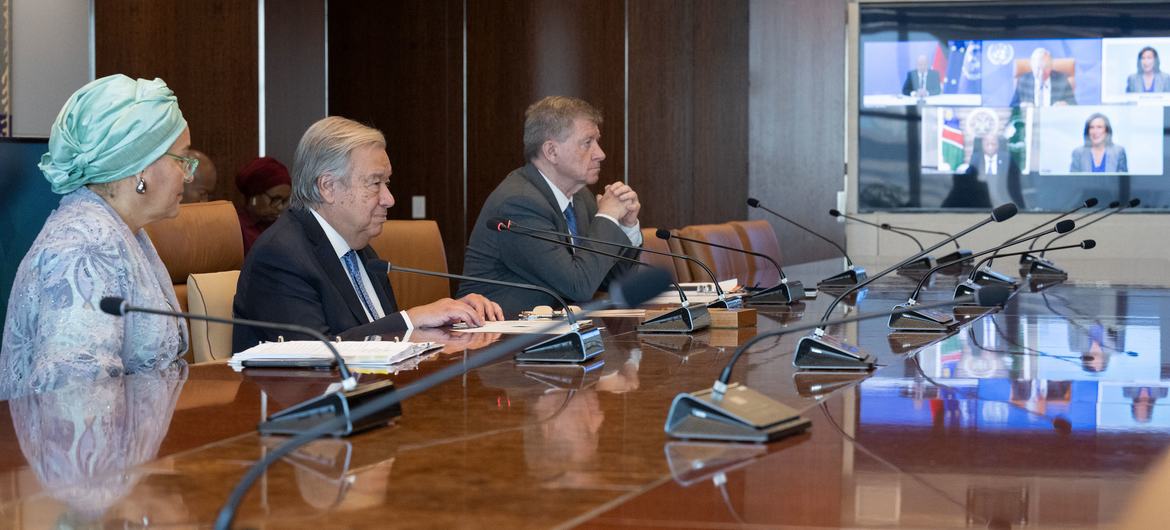
UN Secretary-General António Guterres (centre at left) participates in a global call for action ahead of the Summit of the Future.
UN Photo/Manuel Elías
 
UN Secretary-General António Guterres (centre at left) participates in a global call for action ahead of the Summit of the Future.


12 September 2024
 SDGs

A once-in-a-generation UN summit bringing together countries from around the world marks a critical opportunity for far-reaching agreements on international collaboration for a safer, more sustainable and more equitable world, said UN Secretary-General António Guterres on Thursday as part of a global call to action to support the Summit of the Future, which begins on 22 September. 

“We need greater global solidarity today and with future generations, better management of critical issues of global concern and an upgraded United Nations that can meet the challenges of a new era,” he said at the Summit of the Future Global Call event, emphasising that current institutions can not keep up with the changing times.

Tweet URL

At the landmark summit, Member States are expected to conclude negotiations ahead of adopting the Pact for the Future, which aims to chart a path toward achieving the Sustainable Development Goals (SDGs) and respond to emerging challenges and opportunities. It will include a Global Digital Compact and a Declaration on Future Generations.

The SDGs are an internationally agreed set of targets to end poverty, protect the planet and ensure that by 2030 all people enjoy peace and prosperity.

While the summit is just days away, scheduled to take place on 22 and 23 September, it has taken years of effort to get to this point, Mr. Guterres said.

‘Stuck in a time warp’

Today’s challenges are moving at speeds far too fast for the current tools to solve them due to outdated institutions that are “designed for another era and another world”, the UN chief warned.

“The Security Council is stuck in a time warp, international financial architecture is outdated and ineffective and we are simply not equipped to take on a wide range of emerging issues,” he stated.

Mr. Guterres underscored the world’s ongoing ferocious conflicts, deepened geopolitical divides, the rise of populism and extremism and the crisis levels of poverty among the most pressing issues at a time when the SDGs continue to slip out of reach.

“Twenty-first century challenges require twenty-first century problem-solving institutions,” he emphasised, adding that the summit also provides an opportunity to reform the Security Council and international financial architecture.

Calls for ‘vision, courage, solidarity'

In order to achieve the summit’s goals, the UN chief is calling on Member States to “act swiftly, with vision, courage, solidarity and a spirit of compromise” in order to get the three draft agreements “over the finish line”.

He praised the UN as a unique platform to convene key stakeholders, especially in times of global upheaval.

The need to address the changing nature of warfare, to manage the risks of new technologies and to recognise the ongoing climate crisis as a “threat multiplier of insecurity” was also brought to the forefront.

“I appeal to all governments to make sure they are as ambitious as possible to restore the hope and trust we need in order to address the dramatic challenges of our time with a new global consensus,” he urged.

The ‘Global Call’

At the live event, Mr. Guterres was joined by the President of Namibia, Nangolo Mbumba, and the Chancellor of Germany, Olaf Scholz, as co-facilitators of the preparatory process.

Both President Mbumba and Chancellor Scholz helped promote the event as an opportunity to hear Member States’ voices on the highest political level about their aspirations for the Pact for the Future and the summit while also reiterating their own hopes for the next generations.

“The summit should be a platform for bold ideas and concrete commitments that will reinvigorate the UN and multilateralism for the 21st century,” President Mbumba said.

“We stand at the crossroads between breakdown and breakthrough. I’m sure that we will make the right choice,” said President Scholz, adding that it is time to show the world that “there is much more that unites us than divides us.”


https://news.un.org/en/story/2024/09/1154276


https://creativecommons.org/licenses/by/4.0/legalcode

пятница, 28 июня 2024 г.

World getting a ‘failing grade’ on Global Goals report card

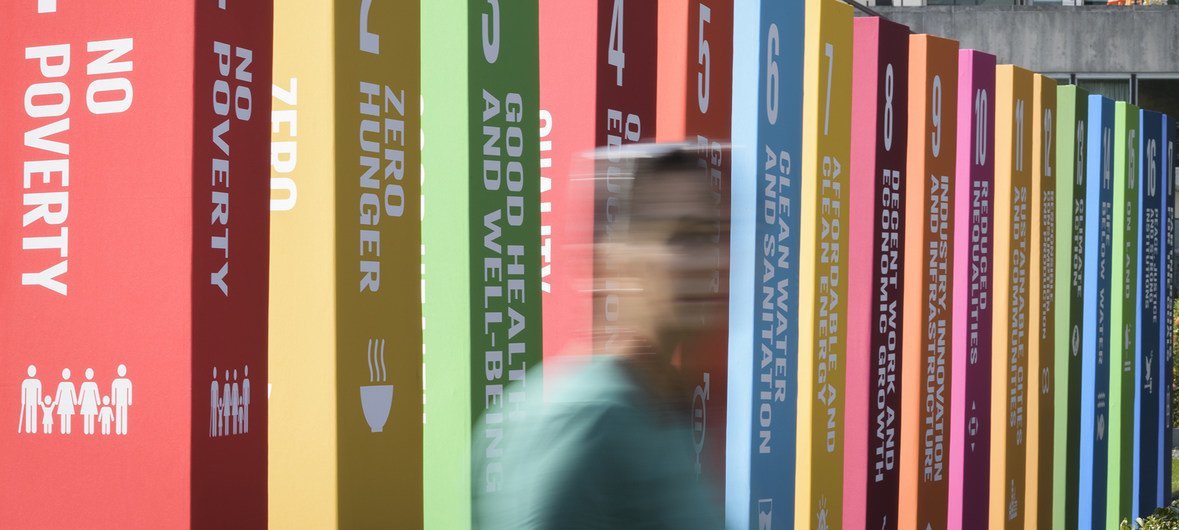
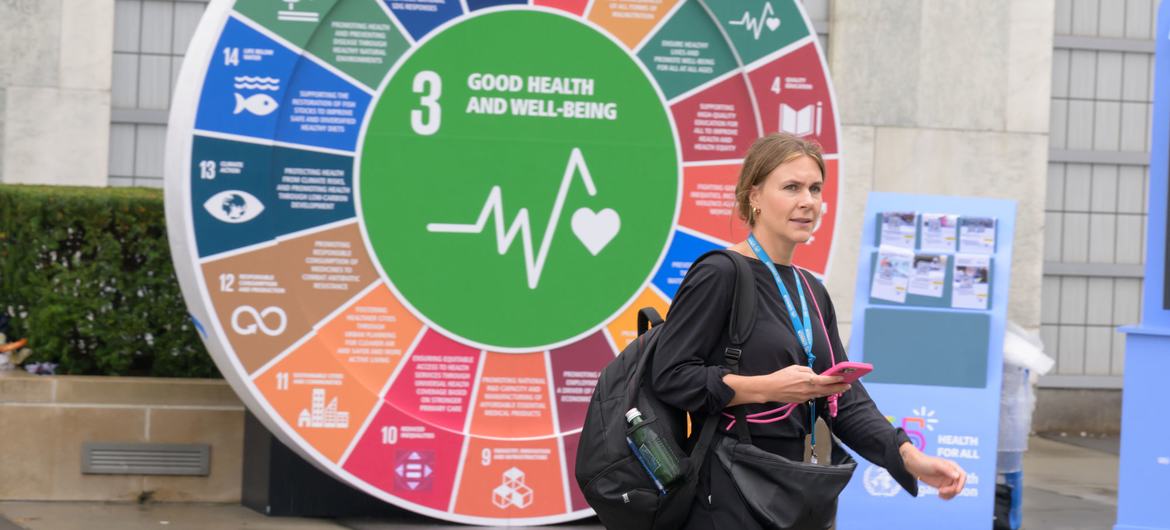
Displays at the United Nations Headquarters in New York illustrate the 17 Sustainable Development Goals (SDGs).
UN Photo/Manuel Elías
 
Displays at the United Nations Headquarters in New York illustrate the 17 Sustainable Development Goals (SDGs).

51 minutes 6 seconds ago 
SDGs

With just six years remaining to reach the Sustainable Development Goals (SDGs), global progress is alarmingly insufficient, with a mere 17 per cent of the targets currently on track, according to a new UN report released on Friday.

The 2024 Sustainable Development Goals Report highlighted that nearly half the 17 targets are showing minimal or moderate progress, while over a one-third are stalled or going in reverse, since they were adopted by UN Member States back in 2015 to bring peace and prosperity for people and the planet.  

“This report is known as the annual SDG report card and it shows the world is getting a failing grade,” UN Secretary-General António Guterres said at the press conference to launch the comprehensive stocktake.

“The takeaway is simple – our failure to secure peace, to confront climate change and to boost international finance is undermining development. We must accelerate action for the Sustainable Development Goals, and we don’t have a moment to lose,” he stressed.

Tweet URL

Major obstacles

The Report identified the lingering effects of the COVID-19 pandemic, escalating conflicts, geopolitical tensions and worsening climate chaos as major obstacles to progress.

It noted that an additional 23 million people were pushed into extreme poverty and over 100 million more were suffering from hunger in 2022 compared to 2019, while the number of civilian deaths in armed conflict skyrocketed last year.  

2023 was also the warmest on record, with global temperatures nearing the critical 1.5°C threshold.

Urgent priorities

Mr. Guterres emphasized the urgency of boosting international cooperation, stating “we must not let up on our 2030 promise to end poverty, protect the planet and leave no one behind.”

The report outlined key priorities to address the deficit.

Foremost, it highlighted the need for financing for development. The SDG investment gap in developing countries is $4 trillion per year. It is crucial to rapidly increase funding and fiscal space, as well as reform the global financial system to unlock funding.  

Resolving conflicts through dialogue and diplomacy is equally crucial. With nearly 120 million forcibly displaced people by May 2024 and a 72 per cent increase in civilian casualties between 2022 and 2023, the need for peace is more pressing than ever.

In parallel, a surge in implementation is desperately needed. Massive investments and effective partnerships are vital to drive transitions in key areas such as food, energy, social protection, and digital connectivity.

Seize the moment

The report comes ahead of the High-Level Political Forum on Sustainable Development (HLPF), taking place at the UN Headquarters, in New York, from 8 to 17 July.

Under the auspices of the Economic and Social Council (ECOSOC), the Forum will review global progress towards Goal 1 on ending poverty, Goal 2 on zero hunger, Goal 13 on climate action, Goal 16 on peaceful and inclusive societies, and Goal 17 on means of implementation.

In addition, the upcoming Summit of the Future in September will be pivotal for realigning efforts towards achieving the Goals. The Summit aims to address the debt crisis affecting many developing countries and the urgent need to reform international financial architecture.

Key findings

The SDG Report highlights stark economic challenges, with per-capita gross domestic product (GDP) growth in half of the world’s most vulnerable nations slower than in advanced economies.  

Nearly 60 per cent of countries faced abnormally high food prices in 2022, exacerbating hunger and food insecurity.

The report also highlighted gender inequality, noting that 55 per cent of 120 surveyed countries lack laws prohibiting discrimination against women.

It also cited education as a significant concern, with only 58 per cent of students worldwide achieving minimum proficiency in reading by the end of primary school.  

At the same time, despite global unemployment reaching a historic low of five per cent in 2023, many obstacles to achieving decent work across all societies persist.

However, there are positive developments in renewable energy, which expanded at a rate of 8.1 per cent annually over the past five years.

Technological advancements also saw significant strides, with mobile broadband accessibility (3G or higher) increasing to 95 per cent of the world’s population from 78 per cent in 2015. 


https://news.un.org/en/story/2024/06/1151606


https://creativecommons.org/licenses/by/4.0/legalcode

среда, 4 октября 2023 г.

UN chief reinforces call for multilateral reform, outlines next steps


A participant at high-level week at the UN General Assembly session.
UN Photo/Mark Garten
 
A participant at high-level week at the UN General Assembly session.
SDGs

Global leaders issued a resounding call for reform and renewed multilateral cooperation during the General Assembly’s crunch week, the UN chief told top diplomats meeting in New York on Wednesday.

Other key priorities to emerge were the state of the environment and ensuring responsible use of new technologies, such as Artificial Intelligence (AI), Secretary-General António Guterres added.

Against this backdrop, the UN’s visionary Our Common Agenda presents proposals and ideas that can bridge the gap, “between the world as it is and the world as we know it can be,” Mr. Guterres said.

The coming year of preparations for the Summit of the Future will be critical he told Member States, highlighting four main areas of work ahead.

The proposals and ideas in Our Common Agenda are bridges across the aspiration gap – between the world as it is, and the world as we know it can be
— Secretary-General Guterres

Renewing the social contract

Our Common Agenda emphasizes renewing the social contract based on human rights and the 2030 Agenda for Sustainable Development – the SDGs – the UN chief said.

This includes strengthening the public sector, creating green and digital jobs, ending violence against women, and promoting human rights.

“The high-impact initiatives set out at the SDG Summit will enable us to step up our activities,” the UN chief said.

Youth and the future

The report recognizes the key role of young people and future generations, harnessing their energy and creativity through a new UN Youth Office.  

The goal is to make global governance more responsive and accountable to their needs, with a focus on climate and education, he said.

Transforming global governance  

The report also places an emphasis on adapting intergovernmental decision-making to modern realities, including discussions on strengthening global governance in areas like health, environment, and digital cooperation.  

Proposals for deep reforms to international financial architecture are gaining traction globally and will be pursued at key meetings, including the COP28 climate conference in Dubai this year, and next year’s Summit of the Future.

UN 2.0

The Secretary-General also highlighted that steps are being taken to transform the UN system by updating its culture and skills across key areas.

Initiatives include launching a Scientific Advisory Board, establishing a UN Futures Lab, and increasing engagement with stakeholders like civil society, parliamentarians, and the private sector.  

Advisory bodies on regional government and artificial intelligence will also be set up, he said.

Next steps

Mr. Guterres highlighted his policy briefs on the proposals of Our Common Agenda, the report of the High-Level Advisory Board on Effective Multilateralism, and the SDG Summit in High Level Week that provide a successful model for next year’s marquee summit.

“Together, we have already taken significant steps towards the inclusive, effective, networked multilateralism that our circumstances demand,” he said, urging governments for their strong engagement in the coming days.


 https://news.un.org/en/story/2023/10/1141892

https://creativecommons.org/licenses/by/3.0/legalcode

воскресенье, 17 сентября 2023 г.

‘We all need to step up’ to rescue the SDG’s and fight for a better future: UN chief

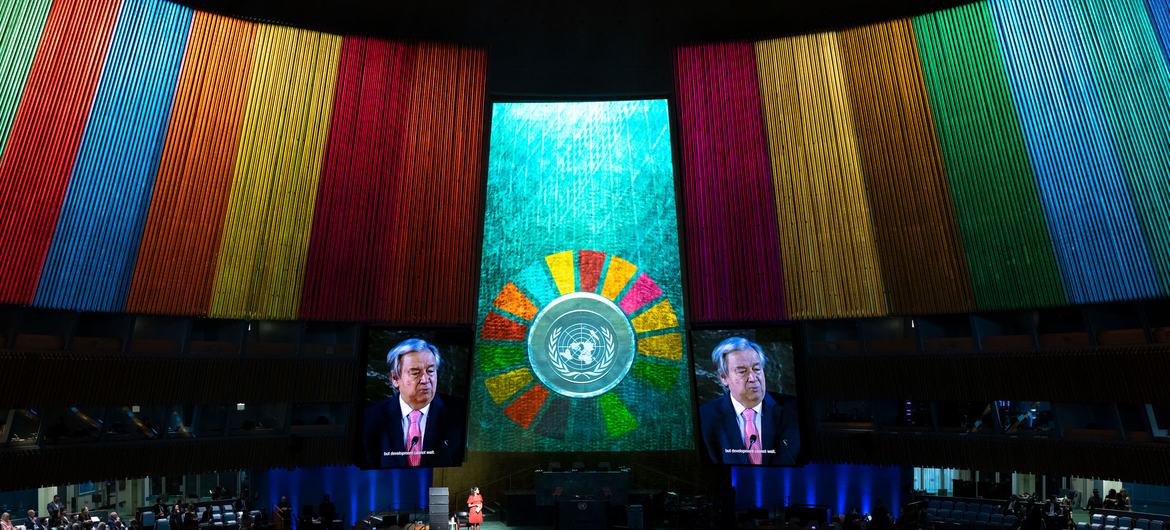
A wide view of the opening of the SDG Action Weekend. Secretary-General António Guterres is shown on the screens as he delivers remarks.
UN Photo/Cia Pak
 
A wide view of the opening of the SDG Action Weekend. Secretary-General António Guterres is shown on the screens as he delivers remarks.
16 September 2023
SDGs

UN Secretary-General António Guterres on Saturday rallied a diverse cross section of civil society actors to use their passionate voices and energetic grassroots networks to “help rescue the Sustainable Development Goals (SDGs) and fight for the better future every person deserves.” 

With world leaders set to convene next week for the annual high-level opening of the General Assembly, the UN’s Midtown East campus on the weekend was host to an energetic range of actors – from youth groups and women’s organizations, to mayors, community activists and business leaders – looking to boost support for the Goals ahead of the SDG Summit. 

The Summit on 18-19 September will mark the mid-point of the SDGs, between their 2015 launch and their 2030 deadline. 

2030 Goals are off-track

As things stand, the Goals and UN member countries’ promise when they adopted the 2030 Agenda to ‘leave no one behind’ are in serious trouble: despite some progress, over the years widespread implementation gaps have emerged across all 17 Goals, which aim to tackle everything from poverty, hunger and gender equality, to access to education and clean energy.

Lagging public interest in achieving the Goals, geopolitical friction and perhaps most critically, the global coronavirus pandemic, have left the SDGs in need of a global rescue plan. 

“Today, only 15 per cent of the targets are on track, with many going into reverse,” said the Secretary-General, adding that: “Monday’s SDG Summit will be the moment for governments to come to the table with concrete plans and proposals to accelerate progress.” 

Not just ‘checking boxes’

 But he stressed that the SDGs are not about checking boxes. 

“They are about the hopes, dreams, rights and expectations of people and the health of our natural environment. They are about righting historic wrongs, healing global divisions and putting our world on a path to lasting peace,” stated the UN chief. 

Everyone needs to step up to help revive the Goals and ensure a better life for people and the planet. 

Mr. Guterres went on to salute the courage and conviction of the activists in attendance, saying that he knew their global fight for the SDGs “comes at a risk to your safety … liberty [and] even your life.”  

“I urge you to keep going,” he said, and similarly urged members of the business community in attendance “to see that sustainable development is best business plan of all”.

“To the women and young people joining us – keep calling out for change in your communities and fighting for your rights and a place at every table, the Secretary-General said.  

Finally, the UN chief said: “To the local authorities here – the SDGs will not be rescued in New York. They will be rescued in your communities. So continue listening to the people in your communities and embedding their needs and concerns across your policies and investments.” 


https://news.un.org/en/story/2023/09/1140837


https://creativecommons.org/licenses/by/3.0/legalcode


пятница, 8 сентября 2023 г.

UN 2.0: Reimagining our global organization for a world in flux


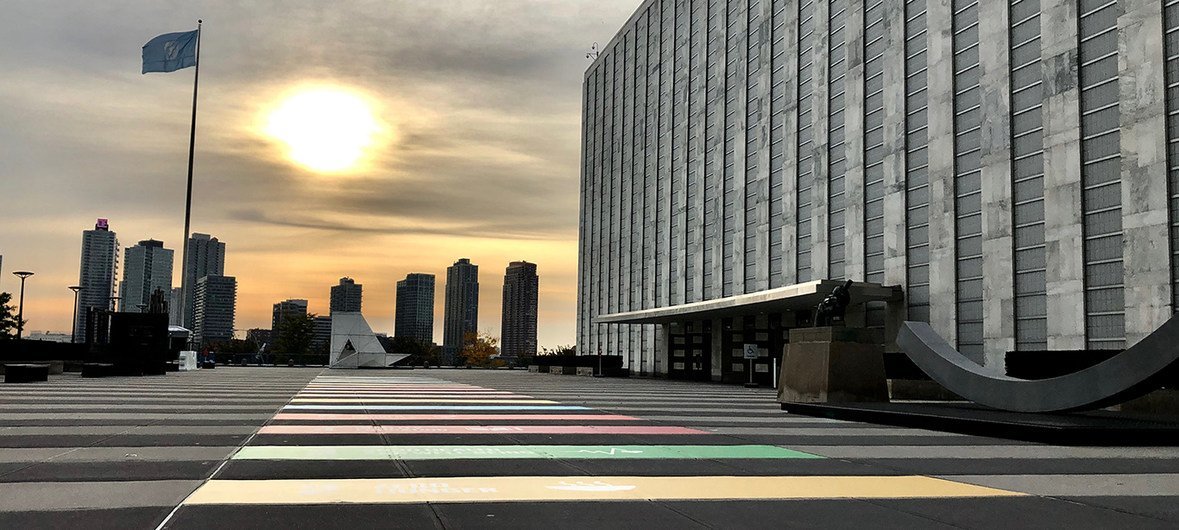
The sun rises over the SDGs Path at the entrance to the UN General Assembly building in New York (file photo)
UN News/Anton Uspensky
 
The sun rises over the SDGs Path at the entrance to the UN General Assembly building in New York (file photo)
7 September 2023
SDGs

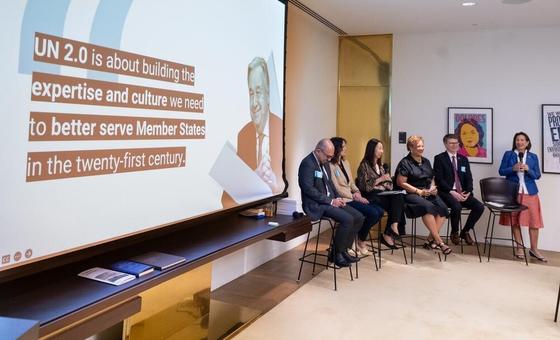
Working towards better results on the ground and focused on the future, the UN family is undergoing a reset that will give rise to more agile, tech-savvy and impactful UN organizations.

This transformation in skills and culture, encapsulated in the Secretary-General's vision of a UN 2.0, is focused on fostering cutting-edge capabilities in data, digital, innovation, foresight and behavioural science – to deliver stronger results, better Member State support, and faster progress towards the Sustainable Development Goals.

During a roundtable with Member States, a group of UN leaders and experts explained the potential and strategies of UN 2.0. They highlighted early success stories, that, when replicated, will boost on-the-ground impact of a stronger, more flexible and modern UN. 

This event came before the launch of the Secretary-General’s policy brief on the issue of a UN 2.0 revamp.

At the core of UN 2.0 is the so-named ‘Quintet of Change’, a powerful combination of data, innovation, digital solutions, foresight, and behavioural science solutions.

Opening the discussion, Melissa Fleming, the Under-Secretary-General for Global Communications, emphasized the need for change, highlighting that the progress towards the 2030 Agenda for Sustainable Development – adopted by all UN Member States in 2015 as a blueprint for peace and prosperity – is currently not on track. 

Responding to the growing demand for reform, UN 2.0 represents a shift in how UN system organizations operate, aiming to accelerate progress towards the Sustainable Development Goals (SDGs). 

Guy Ryder, the Under-Secretary-General for Policy, who brings extensive experience from his decade-long tenure leading the International Labour Organization (ILO), explained that the purpose of UN 2.0 is to equip UN organizations with the contemporary expertise required to be an effective partner for Member States in the twenty-first century.

A transformed UN leaves no one behind

Catherine Pollard, the Under-Secretary-General for Management Strategy, Policy, and Compliance, explained that the primary beneficiaries of UN 2.0 are the people the UN serves in its 193 member countries. “But equally important, UN 2.0 is about UN organizations themselves, because they will develop new skills, new talent, new purpose to better deliver our mandate.”

Melissa Fleming (right), Under-Secretary-General for Global Communications, moderates the “Roundtable on UN 2.0 Vision”, held at the Ford Foundation.

The UN continues to be a relevant player in the multilateral arena. To maintain this relevance, Ms. Pollard said, the Organization will develop employees’ skills, offer more training, attract new talents, and improve human resources policies.

Like many things in the modern world, UN 2.0 will be driven by digital solutions and cutting-edge technologies. Robert Opp, Chief Digital Officer of UNDP, the UN agency promoting international development, advocated for the potential that new technologies offer and contemplated on what the future can bring. 

“AI is the current challenge, but there will be quantum computing and other breakthroughs around the corner, what we haven’t even anticipated,” he said, adding that when the ‘Quintet of Change’ is successfully implemented across the UN system, the Organization’s agility in responding to new challenges and in helping Member States will increase dramatically. 

Data, digital innovation, foresight and behavioural science play key roles  

The UN is actively supporting Member States in their pursuit of new solutions. A network of innovation labs has been established in more than 90 countries, serving as platforms for sharing new expertise in technology, data and other areas.

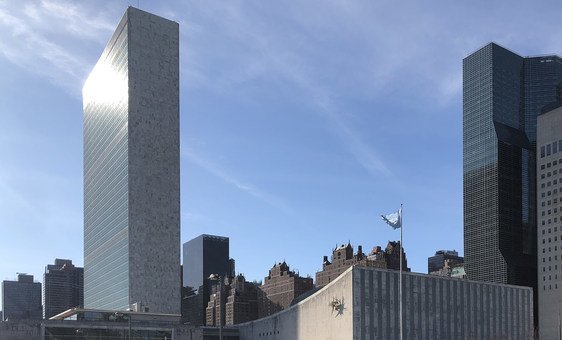
UN HQ Building in New York

One notable success story comes from Indonesia, explained Faizal Thamrin, Data Scientist at UN Global Pulse Asia-Pacific. He illustrated how his team collaborated with the Government and thousands of small and medium enterprises to prepare for the future. Additionally, the team’s data analytics skills, combined with Indonesia’s experience, helped replicate early warning systems for natural disasters across the region.

UN 2.0 extends beyond data and digital solutions. Behavioural science, a multidisciplinary field that integrates insights from psychology, economics, communications, data science, sociology, and more, plays a crucial role in the ‘Quintet of Change’. 

Claire Hobden, an ILO expert on domestic work, provided an example from Argentina’s informal sector. With support from UN colleagues, the Government was able to significantly expand social security coverage to domestic workers, such as nannies and caregivers, who are often hard to reach. 

“Through a very small intervention we  hope to be able to give more people access to social security, realizing their rights and access to decent work,” said Ms. Hobden noting the huge potential of replicating these methods, as there are 75 million such workers around the globe.

‘With new tools, we can do better’ 

In conversation with senior diplomats, Mr. Ryder emphasized that UN 2.0 is about potential of doing our job better “if we take a fresh look at some of the things we’ve been doing for a long time.”

Commenting on the journey ahead for UN colleagues, Mr. Ryder said “What you’ve done has been great. Now we have new tools. Let’s pick up those new tools, use them and maybe we can improve on what we’ve done before. It’s not saying what happened in the past was bad. It’s saying what we do in the future can be better”.

The event was co-organized by the Permanent Missions of Norway and the Republic of Indonesia to the United Nations in partnership with the Executive Office of the Secretary-General.


 https://news.un.org/en/story/2023/09/1140492

https://creativecommons.org/licenses/by/3.0/legalcode

среда, 5 июля 2023 г.

Activating ‘citizen mode’ to support democracy from the ground up

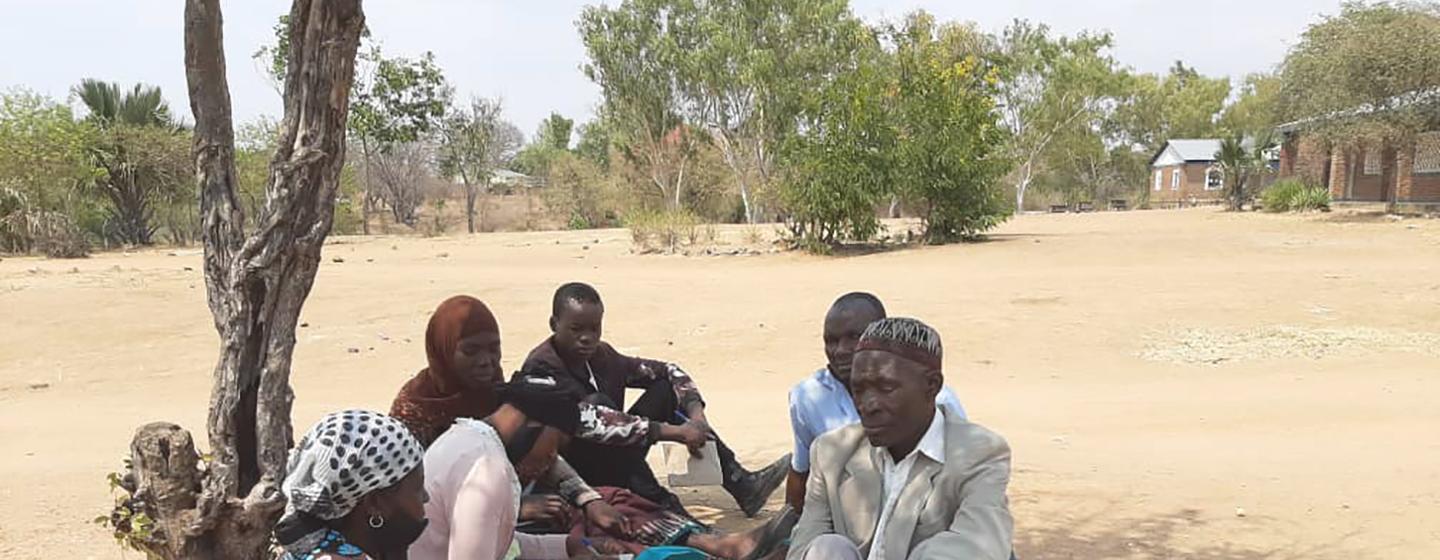
Villagers in Salima District, Malawi, take part in a UN-supported citizen’s assembly.


newDemocracy/Edwin Msewa. (file)
 
Villagers in Salima District, Malawi, take part in a UN-supported citizen’s assembly.
4 July 2023

SDGs

Against a backdrop of growing misinformation, political polarization, and a breakdown in trust between citizens and those who govern them, the UN is promoting the direct participation of citizens in decisions that affect them and their communities to rebuild trust in democracy.

People around the world should be able to play a more significant role in decision and policy-making processes that impact them and their communities in order to uphold democracy; that’s according to participants in a discussion at the UN focusing on strengthening democratic governance.

In recent years, the UN has increasingly been looking at ways to restore frayed links between people and their governments by encouraging greater citizen involvement.

Civil society organizations (CSOs), in collaboration with the UN, are finding that citizen’s assemblies are a highly effective way of bringing together diverse members of local communities to work on policies and projects that directly affect them.

Representatives of three CSOs recently came to UN Headquarters to share their experiences of running citizen’s assemblies: Cynthia Mbamalu is Director of Programs at Yiaga Africa, a CSO in Nigeria, Silvia Cervellini is the co-founder of Delibera Brasil, and Iain Walker is the Executive Director of the Australia-based newDemocracy Foundation.

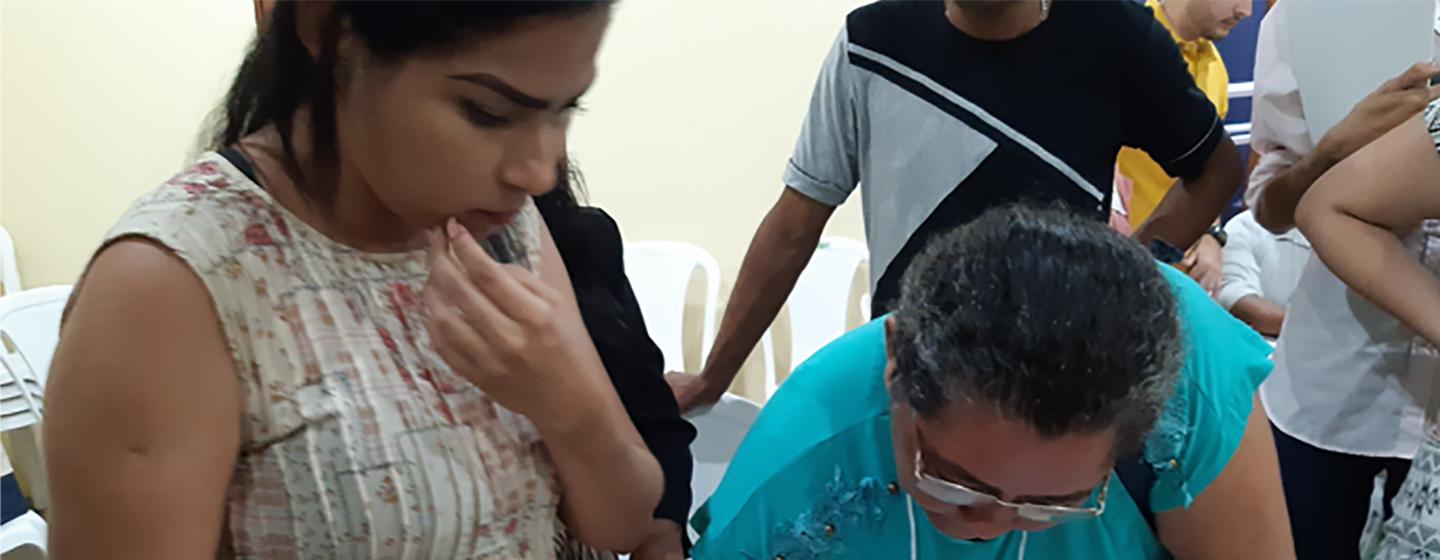
Citizens in Fortaleza, Brazil, take part in a UN-supported citizen’s assembly.
© Delibera Brasil
 
Citizens in Fortaleza, Brazil, take part in a UN-supported citizen’s assembly.

Cynthia Mbamalu: Nigeria has a growing and large youth population, and one of the things we've learned is that young people want to be part of the solution. They want to be heard. 

We create safe spaces for youth dialogue, where diverse groups of young people learn by having conversations about policies. Whatever decisions come out of those conversations can feed into government actions. 

But we need to go further, to help young people move from student union movements into mainstream politics, and learn how to advocate for policies that affect issues of concern to youth.

Silvia Cervellini: Brazil has a citizen’s constitution, which has led to the creation of important institutions, such as the National Conference of States and Municipal Councils, but there needs to be a constant effort to ensure that participation is truly universal.

In our experience, we repeatedly witness what we call “citizen mode” being activated, when different people work together to figure out the best possible solution for the common good, even in a time as polarized as ours.

Iain Walker We all want to have a say in the decisions which affect us as citizens. Citizens assemblies are a step to rounding out that role.

One reason is that they are a great chance to mix. We get people from all walks of life – old and young, white collar, blue collar, rich and poor – and put them into one room, to see what we can agree on.


Trust deficit

Cynthia Mbamalu: A lot of young people want to participate but, in Nigeria, there’s a huge trust deficit between citizens and the government.

SDG 16 promotes peaceful and inclusive societies.
United Nations
 
SDG 16 promotes peaceful and inclusive societies.

This is why we provide support for young people to promote the idea of electoral participation, so that they are the ones driving the conversation, and mobilizing their peers.

Silvia Cervellini: Trust goes both ways. We use any excuse to invite political leaders to trust the people, and when they see that citizens are involved in a participatory process, they trust them to give the best answers to a problem.

When you have the mayor, or city councillors saying, “I need your help to solve this”, people feel a sense of responsibility to make decisions for others who are not in the room.

And this is the magic of the “citizen’s mode”: they are not thinking about their individual interests or their preference. They are thinking, what's the best for everybody.

Iain Walker: We all tend to trust people a bit like us, yet parliamentarians often seem to be living in a remote and different world. 

Ireland has been a pioneer in creating projects that put randomly selected people and members of parliament in the same process: after spending several days together, they realize that the MPs aren’t that different from them. 

Politicians are used to people coming to them emphasizing disagreement, and we always see a breakthrough at citizen’s assemblies, when they say “wow, people really took this problem seriously, and worked to find an agreement”.

This is how we can rebuild trust in electoral democracy, 50 or 100 people at a time, to create a more trusted, cohesive society.

Cynthia Mbamalu, Silvia Cervellini and Iain Walker as well as Aleida Ferreyra, the UN Development Programme (UNDP) Global Lead for Democratic Institutions and Processes, were interviewed by Annemarie Hou, Executive Director of UN Partnerships and the UN Democracy Fund, for an episode of SDG Roundtables, a series of videos discussing themes related to the Sustainable Development Goals. 

How the UN supports civil society and human rights

This year marks 75 years since the adoption of the Universal Declaration of Human Rights, a landmark agreement aimed at ensuring a common future of dignity, freedom, and justice for all. 

The Office of the High Commissioner for Human Rights (OHCHR) has called for safe and open civic space that is inclusive, celebrates diversity, and incorporates an age and gender sensitive approach recognizing the role of civil society actors, especially women, human rights defenders and journalists.

Yiaga Africa works to increase the engagement of young people in the democratic process and, with UNDP, launched #SixtyPercentOfUs in May 2022, a project aimed at mobilizing at least 60 per cent youth voter registration.

Delibera Brasil, which organizes citizen’s assemblies backed by the UN Democracy Fund (UNDEF), enabling the residents of Brazilian cities to directly participate in policy making to address poverty and inequality.

The newDemocracy Foundation, which, with UNDEF funding, has helped countries bring underserved communities into the political system, and produced a handbook on so-called “democracy beyond elections”, explaining how the principles of representation and deliberation can be applied to nations at different levels of development.

UNDEF is a grant-making body described as a fund for CSOs, aimed at strengthening the voice of civil society, promoting human rights, and encouraging the participation of all groups in democratic processes. 


 https://news.un.org/en/story/2023/07/1138292


https://creativecommons.org/licenses/by/3.0/legalcode

воскресенье, 21 мая 2023 г.

Trafficking in the Sahel: Guns, gas, and gold

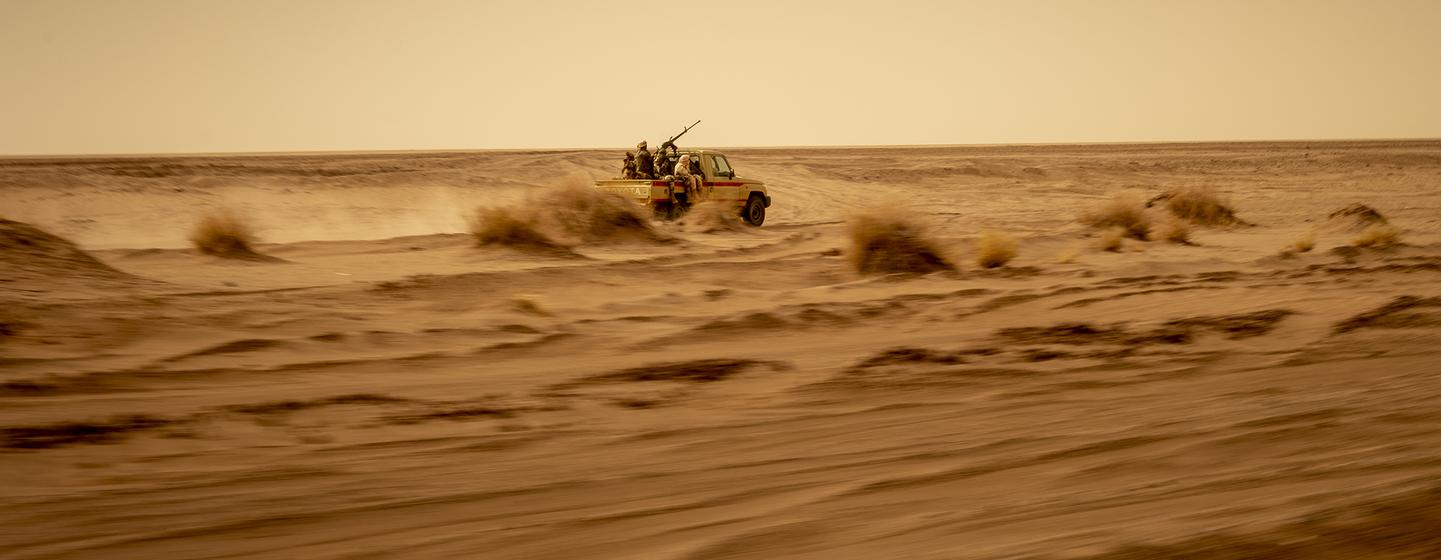
The Nigerien army patrols the Sahara desert targetting  militant groups including ISIL and Boko Haram.

Trafficking in the Sahel: Guns, gas, and gold

© UNICEF/Gilbertson
 
The Nigerien army patrols the Sahara desert targetting militant groups including ISIL and Boko Haram.
20 May 2023
SDGs

Chili peppers, fake medicine, fuel, gold, guns, humans, and more are being trafficked via millennia-old trade routes crisscrossing the Sahel, and the UN and partners are trying out new, collaborative ways to thwart those attempting the illegal practice, a growing problem in this fragile African region.

In the first of a series of features exploring the fight against trafficking in the Sahel, UN News takes a closer look at what’s behind the growth of the phenomenon.

A tangled trafficking web has been woven across the Sahel, which spans almost 6,000 kilometres from the Atlantic Ocean to the Red Sea, and is home to more than 300 million people, in Burkina Faso, Cameroon, Chad, The Gambia, Guinea, Mali, Mauritania, Niger, Nigeria, and Senegal.

The Sahel is described by the UN as a region in crisis: those living there are prey to chronic insecurity, climate shocks, conflict, coups, and the rise of criminal and terrorist networks. UN agencies expect that more than 37 million people will need humanitarian assistance in 2023, about 3 million more than in 2022.

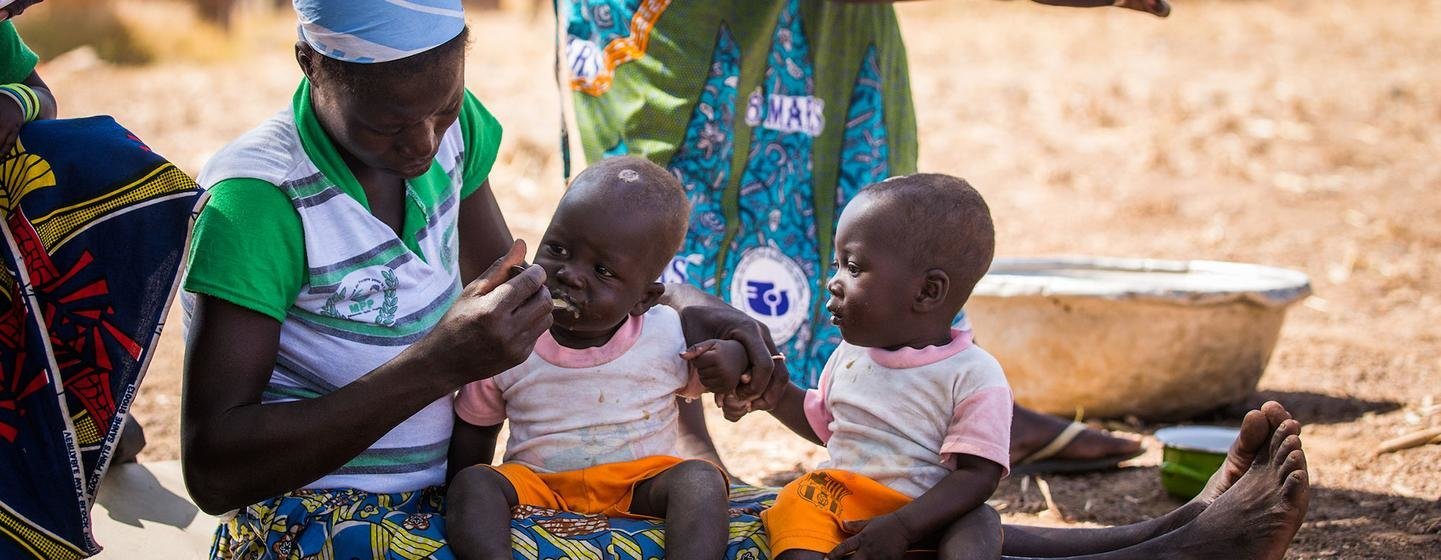
Food insecurity is affecting millions of people in Burkina Faso.
© UNICEF/Vincent Treameau
 
Food insecurity is affecting millions of people in Burkina Faso.

Unravelling security

Security has long been an issue in the region, but the situation markedly degraded in 2011, following the NATO-led military intervention in Libya, which led to the ongoing destabilization of the country.

The ensuing chaos, and porous borders stymied efforts to stem illicit flows, and traffickers transporting looted Libyan firearms rode into the Sahel on the coattails of insurgency and the spread of terrorism.

Armed groups now control swathes of Libya, which has become a trafficking hub. The terrorist threat has worsened, with the notorious Islamic State (ISIL) group entering the region in 2015, according to the UN Security Council Counter-Terrorism Committee’s Executive Directorate (CTED).

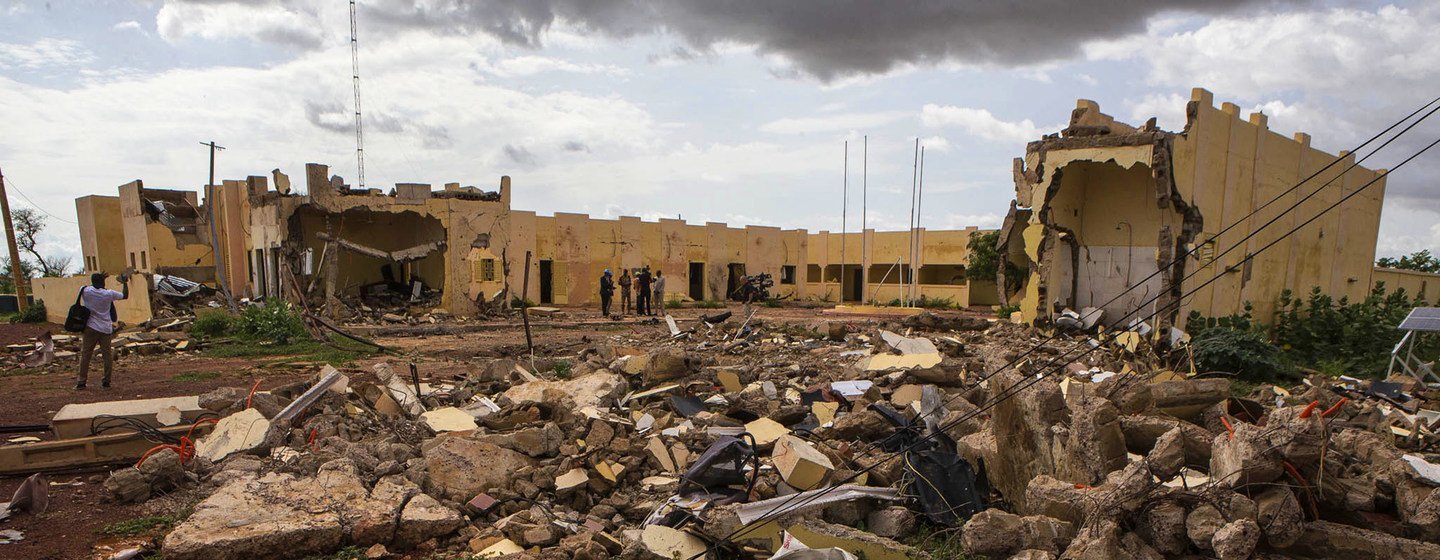
The G5 Sahel Force headquarters was destroyed by a terrorist attack in 2018 in Mopti, Mali.
MINUSMA/Harandane Dicko
 
The G5 Sahel Force headquarters was destroyed by a terrorist attack in 2018 in Mopti, Mali.

Markets across the Sahel can be found openly selling a wide range of contraband goods, from fake medicines to AK-style assault rifles. Trafficking medication is often deadly, estimated to kill 500,000 sub-Saharan Africans every year; in just one case, 70 Gambian children died in 2022 after ingesting smuggled cough syrup. Fuel is another commodity trafficked by the main players – terrorist groups, criminal networks, and local militias.

Closing corridors of crime

In order to fight trafficking and other evolving threats, a group of countries in the region – Burkina Faso, Mali, Mauritania, Niger, and Chad – formed, with the support of the UN, the Joint Force of the Group of Five for the Sahel (G5 Sahel).

Meanwhile, cross-border cooperation and crackdowns on corruption are on the rise. National authorities have seized tons of contraband, and judicial measures have dismantled networks. Partnerships, such as the newly signed Côte d’Ivoire-Nigeria agreement, are tackling the illegal drug trade.

The UN Office on Drugs and Crime (UNODC) is a leading player in efforts to bolster security by stopping trafficking attempts.

In 2020, for example, KAFO II, a UNODC-INTERPOL operation, successfully choked off a Sahel-bound terrorist supply route, with officers seizing a bounty of trafficked spoils: 50 firearms, 40,593 dynamite sticks, 6,162 ammunition rounds, 1,473 kilograms of cannabis and khat, 2,263 boxes of contraband drugs, and 60,000 litres of fuel.

Sting operations such as KAFO II provide valuable insights into trafficking’s increasingly complex and interwoven nature, demonstrating the importance of connecting the dots between crime cases involving firearms and terrorists across different countries, and taking a regional approach.

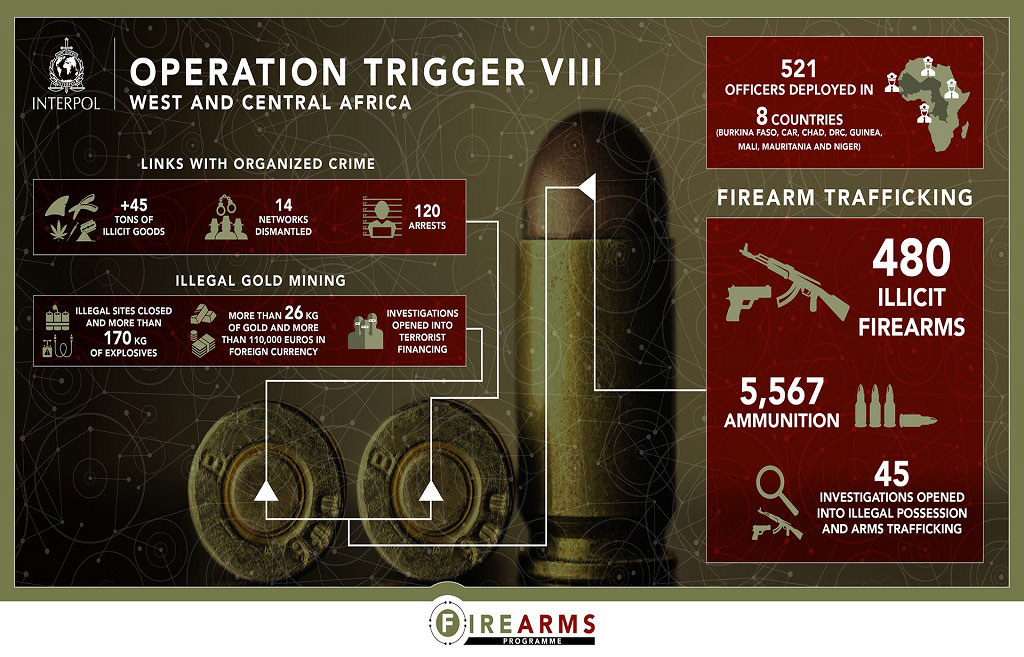
An international police operation coordinated by INTERPOL in 2022 targeting the movement of illicit firearms in Central and West Africa has led to some 120 arrests and the seizure of firearms, gold, drugs, fake medication, wildlife products, and cash.
© INTERPOL
 
An international police operation coordinated by INTERPOL in 2022 targeting the movement of illicit firearms in Central and West Africa has led to some 120 arrests and the seizure of firearms, gold, drugs, fake medication, wildlife products, and cash.

Corruption crackdown

These insights are backed up in a raft of new UNODC reports, mapping out the actors, enablers, routes, and scope of trafficking, reveal common threads amongst the instability and chaos, and provide recommendations for action.

One of those threads is corruption, and the reports call for judicial action to be bolstered. The prison system also needs to be engaged, as detention facilities can become “a university for criminals” to broaden their networks.

“Organized crime is feeding on the vulnerabilities and also undermining stability and development in the Sahel,” says François Patuel, head of the UNODC Research and Awareness Unit. “Combining efforts and taking a regional approach will lead to success in addressing organized crime in the region.”

Crisis poses ‘global threat’

Fighting organized crime is a central pillar in the wider battle to deal with the security crisis in the region, which UN Secretary-General António Guterres poses a global threat.

“If nothing is done, the effects of terrorism, violent extremism, and organized crime will be felt far beyond the region and the African continent,” Mr. Guterres warned in 2022. “We must rethink our collective approach and show creativity, going beyond existing efforts.”

How the UN supports people of the Sahel

  • The UN Office of the High Commissioner for Human Rights (OHCHR) has provided direct support to the G5 Sahel Force to operationalize and implement measures to reduce civilian harm and respond to violations.
  • UNODC routinely joins national and global partners, including INTERPOL, to choke supply routes.
  • The International Organization for Migration (IOM) crisis response plan aims at reaching almost 2 million affected people while addressing the structural causes of instability, with a specific focus on cross-border fragility.
  • WHO launched an emergency appeal to fund health projects in the region in 2022, and works with 350 health partners in six countries.
  • The UN Integrated Strategy for the Sahel (UNISS) provides direction for on-the-ground efforts in 10 countries.
  • The UN Support Plan for Sahel continues to foster coherence and coordination for greater efficiency and results delivery related to the UNISS framework, in line with Security Council resolution 2391.
The UN works at building food security, which in turn, builds climate security in Mali.
© UNDP Mali
 
The UN works at building food security, which in turn, builds climate security in Mali.

 https://news.un.org/en/story/2023/05/1136847


https://creativecommons.org/licenses/by/3.0/legalcode

среда, 3 мая 2023 г.

Stamping out corruption can give SDGs $3 trillion boost

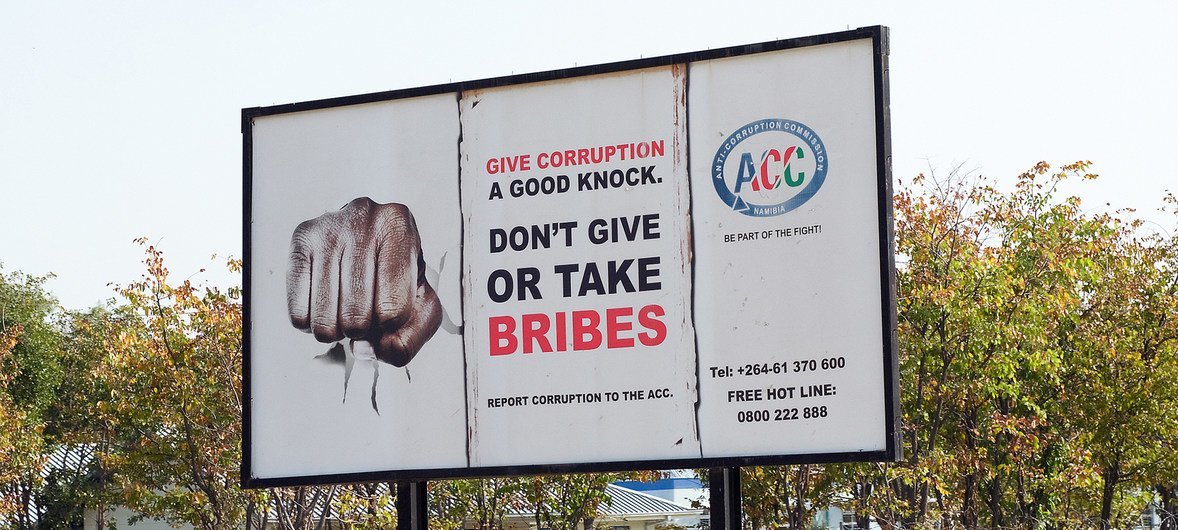
Anti-corruption sign in Namibia.
World Bank/Philip Schuler
 
Anti-corruption sign in Namibia.

2 May 2023
SDGs

Corruption and its staggering costs have hobbled sustainable development in all countries, but fresh efforts are making inroads, the President of the Economic and Social Council (ECOSOC) said on Tuesday at a special meeting to tackle the scourge and give the 2030 Agenda for Sustainable Development a much-needed boost.

“Corruption drains more than 5 per cent of the global GDP,” said Lachezara Stoeva. “Of the approximately $13 trillion in global public spending, up to 25 per cent is lost to corruption.”

Tweet URL

That translates into at least $3 trillion for public spending.

Under the theme, Unleashing the transformative power of Sustainable Development Goal (SDG) 16: Improving governance and reducing corruption, the special meeting aimed at identifying concrete solutions to promote anti-corruption practices at all levels.

Participants also reflected on the role of principles for effective governance and highlighted such instruments as the UN Convention against Corruption.

Stakes ‘never been higher’

“A resolute response to corruption, anchored in SDG 16, would pave the way for bringing the ambition of the 2030 Agenda closer to reality,” Ms. Stoeva said. “The stakes have never been higher.”

Indeed, the costs of corruption are not merely financial, she explained.

“Corruption contributes to the loss of natural resources, exacerbates poverty and inequality, erodes trust and social cohesion, and undermines economic and political stability,” she said.

Corruption ‘stands in our way’

Corruption also disproportionately affects women, the poor and vulnerable groups, and erodes human capital, she said.

At the mid-point in the implementation of the 2030 Agenda the urgency of accelerating implementation of all 17 SDGs has never been greater, she said, emphasizing that “corruption stands in our way”.

“Progress on SDG 16 on peace, justice, and strong institutions can unleash a virtuous circle,” she said, adding that the goal is an “indispensable requirement” for the effective implementation of all the SDGs.

In return, progress on the SDGs becomes an enabling factor for more effective responses to corruption, she said.

Frameworks in place

Citing “significant progress” in using available instruments, the ECOSOC chief said countries have implemented a variety of measures, awareness has been raised, and better legislative and regulatory frameworks are in place.

In addition, stakeholders are tapping into the potential of ICTs (information and communications technology) and data, she said. Parliaments, citizens, and civil society are engaged in monitoring corruption risks and anti-corruption responses, she added.

Tackling challenges with tailored approaches

However, effectively addressing the challenges requires sustained anti-corruption efforts and tailored approaches that engage multiple stakeholders and combine various international agreements, laws, and conventions, she said.

“It is critical to strengthen monitoring and evaluation to improve anti-corruption, gather evidence of effective reforms, and report on progress on SDG 16,” she stated.

Insights from the special meeting will provide input to forthcoming gatherings, including the SDG Summit at UN Headquarters in New York in September and the SDG 16 Conference, to be held in Rome in May.

Learn more about what the UN Office on Drugs and Crime (UNODC) is doing to fight corruption here.

 https://news.un.org/en/story/2023/05/1136282
https://creativecommons.org/licenses/by/3.0/legalcode