Показаны сообщения с ярлыком Humanitarian Aid. Показать все сообщения

вторник, 30 декабря 2025 г.

UN, US sign $2 billion humanitarian funding agreement for 17 crisis-hit countries


High energy biscuits are distributed to newly displaced families in South Kivu, Democratic Republic of the Congo.


29 December 2025 
Humanitarian Aid

The United Nations and the United States on Monday formalized an agreement under which the US committed $2 billion in humanitarian assistance for global relief programmes, a move the UN’s top relief official hailed as a landmark commitment to saving lives amid escalating humanitarian needs worldwide.

Speaking at the signing in Geneva, UN Emergency Relief Coordinator Tom Fletcher paid tribute to humanitarian workers operating under increasingly difficult conditions, describing the past year as “a very, very tough year for everyone engaged in humanitarian action.”

Despite the challenges, he said the agreement, known as a memorandum of understanding or MOU, offered grounds for optimism.

“Millions, millions more will get that support that they so badly need,” Mr. Fletcher said, adding that the funding would help save tens of millions of lives in the year ahead.

The agreement covers 17 crisis-affected countries: Guatemala, Honduras, El Salvador, Ukraine, Haiti, Nigeria, Ethiopia, South Sudan, Mozambique, Myanmar, the Democratic Republic of the Congo (DRC), Sudan, Bangladesh, Syria, Uganda, Kenya and Chad, as well as the UN Central Emergency Response Fund (CERF).

Saving lives

Mr. Fletcher said the true impact of this “landmark agreement” would be its impact on the ground. “A number that really matters...is that millions of lives will be saved,” he said.

He noted that the funding supports the UN’s 2026 plan to reach 87 million people with emergency assistance. That plan, he said, has been “hyper-prioritized” to reduce duplication, streamline bureaucracy and maximize efficiency across the humanitarian system.

The agreement is a major vote of confidence in the ‘Humanitarian Reset’ – which Mr. Fletcher had announced in March 2025 – to deliver aid faster, smarter and closer to people who need it most.

Accountability

Reform and accountability featured prominently in his remarks.

Mr. Fletcher emphasized that donors expect results, saying accountability mechanisms would ensure that “every dollar we spend” is tracked to confirm that it is saving lives. He also underlined that the agreement does not imply alignment on all issues but reflects a shared focus on urgent life-saving priorities.

He also highlighted the link between humanitarian action and diplomacy, calling for 2026 to be “a year of diplomacy and peacemaking.” Ending conflicts, he said, remains the most effective way to reduce humanitarian need.

“This lifesaving announcement is not the end of the process,” Mr. Fletcher concluded. “It is the beginning.”


https://news.un.org/en/story/2025/12/1166678


https://creativecommons.org/licenses/by/4.0/legalcode

воскресенье, 20 июля 2025 г.

World News in Brief: Violence in Haiti, rising insecurity in DR Congo, expert panel on nuclear war


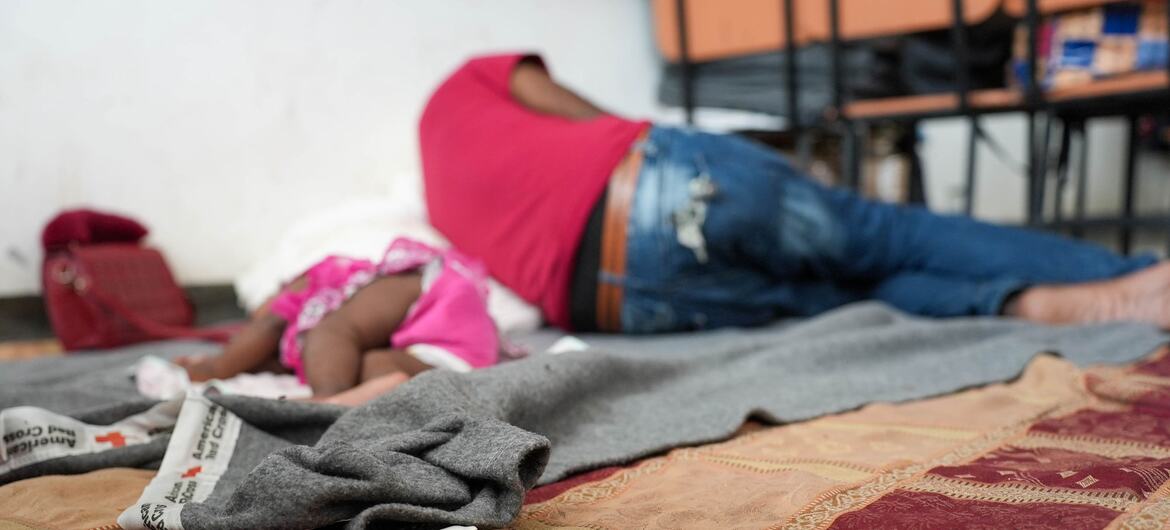
An adult and child rest at centre for displaced people in Haiti.
© WFP/Pedro Rodrigues
 
An adult and child rest at centre for displaced people in Haiti.


18 July 2025
 Humanitarian Aid

The UN humanitarian affairs office OCHA is stressing the need to scale up support for displaced families in Haiti amid ongoing insecurity and violence. 

Displaced Haitians are dispersed among the 250 active displacement sites across the country, most of which are informal. Just over a fifth of these sites are managed by humanitarian organizations, meaning that many are living in precarious conditions.  

In June alone, more than 200 alerts were reported across displacement sites, over 80 per cent of which were related to essential needs such as lack of water, food, shelter or healthcare.

OCHA noted that nearly 1.3 million people are now internally displaced in Haiti, the highest number ever recorded in the country due to violence.

Constrained UN response

The UN and partners have supported more than 113,000 displaced Haitians this year, providing essential services such as water, shelter, sanitation and healthcare.

The humanitarian response is severely constrained by limited funding and persistent insecurity, hampering humanitarian access to the most affected areas and delaying the delivery of aid. 

Despite the challenges, the agency continues to work closely with Haitian authorities and humanitarian partners to coordinate relief efforts and mobilise additional resources to support displaced communities. 

DR Congo: Ongoing violence in the east drives displacement, impedes aid delivery

Ongoing violence in North and South Kivu provinces in the eastern Democratic Republic of the Congo (DRC) continues to claim the lives of civilians and to trigger new displacement. 

In North Kivu, UN partners on the ground in Rutshuru and Lubero territories reported that fighting between M23 and other armed groups was ongoing until Tuesday, resulting in eight civilian deaths and 42,500 displaced people as of earlier this week. 

Since early July, heavy clashes between M23 and other armed groups in South Kivu have also persisted, as local partners said the fighting has displaced at least 37,000 people from their homes. 

Aid access restrictions 

The surge in violence is making it harder for humanitarians to deliver assistance to vulnerable communities. 

While partners and teams on the ground are doing their best to maintain services for those affected, access restrictions and severe funding shortages pose significant obstacles. 

A humanitarian convoy coordinated by OCHA along the road between the provincial capital Bukavu and the city of Uvira, primarily planned for this Friday, has been postponed due to a lack of security guarantees on that route. 

Many UN partners on the ground are forced to scale back their operations, disrupting essential services for those in need. 

OCHA called on the international community to take urgent action to address these severe funding gaps and avert a humanitarian tragedy. 

New panel to examine the effects of a nuclear war

The UN Secretary-General has appointed an independent scientific panel of 21 experts to examine the physical and societal consequences of a nuclear war on a local, regional and planetary scale in the days, weeks and decades following such an event.

The creation of the panel, mandated by a General Assembly resolution, comes at a time when nuclear guardrails are being eroded and “the risk of nuclear war is higher than at any point since the depths of the Cold War,” UN deputy spokesperson Farhan Haq said on Friday during the daily media briefing from Headquarters in New York. 

The panelists will seek input from a wide range of stakeholders – including international and regional organizations, the International Committee of the Red Cross (ICRC), civil society and affected communities. 

Members will hold their first meeting in September and will submit a final report to the General Assembly in 2027. 


https://news.un.org/en/story/2025/07/1165439

https://creativecommons.org/licenses/by/4.0/legalcode

пятница, 28 марта 2025 г.

DR Congo: Record numbers face acute or emergency hunger


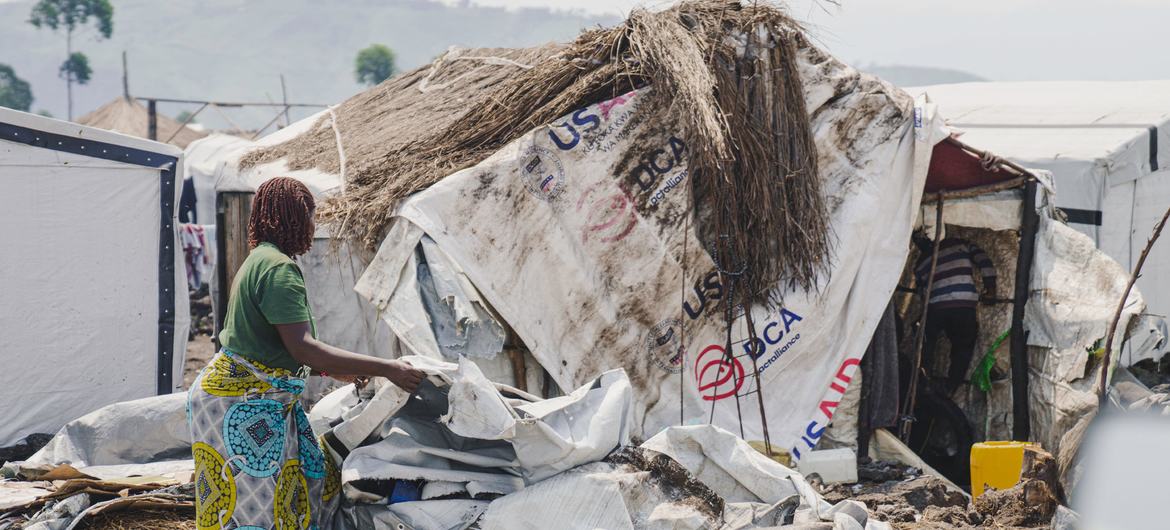
A woman collects her possessions before leaving a camp for displaced people near Goma in teastern DR Congo.
© UNICEF/Jospin Benekire
 
A woman collects her possessions before leaving a camp for displaced people near Goma in teastern DR Congo.


27 March 2025 
Humanitarian Aid

A record 27.7 million people are in the grip of acute hunger in the Democratic Republic of the Congo (DRC), amid ongoing conflict linked to massive displacement and rising food prices, global food security experts warned on Thursday.

The situation represents one of the world’s worst food crises, according to the UN-partnered Integrated Food Security Phase Classification (IPC) platform.

“The humanitarian situation in the DRC is deteriorating at an alarming rate. Families who were already struggling to feed themselves are now facing an even harsher reality,” said Eric Perdison, WFP’s Regional Director for Southern Africa and ad interim WFP DRC Country Director.

Tweet URL

On a scale of one to five – where five indicates famine – 3.9 million people in DRC are classified as IPC Phase 4, which indicates “emergency” levels of hunger - and a 23.8 million are enduring Phase 3 “crisis” levels.

Check out our explainer on how hunger and famine levels are classified, here.

Chaos in the east

The situation is worst in the conflict-affected eastern provinces of DRC – North Kivu, South Kivu, Ituri and Tanganyika – where families have lost access to their livestock and livelihoods.

Rebels from the Rwanda-backed M23 armed group have wrested control of the main cities of Goma and Bukavu since the year began, amid continued fighting, economic collapse and continuing efforts by regional mediators to agree ceasefire terms. 

Mapping shows that the outbreak of violence in December in eastern DRC led by Rwanda-backed M23 rebels has pushed an additional 2.5 million people into acute food insecurity.

Situation worse for those uprooted

“Internally displaced people escaping violence remain among the most vulnerable, bearing the brunt of the worsening food crisis,” said the UN World Food Programme (WFP), in a joint statement with the UN Food and Agriculture Organization of the United Nations (FAO).

They are just two of the UN agencies committed to helping the most vulnerable communities in the war-torn east by providing life-saving food and nutrition assistance and strengthening resilience.

These include tens of thousands of people uprooted by M23 rebels from camps in North Kivu - and in particular six sites around Goma – and the territories of Kalehe and Uvira in South Kivu in February 2025, amid intensified conflict.

“All IDP sites in North Kivu, particularly in the Goma region, are now completely empty,” the IPC said, adding that of the 3.7 million internally displaced people formerly based in camps in eastern DRC, more than 2.2 million are in “crisis” and 738,000 face “emergency” levels of hunger.

In total, the DRC has more than 7.8 million displaced people, most live with host families in eastern regions.

“We have resumed operations in parts of North and South Kivu, and we are committed to do more to support those at risk, but we urgently need more resources,” WFP’s Mr. Perdison said.

“Armed clashes continue to disrupt food production and trade routes, while humanitarian access remains limited, as security risks hinder the ability to deliver essential assistance,” WFP added.

Inflationary pressures

The sharp depreciation of the Congolese franc, shuttered banks and lost incomes have also made it increasingly difficult for families to afford even the basics.

At the same time, inflation and disrupted supply chains have contributed to a rise in food prices. The price of basic foods such as maize flour, palm oil and cassava flour have increased by up to 37 per cent compared to pre-crisis levels in December 2024.

Soundcloud

To date this year, 464,000 people have received WFP food, cash for food, and nutrition treatment in accessible areas of eastern DRC; WFP has managed to reach 237,000 people in Bunia alone.

Beyond emergency food assistance in eastern DRC, FAO and WFP have invested in skills-based training in North and South Kivu to help communities improve their long-term food security.

“The current situation is dire for the population, as harvests are lost, food prices soar, millions of people face acute food insecurity and are increasingly vulnerable,” said Athman Mravili, FAO Representative ad interim.

Urgent appeal

To help WFP reach 6.4 million people in DRC with food and nutrition assistance – and invest in long-term solutions – the UN agency needs $399 million to sustain operations amid growing humanitarian needs over the next six months.

“WFP and FAO call on the international community to step up funding and humanitarian access to prevent a full-scale catastrophe,” they said. 


https://news.un.org/en/story/2025/03/1161606


https://creativecommons.org/licenses/by/4.0/legalcode

пятница, 25 октября 2024 г.

World News in Brief: Sudan food crisis update, justice in Thailand, UN can solve global problems


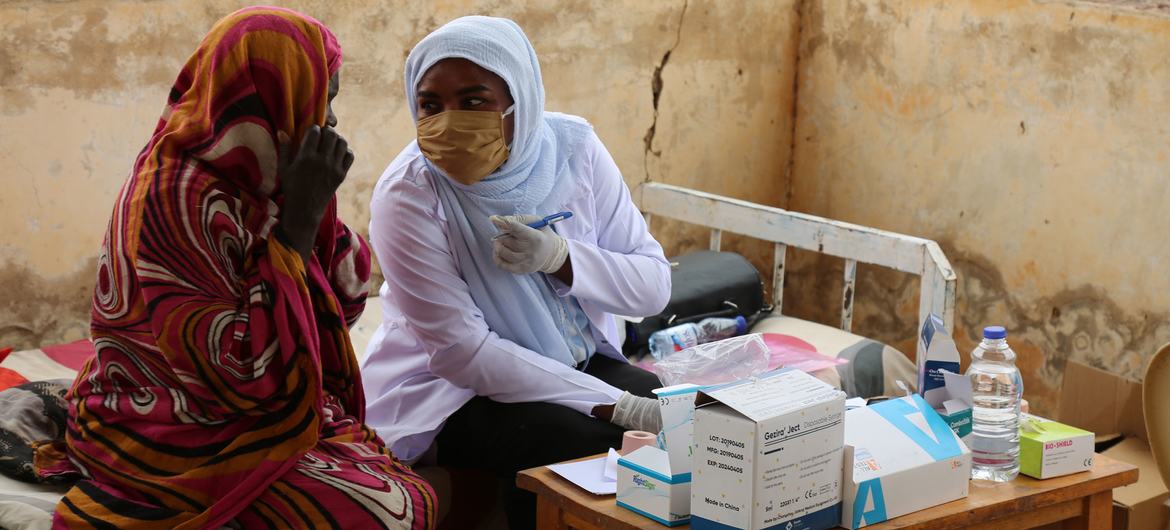
Midwives and other health professionals treat patients at the Khartoum Maternity Hospital in Sudan.
© UNFPA Sudan/Sufian Abdul-Mouty
 
Midwives and other health professionals treat patients at the Khartoum Maternity Hospital in Sudan.


24 October 2024 
Humanitarian Aid

Sudan’s humanitarian crisis continues to deepen, with ongoing fighting between rival militaries displacing millions. 

The World Food Programme (WFP) has increased its humanitarian response in Sudan’s conflict-ravaged areas, particularly in Darfur, where the risk of widespread famine looms.

Since the reopening of the Adre border in August, the agency has successfully delivered food assistance to 360,000 people in Darfur.

“Distributions have been completed for over 200,000 people in Kerenik and Sirba- areas at risk of famine at West Darfur”, stated Deputy UN Spokesperson Farhan Haq during the noon daily briefing in New York.

He added that “WFP is scaling up its efforts to reach 180,000 people in Zamzam, near El Fasher, the capital of North Darfur, with monthly food packages.”

Soundcloud

Situation critical

The humanitarian situation remains critical, with nearly 70,000 people in Zamzam having received assistance so far.

While WFP has managed to assist over 6 million people this year – including more than half a million vulnerable individuals in the greater area of Khartoum – challenges remain.

“Early indications show little improvement in food security as historic flooding across Sudan destroyed crops and ongoing conflict made it difficult for farmers to plant, cultivate and now harvest”, Mr. Haq explained.

Thailand: Experts raise alarm as statute of limitations threatens justice for victims of ‘Tak Bai incident’

Tweet URL

A group of independent UN human rights experts have raised the alarm over the impending expiration of the statute of limitations on the 2004 Tak Bai killings in Thailand, in just a few hours’ time.

This statute could end efforts to hold Thai security officials accountable for their role in the deaths of 85 people during a violent crackdown on a protest in Narathiwat province 20 years ago.

Seven people were killed initially when security forces opened fire, 78 more died during transport to a military camp under inhumane conditions, and seven people were forcibly disappeared during the incident, the experts said.

The victims were predominantly from the Malay Muslim minority.

“We welcome the fact that two criminal cases are finally proceeding into this incident with arrest warrants issued against relevant current and former officials,” said the experts – who are not UN staff, and are independent from any government or organization.

However, they warned that the statute’s imminent expiration on Friday would cut them short.

Cases must continue

They emphasised that international law prohibits statutes of limitations for crimes like torture and enforced disappearances. In cases of forced disappearance, the statute can only apply once the fate and whereabouts of the victims are definitively established. “A failure to investigate and bring perpetrators to justice is itself a violation of Thailand’s human rights obligations,” one expert asserted.

Families of the victims have waited nearly two decades for justice. The experts urged the Thai government to take immediate action to prevent further delays in accountability and to uphold the rights of the victims' families to truth, justice, and reparations.

‘Hope requires the United Nations’: Guterres

Thursday marked United Nations Day which saw the Secretary-General delivering a strong message about the organisations enduring mission since its foundation amid the ashes of World War Two.

In a world facing multiple crises, he emphasised that the UN remains the world’s central platform for solutions, to global problems.

“Solutions that ease tensions, build bridges and forge peace. Solutions to eradicate poverty, spur sustainable development and stand up for the most vulnerable.” 

The message comes at a crucial moment following September’s landmark agreements by the General Assembly.

In September the Assembly adopted the Pact for the Future, the Global Digital Compact and the Declaration on Future Generations.

The Secretary-General delivered a powerful reflection on hope in our troubled world.

“Hope is not enough. Hope requires determined action and multilateral solutions for peace, shared prosperity, and a thriving planet,” he said.

“Hope requires all countries working as one. Hope requires the United Nations. On United Nations Day, I call on all countries to keep this beacon for the world, and its ideals, shining.” 


https://news.un.org/en/story/2024/10/1156106


https://creativecommons.org/licenses/by/4.0/legalcode

вторник, 17 сентября 2024 г.

More action on the ground needed to save civilian lives in Gaza, top UN official tells Security Council


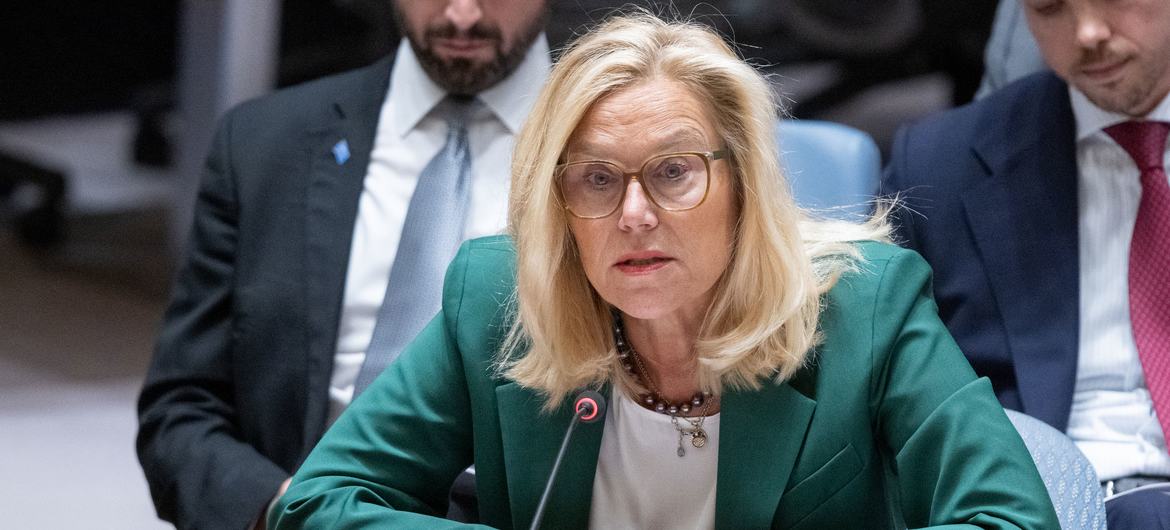
Sigrid Kaag, Senior Humanitarian and Reconstruction Coordinator for Gaza briefs the Security Council meeting on the situation in Gaza.
UN Photo/Eskinder Debebe
 
Sigrid Kaag, Senior Humanitarian and Reconstruction Coordinator for Gaza briefs the Security Council meeting on the situation in Gaza.


16 September 2024

 Humanitarian Aid

Not enough progress is being made in getting desperately needed aid and commercial goods into Gaza, the UN Senior Humanitarian and Reconstruction Coordinator for the Strip said in a briefing to the Security Council on Monday. 

Sigrid Kaag updated ambassadors on the implementation of resolution 2720, adopted last December, which established her mandate following the brutal 7 October Hamas-led attacks on Israel and the start of hostilities in Gaza.

She was also tasked with establishing a UN mechanism for accelerating the provision of humanitarian relief consignments to the enclave, operationalized and managed by the UN Office for Project Services (UNOPS).

Supply routes established

Ms. Kaag said “the 2720 Team” has continuously engaged on access issues, addressed obstacles, and proposed solutions to enable assistance by all aid partners, including the UN agency that assists Palestine refugees, UNRWA, which she called the “backbone” of humanitarian operations in Gaza.

She recalled that 11 months ago, the enclave was largely cut off from most of its supply lines, with all but one access point closed.

Despite the complex situation, her mission has negotiated and strengthened supply lines and systems, as well as additional routes, in efforts to facilitate, accelerate and expedite aid flows in a sustained and transparent manner.

These routes cover supplies from or via Egypt, Jordan, Cyprus, the West Bank and Israel. 

Humanitarian aid goals unmet

However, Ms. Kaag said systems in place today are not a substitute for the political will required to reach civilians in Gaza and respond to their needs.

“Effective humanitarian operations require the right quality, quantity, and a broad range of goods to meet the daily needs of civilians in Gaza. That goal is not being met,” she said.

Additionally, ongoing hostilities across the Strip, the breakdown of law and order, and the looting of supplies are significant impediments to UN efforts to distribute assistance there.

Humanitarians also face denials, delays and lack of safety and security, as well as poor logistical infrastructure.

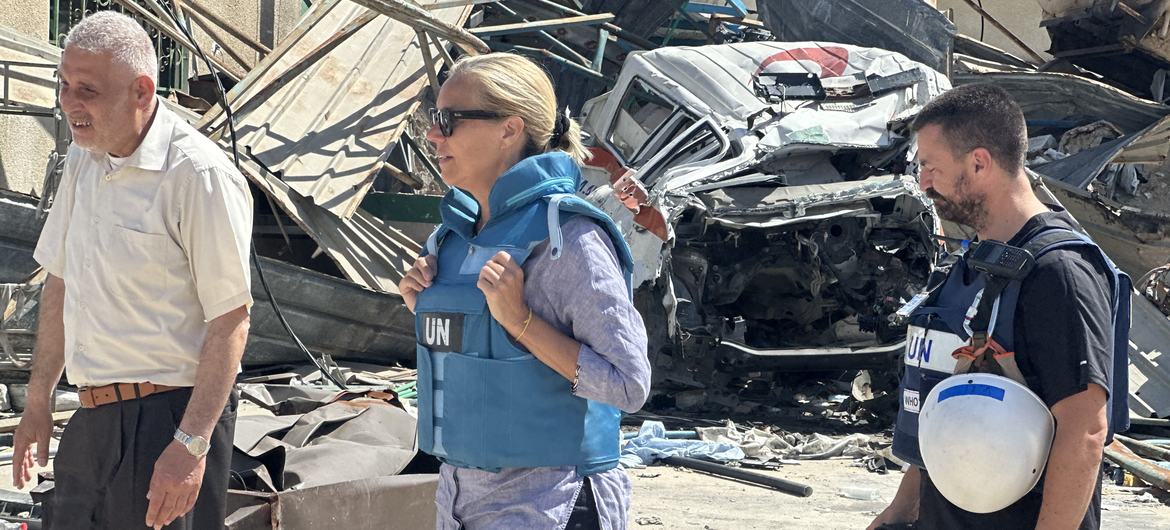
UN Senior Humanitarian and Reconstruction Coordinator, Sigrid Kaag, visiting the Nasser Medical complex in Khan Younis, Gaza (file).
OCHA / Olga Cherevko
 
UN Senior Humanitarian and Reconstruction Coordinator, Sigrid Kaag, visiting the Nasser Medical complex in Khan Younis, Gaza (file).

Lives at stake

Ms. Kaag said “this continues to hamper relief operations despite recent approvals provided for trucks, satellite phones and other equipment,” and engagement on these issues is ongoing.

She said “commitments and intentions need to be translated into tangible actions on the ground”, warning that “any delay in implementation comes at direct cost of human lives.”

Areas for action

In the meantime, her mission continues to focus on securing access for a diverse range of goods from the humanitarian and commercial sector, highlighting critical areas.

“Modest progress in select areas, such as waste and sewage management, has been made. However, this does not address the totality of the need. For example, cash, prepositioned fuel and hygiene items are urgently needed,” she said.

Furthermore, the scope of humanitarian items allowed entry remains too restricted, she added, while the UN also urgently needs the entry of further vital security communications and tracking equipment.

Implement agreed protocols

Ms. Kaag said a new Joint Coordination Board is now operational but noted that “recent security incidents, including shootings at humanitarian convoys, are unacceptable and demonstrate that agreed protocols and procedures still need comprehensive on-time implementation.”

She also hailed the recent medical evacuation of 251 patients and family members to the United Arab Emirates - the largest from Gaza to date.  Yet over 14,000 patients still require specialized medical treatment outside Gaza, showing that much more has to be done.

Recovery cannot wait

Stressing that “humanitarian assistance is only a temporary pathway to alleviate suffering”, Ms. Kaag upheld that a comprehensive, just and lasting peace can only be realized through a two-State solution between Israelis and Palestinians.

“In this light, the recovery and reconstruction of Gaza should not wait,” she said, emphasizing the need for education, healthcare, housing, in addition to establishing governance and security arrangements.

“The UN’s position is clear,” she continued.  “The Palestinian Authority must resume its full responsibilities in Gaza. Prime Minister (Mohammed) Mustafa’s cabinet has developed comprehensive plans to restore local governance, security and re-establish the rule of law.”

Relatedly, international planning efforts by the UN, the European Union, the World Bank and others are ongoing in support of the Palestinian Authority, she said, and her mission has developed financing options for the international community to consider.

Mechanism up and running

Meanwhile, UNOPS is committed to supporting Ms. Kaag’s mandate, Executive Director Jorge Moreira da Silva told the Council.

He said the UN mechanism has been running a database covering humanitarian aid consignments into Gaza that has been operational since May and is publicly accessible. 

So far, 229 consignments have requested clearance and 175 have been approved, 101 have been delivered, 17 are pending clearance, and 37 have been rejected. 

This translates into more than 20,000 metric tonnes of humanitarian aid cargo delivered, including food and nutrition, shelter items, water and sanitation (WASH) supplies and medical aid.

Jordan aid corridor

“The consignments were primarily delivered through the Jordan corridor, the direct route from Jordan to Gaza that was formalized and regularized under the mechanism to provide much needed predictability and regularity and to address the backlog challenges that accompanied convoys undergoing multiple inspection and transloading points,” he said.

He explained that humanitarian health consignments delivered via this route pass through a single inspection point in Jordan and a single transloading point in Gaza. Prior to the UN mechanism, there were three inspection points and four transloading points. 

A smaller portion of the consignments was delivered through the Cyprus corridor – “a vital supplementary route for delivering humanitarian aid to Gaza” which “is not intended to replace or divert attention from existing land or sea corridors, but rather to enhance overall capacity.”

Confidence-building and transparency

He added that in response to donor requests, UNOPS stands ready to address current logistical challenges for the Cyprus corridor “by offering an end-to-end solution ensuring the coordinated, efficient and transparent delivery of aid.”

To support the regularization of the corridors under the UN mechanism, UNOPS has deployed 14 international monitors to Cyprus and Jordan who verify the humanitarian nature of each consignment, facilitate approval for the shipments to proceed to Gaza, and track the journey from point of origin until handover to the final consignee in Gaza for onward delivery. 

“This very mechanism fosters confidence building among all and provides transparency, informing all of us that what was sent to Gaza indeed make its way to its final destination,” he said.

Regarding consignments that are not permitted, the UN mechanism always requires a justification.

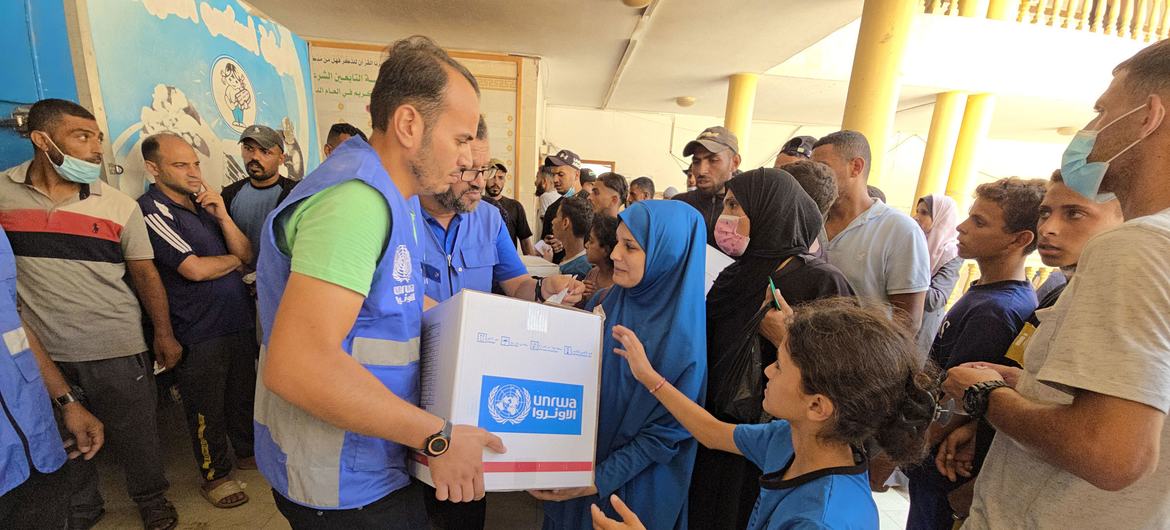
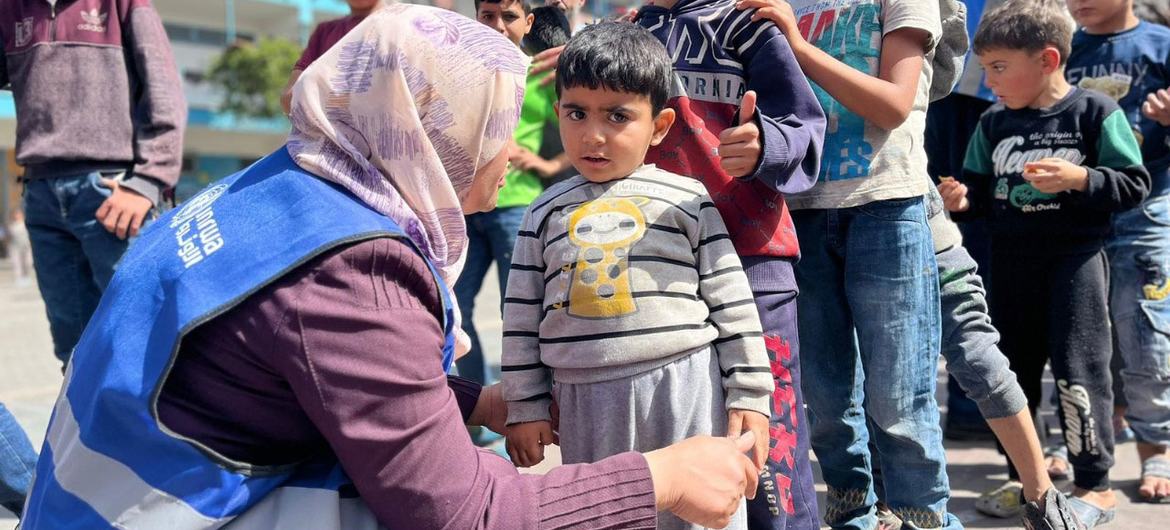
UNRWA continues to offer support to people in Gaza.
© UNRWA
 
UNRWA continues to offer support to people in Gaza.

Allow more aid

Mr. Moreira da Silva said UNOPS alongside Ms. Kaag’s Office continues to call for more items and consigners to be allowed to enter Gaza.

“Eleven of our international monitors are also ready to deploy inside Gaza, in order to reinforce this important verification and tracking mechanism as an additional enabler of our collective efforts to accelerate and increase the amount of humanitarian aid reaching the civilian population in Gaza,” he said.

‘Vital lifeline’ from Egypt

He then turned to the Egypt corridor, which has served as “a vital lifeline” for delivering aid to Gaza since the conflict erupted.

UNOPS is working closing with the Egyptian authorities to fully integrate the route into the mechanism and a team will be in Cairo this week to finalize the process.

“Once completed, the 2720 mechanism will provide a comprehensive real-time overview of all humanitarian cargo entering to Gaza from every supply route. This will enable better prioritization, tracking and monitoring of relief efforts right up to the point of delivery,” he said.

Supporting all routes

He told the Council that UNOPS has committed to support the full operational capacity of each corridor. 

The Office is procuring 280 trucks for the Jordan route, in addition to constructing 10 additional warehousing spaces for the Jordan Hashemite Charity Organization, and establishing two truck holding areas at the King Hussein Bridge border crossing and inspection site.

UNOPS is also securing 38 trucks for use by humanitarians inside Gaza to enable delivery of aid consignments arriving via the different corridors.

“We have procured the necessary armoured vehicles, communications and other security equipment that will enable the operational capacity of the mechanism’s international monitors inside Gaza, the 11 monitors, without exerting pressure on the already limited resources of the rest of the humanitarian community,” he said.

The UNOPS chief thanked Member States for their financial support to the UN mechanism. He underscored that effective delivery of aid at the scale required will not be possible without political will, necessary security and safety guarantees, and an enabling environment.


https://news.un.org/en/story/2024/09/1154371


https://creativecommons.org/licenses/by/4.0/legalcode

воскресенье, 1 сентября 2024 г.

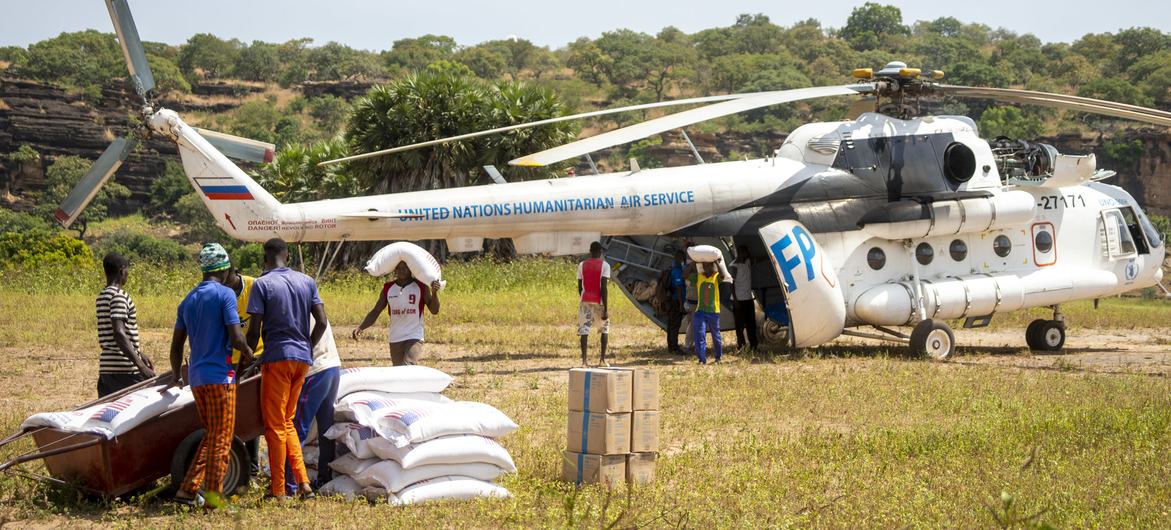
‘Giving help and giving hope’, an aerial lifeline to the world’s most isolated


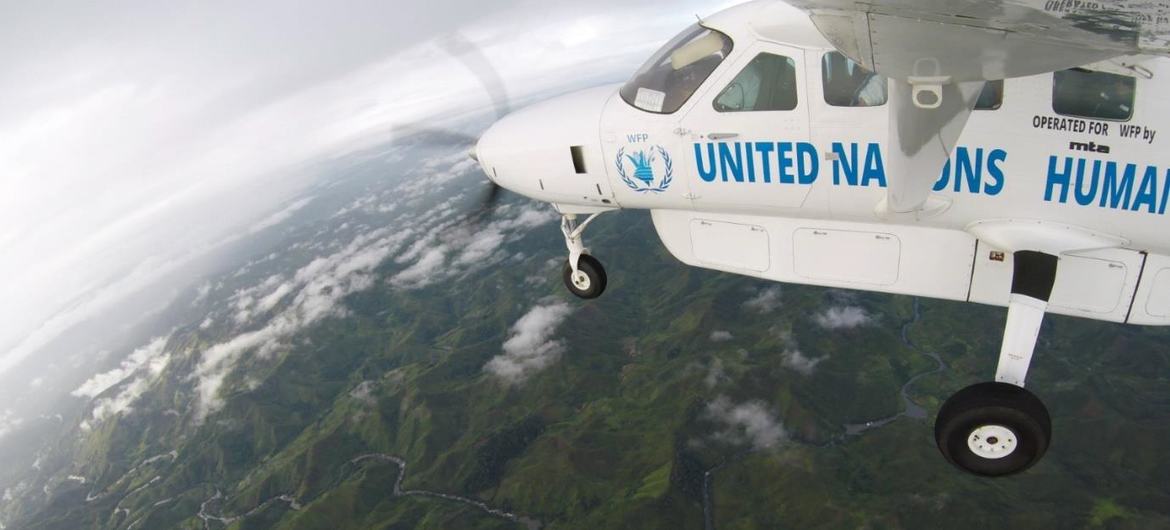
UNHAS flies helicopters to the inaccessible parts of Haiti.
© WFP/Theresa Piorr
 
UNHAS flies helicopters to the inaccessible parts of Haiti.


31 August 2024 

Humanitarian Aid

A humanitarian air service, which has been described by the World Food Programme chief as “giving help and giving hope” to the world’s most remote and disadvantaged communities, is celebrating its twentieth anniversary this year.

The WFP’s Executive Director Cindy McCain said the UN Humanitarian Air Service (UNHAS), which is managed by the UN’s food agency, enabled humanitarians to respond quickly to crises in the “deep field.” 

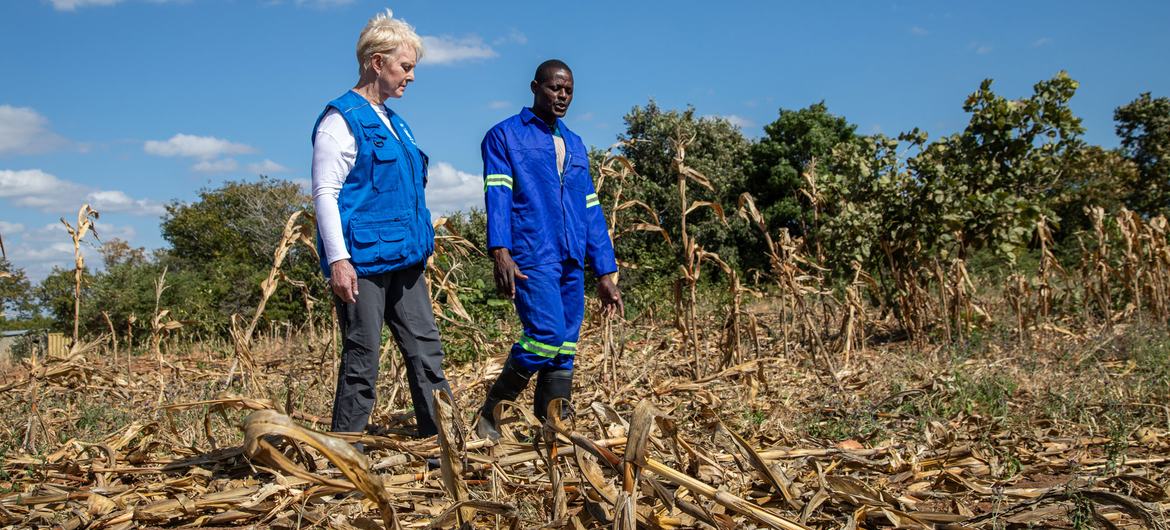
WFP Executive Director Cindy McCain checks out the devastation wrought by an El Niño-intensified drought in Zambia.
© WFP/Nkole Mwape
 
WFP Executive Director Cindy McCain checks out the devastation wrought by an El Niño-intensified drought in Zambia.

Cindy McCain and Franklyn Frimpong, the UNHAS chief of aviation, have been discussing the importance of the life-saving service. 

Cindy McCain: UNHAS makes WFP and other agencies work. UNHAS gives us the ability to reach the deep field and parts of the world that are absolutely impossible to get to otherwise, and also deliver goods and transport human beings wherever they need to be. I don’t think WFP could be complete without UNHAS. And it’s something that not only we value; I know the other agencies do too. When people see a UNHAS plane landing, they know help has arrived. That’s what we do: give help and give hope.

An UNHAS plane flies over cyclone-damaged eastern Madagascar. (file)
WFP/Aina Andrianalizaha
 
An UNHAS plane flies over cyclone-damaged eastern Madagascar. (file)

Franklyn Frimpong: UNHAS has been at the forefront of many of the humanitarian emergencies since its inception 20 years ago. Examples that readily come to mind are the Ebola outbreak in West Africa and the COVID-19 pandemic for health emergencies, natural disasters such as tsunamis, and then the many conflict-induced crises and emergency situations that we find ourselves in now. 

Currently, we serve more than 600 organisations, and that positions UNHAS as a crucial enabler in some of these complex humanitarian responses.

Food assistance is delivered to the people of Madjoari village, Burkina Faso.
© WFP/Cheick Omar Bandaogo
 
Food assistance is delivered to the people of Madjoari village, Burkina Faso.

Cindy McCain: It’s also important to remember that WFP’s and other UN agencies’ collective work is about bringing stability into regions. That’s a very important part of UNHAS: our ability to help with stability and make sure that the communities, as well as the world, understand the importance of a stable state: not just stable communities, but stable governments as well.

Franklyn Frimpong: But UNHAS, and for that matter, WFP, cannot do this alone. It calls for partnerships and collaboration with stakeholders like governments, the donor community, sister UN agencies and other aid agencies to really achieve the desired response to the complex humanitarian emergencies.

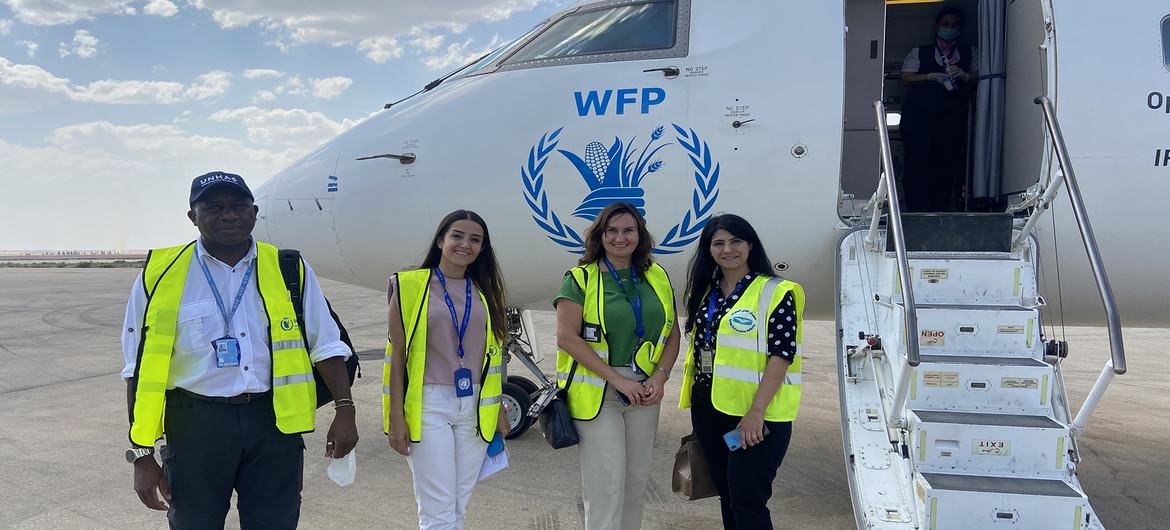
UNHAS crew members pose outside an aircraft at Qamishli airport in northeastern Syria.
WFP/Elie Rasho
 
UNHAS crew members pose outside an aircraft at Qamishli airport in northeastern Syria.

UNHAS’ success basically lies in collaboration. Indeed, UNHAS is a testimony of what can be achieved when organisations come together with a shared vision.

Cindy McCain: What I see for UNHAS is, I hope, growth, and new abilities for science and technology when it comes to aviation. That's very important, especially when we're talking about trying to deliver a global need, which is what we do.

I think that our ability to continue to make sure that we can fly safely, remain neutral, and be a part of a global strategy that helps, not hurts, is a large part of what UNHAS does.

Fact Box:

  • UNHAS serves multiple destinations through 17 operations globally linking 20 countries. 
  • Managed by the WFP, UNHAS offers passenger and light cargo transport for the wider humanitarian community to and from hard-to-reach crisis areas. 
  • In 2023, WFP airlifts provided roughly 11,500 tons of food and assistance to more than half a million people in cutoff towns across Burkina Faso. 
  • UNHAS’s work in Burkina Faso has been supported largely by the European Union, Luxembourg, Switzerland and the United States.

https://news.un.org/en/story/2024/08/1153796
https://creativecommons.org/licenses/by/4.0/legalcode

понедельник, 19 августа 2024 г.

#ActforHumanity and end violence against aid workers on World Humanitarian Day


UNRWA staff are supporting children in Gaza.
© UNRWA
 
UNRWA staff are supporting children in Gaza.


19 August 2024 


Humanitarian Aid

With the number of aid workers killed in the line of duty reaching record highs, the UN and partners are demanding greater accountability as countries commemorate World Humanitarian Day on Monday. 

Last year was the deadliest so far, with 280 aid workers killed in 33 countries - an “outrageously high number”, said the UN Office for the Coordination of Humanitarian Affairs (OCHA).

Tweet URL

The figure represents a 137 per cent increase compared to 2022, when 118 aid workers were killed.

Humanitarian deaths mounting

Worse still is that 2024 may be on track to be even deadlier.

As of 7 August, 172 aid workers have been killed, OCHA said, citing the provisional count from the Aid Worker Security Database. 

The UN agency said that more than half of the 2023 deaths were recorded in the first three months of the hostilities in Gaza, or from October to December.  Most were due to airstrikes. 

Since October, more than 280 aid workers have been killed in Gaza alone, the majority of them staff members of the UN agency that assists Palestine refugees, UNRWA. 

Additionally, “extreme levels of violence” in Sudan and South Sudan have contributed to the death tolls in 2023 and 2024.

In all these conflicts, most of those killed were national staff. Meanwhile, many humanitarian workers also continue to be detained in Yemen.

Unacceptable and unconscionable 

Joyce Msuya, UN Acting Under-Secretary-General for Humanitarian Affairs and Emergency Relief Coordinator, called for action.

“The normalization of violence against aid workers and the lack of accountability are unacceptable, unconscionable and enormously harmful for aid operations everywhere,” she said.

Today, we reiterate our demand that people in power act to end violations against civilians and the impunity with which these heinous attacks are committed.”

#ActforHumanity

World Humanitarian Day is observed annually on 19 August – the date in 2003 when a bomb attack at the UN’s headquarters in Baghdad killed 22 humanitarian workers, including Sergio Vieira de Mello, the Secretary-General’s Special Representative for Iraq.

Each year, the commemoration focuses on a theme in efforts to advocate for the survival, well-being and dignity of people caught in crises, and the safety and security of aid workers.

The 2024 campaign, #ActForHumanity, aims to build public support to help pressure warring parties and world leaders to better ensure the protection of civilians, including humanitarians, caught in conflict zones.

Call for protection

Humanitarian organizations worldwide have also written to UN Member States calling for greater efforts to protect all aid workers, their premises and assets, as stipulated in UN Security Council resolution 2730 (2024), adopted in May.

Perpetrators must also be held to account, they added, noting that those who commit violations of international humanitarian law cannot go unpunished. 

“We will continue to stay and deliver in humanitarian crises around the world – but the situation requires us to take a united stand to call for the protection of our staff, volunteers and the civilians we serve,” the letter said. 


https://news.un.org/en/story/2024/08/1153296


https://creativecommons.org/licenses/by/4.0/legalcode

вторник, 6 августа 2024 г.

Humanitarians urge Security Council to stop ‘freight train of suffering’ in Sudan


A mother who fled across the Sudanese border to Chad cares for her malnourished child.
© UNICEF/Donaig Le Du
 
A mother who fled across the Sudanese border to Chad cares for her malnourished child.


6 August 2024
 Humanitarian Aid

Two senior UN officials appealed to the Security Council on Tuesday for more resources and greater humanitarian access in Sudan, where people are literally dying of hunger as the war between rival militaries rages on. 

Edem Wosornu of the UN humanitarian affairs office, OCHA, and Stephen Omollo, Assistant Executive Director of the World Food Programme (WFP), briefed ambassadors in the wake of the recent confirmation of famine in the Zamzam displacement camp, home to 500,000 people.

Tweet URL

Zamzam is located near El Fasher, capital of North Darfur state, and the Famine Review Committee also found that famine conditions are also likely present in other camps in and around the city.

We have failed

“This announcement should stop all of us cold because when famine happens, it means we are too late. It means we did not do enough. It means we, the international community, have failed. This is an entirely man-made crisis and a shameful stain on our collective conscience,” said Ms. Wosornu, OCHA’s Director of Operations and Advocacy.

She recalled that humanitarians had warned the Council about the risk of famine and widespread insecurity back in March and continued to sound the alarm in subsequent briefings. 

“Let me be clear: It is still possible to stop this freight train of suffering that is charging through Sudan. But only if we respond with the urgency that this moment demands,” she insisted.

‘A quagmire of violence’

The Sudanese National Army and a rival, formerly-allied military, known as the Rapid Support Forces (RSF), have been battling since April 2023, pushing “millions of civilians into a quagmire of violence and with it, death, injury and inhumane suffering treatment.”

A staggering 26 million people are facing acute hunger, which Ms. Wosornu said is equivalent to “New York times three - full of starving families and malnourished children.” More than 10 million people have been forced to flee their homes, including some 726,000 displaced from Sennar state following recent RSF advances.

Sudan’s once vibrant capital, Khartoum, now lies in ruins, the national healthcare system has collapsed, and recent heavy rains in Kassala and North Darfur have increased the risk of cholera and other waterborne diseases. An entire generation of children is missing out on a second straight year of education. 

Concern for rape survivors

Ms. Wosornu also voiced grave concern over war crimes, with women and girls worst affected.

“Since our last briefing, new reports have revealed horrific levels of conflict-related sexual violence in Khartoum targeting girls as young as nine years old,” she said.

“Access to emergency healthcare and gender-based violence services is shrinking. Suicide rates among survivors is increasing. The number of children born out of rape surging.”

Expanding aid operations

Despite the dire situation, humanitarian agencies and their local partners continue to deliver life-saving assistance in Sudan and are expanding their “operational footprint” in areas where food insecurity is most acute.

They are “exploring every possible avenue to reach communities affected, including through airlifts”, she said, which requires receiving the necessary permissions to access airstrips.  

Humanitarians also plan to distribute more than $100 million in cash and voucher assistance by the end of the year in areas where markets are functioning. Other activities include providing seeds and other support to farmers.

Access and resources

“In short, we are pushing from every possible angle to stop this catastrophe from getting worse, but we cannot go very far without the access and resources we need,” she said.

At the same time, aid workers continue to be harassed, attacked and killed, while convoys transporting food, medicine and fuel have been subjected to looting, extortion and obstruction.

She said three trucks carrying therapeutic food have been blocked by the RSF for over a month in Kabkabiya, located west of El Fasher, thus “depriving malnourished children in Zamzam camp of assistance they desperately need to survive.”

‘Assistance delayed is assistance denied’

Furthermore, the recent escalation in Sennar has cut off the main southern crossline route for aid delivery from the coastal city of Port Sudan to Kordofan and Darfur.  Access via the northern route, through Ad Dabbah, has been intermittent due to conflict, insecurity, obstruction and delayed permissions.

“Lifesaving supplies in Port Sudan are ready to be loaded and dispatched to ZamZam, including essential medicines, nutritional supplies, water purification, tablets and soap. It is crucial that the approvals and security assurances needed are not delayed,” she stressed.

Additionally, relief supplies for the camp are also readily available in eastern Chad, but heavy rains have flooded the Tine crossing - the only cross-border route open to humanitarians after the Sudanese authorities revoked permission for the use of Adre crossing in February. 

She said Adre – with its tarmac roads and shorter distance to Darfur - would be the most effective route for delivering the large volumes of aid needed at this critical moment.

“Assistance delayed is assistance denied for the many Sudanese civilians who are literally dying of hunger during the time it takes for clearances to come through, permits to be granted and flood waters to subside,” she warned.

Four key demands

Ms. Wosurno reiterated the humanitarian community’s four main asks for the Council, starting with ending the conflict. 

She also called on the warring sides to uphold their obligations under international law, and for rapid, safe and unimpeded humanitarian access across all possible routes. 

“Given the massive hunger crisis unfolding in North Darfur and other parts of the country, we need to reach people now - across borders, across battle lines, by air, by land,” she stressed.

She also highlighted the need for adequate funding to support aid operations. A $2.7 billion appeal for Sudan, launched earlier this year, has so far received $874 million, or just over 30 per cent of the money needed.  

‘A wake-up call for the international community’

Mr. Omollo also reminded ambassadors that for months, WFP and other humanitarian agencies have been warning of a widespread collapse in food security in Sudan.

“Conditions throughout Sudan are appalling, and getting worse by the day,” he said. “This forgotten crisis has not received the political and diplomatic attention it desperately needs. Yet it has wider implications and threatens to destabilize the wider region.”

Therefore, the famine confirmation “must serve as a wake-up call for the international community, and for members of this Council.” 

He appealed for coordinated diplomatic efforts to address the widespread operational challenges and impediments that aid agencies are confronting.

Meanwhile, WFP are significantly scaling-up operations to curb the spread of famine, including by providing a mix of in-kind food assistance, cash and local procurement, when feasible.

The UN agency aims to substantially increase the number of people it serves in Sudan, while also supporting refugees who have fled to Chad, South Sudan, Libya and other neighbouring countries.

“Humanitarian agencies will do everything we can to prevent famine from engulfing Sudan. But we can only operate where conditions allow, and where we are granted access,” he said.

“Now more than ever, we need the Security Council to focus on this crisis, and use its influence on the warring parties to halt the conflict that is tearing Sudan apart


https://news.un.org/en/story/2024/08/1152871


https://creativecommons.org/licenses/by/4.0/legalcode

воскресенье, 21 июля 2024 г.

Sudan aid obstacles impact lifesaving relief effort

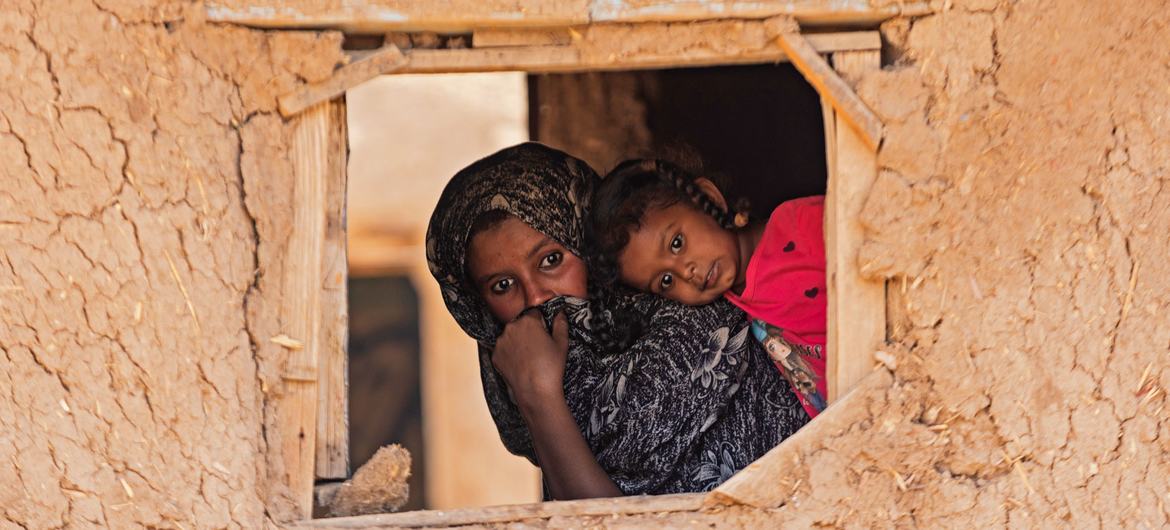
A child and mother peer through a window in Alsabaat community, Kassala state.
© UNICEF/Ahmed Mohamdeen Elfatih
 
A child and mother peer through a window in Alsabaat community, Kassala state.


19 July 2024 

Humanitarian Aid

Heavy fighting in Sudan has severely curtailed humanitarian aid deliveries across vast areas of the southeast, the UN World Food Programme, WFP, said on Friday.

In an alert, WFP expressed deep concern about “the escalation of fighting” in Sudan’s Sennar State. More than 136,000 people have already fled their homes, many for the second or third time since the conflict started.

To date, the UN agency has provided support to 46,000 people who fled to neighbouring Blue Nile state and to another 3,000 who’ve sought refuge in adjoining Gedaref state.

In an update, the WFP said that the violence had “severely affected” operations across the region, including White Nile, Blue Nile, Kassala and Gedaref states.

‘Completely cut off’

“Fighting in Sennar cut off key supply routes for food and fuel into the state, leaving residents unable to access basic needs,” WFP explained, adding that its logistics hub in Kosti in White Nile state “is completely cut off” from Port Sudan on the coast, after rival paramilitary force the RSF moved in on 29 June.

“The route from Port Sudan to Kosti (that) cuts through Sennar is currently inaccessible,” WFP continued, describing the route as “a lifeline to get assistance to hundreds of thousands of people in Sudan, including many communities at risk of famine in the Kordofans and the Darfur region”.

Staying with the west of Sudan, the UN food agency also reported that getting assistance into Darfur from neighbouring Chad has “halted”, too.

“The Adre crossing from Chad is still closed and the Chad to Darfur crossing via Tine is inaccessible due to heavy rains and flooding brought by the rainy season.

The last WFP aid delivery via Tine was in mid-July, the UN agency said. “This leaves many areas cut off from assistance,” it continued, in an appeal for all humanitarian corridors to be open so that aid teams “can reach all those in need”.

Tweet URL

Support for millions displaced

So far this year, WFP has supported more than four million internally displaced people, refugees and vulnerable host communities across Sudan, including 1.4 million in June alone. But the needs are far greater, it warned.

“Sudan is the world's largest hunger crisis. We need to be delivering food also on this scale.”

Talks end, call for ‘tangible progress on the ground’

In a related development in Geneva, UN-led talks between Sudan’s warring parties concluded on Friday. Leading the negotiations with representatives from the Sudanese Armed Forces and the Rapid Support Forces, the Personal Envoy of the Secretary-General, Ramtane Lamamra, held around 20 meetings in total with the delegations.

He said in a statement that he now counted on the parties “to promptly translate their willingness to engage with him into tangible progress on the ground” in Sudan, where around 10 million people have been uprooted by 15 months of war and humanitarians have warned that famine, disease and fighting are closing in on the population.


https://news.un.org/en/story/2024/07/1152286

https://creativecommons.org/licenses/by/4.0/legalcode

вторник, 16 июля 2024 г.

South Sudan faces growing humanitarian crisis, warns WHO


Children collect clean water from a pipe connected to their household.
© UNICEF/Ahmed Mohamdeen Elfatih
 
Children collect clean water from a pipe connected to their household.


15 July 2024
 Humanitarian Aid

Twelve years on from independence the people of South Sudan continue to face huge challenges, exacerbated now by the war in neighbouring Sudan, the World Health Organization (WHO) said on Monday.

The UN health agency insisted that the humanitarian, economic, social and political crises that began with brutal civil conflict in 2013 have been worsened by the recent influx of refugees from Sudan following the war between rival militaries there - with over 650,000 new arrivals since April 2023.

Right now, approaching six million people - or 46 per cent of the population – face crisis levels of food insecurity – a number that’s expected to rise to around 7.1 million during the current lean season.

El Niño and flooding

The WHO report also highlighted that the 2023-24 El Niño weather phenomenon - one of the strongest on record - brought dry conditions, erratic rainfall and significantly impacted harvests.

It also resulted in year-round flooding, which occurred in new previously unaffected areas.

Severe flooding, recurrent violence, weak governance, poverty and lack of infrastructure have created a complex humanitarian crisis which is hindering South Sudan’s development, the UN health agency warned.

A staggering 8.9 million people mostly in flood and conflict-affected areas have been affected, with women, children, the elderly and people with disabilities at higher risk.

UNHCR´s first-ever Forced Displacement Survey (FDS)

A pilot household survey by The UN refugee agency (UNHCR) on Monday, further underscores the dire conditions, revealing alarming levels of suffering among both refugee and host communities.

The Forced Displacement Survey (FDS) was conducted between April and December 2023 and covered around 3,100 households in South Sudan.

It found that all communities face many challenges including limited services, high unemployment, no education, poor infrastructure and overcrowded shelters.

74 per cent of households going hungry

Food is a major issue with 74 per cent of both refugee and host community households experiencing hunger in the past month.

And over 40 per cent of both groups had less income than the previous year. Refugees from the Sudan crisis have added to the already volatile areas and overstretched services. The conflict has also affected South Sudan’s economy by closing the main oil pipeline.

Marie-Helene Verney, UNHCR Representative in South Sudan, said that “we need to link humanitarian assistance to stabilization and development programmes to the extent possible…Substantive long-term investments are crucial to improving the wellbeing of refugees and the communities hosting them.”

South Sudan has over 460,000 refugees from Sudan, DRC and Ethiopia.

With the conflict in Sudan, South Sudan is receiving 1,600 people daily including refugees and returnees. The FDS provides comprehensive socioeconomic data on refugees and host communities to inform programming and policy. This data is key to targeting assistance where it matters most and bridging the humanitarian-development gap.


https://news.un.org/en/story/2024/07/1152106


https://creativecommons.org/licenses/by/4.0/legalcode

суббота, 13 июля 2024 г.

Gaza: There is no alternative to UNRWA, Guterres declares


UNRWA has been providing vital humanitarian assistance to civilians affected by the ongoing conflict. (file photo)
© UNRWA
 
UNRWA has been providing vital humanitarian assistance to civilians affected by the ongoing conflict. (file photo)


12 July 2024

 Humanitarian Aid

UN Secretary-General António Guterres, standing alongside top officials in New York on Friday, underscored the essential need to bolster the UN agency assisting Palestine refugees (UNRWA) across the Middle East amid continued attacks on its mandate, staff, premises and operations.

Speaking at a pledging conference for the agency, the UN chief outlined the countless challenges facing Palestinian civilians in Gaza who are “forced to move like human pinballs across a landscape of destruction and death”.

“Hopelessness is the greatest ally of instability,” he warned, stressing that through its work, “UNRWA is one of the greatest factors providing hope and stability across a troubled region.”

The agency has been supporting critical services including education, health and social services to some 5.9 million Palestine refugees, including vulnerable groups such as women, children, and persons with disabilities.

It also administers 58 refugee camps, addressing the dire humanitarian needs of over 1.6 million people across Jordan, Lebanon, Syria, the Gaza Strip, and the West Bank, including East Jerusalem.

The annual pledging conference, held under the auspices of the General Assembly, serves as a vital platform to raise funds for these operations.

Tweet URL

This year is different

This year, however, the conference is being held under vastly different circumstances.

Gaza has become a place of immense suffering amidst daily military barrages in a conflict that was precipitated by the 7 October terror attack by Hamas and other Palestinian armed groups in southern Israel. Over 1,200 Israelis were killed and over 200 were taken hostage. Dozens among them still remain in captivity, presumed to be in Gaza.

In the Gaza Strip, more than 38,000 Palestinians are reported to have been killed, a further 88,000 injured and about 90 per cent of population displaced – many several times.  

Tensions are also boiling over in the West Bank, and there are mounting fears of a spillover of the war into Lebanon as Israeli forces exchange daily fire with Hezbollah militants.

With humanitarian needs across the enclave sharply skyrocketing, UNRWA also faces a severe funding crisis, with many donors suspending their funding after allegations made by Israel that some agency personnel were involved in the 7 October attacks.  

Lacking clear evidence, many donor countries have resumed contributions following UN actions in response.

Of the 12 people implicated, the agency terminated the contracts of 10, another two are confirmed dead. An investigation by UN’s Office of Internal Oversight Services (OIOS) was also immediately launched and is ongoing.

Separately and prior to the allegations, the Secretary-General commissioned former French Foreign Minister Catherine Colonna to lead an independent review to assess UNRWA’s commitment to the humanitarian principle of neutrality.  

She submitted her final report in April with key recommendations, which are being implemented.

UNRWA nevertheless faces massive gaps in matching resources with the needs and requires $1.2 billion to cover critical humanitarian needs until the end of the year.

Secretary-General Guterres speaking at the pledging conference.

There is no alternative

The UN chief warned that without more support and financing for UNRWA, Palestine refugees “will lose a critical lifeline and the last ray of hope for a better future.”

“My appeal to everyone is this: Protect UNRWA, protect UNRWA staff, and protect UNRWA’s mandate – including through funding. Let me be clear: there is no alternative to UNRWA,” he stressed.

Mr. Guterres once again underscored the need to end the ongoing war, starting with an immediate humanitarian ceasefire in Gaza and an immediate and unconditional release of all hostages.

“Ultimately, only a political solution can bring an end to this conflict – one that realizes a vision of two States – Israel and Palestine – living side by side in peace and security, with Jerusalem as the capital of both States,” he said.

“I urge you to act now: act to instil hope in a place where it is in short supply; act to uphold the mandate of this General Assembly to sustain UNRWA; act in solidarity with Palestine Refugees and all the Palestinian people,” the UN chief concluded.

Question of survival

General Assembly President Dennis Francis echoed the Secretary-General’s call for support, urging donors to “transform rhetoric into reality” by ensuring that agency is sufficiently funded.

He urged all stakeholders – UN Member States as well philanthropic organizations, the private sector and individuals to contribute to the agency.

“This is not merely about funding, nor about the survival of an agency. It is about people and the survival of Palestine refugees – especially the children – across the Gaza Strip, Jordan, Lebanon, Syria, the West Bank, and East Jerusalem,” he said.

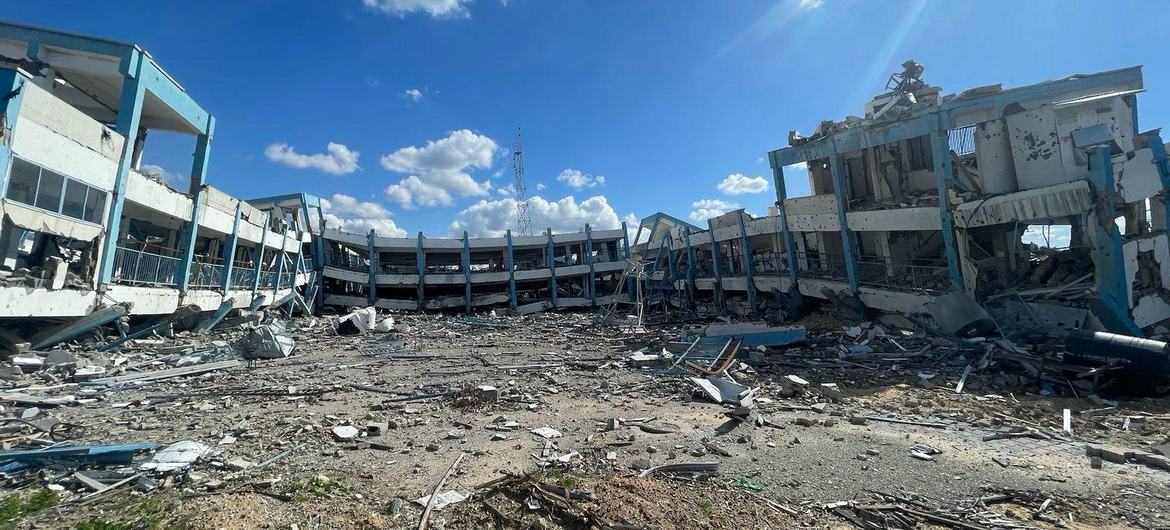
Nearly 190 UNRWA installations, many sheltering displaced people, have been damaged or destroyed during the conflict. Pictured here, the remains of an UNRWA school.
© UNRWA
 
Nearly 190 UNRWA installations, many sheltering displaced people, have been damaged or destroyed during the conflict. Pictured here, the remains of an UNRWA school.

Suffering everywhere

UNRWA Commissioner-General Philippe Lazzarini emphasized the immense suffering of both Palestinians and Israelis. He once again condemned the October 7 attack and called for the immediate release of all hostages.

Gaza has been “decimated”, he said, with over two million people living in dire conditions.  

Children and women are particularly affected, with many children killed or severely injured. He highlighted a similar tragedy unfolding in the West Bank, with hundreds of Palestinians killed by Israeli forces and settlers.

Targeted because UNRWA protects

Mr. Lazzarini also stressed that despite decades of providing stability and essential services, UNRWA is struggling under relentless attacks, with significant loss of life and damage to its facilities.

Tweet URL

He also decried the mistreatment of UNRWA personnel and the use of its premises for military purposes by both Palestinian armed groups and Israeli forces, and criticized efforts to dismantle UNRWA, including social media attacks and legislative moves to label it a terrorist organization.

“UNRWA is targeted,” he stressed, “because of its role in safeguarding the rights of Palestine refugees, and because it embodies an international commitment to a political solution.”

He warned that a failure to push back will leave other UN entities and international organizations exposed to similar attacks.

UNRWA is the backbone

The UNRWA Commissioner-General reiterated that the agency “is the backbone" of the humanitarian response in Gaza, and that it will remain critical for the transition from ceasefire to “day after”, providing essential services.  

“If we maintain the status quo, the agency will crumble and millions of children, women and men will pay a heavy price”, he concluded.

Strong message of solidarity

At a press conference later in the day (► video), Mr. Lazzarini highlighted the “strong message of solidarity and support” the agency had received at the pledging conference.

“The day started with the commitment [expressed] by 118 Member States, it was re-echoed at the conference,” he said, adding that pledges announced by Member States would sustain UNRWA’s core budget until end September.

“The agency now has enough resources to function until the end of September…basically this means in the coming couple of months, I will focus to make sure we are bridging the financial gap between September and the end of December.”

He added that his concern remains that UNRWA’s $1.2 billion emergency appeal for the ongoing crisis in the Occupied Palestinian Territory and the separate $416 million appeal for the regional crisis, “remain severely underfunded.”

UNRWA’s core programme budget goes directly towards serving more than 5.6 million Palestine refugees it is mandated to protect and assist. Under this mandate, it delivers essential services in the areas of education, health, protection, relief and social services, microfinance and camp improvement.

The emergency appeals focus on responding to the crisis with critical humanitarian and lifesaving interventions.

https://creativecommons.org/licenses/by/4.0/legalcode

пятница, 12 июля 2024 г.

Top aid officials call for greater solidarity and support for Haiti


Thousands of families  continue to flee their homes in Port-au-Prince due to gang-related violence.
© UNICEF/Ralph Tedy Erol
 
Thousands of families continue to flee their homes in Port-au-Prince due to gang-related violence.


12 July 2024 

Humanitarian Aid

Three senior humanitarians  appealed on Friday for more support for Haiti, where ongoing gang violence in the capital, Port-au-Prince, is affecting the entire population. 

Although the crisis has sparked immense needs, a nearly $680 million humanitarian plan launched in February is less than a quarter funded.

“It is very clear for many people of Haiti that they are paying the heavy price of the violence, again, that has ravaged the country,” said Edem Wosornu, Director of Operations and Advocacy at UN emergency relief agency OCHA, briefing journalists in New York.

Tweet URL

Lives upended by violence

She was speaking from the Haitian capital alongside Lucia Elmi, Director of Emergency Programmes at the UN Children’s Fund (UNICEF) and Andrea Koulaimah of the European Commission’s Civil Protection and Humanitarian Aid Operations department, known as ECHO. 

The top officials concluded a four-day visit to the Caribbean country, where 11 million people - the entire population - “have in one way or another had their lives shaken by the violence,” according to Ms. Elmi.

The situation has forced nearly 600,000 Haitians to flee their homes, and displacement has risen by 60 per cent since March. Roughly five million people are facing acute hunger, with almost 1.6 million at risk of starvation. 

‘Window of opportunity’

Haiti’s health and education systems have also been heavily impacted. Only two out of five hospitals are functioning, and more than 100 schools have closed, depriving some 200,000 children of an education.

“We have only eight weeks before the start of the new school year, so there is a window of opportunity that we really need to seize to get those schools not only open again but functioning,” she said.

Sexual violence cases rising

Ms. Elmi noted that women and children have been disproportionately affected by the crisis and the level of brutality and violence they have suffered “has been really very, very painful”.  

Sexual violence has increased 400 times with respect to last year, when some 100,000 cases were reported, she said.

She recalled a visit to a centre in Port-au-Prince that supports survivors, including a 14-year-old girl whose family had been kidnapped, and some members killed.  Even though the teenager was raped and beaten for days, she remains determined to finish her studies and become a social worker.

Government commitment assured

The humanitarians travelled to other parts of Haiti, including Gonaïves in the north and Les Cayes, located in the south, and spoke to a wide cross section of people, including farmers, children out of school, mothers and “fierce” women entrepreneurs.  

They also held talks with the authorities, notably new Prime Minister Garry Connille.

Ms. Koulaimah said that although the crisis requires a stronger and better-funded response, it will not be solved by humanitarian aid alone.

“It has to be solved by the Haitians themselves, and the Government has assured us of the commitment to do everything in their hands in order to transition out of the current crisis, and they need our support,” she said.

Stressing the need for more funding, she insisted that humanitarian aid is being delivered and “reaching its objective”, despite access difficulties.

Stand with Haiti

Ms. Wosornu added that “Haiti needs real lasting solutions to enhance development”, which includes restoring schools, health centres and other basic services. 

Throughout the visit, Haitians repeatedly called for three simple things: peace, an end to the violence, and to reclaim their lives, she said.

“We wrap up our visit by reiterating our call to the international community to stand with the people of Haiti,” she said.

“We owe it to the women, we owe it to the children, and we owe it to the old men and women and all the people of Haiti that we've met across the country.” 


https://news.un.org/en/story/2024/07/1152061


https://creativecommons.org/licenses/by/4.0/legalcode

среда, 3 июля 2024 г.

Sudan’s cocktail of war and flooding leaves people trapped, unable to flee


Sudanese women find shelter at the Aboutengue refugee camp in eastern Chad.
© UNHCR/Levon Sevunts
 
Sudanese women find shelter at the Aboutengue refugee camp in eastern Chad.


7 hours ago 
Humanitarian Aid

Millions of people have been forced out of Sudan as the brutal civil war continues to spread, including in Sinja Town, south of the capital Khartoum, where UN humanitarians reported on Tuesday that more than 55,000 people have already fled.

To provide lifesaving aid to those forced out of Sudan, the Office of the UN High Commissioner for Refugees (UNHCR), revised its original $1.4 billion appeal to $1.5 billion.

Ewan Watson, Head of Global Communications at the UN agency, said that the funding would assist and protect up to 3.3 million people forced to flee the violence and “near-famine conditions”, for the next six months.

“Horrific though that is, it is not just about famine, it’s about brutal human rights violations, it’s about floods that are expected to be the worst in many years this year, and that not only hampers the delivery of humanitarian aid, but it means that people are trapped where they are with little aid and not able to flee.”

A woman and her daughter are among some 180,000 Sudanese refugees awaiting relocation from the border area in eastern Chad.
© UNHCR/Levon Sevunts
 
A woman and her daughter are among some 180,000 Sudanese refugees awaiting relocation from the border area in eastern Chad.

Fleeing a brutal war

The war in Sudan began 14 months ago when rival militaries the Sudanese Armed Forces (SAF) and Rapid Support Forces (RSF) clashed following rising tensions linked to a transition to civilian rule.

According to UNHCR, thousands leave Sudan “every day, fleeing brutal violence and abuse, death, disrupted services, limited access to humanitarian aid” in addition to looming famine.

Looting and lawlessness

Echoing those concerns, the UN Office for the Coordination of Humaitarian Affairs (OCHA), said that tens of thousands of people had been displaced in recent days following clashes between the SAF and RSF in Sinja, in the southeastern state of Sennar.

“There are reports that armed men ransacked and looted homes and shops and occupied government buildings,” said spokesperson Vanessa Hugenin.

She highlighted additional insecurity in Abu Hujar and nearby Ad Dali, noting that the vast majority of those uprooted by the violence were moving east toward neighbouring Gedaref State.

“We and our humanitarian partners in Gedaref are preparing for the arrival of people displaced by the clashes in Sinja, with enough food and nutrition supplies on hand to meet the needs of tens of thousands of people,” she said.

Many families have fled to the relative safety of Port Sudan.
© WFP/Abubakar Garelnabei
 
Many families have fled to the relative safety of Port Sudan.

Forced to cut rations

With additional funding, UNHCR plans to bolster assistance to refugees and host communities in Central African Republic, Chad, Egypt, Ethiopia, Libya, South Sudan and Uganda.

Only 19 per cent of the required funds for UNHCR’s refugee response have been received thus far, meaning that food rations have had to be “drastically cut”, Mr. Watson said.

For instance, in the Central African Republic, 24,000 refugees “remain without any form of humanitarian aid”, while 180,000 new arrivals in Chad are still waiting to be relocated away from border areas, he noted.

In Egypt, nearly 75,000 refugee children are not enrolled in school, while in South Sudan, refugee camps and settlements are severely overcrowded.

“Neighbouring countries have shown great solidarity in welcoming those fleeing the war, but services in host communities remain overstretched, making it extremely difficult for refugees to settle, make a living and rebuild their lives,” said Mr. Watson.

Since the conflict started, 10 million people have fled their homes in Sudan, with many displaced multiple times in search of safety. Of these, nearly two million people have arrived in neighbouring countries, with 7.7 million newly internally displaced and 220,000 refugees who have self-relocated within the country.


https://news.un.org/en/story/2024/07/1151711


https://creativecommons.org/licenses/by/4.0/legalcode