Показаны сообщения с ярлыком Security Council. Показать все сообщения

вторник, 16 декабря 2025 г.

Ex-UN chief Ban warns Security Council risks irrelevance without reform


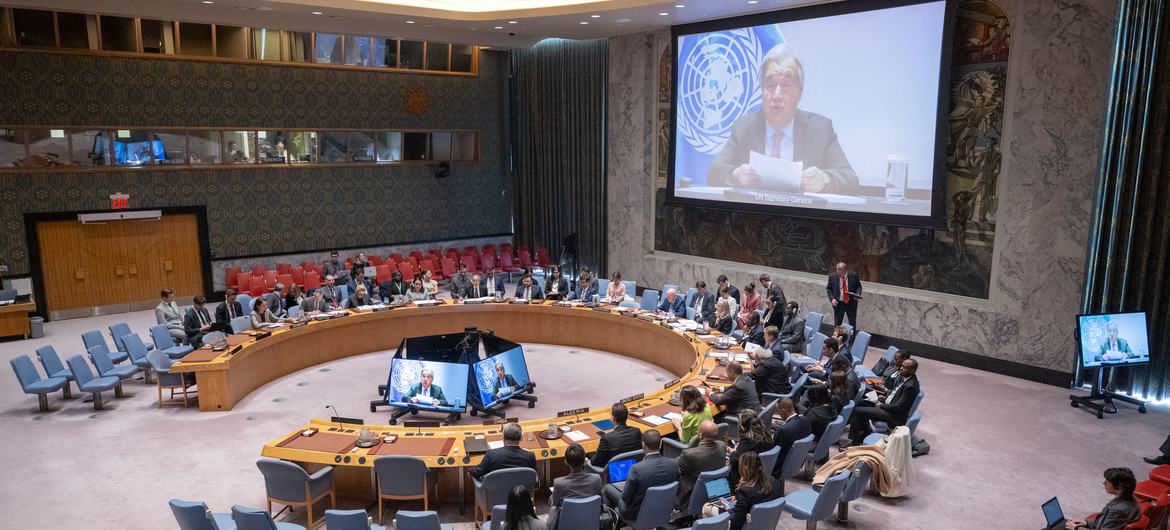
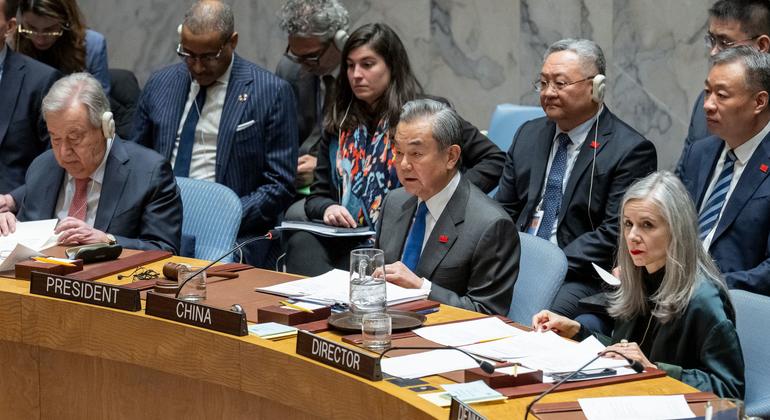
A wide view of the UN Security Council open debate on "Leadership for Peace".


By Vibhu Mishra
15 December 2025 
Peace and Security

Gathered around the Security Council’s iconic horseshoe table, ambassadors were challenged on Monday to look backwards – when, despite deep rivalry and distrust, the body chose leaders capable of steering the world away from catastrophe towards active cooperation.

That call came during an open debate on “Leadership for Peace,” where former Secretary-General Ban Ki-moon and academic Anjali Dayal pressed members to confront both the external crises facing the UN and internal constraints that have weakened its ability to act.

Mr. Ban, now an emeritus member of The Elders group, warned that global conditions have worsened since he left office at the end of 2016, marked by deepening confrontation among major powers, eroding multilateralism and conflicts in which civilians continue to pay the highest price.

“This deeply disappointing situation is characterized by confrontation rather than cooperation among major powers,” he told the Council, mass civilian casualties in Gaza and weakening international cooperation – even as the global climate crisis accelerates.

Lurching towards irrelevance

The former UN chief said the overall crisis cannot be separated from the Security Council’s own failures.

“The Security Council’s ongoing failure to properly function constitutes the most egregious cause,” he said, highlighting the repeated use of veto by permanent members “to shield themselves, their allies and their proxies from accountability.”

Without meaningful reform, Mr. Ban warned, civilians will remain unprotected and impunity will persist. “Without it, the UN risks lurching towards either collapse or irrelevance,” he said.

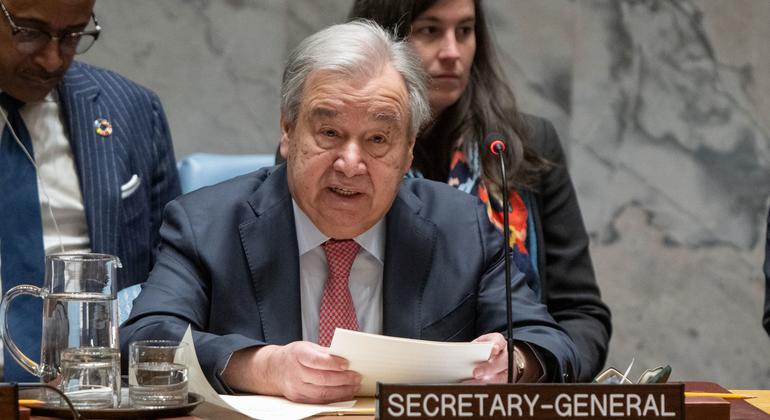
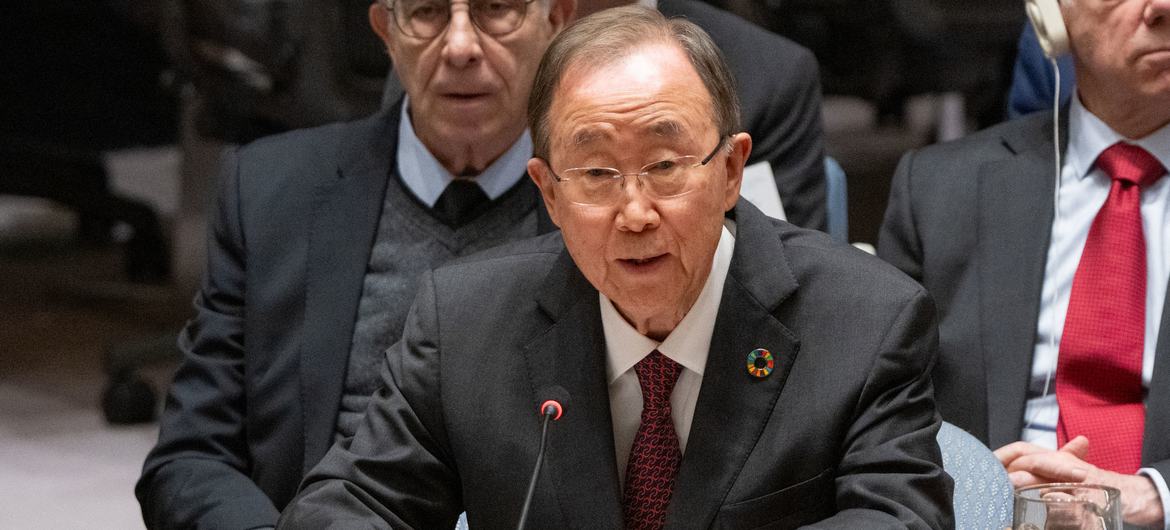
Former UN Secretary-General Ban Ki-moon speaking at a Security Council meeting on international peace and security.
UN Photo/Eskinder Debebe
 
Former Secretary-General Ban Ki-moon, addresses the Security Council.

Reduce political pressures

Turning to the selection of the next Secretary-General, Ban called for a single, non-renewable seven-year term to strengthen the independence of the office.

The current practice of two five-year terms, he said, leaves Secretaries-General “overly dependent on this Council’s Permanent Members for an extension,” even though the arrangement is a convention rather than a requirement of the UN Charter.

“The General Assembly holds the power to set the terms of the appointment itself,” Mr. Ban noted, urging member states to use that authority to empower the next UN leader more fully.

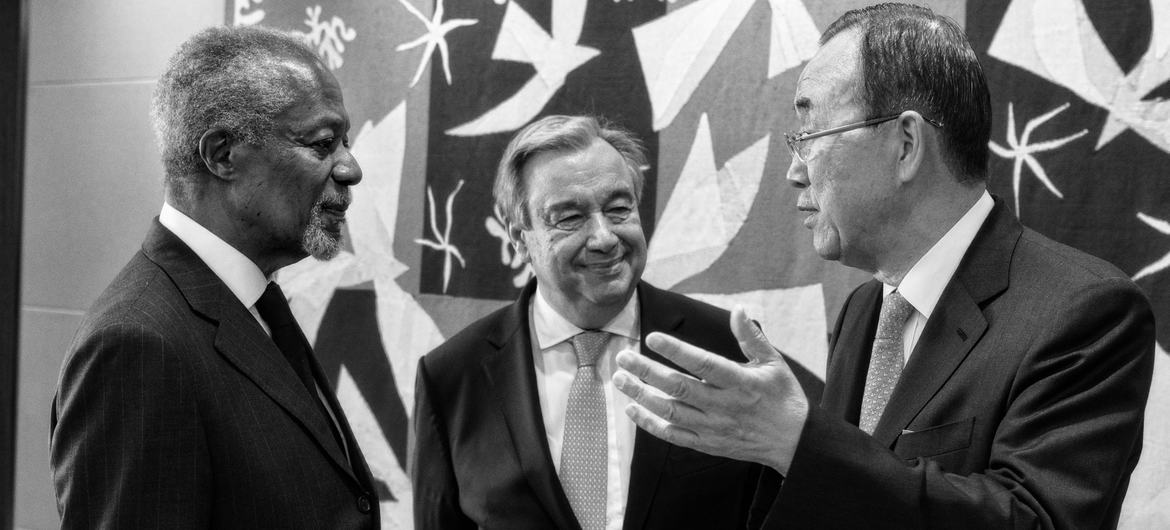
Former Secretaries-General Kofi Annan (left) and Ban Ki-moon (right) pay a courtesy call on Secretary-General António Guterres.
UN Photo/Mark Garten
 
Former Secretaries-General Kofi Annan (left) and Ban Ki-moon (right) with Secretary-General António Guterres at the UN Headquarters, in New York.

The selection process

Secretary-General António Guterres’ second term expires at the end of next year, and the formal selection process is already under way.

In November, the Presidents of the General Assembly and the Security Council launched the process together, in line with General Assembly resolution 79/327, which emphasises transparency and inclusivity.

Under the established procedure, candidates are nominated by Member States or groups and are required to submit a vision statement, curriculum vitae and campaign financing disclosures. The President of the General Assembly convenes publicly broadcast interactive dialogues with all candidates, while engaging closely with Member States throughout the process.

As of mid-December, only Rafael Mariano Grossi – the Director-General of the UN nuclear watchdog International Atomic Energy Agency (IAEA) – has been nominated by Argentina.

You can find the list of candidates on the UN website here.

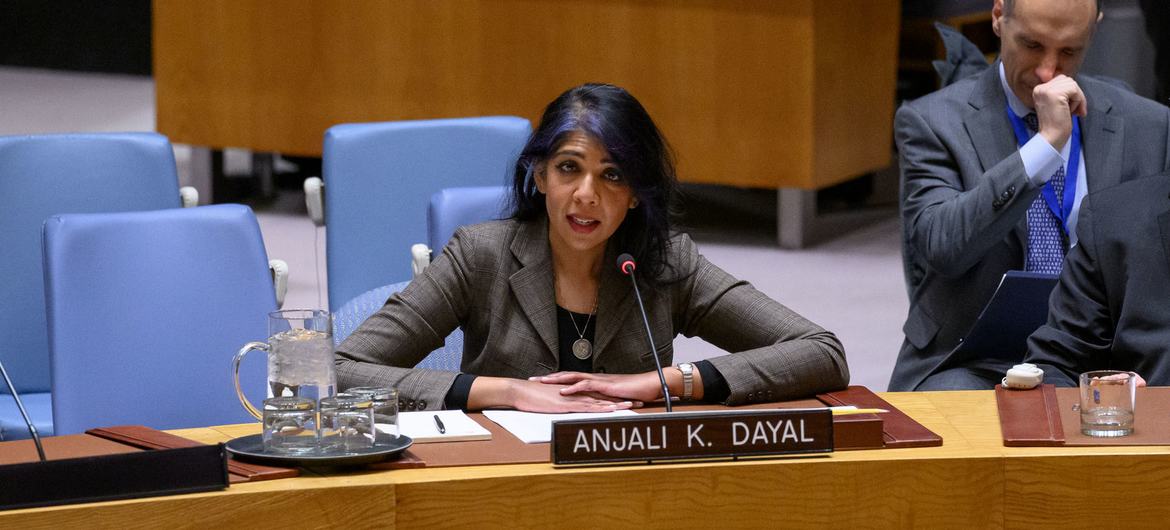
Professor Anjali Dayal of international relations at Fordham University’s Lincoln Center campus, addresses the  Security Council meeting on maintenance of international peace and security.
UN Photo/Loey Felipe
 
Anjali Dayal, Associate Professor for International Politics at Fordham University, addresses the Security Council.

Unprecedented strain

Anjali Dayal, Associate Professor for International Politics at Fordham University, told the Council that the next Secretary-General will assume office at a time of unprecedented strain, including a deepening funding crisis that is already shrinking the UN’s capacity to deliver essential services.

“That will result not just in shrinking this Organization, but also in less of the work that only the UN can do at scale,” she said, pointing to fewer vaccinations, reduced humanitarian aid and diminished mine-clearance efforts, even as global needs grow.

Ms. Dayal said history shows that even in periods of intense division, the Council has been capable of choosing leaders who advanced peace and cooperation.

She recalled the protracted deadlock that preceded the selection of Javier Pérez de Cuéllar in 1981 and the critique of U Thant, yet they deftly maneuvered an end to the Iran-Iraq war, resolve conflicts in Cambodia and Nicaragua, and help end the Cuban Missile Crisis.

Jaw-jaw better than war-war

Those examples, she said, underscore that the Secretary-General’s influence lies less in material power than in the ability to shape ideas, narratives and long-term cooperation – “to make conference rooms always more attractive than the battlefield.”

For Mr. Ban, that responsibility ultimately rests with the Council itself. Reforming veto use and renewing support for UN leadership, he said, are essential if the Organization is to remain relevant in the twenty-first century.

“The path of each for themselves is no different from the path of mutual destruction,” he warned.

https://news.un.org/en/story/2025/12/1166598


https://creativecommons.org/licenses/by/4.0/legalcode

воскресенье, 26 октября 2025 г.

Guterres calls for urgent reform of the Security Council


24 October 2025 
Peace and Security

Secretary-General António Guterres on Friday warned that the “fragile” legitimacy of the Security Council could endanger global peace if it remains gridlocked and fails to fulfil its primary purpose.

Mr. Guterres was addressing ambassadors in the iconic chamber in New York on United Nations Day, marking 80 years since its founding. He spoke via video link from the capital of Viet Nam, Hanoi, during a robust open debate on how the UN navigates an uncertain future.

Tweet URL

As the UN’s primary body for maintaining international peace and security, the council wields significant power, including the authority to impose sanctions and authorize military action.

Five of its 15 members have a permanent seat and were granted veto power under the UN Charter.

While the Council has played a central role in peacekeeping, conflict resolution and upholding international law, its veto system has often stalled action and sparked criticism.

The body’s structure is viewed by many countries and top officials as unrepresentative, leaving regions like Africa and Latin America without a permanent voice.

Invoking those who have looked to the council over 80 years to end wars, Mr. Guterres said that “the privilege to sit at this table carries a duty – above all – to honour the faith of those people,” he said. “Without a Security Council fit for purpose, the world is in grave danger.”

Debate over fundamentals

Presiding over the council for October, Russia praised the UN’s achievements but criticised the actions of Western governments, while elected (non-permanent) member Guyana, said the body was unrepresentative, advocating for greater and meaningful global representation.

The United States focused on operational reform, accountability, and called for a merit-based selection of the next Secretary-General – who takes the helm in January 2027 – emphasising the primacy of national sovereignty and transparency in the selection process.

The US representative called for an end to a selection process based on regions taking it in turns, arguing it was time to choose from a global roster of candidates.

For a full readout of the meeting click here.

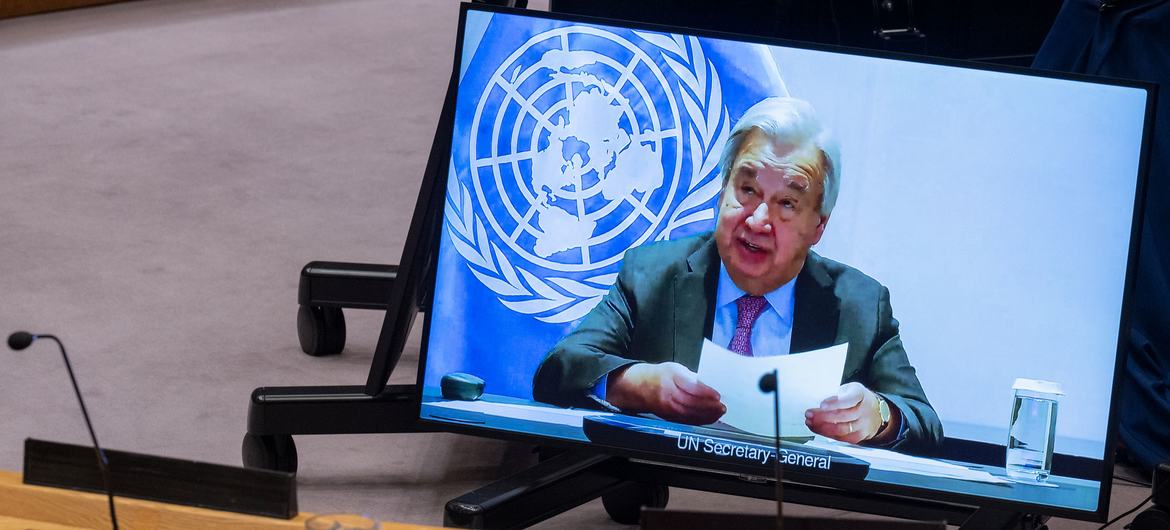
Secretary-General António Guterres (on screen) addresses Security Council members.
UN Photo/Manuel Elías
 
Secretary-General António Guterres (on screen) addresses Security Council members.

A UN for the weak, not the powerful

The UN chief painted a vivid picture of how Council decisions can impact citizens worldwide:

The Security Council is not about hegemons and empires. It is about parents who have lost their children, refugees flung far from their homes, soldiers who have sacrificed their limbs.

In every shadow of this Chamber, you are surrounded by the ghosts of the dead. But beside them stands something else – the hopes of the living.

He urged Council members to listen to those hopes.

“Listen closely and you will hear the cries of your citizens who rally for peace; the whispers of families who long for safety...The United Nations emblem does not bear the laurel wreath of a victor, but the olive crown of a peacemaker.

But its legitimacy is fragile

Mr. Guterres highlighted the Council’s successes over eight decades, from helping Cambodia emerge from genocide to supporting South Africa’s transition from apartheid and deploying missions in Sierra Leone, Timor-Leste, and Liberia.

Yet its legitimacy remains fragile, he stressed, noting that violations of the UN Charter by some Member States erode trust and risk global stability.

He called for and expanded membership to better reflect the world’s demographics, including permanent representation for Africa, Latin America and the Caribbean.

Mr. Guterres also encouraged discussions on proposals to limit the use of the veto.

A wide view of the Security Council as Secretary-General António Guterres (on screen) addresses members.
UN Photo/Manuel Elías
 
A wide view of the Security Council as Secretary-General António Guterres (on screen) addresses members.

Russia: Divisive Western powers

Russia’s Ambassador Vassily Nebenzia praised the UN’s achievements but cautioned against the actions of Western powers.

“In an effort to maintain its waning influence, the West divided the world into ‘us’ and ‘them’ – ‘democracies’ and ‘autocracies’ – a group of those who are chosen, and those who are violating their imposed order,” he said.

As a result, many of the UN Charter’s principles remain concepts, not a reality. “Adventures” – from the Iraq invasion and Colour Revolutions to the recent invasion of Iran – have only led to tragedy, he said.

Guyana: Reform now

Guyana’s Ambassador Carolyn Rodrigues-Birkett echoed calls for reform, describing the current configuration of the Council as unrepresentative.

“The Security Council must be reformed. Notwithstanding the expansive breadth of the work of the UN, the reality is that this success or failure of the United Nations as a whole is judged in large measure through the action, or lack thereof, of the Security Council,” she said.

She called for permanent seats for Africa and Latin America and a rotating seat for small island developing States, emphasising that national interest and international cooperation are complementary.

US: UN ‘has lost its way’

The United States, represented by Ambassador Dorothy Shea, focused on accountability. She said the UN had become a “bloated bureaucracy” that has lost its way, calling for mandates with clear political objectives and measurable benchmarks.

“The UN should serve Member States rather than have Member States beholden to an unaccountable bureaucracy,” she said.

On the next Secretary-General, Ambassador Shea said the US seeks a leader who will restore the UN to its founding purpose, respecting state sovereignty and prioritising accountability and transparency.

She added that the selection process should be merit-based, drawing candidates from all regional groupings, and that the next Secretary-General should “bring the UN back to basics and by so doing, help achieve the bold vision of peace and prosperity to which we all committed.”

A humble ballot box

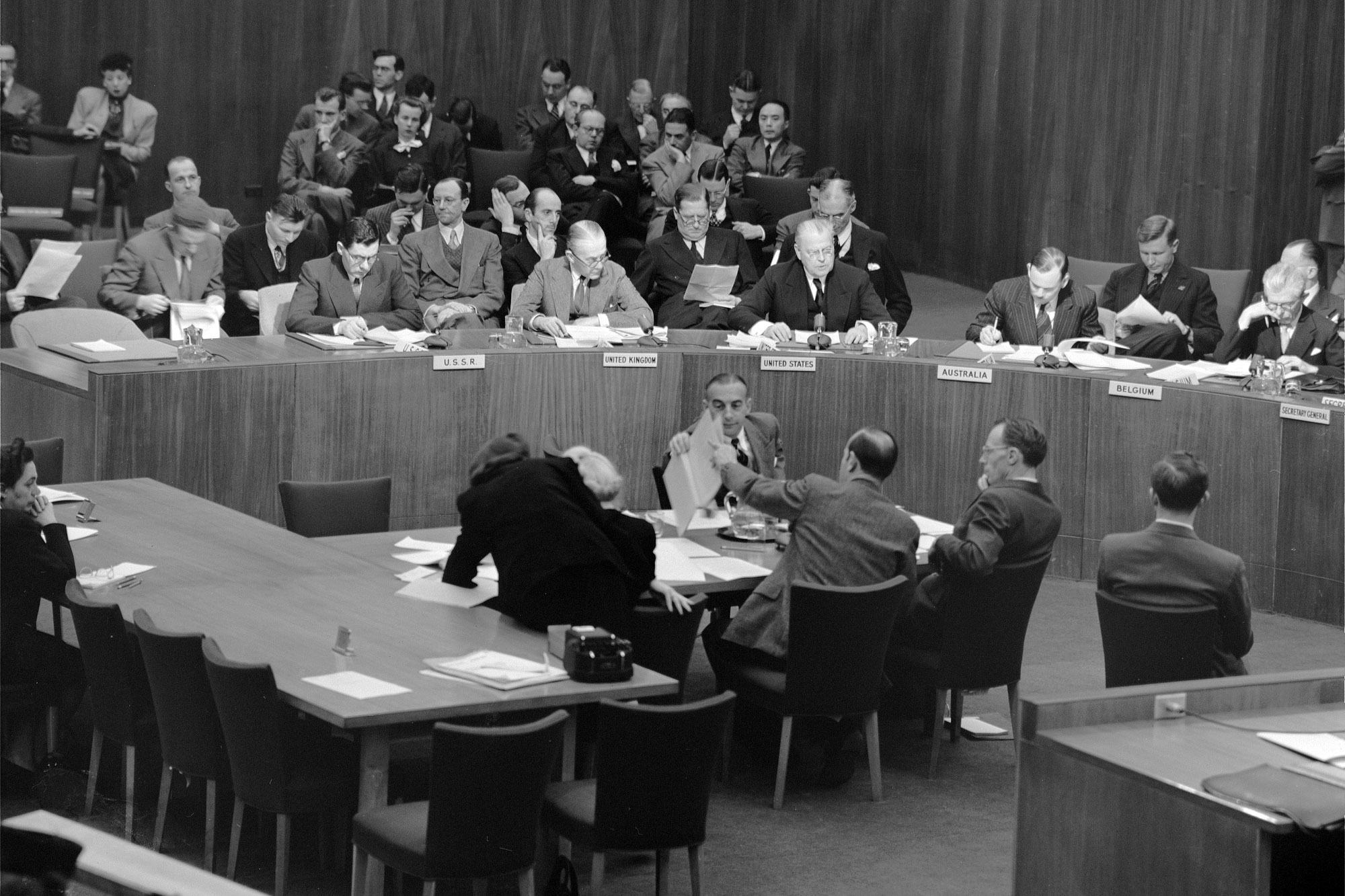
A photograph of a UN Security Council meeting on atomic energy in 1947.
UN Photo
 
A photograph of a UN Security Council meeting on atomic energy in 1947.

At the start of the meeting, the UN chief recalled a remarkable moment from the UN’s early days: the first Security Council ballot box in 1946. To everyone’s surprise, a slip of paper was already inside – a note from Paul Antonio, a local New York mechanic who had made the box.

“May I, who have had the privilege of fabricating this ballot box, cast the first vote? May God be with every member of the United Nations Organization, and through your noble efforts bring lasting peace to us all – all over the world,” Mr. Antonio wrote.

“Paul Antonio – the mechanic never sat at this table He never gave a speech or signed a treaty,” Mr. Guterres told ambassadors.

“But he believed in everyone here. He believed in you. I urge you: honour that trust. Make this chamber worthy of the hopes of every man, woman and child.”


https://creativecommons.org/licenses/by/4.0/legalcode


https://creativecommons.org/licenses/by/4.0/legalcode

пятница, 4 июля 2025 г.

Press Conference by Security Council President on Programme of Work for July


The Security Council will convene its signature event on 22 July — a high-level open debate on promoting international peace and security through multilateralism and the peaceful settlement of disputes — the Council’s President for the month said at a United Nations Headquarters press conference today.

Asim Iftikhar Ahmad (Pakistan), who holds the 15-member organ’s rotating presidency for this month, said the open debate — held under the overarching theme of maintaining international peace and security — will be chaired by his country’s Deputy Prime Minister and Minister for Foreign Affairs, Mohammad Ishaq Dar. The Secretary-General is expected to brief the Council.  “The debate stems from the fact that today’s crises often emerge from unresolved disputes, erosion of international obligations and underutilization of peaceful means enshrined in the Charter,” he said.  The discussion will examine the effectiveness of existing dispute settlement mechanisms, identify barriers to implementing Council resolutions and explore ways to strengthen preventive diplomacy, mediation and technical support.  It will also reaffirm the commitments made in the Pact for the Future towards preventive diplomacy and the peaceful resolution of disputes.

The Council will further hold a signature event on “Cooperation between the UN and regional and subregional organizations”, chaired also by Pakistan’s Deputy Prime Minister and Minister for Foreign Affairs.  It will spotlight UN’s engagement with the Organisation of Islamic Cooperation (OIC), which represents 57 member States across four continents and has played an increasingly important role in conflict prevention and mediation, humanitarian response and post-conflict recovery.  This meeting will explore ways to institutionalize and deepen this cooperation, particularly in relation to peace processes in various contexts.

On 23 July, the Council will hold its quarterly open debate on the Middle East, including the Palestinian question, which will be elevated to the ministerial level.  The meeting will reaffirm the Council’s responsibility to protect civilians, uphold international humanitarian law and push for an immediate ceasefire, along with just and lasting solutions based on UN resolutions concerning the Palestinian question.

Throughout July, the Council will consider several country-specific and thematic issues, primarily through mandated briefings and situational updates.  These will include discussions on Colombia, Haiti, Cyprus, Sudan, Syria, Yemen and the International Criminal Court, as well as consultations on Lebanon within the framework of resolution 1701 (2006).  The President of the Security Council reaffirmed his readiness to convene additional meetings should developments on the ground — particularly in Africa, the Middle East or Asia — warrant timely engagement.  On 29 July, the Council will also hold a briefing on UN Peace Operations, in the context of the Secretary-General’s ongoing review.

“We are committed to an open and consultative Presidency,” he stated, outlining the Council’s working methods, which are grounded in transparency, inclusivity and close coordination among all 15 members.  He noted that the Council remains alert and responsive to global developments, with a particular focus on conflict zones such as in the Middle East, Africa, Sudan and the Democratic Republic of the Congo.

He also responded to several questions posed by media correspondents, many of which concerned the situation in Gaza.  In his national capacity, he said the objective of the draft resolution — jointly proposed by China, the Russian Federation and his own country — is to achieve a ceasefire to the conflict. 

In response to a question about the future role of Hamas in Gaza, he emphasized that this is an intra-Palestinian matter that “should be left to the Palestinians [themselves]”.

Addressing a query about the Special Representative of the Secretary-General of the United Nations for Children and Armed Conflict’s recent report on children in Gaza, which the reporter described as “unfair”, he stressed that mandates such as children and armed conflict must be upheld universally and without selectivity. “[By] failing to do that, […] we are undermining these important mandates,” he warned.

On the conflict between Israel and Iran, he spoke in his national capacity to reaffirm Pakistan’s principled position, grounded in international law and the Charter of the United Nations.  He noted that some discussions have deviated from Iran’s legitimate rights, highlighting that Tehran remains a party to the Treaty on the Non-Proliferation of Nuclear Weapons.  “The best way to address the Iranian nuclear issue in all its complexity is through dialogue and diplomacy,” he said.  However, he added, this path was seriously disrupted by the recent attacks, while expressing hope that “a window of opportunity” still exists to resume dialogue and reach a conclusive resolution in accordance with international law.

Regarding the UN’s cooperation with regional and subregional organizations, he pointed to OIC’s growing role in areas such as counter-terrorism, counter-extremism and humanitarian affairs.  He emphasized the importance of deepening engagement between OIC and the Security Council.

When asked about how the issue of Kashmir could be addressed in the Council, he responded in his national capacity that the dispute remains unresolved and continues to be a source of tension between India and Pakistan, hindering broader regional relations.  He emphasized that it is the Council’s responsibility — especially that of its permanent members — to take meaningful steps towards implementing their own resolutions.


https://press.un.org/en/2025/250701_sc.doc.htm


https://creativecommons.org/licenses/by/4.0/legalcode

суббота, 14 июня 2025 г.

Meeting in Wake of Israeli Air Strikes on Iran, Delegates in Security Council Urge De-escalation, Diplomacy to Prevent Further Strain in Conflict-Ridden Region


9936th Meeting (PM)
SC/16085

Meeting in Wake of Israeli Air Strikes on Iran, Delegates in Security Council Urge De-escalation, Diplomacy to Prevent Further Strain in Conflict-Ridden Region

Meeting in the hours following Israel’s air strikes against targets in Iran, the Security Council today heard — and its members largely agreed — that de-escalation and diplomacy are imperative to avoid further strain in a region already groaning under the weight of compounding conflict.

“Today, at approximately 3:15 a.m. local time, the Israeli military launched waves of air strikes across Iran,” reported Rosemary DiCarlo, Under-Secretary-General for Political and Peacebuilding Affairs.  These attacks — “which are reportedly continuing this afternoon”, she added — have targeted headquarters of the Islamic Revolutionary Guard Corps, military bases, radar installations and nuclear facilities.  They have reportedly caused significant damage — including dozens of civilian casualties — and in retaliation, Iran launched some 100 drones towards Israel.  “As I speak, there are reports of Iranian missiles heading towards Israel,” she said.

She noted that the Israel Defense Forces have called this a “precise, pre-emptive strike”, prompted by the “imminent threat from Iran’s nuclear programme”.  Multiple nuclear installations were struck, including in Natanz — one of that programme’s “central sites”, she said.  Israel’s Prime Minister has stated that Israeli forces also attacked Iran’s ballistic-missile capabilities and top Iranian nuclear scientists.  She recalled that the Prime Minister stated these attacks were intended to “ward off an existential threat” and vowed that “the battle would continue for as many days as it takes”.

Middle East on High Alert

“The impact of these attacks has already been felt throughout the region,” she observed, as neighbouring countries have closed their airports and placed their security forces on high alert.  Further, the Houthis have reportedly launched missiles towards Israel, and Iran’s Supreme Leader has promised “severe punishment” for that State.  Noting that talks between Iran and the United States were to resume in Oman shortly, she urged the continuation of these diplomatic efforts.  She concluded:  “We must, at all costs, avoid a growing conflagration that would have enormous global consequences.”

Rafael Mariano Grossi, Director-General of the International Atomic Energy Agency (IAEA), then told the Council that IAEA was informed of Israel’s military operation and has been in permanent contact with Iranian authorities to ascertain the status of nuclear facilities.  Iran has initially confirmed that only the Natanz fuel-enrichment plant had been attacked.  The above-ground part of that plant — where Iran was producing uranium, including uranium-235 enriched to 60 per cent — “has been destroyed”, he reported, along with electrical infrastructure at the facility.

“There is no indication of a physical attack on the underground cascade hall containing part of the pilot fuel-enrichment plant and the main fuel-enrichment plant,” he reported.  However, he added that “loss of power to the cascade hall may have damaged the centrifuges there”.  While early indications suggest no external radiological impact to the population or environment from the event, he stated that there is “manageable” radiological and chemical contamination inside the facilities at Natanz.  Calling these developments “deeply concerning”, he underscored that nuclear facilities must never be attacked.

International Atomic Energy Agency Monitoring Situation 24/7

And calling on all parties to exercise maximum restraint to avoid further escalation, he underlined IAEA’s support for a diplomatic solution to the problems posed by Iran’s nuclear programme.  For its part, the Agency has established a task force to “monitor the situation 24/7” and may deploy experts in addition to inspectors already in Iran.  “It is clear that the only sustainable path forward —for Iran, for Israel, the entire region and the international community — is grounded in dialogue and diplomacy,” he stressed.

As the floor opened, the representative of the Russian Federation observed:  “One is left with the impression that the leadership of Israel is convinced that they have a completely free hand in the region.”  Condemning this “military adventure”, he underscored that its consequences lie “fully with the Israeli leadership — and those who encourage them”. Stressing that all issues relating to the Joint Comprehensive Plan of Action “began when the United States unilaterally left the nuclear deal in 2018”, he also pointed to “likely coordination between Israeli and British special services” involving the former’s aircraft sheltering at the latter’s base in Cyprus.

“Russia’s claim that British sovereign bases in Cyprus were in any way involved is nonsense,” underscored that country’s representative, adding that it is “deeply irresponsible at moments like this for Russia to be spreading disinformation”.  Expressing support for “any diplomatic efforts to return to stability”, she stressed: “Our first priority must be to prevent further escalation in the Middle East.”  On that, Somalia’s representative — also calling for restraint and de-escalation — observed that “the spill-over effects are no longer hypothetical”.

Timing of Israeli Attacks Mark New, Troubling Link in ‘Chain of Tension’ Threatening Regional, Global Stability 

Panama’s representative, stating that Colombian writer Gabriel García Márquez aptly “qualified a predictable situation” with the title of Chronicle of a Death Foretold, said:  “That could be applied to this situation.”  Last night’s events were “hardly surprising”, he said, “but they do represent a new and troubling link in a chain of tension that threatens regional and global stability”.  The representative of Sierra Leone, similarly, expressed regret over the “reversion to a period when a State can unilaterally resort to the use of force against another State”.  China’s representative stressed:  “The abrupt heating-up of the region serves no one’s interests.”

Condemning the “logic of unilateral force”, Algeria’s representative underscored:  “The only thing that pre-emptive action could prevent is peace.”  He also pointed out that Israel operates outside the framework of the Treaty on the Non-Proliferation of Nuclear Weapons and has consistently refused to join the negotiation process on establishing a zone free of nuclear weapons in the Middle East.  “Let us not overlook the timing,” he added, noting that Israel carried out these attacks when the United States and Iran are engaged in direct negotiations on the latter’s nuclear programme.

That these attacks occurred during such negotiations makes them “all the more morally repugnant”, said the representative of Pakistan.  “These actions risk eroding the trust and sanctity of the negotiations process so crucial for the peaceful settlement of these issues,” he stressed.  Greece’s representative also expressed concern that this escalation occurred as United States-Iran negotiations were under way.  While stating that “Iran must never be allowed to acquire a nuclear weapon”, and that Israel has the right to defend itself, he added:  “At the same time, we strongly believe that lasting security can only be achieved through diplomacy and a negotiated deal.”

Iran Must Never Be Allowed to Acquire Nuclear Weapons 

Also stressing that Iran must never acquire such a weapon was the representative of Denmark, who added that “it is further disturbing that IAEA is unable to provide assurances” that Iran’s nuclear programme is exclusively peaceful.  France’s representative, in that vein, said that such a programme “lacks any credible civilian justification”.  While the representative of Slovenia echoed these concerns, she stressed:  “However, strikes against civilian nuclear infrastructure — whether they happen in Eastern Europe, the Middle East or anywhere else — are unacceptable.”

“This dangerous regime cannot be allowed to have nuclear weapons,” stressed the representative of the United States.  While the United States was informed of Israel’s strikes ahead of time, it was not militarily involved.  Underscoring that “no Government, proxy or independent actor should target American citizens, American bases or other American infrastructure in the region”, he warned that “the consequences for Iran would be dire”.  He added that the United States will continue to seek a diplomatic resolution, emphasizing: “Iran’s leadership would be wise to negotiate at this time.”

“As a country neighbouring another that is seriously violating non-proliferation obligations, the Republic of Korea shares serious concerns over Iran’s continued expansion of its nuclear programme,” said Seoul’s representative.  Nevertheless, he stated:  “We believe both countries possess the wisdom to avert a broader conflict that the region can hardly afford.”  Along those lines, the representative of Guyana, Council President for June, spoke in her national capacity to call on all parties to commit to no further escalation in the region.  This was a common refrain today.

Iran’s Representative:  Israel Is ‘Most Dangerous and Terrorist Regime in the World’

Meanwhile, Iran’s representative stated that the actions of Israel — “the most dangerous and terrorist regime in the world” — amount to a “declaration of war”.  Warning of the potential radiological consequences of the attack on Natanz, he stressed:  “Only a regime devoid of humanity and responsibility would endanger millions of lives in pursuit of its destructive ambitions.”  Those who support Israel — foremost the United States — “are complicit in war crimes and crimes against humanity”, he said.  Urging the Council to condemn Israel, he stressed:  “Silence is complicity in this crime.”

Israel’s Representative:  Tel Aviv Acted in Self-Defence against Iran which Declared ‘Its Intent to Destroy Us’ 

“When a regime builds ballistic missiles, enriches uranium to near weapons-grade and openly declares its intent to destroy us, we believe them,” said Israel’s representative.  Underscoring that his country did not act “recklessly”, he said Israel waited while Iran enriched uranium to a level with no civilian justification; obstructed inspectors and destroyed monitoring equipment; developed trigger mechanisms, detonation systems and warhead plans; actively recruited more nuclear scientists; and made false concessions during extended negotiations.  “Last night,” he said, “the wait ended.”

For his part, Iraq’s representative condemned Israel’s “dangerous military aggression” against Iran and its “blatant violation of Iraq’s sovereignty and the inviolability of its airspace”.  He stressed:  “It pushes us into conflicts we are not party to.”  The representative of Kuwait, speaking for the Gulf Cooperation Council, also condemned Israel’s attacks — regardless of their justification.  Rejecting violations of sovereignty under any pretext, he warned that an expanded conflict will “only serve the forces of chaos and extremism”.

https://press.un.org/en/2025/sc16087.doc.htm


https://creativecommons.org/licenses/by/4.0/legalcode

пятница, 2 мая 2025 г.

Press Conference by Security Council President on Programme of Work for May


The Security Council will convene its signature event of the month on 20 May — an open high-level debate on maritime security, held under the overarching theme of maintaining international peace and security, the Council’s President for May announced today at a United Nations Headquarters press conference.

Evangelos C. Sekeris of Greece, whose country holds the rotating presidency of the 15-member organ this month, told reporters that the event — titled “Strengthening Maritime Security through International Cooperation for Global Security” — will be chaired by Greece Prime Minister Kyriakos Mitsotakis.  UN Secretary-General António Guterres will serve as the main briefer, and the President of the Board of Directors of the Union of Greek Shipowners will also address the Council.

Greece has “elevated” the representation to the highest political level to highlight the strong interest Athens places on this critical issue — as a UN Member State, a maritime nation and “home to one of the world’s largest merchant fleets”, Mr. Sekeris said.

He emphasized that many Member States recognize the critical importance of maritime security, particularly the need to protect freedom of navigation, secure global supply chains and raise awareness of the complexities and gravity of maritime threats.

Looking ahead, the Council will also hold its annual open debate on the protection of civilians in armed conflict on 22 May, which will be elevated to ministerial level and chaired by the Minster for Foreign Affairs of Greece, Giorgos Gerapetritis.  Several senior UN officials and a representative of civil society are expected to brief the organ.  He said Greece during its Council presidency will aim to highlight the vital role of this annual debate in safeguarding women, children and other vulnerable populations during armed conflict.

He noted various other highlights on the calendar.  On 6 May, the Council will convene its semi-annual debate on the situation in Bosnia and Herzegovina; on 14 May, it will hold its monthly briefing on the situation in Yemen, followed by a briefing on Libya on 16 May by Karim Khan, Prosecutor of the International Criminal Court.

On 21 May, under Greece’s presidency, the Council will conduct its monthly open briefing on the situation in Syria, he continued.  On 27 May, the organ will hold elections to appoint a new judge to the International Court of Justice.  Finally, on 28 May, the Council will hold its monthly briefing on the situation in the Middle East, with a focus on the Palestinian question.

When asked by reporter about whether the Council is considering meeting on the situation in South Asia, he said that the organ is seized of the matter.  “It is an issue that is ongoing and evolving,” he added, recalling that the Council had recently released a statement condemning the attack in Jammu and Kashmir. He expressed concern for the growing tensions between India and Pakistan.  If the situation does not de-escalate, the Council can certainly meet on the issue.

Asked whether it will add any meeting on non-proliferation “hotspots”, given that “there is a lot going on” with Iran, Ukraine and the Democratic People’s Republic of Korea, he said that, while there is no mandated meeting, “we can expect” for something to come up to fill up one of the empty slots.

.

Asked why Greece is not calling for an emergency meeting on Gaza, he said that there is the 28 May meeting, but “of course there will be meetings asked [for] before”.  “We have a position of principle and attach importance to addressing the humanitarian situation in Gaza,” he said, also calling for the release of all hostages. He also expressed hope for the upcoming international conference on the matter co-organized by Saudi Arabia and France.

When asked to comment about the Panama and Suez Canal in connection to Greece’s maritime security debate to be held, he said that the Suez is being affected by the situation in the Red Sea “where we have had many attacks” by the Houthis.  He said that in the Panama case there are no maritime security issues.

Asked about the cross-border terrorism in South Asia and growing tensions between India and Pakistan, he said it is a very pertinent issue and strongly condemned any act of terrorism.  The size and volume of the growing tensions is very concerning, he added, reiterating calls for de-escalation and dialogue.  He said that Greece as President of the Council will follow the issue closely.

Asked about the developments in Syria, he said that he “is monitoring the first moves” of the new Government.  “There is some optimism, but it has to go step by step and we have to see it,” he added. Asked about the challenges faced by the United Nations Interim Force in Lebanon (UNIFIL), he said that the Council remains seized of the matter and will continue to support UN efforts in Lebanon. “I think the situation is improving and we can be a little more optimistic,” he added.

When asked about whether Greece will introduce the issue of migration into any of its debates, he said there is no specific discussion on migration on the Security Council agenda for now but certainly the issue will be discussed in country-specific discussions and debates.

For the full programme of work, please see


https://press.un.org/en/2025/250501_sc.doc.htm


https://creativecommons.org/licenses/by/4.0/legalcode

вторник, 29 апреля 2025 г.

You Are Undermining Your Own Stability’, High Commissioner for Refugees Tells Security Council, Warning against Retrenching from Aid, Multilateralism


9905th Meeting (AM)
SC/16051


In what he described as possibly his last address to the Security Council, the head of the Office of the United Nations High Commissioner for Refugees (UNHCR) warned today that “violence has become the defining currency of our age” — from Sudan to Ukraine, from the Sahel to Myanmar and beyond — and urged the 15-member organ to fulfil its responsibility for maintaining peace.

Despite knowing the gravity of the crises, the Council’s inaction itself is “an indictment”, said Filippo Grandi, UN High Commissioner for Refugees, asserting that the organ has “chronically failed to live up to” its responsibility.

He painted a bleak picture of today’s wars, driven by the “perverse, yet powerful delusion:  that peace is for the weak”, where victory is pursued not through negotiation but by inflicting unbearable suffering.  As a result, “the norms of international humanitarian law… are cast aside, dismissed as easily as the thousands of lives destroyed in the pursuit of supremacy”.  Quoting Pope Francis, he reminded members that “every war represents not only a defeat of politics but also a shameful surrender”.

Highlighting the plight of 123 million forcibly displaced people worldwide, he described their hope for safety and eventual return, noting especially the devastating situation in Sudan, where “one out of every three people” has been displaced.  Refugee-receiving countries are doing their part.  “You must be more committed and more united to do yours,” he urged.

  In Myanmar, he urged breaking eight years of “dangerous inertia” concerning the Rohingya crisis, stressing that while challenges are immense, dialogue with all parties is “a critical first step” towards creating conditions for the safe, voluntary and dignified return of refugees.  “It is a long shot, for sure”, he admitted, but insisted that stagnation is no longer an option, urging the Council to sustain its robust focus on the situation in Myanmar.

Referencing the symbolic moment of the new Syrian flag being raised at the UN on 25 April, he said:  “For the first time in decades, there is a spark of hope, including for the millions of Syrians who remain displaced today, 4.5 million of them refugees in neighbouring countries.”  But achieving lasting solutions will require prioritizing the Syrian people over “long-standing politics, some of which are frankly outdated”.

Finally, he warned against the global trend of retrenching from aid and multilateralism at a critical time for several displacement crises.  “Aid is stability,” he declared, noting that by freezing or cutting aid budgets — which means taking support away from very fragile host countries and abandoning displaced people to their fate — “you are undermining your own stability”.

In the discussion that followed, some members warned of the global trend of aid cuts, while others called for more equal burden-sharing.

China’s delegate emphasized that “solving the refugee problem requires strengthening international cooperation”. However, a certain country has drastically cut foreign aid, forcing many humanitarian organizations to reduce their aid activities.  “This is undoubtedly a serious blow to refugee relief,” he said, warning that more people would be displaced.  He called on developed countries to shoulder their responsibilities by fulfilling their aid commitments and providing more support to refugee-hosting countries and multilateral humanitarian organizations.  He also warned against unilateralism and “hegemonic and bullying” behaviour.

The representative of the United States said that “the UN exists for collective action, and collective action demands collective responsibility”.  Underscoring the responsibility for every Member State to share the burden of humanitarian response to conflict, she said that “the United States has disproportionately shouldered this burden for decades”.

Denmark’s delegate, noting that her country is the fourth-largest donor to UNHCR, pointed out that with the humanitarian system “being reset”, the agency is undergoing dramatic organizational adjustments.  During this period of change, it is vital to collectively support UNHCR in preserving its ability to uphold core aspects of its mandate, she added.

The representative of the Russian Federation said that Western countries, “who have provoked a lion’s share of conflict throughout the world”, are very reluctant to finance UNHCR’s programmes to assist refugees from Syria, Afghanistan, Sudan and many other conflict-ridden countries.

As one of the front-line European Union member States receiving still large numbers of mixed arrivals, Greece contributes to the implementation of the agency’s mandate by hosting a significant number of refugees and asylum-seekers, said its delegate.  Noting his country’s support for the protection of unaccompanied minors, he further expressed concern about the involvement of criminal smuggling networks that exploit human suffering along migration routes.

On that, the representative of the United Kingdom highlighted his country’s initiatives, including holding a successful border security summit, where agreements between participating countries were reached to drive efforts to disrupt organized immigration crime and save lives.

Algeria’s delegate said that a decline in international funding has left millions of vulnerable individuals without access to life-saving assistance, particularly noting the plight of Palestinian refugees in Gaza and the West Bank.  For over half a century, Algeria has hosted Sahrawi refugees who were “forcibly displaced due to the Moroccan occupation of their homeland”.  Despite huge challenges, Algeria — in cooperation with UN agencies and humanitarian partners — has consistently ensured access to basic services for Sahrawi refugees, he added.

Panama’s representative drew attention to Venezuelan nationals who account for a significant portion of displaced persons worldwide.  “We cannot ignore the fact that the current economic situation, the democracy vacuum and the rampant insecurity in Venezuela has worsened the migratory crisis throughout the hemisphere,” he stated, also adding that “our region is going through challenging times with a lack of democratic guarantees and the resurgence of transnational organized crime”.

Pakistan’s delegate, noting that his country has provided shelter, protection and opportunities to millions of Afghans, expressed concern that developing countries — many grappling with their own socioeconomic challenges — continue to shoulder the greatest burden. Meanwhile, developed nations, despite their far greater resources and moral obligations, have increasingly turned inward.  “Physical and political barriers have been erected, closing doors to those most in need,” he said.

“We should shed more light on those who have no choice but to flee their homes due to systematic violations of basic human rights and humanitarian risks, and who risk persecution, torture, or other brutalities if forced to return,” said the representative from the Republic of Korea, adding that “the North Korean escapees are case in point”.

Several speakers highlighted other factors causing mass displacement, with Guyana’s delegate stating that climate change is also becoming a major driver of such movement.  Citing the 2024 global data over the past decade, she said that weather-related disasters have caused 220 million people to be internally displaced.  Slovenia’s representative added:  “Climate-fuelled floods, fires and prolonged droughts now drive families from their homes as ruthlessly as any gunman or bombs.”

Citing Sudanese women fleeing to Chad, Congolese women in displacement camps around Goma, and Rohingya women and girls in long-term refugee camps in Bangladesh, Sierra Leone’s delegate said that climate-induced disasters further compound their vulnerability and increase the severity of such violence.

The representative of France, Council President for April, speaking in his national capacity, highlighted the significance of the Global Compact on Refugees, which has established a framework for concerted action.  “This is an investment in stability,” he emphasized.

Somalia’s delegate was among many who recognized the severe financial constraints facing UNHCR, appealing to all Member States and donors to increase their support.  The agency requires adequate, predictable and flexible funding to fulfil its mandate and respond effectively to growing displacement needs. “Every refugee, regardless of background or skill set, deserves dignity and a durable solution,” he said.

Responding to comments and questions by Council members, Mr. Grandi said that “I am leading an internal effort, which may conclude with the retrenchment of my organization to up to one third of its capacity.”  There will be fewer offices, fewer programmes and fewer operations, he added, noting that UNHCR — founded in 1950 — will “unfortunately” observe its seventy-fifth anniversary in 2025.  “It is not a date to celebrate, but one perhaps on which to reflect on the challenges that we all face, and to try and find some inspiration to address them together,” he concluded.


https://press.un.org/en/2025/sc16051.doc.htm


https://creativecommons.org/licenses/by/4.0/legalcode

среда, 19 февраля 2025 г.

Amid ‘clear’ threat of nuclear war, Guterres tells Security Council multilateral off-ramp is essential


The Pact of the Future was adopted at a summit at UN Headquarters in September 2024.
UN Photo/Laura Jarriel
 
The Pact of the Future was adopted at a summit at UN Headquarters in September 2024.

18 February 2025 
Peace and Security

Strengthening international cooperation and delivering on a UN pact that calls for reforming global governance, among other measures, was the focus of debate in the Security Council on Tuesday. 

The ministerial-level meeting was convened by China, which holds the rotating Council presidency this month, as the UN prepares to mark its 80th anniversary later this year.

UN Secretary-General António Guterres opened the debate emphasizing that “global solidarity and solutions are needed more than ever” as the climate crisis rages and inequalities and poverty increase.

Peace remains illusive

“As this Council knows well, peace is getting pushed further out of reach — from the Occupied Palestinian Territory to Ukraine to Sudan to the Democratic Republic of the Congo and beyond,” he said.  

“Terrorism and violent extremism remain persistent scourges. We see a dark spirit of impunity spreading.  The prospect of nuclear war remains – outrageously – a clear and present danger.”

Emerging technologies such as Artificial Intelligence (AI) are also a challenge as their “limitless promise…is matched by limitless peril to undermine and even replace human thought, human identity and human control.” 

Secretary-General António Guterres addresses the Security Council meeting on maintenance of international peace and security with a focus on practicing multilateralism, reforming and improving global governance.
UN Photo/Eskinder Debebe

Pact for the Future

Mr. Guterres said “these global challenges cry out for multilateral solutions,” and pointed to the Pact for the Future, adopted by Member States last September.

The agreement “is aimed at strengthening global governance for the 21st century and rebuilding trust” in multilateralism, the UN, and the Security Council.

Provisions include advancing coordination with regional organizations and ensuring the full participation of women, youth and marginalized groups in peace processes.

The Pact outlines support for a stimulus plan to help developing countries achieve the Sustainable Development Goals (SDGs), and revitalized commitment to reform the post-war global financial architecture to better serve the modern world.

It also contains a Global Digital Compact that calls for an AI governance body that allows developing countries to participate in decision-making, marking a first.

Security Council reform

“The Pact also recognizes that the Security Council must reflect the world of today, not the world of 80 years ago, and sets out important principles to guide this long-awaited reform,” said Mr. Guterres.

The Council should be enlarged and made more representative of today’s geopolitical realities, while countries also must continue to improve its working methods to make the body more inclusive, transparent, efficient, democratic and accountable. 

He recalled that these issues have been under consideration by the UN General Assembly for more than a decade. 

Build on momentum 

“Now is the time to build on the momentum provided by the Pact for the Future, and work towards a greater consensus among regional groups and Member States – including the permanent members of this Council – to move the intergovernmental negotiations forward,” he said. 

“Throughout, I call on Members of this Council to overcome the divisions that are blocking effective action for peace.”

He noted that Council members have shown reaching common ground is possible, for example through deploying peacekeeping operations and forging resolutions on humanitarian aid.

Spirited compromise

“Even in the darkest days of the Cold War, the collective decision-making and vigorous dialogue in this Council maintained a functioning, if imperfect, system of collective security,” he said.

I urge you to summon this same spirit, continue working to overcome differences and focus on building the consensus required to deliver the peace all people need and deserve.”

The Secretary-General said multilateral cooperation is the beating heart of the United Nations, and guided by the solutions in the Pact for the Future, it can become an even more powerful instrument of peace,

“As we look to the challenges around us, I urge all Member States to continue strengthening and updating our global problem-solving mechanisms,” he said. “Let’s make them fit for purpose – fit for people – and fit for peace.”

Wang Yi (centre), Minister for Foreign Affairs of the People’s Republic of China, chairs the Security Council meeting on maintenance of international peace and security with a focus on practicing multilateralism, reforming and improving global governance.
UN Photo/Manuel Elías

China stresses need to uphold sovereignty

The meeting was chaired by China’s Foreign Minister Wang Yi who presented four proposals to the Council, including the need to uphold sovereign equality while advancing global governance.

“We must respect the development acts chosen independently by people of all countries, uphold the principle of non-interference in internal affairs, and not impose one's will upon others,” he said.

Countries also must “practice international rule of law, ensure the effective implementation of international law and reject double standards and selective application.”

Mr. Wang said Security Council resolutions are binding and should be observed by all countries. The Council is also entrusted with authority which all nations should uphold.

“Any act of bullying, trickery or extortion is a flagrant violation of the basic norms of international relations. Any unilateral sanction that circumvents Security Council authorization lacks legal basis, defies justification and contradicts common sense,” he said.

Furthermore, a critical part of global governance is ensuring justice prevails, as “international affairs should no longer be monopolized by a small number of countries.”

He said nations of the Global South “have the right to speak up for and defend their legitimate rights and interests, and the fruits of development should no longer be taken by just a few countries.”

Meanwhile, Security Council reform “should continue to emphasize democratic consultation, increase the representation and say of developing countries, especially African countries, and effectively address historical injustice.”

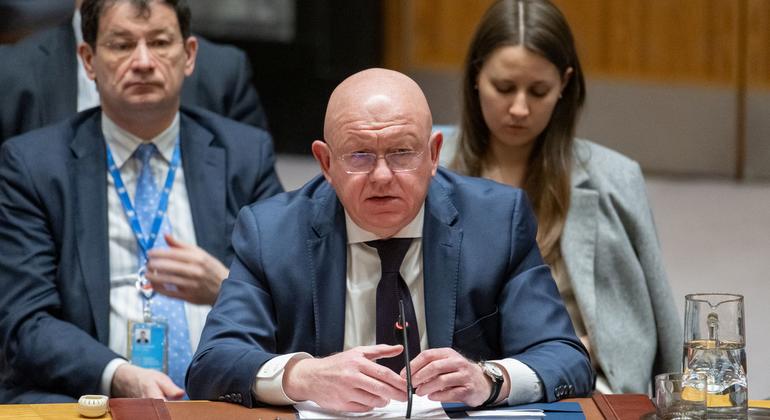
Ambassador Vassily Nebenzia of the Russian Federation addresses the Security Council meeting on maintenance of international peace and security with a focus on practicing multilateralism, reforming and improving global governance.
UN Photo/Manuel Elías

Western countries undermining UN authority: Russia

Despite its strengths and weakness, the UN has fulfilled its founding purpose of preventing a new World War, Russian Ambassador Vasily Nebenzya told the meeting.

He warned, however, that the world is “teetering on the brink of a direct military confrontation between nuclear powers” as western countries undermine UN authority and the primacy of international law.

“We are witnessing a broad application of the practice of unilateral coercive measures being imposed whenever supporters of methods of force in global politics do not manage to push through their desired outcome at the Security Council,” he said.

“Failure to abide by the UN Charter and a reckless approach to Security Council resolutions on a number of acute international issues has now become the hallmark of the West,” he added.

Regarding efforts to resolve the crisis in Ukraine, he said “it is becoming clear who genuinely advocates a more fair, more equal world, and who are living in the past and are striving at any cost to make their geopolitical agendas a reality.”

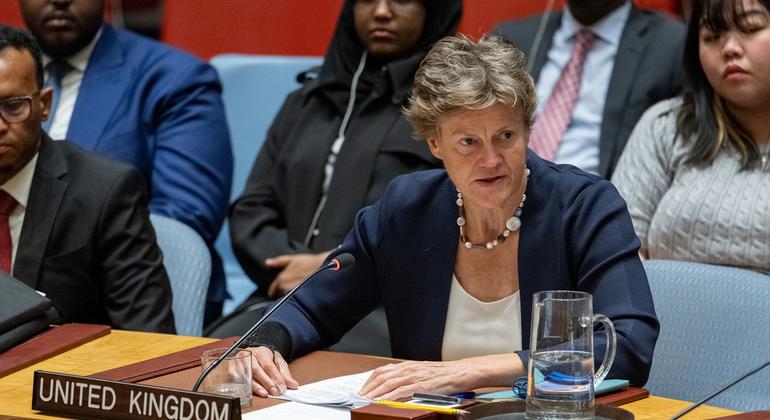
Ambassador Barbara Woodward of the United Kingdom addresses the Security Council meeting on maintenance of international peace and security with a focus on practicing multilateralism, reforming and improving global governance.
UN Photo/Manuel Elías

Redouble efforts to address emerging challenges: UK

United Kingdom Ambassador Barbara Woodward underlined her country’s commitment to the UN.

“As the Secretary-General reminded us and so many speakers today have reiterated, the Pact of the Future demonstrated a clear desire and a clear commitment to reinvigorate the multilateral system, including through reforming the UN and the international financial system,” she said.

She called for new approaches to address emerging challenges, and 2025 – which marks the UN’s 80th anniversary and a year of key summits – is the first step.

The summits will cover issues such as gender equality, ocean preservation, financing for development, and climate change.

“Together, these summits seek to address our shared concerns.  Their success is critical for progress and the UN’s reputation as our multilateral home,” she said.

US Deputy Permanent Representative Dorothy Shea addresses the Security Council meeting on maintenance of international peace and security with a focus on practicing multilateralism, reforming and improving global governance.
UN Photo/Manuel Elías

US to scrutinize support to the UN

United States Ambassador Dorothy Shea recalled that her country helped found the UN after the Second World War, “but UN agencies and bodies overall have drifted from their core missions,” she said.

“We need to take a closer look at where this institution is falling short,” she continued. “For example, there is a longstanding, deep anti-Israel bias within the UN that has only grown stronger since Hamas’ brutal attack against Israel on October 7, 2023.”

Regarding the Security Council, she said critical issues that demand attention continually fall by the wayside.

Ms. Shea said the US is currently conducting a review of its support to the UN. It will consider whether the actions of the Organization are serving American interests, and whether reform is now due.

She said the US will not support UN bodies such as the Human Rights Council and will review those such as cultural agency UNESCO “which has a history of antisemitism or anti-Israel sentiment within the organization.”


https://news.un.org/en/story/2025/02/1160246

https://creativecommons.org/licenses/by/4.0/legalcode

среда, 29 января 2025 г.

With Israeli Laws Set to Take Effect in 48 Hours, UN Palestine Refugee Agency Chief Warns Security Council of Risks to Gaza Ceasefire, Recovery Efforts


9852nd Meeting (AM)
SC/15985

28 January 2025

While Many Speakers Support Agency as Lifeline, Israel’s Delegate Says It Failed
The implementation of Israel’s legislation on 30 January — curtailing the operations of the United Nations Relief and Works Agency for Palestine Refugees in the Near East (UNRWA) — will undermine the ceasefire and sabotage Gaza’s recovery and political transition, a senior UN official told the Security Council today.

Expressing hope that the long-awaited ceasefire — which began nine days ago — “will hold and then the tremendous suffering in Gaza will subside”, Philippe Lazzarini, Commissioner-General of the United Nations Relief and Works Agency for Palestine Refugees in the Near East, welcomed the return of Israeli hostages and imprisoned Palestinians to their families. He also recognized the marked improvement in the flow of humanitarian aid and operating conditions. As the largest UN presence in Gaza — with 13,000 personnel and 300 premises — the Agency is critical in supporting a shattered population under a ceasefire, he emphasized.

Yet, in two days, “our operations in the Occupied Palestinian Territory will be crippled as legislation passed by Israel takes effect”, he warned, adding that the fate of millions of Palestinians is at stake. “In the wake of the ceasefire, we must contend with the devastation of the last 15 months and the enormity of the challenges ahead,” he said, pointing to a peer-reviewed study of death by traumatic injury in Gaza, which reveals that the mortality figure provided by the Ministry of Health is “a minimum estimate”. In fact, 46,000 deaths is likely an undercount by over 40 per cent, with the majority of those killed being women, children and the elderly. The study also confirms that those who escaped death by bombardment, starvation and disease have emerged shell-shocked.

UNRWA’s Community Acceptance Not Quantifiable But Critical

Tens of thousands of people are now returning to the decimated north “to search for the living and to bury the dead”, he said, noting UNRWA’s unique mandate to provide public-like services to an entire population. He rejected Israel’s claim that the Agency plays “a negligible role” in providing humanitarian assistance in Gaza and that its services can be transferred to other entities. UNRWA constitutes half the emergency response, having delivered two thirds of all food assistance, provided shelter to over a million displaced persons and vaccinated a quarter of a million children against polio since October 2023. Less quantifiable, but critical for the humanitarian response and the ceasefire, is community acceptance: “Palestinians know and trust UNRWA,” he stressed.

Furthermore, Israel’s Government is investing significant resources to portray the Agency as a terrorist organization and its staff as terrorists or terrorist sympathizers. Billboards and ads accusing UNRWA of terrorism recently appeared in major cities worldwide. The political attacks on the Agency are motivated by the desire to strip Palestinians of their refugee status and erase their history and identity. Underscoring the need to allow the Agency to progressively conclude its mandate within the framework of a political process, he stated: “We are determined to stay and deliver until it is no longer possible to do so.”

Clearing Rubble Could Take 21 Years, Cost $1.2 Billion

Jan Egeland, Secretary-General of the Norwegian Refugee Council, recalled his visit to Gaza City in December 2024 and expressed shock at the destruction: clearing over 50 million tons of rubble in the aftermath of Israel’s bombardment “could take 21 years and cost up to $1.2 billion”. For two decades, children will have nowhere to play in the rubble and debris caused by this war, having to fear unexploded bombs. “The principles of proportionality, distinction and military necessity have been thoroughly violated,” he stated. 

While his organization managed to have 18 trucks of humanitarian cargo enter Gaza last week, looting and attacks on aid convoys remain a major concern. He recalled that, on 12 September 2024, the Israeli National Security Council admitted to the Knesset that Israel was no longer issuing visas to employees of international non-governmental organizations — apparently part of a broader effort to undermine humanitarian work in the Occupied Palestinian Territory. However, as the occupying Power, Israel is legally obliged to facilitate humanitarian operations — in Gaza and in the West Bank alike.

Addressing the urgent humanitarian need, he called for full unrestricted access to northern Gaza, including the immediate opening of the Netzarim Corridor to facilitate the movement of civilians, humanitarian personnel and life-saving supplies. He further voiced alarm over intensified Israeli military operations and settler attacks across the occupied West Bank, urging the Council to “put all of our energies into achieving a peaceful resolution to the question of Palestine”. 

In the ensuing discussion, speakers highlighted UNRWA’s essential role under the ceasefire as efforts continue to address the immense needs of the Palestinian people.

Halting UNRWA Operations ‘Death Sentence’ for Palestinians 

“For generations of Palestinians, UNRWA is not just an Agency, it is life itself,” said Algeria’s delegate, Council President for the month, speaking in his national capacity. “Halting UNRWA’s operations would be a death sentence for Palestinians,” particularly for the most vulnerable among them — the refugees, he said, stressing that UNRWA must continue its mandate until the establishment of the Palestinian State. 

“There is no alternative to the Agency — not in spirit and not in practice,” stated Slovenia’s delegate, rejecting attempts to dismantle it. Somalia’s representative concurred that measures to restrict Agency operations “cannot be seen as anything other than a deliberate attempt to exacerbate the suffering of an already vulnerable population”.

Without UNRWA, said Denmark’s delegate, civilians in Gaza risk losing “a vital safety net”, and Palestine’s refugees in the West Bank risk losing their access to essential services. Without UNRWA, echoed Sierra Leone’s representative, “the humanitarian response would risk collapse”.

Calling for a comprehensive reconstruction plan for Gaza, Pakistan’s delegate added: “We must resist steps designed to extinguish the Palestinian right to self-determination and statehood; we should instead take steps to make the two-State solution inevitable”.

Nevertheless, stressed China’s representative, “before the two-State solution becomes a reality, UNRWA is indispensable”, citing its absence from Gaza’s post-conflict reconstruction formula as “unthinkable”. While Panama’s delegate called for the Agency’s sustained financing, the representative of France declared that Paris has allocated $20 million to UNRWA.

While stressing that the implementation of Knesset legislation on UNRWA risks threatening the fragile gains made through the ceasefire deal, the United Kingdom’s delegate called on the Agency to continue to deliver their commitment to neutrality and fully investigate any allegations against their employees.

UNRWA ‘Not the Only Option’ for Providing Aid

The United States’ supported Israel’s sovereign decision to close UNRWA’s offices in Jerusalem on 30 January, as the Agency “is not and never has been the only option for providing humanitarian assistance in Gaza” — with its work “tainted” due to terrorist ties to Hamas. Urging the international community to scale up humanitarian aid, she called for Gaza to be fully demilitarized, with Hamas having no role in its governance. The ceasefire provides the countries of the Middle East with “a historic opportunity to reshape their region” where Israel is fully integrated with its neighbours under the banner of the Abraham Accords.

Meanwhile, the Russian Federation’s representative underscored that Israel would not dare to violate international law without unconditional financial and military support from Washington, D.C. “It is not an exaggeration to say that the fault for what is happening with the Agency falls on the United States’ shoulders.” Voicing support for UNRWA, he said the Russian Peace Foundation nominated the Agency for the 2025 Nobel Peace Prize. 

The representative of Egypt, speaking for the Arab Group, pointed out that Israel’s allegations cannot serve as grounds for adopting a unilateral decision preventing a UN agency from conducting its operations. Echoing that, Jordan’s delegate stated that allowing any State to undermine the immunities of UN agencies constitutes a dangerous precedent.

Relatedly, Greece’s delegate called on Israel to reconsider the implementation of the legislation as it will obstruct UNRWA’s capacity to operate within its mandate in the Occupied Palestinian Territory. His counterpart from the Republic of Korea urged Israel to guarantee the conditions for UN staff to continue their work, including issuing proper visas for international staff.

For his part, Israel’s delegate affirmed that the legislation concerning UNRWA activities in his country will come into force in 48 hours when it must cease operations in Israel and evacuate all premises in Jerusalem. This reflects “years of efforts to address the grave accusations” against UNRWA, he stated — including failing its mandate, placing political agendas and cover-ups over humanitarian principles and refusing to address widespread Hamas infiltration. He reiterated Israel’s readiness to work with agencies with a track record of efficiency and accountability, while UNRWA’s contribution is easily replaceable by organizations already operational in Gaza.

“Israel has destroyed everything in Gaza […] except the sacred bond between a people and their land,” stated the Permanent Observer for the State of Palestine. Israel’s logic is simple: to get rid of the refugees, one must destroy the Agency serving them. “If there is no education, health or assistance, they will surrender, leave, and abandon the land and their dream of liberation and return,” he said, adding that such conduct violates international law, including the orders issued by the International Court of Justice. Palestinians returning to the north know they will find ruins — “yet, still, they went back,” he said, noting that it is a testimony of their resilience.

Picking up that thread, Guyana’s delegate echoed the words of poet Pablo Neruda: “You can cut all the flowers, but you cannot prevent spring from coming.” Even amidst the 50 million tons of rubble, it is this “spring” — this hope for a new day in an independent State of their own and the drums of war silenced — that lies in the heart of every Palestinian, she said.


https://press.un.org/en/2025/sc15985.doc.htm


https://creativecommons.org/licenses/by/4.0/legalcode
Briefing Security Council on Goma Attack, Senior UN Official in Democratic Republic of Congo Urges De-escalation to Avert ‘Third Congo War


9853rd Meeting (PM)
SC/15986

Briefing Security Council on Goma Attack, Senior UN Official in Democratic Republic of Congo Urges De-escalation to Avert ‘Third Congo War’

Note: Complete coverage of this afternoon's meeting of the Security Council will be available Wednesday, 29 January.

As the Security Council convened an emergency meeting for the second time in three days to address the worsening situation in the Democratic Republic of the Congo, a senior United Nations official warned that escalating attacks by the 23 March Movement, or M23, continue to kill civilians and peacekeeping personnel in and around the city of Goma.

Vivian van de Perre, Deputy Special Representative for Protection and Operations in the United Nations Organization Stabilization Mission in the Democratic Republic of the Congo (MONUSCO), voiced alarm that clashes in the eastern part of that country have resulted in massive displacement. Consequently, MONUSCO has received a large number of people seeking refuge, including officials and various elements who have surrendered their arms.  However, MONUSCO bases are not able to accommodate the large number of surrendering elements and civilians seeking refuge.  “Moreover, our bases are not safe themselves,” she stressed.

The Mission is storing voluntarily relinquished or abandoned weapons in accordance with international standards, she reported, while casualty-evacuation efforts remain a significant challenge for seriously injured peacekeepers.  She warned that troops are now running out of critical equipment — especially water, food, medical supplies and blood — while the proliferation of weapons in Goma poses a significant risk as combatants blend into the civilian population and abandoned military depots are looted by civilians. 

Urging all parties to guarantee the protection of life, ensure access to basic services and prevent sexual violence, she called for immediate action to alleviate the suffering of civilians.  Moreover, ethnically motivated attacks in a region with a very sensitive history need to be taken seriously.  Appealing for high-level diplomatic channels to ensure that critical airports, border points and humanitarian access routes are reopened without delay, she urged:  “Resuming the Luanda Process is of utmost urgency to ensure a path towards de-escalation and to avert the looming threat of a third Congo war.”

And, stressing that attacks on UN peacekeepers may constitute war crimes, she called MONUSCO “a beacon for myriad vulnerable groups seeking protection”.  However, the Mission has been severely impacted by heavy direct and indirect fire over the last few days, and must address the logistical, human-rights and humanitarian challenges it is facing.  “Let us please draw on our humanity and do our utmost to bring an immediate end to such levels of violence and suffering,” she urged.

In the ensuing debate, the representative of Sierra Leone — also speaking for Algeria, Guyana and Somalia — cited significant African diplomatic efforts since 26 January to support the Congolese people.  Nevertheless, he stressed:  “But what is needed now is the commitment of both Rwanda and the DRC [Democratic Republic of the Congo] to engage in direct negotiations under the Luanda Process.”  Allowing Goma to remain under the control of a rebel group, he stated, “sends a disturbing message about the ability — or willingness — of the international community to prevent threats to international peace and security from flourishing.”


https://press.un.org/en/2024/sc15897.doc.htm

ttps://creativecommons.org/licenses/by/4.0/legalcode
пятница, 13 декабря 2024 г.

Security Council Committee Pursuant to Resolution 2745 (2024) Receives Briefing on Behalf of Emergency Relief Coordinator in Pursuance of Resolution 2664 (2022)


SC/15933


On 22 November 2024, in pursuance of paragraph 5 of resolution 2664 (2022), a representative of the Office for the Coordination of Humanitarian Affairs (OCHA), on behalf of the Emergency Relief Coordinator, briefed the Security Council Committee pursuant to resolution 2745 (2024) on the delivery of life-saving assistance and other activities that support essential human needs in the Central African Republic.

OCHA also informed it had not received any report of provision, processing or payment of funds, other financial assets or economic resources to, or known to have benefitted, designated individuals or entities, or of cases of aid diversion by, or know to have benefitted, the same, as part of the delivery of humanitarian assistance and other activities that support basic human needs in accordance with resolution 2664 (2022), OCHA did not rule out the possibility that designated individuals linked to armed groups in the country indirectly benefitted from existing incidents of aid diversion.  OCHA further informed on risk management and due diligence process in place.

Members of the Committee thanked the representative for the briefing delivered on behalf of the Emergency Relief Coordinator and expressed support for the work of OCHA in the Central African Republic.


https://press.un.org/en/2024/sc15933.doc.htm


https://creativecommons.org/licenses/by/4.0/legalcode
среда, 27 ноября 2024 г.

2024 Deadliest Year for Aid Workers, Security Council Pressed to Ensure Justice, Protection


9795th Meeting (AM)
SC/15912


UN Security, Safety Chief Asks Council to Address His 'Biggest Concern’ — Lack of Accountability for Killing UN, Aid Personnel

As 2024 becomes the deadliest year for humanitarian workers, speakers today urged the Security Council and countries to act on the Secretary-General's recommendations to safeguard aid and UN personnel, including providing greater support for them and ensuring accountability for perpetrators. 

“In recent years, State actors are responsible for the greater share of aid worker deaths as opposed to non-State armed groups and criminals,” said Abby Stoddard of Humanitarian Outcomes, a research group whose Aid Worker Security Database tracks major incidents of violence affecting aid workers globally, lamenting that “the very actors charged with upholding international humanitarian law, with protecting and facilitating humanitarian aid, have instead become the main source of threat and impediment to it”. This has serious implications for humanitarian access to people in need, as well as to the global stability and order, she added. 

As of this morning, 282 aid workers have been killed this year, she reported, exceeding “last year’s awful total” of 280 — more than double the annual average of the previous 10 years — attributed to major warfare and mass civilian losses in Gaza, Sudan and South Sudan, along with 17 other humanitarian response settings.  This looks to be “a step-change” rather than “a short-term spike”, she said.   

Recalling the Council’s adoption in May of resolution 2730 (2024), which called on States to respect and protect UN and humanitarian personnel, she urged the 15-member body to take additional, concrete measures to address impunity, including by holding ad hoc tribunals or promoting other international legal means of achieving justice and disincentivizing these attacks.

Many humanitarians now distrust the notification systems, even fearing that their participation in some of these mechanisms might increase their risk, due to conflict parties acting in bad faith, she pointed out, urging collective action to improve protocols and create accountability mechanisms when deconfliction fails.  She further urged the Council to call on States and international organizations to empower local and national humanitarian actors, ensuring that they are accorded the same protections as UN and other international agencies.

“Please help protect my colleagues in Gaza”, implored Lisa Doughten, Director of Financing and Partnerships Division, Office for the Coordination of Humanitarian Affairs, as she highlighted deaths of more than 330 humanitarian workers — mostly United Nations Relief and Works Agency for Palestine Refugees in the Near East (UNRWA) staff — since 7 October 2023.

Despite the “very real dangers”, global humanitarian operations have provided life-saving aid to more than 116 million people worldwide this year, she said.  However, “no amount of security management will help those workers” when conflict parties choose to target humanitarian workers or ignore their obligations under international law to spare them, she warned.  Outlining three critical areas for action, she urged the Council and Member States to clearly condemn attacks against aid workers, seek more systematic and universal accountability for serious violations and provide greater support for humanitarian workers who are the victims and survivors of harm.   

“They want you to use diplomatic and economic pressure to force respect for international law,” including through effective humanitarian exemptions across sanctions regimes and counterterrorism legislation, she continued.  The international community must allow survivors to participate in global discussions at the highest levels, including at the Council, and provide reparations, legal aid and mental health support for survivors and families, she added.

Also briefing the Council for the first time, Under-Secretary-General for Safety and Security Gilles Michaud urged members to address his “biggest concern” — a profound lack of accountability for violence against humanitarian and UN personnel.  “The entire community of Member States must speak with moral clarity about the need to protect humanitarian workers and ensure accountability for acts of violence by any State and non-State actor, against humanitarians,” he implored. 

Noting that UN operations navigate multiple overlapping crises of unprecedented scale, such as in Gaza, Lebanon, Haiti and Somalia, he pointed out that locally recruited personnel — who make up the majority of those impacted — frequently bear the heaviest burden.  Normative frameworks, such as the Convention on the Safety of United Nations and Associated Personnel and its Optional Protocol, should gain universal support, he said, urging Member States to join both agreements and to fully implement them.

Moreover, UN mission transitions and closures not only affect the safety and security of UN personnel but also limit capacity to enable humanitarian delivery.  Such fundamental changes require advance planning and should be explicitly considered by this Council, he said.

In the ensuing debate, Council members welcomed the Secretary-General’s recommendations on ways to respond to threats to humanitarian personnel and echoed urgent calls for action.

The representative of Switzerland, whose delegation penned resolution 2730 (2024), urged all Member States to fully implement the text.  She further called on Council members to put aside political differences to prioritize the protection of human lives and humanitarian principles, emphasizing that the voices of humanitarian actors are “the best compass to guide our action”. 

France’s delegate urged that the Secretary-General’s recommendations be implemented without delay and, similarly, called on the Council to ensure the implementation of resolution 2730 (2024), and ensure that perpetrators are held accountable.

The implementation of that resolution, however, has “fallen short of expectations” despite a beacon of hope it offers for those in the field, said Mozambique’s delegate, underlining the need for robust accountability mechanisms; an expansion of humanitarian exemptions to sanctions; and for misinformation and disinformation to be combated, including by holding digital platforms accountable for their role in spreading harmful narratives.

On that last point, Algeria’s delegate said disinformation and misinformation lead to erosion of the local population’s trust, underscoring the importance of disseminating accurate information and holding those spreading hate speech accountable.  He also urged States to strengthen national oversight mechanisms and ensure investigations of all documented violations, as attacks on humanitarians are considered war crimes.

Slovenia’s delegate said States should adopt legislation properly sanctioning violations of international humanitarian law, and cases of grave violations should be referred to international courts, including the International Criminal Court.  Other Council members, including the representatives of the United States, Malta, the Republic of Korea and Guyana, also echoed the briefers’ demand for accountability for crimes against aid workers.

The protection of civilians in armed conflict is rooted in his country’s lived experience, said Sierra Leone’s representative, noting Council resolution 1270 (1999) authorized the United Nations Mission in Sierra Leone (UNAMSIL) with the first explicit mandate to protect civilians from threats of physical violence.

Cautioning against the normalization of violence against humanitarian workers, Ecuador’s representative urged States to enhance monitoring systems, improve quality of the data systems on incidents and bolster mechanisms for information exchange and support services.

Addressing calls for mental health support for aid workers was Japan’s representative who spotlighted his country’s contribution of over $364,000 to the UN Department of Safety and Security project “Capacity Building in Crisis Psychosocial Support”.  Voicing alarm over “alarmingly high” reports of severe violence, kidnappings, injuries, harassment and arbitrary detentions in conflict areas, he called for the strengthening of the work of the International Humanitarian Fact-Finding Commission.

The representatives of the Russian Federation said that the Secretary-General’s recommendations left out “the most important thing:  the need for consent and coordination with national Governments” — a vital principle of humanitarian assistance contained in General Assembly resolution 46/182. On accountability, he voiced his opposition to the International Criminal Court, the reason for which his delegation abstained from Council resolution 2730 (2024).  His counterpart from China also called for the rejection of double standards, and the guaranteed safety and security of UN personnel “without distinction and bias”, whether in Gaza or Afghanistan.

The representative of the United Kingdom, Council President for November, speaking in his national capacity, underscored that facilitating rapid and full humanitarian access to all civilians in need and full compliance with international humanitarian law is “a bare minimum as per the Geneva Conventions which we have all ratified


https://press. un.org.en/2024/sc15912.doc.htm

https://creativecommons.org/licenses/by/4.0/legalcode