Показаны сообщения с ярлыком Human Rights. Показать все сообщения

суббота, 31 августа 2024 г.

Afghanistan: UN will ‘continue to engage’ with Taliban, following threat to withdraw cooperation


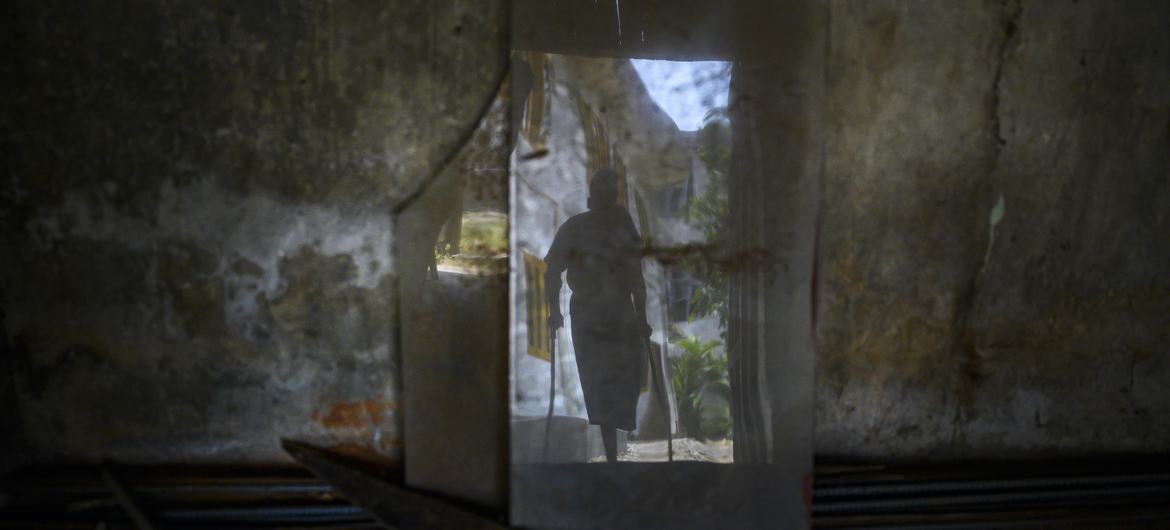
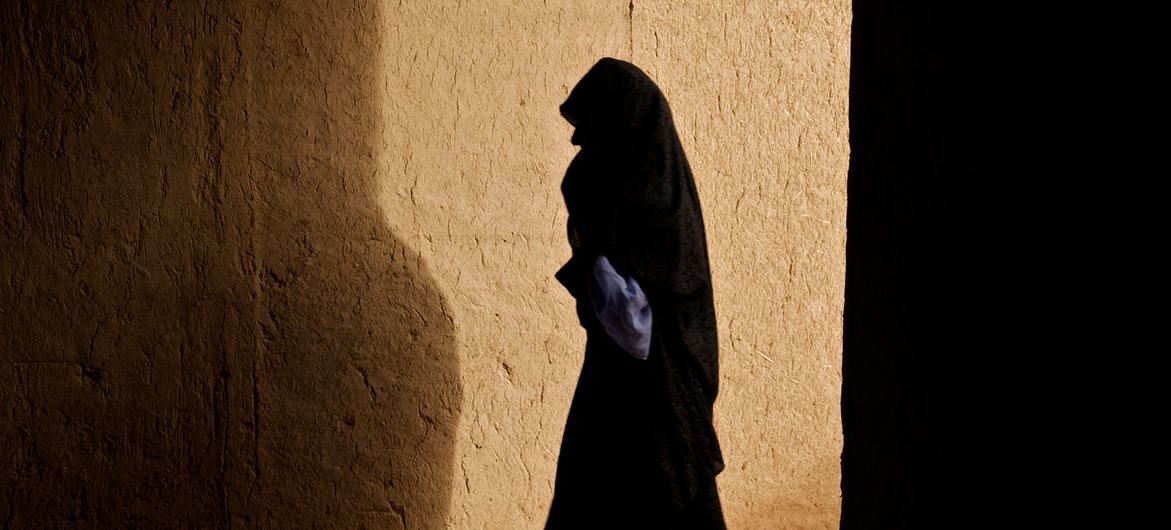
A woman walks through a corridor in a village in Afghanistan. (file)
© UNICEF/Shehzad Noorani
 
A woman walks through a corridor in a village in Afghanistan. (file)


30 August 2024 

Human Rights

The United Nations will continue engaging with all stakeholders in Afghanistan, advocating for human rights and equality, the global body’s Spokesperson said on Friday, amid the Taliban’s reported rejection of criticism by UN officials of a strict morality law.

According to media reports, the Taliban “morality police” said earlier in the day that they would no longer cooperate with the UN Assistance Mission in Afghanistan (UNAMA) because of criticism of the law adopted last week.

UNAMA – alongside other parts of the UN system – denounced the new law, describing it a “distressing vision” for the country’s future.

“I think we have been very vocal on the decision to further make women's presence almost disappear in Afghanistan,” UN Spokesperson Stéphane Dujarric said, responding to a question at the regular press briefing in New York.

Will continue to engage

He added that the Organization “will continue to engage with all stakeholders in Afghanistan, including the Taliban,” and that it will continue its work, as mandated by the Security Council.

“We have always done so following our mandate and I would say impartially and in good faith, always upholding the norms of the UN, pushing the messages of human rights and equality,” he said.

He further urged the Taliban de facto authorities “to, in fact, open more avenues for diplomatic engagement”.

Repressive provisions

The law, formally titled “Law on the Promotion of Virtue and the Prevention of Vice”, was adopted last week.

It imposes a lengthy list of repressive provisions on women, including mandates that they wear clothing covering their entire bodies, bans on their voices being heard in public, and further restrictions on their movement without a male relative.

Even the sound of a female voice outside the home is apparently deemed a moral violation.

It also requires men to grow beards, bans drivers from playing music, and restricts the media from publishing images of people. State officials are granted broad powers to detain individuals and impose punishments.

Rights experts condemn measures

Tweet URL

The law’s enactment, UN independent human rights experts stressed, marked a significant regression in human rights in Afghanistan, echoing the oppressive regime of the Taliban’s rule in the 1990s.

“These measures are disturbingly similar to the Taliban's draconian rule in the 1990s and provide further evidence that the group has not moderated its approach since its return to power,” the experts said.

The experts also voiced concern over the Taliban’s morality inspectors’ extensive authority to arbitrarily detain and physically punish individuals for alleged moral crimes, often based on mere suspicion without any requirement for evidence or due process.

They urged international actors, particularly UN Member States, to formulate a robust, principled, and coordinated strategy on Afghanistan that prioritizes human rights, with a strong emphasis on women’s rights and gender equality.

Appointed by the Geneva-based Human Rights Council, the experts are mandated to monitor and report on specific human rights situations, both thematic and country-specific.

Independent of governments and the United Nations, they are not UN staff nor do they receive a salary.


https://news.un.org/en/story/2024/08/1153806


https://creativecommons.org/licenses/by/4.0/legalcode

World News in Brief: Terror attacks in Pakistan and Burkina Faso, Yemen floods update, mass graves in Libya


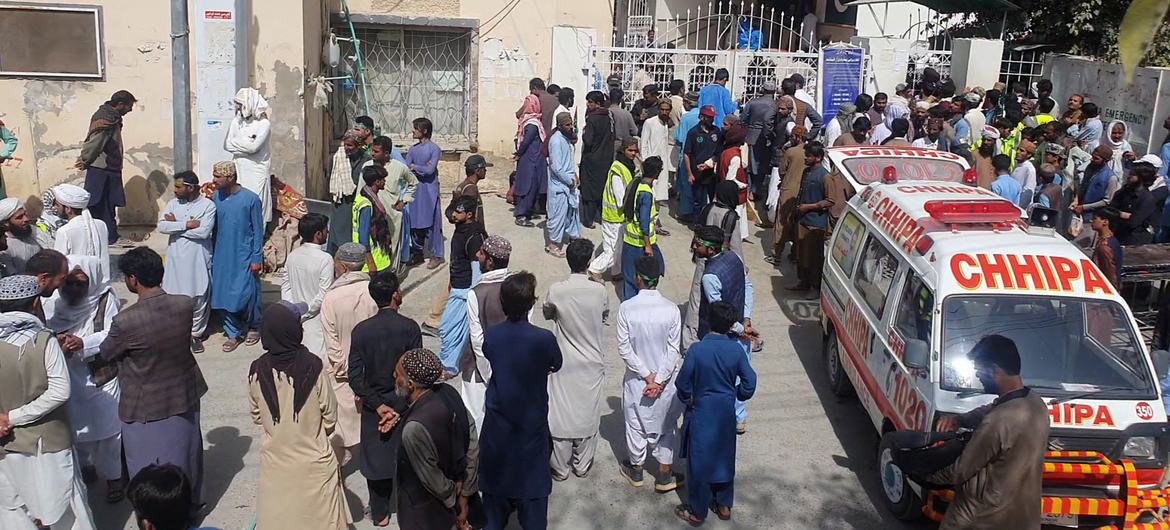
People gather outside a hospital in Pakistan's Balochistan province after a terrorist attack. (file photo)
© Asim Ahmed
 
People gather outside a hospital in Pakistan's Balochistan province after a terrorist attack. (file photo)


30 August 2024 

Human Rights

A UN independent human rights expert on Friday condemned recent terrorist attacks in Burkina Faso, which resulted in approximately 200 deaths, and in Pakistan, where 28 civilians lost their lives.

Jama’at Nusrat al-Islam wal-Muslimin, an Al-Qaeda-affiliated group, claimed responsibility for the attack in Burkina Faso on August 24. The attacks in Pakistan, which took place on Wednesday, were claimed by the Balochistan Liberation Army (BLA).

Ben Saul, the UN Human Rights Council-appointed Special Rapporteur on protection of human rights while countering terrorism, urged both countries to investigate the crimes and prosecute the perpetrators through a fair trial.

“All counter-terrorism operations by police, security forces and the military must comply with human rights law, and international humanitarian law as relevant, including the right to life, freedom from arbitrary detention and enforced disappearance, freedom from torture and cruel, inhuman or degrading treatment, and civil and political rights,” he said.

Support victims

Mr. Saul also urged the governments in Burkina Faso and Pakistan to support the victims of the attacks.

“I encourage the Government of Burkina Faso to re-engage with the international community…to restore security, address the conditions leading to insecurity, and ensure respect for international humanitarian law,” he said.

Mr. Saul has advised the two governments on how to assist the victims and address terrorist violence.

Appointed by the Geneva-based Human Rights Council, Special Rapporteurs are mandated to monitor and report on country or thematic human rights situations. Serving independent of governments and the United Nations, the experts are not UN staff members and do not draw a salary.

Needs grow in Yemen amid catastrophic flooding, warns UN agency

Over to war-ravaged Yemen, where the UN refugee agency, UNHCR, warned that catastrophic flooding has created an even worse situation for the millions of displaced people in the country.

Tweet URL

The agency reported that flooding, caused by the bursting of three dams due to heavy rains in Al Mahweet governorate in western Yemen, devastated entire communities.

In the past month, at least 97 lives were lost in the floods, with many more injured, UNHCR said. Over 56,000 homes across 20 governorates have been damaged or destroyed, displacing more than 1,000 families.

The hardest-hit areas include Hudaydah, Hajjah, Al-Taweela and Marib.

“Impassable roads are isolating affected areas and hampering rescue efforts,” the UN agency explained.

Basic needs unmet

Recent UNHCR assessments indicate that 85 percent of families in Yemen’s displaced and host communities are now unable to meet their daily food needs.

“Many have resorted to extreme coping mechanisms, such as reducing meal sizes or skipping meals altogether,” UNHCR emphasized, noting that “entire families” face hunger daily in Yemen.

Nearly a decade of conflict between the Government and opposition, mainly Houthi forces, has created one of the world’s worst humanitarian crises, with more than 18 million people – including 4.5 million displaced – urgently needing aid.

This figure includes over 60,000 refugees and asylum seekers, primarily from the Horn of Africa.

Libya: Mass graves at Tarhuna in human rights spotlight

Mass killings, sexual violence and abductions in the Libyan city of Tarhuna, dating back to 2013, continue to go unpunished, risking further instability and division in the country, the UN human rights office, OHCHR, has warned.

A new report from UN rights investigators details how an armed group that emerged in 2011, following the overthrow of longtime President Muammar Gaddafi, exercised brutal control over Tarhuna, a city of 150,000 people, about 65 kilometres (41 miles) southeast of Tripoli.

The Al-Kaniyat fighters’ crimes also included torture, ill-treatment and forced displacement between 2013 and 2022.

Failure to deliver justice

Speaking in Geneva on Friday, OHCHR spokesperson Seif Magango emphasized that the “failure to deliver justice” has led to renewed violence and serious rights violations in Tarhuna and surrounding areas. These findings echo an earlier report commissioned by the UN Human Rights Council.

“The 2022 Fact-Finding Mission report detailed evidence of atrocities committed in Tarhuna, including the discovery of mass graves containing hundreds of human remains, most of them handcuffed, blindfolded, and showing signs of torture,” he said.

“The report also warned of the possibility that there could be up to 100 more such mass burial sites.”

Mr. Magango added that Al-Kaniyat’s integration into the former Government of National Accord (GNA) and later the Libyan National Army (LNA) has been “a significant barrier” to accountability and justice.


https://news.un.org/en/story/2024/08/1153776


https://creativecommons.org/licenses/by/4.0/legalcode

пятница, 16 августа 2024 г.

World News in Brief: Zimbabwe rights plea, ‘serious concern’ over Azerbaijan prosecutions, Bahrain prisoner alert


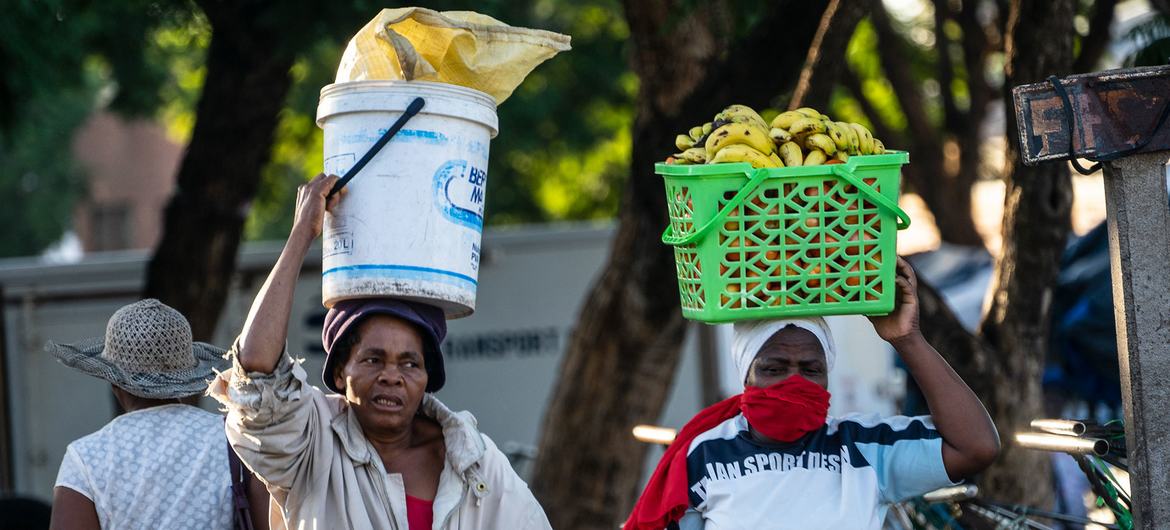
Fruit vendors walk through a market in Harare, Zimbabwe.
© ILO/K.B. Mpofu
 
Fruit vendors walk through a market in Harare, Zimbabwe.


15 August 2024 

Human Rights

Zimbabwean authorities must immediately release human rights defenders who have been arbitrarily detained for over two weeks and drop the charges against them, a group of independent UN human rights experts said on Thursday.

Woman human rights defender Namatai Kwekweza; teacher and labour rights defender Robson Chere, the Secretary-General of Amalgamated Rural Teachers Union of Zimbabwe (ARTUZ), along with a local council member from the capital Harare, Samuel Gwenzi, were forcibly removed from a departing flight at Harare Airport on 31 July, according to a news release from the UN rights office.

Tweet URL

Unidentified men escorted the three to a high security zone within the airport and held them incommunicado for eight hours.

While being held they were reportedly subjected to enforced disappearance, torture and other cruel, inhuman or degrading treatment or punishment, including waterboarding.

They were also severely threatened against protesting in advance of or during the Southern African Development Community (SADC) summit scheduled for 17 to 19 August in the Zimbabwean capital.

‘Inexcusable’ treatment

“The enforced disappearance, incommunicado detention and torture, followed by the arbitrary detention of these human rights defenders is inexcusable, and not only violates international human rights law but also makes a mockery of the safeguards contained in Zimbabwe’s own Constitution,” said the UN Human Rights Council-appointed experts, who do not receive any salary or renumeration for their work.

The rights defenders were charged with “disorderly conduct” under section 41 of the Criminal Law Codification and Reform Act, relating to their alleged participation in a demonstration calling for the release of a detained opposition politician.

Namatai Kwekweza was not even in Zimbabwe at the time of the demonstration in question, the experts reported.

“These baseless charges are being used as a fig-leaf to target human rights defenders and opposition voices for calling for greater democracy, human rights and accountability in Zimbabwe.

“At a time when Zimbabwe is preparing to host the SADC summit, whose values include institutions that are ‘democratic, legitimate, and effective’, it is unconscionable that these human rights defenders working to strengthen such institutions remain arbitrarily detained.”

The activists are still being held by authorities and a further bail hearing has been scheduled for Friday.

Rights expert voices ‘serious concern’ over prosecution of rights defenders in Azerbaijan

The UN independent expert monitoring human rights defenders, Mary Lawlor, expressed serious concern on Thursday over the ongoing detention and prosecution of six human rights defenders and journalists in Azerbaijan.

Tweet URL

“In recent months, I have witnessed an alarming wave of arrests and criminal cases” involving defenders and media workers, Ms. Lawlor said. “I have raised two such cases with the Government that are part of this worrying trend.”

Cases which have sounded the alarm include that of Anar Mammadli, chair of the Election Monitoring and Democracy Studies Center, and journalists of Abzas Media, an outlet dedicated to human rights issues and corruption investigations.

Some were accused of a conspiracy to smuggle money and face up to eight years in prison.

“Anti-corruption investigations, independent election monitoring, and international human rights advocacy are all legitimate human rights work,” said Ms. Lawlor.

‘Clear violations’

“Retaliation for this work and for exercising freedom of expression is a clear violation of international human rights law.”

The Special Rapporteur – who along with other independent experts does not represent any government or work for the UN - expressed alarm over the alleged seizure of electronic devices and documents from the Abzas Media office and the homes of the journalists and human rights defenders who were arrested.

She said confiscating devices could potentially compromise their sources in anti-corruption investigations.

“Azerbaijan’s failure to restore justice in the Mammadli case for over six years exposes the lack of effective remedy within the country and raises concerns that violations of the rights of human rights defenders may be recurring” she said.

Bahrain’s treatment of prisoners comes under human rights spotlight

Finally, to Bahrain where the treatment of prisoners is the focus of an appeal by leading human rights experts, amid protests by detainees and allegations of exposure to soaring temperatures.

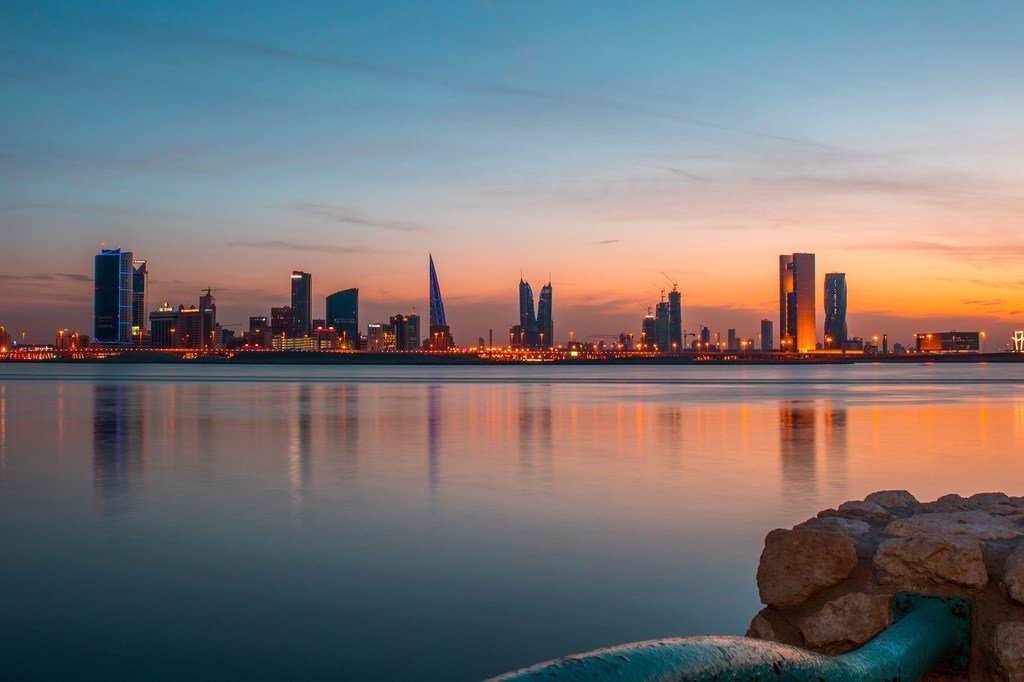
Manama, the capital of Bahrain.
Unsplash/Charles-Adrien Fournier
 
Manama, the capital of Bahrain.

In a call to the Bahraini authorities, the independent experts - who report to the UN Human Rights Council in Geneva - urged “immediate action to safeguard the rights of all prisoners in Jau prison”.

Among the experts, who are not UN staff, Special Rapporteur on torture, Alice Edwards, highlighted worrying allegations that authorities “have cut air conditioning”, exposing prisoners to temperatures in excess of 50 degrees Celsius - or 122 Fahrenheit.

Since March this year, and in response to prisoners’ demands for better conditions, the Special Rapporteur maintained that those held in some buildings are “often” denied medical care “and do not have regular access to adequate food and safe drinking water”.

These conditions “could prove fatal for some detainees” said Ms. Edwards, who along with other independent rights experts urged the Bahraini authorities “to enter into meaningful dialogue with the prisoners and their families about improving conditions”.


https://news.un.org/en/story/2024/08/1153236
https://creativecommons.org/licenses/by/4.0/legalcode

среда, 14 августа 2024 г.

‘Incredible brutality’ prevalent in battle for Myanmar


The silhouette of a 15-year-old child on crutches. He lost a leg after accidentally stepping on a landmine in a rice field.
© UNICEF/Minzayar Oo
 
The silhouette of a 15-year-old child on crutches. He lost a leg after accidentally stepping on a landmine in a rice field.


13 August 2024 

Conflict in Myanmar between the military junta and opposition forces is increasingly brutal, with both sides likely responsible for international crimes including summary executions, top independent rights investigators said on Tuesday.

In a call to regional bloc ASEAN to help end the violence and support efforts to bring perpetrators to justice, the head of the Human Rights Council-appointed probe into the Myanmar emergency Nicholas Koumjian described an increasingly “desperate” junta whose devastating military tactics were being matched by opposition fighters acting with total impunity.

“Aerial bombings have increased very substantially in this last year,” Mr. Koumjian told journalists in Geneva. “In Kayah state in February of this year, four children were killed and around 10 injured when fighter jets dropped bombs and deployed machine gun fire on the school.”

Mr. Koumjian added that his investigators had also seen a video “that showed resistance forces beheading two captured soldiers in Loikaw in Kayah state in November, December of last year”, along with another video posted on social media of two young men being burned to death in Magway region. “So, this kind of incredible brutality is going on,” he said.

The Independent Investigative Mechanism for Myanmar (IIMM) was created by the Human Rights Council in 2018 to collect evidence of the most serious international crimes committed in Myanmar since 2011. It released its latest annual report on Tuesday.

Civilians frequently targeted

“Unfortunately, what our report conveys is that the number of these crimes is only increasing and the armed conflict is increasing in intensity and in brutality and crimes are happening more and more frequently,” Mr. Koumjian noted.

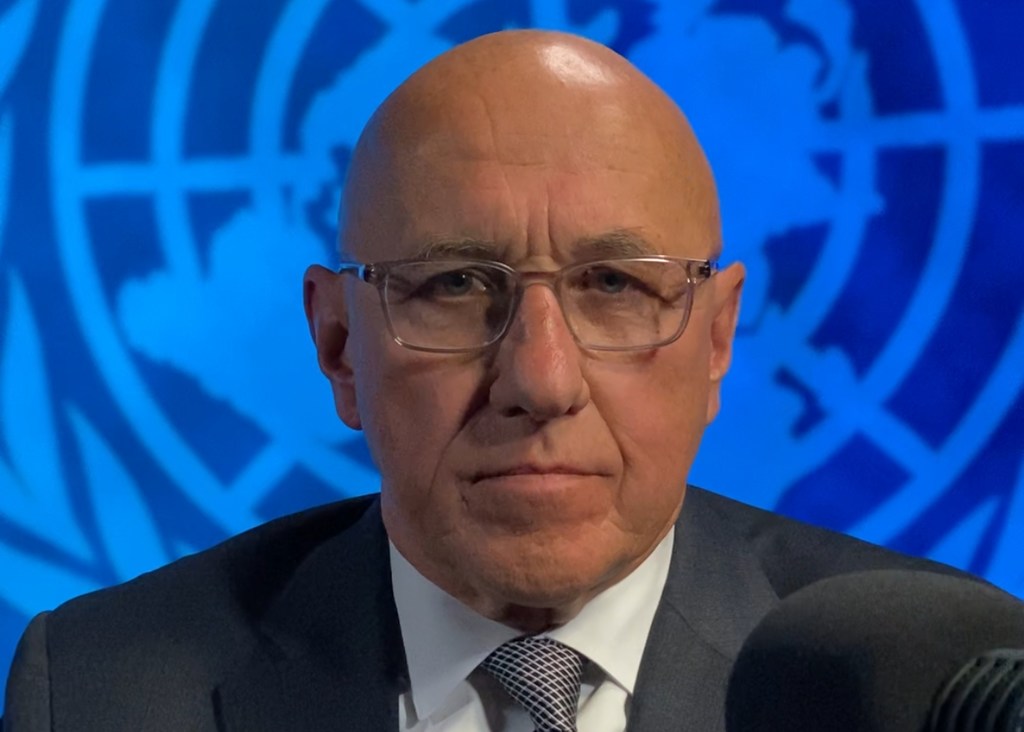
Nicholas Koumjian, Head of IIMM
UN News/Vibhu Mishra
 
Nicholas Koumjian, Head of IIMM

The veteran rights expert and former international criminal justice prosecutor expressed his opinion that the junta which seized power in Myanmar on 1 February 2021 was becoming more “desperate” over the period covered by the report from 1 July 2023 to 30 June 2024 - a time when armed conflicts increased across Myanmar as challenges to military rule intensified.

“The targets of these bombings are usually civilian targets,” Mr. Koumjian said. “Schools and churches and hospitals are often the only structures in the area and those are the structures…that are being bombed.”

ASEAN influence

In a direct appeal to the regional bloc ASEAN, Mr. Koumjian urged it to respond to “substantial evidence” that the Myanmar military was committing war crimes and crimes against humanity “at an alarming rate”, by putting pressure on the junta to halt the conflict.

ASEAN - a “very key player in Myanmar”, according to the human rights investigator – has drawn up a five-point consensus to end the fighting that has been signed by “the junta itself”.

Nonetheless, “we see instead an increase in violence and an increase in the violence targeting civilians,” he said. “So, I think absolutely, it's time for ASEAN to put some bite into its consensus. It's not enough simply to say we support ending the violence, there have to be steps taken to ensure that, in fact, the violence has ended.”

Broad reach

The head of the Independent Investigative Mechanism for Myanmar (IIMM) noted that the panel’s report was based on information and evidence collected from more than 900 sources, including more than 400 eyewitness testimonies, along with additional evidence such as photographs, videos, audio material, documents, maps, geospatial imagery, social media posts and forensic evidence.

Fighting impunity remains a core objective of the IIMM which has shared its findings and evidence with authorities at the International Criminal Court, the International Court of Justice and in Argentina, Mr. Koumjian said.


https://news.un.org/en/story/2024/08/1153131


https://creativecommons.org/licenses/by/4.0/legalcode

вторник, 13 августа 2024 г.

UN rights chief condemns storming of his office in Yemen’s capital


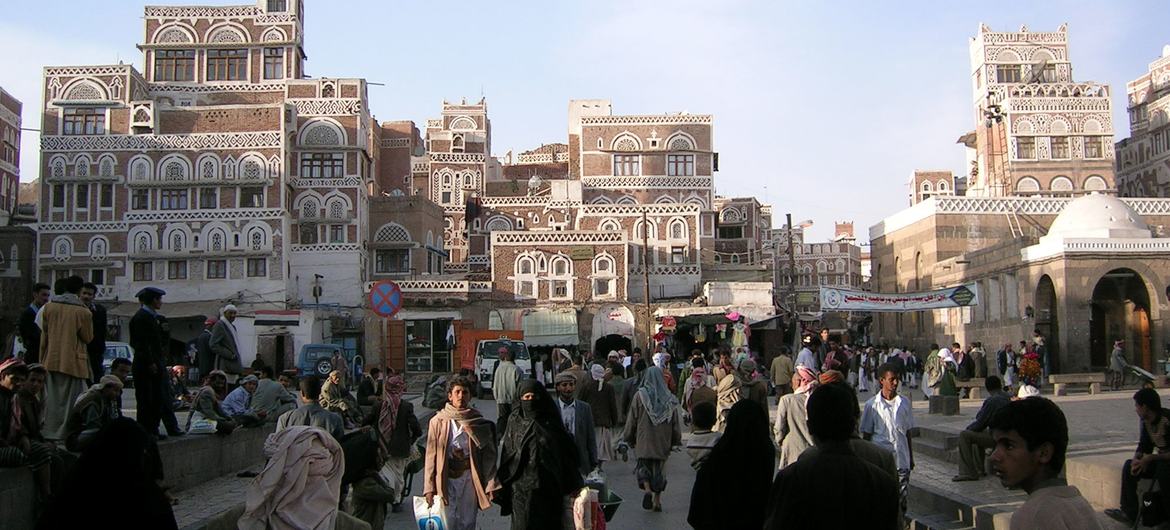
The Old City of Sana’a, Yemen, World Heritage site.
© UNESCO/Francesco Bandarin
 
The Old City of Sana’a, Yemen, World Heritage site.


13 August 2024
 Human Rights

The UN human rights chief has strongly condemned the recent storming of his team’s headquarters in Sana’a, Yemen, by the de facto authorities Ansar Allah, and renewed his call for the immediate and unconditional release of all UN staff detained in the country. 

Ansar Allah, also known as the Houthis, sent a “delegation” to the UN human rights office in the Yemeni capital on 3 August, and national staff were forced to handover documents, furniture and vehicles, as well as the office’s keys.

They remain in control of the premises.

Tweet URL

A ‘serious attack’

“Ansar Allah forces must leave the premises and return all assets and belongings immediately,” said High Commissioner Volker Türk.

He said entering a UN office without permission and seizing documents and property by force are wholly inconsistent with the Privileges and Immunities of the Organization.

“This is also a serious attack on the ability of the UN to perform its mandate, including with respect to the promotion and protection of human rights, which my Office is there to defend,” he added.

UN staff detained

Ansar Allah and Yemeni Government forces, backed by a Saudi-led coalition, have been battling for nearly a decade. Following the start of the war in Gaza, the rebels have also launched attacks against commercial ships in the Red Sea.

The de facto authorities also detained more than 60 people who work with the UN and non-governmental organizations (NGOs) in early June.  

Those being held include 13 UN staff, including six employees of the UN human rights office, more than 50 NGO workers, and an embassy staff member.  

Two other UN human rights staff had already been detained since November 2021 and August 2023, respectively.  All are being held incommunicado.

The High Commissioner and other top UN officials have repeatedly called for their release, but he said their pleas have fallen on deaf ears.

“I appeal again, with a heavy heart, for their immediate and unconditional release,” said Mr. Türk.

“We are doing all we can to make sure they are united with their loved ones as soon as possible. Until then, the de facto authorities must ensure they are treated with full respect for their human rights, and that they are able to contact their families and legal representatives.”

Disputing ‘baseless’ allegations

One of the two staff detained earlier had appeared in videos published online, in which he was forced to confess to allegations, including of espionage, in a clear violation of his basic human rights protected under international law. 

“All such claims are baseless,” Mr. Türk stressed. “At no time has my Office engaged in any activities other than those in the service of the people of Yemen, in accordance with my mandate.”

In the wake of the detentions, and given the security situation, the High Commissioner decided to suspend temporarily the Office’s operations in Sana’a and other areas under Ansar Allah control, though it continues to operate in other parts of Yemen.

Respect the UN

The UN Human Rights Office in Yemen works to promote the rights of all citizens without distinction. 

This has included monitoring the impact of armed conflict and violence on civilians – irrespective of the parties that may be responsible – including by documenting deaths, injuries, destruction of essential infrastructure and the capacity of the Yemeni people to earn a living. 

The Office’s work also focuses on promoting the rights of vulnerable groups, including women, children, people with disabilities, older people and minorities.

“It is crucial that the de facto authorities respect the United Nations and its independence, release all detained UN staff immediately, and create conditions in which my Office and other UN agencies can continue their critical work for people of Yemen without threats or hinderance,” said Mr. Türk.


https://news.un.org/en/story/2024/08/1153121

https://creativecommons.org/licenses/by/4.0/legalcode

UN rights experts call for an end to post-election repression in Venezuela


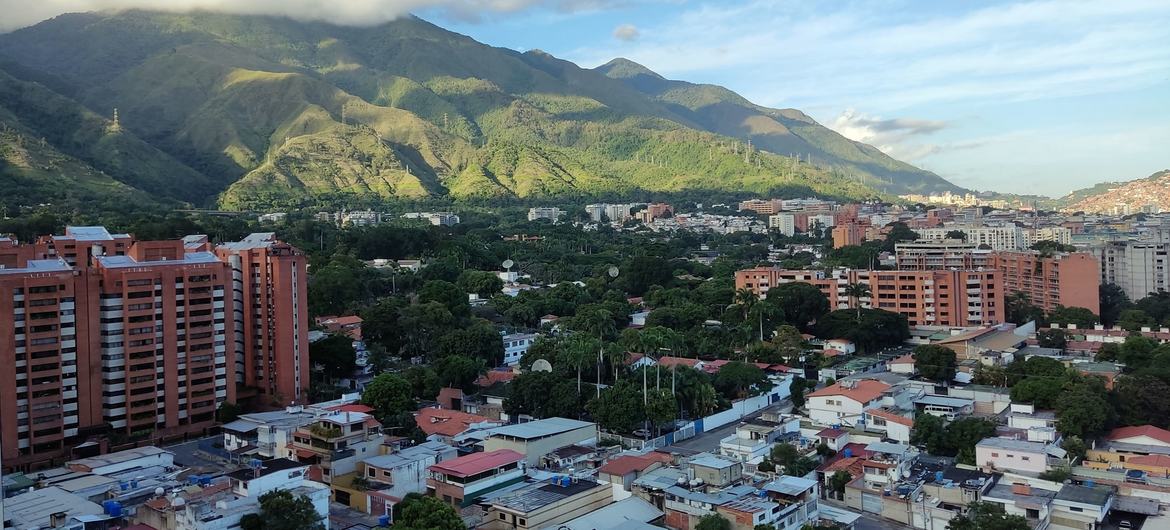
Caracas, the capital city of Venezuela.
UN News
 
Caracas, the capital city of Venezuela.

12 August 2024

 Human Rights

The Venezuelan Government must immediately end escalating repression that has come in the wake of the disputed presidential election last month, a UN Human Rights Council-appointed body investigating alleged rights abuses there said on Monday. 

The Independent International Fact-Finding Mission also urged the authorities to thoroughly investigate a spate of grave rights violations that are currently occurring in the South American country.

Venezuelans went to the polls on 28 July and President Nicolás Maduro was formally declared the winner the following day, securing a third term in office.

Fierce repression, climate of fear

The UN Fact-Finding Mission noted that in the weeks since the vote, street protests and criticism on social media have been met with fierce repression by the State, as directed by its highest authorities, inducing a climate of widespread fear.

The independent rights experts recorded 23 deaths between the period from 28 July to 8 August, the vast majority caused by gunfire. Most victims, 18, were men under the age of 30.

“The reported deaths during the protests must be thoroughly investigated, and if the excessive use of lethal force by security forces and the involvement of armed civilians acting in collusion with them are confirmed, those responsible must be held accountable,” said Marta Valiñas, Chair of the Fact-Finding Mission. 

She stressed that “victims and their families deserve justice.”

Thousands arbitrarily detained

After analyzing data published by various human rights organizations, the Mission said it can preliminarily conclude that at least 1,260 people have been detained in Venezuela since 28 July, including 160 women. 

Most detentions, 18 per cent, occurred in the capital district, followed by the states of Carabobo and Anzoátegui. Data from the Attorney General’s office indicates that at least 2,200 people, indiscriminately labeled as "terrorists,” have been detained.

The Mission members have identified common elements in the detentions, which qualify them as arbitrary and constitute serious violations of due process, thus leaving individuals unprotected within the justice system. 

They said these elements include summary hearings conducted remotely by the Terrorism Courts in the capital, Caracas, even if the events occurred elsewhere.

The mission is also looking into the imposition of serious criminal charges - such as terrorism, conspiracy, and hate crimes - without supporting evidence, or applied in a disproportionate manner; the denial of information to family members, or the provision of late and incomplete information, and preventing detainees from appointing their own legal counsel.

“All individuals arbitrarily detained must be released immediately,” said Patricia Tappatá, an expert of the Mission.  “The authorities must strictly adhere to international standards regarding due process and detention conditions, using formal channels to communicate with family members.”

Children detained

The Mission said that among those detained are leaders, members and supporters of political parties, journalists, and human rights defenders, considered or perceived by the authorities to be in opposition.

The vast majority, however, were simply individuals who voiced their rejection of the presidential election results announced by the authorities. Many of the detentions occurred after individuals participated in protests or expressed their opinions on social media, with authorities selectively targeting them at their homes.

The experts have received particularly concerning information about the detention of over 100 children and adolescents who have been charged with the same serious crimes as adults. Moreover, they said these children have not been accompanied by their parents or guardians during judicial proceedings.

“The Mission strongly recalls the obligation to ensure that detained children are treated in strict compliance with international child protection obligations, respecting their best interests,” said Francisco Cox, another of the experts.

About the Fact-Finding Mission

The UN Human Rights Council established the Independent International Fact-Finding Mission on the Bolivarian Republic of Venezuela in September 2019, expressing grave concern over the rights situation in the country.

The Mission was given an initial mandate of one year, which was subsequently extended.

The three experts who serve on the Mission are not UN staff and they are not paid for their work. 


https://news.un.org/en/story/2024/08/1153081


https://creativecommons.org/licenses/by/4.0/legalcode

пятница, 9 августа 2024 г.

Upcoming elections in Cameroon mark a ‘key opportunity’ to commit to human rights: UN human rights chief


UN High Commissioner for Human Rights Volker Türk during his official mission to Cameroon.
© OHCHR/Ravina Shamdasani
 
UN High Commissioner for Human Rights Volker Türk during his official mission to Cameroon.


8 August 2024 
Human Rights

Despite obstacles, Cameroon maintains immense potential to foster social change and promote civic engagement in their upcoming 2025 and 2026 elections, stressed the UN High Commissioner for Human Rights Volker Türk on Wednesday at the end of a two-day visit to the country. 

“Cameroon today faces multiple complex human rights challenges, but also opportunities, particularly given its extremely youthful population, with more than 40 per cent of Cameroonians under the age of 15, as well as a vibrant civil society,” observed Mr. Türk during a press conference in Yaoundé. 

According to Mr. Türk, the electoral process in Cameroon leading up to the 2025 and 2026 elections, represents “a key opportunity to strengthen political inclusion and facilitate the participation of all components of society”. 

Tweet URL

It is also a chance to guarantee the free expression of political opinions of all, the human rights chief added. 

Tackling multiple challenges 

Among the most difficult challenges leading up to the election, he cited the three simultaneous security crises in different regions of the country: the situation in the northwest and southwest regions characterised by persistent serious human rights violations and abuses; the impact of attacks carried out by Boko Haram and affiliated and dissident groups in the far north region; and the consequences of the crisis in the Central African Republic in the eastern region. 

Located in a region strongly affected by the climate crisis, Cameroon has experienced drought, erratic rainfall and increasing desertification in the Lake Chad Basin that have sparked tensions and violence, sometimes between herding and farming communities. 

Moreover, Cameroon is in need of humanitarian assistance due to their large refugee population, according to Mr. Türk. As of June this year, there were around one million internally displaced people. A total of 3.4 million were in need of humanitarian assistance, out of a population of around 28 million. 

“The international community must mobilise to ensure that humanitarian needs are adequately financed,” he said. 

Fresh call to investigate rights violations 

Mr. Türk recalled that in the northwest and southwest regions, what began as peaceful protests in 2016 turned into a major crisis for the civilian population, with clashes between separatist groups, other armed groups and security forces, leaving thousands dead, hundreds of thousands displaced and more than 700,000 children deprived of their right to education. 

“There continue to be reports of human rights violations and abuses, including killings, ill-treatment and torture, kidnapping for ransom and restrictions on freedom of movement,” he underlined. 

“The imposition of days of confinement by separatist groups, preventing children from going to school and people from accessing their means of subsistence at the risk of being shot is unacceptable and must be strongly condemned,” he said, urging for independent, prompt, and transparent investigations where state security forces have been implicated. 

Freedom of expression 

Acknowledging that the period just before elections is always particularly delicate, the human rights chief is calling on political parties across the spectrum to publicly commit to the cause of human rights, notably by ensuring that the rights to freedom of expression and peaceful assembly are protected. 

“Civil society organizations and journalists must be able to monitor the situation and publish essential reports in the pre-election context, alongside the Cameroon Human Rights Commission, including with regard to countering hate speech and disinformation without intimidation or fear of reprisal,” he said. 

“I look forward to continuing to count on Cameroon’s support in ensuring that the universal values of human rights permeate regional and international discussions on peace, security and development as well as at the national level,” Mr. Türk concluded. 


https://news.un.org/en/story/2024/08/1152981
https://creativecommons.org/licenses/by/4.0/legalcode

вторник, 6 августа 2024 г.

Bangladesh: UN urges peaceful transition as PM resigns and flees the country


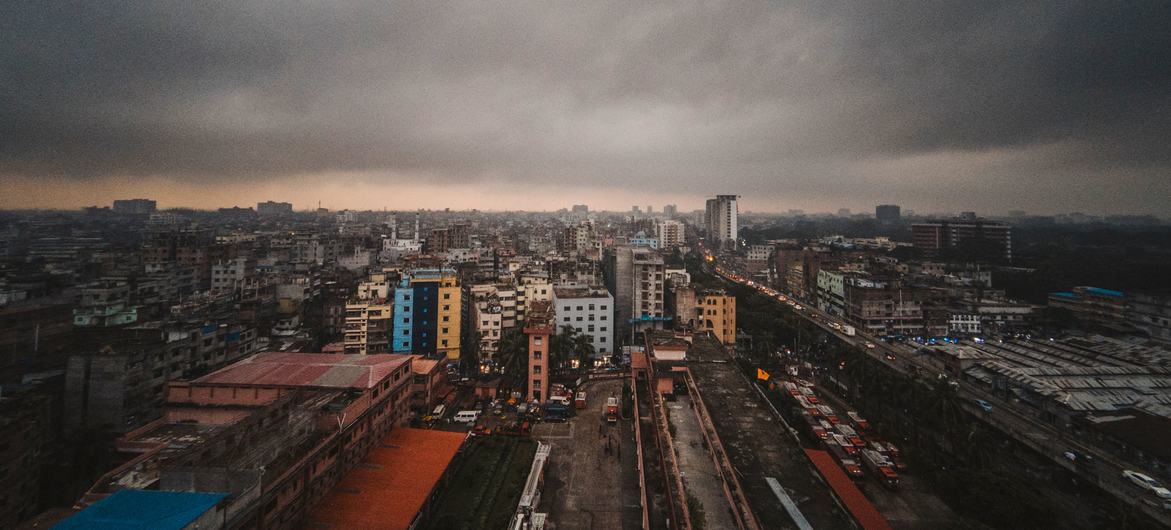
The Bangladeshi capital, Dhaka, pictured here, along with other cities, has witnessed widespread anti-Government protests.
© UNSPLASH/Shafiqul Islam
 
The Bangladeshi capital, Dhaka, pictured here, along with other cities, has witnessed widespread anti-Government protests.


5 August 2024

 Human Rights

Top United Nations officials underscored the need for a peaceful and democratic transition in Bangladesh after Prime Minister Sheikh Hasina resigned and fled the country on Monday in the face of massive anti-Government protests, which claimed the lives of hundreds of demonstrators in recent weeks.

Secretary-General António Guterres “continues to closely follow developments in the country,” UN Deputy Spokesperson, Farhan Haq, said in a statement.

“He urges calm and restraint by all sides and emphasizes the importance of a peaceful, orderly and democratic transition,” he added.

The UN chief also expressed “full solidarity with the people of Bangladesh” and called for the full respect of their human rights.

“He continues to underscore the need for a full, independent, impartial and transparent investigation into all acts of violence,” Mr. Haq noted.

Hundreds killed in crackdown

More than 300 people, including many children, are said to have been killed since student-led protests erupted in July, and more than 20,000 injured. The bloodshed was among the worst ever witnessed in Bangladesh.

The unrest began in July with protests by students against civil service job quotas. Though the scheme was withdrawn, protests erupted again last week, with the key demand for Prime Minister Sheikh Hasina to quit and for those responsible for the violent suppression of demonstrations to be held accountable.

Ms. Hasina had been in power since January 2009, having earlier led the country from 1996 to 2001.

Media reports suggest her departure from Bangladesh was met with widespread jubilation across much of the country.

There were also reports of ransacking and arson at the Prime Ministerial residence; a museum commemorating the country’s first President and Ms. Hasina’s father, Sheikh Mujibur Rahman; and homes of senior government officials.

Bangladesh’s army chief announced in a televised national address following her departure that an interim government would be formed, although no further details were provided.

There must be no reprisals

Also on Monday, Volker Türk, UN High Commissioner for Human Rights, underscored the importance of the transition of power in Bangladesh being “peaceful and guided by human rights”.

“The transition must be conducted in a transparent and accountable way, and be inclusive and open to the meaningful participation of all Bangladeshis,” he said in a statement.

“There must be no further violence or reprisals.”

Tweet URL

Mr. Türk highlighted that democratic order and the rule of law must be ensured as quickly as possible, and that all emergency measures must be limited in accordance with international law.

Everyone arbitrarily detained must be released, all those responsible for human rights violations must be held to account. He stressed that underlying issues and grievances must be addressed.

Independent investigations urged

The High Commissioner reiterated his call or a comprehensive, impartial and transparent investigation into all alleged human rights violations since July.

“In the current circumstances, and to ensure public confidence, an investigation should be conducted independently, and my Office stands ready to support this,” he said.

“The demands for justice and reform must be heeded,” he added.

“This is a time for national healing, including through an immediate end to violence, as well as accountability that ensures the rights of victims to truth and reparations, and a truly inclusive process that brings the country together on the way forward.”


https://news.un.org/en/story/2024/08/1152826

https://creativecommons.org/licenses/by/4.0/legalcode

воскресенье, 4 августа 2024 г.

Fight bigotry whenever and wherever it appears, UN chief declares.


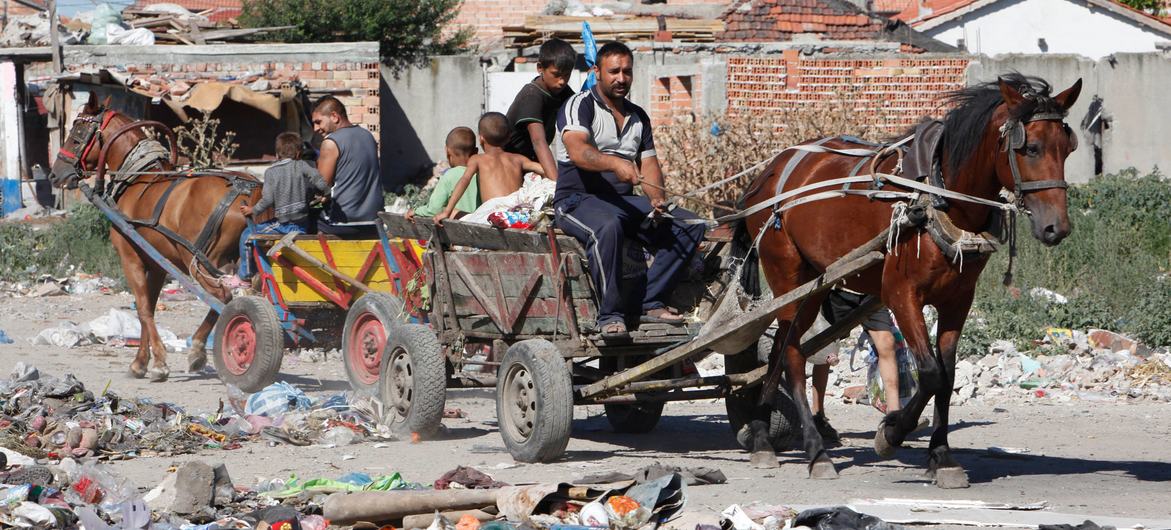
Members of the Roma community in Europe continue to face hardships and discrimination, with many living in poverty. In this file photo, a Roma men and children work at a junkyard in Bulgaria.
© UNICEF/Oleg Popov
 
Members of the Roma community in Europe continue to face hardships and discrimination, with many living in poverty. In this file photo, a Roma men and children work at a junkyard in Bulgaria.


By Vibhu Mishra
2 August 2024 

Human Rights

Top UN officials on Friday called for a stand against bigotry “wherever and whenever it appears”, paying tribute to the hundreds of thousands of Roma and Sinti brutally murdered during the Second World War by the Nazis.

On the night of 2 August 1944, the last 4,300 Roma and Sinti in the Auschwitz-Birkenau concentration camp were murdered by the Nazi forces, despite their fierce resistance. That marked the killing of more than 500,000 members of the community, representing at least a quarter of their total population at the time.

The Nazis’s genocidal campaign also claimed the lives of six million Jews and targeted LGBTIQ+ individuals, persons with disabilities, political dissidents and other minorities.  

Prejudice remains today

In a message marking the European Holocaust Memorial Day for Roma and Sinti, UN Secretary-General António Guterres also honoured the survivors and commended the courage of their resistance.

He warned, however, that the prejudice that fuelled the Nazis’s atrocities did not end with their downfall.

“It remains today. The sad reality is that Roma people face rampant discrimination in all areas of life and all parts of the world, not least in Europe,” he said.

“Extremist and xenophobic groups are spreading hate speech, scapegoating marginalised communities and sowing fear and division.”

Tweet URL

Stand together

Mr. Guterres urged everyone around the world to stand together and fight bigotry in all its forms.

“We must stand together…to protect and promote the human rights of Roma and to build a world in which all people live in dignity, peace and freedom,” he added, renewing the United Nations’s commitment as an “unwavering ally in that cause”.

Learn from history

In a separate message, Volker Türk, UN High Commissioner for Human Rights, cautioned against the “unimaginable horrors” that can flow from hatred and dehumanisation.

“We must heed the lessons of history,” he told, via video, participants at the Passing on Memory for the Future of Holocaust Remembrance and Education Conference in Kraków, Poland.

“Discrimination, exclusion, marginalisation. This is centuries old, but persisting today against a backdrop of escalating hate speech against minorities more generally, including on social media and by some populist leaders.”

Mr. Türk shared personal recollections of the consequences of anti-gypsyism in the immediate aftermath of the Kosovo conflict, where he was involved in establishing a human rights monitoring initiative to address the discrimination and violence faced by Roma, Egyptian and Ashkali communities.

Do more

He added that the Roma in Europe continue to face severe difficulties, as revealed in a 2021 European Union human rights survey. It found that 17 per cent had endured some form of hate-based harassment in the past 12 months and that almost 80 per cent were at risk of poverty.

The UN rights chief welcomed some positive steps, noting that Sweden’s efforts on public memorialisation and Germany’s appointment of a Federal Commissioner on anti-gypsyism.

“Much more needs to be done, though, to ensure all these communities are able to access their rights to education, work, housing, health, public services and more,” he urged.

https://news.un.org/en/story/2024/08/1152786
https://creativecommons.org/licenses/by/4.0/legalcode

воскресенье, 21 июля 2024 г.

Guatemala: UN rights chief concerned over polarization, inequality, racism

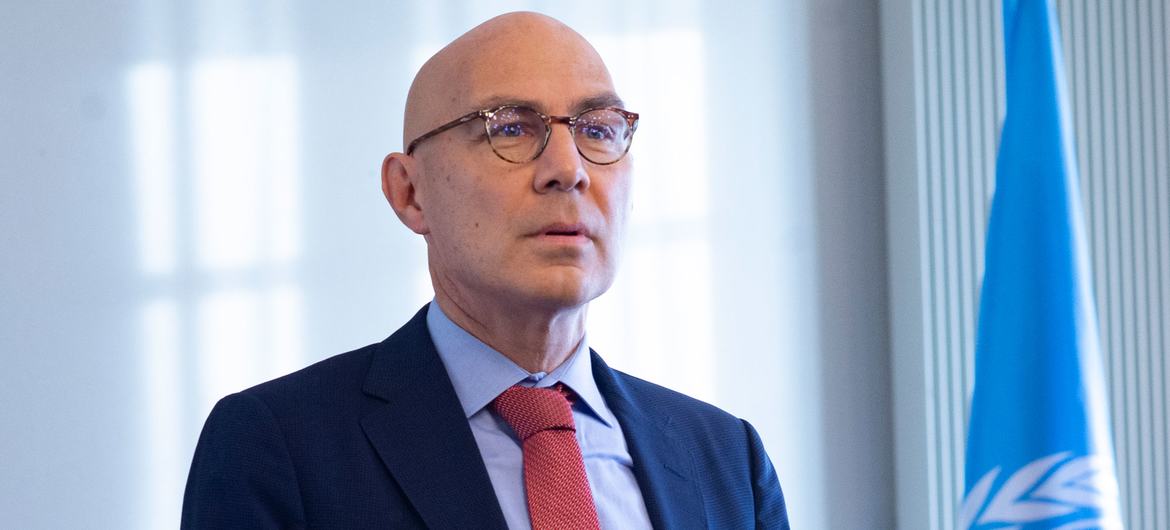
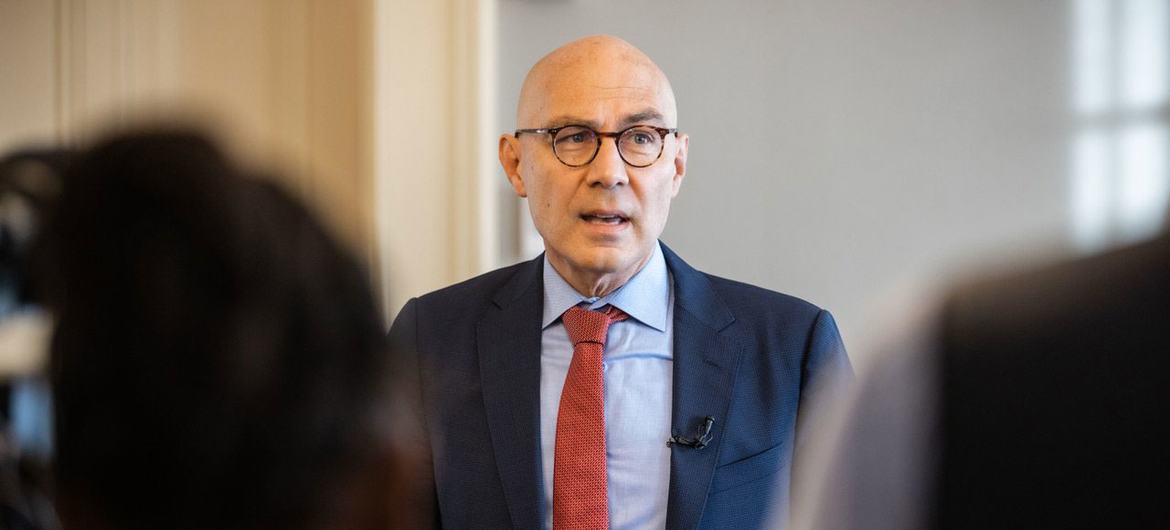
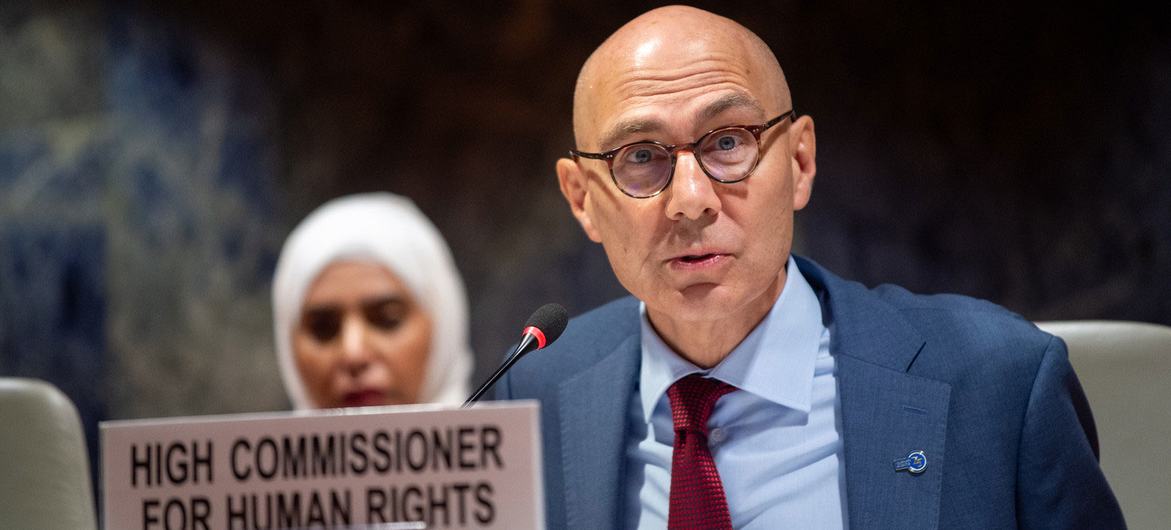
United Nations High Commissioner for Human Rights Volker Türk.
UN Photo/Violaine Martin
 
United Nations High Commissioner for Human Rights Volker Türk.


19 July 2024

 Human Rights

The UN High Commissioner for Human Rights on Friday highlighted changes and ongoing challenges in Guatemala – including corruption, racism and gender inequality - following a four-day official visit to the Central American country. 

“It was a priority for me to come to Guatemala at a crucial moment in its history, and to support the country in its efforts to strengthen democracy, the rule of law, to fight against corruption and establish a clear and transformative human rights agenda,” Volker Türk said in a statement. 

Preserving democracy

The UN rights chief said that what happened during the 2023 electoral period was of utmost concern to him.

President Bernardo Arevalo, who campaigned on tackling corruption and insecurity, was elected last August but opponents repeatedly challenged the results.

Tweet URL

“I feared that the regressive forces who had co-opted the State structures would also succeed in overturning the popular will expressed at the ballot box,” he said.

“The efforts and determination of many sectors of society, especially the 106-day mobilization of Indigenous Peoples and social movements, have been successful in preserving democracy and the rule of law.”

Mr. Türk said he saw the Government’s “firm commitment” to the rule of law, democracy and human rights, and that the “human rights agenda” is part of the Executive's programmes and activities. 

Polarization and corruption

He warned, however, that the three powers of Government are not yet working in harmony.

“There is enormous polarization between State institutions,” he said. “Public opinion is highly fragmented. Corruption levels remain very high. Mistrust between different groups is growing.”

The High Commissioner stressed the need to tackle some of the country’s main problems, including high levels of inequality, gender equality and violence against women and girls.

“Change is possible and it is already happening,” he insisted. “An example of that is the appointment by President Arévalo of six women governors.” 

Discrimination, inequality and racism 

He said among the most pressing challenges in Guatemala is the “devastating” structural discrimination, racism and inequality faced by Indigenous Peoples and people of African descent, who constitute the majority of the country’s population.  

LGBTIQ+ community, people with disabilities and other vulnerable groups also face discrimination, he added.

Stop persecuting activists 

Mr.  Türk expressed deep concern over the misuse of criminal law to persecute human rights defenders, justice officials, journalists, students and indigenous authorities.  Dozens now “face judicial proceedings based on spurious grounds”, and more than 50 have fled the country.  

“I urge the Attorney General to adopt the necessary measures so that this persecution ends immediately. All those in exile should be able to return immediately and in safe conditions,” he said. 

In pursuit of justice 

Mr.  Türk said it was particularly regrettable that people working to stamp out corruption, or expose it, are being persecuted.  Also affected are those seeking to ensure that serious human rights violations that occurred in the context of the internal armed conflict from 1960 to 1996 do not go unpunished

He noted the lack of progress in the search for justice, in particular the trials related to the internal armed conflict.  Provisions of the Peace Accords have not been fully implemented, especially the guarantees of non-repetition.

“This is why I am concerned about the case of the ‘Alaska Summit Massacre’ in 2012, in which seven people died and dozens were seriously injured when the army opened fire on a peaceful demonstration, and that it took nearly 12 years for this case to come to trial,” he said. 

While the challenges in Guatemala are “manifold”, Mr. Turk said he was reassured that Government, civil society, Indigenous Peoples and the private sector “can reverse the course of the last decades and improve the promotion and protection of human rights in Guatemala.” 

He urged the international community to continue supporting the Government’s efforts in this regard. 


https://news.un.org/en/story/2024/07/1152321
https://creativecommons.org/licenses/by/4.0/legalcode

четверг, 18 июля 2024 г.

World News in Brief: Bangladesh student protests, South Sudan attacks continue, opportunity knocks for climate action in Africa


United Nations High Commissioner for Human Rights Volker Türk.
OHCHR
 
United Nations High Commissioner for Human Rights Volker Türk.


17 July 2024

 Human Rights

As violent protests continued at university campuses in Bangladesh on Wednesday, the UN High Commissioner for Human Rights urged authorities to engage with students demanding an end to the quota system for government jobs amid rising unemployment. 

The demonstrations erupted two weeks ago, and students have been clashing with their pro-government counterparts and the police in the capital, Dhaka, and other cities. 

Tweet URL

The Bangladeshi Government closed all public and private universities after the protests turned deadly on Tuesday, with six people killed and scores injured, according to media reports.

Writing on social media, UN rights chief Volker Türk said that all acts of violence and use of force, especially resulting in the loss of life, must be investigated and perpetrators held to account.

“Freedom of expression and peaceful assembly are fundamental human rights,” he added.

The students are protesting quotas which reserve a third of government jobs to the children of veterans of the 1971 war of independence from Pakistan. 

The quotas were abolished in 2018 but reinstated earlier this month. 

South Sudan: Community-based militias continue attacks on civilians 

Widespread attacks against civilians - driven primarily by sub-national armed violence involving community-based militias and civil defense groups — are continuing in South Sudan, the UN Mission in the country, UNMISS, said on Wednesday in its latest quarterly report.

Between January and March, UNMISS documented 240 incidents of violence impacting 913 civilians nationwide. 

Of this number, 468 were killed, 328 injured and 70 abducted, with 47 subjected to conflict related sexual violence. This represents a 24 percent rise compared to the 194 violent incidents reported during the same period in 2023. 

The Mission said inter and intra-communal violence by community-based militias and/or civil defense groups remains the primary source of sub-national violence, accounting for 87 percent of victims, or 796 persons.

On a positive note, the report also showed a 30 per cent decrease in the number of documented abductions compared to the fourth quarter of 2023 (from 100 to 70).  Similarly, incidents of conflict-related sexual violence decreased by 25 per cent, of from 63 to 47.

The Head of UNMISS, Nicholas Haysom, called for collective action by authorities and communities to resolve longstanding grievances peacefully, particularly as South Sudan approaches its first elections, scheduled for December. 

“Building a culture of human rights is fundamental to achieving sustainable security, peace, and democracy,” he said.

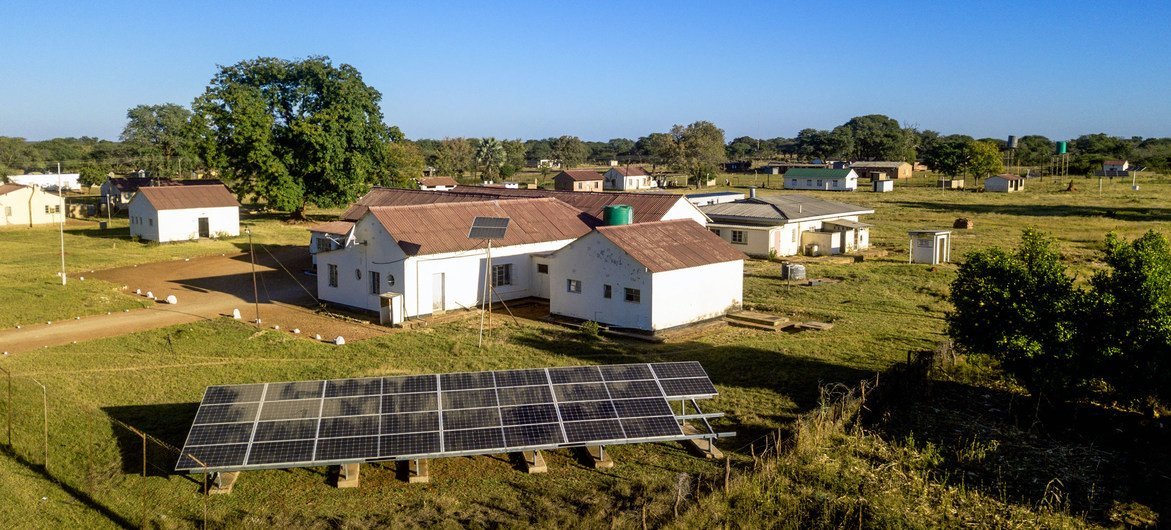
Solar panels help to power the a rural hospital in Bulawayo, Zimbabwe.
UNDP/Karin Schermbrucker for Slingshot
 
Solar panels help to power the a rural hospital in Bulawayo, Zimbabwe.

New UNDP report highlights climate action opportunities in Africa 

Also on Wednesday, the UN Development Programme (UNDP) launched the third edition of its Africa Investment Report Climate Opportunities at the Africa Impact Summit 2024 in Nairobi, Kenya.

The report outlines private sector opportunities with economic, social and environmental potential for sustainable development in Africa, and presents data and trends on Sustainable Development Goals (SDGs) investments across the continent. 

“Through the UNDP Africa Investment Insights Report, we turn Africa’s climate challenges into investment opportunities for the private sector, as per the continent’s own ambition captured in national NDCs,” said Maxwell Gomera, Director of the UNDP Africa Sustainable Finance Hub.

Private sector opportunity

This third edition of the report highlights climate-related investment opportunities using insights from 16 African SDGs Investor Maps. Partnering with UNDP’s Climate Promise, it shows how the private sector can support African countries' Nationally Determined Contributions (NDCs) under the Paris Agreement. 

The report emphasises that climate action presents significant opportunities for the private sector, with over half of the identified SDGs investment opportunities in Africa contributing to climate action and NDCs.  

Mr. Romera said UNDP is calling on investors to participate in “realising opportunities for positive climate action.” 


https://news.un.org/en/story/2024/07/1152221

https://creativecommons.org/licenses/by/4.0/legalcode

четверг, 11 июля 2024 г.

UN rights council condemns Myanmar abuses, urges immediate action


The silhouette of a 15-year-old child on crutches. He lost his left leg after accidentally stepping on a landmine in a rice field.
© UNICEF/Minzayar Oo
 
The silhouette of a 15-year-old child on crutches. He lost his left leg after accidentally stepping on a landmine in a rice field.

By Vibhu Mishra
10 July 2024 

The UN Human Rights Council on Wednesday reiterated its deep concern over the crisis in Myanmar, amid reports of widespread abuses by the military and opposition armed groups, including forced conscription of Rohingya community members and their use as human shields.

In a resolution adopted without a vote, the Council strongly condemned all violations and abuses of human rights in Myanmar, particularly following the military coup in February 2021.  

It called upon Myanmar “to end immediately all violence and violations of international law in the country, to ensure full protection of the human rights and fundamental freedoms of all persons in Myanmar, including Rohingya Muslims and other minorities”.

It also called for addressing the root causes of the crisis and forging a viable, lasting and durable solution, as well as eliminating statelessness and institutionalized discrimination against members of ethnic and religious minorities, particularly the Rohingya.

Tweet URL

Horrific violence

The predominantly Muslim Rohingya community suffered horrific violence at the hands of the country’s security forces in 2017, prompting the exodus of several hundred thousand into Bangladesh, where they continue to languish in refugee camps.

Despite provisional measures ordered by the International Court of Justice (ICJ) in January 2020, Rohingya in Myanmar, including women and children, continue to suffer from targeted killings and indiscriminate violence, including by airstrikes, shelling, burning, landmines and unexploded ordnance.

According to the UN Children’s Fund (UNICEF), 1,052 civilian casualties were recorded from landmine and explosive ordnance incidents during 2023 – more than three times the 390 fatalities the year before.

Over 20 per cent of the victims were children.

Credible, international investigations  

The 47-member Human Rights Council (HRC), UN’s highest intergovernmental forum on all rights-related matters, also highlighted the need international, independent, fair and transparent investigations for allegations of sexual and gender-based violence and abuses against women and children and alleged war crimes.

It reiterated the importance of holding accountable all those responsible for brutal acts and crimes against all persons to deliver justice to victims using all appropriate legal instruments and judicial mechanisms, including the ICJ and the International Criminal Court (ICC), as applicable.

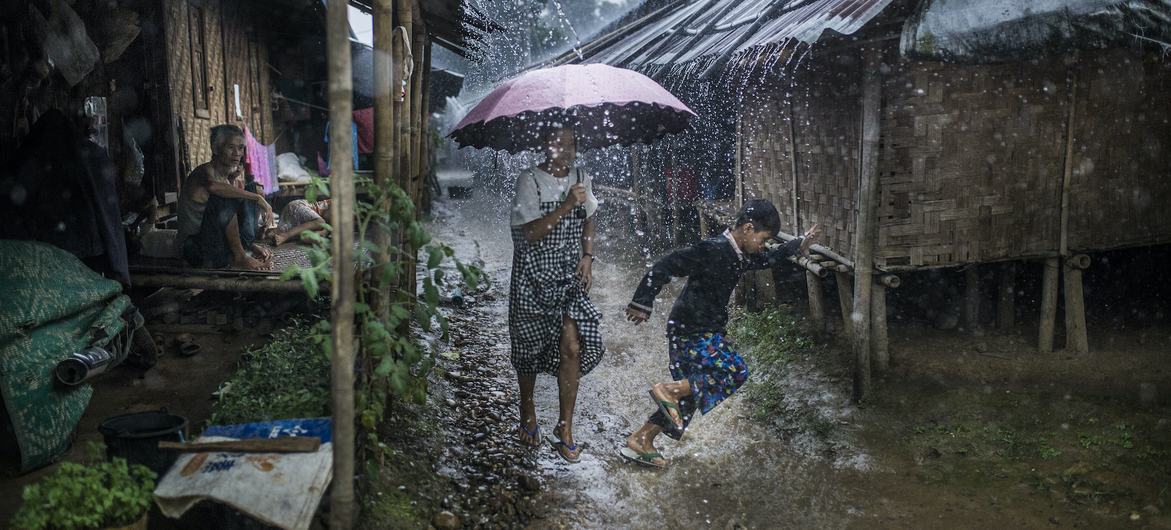
Rains lash an internally displaced persons camp in northern Myanmar. (file)
© UNICEF/Minzayar Oo
 
Rains lash an internally displaced persons camp in northern Myanmar. (file)

Conflict spillover worries

The Geneva-based Council further raised alarm over the cross-border spillover effect of the conflict in Myanmar, which has reportedly caused death and damage to property in Bangladesh and other bordering countries.

It underscored the need for immediate cessation of fighting and hostilities and the targeting of civilians.

It also called for an “inclusive and comprehensive” national political dialogue and nationwide reconciliation process while “ensuring the full, effective and meaningful participation” of all ethnic groups, including Rohingya and other minorities, women, young people and persons with disabilities, as well as civil society and religious leaders.

Stop hate speech

Also in the resolution, the HRC called on Myanmar to combat incitement to hatred and hate speech against Rohingya and other minorities, online and offline, including by enacting necessary anti-hate speech and crime laws.

It also urged the country to lift the shutdown of Internet and telecommunications services fully in all areas, including in Rakhine state, and to avoid further cutting of Internet and telecommunications access and stifling freedom of opinion and expression.


https://news.un.org/en/story/2024/07/1151966


https://creativecommons.org/licenses/by/4.0/legalcode

четверг, 4 июля 2024 г.

UN rights chief urges free and open space for debate in Venezuela

UN High Commissioner for Human Rights Volker Türk. (file)
© OHCHR/Irina Popa
 
UN High Commissioner for Human Rights Volker Türk. (file)
3 July 2024 

Human Rights

The UN’s top human rights official on Wednesday underscored the need for free and open debate in Venezuela as the country prepares to hold Presidential elections later this month, and local, regional and legislative polls next year.

UN High Commissioner for Human Rights Volker Türk reported increasing restrictions on civic spaces, urging stakeholders to reverse course.

“My Office (OHCHR) continues to receive reports of detentions as election day approaches, including of supporters and members of the opposition,” he said, addressing the Geneva-based Human Rights Council.  

“This does not augur well, and I urge a change to such practices.”

Tweet URL

Key opportunities

Venezuelan Presidential elections are scheduled for 28 July, while local, regional and legislative polls are planned for 2025.

These are “key opportunities to respect the people’s will”, Mr. Türk emphasized.

“Now, more than ever, a constructive and open dialogue among the people and with the institutions of the State is crucial to overcome the deep divisions and rebuild the social contract among Venezuelans,” he said.  

Economic worries

In his briefing, the UN rights chief also expressed concerns over economic conditions.

He said that despite official figures indicating a 5 per cent growth in gross domestic product (GDP) last year, Venezuelans “still face serious obstacles” accessing food, health and education.  

Women, people in rural areas and indigenous peoples are disproportionately affected.

He also cited reports indicating that almost three quarters of the country’s health centres lacked medical or nursing staff between July and August last year, while abortion continues to be criminalized, leading to unsafe procedures and resulting in maternal mortality and morbidity.

“I urge the authorities to take steps to address all of these concerns – on health, education, food, and dignified remuneration – in line with the State’s international obligations,” he said, calling also for lifting of sectoral sanctions that have exacerbated pre-existing human rights challenges.

Alarming numbers of femicide

High Commissioner Türk voiced concern over cases of femicide, noting that between January and November last year, 186 such cases were reported.

“Investigation into these killings is essential, as are much stronger prevention and response efforts. A protocol developed by the Office of the Attorney General is a first step but much more is needed,” he said.


https://news.un.org/en/story/2024/07/1151766


https://creativecommons.org/licenses/by/4.0/legalcode

пятница, 28 июня 2024 г.

World News in Brief: Trafficking victims need more support, deadly risks of inactivity, executions in Iraq

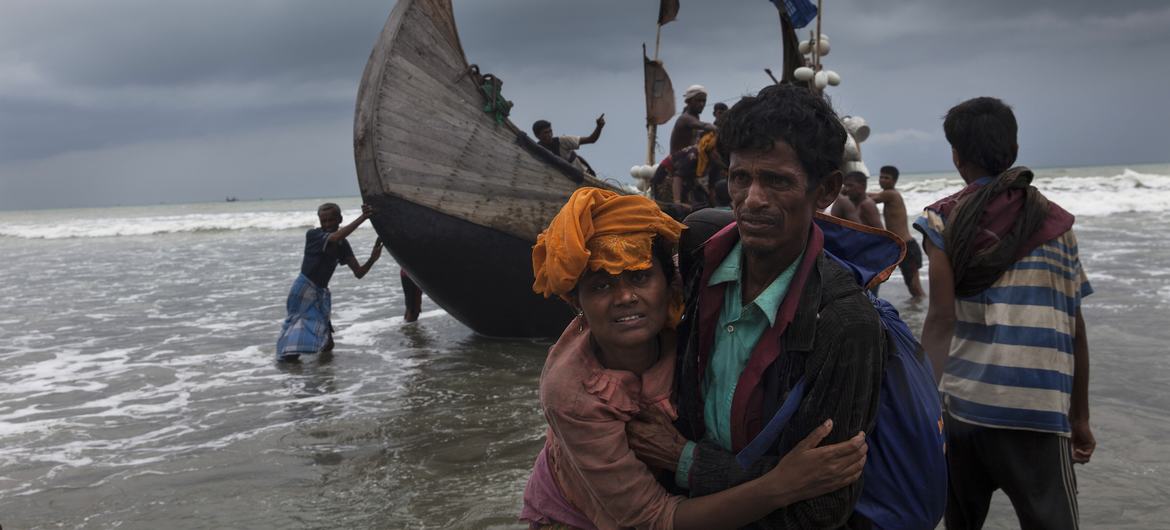
A man helps a woman to the shore as a boat arrives with Rohingya refugees in Teknaf, Cox’s Bazar, Bangladesh. (file)
UNICEF/Patrick Brown
 
A man helps a woman to the shore as a boat arrives with Rohingya refugees in Teknaf, Cox’s Bazar, Bangladesh. (file)


27 June 2024 

Human Rights

Victims of people-trafficking need more countries to respect international law and protect them, but thousands continue to die along land and sea routes every year, a top independent human rights expert said on Thursday.

Tweet URL

In her report to the Human Rights Council in Geneva, Special Rapporteur Siobhán Mullally said that the 2018 Global Compact for Safe, Orderly and Regular Migration commits countries “to save lives and prevent migrant deaths and injuries through individual or joint search and rescue operations” at sea.

But, that hasn’t stopped at least 8,565 people from dying on routes worldwide in 2023, “making it the deadliest year on record”, Ms. Mullally said. Slightly more than half the deaths were a result of drowning, she added.

“For victims of trafficking at sea, first and foremost, the right to life must be ensured as a fundamental and non-derogable human right. States have an obligation to ensure that maritime actors can fulfil their duties towards persons in distress at sea,” she said.

Search and rescue

“It is essential, therefore, that maritime actors are fully supported in meeting their search and rescue obligations under international law. Those obligations must be implemented without discrimination or regard to the status of the persons being rescued.”

Ms. Mullally highlighted the critical situation facing Rohingya refugees, many of whom are at risk from trafficking at sea, including many child refugees.

She said that nearly 4,500 Rohingya embarked on perilous sea journeys in 2023, and 569 were reported dead or missing. Compared with a year earlier, the number of people leaving the shore increased by 21 per cent, while the number of dead or missing rose by 63 per cent.

A third of adults at risk of disease due to physical inactivity

Nearly one third of adults worldwide, approximately 1.8 billion people, did not meet the recommended levels of physical activity in 2022, a new study undertaken by researchers from the World Health Organization (WHO) has revealed.

If the trend continues, levels of inactivity are projected to rise to 35 per cent by 2030.

“Physical inactivity is a silent threat to global health, contributing significantly to the burden of chronic diseases,” said Dr. Rüdiger Krech, director of health promotion at WHO.

Adults should have 150 minutes of moderate intensity exercise – or 75 minutes of vigorous intensity activity – each week, according to WHO recommendations. Physical inactivity puts adults at greater risk of cardiovascular diseases such as heart attacks and strokes, type 2 diabetes, dementia and cancers such as breast and colon.

The highest rates of physical inactivity were observed in the high-income Asia-Pacific region (48 per cent) and South Asia (45 per cent), with levels of inactivity in other regions ranging from 14 per cent in Oceania to 28 per cent in high-income Western countries.

Gender disparity

Physical inactivity is still more common among women globally compared with men, with inactivity rates of 34 per cent compared to 29 per cent. In some countries, this difference is as much as 20 percentage points.

Additionally, people over 60 are less active than other adults, highlighting the importance of promoting physical activity for that age group.

Despite the worrying results, almost half of the world’s countries have made some improvements over the past decade, and 22 countries were identified as likely to reach the global target of reducing inactivity by 15 per cent by 2030.

Scale of Iraq’s arbitrary executions may be a crime against humanity

The “systematic” execution of prisoners sentenced to death based on confessions extracted through torture under an “ambiguous” counterterrorism law, amount to arbitrary deprivation of life and may amount to a crime against humanity, a group of human rights experts said on Thursday.

Tweet URL

“We are alarmed by the high number of executions publicly reported since 2016, nearly 400 in total, including 30 this year, and the explicit political commitment to continue implementing death sentences,” the UN Human Rights Council-appointed experts said.

This carries on “in total disregard” of reported irregularities in the administration of justice, cases of enforced disappearances and torture-tainted confessions, which have fuelled the sentencing policy, the Special Rapporteurs added.

As there are some 8,000 prisoners on death row in Iraq, the experts said that when arbitrary executions are widespread and systematic, they may amount to crimes against humanity.

They said Iraq and other countries which retain the death penalty for ordinary crimes must reserve the penalty for only the “most serious crimes”, meaning intentional killing.

‘Deeply troubling’

“We insist that most of the crimes detailed in articles two and three of the counterterrorism law no.13 of 2005…fail to meet the threshold of the ‘most serious crimes’, rendering these executions arbitrary in nature,” the experts said.

“The alleged political use of death sentences, mainly against Sunni Iraqi males, is deeply troubling.”

They again urged the Iraqi Government to immediately halt all executions, ensure a fair retrial for prisoners on death row, particularly those accused of terrorism offences, and promptly initiate thorough and impartial investigations.

Special Rapporteurs and other UN Human Rights Council-appointed rights experts are independent of any government, receive no salary for their work and serve in their individual capacity.


https://news.un.org/en/story/2024/06/1151581


https://creativecommons.org/licenses/by/4.0/legalcode

четверг, 27 июня 2024 г.

Rights expert urges banks to stop financing Myanmar junta weapons trade


A settlement in Rakhine province, northern Myanmar. (file photo)
OCHA/Pierre Peron
 
A settlement in Rakhine province, northern Myanmar. (file photo)


2 hours 29 minutes ago
 Human Rights

Foreign banks are allegedly helping Myanmar’s military junta acquire weapons and military supplies, facilitating a “campaign of violence and brutality” as the civil war there grinds on, according to an independent UN human rights expert on Wednesday.

Since the February 2021 coup, over 5,000 civilians have been killed, at least three million displaced. More than 20,000 political prisoners remain incarcerated. Military airstrikes against civilian targets have increased five-fold in the last six months, even as the junta loses military outposts, territory, and troops to resistance forces.

Potential enablers

In a new report, Tom Andrews, UN Special Rapporteur on Myanmar, identified 16 banks in seven countries that processed transactions linked to the junta’s military procurement over the past two years.  

Additionally, 25 banks provided correspondent banking services to Myanmar’s state-owned banks under junta control.

“With the junta on its heels, it is critical that financial institutions take their human rights obligations seriously and not facilitate the junta’s deadly transactions,” he said.

He highlighted that banks involved with Myanmar State-owned banks are at high risk of enabling military attacks on civilians and emphasized their fundamental obligation to avoid facilitating crimes, including war crimes and crimes against humanity.

Tom Andrews, Special Rapporteur on the situation of human rights in Myanmar
UN News/Vibhu Mishra
 
Tom Andrews, Special Rapporteur on the situation of human rights in Myanmar

Good and bad news

He noted a decline in the Myanmar military’s annual procurement of weapons and military supplies through the formal banking system, from $377 million to $253 million in the year ending March 2023.

However, he warned that the junta circumvents sanctions by exploiting gaps, shifting financial institutions, and leveraging inadequate coordination and enforcement among member states.

“The good news is that the junta is increasingly isolated … the bad news is that the junta is circumventing sanctions and other measures by exploiting gaps in sanctions regimes, shifting financial institutions, and taking advantage of the failure of Member States to fully coordinate and enforce actions,” the Special Rapporteur said.

Shift from Singapore to Thailand

The report Banking on the Death Trade: How Banks and Governments Enable the military Junta in Myanmar examined “a dramatic shift” in the role of two Association of Southeast Asian Nations (ASEAN) countries as sources of weapons and military supplies.  

Following last year’s identification of Singapore as a significant source, the Singaporean government investigated the entities involved, resulting in a 90 per cent drop in weapons flowing to Myanmar from Singapore-registered companies.

Conversely, military procurement through Thailand has moved in the opposite direction, the news release noted.  

The junta imported nearly $130 million in weapons and military supplies from Thailand-registered suppliers in the year ending March 2024 - more than double the total from the previous year.  

Thai banks have played a crucial role in this shift. The Siam Commercial Bank, for instance, facilitated just over $5 million in transactions related to Myanmar military in the year ending March 2023, but that number rose sharply to over $100 million the following year.

Political will needed

“Singapore’s example demonstrates that a Government with sufficient political will can make a significant difference toward shutting down the Myanmar death trade,” Mr. Andrews stressed.

“Thailand has an opportunity to follow this powerful example by taking action that will deal a huge blow to the junta’s capacity to sustain its escalating attacks on civilian targets. I urge it to do so,” he concluded.

Appointed by the Geneva-based UN Human Rights Council, and forming of a part of its Special Procedures, Special Rapporteurs are mandated to monitor and assess the rights situation in certain thematic or country situations.

They work voluntarily, are not UN staff and do not receive a salary.

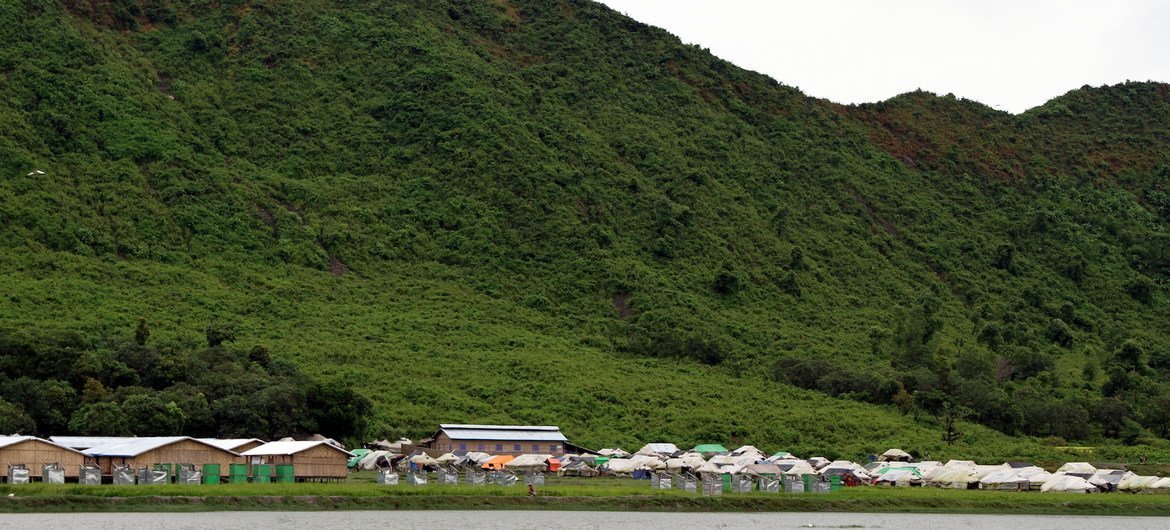
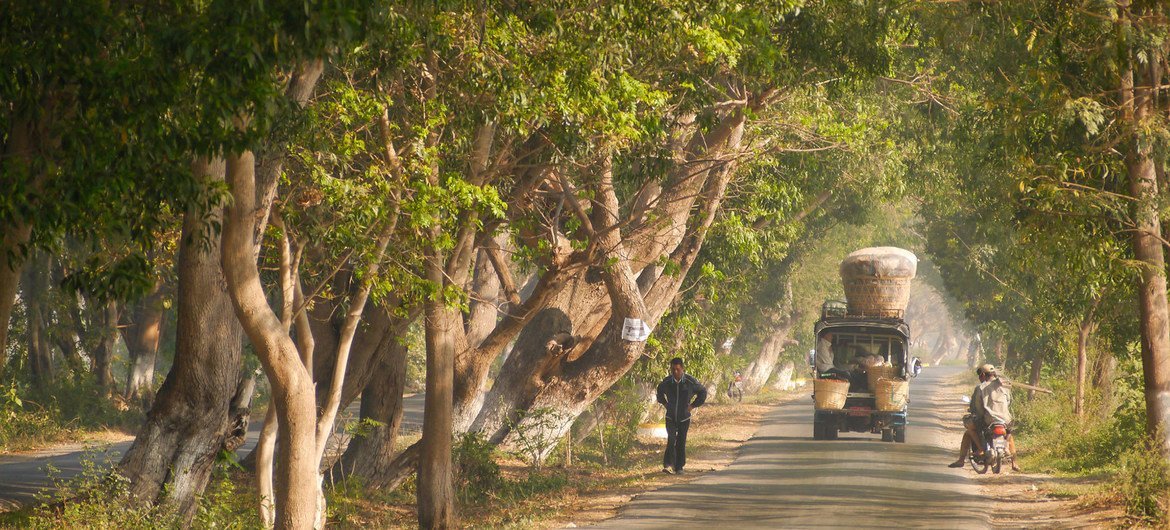
A rural road in Myanmar. (file photo)
Asian Development Bank
 
A rural road in Myanmar. (file photo)

UN food warehouse looted

Amidst the ongoing conflict, a warehouse of the UN emergency food relief agency was looted and set on fire in Maungdaw, northern Rakhine province last Saturday.

It was holding 1,175 metric tons of life-saving food and supplies, enough emergency food to sustain 64,000 people for one month. However, due to increased conflict in the region, its staff have not been able to access the warehouse since late May.

The UN World Food Programme (WFP) strongly condemned the incident, stressing that the seizure of humanitarian goods and destruction of facilities undermined its food support programme to conflict-affected populations in Myanmar.

It called on all parties to the conflict to uphold their obligations under international humanitarian law to respect and protect aid facilities and assets and ensure humanitarians have unfettered access.  

WFP is gathering details of the circumstances surrounding the incident, the agency said.


https://news.un.org/en/story/2024/06/1151541

https://creativecommons.org/licenses/by/4.0/legalcode