Показаны сообщения с ярлыком Economic Development. Показать все сообщения

суббота, 28 июня 2025 г.

New UN report charts path out of debt crisis threatening global development

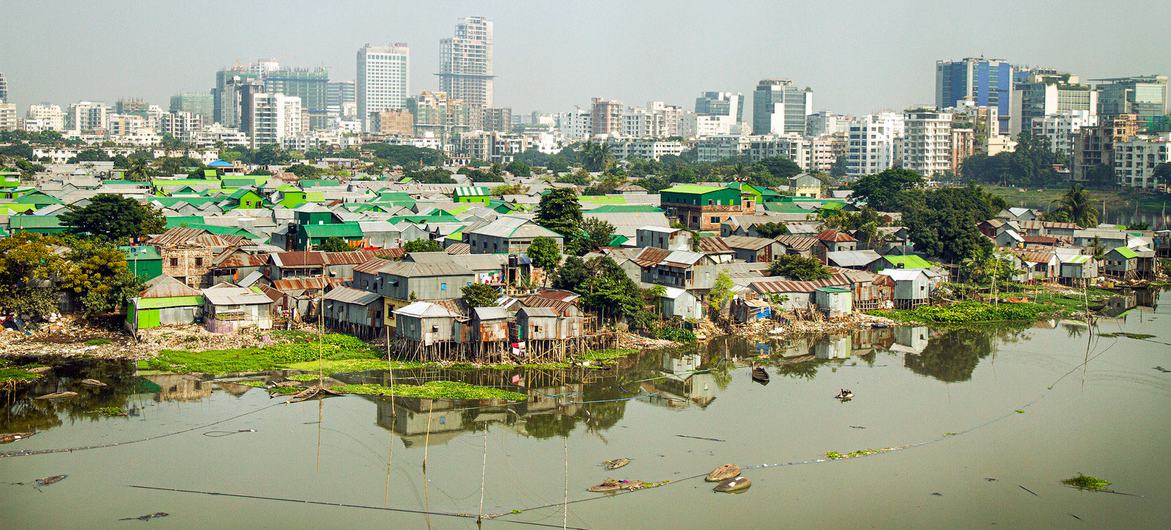
Developing countries like Bangladesh (pictured) spend large amounts of money servicing international debt, diverting vital resources away from development efforts.
© UN-Habitat/Kirsten Milhahn
 
Developing countries like Bangladesh (pictured) spend large amounts of money servicing international debt, diverting vital resources away from development efforts.


27 June 2025
 Economic Development

A decade after the adoption of the Sustainable Development Goals (SDGs), development is facing serious headwinds – including what UN officials describe as a “silent crisis” of surging debt service payments in low-income countries.

On Friday, Deputy Secretary-General Amina Mohammed launched a new report, Confronting the Debt Crisis: 11 Actions to Unlock Sustainable Financing.

She was joined by experts Mahmoud Mohieldin and Paolo Gentiloni, along with Rebeca Grynspan, Head of the UN Conference on Trade and Development (UNCTAD).

A growing crisis

“Borrowing is critical for development,” Ms. Mohammed said, but today, “borrowing is not working for many developing countries, over two-thirds of our low income countries are either in debt distress or at a high risk of it.”

The crisis is accelerating, Ms. Grynspan warned.

More than 3.4 billion people now live in countries that spend more on interest payments than on health or education – 100 million more than last year.

Debt service payments by developing countries have soared by $74 billion in a single year, from $847 billion to $921 billion.

“The nature of this crisis is mostly connected to the increase of debt servicing costs,” Mr. Gentiloni explained. “Practically, the debt services costs doubled in the last ten years.”

Prepared by the UN Secretary-General’s Expert Group on Debt, the report reinforces the commitments put forward in the Compromiso de Sevilla, the outcome document of the Fourth International Conference on Financing for Development – taking place next week.

A path forward

The report outlines 11 actions that are both technically feasible and politically viable.

Mr. Mohieldin explained that the recommendations fall under two key goals: providing meaningful debt relief and preventing future crises.

It identifies three levels of action:

At the multilateral level: repurpose and replenish funds to inject liquidity into the system, with targeted support for low-income countries.

At the international level: establish a platform for borrowers and creditors to engage directly.

At the national level: strengthen institutional capacity, improve policy coordination, manage interest rates, and bolster risk management.

“These are eleven proposals that are doable and that only need the political will of all the actors to be able to make them real,” Ms. Grynspan stressed.


https://news.un.org/en/story/2025/06/1165051

https://creativecommons.org/licenses/by/4.0/legalcode

воскресенье, 1 сентября 2024 г.

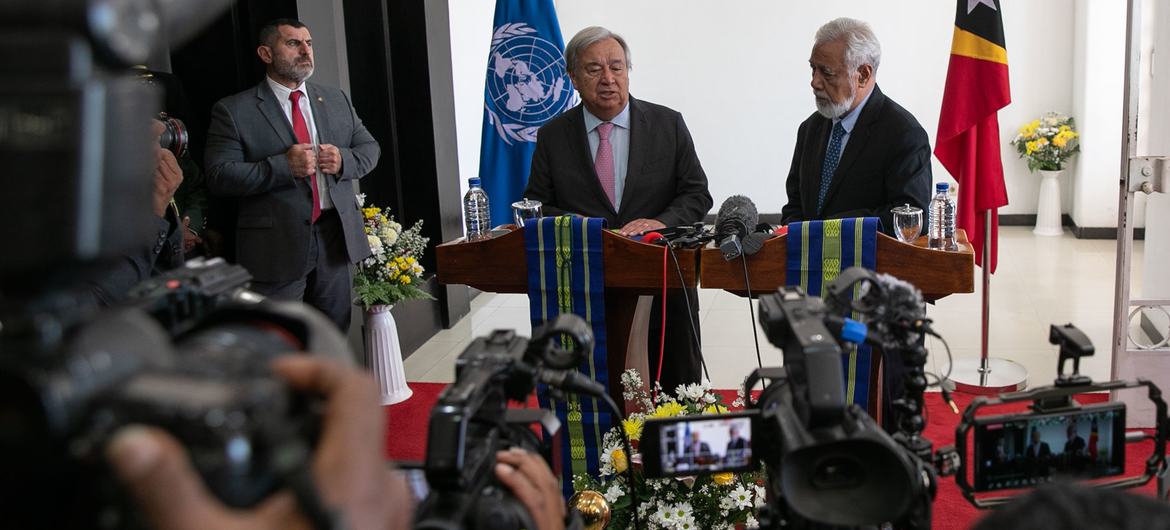
Guterres highlights Timor-Leste’s ‘growing international influence’


UN Secretary-General António Guterres (left) and  Xanana Gusmao, Prime Minister of Timor-Leste, answer questions from the media in Dili.
UN Photo/Kiara Worth
 
UN Secretary-General António Guterres (left) and Xanana Gusmao, Prime Minister of Timor-Leste, answer questions from the media in Dili.


29 August 2024 

Economic Development

The UN Secretary-General continued his historic visit to Timor-Leste on Thursday, emphasising the positive role the country can play on the regional stage to help resolve the crisis in war-wracked Myanmar.

António Guterres is there to take part in celebrations to mark 25 years on Friday since the country’s vote for independence, which was organised by the UN mission in what was then East Timor.

Independence duly came in 2002 following months of violence and destruction that ended years of rule by first Portugal and then Indonesia, which annexed the country in 1975.

Tribute to Timorese leader

On the second day of his official visit to Timor-Leste, the UN Secretary General held a meeting with Prime Minister Xanana Gusmão, paying an “emotional tribute” to the former resistance leader for the “sacrifices he made to achieve the independence of his country and his people”.

Mr. Gusmão – who served as the first president of the newly-independent nation, was imprisoned for six years in Indonesia and only released when the occupation ended in 1999.

Voice for the future

Speaking to journalists at the Government Palace in Dili, the UN chief highlighted Timor-Leste's record in strengthening democracy and human rights, as well as its “growing international influence”.

Mr. Guterres recalled that the Asian nation is the founder of the G7+, a group of States emerging from conflict, and will soon join the ASEAN regional bloc. The Secretary-General said he was counting on Timor-Leste to take a leading role in supporting a future peace process in Myanmar, which has spiralled into chaos since the military coup of 2021 ousted the democratically-elected government.

He told the veteran Timorese leader that he was counting on the country's voice at the Summit of the Future in September, to build “a world in which the United Nations Charter is respected”.

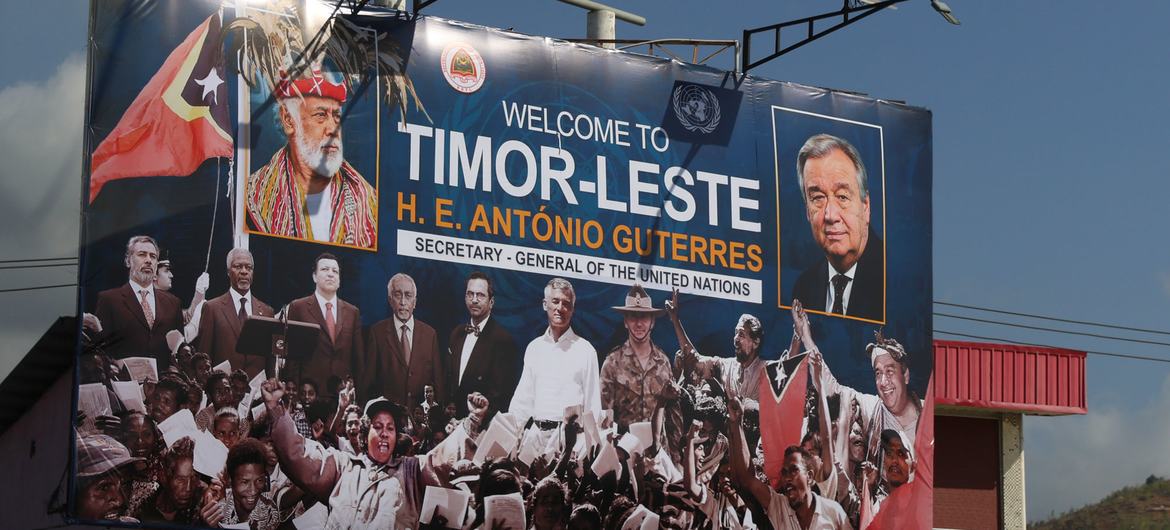
A billboard welcomes UN Secretary-General António Guterres to Timor-Leste.
UN Photo/Kiara Worth
 
A billboard welcomes UN Secretary-General António Guterres to Timor-Leste.

Leading Portugal

The Secretary-General also visited the Timorese Resistance Archive and Museum in the capital Dili, where he was shown around the permanent exhibition “resisting is winning”.

As a former Prime Minster of Portugal from 1995 until the year of Timor-Leste’s independence, Mr. Guterres saw himself featured in some of the archive on display.

He was able to confirm the historical accuracy of one exhibit which stated that Portugal threatened to withdraw its forces from Bosnia and Kosovo - and leave the North Atlantic Treaty Organization, NATO.

The appeal was made at a time when several leaders were calling for immediate intervention by peacekeeping forces to protect the people of Timor-Leste from the violence that erupted after the referendum.

The UN chief also visited a replica of a hideout used by Timorese resistance fighters.

Meeting women of the resistance

Afterwards, Mr. Guterres visited the “Women of Timor-Leste” exhibition, organized by gender equality agency, UN Women, which portrays the life stories of resistance veterans and rights defenders.

He was received and accompanied by Hilda da Conceição, who during the years of resistance had the code name Lalo Imin, a combination of her grandmother's name and an acronym that means “independence or death, integration never”.

Tweet URL

Another veteran represented in the exhibition was Maria Domingas “Mikato”, who organized the first Timor-Leste Women's Congress, held before the 1999 referendum. She is credited with being the driving force behind the decision in that vote to allocate some 30 per cent of political representation to women.

According to UN Women, Timor-Leste's electoral law established that 33 per cent of political party lists must be made up of women. Currently, 38 per cent of seats in the National Parliament are occupied by women - the highest rate in the Asia-Pacific region.

Reflections on Gaza and Ukraine

The UN chief rounded of his day firmly in the present, with an appearance on “The President Horta Show”, broadcast on national television. The recording was also attended by Prime Minister Gusmão.

Mr. Guterres highlighted the role he played leading Portugal in support of independence in East Timor.

According to him, the factors that made the referendum and peaceful transition to independence possible were the “collective affirmation of the people with total determination, which could not fail to triumph”, together with the fact that there were no fundamental geopolitical divisions between power blocs at that time, as exist today.


The Secretary-General also addressed the war in Gaza, as an example of the Security Council's limitations amid internal division.

To applause from the audience, the UN chief said that as with Timor-Leste, the Palestinian people also have the right to self-determination and their own secure nation, in line with the UN-backed two-State solution.

Power of reconciliation

The Prime Minister highlighted that during his imprisonment in Indonesia he had seen the suffering first hand and come to the conclusion that the problem was not with Indonesians themselves, but with the political regime in charge.

President José Ramos Horta - who won the Nobel Peace Prize in 1996 - emphasized how he had used the lessons learned from Timor-Leste's process of reconciliation in offering perspective on other post-conflict situations, such as Colombia’s on-going peace and reconciliation process.

He recalled that during the many years of armed struggle in Timor-Leste, there were never kidnappings or attacks against Indonesian civilians. 

Prime Minister Gusmão stated that often in the context of the conflict, the guerrillas commanded by him provided medical care to injured Indonesian soldiers, something he himself claimed to have done twice.


https://news.un.org/en/story/2024/08/1153731

https://creativecommons.org/licenses/by/4.0/legalcode

суббота, 8 июня 2024 г.

Terrorism, humanitarian crises threaten stability of West Africa: UN deputy chief


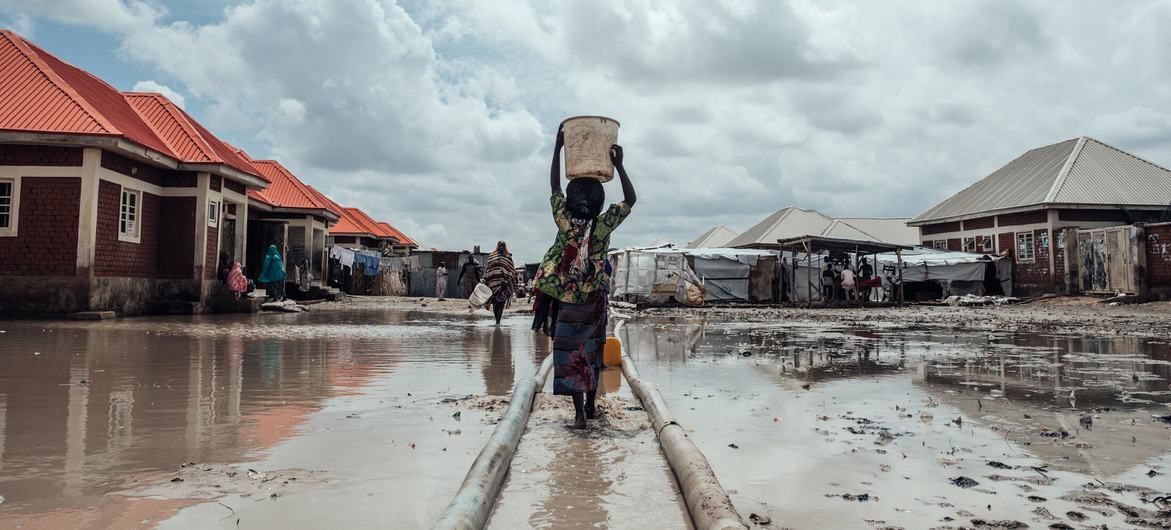
Millions remain displaced across Nigeria due to conflict, climate change impacts and natural disasters. In this file photo, a girl carries water to her shelter at an IDP camp in the country's northeast.
© UNICEF/KC Nwakalor
 
Millions remain displaced across Nigeria due to conflict, climate change impacts and natural disasters. In this file photo, a girl carries water to her shelter at an IDP camp in the country's northeast.


7 June 2024
Economic Development

Rapidly evolving global political, social, environmental and security challenges risk undermining peace and economic development across West Africa, the UN deputy chief said on Friday, reiterating the importance of a multilateral and inclusive response.

At an event commemorating the 49th anniversary of the Economic Community of West African States (ECOWAS), UN Deputy Secretary-General Amina Mohammed noted progress made, alongside immediate challenges.  

“Over the last decade, the region has seen an exponential rise in terrorism that has reversed its development gains. This has been further exacerbated by the resurgence of unconstitutional changes of government posing a significant threat to regional stability,” she said.

Humanitarian needs are rising amid the web of crises, “creating new dynamics, bringing new risks of conflicts, beyond the region”.

“ECOWAS at 49 serves as a reminder that the road ahead is challenging, but it is also filled with potential. This requires both a multilateral and regional response to the complexities each country faces,” Ms. Mohammed added.

Collective solutions

The Deputy Secretary-General underscored the need to use “all existing tools”, while also designing new solutions collectively to meet the expectations of the people.

Peace and security must underpin the ‘Vision for Africa’ in the African Union’s Agenda 2063 socio-economic development framework, with a strong emphasis on strong democratic institutions, she said.

“The values of democracy and good governance still hold true for our region. But recent developments tell us that populations are putting in question our models of democracy and the need to be made fit for purpose in line with local realities,” she added, also urging root causes of conflicts in the region to be addressed.

Rescue SDGs

The Sustainable Development Goals (SDGs) – woefully off track – must be rescued, the deputy UN chief said.

Efforts must be stepped up to achieve the development targets by the 2030 deadline, with “bold and transformative” actions, Ms. Mohammed said.

She emphasized the need for investments in just energy transitions, food systems, digital connectivity, education and skills, as well as in climate action and social protection.

Once-in-a-generation opportunity

Mr. Mohammed also underscored that September’s Summit of the Future provides a “once-in-a-generation opportunity” to address gaps in global governance, including for peace and security as part of the Secretary-General’s New Agenda for Peace.

In that context, Africa will be a vital player in finding ways to end existing conflicts and prevent new ones – with women playing a central role.

“As negotiations for a new Pact for the Future (the outcome of the Summit of the Future) intensify, I encourage all of you to engage in all aspects,” she said.

Silence guns in Gaza, Sudan

In conclusion, the Deputy Secretary-General drew attention to the conflicts in Sudan and in Gaza, “which continue to cause unimaginable suffering, particularly for women and children”.

She reiterated the necessity for an immediate humanitarian ceasefire in Gaza, the unconditional release of all hostages and a pathway to a lasting two-State solution.

“We are united in our call for peace, for silencing the guns across Africa, and for working to end all conflicts around the world,” she concluded.


https://news.un.org/en/story/2024/06/1150816

https://creativecommons.org/licenses/by/3.0/legalcode

вторник, 16 апреля 2024 г.

UN leaders urge ‘wholesale reform’ of global financial architecture


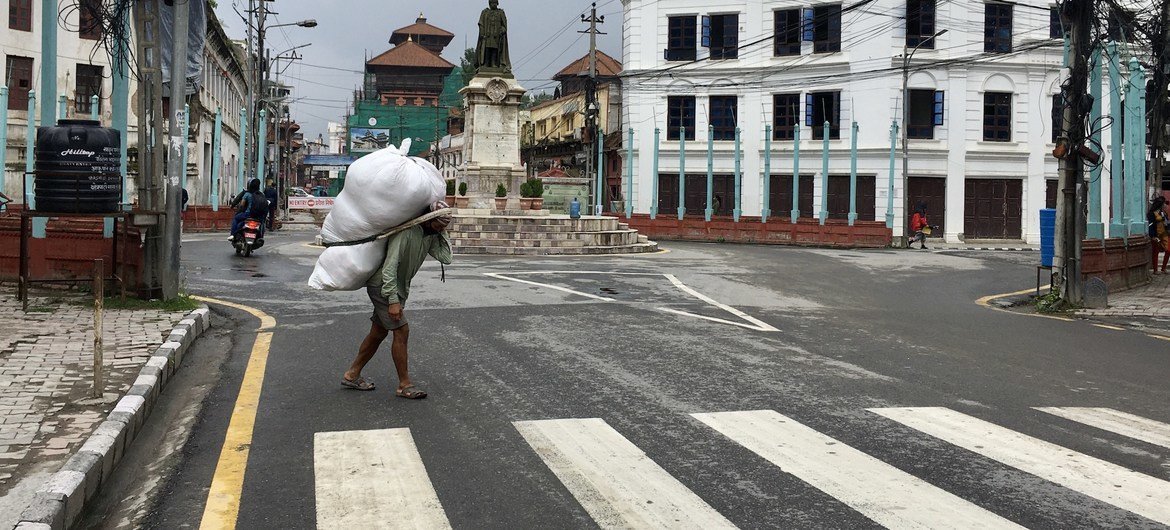
A daily-wage earner carrying goods on his back at a market in Kathmandu, Nepal.
UN News\Vibhu Mishra
 
A daily-wage earner carrying goods on his back at a market in Kathmandu, Nepal.


15 April 2024

Economic Development

The Secretary-General and President of the General Assembly on Monday led the clarion call for urgent reform of the global financial system, notably how to approach debt relief on behalf of the billions of citizens living in the developing world.

Addressing a high-level meeting of the General Assembly on debt sustainability, António Guterres outlined the crippling impact of debt on developing economies.

“No example of the international financial architecture’s failure is more glaring than its handling of debt. The last four years have been nothing short of a debt disaster,” he said.

He noted that the burden of servicing external debt leaves many countries with little to invest in their own people.

Startling figures

According to UN figures, in 2023, global public debt reached $313 trillion, with the situation particularly alarming in developing economies.

Over a fifth of the tax revenue in 25 developing countries went towards servicing external debt, while extremely high borrowing costs left countries with about 3.3 billion people in total – around 40 per cent of the global population – spending more on interest payments than on health or education initiatives.

“Instead of a safety net, developing countries are faced with an outdated, dysfunctional, unjust system that isn’t meeting their needs,” he added.

Convened by the President of the General Assembly, the debate on debt sustainability and socioeconomic equality for all, marked the first high-level discussion as part of the world body’s first ever Sustainability Week.

Other highlights include dedicated discussions on sustainable transport, tourism and energy.

An informal settlement in Bangladesh's capital, Dhaka.
© UN-Habitat/Kirsten Milhahn
 
An informal settlement in Bangladesh's capital, Dhaka.

Worsening inequalities

Also addressing the General Assembly, Dennis Francis, President of the body’s 78th session, emphasized the worsening inequalities between richer and poorer nations.

“By 2030, an estimated 600 million people will still remain impoverished – indicative of the glacial pace of ‘progress’ that falls far short of our SDG goals,” he said, noting that 10 per cent of the world’s population owns 76 per cent of the global wealth.

And while, the world is on track to see its first trillionaire by 2030, it will take another 229 years to eradicate poverty.

If nothing is done to correct this situation, they will literally be left behind, denied from enjoying the fruits of development
– Assembly President Francis

“It is clear that the gap between the wealthy North and the Developing South is widening, increasingly limiting the life chances of people living there,” he said.

He outlined the impact of such disparities on youth, women, persons with disabilities and those living in rural areas.

“If nothing is done to correct this situation, they will literally be left behind, denied from enjoying the fruits of development and ignored. Clearly, this is neither acceptable nor sustainable,” Mr. Francis warned.

Need for lifeline

Secretary-General Guterres underscored the need for a lifeline so developing countries can pull themselves out of the “quicksand of debt”.

He said the SDG Stimulus programme which he proposed last February, must now be brought “to life”.

The Stimulus aims to secure $500 billion annually in extra financing from the world’s most developed nations, to meet the 2030 Agenda for Sustainable Development.

“We must dramatically scale-up affordable, long-term financing, primarily through Multilateral Development Banks (MDBs),” he said, also urging global creditors to explore “debt pauses” for vulnerable countries and for international financial institutions to help them restructure their debt.

Reforms needed

Alongside, the global financial architecture requires “wholesale reform”, he said, notably their approach to debt.

This included enhancing debt transparency, scaling-up lending in local currencies and developing new debt instruments.

“Above all, we must increase developing countries’ representation across the system and every decision that is made. They need a seat at the table. They deserve a seat at the table,” Mr. Guterres said..


https://news.un.org/en/story/2024/04/1148591


https://creativecommons.org/licenses/by/3.0/legalcode

пятница, 12 апреля 2024 г.

Myanmar: Middle class ‘disappearing’ amid uptick in brutal fighting


The ongoing political crisis and conflict in Myanmar, coupled with disasters and COVID-19 impacts, has left the economy on the verge of collapse.


11 April 2024


Economic Development

The UN Development Programme (UNDP) has warned that poverty is surging and the middle class in Myanmar is “disappearing” amidst worsening insecurity and conflict. 

In a new report published on Thursday UNDP said that the middle class has shrunk by half, compared with before the 2021 military coup, and that three quarters of the country’s population is either living in poverty or “perilously close” to the national poverty line.

“The new data show that less than 25 per cent of the population in Myanmar manage to secure steady incomes to live above the poverty line. Without immediate interventions to provide cash transfers, food security and access to basic services, vulnerability will keep growing, and impacts will be felt across generations” said Achim Steiner, UNDP Administrator.

Tweet URL
UNDP

According to UNDP estimates, $4 billion per year is required to address ballooning poverty, via cash transfers and other means, to help families recover from the “L-shaped” recession amid plummeting economic activity and few signs of recovery.

“We call on all stakeholders – inside and outside Myanmar – to take action and preserve vulnerable households from slipping into irreversible poverty and despair” Mr. Steiner urged.

Zero spending on education

Polling over 12,000 households across Myanmar, the report also found that families and households have been forced to resort to various, often unsustainable, coping mechanisms.

Speaking to journalists at UN Headquarters in New York, Kanni Wignaraja, UNDP Regional Director for Asia and the Pacific, explained the dire situation.

“During the COVID-19 [pandemic], the spending on education was meagre - two to three per cent of household’s income - it is now close to zero,” she said, adding that families are pulling children out of school and unable to spend on healthcare and other basic services.

“We are going to see a whole generation that just has a learning and health deficit that is very scary,” she warned.

Regional picture

The report has also revealed an alarming picture at the provincial level.

The states with the lowest rates of per capita income are Kayah, Chin, and Sagaing – regions experiencing high levels of conflict between the junta forces and groups opposing.

In addition to heightened poverty levels, conflict-ridden were also marked by destruction of homes, restricted access to farmlands and an increase in internally displaced people (IDPs) – all leading to yet more hardship.

IDPs arriving in urban centres such as Yangon and Mandalay, both for safety and basic services, no longer have any safety net, Ms. Wignaraja said.

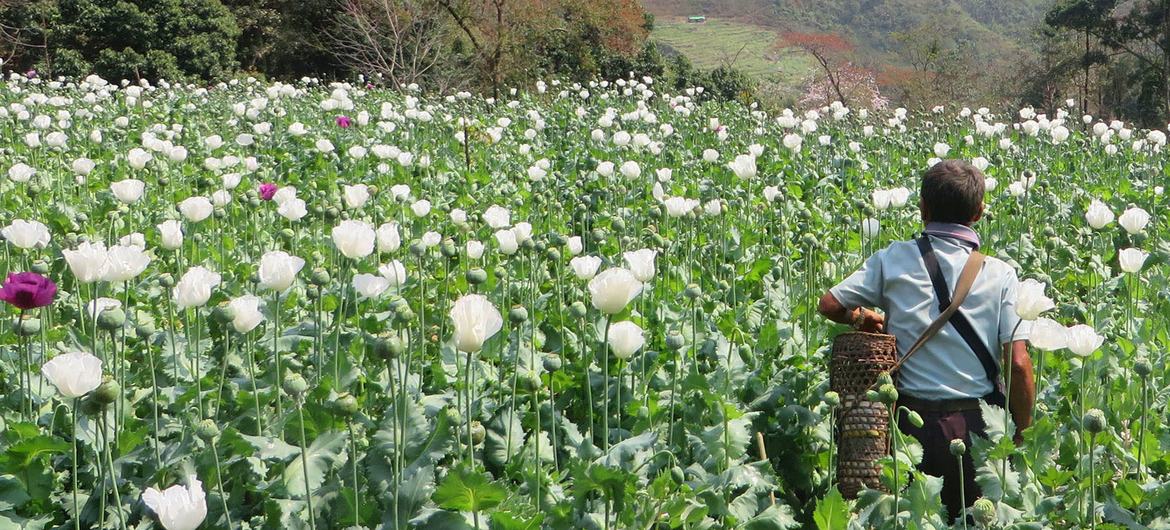
A poppy field in East Shan state, Myanmar.
© UNODC
 
A poppy field in East Shan state, Myanmar.

Proliferation of organized crime

The UNDP Regional Director also emphasized the challenges posed by skyrocketing criminality in the southeast Asian nation.

She cited recent findings by the UN Office on Drugs and Crimes (UNODC) that Myanmar is the largest producer of opium and the massive proliferation of organized crime, especially the so called “scam centres”.

“If these illegal economic activities – where there is a lot of money involved – are not curbed, and we cannot restart intensive international and regional mediation efforts to stop the ongoing war, the story of Myanmar is going to be of the disappeared middle [class],” Ms. Wignaraja said.

https://news.un.org/en/story/2024/04/1148456

https://creativecommons.org/licenses/by/3.0/legalcode

среда, 13 марта 2024 г.

‘Record high’ in UN development index masks stark disparities


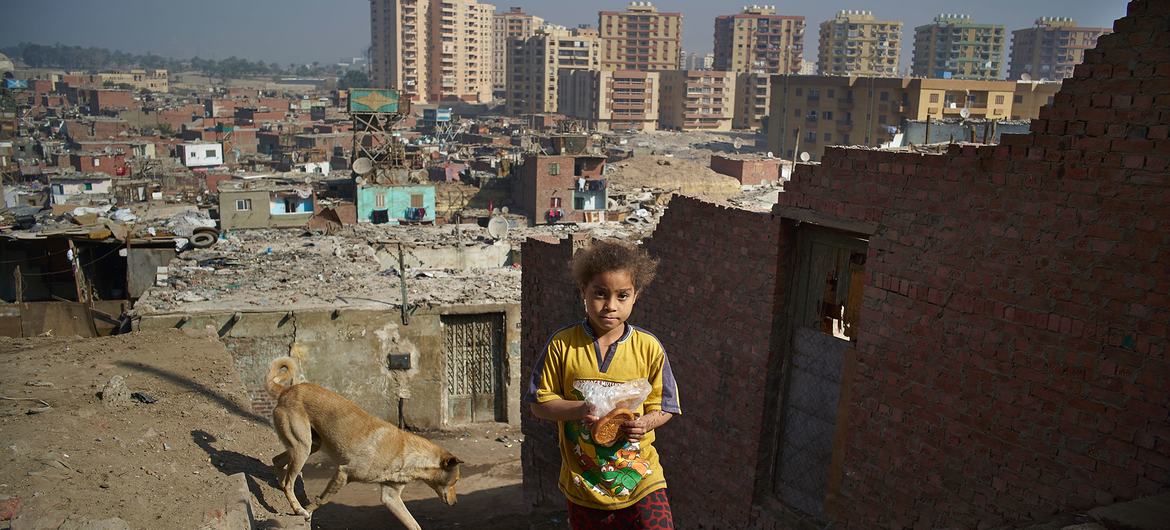
A six-year-old girl living in an urban slum in Cairo, Egypt.
© UNICEF/Shehzad Noorani
 
A six-year-old girl living in an urban slum in Cairo, Egypt.


13 March 2024
Economic Development

Despite record high global human development scores in 2023, disparities between the haves and the have-nots are widening, a new UN report revealed on Wednesday.

The 2023 Human Development Index (HDI) stands at a new high following steep decline during 2020 and 2021 due to the COVID-19 pandemic, according to the UN Development Programme (UNDP).

Rich countries experienced unprecedented development, the Human Development Report details, yet half of the world’s poorest nations continue to languish below their pre-COVID crisis levels.

The HDI is a composite of statistics measuring such factors as per capita income, educational attainment and life expectancy.

Tweet URL
UNDP

‘Falling short’

“The widening human development gap revealed by the report shows that the two-decade trend of steadily reducing inequalities between wealthy and poor nations is now in reverse,” said UNDP Administrator Achim Steiner.

Despite our deeply interconnected global societies, we are falling short. We must leverage our interdependence as well as our capacities to address our shared and existential challenges and ensure people’s aspirations are met,” he added, noting a significant human toll behind the statistics.

“The failure of collective action to advance action on climate change, digitalization or poverty and inequality not only hinders human development but also worsens polarization and further erodes trust in people and institutions worldwide.”

‘Democracy paradox’

The UNDP Human Development Report (HDR) also identified an emerging “democracy paradox”, with most of those surveyed expressed support for democracy but also endorsing leaders who may undermine democratic principles.

This paradox, coupled with a sense of powerlessness and a lack of control over government decisions, has fuelled political polarization and inward-looking policy approaches.

This is particularly alarming in light of 2023’s record-breaking temperatures which highlight the immediate need for united action to tackle the climate crisis, combined with the new and fast-evolving technological frontier of Artificial Intelligence (AI) which has few regulatory guard rails, UNDP said.

Threat to the common wellbeing

UNDP head Achim Stiner further highlighted that in a world marked by increasing polarization and division, “neglecting to invest in each other poses a serious threat to our wellbeing and security”.

“Protectionist approaches cannot address the complex, interconnected challenges we face, including pandemic prevention, climate change, and digital regulation,” he said.

He added that interconnected problems require interconnected solutions.

“By adopting an opportunity-driven agenda that emphasizes the benefits of the energy transition and of Artificial Intelligence for human development, we have a chance to break through the current deadlock and reignite a commitment to a shared future.”

Country ranking

The 2023-24 Human Development Report identified SwitzerlandNorway and Iceland leading the national human development indices, while Central African Republic (CAR), South Sudan and Somalia lagged the furthest behind.

The Democratic People’s Republic of Korea (more commonly known as North Korea) and Monaco were not ranked in the list of countries and economies.


https://news.un.org/en/story/2024/03/1147532

https://creativecommons.org/licenses/by/3.0/legalcode

среда, 13 сентября 2023 г.

Syria: Urgent response needed to uptick in fighting, economic crisis


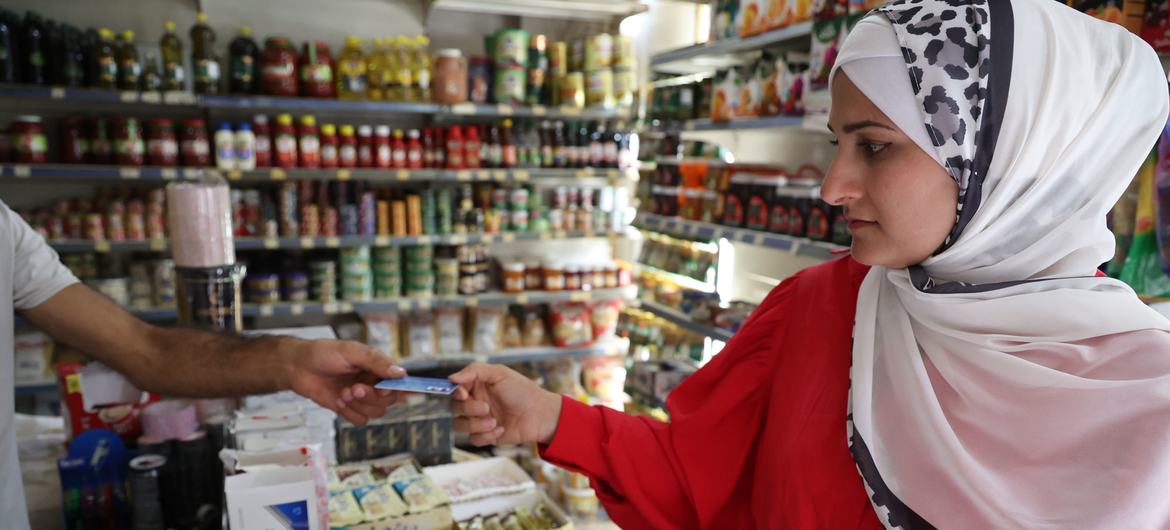
Electronic cash grants enable Salwa to buy the foods her family needs at a designated shop.
© WFP/Hussam Al Saleh
 
Electronic cash grants enable Salwa to buy the foods her family needs at a designated shop.
12 September 2023
Economic Development

The “dire needs” of Syrians have been systematically ignored during more than 12 years of brutal conflict in the country, the UN Commission of Inquiry on Syria warned on Tuesday.

In its latest report, the UN Human Rights Council (OHCHR) body found that attacks on civilians, escalating fighting, economic decline and human rights violations persist, despite the country’s re-admission to the League of Arab States.

The continued war in Syria is a “monument to the failure of diplomacy” said Inquiry Chair, Paulo Pinheiro.

Speaking in Geneva at the launch of the report, Mr Pinheiro called on all parties to the conflict to cease the attacks on civilians following the recent wave of demonstrations.

He urged the government in Damascus to respond positively to Syrians’ legitimate aspirations and rights before the country “plunges deeper into escalating violence and economic decline”.

Aftermath of earthquake

The Commission Chairperson reiterated the need for “unilateral coercive measures” imposed by the European Union, the United States, Canada, Australia, and Switzerland from 2011 onwards, to be reviewed, and called for the easing of sanctions since the earthquake on 6 February 2023 to be maintained.

He pointed out that at the time of the earthquake, the Commission received “multiple reports of aid diversion, extortion and corruption,” and documented “obstruction and interference in aid delivery” in the immediate aftermath of the earthquake.

The “Government and other parties needless hindered life-saving aid” and “no party answered our call for a cease-fire. They continue shelling and they continue the war”, Mr Pinheiro said.

Citing the report, Mr Pinheiro explained that a single airstrike on 25 June killed or injured over 37 civilians at an outdoor vegetable market in Idlib that should have been observable to the offensive forces.

He added that of the 15 attacks documented in the earthquake-affected area, several may constitute war crimes.

Tweet URL

Airstrikes

According to the report, humanitarian operations were also affected by suspected Israeli airstrikes that rendered key transport infrastructure inoperable.

“These instances, as well as the failure of the UN Security Council to reach a consensus in July to extend cross-border aid deliveries via the Bab Al-Hawa border crossing, stand as a stark reminder of how hostilities, politicisation and fragmentation in Syria harm civilians and deprive them of much-needed assistance,” Commissioner Lynn Welchman said.

Calling for a thorough review of the failures of the earthquake response,” she urged warring parties and the international community to ensure that cross-border humanitarian assistance can continue at the necessary scale and in a principled, needs-based and sustainable manner”.

Displaced

Meanwhile, the UN aid coordination office (OCHA) found that continued hostilities, including shelling, have displaced some 5,300 families, which is more than 26,500 people, between 1 and 9 September.

Clashes in northeastern Aleppo forced nearly 4,600 families from their homes and there are reports of overcrowding in camps and villages, with some families resorting to sleeping in the open. As of 9 September, at least five people were killed, with 22 others, including 11 children, injured.

While the situation in Deir-ez-Zor Governorate, in Syria’s northeast Syria, is calm, hostilities since 27 August have reportedly resulted in 69 deaths and 96 injuries.

More than 6,700 families have been displaced according to Syrian Arab Red Crescent.

 Safe return ‘implausible’

The Commission also documents how recent weeks have seen increased conflict in greater Idlib, displacing thousands, and killing dozens in Deir-Ezzor, as well as an outbreak of large-scale protests calling for economic, social, civil and political rights in Government controlled-areas, notably Suweida.

It warns that beyond the frontlines, the safe return of Syrian refugees is implausible with cases of ill-treatment by Syrian security forces, including some blackmailed for their release.

Several refugees, including children, have since gone missing, it states. Arbitrarily detaining, torturing, forcibly disappearing and executing civilians in areas under their control is a war crime and crime against humanity the Commission points out, while calling for the release of all persons arbitrarily detained in Syria.

In a positive development, Mr Pinheiro noted that families seeking clarity on the fate of detained, disappeared and missing loved ones had received “long-awaited welcome news” following the establishment of the Independent Institution on Missing Persons in Syria by the General Assembly in June. 

No peace

Commenting on the impact on ordinary Syrians, Commissioner of the Inquiry, Hanny Megally described the experience of truffle gatherers in central Syria: “We're seeing an increase, [in] people fighting over economic needs and survival and that results in violence, abductions.” People fighting over the truffle market is “an example of the country descending into that state of insecurity,” he said. 


https://news.un.org/en/story/2023/09/1140647
https://creativecommons.org/licenses/by/3.0/legalcode

пятница, 8 сентября 2023 г.

Come together ‘for the common good’, UN chief urges G20 leaders


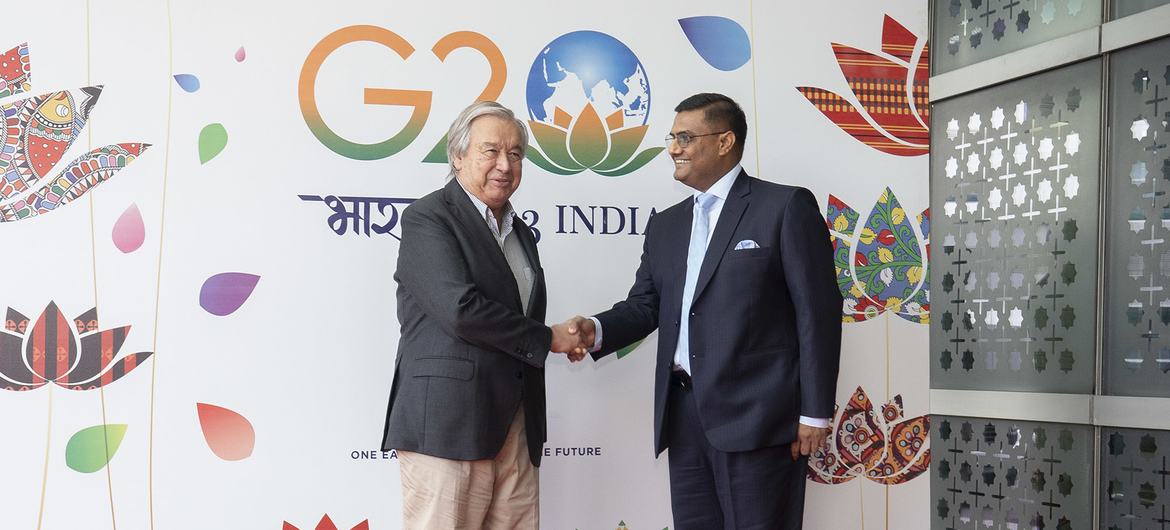
UN Secretary-General António Guterres is received by the Joint Secretary, Ministry of External Affairs, Prakash Gupta on his arrival in New Delhi for the G20 summit.
UN India/Ruhani Kaur
 
UN Secretary-General António Guterres is received by the Joint Secretary, Ministry of External Affairs, Prakash Gupta on his arrival in New Delhi for the G20 summit.
8 September 2023
Economic Development

UN Secretary-General António Guterres has arrived in New Delhi for the annual G20 summit with a “simple but urgent appeal” for world leaders in attendance: come together to solve humanity’s biggest challenges.

Speaking on the eve of the G20 summit of advanced economies, which will take place in the Indian capital on 9-10 September, Mr. Guterres said global leadership was especially needed in two priority areas – climate action and sustainable development.

‘No time to lose’

“We have no time to lose. Challenges stretch as far as the eye can see,” the Secretary-General told a press conference. 

He warned that the world was in a difficult transitional moment, faced with rising inequality and poverty and hunger levels and yet a distinct lack of global solidarity.

“We cannot go on like this. We must come together and act together for the common good.”

Lead on climate action

Tweet URL

Mr. Guterres noted that G20 member countries were the world’s major producers of greenhouse gases, responsible for 80 per cent of total global emissions, and therefore needed to demonstrate greater leadership on climate action.

“Leadership means keeping the 1.5-degree goal alive; rebuilding trust based on climate justice; and advancing a just and equitable transition to a green economy.”

He added that leadership also meant wealthier countries finally delivering on their long-standing funding commitments to help developing countries meet their targets for reducing emissions, such as through the Green Climate Fund.

The Secretary-General said leaders must also take concrete action to ensure the world achieves the Sustainable Development Goals (SDGs) on schedule by 2030.

Specific actions include:

  • Funding an SDG stimulus of at least $500 billion
  • Setting up an effective mechanism to reduce the debt burden on poorer countries
  • Changing the business model of multilateral development banks to leverage private finance on a much larger scale
  • Shifting subsidies away from fossil fuels to more productive uses

‘Catalyze SDG progress’

Mr. Guterres said that “together, these actions would catalyze SDG progress and help developing economies invest in key transitions across energy, food systems, digital, education, health, decent jobs and social protection.”

He added that significant progress towards the Goals was still within reach so long as there was goodwill from all countries, regions and groups. 

The UN chief will be taking part in the annual G20 summit this weekend, presided over by India with theme of One Earth, One Family, One Future.

He echoed that message during Friday’s press conference underling that “we must act together as one family to save our one Earth and safeguard our future.”


 https://news.un.org/en/story/2023/09/1140497

https://creativecommons.org/licenses/by/3.0/legalcode

среда, 5 июля 2023 г.

At Caribbean Summit, UN chief calls for climate action, debt relief, and urgent aid for Haiti


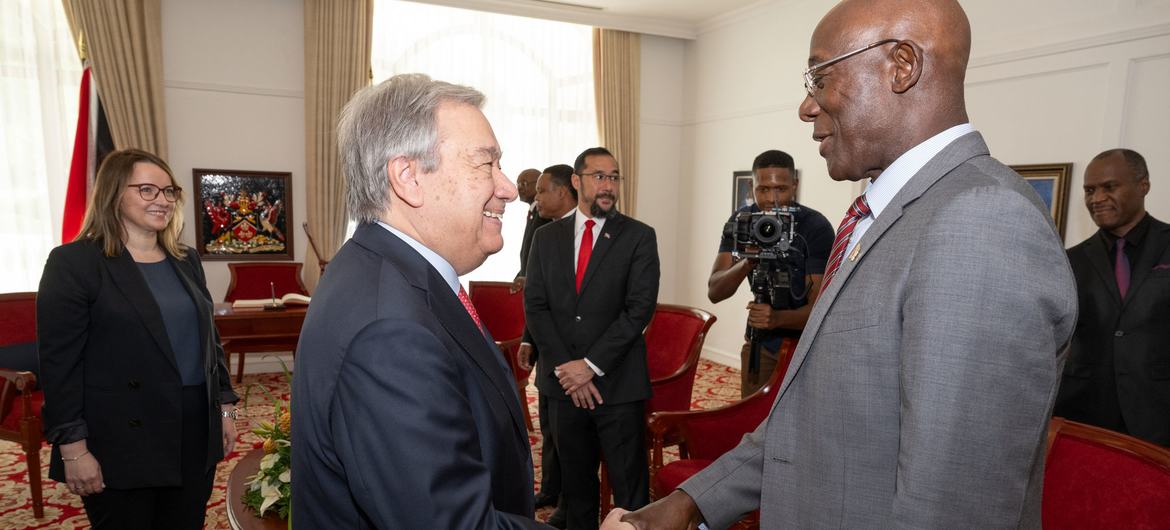
Secretary-General António Guterres (left) is greeted by Prime Minister Keith Rowley of Trinidad and Tobago where he came to address the 45th meeting of the Conference of the Heads of Government of the Caribbean Community (CARICOM).
UN Photo/Eskinder Debebe
 
Secretary-General António Guterres (left) is greeted by Prime Minister Keith Rowley of Trinidad and Tobago where he came to address the 45th meeting of the Conference of the Heads of Government of the Caribbean Community (CARICOM).
3 July 2023
Economic Development

The UN chief advocated for climate crisis solutions, debt relief mechanisms, and urgent assistance to Haiti, addressing world leaders on Monday at the Caribbean Community (CARICOM) Summit in Port-of-Spain, Trinidad and Tobago.

Haiti

The security situation in Haiti “is appalling,” said UN Secretary-General António Guterres, recalling his recent visit to the fragile nation. He called for swift action at a time when the humanitarian needs are “soaring”. And although “there is not yet the political solution in sight”, the UN chief expressed hope and optimism.

“It is impossible to look at the crisis without seeing the long shadow of centuries of colonial exploitation, extortion, dictatorship, and other screaming injustices,” he said. “We must help ease the suffering of the Haitian people.” 

Commending the critical efforts of CARICOM leaders in addressing the situation in Haiti, Mr. Guterres called for increased support from the international community.

He stressed that lasting security requires strengthened democratic institutions, emphasizing the need for drastic improvement in the security situation.

In this vein, he reiterated his call to the Security Council to authorize a "robust international security force" to help Haiti's National Police in combating and dismantling gangs wreaking havoc across the country.

Spirit of CARICOM

Challenges seen in Haiti require greater engagement and solidarity, he said. The Caribbean Community’s cooperation in economic and social development, fighting illegal drugs and arms trafficking, combatting non-communicable diseases and in advancing gender parity exemplify to him the “founding spirit of CARICOM”.

Climate action championship focusing attention on the plight of small island developing States is another manifestation of that spirit, he said. 

Yet, the challenges confronting the Caribbean are “enormous”, he added. Among them are the post-COVID-19 era that saw the collapse of the region’s tourism industry and export revenues.

Growing debt amid dried-up liquidity and escalating climate emergencies require action, he said.

Outdated financial system

“Today’s crisis has revealed an international financial system that is outdated, dysfunctional, and unfair,” the UN chief said. To replace it, he referred to a plan to redesign the global financial architecture, including the Bretton Woods system, that he put forward in preparation for the Summit of the Future

He urged world leaders to invest in sustainable development and climate action, improve debt relief mechanisms, and create new financial tools such as debt-for-investment swaps in climate adaptation.

He also called for a change in the business model of multilateral development banks, a shift away from fossil fuel subsidies, and a fairer approach to concessional financing for middle-income countries.

1.5°C limit still possible

Turning to the climate crisis, he said limiting the global temperature rise to 1.5°C is still attainable, but requires a 45 per cent reduction in carbon emissions by 2030. He said his proposal for a climate solidarity pact urges major emitters to intensify emissions cuts and wealthy nations to support emerging economies in their efforts. The Secretary-General reminded about an Acceleration Agenda that is aimed at this.

“I urge Governments to hit fast forward on their net-zero deadlines so that developed countries commit to reaching net-zero as close as possible to 2040 and emerging economies as close as possible to 2050,” he said.

Calling on governments to expedite their net-zero commitments, he also invited developed countries to “finally make good on their financial commitments to developing nations”, including by doubling adaptation finance and replenishing the Green Climate Fund.”


 https://news.un.org/en/story/2023/07/1138327
https://creativecommons.org/licenses/by/3.0/legalcode

четверг, 22 июня 2023 г.

Financial system must evolve in ‘giant leap towards global justice’: Guterres


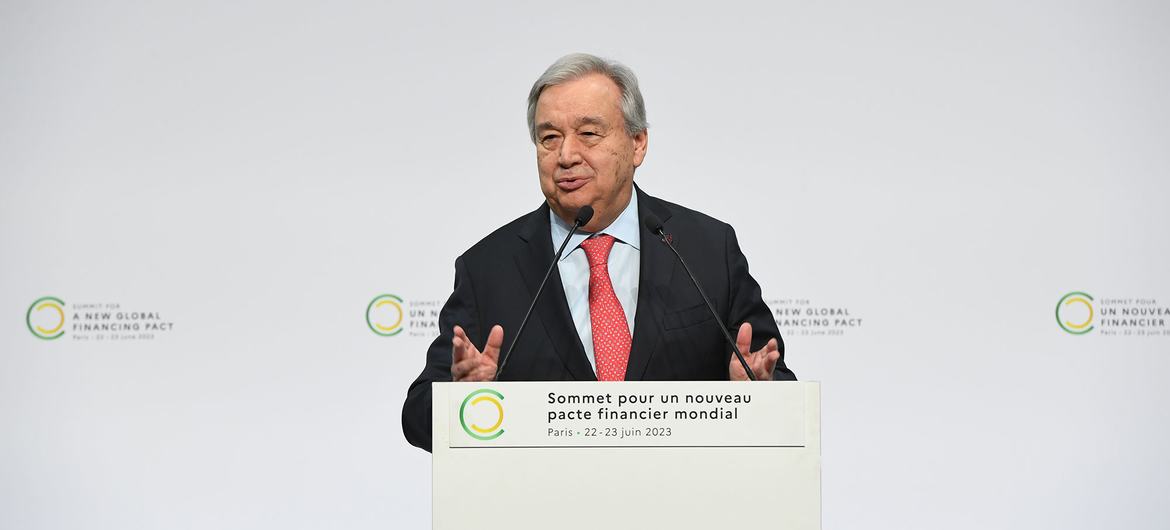
UN Secretary-General António Guterres addresses the Summit for a New Global Financial Pact in Paris, France.
United Nations/Cyril Bailleul
 
UN Secretary-General António Guterres addresses the Summit for a New Global Financial Pact in Paris, France.

22 June 2023
Economic Development

Developing countries are buckling under high debt and exorbitant borrowing costs, that prevent them from reviving their economies, UN chief António Guterres said on Thursday.

Speaking at the Paris Finance Summit, Mr. Guterres said many African States were spending more on debt repayments than on desperately needed healthcare, and that over 50 countries were either in default or “dangerously” close to it.

The UN chief called for a debt relief mechanism that supports payment suspensions, longer lending terms and lower rates to make borrowing more affordable for poorer nations, as well as increased access to liquidity for developing countries via the International Monetary Fund’s Special Drawing Rights.

Mr. Guterres also repeated his urgent call to end fossil fuel subsidies and increase climate adaptation funding for vulnerable countries.

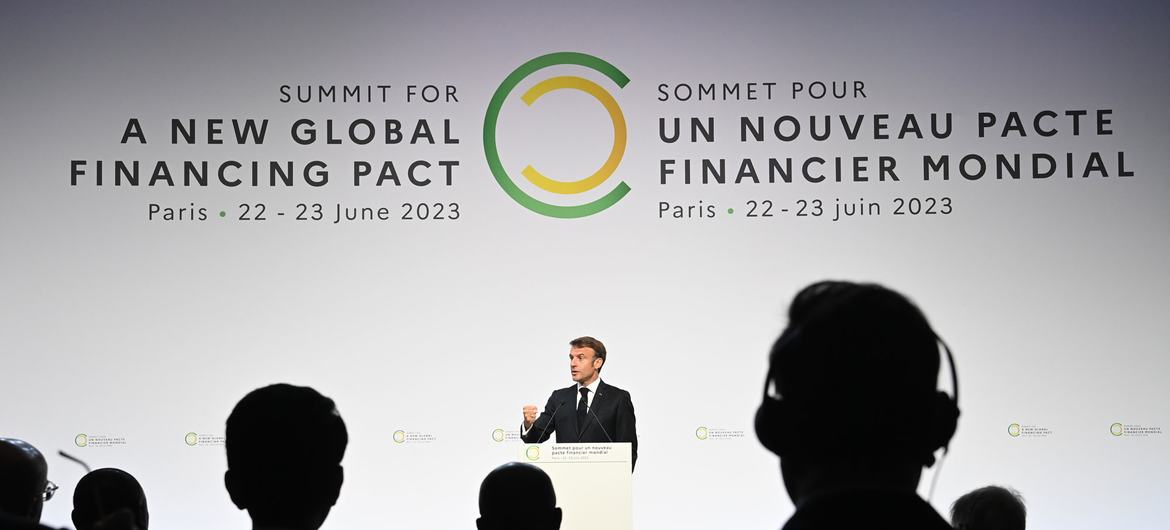
French President Emmanuel Macron addresses the Summit for a New Global Financial Pact in Paris, France.
United Nations/Cyril Bailleul
 
French President Emmanuel Macron addresses the Summit for a New Global Financial Pact in Paris, France.

Steps to beat poverty, hunger

“Taken together, these steps would help to beat poverty and hunger, uplift developing and emerging economies, and support investments in health, education and climate action,” he said, stressing that the measures would enable a “giant leap” towards global justice.

Doing nothing is simply not an option and at the halfway point to reaching the 17 Sustainable Development Goals (SDGs) they are “drifting further away by the day”, he warned delegates to the Summit for a New Global Financing Pact.

He said it was clear the international financial architecture built in the aftermath of World War Two “has failed in its mission to provide a global safety net for developing countries.

“It essentially reflects, even with some changes, the political and economic power dynamics of that time”, when three quarters of today’s nations weren’t around the table at Bretton Woods. 

Tweet URL

‘Outdated, dysfunctional, unjust’

“Nearly 80 years later, the global financial architecture is outdated, dysfunctional, and unjust. It is no longer capable of meeting the needs of the 21st century world: a multipolar world characterized by deeply integrated economies and financial markets. But also marked by geopolitical tensions and growing systemic risks.”

He warned the current global financial system exacerbates inequalities, denying the poorest countries the credit and debt support they need and deserve. 

European citizens received nearly 13 times more than African citizens under current rules for Special Drawing Rights to weather recent crises, a situation that is “profoundly immoral” said Mr. Guterres. 

“A financial architecture which does not represent today’s world is at risk of leading to its own fragmentation in a world where geopolitics is in itself a factor for fragmentation.

No solution without reform

“There will be no serious solution to this crisis without serious reforms.”

He said change would not happen fast and was a question of power and political will.

“But as we work for the deep reforms that are needed, we can take urgent action today to meet the urgent needs of developing and emerging economies.”

He said richer nations could establish “a really effective and time effective debt relief mechanism that supports payment suspensions, longer lending terms and lower rates, including for middle income countries with particular vulnerabilities, namely in relation to climate.”

Development and climate finance can be better capitalized, and development banks reformed, allowing better coordination. He said credit rating agencies had become “deeply biased” and contributed to many of the recent financial crises, rather than helping avoid them.

He said taking immediate action towards wholesale reform could curb hunger, “uplift developing and emerging economies, and support investments in health, education and climate action.”

We can take steps right now – and take a giant leap towards global justice.” 

The UN chief said he was aware of the scale of the challenges the international community now faces. 

‘Urgent action’

“Power dynamics and constraints on global cooperation in today’s world make problems more difficult to solve. But solutions are not impossible.  And we can start now.”

He said the following two days of discussion could yield results for millions of people in need. 

“I urge you to make this meeting not just a cri du cœur for change, but a cri de guerre – a rallying cry for urgent action”, the Secretary-General told the Summit.

“We are at a moment of truth and reckoning. Together, we can make it a moment of hope.”

Top Paris School welcomes Guterres

The UN chief shared his perspective on the state of world affairs overall later in the day in the French capital, receiving a warm welcome at the celebrated Paris School of International Affairs, Sciences Po. 

In an address and taking questions from students, he presented ideas for transforming multilateralism to make it fit for today's global challenges. You can

watch it all here on UN Web TV:
https://creativecommons.org/licenses/by/3.0/legalcode

воскресенье, 21 мая 2023 г.

G7 nations, ‘central to climate action’ says Guterres, calling for global reset


Secretary-General António Guterres speaks to the press, wrapping up his trip to Japan for the G7 Hiroshima Summit 2023.
Economic Development

The world is counting on the G7 bloc of industrialized democracies to demonstrate global leadership and solidarity, said the UN chief on Sunday, speaking to journalists in Hiroshima, Japan, which he described as a “global symbol of the tragic consequences when nations fail to work together”, and abandon multilateralism.

The G7, which consists of Canada, France, Germany, Italy, Japan, the United Kingdom and the United States, together with the European Union, is meeting in the city where the first atomic bomb was dropped in 1945, a place which Secretary-General António Guterres described, as a “testament to the human spirit”.

Tweet URL

“Whenever I visit, I am inspired by the courage and resilience of the Hibakusha”, he said, referring to the survivors of that dreadful act of war. “The United Nations stands with them. We will never stop pushing for a world free of nuclear weapons.”

Haves and have-nots

Mr. Guterres said his message to the G7 leaders was clear and simple: “while the economic picture is uncertain everywhere, rich countries cannot ignore the fact that more than half the world – the vast majority of countries – are suffering through a deep financial crisis.”

He reiterated his view first expressed in an official visit to Jamaica last week, that the problems facing developing countries had three dimensions; moral, power-related, and practical.

Elaborating on the “systemic and unjust bias” in the global economic and financial system; the outdatedness of the global financial architecture; and the fact that even within the current rules, developing economies had been let down and sold short; the UN chief said the G7 had a duty now to act.

Redistribution of power

He said the financial system created by the Breton Woods realignment post World War Two, had simply “failed to fulfil its core function as a global safety net”, in the face of the economic shocks from COVID, and the Russian invasion of Ukraine.

He said the time had come to fix the Breton Woods system, and reform the UN Security Council.

“This is essentially a question of redistributing power in line with the realities of today’s world.”

He said the G7 can no longer be a bystander: “In our multipolar world, as geopolitical divisions grow, no country or group of countries, can stand by as billions of people struggle with the basics of food, water, education, healthcare and jobs.”

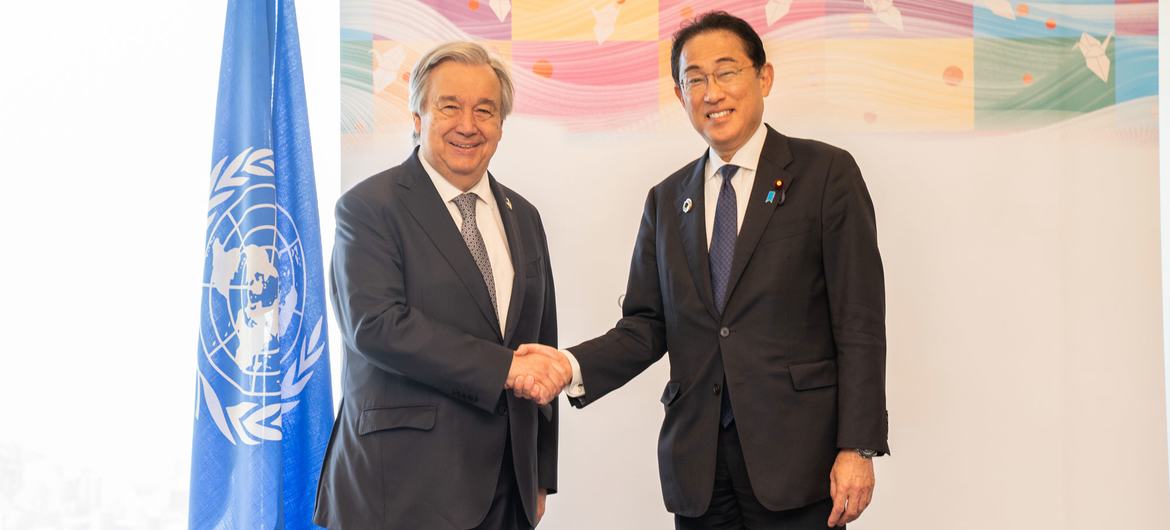
United Nations Secretary-General António Guterres meets with Fumio Kishida, the Prime Minister of Japan, at the G7 Hiroshima Summit 2023.
UN Photo/Ichiro Mae
 
United Nations Secretary-General António Guterres meets with Fumio Kishida, the Prime Minister of Japan, at the G7 Hiroshima Summit 2023.

'Clearly off track’

Highlighting the perils of overlooking the pace of climate change, he outlined the specific areas where the world’s richest were central to the success of climate action.

The current projections show humankind heading for a temperature rise of 2.8°C by the end of this century, he told journalists, and the next five years are likely to be the hottest ever, according to latest figures from the UN weather agency, WMO.

He said the G7, with it’s huge economic and financial clout, was “central to climate action”, which is working, “but not enough and we are clearly off track".

“Our Acceleration Agenda aims to make up for lost time. It calls for all G7 countries to reach net zero as close as possible to 2040, and for emerging economies to do so as close as possible to 2050.”

A Climate Solidarity Pact calls for the G7 to mobilize resources to support less well-off economies in accelerating decarbonization, to stay within the 1.5° limit on heating, compared with pre-industrial levels.

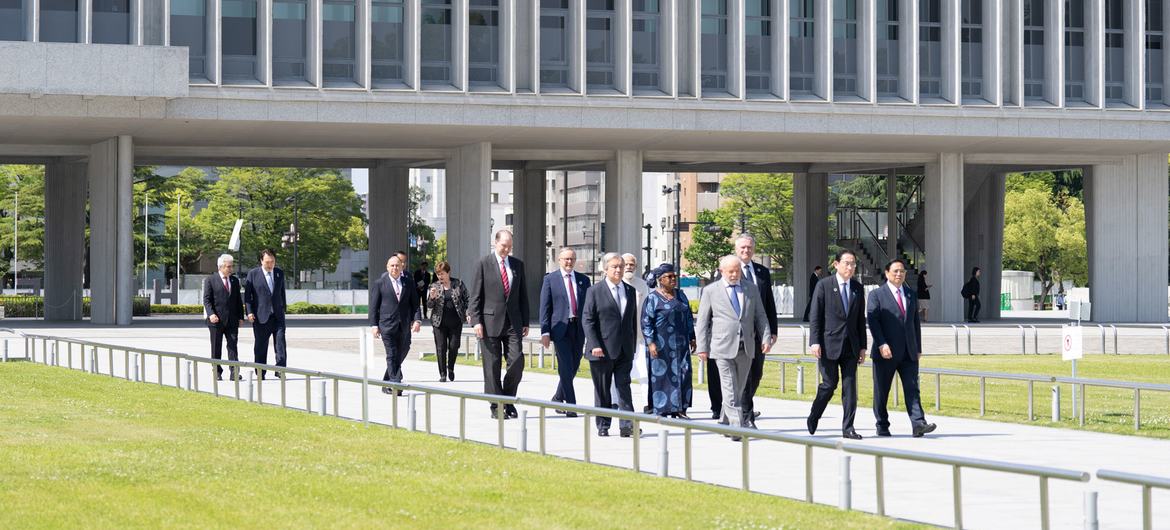
Secretary-General António Guterres joins world leaders paying respects at the Hiroshima Peace Memorial.
UN Photo/Ichiro Mae
 
Secretary-General António Guterres joins world leaders paying respects at the Hiroshima Peace Memorial.

Phase out coal

“This requires faster timelines to phase out fossil fuels and ramp up renewables. It means putting a price on carbon and ending fossil fuel subsidies. I call on the G7 to phase out coal completely by 2030”, the UN chief said.

But he also made a call for climate justice, on behalf of the countries who have done the least to cause the crisis, but are suffering the most.

“We must ramp up adaptation and early warning systems to help communities on the front lines…It’s high time for developed countries to provide the promised $100 billion per year”, he added.

And he also reiterated that the Loss and Damage Fund agreed in Sharm el-Sheikh, during COP27 last year, “must be operationalized.”


 https://news.un.org/en/story/2023/05/1136872
https://creativecommons.org/licenses/by/3.0/legalcode