Показаны сообщения с ярлыком OHCHR. Показать все сообщения

вторник, 29 августа 2023 г.

Hundreds of thousands trafficked into online criminality across SE Asia

Organised crime groups are forcing hundreds and thousands of people into online criminality.
© Unsplash/John Schnobrich
 
Organised crime groups are forcing hundreds and thousands of people into online criminality.
Human Rights

Criminal gangs in southeast Asia are using torture and abuse to force hundreds of thousands of people into an online scam operation which generates billions of dollars per year, the UN rights office (OHCHR) said on Tuesday.

OHCHR said that at least 120,000 people across Myanmar and another 100,000 in Cambodia may be held in situations where they are forced to execute lucrative online scams - from illegal gambling to crypto fraud.

Other States including Lao PDR, the Philippines and Thailand have also been identified as main countries of destination or transit.

Victims, not criminals

“People who are coerced into working in these scamming operations endure inhumane treatment while being forced to carry out crimes,” said UN rights chief Volker Türk. “They are victims. They are not criminals,” he insisted.

The latest OHCHR report sheds new light on cybercrime scams that have become a major issue in Asia, with many workers trapped and forced to participate in scams targeting people over the internet.

The report notes workers face a range of serious human rights violations, and many have been subjected to abuses such as torture, arbitrary detention, sexual violence and forced labour.

Victims of such operations can be scammed an average of $160,000 each, often through sophisticated scripts sent via unregulated social media applications.

According OHCHR, these victims come from across the ASEAN region as well as mainland China, Hong Kong and Taiwan, South Asia and even further afield from Africa and Latin America.

Tweet URL

Mr. Türk called on States to ensure justice “for the people who have been so horrifically abused.” 

Noticeable trends

Speaking in Geneva, Pia Oberoi, OHCHR’s Senior Advisor on Migration and Human Rights in Asia Pacific, said ongoing regional “economic distress” paired with the COVID-19 pandemic has meant there is a lack of regular and safe pathways towards decent work opportunities.

“This has meant populations are more likely to rely on recruitment forums or intermediaries,” so criminal gangs are increasingly targeting individuals through these platforms, suggesting victims are destined for real jobs.

“There weren’t red flags being raised” - particularly for the more educated, multilingual young men who the report notes are frequent victims.

“It follows a pattern of how labour migration has taken place in the region, and also speaks to the sophistication of these fraudulent recruitments,” added Ms. Oberoi.

Weak regulations

According to OHCHR, the COVID-19 pandemic and associated response measures had a drastic impact on illicit activities across the region - with increased virtual work and the movement of business to less regulated spaces. 

Ms. Oberoi said the situation is “unfolding in locations where regulation is weak,” such as conflict affected border areas in Myanmar, “with little to no rule of law” and in “laxly regulated jurisdictions such as special economic zones in Laos PDR and Cambodia.” 

Describing the trends across the region, she added that the ability of ASEAN nationals to travel across borders without a visa, also means there is a “lack of protection sensitive screening”, as officials don’t always have the training to “identify protection sensitive responses.”

Justice for victims

Although there are several regional legal frameworks to prosecute such crimes, OHCHR said there is a lack of implementation by States and often forced criminality is not seen as a legal violation.   

Even when victims are rescued or escape, rather than being protected and given access to the rehabilitation and remedy they need, they are often subjected to criminal prosecution or immigration penalties, OHCHR said. 

“All affected States need to summon the political will to strengthen human rights and improve governance and the rule of law, including through serious and sustained efforts to tackle corruption,” said Mr. Türk.

“Only such a holistic approach can break the cycle of impunity and ensure protection and justice for the people who have been so horrifically abused.”


https://news.un.org/en/story/2023/08/1140187

https://creativecommons.org/licenses/by/3.0/legalcode

вторник, 15 августа 2023 г.

Keep pressuring Taliban amid ‘unparalleled assault’ on women’s rights


© UNICEF/Shehzad Noorani
 
Women wait at a maternal health hospital, the only one of its type in Afghanistan.
15 August 2023
Women

The head of the UN agency that champions gender equality on Tuesday urged the international community  to continue pressing for change in Afghanistan, accusing the Taliban of imposing “the most comprehensive, systematic, and unparalleled assault on the rights of women and girls” across the country.    

Sima Bahous, Executive Director of UN Women, made the appeal in a statement marking two years since the Taliban regained control of the country.

‘Gender apartheid’

“Through over 50 edicts, orders and restrictions, the Taliban have left no aspect of women’s lives untouched, no freedom spared.  They have created a system founded on the mass oppression of women that is rightly and widely considered gender apartheid,” she said.

Tweet URL

“I urge the Taliban to reconsider and to weigh the cost of these acts for Afghanistan’s present and future.”

Ms. Bahous underscored UN Women’s unwavering and unshakeable commitment to the nation’s women and girls.

Not giving up

She said the agency’s work there is anchored in its fundamental relationships with women, who have described how these “misguided, cruel and ultimately self-defeating” measures have affected their lives.

“Despite these challenges, Afghan women also tell me that they will not give up or give in. They will continue to lead the struggle against their oppression,” she said.

“In the face of the most hostile of circumstances they speak out against the violations, deliver lifesaving services, own and operate businesses, and run women’s organizations. Their bravery must inspire us to greater action, their example to renewed determination.”

Keep applying pressure

Ms. Bahous appealed for greater support to Afghan women – from elevating their voices, priorities and recommendations, to funding the services they need, and supporting their businesses and organizations.

“I urge the international community to continue to apply every pressure and employ every means at their disposal to press for change, including by answering the call of the humanitarian community and fully funding the humanitarian appeal for Afghanistan,” she said.

Uphold human rights

The UN human rights High Commissioner, Volker Turk, used the occasion to remind the de facto authorities of their obligation to uphold the rights of all, including women and girls.

UN human rights staff continue to work in Afghanistan monitoring, documenting and advocating across a range of human rights issues, including fundamental freedoms, the protection of civilians in armed conflict and the rights of detainees. 

“We are engaging with the de facto authorities on these issues and remind them of their obligations under international human rights law,” said Liz Throssell, a spokesperson with the UN human rights office, OHCHR, in Geneva.

The High Commissioner urged the international community not to forget the plight of all Afghans. 


https://news.un.org/en/story/2023/08/1139757
https://creativecommons.org/licenses/by/3.0/legalcode

пятница, 4 августа 2023 г.

Uganda: UN human rights office to close on Saturday

Mukono, a district in the central region of Uganda.
© Unsplash/Antoine Plüss
 
Mukono, a district in the central region of Uganda.
Human Rights

The UN human rights office in Uganda will cease operations on Sunday after the Government decided not to renew the host country agreement, the UN High Commissioner for Human Rights said on Friday, affirming that he “remains committed” to working in the country, in line with his global mandate.

The closure of the office in Kampala follows the recent closure of sub-offices in Gulu and Moroto sub-offices.

In February, the Government decided to terminate the mandate of the High Commissioner’s Office, OHCHR, in Uganda. Non-governmental organizations (NGOs) and human rights defenders denounced the move and had called for its reversal, according to media reports.

“I regret that our office in Uganda had to close after 18 years, during which we were able to work closely with civil society, people from various walks of life in Uganda, as well as engaging with State institutions for the promotion and protection of the human rights of all Ugandans,” Volker Türk said in a news release.

“On our part, the UN human rights office remains committed to working on human rights in Uganda, in line with my global mandate,” he added.

Progress, but challenges remain

High Commissioner Türk recalled the engagement with the Government and partners, including integration of the Sustainable Development Goals (SDGs) in national planning, and the adoption of a national action plan on business and human rights.

“Much progress has been made in the country over the years, but serious human rights challenges remain in the path to full enjoyment of human rights for all,” he said.

In particular, Mr. Türk expressed concern about the period ahead of the 2026 elections, given an increasingly hostile environment in which human rights defenders, civil society actors and journalists are operating.

Earlier this year, other UN human rights mechanisms, such as the Committee against Torture and the Human Rights Committee, also expressed concerns, including over the enactment of the Anti-Homosexuality Act in May 2023 that criminalises consenting sexual relations between adults of the same sex and provides severe sanctions, including the death penalty.

‘Chronic’ underfunding of national rights body

Mr. Türk called on the Government to ensure the Uganda Human Rights Commission can function effectively and independently, as the main body tasked with human rights oversight in the country.

Tweet URL

“[The Commission], our long-standing partner in the protection and promotion of human rights in the country, is chronically under-funded and under-staffed, and reports of political interference in its mandate undermine its legitimacy, independence and impartiality,” he said.

“I urge the Ugandan government to provide the Commission with adequate human, technical and financial resources so that it may more effectively execute its important mandate.”

Established in 2005

OHCHR’s Uganda office was established in July 2005 with offices in Gulu, Kitgum, Kotido, Lira, Pader, Soroti, and the head office in Kampala.

Its initial mandate focused on the human rights situation in the conflict-affected areas of Northern and Northeastern Uganda. In 2009, the mandate was extended to cover the entire country and all human rights issues.  

The OHCHR office in Uganda was among the largest stand-alone UN human rights presences in Africa


https://news.un.org/en/story/2023/08/1139432

https://creativecommons.org/licenses/by/3.0/legalcode

суббота, 15 июля 2023 г.

Kenya: OHCHR ‘very concerned’ over disproportionate use of force against protesters


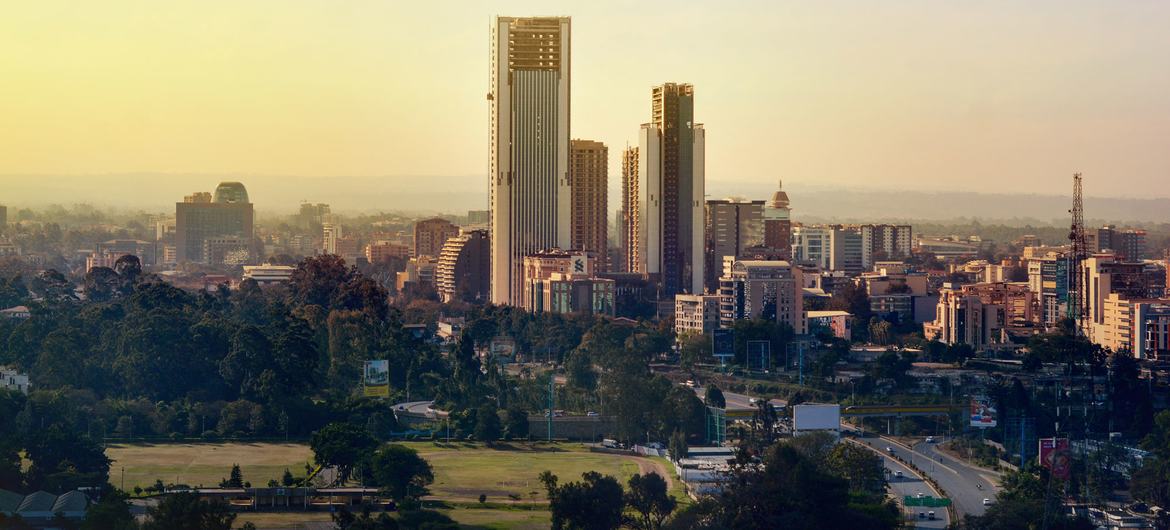
The city skyline of Nairobi, Kenya.
Unsplash/Amani Nation
 
The city skyline of Nairobi, Kenya.
14 July 2023
Human Rights

The UN human rights office (OHCHR) on Friday said it was very concerned over reports of police in Kenya using excessive force to quell protests this week which have left dozens dead and injured.

The demonstrations began over what many Kenyans view as unfair tax hikes and rising inflation in the country, according to news reports.

OHCHR Spokesperson Jeremy Laurance issued a statement condemning the violence, expressing concern over “allegations of unnecessary or disproportionate use of force, including the use of firearms, by police”.

Reports estimate the number of people killed to be as high as 23, with dozens more being injured during the demonstrations.

Kenya’s opposition leader reportedly called for civil disobedience and nationwide protests against the Government, amid a rising cost of living and concerns over growing inequality. 

Opposition groups argue that recent tax hikes the Government says are designed to pay off debt and fund job creation, have placed an increased tax burden on families already struggling to afford basic necessities and are reportedly calling for continued demonstrations against the new policies.

Prompt investigations

“We call for prompt, thorough, independent, and transparent investigations into the deaths and injuries”, said Mr. Laurence. “Those responsible must be held to account. Effective measures to prevent further deaths and injuries must be adopted.”

The right to peaceful demonstration is guaranteed under Kenya’s constitution, although authorities have reportedly declared the recent protests “illegal” and say they pose a threat to national security. 

Right to peaceful assembly

“We call on the authorities to ensure the right to peaceful assembly as guaranteed by the Kenyan Constitution and international human rights law,” said Mr. Laurence.

“We appeal for calm and encourage open dialogue to address social, economic, and political grievances, with the aim of identifying lasting solutions in the interests of all Kenyans,” he added.

 https://news.un.org/en/story/2023/07/1138742
https://creativecommons.org/licenses/by/3.0/legalcode

пятница, 7 июля 2023 г.

OHCHR ‘very concerned’ over militarization of public security in Honduras


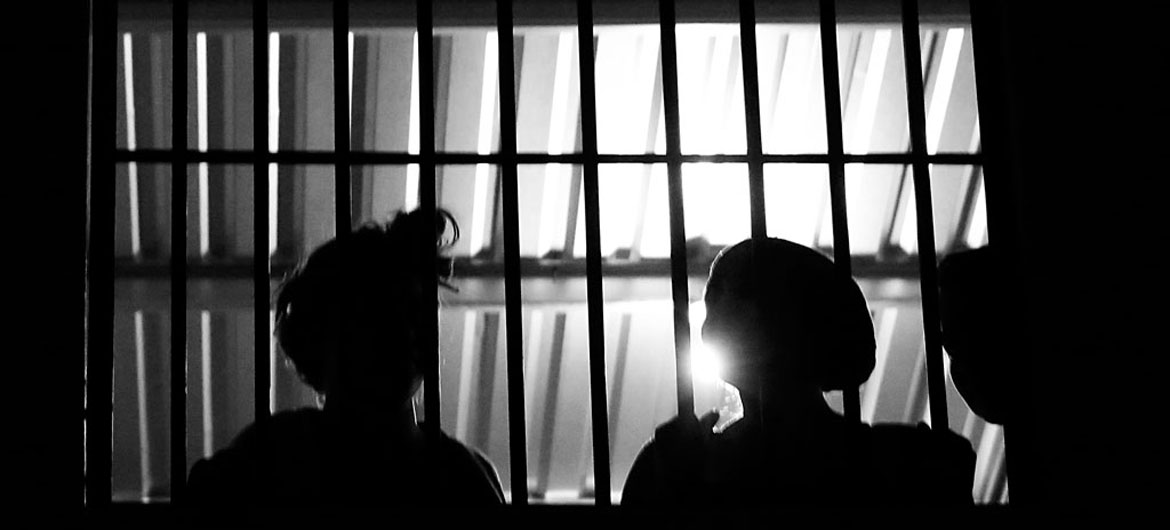
View of a prison in Honduras.
UN Photo/Evan Schneider
 
View of a prison in Honduras.
7 July 2023
Human Rights

The UN human rights office (OHCHR) has urged authorities in Honduras to reinforce the “internal and external oversight of military operations” in the country, following the extending of a national state of emergency. 

OHCHR Spokesperson Marta Hurtado told journalists in Geneva that the Government had issued a 45-day extension on Wednesday. 

“The state of emergency, in force in 17 of the 18 departments in Honduras, enables the military police to support the national police in carrying out public security tasks. It also derogates the right of personal liberty, freedom of association, assembly, and movement, and allows security and armed forces to carry out arrests and searches without a warrant,” she said.

Military operations   

The Spokesperson said that on 21 June, the authorities announced that the command and control of the entire Honduran prison system was being transferred to the military police. 

“This decision came in the wake of a violent incident at the national women’s prison in the town of Tamara, where 46 female inmates were killed when members of one gang attacked a part of the prison housing members of a rival gang,” said Ms. Hurtado. 

Rights violations

She also voiced concerns about human rights violations and adequate access to food, water, and the practice of subjecting inmates to sleep deprivation. Ms. Hurtado also reported ill treatment of inmates by the military police. 

“Initial monitoring by our Office, as well as information from civil society organizations and other sources with regard to military operations in prisons, indicates that inmates, in particular those allegedly associated with gangs, have been beaten and kicked by military police,” she said. 

Tweet URL

Criminal justice challenges 

She called on authorities to end the abuse, halt violence against inmates, and prevent further violations of human rights. She also called for accountability and prompt investigation of allegations of unnecessary or disproportionate use of force. 

“Efforts should immediately be redoubled to address long-standing criminal justice and prison challenges. These include the extensive use of incarceration, overcrowding, unsuitable living conditions, the lack of basic services, and inmates controlling some prisons,” Ms. Hurtado said.

“All efforts to address the prison challenge should be based on international human rights law and standards, including the UN Standard Minimum Rules for the Treatment of Prisoners (known as the Nelson Mandela Rules),” she said, empasizing that OHCHR in Honduras remains available to provide technical assistance.

https://news.un.org/en/story/2023/07/1138452


https://creativecommons.org/licenses/by/3.0/legalcode

пятница, 30 июня 2023 г.

Myanmar: Military’s obstruction of humanitarian aid could be international crime

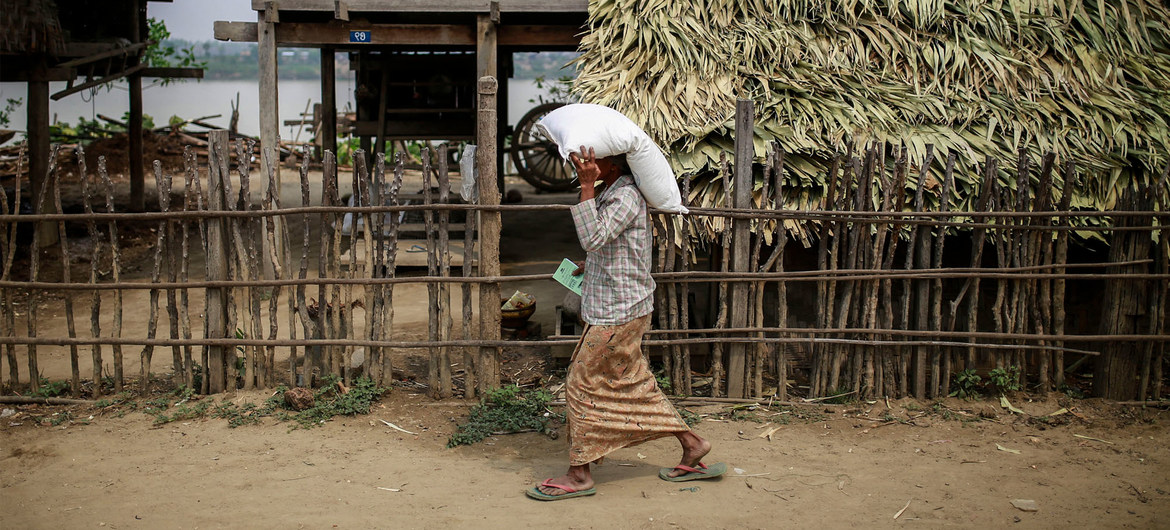
A woman carries a sack of fertilizer distributed by the UN in Yin Yane Village, Monywa, Myanmar. (file)
© FAO/Hkun Lat 
A woman carries a sack of fertilizer distributed by the UN in Yin Yane Village, Monywa, Myanmar. (file)
30 June 2023
Peace and Security

Myanmar’s military is killing civilians, destroying food and homes, and keeping the most vulnerable from receiving lifesaving aid, according to a new report from the UN human rights office (OHCHR).

The chief of OHCHR’s Myanmar team, James Rodehaver, explained that since their February 2021 coup, the country’s military rulers have been instilling a “climate of fear” to subjugate the civilian population, restricting aid access and using “all means” at their disposal to clamp down on civil society.

Brutal tactics

He said the military’s tactics had included the use of heavy weaponry on civilian areas and airstrikes, the burning of villages, and the use of landmines to prevent those forced to flee from returning home.

“Another thing that they have done regularly has been to burn food stores, crops and seed stores, to destroy medical facilities and to target medical workers.”

The military imposed further restrictions on humanitarian assistance in the aftermath of deadly Cyclone Mocha in May, Mr. Rodehaver said.

Over 17.6 million people, or a third of the overall population of Myanmar need aid.

OHCHR Spokesperson Ravina Shamdasani briefing in Geneva on the comprehensive human rights update for Myanmar, stressed that intentional obstruction or denial of humanitarian assistance may amount to serious violations of international law.

Aid workers treated as opponents

“The military has operated as if those providing aid are helping those opposed to their rule, rather than respecting their need for protection and facilitating their access and assistance to the civilian population in a time of crisis”, she said.

She cited the military’s “four cuts” strategy outlined in the report “to kill and injure thousands of civilians while destroying goods and infrastructure necessary for survival, including food, shelter, and medical centres”.

An estimated 1.5 million people have been internally displaced, and approximately 60,000 civilian structures have reportedly been burnt or destroyed, she said. 

Between the overthrow of the civilian Government and April 2023, credible sources have verified that at least 3,452 people had died at the hands of the military and its affiliates, and 21,807 individuals had been arrested. 

Dramatically worse

“Notably, our report says the security situation has dramatically worsened for humanitarian workers since the coup. Aid providers are consistently exposed to risks of arrest, harassment or other mistreatment, or even death”, Ms. Shamdasani added.

“In the context of armed conflicts, intentional obstruction or denial of humanitarian assistance may further constitute war crimes such as wilful killing, torture and other degrading treatment, starvation, and collective punishment”, she warned. 

Intentional denial can also constitute crimes against humanity, she continued, such as murder, “extermination, torture and other inhumane acts, or persecution, when committed in the context of a widespread or systematic attack against a civilian population.”


 https://news.un.org/en/story/2023/06/1138262


https://creativecommons.org/licenses/by/3.0/legalcode

понедельник, 26 июня 2023 г.

Torture as a weapon of war must cease, rights experts demand


Torture is a crime under international law and it must cease as a weapon of war, urge human rights experts.
© Unsplash/Marcin Czerniawski
 
Torture is a crime under international law and it must cease as a weapon of war, urge human rights experts.
26 June 2023
Human Rights

UN rights experts marked the International Day in Support of Victims of Torture on Monday, by reiterating their call for an “absolute prohibition” on the use of torture during armed conflict, calling also for a push to end the international trade in instruments of torture.  

Today, more than 100 armed conflicts are raging worldwide, devastating communities, winding back development, and leading to grave violations of human rights. 

Ranging from severe beatings to sexual humiliation and rape, torture is widely used as a means of war. And often, torture involves the use of tools or instruments, mock executions, and forcing victims to watch family members also being tortured, said the UN human rights chief Volker Türk.

Torture happens in both official detention centres as well as secret sites, away from any scrutiny.

In a video address Mr. Türk, UN High Commissioner for Human Rights, recalled meeting a victim of torture whose harrowing story left an indelible mark: “It revealed the horror of what human beings are capable of inflicting on one another. He will carry that deep trauma for the rest of his life.”

Zero-tolerance to torture

Torture is a serious crime, unequivocally prohibited under international law, and never justified under any circumstances.

Under the UN Convention against Torture all States must investigate and prosecute allegations of torture, as well as cruel, inhuman, or degrading treatment. They are obligated to prevent torture through every possible means. 

“Yet in almost all cases, the people who ordered and commit the crime of torture escape justice”, said the OHCHR chief. 

The Committee against Torture, a body of 10 independent human rights experts that monitors implementation of the Convention, regularly reminds States of their obligations to educate and inform all military personnel, especially those charged with duties related to detention, about the prohibition.

“States must take a zero-tolerance approach in investigating and prosecuting acts of torture committed by their regular armed forces, and those forces under their effective control,” said Claude Heller, the Committee’s chair, “A vital first step in this is the explicit criminalization of torture at the domestic level.”

Help to the victims

Tweet URL

The scale of torture is alarming, with hundreds of thousands of victims spanning prisoners of war, human rights activists, and innocent civilians who can be caught up in random sweeps. Such acts of brutality occur in thousands of locations across countries on every continent, the UN rights chief reminded. 

He said it was especially important to ensure that “torture - wherever it takes place - is documented, investigated, prosecuted and punished.” 

By establishing the facts and seeking accountability, much needed help can be extended to victims of torture.

“Every torture victim has a right to acknowledgement, justice and redress”, said Mr. Türk.

Over four decades ago, the UN Voluntary Fund for Victims of Torture was established to provide social assistance, medical care, psychological support, and to help victims secure justice and deter future acts of torture.

It works with civil society groups in more than 120 countries and has reached over one million survivors. Today, however, the demand for the Fund's assistance is so high, that thousands of requests for aid have had to be turned down. 

“We need more funds to match rising demand,” said the rights chief in a tweet. 

Taking away torture tools

The High Commissioner said that another effective way of preventing future cases of torture away from the battlefield, was to go after the trade in instruments of torture.

"I am fully supportive of all efforts to limit trade in items that could be used for torture, including through a new international torture-free trade treaty”, he said. 

Special Rapporteurs and other independent rights experts who serve on commissions or panels, are appointed by the UN Human Rights Council. They are mandated to monitor and report on specific thematic issues or country situations, are not UN staff and do not receive a salary for their work.


 https://news.un.org/en/story/2023/06/1138102

https://creativecommons.org/licenses/by/3.0/legalcode