Показаны сообщения с ярлыком Yemen. Показать все сообщения

среда, 16 октября 2024 г.

Civilians ‘Paying the Price’ of Conflict in Yemen, Speaker Tells Security Council, Calling on Parties to Refrain from Escalation, Pursue Dialogue


9748th Meeting (AM)
SC/15852

Civilians ‘Paying the Price’ of Conflict in Yemen, Speaker Tells Security Council, Calling on Parties to Refrain from Escalation, Pursue Dialogue

Amid the ratcheting up of regional tensions and a worsening humanitarian situation, all stakeholders must put the interests of Yemen’s people first, to restore peace and stability to the country, the United Nations official charged with mediating a sustainable resolution to the conflict told the Security Council today.

Hans Grundberg, Special Envoy of the Secretary-General for Yemen, said that engagements with Yemeni and international stakeholders in New York, Tehran and Moscow reaffirmed that a peaceful resolution of the nine-year-conflict is viable and achievable, and that the Yemeni people require international support.  “These are not just mere aspirations,” he emphasized, reiterating that parties have made commitments to establishing a road map for peace, including a nationwide ceasefire.  On the military front, relative calm prevails on the front lines, and work continues on the economic front to foster cooperation for stability.  “The tools are there,” he stressed, calling on parties to demonstrate the necessary will, and to put the needs of Yemenis first.

Turning to the security situation, he voiced concern that the year-long intensifying military escalation in the Middle East risked spiralling out of control, adding:  “Regrettably, Yemen is part of this escalation and risks being further dragged in.”  He called Ansar Allah’s repeated attacks on civilian shipping “unacceptable”, pointing to the narrowly avoided environmental disaster after the attack on the MV Sounion.  He voiced concern over reported casualties and damage to critical infrastructure following retaliatory air strikes carried out by Israel on Hodeidah, also noting strikes by the United States on four Yemeni governorates.

Yemenis yearn and work for peace, as their space for peacebuilding is under attack, through arbitrary detentions and intimidation, especially in Ansar Allah-controlled areas, he went on, calling for the immediate and unconditional release of all those detained, including 17 United Nations personnel.  Civil society organizations are particularly impacted by such actions, he said, pointing to the lack of due process and the latest threat of so-called criminal prosecution to some of those detained, adding:  “I have repeatedly told Ansar Allah these kinds of actions do not signal an interest in negotiating peace.”

Joyce Msuya, Acting Under-Secretary-General for Humanitarian Affairs and Emergency Relief Coordinator, also called for the immediate and unconditional release of the UN personnel, non-governmental organization staff and others arbitrarily detained by the Houthis since June this year, as well as UN colleagues detained since 2021 and 2023.  She “categorically rejected” allegations against her colleagues, echoing concern expressed by the Principals of affected organizations in a statement on 12 October, about the reported referral to “criminal prosecution” by the Houthi de facto authorities of several arbitrarily detained colleagues.  Detailing the UN’s diplomatic engagements with Houthi de facto authorities, she said that, as a result, most detained staff have had contact with their relatives, and those requiring health care have received it.

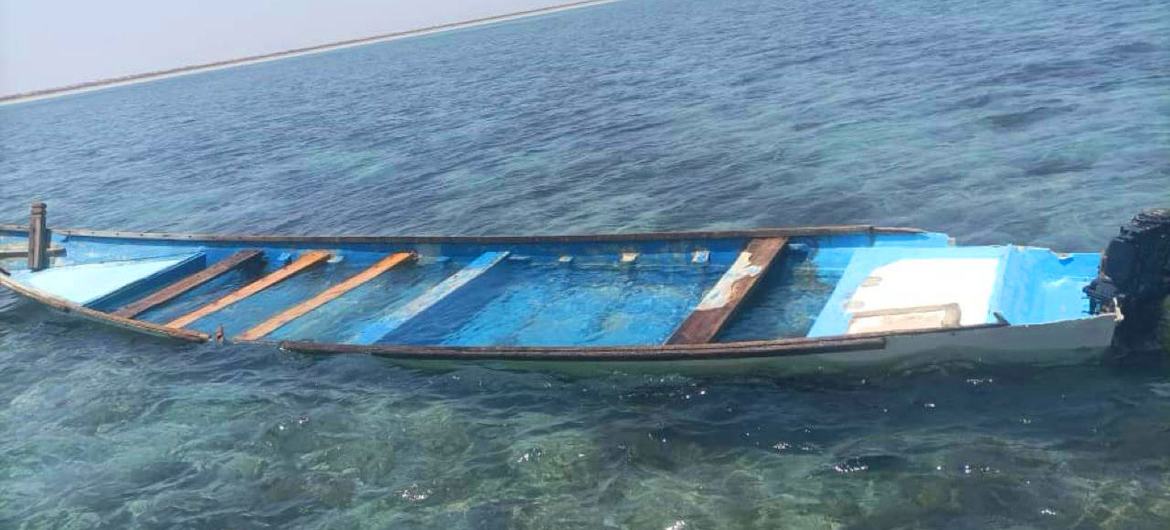
Turning to issues concerning migration, she expressed condolences to the families of 48 migrants who lost their lives off the Djibouti coast, when smugglers forced them off their vessel in open sea, pointing out that 2024 marks the deadliest year for migrants crossing the sea between Yemen and the Horn of Africa.  Such challenges call for regional solutions, she added.

Voicing alarm over ongoing attacks from and on Yemen, which damaged critical infrastructure, including in Hodeidah and Ras Issa, she underscored the need for restraint and to ensure Yemen’s Red Sea ports remain open and operational.  On the humanitarian situation, which is worsening in scale and severity, she reported that in August, the number of people who do not have enough food to eat soared to unprecedented levels.  Meanwhile, cholera continues to spread, with more than 203,000 suspected cases reported since March.  With as many as 18.2 million Yemenis in need, the humanitarian appeal for the country is 41 per cent funded, she noted, stressing the need for urgent additional funding for critical response sectors, including food security and cholera response.  As well, she emphasized the need for long-term funding for chronically underfunded gender-based violence programmes.

Najat Jumaan, Professor and Board Member of Jumaan Trading and Investment Company, then highlighted the challenges faced by the private sector over several cycles of conflict in Yemen.  The first conflict period seriously impacted the economy and the private sector, including factories, warehouses and the transport of trucks and goods between cities, she said, adding that the private sector nonetheless shouldered its responsibilities and continued to pay people.

During the second phase of the conflict, “other instruments of economic war were used”, she went on, pointing to divisions within sovereign institutions, including Yemen’s Central Bank and national air company.  As a result, the exchange rate went up, customs and excise doubled and international financial institutions refrained from cooperating with Yemeni banks, she said, also noting a consequent flight of young professionals and capital.  As well, transportation between major population centres was affected due to destroyed infrastructure and road closures.

The resultant war economy has concentrated benefits in the hands of armed groups and deprived Yemenis of a better future, she said, adding that the situation has been exacerbated by the international conflict unfolding in the Red Sea, which has led to a rise in the cost of goods and tamped down on private sector investments.  In that context, she called for a UN solution to ensure peace and stability restored to the Red Sea.  As well, she urged Yemeni parties and the international community to support the UN-led efforts to restore peace and stabilize the economy.  She urged all those working for peace to enable the reopening of roads, the equitable distribution of wealth, ensure support for Yemeni institutions and mobilize funding for recovery and reconstruction.

In the ensuing debate, the United Kingdom’s representative was among Council members underscoring the pressing humanitarian need across all of Yemen and reiterating her call on the Houthis to release aid workers, who have been detained for 130 days.  Echoing concerns that those detainees may now face a “so-called judicial process”, she warned that the use of special political courts will not result in fair outcomes for detainees.

“It is the civilian population that is paying the price,” said the representative of Switzerland, Council President for October, speaking in her national capacity, to draw attention to the humanitarian repercussions of the conflict, with four out of five Yemenis living in poverty.  Voicing concern over recent air strikes, she called on parties to refrain from escalation.  “Dialogue is the only option,” she emphasized, echoing other Council members, including China’s delegate.

Ecuador’s representative expressed concern about the Houthis’ statements that they will not cease their attacks, calling for maximum restraint.  Amid ongoing armed clashes, he urged sustained regional and international support for the Special Envoy’s mediation efforts.

Japan’s representative was among several speakers expressing concern over food insecurity and disease, urging the international community to scale up assistance.  Noting that Yemenis’ livelihoods heavily depend upon imports, she reported that in September Japan committed to grant nearly $5 million to the United Nations Development Programme (UNDP) for a project to streamline the import of food, humanitarian aid and other goods at the Port of Aden.

An immediate and permanent ceasefire in Gaza is a critical first step towards lasting peace throughout the region, stressed Guyana’s delegate, who spoke also for Algeria, Sierra Leone and Mozambique.  Lamenting that, despite the severity of the situation, “Yemen has often been underrepresented in the global media compared to other crises, leading to less public awareness and, consequently, less funding and aid”, she urgently called on the international community to mobilize resources for the 2024 Humanitarian Response Plan for Yemen.

Similarly, the Russian Federation’s representative stated that ending Israel’s military campaign in Gaza, Lebanon and Syria is what would help most in stabilizing the situation in Red Sea.  “Equal pressure must be exerted on the so-called coalition of the U.S. and the U.K.,” who continue weekly and indiscriminate attacks on Yemeni territory in violation of international law, similar to what “they use in other countries and regions”.  Striking Yemen is unacceptable and destroying its port infrastructure could have the direst humanitarian consequence, he warned.

Countering that assertion was the speaker for France, who deplored “Iranian-backed Houthis” continued attacks on commercial vessels in the Red Sea and underscored that States have the right to defend their vessels against such attacks.  He further condemned the attacks carried out by the Houthis against Israel, which fuel the escalation in the region, and called on Iran to cease its support for destabilizing actions in the Middle East.

Echoing that view, the delegate of the United States noted that the Houthis continue to sow chaos and disruption threatening international peace and security.  The Houthis are not acting alone, he added, pointing to verifiable evidence that they have been receiving weapons and military supplies from Iran in violation of the UN arms embargo.  Pointing to alarming public reports that a permanent Council member considered providing the Houthis with supersonic anti-ballistic missiles and may be negotiating to give them small arms, he underscored “it has never been more important to enforce the arms embargo established under resolution 2216 (2015)” — a call also made by the representative of the Republic of Korea.

“A dangerous and unending tit-for-tat is not in anyone’s interest,” underscored the representative of Slovenia, who urged all Yemeni actors to display courage and determination to refocus efforts on an inclusive Yemeni peace process and the Special Envoy’s road map.

For his part, Malta’s representative called for an inclusive political process, ensuring the participation of women.  The UN and Member States facilitating talks must put in place enhanced and targeted measures to achieve the 30 per cent quota agreed in the National Dialogue Conference, he added.

Rounding out the discussion, Yemen’s representative emphasized his Government’s tireless efforts to work towards a political solution to the conflict, in line with the Gulf Cooperation Council initiative and Council resolution 2216 (2015).  However, he blamed the Houthi militias — supported by Iran — for committing human rights violations, planting landmines, destroying the economy, and establishing a parallel economy to finance their wars, thereby depriving Yemenis of security, food, their present and future.

The international community had been “lax” in dealing with the group, he said, underscoring the urgent need to enhance his Government’s institutional capacity, so it can protect regional waters.  He called on the Council to implement its resolutions on the Yemeni crisis, thereby banning Iranian weapons and drying up financial sources, and forcing the Houthis to choose the path of peace.  The international community should also support Yemen in dealing with the deteriorating humanitarian and economic situation.  On the plight of the arbitrarily detained, he called for their immediate release and requested UN agencies and international organizations to relocate to Aden, the temporary capital, to ensure effective and safe operations.


https://press.un.org/en/2024/sc15852.doc.htm


https://creativecommons.org/licenses/by/4.0/legalcode

пятница, 13 сентября 2024 г.

UN warns of escalating conflict in Yemen amid humanitarian crisis, regional tensions


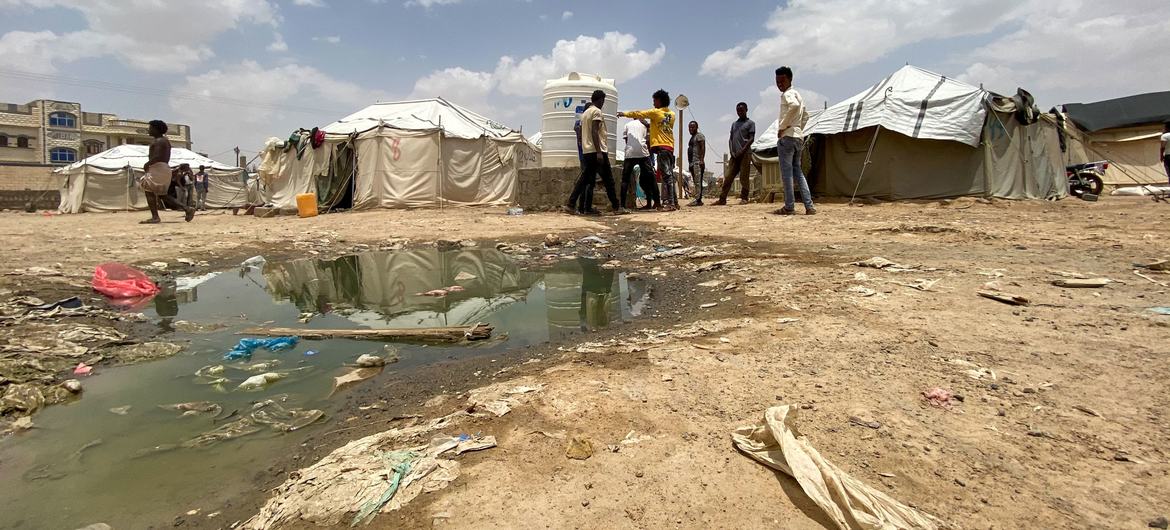
A camp of stranded migrants in Yemen.
© IOM/Rami Ibrahim
 
A camp of stranded migrants in Yemen

By Vibhu Mishra
12 September 2024
 Peace and Security

Despite recent economic de-escalation agreements, Yemen remains at risk of a return to full-scale conflict, with continued fighting and increased rhetoric between the warring sides, the UN envoy for the country warned on Thursday.

The crisis in Yemen, which worsened in 2014 after Houthi rebels (known officially as Ansar Allah) seized the capital, has been marked by complex political and military tensions. More than 18 million people – half the country’s population – remain dependent on humanitarian assistance and protection.

Hans Grundberg, the UN Special Envoy for Yemen, told the Security Council that while violence remains below pre-2022 truce levels, clashes in regions like Hudaydah and Ta’iz continue to claim lives.

The current dynamic is a stark reminder that the threat of a return to full-scale war remains ever-present,” he warned.

Regional tensions continue

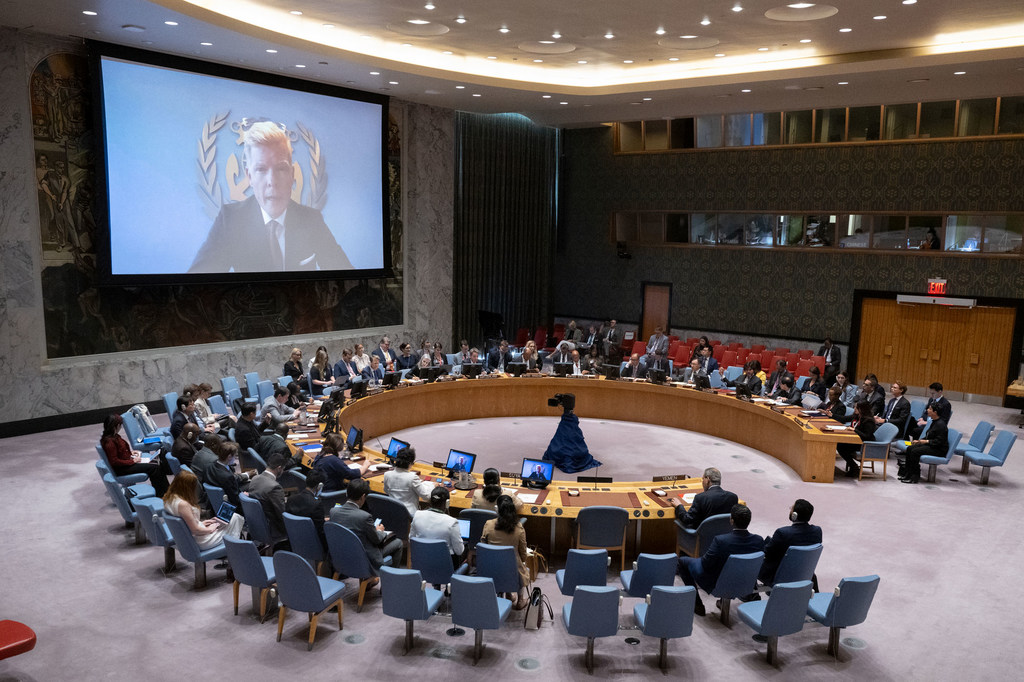
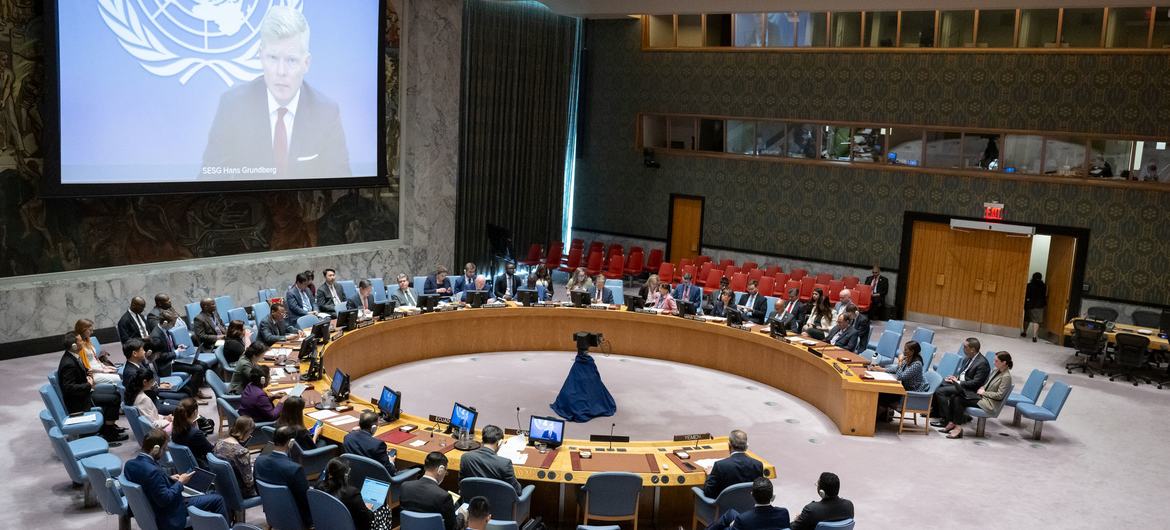
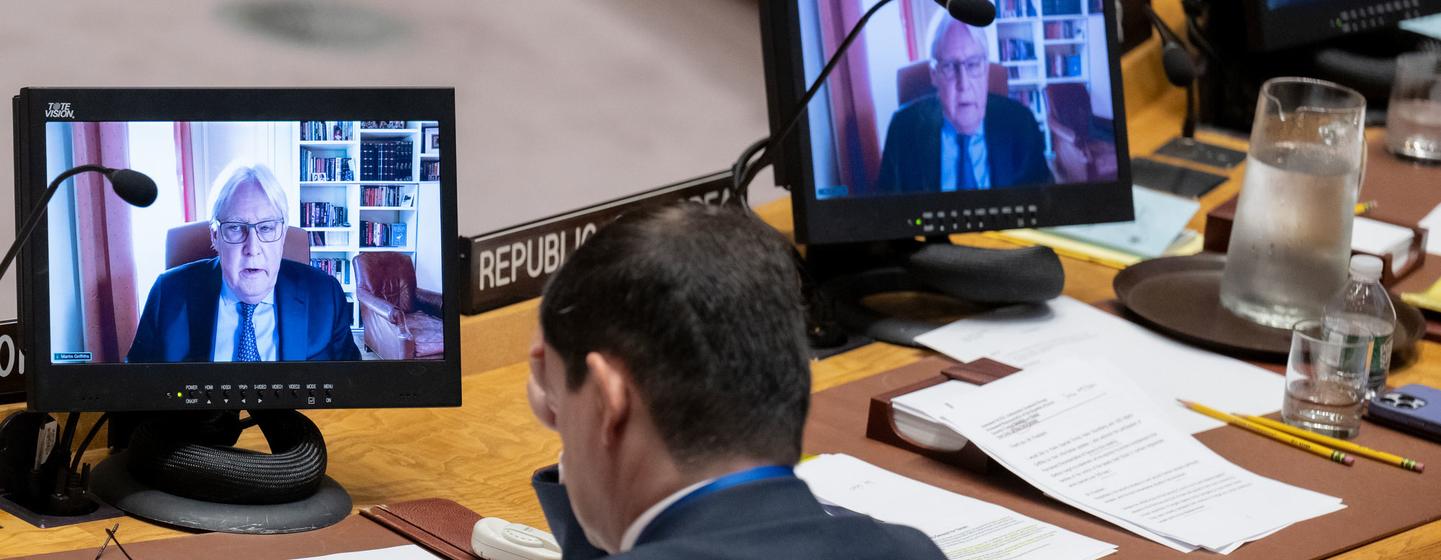
A wide view of the  Security Council Chamber as Hans Grundberg (on screen), Special Envoy of the Secretary-General for Yemen, briefs the Security Council meeting on the situation in Yemen.
UN Photo/Eskinder Debebe
 
A wide view of the Security Council Chamber as Hans Grundberg (on screen), Special Envoy of the Secretary-General for Yemen, briefs the Security Council meeting on the situation in Yemen.

Mr. Grundberg noted that the regional tensions from the war in Gaza continue to further complicate the crisis in Yemen.

Houthi attacks on vessels in the Red Sea have continued, threatening regional stability and international maritime security. In response the United States and the United Kingdom continue to strike military targets inside of Yemen.

I reiterate my concern over this escalatory trajectory and repeat my call for the parties to put Yemen first and to prioritize a settlement of the conflict in Yemen,” he said.

Mr. Grundberg highlighted the recent targeting of the Greek-flagged oil tanker MV Sounion by Houthi forces, which risks triggering a catastrophic oil spill, warning of an environmental disaster for Yemen and the wider region.

Committed to resolving the crisis

Efforts to resolve the crisis remain ongoing, with the Special Envoy emphasizing the need for sustained dialogue and collaboration across conflict lines.

“Seek to use the 23 July understanding [on economic de-escalation] as a steppingstone to de-politicize the economy and shift the parties away from a zero-sum mindset to one of collaboration,” he said, underscoring the importance of continued engagement.

He also pointed to ongoing consultations with Yemeni civil society, including women, youth, and vulnerable groups, as part of a broader push for an inclusive peace process.

In conclusion, Mr. Grundberg affirmed his “unwavering determination” to engage with all parties and work towards a sustainable and comprehensive peace in Yemen.

No time to lose, to save lives

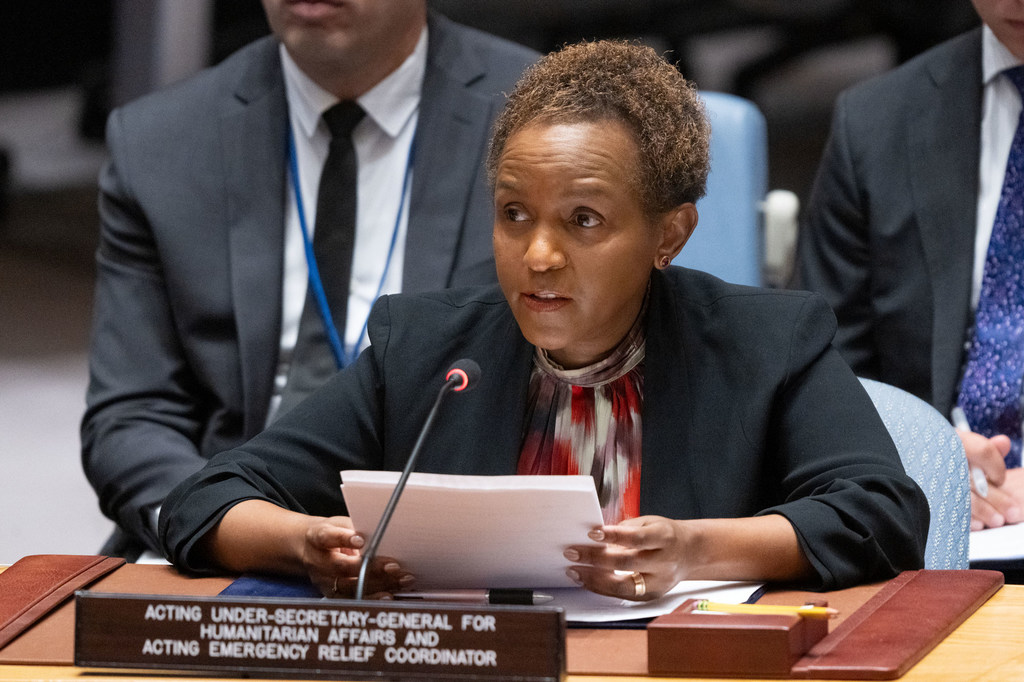
Joyce Msuya, Acting Under-Secretary-General for Humanitarian Affairs, briefs the Security Council meeting on the situation in Yemen.
UN Photo/Eskinder Debebe
 
Joyce Msuya, Acting Under-Secretary-General for Humanitarian Affairs, briefs the Security Council meeting on the situation in Yemen.

Also briefing the Security Council, Joyce Msuya, Acting Under-Secretary-General for Humanitarian Affairs, highlighted the severe hardship confronting Yemenis.

Over 62 per cent of households across the country do not have enough food, with some areas, such as Hudaydah and Ta’iz, experiencing extremely critical levels of malnutrition, she warned.

“By the end of 2024, more than 600,000 children in Government of Yemen-controlled areas are estimated to be acutely malnourished, and around 118,000 are projected to suffer from severe acute malnutrition – a 34 per cent increase since 2023,” she said.

Time is of the essence if we are to prevent catastrophe.”

Response challenges

Ms. Msuya also expressed deep concern over the continued arbitrary detention of UN personnel and staff of non-governmental organizations (NGOs) by Houthi authorities, urging their immediate release and respect for humanitarian law.

Thirteen UN personnel were detained in June, with four more held since 2021 and 2023, lacking contact with their families and agencies.

She also rejected false allegations against UN and aid agencies and workers, warning such claims jeopardize safety and operations of humanitarian actors working to alleviate the suffering.

The senior UN relief official concluded her briefing, stressing that the humanitarian community is committed to staying and delivering in Yemen – “as best it can, for as long as it takes.”

“To do this, we need the parties to respect international humanitarian law – by immediately releasing our detained colleagues, protecting civilians and humanitarian workers, and facilitating unimpeded humanitarian access.”


https://news.un.org/en/story/2024/09/1154271


https://creativecommons.org/licenses/by/4.0/legalcode

вторник, 20 августа 2024 г.

Guterres demands immediate release of UN staff and others detained in Yemen


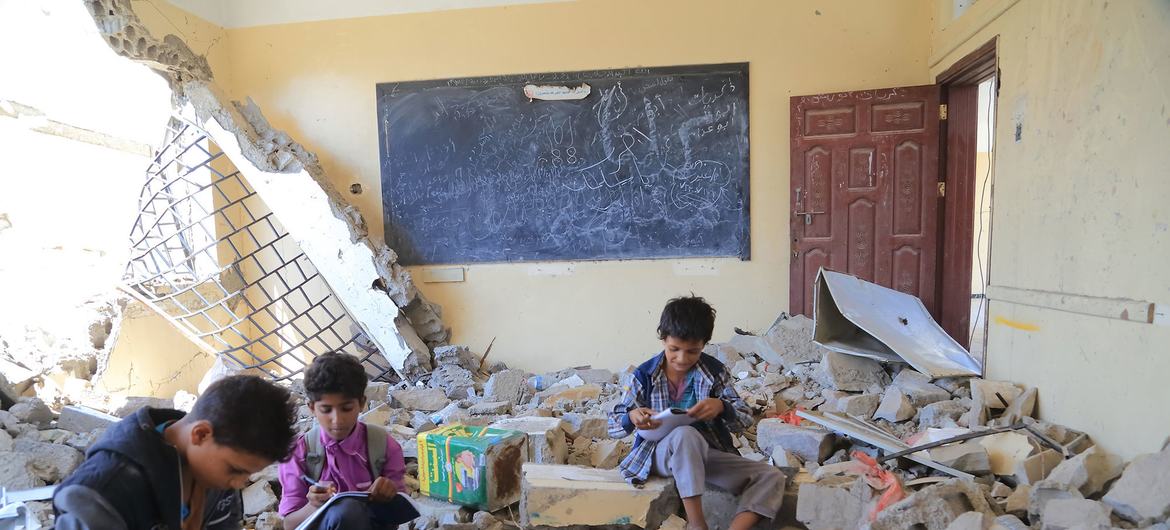
Boys study in what used to be their classroom in Al Khair school, in Taiz governorate, Yemen.
© UNICEF/Anas ALhjj
 
Boys study in what used to be their classroom in Al Khair school, in Taiz governorate, Yemen.


19 August 2024

 UN Affairs

UN Secretary-General António Guterres called on Monday for Houthi rebels in Yemen to immediately and unconditionally release UN staff, humanitarians, diplomatic personnel and others who have been detained for more than two months. 

The more than 60 men and women being held are all Yemeni nationals.  They include 13 UN staff and members of civil society, local and international non-governmental organizations, diplomatic missions and private sector entities. 

Additionally, four other staff from the UN’s human rights office, OHCHR, and its cultural agency, UNESCO, have been held since 2021 and 2023, respectively.

Dire humanitarian situation

Yemeni Government forces, backed by a Saudi coalition, have been battling with the Houthis, also known as the Ansar Allah movement, for a decade.

The UN continues to monitor the dire humanitarian and development situation in the country.

Over 18 million people, more than half the population, are suffering the consequences of food insecurity, epidemics, displacement, damaged infrastructure and critical economic conditions.

Not a target

“The United Nations is working tirelessly to address the impact of the situation on the people of Yemen, but the safety of our personnel must be assured,” said the Secretary-General’s Spokesperson, Stéphane Dujarric, speaking during his daily briefing from New York.

He stressed that the UN and partners “should never be targeted, arrested or detained while carrying out their mandates.”

UN rights office handed back

The UN Secretary-General also strongly condemned the recent forced entry by the Houthis into the premises of the OHCHR office in the capital, Sana’a. 

Mr. Dujarric noted that the office was handed back to the UN Resident and Humanitarian Coordinator for Yemen, Julien Harneis, on Monday, who reported that the office appears to be in its original state, but an inventory is currently underway.

“The Resident Coordinator says we are encouraged by this move and renew our call for the immediate and unconditional release of all arbitrarily detained staff of UN and NGO and civil society personnel,” the Spokesperson told journalists.


https://news.un.org/en/story/2024/08/1153341

https://creativecommons.org/licenses/by/4.0/legalcode

пятница, 16 августа 2024 г.

UN reiterates call to release staffers detained in Yemen


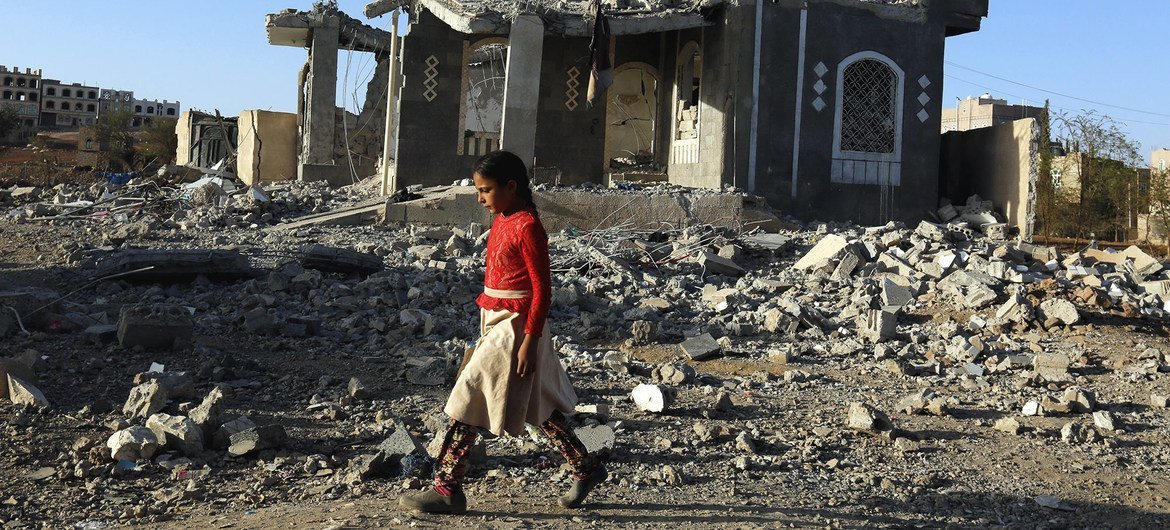
A girl walks through the rubble of war in Sana'a, Yemen.
UNFPA
 
A girl walks through the rubble of war in Sana'a, Yemen.


15 August 2024 

Peace and Security

Ansar Allah in Yemen must immediately release 13 UN staff and dozens of personnel from civil society, non-governmental organizations (NGOs) and other entities, who have been arbitrarily detained for more than two months, two senior officials told the Security Council on Thursday. 

Hans Grundberg, the Secretary-General’s Special Envoy for Yemen, and Lisa Doughten from the UN humanitarian affairs office, OCHA, made the appeal in separate briefings to ambassadors.

Tweet URL

Civic space shrinking

“In four days, on the 19th  of August, we will commemorate World Humanitarian Day,” Mr. Grundberg said.  “Yet, in Yemen, we are facing a clampdown by Ansar Allah on the humanitarian and civic space.”

The more than 60 people who have been detained are all Yemeni citizens and include one of his staff members. Furthermore, four other staff from the UN’s human rights office, OHCHR, and its cultural agency, UNESCO, have been held since 2021 and 2023, respectively.

Ansar Allah – more commonly known as the Houthi movement - also closed OHCHR’s office in the capital, Sana’a, on 29 July and ordered international staff to leave. 

The Houthis control much of Yemen after rebelling against the internationally recognized Government and battling a Saudi-led coalition in support of the authorities from 2015, after seizing the capital the previous year. 

A UN brokered ceasefire lapsed in 2022 but there has not been a return to all-out fighting.

‘An ominous signal’

Earlier this week, human rights chief Volker Türk said Ansar Allah forces had stormed the UN’s premises on 3 August, seizing documents, furniture, vehicles, and the office’s keys.

This is an ominous signal of the broader direction Ansar Allah is taking and represents a serious attack on the ability of the UN to perform its mandate,” Mr. Grundberg told the Council.

I therefore call on Ansar Allah to act responsibly and compassionately towards its fellow countrymen and women and immediately and unconditionally release all UN, NGO, civil society, diplomatic mission and private sector employees as well as members of religious minorities, and refrain from further arbitrary detentions.” 

Impact of regional escalation  

Turning to the wider region, the Special Envoy noted that “the Middle East is currently holding its breath” as developments surrounding the war in Gaza draw in other countries, including Yemen.   He expressed hope that this “escalatory trajectory” can be reversed.

He said that despite serious efforts to shield Yemen from the escalation, Ansar Allah continues to attack ships plying the Red Sea, while the United States and the United Kingdom have continued strikes on military targets in Ansar Allah-controlled territory in response. 

This situation, which has lasted for over eight months now, is not sustainable,” he warned. 

Shift focus back to Yemen 

Mr. Grundberg said the regional escalation is also unfolding at a point when real and urgent challenges inside Yemen need to be addressed. 

For nearly a decade the Houthis have been fighting Yemeni Government troops and their allies and the conflict has claimed hundreds of thousands of victims, weakened the social fabric, and undermined the delivery of public services.  

As a result, Yemen is more vulnerable to natural disasters, environmental hazards and disease, as the dire flooding this week in some governorates and a continuing cholera outbreak have demonstrated. 

“Therefore, I, once again, call on the Yemeni parties, and Ansar Allah in particular, to prioritize the Yemenis. Your responsibility lies, first and foremost, with Yemen. We need to shift the focus back to Yemen and find solutions for Yemen’s problems,” he said. 

Military manoeuvres continue 

Mr. Grundberg reminded the Council how he has continually voiced deep concern over the trajectory of events in Yemen in recent months, and “unfortunately, this regressive trend, illustrated by continuing military activities and escalatory rhetoric, has continued."

Although violence along frontlines remains relatively contained when compared to the period before the UN-brokered truce, “we are continuing to witness military preparations and reinforcements accompanied by continuous threats of a return to war”, he said, pointing to clashes in six governorates. 

Despite the “bleak picture”, the warring parties halted a dangerous cycle of escalation by reaching a deal last month, with support from Saudi Arabia, that ensures the functioning of the national carrier, Yemenia Airlines, and continued access of the country’s biggest banks to international banking services. 

“However, the onus is now on the parties to not only act in good faith and fully implement the commitments they made, but also to transform the understanding into something that improves the lives and livelihoods of all Yemenis,” he said. 

Humanitarians facing constraints 

Ms. Doughten, OCHA’s Director of Financing and Partnerships, also addressed the ongoing detention of the UN and other personnel, urging Member States “to exert any influence and leverage they have” to support efforts to secure their release.  

She also highlighted the “worrying deterioration in the operational environment in Houthi-controlled areas,” where the situation is growing more constrained at a time when humanitarians are already struggling to meet the needs of millions nationwide.  

The recent heavy rains and flash flooding have affected some 69,500 families and left 98 people dead and more than 600 injured.  Humanitarians have provided immediate life-saving assistance, but lack of funding continues to hamper their efforts. 

A $2.7 billion Humanitarian Response Plan, launched in February to assist more than 11 million people this year, is currently only 27 per cent funded. 

Families going hungry 

Meanwhile, food security continues to deteriorate in Yemen, where 60 per cent of surveyed households are not getting enough to eat. 

Rates of severe food deprivation have more than doubled over the past year in Houthi-controlled areas, from 17 per cent to 36 per cent.  They have also increased sharply in Government-controlled areas, where the rate is 32 per cent. 

Ms. Doughten said the impacts of increasing food insecurity and malnutrition extend far beyond hunger as they put children, especially girls, at increased risk of abuse and neglect. 

“Today, an alarming 30 per cent of girls in Yemen are forced into marriage before the age of 18 as families struggle to provide for them,” she said.

“And the number of children out of school – currently at a staggering 4.5 million – is likely to rise as more children are forced to leave school to help provide for their families.” 

Food insecure families in Lahj, Yemen, are supported by WFP with cash assistance to help them meet their food needs.
© WFP/Hebatallah Munassar
 
Food insecure families in Lahj, Yemen, are supported by WFP with cash assistance to help them meet their food needs.

Avert ‘potential catastrophe’ 

She said the UN World Food Programme (WFP) is planning a one-off distribution to counter the impacts of a recent pause in general food distributions in Houthi-controlled areas. The aim is to reach more than 1.6 million people in the 34 worst-affected districts. 

“However, as the overall situation of food insecurity continues to deteriorate across the country, enhanced action will be needed to avert a further potential catastrophe,” she said. 

“Full and urgent funding of the Humanitarian Response Plan for Yemen is a minimum requirement for these and other critical humanitarian needs.” 


https://news.un.org/en/story/2024/08/1153221


https://creativecommons.org/licenses/by/4.0/legalcode

вторник, 13 августа 2024 г.

UN rights chief condemns storming of his office in Yemen’s capital


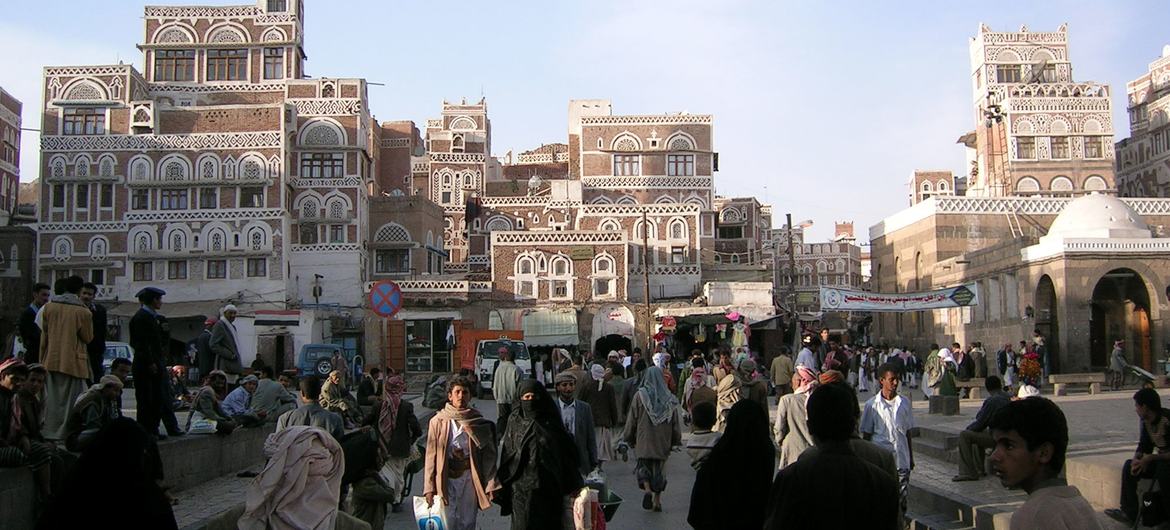
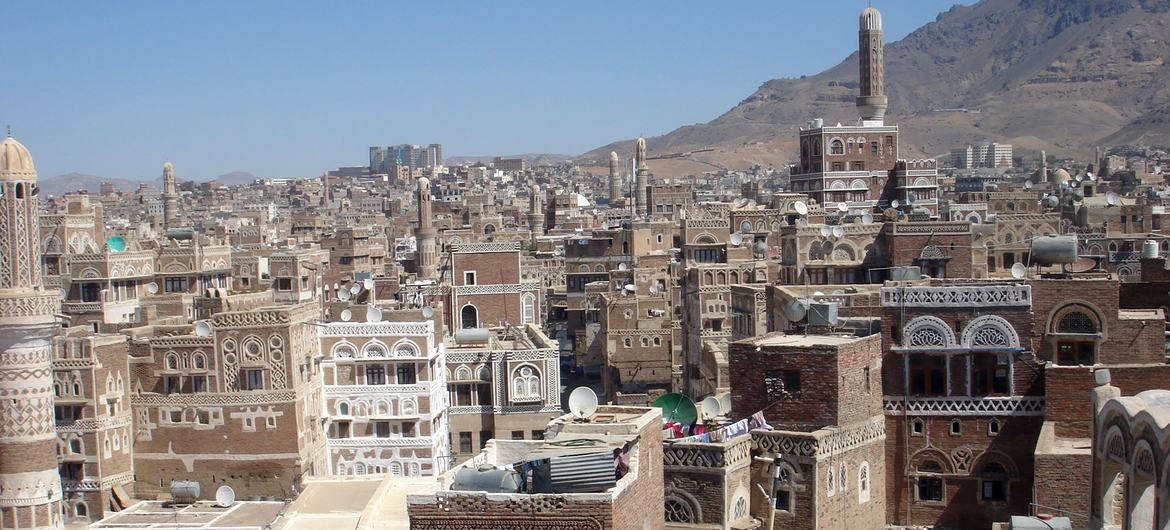
The Old City of Sana’a, Yemen, World Heritage site.
© UNESCO/Francesco Bandarin
 
The Old City of Sana’a, Yemen, World Heritage site.


13 August 2024
 Human Rights

The UN human rights chief has strongly condemned the recent storming of his team’s headquarters in Sana’a, Yemen, by the de facto authorities Ansar Allah, and renewed his call for the immediate and unconditional release of all UN staff detained in the country. 

Ansar Allah, also known as the Houthis, sent a “delegation” to the UN human rights office in the Yemeni capital on 3 August, and national staff were forced to handover documents, furniture and vehicles, as well as the office’s keys.

They remain in control of the premises.

Tweet URL

A ‘serious attack’

“Ansar Allah forces must leave the premises and return all assets and belongings immediately,” said High Commissioner Volker Türk.

He said entering a UN office without permission and seizing documents and property by force are wholly inconsistent with the Privileges and Immunities of the Organization.

“This is also a serious attack on the ability of the UN to perform its mandate, including with respect to the promotion and protection of human rights, which my Office is there to defend,” he added.

UN staff detained

Ansar Allah and Yemeni Government forces, backed by a Saudi-led coalition, have been battling for nearly a decade. Following the start of the war in Gaza, the rebels have also launched attacks against commercial ships in the Red Sea.

The de facto authorities also detained more than 60 people who work with the UN and non-governmental organizations (NGOs) in early June.  

Those being held include 13 UN staff, including six employees of the UN human rights office, more than 50 NGO workers, and an embassy staff member.  

Two other UN human rights staff had already been detained since November 2021 and August 2023, respectively.  All are being held incommunicado.

The High Commissioner and other top UN officials have repeatedly called for their release, but he said their pleas have fallen on deaf ears.

“I appeal again, with a heavy heart, for their immediate and unconditional release,” said Mr. Türk.

“We are doing all we can to make sure they are united with their loved ones as soon as possible. Until then, the de facto authorities must ensure they are treated with full respect for their human rights, and that they are able to contact their families and legal representatives.”

Disputing ‘baseless’ allegations

One of the two staff detained earlier had appeared in videos published online, in which he was forced to confess to allegations, including of espionage, in a clear violation of his basic human rights protected under international law. 

“All such claims are baseless,” Mr. Türk stressed. “At no time has my Office engaged in any activities other than those in the service of the people of Yemen, in accordance with my mandate.”

In the wake of the detentions, and given the security situation, the High Commissioner decided to suspend temporarily the Office’s operations in Sana’a and other areas under Ansar Allah control, though it continues to operate in other parts of Yemen.

Respect the UN

The UN Human Rights Office in Yemen works to promote the rights of all citizens without distinction. 

This has included monitoring the impact of armed conflict and violence on civilians – irrespective of the parties that may be responsible – including by documenting deaths, injuries, destruction of essential infrastructure and the capacity of the Yemeni people to earn a living. 

The Office’s work also focuses on promoting the rights of vulnerable groups, including women, children, people with disabilities, older people and minorities.

“It is crucial that the de facto authorities respect the United Nations and its independence, release all detained UN staff immediately, and create conditions in which my Office and other UN agencies can continue their critical work for people of Yemen without threats or hinderance,” said Mr. Türk.


https://news.un.org/en/story/2024/08/1153121

https://creativecommons.org/licenses/by/4.0/legalcode

понедельник, 22 июля 2024 г.

UN chief expresses deep concern over Israel strikes on Yemen, and risk of regional escalation

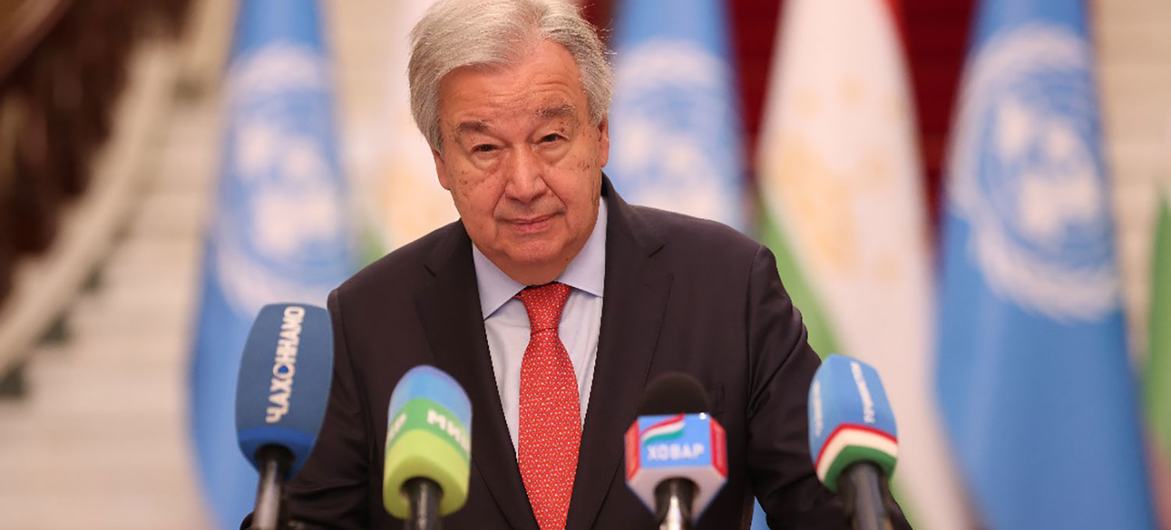
UN Secretary-General António Guterres (file)
UN Tajikistan/Didor Sadulloev
 
UN Secretary-General António Guterres (file)


21 July 2024 

Peace and Security

UN Secretary-General António Guterres has responded to Israel’s airstrikes on the Yemeni port city of Hudaydah, which reportedly killed at least six people and injured more than 80, by calling for all parties involved in the conflict to “exercise utmost restraint”.

In statement, Mr. Guterres noted that Israel had claimed responsibility for the strikes, which took place on Saturday, as a response to previous attacks on Israel by the Houthis – formally known as Ansar Allah – a group which controls swathes of territory in Yemen, including Hudaydah.

The strikes came after a drone attack on the Israeli city of Tel Aviv on Friday killed one person and wounded 10 more. The attack was claimed by the Houthis and led to a senior Israeli Government minister vowing to “settle the score”. The Israelis strikes on Saturday hit electricity infrastructure and a refinery, creating a large fire.

Efforts to mediate between the Houthis and Yemeni government have stalled in recent months and, following the onset of the war in Gaza in October, the Houthis pledged to attack what they deemed to be pro-Israeli shipping interests along the Red Sea coast, as a demonstration of solidarity with the Palestinians in Gaza.

In turn, a United States (US)-led coalition defending shipping in the Red Sea has continued to strike areas controlled by Houthis in Hudaydah, the capital Sana’a and Ta’iz.

The Houthis reportedly warned that the group’s response to the Israeli airstrikes “will be huge” and that the group would continue to attack Israel and that there would be no “red lines”.

The Yemeni conflict, which began in 2015, has been disastrous for the civilian population. The UN says the war has destroyed most sectors in Yemen, including healthcare, and caused one of the worst humanitarian crises in the world. Around half of the population, some 18.2 million people, are in need of some form of assistance.


https://news.un.org/en/story/2024/07/1152346


https://creativecommons.org/licenses/by/4.0/legalcode

среда, 10 июля 2024 г.

UN pressing for release of staff detained in Yemen

The old City of Sana'a in Yemen.
© UNESCO/Maria Gropa
 
The old City of Sana'a in Yemen.

9 July 2024 
Peace and Security

The UN human rights office (OHCHR) remains “extremely worried” for the well-being of 13 UN staff and a number of NGO employees arbitrarily detained in Yemen, spokesperson Jeremy Laurence said on Tuesday, demanding their unconditional release.

The staffers have been held incommunicado by the de facto authorities in Yemen who hold the capital and large swathes of the war-wracked country, formally known as Ansar Allah.

More commonly known as the Houthis, they have been fighting for overall control of Yemen against a coalition of pro-Government forces since 2015.

Tweet URL

We continue to be refused access to them”, said Mr Laurence. “We also remain particularly concerned by the situation of two other UN staff members who were already in prolonged detention, one since November 2021 and the other since August 2023,” he told reporters in Geneva.

He underscored that the UN “emphatically” rejects shocking and false allegations made publicly against the staff members being held.

The OHCHR spokesperson called on States and others which influence over the Houthis to help secure the safe and prompt release of all those detained.

Respect for human rights

“It’s crucial that the de facto authorities ensure that those detained are treated with full respect for their human rights, and that they are able to contact their families and legal representatives,” Mr. Laurence insisted, voicing concern over the conditions they face in captivity.

Any further targeting of human rights and humanitarian workers in Yemen must cease immediately, he added.

The 13 UN Staffers were detained in June. Four additional UN staff members have been detained and held incommunicado by the de facto authorities since 2021 and 2023, without access to their families or their respective organizations and agencies.

Agencies involved

As the Office of the Special Envoy of the Secretary-General for Yemen (OSESGY)
indicated back in June, the four staff held ahead of the latest detentions worked for the UN education, scientific and cultural agency, UNESCO, and the UN human rights office, OHCHR.

The 13 UN staff detained include six who work for rights office OHCHR and one each from the Office of the Special Envoy in Yemen (OSESGY), the UN Development Programme (UNDP), the UN Children’s Fund (UNICEF), the World Food Programme (WFP), the World Health Organization (WHO) and two from UNESCO.


https://news.un.org/en/story/2024/07/1151916


https://creativecommons.org/licenses/by/4.0/legalcode

четверг, 13 июня 2024 г.

UN envoy warns Yemenis not to return to the battlefield


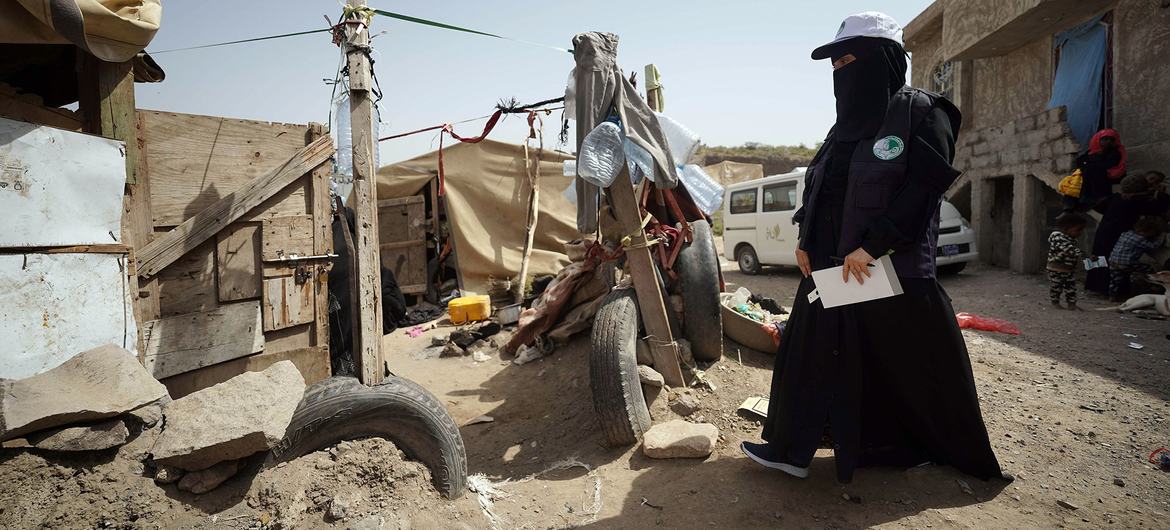
Years of conflict have left thousands across Yemen dependent on humanitarian assistance. Pictured here, a health volunteer walks in an IDP camp to check on malnourished children.
© UNICEF
 
Years of conflict have left thousands across Yemen dependent on humanitarian assistance. Pictured here, a health volunteer walks in an IDP camp to check on malnourished children.


13 June 2024

Peace and Security

After months of relative stability in Yemen between Government and Houthi forces, a return to all-out war is looking inevitable unless the current escalation in violence is halted, the top UN envoy for the country said on Thursday.

Special Envoy of the UN Secretary-General for Yemen Hans Grundberg warned ambassadors in the Security Council that recent months have seen a “gradual increase” in fighting in several locations, as well as consistent threats by all sides to return to war.

If the parties continue the current escalatory trajectory the “question is not if, but when”, they return to the battlefield, he added.

A Saudi-led coalition siding with Government forces have been embroiled in fighting with the Houthis and their allies since 2015 but a UN-brokered ceasefire which lapsed in 2022, continued to hold for months as peace talks continued.  

Mediation efforts have stalled and with the onset of the war in Gaza, the Houthis pledged out of solidarity to attack what they deemed to be pro-Israeli shipping interests along the Red Sea coast using the Suez Canal.  

The situation remains unresolved, with the Houthis – formally known as Ansar Allah – having increased its strikes on commercial and military ships.

For its part, a United States (US)-led coalition defending shipping in the Red Sea has continued its airstrikes in areas controlled by Houthis in Hudaydah, the capital Sana’a and Ta’iz.

Special Envoy Hans Grundberg (on screen) briefing the Security Council via video link.
UN Photo/Manuel Elías
 
Special Envoy Hans Grundberg (on screen) briefing the Security Council via video link.

Crackdown on UN, NGOs

Mr. Grundberg also highlighted the precarious situation for the civil society, non-governmental organizations (NGOs) as well as the UN, who have become the target of a crackdown by Ansar Allah.

Last week, 13 UN personnel, five staff members of international NGOs, and many more from national NGOs and civil society were detained by the group. They remain in incommunicado detention, adding to four UN staff members who have been held since 2021 and 2023 (two each year) respectively.

“The United Nations is present to serve Yemenis. Such arbitrary detentions are not the expected signal of an actor who is seeking a mediated solution to conflict,” the Special Envoy said, calling for the immediate of all UN and NGO personnel.

Zero-sum game

He went on to note that despite his efforts to advance on a process leading to a peaceful resolution to the conflict, the warring parties in Yemen “have reverted to a zero-sum game”.  

Instead of putting the Yemenis first, they have opted for measures they believe will strengthen their own position. This risks jeopardizing the viability of the commitments made earlier.”

The zero-sum game is most evident in the dire economic situation.

The banking system in disarray and financial institutions in Ansar Allah-controlled Sana’a are cut off from international systems, impacting trade and remittances.

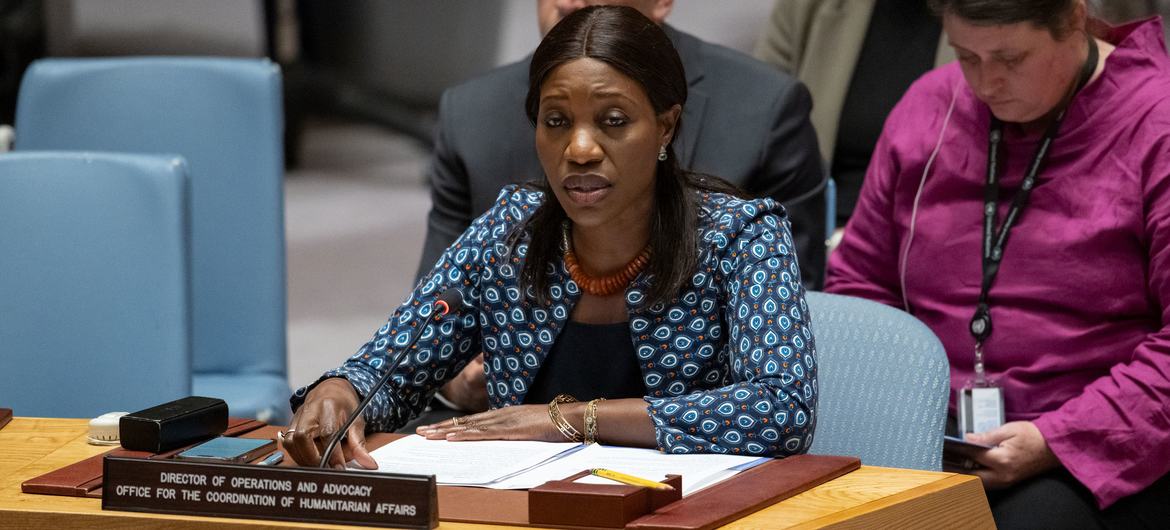
Director Edem Wosornu briefing the Security Council.
UN Photo/Manuel Elías
 
Director Edem Wosornu briefing the Security Council.

Catastrophic ramifications

Elaborating on the banking crisis, Edem Wosornu, the Director of Operations at the Office for the Coordination of Humanitarian Affairs (OCHA), warned of the catastrophic ramifications, including serious repercussions for humanitarian relief operations.

A potentially imminent decision to exclude banks based in Sana’a from using the SWIFT banking system would prevent the banks there from facilitating international financial transactions.

Together with other issues plaguing the sector, this threatens to further fragment and weaken Yemen’s already struggling economy, she said, likely worsening poverty and hunger, and increasing reliance on humanitarian assistance.

The increasingly volatile banking environment has worsened an existing liquidity crisis, making it very difficult for humanitarian organizations to pay staff salaries or to procure and pay for the many services they rely on for their operations,” she said, calling for urgent solutions from the international community to alleviate the crisis.


https://news.un.org/en/story/2024/06/1151026


https://creativecommons.org/licenses/by/3.0/legalcode

вторник, 11 июня 2024 г.

Over 180 migrants dead or missing in latest tragedy off Yemen, UN agency reports


A boat carrying migrants that sank off the coast of northeastern Djibouti in April 2024. Since 2014, over 480 migrants have drowned trying to cross the Gulf of Aden between Yemen and Horn of Africa.
© IOM Djibouti
 
A boat carrying migrants that sank off the coast of northeastern Djibouti in April 2024. Since 2014, over 480 migrants have drowned trying to cross the Gulf of Aden between Yemen and Horn of Africa.


11 June 2024
Migrants and Refugees

At least 49 migrants have been killed, including many women and children, and a further 140 are missing after the boat they were on capsized off the coast of Yemen on Monday, the UN International Organization for Migration (IOM) has reported.

Some 260 people were abroad the vessel that had departed from Bossaso, in northeast Somalia, in the early hours of Sunday, bound for Yemen, about 330 kilometres (about 205 miles) away.

“This recent tragedy is another reminder of the urgent need to work together to address urgent migration challenges and ensure the safety and security of migrants along migration routes,” Mohammedali Abunajela, IOM spokesperson, said in a news release on Tuesday.

“Our thoughts are with the victims and their families as we remain committed to supporting survivors and improving search and rescue efforts in the region.”

Search and rescue efforts are ongoing despite significant challenges due to a shortage of operational patrol boats, a situation further complicated by the ongoing conflict.

IOM support

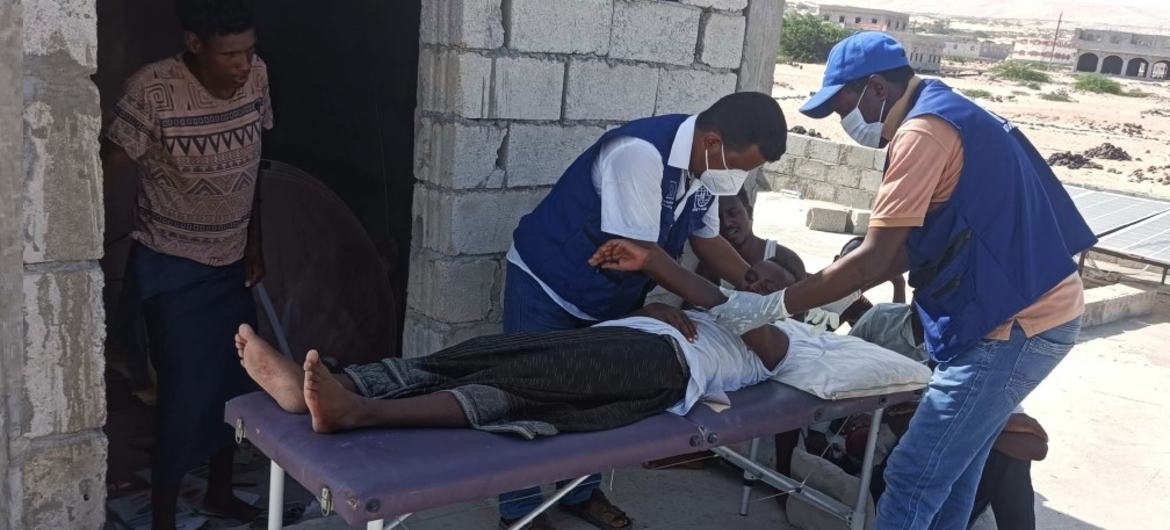
Seventy-one people, including six children, have been rescued and are being supported by IOM.

The agency has mobilized two mobile medical teams to provide immediate assistance, and its psychologists are providing mental health support.

Local community members, including fishermen, played a crucial role in the aftermath by assisting with the recovery efforts and helping to lay the deceased to rest at a cemetery.

An IOM team provides medical assistance to a survivor.
IOM Photo
 
An IOM team provides medical assistance to a survivor.

Repeated sinkings

The latest tragedy comes on the back of two separate shipwrecks on the same route along the coast of Djibouti, claiming the lives at least 62 migrants.

There has been a sharp rise in migrants travelling from the Horn of Africa to Yemen, spurred by political and economic instability, alongside severe droughts and other extreme weather events in countries like Ethiopia and Somalia.

Despite the ongoing conflict in Yemen, thousands of migrants continue to transit through the country in hopes of reaching Saudi Arabia and neighbouring nations.

The majority of those undertaking the journey rely on irregular routes or smugglers, placing them at an increased risk, including of human trafficking or drowning in rough seas on rickety boats.

Since 2014, IOM has documented 1,860 migrant deaths and disappearances along that route, including 480 due to drowning.

https://news.un.org/en/story/2024/06/1150936


https://creativecommons.org/licenses/by/3.0/legalcode

Yemen: UN chief demands release of aid workers held by Houthis


Years of conflict have left millions across Yemen in need of humanitarian aid and protection.
© UNICEF/Waleed Qadari
 
Years of conflict have left millions across Yemen in need of humanitarian aid and protection.


11 June 2024
Peace and Security

UN Secretary-General António Guterres called on Tuesday for the immediate release of all United Nations staff held in Yemen by the de facto Houthi authorities, following the arrest of 13 of the Organization’s personnel. 


Four additional UN staff members have been detained and held incommunicado by the de facto authorities since 2021 and 2023, without access to their families or their respective organizations and agencies. 

This is an alarming development that raises serious concerns about the Houthis’ commitment to a negotiated solution to the conflictThe United Nations condemns all arbitrary detention of civilians,” Mr. Guterres said. “I demand the immediate and unconditional release of all detained UN personnel.”

The UN’s chief’s call came as he met with his Special Envoy to Yemen, Hans Grundberg, in Jordan. They discussed recent developments in Yemen including an escalating crackdown on civic space by the de facto authorities that reportedly led to the arbitrary detention of dozens of UN, NGO, and aid workers.

UN and civil society targeted

The Special Envoy’s Office noted that the four staff arrested ahead of the latest detentions worked for the UN education, scientific and cultural agency, UNESCO, and the UN human rights office, OHCHR.

The 13 UN staff arrested over the past few days included six from OHCHR, one each from the Office of the Special Envoy (OSESGY), the UN Development Programme (UNDP), the UN Children’s Fund (UNICEF), the UN World Food Programme (WFP) and two from UNESCO. At least 11 civil society workers were also arrested. 

In the meeting between the Secretary-General and Mr. Grundberg, the Special Envoy briefed on efforts to secure the release of the detained personnel including a meeting on Monday with Mohamed Abdul Salam, the Houthi chief negotiator, in Muscat. He also met senior Omani officials to solicit support. 

“We are working diligently to secure the immediate and unconditional release of our detained personnel through all available channels,” Mr. Grundberg told UN News, as he called for the release of all arrested NGO workers as well. 

During their encounter, the Secretary-General and his Special Envoy also stressed that the United Nations stands in solidarity with all humanitarian workers and civil society actors who play a crucial role in providing life-saving assistance and support to the people of Yemen. 

Humanitarian crisis impact

The development has added to deepening concerns about the humanitarian emergency in Yemen where needs remain huge.

After nearly a decade of conflict between the internationally recognized government in and despite truce conditions largely holding, aid teams have repeatedly warned that 17.6 million people – half of the population in Yemen - face food insecurity and nearly half of all children under five suffer from moderate to severe stunting. 

According to the UN aid coordination office, OCHA, 4.5 million people remain displaced across the Arabian peninsula country, many of whom have experienced multiple displacements over several years, as a result of more than nine years of conflict between the Government of Yemen and the de facto Houthi authority in control of the capital, Sana’a, and other areas of the country.

Top relief official’s plea

According to UN’s top relief official, the recent wave of detentions could have a negative impact on an already dire situation. 

“Aid workers are neutral in a conflict. Their safety and the safety of the civilians they serve must be guaranteed,” said Martin Griffiths, UN Emergency Relief Coordinator to UN News. Ahead of the Muslim celebration of Eid al-Adha beginning this weekend, he added: “My heart goes out to the families of the detained personnel who fear for the wellbeing of their loved ones instead of celebrating Eid al-Adha together.” 

Peace moves

In his briefing to the Security Council last month, UN Special Envoy Grundberg noted that the warring parties had agreed to a number of commitments in December including a nationwide ceasefire and an inclusive political process under UN auspices. 

However, he warned that announcements by Ansar Allah – the official name for the Houthi movement - to expand the scope of attacks on Red Sea shipping were a “worrisome provocation in an already volatile situation”.

On Tuesday, Mr. Grundberg told UN News that the recent arrests hinder his efforts and erode trust. However, he noted that his efforts to convene the parties to address key issues related to the economy, a nationwide ceasefire and the launch of talks to reach a sustainable political settlement will continue for the benefit of the Yemeni people.  


https://news.un.org/en/story/2024/06/1150896


https://creativecommons.org/licenses/by/3.0/legalcode

понедельник, 13 мая 2024 г.

Calls for sustained peace efforts in Yemen as cholera outbreak worsens


Calls for sustained peace efforts in Yemen as cholera outbreak worsens

Years of conflict have left millions across Yemen in need of humanitarian aid and protection.
© UNICEF/Waleed Qadari
 
Years of conflict have left millions across Yemen in need of humanitarian aid and protection.


13 May 2024

The suffering of civilians in Yemen, a country enduring nearly a decade of conflict, remains severe and is worsened by a growing cholera outbreak, the UN’s top humanitarian official cautioned on Monday.

Martin Griffiths, UN Emergency Relief Coordinator, stressed the critical need for sustained peace efforts during a briefing to Security Council ambassadors.

The conflict in Yemen has been the key driver of humanitarian needs. It has deeply undercut the country’s economy, decimated half of its health facilities, displaced millions of people, and allowed hunger and disease to prosper under these circumstances,” he emphasized.

Compounding these challenges is a rapidly escalating cholera outbreak, with over 40,000 suspected cases and a rising death toll, particularly affecting Houthi (known also as Ansar Allah)-controlled areas, where hundreds of new infections are reported daily.

Mr. Griffiths, also head of the UN Office for the Coordination of Humanitarian Affairs (OCHA), highlighted concerns about impending heavy rains and flooding exacerbating the crisis in the coming weeks.

 ► Watch Mr. Griffiths’ briefing to the Security Council

Shadow of the Gaza war

Hans Grundberg, Special Envoy of the Secretary-General for Yemen, also briefed the Security Council, noting that in December, the Government and the Ansar Allah both agreed to a “set of commitments” including a nationwide ceasefire.  

These commitments aim to ensure humanitarian relief for Yemenis and initiate an inclusive political process to end the conflict sustainably.

However, challenges persist due to the war in Gaza and wider regional instability, and announcements by Ansar Allah to expand the scope of attacks are a “worrisome provocation in an already volatile situation.”

 ► Watch Mr. Grundberg’s briefing to the Security Council

Protect progress in Yemen

Reflecting on the impact of regional conflicts, UN Emergency Relief Coordinator Griffiths emphasized the need to shield progress in Yemen.

We cannot allow disruptions in global trade around the Red Sea to derail peace efforts in Yemen,” he stressed.

Mr. Griffiths expressed deep concern for Yemeni civilians, advocating for collective international support and an end to hostile economic measures, as well as for the warring parties to do their part to de-escalate the situation.

He urged the resumption of oil exports to stabilize the economy and strengthen vital public services.

Under-Secretary-General for Humanitarian Affairs, Martin Griffiths (on screen), briefs the Security Council on the situation in Yemen.
UN Photo/Manuel Elías
 
Under-Secretary-General for Humanitarian Affairs, Martin Griffiths (on screen), briefs the Security Council on the situation in Yemen.

Personal reflection

In a personal reflection, Mr. Griffiths, who is preparing to step down from his role in June due to health reasons, highlighted Yemen's significance to him.

“My first briefing to the Security Council as Emergency Relief Coordinator, nearly three years ago, was on Yemen. It seems fitting that I should speak to you on Yemen today for one of my last briefings,” he said.

After nearly 10 years of gruelling conflict, Yemen's people deserve relief,” he concluded, underscoring the importance of protecting civilians, ensuring humanitarian access, and advancing towards lasting peace.


https://news.un.org/en/story/2024/05/1149671


https://creativecommons.org/licenses/by/3.0/legalcode

понедельник, 15 апреля 2024 г.

Yemen’s plight echoes broader Middle East crisis, says UN Envoy


Stranded migrants are living in harsh conditions in western Yemen.
© IOM/Rami Ibrahim
 
Stranded migrants are living in harsh conditions in western Yemen.


15 April 2024

Peace and Security

As tensions worsen across the Middle East region, Yemen’s plight has become increasingly intertwined with wider geopolitical dynamics, the UN Special Envoy for the country said on Monday.

Hans Grundberg underscored the urgent need for de-escalation, warning of the perilous consequences of overlooking Yemen’s fragile stability amidst the broader regional crisis.

We cannot risk Yemen’s chance for peace, becoming collateral damage,” he told ambassadors at the UN Security Council.

“If we leave Yemen’s political process in the waiting room and continue down this path of escalation, the consequences could be catastrophic, not only for Yemen, but also for the wider region,” he warned.

Special Envoy Hans Grundberg briefing the Security Council.

Worsening situation

Mr. Grundberg warned of the threat of further escalation as fighting continues in Gaza.

“The recent developments involving Iran and Israel underscore the urgency of this matter,” he said, stressing the region must, “with the support of the international community, seek avenues for coexistence based on incremental trust-building, mutual security, and a departure from the zero-sum mentality of achieving victory at the expense of others.”

At the same time, the situation within Yemen remains volatile with the Houthi rebels – also known as the Ansar Allah movement – continued targeting of commercial and military vessels, and the United States and the United Kingdom carrying out attacks in Hudaydah, Hajjaj, Sana’a and Ta’iz governorates.

Missed opportunities

Mr. Grundberg also lamented the missed opportunities for reconciliation that historically accompanied the holy month of Ramadan.

While past years had seen the parties agree to ceasefires and release detainees, this year witnessed a stark departure from such hopeful gestures, with detainees remaining in custody and further civilian casualties, including women and children.

“Instead of narrowing differences and building confidence, I am troubled by the apparent growing divergence between the parties,” he said, noting their unilateral actions that risk further bifurcating the economic system.

Director Edem Wosornu briefing the Security Council.

Humanitarian crisis

Against the backdrop of protracted political and security crisis, the humanitarian situation across Yemen remains dire with the reemergence of cholera and escalating levels of severe malnutrition.

Also briefing the Security Council, Edem Wosornu, Director of Operations at the UN Office for the Coordination of Humanitarian Affairs (OCHA), highlighted that the most vulnerable Yemenis, including women, girls, displaced persons and marginalized groups, continue to depend on humanitarian aid for survival.

Furthermore, as the lean season approaches, hunger and nutrition insecurity is expected to worsen, placing millions at risk. While community-led initiatives provide temporary relief, sustained support is essential to stave off the looming crisis, Ms. Wosornu said.

However, the relief efforts are hampered by a concerning deficit in funding for the 2024 Humanitarian Response Plan.

Despite efforts to streamline operations and reduce financial demands, the plan remains only 10 per cent funded as the year progresses, she added, calling for urgent action to bridge the funding gap and ensure that lifesaving assistance reaches those most in need.


https://news.un.org/en/story/2024/04/1148576


https://creativecommons.org/licenses/by/3.0/legalcode

четверг, 14 марта 2024 г.

Security Council: ‘Risky military adventurism’ could push Yemen into new cycle of war

An infant in his mother arms in Yemen's Ibb governorate. (file)
© UNICEF/YPN
 
An infant in his mother arms in Yemen's Ibb governorate. (file)


14 March 2024
Peace and Security

The UN Special Envoy for Yemen on Thursday emphasized the urgent need for a nationwide ceasefire and measures to improve living conditions in the war-ravaged country.

Briefing ambassadors at the UN Security Council, Hans Grundberg voiced his disappointment at the failure to achieve key milestones that ordinary Yemenis have been demanding, by Ramadan.

“As I briefed last month, the mediation space has grown more complex. This continues to be the case,” he said.

“Although we have tried to shield the peace process from regional developments since the war in Gaza, the reality is, and allow me to repeat myself, that what happens regionally impacts Yemen - and what happens in Yemen can impact the region,” he added.

Special Envoy Hans Grundberg briefs  the Security Council on the situation in Yemen.

Risk of ‘new cycle of war’

The Special Envoy highlighted the complexities, citing the recent targeting of vessels in the Red Sea and the Gulf of Aden by Houthi rebels, also known as Ansar Allah.

The attacks, along with retaliatory strikes by the United States and United Kingdom, further heightened tensions and raised concerns about the potential for a return to widespread conflict, he said.

“With more interests at play, the parties to the conflict in Yemen are more likely to shift calculations and alter their negotiation agendas. In a worst-case scenario, the parties could decide to engage in risky military adventurism that propels Yemen back into a new cycle of war,” he warned.

International commitment crucial

Mr. Grundberg said it was imperative to reach a ceasefire and initiate a political process to resolve the conflict, emphasizing the need to prioritize the voices and experiences of Yemeni women and civil society.

He underscored the importance of continued international support and diplomatic engagement to navigate the current regional turmoil and advance the peace process in Yemen.

He urged the Security Council to remain united in its commitment to a political resolution under UN auspices and pledged to continue his efforts with determination and resolve.

“I will rely on your collective diplomatic action to help me steer the mediation process through the current regional turmoil,” he told ambassadors.

Edem Wosornu, Director of Operations at OCHA, briefs the Security Council on the humanitarian situation in Yemen.
UN Photo/Eskinder Debebe
 
Edem Wosornu, Director of Operations at OCHA, briefs the Security Council on the humanitarian situation in Yemen.

Humanitarian situation

Also briefing ambassadors, Edem Wosornu, Director of Operations at the UN Office for the Coordination of Humanitarian Affairs (OCHA), echoed the Special Envoy’s concerns and provided a humanitarian update.

Levels of food insecurity and malnutrition have surged in recent months, posing a real and increasing threat to the lives and well-being of millions of people
 – Edem Wosornu, OCHA

“Levels of food insecurity and malnutrition have surged in recent months, posing a real and increasing threat to the lives and well-being of millions of people, particularly women and children,” she said, noting an 11 per cent increase in hunger since November and nearly half of all children under five experiencing moderate to severe stunting.

Ms. Wosornu attributed the challenges to the ongoing conflict, economic crisis, and severe funding shortfalls, which have forced reductions in aid distribution, particularly in Houthi-controlled regions.

Need for funds

The OCHA official also stressed the importance of immediate funding, highlighting that for most Yemenis, food insecurity is an issue of affordability rather than accessibility.

She urged donors to step up their contributions to meet the $230 million required by the World Food Programme (WFP) over the next five months, while also emphasizing the need for sustainable solutions to address the root causes of humanitarian needs.

Sharing insights from her recent visits to Yemeni communities, where women expressed aspirations for economic empowerment and self-reliance, Ms. Wosornu reiterated her concerns that rising regional tensions and escalating conflicts in the Red Sea threaten to undermine these modest economic improvements.

“Attacks against vessels, such as the Rubymar, could have direct and indirect impacts on the livelihoods of thousands of people in coastal communities that rely on fishing for survival,” she warned.

Special Envoy Grunberg spoke to reporters outside the Security Council following the meeting:

https://news.un.org/en/story/2024/03/1147531

https://creativecommons.org/licenses/by/3.0/legalcode

четверг, 15 февраля 2024 г.

Durable Nationwide Ceasefire, Regional De-escalation Critical to Putting Peace Process Back on Track in Yemen, Special Envoy Tells Security Council


9548TH MEETING (AM)
SC/15590

Durable Nationwide Ceasefire, Regional De-escalation Critical to Putting Peace Process Back on Track in Yemen, Special Envoy Tells Security Council

Regional de-escalation is key to bring the peace process in Yemen back on track and tackle the widespread food insecurity, the Security Council heard today from the Organization’s senior diplomatic and humanitarian officials.

“What happens regionally impacts Yemen and what happens in Yemen can impact the region,” Hans Grundberg, Special Envoy of the Secretary-General for that country, said as he highlighted a mediation landscape that had recently turned more complex.  While the parties had committed to a nationwide ceasefire in late December 2023, and there had been relative calm along the front lines, “the locus of attention has since shifted”, he said.

Amid tensions linked to the war in Gaza and the military escalation in the Red Sea, he stressed, it is imperative to protect the political space and keep communication channels open.  Also pointing to reports of clashes and mobilizations within the country, he expressed concern about military opportunism inside Yemen at this delicate juncture.  What it needs is a durable nationwide ceasefire, he said, urging Council members to protect the mediation space in Yemen, as well as call for an immediate humanitarian ceasefire in Gaza.

Edem Wosornu, Director of Operations and Advocacy, Office for the Coordination of Humanitarian Affairs, also warned that the crisis spreading across the region could renew violence in Yemen, which would further deteriorate its humanitarian situation — currently 17.6 million people are at risk of severe food insecurity.  Urging the international community to provide the World Food Programme (WFP) the resources to resume food distribution in Houthi-controlled areas, she cautioned that without sufficient aid, 2.4 million children and 900,000 pregnant women will face malnutrition.

The ongoing hostilities in the Red Sea, she said, may affect commercial imports of essential items on which the people of Yemen depend.  Her Office received just 40 per cent of the total funding needed under the humanitarian appeal in 2023, she pointed out, adding that this year’s response requires $2.7 billion to reach 11.2 million people across the country.  Yemen’s already fragile economy cannot handle any further major shocks, she underscored.

After the briefings, Council members took the floor, many of them acknowledging that the Middle East is at a crossroad, with tensions at risk of spilling over into a wider regional conflagration.

The solution to Yemen’s protracted conflict had been almost within reach, Slovenia’s delegate noted, adding that it is disappointing though not unexpected that the deteriorating regional situation has affected the country’s peace process.  The representative of Guyana, Council President for February, speaking in her national capacity, as well as for Algeria, Sierra Leone and Mozambique, expressed concern about the use of force in this volatile situation.  Such actions could derail the efforts of the Special Envoy, she said, adding that diplomatic channels must take precedence over military options.

However, the representative of the United States described his country’s strikes on Yemen as necessary and proportionate measures in the exercise of its inherent right to self-defence, as it responded to attacks on its naval vessels.  “The United States does not desire more conflict in the region,” he said, adding the Houthis are also preventing the transfer of water and food to the civilian population.  Iran, he said, has provided them with a growing arsenal of advanced weapons that they have used to attack commercial shipping in the Red Sea, in violation of Council resolutions.

Along similar lines, the representative of the United Kingdom, said her Government’s actions were proportionate and legal self-defence. Noting that Yemen continues to be among the most food-insecure countries in the world, she said, the Red Sea shipping disruptions caused by Houthi attacks is driving up global shipping costs and risk exacerbating the country’s humanitarian suffering.  Japan’s delegate also condemned the “seizure” of the Japanese-operated Galaxy Leader and demanded the immediate release of the vessel and its 25 crew members.  Many commercial ships plying between Asia and Europe are now forced to take the longer and more costly route around South Africa, he said, noting the impact on global supply chains.

Also addressing the Council today was the representative of Yemen who, too, condemned the Houthi escalation in the Red Sea and applauded the decision by the United States to designate the militia as a global terrorist group.  It is necessary to restore his Government’s capacity to secure international maritime trade and facilitate the re-export of oil, he said, expressing commitment to providing all guarantees needed for the work of humanitarian assistance organizations. Welcoming regional and international initiatives to settle the crisis in his country, he reaffirmed that Yemen needs “to turn the page of devastating wars and conflict to achieve a comprehensive peace”.

We'd like your feedback. Would you take part in a short survey about our products to help us serve you better?
Link: Meetings Coverage Section Survey 2023

THE SITUATION IN THE MIDDLE EAST

Briefings

HANS GRUNDBERG, Special Envoy of the Secretary-General for Yemen, noted that until recently there was steady progress in mediation and relative calm along the front lines, with the parties committing to a nationwide ceasefire in late December 2023.  However, “the locus of attention has since shifted”, he said, and the mediation landscape is now undeniably much more complex.  Pointing to the rising regional tensions linked to the war in Gaza, and the military escalation in the Red Sea, he said mediation efforts in Yemen cannot be neatly cordoned off, and “what happens regionally impacts Yemen and what happens in Yemen can impact the region”.  In response to Ansar Allah’s repeated attacks on vessels in the Red Sea, the United States and United Kingdom have struck weapons storage facilities, missile systems and other targets in Ansar Allah-controlled areas in Yemen.  Further, the United States is expected to designate the group a Specially Designated Global Terrorist Group, he noted.

Stressing that it is imperative to protect the political space and keep communication channels open, he said developments inside Yemen are also worrying.  There is a sense of foreboding along several front lines, with reports of clashes and mobilizations including in Shabwa, Al Jawf and Marib, among others.  The scale of economic challenges across the country is simply staggering, he pointed out, noting that civil servants, especially in Ansar Allah-controlled areas, have not been paid their salaries in full.  Outlining immediate priorities, he said regional de-escalation is crucial.  Reiterating the Secretary-General’s call for an immediate humanitarian ceasefire in Gaza and concerns about the further spillover of this conflict, he said he was engaging the Yemeni parties and relevant regional actors to support de-escalation in the Red Sea.  Yemeni parties must stop public provocations and refrain from military opportunism inside Yemen at this delicate juncture, he added.  “Escalation in Yemen is a choice.  And making that choice comes with a price,” he warned.

Highlighting the urgent needs in the country for a nationwide ceasefire, he also underscored the importance of paying public sector salaries, resuming oil exports, opening roads, ports and airports, and reconstruction. All parties must engage in sustainable dialogue structures under United Nations auspices, instead of engaging in the zero-sum mindset of war and extraction.  A durable nationwide ceasefire would save lives and allow for the revival of economic life, he said.  Further, opening roads and removing double taxation would enhance civilian safety, while resuming oil and gas production and export would generate significant finance flows.  In peacetime, international donors could support rebuilding houses and infrastructure, more internally displaced persons could return home and people could participate safely and freely in civil and political life.  “Yemenis deserve nothing less,” he stressed, calling on the Council to wield its influence and fulfil its collective responsibility to protect the mediation space.

EDEM WOSORNU, Director of Operations and Advocacy, Office for the Coordination of Humanitarian Affairs, said that despite the conflict in Yemen lasting over nine years, “there is still hope for a political solution at hand”.  The crisis spreading across the region brings with it the risk of renewed violence, she warned, adding:  “This is a cause for serious concern — for the people in Yemen and the humanitarian community serving them.”  With some progress made in alleviating the humanitarian situation in 2023, which serves as an indication of the positive impacts of the United Nations brokered truce, she depicted a grim picture of massive, continuing needs referring to the recently released humanitarian appeal.  In 2024, over 18 million people in Yemen — over half the population — will need humanitarian assistance and protection services, while 17.6 million people will be severely food insecure with 2.7 million women and 5 million children under the age of 5 needing treatment for acute malnutrition.  “The situation will unfortunately deteriorate without urgent and sufficient funding,” she stressed.

Meanwhile, she continued, the Office received just 40 per cent of the total funding needed under the humanitarian appeal in 2023.  This year’s response, which requires $2.7 billion to reach 11.2 million people across Yemen, is more targeted and informed by consultations with local authorities, humanitarian and development actors and affected people.  Urging the international community to provide the World Food Programme (WFP) with the resources to urgently resume food distribution in Houthi-controlled areas, she cautioned that without sufficient resources, 2.4 million children and 900,000 pregnant women will face an elevated risk of morbidity and mortality due to malnutrition.  Turning to the ongoing hostilities in the Red Sea, she warned about a possible “chilling effect” on the economy, including commercial imports of essential items on which the people of Yemen depend.  “Yemen’s already fragile economy cannot handle any further major shocks,” she emphasized, echoing the Secretary-General’s call for respecting resolution 2722 (2024) to avoid further worsening of the situation in the country.

Voicing concern about the possibility of a return to conflict, she underscored Yemen’s extreme vulnerability to climate change.  In 2023, heavy rains and flooding affected around 580,000 people and caused a reported 2,381 injuries and 47 deaths.  Against this backdrop, she pointed out Yemen’s need for significant international support to mitigate the worst impacts of the climate crisis through access to climate financing, assistance with national preparatory systems and climate-resilient development initiatives.  “This year can still be the year Yemen turns the page on the tragedy and suffering,” she said, urging the Council to offer full support to the humanitarian community responding to the urgent crisis and call on all sides to choose the path of peace.

Statements

The representative of the United Kingdom, noting that Yemen continues to be one of the most food-insecure countries in the world, said that the UN-led Humanitarian Response Plan for 2024 is a stark reminder of the dire humanitarian situation there.  Her country has committed to spending over $110 million in humanitarian aid during this financial year, she said, encouraging the international community to provide further funding towards the humanitarian response plan for Yemen.  Despite repeated calls to de-escalate, the Houthis have continued their illegal attacks in the Red Sea, disrupting maritime shipping and freedom of navigation in the region and risking further regional escalation.  The disruption to shipping in the Red Sea caused by Houthi attacks is driving up global shipping costs, including the costs of food supplies and humanitarian aid in the region.  These illegal and unjustified attacks also risk exacerbating the humanitarian suffering in Yemen.  That is why the United Kingdom has taken necessary, proportionate and legal action in self-defence against targets tied to the Houthis attacks.

The representative of the Republic of Korea, recalling that Council resolution 2722 (2024) strongly condemned attacks by the Houthis on commercial vessels and demanded an immediate halt to all such attacks, urged the group to stop dangerous provocations and immediately and unconditionally release the Galaxy Leader and its crew.  It is deeply worrying that, according to the Humanitarian Response Plan 2024, 18.2 million Yemenis, more than half of the entire population, are still in need of humanitarian assistance.  Rather than further destabilizing the region through its attacks in the Red Sea, the Houthis should focus on the ongoing struggles of the Yemeni people and heed the international calls for an improvement in the human rights situation in northern Yemen.  A permanent ceasefire in Yemen and the resumption of a Yemeni-led political process are essential, he said, voicing support for an inclusive Yemeni-led political transition process and the ongoing engagement by key regional countries, including Saudi Arabia and Oman, towards the realization of final agreements.

The representative of France stressed that the Houthis must stop their attacks in the Red Sea against commercial vessels and bear the full responsibility for the escalation as a result of their activity.  Emphasizing the importance of respecting resolution 2722 (2024), she welcomed the upcoming launch of the European operation in the Red Sea, which will contribute to enhancing maritime safety.  Turning to the situation in Yemen, she emphasized that “a lasting ceasefire will help improve the humanitarian situation, when almost half of the population is experiencing food insecurity”.  “Yemen’s population, especially those in Houthis-controlled areas, are the front-line victims of tensions in the Red Sea,” she said, calling for the arrival of humanitarian aid to the civilian populations at a reasonable cost.  Underscoring the importance of pursuing the road map put forward by the Special Envoy, she urged all parties, especially the Houthis, to achieve a political agreement with Yemen’s new Prime Minister.

The representative of China highlighted the positive progress achieved by Yemen’s political process.  It is, however, concerning that the ongoing escalations in the Red Sea — in particular the military actions by certain countries against Yemen — have aggravated security risks in the Red Sea area and undermined Yemen’s political process. He called on the Houthis to stop attacking commercial vessels while stressing that the Council has never authorized the use of force against Yemen.  No country should “abuse international law or Security Council resolutions to instigate new tensions in the Red Sea”.  He further called on all parties to eliminate interference and advance the political process, voicing support for the Yemeni-owned and Yemeni-led process. Warning against the fragility on the humanitarian front, he urged the international community to increase humanitarian and development input in Yemen to tackle the humanitarian situation on the ground effectively.  The political settlement of the Yemeni issue is closely linked to its regional environment, he observed, underscoring that the pressing priority is to push for a ceasefire in Gaza.

The representative of the Russian Federation noted that negotiations towards a political settlement in Yemen have become complicated by the ongoing aggression led by the United States and the United Kingdom.  Underscoring that the right to self-defence cannot be invoked to ensure freedom of navigation, he added that Council resolution 2722 (2024) does not give any blessing for such acts of force and expressed regret that the European Union has decided to embark on a similar treacherous path with an operation slated to begin on 19 February.  Condemning attacks and seizures of commercial vessels, as well as any attacks which impede freedom of navigation, he said his Government has conveyed the relevant messages to the Ansar Allah movement’s leadership and is encouraging them to finalize the relevant agreements.  These dubious Western misadventures did not make navigation any safer, he pointed out, adding that the root cause of the situation is Israel’s brutal military aggression against Gaza and only an immediate ceasefire will help de-escalate the situation in the Red Sea.

The representative of Malta urged the parties to the conflict in Yemen to “remain dedicated to finding a political agreement that will lead to sustainable peace”.  Welcoming the establishment of a United Nations road map to ensure the fulfilment of commitments made by parties, including the implementation of a nationwide ceasefire, she voiced concern over the humanitarian emergency in Yemen, adding:  “This must remain a priority for this Council”.  With nine years into this conflict, a staggering 18 million people need humanitarian assistance, she observed, calling support to the humanitarian appeal for 2024 — “a lifeline for millions of Yemenis”.  Spotlighting examples of devastating impacts of the humanitarian crisis in Yemen on food security and access to education, she pointed to the country’s vulnerability to climate change.  The impact of recent escalations in the region is concerning, she stressed, calling on the Houthis to immediately cease all attacks on commercial shipping per resolution 2722 (2024).

The representative of the United States said his country has responded to attacks against its naval vessels by taking necessary and proportionate measures in the exercise of the inherent right to self-defence. These strikes aim to disrupt the Houthis’ ability to continue their reckless attacks against vessels and commercial shipping in the Red Sea.  “The United States does not desire more conflict in the region,” he asserted.  He further stressed that Iran cannot deny its role in enabling and supporting the attacks carried out by the Houthis. Since 2014, Iran’s Islamic Revolutionary Guard Corps has provided the Houthis with a growing arsenal of advanced weapons that they have used to attack commercial shipping in the Red Sea, in violation of UN Security Council resolutions.  Between 2015 and 2023, the United States and its partners have interdicted at least 18 vessels illicitly smuggling weapons to the Houthis. “The Houthis are trying to apply a chokehold on global shipping on the Red Sea,” he said, noting that they are also preventing the transfer of water and food to the civilian population. Accordingly, Washington, D.C., aims to narrowly target the Houthis’ terrorist activities while mitigating any humanitarian harm to Yemen’s people.

The representative of Switzerland said that while hopes for a peaceful settlement remain, recent regional dynamics have led to additional risks.  Regional de-escalation would positively affect Yemen, and a lasting peace in that country would stabilize the region, including security in the Red Sea.  Accordingly, she called on the parties to commit fully to an inclusive process under the aegis of the United Nations. Furthermore, she called on all parties to exercise restraint, as well as strict respect for international law.  Any further deterioration in the situation will have devastating human and economic consequences.  The Yemeni population is caught up in successive and cumulative crises, climate change being among the most serious.  Combined with the conflict, the increase in natural hazards is forcing people to move, exacerbating the ongoing humanitarian crisis.  This is why it is necessary not only to step up humanitarian aid but also to strengthen early warning systems.  Also, the structural shortage of water resources needs to be tackled, she stressed.

The representative of Slovenia said that Yemen remains one of the most food-insecure countries in the world following years of conflict, displacement and the increasing effects of climate change, leading to droughts and flooding.  “We are horrified that Yemeni children in particular are at daily risk of casualty from landmines and other deadly explosives,” he said, adding that for some time a solution to the protracted conflict seemed to be within reach.  It is disappointing but not surprising that the deteriorating situation across the region has affected the peace process in Yemen, he acknowledged, welcoming the Special Envoy’s efforts to continue to engage with all stakeholders.  Reiterating the call for Houthi attacks to cease, he said that diplomatic efforts must be prioritized above all.

The representative of Ecuador voiced concern about the impact of the escalation in the Red Sea on the achievement of the road map for negotiations.  “Intra-Yemeni political dialogue under the auspices of the United Nations is the only viable path to sustainable peace,” he stressed.  Underscoring the importance of compliance with resolution 2722 (2014), he appealed to the Houthis to cease attacks on commercial vessels and release all crew held hostage.  “Greater escalation of the conflict will cancel out the slight improvement in the humanitarian situation in Yemen,” he warned, stressing that attacks on commercial vessels lead to increased transport costs and possible halts in humanitarian operations in areas where hostilities are ongoing thus impacting vulnerable populations.  In this context, he echoed the Secretary-General’s and Special Envoy’s appeals to the parties to refrain from actions that could lead to new armed conflict, which would undermine the fragile peace process and exacerbate regional tensions.

The representative of Japan said that the Houthis’ continued threats to maritime security and navigational rights have led to a sharp decrease in trade via the Suez Canal.  Many commercial ships are now forced to take the more costly, energy-intensive and time-consuming route around South Africa to travel between Asia and Europe. Businesses worldwide, including in Japan, have already experienced a negative real-life impact due to this disruption in global supply chains.  He condemned the Houthis’ attacks and demanded their immediate cessation. Likewise, he condemned the “seizure” of the Japanese-operated Galaxy Leader and demanded the immediate release of the vessel and its 25 crew members, which the Houthis have been illegally holding for nearly three months.  Voicing concern over the devastating humanitarian situation in Yemen, he warned that delays and increased costs of imports due to the growing security risk in the Red Sea will only worsen the plight of the Yemeni people.

The representative of Guyana, Council President for February, speaking in her national capacity, as well as for AlgeriaSierra Leone and Mozambique, stressed the importance of respecting the sovereignty of Yemen, and welcomed the appointment of the new Resident and Humanitarian Coordinator in that country.  The people of Yemen deserve peace, she stressed, expressing support for the facilitating role of the Special Envoy, as well as the efforts of Saudi Arabia and Oman.  The resumption of an intra-Yemeni political process, under the auspices of the United Nations, is vital to ensure an inclusive political process, she said, stressing the importance of preserving the commitments announced by the parties in December 2023 and the ongoing discussions around a road map that would operationalize a nationwide ceasefire.  Calling on parties to provide a space for the effective and meaningful participation of Yemeni women and civil society in all stages of the peace process, she urged the Houthis to cease hostilities and refrain from threatening commercial vessels.

Expressing concern about the worsening humanitarian situation, especially food insecurity, in the country, she said all parties must remove the barriers affecting humanitarian aid flows.  “We would welcome the resumption of food supplies to the country by the World Food Programme,” she said.  The parties have a legal obligation to ensure that humanitarian personnel are allowed to carry out their work unhindered and free from harm, she said, calling for an immediate end to all forms of intimidation.  Also expressing concern about the use of force in an already volatile situation, she said the spate of air strikes endanger the peace talks.  Calling for caution in avoiding any action that could derail the Special Envoy’s efforts, she said all involved must exercise maximum restraint and prioritize diplomatic channels over military options.  The Middle East is at a crossroad, with the possibility of a wider regional conflagration, she said, adding that an immediate ceasefire in Gaza and addressing the root causes of that conflict is crucial for regional stability.

The representative of Yemen underscored the need “to turn the page of devastating wars and conflict to achieve a comprehensive peace”, highlighting his country’s openness to all initiatives and good offices geared towards this goal, including the Gulf Initiative, the outcomes of the National Dialogue Conference and relevant resolutions, particularly resolution 2216 (2015).  Commending the regional and international efforts to settle the crisis in Yemen, he warned that the Houthis escalation in the Red Sea and the delivery of weapons from Iran to the Houthis will continue “to escalate the crisis in Yemen and to worsen the humanitarian situation”.  Against this backdrop, he called for international support to restore his Government’s capacity to secure international maritime trade and regain control of cities and ports used by the Houthis as launching pads.  “We call upon the international community to correct the false narratives and to reverse the approach that was adopted vis-à-vis the current situation in Yemen,” he said, applauding the decision by the United States to designate the Houthi militias as global terrorist groups.

Turning to the dire economic and humanitarian consequences of the recent escalation, he highlighted the increased costs of maritime goods and the food product crisis.  For this reason, international support is urgently needed to facilitate the re-export of oil, which is vital for Yemen’s economy, as well as to transfer the money provided to his country through the central Yemeni bank to Adan to stabilize the national currency.  In this regard, he welcomed the economic and financial assistance of Saudi Arabia and the United Arab Emirates to the Yemen Government to tackle economic challenges and support the State budget.  His country is committed to providing all facilities and guarantees for the work of humanitarian assistance organizations in Adan despite the arbitrary measures undertaken by the Houthi militias.  On the war in Gaza, he called for an immediate ceasefire and protection of Palestinian civilians against Israeli aggression, emphasizing the need for a fair and lasting peace in the region through the recognition of a Palestinian State within the 1967 borders and with East Jerusalem as its capital.


https://press.un.org/en/2024/sc15590.doc.htm


https://creativecommons.org/licenses/by/3.0/legalcode