Показаны сообщения с ярлыком conflict. Показать все сообщения

пятница, 13 сентября 2024 г.

UN warns of escalating conflict in Yemen amid humanitarian crisis, regional tensions


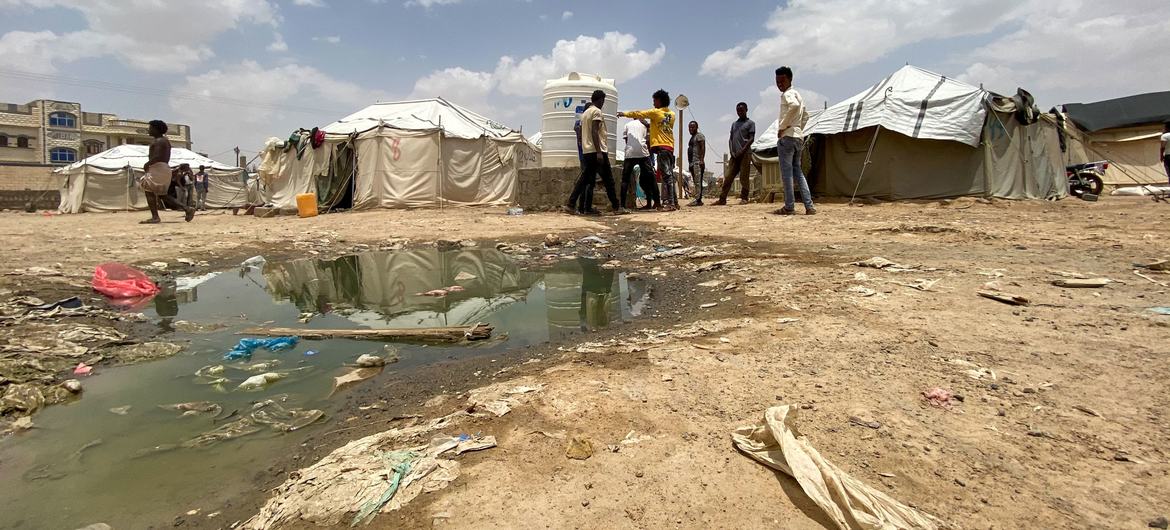
A camp of stranded migrants in Yemen.
© IOM/Rami Ibrahim
 
A camp of stranded migrants in Yemen

By Vibhu Mishra
12 September 2024
 Peace and Security

Despite recent economic de-escalation agreements, Yemen remains at risk of a return to full-scale conflict, with continued fighting and increased rhetoric between the warring sides, the UN envoy for the country warned on Thursday.

The crisis in Yemen, which worsened in 2014 after Houthi rebels (known officially as Ansar Allah) seized the capital, has been marked by complex political and military tensions. More than 18 million people – half the country’s population – remain dependent on humanitarian assistance and protection.

Hans Grundberg, the UN Special Envoy for Yemen, told the Security Council that while violence remains below pre-2022 truce levels, clashes in regions like Hudaydah and Ta’iz continue to claim lives.

“The current dynamic is a stark reminder that the threat of a return to full-scale war remains ever-present,” he warned.

Regional tensions continue
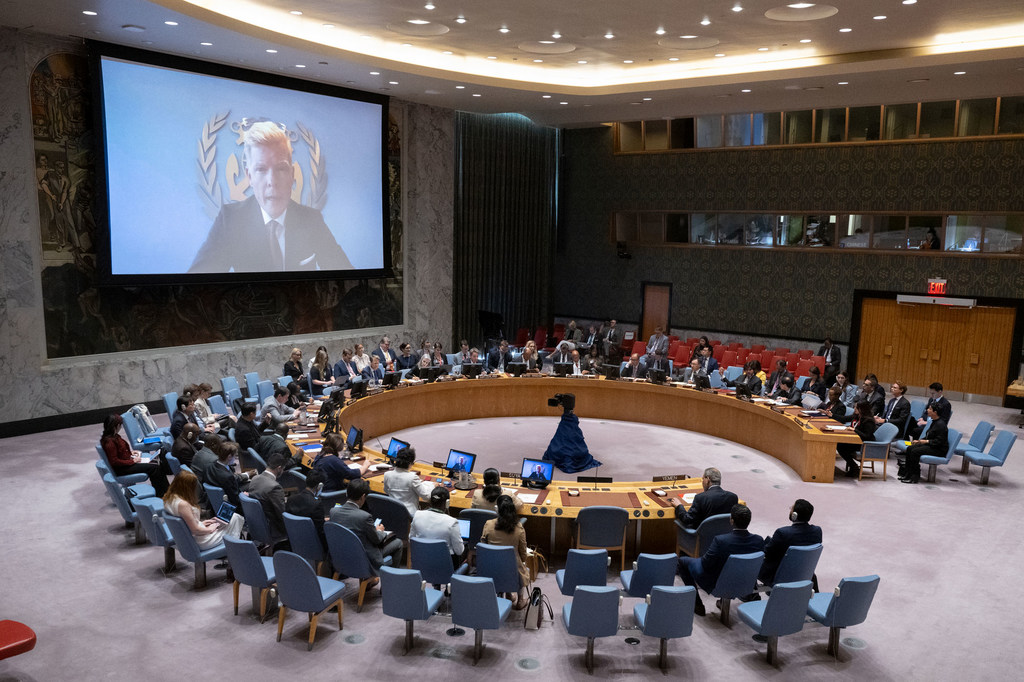
A wide view of the  Security Council Chamber as Hans Grundberg (on screen), Special Envoy of the Secretary-General for Yemen, briefs the Security Council meeting on the situation in Yemen.
UN Photo/Eskinder Debebe
 
A wide view of the Security Council Chamber as Hans Grundberg (on screen), Special Envoy of the Secretary-General for Yemen, briefs the Security Council meeting on the situation in Yemen.

Mr. Grundberg noted that the regional tensions from the war in Gaza continue to further complicate the crisis in Yemen.

Houthi attacks on vessels in the Red Sea have continued, threatening regional stability and international maritime security. In response the United States and the United Kingdom continue to strike military targets inside of Yemen.

“I reiterate my concern over this escalatory trajectory and repeat my call for the parties to put Yemen first and to prioritize a settlement of the conflict in Yemen,” he said.

Mr. Grundberg highlighted the recent targeting of the Greek-flagged oil tanker MV Sounion by Houthi forces, which risks triggering a catastrophic oil spill, warning of an environmental disaster for Yemen and the wider region.

Committed to resolving the crisis

Efforts to resolve the crisis remain ongoing, with the Special Envoy emphasizing the need for sustained dialogue and collaboration across conflict lines.

“Seek to use the 23 July understanding [on economic de-escalation] as a steppingstone to de-politicize the economy and shift the parties away from a zero-sum mindset to one of collaboration,” he said, underscoring the importance of continued engagement.

He also pointed to ongoing consultations with Yemeni civil society, including women, youth, and vulnerable groups, as part of a broader push for an inclusive peace process.

In conclusion, Mr. Grundberg affirmed his “unwavering determination” to engage with all parties and work towards a sustainable and comprehensive peace in Yemen.

No time to lose, to save lives
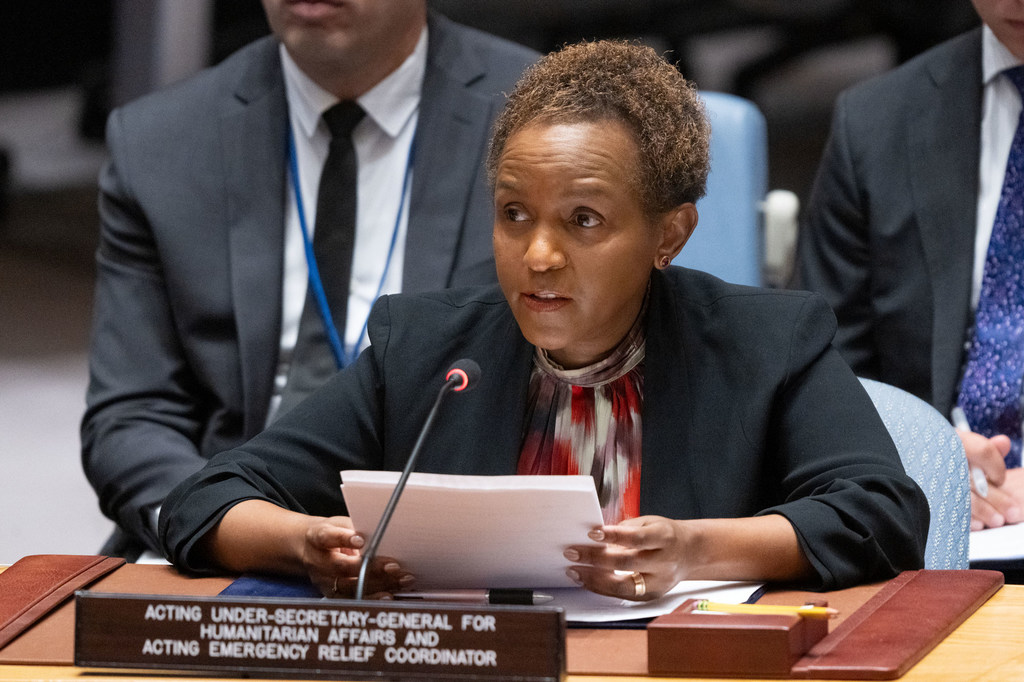
Joyce Msuya, Acting Under-Secretary-General for Humanitarian Affairs, briefs the Security Council meeting on the situation in Yemen.
UN Photo/Eskinder Debebe
 
Joyce Msuya, Acting Under-Secretary-General for Humanitarian Affairs, briefs the Security Council meeting on the situation in Yemen.

Also briefing the Security Council, Joyce Msuya, Acting Under-Secretary-General for Humanitarian Affairs, highlighted the severe hardship confronting Yemenis.

Over 62 per cent of households across the country do not have enough food, with some areas, such as Hudaydah and Ta’iz, experiencing extremely critical levels of malnutrition, she warned.

“By the end of 2024, more than 600,000 children in Government of Yemen-controlled areas are estimated to be acutely malnourished, and around 118,000 are projected to suffer from severe acute malnutrition – a 34 per cent increase since 2023,” she said.

“Time is of the essence if we are to prevent catastrophe.”

Response challenges

Ms. Msuya also expressed deep concern over the continued arbitrary detention of UN personnel and staff of non-governmental organizations (NGOs) by Houthi authorities, urging their immediate release and respect for humanitarian law.

Thirteen UN personnel were detained in June, with four more held since 2021 and 2023, lacking contact with their families and agencies.

She also rejected false allegations against UN and aid agencies and workers, warning such claims jeopardize safety and operations of humanitarian actors working to alleviate the suffering.

The senior UN relief official concluded her briefing, stressing that the humanitarian community is committed to staying and delivering in Yemen – “as best it can, for as long as it takes.”

“To do this, we need the parties to respect international humanitarian law – by immediately releasing our detained colleagues, protecting civilians and humanitarian workers, and facilitating unimpeded humanitarian access.”


https://news.un.org/en/story/2024/09/1154271


https://creativecommons.org/licenses/by/4.0/legalcode

вторник, 15 августа 2023 г.

Sudan: Four months of conflict 'destroying people's lives and violating their basic human rights', humanitarians warn


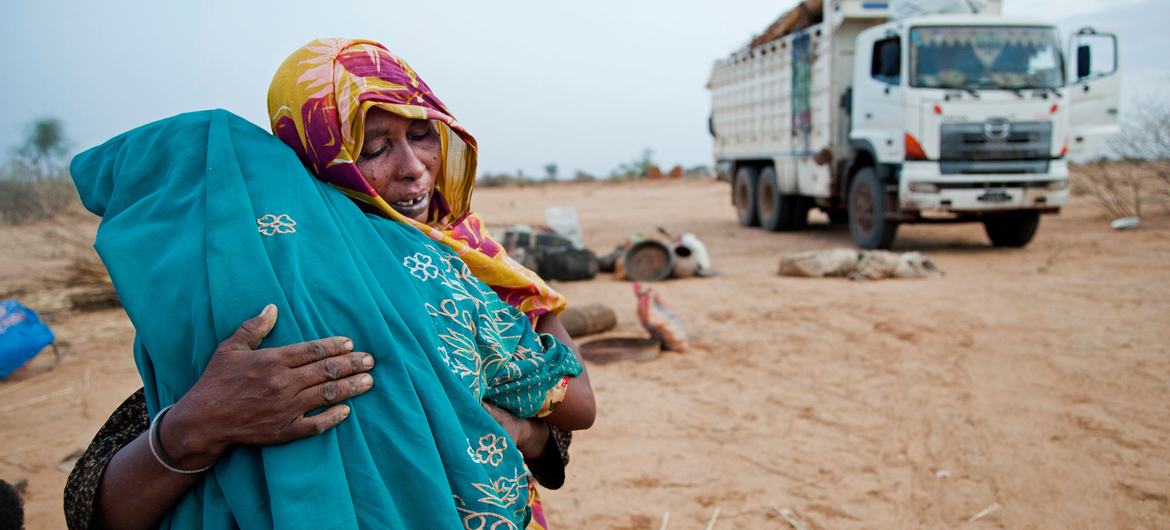
People continue to be displaced by conflict in Sudan.
UN Photo/Albert González Farran
 
People continue to be displaced by conflict in Sudan.
15 August 2023
Human Rights

After four months of war in Sudan, UN humanitarians on Tuesday called for action to be taken to end the conflict which is having a “devastating impact” on people's lives, health and well-being.

In a statement, UN High Commissioner for Human Rights Volker Türk warned that the “disastrous, senseless war in Sudan, born out of a wanton drive for power, has resulted in thousands of deaths, the destruction of family homes, schools, hospitals and other essential services, massive displacement, as well as sexual violence, in acts which may amount to war crimes”.

Over four million flee conflict

 William Spindler, spokesperson for the UN refugee agency UNHCR, noted that over 4.3 million people have been forced to flee since conflict erupted on 15 April between the Sudanese Army and the paramilitary Rapid Support Forces (RSF). 

Latest UN data indicates that more than 900,000 refugees and asylum seekers have fled to neighbouring countries and 195,000 South Sudanese have been forced to leave Sudan. 

Mr. Spindler added that within Sudan, over 3.2 million people have been internally displaced, including more than 187,000 refugees already living in the country at the start of the crisis.

Echoing that message, UN World Health Organization (WHO) spokesperson Dr Margaret Harris warned that some 67 per cent of hospitals in the affected areas were out of service, denying access to care for “tens of thousands of people”. 

Tweet URL

‘Death sentence’ for children

The WHO official further noted that the UN agency had verified 53 attacks on healthcare, adding that 11 people have been killed and 38 injured.

In the context of “insecurity, population displacement and non-functional laboratories”, Dr. Harris sounded the alarm about the difficulty of controlling ongoing outbreaks of measles, malaria and dengue. Conditions are even more dangerous for children, she said, with about one-third of under five-year-olds now chronically malnourished. “Measles and malnourishment equals a death sentence for children under five,” she said.

Threat for women and girls

The situation is also particularly dangerous for women and adolescent girls, stressed Laila Baker, Regional Director for The United Nations Population Fund (UNFPA), with 2.6 million women and girls of reproductive age requiring humanitarian assistance. 

Some 260,000 women are now pregnant and almost 100,000 are expected to give birth in the next three months. But without critical services, including hospitals and safe delivery, “their lives and those of their children and the babies that are going to be the future generation are severely at risk”, Ms. Baker said. 

The threat of sexual violence is an additional danger for women and girls, warned UN human rights office, OHCHR. According to spokesperson Liz Throssell, OHCHR had received credible reports of some 32 incidents of sexual violence against 73 victims by 2 August. This includes at least 28 incidents of rape. Men in Rapid Support Forces (RSF) uniforms were implicated in at least 19 incidents as perpetrators, but “the actual number of cases is likely much higher,” she said.

Ms. Throssell reiterated that the UN human rights chief, Volker Türk, had repeatedly reminded senior officials in Sudan that there is “zero tolerance” for sexual violence. “Perpetrators must be held accountable and such violence must be clearly and unequivocally condemned,” she said.

Possible war crimes

Adding to the calls for action, Jens Laerke, spokesperson for the UN Office for the Coordination of Humanitarian Affairs (OCHA) warned that the war is “destroying people's lives and their homeland and violating their basic human rights”.

He urged all parties to the conflict to “end the fighting, protect civilians, and give humanitarian organizations unfettered access” to all areas of Sudan. The attacking of civilians, looting of humanitarian supplies, and targeting of aid workers and hospitals throughout the past four months “may amount to war crimes and crimes against humanity.”


https://news.un.org/en/story/2023/08/1139752


https://creativecommons.org/licenses/by/3.0/legalcode

четверг, 10 августа 2023 г.

Ethiopia: De-escalate tensions in Amhara, international rights experts urge


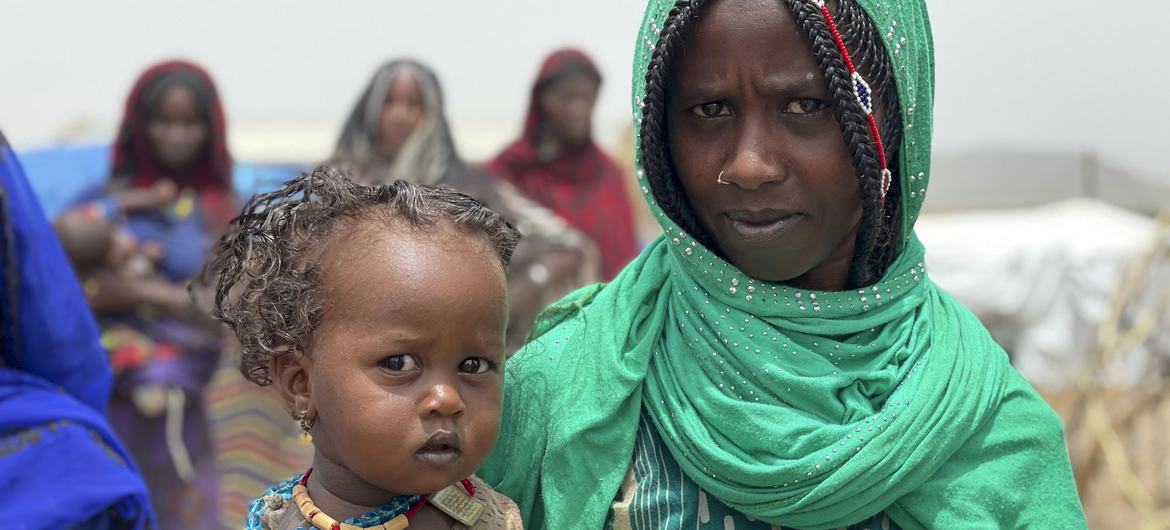
A woman and her child displaced by conflict in northern Ethiopia. (file)
© WFP/Claire Nevill
 
A woman and her child displaced by conflict in northern Ethiopia. (file)
10 August 2023
Human Rights

An international human rights body focused on Ethiopia has voiced deep concerns over the worsening security situation in the northwest of the country, particularly in the Amhara region.

On 4 August, the Ethiopian Council of Ministers declared a state of emergency in the region after, according to media reports, the regional leader said he was no longer able to contain a surge of violence between a local militia and the army over a disputed plan to absorb the regional security forces into the national army.

The International Commission of Human Rights Experts took note of the declaration of the state of emergency, adding that it required approval by the House of Peoples’ Representatives, as per the Ethiopian Constitution.

“Previous states of emergency have been accompanied by violations of human rights,” the Commission said in a statement on Thursday.

“[We] therefore urge the Government to strictly adhere to the principles of necessity, proportionality, and non-discrimination in accordance with its international legal obligations under Article 4 of the International Covenant on Civil and Political Rights.”

The Commission also called on all sides to respect human rights and take steps to deescalate the situation and prioritize efforts towards a peaceful resolution of differences.

Amhara cannot bear another conflict

Meanwhile, the Director-General of the UN World Health Organization (WHO), Tedros Adhanom Ghebreyesus, raised an alarm over the humanitarian situation in Amhara.

“The people of Amhara cannot bear another conflict. WHO calls on all parties to the conflict to cease hostilities and return to talks,” he said at a regular press briefing in Geneva on Wednesday.

According to WHO, almost two million people are in need of health assistance, and the situation is made more complex by the influx of refugees from the conflict in neighbouring Sudan.

The International Commission

The International Commission was established by the UN Human Rights Council in December 2021 to conduct an impartial investigation into allegations of violations of international human rights law, international humanitarian law and international refugee law in Ethiopia committed since 3 November 2020, which marked the start of the conflict in Tigray.  

The Commission’s mandate was most recently extended for a period of one year, until December 2023.

The body comprises three human rights experts appointed by the President of the HRC. The current members of the body are Mohamed Chande Othman (Tanzania, Chair); Steven Ratner (United States of America); and Radhika Coomaraswamy (Sri Lanka). 


https://news.un.org/en/story/2023/08/1139652


https://creativecommons.org/licenses/by/3.0/legalcode

четверг, 3 августа 2023 г.

Sudan conflict displaces nearly four million: UN migration agency

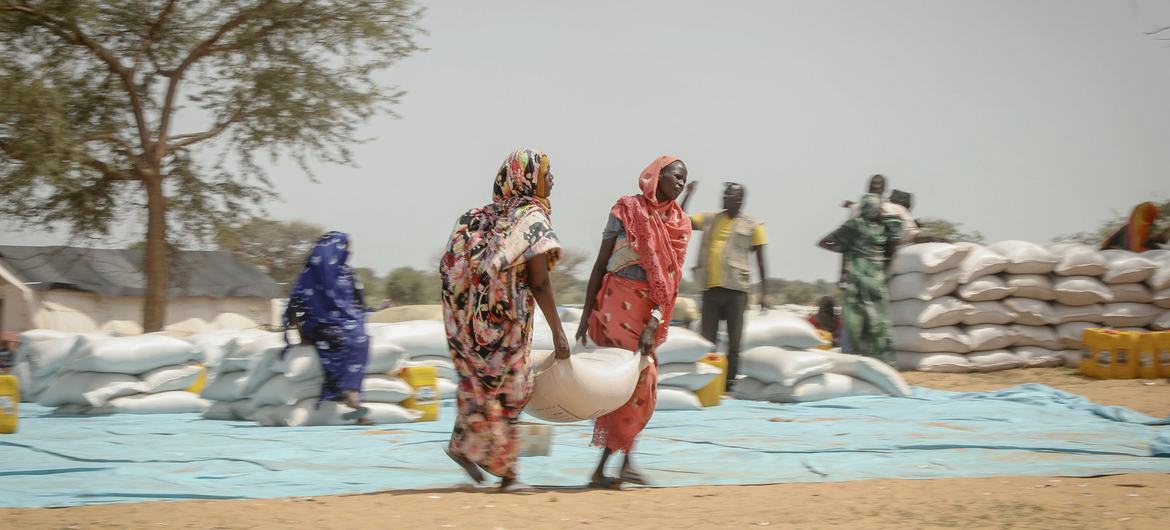
Sudanese refugees in Chad collect food distributed by the UN.
WFP/Marie-Helena Laurent
 
Sudanese refugees in Chad collect food distributed by the UN.

2 August 2023
Human Rights

Conflict in Sudan has forced nearly four million people to flee their homes in a little over 100 days, the UN migration agency, IOM, has warned. 

Latest data from IOM’s displacement matrix indicates that the clash between the Sudanese army and paramilitaries has uprooted a staggering number of people, with more than 926,000 seeking refuge abroad and a total of 3.02 million internally displaced. 

According to IOM’s latest humanitarian situation update, individuals have been forced to leave all of Sudan’s 18 states. Those with the highest proportions of displaced people are River Nile (15 per cent), North (11 per cent), North Darfur (9 per cent) and White Nile (9 per cent).

IOM field teams have reported that the majority of internally displaced individuals, 71 per cent, originated from Khartoum State. 

The UN organization emphasized that the current estimate of displacements over the past 108 days surpasses the total recorded for the previous four years. But it also noted that access to many areas remains impossible because of the fighting, meaning that current assessments have been based on preliminary reports or estimates.

Shelter across borders

A total of 926,841 people have now sought refuge in neighboring countries such as Egypt, Libya, Chad, the Central African Republic, South Sudan, and Ethiopia. Sudanese nationals accounted for more than two-thirds of these arrivals, while foreign nationals and returnees made up the remaining third, IOM said. 

To mark 100 days since the start of the conflict on 24 July, UN High Commissioner for Refugees Filippo Grandi said that it was “time for all parties to this conflict to immediately end this tragic war”, amid growing concerns for refugees fleeing Sudan. 
According to the UN refugee agency, UNHCR, conditions have been “harrowing” for those reaching shelter in neighbouring countries, where displacement camps are overcrowded and the looming rainy season has made relocation and aid deliveries harder. 

Echoing those concerns, the IOM also warned on Wednesday that the rains pose a significant risk of flooding and could exacerbate the already fragile conditions. 

Horrors of war

Since mid-April, the conflict between Sudan’s armed forces and the paramilitary Rapid Support Forces (RSF) has caused displacement, death, injury and an unfolding humanitarian crisis. Reports of looting, attacks on public institutions and the occupation of private homes continue in the capital Khartoum, while clashes persist in four out of the five Darfur states.

Last week, the World Health Organization (WHO) reported cases of infectious diseases and other illness among displaced populations who have sought shelter in hard-to-reach locations, where health services are limited. The UN agency also reported that more than 50 health facilities have been attacked. 

Although the WHO is supporting health services both in Sudan and bordering countries, the organization warned that the health crisis has impacted the entire region. And as efforts continue to bring about an end to the fighting, humanitarians fear that the situation could worsen for already vulnerable civilians caught up in the conflict.

Six million on the brink of famine

Meanwhile, the UN humanitarian affairs office, OCHA, warned that hunger and displacement due to the war are spiraling out of control. 

Latest analysis from the Integrated Food Security Phase Classification (IPC) revealed that more than six million people, around 13 per cent of the population, are now one step away from famine. 

Overall, more than 20 million people across Sudan are facing high levels of acute food insecurity as a result of conflict, economic decline and mass displacement. 

https://creativecommons.org/licenses/by/3.0/legalcode

https://news.un.org/en/story/2023/08/1139352

суббота, 15 июля 2023 г.

Security Council urged to address ‘most silenced and least condemned crime

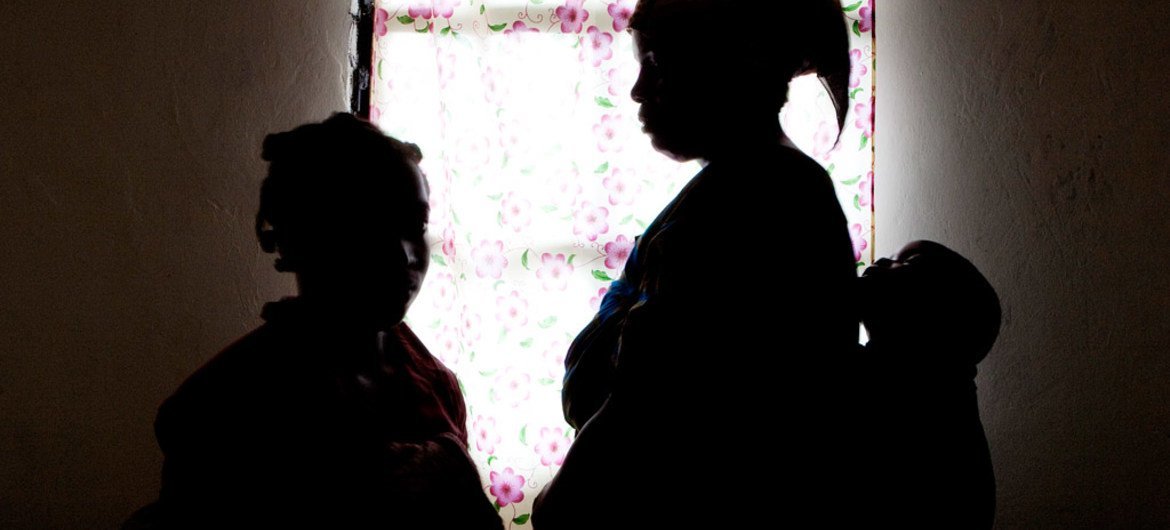
Victims of sexual violence at a shelter in Goma, Democratic Republic of the Congo. UN Photo/Marie Frechon (file)
UN Photo/Marie Frechon (file)
 
Victims of sexual violence at a shelter in Goma, Democratic Republic of the Congo. UN Photo/Marie Frechon (file)
14 July 2023
Peace and Security

The international community must act now to protect future generations from the scourge of conflict-related sexual violence, the UN’s advocate on the issue, Pramila Patten, told the Security Council on Friday. 

“Every new wave of warfare brings with it a rising tide of human tragedy, including new waves of war’s oldest, most silenced and least condemned crime,” she said.

The Council meeting to examine implementation of its resolutions on conflict-related sexual violence was convened by the United Kingdom, which holds the rotating presidency this month.

Meetings survivors in DRC 

Ms. Patten presented data from her latest report, published last month, which documented 2,455 UN-verified cases of wartime rape committed during 2022.  Women and girls accounted for 94 per cent, with six per cent against men and boys.

Tweet URL

The Democratic Republic of the Congo (DRC) was again the country with the highest number of cases, 701. The UN expert visited the country in June and was horrified by the testimonies of women and girls, many of whom had been very recently raped.

“So many of them stressed the daily risk of sexual violence while carrying out livelihood activities around the camps, such as searching for food, collecting wood or water. Just imagine facing the reality each day that you are likely to be raped, yet having no choice,” she said.

Visit to Ukraine

Ms. Patten also conducted her first field visit to Ukraine last year. She was struck by both the occurrence of sexual violence in conflict zones and the vulnerability of women and children forced to flee to countries such as Poland and Moldova. 

“I witnessed first-hand the extraordinary toll on women, children and the elderly, including their vulnerability to unscrupulous individuals and criminal networks for whom the rapid and unprecedented mass displacement of people is not a tragedy but an opportunity for trafficking and sexual exploitation,” she said. 

Impunity going unpunished 

Ms. Patten’s annual report also detailed horrors committed in other countries, such as Haiti, Ethiopia and Iraq.  Serious allegations of conflict-related sexual violence in Sudan have also surfaced since fighting erupted in April.

The report also clearly demonstrates the emboldening effects of impunity, she said. Nearly 50 parties, mostly non-State actors, are listed for systematically committing sexual violence.  More than 70 per cent have appeared on the list for five years or more.

“The reality is that until we effectively raise the cost and consequences for committing, commanding or condoning sexual violence, we will never stem the tide of such violations,” she said.

Resolve and resources 

Ms. Patten called for greater political resolve and resources. She said there is more knowledge today about what motivates sexual violence, who the perpetrators are, and the response required by survivors. 

It is essential that prevention efforts are grounded in this enhanced knowledge, she said, which is at the heart of a strategy launched by her office last September. 

She advised that the international community must ensure implementation of Security Council resolutions while adapting actions to today’s conflicts and emerging global challenges, such as cyber threats and climate-related insecurity.

“The time is now to double down on the institutional and accountability frameworks put in place by successive resolutions,” she said.  “We must act urgently, and with sustained resolve, to save succeeding generations from this scourge.” 

https://creativecommons.org/licenses/by/3.0/legalcode

 https://news.un.org/en/story/2023/07/1138727