Показаны сообщения с ярлыком Un chief. Показать все сообщения

вторник, 13 мая 2025 г.

UN chief calls for major reforms to cut costs and improve efficiency


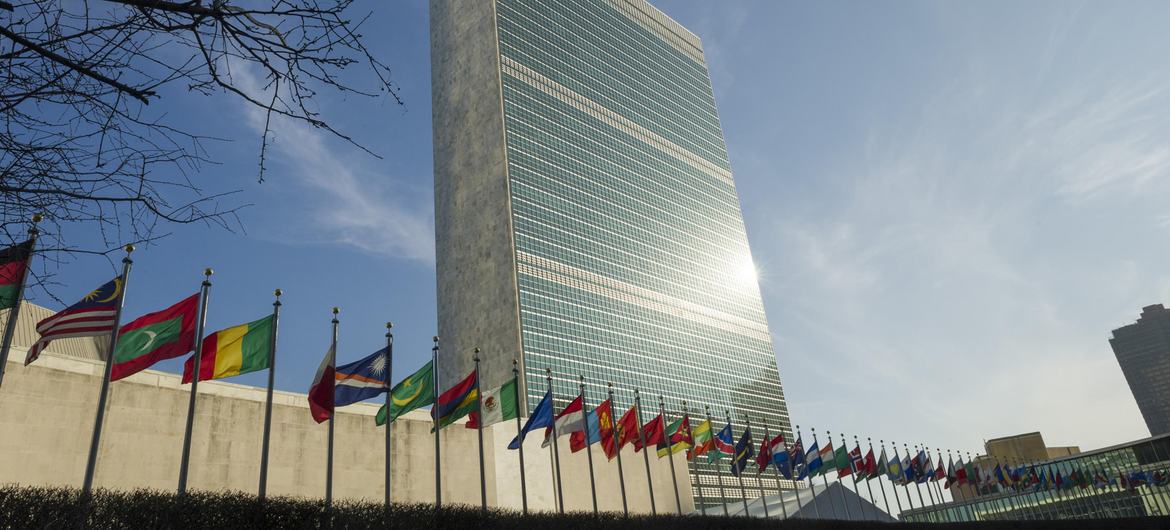
The Secretariat Building at United Nations Headquarters, in New York.
UN Photo/Rick Bajornas
 
The Secretariat Building at United Nations Headquarters, in New York.


By Vibhu Mishra
12 May 2025

 UN Affairs

Amid financial strain and growing global challenges, UN Secretary-General António Guterres is pushing for wide-ranging structural reforms to enhance the world body’s effectiveness.

Briefing Member States in New York on Monday Mr. Guterres outlined wide-ranging effort to revamp how the UN system operates – cutting costs, streamlining operations, and modernizing its approach to peace and security, development and human rights.

“These are times of peril,” he said, “but they are also times of profound opportunity and obligation. The mission of the United Nations is more urgent than ever.

Three main objectives

Launched in March, the UN80 Initiative centres on three priorities: enhancing operational efficiency, assessing how mandates – or key tasks – from Member States are implemented, and exploring structural reforms across the UN system.

The conclusions will be reflected in revised estimates for the 2026 budget in September this year, with additional changes that require more detailed analysis presented in 2027.

‘Meaningful’ budget reductions

Mr. Guterres said the changes are expected to yield “meaningful reductions” in the overall budget. For example, the departments for political and peacekeeping affairs could see a 20 per cent reduction in staff by eliminating duplication.

This level of reduction, he said, could serve as a benchmark across the UN system – while also considering unique factors for each department.

Additional examples include consolidating all counter-terrorism work within the main Office of Counter-Terrorism (UNOCT), ending building leases and relocating posts away from expensive “duty stations” where cost of living is high.

“There might be immediate, one-off costs involved in relocating staff and providing potential termination packages,” he said, “but by moving posts from high-cost locations, we can reduce our commercial footprint in those cities and reduce our post and non-post costs.

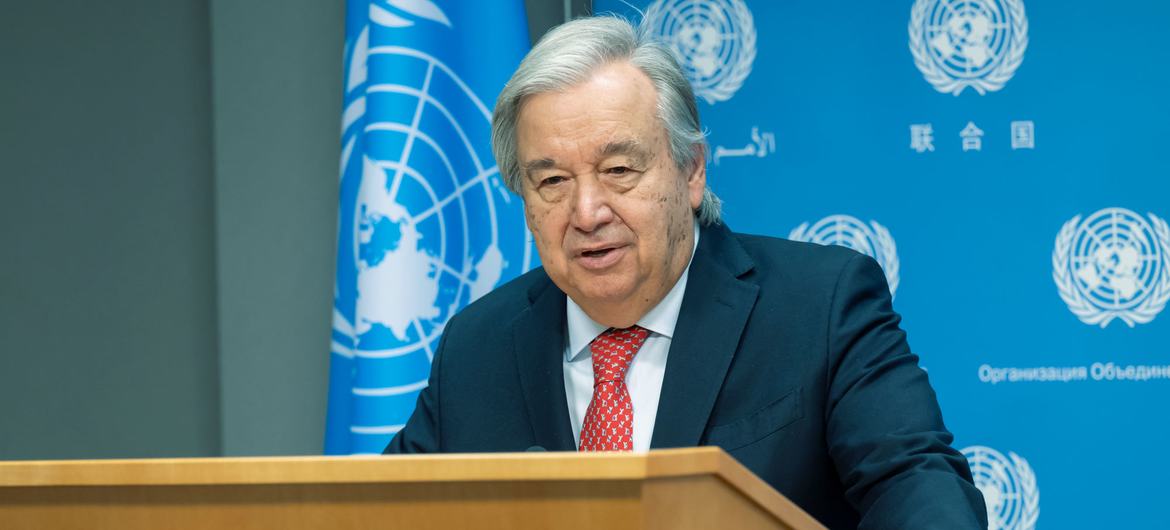
UN Secretary-General António Guterres briefs on the UN80 Initiative.

Efficiencies and upgrades

The first workstream focuses on efficiencies and improvements, developing a new model that improves consolidation, looks at centralising services, relocating to cheaper locations, and expanding the use of automation and digital platforms.

Mr. Guterres said departments the UN’s headquarters in New York and Geneva have been asked to review whether some teams can be relocated to lower-cost duty stations, reduced or abolished.

Reviewing mandates

The second workstream involves a review of how existing mandates are being carried out – not the mandates themselves, which are the purview of Member States only.

A preliminary review identified more than 3,600 unique mandates for the Secretariat alone. A full and more detailed analysis is now underway.

Mr. Guterres emphasised that the sheer number of mandates – and the bureaucracy needed to implement them – places a particular burden on smaller Member States with limited resources.

“Based on this work, Member States may wish to consider the opportunity to conduct themselves a review of the mandates,” he added.

Structural change

The third workstream – focused on structural reform – is already underway, Mr. Guterres said.

Nearly 50 initial submissions have already been received from senior UN officials, reflecting what Mr. Guterres described as “a high level of ambition and creativity.”

Key work areas have been identified for review. These include peace and security, development, human rights, humanitarian, training and research and specialised agencies.
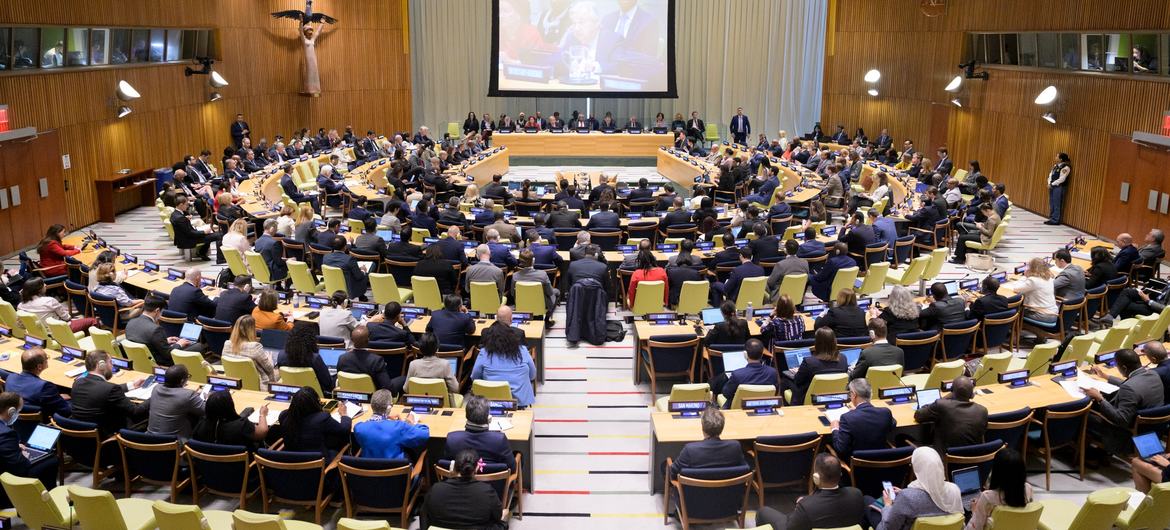
A wide view of the informal meeting of the General Assembly plenary that heard a briefing by the Secretary-General on the UN80 Initiative.
UN Photo/Manuel Elías
 
A wide view of the informal meeting of the General Assembly plenary that heard a briefing by the Secretary-General on the UN80 Initiative.

Not an answer to liquidity crisis

Mr. Guterres also touched on the UN dire cashflow situation, noting that the initiative “is not an answer” to the months-long liquidity crisis but by being more cost effective, it should help limit the impact.

The liquidity crisis is caused by one simple fact – the arrears,” he said, adding that structural reform is not the answer to a fundamental failure by some Member States to pay what they owe on time to meet running costs.

Unpaid dues

According to information provided by the UN Controller to the General Assembly’s Fifth Committee (Administrative and Budgetary), only $1.8 billion has been received against the $3.5 billion regular budget assessments for 2025 – a shortfall of around 50 per cent.

As of 30 April, unpaid assessments stood at $2.4 billion, with the United States owing about $1.5 billion, China ($597 million),  Saudi Arabia ($42 million), Mexico ($38 million), and Venezuela ($38 million). An additional $137 million is yet to be paid by other Member States.

For the peacekeeping budget (which runs on a July-June cycle), including prior-period arrears, the unpaid amount totals $2.7 billion. For the International Tribunals, total contribution outstanding was $79 million as of 30 April.

Close consultation

The Secretary-General told Member States he would be consulting with them  closely and regularly on the cash crisis and needed reforms, seeking guidance  and presenting concrete proposals for countries to act on.

UN staff members and their representatives are being consulted and listened to, he added: “Our concern is to be humane and professional in dealing with any aspect of the required restructuring.

In conclusion, he highlighted that the UN80 Initiative is a “significant opportunity” to strengthen the UN system and deliver for those who depend on it.

In response to the suggestion that the UN should focus on just the one key pillar of peace and security, he said it would be wrong to ditch development and human rights – all three are essential he underscored.

Let us seize this momentum with urgency and determination, and work together to build the strongest and most effective United Nations for today and tomorrow.”


https://news.un.org/en/story/2025/05/1163151

https://creativecommons.org/licenses/by/4.0/legalcode

четверг, 26 сентября 2024 г.

UN chief to G20 ministers: Collaboration key to a sustainable future


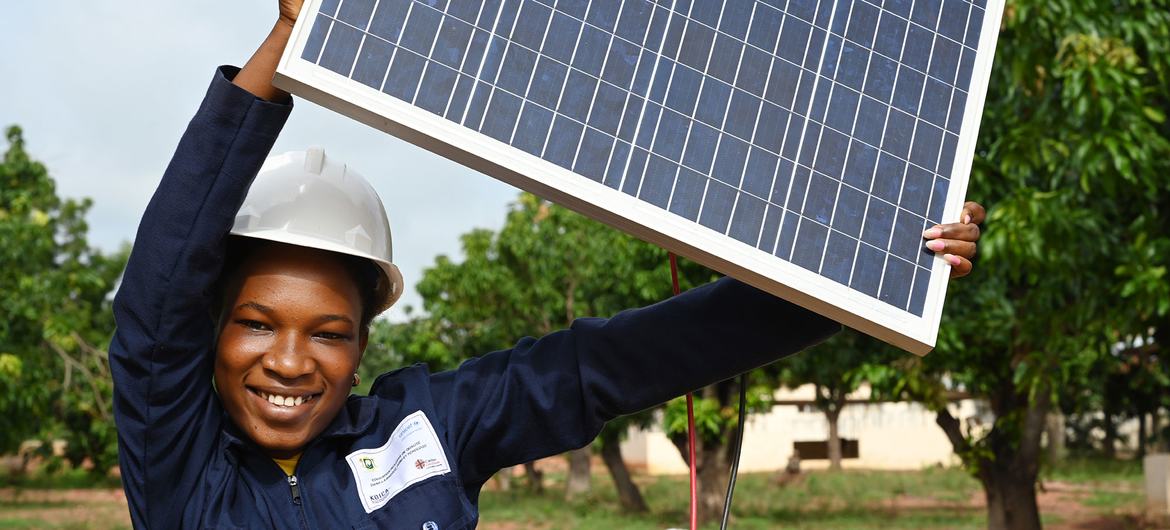
A teenage woman in Côte d'Ivoire holds up a solar panel. Boosting renewable energy is a key part of the climate action agenda.
© UNICEF/Frank Dejongh
 
A teenage woman in Côte d'Ivoire holds up a solar panel. Boosting renewable energy is a key part of the climate action agenda.


25 September 2024

As foreign ministers from the G20 group of industrialised nations met on Wednesday to discuss sustainability and justice issues, the UN chief urged global financial institutions to “cooperate and collaborate for the good of humanity.” 

UN Secretary-General António Guterres, said progress on ending the climate crisis, inequality and the harmful impact of new technologies was “slipping” and in need of an intervention.

He noted that the adoption of the Pact for the Future adopted on Sunday at the was an essential first step: “The work starts today,” Mr. Guterres said. “The Pact for the Future is about action in the here and now.”

Finance and climate

Secretary-General Guterres said countries in the G20 need to work together to achieve a more sustainable world by acting on reforming the international financial system and solving the climate crisis.

We need ambitious reforms of the international financial architecture to make it fully representative of today’s global economy, so it can provide strong support to implement the Sustainable Development Goals,” Mr. Guterres said.

The UN chief further urged the need for stronger action on soaring debt burdens and financial systems that will reduce the cost of inequalities facing many communities.

Action is also needed to address the climate crisis as 2024 saw record-breaking temperatures and destructive weather events.

The clear solution, according to the Secretary-General, is reducing the use of fossil fuels and transitioning to renewable energy.

Clean energy investments in emerging and developing economies outside China and India have barely increased since 2015,” Mr. Guterres said.  “The energy transition must be based on justice and equity, so that all countries benefit.”

Inclusive global institutions

Mr. Guterres also called for the establishment of inclusive global institutions that will “tackle the challenges of today and tomorrow.”

He said stronger reforms can be unlocked if there is fair and representative governance.

“The Pact for the Future includes commitments to make multilateral institutions more representative, effective, transparent and accountable,” Mr. Guterres said.

Commitment to collaboration

The UN chief ended his message to G20 ministers by reminding members that the UN is committed to “strengthening our convening role as an inclusive platform for dialogue and action” partly through hosting summits in 2025 that will allow for effective dialogue to occur.

“I urge the G20 to seize every opportunity to raise ambition for global leadership and transformative action for a safer, more peaceful and sustainable world for all,” he said.


https://news.un.org/en/story/2024/09/1154886


https://creativecommons.org/licenses/by/4.0/legalcode
четверг, 22 августа 2024 г.

UN chief urges climate justice for Pacific nations beset by rising oceans


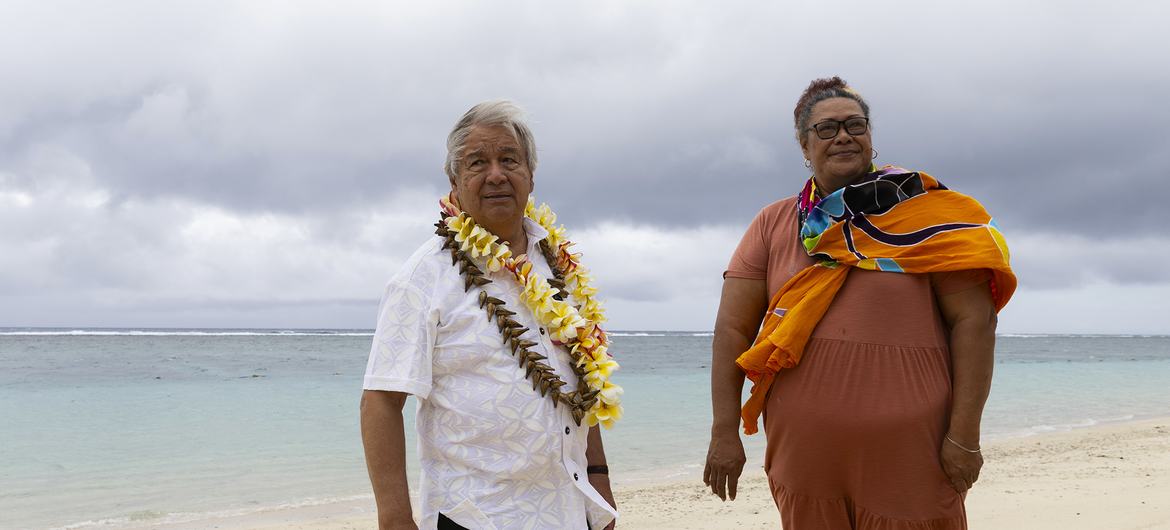
UN Secretary-General António Guterres (left) meets a community member from Lalomanu in Samoa which like many small island nations needs massive investment to counter rising seas and climate shocks.
United Nations/Kiara Worth
 
UN Secretary-General António Guterres (left) meets a community member from Lalomanu in Samoa which like many small island nations needs massive investment to counter rising seas and climate shocks.


By Daniel Johnson
22 August 2024
 Climate and Environment

Pacific island nations threatened by rising oceans, debt and geopolitical tensions can only fight back if international lenders agree to fairer terms for vital development funding and the world’s biggest polluters make a “massive increase” in contributions to address “climate chaos”, UN Secretary-General António Guterres said on Thursday.

Speaking in Samoa, where he met residents uprooted from their homes by sea level rise and coastal erosion, Mr. Guterres said that Pacific islanders had refused to be victims of climate change. But their ambitious plans to resist this “existential threat for millions” had been put on hold, amid a lack of promised funding, he insisted.

We are fighting hard for climate justice…[but] we are not seeing the money that is needed and that’s why we ask for the reform and the international financial institutions in order for the funding needs of countries, like Pacific countries, to be met,” the UN chief told journalists at UN House in Apia, the capital.

More than words

Positive gestures from wealthy nations towards developing countries have been insufficient to compensate for economic shocks from natural disasters caused by climate change, Mr. Guterres insisted, pointing to the Loss and Damage Fund, agreed in 2022 at the UN Climate Change Conference (COP27) in Egypt.

Developed countries also pledged in 2021 to double climate adaptation funding from the $100 billion a year agreed in 2009, the Secretary-General said, as he noted that this potential game-changing income stream hadn’t garnered enough support either.

“We need all countries to honour their promises on climate finance and a strong finance outcome from this year’s COP where we will discuss the financial commitments after 2025,” he said.

Sea wall under siege

Tweet URL

Speaking to reporters, the UN chief described how Samoans have repeatedly pushed back at climate shocks, including the deadly 2009 tsunami that left at least 192 dead.

“We have seen people that moved their houses inland. We have seen people that persisted coming back and rebuilding. We have seen an enormous determination of people to fight against, not only the impact of the tsunami, but the impacts of the rising sea levels and of the storms and the cyclones”, he said.

“I’ve seen a wall that is protecting a village from the sea; that wall in 20 years, because of the tsunami - because of the rising sea level, and because of the heavy storms - has already been built three times.”

Financial inequalities

Many developing countries like Samoa which are also on the frontlines of the climate crisis must rely on borrowing from international lenders at higher rates than the world’s poorest nations, which has effectively prevented them from accessing the funds they need to help themselves.

To address this historic structural inequality in international finance, the UN has worked with Small Island Developing States (SIDS) on a new measurement of national income – the Multidimensional Vulnerability Index (MVI) – so that they too can access the significant funding required for sustainable development.

“We ask the international community to act in a way that when international financial institutions deal with countries like Samoa, the Multidimensional Vulnerability Index is taken into account to allow for concessional funding to be granted for the projects that are necessary for this country to achieve the Sustainable Development Goals and protect its populations against climate change,” Mr. Guterres said.

Drawing up solutions

The Secretary-General also reiterated his wish for small island states like Samoa to have access to some $80 billion in development funding linked to Special Drawing Rights, which can be channeled by members of the International Monetary Fund (IMF) to multilateral development banks to be made available for borrowing.

New income streams like this are crucial for countries like Samoa that lost vital tourist income because of the COVID-19 pandemic and “have not received the support of the international community”, Mr. Guterres continued. “When we look at Samoa, we understand what that means and we never stop fighting to make sure that this is recognized by the international community.”


https://news.un.org/en/story/2024/08/1153431


https://creativecommons.org/licenses/by/4.0/legalcode
понедельник, 22 июля 2024 г.

UN chief expresses deep concern over Israel strikes on Yemen, and risk of regional escalation

UN Secretary-General António Guterres (file)
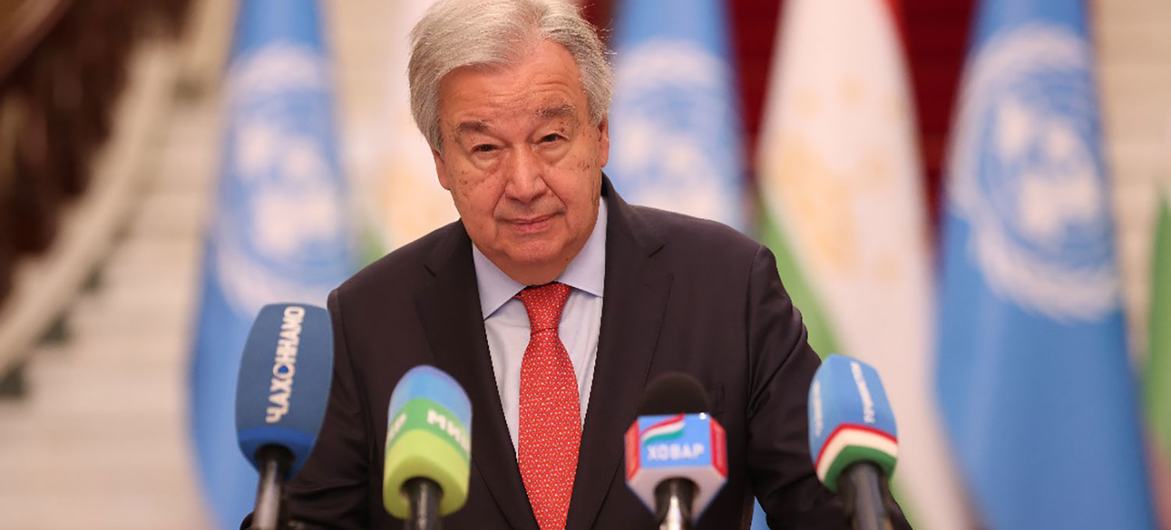
UN Tajikistan/Didor Sadulloev
 
UN Secretary-General António Guterres (file)


21 July 2024 

Peace and Security

UN Secretary-General António Guterres has responded to Israel’s airstrikes on the Yemeni port city of Hudaydah, which reportedly killed at least six people and injured more than 80, by calling for all parties involved in the conflict to “exercise utmost restraint”.

In statement, Mr. Guterres noted that Israel had claimed responsibility for the strikes, which took place on Saturday, as a response to previous attacks on Israel by the Houthis – formally known as Ansar Allah – a group which controls swathes of territory in Yemen, including Hudaydah.

The strikes came after a drone attack on the Israeli city of Tel Aviv on Friday killed one person and wounded 10 more. The attack was claimed by the Houthis and led to a senior Israeli Government minister vowing to “settle the score”. The Israelis strikes on Saturday hit electricity infrastructure and a refinery, creating a large fire.

Efforts to mediate between the Houthis and Yemeni government have stalled in recent months and, following the onset of the war in Gaza in October, the Houthis pledged to attack what they deemed to be pro-Israeli shipping interests along the Red Sea coast, as a demonstration of solidarity with the Palestinians in Gaza.

In turn, a United States (US)-led coalition defending shipping in the Red Sea has continued to strike areas controlled by Houthis in Hudaydah, the capital Sana’a and Ta’iz.

The Houthis reportedly warned that the group’s response to the Israeli airstrikes “will be huge” and that the group would continue to attack Israel and that there would be no “red lines”.

The Yemeni conflict, which began in 2015, has been disastrous for the civilian population. The UN says the war has destroyed most sectors in Yemen, including healthcare, and caused one of the worst humanitarian crises in the world. Around half of the population, some 18.2 million people, are in need of some form of assistance.


https://news.un.org/en/story/2024/07/1152346


https://creativecommons.org/licenses/by/4.0/legalcode
пятница, 19 апреля 2024 г.

Retaliatory spiral in Middle East must end, says UN chief after strikes on Iran


A young boy is treated by a mobile emergency clinic team in Northern Gaza.
© WHO
 
A young boy is treated by a mobile emergency clinic team in Northern Gaza.


19 April 2024
Peace and Security

Following reports of alleged Israeli strikes inside Iran near a nuclear power station early Friday, the UN Secretary-General António Guterres issued a new appeal to all parties to “stop the dangerous cycle of retaliation in the Middle East”.

“The Secretary-General condemns any act of retaliation and appeals to the international community to work together to prevent any further development that could lead to devastating consequences for the entire region and beyond,” he said in a statement issued by his Office.

Echoing those concerns, UN atomic energy agency chief Rafael Grossi urged “extreme restraint” from all sides, after more than six and a half months of war in Gaza that have fuelled fears of a wider regional conflict.

Tweet URL
iaeaorg

IAEA can confirm that there is no damage to Iran’s nuclear sites" and Director-General Grossi "continues to call for extreme restraint from everybody and reiterates that nuclear facilities should never be a target in military conflicts", the International Atomic Energy Agency said in a tweet following unconfirmed media reports that possible drone strikes had targeted the Iranian province of Isfahan, which is home to nuclear facilities and military garrisons. 

In Geneva, too, the UN human rights office, OHCHR, urged all parties “to take steps to de-escalate the situation” rapidly. 

“(We) call on third States, in particular those with influence, to do all in their power to ensure there is no further deterioration in an already extremely precarious situation,” said OHCHR spokesperson Jeremy Laurence.

Hunger and fear

In Gaza, aid teams offered new insight into the dangers faced by Palestinian civilians – particularly pregnant women and breastfeeding mothers – as a result of the “wanton destruction” of vital medical equipment and widespread “dehydration, malnutrition and fear” among Palestinians.

Speaking to journalists in Geneva, Dominic Allen, Representative for the UN sexual and reproductive health agency (UNFPA) for Palestine, said that there were indications that the number of complicated births is nearly twice what it was before war erupted.

“There is absolutely an increase in the numbers,” he said, adding that pre-war, around 15 per cent of births required some form of emergency obstetric care. Today, some doctors have reported “a doubling of what they previously had dealt with, and this is due to malnutrition, dehydration and fear, which impact the pregnant woman’s ability to give birth safely and carry their baby to full term safely,” the UNFPA official said.

‘Wanton destruction’

Mr. Allen described his latest mission to Gaza to assess the impact of Israeli attacks on healthcare at embattled hospitals in the north, central and southern governorates.

It was clear that the last remaining hospitals in the enclave – including its second largest, Nasser Hospital – are “clinging to life themselves whilst they are a lifeline for the pregnant women of Gaza”, Mr. Allen said via video link from Jerusalem. “What I saw, it breaks my heart…It's indescribable. What we see there is medical equipment, purposefully broken, ultrasounds – which you will know is a very important tool for helping ensure safe births – with cables that have been cut, screens of complex medical equipment like ultrasounds and other with the screens smashed. So, purposeful, wanton destruction in the maternity ward.”

Before intense Israeli bombardment began in response to Hamas-led terror attacks across southern Israel on 7 October, Nasser Hospital in the southern city of Khan Younis had a maternity ward which UNFPA teams have supported and supplied for years.

In order to be fully functional again, the hospital will need reconditioned water and sanitation services and repairs to damaged electricity generators, at a bare minimum. “But, I stood beside the warehouse (where) we delivered supplies many months ago and it was literally burning; there's so much work to do in terms of trying to re-establish that lifeline,” Mr. Allen said.

‘Palpable’ fear

The UNFPA mission, which began on Monday 8 April and ended this Wednesday, was carried out in partnership with the UN World Health Organization (WHO), the UN aid coordination office, OCHA, and the UN agency for Palestinian refugees (UNRWA).

The objective was to visit around 10 hospitals in Gaza, among them Al Aqsa Hospital in central Gaza, which was “overwhelmed with trauma patients” and not supporting maternity care. 

At Emirati Hospital in the south of the enclave, Mr. Allen recounted meeting the medical director of the facility who said that “he no longer sees normal-sized babies.”

Turning to Rafah and continuing fears of an Israeli incursion, the UNFPA officer underscored the “great sense of fear” hanging over the more than 1.2 million people sheltering there.

“There is a palpable fear from the Gazans who I spoke with - the midwives, doctors, pregnant women, my fellow colleagues, who are in Gaza…Right now it's a haven for 1.2 million Gazans; it's not a safe haven, but it's a haven at least.”


https://news.un.org/en/story/2024/04/1148741

https://creativecommons.org/licenses/by/3.0/legalcode

пятница, 29 декабря 2023 г.

Rebuild trust and restore hope in 2024: UN chief’s call


Rebuild trust and restore hope in 2024: UN chief’s call

UN Secretary-General António Guterres.
UN Photo/Mark Garten
 
UN Secretary-General António Guterres.
28 December 2023
Peace and Security

United Nations Secretary-General António Guterres has called for global unity to make 2024 a year for “building trust and hope” following the immense suffering, violence, and climate chaos that characterized 2023.

“Humanity is strongest when we stand together. 2024 must be a year for rebuilding trust and restoring hope,” expressed Mr. Guterres in his New Year’s message.

“Let’s resolve to make 2024 a year of building trust and hope in all that we can accomplish together,” he urged, concluding with warm wishes for a happy and peaceful New Year

Secretary-General's New Year Message

Humanity in pain, planet in peril

In his message, the UN chief reflected on the pain and suffering afflicting humanity.  

Conflicts persist, claiming tens of thousands of civilian lives, many of them women and children. Millions have been driven from their homes, facing hunger and disease.

At the same time, “the planet is peril”, Mr. Guterres said, marked by record-breaking temperatures and worsening impacts of climate change.

“2023 has been a year of enormous suffering, violence, and climate chaos […] 2023 is the hottest year on record; people are getting crushed by growing poverty and hunger; wars are growing in number and ferocity,” noted the Secretary-General.

‘We must come together’

Mr. Guterres highlight the scarcity of trust and emphasized that “pointing fingers and pointing guns lead nowhere.”

“Humanity is strongest when we stand together […] We must come together across divides for shared solutions – for climate action, for economic opportunity and a fairer global financial system that delivers for all,” said Mr. Guterres.

Addressing discrimination and hatred poisoning relations between countries and communities, he stressed the importance of ensuring that new technologies, such as artificial intelligence, serve as forces for good.

“The United Nations will keep rallying the world for peace, sustainable development and human rights,” affirmed the UN chief.

“Let’s resolve to make 2024 a year of building trust and hope in all that we can accomplish together.”


https://news.un.org/en/story/2023/12/1145137


https://creativecommons.org/licenses/by/3.0/legalcode


суббота, 21 октября 2023 г.

Gaza: UN chief at Rafah crossing says aid convoy ‘the difference between life and death’

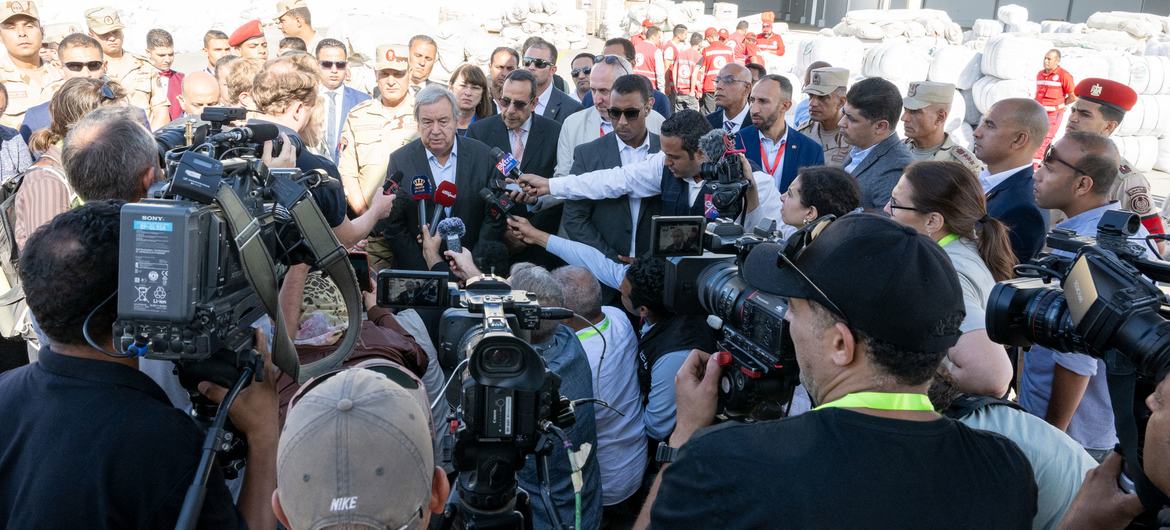
UN Secretary-General António Guterres (centre left) talks to the media at the Rafah crossing.
UN Photo/Eskinder Debebe
 
UN Secretary-General António Guterres (centre left) talks to the media at the Rafah crossing.

20 October 2023

Humanitarian Aid

UN humanitarians said on Friday that an agreement to unlock aid deliveries across the Gaza border was near, as UN chief António Guterres delivered a powerful call in front of the gates at the Rafah crossing to get lifesaving aid moving.

In a passionate speech standing just a few metres from the Egyptian side of the crossing, he pointed behind him and spoke of the two million trapped without sufficient supplies now for nearly two weeks.

“We are witnessing a paradox: behind these walls we have two million people that are suffering enormously, have no water, no food, no medicine, no fuel, that is under fire, that needs everything to survive".

“On this side,” he continued, indicating the convoy carrying lifesaving supplies, “we have seen so many trucks loaded with water, with food, with medicines – exactly the same thing that is needed on this side of the wall. These are a lifeline. They are the difference between life and death for so many people in Gaza.”

To see the convoy stuck at the border makes what needs to happen very clear, he said.

‘Make them move

“What we need is to make them move, to make them move to the other side of this wall, to make them move as quickly as possible and as many as possible,” he said, adding that the UN was “now actively engaging with all the parties” related to conditions set for cross-border aid deliveries in the Israel-United States announcement and the related Egypt-Israel agreement.

“We absolutely need to have these trucks moving as quickly as possible and as many as necessary,” he said. “We are not looking for a win. We are looking for convoys to be authorized in meaningful numbers [and for] trucks to go every day into Gaza to provide enough support to the Gazan people.”

Soundcloud

It was “absolutely essential to solve these problems quickly”, he said, reiterating his appeal for a humanitarian ceasefire. He also thanked the Government of Egypt and humanitarian partners for their efforts.

“It is impossible to be here and not to feel a broken heart,” he said, adding that he hoped the food aid and medicines he had seen on planes arriving would serve the people that needed it most and that “one day there will be peace with the two-State solution, with Palestinians and Israelis living in peace.”

The UN chief arrived on a cargo plane carrying 65 tonnes of humanitarian supplies including food donated to the World Food Programme (WFP) tarpaulins from the UN migration agency IOM and trauma kits from the World Health Organization (WHO).

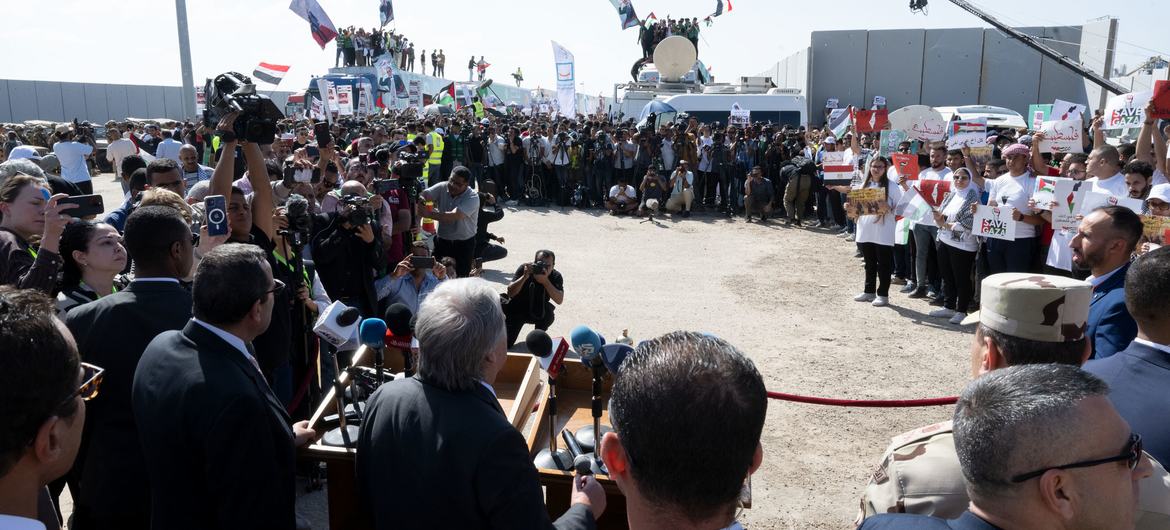
UN Secretary-General António Guterres (podium centre) addresses people gathered at the Rafah crossing.
UN Photo/Eskinder Debebe
 
UN Secretary-General António Guterres (podium centre) addresses people gathered at the Rafah crossing.

‘Advanced negotiations

Briefing reporters in Geneva on Friday morning, UN humanitarian affairs coordination office (OCHA) spokesperson Jens Laerke said on behalf of UN relief chief Martin Griffiths, “we are in deep and advanced negotiations with all relevant sides to make sure that an aid operation into Gaza starts as quickly as possible and with the right conditions”.

We are encouraged by reports that the different sides are nearing an agreement on the modalities and that the first delivery is due to start in the next day or so,” he said.

Rafah, the ‘lifeline’

Aid trucks have been waiting at the Rafah border crossing since Saturday. Mr. Laerke stressed that while it was necessary to “provide aid to everyone in Gaza regardless of where they are”, Rafah was “the lifeline” which would offer the most direct route to reach people in need.

In response to questions regarding the limited scope of the initial operation, Mr. Laerke underscored that it was still under negotiation but that “any trucks that go in would be more than no trucks”.

He also said that in addition to food, water and medicines, fuel was desperately needed in Gaza as the enclave was under an electricity blackout.

“Fuel is a life-saving humanitarian commodity in this crisis,” he insisted.

Death toll rising

In an update after 13 days of hostilities, OCHA said that according to the enclave’s de facto authorities, the death toll in the Gaza Strip has reached 3,785, including at least 1,524 children, while over 12,000 have been injured.

OCHA said that “hundreds of additional fatalities” are believed to be trapped under the rubble, as “relentless bombardments” of the territory continues.

OCHA also said that since 7 October, 1,400 people have been killed in Israel and over 4,600 injured, according to official Israeli sources. At least 203 people are held captive in Gaza, including Israelis and foreign nationals, as per Israeli estimations.

Mr. Guterres has repeatedly called upon Hamas to release the hostages “immediately and unconditionally”, and the UN human rights office (OHCHR) has stressed that the taking of hostages is prohibited by international law.

Attacks on West Bank Palestinians

Meanwhile in the occupied West Bank, OCHA reported that 79 Palestinians, including 20 children, have been killed by Israeli forces and settlers since 7 October. One Israeli soldier was also killed by Palestinians, according to Israeli media.

At least 74 Palestinian households, comprising 545 people, over half of whom are children, have been displaced from 13 herding/Bedouin communities in Area C of the West Bank since 7 October, “amid intensified settler violence and access restrictions”, OCHA said.

The UN human rights office expressed alarm on Friday at the “rapidly deteriorating human rights situation in the occupied West Bank and the increase in unlawful use of lethal force”.

OHCHR spokesperson Ravina Shamdasani said that there has been an increase in arbitrary arrests of Palestinians in the occupied West Bank and of Arab Israelis in Israel, “with reports of ill-treatment and lack of any due process”.

Tweet URL

“This must cease,” she insisted.

Ms. Shamdasani also said that UN rights chief Volker Türk stressed all parties must respect international human rights law and international humanitarian law, and that in the conduct of hostilities, “the principles of necessity, distinction, proportionality and precautions in attack must be respected at all times by everyone”.

Desperate conditions inside Gaza

In Gaza itself, rescue teams, primarily from the Palestinian Civil Defense, are struggling to carry out their mission amid continuous airstrikes, severe shortages of fuel to run vehicles and equipment, and with limited or no connection to mobile networks, said UN Deputy Spokesperson Farhan Haq. 

“Hospitals are on the brink and overcrowded with patients, with many awaiting treatment”, he told journalists in New York.

“We are concerned that 9,000 cancer patients lack adequate care because of conditions in Gaza’s only chemotherapy hospital.”

Since 7 October, at least 30 per cent of all housing units in the Gaza Strip have been either destroyed, rendered uninhabitable, or damaged, according to local authorities.

Meanwhile gender equality agency UN Women estimates that the bombardment and violence has already resulted in close to 493,000 women and girls being displaced from their homes in Gaza.

“Additionally, the violence has tragically resulted in a growing number of widows, as an estimated 900 women have become the heads of households”, Mr. Haq said.

Exchanges of fire continue across Lebanon border

The UN Interim Force in Lebanon (UNIFIL) reported on Thursday night that the Lebanese national army requested the Mission’s assistance in relation to seven individuals stranded near the Blue Line (the unofficial frontier with Israel), close to Sheikh Abad's tomb, in south Lebanon, “during a significant exchange of fire”.

As part of UNIFIL’s liaison mandate, the Mission contacted the Israeli Defense Forces (IDF), urging them to ceasefire, which they did, allowing the Lebanese Armed Forces to extract the individuals from the area.

“Tragically, one of the seven individuals lost his life during this incident. The others were successfully rescued”, Mr. Haq said.

Special Session on 'illegal Israeli actions' in Palestine set to resume

The Office of the President of the General Assembly confirmed on Friday that is has received letters from UN Member States calling for a resumption of the Tenth Emergency Special Session of the Assembly - Illegal Israeli actions in occupied East Jerusalem and the rest of the Occupied Palestinian Territory.

Special sessions are convened allowing the UN's entire membership to make recommendations for collective measures during times of intractable crisis - if requested by either the Security Council (seven of its members or more) or a majority of the General Assembly.

The Tenth Emergency Session was adjourned in 2018 and the President is now consulting members and the Secretariat to decide on the date of the meeting.

For a full explanation of how the levers of diplomacy work - or not - in New York at times of crisis like this, check out our UN News story from Thursday


https://news.un.org/en/story/2023/10/1142592

https://creativecommons.org/licenses/by/3.0/legalcode