Показаны сообщения с ярлыком Migrants and Refugees. Показать все сообщения

суббота, 22 июня 2024 г.

Record levels of displacement amid global conflict and natural disasters


UNHCR has built classrooms to secure education for displaced Yemeni children who were studying in tents.
© UNHCR/Houssam Hariri
 
UNHCR has built classrooms to secure education for displaced Yemeni children who were studying in tents.
21 June 2024
Migrants and Refugees

There are twice as many internally displaced people today as there were ten years ago - the largest numbers ever recorded, said Special Advisor on Solutions to Internal Displacement Robert Piper, on Friday.  

Mr. Piper said that the current global figure of 76 million represented those who have “lost their homes, livelihoods, their communities and in some cases, their legal identities, because of wars, disasters like earthquakes and floods, and other weather-related disasters.”

Internally displaced people (IDPs), unlike refugees, have not crossed international borders. While some return home relatively quickly, tens of millions get trapped in long-term displacement of five to ten years or longer. 

War and disaster

This protracted displacement is typically the result of conflicts and war. Meanwhile, millions more are displaced due to natural disasters as floods, storms, earthquakes, and wildfires ravage countries around the world. 

The most recent figures gathered by the UN refugee agency (UNHCR) revealed that 68.3 million people remained internally displaced due to conflict and violence. An estimated 9.1 million people were displaced within Sudan, the largest internally displaced population ever reported. 

This was followed by Syria (7.2 million), and the Democratic Republic of the Congo (6.7 million).  

In war-torn Gaza, more than eight in 10 people have been displaced, amounting to 1.9 million civilians. Haiti has also experienced record levels of displacement, with 600,000 people forced to leave their homes, double from last year. 

Meanwhile, civil strife in Myanmar has left the vast majority of the three million IDPs there without proper shelter, and without access to food and water, according to independent UN expert Paula Betancur. 

Rights abuses drive displacement 

Addressing the Human Rights Council in Geneva on Friday, Ms. Betancur also cited a lack of accountability for human rights abuses as a key driver of displacement, while calling for the Human Rights Council’s Member States to acknowledge the “individual stories of loss, resilience and hope” behind the record numbers of displaced.

Long-term solutions needed  

While the UN’s humanitarian teams helped as many as 50 million IDPs last year, Mr. Piper has called for more to be done to create sustainable solutions. 

The Secretary-General’s Action Agenda on Internal Displacement aims to break this long-term displacement pattern and create durable solutions, to better prevent new displacement crises from emerging and to ensure those facing displacement receive effective protection and assistance. 

The Agenda set out 31 concrete commitments, and 22 different UN agencies have signed up for it. 

Mr. Piper also appealed to Member States to create an intergovernmental forum to address the issue in a more cross-sectional way, rather than relying too heavily on the work of the UN Refugee Agency (UNHCR) and the International Organization for Migration (IOM). 


https://news.un.org/en/story/2024/06/1151361


https://creativecommons.org/licenses/by/4.0/legalcode

четверг, 13 июня 2024 г.

Worldwide levels of forced displacement hit new high: UNHCR

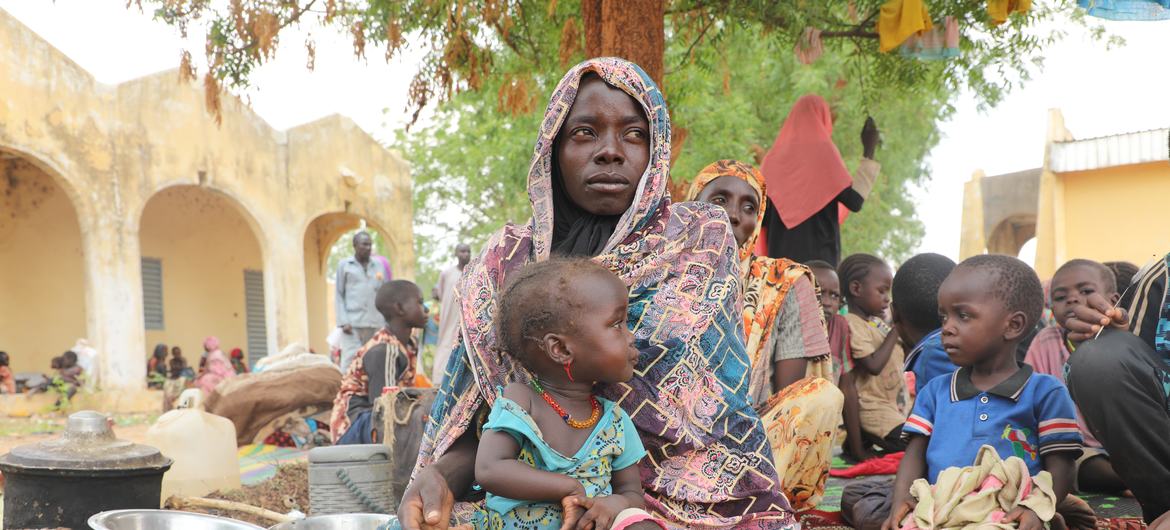
Mariam Djimé Adam, 33, is sitting in the yard of Adre’s secondary school in Chad. She arrived from Sudan with her 8 children. "We were attacked in our home, my husband was killed and all our belongings were taken. I managed to escape with my children
© UNICEF/Mahamat
 
Mariam Djimé Adam, 33, is sitting in the yard of Adre’s secondary school in Chad. She arrived from Sudan with her 8 children. "We were attacked in our home, my husband was killed and all our belongings were taken. I managed to escape with my children


12 June 2024
Migrants and Refugees

This year and last have seen historically high levels of forced displacement worldwide according to the UN refugee agency’s (UNHCR) 2024 flagship Global Trends Report published on Thursday.  

The report found that forced displacement rose to 120 million in May 2024, marking the 12th consecutive annual increase – a result of ongoing crises and newly emerging and evolving conflicts.

Key contributing factors  

A major contributor to the egregious numbers found in the report is due to war between rival militaries in Sudan which saw 10.8 million uprooted by the end of 2023.

Further, millions were internally displaced in the Democratic Republic of the Congo (DRC) and Myanmar last year because of brutal fighting.

The report said that the UN agency for Palestinian refugees (UNWRA) estimated that about 75 per cent of the population in the Gaza Strip – about 1.7 million people – have been displaced.

Yet, Syria holds the record in terms of sheer numbers with 13.8 million people forcibly displaced in and outside its borders.

Filippo Grandi, the UN High Commissioner for Refugees said, “Behind these stark and rising numbers lie countless human tragedies. That suffering must galvanise the international community to act urgently to tackle the root causes of forced displacement.” 

50 per cent increase in five years

The UNHCR trend report noted that people trying to escape conflict who remain in their country contribute to the greatest increase in displacement. According to the Internal Displacement Monitoring Centre, this number has risen to 68.3  million people – a nearly 50 per cent increase in five years.

Additionally, the number of refugees and those needing international protection increased to 43.4 million based on UNHCR and UNWRA mandates.

“It is high time for warring parties to respect the basic laws of war and international law,” Mr. Grandi said. “The fact is that without better cooperation and concerted efforts to address conflict, human rights violations and the climate crisis, displacement figures will keep rising, bringing fresh misery and costly humanitarian responses.”

Refugees returning home

According to the report, over five million internally displaced people and a million refugees worldwide returned home in 2023. That same year, resettlement arrivals increased to 154,300.

The UN High Commissioner for Refugees said last year millions of people had returned home “representing an important glimmer of hope. Solutions are out there – we’ve seen countries like Kenya lead the way in refugee inclusion – but it takes real commitment.” 

He also said that “refugees – and the communities hosting them – need solidarity and a helping hand. They can and do contribute to societies when they are included.” 

UNHCR said they are committed to providing “new approaches and solutions” to assist the millions of displaced people worldwide.  

https://creativecommons.org/licenses/by/3.0/legalcode

https://news.un.org/en/story/2024/06/1150981

вторник, 11 июня 2024 г.

Over 180 migrants dead or missing in latest tragedy off Yemen, UN agency reports


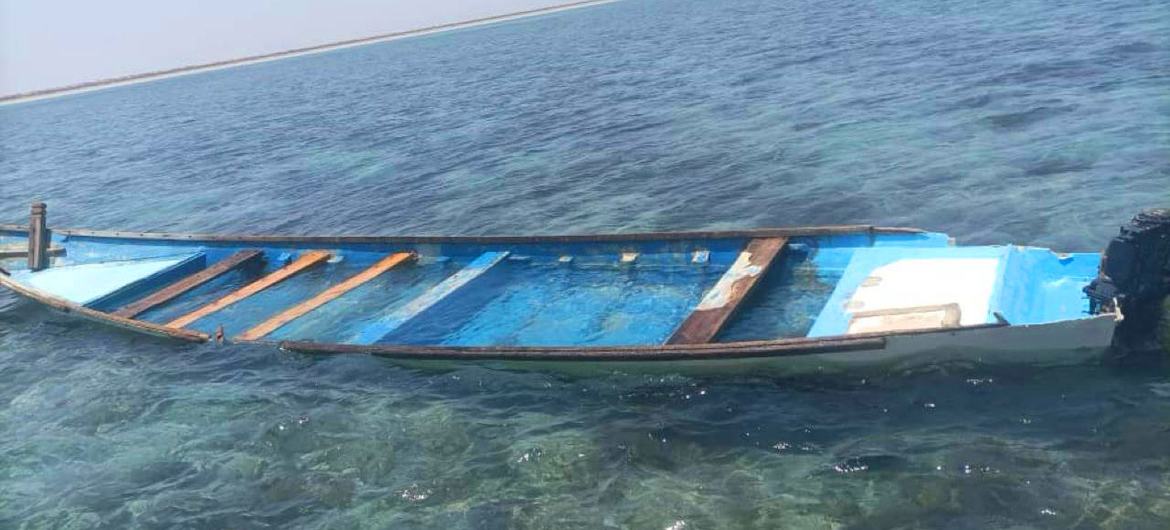
A boat carrying migrants that sank off the coast of northeastern Djibouti in April 2024. Since 2014, over 480 migrants have drowned trying to cross the Gulf of Aden between Yemen and Horn of Africa.
© IOM Djibouti
 
A boat carrying migrants that sank off the coast of northeastern Djibouti in April 2024. Since 2014, over 480 migrants have drowned trying to cross the Gulf of Aden between Yemen and Horn of Africa.


11 June 2024
Migrants and Refugees

At least 49 migrants have been killed, including many women and children, and a further 140 are missing after the boat they were on capsized off the coast of Yemen on Monday, the UN International Organization for Migration (IOM) has reported.

Some 260 people were abroad the vessel that had departed from Bossaso, in northeast Somalia, in the early hours of Sunday, bound for Yemen, about 330 kilometres (about 205 miles) away.

“This recent tragedy is another reminder of the urgent need to work together to address urgent migration challenges and ensure the safety and security of migrants along migration routes,” Mohammedali Abunajela, IOM spokesperson, said in a news release on Tuesday.

“Our thoughts are with the victims and their families as we remain committed to supporting survivors and improving search and rescue efforts in the region.”

Search and rescue efforts are ongoing despite significant challenges due to a shortage of operational patrol boats, a situation further complicated by the ongoing conflict.

IOM support

Seventy-one people, including six children, have been rescued and are being supported by IOM.

The agency has mobilized two mobile medical teams to provide immediate assistance, and its psychologists are providing mental health support.

Local community members, including fishermen, played a crucial role in the aftermath by assisting with the recovery efforts and helping to lay the deceased to rest at a cemetery.

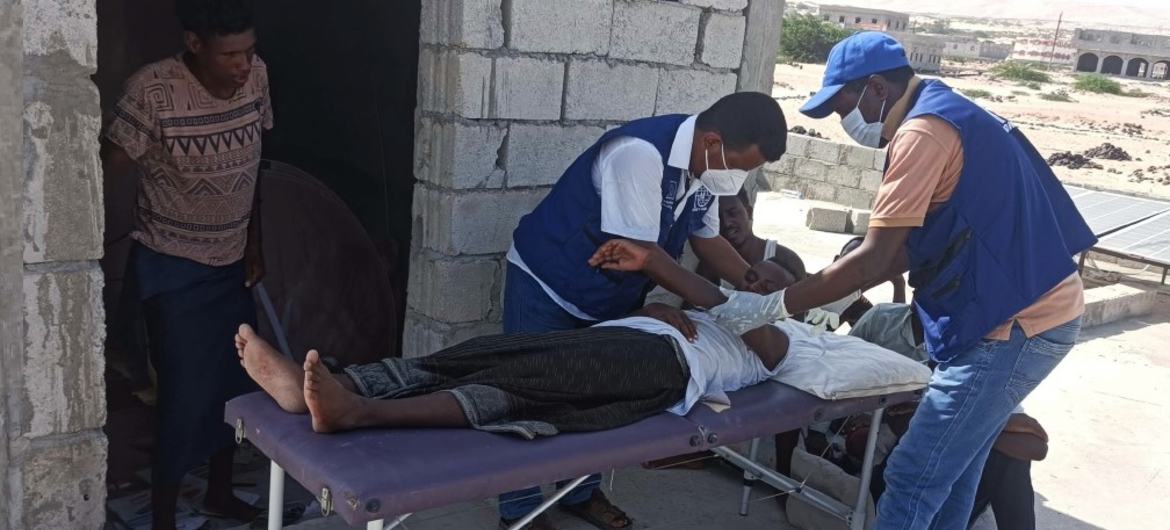
An IOM team provides medical assistance to a survivor.
IOM Photo
 
An IOM team provides medical assistance to a survivor.

Repeated sinkings

The latest tragedy comes on the back of two separate shipwrecks on the same route along the coast of Djibouti, claiming the lives at least 62 migrants.

There has been a sharp rise in migrants travelling from the Horn of Africa to Yemen, spurred by political and economic instability, alongside severe droughts and other extreme weather events in countries like Ethiopia and Somalia.

Despite the ongoing conflict in Yemen, thousands of migrants continue to transit through the country in hopes of reaching Saudi Arabia and neighbouring nations.

The majority of those undertaking the journey rely on irregular routes or smugglers, placing them at an increased risk, including of human trafficking or drowning in rough seas on rickety boats.

Since 2014, IOM has documented 1,860 migrant deaths and disappearances along that route, including 480 due to drowning.

https://news.un.org/en/story/2024/06/1150936


https://creativecommons.org/licenses/by/3.0/legalcode

вторник, 14 мая 2024 г.

Complementary admissions for refugees reach record highs: UNHCR report


Complementary admissions for refugees reach record highs: UNHCR report

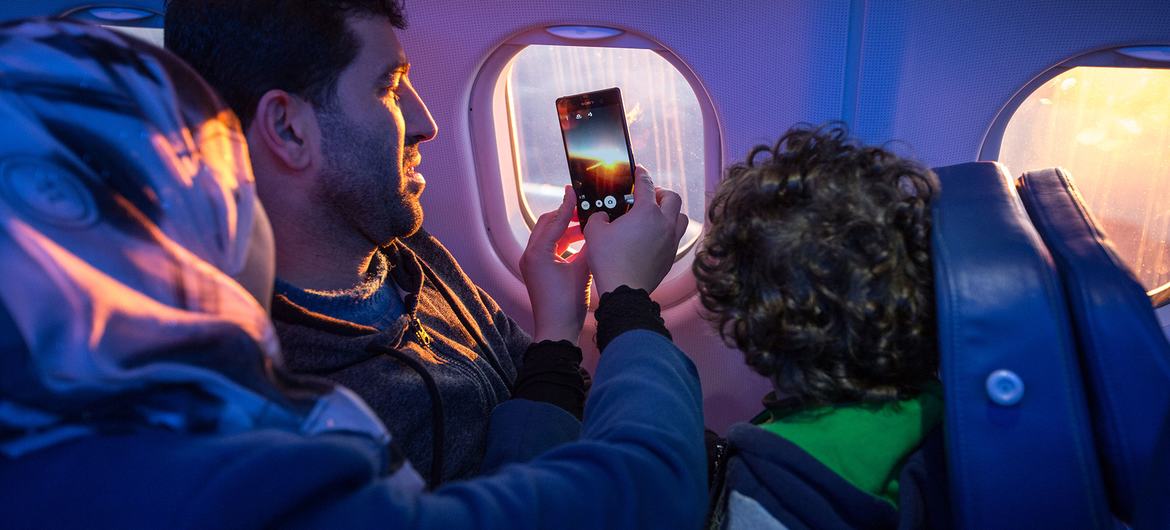
A migrant family looks out the window and take pictures as they undertake their journey for resettling.
IOM/Muse Mohammed
 
A migrant family looks out the window and take pictures as they undertake their journey for resettling.


13 May 2024

Migrants and Refugees

A new report jointly issued by the UN refugee agency (UNHCR) and the Organisation for Economic Co-operation and Development (OECD) reveals a significant increase in the issuance of study, work, family reunification and sponsorship permits to refugees by OECD countries and Brazil.

According to the report, Safe Pathways for Refugees – released on Monday – nearly 215,000 permits were granted to individuals displaced by conflict and crises by 37 OECD countries and Brazil in 2022, an increase of about 38 per cent over 2021.

Approximately 156,000 permits were issued that year, while the figure in 2020 was about 127,000.

The report focused on entry permits provided to individuals from Afghanistan, Eritrea, Iran, Iraq, Somalia, Syria, and Venezuela by OECD countries and Brazil.

Overall, Europe accounted for 56 per cent of all permits, with the Americas providing 39 per cent. Germany and Canada provided the largest numbers of work, study and family reunification entry permits to refugees from the seven nationalities covered.

Family reunification

Notably, family reunification permits constituted over 50 per cent of all permits issued in 2022, with work and study permits also showing a steady increase.

Ruven Menikdiwela, UNHCR Assistant High Commissioner for Protection, highlighted the significance of these complementary admissions in the context of rising global displacement.

“With most of the world’s refugees hosted in developing regions, these forms of complementary admissions to third countries can help better protect them, provide them with opportunities to contribute to their new communities, and ease pressures on over-stretched host countries.”

She also emphasized the importance of the family reunification permits, stating that alongside being a human right, it was encouraging to see that family reunification remains the most relied upon third-country solution.

Safe and legal pathways

The senior UNHCR official also commended the efforts of governments and partners to ensure refugees’ access to safe and lawful pathways, in alignment with the agency’s Roadmap 2030.

The roadmap envisions expanding third-country solutions to reach 2.1 million complementary admissions by 2030, with 35 per cent of this target achieved through progress made in 2022.

It also underscored the importance of improving data collection to inform policy decisions and enhance refugee inclusion in regular migration streams.

It urged sustained collaborative efforts among states and stakeholders to ensure refugees have access to safe and sustainable pathways towards rebuilding their lives.


https://news.un.org/en/story/2024/05/1149681


https://creativecommons.org/licenses/by/3.0/legalcode

вторник, 9 апреля 2024 г.

‘Fear and loss’ multiplies in Sudan exodus

Food is distributed to Sudanese refugees in Koufron, Chad.
© WFP/Jacques David
 
Food is distributed to Sudanese refugees in Koufron, Chad.


9 April 2024
Migrants and Refugees

Over 8.5 million Sudanese have been forced to flee their homes in Sudan since the war between rival militaries erupted last April, the UN refugee agency, UNHCR, said on Tuesday.

At least 1.8 million among them fled across the border into neighbouring, South Sudan, Chad, Central African Republic, Egypt and Ethiopia; as well as Uganda.  

Thousands more are arriving by the day, agency spokesperson Olga Sarrado told journalists at the regular news briefing in Geneva.

The war between the Sudanese Armed Forces (SAF) and the paramilitary Rapid Support Forces (RSF) and its affiliated militias “has shattered people’s lives, filling them with fear and loss,” Ms. Sarrado said.

Urban middle class decimated

Over 13,000 people are reported to have been killed, thousands more injured, and attacks on civilians, and conflict-related sexual and gender-based violence continue unabated.

“Sudan has experienced the almost complete destruction of its urban middle class: architects, doctors, teachers, nurses, engineers, and students have lost everything,” Ms. Sarrado said.

“Access constraints, security risks and logistical challenges are hampering the humanitarian response. Without incomes, and amid disrupted aid deliveries and harvests, people cannot get food, prompting warnings of worsening hunger and malnutrition in parts of the country,” she added.

Tweet URL
Refugees

Refugee hosting countries

South Sudan has received the most refugees from Sudan, about 640,000 people, and on average 1,800 are still arriving every day, increasing pressure on overstretched infrastructure and exacerbating the vast humanitarian needs.

In Chad, the number exceeds 560,000 and while UNHCR and aid partners have managed to relocate most refugees to new and expanded settlements, over 150,000 remain in border areas in overcrowded and unsanitary conditions, largely due to funding shortfalls.

Ethiopia, which already hosts one of the largest refugee populations in Africa, also reported continued new refugee arrivals, recently surpassing 50,000.

‘Desperate needs’

The situation for women and children is particularly alarming.

“Those crossing borders, mostly women and children, are arriving in remote areas with little to nothing and in desperate need of food, water, shelter and medical care. Many families have been separated and arrive in distress,” Ms. Sarrado said.

“Parents and children have witnessed or experienced appalling violence, making psychosocial support a priority,” she said.

‘Critically low’ funding

The UNHCR spokesperson further warned that despite the magnitude of the crisis, “funding remains critically low”.

Only 7 per cent of the funds needed for the 2024 Regional Refugee Response Plan for Sudan have been fulfilled, while the response effort inside Sudan is just 6 per cent funded.  

“Firm commitments from the international community to support Sudan and the countries hosting refugees are needed to ensure those forced to flee by the war can live in dignity,” Ms. Sarrado urged.


https://news.un.org/en/story/2024/04/1148381
https://creativecommons.org/licenses/by/3.0/legalcode

вторник, 20 февраля 2024 г.

UN presence in Sudan ‘in a precarious situation’, says IOM country chief


IOM teams are assessing the needs of Sudanese refugees on the Chad–Sudan border.

UN presence in Sudan ‘in a precarious situation’, says IOM country chief

IOM 2023
 
IOM teams are assessing the needs of Sudanese refugees on the Chad–Sudan border.


17 January 2024
Migrants and Refugees

The fierce fighting between the Sudanese army and rebel RSF forces risks reaching the UN bases in the east of the country, warns the head of IOM, the UN migration agency in the country, sharing his frustration at being unable to reach the millions of civilians in desperate need of humanitarian assistance.

The conflict in Sudan, which has now been raging for over nine months, has been described by the UN office for humanitarian affairs as one of the fastest unfolding global crises, with some 7.4 million people displaced from their homes, around half of the total population needing humanitarian assistance and thousands hit by outbreaks of cholera and other diseases.

Since the fighting began in April of last year, about half a million people have fled into neighbouring South Sudan, one of the poorest countries in the world, and thousands more are expected to follow the exodus. The UN has shared reports of horrific abuse and widespread rights violations. Loaded trucks have been unable to bring aid supplies because of fierce fighting. Drivers have been beaten and extorted for money, and aid workers have been detained and killed.

Peter Kioy, the Sudan Chief of Mission for IOM, spoke to Conor Lennon from UN News from his temporary base in the eastern city of Port Sudan about the dangerous situation facing the Sudanese people and the humanitarian workers trying to support them.

South Sudanese returnees arrive at the Joda border point in Upper Nile State.
© WFP/Eulalia Berlanga
 
South Sudanese returnees arrive at the Joda border point in Upper Nile State.

Peter Kioy: The humanitarian community has no capacity to oversee or access the areas where people are fleeing to or fleeing from, which makes it really difficult for us to ensure the international protection rights that they are entitled to. The lack of humanitarian aid makes them more vulnerable. Access remains one of the key issues for the humanitarian community in Sudan; we need more secure access for humanitarian actors. Both sides agreed to allow humanitarian access during peace talks, but they are still not delivering on that.

UN News: Do you still have people on the ground?

Peter Kioy: In some areas, we don't have people because it’s too dangerous, and the humanitarian space is shrinking. Recently, the conflict reached Al Jazirah state and White Nile state, which meant that humanitarian actors had to move out. Truck drivers do not feel secure going into some of those localities to deliver aid.

Thousands of people have arrived at Metema, the border town between Sudan and Ethiopia, since fighting in Sudan erupted on 15 April 2023.
IOM
 
Thousands of people have arrived at Metema, the border town between Sudan and Ethiopia, since fighting in Sudan erupted on 15 April 2023.

UN News: How have IOM staff been affected?

Peter Kioy: A staff member was killed at the onset of the crisis, and we had to regroup around our eastern offices in Kassala, Al Qadarif and Port Sudan.

However, we don’t know for how long. The RSF have said that they’re making their way east towards Port Sudan as well. We don’t know how quickly they will advance, so we remain in a precarious situation, where we don’t know what will happen in the next two months or even the next two weeks.

For now, the situation in Port Sudan remains relatively stable and calm, but it is a probably a false calm because we’re not sure of what is happening in and around the city.

So, we remain vigilant in case we find ourselves in a similar situation to Khartoum.

Watermark

UN News: Can you describe the evacuation from Khartoum in April 2023?

Peter Kioy: I think it’s a situation you would not want to find yourself in again. 

It was chaotic. Bullets flying all around, people unable to move and seeking shelter under the furniture in their houses, hiding in corners and hoping that no stray bullets come through the windows.

It was a nightmare that no one would want to live through or wish on others.

No one expected that Khartoum would bear the brunt of the fighting, and so the necessary security measures were not in place. This made it very scary, especially for those who had family.

It was a nightmare that no one would want to live through or wish on others.

I remember that we were trying to coordinate our staff to get them to the gathering sites for the evacuation. It was difficult even in the relatively calm areas because of the number of rebel and government checkpoints. We didn’t know how the soldiers would react.

UN News: What is morale like amongst the UN teams in Port Sudan?

We have stayed behind to deliver aid, and we have the capacity, but we do not have access to the people who are in need of our support, and that has become frustrating.

There are pockets of hope. We managed, for example, to bring in cross-border support from Chad into Darfur and deliver some vital humanitarian aid. But, it still remains a challenge, and we hope that with the ongoing negotiations greater access can be granted to the humanitarian community at large.


https://news.un.org/en/interview/2024/01/1145602


https://creativecommons.org/licenses/by/3.0/legalcode

суббота, 16 декабря 2023 г.

Global Refugee Forum ends with bold pledges, solutions for displaced

UNHCR distributes relief items to returnees at a transit centre in Renk, South Sudan.
© UNHCR/Andrew McConnell
 
UNHCR distributes relief items to returnees at a transit centre in Renk, South Sudan.
15 December 2023

Migrants and Refugees

While some of the world’s poorest countries are welcoming refugees “with great hospitality”, the international community must match that generosity with far greater solidarity, UN chief António Guterres said on Friday.

Speaking at the closing of the Global Refugee Forum, the Secretary-General said that protection and help for these most vulnerable of people, was “an obligation shared by all of humanity”. 

He was speaking after three days of intensive activity geared to finding solutions and building partnerships, which saw pledges from multiple stakeholders that have the potential to generate “a bright burst of light” for the millions displaced worldwide.

Mr. Guterres stressed that resources to support refugees are “under enormous strain”, especially in the Global South which bears a disproportionate amount of the burden.

Tweet URL

He noted it had been a year of “intense political division, conflict and climate catastrophe” which has pushed record numbers of people to flee. 

“From the Sahel to Afghanistan, Syria and Yemen - to the DRC, Myanmar and Somalia - to the utter devastation we are witnessing in Gaza,” he emphasized that “humanitarian nightmares” had created and exacerbated the displacement of 114 million people during the year, 36 million of whom are refugees.

Hopes and dreams

Mr. Guterres asked not to forget that the statistics represent real people with legitimate hopes and dreams: women and men with skills and ideas, children with plans and ambitions. 

These are people, he underscored, who have the same rights to safety, food, water, shelter and dignity. 

And as the refugees deserve every chance at a better future, protection and support should not be a lottery, or a disproportionate burden that falls on a few countries and communities based on geography.

“It is an obligation shared by all of humanity,” he declared in his remarks. 

Mr. Guterres praised the commitments made by stakeholders, saying that they ‘breathe life into the great promise of the Global Compact on Refugees not only to support refugees, but to ease pressure on host countries and tackle the systemic issues that cause people to flee in the first place’.

The Global Refugee Forum concludes it's work at the Palexpo centre in Geneva.
UN News
 
The Global Refugee Forum concludes it's work at the Palexpo centre in Geneva.

Pledges for the common good

Among the key pledges made were commitments to resettlement and community sponsorship. 

States agreed to resettle one million refugees by 2030, supported by a new global sponsorship fund. This fund aims to assist an additional three million refugees in accessing third countries through innovative community sponsorship schemes.

Refugee participation took centre stage, with more than 100 organizations committed to promoting meaningful engagement by including refugees on governing boards and involving them in decisions that directly impact their lives. 

This move is seen as a crucial step toward recognizing and leveraging the valuable perspectives and contributions of those displaced.

Safeguards online

Leading tech companies, including Google and Meta, joined forces to produce a Digital Protection pledge. This commitment involves dedicating increased resources to understand, address, and prevent misinformation and hate speech targeted at the communities of displaced and stateless.

The collaboration aims to bolster humanitarian responses and ensure the safety and well-being of those affected.

States at the forefront of peacebuilding efforts, including Colombia, Egypt, and Norway, supported by the UN Department of Political and Peacebuilding Affairs, pledged to engage with countries of origin. The goal is to address the root causes of displacement and facilitate safe returns by promoting peace and economic development.

Addressing an alarming increase in the risk of trafficking as well as considering alternatives to child detention , Siobhán Mullally, the UN Special Rapporteur – or independent rights expert - on Trafficking in Persons, announced a pledge supported by the UNHCR. 

It aims to enhance protection mechanisms, mitigating the risk of refugees and migrants to being trafficked. Simultaneously, there was a pledge to find alternatives to end the detention of refugee, asylum-seeking, and migrant children.

Match ‘courage and resilience’ of refugees

“By rallying around the needs of refugees at this Forum, you are all providing a bright burst of light in what has been a dark and troubling year,” the UN Secretary-General summed up the Forum’s work, encouraging its participants to ‘to continue matching the courage and resilience of every refugee with our own steadfast commitment to help them rebuild their lives in safety and dignity’. 


https://news.un.org/en/story/2023/12/1144847


https://creativecommons.org/licenses/by/3.0/legalcode

среда, 6 сентября 2023 г.

‘Hope Away from Home’: UNHCR launches new global campaign


Rohingya children living in a refugee camp in Cox’s Bazar, Bangladesh enjoy a lighter moment.
© UNHCR/Vincent Tremeau
 
Rohingya children living in a refugee camp in Cox’s Bazar, Bangladesh enjoy a lighter moment.
6 September 2023
Migrants and Refugees

The UN refugee agency (UNHCR) on Wednesday launched a new global campaign to rally support and firm commitments from nations to protect the rights of people fleeing conflict, violence and persecution.

Hope Away from Home gets underway at a time of unprecedented, forced displacement.

There are a staggering 110 million people displaced from their homes, and access to asylum and protection is under threat in various regions due to increasingly harsh policies.

“People fleeing war, violence and persecution should be met with compassion and kindness, not barriers, restrictions and discrimination, which should have no place in today’s world,” said Elizabeth Tan, Director of UNHCR’s Division of International Protection.

“They need safety and protection, and it is the responsibility of the international community to come together to find lasting solutions that allow them to live in safety and dignity.”

Demonstrate solidarity

According to UNHCR, in many places, anti-refugee sentiments, externalization of asylum obligations, growing discrimination and xenophobia, and stricter admission policies are endangering the fundamental right to seek safety.

Moreover, the absence of safe and legal routes to asylum compels many to undertake perilous journeys, often across treacherous land and sea routes in search of safety.

While many nations and communities generously welcome and protect refugees, helping them to rebuild their lives and contribute positively to their host societies, it is crucial for more States to follow suit, said UNHCR.

Solidarity with other nations is essential, particularly low and middle-income countries that receive the majority of refugees.

Tangible actions

The campaign aims to translate global solidarity into tangible action and solutions - promoting international cooperation, legal reforms, and policy reform.

Over the next three years, UNHCR and its partners will advocate for law and policy changes in five key areas: access to safe territory and protecting individuals from harm during their journey; guaranteeing adequate conditions and treatment for refugees; encouraging countries to accede to the Refugee Convention; and increasing access to durable solutions, including resettlement.

Tweet URL

Countries will also be urged to provide support to under-resourced nations and communities hosting large refugee populations.

Shared humanity

“Many States are showing commendable solidarity in welcoming people who have been forced to flee, despite their own domestic challenges. But more needs to be done to support those communities that receive them,” said Dominique Hyde, Director of UNHCR’s Division of External Relations.

“With this campaign, there is an opportunity to do more in solidarity with millions of forcibly displaced people and the communities hosting them, by focusing on our shared humanity and working together to find solutions.”

The campaign also includes a global call for petitions from the public, organizations, and world leaders to stand in solidarity with refugees and their right to seek safety from conflict, violence, and persecution.

Global Refugee Forum

The launch of the campaign coincides with the 100 day countdown to the Global Refugee Forum (GRF), a major international gathering, in Geneva, that will bring together world leaders, civil society organizations, international institutions, and other stakeholders to seek solutions for refugees and host communities.

https://news.un.org/en/story/2023/09/1140442

https://creativecommons.org/licenses/by/3.0/legalcode

пятница, 28 июля 2023 г.

UNHCR urges solidarity with Burkina Faso’s victims of extremist violence


Women and children who have fled violence in Burkina Faso seek help in Côte d'Ivoire.
© UNHCR/Insa Wawa Diatta
 
Women and children who have fled violence in Burkina Faso seek help in Côte d'Ivoire.
28 July 2023

Migrants and Refugees

Civilians fleeing attacks by extremist groups in Burkina Faso must be allowed to shelter in neighbouring countries and not sent back, amid a spike in violence and horrifying rights abuses, the UN refugee agency (UNHCR) said on Friday.

“We're urgently appealing for all States to refrain from forcibly returning any individuals originating from the regions in Burkina Faso where there is an ongoing crisis,” said Elizabeth Tan, UNHCR Director of International Protection.

Speaking in Geneva, Ms. Tan highlighted “killings, forced disappearances, torture and kidnappings”, while in several instances, civilians had been targeted and killed, resulting in mass civilian casualties.

Spike in needs

Humanitarians have warned about mass internal displacement in Burkina Faso caused by non-state armed groups since 2015, “but it’s in 2022 that we’ve really seen large increase in the number of displaced in the country, and that is due to the increased activities by extremist, violent, violent extremist groups as well as increasing humanitarian needs”, the UNHCR official explained.

Latest UN estimates indicate that 4.7 million people across the country are now in need of humanitarian assistance in the west African nation, which is more than 20 per cent of the country’s entire population.

Violence and conflict have also destroyed critical infrastructure and impacted state services and institutions, including in conflict-affected areas.

The humanitarian situation is especially severe for people living in towns that have been blockaded by violent extremist groups, including large numbers of internally displaced people.

Refugees from Burkina Faso arrive in Togo after fleeing their country due to violence.
© UNHCR/Fidélia Bohissou
 
Refugees from Burkina Faso arrive in Togo after fleeing their country due to violence.

Youngsters targeted

Children have not been spared serious human rights violations, including forced recruitment by armed groups, child labour “as well as other types of violence, abuse, exploitation and gender-based violence”, Ms. Tan told journalists at a scheduled briefing.

The number of school closures has increased from approximately 3,000 in November 2021 to 6,334 schools as of 31 March 2023.

Tweet URL

The majority of displaced children are unable to attend classes at all. Early and child marriage is prevalent and forced marriages continue to be reported. Half of all children in Burkina Faso are estimated to be exposed to gender-based violence or mistreatment, with the estimate as high as 82 per cent for girls.

Ongoing violence and displacement have also left many women vulnerable to sexual violence and have restricted services available to survivors.

Border refuge

In addition to the more than two million people internally displaced in Burkina Faso, as of June this year – “making this one of the worst internal displacement crises on the African continent” - the UNHCR official added that 67,000 people from Burkina Faso have sought refuge in neighbouring countries including Mali, Niger, Cote d'Ivoire, Togo, Benin and Ghana.

Fighting is believed to have killed thousands and placed vast numbers at risk of abuse by armed groups, including reportedly being whipped and raped while fleeing their villages. 

“The principle of non-refoulement must be respected and upheld. That means that no-one should be forcibly returned to places where their lives, freedom or human rights are at risk. So, UNHCR calls on all countries to allow civilians fleeing Burkina Faso to access their territories.”


https://news.un.org/en/story/2023/07/1139222


https://creativecommons.org/licenses/by/3.0/legalcode

четверг, 20 июля 2023 г.

Funding ‘simply not enough’ for Rohingya refugees, UN agencies report

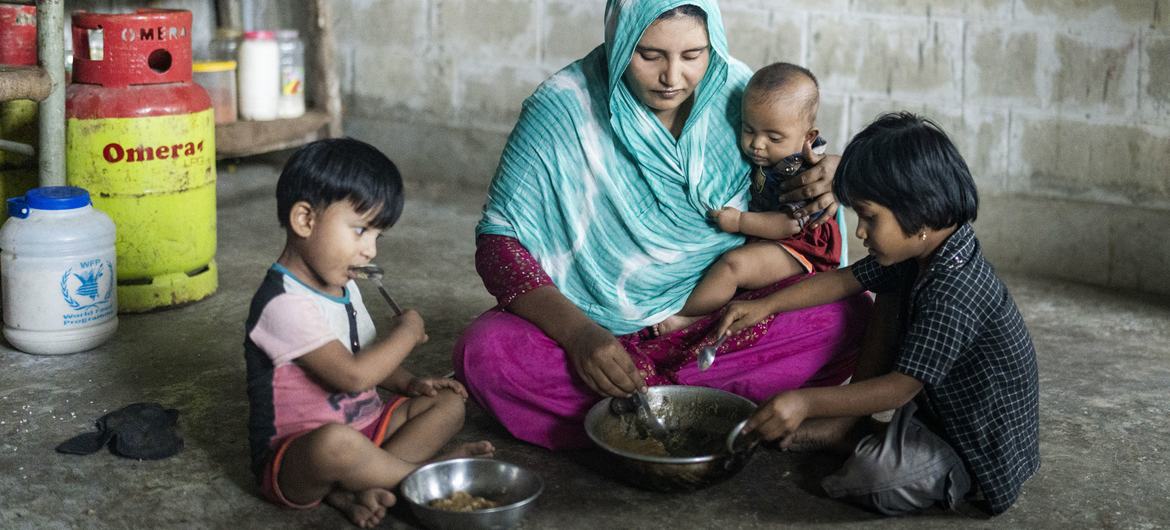
For many Rohingya refugees, WFP assistance is the only reliable source they can count on to meet their food needs.
© WFP/Sayed Asif Mahmud
 
For many Rohingya refugees, WFP assistance is the only reliable source they can count on to meet their food needs.
20 July 2023
Migrants and Refugees

Current funding for critical aid efforts supporting Rohingya refugees living in camps in southern Bangladesh is simply not enough, the UN World Food Programme (WFP) has said, as dwindling resources have forced the second ration cut in three months.

In March, the value of the food vouchers for camp residents was reduced from $12 per person per month to $10, and in June, to just $8; the equivalent of 27 cents a day.

“The ration cuts are our last resort. Many donors have stepped forward with funding but what we have received is simply not enough,” Dom Scalpelli, WFP Country Director in Bangladesh, said in a release on Wednesday.  

“It is absolutely critical that we give the Rohingya families back the full assistance they deserve. The longer we wait, the more hunger we will see in the camps – already we are seeing more children being admitted into malnutrition treatment programmes.”

Over 950,000 Rohingyas remain stranded in refugee camps in Cox’s Bazar, southern Bangladesh. Most of them fled their homes in northern Myanmar following widespread and systemic attacks in August 2017 by the country’s armed forces that former UN High Commissioner for Human Rights Zeid Ra’ad al-Hussein described as a “textbook example of ethnic cleansing”.

‘Only reliable source’

The UN refugee agency (UNHCR), which has been assisting the Rohingya refugees since the crisis erupted, said that the WFP food assistance is the “only reliable source they can count on to meet their basic food and nutrition needs.”

“But since the start of the year, this lifeline has been under severe pressure due to reduced donor funding.”

Alongside fresh food assistance, WFP implements nutrition programmes for pregnant and breastfeeding women and children under five years of age.  

Despite this additional support, vulnerable households are still struggling to make ends meet. The only solution to prevent the situation from deteriorating further is to restore the full rations for the entire Rohingya population immediately, UNHCR said.

Tweet URL

Falling donor funding

In addition to WFP, other UN entities and humanitarian agencies are feeling the impacts of falling funding from donors.

The 2023 Rohingya humanitarian crisis response plan, which requires about $875 million to reach the nearly one million refugees in need, is only a quarter funded.  

The impacts of such cuts are particularly devastating for women and children, who make up more than 75 per cent of the refugee population and face higher risks of abuse, exploitation and gender-based violence, UNHCR warned.

Without enough food and no means of generating a legal income, refugees have resorted to increasingly desperate measures to survive, such as child marriage and child labour, as well as embarking on dangerous boat journeys.

Livelihood programmes needed

As the situation of Rohingya refugees becomes protracted and needs continue growing, more support will be needed from the international community.

Johannes van der Klaauw, UNHCR Representative to Bangladesh, said the only way to prevent the humanitarian situation in the camps deteriorating further, is by investing in education, skills training and livelihood opportunities.

“This would allow refugees to become self-reliant and partially fulfill their basic needs through their own means – and above all, to prepare them for rebuilding their lives when they can voluntarily and safely return to Myanmar.” 


 https://news.un.org/en/story/2023/07/1138917


https://creativecommons.org/licenses/by/3.0/legalcode

вторник, 20 июня 2023 г.

World Refugee Day: UN calls for solidarity and inclusion amid record displacement


Syrian refugee s receive winter clothing kits in Jordan. (file)
© UNICEF/Christopher Herwig
 
Syrian refugee s receive winter clothing kits in Jordan. (file)
Migrants and Refugees

Refugees deserve support and solidarity, not closed borders and pushbacks. That’s a reminder from UN chief António Guterres on Tuesday’s World Refugee Day, regarding the international community’s duty to assist and protect refugees.

With forced displacement at a record high of 110 million people around the world, Mr. Guterres called for more solutions to resettle refugees and help them rebuild their lives. He also stressed the need for solidarity with host countries and communities.

More than numbers

“These are not numbers on a page”, said the UN chief. “These are individual women, children and men making difficult journeys - often facing violence, exploitation, discrimination and abuse.

Tweet URL

“This Day reminds us of our duty to protect and support refugees - and our obligation to open more avenues of support.”

This year’s theme is “Hope Away From Home”. Mr. Guterres – who led the UN refugee agency UNHCR for a decade, called on the international community to “harness the hope that refugees carry in their hearts.”

Include refugees ‘at all levels’

From Kenya, where he’s been visiting the vast Kakuma refugee camp, the current UNHCR chief Filippo Grandi said that the world should step up investment and “commit to including refugees in our communities at all levels – in our schools, workplaces, health-care systems, and beyond.”

In a tweet, Mr. Grandi deplored the fact that this year’s World Refugee Day coincided with the news that more than half a million people have now fled Sudan to neighbouring countries. “Guns must fall silent if we want this exodus to stop,” he said.

Pushed into hunger

The UN migration agency IOM, issued a statement honouring the strength and resilience of those forced to flee from conflict, announcing that since 2001, agency teams have provided orientation training for more than one million on the move.

This includes some 700,000 refugees being resettled.

The head of the World Food Programme Cindy McCain tweeted that conflict and climate shocks were pushing more and more people into hunger and homelessness.

“WFP is working with partners like UNHCR to deliver critical aid to millions of refugees in 40-plus countries. Today and every day, they deserve our continued support.”

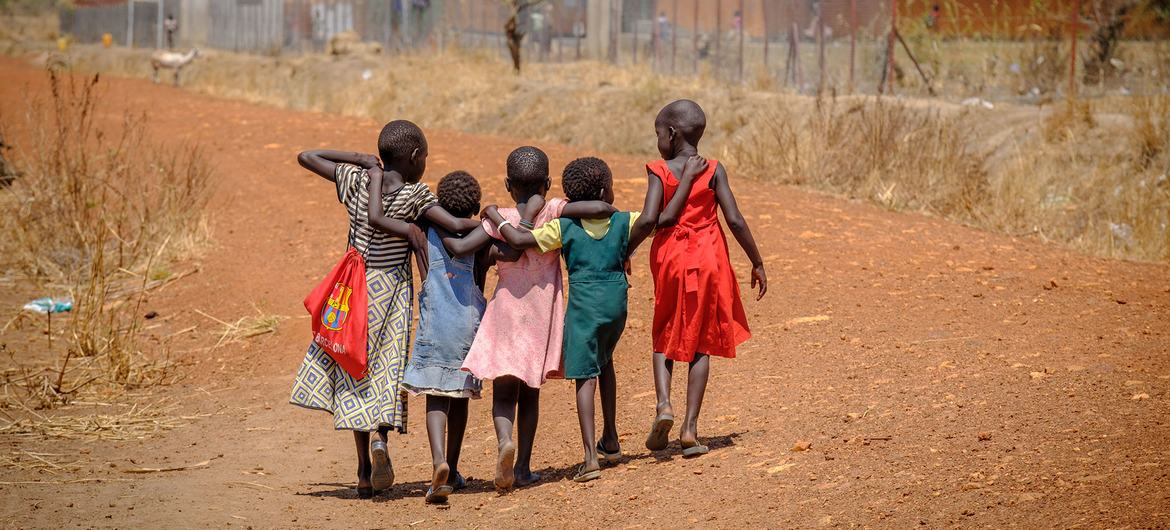
South Sudanese refugee children walk home together after school in the Nyumanzi refugee settlement in Uganda. (file)
© UNICEF/Jiro Ose
 
South Sudanese refugee children walk home together after school in the Nyumanzi refugee settlement in Uganda. (file)

 https://news.un.org/en/story/2023/06/1137907

https://creativecommons.org/licenses/by/3.0/legalcode

четверг, 15 июня 2023 г.

DR Congo: Armed group attacks displace nearly 1 million since January

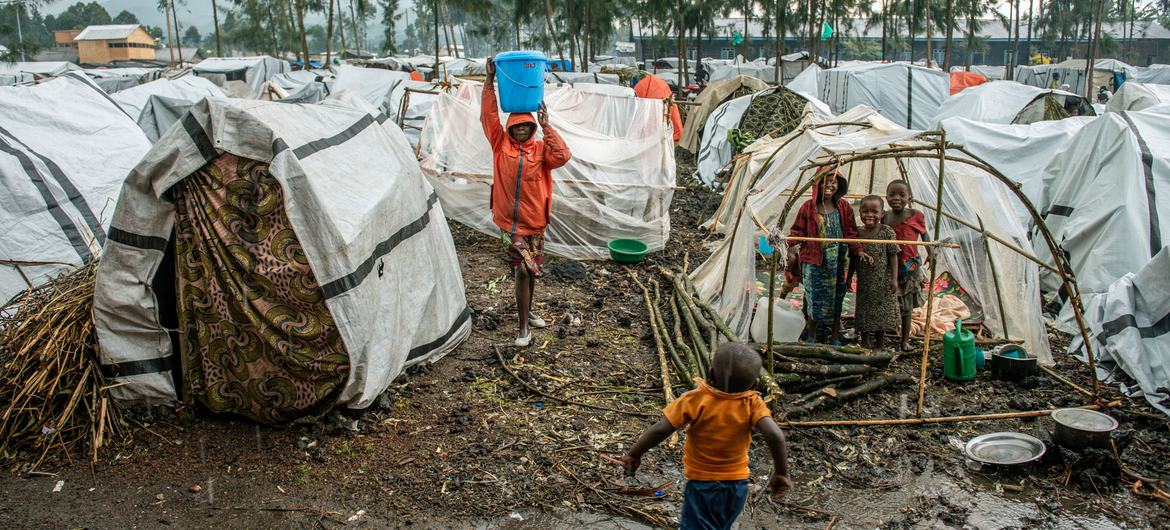
A child carries water through the Kanyaruchinya site for displaced people in eastern Democratic Republic of the Congo...
© UNICEF/Arlette Bashizi
 
A child carries water through the Kanyaruchinya site for displaced people in eastern Democratic Republic of the Congo...
15 June 2023
Migrants and Refugees

Escalating violence in the eastern Democratic Republic of the Congo (DRC) has displaced nearly one million people since January, the International Organization for Migration (IOM) said on Thursday. 

An estimated 6.1 million are internally displaced, a 17 per cent increase from October, according to its Displacement Tracking Matrix.

IOM said civilians have been killed or forced to flee their homes due to a surge in violence and attacks by armed groups.

Deadly attack, intolerable dangers

At least 46 people were killed in the latest incident which occurred at a camp for displaced persons in eastern Ituri province on Sunday.

Tweet URL

IOM strongly condemned the attack, which was reportedly carried out by Coopérative pour le développement du Congo (CODECO), a coalition of militia groups.

“This recent gruesome attack is a testament to the intolerable dangers displaced people in DRC face daily,” said Federico Soda, Director for the Department of Emergencies.

“IOM strongly condemns this heinous violation of international humanitarian law and recalls that attacks against civilians may constitute war crimes. Concerted efforts are desperately needed to end the violence and help the Congolese people find peace.”

Humanitarian situation worsens

As conflict intensifies, the humanitarian situation continues to deteriorate, with millions facing acute food insecurity as well as other critical needs.   Overall, more than 26 million people across the DRC need humanitarian aid.

Despite insecurity, and limited access to parts of the country, IOM and partners have been striving to provide emergency relief to displaced people and those affected by the violence.

The UN agency said it is scaling-up operations which will enable a more effective crisis response to the humanitarian emergency caused by the surge in violence. 


 https://news.un.org/en/story/2023/06/1137722
https://creativecommons.org/licenses/by/3.0/legalcode

вторник, 9 мая 2023 г.

Sudan displacement doubles in one week, says IOM

Sudanese refugees who fled the conflict in Sudan have built makeshift shelters in Koufroun, Chad.
© WFP/Jacques David
 
Sudanese refugees who fled the conflict in Sudan have built makeshift shelters in Koufroun, Chad.
9 May 2023
Migrants and Refugees

The number of internally displaced (IDPs) in Sudan has more than doubled in just the last week, since armed clashes erupted between rival militaries in multiple cities across Sudan, the International Organization for Migration (IOM) said on Tuesday.

Speaking at a press briefing at the United Nations in Geneva, IOM’s spokesperson Paul Dillon said that according to IOM’s Displacement Tracking Matrix, more than 700,000 people were now internally displaced by the fighting, which began on 15 April.  

The number of IDPs increased in many areas, including the capital, where clashes were continuing, he said: “Last Tuesday, the figure stood at 340,000. And, of course, prior to the fighting, an estimated 3.7 million people were internally displaced in Sudan.” 

Fleeing in many directions

Responding to a question about where internally displaced persons were heading, Mr. Dillon said the data was currently preliminary and being analysed. They were moving into multiple states, including White Nile and Khartoum.

Decisions to move were influenced by many different factors, including whether there was conflict in any given area. However, it was difficult for the people to find money, with cash distribution stalled, and the banking system, in effect, shut down.

Fuel is also difficult to come by and expensive, according to IOM.

Tweet URL

Deliveries thwarted

“The IOM has stocks of non-food items in six warehouses around the country,” said the IOM spokesperson. “But to date, we have been unable to deliver to those in need.

“The fighting must end and humanitarians must be allowed to resume their work, providing assistance to those most in need before the situation spirals further out of control.” 

Secretary-General António Guterres on Monday condemned looting at the main compound of the UN World Food Programme (WFP) in Khartoum over the weekend. This was the latest targeting of humanitarian facilities since the start of the crisis, now into its fourth week. Most, if not all UN agencies and humanitarian partners, have been impacted by large-scale looting.

Information vacuum

“At this point, we don't have any information, we aren't even able to confirm the extent of the looting in the Khartoum office, but reiterate that the food, the vehicles, the fuel, the assets that have been looted from WFP, go towards the response for the people in Sudan. And this directly hurts the people of Sudan,” said Isheeta Sumra, WFP’s Communications Officer speaking from the agency's headquarters in Rome.

The UN World Health Organization (WHO) also reported attacks and looting of healthcare facilities in Sudan.

“Since 15 April, WHO has verified 28 attacks on health, leading to eight deaths and 18 injuries. More reports are under verification,” said WHO spokesperson Tarik Jašarević.

“These attacks include looting, obstruction of access to healthcare, violent attacks using weapons and the forced occupation of facilities. Unfortunately, the looting is affecting healthcare facilities. And this is something that severely undermines the possibility of Sudanese people to seek healthcare.” 

At the same briefing, the WHO said 604 people had been killed and more than 5,000 injured since the violence erupted in mid-April between the rival armed factions, although the UN has repeatedly said the figures are likely to be an underestimate.


 https://news.un.org/en/story/2023/05/1136477
https://creativecommons.org/licenses/by/3.0/legalcode