Показаны сообщения с ярлыком UN Affairs. Показать все сообщения

суббота, 6 июня 2026 г.

Kyrgyzstan wins seat on UN Security Council for first time ever


By Vibhu Mishra
3 June 2026 
UN Affairs

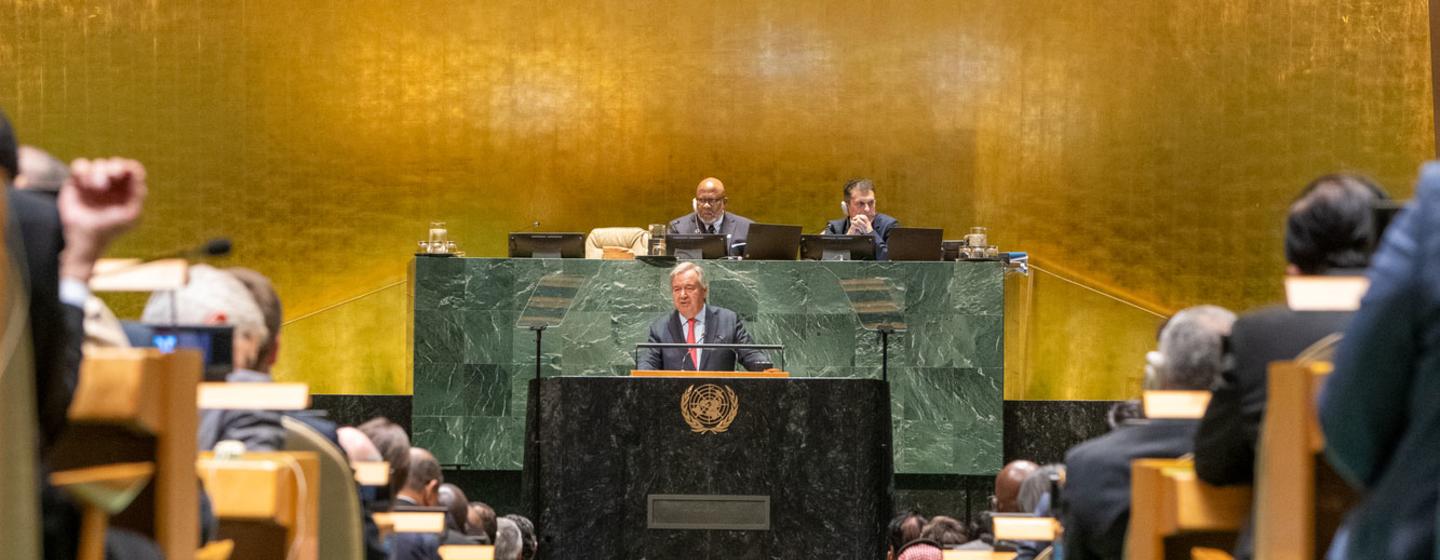
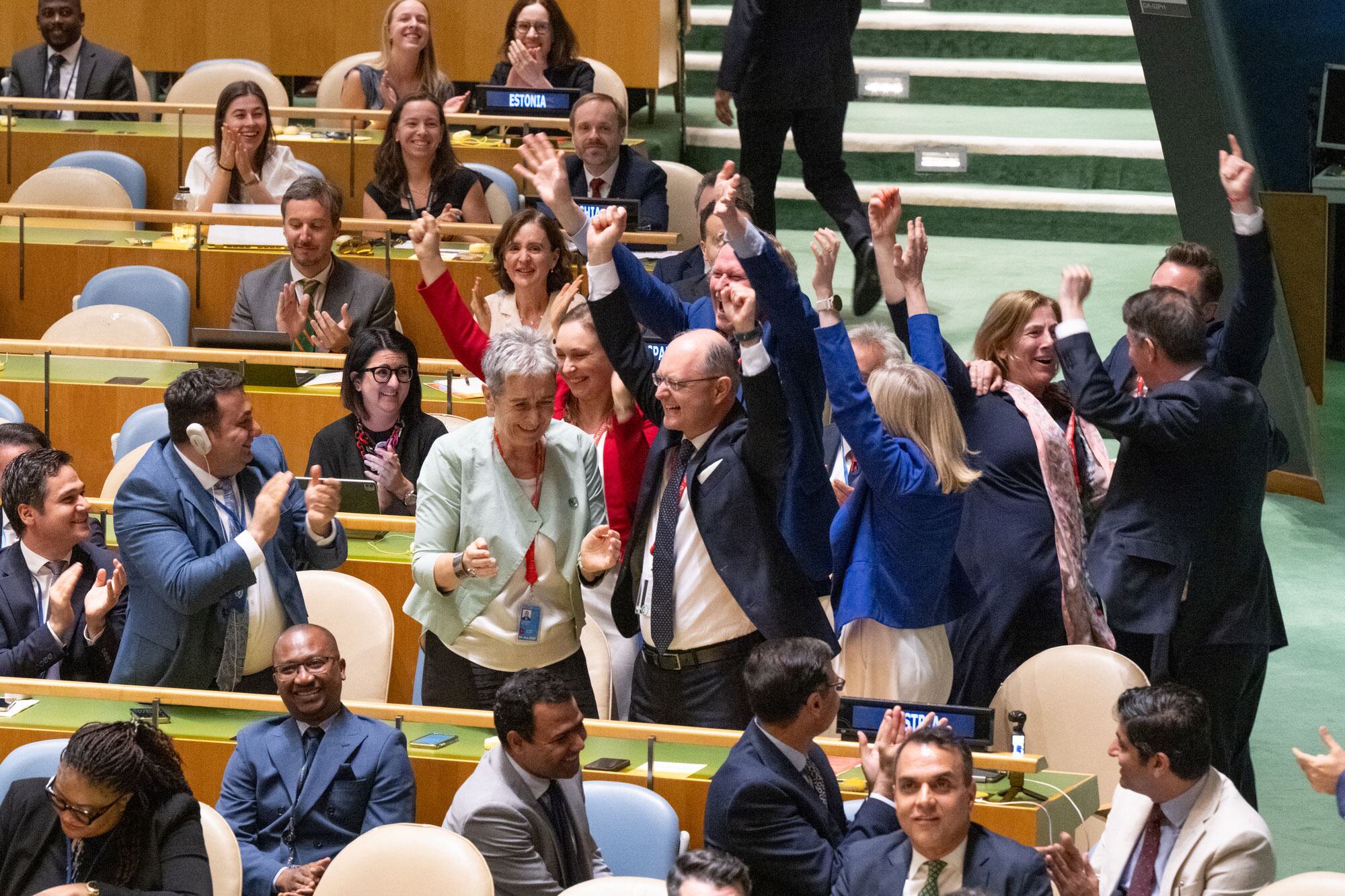
A closely watched Security Council election delivered a mix of continuity and change on Wednesday, as Austria, Portugal, Trinidad and Tobago, Zimbabwe – and first-time member Kyrgyzstan, secured seats around the iconic horseshoe table.

A dramatic morning which saw multiple rounds of voting for the competitive seats, came amid widening geopolitical divisions and repeated deadlock within the UN body dedicated to resolving conflicts and preventing wars from erupting in the first place.

The five countries were elected by the 193-member General Assembly to serve as non-permanent members of the Security Council for two-year terms beginning on 1 January 2027.

Austria and Portugal won the two seats allocated to the Western European and other States (WEOG) Group, while Trinidad and Tobago and Zimbabwe were elected from the Latin American and Caribbean Group and the African Group respectively.

Kyrgyzstan secured the Asia-Pacific seat after defeating the Philippines in four rounds of voting.

Vote tally

Portugal and Austria prevailed in the first round, receiving 134 and 131 votes respectively – comfortably above the required two-thirds majority. Germany received 104 votes and was eliminated.

In the Latin American and Caribbean Group, Trinidad and Tobago secured 181 votes, while Guyana received one vote despite not being a candidate.

Zimbabwe, the sole candidate for the African Group seat, received 182 votes.

Kyrgyzstan makes history

The most competitive contest unfolded in the Asia-Pacific Group. Kyrgyzstan led the first ballot with 105 votes to the Philippines’ 85, before steadily increasing its support through three head-to-head rounds of voting, ultimately prevailing by 142 to 49 in the fourth round.

The election marks a historic milestone for Kyrgyzstan, which will serve on the Security Council for the first time since joining the United Nations in 1992.

Delegates from the Kyrgyz mission applauded and celebrated with other diplomatic well-wishers for several minutes following the result inside the gilded General Assembly Hall.

The other four newly elected members all have previous Council experience: Austria and Portugal have served three times each, Zimbabwe twice and Trinidad and Tobago once.
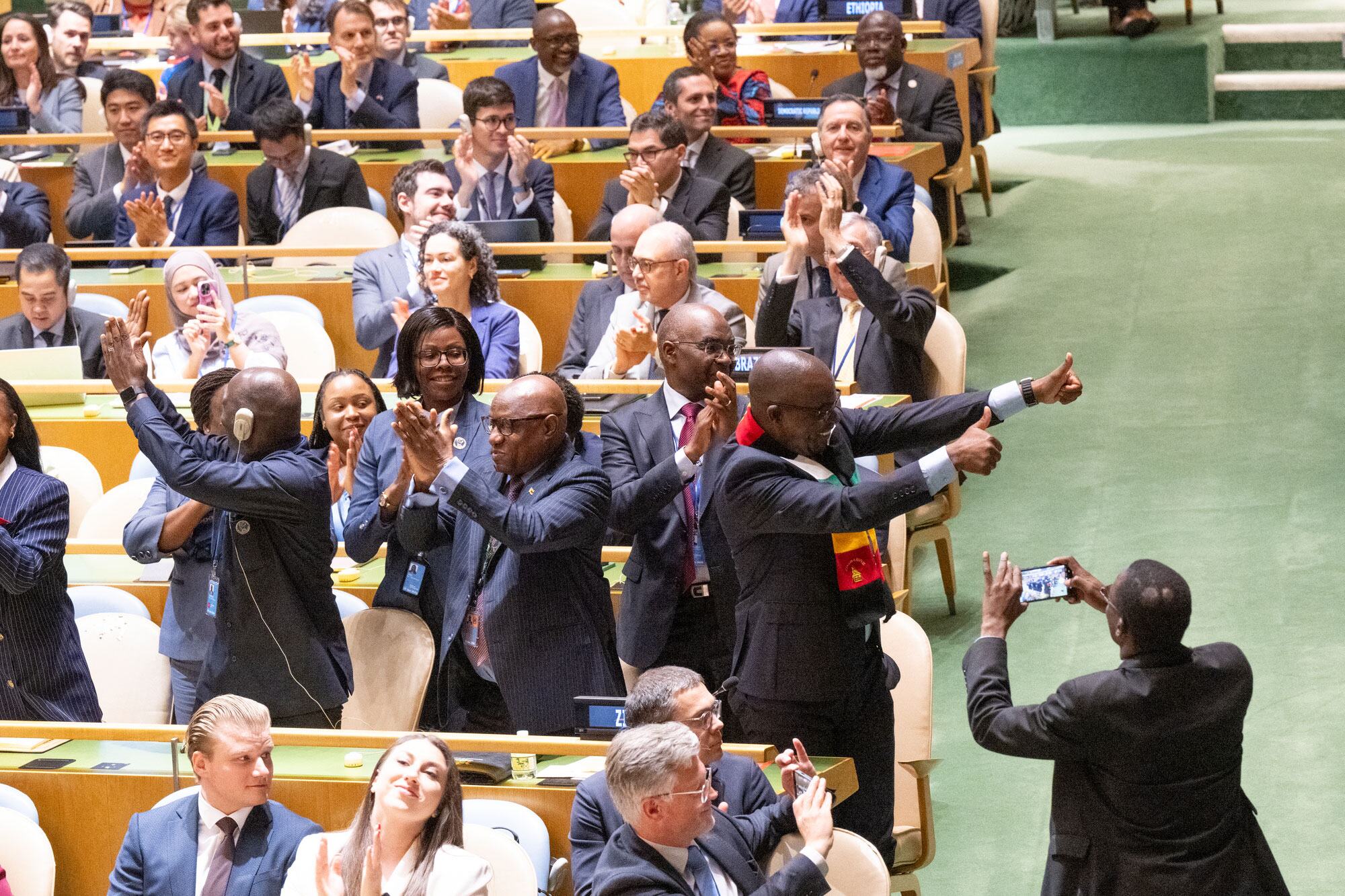
 

Делегаты от Зимбабве празднуют свое избрание непостоянным членом Совета Безопасности ООН.
UN Photo/Eskinder Debebe The delegation of Zimbabwe celebrate after being elected.
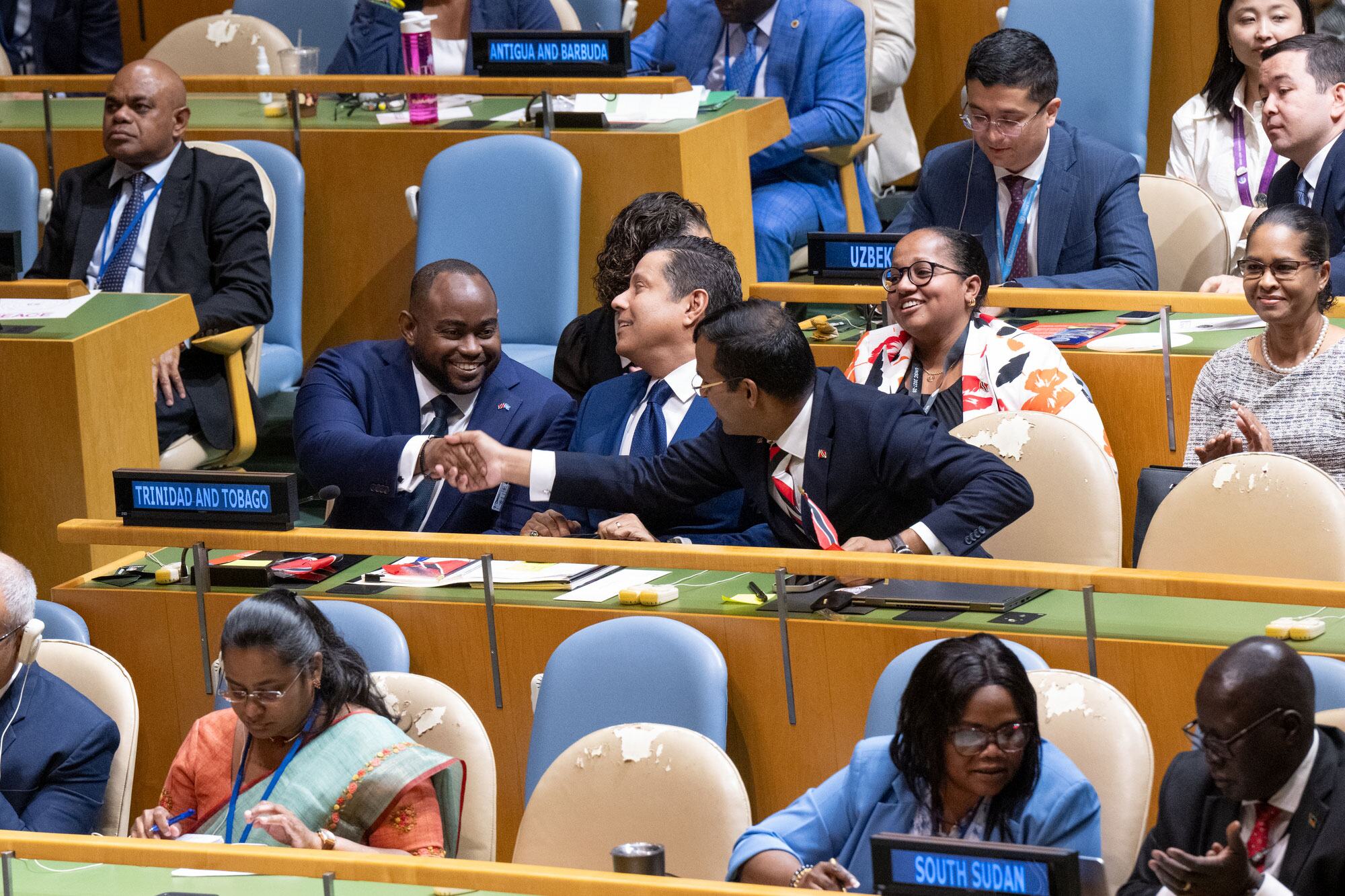
Делегаты из Тринидада и Тобаго празднуют победу на заседании Совета Безопасности ООН, пожимая друг другу руки в зале заседаний.
UN Photo/Eskinder Debebe The delegation of Trinidad and Tobago celebrate after being elected.

Fifteen seats

The Council comprises 15 members: five permanent members – China, France, Russia, the United Kingdom and the United States – with veto power and 10 non-permanent members elected for staggered two-year terms.

Seats are distributed among regional groups to ensure geographical representation.

The five countries elected on Wednesday will replace Denmark, Greece, Pakistan, Panama and Somalia when their terms conclude at the end of 2026.

Bahrain, Colombia, the Democratic Republic of the Congo, Latvia and Liberia will remain on the Council through the end of 2027, providing continuity in its work.
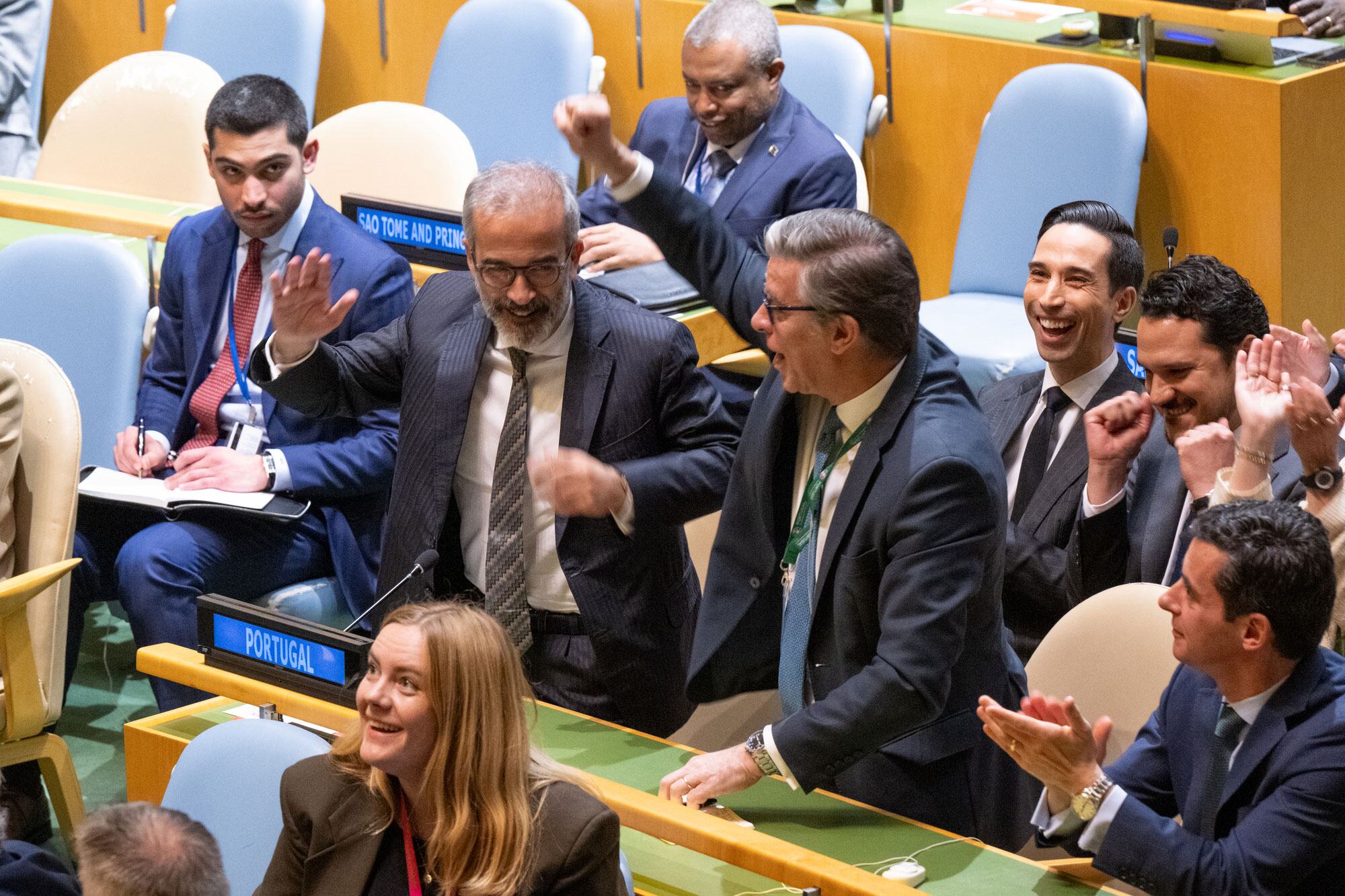
Португальская делегация празднует избрание непостоянным членом Совета Безопасности ООН.
UN Photo/Eskinder Debebe The delegation of Portugal celebrate after being elected.
Анналена Бербок и другие делегаты празднуют избрание новых членов Совета Безопасности на пленарном заседании Генеральной Ассамблеи Организации Объединенных Наций.
UN Photo/Eskinder Debebe The delegation of Austria celebrate after being elected.

Peace under pressure

The incoming members will take their seats at a moment when the Council faces some of its most difficult tests in years.

Its work has increasingly been shaped by geopolitical rivalries among major powers, particularly the five permanent members.

Deep divisions over conflicts including Ukraine and Gaza have led to stalemate, frustrating action, while the use of vetoes has at times prevented agreement on resolutions addressing major crises.

Growing calls for reform

The Council has also faced mounting calls for reform, with UN and world leaders arguing that its composition no longer reflects contemporary geopolitical realities.

Secretary-General António Guterres has repeatedly warned that international institutions remain “stuck in the world as it was in 1945, not the world of today,” including the Security Council itself.

African countries have been among the strongest advocates for change, arguing that a continent of 54 Member States remains underrepresented in the Council's permanent decision-making structures. Calls for expanded representation from developing countries overall have also grown louder.


https://news.un.org/en/story/2026/06/1167636

https://creativecommons.org/licenses/by/4.0/legalcode

среда, 31 декабря 2025 г.

The General Assembly has approved a $3.45 billion regular budget for the United Nations for 2026


30 December 2025 
UN Affairs

The General Assembly has approved a $3.45 billion regular budget for the United Nations for 2026, following weeks of intensive negotiations and one of the Organization’s most important reform initiatives, UN80.

The budget – approved by the 193-member General Assembly on Tuesday – authorizes  $3.45 billion for the coming year, covering the Organization’s three core pillars of work: peace and security, sustainable development and human rights.

The budget largely reflects the Secretary-General’s proposed 15 per cent reduction in financial resources and a nearly 19 per cent cut in staffing.

The regular budget finances the UN’s core activities, including political affairs, international justice and law, regional cooperation for development, human rights, humanitarian affairs and public information.

It is separate from the United Nations peacekeeping budget, which operates on a 1 July to 30 June fiscal cycle, while the regular budget follows the calendar year.

Consensus after intense negotiations

Addressing delegates as the Fifth Committee – the Assembly’s main administrative and budget body – wrapped up negotiations, UN Controller Chandramouli Ramanathan praised the Committee for steering a complex and compressed process to a timely conclusion.

“It has been a year of challenges,” he said, noting that the Secretariat had been tasked with assembling an entire budget in less than six weeks, producing hundreds of tables and responding to thousands of questions from oversight bodies and Member States.

He underscored that, despite often arduous negotiations, the Committee had once again reached agreement by consensus, a hallmark of the budgetary process. “That is something remarkable that you should not underestimate,” he told delegates.

Challenges ahead  

Looking ahead, the Controller warned that the adoption of the budget marks the beginning – not the end – of a demanding implementation phase.  

As of 1 January 2026, he said, 2,900 positions will be abolished, while more than 1,000 staff separations have already been finalized, requiring careful management to ensure affected personnel continue to receive salaries and entitlements during the transition.

Mr. Ramanathan also welcomed what he described as a record level of potential advance payments by Member States toward the 2026 budget and appealed for continued prompt payment of assessed contributions.


https://news.un.org/en/story/2025/12/1166685

 https://creativecommons.org/licenses/by/4.0/legalcode
вторник, 30 декабря 2025 г.

UN chief urges world leaders to ‘get priorities straight’ as New Year message calls for peace over war


29 December 2025 
UN Affairs
As the world enters 2026 amid mounting crises, the UN Secretary-General António Guterres has issued a stark but hopeful New Year appeal, urging global leaders to shift resources away from destruction and towards development, peace and people.

“The world stands at a crossroads,” he said, warning that conflict, climate breakdown and systemic violations of international law are eroding trust in leadership worldwide.

“People everywhere are asking: Are leaders even listening? Are they ready to act?” he said.

Mr. Guterres underscored the scale of global suffering, noting that more than a quarter of humanity now lives in conflict-affected areas. Over 200 million people require humanitarian assistance, while nearly 120 million have been forcibly displaced by war, crises, disasters or persecution.


Against this backdrop, he pointed to what he described as a profound imbalance in global priorities.

“As we turn the page on a turbulent year, one fact speaks louder than words: global military spending has soared to $2.7 trillion,” he said, nearly 10 per cent higher than the pervious year.

That figure, he stressed, is 13 times higher than total global development aid and equivalent to the entire gross domestic product (GDP) of the African continent. If current trends continue, military spending could more than double to $6.6 trillion by 2035, even as humanitarian needs continue to rise.

A path to hope
Despite the grim statistics, the Secretary-General underscored that solutions are within reach.

In September 2025, he launched the report The Security We Need: Rebalancing Military Spending for a Sustainable and Peaceful Future. The report shows how relatively small shifts in spending could deliver transformative results.

Less than four per cent of current military expenditure could end world hunger by 2030, it finds, while just over 10 per cent could fully vaccinate every child. Redirecting 15 per cent would more than cover the annual cost of climate adaptation in developing countries.

 “It’s clear the world has the resources to lift lives, heal the planet, and secure a future of peace and justice,” Mr. Guterres said.

Call to action
Looking ahead, he had a direct message to leaders globally.

“On this New Year, let’s resolve to get our priorities straight. A safer world begins by investing more in fighting poverty and less in fighting wars. Peace must prevail,” he urged.

Addressing people everywhere, he added: “Play your part. Our future depends on our collective courage to act.”

“In 2026,” he concluded, “I call on leaders everywhere: Get serious. Choose people and planet over pain. Let’s rise together – for justice, for humanity, for peace.”


https://news.un.org/en/story/2025/12/1166678
https://creativecommons.org/licenses/by/4.0/legalcode
суббота, 22 ноября 2025 г.

UN presents UN80 Initiative Action Plan, setting coordinated path for system-wide reforms


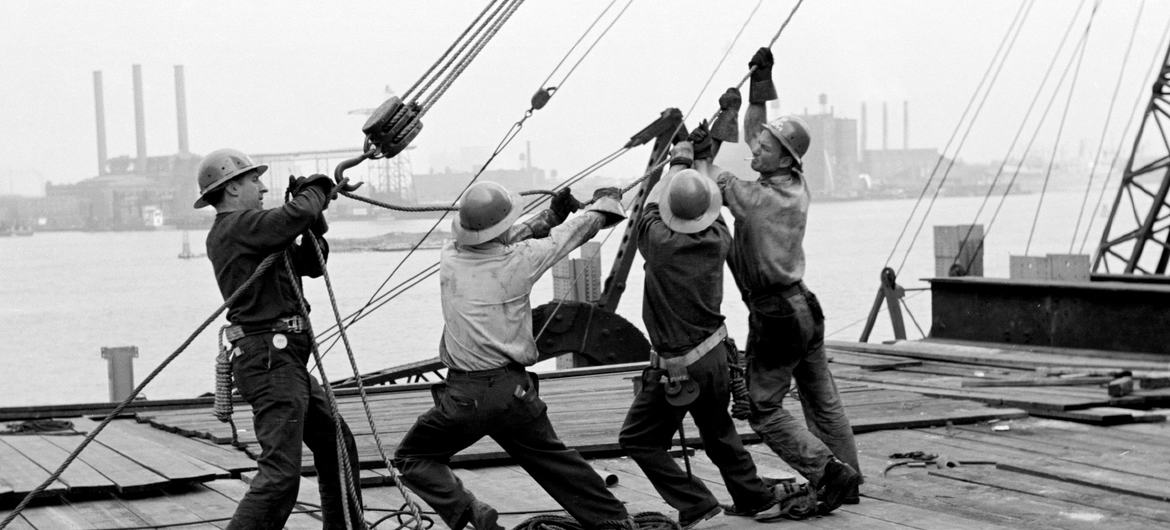
Steel workers hoist a girder in place in the meeting hall area of the UN Headquarters where construction was completed in June 1951.
UN Photo
 
Steel workers hoist a girder in place in the meeting hall area of the UN Headquarters where construction was completed in June 1951.


21 November 2025 
UN Affairs

The United Nations outlined how it intends to advance one of its most comprehensive system-wide reform efforts in decades, as Under-Secretary-General for Policy Guy Ryder presented the UN80 Initiative Action Plan. The plan brings the Secretary-General’s major UN80 reform proposals into a single, coherent structure to streamline efforts that will make the UN system deliver better.

The plan does not introduce new proposals but sets out how the UN system intends to advance the ones already on the table: 87 actions, grouped into 31 work packages across 3 workstreams, stretching from peace operations and humanitarian response to technology, shared services and institutional mergers.

“Its purpose is to bring structure, transparency and coherence and an operational framework to move ahead with all aspects of the UN80 Initiative - and also to enable you to see how each element will move forward: who is responsible for what, and on what timeline” Mr Ryder told Member States during an Informal Meeting of the General Assembly.

A plan for how the UN changes

The Action Plan sits at the heart of the UN80 Initiative, a bold, system-wide transformation to make the UN system work better - so that every dollar, decision and mandate delivers greater results for people and the planet.

Launched in March 2025, and welcomed by the General Assembly in resolution 79/318, the Initiative is not about redefining what the UN system does. The focus is on how it is structured, managed, and coordinated: modernising outdated arrangements, reducing bureaucracy, fragmentation and duplication, and strengthening impact.

The UN80 Initiative advances through three workstreams – all united in the Action Plan: proposals to improve efficiency across the UN system, with initial proposals reflected in the revised estimates for the 2026 Secretariat proposed programme budget; the Report of the Mandate Implementation Review, now under consideration by the Member State–led Informal Ad Hoc Working Group; and “Shifting Paradigms: United to Deliver,” the Secretary-General’s report outlining potential structural and programmatic realignments.

The Action Plan brings these three workstreams under one roof, translating their recommendations into a clear structure that identifies responsibilities, timelines and the intergovernmental bodies that will consider the proposals.

“If we maintain the momentum and approach this initiative in the right spirit, the months ahead can be a moment of real transformation”, Mr Ryder told Member States.

From three reports to 31 work packages

In practical terms, the Action Plan is a roadmap. It takes up the dense architecture of the UN80 Initiative and breaks it down into work packages, ranging from discreet technical changes to far-reaching system shifts.

Some of the most consequential packages focus on what senior officials call the “big tickets” for a more coherent UN system. On the peace and security side, this means new models for peace operations, including how tasks and resources are delegated to entities best placed to deliver. In the humanitarian sphere, it advances the New Humanitarian Compact to simplify emergency response plans, integrate supply chains, expand common services so that every dollar can deliver more.

Another cluster of work packages centres on how the UN development system is configured, including a “reset” of regional capacities and a reconfiguration of UN Country Teams that better combines expertise and cost-effectiveness.

The plan will also advance the assessments of possible mergers between UNDP and UNOPS, and UNFPA and UN Women, and the path forward for UNAIDS.

Critically, the Action Plan gives prominent place to joining up all “operational enablers” that underpin the UN system’s daily work: common data; shared technology platforms; unified services for supply chains and all other back-office functions; and a simpler approach to training and research.

Steering Committee and Task Force at the centre

A new Steering Committee, chaired by the Secretary-General every month, will ensure strategic direction and coherence among UN system leaders.

Beneath it, the UN80 Task Force, chaired by Mr Ryder, will meet weekly to coordinate implementation, monitor timelines and prepare recommendations for the Steering Committee’s review.

“As a basic principle, all actions will be undertaken in accordance with the applicable rules and procedures, as set out in the Charter, as well as the decisions, resolutions and established practice of the competent intergovernmental organs”, Mr Ryder recalled.

He noted that the Action Plan contains proposals falling under three different decision-making scenarios. The first scenario relates to proposals that fall within the Secretary-General's authority. The second relates to proposals that require further work, including the potential mergers outlined in the workstream 3 report. The third scenario relates to proposals involving financial considerations relating to the programme and peacekeeping budgets and are submitted to the General Assembly for review and approval in accordance with standard procedures.

Not a cure for the cash crunch – but part of the answer

The plan is being rolled out at a time when the UN System continues to grapple with serious funding cuts, with system resources estimated to fall 25 per cent (from $66 to $50 billion) in 2026, compared to 2024.

The Secretary-General has been explicit that the UN80 Initiative is not a solution to the UN system's financial crisis but a commitment to protect maximum impact, including in the most vulnerable settings.

A public dashboard for a complex overhaul

To help make sense of a reform that touches almost every corner of the UN system, the Secretariat has launched an interactive UN80 Initiative Actions dashboard.

The online platform allows users to see, at a glance, each work package, its objectives and leadership, and how it connects back to the three foundational reports. The dashboard will be expanded with timeline and milestones and updated regularly as work advances.

For an initiative whose success will ultimately be measured not in new documents but in real-world impact, the Action Plan is a turning point: moving from design into a phase where progress, gaps, and results will be tracked in one place.


https://news.un.org/en/story/2025/11/1166429


https://creativecommons.org/licenses/by/4.0/legalcode
суббота, 2 августа 2025 г.

A mandate for change: UN releases proposals for streamlining of tasks as part of major reform agenda


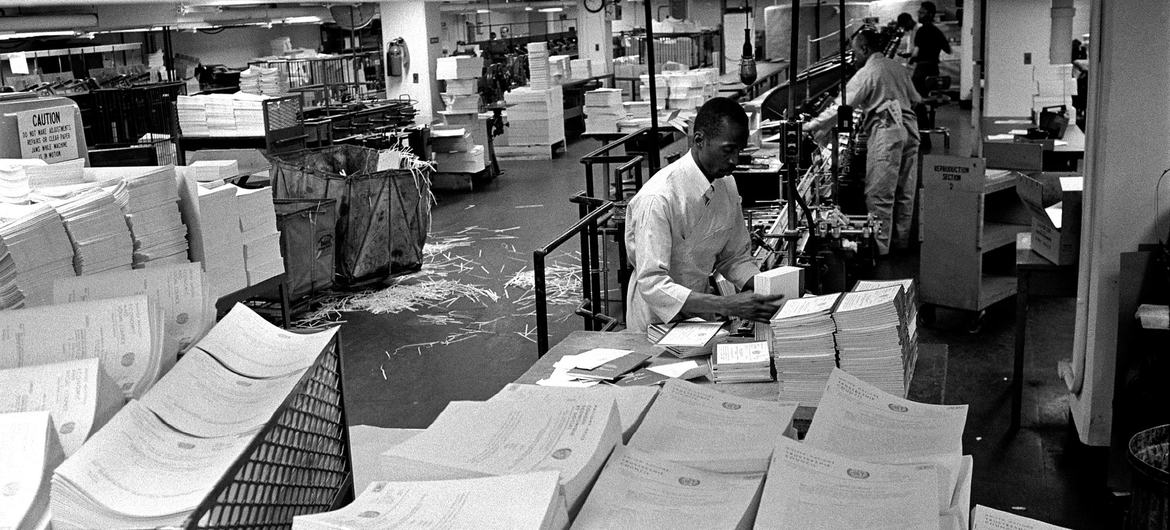
Thousands of pages of documents used to be printed every day at the UN as pictured in June 1969.
UN Photo/Yutaka Nagata
 
Thousands of pages of documents used to be printed every day at the UN as pictured in June 1969.


1 August 2025 
UN Affairs

Millions of lives have been improved by the mandates assigned to the UN. Yet duplication, fragmentation and outdated tasks are stretching resources and undermining the organization’s ability to deliver for those who need it most. As part of the UN80 Initiative, UN Secretary-General António Guterres has presented a set of proposals to Member States to make the UN more efficient, coherent and impactful.

Mandates - requests or directives for action issued by the General Assembly, the Security Council and the Economic and Social Council - have multiplied significantly since 1945. Today, there are more than 40,000 active mandates, serviced by around 400 intergovernmental bodies. Together, they require more than 27,000 meetings a year and generate roughly 2,300 pages of documentation every day, at an estimated annual cost of $360 million.

A growing challenge

Mandates guide the UN’s work in over 190 countries and territories, from peacekeeping to humanitarian response and development. But many are outdated or overlapping, and their complexity is increasing. Since 2020, the average word count of General Assembly resolutions has risen by 55 per cent, while Security Council resolutions are now three times longer than they were 30 years ago.

“Let’s face facts,” said Secretary-General António Guterres during a briefing to the General Assembly on Friday, “we cannot expect far greater impact without the means to deliver. By spreading our capacities so thin, we risk becoming more focused on process than on results.”

A lack of coordination adds to the strain. Several UN entities cite the same mandates to justify separate programmes and budgets, leading to duplication and reduced impact. More than 85 per cent of mandates contain no provisions for review or termination. “Effective reviews are the exception, not the rule,” Mr. Guterres said. “The same mandates are discussed year after year – often with only marginal changes to existing texts.”

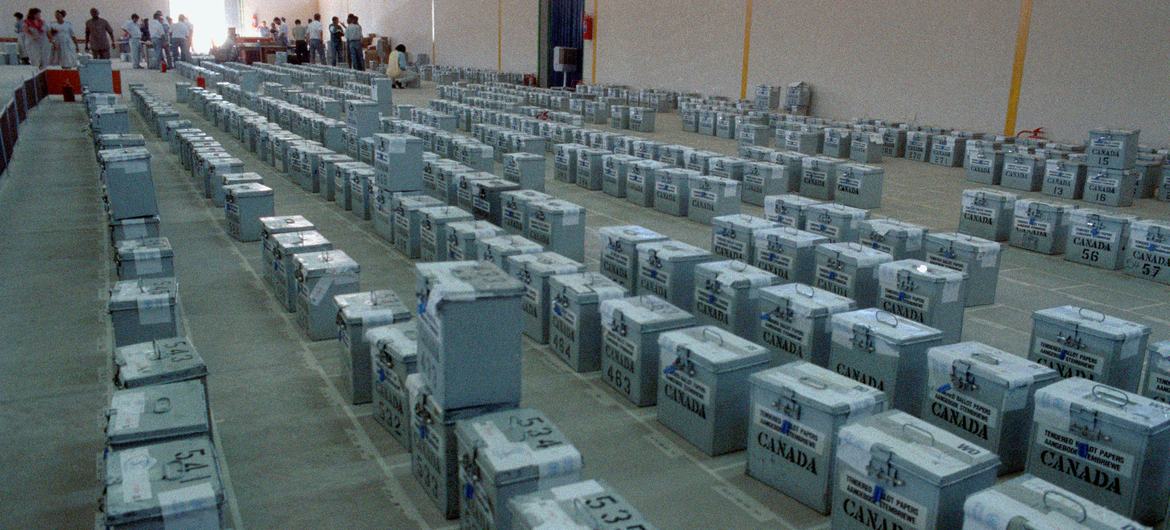
The UN has carried out mandates across the world including certifying the election in Namibia in 1989.
UN Photo/Milton Grant
 
The UN has carried out mandates across the world including certifying the election in Namibia in 1989.

The UN80 Initiative: a systemic approach

The Report of the Mandate Implementation Review, released on 31 July, is part of the Secretary-General’s broader UN80 Initiative - a multi-year effort to modernize how the UN works. Rather than assess mandates individually, the report takes a “lifecycle” approach, looking at how mandates are created, implemented and reviewed, and proposing ways to improve each stage.

“Let me be absolutely clear: mandates are the business of Member States,” Mr. Guterres told the General Assembly. “They are the expression of your will. And they are the sole property and responsibility of Member States. The vital task of creating, reviewing or retiring them lies with you – and you alone. Our role is to implement them – fully, faithfully, and efficiently.”

“This report respects that division,” he added. “It looks at how we carry out the mandates you entrust to us.”

From creation to delivery

To address duplication and complexity, the report calls for digital mandate registries that make it easier to track what has been adopted across different bodies. It also encourages shorter, clearer resolutions with realistic resource requirements. “We cannot expect far greater impact without the means to deliver,” Mr. Guterres said.

The report also highlights the growing operational burden of meetings and reports. Last year, the UN system supported 27,000 meetings and produced 1,100 reports - three out of five on recurring topics. “Meetings and reports are essential,” Mr. Guterres said. “But we must ask: Are we using our limited resources in the most effective way?”

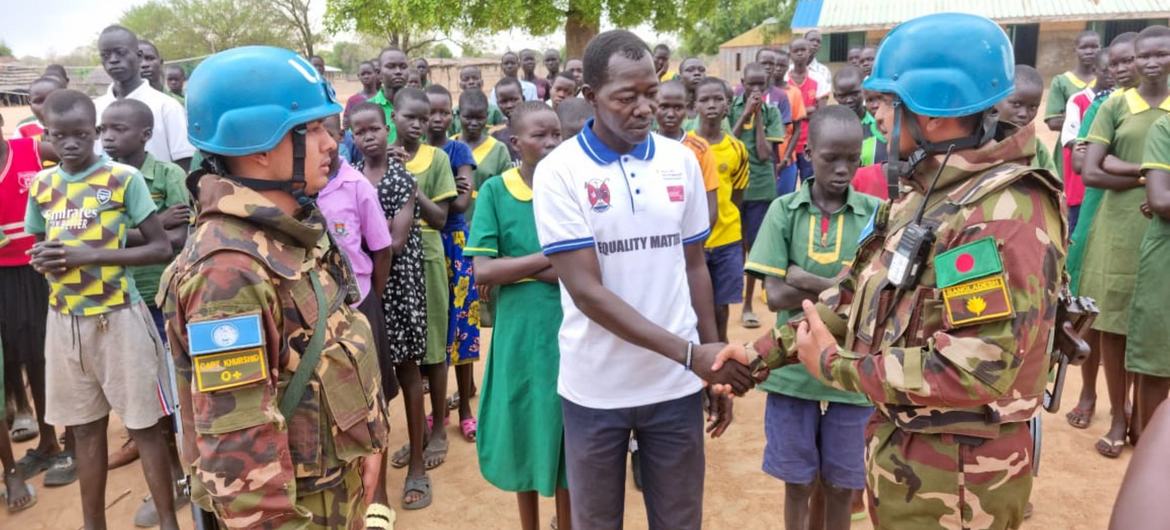
The UN peacekeeping mission in South Sudan, UNMISS, was mandated by the Security Council.
© UNMISS
 
The UN peacekeeping mission in South Sudan, UNMISS, was mandated by the Security Council.

Funding and impact

Proposals include reducing the number of reports and meetings, streamlining formats and monitoring report usage to ensure relevance. The Secretary-General is also calling for stronger coordination among UN entities to avoid overlap and ensure each mandate is linked to clear deliverables.

The report warns that fragmented funding is undermining coherent delivery. In 2023, 80 per cent of the UN’s funding came from voluntary contributions, 85 per cent of which were earmarked. “Fragmented funding, combined with fragmented implementation, leads to fragmented impact,” said Mr. Guterres. “Each of us has a role to play to address this. And each of us must act on the levers within our control.”

Putting people first

For the Secretary-General, reforms are not only about process but about impact. “Mandates are not ends in themselves,” he said. “They are tools – to deliver real results, in real lives, in the real world.”

He praised UN staff as central to this effort. “None of the work in implementing mandates is possible without our staff – the women and men of the United Nations,” Mr. Guterres said. “Their expertise, dedication and courage are indispensable to this endeavor. If we are to improve how we implement mandates, we must also support and empower the people who carry them out.”

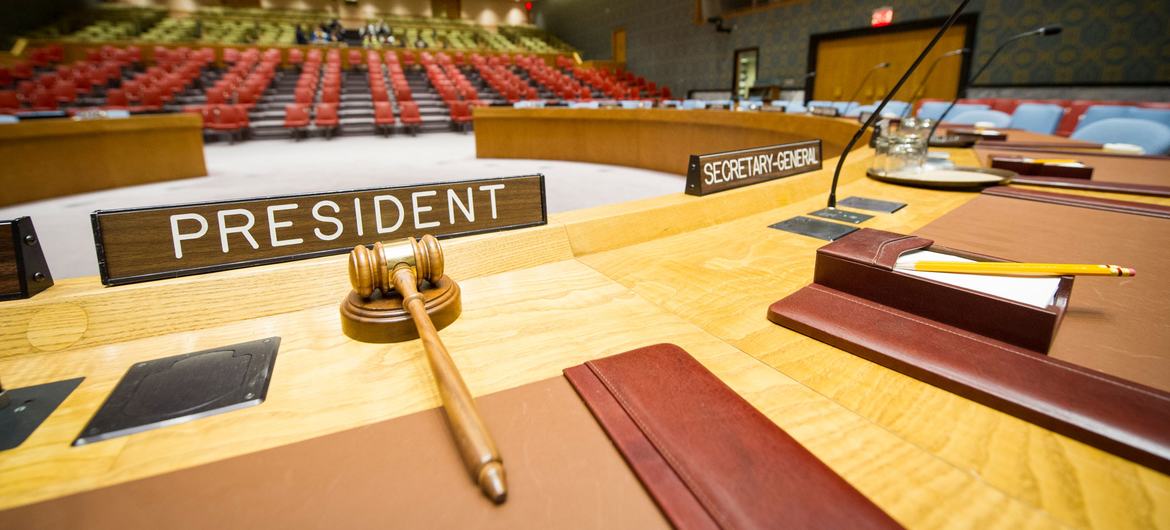
Many of the UN's mandates are agreed at the Security Council at UN Headquarters in New York.
UN Photo/Rick Bajornas
 
Many of the UN's mandates are agreed at the Security Council at UN Headquarters in New York.

A call to Member States

In his concluding remarks, the Secretary-General underscored that the next steps must come from Member States. “The path forward is yours to decide,” he said. “My responsibility is to ensure that the Secretariat provides the capacities and inputs required by the course of action that you choose.”

The report invites Member States to consider a time-bound intergovernmental process to carry proposals forward and ensure that this effort succeeds where earlier ones have fallen short. The upshot, the report says, would be a more agile, coherent and impactful UN that is better at delivering programmes and services. 

UN80

  • The UN80 Initiative is a system-wide push to streamline operations, sharpen impact, and reaffirm the UN’s relevance for a rapidly changing world. It is divided into three workstreams:
  • The first is focused on improving internal efficiency and effectiveness, cutting red tape, and optimizing the UN’s global footprint by relocating some functions to lower-cost duty stations.
  • The second is a mandate implementation review, which involves examining thousands of mandate documents underpinning the UN Secretariat’s work (a mandate refers to a task or responsibility assigned to the organisation by the Member States, usually through resolutions adopted by UN organs such as the General Assembly or the Security Council).
  • The third explores whether structural changes and programme realignment are needed across the UN System.
  • The work under the first two workstreams will help inform broader thinking around structural changes and programme realignment across the UN system.
https://news.un.org/en/story/2025/08/1165550


https://creativecommons.org/licenses/by/4.0/legalcode
вторник, 13 мая 2025 г.

UN chief calls for major reforms to cut costs and improve efficiency


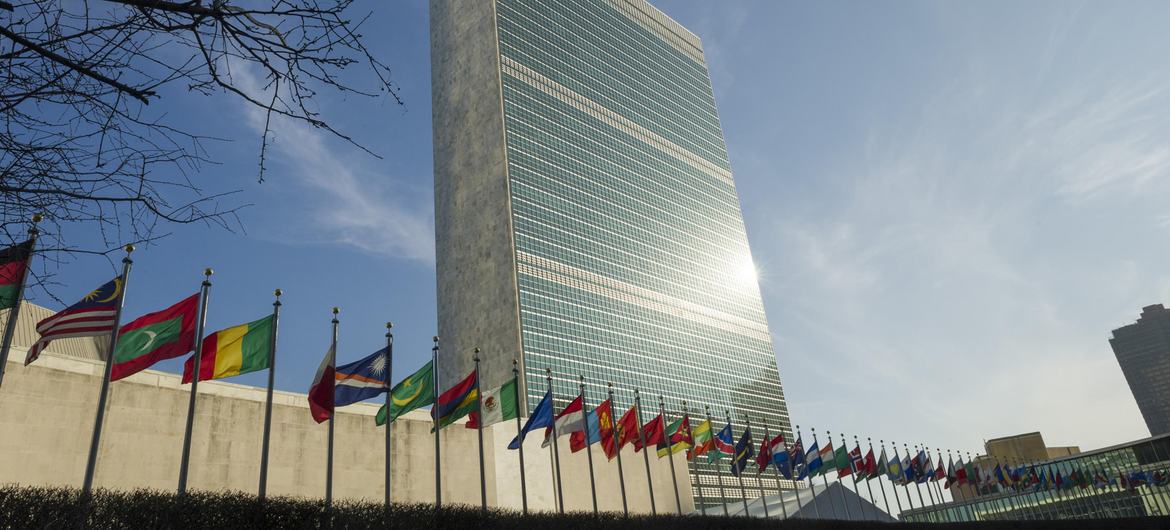
The Secretariat Building at United Nations Headquarters, in New York.
UN Photo/Rick Bajornas
 
The Secretariat Building at United Nations Headquarters, in New York.


By Vibhu Mishra
12 May 2025

 UN Affairs

Amid financial strain and growing global challenges, UN Secretary-General António Guterres is pushing for wide-ranging structural reforms to enhance the world body’s effectiveness.

Briefing Member States in New York on Monday Mr. Guterres outlined wide-ranging effort to revamp how the UN system operates – cutting costs, streamlining operations, and modernizing its approach to peace and security, development and human rights.

“These are times of peril,” he said, “but they are also times of profound opportunity and obligation. The mission of the United Nations is more urgent than ever.

Three main objectives

Launched in March, the UN80 Initiative centres on three priorities: enhancing operational efficiency, assessing how mandates – or key tasks – from Member States are implemented, and exploring structural reforms across the UN system.

The conclusions will be reflected in revised estimates for the 2026 budget in September this year, with additional changes that require more detailed analysis presented in 2027.

‘Meaningful’ budget reductions

Mr. Guterres said the changes are expected to yield “meaningful reductions” in the overall budget. For example, the departments for political and peacekeeping affairs could see a 20 per cent reduction in staff by eliminating duplication.

This level of reduction, he said, could serve as a benchmark across the UN system – while also considering unique factors for each department.

Additional examples include consolidating all counter-terrorism work within the main Office of Counter-Terrorism (UNOCT), ending building leases and relocating posts away from expensive “duty stations” where cost of living is high.

“There might be immediate, one-off costs involved in relocating staff and providing potential termination packages,” he said, “but by moving posts from high-cost locations, we can reduce our commercial footprint in those cities and reduce our post and non-post costs.

UN Secretary-General António Guterres briefs on the UN80 Initiative.

Efficiencies and upgrades

The first workstream focuses on efficiencies and improvements, developing a new model that improves consolidation, looks at centralising services, relocating to cheaper locations, and expanding the use of automation and digital platforms.

Mr. Guterres said departments the UN’s headquarters in New York and Geneva have been asked to review whether some teams can be relocated to lower-cost duty stations, reduced or abolished.

Reviewing mandates

The second workstream involves a review of how existing mandates are being carried out – not the mandates themselves, which are the purview of Member States only.

A preliminary review identified more than 3,600 unique mandates for the Secretariat alone. A full and more detailed analysis is now underway.

Mr. Guterres emphasised that the sheer number of mandates – and the bureaucracy needed to implement them – places a particular burden on smaller Member States with limited resources.

“Based on this work, Member States may wish to consider the opportunity to conduct themselves a review of the mandates,” he added.

Structural change

The third workstream – focused on structural reform – is already underway, Mr. Guterres said.

Nearly 50 initial submissions have already been received from senior UN officials, reflecting what Mr. Guterres described as “a high level of ambition and creativity.”

Key work areas have been identified for review. These include peace and security, development, human rights, humanitarian, training and research and specialised agencies.

A wide view of the informal meeting of the General Assembly plenary that heard a briefing by the Secretary-General on the UN80 Initiative.
UN Photo/Manuel Elías
 
A wide view of the informal meeting of the General Assembly plenary that heard a briefing by the Secretary-General on the UN80 Initiative.

Not an answer to liquidity crisis

Mr. Guterres also touched on the UN dire cashflow situation, noting that the initiative “is not an answer” to the months-long liquidity crisis but by being more cost effective, it should help limit the impact.

The liquidity crisis is caused by one simple fact – the arrears,” he said, adding that structural reform is not the answer to a fundamental failure by some Member States to pay what they owe on time to meet running costs.

Unpaid dues

According to information provided by the UN Controller to the General Assembly’s Fifth Committee (Administrative and Budgetary), only $1.8 billion has been received against the $3.5 billion regular budget assessments for 2025 – a shortfall of around 50 per cent.

As of 30 April, unpaid assessments stood at $2.4 billion, with the United States owing about $1.5 billion, China ($597 million),  Saudi Arabia ($42 million), Mexico ($38 million), and Venezuela ($38 million). An additional $137 million is yet to be paid by other Member States.

For the peacekeeping budget (which runs on a July-June cycle), including prior-period arrears, the unpaid amount totals $2.7 billion. For the International Tribunals, total contribution outstanding was $79 million as of 30 April.

Close consultation

The Secretary-General told Member States he would be consulting with them  closely and regularly on the cash crisis and needed reforms, seeking guidance  and presenting concrete proposals for countries to act on.

UN staff members and their representatives are being consulted and listened to, he added: “Our concern is to be humane and professional in dealing with any aspect of the required restructuring.

In conclusion, he highlighted that the UN80 Initiative is a “significant opportunity” to strengthen the UN system and deliver for those who depend on it.

In response to the suggestion that the UN should focus on just the one key pillar of peace and security, he said it would be wrong to ditch development and human rights – all three are essential he underscored.

Let us seize this momentum with urgency and determination, and work together to build the strongest and most effective United Nations for today and tomorrow.”


https://news.un.org/en/story/2025/05/1163151

https://creativecommons.org/licenses/by/4.0/legalcode
воскресенье, 29 сентября 2024 г.

From vulnerability to action: Asia-Pacific leaders urge global responsibility


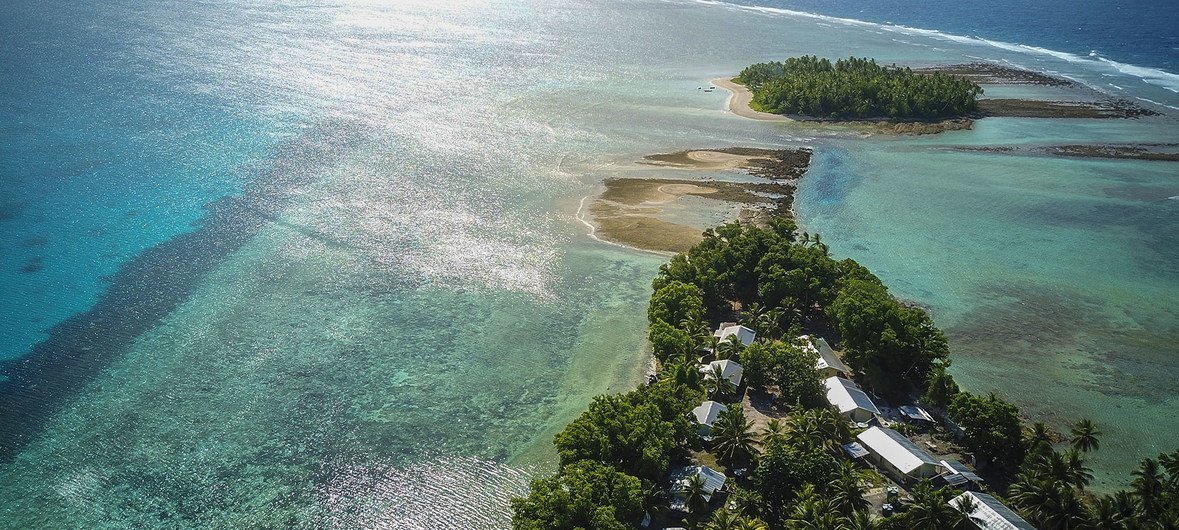
Low-lying islands in the Pacific Ocean are particularly susceptible to rising sea levels caused by climate change.
UNDP Tuvalu/Aurélia Rusek
 
Low-lying islands in the Pacific Ocean are particularly susceptible to rising sea levels caused by climate changе

By Vibhu Mishra
27 September 2024 

At the UN General Assembly on Friday, leaders from Asia and the Pacific underscored a dire reality: climate change is a clear and present danger for everyone on the Planet, but their countries and peoples will likely suffer the most.

Prime Ministers of Vanuatu, Papua New Guinea, Samoa, Lao People’s Democratic Republic, Tuvalu and Tonga underlined the UN’s role as a platform for driving unified, decisive action to mitigate this threat.

Indeed, the theme of collective action echoed strongly through the speeches, as they united in their message that without timely action, vulnerable nations like theirs risk further marginalization in an increasingly precarious world.

In their remarks, the leaders highlighted the critical importance of climate resilience and sustainable development, calling for substantial financial support international community.

They implored the global community to heed their warnings and act, not only for the sake of their nations but for the health of the entire planet.

‘Zero chance’ if things don’t change

First among the group, Charlot Salwai Tabimasmas, Prime Minister of Vanuatu, said that while industrialized nations continue to advance their economies, small island developing States bear the brunt of climate change affecting their development and aspirations.

Prime Minister of Vanuatu addressing the General Assembly.

“If the current carbon emissions trajectory continues its dangerous path, Vanuatu stands zero chance to measure up to its recently gained status as a developing state,” he said.

Referring to the latest report from the Intergovernmental Panel on Climate Change (IPCC), he warned that the window for real action to restore the health of the planet is fast closing.

“The [IPCC] warns us that we are likely to pass a dangerous temperature threshold within the next 10 years,” he said, adding however, that “despite this scathing report, the global response to the threat of climate change remains sub-par, undermining sustainable development and efforts to eradicate poverty.”

‘Survival of the fittest’ not sustainable

James Marape, Prime Minister of Papua New Guinea, highlighted that amid the existential threat of climate change, the relentless pursuit of wealth and the unsustainable exploitation of Earth's resources is jeopardizing future generations.

Prime Minister of Papua New Guinea addressing the General Assembly.

He criticized the attitude of “survival of the fittest”, in which nations and corporations compete to extract resources, resulting in environmental degradation, deforestation, fossil fuel burning and pollution, which further exacerbate poverty.

Despite its own economic challenges, Papua New Guinea remains committed to protecting both its marine and forest ecosystems for the benefit of future generations.

However, he noted that accessing climate finance remains a significant challenge, urging world leaders to address this issue urgently. Without assistance, Papua New Guinea may be forced to exploit its forest and marine resources to meet development goals and alleviate poverty.

“It is for this reason, I speak in solidarity with all forest nations, especially those in the Congo Basin and Amazon Basin for adequate compensation if we are to preserve our forests which, in fact, are the lungs of Earth.”

‘Frighteningly disturbing’ estimates

Feleti Penitala Teo, Prime Minister of Tuvalu, said that as a small island, climate change-induced sea-level rise “is and will always be” a top priority for his country.

Prime Minister of Tuvalu addressing the General Assembly.

“Not only a development priority but also a top survivability one,” he stressed, warning that the Pacific Ocean “that used to define us would soon engulf us and determine our future existence”, if sea level rise is not halted and Tuvalu’s coastlines not fortified and reinforced.

He cited “frighteningly disturbing” sea-level rise estimates that by 2050 – 26 years away –more than 50 per cent of his nation’s land territory will be regularly flooded by regular tidal surges.

Fifty years after that, in 2100, more than 90 per cent of the land will suffer the same fate, he added.

These predictions, he said, do not account for severe climatic conditions like cyclones and hurricanes which would “exponentially accelerate” the odds of reaching of those thresholds.

We must ‘turn the tide’

Fiame Naomi Mata’afa, Prime Minister of Samoa, also raised the alarm on climate change, calling for scaling up of investments to adapt to and mitigate its impact.

Prime Minister of Samoa addressing the General Assembly.

“We are not even at the end of 2024, yet we have witnessed countries in all corners of the globe endure extreme weather events – from ferocious wildfires to devastating floods and scorching heatwaves,” she said.

She highlighted the vulnerabilities of small island developing States, noting that its impacts are more extensively felt due to their special circumstances and the lack of capacity to respond quickly and effectively.

Outlining the implications of climate change, which could manifest in food insecurity, lack of water or energy supplies, competition over natural resources, loss of livelihoods and forced migration, the Samoan leader called for urgent and substantial investments to mitigate climate change, boost adaptation, and build more resilient economies.

“We must do more to turn the tide, to honour our commitments and obligations, and to take urgent and ambitious climate action now,” she said.

‘Stand ready’ to contribute

Sonexay Siphandone, Prime Minister of the Lao People’s Democratic Republic, echoed the disproportionate impact on vulnerable nations, his being a landlocked, least developed country.

Prime Minister of the Lao People’s Democratic Republic addressing the General Assembly.

“Despite being one of the least emissions-polluting countries in the world, the Lao PDR, like many other countries, has encountered severe consequences of climate change and natural disasters,” he said.

Climate change impacts, notably. more frequent and devastating disasters, he noted, represent real threats to international peace and security, as do geo-political tensions, conflicts, economic crisis, and rising poverty.

They also imperil the achievement of Sustainable Development Goals (SDGs) and implementation of the 2030 Agenda for Sustainable Development.

“Notwithstanding the fact that the Lao PDR is landlocked, we stand ready to contribute to the international efforts to protect the environment, while calling for support measures to further increase adaptation capacity and resilience for responding to future impacts,” he declared.

It’s about ‘our very identities’

Siaosi 'Ofakivahafolau Sovaleni, Prime Minister of Tonga, also reiterated that urgency.

Prime Minister of Tonga addressing the General Assembly.

“Decade after decade, year after year, we present to this esteemed body the existential threat that climate change poses to the Pacific, including Tonga,” he said, but this year the situation is even more dire.

“Let there be no doubt, we are teetering on the brink of a climate catastrophe,” he declared.

Pointing to the report of the World Meteorological Organization (WMO) that confirmed 2023 as the hottest year on record, he added that sea-level rise in the South-West Pacific is significantly exceeding the global average, reaching as high as 15 centimetres in some areas over the past 30 years.

Rising sea levels are eroding coastlines, swallowing entire islands, and forcing families to abandon their ancestral homes, he said, “this is not just about losing land – it is about our very identities, loosing heritage and culture.”

“For the nations of the Pacific, these changes are not merely environmental issues; they are existential threats that jeopardize the very existence of Small Pacific Island countries, including Tonga,” he said.


https://news.un.org/en/story/2024/09/1155081


https://creativecommons.org/licenses/by/4.0/legalcode
пятница, 27 сентября 2024 г.

What happened Thursday at UNGA: Gaza crisis tops discussions; Africa pushes for Security Council reform; leaders act against ‘superbugs’


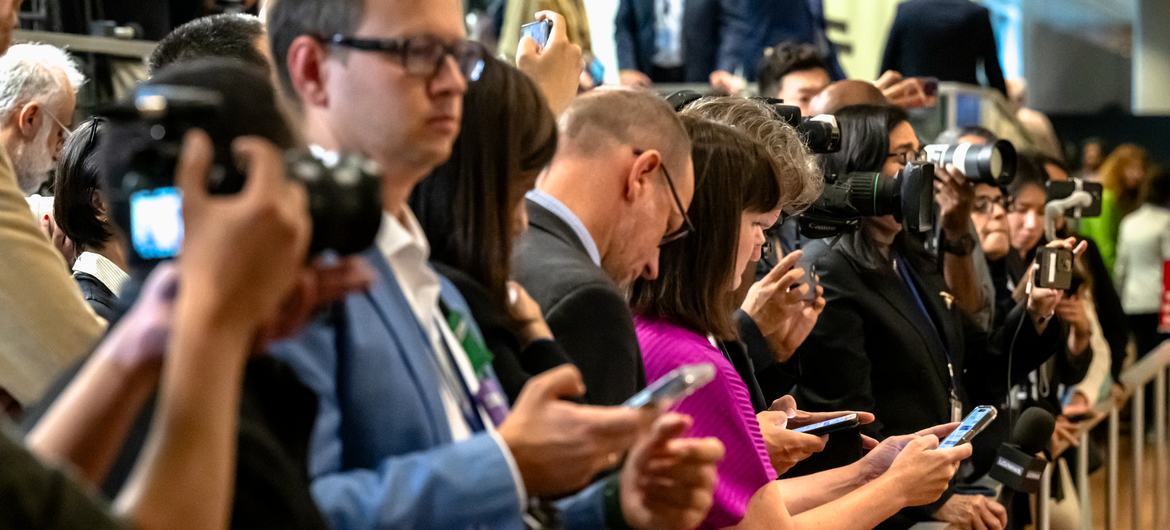
Journalists wait for a world leader's stakeout at UN Headquarters.
UN Photo/Mark Garten
 
Journalists wait for a world leader's stakeout at UN Headquarters.


26 September 2024 


UN Affairs

At the UN on Thursday, world leaders urged a concerted diplomatic drive to end the war in Gaza and to avert further escalation in the region. Strong demands for genuine UN reform persisted, with several African leaders calling for permanent representation on the Security Council. In two high-level meetings, senior UN officials warned that some of the world’s most effective antibiotics are losing their effectiveness against “superbugs”, while others urged nations to “stop gambling with humanity’s future” by getting rid of nuclear weapons. 

🔵 The day opened with Palestinian President Mahmoud Abbas declaring: “Stop this crime. Stop it now. Stop killing children and women...Stop sending weapons to Israel...The entire world is responsible for what is happening to our people in Gaza and the West Bank.”

He called for political and financial support for the UN humanitarian aid agency for Palestinian refugees, UNRWA, and other aid organizations, and laid out a detailed ‘day after’ plan for when the war ends.

Find our coverage here.

There’s more information on the Gaza crisis here.

Find our Middle East In Focus coverage here.

🔵 During a special Ministerial-level meeting to shore up support for UNRWA, the aid agency’s Commissioner-General, Philippe Lazzarini. stated: “Today, the agency is the beating heart of the humanitarian operation in Gaza. Despite this – and perhaps because of it – UNRWA is under fierce attack.”

He underscored that during the conflict, 222 UNRWA staff have been killed and more than two-thirds of its buildings have been damaged or destroyed.

Mr. Lazzarini concluded with three appeals urging the gathered ministers to:

- Safeguard UNRWA’s role in Gaza.

- Provide a sustainable model of funding for the agency’s vital mission.

- Reject attempts to tarnish UNRWA’s reputation and end its operations.

Find our coverage here.

Find Mr. Lazzarini’s statement here.

🔵 World leaders addressed the under-recognized health concern of antimicrobial resistance, or AMR, during the first high-level session of the day. AMR is mostly brought on by the abuse and overuse of medications like antibiotics, which increases the risk of disease and the development of resistant microorganisms.

The leaders agreed to cut the number of deaths associated with so-called “superbugs” by 10 per cent by the end of the decade.

“Antimicrobial resistance threatens to unwind [a century of medical] progress, making it without question one of the most pressing health challenges of our time,” said Dr. Tedros Adhanom Ghebreyesus, Director General of the UN World Health Organization (WHO), as he underscored “that the declaration includes vital commitments that, if translated into action, will help to track AMR, slow it down, expand access to antimicrobial medicines like antibiotics and spur the development of new ones.”

Find our LIVE coverage of the event here.

Find the Political Declaration on AMR here.

Find our explainer on AMR here.

🔵 The second of Thursday’s high-level events focused on advancing global nuclear disarmament. UN Secretary-General António Guterres declared: “There should be no place for these devices of death in our world.”

He warned, however, that “not since the worst days of the Cold War has the spectre of nuclear weapons cast such a dark shadow.” The UN chief said that “nuclear sabre-rattling has reached a fever pitch” and there have been threats to use a nuclear weapon, highlighting fears of a new arms race.

Convened to commemorate the International Day for the Total Elimination of Nuclear Weapons, observed annually on 26 September, the event also heard a representative of the International Committee of the Red Cross (ICRC) and the International Federation of Red Cross and Red Crescent Societies call for urgent action to prevent the risk of deliberate or accidental use of nuclear weapons.

Find our coverage of the event here.

🔵 The Assembly’s annual debate continued with African leaders making strong calls for more inclusive representation on the UN Security Council. Several speakers said the composition of that 15-member body, which comprises 10 rotating non-permanent members and five veto-wielding permanent members, was anachronistic and lacked legitimacy.

They laid out a compelling case for reform, highlighting how the legacy of colonialism and its lingering effects have left the continent disproportionately excluded. This exclusion is not merely a matter of representation, it directly impacts Africa’s ability to influence discussions on critical issues, such as conflict resolution, climate change and sustainable development.

Find our coverage here.

More on Thursday’s general debate here.


https://news.un.org/en/story/2024/09/1155011


https://creativecommons.org/licenses/by/4.0/legalcode
среда, 25 сентября 2024 г.

‘If we act together,’ we can overcome global challenges – UN Assembly President


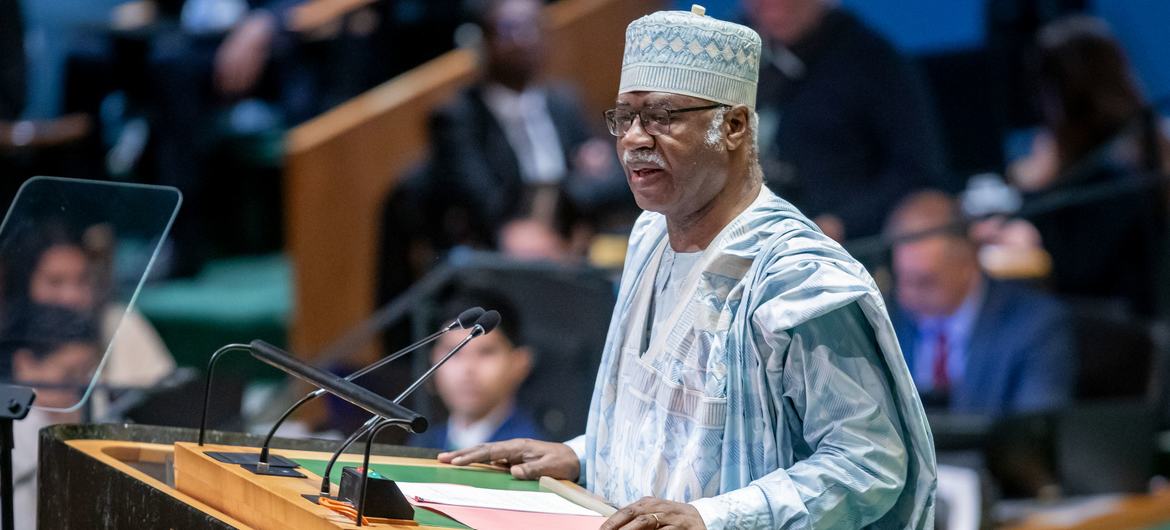
General Assembly Philémon Yang Yang addresses the opening of the general debate of the UN General Assembly’s 79th session.
UN Photo/Laura Jarriel
 
General Assembly Philémon Yang Yang addresses the opening of the general debate of the UN General Assembly’s 79th session.


24 September 2024

 UN Affairs

In a powerful address to the UN General Assembly, the 193-member body’s President, Philémon Yang said the annual high-level debate “remains one of the world’s most inclusive, represented, representative and authoritative platforms for global reflection of collective action”. 

Emphasizing the urgent need for collective action to address pressing global issues, Mr. Yang highlighted the critical state of the Sustainable Development Goals (SDGs), noting that with only five years remaining until the globally agreed 2030 deadline, less than 17 per cent of the targets are on track.  

He also underscored the immediate threats posed by the climate crisis, which is impacting ecosystems and livelihoods worldwide.

“The urgency of our task cannot be overstated,” he said, calling for a united front against the escalating climate emergency.

Tweet URL

Call for ceasefires in ongoing conflicts

The Assembly President then turned to ongoing conflicts in the Middle East, Ukraine, Haiti, and Sudan, urging immediate ceasefires and adherence to international humanitarian law.

He specifically called for an end to the violence between Hamas and Israel, advocating for the unconditional release of hostages and a two-State solution to ensure lasting peace and dignity for both Palestinians and Israelis.

Military spending and the rising nuclear threat

Mr. Yang warned against the diversion of resources into military stockpiles, which he described as fueling an unprecedented arms race reminiscent of the Cold War.

He reiterated the existential threat posed by nuclear weapons, calling for urgent measures to abolish these instruments of destruction.

In his remarks, the Assembly President stressed the importance of dialogue and trust among nations, noting that old prejudices and new divisions hinder peaceful resolutions to conflicts.

“Constant dialogue is a powerful weapon,” he asserted, emphasizing that trust is essential for human dignity and lasting peace.

Gender equality and human rights

The President also addressed gender equality, highlighting the ongoing struggles faced by women and girls worldwide who are denied basic rights and opportunities.

He condemned forced labor and modern slavery, calling for a global commitment to combat these injustices.

Reforming multilateral institutions

Yang pointed to the urgent need for reform in the international financial system, as many countries grapple with crippling debt.

He noted the widening digital divide, which excludes entire populations from essential resources needed for success in the modern world.

Mr. Yang reminded world leaders of their collective responsibility to shape a better future.

He referenced the recent Summit of the Future and the adoption of the Pact for the Future, which aims to reinvigorate multilateral institutions to meet the challenges of a rapidly changing world.


https://news.un.org/en/story/2024/09/1154806


https://creativecommons.org/licenses/by/4.0/legalcode
понедельник, 23 сентября 2024 г.

Pact for the Future: World leaders pledge action for peace, sustainable development


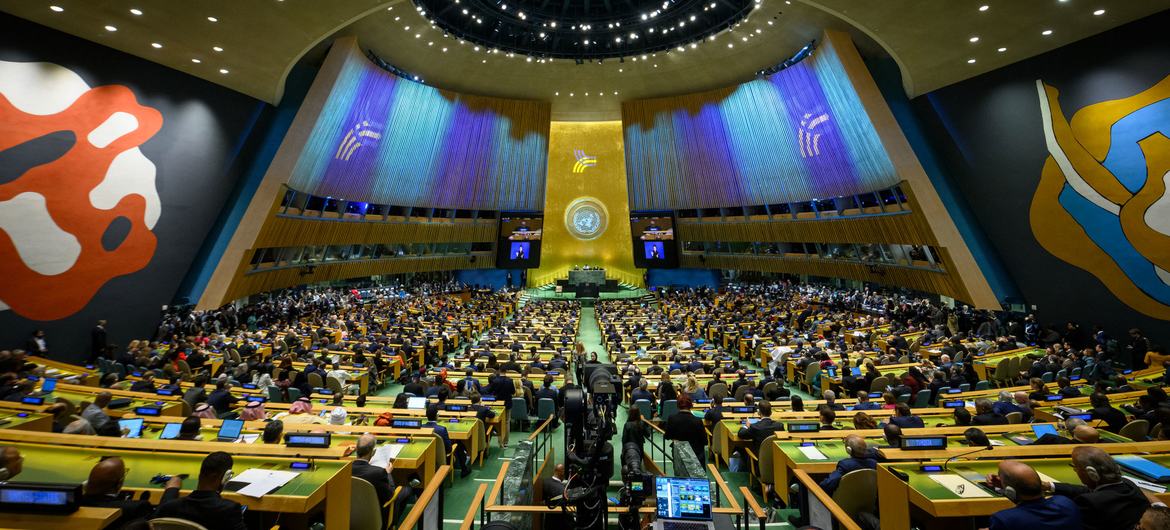
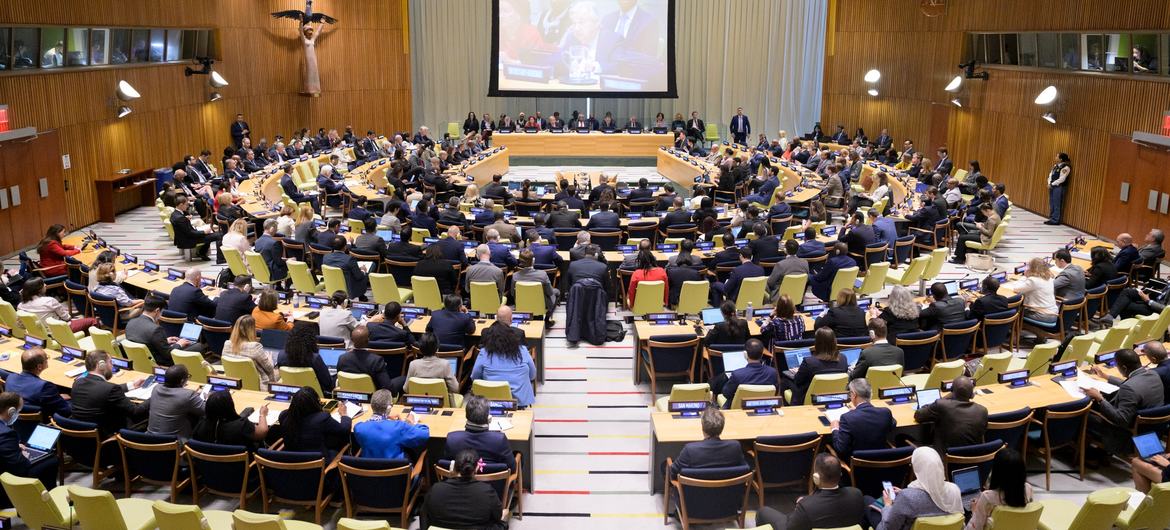
A wide view of the General Assembly Hall during the opening of the Summit of the Future.
UN Photo/Loey Felipe
 
A wide view of the General Assembly Hall during the opening of the Summit of the Future.


By Vibhu Mishra
22 September 2024

 UN Affairs

World leaders on Sunday adopted the Pact for the Future, a landmark declaration pledging concrete actions towards a safer, more peaceful, sustainable and inclusive world for tomorrow’s generations.

The Pact along with its annexes, the Global Digital Compact and the Declaration on Future Generations, was adopted by consensus, despite a last-minute proposal for an amendment by some countries, including Russia, Iran, the Democratic People’s Republic of Korea (DPRK) and Syria.

The amendment sought to incorporate text calling for non-intervention in any issue of national sovereignty, and the primacy of intergovernmental deliberation, in effect, downplaying the role of the civil society or private sector interests. It was rejected after the 193-member Assembly decided not to act on the proposal.

Click here for UN News’ live coverage of the meeting and here to download the resolution

Tweet URL

Pact for the Future

The Pact’s five broad focus areas include: sustainable development; international peace and security; science and technology; youth and future generations and transforming global governance.

This has become an urgent pivot, as multilateral financial institutions and even the United Nations itself have come up short seeking solutions to 21st century problems, the pact lays out.

By endorsing the Pact, UN Member States pledged, among other things, to:

  • Turbocharge the Sustainable Development Goals (SDGs) and the Paris Agreement on climate change, two landmark 2015 agreements that have seen halting progress and missed milestones
  • Listen to young people and include them in decision-making, at the national and global levels
  • Build stronger partnerships with civil society, the private sector, local and regional authorities and more
  • Redouble efforts to build and sustain peaceful, inclusive and just societies and address the root causes of conflicts
  • Protect all civilians in armed conflict
  • Accelerate the implementation of our commitments on women, peace and security

Global Digital Compact

The Global Digital Compact marks the first truly worldwide agreement on the international regulation of artificial intelligence (AI) and is founded on the idea that technology should benefit everyone.

It outlines commitments to ensure that digital technologies contribute to sustainable development and human rights, while addressing risks like digital divides, cybersecurity, and misuse of technology.

The Compact aims to bridge the digital divide and ensure AI technologies are used responsibly, fostering global cooperation on both AI capabilities and security threats. Governments are also obligated to form an impartial worldwide Scientific Panel on AI and start an international conversation about AI governance inside the UN.

Declaration on Future Generations

The Declaration on Future Generations focuses on securing the well-being of future generations, also highlighting the need to include their interests in decision-making processes.

It also underlines the importance of protecting the environment, promoting intergenerational equity, and ensuring that long-term consequences of today's actions are considered.

Secretary-General Guterres addressing the Summit of the Future.

New opportunities

Speaking after the adoption, Secretary-General António Guterres emphasized that the Pact for the Future and its annexes, “open pathways to new possibilities and opportunities.”

“People everywhere are hoping for a future of peace, dignity, and prosperity. They are crying out for global action to solve the climate crisis, tackle inequality, and address new and emerging risks that threaten everyone,” he said.

“They see the United Nations as essential to solving these challenges,” he continued, adding “the Summit of the Future sets a course for international cooperation that can meet their expectations … now, let’s get to work.”

Months of negotiation

The adoption was the culmination of months of negotiations co-facilitated by Germany and Namibia.

Speaking after the adoption, Philémon Yang, President of the 79th session of the General Assembly, urged nations to move forward, together, in a spirit of solidarity and multilateral cooperation.

The path we choose must lead to a future where human dignity is respected and human rights are upheld. A future where peace transcends the mere absence of conflict and is grounded in justice, inclusion, and equity.”

Assembly President Yang addressing the Summit of the Future
♦ Receive daily updates directly in your inbox - Subscribe here to a topic.
♦ Download the UN News app for your iOS or Android devices.
 

https://news.un.org/en/story/2024/09/1154671

https://creativecommons.org/licenses/by/4.0/legalcode
пятница, 20 сентября 2024 г.

Showing resolve amid crisis: Guterres highlights UN impact in annual report


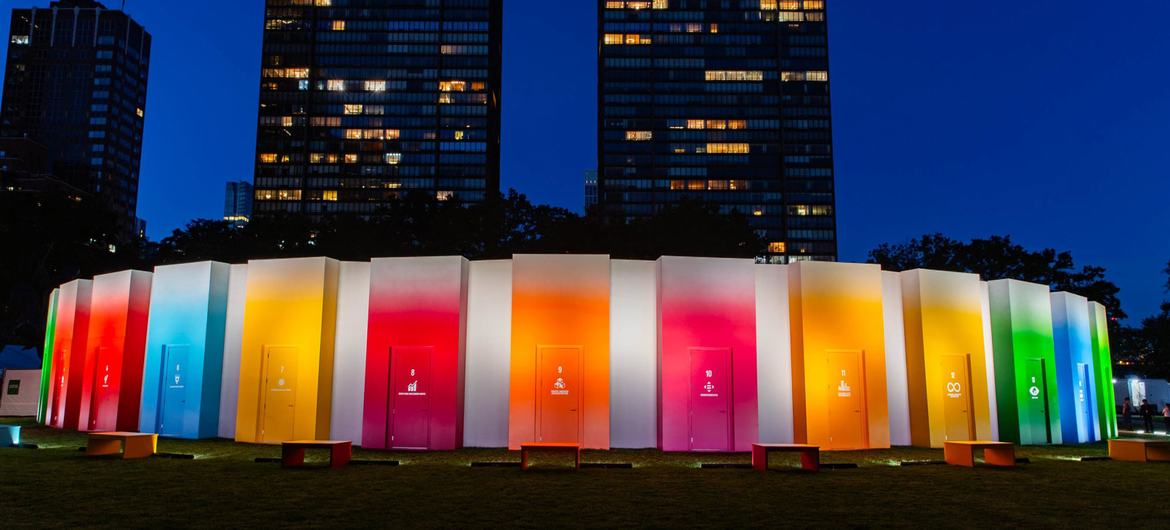
A view of the Sustainable Development Goals pavilion in September 2023.
© Partnerships Office/Patrick M
 
A view of the Sustainable Development Goals pavilion in September 2023.


19 September 2024 


UN Affairs

In a time marked by escalating global crises – from rising poverty to the worsening climate emergency – the United Nations remains steadfast in its resolve to foster peace, advance sustainable development, and alleviate human suffering.

In his Annual Report on the Work of the Organization, released ahead of the high-level session of the 79th UN General Assembly, Secretary-General António Guterres emphasized the Organization’s ongoing efforts to address these pressing challenges.

Mr. Guterres highlighted the resilience of UN personnel, committed to delivering hope and help to those in need, despite operating under difficult circumstances.

Resolve: Report of the Secretary-General on the Work of the Organization
United Nations
 
Resolve: Report of the Secretary-General on the Work of the Organization
Click here for the report

“I am enormously proud of the staff of the United Nations, who are delivering on their mandates in a fractured and sometimes dangerous world,” he said.

“In 2023, together with our partners on the ground, we coordinated humanitarian response plans for 245 million people across 74 countries and delivered life-saving assistance and protection to nearly 160 million people in urgent need.”

The report says that the UN also mobilized a record $22.7 billion in humanitarian aid from donors globally, enabling life-saving programmes in Afghanistan, Sudan, Yemen, and the Occupied Palestinian Territory, and regions affected by natural disasters like earthquakes in the Syrian Arab Republic and Türkiye and floods in Libya, Malawi and Mozambique.

However, these operations came at a significant human cost. 2023 saw the highest number of UN staff and humanitarian workers killed, with the vast majority of casualties being staff of the UN Relief and Works Agency for Palestine Refugees in the Near East (UNRWA) working in the Gaza Strip. The Secretary-General honored their sacrifice, underscoring the UN’s commitment to standing with the world’s most vulnerable.

Peace and security core to UN’s mission

Diplomacy for peace remained core to the Organization’s work amid escalating global peace and security challenges. In response, the Secretary-General proposed his New Agenda for Peace, which, among others, calls for multilateral action to address the interlocking threats to our shared future.

The report also highlights that for the first time in 34 years, the Secretary-General invoked Article 99 of the UN Charter, bringing the hostilities in Gaza and Israel to the attention of the Security Council and calling for an immediate humanitarian ceasefire and the release of hostages. The UN worked to prevent regional escalation and advance peace efforts aimed at ending the occupation and achieving a two-State solution in line with international law and relevant UN resolutions.

The UN also facilitated peace talks, supported State-building efforts and helped to protect civilians globally, including in Sudan. In addition, the Organization oversaw the withdrawal of some 13,000 personnel from its peacekeeping mission in Mali, known as MINUSMA, amid rapidly deteriorating security conditions.

The Peacebuilding Fund allocated over $200 million to support national peace plans in 36 countries, with a focus on gender equality. Partnerships with regional organizations, like the African Union, further bolstered conflict prevention.

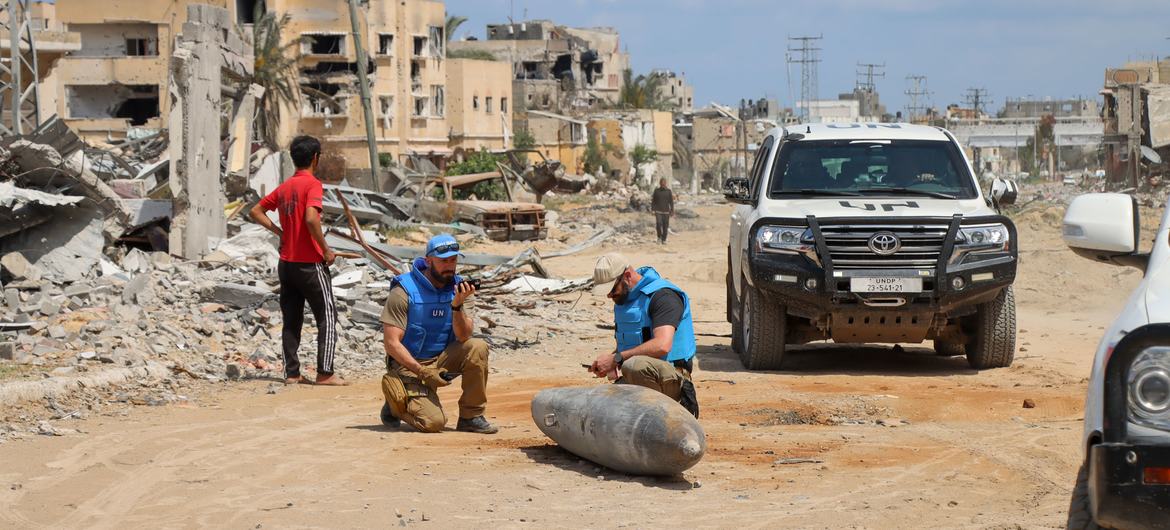
A UN team inspects an unexploded  bomb lying on a main road in Khan Younis, Gaza.
© UNOCHA/Themba Linden
 
A UN team inspects an unexploded bomb lying on a main road in Khan Younis, Gaza.

A call for action on Global Goals

In 2023, the SDG Summit gathered over 6,000 participants, renewing global commitment to the Sustainable Development Goalsonly 15 per cent of which are on track to be met by the globally agreed deadline of 2030, with many developing countries facing challenges in securing the resources needed to ensure a sustainable future.

Environmental initiatives such as the Water Action Agenda and a landmark agreement on plastic pollution were key achievements in 2023. The UN’s advocacy for global climate action was also a major highlight of the past year, with calls for fossil fuel transitions, operationalizing the loss and damage fund, and ending deforestation by 2030.

Human rights and multilateralism

Human rights remained a key focus of the UN’s mission. In 2023, the UN supported initiatives to eliminate violence against women, empower rural women, and ensure their representation in constitutional processes.

The Secretary-General also raised concerns about the erosion of multilateral principles, noting the impunity with which some parties to conflicts are targeting civilians, hospitals, humanitarian aid and schools.

In preparation for the landmark Summit of the Future, the UN released policy briefs on issues such as peace, security, and governance of artificial intelligence, aiming to reinforce the values of the UN Charter and tackle global challenges like mis- and disinformation in the public sphere.

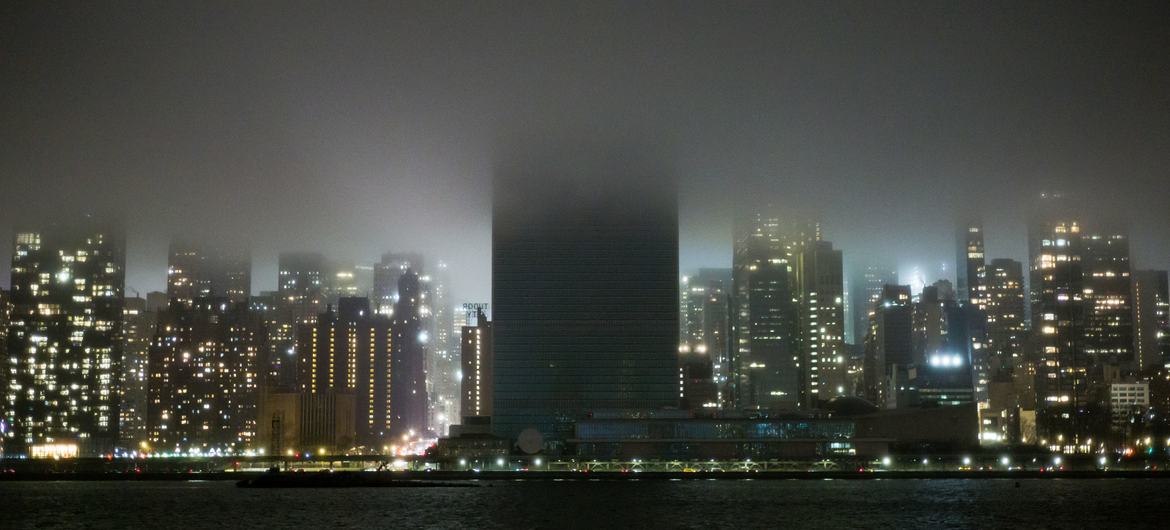
United Nations Headquarters turns off its lights to commemorate Earth Hour.
UN Photo/Manuel Elías
 
United Nations Headquarters turns off its lights to commemorate Earth Hour.

Committed staff

“At every step, our Organization and our personnel will continue to stand in solidarity with the people of the world through these trying times, as we seek to forge a more peaceful, healthy, equal and prosperous future together, and a world that leaves no one behind,” Mr. Guterres said.

“Their resolve is to achieve results for the people of the world and to deliver the help and the hope that every person deserves – and that the human family needs today, more than ever.


https://news.un.org/en/story/2024/09/1154556


https://creativecommons.org/licenses/by/4.0/legalcode
четверг, 19 сентября 2024 г.

What to expect at the United Nations general debate

UN Secretary-General António Guterres (at podium) addresses the opening of 78th session of the General Assembly annual debate. (file)

UN Photo/Cia Pak

 
UN Secretary-General António Guterres (at podium) addresses the opening of 78th session of the General Assembly annual debate. (file)

By Daniel Dickinson

18 September 2024

 UN Affairs

It’s the busiest and probably most high-profile week at UN Headquarters in New York, where leaders from across the world come together to discuss global issues or highlight their country-specific priorities. 

The 79th session of General Assembly gets underway in mid-September and the centrepiece for many is the annual general debate. But what exactly is it?

Here’s what you need to know about the debate which begins on Tuesday, 24 September:

What is the general debate?

The general debate is the annual meeting in September of Heads of State and Government of the 193 UN Member States. It takes place at the beginning of the General Assembly session, often known as UNGA.

It is usually the first debate of the session and, with the exception of the concurrent high-level meetings, the only one in which Heads of State and Government regularly participate.

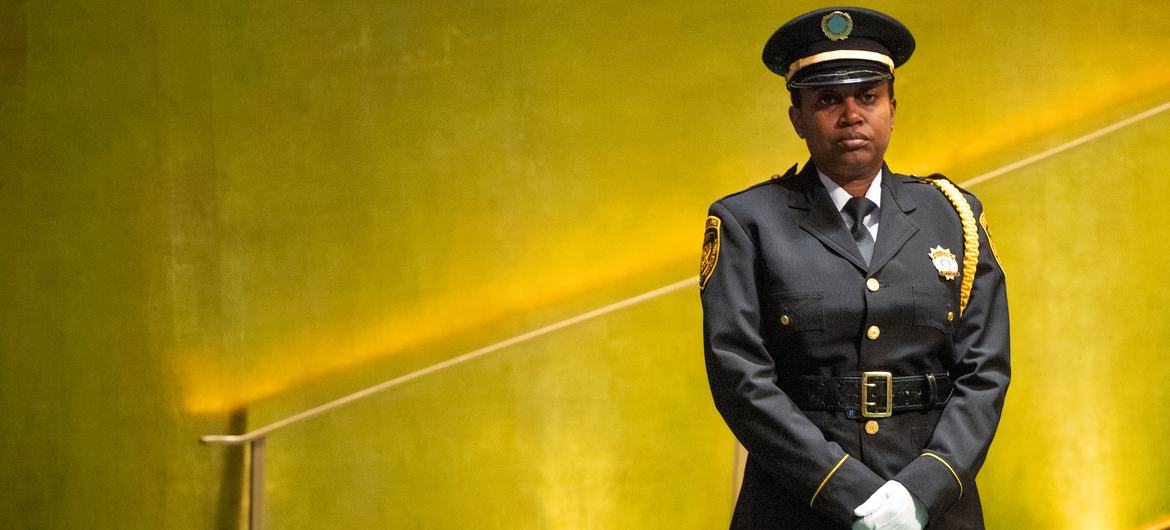
A UN security officer stands at the bottom of the podium stairs in the General Assembly Hall.
UN Photo/Cia Pak
 
A UN security officer stands at the bottom of the podium stairs in the General Assembly Hall.

Is it really a debate?

Not really. The general debate offers the representatives of all Member States (and some other entities) the opportunity to deliver a speech in the hallowed surroundings of the General Assembly Hall.

There is no discussion or debate immediately after any speech. However, Member States do have the right of reply, and this is made in writing by a Head of State. The letter is addressed to the Secretary-General, who will circulate it to all Member States. During the general debate, statements in exercise of the right of reply are made at the end of each day.

The theme for this September session, the 79th, is Leaving no one behind: Acting together for the advancement of peace, sustainable development and human dignity for present and future generations. Decided in broad consultation by the President of the General Assembly, many Heads of State may reference it in their speeches but are not obliged to do so.

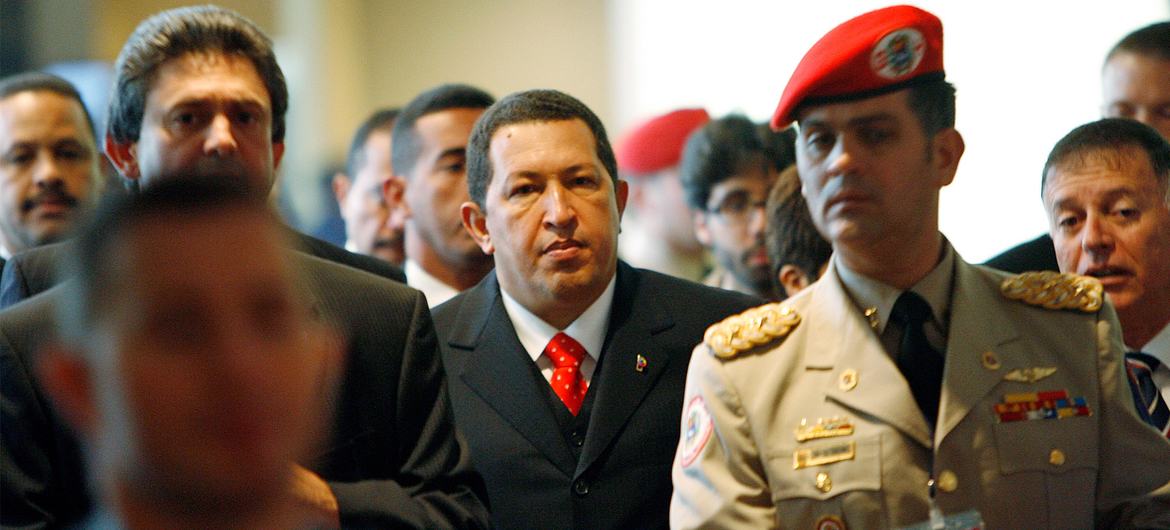
Hugo Chávez (centre), the former Venezuelan President, arrives at UN Headquarters in New York in September 2006. (file)
UN Photo/Mark Garten
 
Hugo Chávez (centre), the former Venezuelan President, arrives at UN Headquarters in New York in September 2006. (file)

Who speaks when?

In current practice, after the opening of the meeting, the UN Secretary-General makes a statement, followed by the President of the General Assembly.

Traditionally, and at least since the 10th session of the General Assembly in September 1955, it has been Brazil that opens the debate. According to the UN Protocol and Liaison Services, initially in the early days of the debate no one State wanted to be the first to speak, and Brazil stepped in on several occasions.

The United States, as the UN’s host country, is next on the podium.

The speaking order of the other 191 Member States is based on criteria such as geographic balance as well as the level of representation and their preference – for instance, a Head of State may not be present in New York at the beginning of the debate.

Other than the Member States, the only others invited to participate are the non-member observer States of Holy See and the State of Palestine as well as the European Union, which has observer status at the UN.

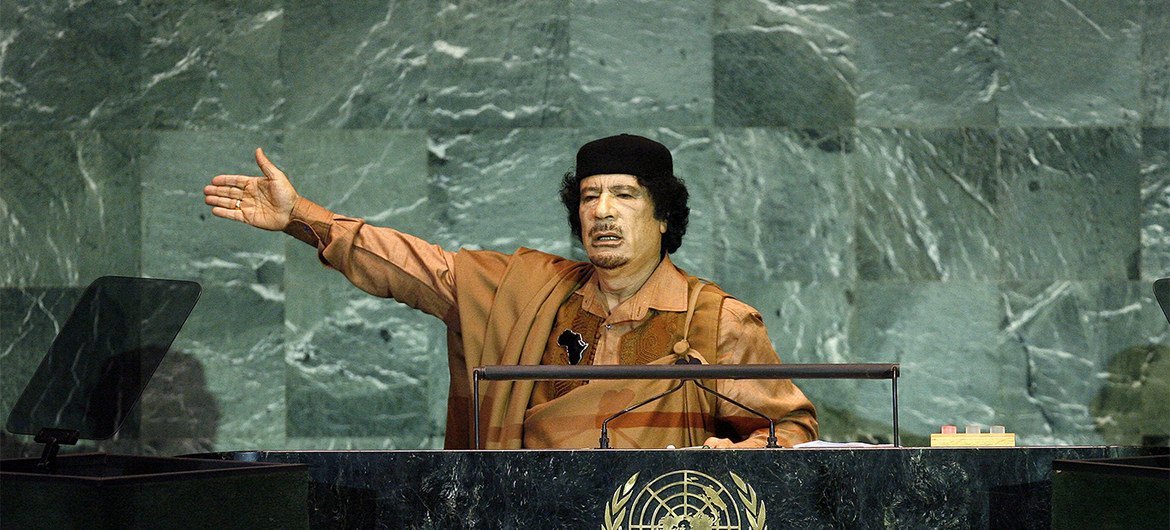
Former Libyan leader Muammar Gaddafi addresses the General Assembly in September 2009. (file)
UN Photo/Marco Castro
 
Former Libyan leader Muammar Gaddafi addresses the General Assembly in September 2009. (file)

Flashing light, flashing tempers

A voluntary 15-minute time limit for statements is informally suggested during the general debate, and speakers are discreetly alerted by a red-flashing light when their time is up, although they are never interrupted or stopped.

The key word here is voluntary, and many, if not most, Heads of State speak for longer.

Former Cuban leader Fidel Castro still has the record dating back to 1960 for the longest ever speech famously clocking in at 269 minutes, or just under four and a half hours, after promising “we shall do our best to be brief.”

There have been other long and very long speeches, but ones perhaps more notable for content rather than length.

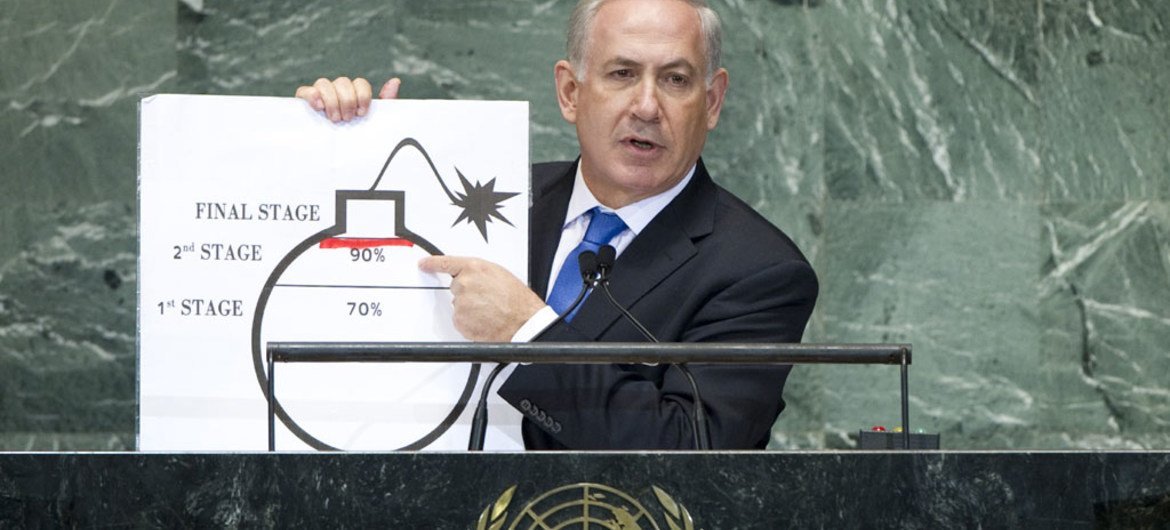
Prime Minister Benjamin Netanyahu of Israel addresses the General Assembly in September 2012. (file)
UN Photo/J. Carrier
 
Prime Minister Benjamin Netanyahu of Israel addresses the General Assembly in September 2012. (file)

In 2006, amid rising tensions between the US and Venezuela, the latter’s President Hugo Chávez called then-US President George W. Bush “the devil” from the podium.

In 2009, the late Libyan leader Muammar Gaddafi delivered a scathing 100-minute-long speech highly critical of the UN Security Council and the veto power of the five permanent members

Israeli Prime Minister Benjamin Netanyahu held up a cartoon representation of a bomb in 2012 to warn the world that Iran was just months away from being able to build a nuclear weapon.

And former US president Donald Trump in 2017 threatened to “totally destroy North Korea”, disparagingly referring to its leader Kim Jong Un as “Rocket Man”.

The gavel, the walk-out

The first general debate took place in 1946 and over the intervening almost 80 years, plenty of tradition, pomp and circumstance and a few myths have become associated with the event.

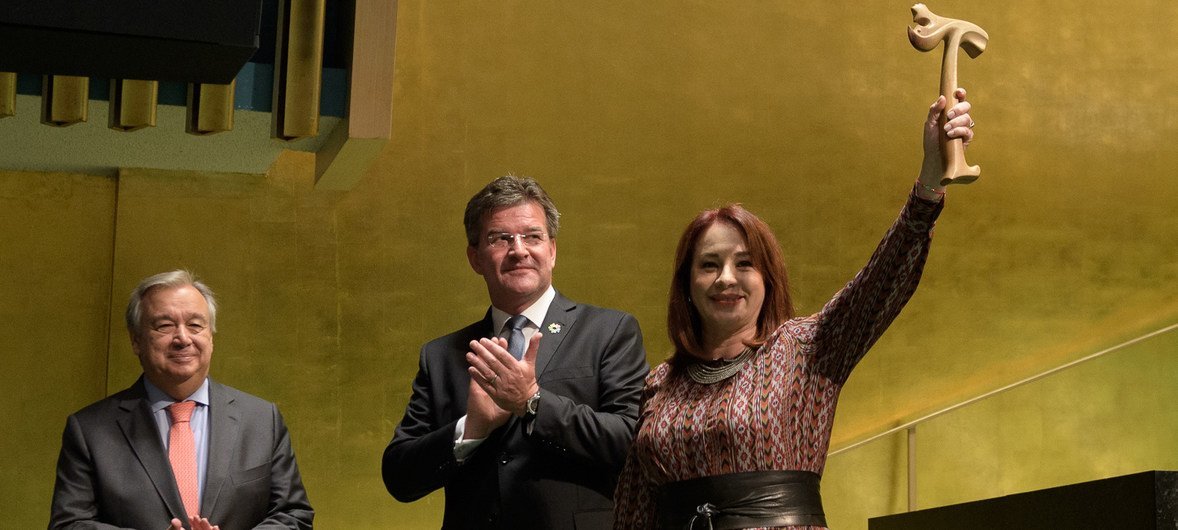
The gavel, which was gifted to the UN in 1952 by Iceland is used to mark the beginning of the morning and afternoon sessions of the general debate and, when necessary, also to retain order.

It was used to try and silence the then leader of the Soviet Union Nikita Khrushchev who, so legend has it, took off his shoe and banged it on the rostrum to forcefully make his point.

Sometimes diplomatic decorum is upended when whole delegations decide to leave the General Assembly Hall to protest against the views and actions of another Member State, although in recent years, it has become common enough not to shock.

Israel regularly protests Iran’s speech and vice-versa.

María Fernanda Espinosa Garcés (right), President of the 73rd General Assembly session, holds the gavel after the handover from Miroslav Lajčák (centre), President of the 72nd session, with Secretary-General António Guterres in 2018. (file)
UN Photo/Manuel Elías
 
María Fernanda Espinosa Garcés (right), President of the 73rd General Assembly session, holds the gavel after the handover from Miroslav Lajčák (centre), President of the 72nd session, with Secretary-General António Guterres in 2018. (file)

How to follow the general debate

While the debate is not open to the public, all proceedings are available live and on demand at UN Web TV.

All general debate speeches are available in the UN’s Dag Hammarskjöld Library.

Many of the 78 previous general debates, or highlights from them, are available at the UN Audiovisual Library.


https://news.un.org/en/story/2024/09/1154501


https://creativecommons.org/licenses/by/4.0/legalcode