воскресенье, 4 июня 2023 г.

315,000 grave violations against children in conflict over 18 years: UNICEF


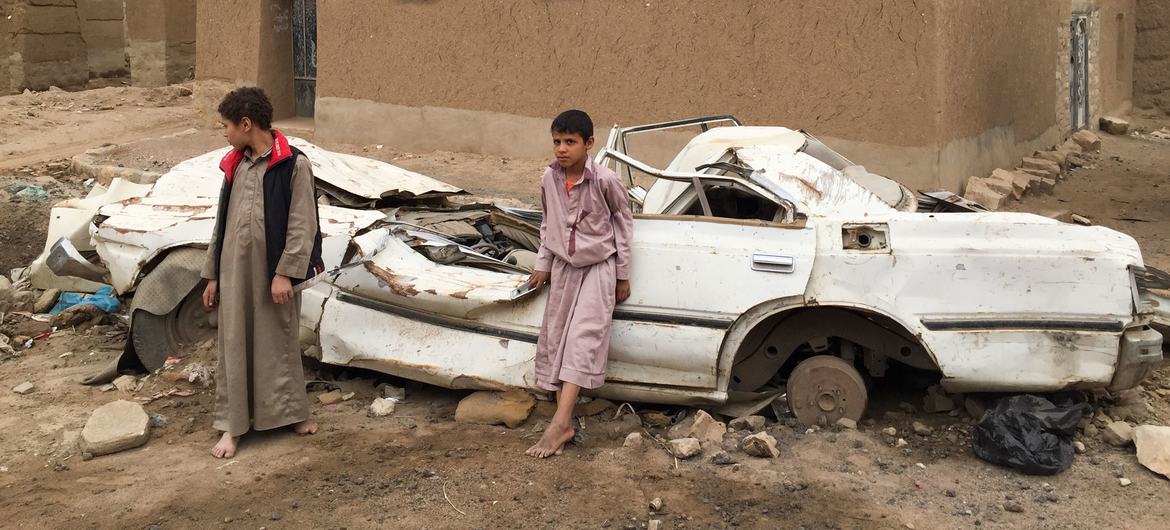
Young boys stand in front of a damaged vehicle in Sa'ada, Yemen.
© WFP/Jonathan Dumont
 
Young boys stand in front of a damaged vehicle in Sa'ada, Yemen.
4 June 2023
Peace and Security

A staggering 315,000 grave violations against children in conflict took place between 2005 and 2022, said UN Children’s Fund UNICEF on Monday, describing it as a “stark illustration of the devastating impact of war” on the young.

The UN-verified figures were reported by the agency as States, donors and the humanitarian community meet in Norway, for the Oslo Conference on Protecting Children in Armed Conflict.

The 315,000 incidents were recorded in more than 30 conflict situations across Africa, Asia, the Middle East, and Latin America.

They include more than 120,000 children killed or maimed; at least 105,000 children recruited or used by armed forces or armed groups; over 32,500 children abducted; and more than 16,000 children subjected to sexual violence.

The UN has also verified more than 16,000 attacks on schools and hospitals, and more than 22,000 instances where humanitarian access for children has been denied. 

The true toll is likely to be far higher, UNICEF stressed. Additionally, many millions more children have been displaced from their homes and communities, lost friends or family, or been separated from parents or caregivers.

‘War on children’

“Any war is ultimately a war on children,” said UNICEF Executive Director Catherine Russell.

“Exposure to conflict has catastrophic, life-changing effects for children. While we know what must be done to protect children from war, the world is not doing enough. Year after year, the UN documents the visceral, tragic and all too predictable ways that children’s lives are torn apart.”

The UNICEF chief said It is incumbent on all in the international community to ensure children “do not pay the price for the wars of adults, and to take the bold, concrete action required to improve the protection of some of the world’s most vulnerable children.”

The Fund has supported the care and protection of millions of affected children across conflict situations, including through the provision of mental health and psychosocial support, child protection case management, family tracing and reunification, and services for child survivors of gender-based violence.

Rehabilitating child soldiers

Just last year, UNICEF reached almost 12,500 former child soldiers with reintegration or other protection support, and more than nine million children with information designed to help them avoid explosive remnants of war such as landmines.

The agency said that the scale of protection risks is vastly outpacing available funding however.

New analysis by Humanitarian Funding Forecasting, commissioned by UNICEF, Save the Children, the Alliance for Child Protection in Humanitarian Action and the Global Child Protection Area of Responsibility, reveals that by 2024, the child protection sector will require $1.05 billion, increasing to US$1.37 billion by 2026, to address the protection needs of children in armed conflict.

If the current pace of humanitarian funding continues, the projected shortfall would stand at $835 million in 2024, growing to US$941 million by 2026.

This gap could leave conflict-affected children exposed to the immediate and lasting impacts of war, child labor, trafficking, and violence, UNICEF warned.
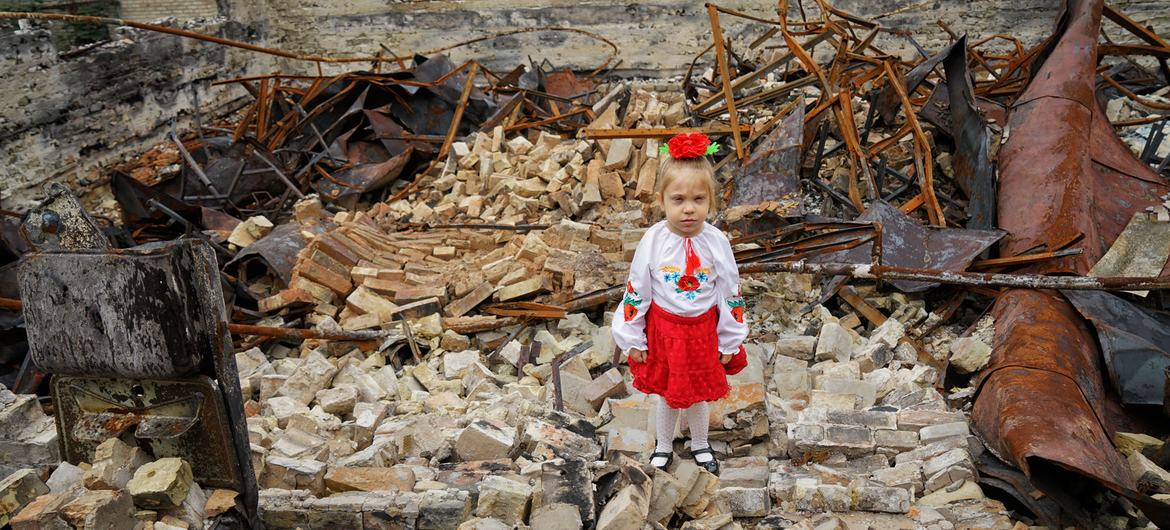
A young girl stands in the rubble of her damaged school in Horenka, in the Kyiv region of Ukraine.
© UNICEF/Olena Hrom
 
A young girl stands in the rubble of her damaged school in Horenka, in the Kyiv region of Ukraine.

Call for new commitments in Oslo

At the Oslo conference, the agency is calling on government to make bold new commitments, including: 

  • To uphold and operationalize the international laws and norms already in place to protect children in war – including to protect schools, hospitals and other protected objects like water and sanitation facilities from attack, to stop the recruitment and use of children by armed groups and forces, to stop the use of explosive weapons in populated areas.
  • Hold perpetrators to account when children’s rights are violated.   
  • Step up with critical resources to fund the protection of children in conflict at the scale and speed required, in line with growing need. This must include investment in humanitarian response and in national child protection workforces.

“We must deliver a child protection response that is equal to the challenges we face,” said Ms. Russell. “We need to do everything we can to reach all children in need, particularly the most vulnerable.”


 https://news.un.org/en/story/2023/06/1137327

суббота, 3 июня 2023 г.

Trafficking in the Sahel: Gas lighting


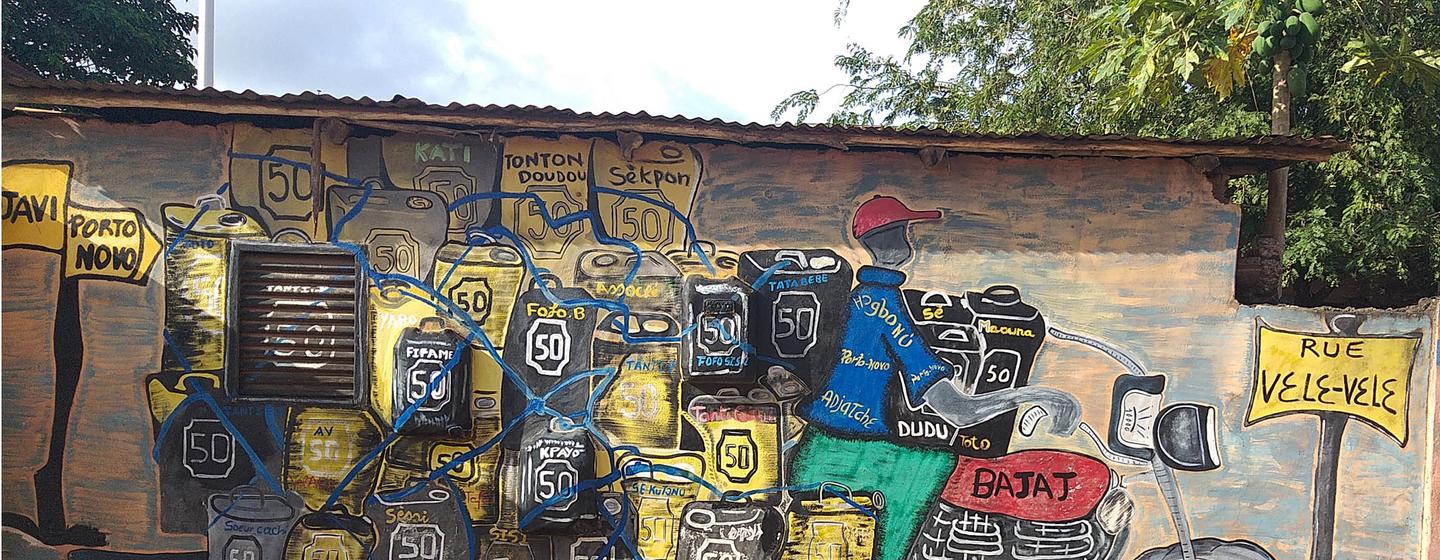
Graffiti showing a fuel transporter in Porto Novo, Benin.UNODC
 
Graffiti showing a fuel transporter in Porto Novo, Benin.
3 June 2023
SDGs

Kourou/Koualou, a tiny village in a neutral zone straddling Benin and Burkina Faso, was the centre of a one-million-litre-a-year cross-border illicit fuel trade, a snapshot of a phenomenon that spreads far across the 6,000-kilometre-wide African Sahel region.

In this feature, part of a series exploring the fight against trafficking in the Sahel, UN News focuses on the illegal fuel trade in the region.

Transported by criminal networks and taxed by terrorist groups, illegal fuel flows along four major routes snaking across the Sahel towards ready buyers, siphoning millions from nations on the road to stabilizing their security-challenged region, home to 300 million people.

“Fuel trafficking is undermining the rule of law; it’s fuelling corruption,” said François Patuel, Chief of the Research and Awareness Unit at the UN Office on Drugs and Crimes (UNODC). “It’s also enabling other forms of crime. That’s why it needs to be addressed.”

Demand calls, traffickers answer

Fuel trafficking is big business in the region. A report from the UNODC, Fuel Trafficking in the Sahel, finds that it funds illegal non-State armed groups, terrorist groups, financial institutions, corrupt law enforcement officials, and groups with ties to prominent individuals with interests in retail fuel companies. It is also in high demand among the population.

The biggest enablers are low, heavily subsidized gas prices in Algeria, Libya, and Nigeria. UNODC reported that Libyan gas stations charge 11 cents a litre, but across the border, Malian pump prices average $1.94.

Lost millions

“By just crossing the border, they make 90 cents profit per litre,” Mr. Patuel explained. “It’s easy revenue for criminal groups.”

He said the traffickers then sell to the population, who rely on cheaper fuel to carry out their activities and everyday life, from fuelling generators to produce electricity or fill their gas tanks to drive their goods to market.

“They really exploit those needs in order to sell their criminal products, including contraband fuel,” he added.

The UNODC report tracked operations across Burkina Faso, Chad, Mali, Mauritania, and Niger. Along well-trafficked routes, drivers carry millions of litres of contraband fuel each year. Established routes run from Algeria to Mali, another links Libya to Niger and Chad, and yet another begins in Nigeria via Benin towards Burkina Faso, and via Niger to Mali.

Lost revenue for Sahelian nations is staggering, said Amado Philip de Andrés, UNODC’s regional representative for West and Central Africa.

The illicit trade costs Niger almost $8 million annually in tax revenue, the according to the country’s High Authority for Combatting Corruption and Related Offences. Traffickers who evaded taxes by purchasing fuel marked for export at reduced costs and diverting deliveries domestically or across borders, the Government office said.

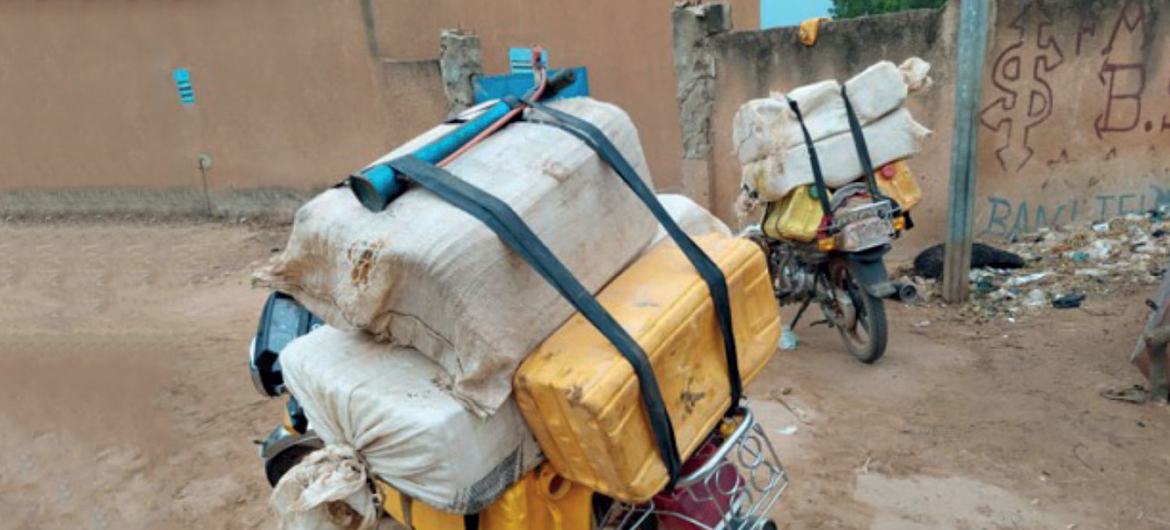
Motorbikes transporting smuggled fuel in Dosso, Niger, close to the Nigerian border.
© Harouna Ousmane Ibrahim
 
Motorbikes transporting smuggled fuel in Dosso, Niger, close to the Nigerian border.

Terror tax

Smugglers do, however, pay “taxes” to newly formed terrorist groups, including around Kourou/Koualou, where illegal warehouses stored tanks of contraband fuel while in transit, UNODC reports, adding that Al-Qaida-affiliated groups operate some of zone’s gold-rich mines, and routinely levy fees on contraband.

In terms of natural resource trafficking in Burkina Faso, Mali, and Niger, “local communities are particularly vulnerable, as they live in isolated areas with a limited law enforcement presence,” according to a Trends Alert report by the Security Council’s Counter-Terrorism Committee Executive Directorate (CTED).

Often, contraband fuel scratches the surface of a very deep well of trafficking, reflecting a nexus of criminal activities, from drugs to migrants, Mr. Patuel said, citing the example of a 2021 Nigerian police seizure of 17 tons of cannabis resin involving a known fuel trafficker who owned petrol stations. The suspect allegedly used drug trafficking proceeds to buy contraband fuel sold at his petrol stations.

UNODC highlighted other new and disturbing trends showing companies associated with Security Council-sanctioned individuals involved in fuel smuggling from the Niger to Mali, as traffickers peddle an ever-growing range of products.

Such profiteering has raised alarms across the UN system. Continuously expressing concern at terrorist groups using proceeds of natural resource trafficking to fund their nefarious activities, the UN Security Council has urged States to, among other things, hold perpetrators accountable.

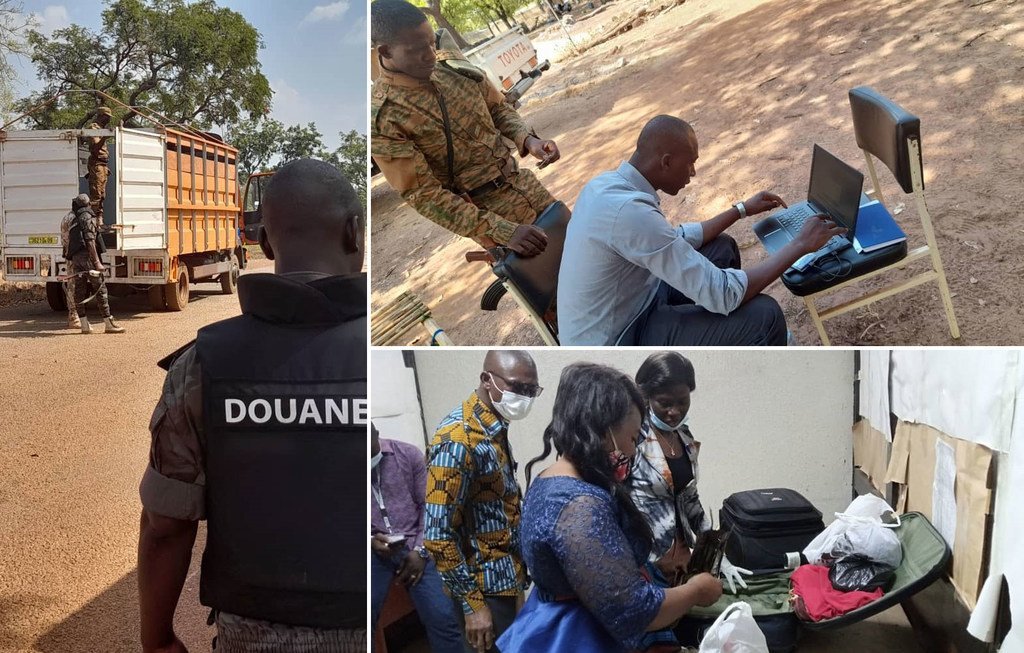
In Burkina Faso, frontline officers carried out checks at suspected smuggling hotspots.
UNODC/INTERPOL
 
In Burkina Faso, frontline officers carried out checks at suspected smuggling hotspots.

Excising corruption

However, ending fuel smuggling is a complex venture with potentially deadly consequences in a region with sky-high rates of informal employment, from 78.2 per cent in the Niger to 96.9 per cent in Chad. Damming illicit fuel flows, the UNODC worries, could drive up transportation and energy prices along with costs for most commercial goods and services.

The Office suggests that Sahelian nations and neighbouring countries identify and prosecute fuel smuggling cases with direct links to organized crime, armed groups, and corruption. At hand are tools contained in such international treaties as the UN Convention against Transnational Organized Crime and UN Convention against Corruption.

Capping illicit flows

While some anti-smuggling efforts have been met with violent resistance, including the death of a law enforcement officer, despite the risks, the nations continue to stem illicit flows using fresh and collaborative approaches, UNODC said.

The agency’s latest threat assessment on the phenomenon provided a raft of examples, from police-escorted gas convoys in Algeria near the Malian border to Benin’s imposed curfews and raids to stop cross-border armed groups.

For its part, Burkina Faso has been meticulously dismantling since 2019 a highly organized fuel trafficking network that smuggled more than 3 million litres of contraband over a three-year period, with fleets of trucks transporting up to 30,000 litres per trip.

Back in Kourou/Koualou, the flow of illegal fuel has been reduced to just a trickle following government crackdowns, but terrorist groups continue “to tax what fuel is still being trafficked, as well as other smuggled goods”, according to UNODC.

“Criminal groups feed on and exploit the needs of the population,” the agency’s chief researcher Mr. Patuel said. “Combining the efforts and having a regional approach will lead to success in addressing organized crime in the region.”

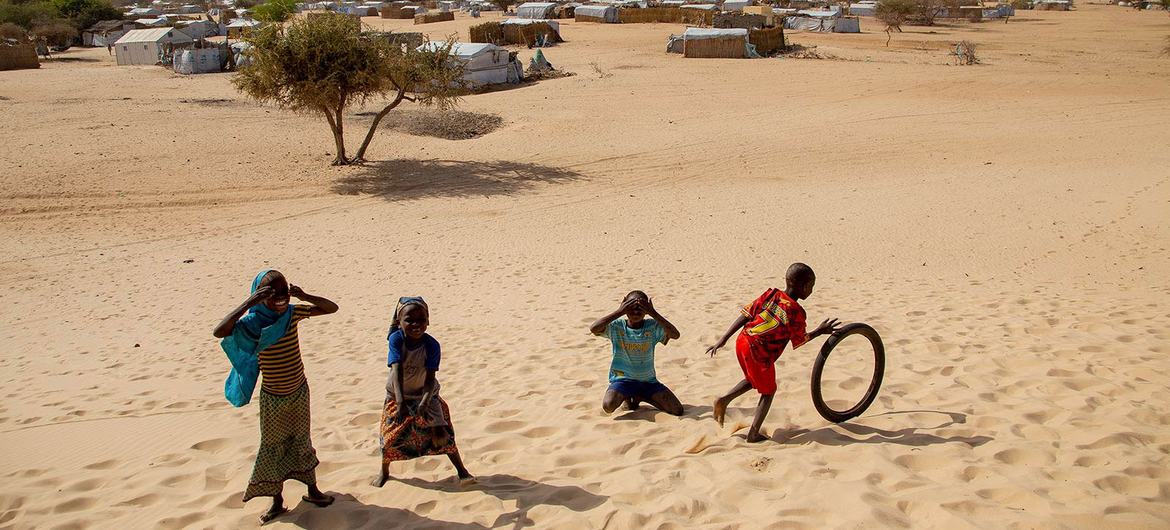
Ongoing violence, climate change, desertification, and tension over natural resources are all worsening hunger and poverty across Chad.
© UNDP/Aurelia Rusek
 
Ongoing violence, climate change, desertification, and tension over natural resources are all worsening hunger and poverty across Chad.

UN in action

The UN and its partners are working to stamp out trafficking and also build up opportunities in the region. Here are some examples:

  • The UN launched a $180 million project in 2022 targeting 1.6 million people in the Liptako-Gourma area, straddling the borders of Burkina Faso, Mali, and Niger, aimed at improving economic opportunities and livelihoods, with a focus on women, youth, and pastoralists, as part of its Integrated Strategy for the Sahel (UNISS).
  • Within UNISS peace and security initiatives, a project is helping to prevent the spread and rise of violent extremism in transborder areas between Senegal, Guinea, and Mali.
  • Stakeholders exchanged initiatives and ideas on preventing violent extremism in West and Central Africa at a meeting held in Dakar from 28 February to 2 March and co-organized by the UN Office for West Africa and the Sahel (UNOWAS), Senegal’s Centre for Advanced Defence and Security Studies, and Switzerland’s foreign affairs department.

  • The International Organization for Migration (IOM) and the G5 Sahel Force signed a new agreement in April to strengthen regional and intra-state cooperation across the spectrum of human mobility as an accelerator to building resilience, development, and integrated border governance in the G5 countries (Burkina Faso, Chad, Mali, Mauritania, and Niger).

  • The UN Children’s Fund (UNICEF) is addressing emerging challenges in Côte d'Ivoire, issuing in late May its first situation report on the country, which continues to be impacted by the spillover of conflict from the central Sahel crisis.
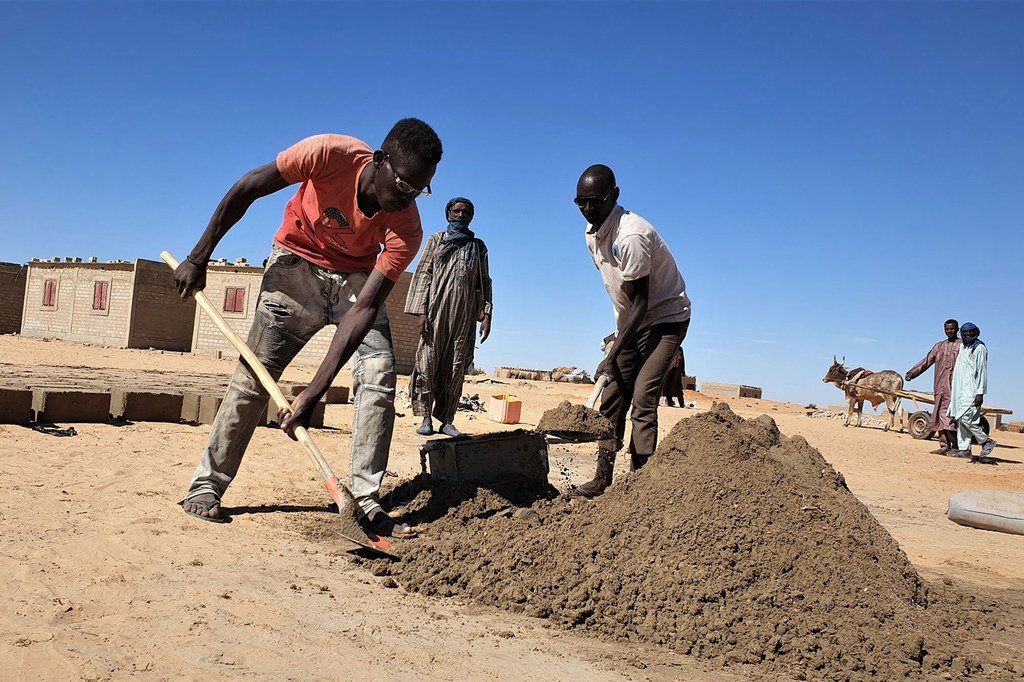
The UN refugee agency, UNHCR, has launched cash-for-work programmes which employ youth from host communities in Awaradi, Niger, to make bricks.
UNOCHA/Eve Sabbagh
 
The UN refugee agency, UNHCR, has launched cash-for-work programmes which employ youth from host communities in Awaradi, Niger, to make bricks.

 https://news.un.org/en/story/2023/06/1137072


https://creativecommons.org/licenses/by/3.0/legalcode

Sudan: Crisis fuels ‘desperate’ situation for civilians, as Security Council demands unhindered humanitarian access

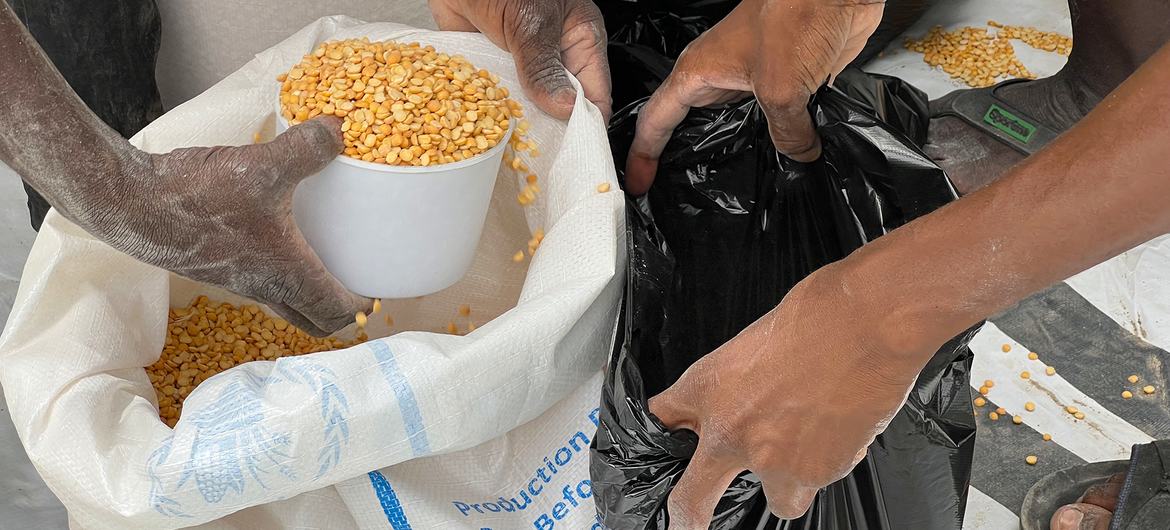
Grain is provided to people in Port Sudan who have fled conflict in Khartoum.
© WFP/Mohamed Elamin
 Grain is provided to people in Port Sudan who have fled conflict in Khartoum.
Humanitarian Aid

As the crisis in Sudan enters its second month, UN agencies and partners warned on Friday that the conflict between rival military groups since mid-April is fuelling an increasingly “desperate” situation for civilians, especially in the nation’s capital.

In a press statement issued late on Friday, the UN Security Council expressed its “deep concern” over the continued clashes, condemning all attacks on civilians, and calling for “rapid, safe and unhindered humanitarian access throughout Sudan”.

The 15-member body emphasized the need for an immediate ceasefire, and reaffirmed its backing for the UN transition mission in Sudan, UNITAMS, to continue it work, despite the collapse of political momentum towards the move to civilian rule, that seemed so close just a few months ago.

Council backs UN mission

The statement urged the mission’s “continued engagement, in full accordance with the principles of national ownership.”

Tweet URL

The members of the Security Council underlined the need for strengthened international coordination and continued collaboration. They reaffirmed their firm support to African leaders involved in negotiations, and noted the African Union (AU) Roadmap for the Resolution of the Conflict in Sudan.

The Council also called for a resumption of a credible and inclusive political transition process, that takes into account the contributory role of all relevant Sudanese stakeholders.

On Friday afternoon, the Council unanimously adopted a resolution renewing the UN transition mission for six months.

Turmoil on the ground

Since the conflict between the Sudanese Armed Forces and the Rapid Support Forces began, more than 1.2 million people have been displaced within the already impoverished country, and hundreds of thousands have fled across neighbouring borders. A rising death toll, rampant looting of humanitarian aid, and rising needs for assistance are growing concerns, UN agencies warned.

The situation was “particularly desperate” in Khartoum, where people were fleeing the violence or were unable to leave, said Patrick Elliott, head of operations for Sudan for the International Federation of the Red Cross (IFRC), briefing journalists at the UN in Geneva, who just returned from a visit to Port Sudan.

Tarik Jašarević, for the World Health Organization (WHO), said the numbers being provided from the Ministry of Health were an underestimate of the overall death toll.

Crippled health sector

Many health facilities are simply unable to function, Mr. Jašarević said, also raising concerns for around 20,000 pregnant women who are currently unable to receive pre-natal care.

Some 11 million people are in urgent need of health assistance in Sudan, including more than 2.6 million women and girls of reproductive age who have barely any access to contraception, pregnancy-related services, or treatment programmes for sexually transmitted infections, or response services for sexual violence, which is reported to be rising as the crisis escalates, according to the UN Population Fund (UNFPA).

An estimated 260,000 pregnant women in Sudan, including 90,000 expected to give birth in the next three months, could be affected by ongoing fuel shortages and power cuts that have already forced many hospitals to suspend emergency obstetric and neonatal care services, the agency said.

Fuel shortages threaten safe births

“We are running out of fuel,” said Sarah, a midwife at Khartoum’s UN-supported Ombada Hospital. “If the electricity cuts persist, we don’t know how we will be able to assist pregnant women giving birth a week from now.”

The agency is set to distribute 10 metric tonnes of life-saving sexual and reproductive health supplies to hospitals and health facilities, and could expand its pilot project to provide solar power, launched in 2022 in several hospitals in Sudan, to health centres in Khartoum, providing round-the-clock electricity for maternity wards, operating rooms, blood bank refrigerators, incubators, and medicine storage facilities.

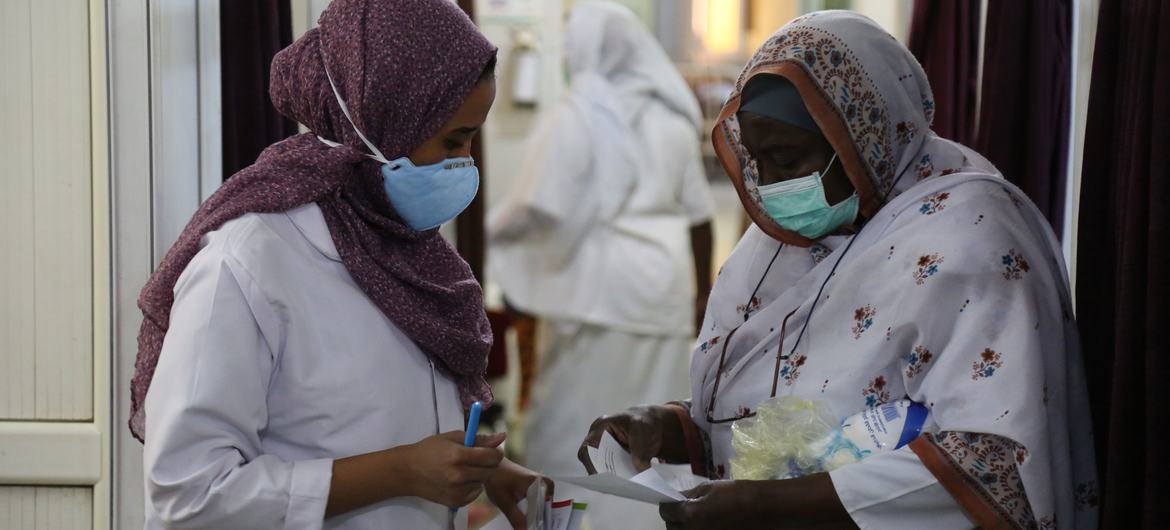
Midwives at a UNFPA-supported hospital in Sudan before the crisis destroyed at least two out of three hospitals. (file)
© UNFPA
 
Midwives at a UNFPA-supported hospital in Sudan before the crisis destroyed at least two out of three hospitals. (file)

UN food agency condemns looters

The World Food Programme (WFP) condemned on Friday the looting of humanitarian supplies at its distribution hub in south-central Sudan on Thursday, adding to $60 million in assets stolen since the start of the crisis in mid-April.

Tweet URL

“This theft of humanitarian food and assets totally undermines these operations at a critical time for the people of Sudan,” the UN agency said. “This must stop.”

The WFP warehouses in El Obeid host one of the agency’s largest logistics bases in Africa and represents a “vital lifeline” for operations in Sudan and South Sudan, according to the agency.

“Millions will be impacted by this attack,” the agency warned, adding that initial reports suggest that food and nutrition supplies, vehicles, fuel, and generators have been looted in the most recent incident.

Since violence erupted, armed groups have attacked and looted WFP and partners’ storage facilities on multiple occasions and aid workers have been killed or injured, the agency said.

The ongoing violence could lead an estimated 2.5 million people in Sudan to “slip into hunger in the coming months”, the agency added.

Warning that acute food insecurity in Sudan could reach record levels, affecting more than 19 million people or 40 per cent of the population, WFP reiterated calls to all parties to the conflict to ensure the safety and security of humanitarian assistance, aid workers, and assets so that the agency’s life-saving work can move forward.

‘Fearlessly’ providing support

Mr. Elliott, of the IFRC, said a team had been established to support the Sudanese Red Crescent, which have been mobilizing daily to help those in need. Emphasizing the bravery of volunteers, who are “fearlessly” providing local support, he said an emergency funding appeal and reports of rising malnutrition were also among grave concerns.

While funding is yet to materialize to address the immediate needs in Khartoum and surrounding areas, he reported good cooperation between UN agencies who continue to reach communities in local areas and provide them with support.

Outside of Khartoum, volunteers were working with communities of internally displaced persons, he said.

However, in Port Sudan, the levels of malnutrition are significant, he added.

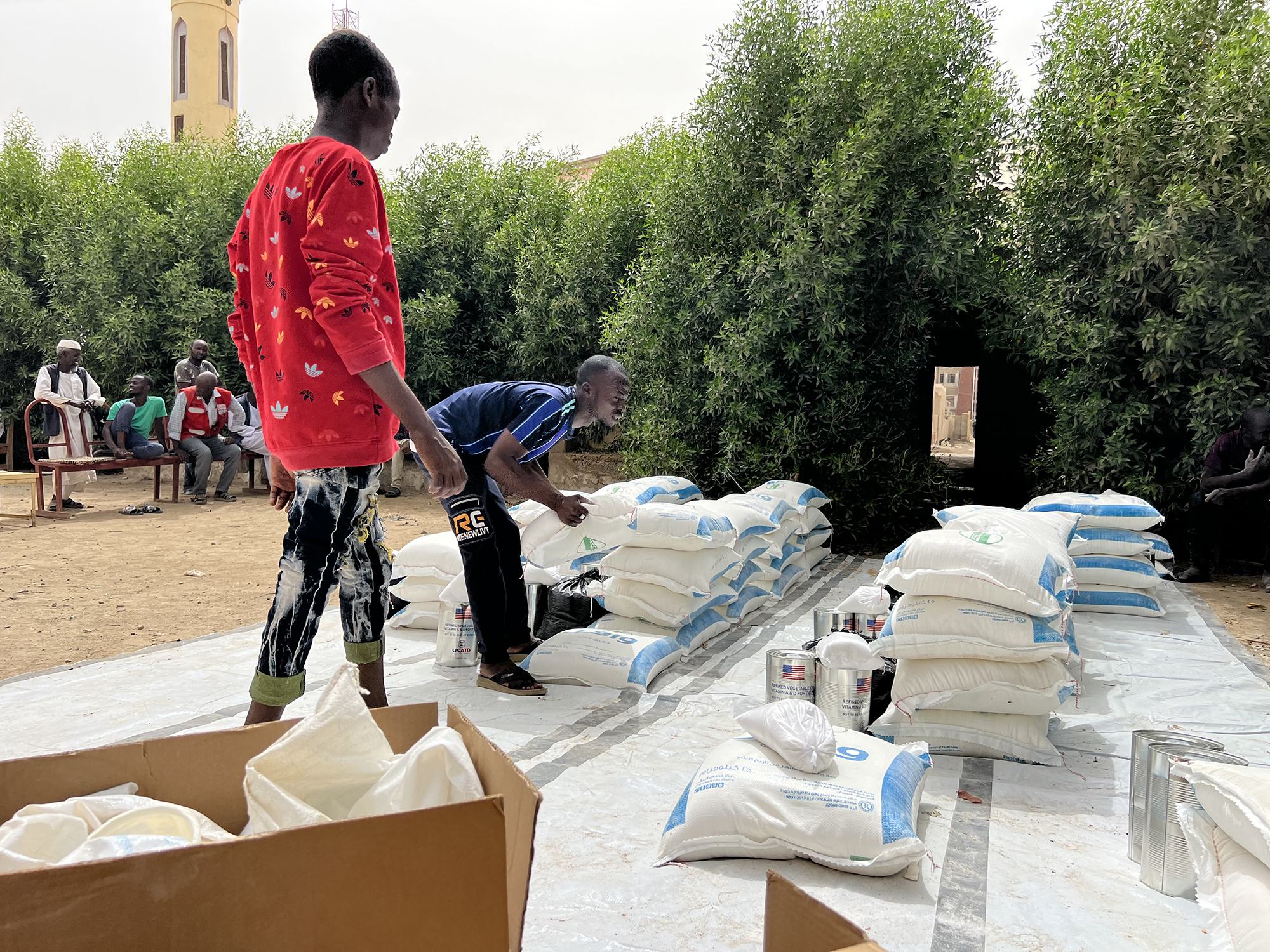
In Port Sudan, emergency food packages are distributed to people fleeing fighting in Khartoum.
© WFP/Mohamed Elamin
 
In Port Sudan, emergency food packages are distributed to people fleeing fighting in Khartoum.

https://creativecommons.org/licenses/by/3.0/legalcode

 https://news.un.org/en/story/2023/06/1137292

Korean Peninsula: Security Council must find unity to calm rising tensions

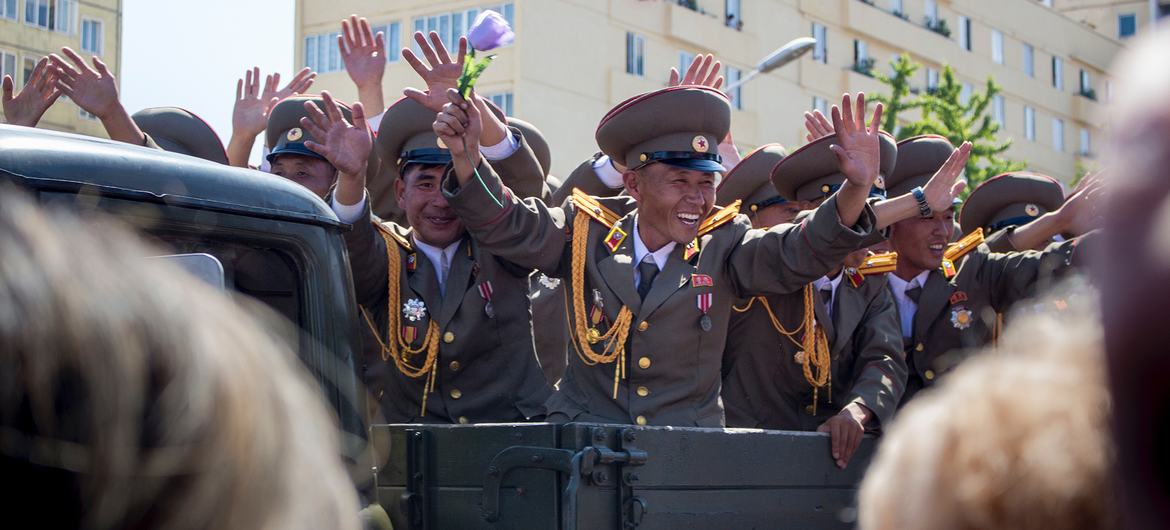
Military officers celebrate at a parade in the North Korean capital, Pyongyang. (file)
© Unsplash/Micha Brändli
 
Military officers celebrate at a parade in the North Korean capital, Pyongyang. (file)
Peace and Security

The “lack of unity and action” in the Security Council “does little to slow the negative trajectory on the Korean Peninsula”, Rosemary DiCarlo, Under-Secretary-General for Political and Peacebuilding Affairs, said on Friday, following Pyongyang’s failed military satellite launch earlier this week.

“Key peace and security issues, such as the situation on the Korean Peninsula, must be an area for cooperation,” she cautioned in a briefing to the 15-member Council on recent developments. “Diplomacy – not isolation – is the only way forward.”

Tweet URL

During the Council’s emergency debate on the issue, members expressed divergent views, with many agreeing that diplomacy can forge a path towards peace, and others raising concerns about what they regard as other nations’ provocative military activities.

Failure to launch

Raising concerns about bristling tensions over recent activities, Ms. DiCarlo recalled that the Democratic People’s Republic of Korea (DPRK), more commonly known as North Korea, launched on Wednesday what Pyongyang described as “a military reconnaissance satellite”, which crashed off the Korean Peninsula’s western coast.

Attributing the failed launch to the low reliability of a “new-type engine system and fuel”, Pyongyang intends to conduct a second launch as soon as possible, according to media reports, she said.

In line with its five-year military development plan, the DPRK had greatly increased its missile launch activities in 2022 and 2023, including more than 80 launches using ballistic missile technology, she added.

While States have the right to launch a satellite and to benefit from space activities, she said Security Council resolutions expressly prohibit the DPRK from conducting any launches using ballistic missile technology.

She added that even though Pyongyang had on Tuesday sent a pre-launch notification to the International Maritime Organization (IMO), it failed to alert other international organizations, including the International Civil Aviation Organization (ICAO), and the International Telecommunications Union (ITU).

DPRK is ‘unconstrained’

The DPRK “is unconstrained, and other parties are compelled to focus on military deterrence”, she said.

Despite calls from the UN Secretary-General to refrain from conducting further satellite launches using missile technology and to swiftly resume dialogue towards a sustainable peace and the denuclearization of the Korean Peninsula, Pyongyang had said the Wednesday launch was “a response to ongoing military exercises in the region”, Ms. DiCarlo said.

The last time DPRK conducted a similar launch was in 2016, which triggered the Council’s condemnation over ballistic missile technology use in violation of relevant resolutions, she said.

Nuclear weapon threats

Media reports indicate that several nations have conducted military exercises in the area in recent years.

Developing a military reconnaissance satellite was part of the DPRK’s five-year military development plan, but Ms. DiCarlo noted that it had been unveiled in January 2021, well before the resumption of military exercises in the region.

Meanwhile, Pyongyang had said launches in 2022 and 2023 involved systems with “nuclear weapon roles”, including “tactical” atomic weapons, and “continued to make references to the possible use of nuclear weapons” since her last Council briefing, she added.

Stolen cryptocurrency and aid concerns

Turning to other concerns, she said her office has been following reports of continued illicit cyberactivities attributed to DPRK-affiliated actors, including the theft of more cryptocurrency in 2022 than ever before.

Regarding the worrisome humanitarian situation, she said “the UN is ready to assist the DPRK in addressing basic needs of vulnerable populations”, reiterating a call on Pyongyang to allow the unimpeded entry of international staff, including the UN Resident Coordinator, and of humanitarian supplies, to enable a timely and effective response.

She said the Secretary-General remained firmly committed to achieving the goal of a world free of nuclear weapons and welcomed the recent re-affirmation by the Republic of Korea of its commitment to its obligations under the Treaty on the Non-Proliferation of Nuclear Weapons.

For more details on this and other meetings occurring throughout the UN system, visit our dedicated UN Meetings Coverage page.


 https://news.un.org/en/story/2023/06/1137307

https://creativecommons.org/licenses/by/3.0/legalcode

Security Council Renews Authorization to Inspect Vessels Suspected of Violating Libya Arms Embargo, Adopting Resolution 2684 (2023)

9335TH MEETING (AM)
SC/15303


The Security Council today decided to renew measures designed to implement the arms embargo against Libya for another year, in particular those authorizing Member States — acting nationally or through regional organizations — to inspect vessels on the high seas off Libya’s coast believed to be in violation of the arms embargo imposed on that country.

Adopting resolution 2684 (2023) (to be issued as document S/RES/2684(2023)) by a vote of 14 in favour to none against, with 1 abstention (Russian Federation), the Council extended the authorizations set out in its resolution 2635 (2022) for a further 12 months.  It also requested the Secretary-General to report on the implementation of today’s resolution within 6 and 11 months.

Anna M. Evstigneeva of the Russian Federation, in explanation of position, recalled that her country was at the source of this inspection mechanism, with the hope that these measures could contribute to reducing illicit trafficking in weapons on Libya’s territory.  Unfortunately, the activities of the European Union’s Naval Force Mediterranean Operation IRINI failed to bring practical results in terms of stabilization on the ground.  There have not been any successful interceptions of contraband goods and the few incidents that were announced by the Operation’s leadership caused many doubts. She further identified the selectiveness of IRINI’s inspection activities as the reason why potential violators of the arms embargo do not fear this maritime presence.  In that light , she highlighted the crucial importance of creating a multilateral format in the interest of developing sustainable solutions to the situation in Libya and the entire Mediterranean region.

The meeting began at 10:02 a.m. and ended at 10:09 a.m.


 https://press.un.org/en/2023/sc15303.doc.htm

https://creativecommons.org/licenses/by/3.0/legalcode

Huge increase in transnational crime and synthetic drugs in SE Asia requires cross-border cooperation


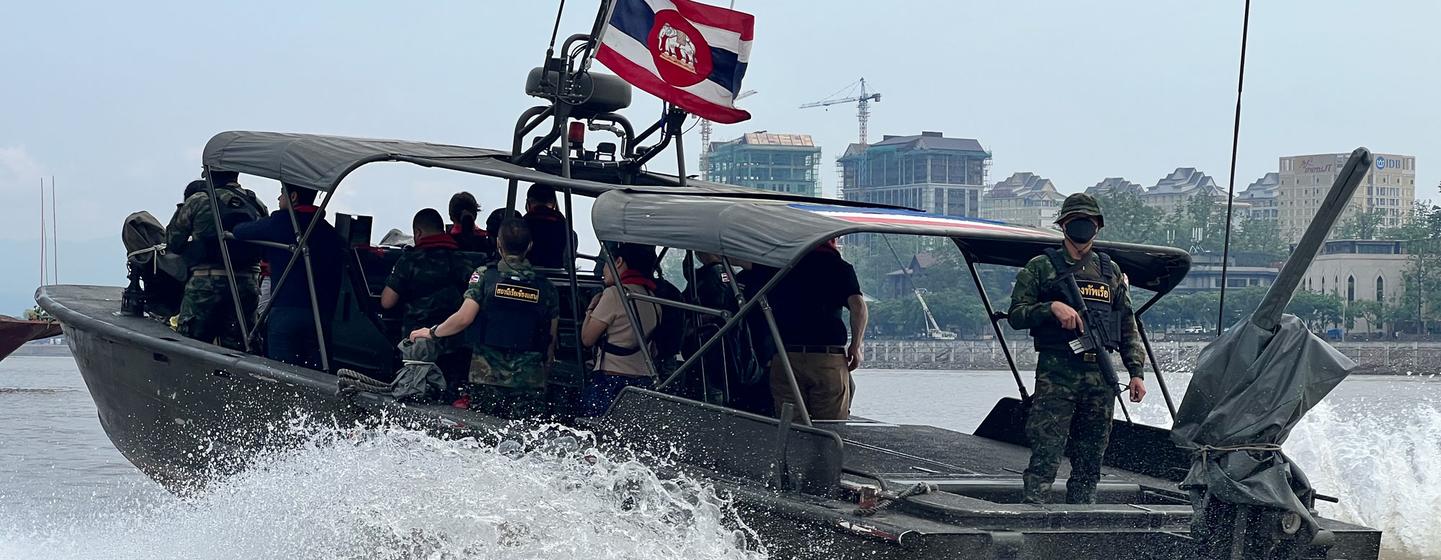
The Thai Navy Mekong Riverine Unit patrols the border between Thailand, Myanmar, and Laos.


UN News/Daniel Dickinson
 
The Thai Navy Mekong Riverine Unit patrols the border between Thailand, Myanmar, and Laos.
2 June 2023
Law and Crime Prevention

The trafficking in illegal narcotics, precursor chemicals, timber and wildlife, people and illicit goods across Southeast Asia is being tackled thanks to the support of the specialized UN agency focusing on drugs and crime.

A Thai Navy launch travels at high speed down the muddy brown waters of the Mekong River close to the border town of Chiang Saen in the north of Thailand. To the right is Laos, where huge construction projects funded by foreign investment are rising out of the lush undergrowth along the riverbank and ahead to the left are the dense jungles of Myanmar.

Tweet URL

This is the storied Golden Triangle where historically opium was grown to produce heroin for export but where, in recent years, the trade of even deadlier and more profitable synthetic drugs has taken over.

Thailand, Laos and Myanmar are at the frontlines of illicit trade in Asia dominated by transnational organized crime syndicates.

River seizure

The crew on the Thai boat is buoyant following the recent seizure of 6.4 million pills of the banned and highly addictive synthetic drug methamphetamine, known locally as yaba.

“I was astonished but also really pleased that we seized this amount of yaba,” Captain Phakorn Maniam Head of Operations and Intelligence Section of the, Mekong Riverine Unit, Royal Thai Navy told UN News. “Normally, this amount of drugs is seized on land; it’s a difficult operation apprehending offenders in the middle of the river,” he said, “and so I’m especially proud of our crew, who are so dedicated to protecting our country and our people.”

A few miles downstream at the small town of Houay Xai on the Laos side of the Mekong, border authorities are celebrating their own significant seizure of drugs; the previous night following a tip-off, a military land patrol caught drug mules carrying 500 kilograms of crystal meth. The previous month 7.1 million methamphetamine pills had also been seized in the same area.

The drugs tracked down in Laos and Thailand had originated in illegal industrial-scale laboratories operated by militias and criminal gangs in the remote mountainous jungles of northern Shan State in Myanmar and were being transited through both countries to the Thai capital, Bangkok, but also across Southeast Asia and to distant lucrative markets including Japan, South Korea, New Zealand and Australia.

It’s difficult to calculate with any certainty what quantity of synthetic drugs is being manufactured in Myanmar, but some estimates suggest many hundreds of tons are being trafficked out of the country.

Despite the seemingly relentless flow of drugs, the Thai and Lao authorities are experiencing some success thanks, in part, to the support of the UN Office on Drugs and Crime (UNODC) which is promoting a regional intelligence gathering network.

Captain Phakorn Maniam is deployed to the Thai Navy Mekong Riverine Unit
UN News/Daniel Dickinson
 
Captain Phakorn Maniam is deployed to the Thai Navy Mekong Riverine Unit

Officer C, who is based in Houay Xai with Lao authorities and who did not want to be named for security reasons, said that cooperating with law enforcement agencies across the border in Thailand through regular calls, face-to-face meetings and other communications has improved the response to illegal trafficking. “With this cross-border collaboration and sharing of information, we have been able to counter narcotics trafficking and also other types of transnational organized crime.”

The crime-fighting authorities in Thailand and Laos are collaborating more closely as a result of UNODC’s Regional Border Management Programme under which a network of border liaisons offices or BLOs were set up to strengthen cross-border cooperation and information sharing.

The network of over 120 BLOs stretches across Southeast Asia from Myanmar in the west to China in the east and Indonesia to the south and also includes Thailand, Cambodia and Viet Nam.

The BLOs are being strengthened with the support of UNODC to counter what the drugs and crime fighting agency’s Regional Representative for Southeast Asia and the Pacific, Jeremy Douglas, calls “one of the biggest drug trafficking corridors in the world.”

Three countries, Thailand, Myanmar, and Laos, come together at the Golden Triangle.
UN News/Daniel Dickinson
 
Three countries, Thailand, Myanmar, and Laos, come together at the Golden Triangle.

The challenges in disrupting this transnational trade are immense according to Mr. Douglas: “There are complex governance issues at play in the Golden Triangle and inside Myanmar, with fragmented armed groups and militias involved in the drug trade and other illicit businesses that control territory,” he said. “At the same time, these groups are operating in very remote places, and in some cases along very porous, open borders. It is easy to traffic drugs and illicit goods in and out of Myanmar, and the situation is very difficult for its neighbours to address.”

The increase in the production of synthetic drugs in recent has been “unprecedented” according to the UNODC Regional Representative who believes that collaboration between countries is “fundamental” to preventing trafficking: “This is a shared responsibility; addressing transnational criminality requires states to collaborate to react quickly to what's happening, especially along border areas.”

It is not just drugs which are being trafficked across the region. Chemical precursors to manufacture synthetic drugs are being illegally transported into Myanmar in quantities far larger than the drugs that are trafficked out. Trafficking in people, wildlife, timber and weapons is also taking place.

In such a complex and problematic environment, new skills are needed to deal with fresh challenges. As part of its BLO support, UNODC has developed training partnerships with agencies across Southeast Asia.

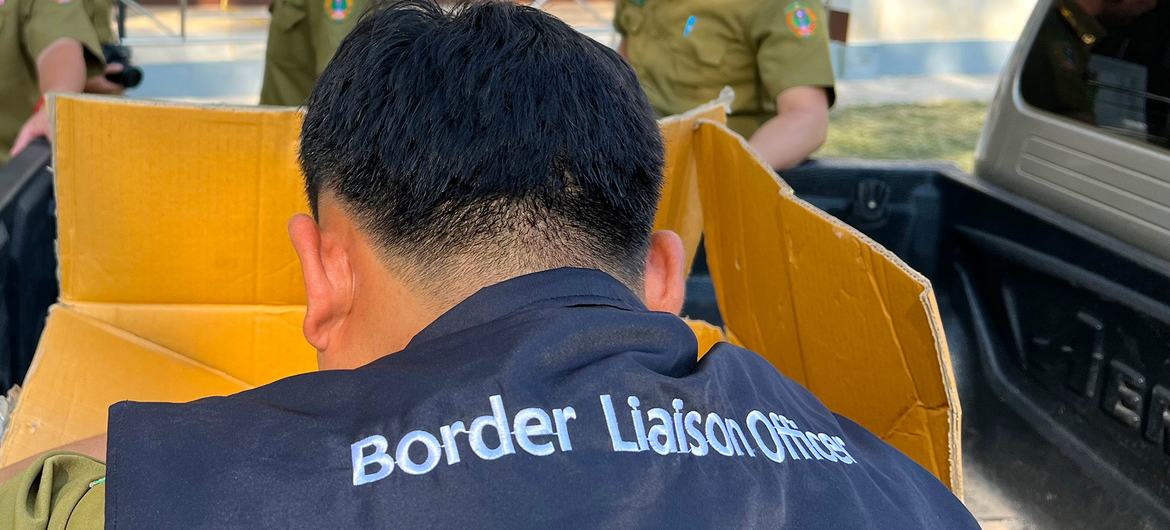
A border liaison officer in Laos.
UN News/Daniel Dickinson
 
A border liaison officer in Laos.

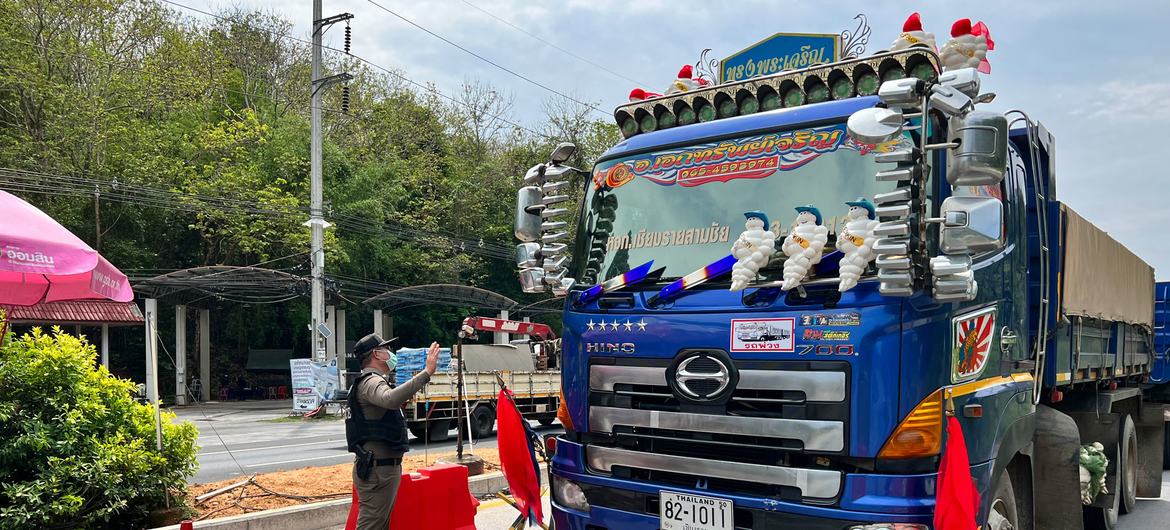
On Highway 1, some 40 kilometres south of the Thai-Myanmar border Police lieutenant Colonel Amonrat Wathanakhosit is taking her students through a practical exercise focused on searching vehicles for contraband.

“Our students are using UNODC knowledge products and training and learning how to question drivers, and they are getting use to how they are behaving. Our students are becoming more confident about identifying which drivers may be hiding synthetic drugs.”

Unlike heroin, the production of which is restrained by the natural growing cycle of the opium poppy, methamphetamine can be manufactured almost at will as long as precursor and other chemicals are available.

The collaboration of governments with the support of UNODC is helping to stem the flow of drugs, even if it is widely accepted that seizures represent only a small percentage of the drugs which are trafficked across the region.

Officers like Lt Col Amonrat Wathanakhosit recognize the challenges but she no doubt speaks for many across the region saying that “my job trying to stop drugs is crucial to the security of my country.”

A Thai police officer stops a vehicle at a checkpoint 40 kilometres south of the Thai-Myanmar border.
UN News/Daniel Dickinson
 
A Thai police officer stops a vehicle at a checkpoint 40 kilometres south of the Thai-Myanmar border.

Quick facts on border liaison offices (BLOs)

  • Some 120 BLOs have been established across Southeast Asia.
  • BLOs are established in pairs – on either side of an international border crossing.
  • BLOs address myriad cross-border issues, including drug and precursor chemical trafficking, migrant smuggling, human trafficking, wildlife and forestry crime, and, in some locations, the movement of terrorist fighters alongside public health and pandemic-related matters.
  • The BLO network works to enhance relationships between the law enforcement and border communities, community policing efforts, and the role and leadership of women in law enforcement agencies.

 https://news.un.org/en/story/2023/06/1137182
https://creativecommons.org/licenses/by/3.0/legalcode

четверг, 1 июня 2023 г.

Incoming General Assembly President to prioritize ‘Peace, Prosperity, Progress and Sustainability’


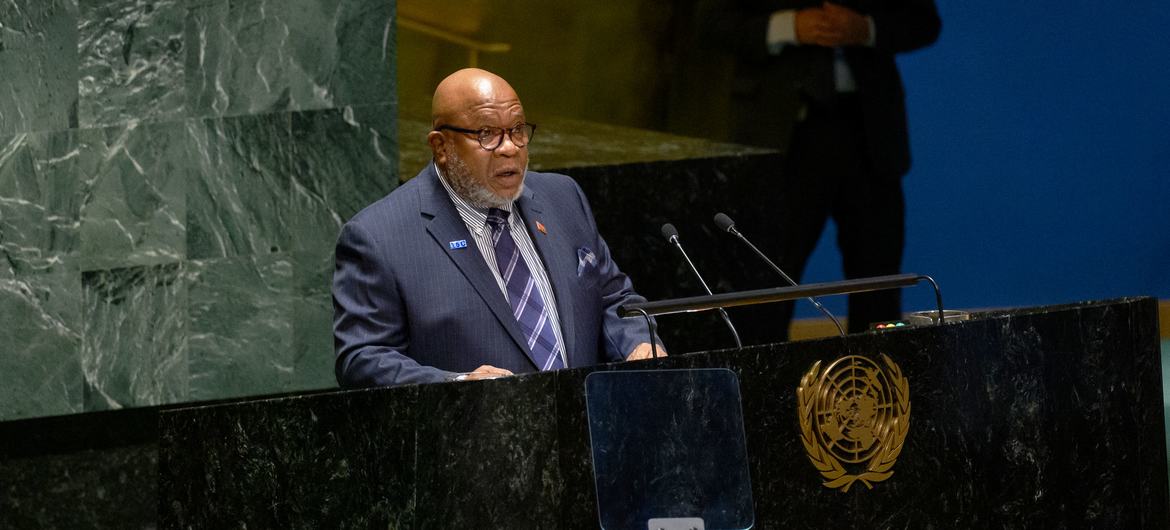
Ambassador Dennis Francis of Trinidad and Tobago, President-elect of the 78th session of the UN General Assembly, addresses a plenary meeting of the General Assembly.
UN Photo/Loey Felipe
 
Ambassador Dennis Francis of Trinidad and Tobago, President-elect of the 78th session of the UN General Assembly, addresses a plenary meeting of the General Assembly.
1 June 2023
UN Affairs

A veteran diplomat from Trinidad and Tobago was appointed President of the 78th session of the UN General Assembly on Thursday. 

Ambassador Dennis Francis - who has had a nearly 40-year-career - will take the helm of the UN’s main policy-making body, starting in September. 

He was elected by acclamation during a ceremony in the iconic General Assembly Hall at UN Headquarters in New York. 

Promoting meaningful dialogue 

The General Assembly consists of all 193 UN Member States, all of which have an equal vote. Its duties include appointing the Secretary-General, on the recommendation of the Security Council, and approving the Organization’s annual budget.  

Mr. Francis said he will prioritize encouraging and facilitating meaningful dialogue. 

“It is my hope to bring forward, with your help and support, a renewed atmosphere of conciliation, cooperation and shared commitment in addressing the many challenges and seizing every opportunity, however nascent, before the General Assembly,” he said. 

“I will seek to enhance current approaches and adopt new ones with probable solutions, as we endeavour to deliver or at least to strengthen the bases for delivering Peace, Prosperity, Progress and Sustainability.” 

He also spoke about the prominent role of education in his life and career and upheld the need to ensure all people have the chance to learn, in line with the Sustainable Development Goals (SDGs), which call for ending extreme poverty and other deprivations, by 2030. 

Rebuilding trust 

The current General Assembly President, Csaba Kőrösi of Hungary, noted that his successor brings a wealth of knowledge and experience to the post. 

“Mr. Francis’ vision for the 78th session – ‘Peace, Prosperity, Progress and Sustainability’ – offers a comprehensive view of the work of the General Assembly as we rebuild trust in and within this institution, tackle climate change and strive to get the SDGs back on track,” he said. 

With 100 days remaining in his administration, Mr. Kőrösi said he will continue to promote the use of science for a sustainability transformation, namely in preparations for the SDG Summit during the High-Level Week of the General Assembly in September,

Critical perspective 

UN Secretary-General António Guterres added that Mr. Francis’s tenure comes at “a deeply challenging moment", amidst conflicts, climate chaos, and escalating poverty, hunger and inequality - while the SDGs are also “slipping out of reach”. 

He said the incoming President also brings a critical perspective as many issues addressed in the General Assembly – such as climate change and an unjust global financial system - hit small island developing States like Trinidad and Tobago the hardest. 

“We look forward to the President-elect carrying forward the theme of his presidency Peace, Prosperity, Progress and Sustainability - in the year ahead, and to bringing this Assembly together to strengthen global cooperation at this difficult moment,” he said. 

A distinguished career 

Mr. Francis is currently the Permanent Representative of Trinidad and Tobago to the UN and has had a diplomatic career that spans nearly four decades.  

During this period, he held the rank of Ambassador for 18 consecutive years until his compulsory retirement in 2016, making him the country’s longest serving Ambassador. 

Before leaving office as the Director of Multilateral Relations, he served as Senior Adviser to the Minister of Foreign Affairs on all multilateral matters, including Climate Change and the negotiations for the 2030 Agenda for Sustainable Development, which contains the SDGs. 


 https://news.un.org/en/story/2023/06/1137247


https://creativecommons.org/licenses/by/3.0/legalcode