Показаны сообщения с ярлыком UNICEF. Показать все сообщения

вторник, 2 июля 2024 г.

Haiti: Violence displaces one child every minute, reports UNICEF

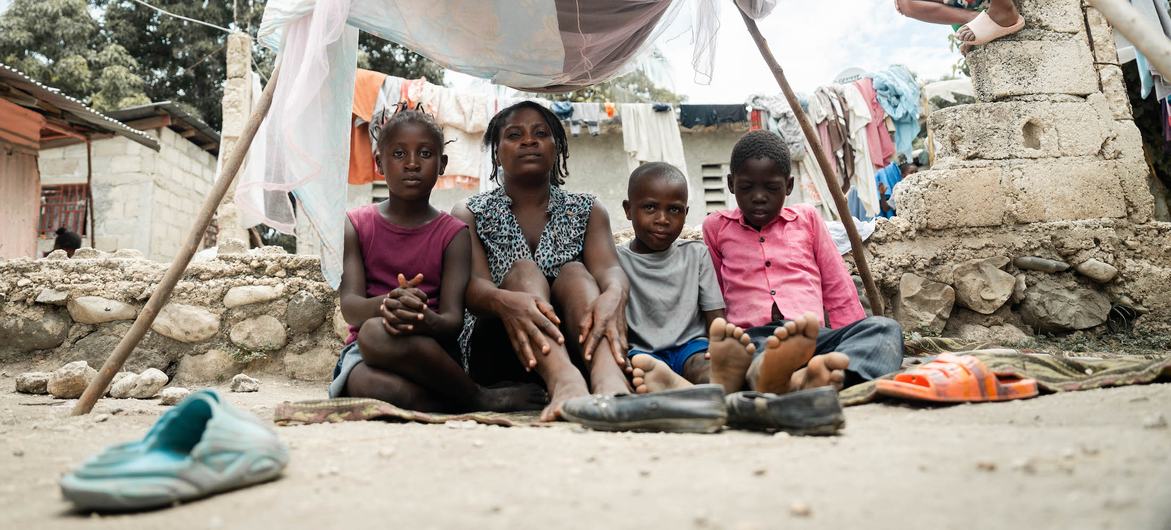
A mother sits with her children in an IDP site in Léogâne, on the outskirts of the Haitian capital, Port-au-Prince.
© UNICEF/Maxime Le Lijour
 
A mother sits with her children in an IDP site in Léogâne, on the outskirts of the Haitian capital, Port-au-Prince.


1 hour ago 

Peace and Security

Continued violence and instability in Haiti has resulted in the displacement of over 300,000 children, with an estimated one child being displaced every minute since March, the UN Children’s Fund (UNICEF) said on Tuesday.

Catherine Russell, UNICEF Executive Director, highlighted the horrific impact of violence on children and adolescents.

“The humanitarian catastrophe unfolding before our eyes is taking a devastating toll on children. Displaced children are in desperate need of a safe and protective environment, and increased support and funding from the international community,” she said.

Across the country, an estimated three million children are in need of humanitarian assistance, against a backdrop of years of political turmoil, widespread poverty, rampant disease and multiple disasters.

Facing heightened risks

Displaced children in Haiti face heightened risks of violence, including sexual assault, exploitation, abuse and family separation. Their access to essential services such as safe spaces, healthcare, and clean water and sanitation is severely disrupted.

Poor hygiene conditions in camps and makeshift settlements increase their susceptibility to diseases like cholera, while school closures and economic constraints driven by the violence have forced many children to abandon their education.

Furthermore, with few other means of survival or protection, children are increasingly forced to join armed groups – a clear violation of their rights and a breach of international law, UNICEF stressed.

Dangers continue to grow

Compounding these challenges, devastating hazards wreaking havoc across the country.

Haiti’s National Emergency Operations Center has warned of a “hyperactive” cyclone season, further threatening the already vulnerable displaced population. Last month, a tornado in Bassin Bleu, Northwest Department, destroyed the homes of 650 children.

The crippled healthcare system that was barely able to cope with demand before the latest escalation of violence will have to contend with a rainy season that is expected to continue to worsen the situation, threatening to spike water-borne diseases, UNICEF warned.

“The needs in Haiti continue to grow, alongside the dangers for children,” Ms. Russell said, adding that everyone has a role to play to change the trajectory, and ensure that children are protected, have education and can access basic services.

“Children should not be paying with their lives and their futures for a crisis created by adults,” she said.


https://news.un.org/en/story/2024/07/1151681


https://creativecommons.org/licenses/by/4.0/legalcode

воскресенье, 16 июня 2024 г.

On the ground in Rafah: UNICEF reports ‘lethal’ lack of water, services

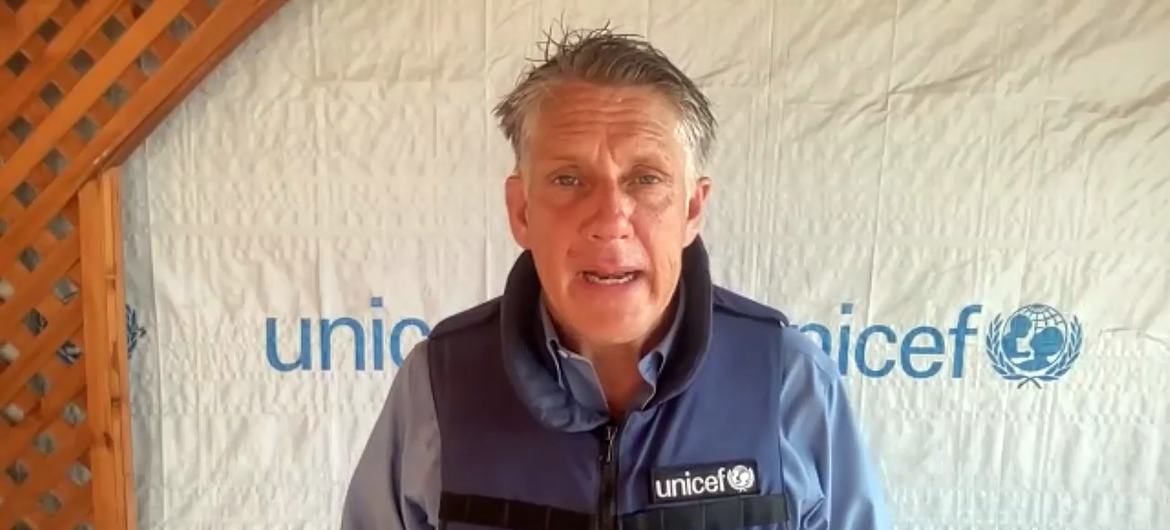
Speaking from Gaza, UNICEF spokesperson James Elder told UN News "this is and has been a war on children."

 I’ve seen the opposite of hope. We can’t allow the normalisation of this. 

UN News/Abdelmonem Makki
 
Speaking from Gaza, UNICEF spokesperson James Elder told UN News "this is and has been a war on children."
15 June 2024Humanitarian Aid

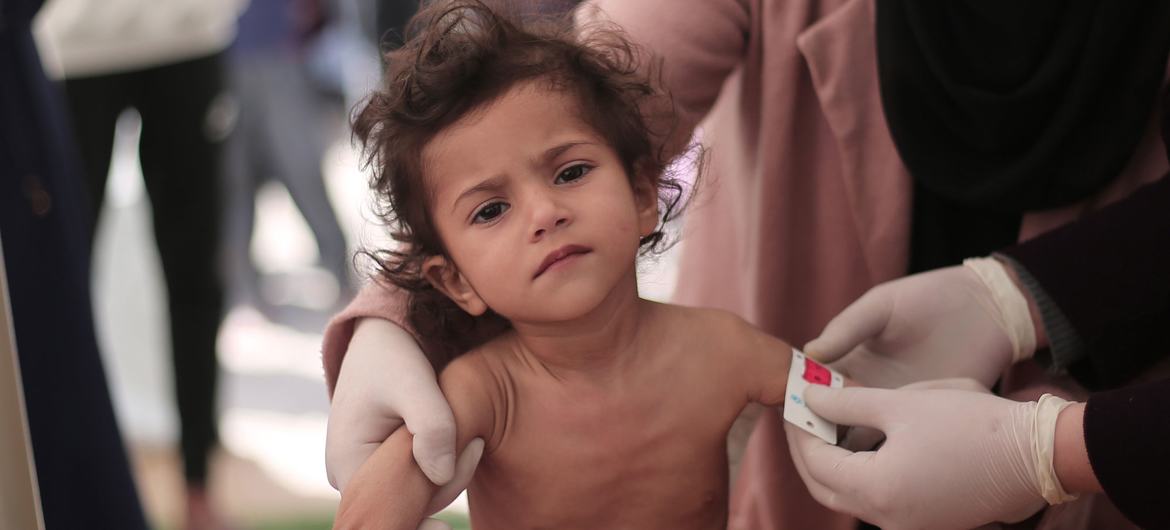
Almost 3,000 malnourished children are at risk of dying before their families’ eyes in Gaza, where the eight-month-long war continues, according to the UN Children’s Fund (UNICEF) as spokesperson James Elder told UN News on Saturday about the situation on the ground in the besieged and bombarded enclave.

Speaking from Gaza, Mr. Elder described a dire landscape, with a focus on child malnutrition and the devastating impact of the ongoing conflict amid growing concerns of famine.

Tweet URL
1james_elder

The destruction of health facilities, including specialised centres that are critical for staving off malnutrition, has severely hampered efforts to address severe hunger among children against a backdrop of constant bombings and attacks alongside the “lethal” lack of access to basic necessities that have already left children physically and psychologically scarred.

The UNICEF spokesperson emphasised the urgent need for a ceasefire to address the humanitarian crisis, get the hostages home and allow for the delivery of aid, education and medical care.

The interview was edited for length and clarity.

James Elder: If we focus on the nutritional situation, it was an immense effort from colleagues and partners over the last months to create stabilisation centres to address malnutrition. When that massive offensive came into Rafah [last month], forcing another million people who surely had already moved three, four or five times, we lost those stabilisation centres. The thousands of children who were being given the nutrition they needed suddenly disappeared again into the community. That’s perilous in a place where we know there’s a lethal lack of water and a dangerous, dangerous lack of sanitation.

So, now we start again. We have incredible partners. I’ve got amazing colleagues. All other agencies rally around. But, it’s again about now getting stabilisation centres and nutrition points into what are the tented camps so we can identify mothers who are desperate to get the support. But, they need to know it’s there. That’s the nutritional side, just one angle to which children are under attack. They’re under attack on the ground from that lack of nutrition, lack of sanitation, consistent restrictions on aid and very much so still from the skies.

I know it’s been 250 days. I know there’s a great risk of normalisation of this. There is nothing normal about the constant these children here are living, and there’s nothing normal about the last three nights of relentless bombardments. Drones surely meant no child could sleep there. There’s certainly nothing normal about the horrific wounds of children that I saw just a few hours a day in Al Aqsa Hospital. I spoke to families of children where they were in a sleep at five in the morning on the third floor and suddenly, in a moment, they’re under rubble. Mothers and children were killed or wounded or children have lost a mother. This has been continuous for 250 days. Children and their families really now are physically and psychologically just holding on.

UN News: How many hospitals are working now in the areas you were able to visit?

James Elder: We are now at a handful that are partially functioning from a previous total of 36 hospitals and healthcare centres in Gaza. Al-Aqsa Hospital [in central Gaza] took the brunt of those people after the [military] operation on Saturday. It was already overflowing because they’re in a state of war.

I visited on Tuesday, when there were scores of people with brutal wounds of war on the floors, mattresses, anywhere they could find. They needed attention. There were children with blast injuries, with burns, these awful injuries. Remembering a bomb blast picks up anything and everything, from bricks to tiles and shrapnel and does terrible things to a child’s body. As a doctor said to me, there are no hospitals in the world that could manage what we’re doing.

At the same time, there is the immense spirit of people here, of the Palestinians of Gaza. Nassar Hospital, which was the second biggest hospital was gutted inside after Khan Younis had been devastated, and it’s been restored and is partially functioning. That’s just on the back of people’s resolve, strength and determination. However, we have seen the systematic devastation of these health care system, and it too is holding on by a thread.

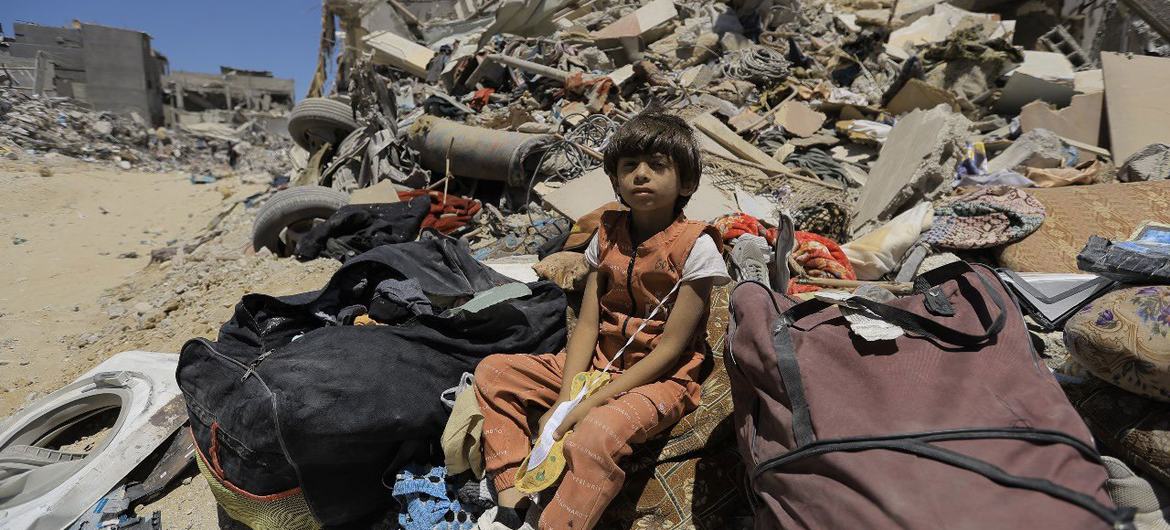
Many children in Gaza are showing signs of  severe acute malnutrition and drastic weight loss.
© UNICEF/Eyad El Baba
 
Many children in Gaza are showing signs of severe acute malnutrition and drastic weight loss.

UN News: Now only two of the three specialised nutrition stabilisation centres in Gaza remain open. Does UNICEF have any alternative plans to fill this vacuum?

James Elder: Absolutely. It is to get another stabilisation centre up and running in Rafah as well as smaller centres. Yesterday, I was at a tented camp and there was, with a partner, not a stabilization centre, but a smaller centre where they are doing testing, giving, therapeutic food to mothers and doing outreach in the community to make sure people come to them. Word spreads very quickly.

That’s the sort of thing we can do. On Wednesday, I was in a convoy trying to get aid to distribute to our partners while training them. It sounds strange to train partners in malnutrition screening and response, but that’s because before this war, Gaza didn’t really have a severe malnutrition problem.

So, there’s training, supply delivery and then, as best we can, trying to set up those bigger stabilisation centers. Again, even though knowing this, this war keeps moving and people keep being forced from their homes. Our operations, like all other agencies, keep being disrupted.

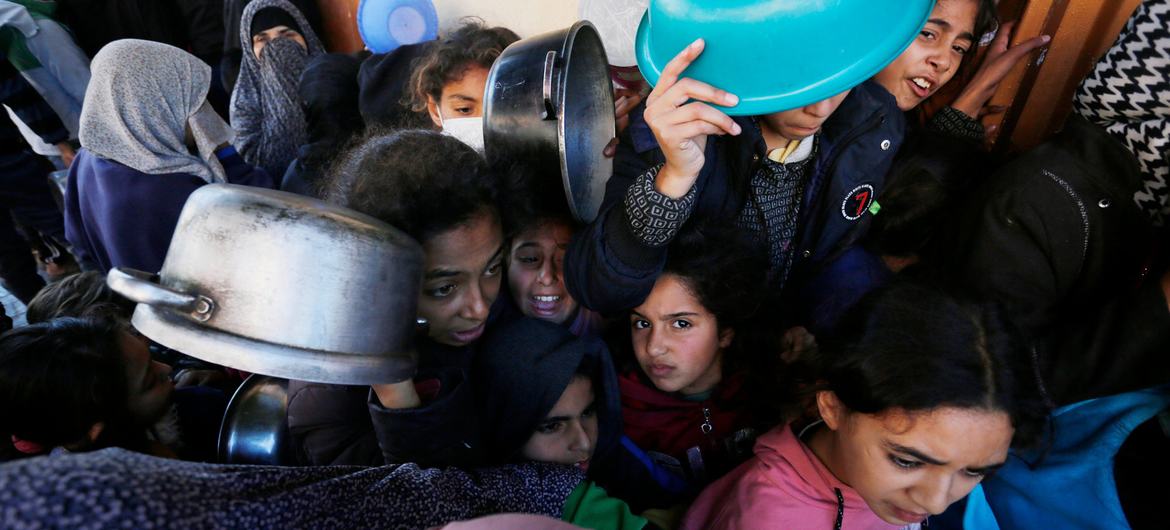
More than one million people in Gaza face severe food insecurity.
© UNRWA
 
More than one million people in Gaza face severe food insecurity.

UN News: You took to social media to discuss the challenges that UNICEF faces in delivering supplies to the children of Gaza. Can you please elaborate on that? 

James Elder: This specific example was Wednesday. We had a truck of malnutrition and medical supplies for 10,000 children. We had all the approvals, which is normal terrain. Yet, when we moved on Wednesday, what was basically a 40-kilometre round trip took 13 hours, with eight hours stuck at checkpoints or nearby. There were great discussions over whether we had a truck or whether we had a van.

In the end, that truck with nutrition and medical supplies for 10,000 children was returned. We weren’t able to get it through. Now, we will get it back and make that trip again, remembering such is the precarious, dangerous state of trying to deliver aid in the Gaza Strip. More of my UN colleagues have been killed during this eight month war than in any other conflict in the history of the United Nations.

It’s not so easy as just turning around the next day. We require two armored vehicles every time we move. UNICEF distributes tents as well as deliver fuel for desalination plants. We also have a lot of programmatic work. That was hugely disappointing. That was supplies that needed to go to those partners and children.

Even as we waited for hours near one of those checkpoints called a holding point, I was watching fishers. No doubt they had previous professions as accountants, lawyers and other jobs, but now all jobs and economies are being battered. Here they were fishing just using a single net, throwing it and trying to catch some fish for their family. Suddenly a tank came, and the next thing, there was firing from the position from the area around the Israeli military checkpoint, and two fishermen were shot. We didn’t know if they were dead. A WHO paramedic colleague radioed the authorities to ask if we could possibly get these two people to see if we could give them medical care. That was denied. That care was denied. Eventually, half an hour later, other fishers returned with body bags and we discovered that the two men were in fact dead. One had been shot in the back, and one who had fishing net still around his foot was shot in the neck.

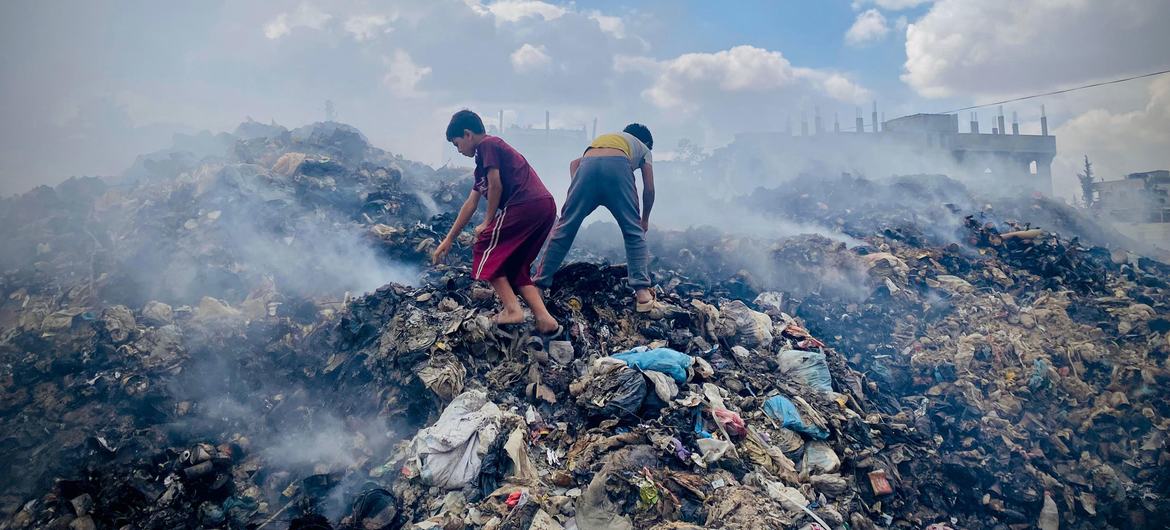
Over 330,000 tonnes of waste have accumulated in or near populated areas across Gaza, posing catastrophic environmental and health risks.
© UNRWA
 
Over 330,000 tonnes of waste have accumulated in or near populated areas across Gaza, posing catastrophic environmental and health risks.

UN News: People are running for their lives, but many schools in Gaza have been destroyed due to this war. What do you think the long-term consequences of this?

James Elder: The world should be terrified of the long-term consequences. Because we know that the longer a war goes on, the more damage it does psychologically to children. UNICEF knows that from a Yemen or Afghanistan. We are in uncharted territory when it comes to the mental health of children here.

We are in uncharted territory when it comes to the mental health of children here

At the same time, while as long as this continues, this is no place for a child to get treatment. I’ve sat with children. A little boy, Omar, who was sort of doing his own psychological treatment for himself. He would shut his eyes and try and remember his parents. His mother, father and twin brother were killed in their home. He would close his eyes to try and remember them. He didn’t want to lose them in his memory as he lost them on the ground.

I saw Omar in November and saw him again two days ago. He’s no longer able to recall what his parents looked like. Children are having to do their own mental health care. The reason the world should be concerned about this is that any economist, any demographer will tell you with a young population like Gaza’s, give them the right skills, the right education, the right opportunity and you get a demographic boom. You know, it’s the envy of aging countries well, but you have to give them those skills.

The opposite of that is happening right here: lasting violence. Children are being denied the most basic rights and are seeing death. There is nowhere near any education or universities as well. I think there are reports of hundreds of professors having been killed.

Again, this all comes back to a ceasefire. A ceasefire enables children to go to school, enables us to get aid safely and gets the hostages home. A mother said “I could go to bed if there was a ceasefire and promise my daughter that she will wake up tomorrow morning.”

Parents cannot do that right now.

UN News: You’ve been consistently emphasizing the urgent need for a ceasefire. To address this, humanitarian crisis in Gaza, yet war continues. What’s your message to the world? 

James Elder: I think the message has to be, as we’ve heard from the Secretary-General, from my own executive director, from the start, a ceasefire gets hostages home and stops the bombardment. Those parties that have the power over the ceasefire have to be connected with the suffering of people here. It would seem that that’s not happening.

This is and has been a war on children. We do not say that lightly. We do not say that is a headline. We say that based on evidence, based on the disproportionate impact this war is having on boys and girls. So, a ceasefire is the only solution. As my executive director said many months ago to the Security Council, the killing of children in Gaza and the devastation of Gaza will not bring peace to children or the region.

More than one million people, most displaced several times, have been forced to flee once again in search of safety.
© UNRWA
 
More than one million people, most displaced several times, have been forced to flee once again in search of safety.

UN News: This is your second mission to the Gaza Strip. Have you seen any signs of hope or anything different during this time in Gaza?

James Elder: It’s my third trip after being here in November and March. Now, I’ve seen the opposite of hope. I’ve seen hope extinguished. I’ve seen hope rise with the Security Council resolution in March, and I felt that in the air. I spoke to people and the sense that the war may be coming to an end was an amazing feeling and sense to see.

Then that literally got bombed away. So, there are a mix of people. There are those who will say to me that all they have left is hope after their home was destroyed, husband and children killed and they can no longer feed regularly their other children and they lost their job.

There are others who will say to me, there have been so many Security Council resolutions, I’ve lost count, more fearfully, more heartbreakingly. There will be others, like more than a handful of young people who tell me that they hope a missile hits their tent and ends this.

This is the perilous psychological state people are in right now. We cannot allow the world to turn away. We can’t allow the normalisation of this. There is nothing normal about this malnutrition crisis. There is nothing normal about the relentless bombardments and all the horrors that I see in hospitals. There is certainly nothing normal about children and their families living in a constant state of fear.


https://news.un.org/en/interview/2024/06/1151131

https://creativecommons.org/licenses/by/3.0/legalcode

четверг, 30 мая 2024 г.

UNICEF reports surge in violence against children in Africa’s central Sahel

UNICEF reports surge in violence against children in Africa’s central Sahel
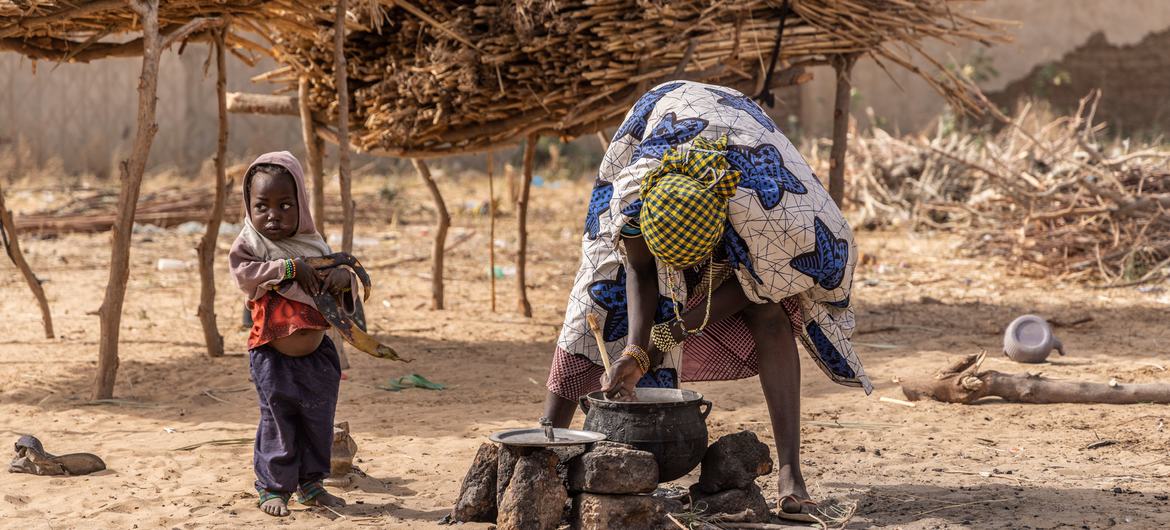
Violence and insecurity has driven thousands of families from their homes in central Sahel. Pictured here, a displaced mother and her child who have sought shelter in Niger.
© UNICEF Niger/Islamane Abdou
 
Violence and insecurity has driven thousands of families from their homes in central Sahel. Pictured here, a displaced mother and her child who have sought shelter in Niger.
29 May 2024Peace and Security

Violence against children in the central Sahel region of Africa surged dramatically in the last quarter of 2023, skyrocketing by 70 per cent over the previous three months, the UN Children’s Fund (UNICEF) reported on Wednesday.

The agency revealed that in Burkina Faso, Mali and Niger, cases of recruitment and use of children in armed groups along with killings and maiming increased by more than 130 per cent between the two time periods.

Protect the vulnerable

Gilles Fagninou, UNICEF’s regional director for West and Central Asia, underscored the need to curb the distressing rise.

“Civilians need protection from all forms of violence. Communities caught up in fighting need protection. Far too many children are being affected by grave violations of their rights, including killings, abduction and recruitment by armed groups,” he said.

Ensuring the protection of children is critical, and the violent incidents in the central Sahel region must stop if children are to realise their basic rights to life under the international Convention on the Rights of the Child and the regional African Charter on the Rights and Welfare of the Child.

“UNICEF calls on all involved in the ongoing crisis in central Sahel to put an end to all forms of violence, killing and abuse of children, in line with their obligations under international law,” Mr. Fagninou added.

Volatile situation

The security situation across central Sahel remains volatile, with frequent attacks on civilians against a backdrop of political tensions and rising humanitarian needs. Between February and April, over 1,180 security incidents were reported, which claimed the lives nearly 3,400 people.

Emblematic of the dire situation, several hundred people were reported killed in Burkina Faso, with reports that more than 220 civilians, including 56 children, were killed in attacks reportedly carried out by the military in two villages on a single day in late February.

Similarly in Mali, some 110 civilian men travelling on three buses between the towns of Bandiagara and Bankass were abducted by armed groups in mid-April. They are yet to be released.

Grave violations against children

UN Security Council resolution 1612, adopted in 2005, identified six grave violations against children: recruitment and use of child soldiers, killing and maiming, sexual violence, abduction, attacks against schools or hospitals and the denial of humanitarian access.

By highlighting these violations, the resolution sought to galvanise global efforts to protect children in conflict zones and mitigate the devastating impact of war on young lives.


https://news.un.org/en/story/2024/05/1150396

https://creativecommons.org/licenses/by/3.0/legalcode

четверг, 16 мая 2024 г.

Surge in child migrants crossing the dangerous Darién Gap: UNICEF


Surge in child migrants crossing the dangerous Darién Gap: UNICEF

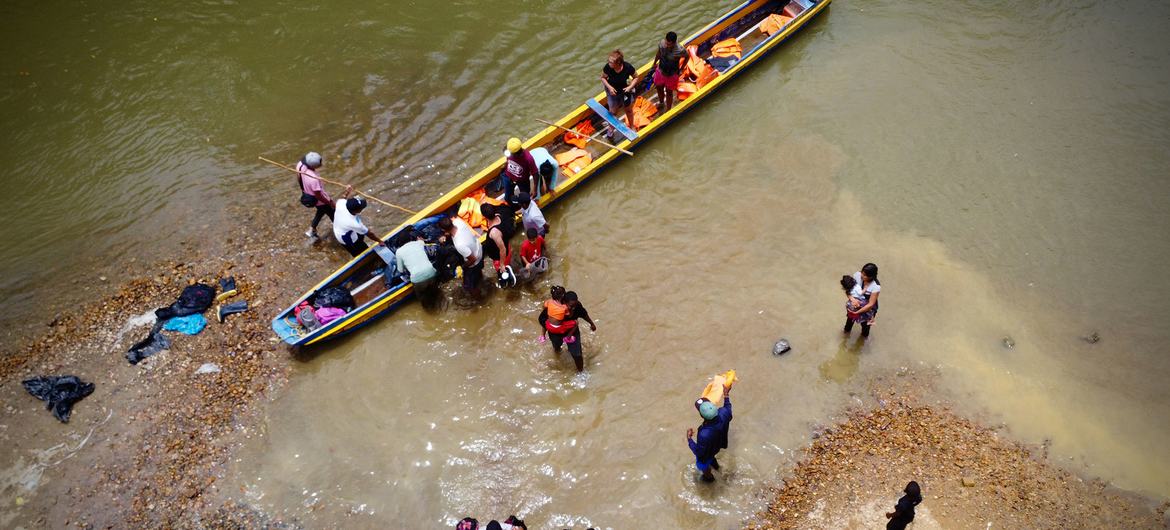
Migrants crossing the Darién Gap in Panama.
© IOM/Gema Cortés
 
Migrants crossing the Darién Gap in Panama.


15 May 2024
Humanitarian Aid

The number of child migrants crossing the perilous Darién Gap has surged by 40 per cent so far this year, the UN Children’s Fund (UNICEF) reported on Wednesday, putting the route on track for a fifth consecutive year of record child migration levels.

In the first four months of 2024, more than 30,000 children traversed the dense jungle region separating Colombia and Panama, marking a significant increase compared to the same period last year. Among them, about 2,000 were unaccompanied or separated from their families.

Additionally, the number of children in transit grew five-times faster than the number of adults, the data showed.

No place for children

“The Darién Gap is no place for children. Many children have died on this arduous, dangerous journey. Women have given birth while en route, bringing new life into the world in the most challenging of circumstances. Many of those who survive the journey arrive sick, hungry, and dehydrated, often with wounds or infections and in desperate need of support,” said Ted Chaiban, UNICEF Deputy Executive Director.

But with children making up a fifth of the migrants, UNICEF’s presence and response is more important than ever, he stressed.

“Adequate funding is critical in order to allow us to be there for children, no matter their country of origin or destination.”

Based on current trends, it is estimated that 800,000 people, including 160,000 children and adolescents, could cross the jungle in 2024. These migrants will likely require substantial humanitarian assistance due to the extreme conditions faced during the journey.

Tweet URL
UNICEF

Harrowing stories

Returning from a visit to the community of Bajo Chiquito in Panama, Mr. Chaiban recounted harrowing stories he heard from children who made the journey.

“I met Esmeria, an 11-year-old girl from Venezuela who [was] separated from her mother during the crossing through the jungle. Through tears, Esmeria shared with me how difficult it was for her to be alone in the jungle,”

The little girl had to cross swollen rivers, passing injured and hungry people on the route.

“At night, she told me, it was very dark and she heard scary noises. Esmeria was hungry. She had not eaten in two days. Esmeria had not studied for months, and she hoped that her mother would arrive soon to follow their path. No child should have to live through or witness these things,” the UNICEF official added.

Supporting children on the move

UNICEF has been providing support to children on the move in the Darién and Panama since 2018, when just 522 children crossed the rainforest.

Today, with financial backing from donors and with its own funds, the UN agency delivers crucial services in water, sanitation and hygiene (WASH), child protection, health, and gender-based violence, at key points along the migration route.

They also support host communities that migrants pass through.

Funds needed

In 2024, UNICEF has appealed for $7.64 million to address the urgent needs of the growing number of migrating children and families in Panama. However, only 10 per cent of this funding has been received so far.

Commending the host communities, donors and the Panamanian Government for helping support children and their families, Mr. Chaiban appealed for additional funds.

“The dangers to children and their unmet needs are increasing as we speak. We need to continue to ensure that no child is left behind. If the response is underfunded, the reach will be limited,” he stressed.


https://news.un.org/en/story/2024/05/1149806
https://creativecommons.org/licenses/by/3.0/legalcode

воскресенье, 22 октября 2023 г.

INTERVIEW: UNICEF has ‘every hope’ for more Gaza convoys


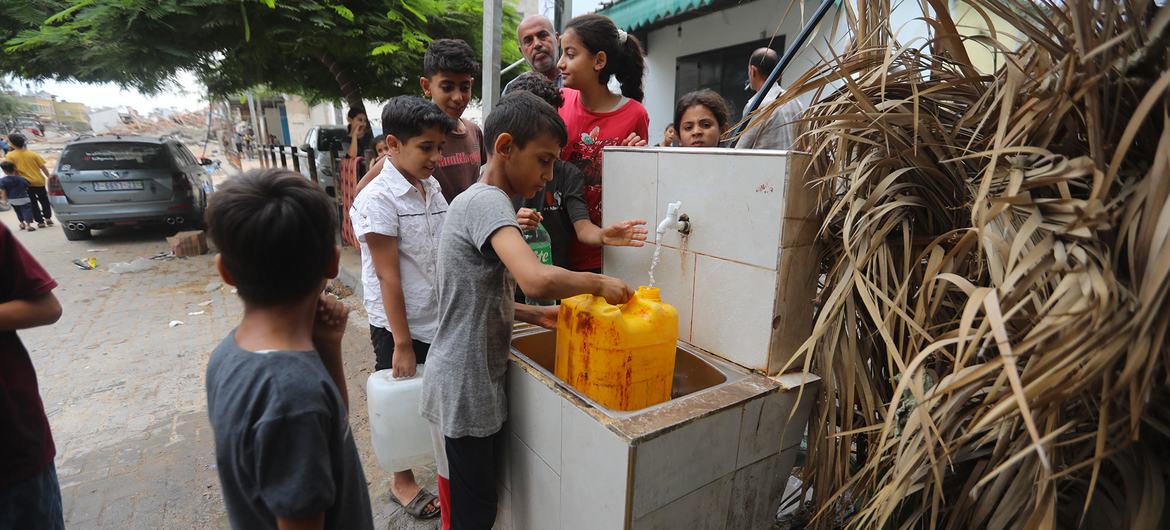
Water is in short supply across the Gaza strip.
© UNICEF/Mohammad Ajjour
 
Water is in short supply across the Gaza strip.
21 October 2023
Humanitarian Aid

The first humanitarian convoy into Gaza following two weeks of conflict crossed the border from Egypt on Saturday morning.

The 20 trucks carried food, water and medical supplies – items that are desperately needed, along with fuel - as stocks in Gaza dwindle, amid fears of increased deaths due to disease outbreaks and lack of healthcare. 

While welcoming the development, agencies such as the UN Children’s Fund (UNICEF) insist that this cannot be the only convoy, and aid delivery must be continuous and sustained.

‘A drop in the ocean’

Jeremy Hopkins, UNICEF Representative in Egypt, said the agency’s contribution to the convoy – two trucks filled with 40,000 litres of bottled water – was but “a drop in the ocean”, given the immense needs in Gaza, including for a humanitarian ceasefire.

‘We also call on the parties to the conflict to avoid any targeting of health and education facilities, which allows us to deliver the aid safely to the health facilities and everywhere that they are needed,” he said.

Mr. Hopkins spoke to UN News several hours after the convoy passed through the Rafah crossing in southern Egypt, where hundreds more trucks are waiting should the border open up again.

He paid tribute to the dedicated UNICEF team on the ground who continue to serve under fire, and discussed the prospects for additional aid convoys.

This interview has been edited for clarity.

Jeremy Hopkins: Today we were able to include two UNICEF trucks in the convoy with drinking water, 40,000 litres. It's a drop in the ocean – literally, almost - and that will allow us to reach about 27,000 people with one day’s supply of drinking water.  So, a very, very small amount went through today which reinforces the urgent need to have a sustained humanitarian corridor that is open for supplies. And, of course, we hope that there will be additional border posts opening so that the necessary supplies can get in.

UN News: Do you have any information about the next delivery and what that depends on? Do you also have additional emergency supplies in place once the next delivery is given the green light?

Jeremy Hopkins: So, we have quite a good pipeline of water and water systems equipment, medicine and health systems equipment, and a number of other specialized items for child protection and childcare. We have, I think, 12 trucks loaded on stand-by at the border that can be crossed over in a matter of hours the next time it opens. And we have a pipeline sort of coming in by plane and by truck from Cairo and from international destinations with more medical supplies, more waterworks, water systems supplies. Because we know that the priorities in Gaza right now are water, food, medicine and fuel, and so we are prioritizing our pipeline accordingly. We have one million bottles of drinking water in the pipeline ready, just for example, so we have big quantities of the necessary materials. We just need the corridor to be open on a sustained, continuous basis.

UN News: Is there any information about the next delivery?

Jeremy Hopkins: We know that the authorities and the different parties are continuing to discuss how to manage this border in a more sustainable way, and we have every hope that they will do so. I think the details will become clearer as they become clear.

UNICEF Representative in Egypt Jeremy Hopkins
UN News
 
UNICEF Representative in Egypt Jeremy Hopkins

UN News: We now have 20 trucks inside Gaza. What are the arrangements and preparations inside the Gaza Strip to deliver the lifesaving supplies?

Jeremy Hopkins:  I want to first recognize that we have a very dedicated team of UNICEF State of Palestine staff in Gaza who have been working day and night under terrible, terrible conditions to deliver assistance. So, assistance has been ongoing since the beginning and, of course, prior to this particular terrible, terrible round of conflict. I know that our colleagues in Gaza have been repositioning the health centres with pre-positioned medical supplies, keeping some of the water systems running. I know we are down to five per cent of the normal capacity, but there are some water systems running. The only desalination plant that is still going is done so with UNICEF’s support. So, our colleagues – and I want to  pay tribute to them – are doing a fantastic job in Gaza.

What we know about the evolving needs is there are one million people displaced. We know that at least 300,000 children are displaced. That means they have no home right now or they are not at home, and that means that the humanitarian needs are extremely urgent. For example, according to international standards, each person should have 15 litres of water to live in health and dignity - that's drinking and washing and cooking and everything else. Right now, it's down to a little less than three litres of water per person in Gaza. We have these kind of needs and we know how to respond. We simply need the corridor to be opened so that we can respond.

Soundcloud

UN News: You said that what entered today is 'just a drop in the ocean'. Do you know exactly how long the supplies that arrived into Gaza today can cover the needs of people there?

Jeremy Hopkins: What went in today cannot cover the needs at all. It's a very tiny, tiny proportion of what is needed. We need to have instead of 20 trucks a day at least 100, 200 trucks going in per  day - that of course depends on what is on the trucks, but approximately speaking - with food, water, medicine and fuel. That is a necessary condition for us to be able to respond to the humanitarian lifesaving requirements and needs right now.

UN News: Since there is no ceasefire right now, what are the challenges to delivering and moving supplies across Gaza?

Jeremy Hopkins: It is going to be challenging. We need to deliver, and we have a humanitarian imperative which is driving us. At the same time, we do call for a cessation of hostilities immediately. Of course, that is the only way that we can actually deliver safely. But at the same time, we also call on the parties to the conflict to avoid any targeting of health and education facilities, which allows us to deliver the aid safely to the health facilities and everywhere that they are needed. And we also remind the parties that health staff need to be protected in order to carry out their mandate.


https://news.un.org/en/story/2023/10/1142667


https://creativecommons.org/licenses/by/3.0/legalcode

воскресенье, 4 июня 2023 г.

315,000 grave violations against children in conflict over 18 years: UNICEF


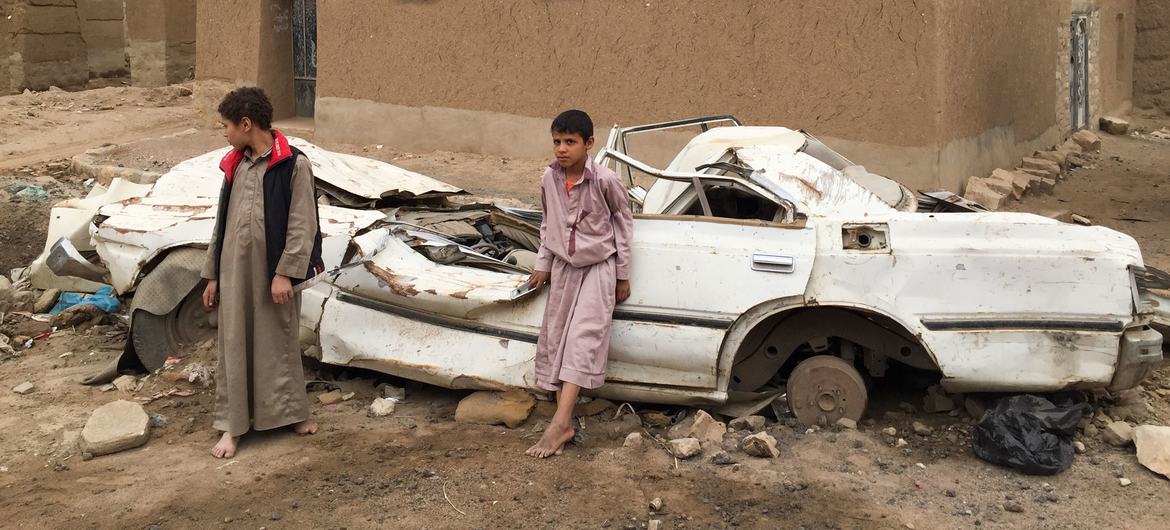
Young boys stand in front of a damaged vehicle in Sa'ada, Yemen.
© WFP/Jonathan Dumont
 
Young boys stand in front of a damaged vehicle in Sa'ada, Yemen.
4 June 2023
Peace and Security

A staggering 315,000 grave violations against children in conflict took place between 2005 and 2022, said UN Children’s Fund UNICEF on Monday, describing it as a “stark illustration of the devastating impact of war” on the young.

The UN-verified figures were reported by the agency as States, donors and the humanitarian community meet in Norway, for the Oslo Conference on Protecting Children in Armed Conflict.

The 315,000 incidents were recorded in more than 30 conflict situations across Africa, Asia, the Middle East, and Latin America.

They include more than 120,000 children killed or maimed; at least 105,000 children recruited or used by armed forces or armed groups; over 32,500 children abducted; and more than 16,000 children subjected to sexual violence.

The UN has also verified more than 16,000 attacks on schools and hospitals, and more than 22,000 instances where humanitarian access for children has been denied. 

The true toll is likely to be far higher, UNICEF stressed. Additionally, many millions more children have been displaced from their homes and communities, lost friends or family, or been separated from parents or caregivers.

‘War on children’

“Any war is ultimately a war on children,” said UNICEF Executive Director Catherine Russell.

“Exposure to conflict has catastrophic, life-changing effects for children. While we know what must be done to protect children from war, the world is not doing enough. Year after year, the UN documents the visceral, tragic and all too predictable ways that children’s lives are torn apart.”

The UNICEF chief said It is incumbent on all in the international community to ensure children “do not pay the price for the wars of adults, and to take the bold, concrete action required to improve the protection of some of the world’s most vulnerable children.”

The Fund has supported the care and protection of millions of affected children across conflict situations, including through the provision of mental health and psychosocial support, child protection case management, family tracing and reunification, and services for child survivors of gender-based violence.

Rehabilitating child soldiers

Just last year, UNICEF reached almost 12,500 former child soldiers with reintegration or other protection support, and more than nine million children with information designed to help them avoid explosive remnants of war such as landmines.

The agency said that the scale of protection risks is vastly outpacing available funding however.

New analysis by Humanitarian Funding Forecasting, commissioned by UNICEF, Save the Children, the Alliance for Child Protection in Humanitarian Action and the Global Child Protection Area of Responsibility, reveals that by 2024, the child protection sector will require $1.05 billion, increasing to US$1.37 billion by 2026, to address the protection needs of children in armed conflict.

If the current pace of humanitarian funding continues, the projected shortfall would stand at $835 million in 2024, growing to US$941 million by 2026.

This gap could leave conflict-affected children exposed to the immediate and lasting impacts of war, child labor, trafficking, and violence, UNICEF warned.

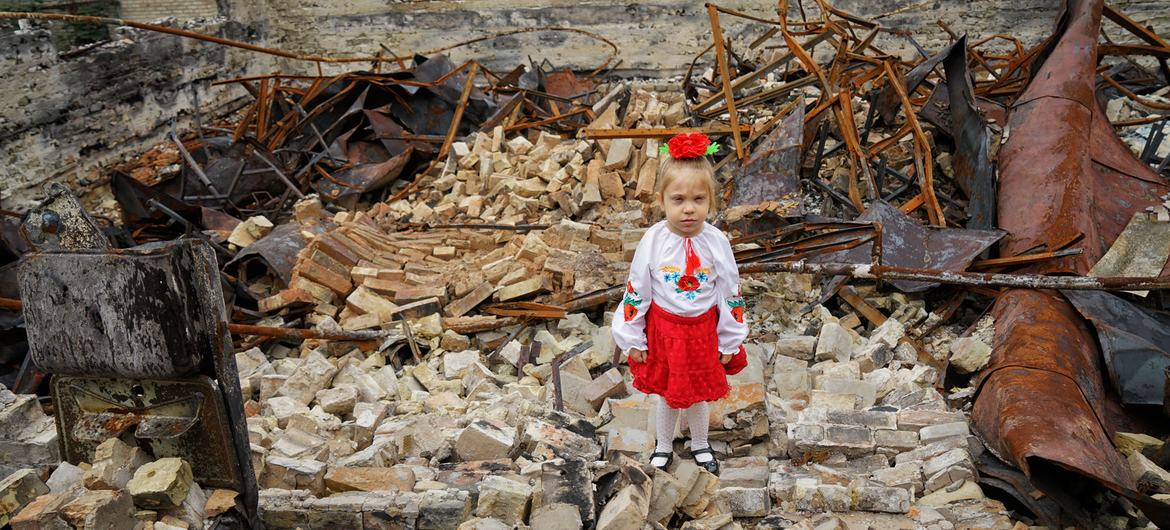
A young girl stands in the rubble of her damaged school in Horenka, in the Kyiv region of Ukraine.
© UNICEF/Olena Hrom
 
A young girl stands in the rubble of her damaged school in Horenka, in the Kyiv region of Ukraine.

Call for new commitments in Oslo

At the Oslo conference, the agency is calling on government to make bold new commitments, including: 

  • To uphold and operationalize the international laws and norms already in place to protect children in war – including to protect schools, hospitals and other protected objects like water and sanitation facilities from attack, to stop the recruitment and use of children by armed groups and forces, to stop the use of explosive weapons in populated areas.
  • Hold perpetrators to account when children’s rights are violated.   
  • Step up with critical resources to fund the protection of children in conflict at the scale and speed required, in line with growing need. This must include investment in humanitarian response and in national child protection workforces.

“We must deliver a child protection response that is equal to the challenges we face,” said Ms. Russell. “We need to do everything we can to reach all children in need, particularly the most vulnerable.”


 https://news.un.org/en/story/2023/06/1137327