Показаны сообщения с ярлыком Law and Crime Prevention. Показать все сообщения

четверг, 27 июня 2024 г.

World News in Brief: ICC convicts Malian extremist of war crimes, Sudan crisis update, UN Police Summit preview


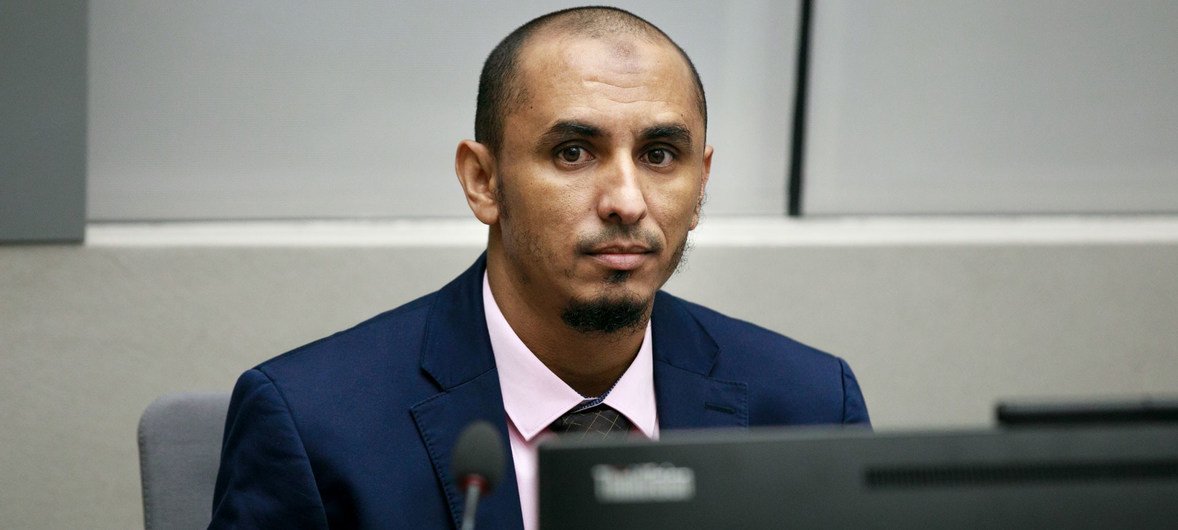
Al Hassan during his initial appearance before the International Criminal Court (ICC) on 4 April 2018.
© ICC-CPI
 
Al Hassan during his initial appearance before the International Criminal Court (ICC) on 4 April 2018.
3 hours 45 minutes ago

 Law and Crime Prevention

The International Criminal Court (ICC) handed down a war crimes conviction on Wednesday against an Al Qaida-linked Malian former self-styled police chief who faced a range of charges, from torture to rape.

Al Hassan Ag Abdoul Aziz Ag Mohamed Ag Mohamed was also found guilty of crimes against humanity. The charges included flogging, sexual slavery and the destruction of historical sites in the ancient city of Timbuktu, according to the 822-page trial judgement.

The restive western African nation has faced an influx of armed terrorist groups for over a decade, including those with ties to Al Qaida and Islamic State (ISIL/Da’esh).

Amputations and floggings

Tweet URL

The court prosecutors said the 46-year-old, also known as Al Hassan, was a key actor in Ansar Dine, one of the armed groups that seized power in northern Mali and orchestrated a reign of terror across regional capital, Timbuktu.

According to case files of the trial, which opened in 2020, he faced charges of overseeing amputations and floggings when acting as the group’s “de facto chief of Islamic police” between April 2012 and January 2013.

The ICC had issued an arrest warrant for Mr. Ag Mahmoud on 27 March 2018, and he surrendered to the court four days later.

He faces life imprisonment, with sentencing to be carried out at a later date.

UN working to scale up aid for Sudanese mired in humanitarian crisis

UN humanitarians and partners are working to scale up the response to address the deepening humanitarian crisis in Darfur, Khartoum, and other “hotspots” across war-ravaged Sudan, the UN Spokesperson said on Wednesday.

The situation in and around the besieged capital of North Darfur, El Fasher – where Rapid Support Forces militia have encircled the last Government-held city in the region, continues to be “extremely worrying”, said Stéphane Dujarric.

The UN Children’s Fund (UNICEF) highlighted that more than 400 children have reportedly been killed and maimed during the recent escalation in the fighting there.

Deadly conditions

“The continued use of explosive weapons in populated areas is posing further risks to civilians and aid workers alike”, Mr. Dujarric added.

Meanwhile, the World Food Programme (WFP) has distributed emergency food and nutrition supplies for more than 135,000 people in Al-Jazirah State in the east-central part of Sudan.

This is the first time WFP supplies have reached Sudan’s former breadbasket since conflict spilled over to the state capital Wad Madani in December last year, forcing WFP to temporarily relocate.

Elsewhere, a WFP convoy carrying more than 2,300 metric tons of food assistance for some 164,000 men, women and children impacted by conflict is crossing the border from Chad into Darfur and on the road to North and Central Darfur. 

Some 14 million children – that’s more than half of the 24 million children in Sudan - are in urgent need of humanitarian assistance. 

UN Police summit to showcase role of law enforcement for peace

Government leaders and Chiefs of Police are gathering at UN Headquarters in New York for a summit to further bolster the role of police personnel as critical enablers of peace.

The fourth UN Chiefs of Police Summit (UNCOPS) starts on Thursday and aims to build on the momentum of recent high-level peacekeeping initiatives - reinforcing the importance of multilateralism.

The official theme is Advancing our Common Security: UN Policing for a New Era.

Participants will hold conversations to “strengthen international peace, security, and development for all through the unifying power and enabling role of national and United Nations policing.”
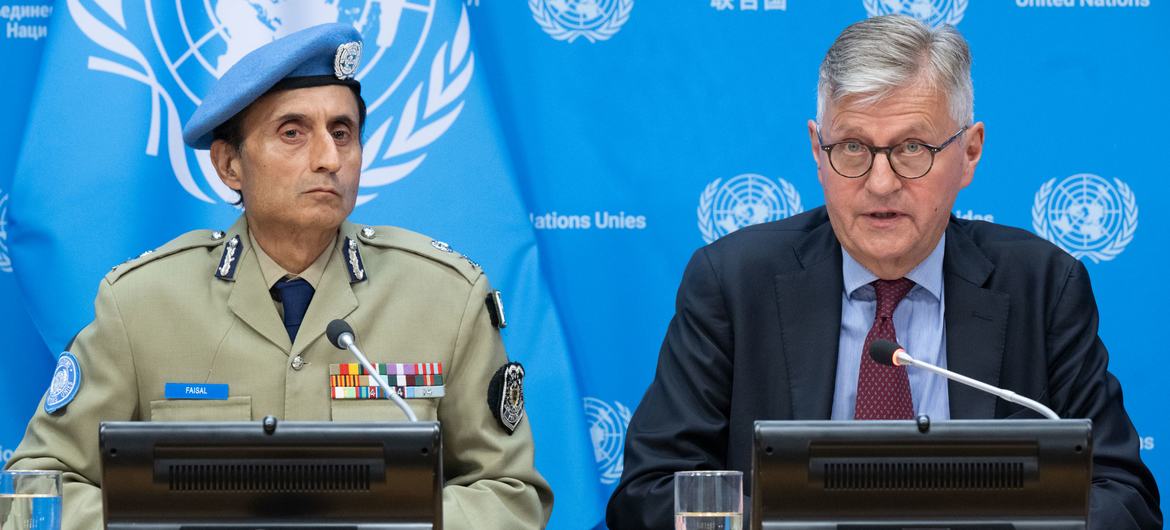
Jean-Pierre Lacroix (right), Under-Secretary-General for Peace Operations, and Faisal Shahkar, UN Police Adviser, brief reporters on the fourth United Nations Chiefs of Police Summit (UNCOPS 2024).
UN Photo/Eskinder Debebe
 
Jean-Pierre Lacroix (right), Under-Secretary-General for Peace Operations, and Faisal Shahkar, UN Police Adviser, brief reporters on the fourth United Nations Chiefs of Police Summit (UNCOPS 2024).

Opportunity knocks

Briefing journalists on Wednesday, Jean-Pierre Lacroix, Under-Secretary-General (USG) for Peace Operations, said UNPOL (the UN Police service) provide expertise and support to Member States on demand.

This comes with the challenge of having to deal with the pressures and impact of climate change, environmental degradation, transnational crime and global terrorism.

“That is why we’re putting a lot of emphasis, particularly in our capacity building activities to strengthen the rule of law capacities of the member states we work with and particularly helped help them better address these challenges,” said Mr. Lacroix.


https://news.un.org/en/story/2024/06/1151536


https://creativecommons.org/licenses/by/4.0/legalcode

пятница, 29 марта 2024 г.

Gaza: World court issues fresh measures for Israel as crisis deepens


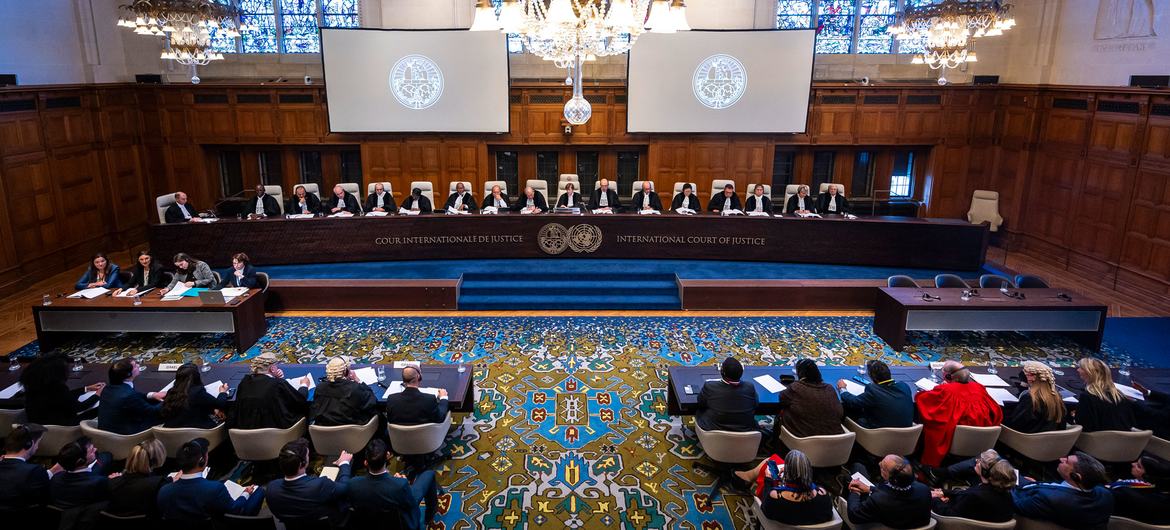
The International Court of Justice delivers its ruling in the case of South Africa v. Israel in The Hague in January. (file)
© ICJ-CIJ/ Frank van Beek
 
The International Court of Justice delivers its ruling in the case of South Africa v. Israel in The Hague in January. (file)


28 March 2024

The International Court of Justice (ICJ) on Thursday issued new provisional measures for Israel as the humanitarian situation in bombarded and besieged Gaza continues to deteriorate.

The world court issued the new order in response to a recent request made by South Africa, which submitted a case in December accusing Israel of genocide in Gaza, based on its continuing offensive following Hamas-led attacks in southern Israel which left almost 1,200 dead and more than 240 taken hostage. 

Since then, more than 32,000 Palestinians have been killed by Israeli strikes and attacks, according to figures from Gaza’s health ministry.

Tweet URL
CIJ_ICJ

Israel to ensure aid deliveries

The ICJ provisional measures state that Israel, “in view of the worsening conditions of life faced by Palestinians in Gaza, in particular the spread of famine and starvation”, shall take “all necessary and effective measures to ensure, without delay, in full cooperation with the United Nations, the unhindered provision at scale by all concerned of urgently needed basic services and humanitarian assistance to Palestinians throughout Gaza”.

The measures outline that the required aid includes food, water, electricity, fuel, shelter, clothing, hygiene and sanitation requirements, as well as medical supplies and medical care.

Orders to open more land crossings

The fresh ICJ order also calls on Israel, as a signatory to the Genocide Convention, to undertake those measures, “including by increasing the capacity and number of land crossing points and maintaining them open for as long as necessary”.

Additional measures call for Israel to ensure “with immediate effect that its military does not commit acts which constitute a violation of any of the rights of the Palestinians in Gaza as a protected group” under the Genocide Convention.

This includes “by preventing, through any action, the delivery of urgently needed humanitarian assistance”, according to the ICJ.

The court also decided that Israel shall submit a report to the ICJ on all measures within one month.

UN: All Member States must abide by ICJ decisions

UN Spokesperson Stéphane Dujarric reminded journalists at his daily briefing that the ICJ operates independently.

“We do believe as a matter of principle that all Member States abide by decisions of the court,” he said.

The ICJ was established by the UN Charter as the principal judicial organ of the UN.

Read our explainer on the ICJ here.


https://news.un.org/en/story/2024/03/1148096


https://creativecommons.org/licenses/by/3.0/legalcode

среда, 20 сентября 2023 г.

On UNGA margins, world leaders bolster bedrock of international law

On UNGA margins, world leaders bolster bedrock of international law
Adoption of the BBNJ treaty, also known as the high seas treaty, was a watershed moment in protecting marine biodiversity.
UNEP/Kyle Babb
 
Adoption of the BBNJ treaty, also known as the high seas treaty, was a watershed moment in protecting marine biodiversity.
20 September 2023
Law and Crime Prevention

At the heart of global diplomacy within the iconic UN Headquarters in New York, another significant yet often less featured deliberation is unfolding this week: the Treaty Event.

Heads of State, Foreign Ministers, and other top representatives are converging to endorse multilateral treaties which form the bedrock of international legal frameworks.

“Multilateral treaties are essential tools for Member States to achieve the objectives of the UN Charter,” emphasized David Nanopoulos, Chief of the Treaty Section at the UN Office for Legal Affairs (OLA).

The remarkable reversal on ozone, driven by the Montreal Protocol on Substances that Deplete the Ozone Layer, serves as a testament to the potency of such multilateral agreements.

“Universal participation in these treaties is absolutely fundamental to their success,” Mr. Nanopoulos added.

Treaties in focus

This year, two landmark treaties are in focus: the Convention on the International Effects of Judicial Sales of Ships, and the Agreement under the UN Convention on the Law of the Sea on the Conservation and Sustainable Use of Marine Biological Diversity of Areas beyond National Jurisdiction, commonly known as the BBNJ treaty or high seas treaty.

The former, focused on trade and signed by 15 nations as of Tuesday, aims to shore up international law regarding ship sales.

The landmark BBNJ treaty was agreed in June, following nearly two decades of negotiations, and strengthens the legal regime in the conservation and sustainable use of marine biodiversity, in over two-thirds of the world’s ocean.

Other treaties open for signature include those relating to environment, human rights, disarmament, and combatting transnational organized crime.

Catherine Colonna, Minister for Europe and Foreign Affairs of France, signs the BBNJ treaty at the UN Treaty Event.
United Nations/Paulina Kubiak
 
Catherine Colonna, Minister for Europe and Foreign Affairs of France, signs the BBNJ treaty at the UN Treaty Event.

Long legacy

The Treaty Event, established in 2000 by former Secretary-General Kofi Annan, capitalizes on the UN General Assembly’s annual high-level week to garner global leader support for multilateral treaties and the rule of law.

This initiative has seen substantial success, with over 2,000 treaty actions secured.

As the depository of multilateral treaties, the UN Secretary-General plays a pivotal role in their administration, ensuring transparency and facilitating cooperation among Member States, thereby upholding international law and principles of diplomacy. 


https://news.un.org/en/story/2023/09/1141112

https://creativecommons.org/licenses/by/3.0/legalcode

четверг, 22 июня 2023 г.

UN Counter-Terrorism Week: Preventing violent extremism


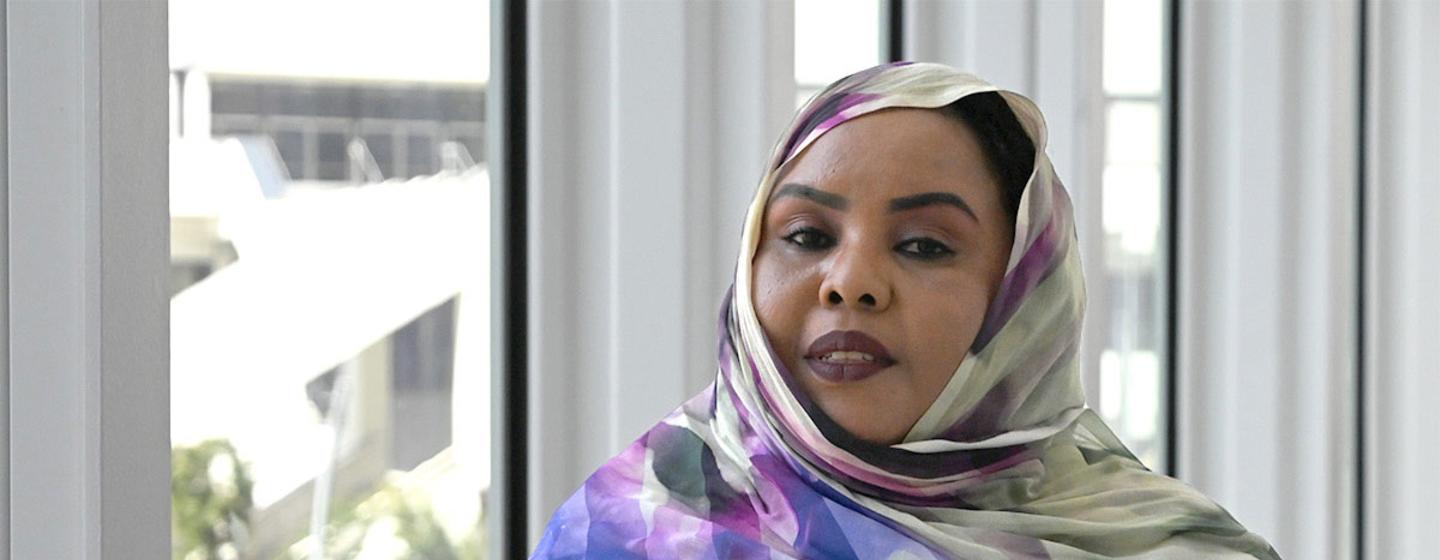
Zeinabou Maata is among a group of women working, with UN support, to prevent the spread of violent extremism in Mauritania.


© UNODC
 
Zeinabou Maata is among a group of women working, with UN support, to prevent the spread of violent extremism in Mauritania.
21 June 2023
Law and Crime Prevention

Zeinabou Maata, a Muslim from Mauritania, is one of 50 women serving on the frontlines of preventing the spread of violent extremism in her country, with UN support.

“Our religion is a true, honest religion that treats women with justice and fairness,” she said, leaning forward for emphasis. 

She knows of what she speaks. She is the daughter of Baba Ould Maata, a highly respected Mauritanian scholar.

Inspired by her father, Ms. Maata has embarked on her own journey of studying the Quran and other traditional texts from a young age, graduating from Mauritania’s largest Islamic institution and studying Islamic law at the post-graduate level. 

Brought up in an Islamic household, Ms. Maata believes it is her responsibility and duty to give back to her community.

Community outreach

Known as the Mourchidates, religiously trained women like Ms. Maata are educating their communities on the risks of violent extremism.

Established in 2021 with the support of the UN Office on Drugs and Crime (UNODC), the Mauritanian Ministry of Islamic Affairs, and the Association of Women Heads of Household, the Mourchidates network works to combat violent extremism in various settings, including prisons, in Mauritania. 

Mauritania belongs to the Sahel region in Africa, an area which has faced “an expansion of terrorism and extremist movements”, Ms. Maata said.

Starting in 2005, Islamic terrorists have carried out several attacks across the country, much to the dismay of devout Muslims and proud Mauritanians, she said. 

Countering messages of hate

“We Mauritanians are tolerant and understanding of others, and we accept and welcome people from other religions,” she said. “These attacks were contrary to both Mauritanian culture and Islamic sharia.”

When asked how best to fight back against rhetoric that uses and distorts Islam, she said the answer is simple: “the Quran”.

Chosen specifically for their expertise on Islam, the women focus on using Islamic arguments to counter messages of hate and violence.

“We clarify verses from the Quran and explain the hadith [a collection of sayings from the Prophet Muhammad], both of which urge peace and civil and community security,” she said. “We point out the seven concepts that are used in extremist discourse, such as jihad, and use Islamic arguments that show the correct intention of these verses, which combats extremist ideologies.”

The Mourchidates determine where and which groups are at risk of falling prey to extremist arguments. They then use their network to facilitate dialogues at prisons, mosques, schools, markets, or even homes.

Extreme prison sentences birth extremist ideas

“Once, we Mourchidates visited a prison, the first time something like this had been allowed in Mauritania,” she said.

Inside, they discovered that one of the female prisoners had been a powerful leader within the Salafist Group, a conservative Islamic movement that follows the practices of early generations of Muslims. 

“Extreme sentences often generate extremist ideas in prisons,” she relates. “We are proud that we were able to persuade her with religious arguments that Islam is a righteous and tolerant religion.”

Eventually, the prisoner announced her withdrawal from these extremist ideas and promised to get involved in activities that serve Mauritania’s security and civil peace, Ms. Maata said, adding that the woman had agreed to participate in a dialogue between religious scholars and former Salafists, sponsored by the Mauritanian Government.

A boy walks on a sand bank surrounding a refugee camp in M'bera, Mauritania.
UNICEF/Dragaj
 
A boy walks on a sand bank surrounding a refugee camp in M'bera, Mauritania.

Early warning systems

In 2022, Mourchidate assistance reached more than 10,000 people. In Nouakchott, the Mourchidates supported the wives, sisters, and mothers of detainees, helping them to abandon violent, extremist ideas.

In Ould Yengé, near the borders with Mali and Senegal, the Mourchidates have contributed to an early warning system by alerting law enforcement forces of suspicious cases.

Meanwhile, in Adel Bagrou, a city bordering Mali, the Mourchidates network provided support to young victims of terrorism who had found refuge in Mauritania, facilitating their integration into everyday life in their new country. 

Mauritania has not experienced a single terrorist attack since 2011, thanks in part to the efforts of people like Zeinabou and the network, according to UNODC.

“Women are capable of achieving anything they set their mind to,” Ms. Maata said. “They have the gift of being persuasive, tipping the scales in their favour, and they should use this ability to help serve their countries.”

Learn more about UNODC’s Sahel gender initiatives here.

UN Counter-Terrorism Week is being held at UN Headquarters in New York from 19 to 23 June. Learn more here.


 https://news.un.org/en/story/2023/06/1138002


https://creativecommons.org/licenses/by/3.0/legalcode

вторник, 13 июня 2023 г.

UN Mechanism reaches ‘watershed moment’ in prosecuting crimes in Rwanda and former Yugoslavia


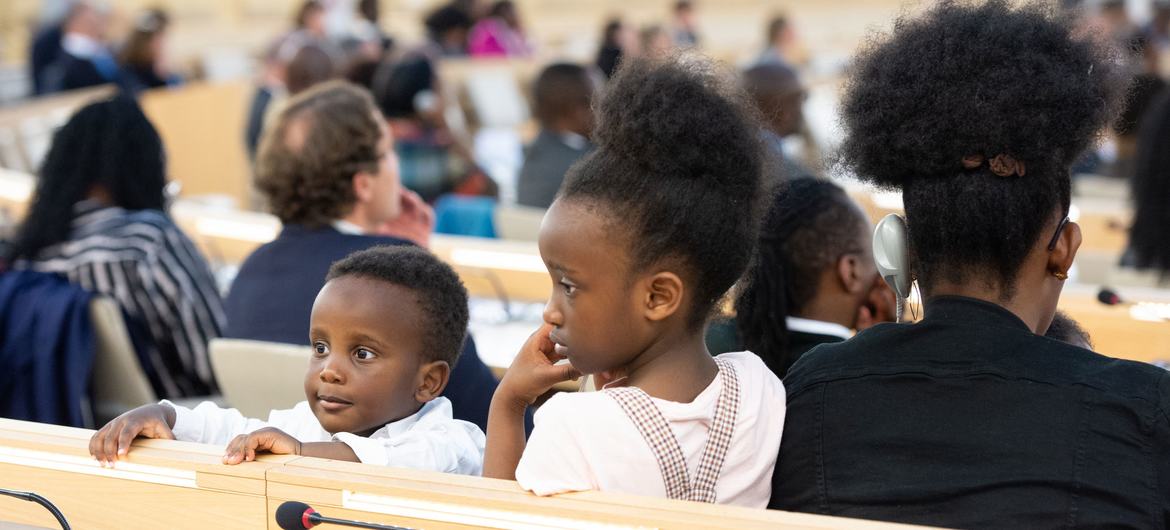
Two young participants during the Commemoration of the International Day of Reflection on the 1994 Genocide Against the Tutsi in Rwanda held in Geneva.
UN Photo/Violaine Martin
 
Two young participants during the Commemoration of the International Day of Reflection on the 1994 Genocide Against the Tutsi in Rwanda held in Geneva.

12 June 2023

Law and Crime Prevention

Although the UN tribunal prosecuting decades-old war crimes in Rwanda and the Former Yugoslavia is moving closer to completion, much remains to be done, the Security Council heard on Monday. 

Two senior officials with the International Residual Mechanism for Criminal Tribunals (IRMCT), briefed ambassadors on recent developments, including the arrest of a top fugitive from the 1994 Genocide against the Tutsi in Rwanda, and the final verdict related to atrocities committed in the Balkan wars. 

Tweet URL

Judge Graciela Gatti Santana, Mechanism President, reported that in-court proceedings are all but concluded as only one case related to core crimes committed in Rwanda now remains on the docket. 

“This represents a watershed moment in the life of the Mechanism and for international criminal justice more generally,” she said. 

Unfit for trial 

The Mechanism performs essential functions previously carried out by the International Criminal Tribunal for Rwanda (ICTR), which closed in December 2015, and another for the former Yugoslavia, ICTY, which concluded two years later. 

The outstanding case concerns Félicien Kabuga, founder of Radio Télévision Libre des Mille Collines, whose broadcasts fuelled hatred and violence against the Tutsi and others.  

Last week, Mr. Kabuga, 88, was deemed unfit to stand trial but an “alternative findings procedure” will be held to provide an opportunity for him to establish his innocence. 

Genocide denial 

Ms. Gatti Santana also addressed areas that she said require the Council’s “urgent attention and vigorous backing”, such as enforcement of sentences. 

However, she reported that arguably the biggest threat they face is the “relentless attempts to undermine our current work and also the judgements issued by the ICTR, the ICTY and the Mechanism”. 

She pointed to Serbia’s “persistent failure to arrest and surrender” politicians Petar Jojić and Vjerica Radeta, for their alleged interference with the administration of justice. 

“Moreover, there is the disturbing trend of genocide denial, the glorification of war criminals, the purported re-writing of history, and even provocative statements by convicted persons shamelessly admitting that they would do it all over again,” she said. 

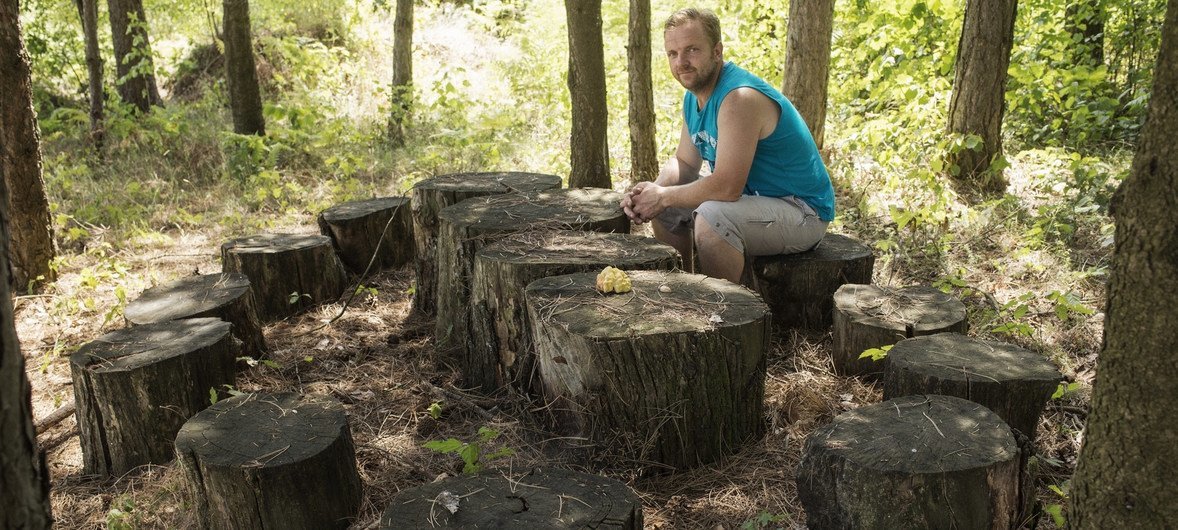
Z.B. of Bosnia and Herzegovina is still looking for his missing relatives after the war
UNDP Eurasia
 
Z.B. of Bosnia and Herzegovina is still looking for his missing relatives after the war

Not yet finished 

Ms. Gatti Santana stressed that although the Mechanism is drawing down, this does not mean it is ready to close as “we are not finished” – a sentiment echoed by Prosecutor Serge Brammertz, who provided an update on his Office’s activities. 

Last month, its most wanted Rwandan fugitive, Fulgence Kayishema, was arrested in South Africa after more than two decades on the run.  He had been charged with the April 1994 killings of more than 2,000 Tutsi refugees at a church. 

The Mechanism’s Appeals Chamber also delivered a final judgement in the case of two senior Serbian officers accused of ethnic cleansing during the war that led to the breakup of the former Yugoslavia. 

Jovica Stanišić and Franko Simatović were originally sentenced to 12 years in 2021, which was increased to 15 years on the grounds that they were “liable as members of a joint criminal enterprise for crimes committed by various Serb forces in Bosnia and Herzegovina in 1992”, as well as murder. 

Supporting national authorities 

Mr. Brammertz said his Office will assist national jurisdictions to continue the accountability process for crimes committed in Rwanda and the former Yugoslavia. 

“As my written report details, there can be no question that much more justice still needs to be achieved at the national level,” he stated. 

Furthermore, every year countries around the world identify in their territories persons suspected of committing crimes in Rwanda or the former Yugoslavia, who need to be extradited or prosecuted, he added. 

In concluding, he noted that while the international justice process “has been imperfect…the results have been beyond expectation, and a significant success for the United Nations.” 


 https://news.un.org/en/story/2023/06/1137607


https://creativecommons.org/licenses/by/3.0/legalcode

суббота, 3 июня 2023 г.

Huge increase in transnational crime and synthetic drugs in SE Asia requires cross-border cooperation


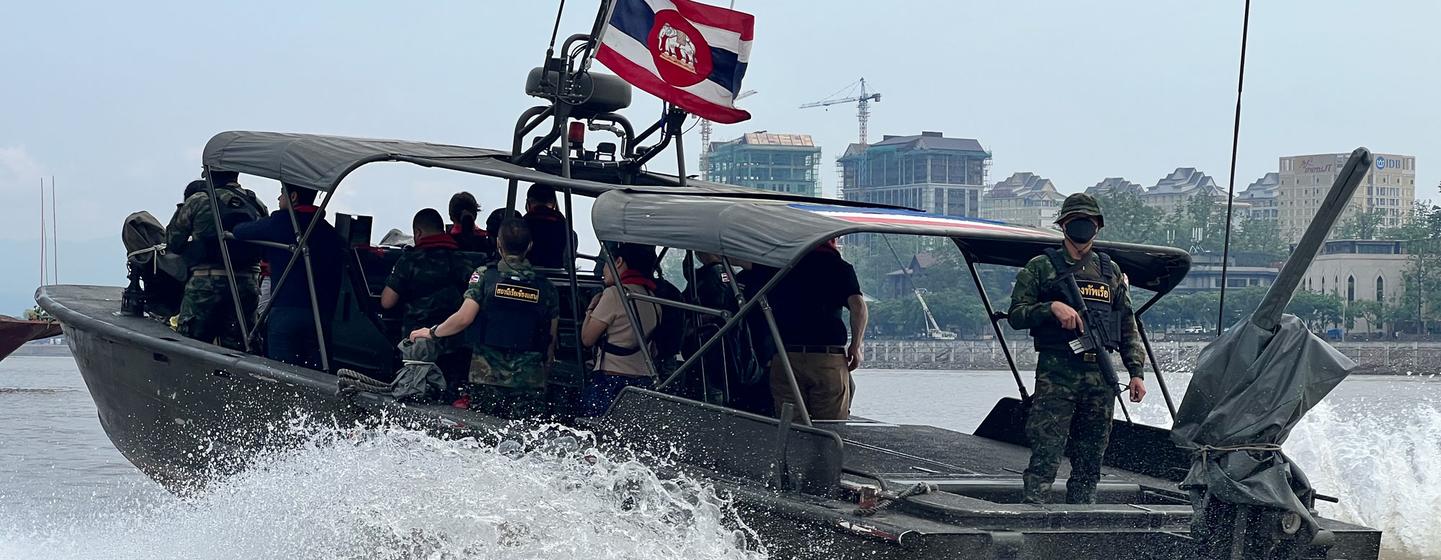
The Thai Navy Mekong Riverine Unit patrols the border between Thailand, Myanmar, and Laos.


UN News/Daniel Dickinson
 
The Thai Navy Mekong Riverine Unit patrols the border between Thailand, Myanmar, and Laos.
2 June 2023
Law and Crime Prevention

The trafficking in illegal narcotics, precursor chemicals, timber and wildlife, people and illicit goods across Southeast Asia is being tackled thanks to the support of the specialized UN agency focusing on drugs and crime.

A Thai Navy launch travels at high speed down the muddy brown waters of the Mekong River close to the border town of Chiang Saen in the north of Thailand. To the right is Laos, where huge construction projects funded by foreign investment are rising out of the lush undergrowth along the riverbank and ahead to the left are the dense jungles of Myanmar.

Tweet URL

This is the storied Golden Triangle where historically opium was grown to produce heroin for export but where, in recent years, the trade of even deadlier and more profitable synthetic drugs has taken over.

Thailand, Laos and Myanmar are at the frontlines of illicit trade in Asia dominated by transnational organized crime syndicates.

River seizure

The crew on the Thai boat is buoyant following the recent seizure of 6.4 million pills of the banned and highly addictive synthetic drug methamphetamine, known locally as yaba.

“I was astonished but also really pleased that we seized this amount of yaba,” Captain Phakorn Maniam Head of Operations and Intelligence Section of the, Mekong Riverine Unit, Royal Thai Navy told UN News. “Normally, this amount of drugs is seized on land; it’s a difficult operation apprehending offenders in the middle of the river,” he said, “and so I’m especially proud of our crew, who are so dedicated to protecting our country and our people.”

A few miles downstream at the small town of Houay Xai on the Laos side of the Mekong, border authorities are celebrating their own significant seizure of drugs; the previous night following a tip-off, a military land patrol caught drug mules carrying 500 kilograms of crystal meth. The previous month 7.1 million methamphetamine pills had also been seized in the same area.

The drugs tracked down in Laos and Thailand had originated in illegal industrial-scale laboratories operated by militias and criminal gangs in the remote mountainous jungles of northern Shan State in Myanmar and were being transited through both countries to the Thai capital, Bangkok, but also across Southeast Asia and to distant lucrative markets including Japan, South Korea, New Zealand and Australia.

It’s difficult to calculate with any certainty what quantity of synthetic drugs is being manufactured in Myanmar, but some estimates suggest many hundreds of tons are being trafficked out of the country.

Despite the seemingly relentless flow of drugs, the Thai and Lao authorities are experiencing some success thanks, in part, to the support of the UN Office on Drugs and Crime (UNODC) which is promoting a regional intelligence gathering network.

Captain Phakorn Maniam is deployed to the Thai Navy Mekong Riverine Unit
UN News/Daniel Dickinson
 
Captain Phakorn Maniam is deployed to the Thai Navy Mekong Riverine Unit

Officer C, who is based in Houay Xai with Lao authorities and who did not want to be named for security reasons, said that cooperating with law enforcement agencies across the border in Thailand through regular calls, face-to-face meetings and other communications has improved the response to illegal trafficking. “With this cross-border collaboration and sharing of information, we have been able to counter narcotics trafficking and also other types of transnational organized crime.”

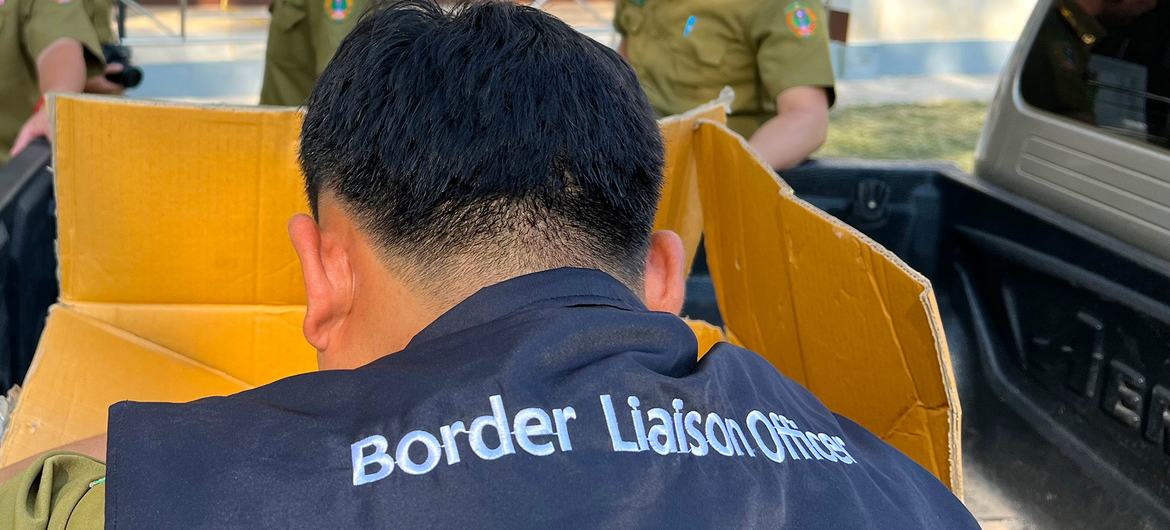
The crime-fighting authorities in Thailand and Laos are collaborating more closely as a result of UNODC’s Regional Border Management Programme under which a network of border liaisons offices or BLOs were set up to strengthen cross-border cooperation and information sharing.

The network of over 120 BLOs stretches across Southeast Asia from Myanmar in the west to China in the east and Indonesia to the south and also includes Thailand, Cambodia and Viet Nam.

The BLOs are being strengthened with the support of UNODC to counter what the drugs and crime fighting agency’s Regional Representative for Southeast Asia and the Pacific, Jeremy Douglas, calls “one of the biggest drug trafficking corridors in the world.”

Three countries, Thailand, Myanmar, and Laos, come together at the Golden Triangle.
UN News/Daniel Dickinson
 
Three countries, Thailand, Myanmar, and Laos, come together at the Golden Triangle.

The challenges in disrupting this transnational trade are immense according to Mr. Douglas: “There are complex governance issues at play in the Golden Triangle and inside Myanmar, with fragmented armed groups and militias involved in the drug trade and other illicit businesses that control territory,” he said. “At the same time, these groups are operating in very remote places, and in some cases along very porous, open borders. It is easy to traffic drugs and illicit goods in and out of Myanmar, and the situation is very difficult for its neighbours to address.”

The increase in the production of synthetic drugs in recent has been “unprecedented” according to the UNODC Regional Representative who believes that collaboration between countries is “fundamental” to preventing trafficking: “This is a shared responsibility; addressing transnational criminality requires states to collaborate to react quickly to what's happening, especially along border areas.”

It is not just drugs which are being trafficked across the region. Chemical precursors to manufacture synthetic drugs are being illegally transported into Myanmar in quantities far larger than the drugs that are trafficked out. Trafficking in people, wildlife, timber and weapons is also taking place.

In such a complex and problematic environment, new skills are needed to deal with fresh challenges. As part of its BLO support, UNODC has developed training partnerships with agencies across Southeast Asia.

A border liaison officer in Laos.
UN News/Daniel Dickinson
 
A border liaison officer in Laos.

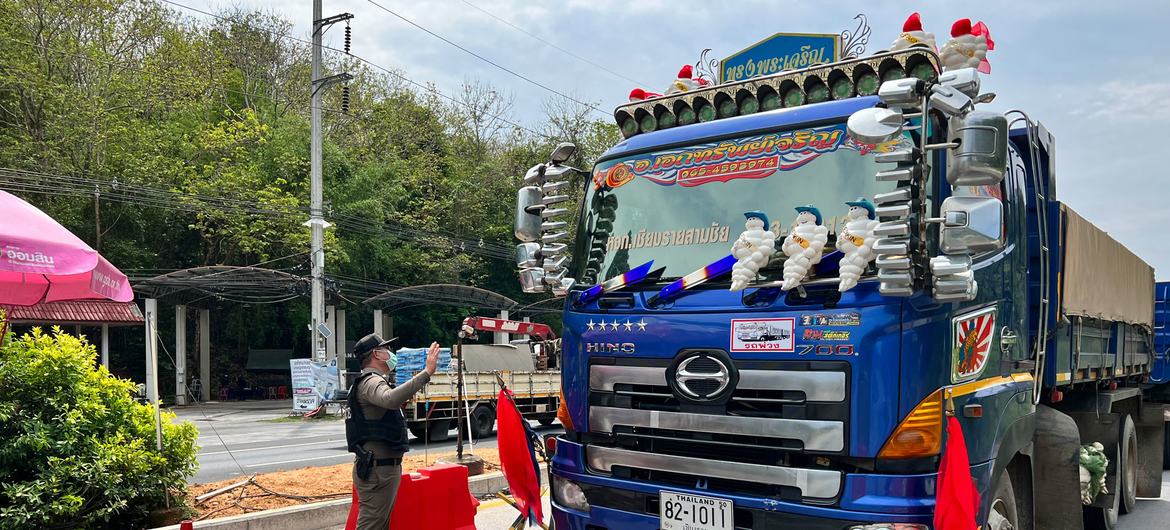
On Highway 1, some 40 kilometres south of the Thai-Myanmar border Police lieutenant Colonel Amonrat Wathanakhosit is taking her students through a practical exercise focused on searching vehicles for contraband.

“Our students are using UNODC knowledge products and training and learning how to question drivers, and they are getting use to how they are behaving. Our students are becoming more confident about identifying which drivers may be hiding synthetic drugs.”

Unlike heroin, the production of which is restrained by the natural growing cycle of the opium poppy, methamphetamine can be manufactured almost at will as long as precursor and other chemicals are available.

The collaboration of governments with the support of UNODC is helping to stem the flow of drugs, even if it is widely accepted that seizures represent only a small percentage of the drugs which are trafficked across the region.

Officers like Lt Col Amonrat Wathanakhosit recognize the challenges but she no doubt speaks for many across the region saying that “my job trying to stop drugs is crucial to the security of my country.”

A Thai police officer stops a vehicle at a checkpoint 40 kilometres south of the Thai-Myanmar border.
UN News/Daniel Dickinson
 
A Thai police officer stops a vehicle at a checkpoint 40 kilometres south of the Thai-Myanmar border.

Quick facts on border liaison offices (BLOs)

  • Some 120 BLOs have been established across Southeast Asia.
  • BLOs are established in pairs – on either side of an international border crossing.
  • BLOs address myriad cross-border issues, including drug and precursor chemical trafficking, migrant smuggling, human trafficking, wildlife and forestry crime, and, in some locations, the movement of terrorist fighters alongside public health and pandemic-related matters.
  • The BLO network works to enhance relationships between the law enforcement and border communities, community policing efforts, and the role and leadership of women in law enforcement agencies.

 https://news.un.org/en/story/2023/06/1137182
https://creativecommons.org/licenses/by/3.0/legalcode

пятница, 12 мая 2023 г.

New arrest warrants seek justice for victims in Libya, ICC prosecutor says

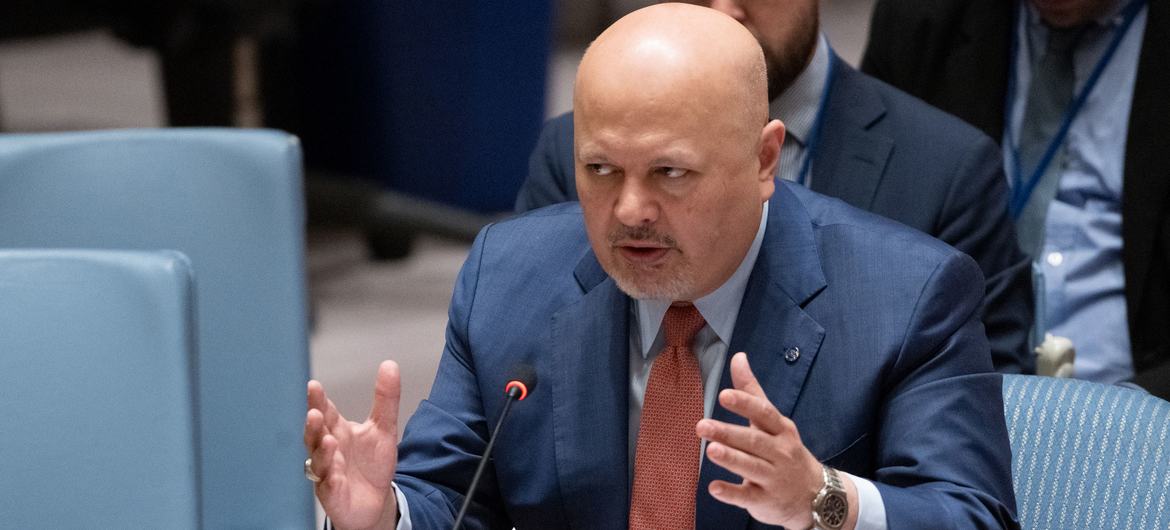
Karim Khan, Prosecutor of the International Criminal Court (ICC), briefs UN Security Council members on the situation in Libya.

UN Photo/Eskinder Debebe
 
Karim Khan, Prosecutor of the International Criminal Court (ICC), briefs UN Security Council members on the situation in Libya.

11 May 202
Law and Crime Prevention

New technology and strategies are helping to deliver justice to victims of grave violations of human rights in Libya, including fresh arrest warrants, but “we can do better”, the chief prosecutor of the UN-backed International Criminal Court (ICC) told the Security Council on Thursday.

To date, four warrants have been issued and two others are in the application process, ICC Prosecutor Karim Khan said, highlighting this key step as recognizing the rights of victims to justice.

Tweet URL

“If this Council’s referrals are to be vindicated, it requires everyone to step up,” he said. “Partnerships are key to justice.”

The Council had referred the case to the ICC in 2011, citing gross and systematic violations of human rights and expressing deep concern at the deaths of civilians.

‘Tangible steps forward’

Since then, the ICC has advanced along the road to justice, he said, providing an update on its activities over the past six months. “Tangible steps forward” ranged from engaging with Libyan authorities to collecting more than 500 items of evidence, including video and audio material, forensic information, and satellite imagery.

The ICC Libya team had also further increased its engagement with victims and civil society organizations, he said.

Many of the gains made resulted from innovative efforts his Office is harnessing, he said, pointing to its use of advanced technology and a new evidence management system that uses artificial intelligence and machine learning to accelerate investigative and analytical activities.

“Technology is not a ‘flash in the pan’,” he said. “Technology is increasing the pace to deliver justice.”

Significant milestones

His Office has engaged with the Office of the Attorney General, the Military Prosecutor and the Minister of Justice of the internationally-recognized Government, to identify ways in which the ICC can further support and promote action in Libya in pursuit of accountability for international crimes.

In the coming weeks, he said his team will be liaising with Libyan authorities, also with respect to potentially establishing a field office in Tripoli.

“The hope must be that the Libyan authorities are increasingly behind the principle of justice at home,” he said, pledging his Office’s efforts in advancing accountability.

‘Vindicating survivors’ rights

At the heart of the matter are the victims and survivors, he said. Recalling a visit to Libya, he said his meetings with survivors of violence encapsulated the reason why the Security Council made its referral to the ICC.

In Tarhunah, a town where mass graves had been discovered, he said victims had described to him the calculated cruelty and tragedy behind the events that unfolded there. One man had lost 15 members of his family, he said.

Citing the words of a woman who shared her story of losing loved ones, he said “she said to me ‘the UN talks a good talk, but our lives don’t matter to you’.”

“If we feel that we can get things better, be more imaginative, and build partnerships together, I think this referral, which has seen such progress over the last six months, can go deeper,” he said.

“Most importantly, we can look at victims, like the victims I have seen in Tarhunah, and not feel ashamed, but feel finally, we are doing our best to deliver on their right to justice and accountability.”

For more details on this meeting, visit UN Meetings Coverage.


https://creativecommons.org/licenses/by/3.0/legalcode