Показаны сообщения с ярлыком Sahel. Показать все сообщения

четверг, 30 мая 2024 г.

UNICEF reports surge in violence against children in Africa’s central Sahel

UNICEF reports surge in violence against children in Africa’s central Sahel
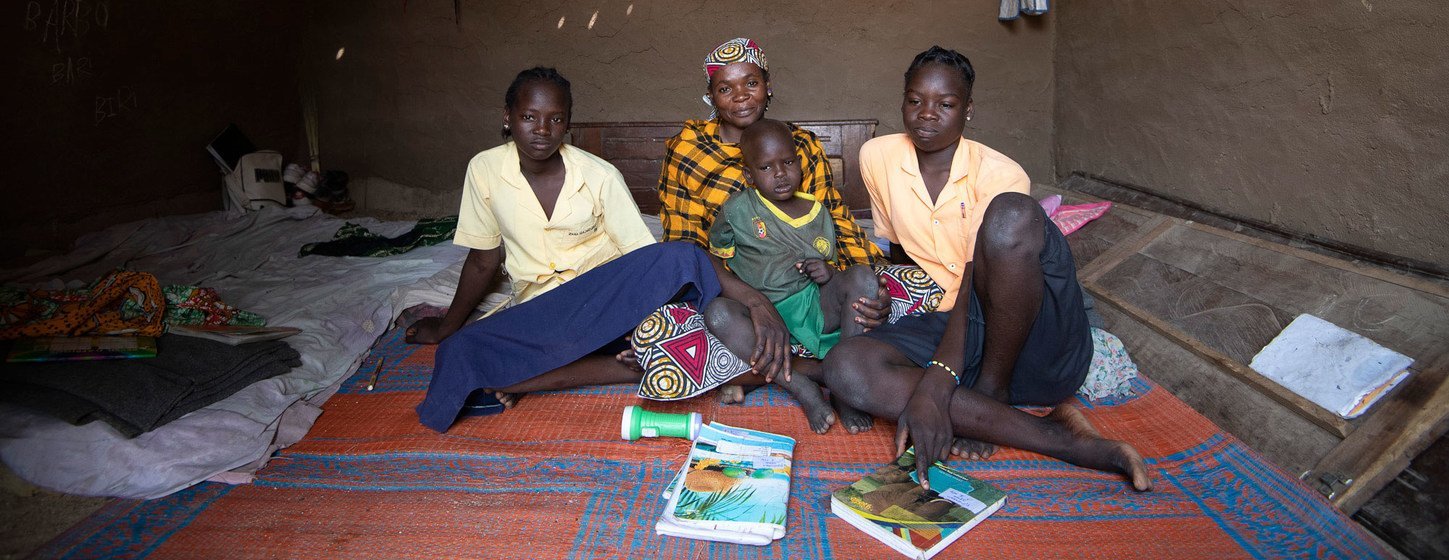
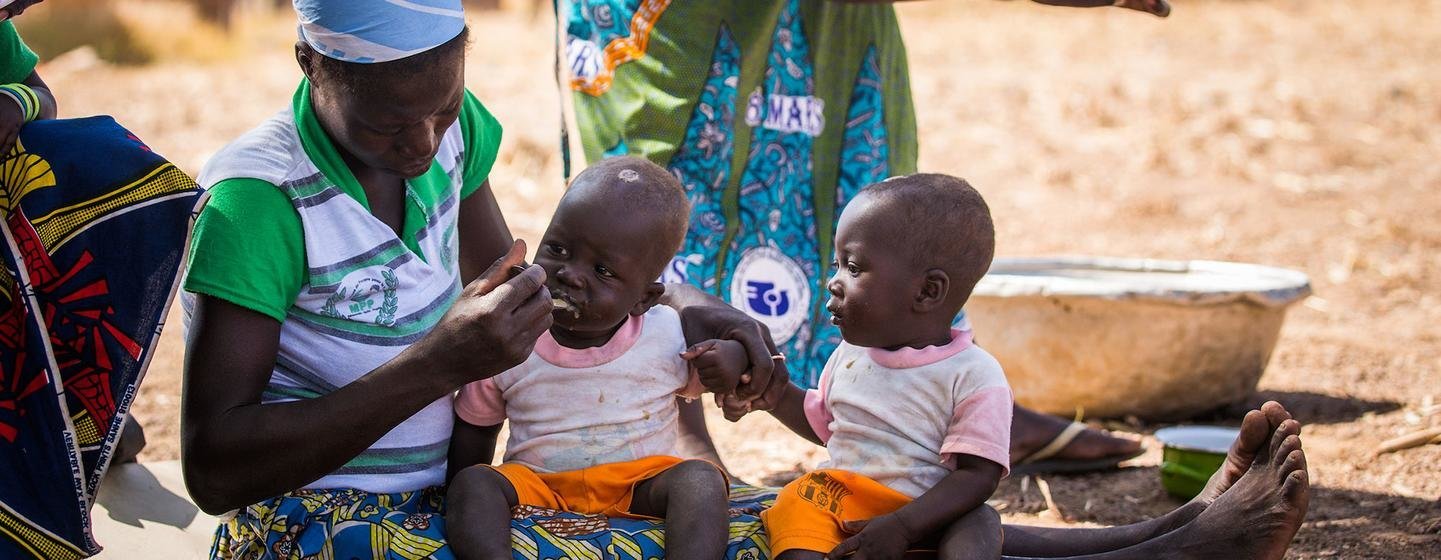
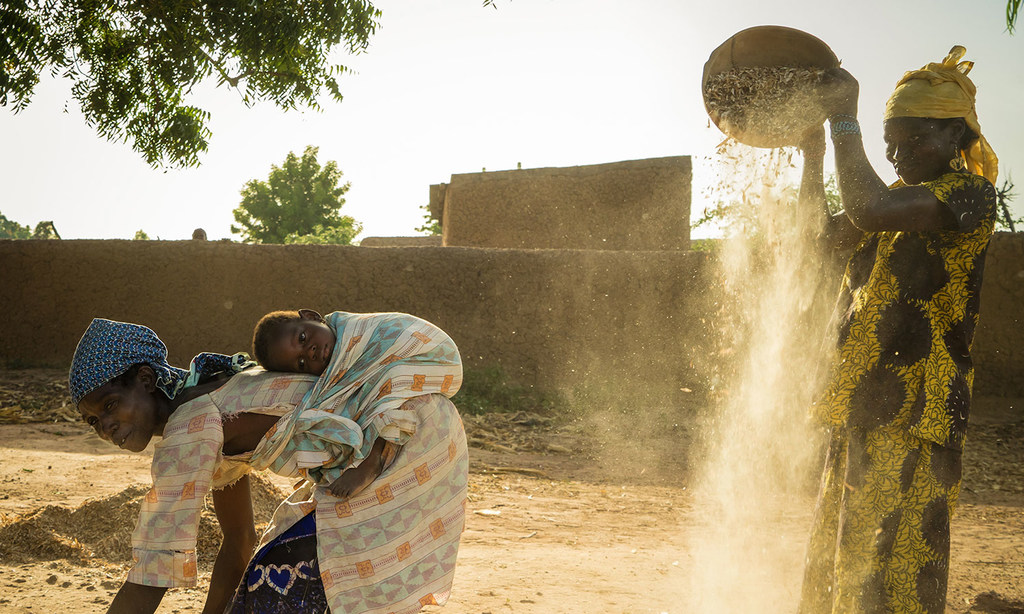
Violence and insecurity has driven thousands of families from their homes in central Sahel. Pictured here, a displaced mother and her child who have sought shelter in Niger.
© UNICEF Niger/Islamane Abdou
 
Violence and insecurity has driven thousands of families from their homes in central Sahel. Pictured here, a displaced mother and her child who have sought shelter in Niger.
29 May 2024Peace and Security

Violence against children in the central Sahel region of Africa surged dramatically in the last quarter of 2023, skyrocketing by 70 per cent over the previous three months, the UN Children’s Fund (UNICEF) reported on Wednesday.

The agency revealed that in Burkina Faso, Mali and Niger, cases of recruitment and use of children in armed groups along with killings and maiming increased by more than 130 per cent between the two time periods.

Protect the vulnerable

Gilles Fagninou, UNICEF’s regional director for West and Central Asia, underscored the need to curb the distressing rise.

“Civilians need protection from all forms of violence. Communities caught up in fighting need protection. Far too many children are being affected by grave violations of their rights, including killings, abduction and recruitment by armed groups,” he said.

Ensuring the protection of children is critical, and the violent incidents in the central Sahel region must stop if children are to realise their basic rights to life under the international Convention on the Rights of the Child and the regional African Charter on the Rights and Welfare of the Child.

“UNICEF calls on all involved in the ongoing crisis in central Sahel to put an end to all forms of violence, killing and abuse of children, in line with their obligations under international law,” Mr. Fagninou added.

Volatile situation

The security situation across central Sahel remains volatile, with frequent attacks on civilians against a backdrop of political tensions and rising humanitarian needs. Between February and April, over 1,180 security incidents were reported, which claimed the lives nearly 3,400 people.

Emblematic of the dire situation, several hundred people were reported killed in Burkina Faso, with reports that more than 220 civilians, including 56 children, were killed in attacks reportedly carried out by the military in two villages on a single day in late February.

Similarly in Mali, some 110 civilian men travelling on three buses between the towns of Bandiagara and Bankass were abducted by armed groups in mid-April. They are yet to be released.

Grave violations against children

UN Security Council resolution 1612, adopted in 2005, identified six grave violations against children: recruitment and use of child soldiers, killing and maiming, sexual violence, abduction, attacks against schools or hospitals and the denial of humanitarian access.

By highlighting these violations, the resolution sought to galvanise global efforts to protect children in conflict zones and mitigate the devastating impact of war on young lives.


https://news.un.org/en/story/2024/05/1150396

https://creativecommons.org/licenses/by/3.0/legalcode

суббота, 25 мая 2024 г.

Concerned by Ongoing Conflict in West Africa, Sahel, Security Council Adopts Presidential Statement Aimed at Tackling Political, Humanitarian Challenges


9634TH MEETING (AM)
SC/15708

Concerned by Ongoing Conflict in West Africa, Sahel, Security Council Adopts Presidential Statement Aimed at Tackling Political, Humanitarian Challenges

‘Members Call on Relevant Stakeholder to Engage Constructively and Fully’
With Secretary-General’s Newly Appointed Special Representative for Region

The Security Council today unanimously adopted a presidential statement aimed at addressing security, political and humanitarian challenges in West Africa and the Sahel.

Through the text (to be issued as S/PRST/2024/3), the 15-member organ welcomed the appointment of Leonardo Santos Simão on 2 May 2023 as the Secretary-General’s Special Representative and head of the United Nations Office for West Africa and the Sahel (UNOWAS), calling on all relevant stakeholders to “engage constructively and fully” with him.

On the security front, the Council welcomed efforts by countries in that region, ECOWAS and the African Union to strengthen regional cooperation in preventing and addressing challenges, but expressed “great concern at the violent actions of non-State actors, including individuals, groups, undertakings, and entities associated with ISIL (Da’esh) and Al-Qaida”.

In that regard, the Council reaffirmed “the importance of addressing, in a manner consistent with international law, the underlying conditions conducive to terrorism,” including by implementing the United Nations Integrated Strategy for the Sahel and its support plan.  Furthermore, the Council called upon all parties to armed conflict to end and prevent all six grave violations against children, urging compliance with their obligations under international law, and to respect the rights of the child.

Also by the text, the Council recognized the adverse impact of climate change, ecological changes and natural disasters — including floods, drought, desertification, and land degradation — as well as how they exacerbate food security and other humanitarian, social and economic challenges, “which impact the security and stability of West Africa and the Sahel region”.  Stressing the “particular relevance” of these elements to the specific situation in West Africa and the Sahel, the Council acknowledged the United Nations Framework Convention on Climate Change and the Paris Agreement as the primary international, intergovernmental forums for negotiating the global response to climate change.

The Council also commended the efforts of civil society and religious and community leaders to resolve conflict in the Sahel, emphasizing the importance of the full, equal, meaningful and safe participation of women and youth in all stages of conflict prevention, conflict resolution and peacebuilding processes.

On the political front, the Council expressed serious concern at the unconstitutional changes of Governments and attempted coup d’états and underscored the importance of the timely, nationally owned transition processes and restoration of constitutional order in the concerned regional countries.  In that vein, the Council expressed the importance of UNOWAS’s good-office roles to prevent conflict and election- and transition-related tensions, as well as to sustain peace and consolidate peacebuilding efforts and political stability.

Regarding the humanitarian situation, the Council expressed serious concern at deteriorating conditions in some parts of the region, caused by armed conflicts and exacerbated by violations of international humanitarian law, climate change, and development, social and economic challenges.  It, therefore, called for full, safe, rapid and unhindered access for the delivery of humanitarian and medical aid to all persons in need, including timely and non-discriminatory access to sexual and reproductive health care, mental health and psychosocial services for survivors of sexual violence in conflict and post-conflict situations.


https://press.un.org/en/2024/sc15708.doc.htm


https://creativecommons.org/licenses/by/3.0/legalcode

вторник, 9 января 2024 г.

Reconfigured Regional Coordination Mechanism Key to Quell Widespread Insecurity, Avert More Coups in West Africa, Sahel, Special Representative Tells Security Council

9529TH MEETING* (AM)
SC/15562

Reconfigured Regional Coordination Mechanism Key to Quell Widespread Insecurity, Avert More Coups in West Africa, Sahel, Special Representative Tells Security Council

Amid growing fears of widespread insecurity in West Africa and the Sahel, a senior United Nations official told the Security Council today of the need to reconfigure the region’s security coordination mechanism, including the possible deployment of an African Union standby team.

Over the past six months, the situation in the region has been marked by “diverging” developments, said Leonardo Santos Simaõ, Special Representative of the Secretary-General and Head of the United Nations Office for West Africa and the Sahel (UNOWAS) in his biannual briefing to the 15-member body.  While the region has achieved significant progress in consolidating democracy, he observed that security and governance remain fragile.

“Against the multiple challenges, UNOWAS will stay the course and deploy its capacities, using good offices, urging for humanitarian access, and promoting the observance of human rights and the rule of law,” he pledged.

Also briefing the Council was Lori-Anne Theroux-Benoni, Regional Director of the Office for West Africa, the Sahel and the Lake Chad Basin of the Institute for Security Studies, who underscored challenges in the region, such as the rapid expansion of terrorism and a series of coups d’état. She also cited the withdrawal of the United Nations Multidimensional Integrated Stabilization Mission in Mali (MINUSMA) and the dissolution of the Group of Five for the Sahel (G5 Sahel) and its joint force as conditions for creating a regional security vacuum.

“There is no short-term miracle solution,” she asserted, stressing the need to strengthen national and regional coordination and implement a preventive approach to avoid creating the conditions for a subsequent coup d’état.  “The time has come to be pragmatic,” she declared, noting that the goal is “not to encourage long-standing military transitions” but “to return to constitutional order”.

In the ensuing discussion, delegates underscored the imperative for countries in political transition to adhere to their electoral timelines and ensure democratic consolidation, good governance, the rule of law, respect for human rights, gender equality, and sustainable development.

Sierra Leone’s representative, speaking also for Algeria, Guyana and Mozambique, pointed to growing disengagement with the Economic Community of West African States (ECOWAS), expressing regret over “rising political tensions caused by the shift from democratic to unconstitutional changes of Government in some countries in the region.”  There must be continuous engagement between the UN, African Union and ECOWAS to ensure support for enhancing governance and the rule of law in these countries, he emphasized.

Echoing such a view, many speakers called for the Council’s increased attention to the region, with Slovenia’s representative declaring: “This is not the time to turn a blind eye to the region, but a time to invest in prevention, peacebuilding and regional stabilization.”

To that end, Malta’s delegate expressed support for increased reporting on West Africa and the Sahel by the Secretary-General, supplemented by Council briefings, on the region’s multidimensional challenges.  Her counterpart from the Russian Federation, however, objected to the establishment of additional reporting, saying the Secretary-General’s reports on UNOWAS sufficiently cover the region.

While several delegations, among them the Republic of Korea and Japan, called for a swift return to constitutional order in some countries, China’s representative cautioned that the imposition of governance models from the outside has proven of no value in addressing the root causes of armed unrest and has in some cases led to new chaos.

Switzerland’s representative stressed that mitigating the risk of a deepening regional crisis requires close collaboration with the African Union and subregional organizations.  “Now is not the time to disengage,” she said.

Briefings

LEONARDO SANTOS SIMAÕ, Special Representative and Head of the United Nations Office for West Africa and the Sahel (UNOWAS), presented the Secretary-General’s latest report on UNOWAS’ activities (document S/2023/1075) from 30 June to 31 December 2023, highlighting that over the past six months, the situation in the region has been marked by “diverging” developments.  While significant progress has been made in consolidating democracy, the security situation and governance challenges remain major concerns.  Liberia’s presidential election has shown the capacity of institutions to conduct credible polls and establish a Government with constitutional legitimacy.  In Senegal, the enthusiasm for choosing the country’s next leader in the upcoming 25 February presidential election is also palpable.  Ghana has also shown its commitment to democracy with the engagement of the two main parties in a transparent process leading up to the December 2024 general elections.

Sierra Leone and Guinea-Bissau each saw confrontations among national security services, he observed.  These events, in the wake of electoral processes, illustrate the need to build credible institutions and democratic governance in a sustained manner. In the central Sahel, another unconstitutional change of government in Niger in July created a belt of military-led Governments in the subregion adding to the existing substantial governance, humanitarian, and security challenges.  Respect for basic freedoms, notably of assembly and expression, is indispensable for building trust between citizens and institutions.  Regrettably, arrests of journalists and human rights defenders, as well as restrictions to internet access and freedom of the press, among other concerns, again fuelled perceptions of a decline of the civic and political space in some countries. 

In Mali, there is great uncertainty about the status of the 2015 Agreement for Peace and Reconciliation and the political transition, he said, noting that a date has yet to be set for the country’s pre-agreed elections.  Insecurity remains prevalent, as do attacks on military camps and civilians; swathes of the country are currently blockaded by terrorist groups.  While human rights groups in Burkina Faso denounce a forced enrolment of critics into the security forces, a large-scale attack on the northern city of Djibo, after years of blockades and deprivation, has again highlighted the challenges faced by the transitional authorities to re-establish security across the national territory.  “Against this background, the humanitarian situation in the Sahel remains dire,” he said.  Despite marginal improvements in some areas, the number of people in the central Sahel requiring humanitarian assistance and protection jumped 80 per cent in 2023 to 34.5 million people. 

The closure of United Nations Multidimensional Integrated Stabilization Mission in Mali (MINUSMA), the departure of foreign forces, and the uncertainty about the Group of Five for the Sahel (G5 Sahel) following the withdrawal of Burkina Faso and Niger portend a reconfiguration of regional security coordination mechanisms.  Congratulating the Council for adopting a framework for assessed funding for African Union-led peace operations in resolution 2719 (2023), he expressed hope for the possible deployment of an African Union Standby Team as part of addressing regional security needs.  “Against the multiple challenges, UNOWAS will stay the course and deploy its capacities, using good offices, urging for humanitarian access, and promoting the observance of human rights and the rule of law,” he pledged, also welcoming the decision by the Economic Community of West African States (ECOWAS) to resume dialogue with the respective transitional authorities and to consider reviewing sanctions.  UNOWAS will continue to work with regional and international partners to consolidate peace, security and democracy in West Africa and the Sahel, he stressed.

LORI-ANNE THEROUX-BENONI, Regional Director of the Office for West Africa, the Sahel and the Lake Chad Basin, Institute for Security Studies, said that, with the drawdown of MINUSMA and the announced dissolution of G5 Sahel and its joint force, the Council’s biannual meetings remains one of the rare opportunities for exchange on West Africa and the Sahel with the 15-member body.  Spotlighting the growing political, security, climate and humanitarian challenges faced by the region, she recalled the beginning of the crisis in Mali in 2012.  “If we had been asked to project scenarios, the situation the region currently finds itself in would undoubtedly be one of the worst-case scenarios,” she said, pointing to the rapid expansion of insecurity due to terrorist groups and succession of anti-constitutional Government changes. Voicing concern over progressive weakening of regional cooperation and challenges to the peace process — primarily in Mali — she said lessons should be drawn from the past so that “the next 10 years will not be considered a lost decade”. 

“There is no short-term miracle solution,” she asserted, adding that States’ immediate actions must be a part of a medium- and long-term approach to promote structural change for West African societies. Faced with growing insecurities and management of military transitions, the Institute for Security Studies has interviewed hundreds of people linked to terrorist groups in the affected countries of the region and determined that armed groups operating in the Sahel in 2012 were already supplying their groups primarily with fuel from some coastal countries and by selling stolen gold to finance some of them.  On redirecting efforts and resources towards the coastal countries — guided by the logic that the Sahel is considered “lost” — she said:  “that is misguided thinking”, with repercussions which will have a lasting effect on the region’s stability.

Instead, she underscored the need to “rethink our answers”, bearing in mind the connectivity and multidimensional nature of the supply chain and the financing and recruitment which fuel insecurity.  The spillover from the Sahel to the coast has been “seriously underestimated”.  Anticipating the inevitable withdrawal of terrorist groups is crucial, as “sooner or later, people linked to or associated with active terrorist groups in the Sahel and in the coastal countries will try to get out”.  That was the case in the Lake Chad Basin where combatants from various Boko Haram factions withdrew after military victories of Governments in the region.  States in the region as well as the United Nations should draw on the lessons learnt in the demobilization and reintegration process.  Additionally, she underlined the need to strengthen national and regional coordination and implement a preventive approach to avoid creating conditions for a subsequent coup d’état.  “The time has come to be pragmatic,” she declared, noting that the goal is “not to encourage long-standing military transitions” but “to return to constitutional order”.

Statements

MICHAEL IMRAN KANU (Sierra Leone), also speaking for Algeria, Guyana and Mozambique, underscored the need for countries undergoing political transition to adhere to their electoral timelines and ensure democratic consolidation, good governance, the rule of law, human rights, gender equality, sustainable development and the inclusion of civil society in democratic processes.  On Mali, he reiterated the centrality of the 2015 Agreement on Peace and Reconciliation and urged all signatories to resume dialogue and commit to implementing that instrument.  He also called on Mali to remain engaged with regional organizations, ECOWAS and the African Union in realizing peace and stability in that country.  Expressing concern over the security situation in the region — especially in Sahel States — he also spotlighted growing disengagement with ECOWAS, the security vacuum created by the withdrawal of MINUSMA and the dissolution of the G5 Sahel.  While reaffirming respect for the territorial integrity and sovereignty of all countries in the region, he called on the same to engage in dialogue with ECOWAS to create inclusive solutions to regional issues.

He went on to express regret over “rising political tensions caused by the shift from democratic to unconstitutional changes of Government in some countries in the region”, encouraging all States to fulfil their obligations under regional arrangements.  Current transitional authorities must restore constitutional order, and there must be continuous engagement between the UN, African Union and ECOWAS to ensure support for enhancing governance and the rule of law in these countries.  Turning to the security situation, he underscored that the spread of terrorism from the Sahel to coastal States remains a major concern.  With MINUSMA’s closure, he urged coordinated action with neighbouring countries to minimize any further adverse security impact on Mali and the region.  Among further points, he urged a comprehensive approach that addresses the root causes of socioeconomic challenges in West Africa and the Sahel, which requires support to address governance and development deficits, as well as commitment to building national consensus that will ensure meaningful participation by women and youth in decision-making processes.

PASCALE CHRISTINE BAERISWYL (Switzerland) expressed concern over the worrying security situation in some of the region’s countries, particularly in the Sahel, as well as growing humanitarian needs.  On the political front, some transitional processes towards a return to constitutional order are not progressing as planned, she said, pointing to a new coup d’état and several attempts in 2023.  Calling for urgent preventive action, notably through inclusive elections, she recalled that, in Nigeria, Switzerland supported national partners to reduce electoral violence during campaigns and elections, thus enabling a peaceful outcome.  Further, UNOWAS is supporting Burkina Faso, Ghana, Mali, Mauritania, Senegal and Togo ahead of their elections in 2024.  In light of the fragile security situation in some regions, with recurrent attacks on the civilian population by armed jihadist groups, the withdrawal of MINUSMA and the end of the G5 Sahel, she stressed:  “Now is not the time to disengage”.  Instead, it is crucial mitigate the risk of a deepening regional crisis through close collaboration with the African Union and subregional organizations.

ROBERT A. WOOD (United States), expressing support for the crucial role of UNOWAS in mitigating conflict and promoting inclusive dialogue, said the transition Government of Mali must fully cooperate in the safe and orderly liquidation of the Mission.  Also voicing regret about the dissolution of the G5 Sahel, he said there should be an increase in the number of UNOWAS reports the Council receives per year.  “This Council needs more, not less, visibility” regarding a region with complex security threats and development needs, he said.  Welcoming the release of Salem Bazoum in Niger, he called for further negotiations between the National Council for the Safeguard of the Homeland and ECOWAS.  Highlighting the need for United Nations resident coordinators in Burkina Faso and Niger, he said they are vital to the delivery of much-needed humanitarian assistance.  The growing instability in coastal West Africa is exacerbated by internal political tensions as well as terrorism and violent extremism in the Sahel.  Further, he said, the Wagner Group is committing human rights abuses and endangering the safety and security of civilians and peacekeepers.

JOONKOOK HWANG (Republic of Korea) said that West Africa and the Sahel is a fast-evolving region with heightened political tensions and instability.  Establishing strong and inclusive democratic governance is essential to bringing stability there.  He expressed concern about the slow restoration of constitutional order in transitional Governments of several countries and urged them to adhere to a timely return to constitutional order in collaboration with ECOWAS.  Terrorism-related deaths have increased 20-fold over the past 15 years.  In recent months, heightened insecurity has been observed in the central Sahel countries, particularly against the backdrop of MINUSMA’s withdrawal and the disbanding of the G5 Sahel and its joint force.  The international community should prevent a security vacuum in the region, he said, calling for the Council’s continued engagement.

DAI BING (China), pointing to considerable efforts to maintain peace and stability in the region, said Nigeria, Sierra Leone and Côte d'Ivoire have successfully completed their elections, while Senegal and Togo are fully engaged in the political dialogue which has yielded positive results. However, the political situation in some countries remains volatile, with growing social tensions.  In 2024, general elections are scheduled in several countries in West Africa and the political transition in Mali and Niger have entered a critical change, he observed.  Expressing support for regional countries in bridging their internal differences through political dialogue to create conditions for peace and reconciliation, he stressed that the international community should support them in independently choosing their own path of development.  The imposition of governance models from the outside has proven of no value in addressing the root causes of armed unrest and has in some cases led to new chaos, he added.  Moreover, the international community should provide financial and technical support to the region’s countries for infrastructure, development and income generation.

VANESSA FRAZIER (Malta) welcomed 2023 elections in Nigeria, Liberia and Guinea-Bissau, also recognizing increased representation of women in political positions in Sierra Leone and Côte d’Ivoire following recent elections in those countries.  Looking forward to elections in Senegal, Mauritania and Ghana in 2024, she called for free, fair and transparent electoral processes that allow all eligible citizens to participate as voters, candidates and observers.  Turning to the situation in Mali — and spotlighting MINUSMA’s closure at the request of Mali’s transitional Government — she called on the international community to “continue to play its part” to support and safeguard the well-being of the Malian people.  Further, she called on the transitional Government to openly engage with the UN and define a new role for UNOWAS and the UN country team in transferring the Mission’s tasks.  Concluding, she expressed support for increased reporting on West Africa and the Sahel by the Secretary-General, supplemented by Council briefings, on the region’s multidimensional challenges.

JAMES KARIUKI (United Kingdom), expressing concern about the security situation Mali, encouraged UNOWAS to help bring all signatories to the 2015 Agreement on Peace and Reconciliation in Mali back to the negotiating table.  Voicing support for the upcoming Africa Counter-Terrorism Summit, he stressed that the region’s security challenges cannot be resolved through the destabilizing chaos of the Russian mercenary group Wagner.  Further, timelines for restoration of constitutional Governments in Mali, Burkina Faso and Guinea continue to slip.  Calling on Niger to agree to a transition timeline with ECOWAS, he congratulated Liberia for its recent peaceful transfer of power. Noting that the Security Council has recognized the adverse effects of climate change on security and stability in the region, he welcomed UNOWAS’ work in the climate-security nexus. Turning to the dire humanitarian situation, he called on all actors to ensure safe and unimpeded access for humanitarian assistance.

SAMUEL ZBOGAR (Slovenia) said that his country can testify, from its own experience, how integral the support of regional and international partners is to ensure a successful political transition.  Close coordination between UNOWAS, ECOWAS and the countries in such processes is crucial for a timely return to constitutional order.  With MINUSMA’s withdrawal, the Council should consider reinforcing UN efforts through UNOWAS and the country team, he said, emphasizing:  “This is not the time to turn a blind eye to the region, but a time to invest in prevention, peacebuilding and regional stabilization.” The Central Sahel urgently needs the Council’s increased attention on the impact of climate change on peace and security.  The need was reaffirmed in the recently adopted landmark declaration on climate security at the Sahel Climate, Peace and Security Forum in Bamako.

JOSÉ JAVIER DE LA GASCA (Ecuador) emphasized that a solid institutional framework is needed to effectively address the root causes of violence.  In recent years, Government changes outside the constitutional order have proliferated in the region, he observed, condemning any attempt to disrupt the constitutional order and, in particular, the coup d’état carried out in Niger.  Highlighting positive developments, he welcomed the important steps taken by the countries in the region to consolidate their democratic processes and their institutions through the holding of peaceful elections in recent months, particularly Côte d'Ivoire and Liberia.  He also expressed support for efforts by ECOWAS to restore constitutional order in Burkina Faso, Guinea, Mali and Niger.  Further, he voiced concern over the constant deterioration of the security situation in the Central Sahel, particularly in Burkina Faso, Niger and Mali, and the persistent danger of the expansion of terrorist violence towards the south.

ANNA M. EVSTIGNEEVA (Russian Federation) stressed that achieving long-term stability requires the international community to collectively support Mali, Burkina Faso and Niger — the vanguard in the fight against transnational terrorist groups in the region. Welcoming such States’ coordinated efforts to combat terrorism, she called on ECOWAS, for its part, to establish dialogue with these three States, overcome internal divisions and focus on addressing regional threats.  The leading role in maintaining regional security should by regional States themselves, she went on to say, emphasizing that efforts between Mali, Burkina Faso and Niger towards comprehensive integration are justified.  Increased cooperation between these States is yielding positive results and effective joint counter-terrorism operations, and she also noted Bamako’s efforts to conduct political and institutional reform. She added that it is unnecessary to establish additional reporting on the situation in the Sahel or its constituent States, as the Secretary-General’s reports on UNOWAS sufficiently cover the region at this stage.

SHINO MITSUKO (Japan), applauding the laudable work of UNOWAS in enhancing regional cooperation and promoting good governance, said the Council must speak in one voice to support its mission through the adoption of a presidential statement.  Noting some positive political developments in the region, including the peaceful election in Liberia, she added that the region continues to be marked by heightened political tensions, shrinking civic space and instability, such as the military takeover in Niger in July 2023.  Stressing the need for a swift return to constitutional order in Burkina Faso, Guinea, Mali and Niger, she expressed concern about spillover effects to the littoral States of the Gulf of Guinea.  Noting the upsurge in violence in Mali in the wake of MINUSMA’s withdrawal, she commended efforts by regional partners, including through the Accra Initiative.  Now is not the time for the Council to lessen its attention on this region, she stressed.

NICOLAS DE RIVIÈRE (France), Council President for January, speaking in his national capacity, highlighted the populations made vulnerable by the political insecurity in the region, particularly the 26 million people in need of humanitarian assistance.  Acknowledging some positive developments, such as the peaceful and inclusive elections held in Côte d'Ivoire and Liberia, he also highlighted the Truth, Reconciliation and Reparations Commission in The Gambia.  Further, he commended the tireless efforts of ECOWAS to promote democracy and a return to constitutional order in various countries.  National political situations must not lead the international community to lose sight of the cross-cutting threats that affect the entire region, he said, pointing to terrorism, maritime insecurity, food insecurity and climate change.  His country will continue “to collaborate with stakeholders in the region who wish to do so”, he said, calling for the Council’s continued attention to West Africa.


https://press.un.org/en/2024/sc15562.doc.htm

https://creativecommons.org/licenses/by/3.0/legalcode

суббота, 10 июня 2023 г.

Trafficking in the Sahel: Muzzling the illicit arms trade


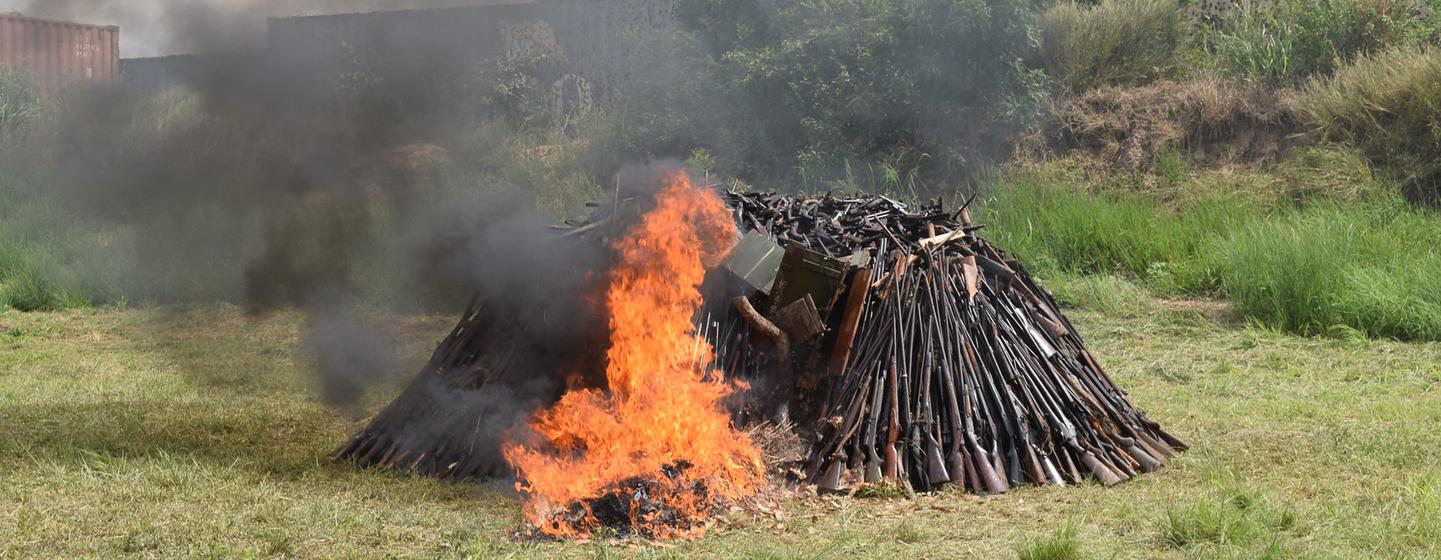
The Government of Togo and the UN Regional Centre for Peace and Disarmament in Africa (UNREC) destroyed 2,000 seized and obsolete weapons and 10,000 rounds of ammunition to mark the International Day of Peace.

UNREC

 
The Government of Togo and the UN Regional Centre for Peace and Disarmament in Africa (UNREC) destroyed 2,000 seized and obsolete weapons and 10,000 rounds of ammunition to mark the International Day of Peace.

10 June 2023
Peace and Security

Shoppers in Mali’s Gao, Timbuktu, and Ménaka regions can snap up AK-pattern assault rifles for $750 and cartridges for 70 cents apiece, from locally handcrafted pistols to smuggled French and Turkish machine guns, as a dizzying array of illegal weaponry dots market stalls across the Sahel, a 6,000-kilometre-wide belt in the middle of Africa.

In this feature, part of a series exploring the fight against trafficking in the Sahel, UN News focuses on the illegal arms trade that is fuelling conflict and terrorism.

In the Sahel, home to 300 million people, it’s a buyer’s market for guns. Insurgency and banditry plague the region, rooted in, among other things, endemic intercommunal tensions, clashes between farmers and herders, a spread of violent religious extremism, and competition over such scarce resources as water and arable land amid extreme climate shocks.

“Non-State groups are fighting among themselves for supremacy, pushing States to the margin, and causing untold misery to millions of people who had to flee their communities to seek safety,” Giovanie Biha, Officer-in-Charge of the United Nations Office for West Africa and the Sahel (UNOWAS), told the UN Security Council, presenting the Secretary-General’s report on the region.

‘We bought more rifles’

Behind the chaos and misery simmers a thriving illicit arms trade.

Many arms trafficking hubs in the Sahel rim borders or transportation routes where multiple criminal activities take place, according to the UN Office on Drugs and Crime (UNODC). Illegal markets – often hidden in plain sight in towns and villages along strategic corridors – lay unhampered by the presence of authorities.

All the groups involved in clashes are now dealing with firearms and ammunition, according to a recent UNODC report on firearms trafficking. As the numbers of group members multiply, so too do business opportunities for traffickers.

The report tracks cases with a view to better understand the phenomenon and its drivers. When Nigerian authorities asked a suspect how his group had spent the $100,000 ransom paid to free the schoolgirls they had kidnapped, he said “we bought more rifles”, according to the report.

Fleeing her village in northern Cameroon after armed insurgents seized control, Mamma Hamidou (centre) received income-generating funding from UNDP and, with her earnings, built a small house and sends her children to school. (February 2019)
UN Photo/Eskinder Debebe
 
Fleeing her village in northern Cameroon after armed insurgents seized control, Mamma Hamidou (centre) received income-generating funding from UNDP and, with her earnings, built a small house and sends her children to school. (February 2019)

Cascade of consequences

A cascade of consequences spilled across the region over the past decade, destabilizing nations and spreading a tide of trafficked weapons into villages, towns, and cities. In Nigeria, Boko Haram expanded its area of control and spidered into Cameroon, Chad, and Niger.

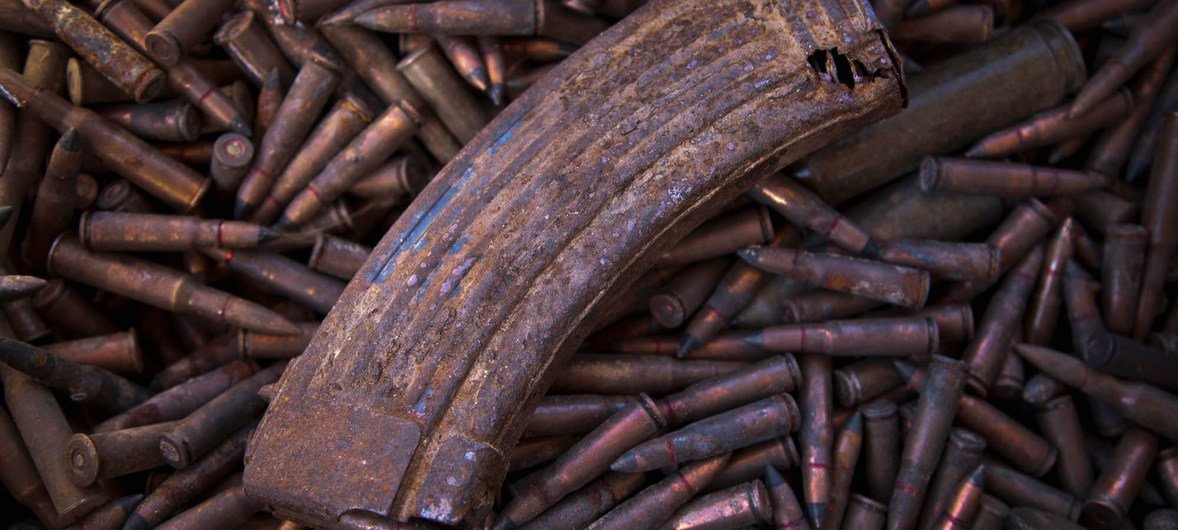
Small arms ammunition at the unexploded ordnance pit at the Malian Army Camp in Timbuktu, Mali.
MINUSMA/Marco Dormino
 
Small arms ammunition at the unexploded ordnance pit at the Malian Army Camp in Timbuktu, Mali.

In the first of the Trafficking in the Sahel features, we described the 2011 NATO intervention in Libya as a pivotal moment. Tuareg soldiers serving in the Libyan army looted weapons, returning to Mali, where a series of rebellions created a dangerous, chaotic security vacuum.

Extremist groups captured Malian military and police bases, adding fresh stockades of weapons to their expanding arsenals. The Liptako-Gourma transborder area became a battlefield and bartering ground for a burgeoning illegal arms trade.

The chronic violence has killed thousands and displaced more than two million Sahelians, as of December 2022.

Meanwhile, the ongoing conflict in Sudan has caused further disruptions, said Mar Dieye, who heads the UN Integrated Strategy for the Sahel (UNISS).

“Soldiers are selling their guns to get food, and this will add fuel to fire,” he told UN News. “This is extremely serious, and we are calling for all international actors to scale up their support.”

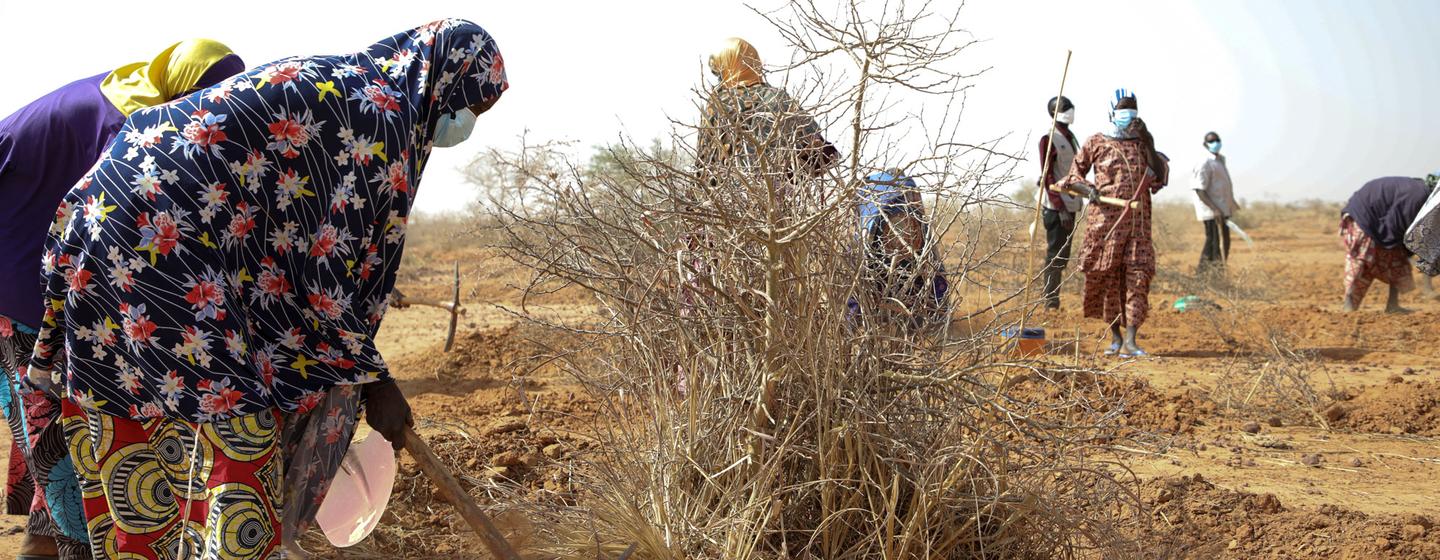
Women care for a market garden in Tillaberi. Niger, located in the Liptako-Gourma area, which has felt a heavy impact from local conflicts and the spillover of fighting in Mali and Burkina Faso.
© WFP/Mariama Ali Souley
 
Women care for a market garden in Tillaberi. Niger, located in the Liptako-Gourma area, which has felt a heavy impact from local conflicts and the spillover of fighting in Mali and Burkina Faso.

African-tailored terrorism

Against this backdrop sits the ever-present threat of terrorism, according the UN Security Council Counter-Terrorism Committee’s Executive Directorate (CTED).

In a bid to appeal to local audiences, Islamic State (ISIL) affiliates have, since 2017, attempted to “Africanize” references and languages, using African literature to justify the terrorist group’s views, CTED said in its report ISIL in Africa: Key Trends and Developments.

Currently, the Lake Chad Basin and Central Sahel have emerged as epicentres and incubators of terrorism and violent extremism, authorities warned.

In the background, the illicit weapons trade perpetuates the chaos. The UNODC report showed that flows of illegal arms from Libya since 2019 have expanded to include newly manufactured assault rifles.

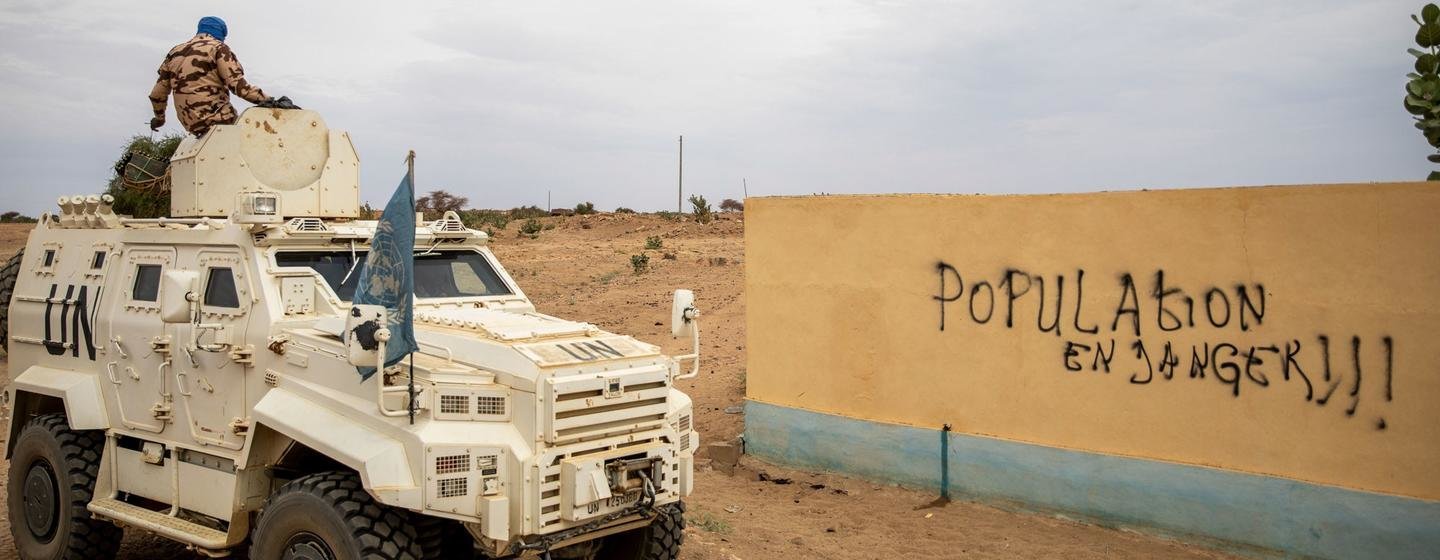
A MINUSMA armoured vehicle in Aguelhock, Mali.
©MINUSMA / Harandane Dicko
 
A MINUSMA armoured vehicle in Aguelhock, Mali.

Partners against crime

Reflecting this sinister trend, weapons seizures increased by 105 per cent between 2017 and 2021, and sting operations continue, said Amado Philip de Andrès, UNODC’s regional representative for West and Central Africa.

Joint investigations and cross-border cooperation are a winning combination, he said. One such operation crushed a terrorist network’s firearms supply route in December, and new partnerships are flourishing, including Niger’s military cooperation agreements with Benin and Burkina Faso.

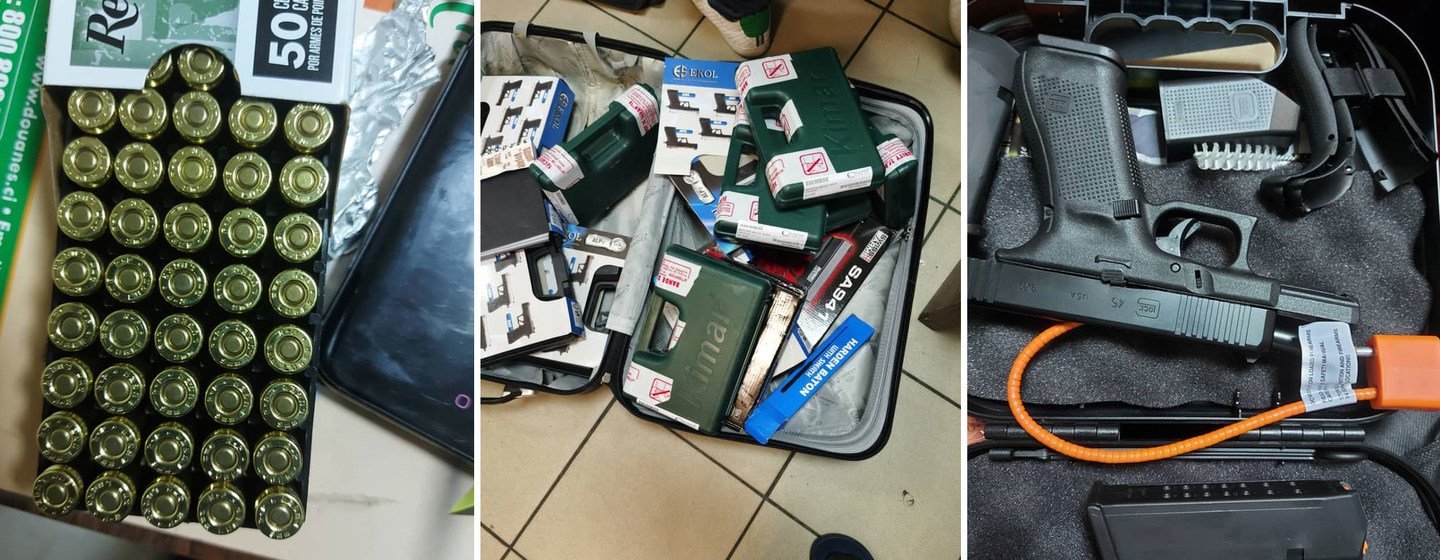
Firearms, ammunition and explosives were seized by INTERPOL across the Sahel.
UNODC/INTERPOL
 
Firearms, ammunition and explosives were seized by INTERPOL across the Sahel.

To fight terrorism and violent extremism, concerned nations in the region launched the Accra Initiative in 2017, deploying joint operations, initiating confidence-building efforts in hotspot areas, and calling for operationalizing a multinational joint task force comprising 10,000 soldiers.

For its part, the UN and the region’s countries work to strengthen the resilience of border communities and facilitate the return of displaced persons. Traction in advancing the African Union’s ground-breaking Silencing the Guns initiative is also under way, with a UN task force supporting an annual amnesty month and lending technical assistance on small arms control.

To build on these successes, UNODC recommended that Sahel countries reinforce efforts to collect data on firearms trafficking to improve understanding of and stop national and transnational flows.

But, political and operational support of partners remains essential to stabilize the region, said Martha Ama Akyaa Pobee, the UN Assistant Secretary-General for Africa.

“Decisive progress in the fight against terrorism, violent extremism, and organized crime in the Sahel must be made desperately,” she said. “Without significant gains, it will become increasingly difficult to reverse the security trajectory in the Sahel and the continued expansion of insecurity to coastal countries in West Africa.”

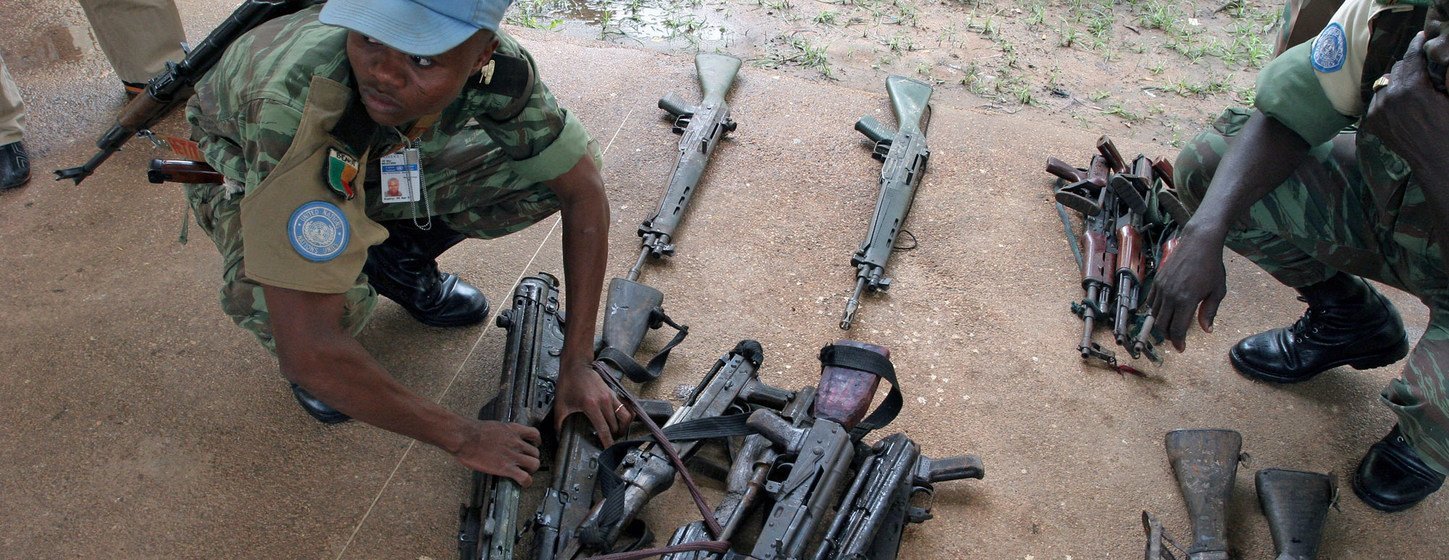
A UN peacekeeper with firearms collected from militias in Côte d'Ivoire.
UN Photo/Ky Chung
 
A UN peacekeeper with firearms collected from militias in Côte d'Ivoire.

‘We are all Burkinabes’

The backlash of the illicit arms trade is felt strongest on the ground. In the village of Bolle, Burkina Faso, a fragile security landscape crumbled frighteningly in 2019, when fierce fighting among heavily armed groups along the Malian border drove more than 100,000 people into the area to seek safety.

Sahelians like Chief Diambendi Madiega have worked together to welcome as many as they could.

“The concern I had was how to take care of the displaced people,” he said, upon receiving a UN Refugee Agency, UNHCR, award in 2021 for hosting more than 2,500 people.

“The responsibility is mine,” he explained. “Anything I can to do help them, I will. I am happy for what this community has done. This shows that we are all Burkinabes.”


UN in action

The UN, partners, and Sahelians themselves working for peace in the Sahel are making inroads and introducing new efforts, including these:

  • UN Peacekeeping adopted a strategy for disarmament, demobilization, and reintegration of former combatants.
  • The UN Regional Centre for Peace and Disarmament in Africa (UNREC) and the UN Development Programme (UNDP), in a joint project, assisted nine Sahelian countries in adopting a regional action plan to combat the illicit arms trade.
  • UNDP facilitated the voluntary surrender of over 40,000 small arms and light weapons in West Africa, built more than 300 houses, nearly 300 market stalls, and clinics and schools in northeastern Nigeria, and provided livelihoods for youth to protect them from sliding into poverty or being recruited into violent extremism.
  • The UN Office of Counter-Terrorism (UNOCT) supports the regional G5 Sahel Force in a project focused on criminal justice, border security management, and preventing radicalization and violent extremism.
  • A UN Children’s Fund (UNICEF) programme helps adolescents learn about the danger of small arms, combining basic gun safety education with leadership development, vocational training, and conflict resolution techniques.
  • UN regional directors and UNOWAS approved in November the launch of a revamped “peace and security offer” for the Sahel and works with the Timbuktu Institute and the non-governmental organization Dialogue sans frontières on an initiative aimed at strengthening traditional dialogue and trust-building platforms between communities in the border regions of Burkina Faso, Mali, and Niger.


Soundcloud
 https://news.un.org/en/story/2023/06/1137542
https://creativecommons.org/licenses/by/3.0/legalcode

суббота, 3 июня 2023 г.

Trafficking in the Sahel: Gas lighting


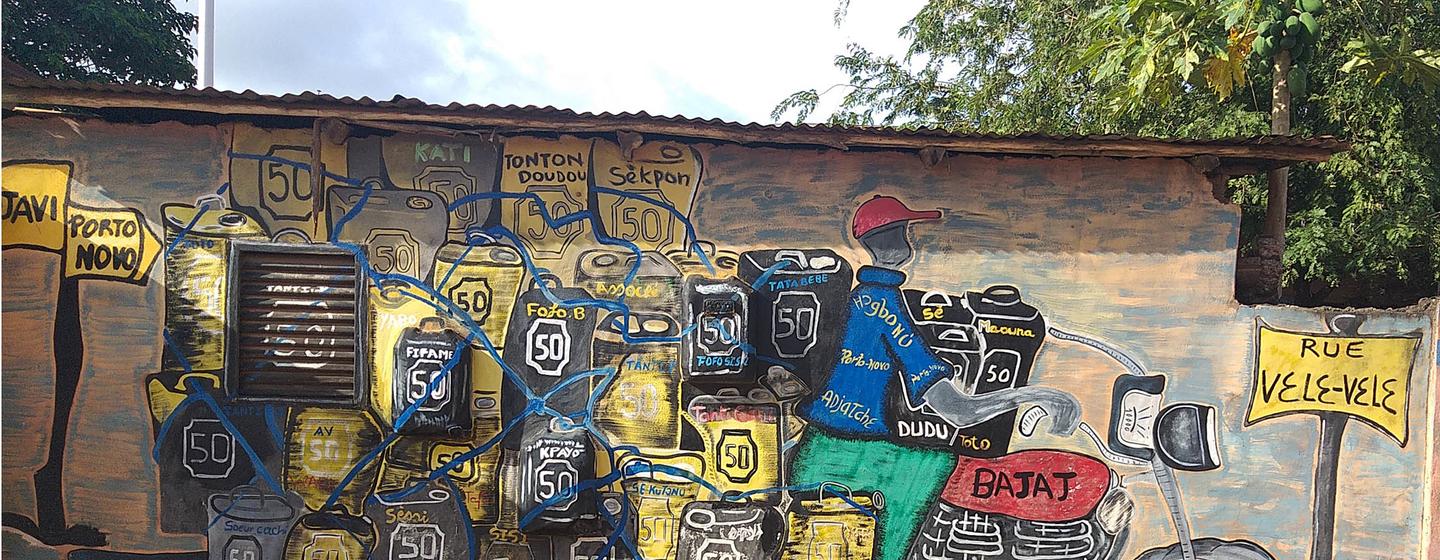
Graffiti showing a fuel transporter in Porto Novo, Benin.UNODC
 
Graffiti showing a fuel transporter in Porto Novo, Benin.
3 June 2023
SDGs

Kourou/Koualou, a tiny village in a neutral zone straddling Benin and Burkina Faso, was the centre of a one-million-litre-a-year cross-border illicit fuel trade, a snapshot of a phenomenon that spreads far across the 6,000-kilometre-wide African Sahel region.

In this feature, part of a series exploring the fight against trafficking in the Sahel, UN News focuses on the illegal fuel trade in the region.

Transported by criminal networks and taxed by terrorist groups, illegal fuel flows along four major routes snaking across the Sahel towards ready buyers, siphoning millions from nations on the road to stabilizing their security-challenged region, home to 300 million people.

“Fuel trafficking is undermining the rule of law; it’s fuelling corruption,” said François Patuel, Chief of the Research and Awareness Unit at the UN Office on Drugs and Crimes (UNODC). “It’s also enabling other forms of crime. That’s why it needs to be addressed.”

Demand calls, traffickers answer

Fuel trafficking is big business in the region. A report from the UNODC, Fuel Trafficking in the Sahel, finds that it funds illegal non-State armed groups, terrorist groups, financial institutions, corrupt law enforcement officials, and groups with ties to prominent individuals with interests in retail fuel companies. It is also in high demand among the population.

The biggest enablers are low, heavily subsidized gas prices in Algeria, Libya, and Nigeria. UNODC reported that Libyan gas stations charge 11 cents a litre, but across the border, Malian pump prices average $1.94.

Lost millions

“By just crossing the border, they make 90 cents profit per litre,” Mr. Patuel explained. “It’s easy revenue for criminal groups.”

He said the traffickers then sell to the population, who rely on cheaper fuel to carry out their activities and everyday life, from fuelling generators to produce electricity or fill their gas tanks to drive their goods to market.

“They really exploit those needs in order to sell their criminal products, including contraband fuel,” he added.

The UNODC report tracked operations across Burkina Faso, Chad, Mali, Mauritania, and Niger. Along well-trafficked routes, drivers carry millions of litres of contraband fuel each year. Established routes run from Algeria to Mali, another links Libya to Niger and Chad, and yet another begins in Nigeria via Benin towards Burkina Faso, and via Niger to Mali.

Lost revenue for Sahelian nations is staggering, said Amado Philip de Andrés, UNODC’s regional representative for West and Central Africa.

The illicit trade costs Niger almost $8 million annually in tax revenue, the according to the country’s High Authority for Combatting Corruption and Related Offences. Traffickers who evaded taxes by purchasing fuel marked for export at reduced costs and diverting deliveries domestically or across borders, the Government office said.

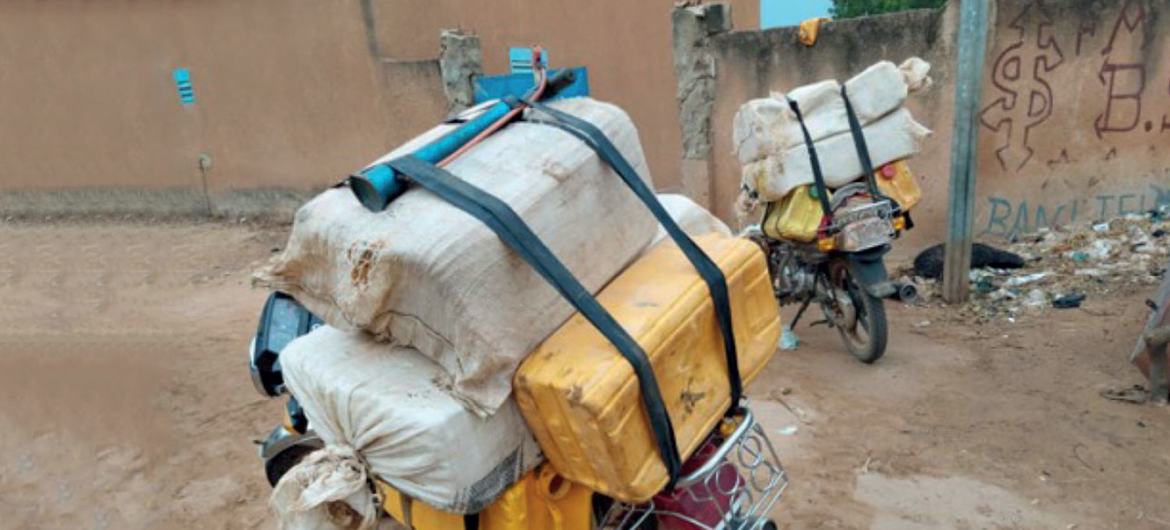
Motorbikes transporting smuggled fuel in Dosso, Niger, close to the Nigerian border.
© Harouna Ousmane Ibrahim
 
Motorbikes transporting smuggled fuel in Dosso, Niger, close to the Nigerian border.

Terror tax

Smugglers do, however, pay “taxes” to newly formed terrorist groups, including around Kourou/Koualou, where illegal warehouses stored tanks of contraband fuel while in transit, UNODC reports, adding that Al-Qaida-affiliated groups operate some of zone’s gold-rich mines, and routinely levy fees on contraband.

In terms of natural resource trafficking in Burkina Faso, Mali, and Niger, “local communities are particularly vulnerable, as they live in isolated areas with a limited law enforcement presence,” according to a Trends Alert report by the Security Council’s Counter-Terrorism Committee Executive Directorate (CTED).

Often, contraband fuel scratches the surface of a very deep well of trafficking, reflecting a nexus of criminal activities, from drugs to migrants, Mr. Patuel said, citing the example of a 2021 Nigerian police seizure of 17 tons of cannabis resin involving a known fuel trafficker who owned petrol stations. The suspect allegedly used drug trafficking proceeds to buy contraband fuel sold at his petrol stations.

UNODC highlighted other new and disturbing trends showing companies associated with Security Council-sanctioned individuals involved in fuel smuggling from the Niger to Mali, as traffickers peddle an ever-growing range of products.

Such profiteering has raised alarms across the UN system. Continuously expressing concern at terrorist groups using proceeds of natural resource trafficking to fund their nefarious activities, the UN Security Council has urged States to, among other things, hold perpetrators accountable.

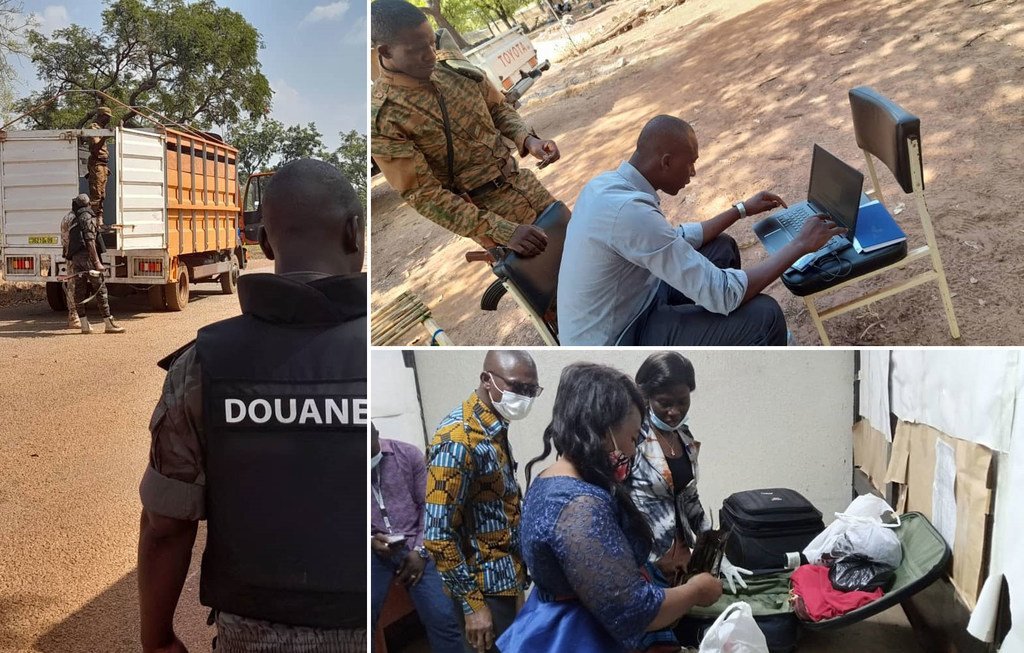
In Burkina Faso, frontline officers carried out checks at suspected smuggling hotspots.
UNODC/INTERPOL
 
In Burkina Faso, frontline officers carried out checks at suspected smuggling hotspots.

Excising corruption

However, ending fuel smuggling is a complex venture with potentially deadly consequences in a region with sky-high rates of informal employment, from 78.2 per cent in the Niger to 96.9 per cent in Chad. Damming illicit fuel flows, the UNODC worries, could drive up transportation and energy prices along with costs for most commercial goods and services.

The Office suggests that Sahelian nations and neighbouring countries identify and prosecute fuel smuggling cases with direct links to organized crime, armed groups, and corruption. At hand are tools contained in such international treaties as the UN Convention against Transnational Organized Crime and UN Convention against Corruption.

Capping illicit flows

While some anti-smuggling efforts have been met with violent resistance, including the death of a law enforcement officer, despite the risks, the nations continue to stem illicit flows using fresh and collaborative approaches, UNODC said.

The agency’s latest threat assessment on the phenomenon provided a raft of examples, from police-escorted gas convoys in Algeria near the Malian border to Benin’s imposed curfews and raids to stop cross-border armed groups.

For its part, Burkina Faso has been meticulously dismantling since 2019 a highly organized fuel trafficking network that smuggled more than 3 million litres of contraband over a three-year period, with fleets of trucks transporting up to 30,000 litres per trip.

Back in Kourou/Koualou, the flow of illegal fuel has been reduced to just a trickle following government crackdowns, but terrorist groups continue “to tax what fuel is still being trafficked, as well as other smuggled goods”, according to UNODC.

“Criminal groups feed on and exploit the needs of the population,” the agency’s chief researcher Mr. Patuel said. “Combining the efforts and having a regional approach will lead to success in addressing organized crime in the region.”

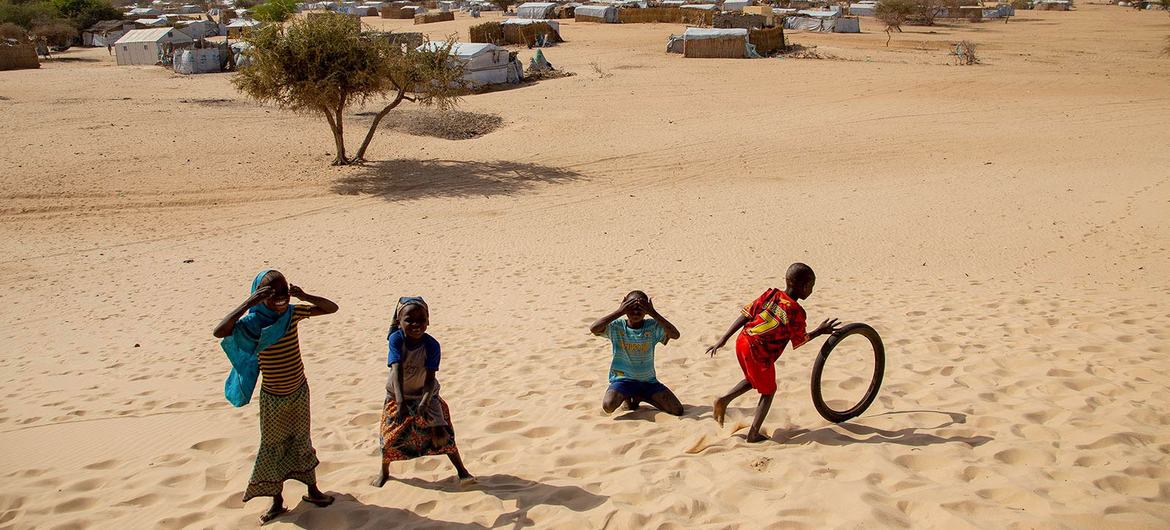
Ongoing violence, climate change, desertification, and tension over natural resources are all worsening hunger and poverty across Chad.
© UNDP/Aurelia Rusek
 
Ongoing violence, climate change, desertification, and tension over natural resources are all worsening hunger and poverty across Chad.

UN in action

The UN and its partners are working to stamp out trafficking and also build up opportunities in the region. Here are some examples:

  • The UN launched a $180 million project in 2022 targeting 1.6 million people in the Liptako-Gourma area, straddling the borders of Burkina Faso, Mali, and Niger, aimed at improving economic opportunities and livelihoods, with a focus on women, youth, and pastoralists, as part of its Integrated Strategy for the Sahel (UNISS).
  • Within UNISS peace and security initiatives, a project is helping to prevent the spread and rise of violent extremism in transborder areas between Senegal, Guinea, and Mali.
  • Stakeholders exchanged initiatives and ideas on preventing violent extremism in West and Central Africa at a meeting held in Dakar from 28 February to 2 March and co-organized by the UN Office for West Africa and the Sahel (UNOWAS), Senegal’s Centre for Advanced Defence and Security Studies, and Switzerland’s foreign affairs department.

  • The International Organization for Migration (IOM) and the G5 Sahel Force signed a new agreement in April to strengthen regional and intra-state cooperation across the spectrum of human mobility as an accelerator to building resilience, development, and integrated border governance in the G5 countries (Burkina Faso, Chad, Mali, Mauritania, and Niger).

  • The UN Children’s Fund (UNICEF) is addressing emerging challenges in Côte d'Ivoire, issuing in late May its first situation report on the country, which continues to be impacted by the spillover of conflict from the central Sahel crisis.
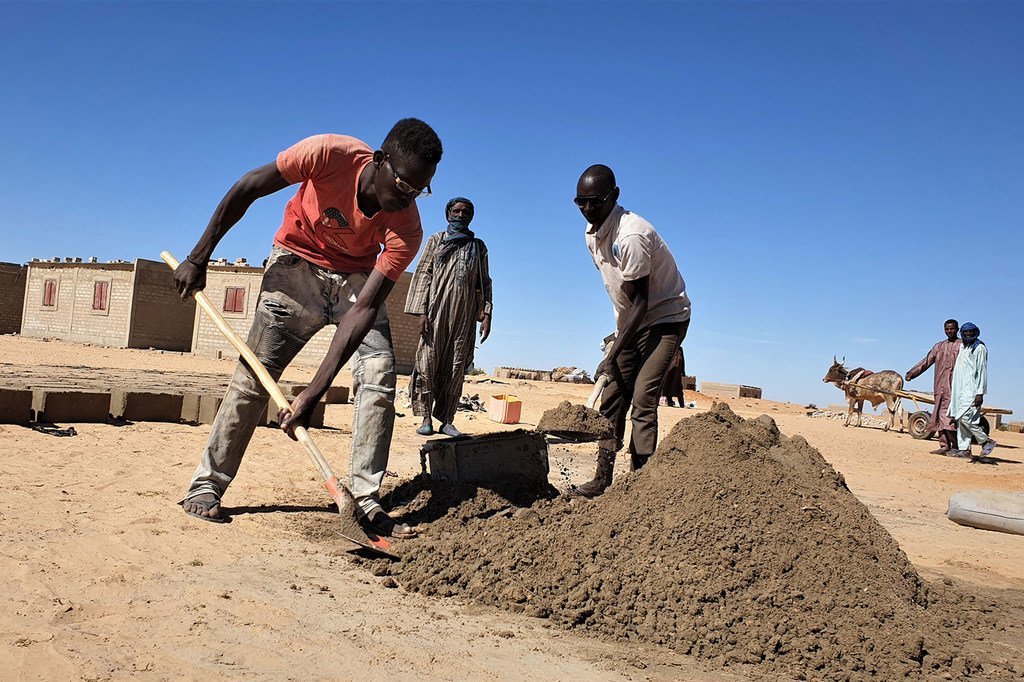
The UN refugee agency, UNHCR, has launched cash-for-work programmes which employ youth from host communities in Awaradi, Niger, to make bricks.
UNOCHA/Eve Sabbagh
 
The UN refugee agency, UNHCR, has launched cash-for-work programmes which employ youth from host communities in Awaradi, Niger, to make bricks.

 https://news.un.org/en/story/2023/06/1137072


https://creativecommons.org/licenses/by/3.0/legalcode

воскресенье, 21 мая 2023 г.

Trafficking in the Sahel: Guns, gas, and gold

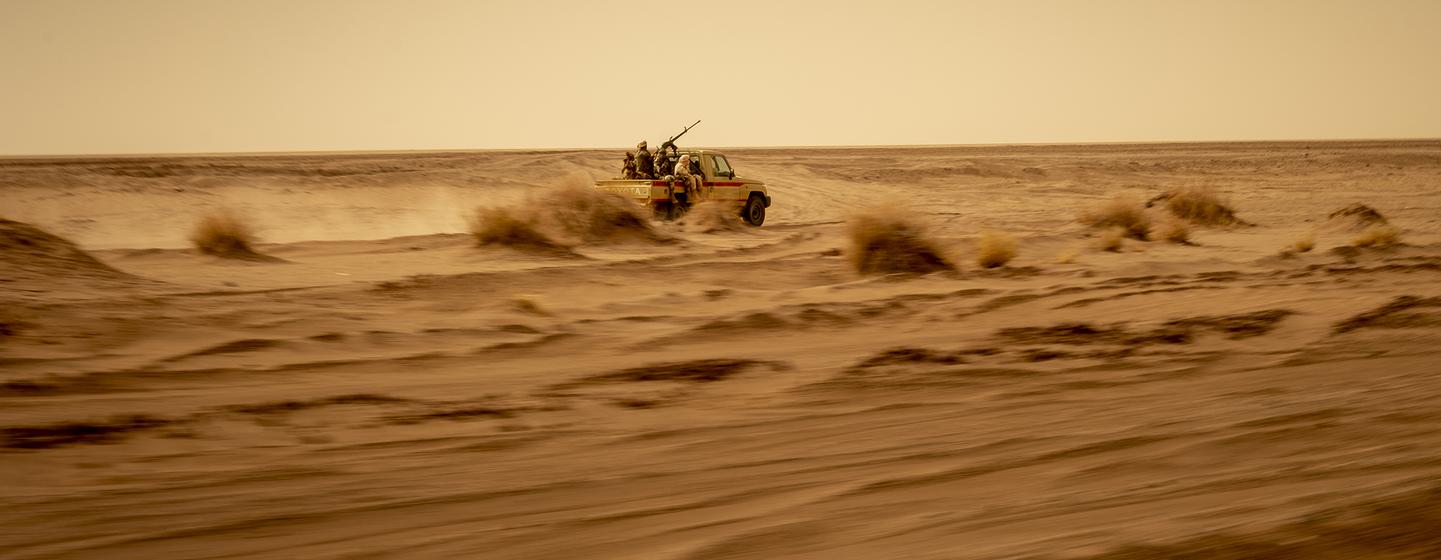
The Nigerien army patrols the Sahara desert targetting  militant groups including ISIL and Boko Haram.

Trafficking in the Sahel: Guns, gas, and gold

© UNICEF/Gilbertson
 
The Nigerien army patrols the Sahara desert targetting militant groups including ISIL and Boko Haram.
20 May 2023
SDGs

Chili peppers, fake medicine, fuel, gold, guns, humans, and more are being trafficked via millennia-old trade routes crisscrossing the Sahel, and the UN and partners are trying out new, collaborative ways to thwart those attempting the illegal practice, a growing problem in this fragile African region.

In the first of a series of features exploring the fight against trafficking in the Sahel, UN News takes a closer look at what’s behind the growth of the phenomenon.

A tangled trafficking web has been woven across the Sahel, which spans almost 6,000 kilometres from the Atlantic Ocean to the Red Sea, and is home to more than 300 million people, in Burkina Faso, Cameroon, Chad, The Gambia, Guinea, Mali, Mauritania, Niger, Nigeria, and Senegal.

The Sahel is described by the UN as a region in crisis: those living there are prey to chronic insecurity, climate shocks, conflict, coups, and the rise of criminal and terrorist networks. UN agencies expect that more than 37 million people will need humanitarian assistance in 2023, about 3 million more than in 2022.

Food insecurity is affecting millions of people in Burkina Faso.
© UNICEF/Vincent Treameau
 
Food insecurity is affecting millions of people in Burkina Faso.

Unravelling security

Security has long been an issue in the region, but the situation markedly degraded in 2011, following the NATO-led military intervention in Libya, which led to the ongoing destabilization of the country.

The ensuing chaos, and porous borders stymied efforts to stem illicit flows, and traffickers transporting looted Libyan firearms rode into the Sahel on the coattails of insurgency and the spread of terrorism.

Armed groups now control swathes of Libya, which has become a trafficking hub. The terrorist threat has worsened, with the notorious Islamic State (ISIL) group entering the region in 2015, according to the UN Security Council Counter-Terrorism Committee’s Executive Directorate (CTED).

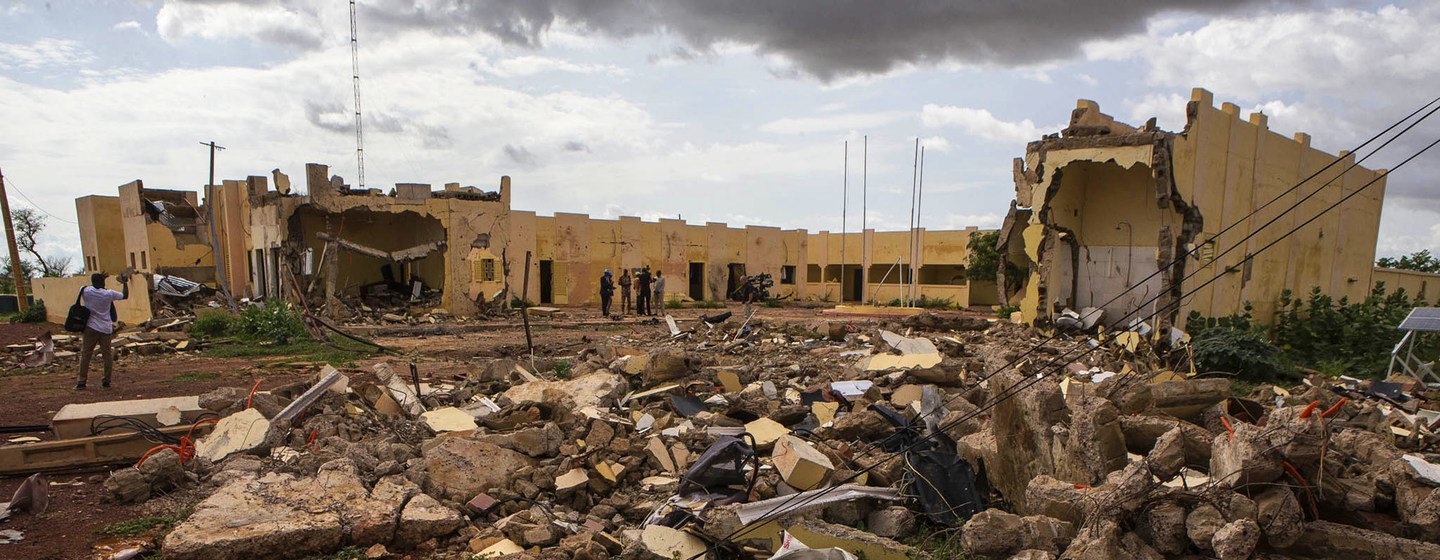
The G5 Sahel Force headquarters was destroyed by a terrorist attack in 2018 in Mopti, Mali.
MINUSMA/Harandane Dicko
 
The G5 Sahel Force headquarters was destroyed by a terrorist attack in 2018 in Mopti, Mali.

Markets across the Sahel can be found openly selling a wide range of contraband goods, from fake medicines to AK-style assault rifles. Trafficking medication is often deadly, estimated to kill 500,000 sub-Saharan Africans every year; in just one case, 70 Gambian children died in 2022 after ingesting smuggled cough syrup. Fuel is another commodity trafficked by the main players – terrorist groups, criminal networks, and local militias.

Closing corridors of crime

In order to fight trafficking and other evolving threats, a group of countries in the region – Burkina Faso, Mali, Mauritania, Niger, and Chad – formed, with the support of the UN, the Joint Force of the Group of Five for the Sahel (G5 Sahel).

Meanwhile, cross-border cooperation and crackdowns on corruption are on the rise. National authorities have seized tons of contraband, and judicial measures have dismantled networks. Partnerships, such as the newly signed Côte d’Ivoire-Nigeria agreement, are tackling the illegal drug trade.

The UN Office on Drugs and Crime (UNODC) is a leading player in efforts to bolster security by stopping trafficking attempts.

In 2020, for example, KAFO II, a UNODC-INTERPOL operation, successfully choked off a Sahel-bound terrorist supply route, with officers seizing a bounty of trafficked spoils: 50 firearms, 40,593 dynamite sticks, 6,162 ammunition rounds, 1,473 kilograms of cannabis and khat, 2,263 boxes of contraband drugs, and 60,000 litres of fuel.

Sting operations such as KAFO II provide valuable insights into trafficking’s increasingly complex and interwoven nature, demonstrating the importance of connecting the dots between crime cases involving firearms and terrorists across different countries, and taking a regional approach.

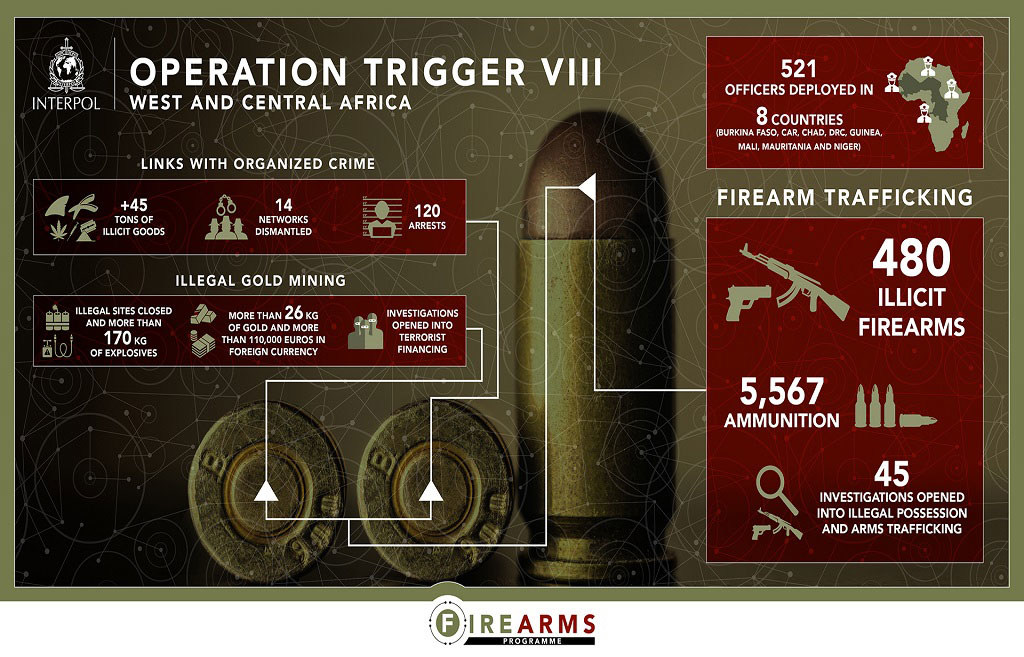
An international police operation coordinated by INTERPOL in 2022 targeting the movement of illicit firearms in Central and West Africa has led to some 120 arrests and the seizure of firearms, gold, drugs, fake medication, wildlife products, and cash.
© INTERPOL
 
An international police operation coordinated by INTERPOL in 2022 targeting the movement of illicit firearms in Central and West Africa has led to some 120 arrests and the seizure of firearms, gold, drugs, fake medication, wildlife products, and cash.

Corruption crackdown

These insights are backed up in a raft of new UNODC reports, mapping out the actors, enablers, routes, and scope of trafficking, reveal common threads amongst the instability and chaos, and provide recommendations for action.

One of those threads is corruption, and the reports call for judicial action to be bolstered. The prison system also needs to be engaged, as detention facilities can become “a university for criminals” to broaden their networks.

“Organized crime is feeding on the vulnerabilities and also undermining stability and development in the Sahel,” says François Patuel, head of the UNODC Research and Awareness Unit. “Combining efforts and taking a regional approach will lead to success in addressing organized crime in the region.”

Crisis poses ‘global threat’

Fighting organized crime is a central pillar in the wider battle to deal with the security crisis in the region, which UN Secretary-General António Guterres poses a global threat.

“If nothing is done, the effects of terrorism, violent extremism, and organized crime will be felt far beyond the region and the African continent,” Mr. Guterres warned in 2022. “We must rethink our collective approach and show creativity, going beyond existing efforts.”

How the UN supports people of the Sahel

  • The UN Office of the High Commissioner for Human Rights (OHCHR) has provided direct support to the G5 Sahel Force to operationalize and implement measures to reduce civilian harm and respond to violations.
  • UNODC routinely joins national and global partners, including INTERPOL, to choke supply routes.
  • The International Organization for Migration (IOM) crisis response plan aims at reaching almost 2 million affected people while addressing the structural causes of instability, with a specific focus on cross-border fragility.
  • WHO launched an emergency appeal to fund health projects in the region in 2022, and works with 350 health partners in six countries.
  • The UN Integrated Strategy for the Sahel (UNISS) provides direction for on-the-ground efforts in 10 countries.
  • The UN Support Plan for Sahel continues to foster coherence and coordination for greater efficiency and results delivery related to the UNISS framework, in line with Security Council resolution 2391.
The UN works at building food security, which in turn, builds climate security in Mali.
© UNDP Mali
 
The UN works at building food security, which in turn, builds climate security in Mali.

 https://news.un.org/en/story/2023/05/1136847


https://creativecommons.org/licenses/by/3.0/legalcode