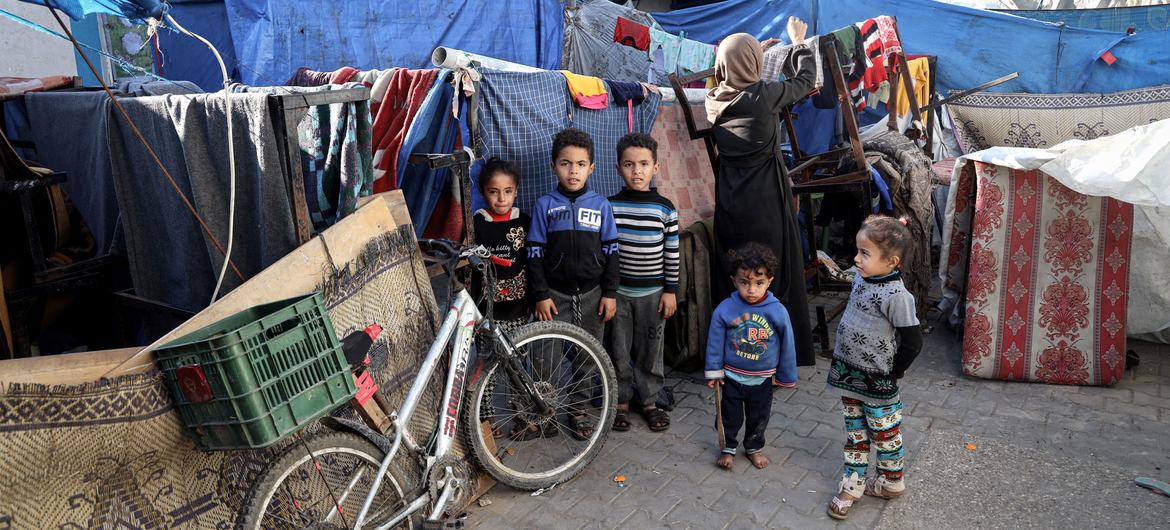
Показаны сообщения с ярлыком Rafah. Показать все сообщения

воскресенье, 16 июня 2024 г.

On the ground in Rafah: UNICEF reports ‘lethal’ lack of water, services

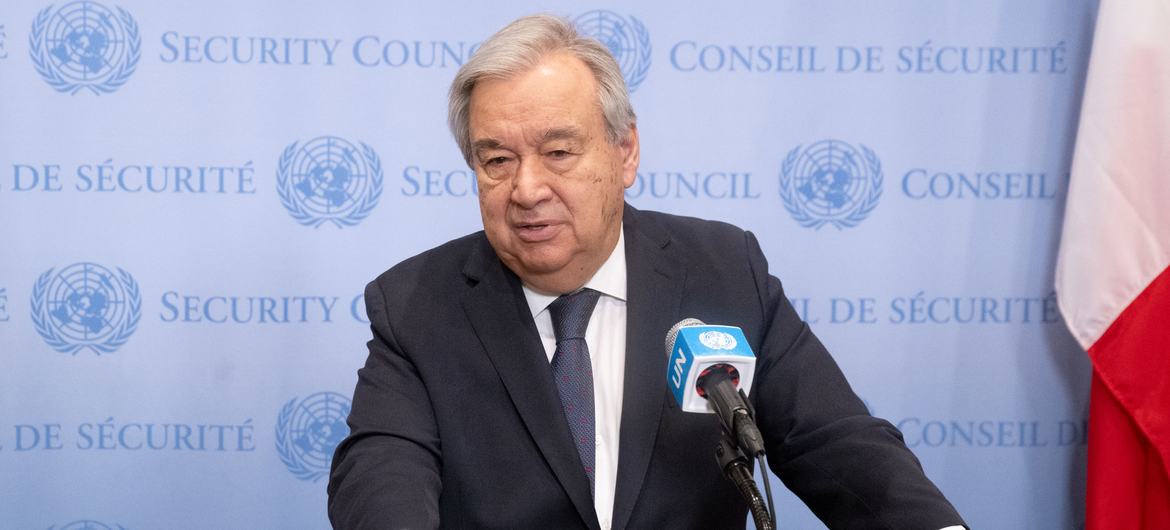
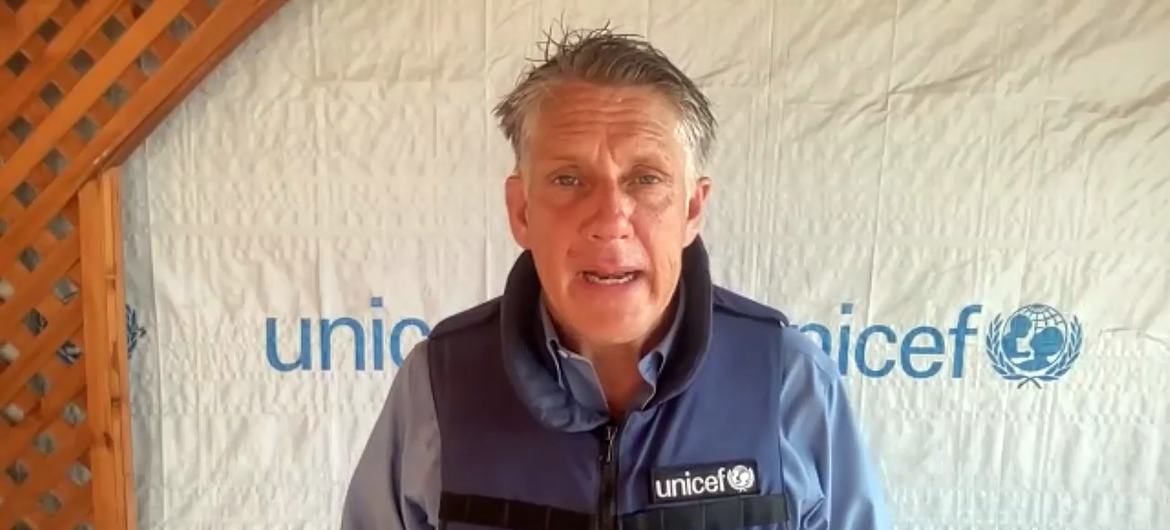
Speaking from Gaza, UNICEF spokesperson James Elder told UN News "this is and has been a war on children."

 I’ve seen the opposite of hope. We can’t allow the normalisation of this. 

UN News/Abdelmonem Makki
 
Speaking from Gaza, UNICEF spokesperson James Elder told UN News "this is and has been a war on children."
15 June 2024Humanitarian Aid

Almost 3,000 malnourished children are at risk of dying before their families’ eyes in Gaza, where the eight-month-long war continues, according to the UN Children’s Fund (UNICEF) as spokesperson James Elder told UN News on Saturday about the situation on the ground in the besieged and bombarded enclave.

Speaking from Gaza, Mr. Elder described a dire landscape, with a focus on child malnutrition and the devastating impact of the ongoing conflict amid growing concerns of famine.

Tweet URL
1james_elder

The destruction of health facilities, including specialised centres that are critical for staving off malnutrition, has severely hampered efforts to address severe hunger among children against a backdrop of constant bombings and attacks alongside the “lethal” lack of access to basic necessities that have already left children physically and psychologically scarred.

The UNICEF spokesperson emphasised the urgent need for a ceasefire to address the humanitarian crisis, get the hostages home and allow for the delivery of aid, education and medical care.

The interview was edited for length and clarity.

James Elder: If we focus on the nutritional situation, it was an immense effort from colleagues and partners over the last months to create stabilisation centres to address malnutrition. When that massive offensive came into Rafah [last month], forcing another million people who surely had already moved three, four or five times, we lost those stabilisation centres. The thousands of children who were being given the nutrition they needed suddenly disappeared again into the community. That’s perilous in a place where we know there’s a lethal lack of water and a dangerous, dangerous lack of sanitation.

So, now we start again. We have incredible partners. I’ve got amazing colleagues. All other agencies rally around. But, it’s again about now getting stabilisation centres and nutrition points into what are the tented camps so we can identify mothers who are desperate to get the support. But, they need to know it’s there. That’s the nutritional side, just one angle to which children are under attack. They’re under attack on the ground from that lack of nutrition, lack of sanitation, consistent restrictions on aid and very much so still from the skies.

I know it’s been 250 days. I know there’s a great risk of normalisation of this. There is nothing normal about the constant these children here are living, and there’s nothing normal about the last three nights of relentless bombardments. Drones surely meant no child could sleep there. There’s certainly nothing normal about the horrific wounds of children that I saw just a few hours a day in Al Aqsa Hospital. I spoke to families of children where they were in a sleep at five in the morning on the third floor and suddenly, in a moment, they’re under rubble. Mothers and children were killed or wounded or children have lost a mother. This has been continuous for 250 days. Children and their families really now are physically and psychologically just holding on.

UN News: How many hospitals are working now in the areas you were able to visit?

James Elder: We are now at a handful that are partially functioning from a previous total of 36 hospitals and healthcare centres in Gaza. Al-Aqsa Hospital [in central Gaza] took the brunt of those people after the [military] operation on Saturday. It was already overflowing because they’re in a state of war.

I visited on Tuesday, when there were scores of people with brutal wounds of war on the floors, mattresses, anywhere they could find. They needed attention. There were children with blast injuries, with burns, these awful injuries. Remembering a bomb blast picks up anything and everything, from bricks to tiles and shrapnel and does terrible things to a child’s body. As a doctor said to me, there are no hospitals in the world that could manage what we’re doing.

At the same time, there is the immense spirit of people here, of the Palestinians of Gaza. Nassar Hospital, which was the second biggest hospital was gutted inside after Khan Younis had been devastated, and it’s been restored and is partially functioning. That’s just on the back of people’s resolve, strength and determination. However, we have seen the systematic devastation of these health care system, and it too is holding on by a thread.
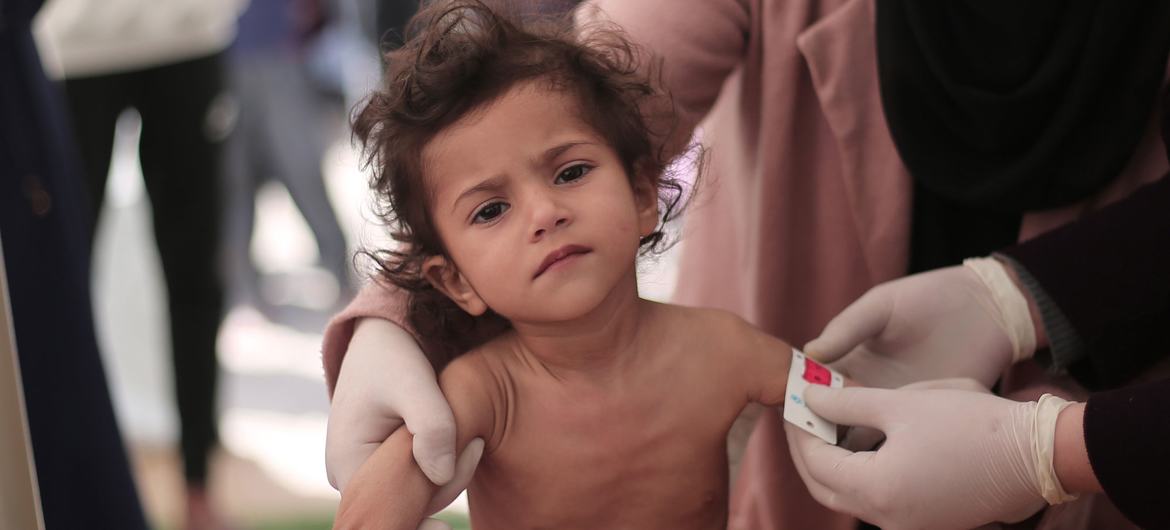
Many children in Gaza are showing signs of  severe acute malnutrition and drastic weight loss.
© UNICEF/Eyad El Baba
 
Many children in Gaza are showing signs of severe acute malnutrition and drastic weight loss.

UN News: Now only two of the three specialised nutrition stabilisation centres in Gaza remain open. Does UNICEF have any alternative plans to fill this vacuum?

James Elder: Absolutely. It is to get another stabilisation centre up and running in Rafah as well as smaller centres. Yesterday, I was at a tented camp and there was, with a partner, not a stabilization centre, but a smaller centre where they are doing testing, giving, therapeutic food to mothers and doing outreach in the community to make sure people come to them. Word spreads very quickly.

That’s the sort of thing we can do. On Wednesday, I was in a convoy trying to get aid to distribute to our partners while training them. It sounds strange to train partners in malnutrition screening and response, but that’s because before this war, Gaza didn’t really have a severe malnutrition problem.

So, there’s training, supply delivery and then, as best we can, trying to set up those bigger stabilisation centers. Again, even though knowing this, this war keeps moving and people keep being forced from their homes. Our operations, like all other agencies, keep being disrupted.
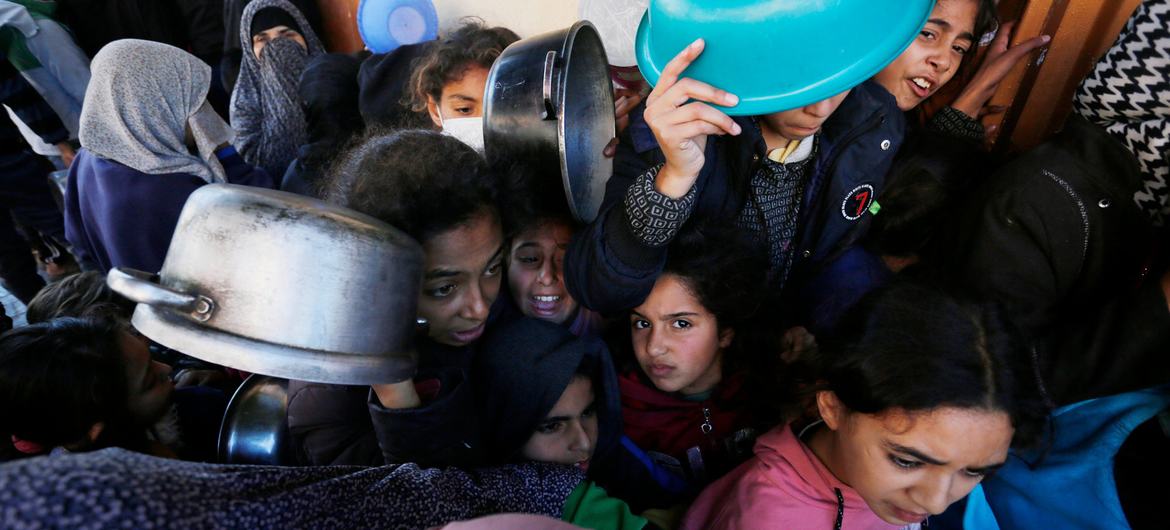
More than one million people in Gaza face severe food insecurity.
© UNRWA
 
More than one million people in Gaza face severe food insecurity.

UN News: You took to social media to discuss the challenges that UNICEF faces in delivering supplies to the children of Gaza. Can you please elaborate on that? 

James Elder: This specific example was Wednesday. We had a truck of malnutrition and medical supplies for 10,000 children. We had all the approvals, which is normal terrain. Yet, when we moved on Wednesday, what was basically a 40-kilometre round trip took 13 hours, with eight hours stuck at checkpoints or nearby. There were great discussions over whether we had a truck or whether we had a van.

In the end, that truck with nutrition and medical supplies for 10,000 children was returned. We weren’t able to get it through. Now, we will get it back and make that trip again, remembering such is the precarious, dangerous state of trying to deliver aid in the Gaza Strip. More of my UN colleagues have been killed during this eight month war than in any other conflict in the history of the United Nations.

It’s not so easy as just turning around the next day. We require two armored vehicles every time we move. UNICEF distributes tents as well as deliver fuel for desalination plants. We also have a lot of programmatic work. That was hugely disappointing. That was supplies that needed to go to those partners and children.

Even as we waited for hours near one of those checkpoints called a holding point, I was watching fishers. No doubt they had previous professions as accountants, lawyers and other jobs, but now all jobs and economies are being battered. Here they were fishing just using a single net, throwing it and trying to catch some fish for their family. Suddenly a tank came, and the next thing, there was firing from the position from the area around the Israeli military checkpoint, and two fishermen were shot. We didn’t know if they were dead. A WHO paramedic colleague radioed the authorities to ask if we could possibly get these two people to see if we could give them medical care. That was denied. That care was denied. Eventually, half an hour later, other fishers returned with body bags and we discovered that the two men were in fact dead. One had been shot in the back, and one who had fishing net still around his foot was shot in the neck.
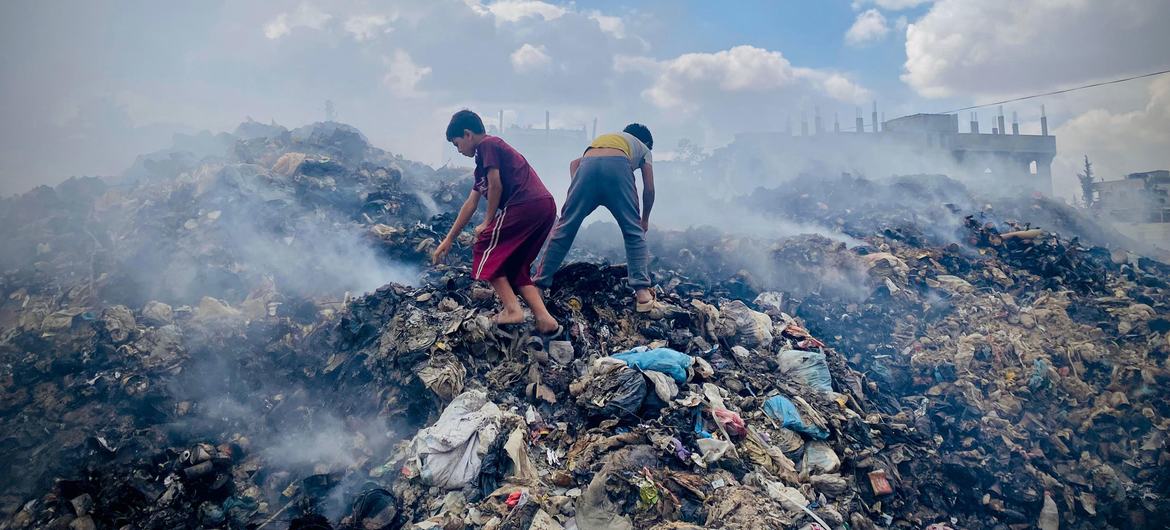
Over 330,000 tonnes of waste have accumulated in or near populated areas across Gaza, posing catastrophic environmental and health risks.
© UNRWA
 
Over 330,000 tonnes of waste have accumulated in or near populated areas across Gaza, posing catastrophic environmental and health risks.

UN News: People are running for their lives, but many schools in Gaza have been destroyed due to this war. What do you think the long-term consequences of this?

James Elder: The world should be terrified of the long-term consequences. Because we know that the longer a war goes on, the more damage it does psychologically to children. UNICEF knows that from a Yemen or Afghanistan. We are in uncharted territory when it comes to the mental health of children here.

We are in uncharted territory when it comes to the mental health of children here

At the same time, while as long as this continues, this is no place for a child to get treatment. I’ve sat with children. A little boy, Omar, who was sort of doing his own psychological treatment for himself. He would shut his eyes and try and remember his parents. His mother, father and twin brother were killed in their home. He would close his eyes to try and remember them. He didn’t want to lose them in his memory as he lost them on the ground.

I saw Omar in November and saw him again two days ago. He’s no longer able to recall what his parents looked like. Children are having to do their own mental health care. The reason the world should be concerned about this is that any economist, any demographer will tell you with a young population like Gaza’s, give them the right skills, the right education, the right opportunity and you get a demographic boom. You know, it’s the envy of aging countries well, but you have to give them those skills.

The opposite of that is happening right here: lasting violence. Children are being denied the most basic rights and are seeing death. There is nowhere near any education or universities as well. I think there are reports of hundreds of professors having been killed.

Again, this all comes back to a ceasefire. A ceasefire enables children to go to school, enables us to get aid safely and gets the hostages home. A mother said “I could go to bed if there was a ceasefire and promise my daughter that she will wake up tomorrow morning.”

Parents cannot do that right now.

UN News: You’ve been consistently emphasizing the urgent need for a ceasefire. To address this, humanitarian crisis in Gaza, yet war continues. What’s your message to the world? 

James Elder: I think the message has to be, as we’ve heard from the Secretary-General, from my own executive director, from the start, a ceasefire gets hostages home and stops the bombardment. Those parties that have the power over the ceasefire have to be connected with the suffering of people here. It would seem that that’s not happening.

This is and has been a war on children. We do not say that lightly. We do not say that is a headline. We say that based on evidence, based on the disproportionate impact this war is having on boys and girls. So, a ceasefire is the only solution. As my executive director said many months ago to the Security Council, the killing of children in Gaza and the devastation of Gaza will not bring peace to children or the region.
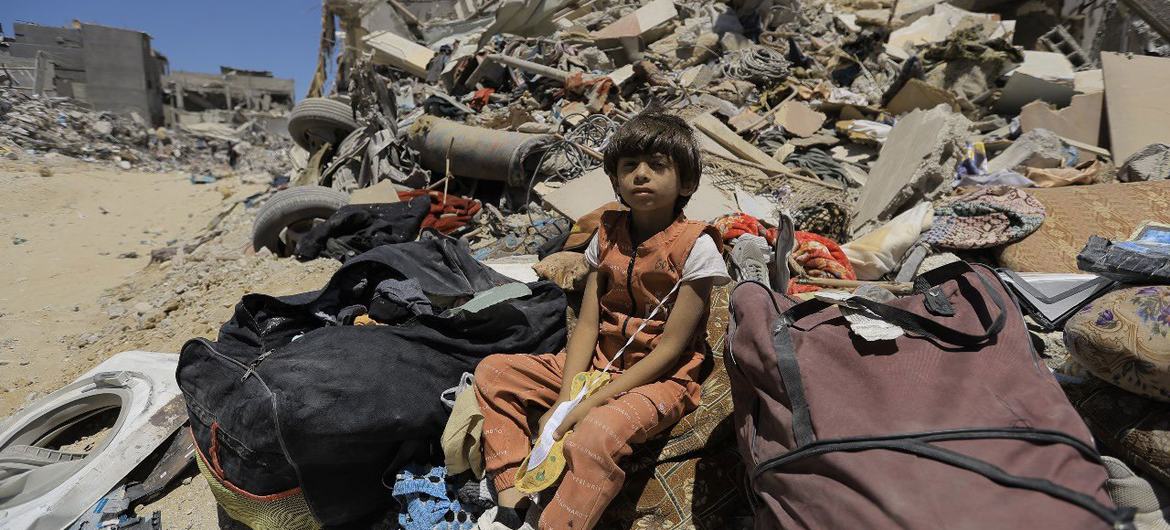
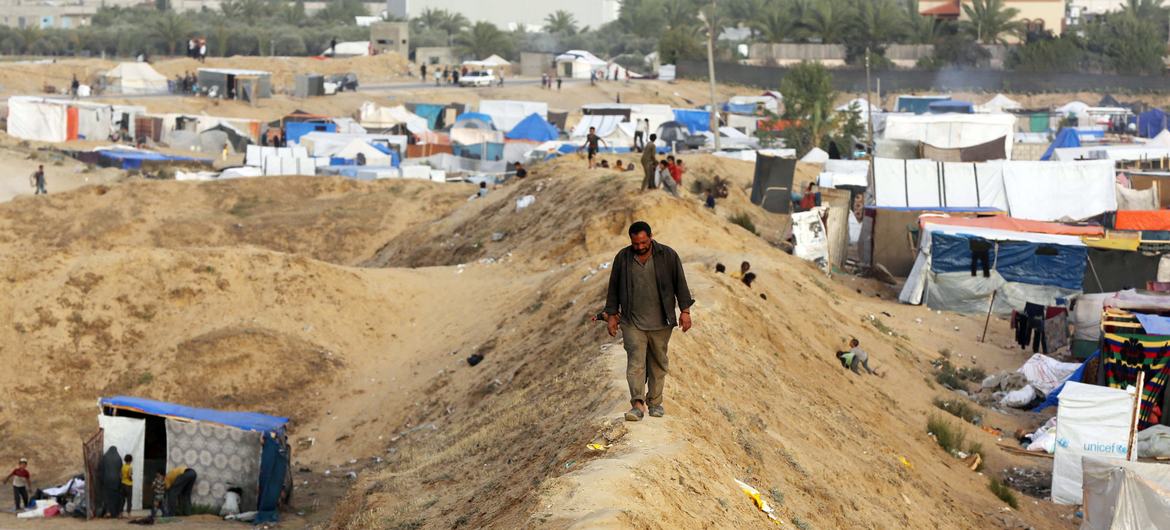
More than one million people, most displaced several times, have been forced to flee once again in search of safety.
© UNRWA
 
More than one million people, most displaced several times, have been forced to flee once again in search of safety.

UN News: This is your second mission to the Gaza Strip. Have you seen any signs of hope or anything different during this time in Gaza?

James Elder: It’s my third trip after being here in November and March. Now, I’ve seen the opposite of hope. I’ve seen hope extinguished. I’ve seen hope rise with the Security Council resolution in March, and I felt that in the air. I spoke to people and the sense that the war may be coming to an end was an amazing feeling and sense to see.

Then that literally got bombed away. So, there are a mix of people. There are those who will say to me that all they have left is hope after their home was destroyed, husband and children killed and they can no longer feed regularly their other children and they lost their job.

There are others who will say to me, there have been so many Security Council resolutions, I’ve lost count, more fearfully, more heartbreakingly. There will be others, like more than a handful of young people who tell me that they hope a missile hits their tent and ends this.

This is the perilous psychological state people are in right now. We cannot allow the world to turn away. We can’t allow the normalisation of this. There is nothing normal about this malnutrition crisis. There is nothing normal about the relentless bombardments and all the horrors that I see in hospitals. There is certainly nothing normal about children and their families living in a constant state of fear.


https://news.un.org/en/interview/2024/06/1151131


https://creativecommons.org/licenses/by/3.0/legalcode

пятница, 17 мая 2024 г.

Gaza: World court opens hearings on request to halt Israel’s Rafah incursion


More than 600,000 people have fled Rafah since Israeli military operations intensified in the southern Gazan governate in early May.
© UNRWA
 
More than 600,000 people have fled Rafah since Israeli military operations intensified in the southern Gazan governate in early May.


16 May 2024

Peace and Security

The International Court of Justice (ICJ) began public hearings on Thursday stemming from South Africa’s recent request for emergency provisional measures to immediately halt Israeli operations under way in Rafah, in southern Gaza, where more than one million Palestinians were sheltering during the seven-month-long war in the besieged enclave.

Linked to South Africa’s ongoing case accusing Israel of violating its obligations to the Genocide Convention, the new request, filed on 10 May, asked the ICJ’s 15 judges to order Israel to “immediately withdraw and cease its military operations in the Rafah governate” and open up the enclave to international aid workers and journalists.

South Africa delivered its arguments on Thursday afternoon, and Israel is expected to respond at public hearings on Friday at The Hague-based ICJ, which was established by the UN Charter as the principal judicial organ of the UN.

You can read South Africa’s current full request here and watch Thursday’s proceedings at the ICJ’s Peace Palace in the Netherlands below:

New request calls for ‘unimpeded’ access to Gaza

Amid a looming famine and deeper deadly Israeli incursions into Gaza, the urgent request has asked the court to order Israel to immediately “ensure and facilitate unimpeded access” to the enclave for UN and other aid officials, fact-finding missions, investigators and journalists.

That measure was requested to allow those officials and reporters “to assess and record conditions on the ground in Gaza and enable the effective preservation and retention of evidence”, with Israel ensuring “its military does not act to prevent such access”, according to South Africa’s application.

South Africa also requested the court to require Israel to submit, within one week of the order, a report on steps taken to implement these new provisional measures.

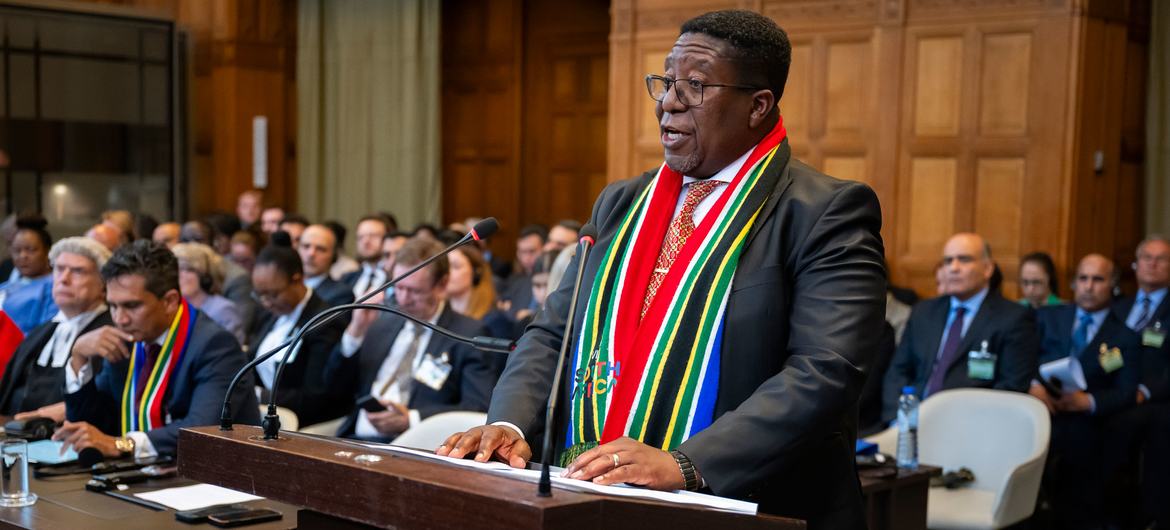
Vusimuzi Madonsela of South Africa at the International Court of Justice (ICJ).
UN Photo/ICJ-CIJ/Wendy van Bree
 
Vusimuzi Madonsela of South Africa at the International Court of Justice (ICJ).

South Africa: ‘Stop the ongoing genocide’

Representing South Africa, Vusimuzi Madonsela, the country’s ambassador to the Netherlands, said his country was compelled to return to the court under its obligations under the Genocide Convention “due to the continuing annihilation of the Palestinian people, with over 35,000 now killed and most of Gaza reduced to rubble”.

“Despite the short notice of this hearing, South Africa has travelled here today to do what it can to stop the ongoing genocide,” he said.

Israel is “breaching the binding orders of this court” and of Security Council resolutions, he said, also referring to ICJ orders in January for provisional measures related to the South Africa v. Israel case for Israel to, among other things, ensure the required aid enters Gaza unimpeded.

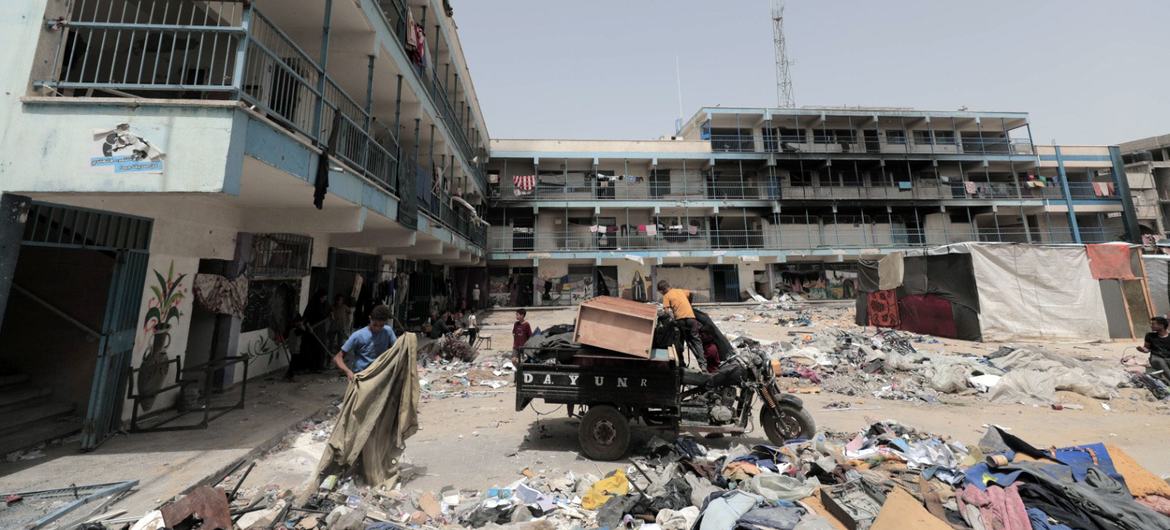
An UNRWA school in Khan Younis, which served as a shelter when the conflict started, lies in ruins.
© UNRWA
 
An UNRWA school in Khan Younis, which served as a shelter when the conflict started, lies in ruins.

Israel’s declared ‘safe zones’ in Gaza are anything but safe

Among a bevy of lawyers and experts presenting South Africa’s arguments on Thursday for its newest request, Vaughn Lowe said “the key point today is that Israel’s declared aim of wiping Gaza from the map is about to be realised.”

“Evidence of appalling crimes and atrocities is literally being destroyed and bulldozed, in effect wiping the slate clean for those who’ve committed these crimes and making a mockery of justice,” he said.

Max du Plessis, a lawyer for South Africa, said Israel’s declared “safe zones” are anything but safe.

“There is nothing humanitarian about these humanitarian zones,” he said. “Israel’s genocide of Palestinians continues through military attacks and man-made starvation.”

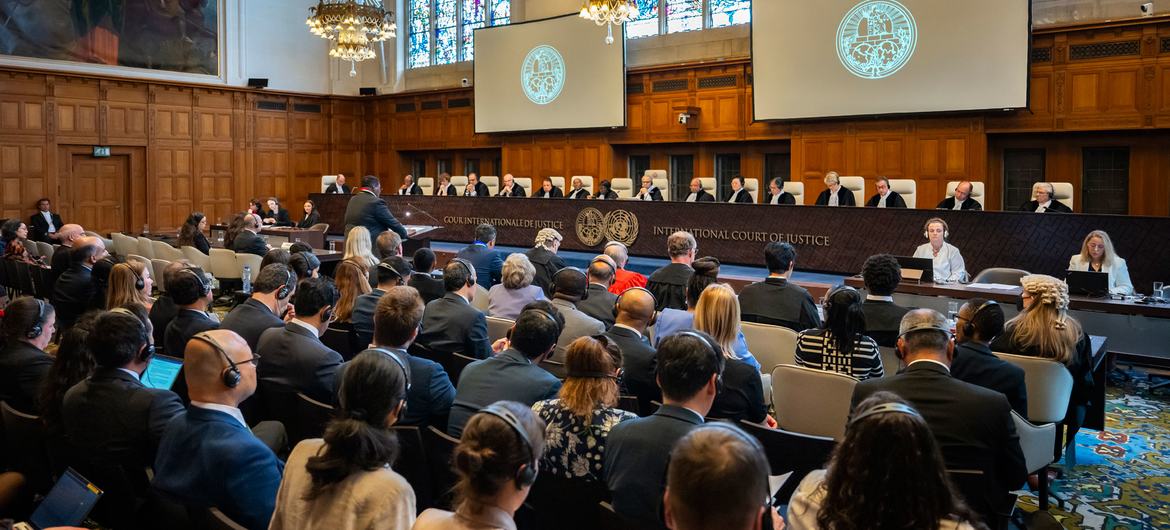
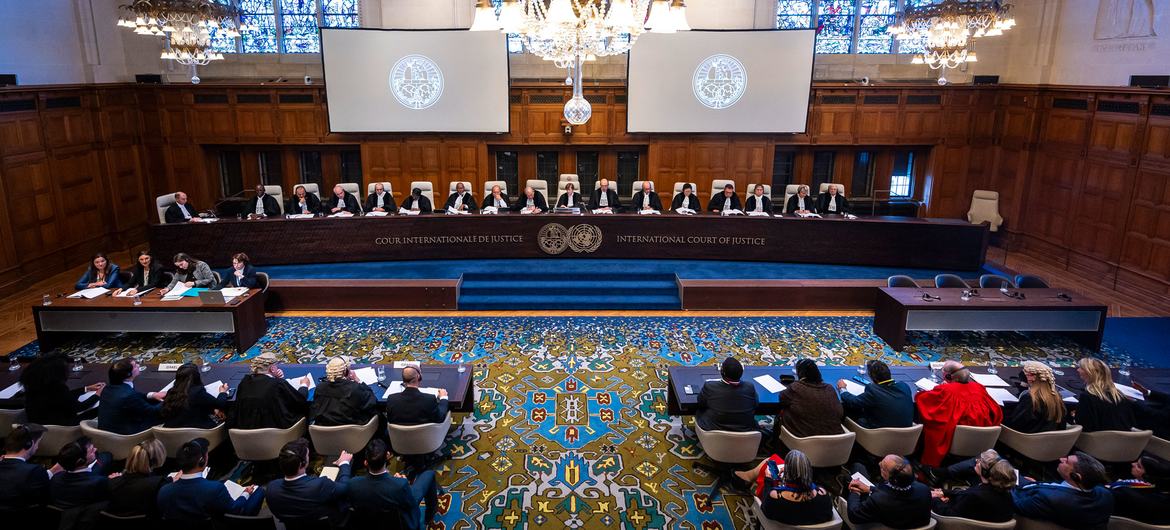
A wide view of the ICJ courtroom in The Hague in the case of South Africa v. Israel.
UN Photo/ICJ-CIJ
 
A wide view of the ICJ courtroom in The Hague in the case of South Africa v. Israel.

Current court-ordered provisional measures

The ICJ has delivered several orders for provisional measures on the South Africa v. Israel case, which began in January following South Africa’s application on 29 December for the world court to consider its allegations against Israel for contraventions of the Genocide Convention.

The ICJ delivered an order on 26 January for provisional measures, declaring that Palestinians had a right to be protected from acts of genocide and calling on Israel to “take all measures within its power” to prevent such actions and allow the entry of desperately needed humanitarian aid into Gaza.

Read the full text of the order here.

The court delivered additional provisional measures in March, responding to a request from South Africa.

In that decision, the ICJ ordered Israel, “in view of the worsening conditions of life faced by Palestinians in Gaza, in particular the spread of famine and starvation”, to take “all necessary and effective measures to ensure, without delay, in full cooperation with the United Nations, the unhindered provision at scale by all concerned of urgently needed basic services and humanitarian assistance to Palestinians throughout Gaza”.

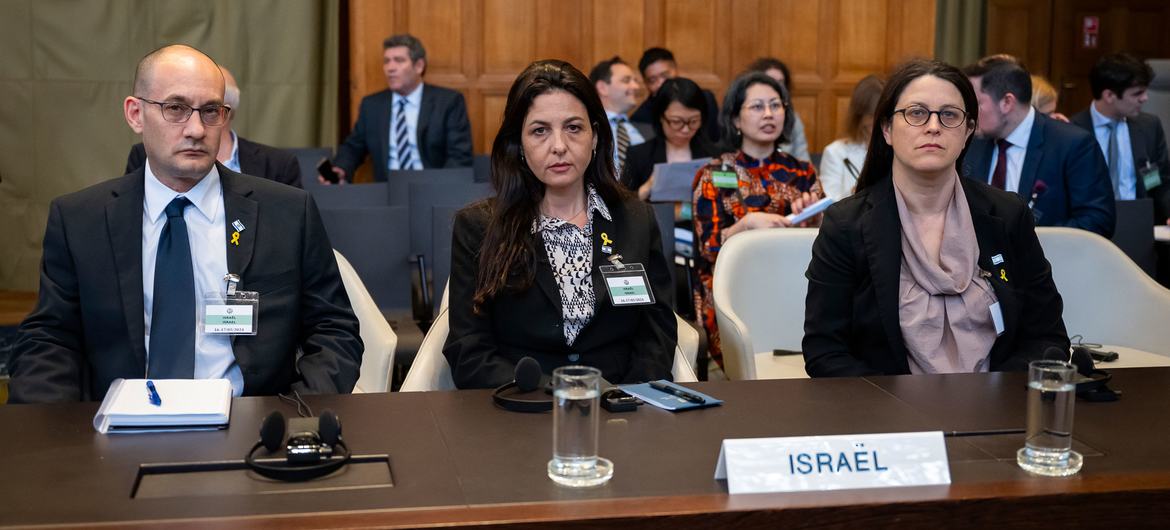
Members of the legal team representing Israel at the ICJ in the case of South Africa v. Israel.
UN Photo/ICJ-CIJ
 
Members of the legal team representing Israel at the ICJ in the case of South Africa v. Israel.

Next steps

The UN’s top court will hear Israel’s response on Friday.

The ICJ justices will then meet to render a decision on whether or not to issue a fresh order.

Provisional measures are a type of temporary injunction ahead of a final decision on the case, which will likely take years before a judgement is reached. The measures are considered “mandatory for implementation”, but the court has no means of enforcing them.


https://news.un.org/en/story/2024/05/1149846


https://creativecommons.org/licenses/by/3.0/legalcode

четверг, 16 мая 2024 г.

A. Guterres repeats call to Israel to halt Rafah assault as aid stocks dwindle


A. Guterres repeats call to Israel to halt Rafah assault as aid stocks dwindle

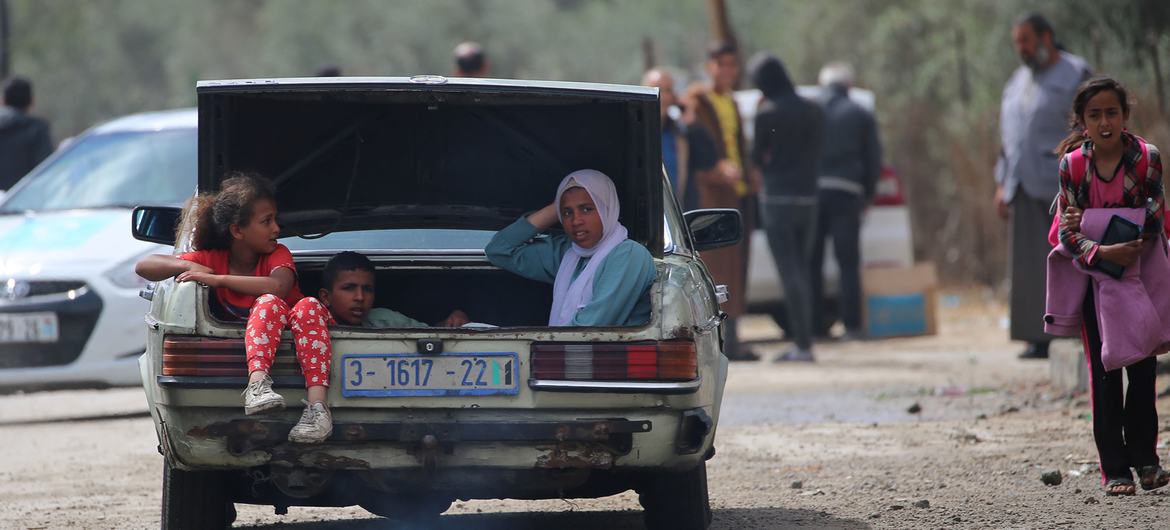
Children travel in the trunk of a car as they leave Rafah in southern Gaza.
© UNICEF/Eyad El Baba
 
Children travel in the trunk of a car as they leave Rafah in southern Gaza.


16 May 202
Peace and Security

UN chief António Guterres reiterated his warning on Thursday against a full-scale assault on Rafah, just as aid teams issued increasingly urgent appeals for safe passage throughout Gaza, to replenish dangerously low stocks of lifesaving supplies.

In a related development, the UN’s top court prepared to hear a new request from South Africa to issue more constraints on Israeli military action in the enclave.

In a call for the “immediate and unconditional release of all hostages” still held in Gaza, the Secretary-General told Arab League leaders at a Summit in Bahrain that nothing justified the “collective punishment” of Palestinians. 

“Any assault on Rafah is unacceptable; it would inflict another surge of pain and misery when we need a surge in life-saving aid,” he added.

Flanked by Philippe Lazzarini, head of the UN agency for Palestinian refugees, UNRWA, Mr. Guterres also renewed his strong backing for the UN agency. It  “remains the backbone of our operations in Gaza and a lifeline for Palestine refugees across the region. It needs full support and funding,” he insisted, as the UN World Food Programme (WFP) issued a new warning about looming famine in Gaza.

Crossing barriers

“Food and fuel stocks will run out in a matter of days,” WFP warned in a social media post on X. “Since 6 May, we have not been able to access and receive aid from the Kerem Shalom crossing. The situation is becoming unsustainable.”

Tweet URL
WFP_MENA

The UN agency highlighted the very real threat that any further escalation of hostilities in Gaza could bring aid operations “to a complete standstill” and lead to a humanitarian catastrophe. 

Although WFP has provided special nutritional foods to pregnant and breastfeeding women along with children under five across Gaza, the UN agency said that as of 11 May distributions were suspended in Rafah “and are only ongoing in Khan Younis and Deir El Balah in a limited capacity”.

In northern Gaza, WFP also warned that rates of acute malnutrition among under two-year-olds “doubled from 15 per cent in January to 30 per cent in March”. 

Humanitarians warn that acute malnutrition is the most deadly form of malnutrition, leaving affected children between three to 12 times more likely to die than a well-nourished child.

The dire assessment comes as the UN agency for Palestinian refugees (UNRWA) reported late Wednesday that 600,000 people – one quarter of Gaza’s population - have now been forcibly displaced from Rafah in the last week, amid ongoing Israeli military activity and evacuation orders.

Another 100,000 people have been uprooted from the north to comply with evacuation orders by the Israeli military, while heavy gun battles have reportedly raged.

Evacuation orders at scale

According to the UN aid coordination office, OCHA, “285 square kilometres, or approximately 78 per cent of the Gaza Strip” are now subject to evacuation orders by the Israeli military.

In its latest update, OCHA reported continuing bombardment “from the air, land and sea…across much of the Gaza Strip, resulting in further civilian casualties, displacement, and destruction of houses and other civilian infrastructure”.

The UN office confirmed reports of ground incursions and heavy fighting in Jabalia in northern Gaza, as well as in Deir al Balah in central Gaza and eastern Rafah in the south. 

“As of 15 May, Rafah crossing remains closed. Kerem Shalom crossing is operational, but the prevailing security and logistical conditions are hampering humanitarian aid deliveries at scale,” OCHA noted.

Echoing those concerns, the WFP insisted that “multiple entry points” for aid are required “to reverse six months of near starvation conditions and avert a famine, steady flows of food supplies, every day and every week…The threat of famine in Gaza never loomed larger.”

South Africa v. Israel

In an effort to halt the military operation in and around the enclave’s southern-most city, South Africa filed a new request to the UN’s top court which it was due to hear on Thursday.

“Urgent provisional measures are required to ensure the survival of Palestinians in Gaza,” the South Africa application said, in its latest claim filed on 10 May.

The International Court of Justice delivers its ruling in the case of South Africa v. Israel in The Hague.
© ICJ-CIJ/ Frank van Beek
 
The International Court of Justice delivers its ruling in the case of South Africa v. Israel in The Hague.

“The situation brought about by the Israeli assault on Rafah, and the extreme risk it poses to humanitarian supplies and basic services into Gaza, to the survival of the Palestinian medical system, and to the very survival of Palestinians in Gaza as a group, is not only an escalation of the prevailing situation, but gives rise to new facts that are causing irreparable harm to the rights of the Palestinian people in Gaza.” 

Rafah the last refuge

Rafah is “the last refuge” for Gazans, the South Africa petition continued, adding that the city is also the “last viable centre” for shelter and basic services including medical care. The Israeli military’s seizure of Rafah crossing and the brief closure and ongoing access problems to nearby Kerem Shalom crossing have blocked the main entry points for lifesaving humanitarian aid to Gaza, South Africa also insisted. 

“The remaining population and medical facilities are at extreme risk, given the recent evidence of evacuation zones being treated as extermination zones, the mass destruction and mass graves at Gaza’s other hospitals and the use by Israel of Artificial Intelligence (‘AI’) to identify ‘kill lists’,” ICJ court documents show.

The International Court of Justice previously issued special orders to Israel in late January – known as “provisional measures” – to prevent harm to Gazans, following South Africa’s allegation that Israel was in violation of its obligations as a signatory of the Genocide Convention. There was no explicit call for an immediate halt to Israel’s full-scale military operation in the Strip.

Israel strongly denied the allegations and is scheduled to respond to the latest South Africa request on Friday.


https://news.un.org/en/story/2024/05/1149811


https://creativecommons.org/licenses/by/3.0/legalcode

Gaza: 600,000 displaced from Rafah


Gaza: 600,000 displaced from Rafah

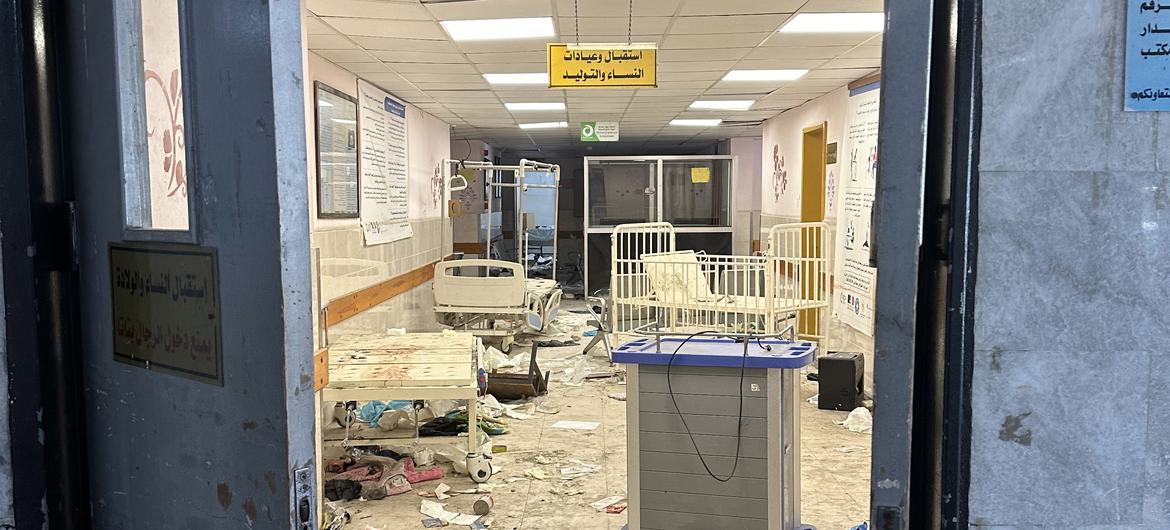
Nasser Medical Complex in Khan Younis, Gaza, was hit during intense Israeli shelling in February. (file)
OCHA / Olga Cherevko
 
Nasser Medical Complex in Khan Younis, Gaza, was hit during intense Israeli shelling in February. (file)


15 May 2024

Amid some of the fiercest reported fighting in Gaza yet, UN humanitarians on Wednesday repeated warnings that famine is still an imminent threat because of aid restrictions and a lack of safe access.

More than seven months into the war, babies are still being born too small, warned the UN agency for Palestinian refugees, UNRWA.

“Habiba was born in a small tent. She’s two weeks old and weighs less than two kilogrammes,” the UN agency said in a post on X, adding that more than 150,000 pregnant and breastfeeding women continue to face dire sanitary conditions and health hazards.

Fellow UN agency the World Food Programme (WFP) highlighted the massive challenge parents face keeping their children safe and fed. To stave off malnutrition, the WFP distributes fortified date bars, including to parents Khaled and Siham, who “some days…go with nothing to eat to leave the little they have for their children”.

Tweet URL
UNRWA

According to WFP, malnutrition among children is proceeding “at record pace”, with one in three children below the age of two now acutely malnourished or suffering wasting.

The UN and its partners have the means to scale up aid to all 2.2 million people in Gaza, but only if a humanitarian ceasefire happens, the agency insisted.

Heavy clashes

Meanwhile, aid efforts have continued amid reported gun battles between Israeli troops and Palestinian fighters in Jabalia in the north and Rafah in the south.

To date, Rafah has emptied of at least 600,000 people in just the last week, and another 100,000 have been uprooted from the north of the enclave, amid fresh evacuation orders by the Israeli military.

“Families keep fleeing where they can, including to rubble and sand dunes, in search of safety, but there’s no such thing in Gaza,” UNRWA said in a tweet on Tuesday, with images showing lines of vehicles heading to the coast, some laden with entire families’ belongings.

The UN aid coordination office, OCHA, said relief teams were continuing to try to deliver lifesaving assistance “wherever and whenever possible”, although the main border crossing in Rafah remains closed, and there is “no safe access” at the nearby Kerem Shalom crossing, which is “not logistically viable”. 

Nasser Hospital to reopen

In a rare piece of good news, OCHA reported that Nasser Medical Complex in Khan Younis is expected to formally re-open in the coming days. 

The hospital, which is in southern Khan Younis and previously one of the biggest in Gaza, was hit during intense Israeli shelling in February. Israeli forces also entered the facility after weeks of fighting and besiegement.

Now, the hospital has resumed providing kidney dialysis treatment last week to patients who can no longer be treated at An Najjar Hospital in Rafah, “which has ceased providing services”, OCHA said in an update.

Aid trucks targeted

Major obstacles continue to be faced by aid teams inside and outside Gaza, including an attack by Israeli settlers on Tuesday in the West Bank on trucks carrying humanitarian supplies bound for the enclave. “The settlers offloaded and vandalised the vehicles at the Tarqumiya checkpoint and near the Barrier by Beit ‘Awwa. Several trucks were damaged,” the UN aid office reported.

Unconfirmed media reports showed protesters who have been calling for the release of Israeli hostages blocking the trucks originating from Jordan and stamping on boxes of relief items.

The latest data from the Gaza health authorities indicates that at least 35,000 people have been killed in Gaza since 7 October amid Israeli shelling and ground operations sparked by Hamas-led terror attacks that left some 1,200 people dead in southern Israeli communities and more than 250 taken hostage.


https://news.un.org/en/story/2024/05/1149756
https://creativecommons.org/licenses/by/3.0/legalcode

среда, 15 мая 2024 г.

Guterres deplores Rafah escalation

Guterres deplores Rafah escalation
UN Secretary-General António Guterres (file).
UN Photo/Eskinder Debebe
 
UN Secretary-General António Guterres 

14 May 2024


Peace and Security

UN Secretary-General António Guterres is appalled by the escalation of Israeli military activity in and around Rafah in southern Gaza, his spokesperson said in a statement on Tuesday. 

“These developments are further impeding humanitarian access and worsening an already dire situation. At the same time, Hamas goes on firing rockets indiscriminately,” the statement said.

Stressing that civilians must be respected and protected at all times, Mr. Guterres noted that “for people in Gaza, nowhere is safe now."

The Secretary-General reiterated his longstanding urgent appeal for an immediate humanitarian ceasefire and for the release of all hostages. 

He also called for the Rafah crossing to be re-opened immediately and for unimpeded humanitarian access throughout Gaza.

Tweet URL
UNRWA

Concern for displaced families

Large parts of Rafah have become “a ghost town”,  UN Palestine refugee agency UNRWA reported on Tuesday. Some 450,000 people have fled the area over the past week and are seeking shelter where they can, including in rubble and sand dunes.

In New York, UN deputy spokesperson Farhan Haq said displaced families are arriving at sites that lack shelter, latrines and water points. 

“However, it is impossible to improve the situation at displacement sites if supplies can't enter Gaza and if we lack the fuel to transport them inside Gaza to the families who need them,” he told journalists attending the daily media briefing at UN Headquarters.

Avert greater tragedy: UNICEF

A senior official with the UN Children’s Fund (UNICEF) said the escalation in Rafah and throughout Gaza has deepened the suffering of hundreds of thousands of boys and girls.

“We cannot accept their plight being livestreamed as collateral damage in a conflict they never chose,” Adele Khodr, UNICEF's regional director for the Middle East and North Africa, said in a statement.

She echoed the Secretary-General’s call to swiftly open border crossings and provide safe humanitarian access so that aid can be delivered to children in Gaza.

“Failure to do so will lead to a tragedy even greater than what we have already witnessed, an outcome we must urgently work to avoid,” she warned.

Aid trucks attacked

Meanwhile, efforts to deliver lifesaving assistance are ongoing amid insecurity and other obstacles. 

The UN humanitarian affairs agency, OCHA, said partners reported that work continues to restore health services at Nasser Medical Complex in Khan Younis, which is expected to formally re-open in the coming days. 

The hospital began providing dialysis treatment last week to patients who can no longer be treated at An Najjar Hospital in Rafah, which has ceased providing services.

OCHA also reported that on Monday, Israeli settlers in the West Bank attacked aid trucks bound for Gaza.

“The settlers offloaded and vandalised the vehicles at the Tarqumiya checkpoint and near the barrier by Beit ‘Awwa,” the agency said, noting that several trucks were damaged.


https://news.un.org/en/story/2024/05/1149711


https://creativecommons.org/licenses/by/3.0/legalcode

вторник, 20 февраля 2024 г.

Gaza: Israeli advance on Rafah would have ‘dire humanitarian consequences


Gaza: Israeli advance on Rafah would have ‘dire humanitarian consequences’

Over one million internally displaced Palestinians are sheltering in Rafah in southern Gaza Strip.
© UNICEF/Eyad El Baba
 
Over one million internally displaced Palestinians are sheltering in Rafah in southern Gaza Strip.
19 February 2024Peace and Security

An extension of Israel’s military operation in Rafah, where over a million internally displaced Palestinians have been forced to shelter, will have “dire humanitarian consequences”, the UN Senior Humanitarian Coordinator for Gaza said on Monday.

Sigrid Kaag reiterated Secretary-General António Guterres’s concern that such an operation at present time would be potentially disastrous for innocent civilians.

“There are more than a million people crammed in Rafah. It's not intended for a million people in shelters, in random sort of plastic sheeted constructions. Health conditions are very worrisome,” she told correspondents in Brussels after briefing European Union foreign ministers.

She also voiced deep concern over getting aid into the Gaza Strip and distributing it to those in need.

“We have to acknowledge the fact that the security conditions, separate from military operations, due to what is called self-distribution by desperate civilians, but also looting and criminalization, is hampering efforts by the humanitarian community…to deliver assistance to the people that actually need it,” she said.

Tweet URL
UN_News_Centre

Continued hostilities

Intense Israeli bombardment from air, land and sea continues across much of the war-torn enclave, according to the UN Office for the Coordination of Humanitarian Affairs (OCHA), resulting in further civilian casualties, displacement, and destruction of civilian infrastructure.

Widespread ground operations and heavy fighting between Israeli forces and Palestinian armed groups also continue to be reported, especially in Khan Younis and Deir al Balah, OCHA said in a flash update on Monday.

Between 17 and 19 February, dozens of rockets were also reportedly fired by armed Palestinians toward Israel, it added.

Nasser hospital evacuations

Furthermore, the Israeli military operation in the Nasser Hospital complex in Khan Younis have continued, OCHA said, noting that on Sunday, the UN and the Palestine Red Crescent Society evacuated 14 patients. Negotiations are ongoing for the evacuation of the remaining patients.

According to the UN World Health Organization (WHO), over 180 patients and 15 doctors and nurses remain inside the hospital.

“The hospital is still experiencing an acute shortage of food, basic medical supplies, and oxygen. There is no tap water and no electricity, except a backup generator maintaining some lifesaving machines,” WHO said.

West Bank violence

OCHA also reported further violent incidents in the West Bank over the weekend, claiming both Israeli and Palestinian lives.

On 16 February, two Israeli men were shot and killed in southern Israel, and four others including a child were injured, by a Palestinian man from Shu’fat refugee camp in East Jerusalem. The Palestinian man was then shot and killed by an armed Israeli civilian.

On Sunday, Israeli forces killed two Palestinian men in Tulkarm Refugee camp, during an exchange of fire with a Palestinian man whose body was later withheld by Israeli forces from being handed over.

The second fatality was an unarmed Palestinian who was reportedly killed by an Israeli army sniper while standing on the rooftop of his house, OCHA said.

Between 7 October 2023 and 18 February, 393 Palestinians have been killed, including 100 children, and 4,511 Palestinians, including 699 children, have been injured in conflict-related incidents across the West Bank, including East Jerusalem, and Israel.  

During the same period, 12 Israelis, including four members of Israeli forces, were killed and 80 injured in conflict-related incidents in the same areas, according to OCHA.

World court asked for legal opinion

Meanwhile, at the Peace Palace in The Hague, the International Court of Justice (ICJ) is holding a hearing concerning an advisory opinion on the Legal Consequences arising from the Policies and Practices of Israel in the Occupied Palestinian Territory, including East Jerusalem.

The advisory, non-binding, opinion on the occupation was requested by the General Assembly in December 2022.

The hearings will be held from 19 to 26 February, with over 50 countries, groups and the State of Palestine scheduled to speak.


https://news.un.org/en/story/2024/02/1146672


https://creativecommons.org/licenses/by/3.0/legalcode