Показаны сообщения с ярлыком South Sudan. Показать все сообщения

четверг, 15 августа 2024 г.

No date yet for long-awaited South Sudan elections


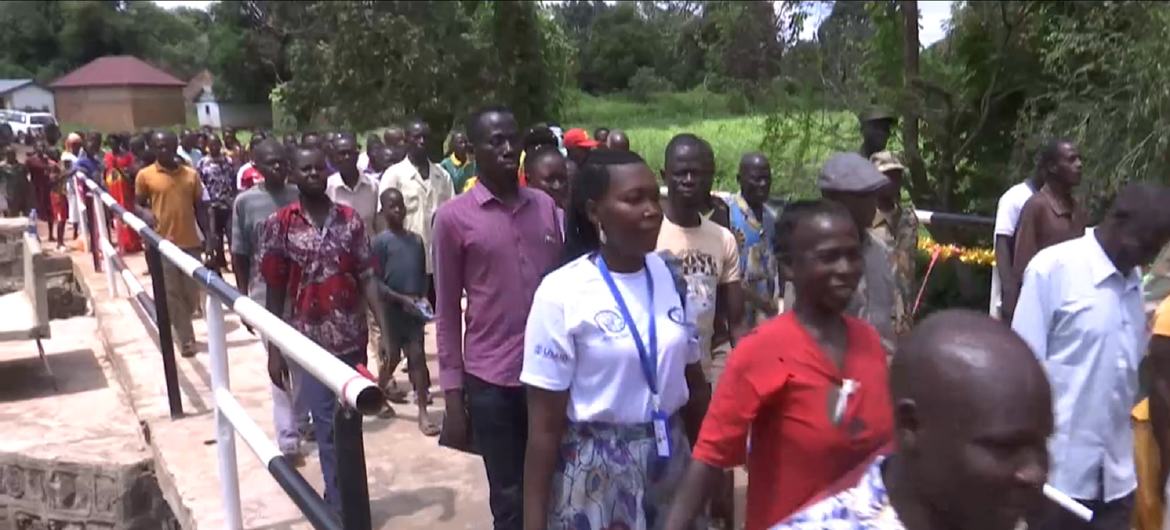
People crossing over a newly constructed bridge in Tambura, South Sudan, funded by the UN Mission in the country, UNMISS.
UNMISS
 
People crossing over a newly constructed bridge in Tambura, South Sudan, funded by the UN Mission in the country, UNMISS.


14 August 2024 

Peace and Security

The UN continues to support an enabling environment for general elections in South Sudan, but the date remains elusive, the Secretary-General’s Special Representative for the country told the Security Council on Wednesday. 

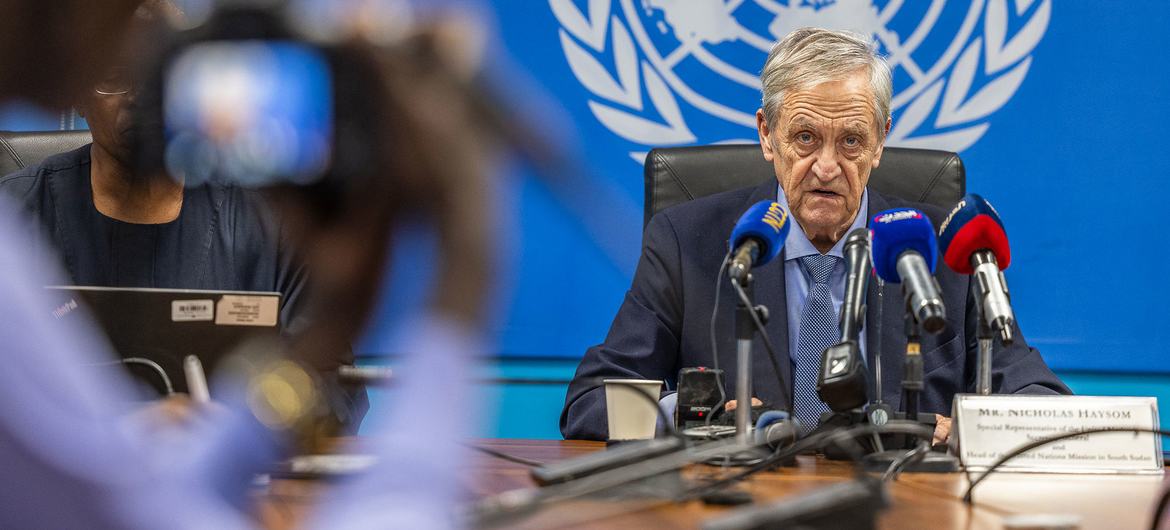
Nicholas Haysom, who also heads the UN Mission in South Sudan (UNMISS), briefed ambassadors on political, security and humanitarian developments in the world’s youngest nation, which was scheduled to hold its first post-independence elections in December.

Election date proposal expected

The latest UNMISS report covers the period from mid-February to mid-July, as political parties continued discussions on key steps necessary for the vote and to resolve outstanding issues under a transition roadmap, stemming from a 2018 peace agreement.

Tweet URL

Mr. Haysom said the High-Level Standing Committee that oversees implementation of the peace deal has completed its report and a preliminary version was released on Tuesday night.

“On the critical issues of the date of the elections, we understand, however, that no date has been agreed as yet, and that the president has designated the electoral institutions to produce a feasible proposal on when these elections may be held,” he said.

Talks in Nairobi

Meanwhile, a second dialogue process was launched in May in Nairobi between the transitional government of national unity and non-signatories to the peace deal. 

The talks, known as the Tumaini Initiative, seek to ensure that non-signatory parties, civil society, faith-based groups and traditional leaders join the peace process.

The Tumaini Initiative has proposed new monitoring, oversight and implementation mechanisms and a National Leadership Council structure. 

However, the Sudan People’s Liberation Movement in Opposition (SPLM/IO), led by Vice President resident Riek Machar, announced last month that it was withdrawing from the talks, “citing concerns that the Tumaini Initiative dealt with matters that were already agreed in the Revitalized Peace Agreement and accordingly it had gone beyond its remit,” Mr. Haysom said.

“There is currently a lack of clarity as to whether the SPLM/IO has reversed that decision but as part of the report of last evening, there is indication that this is under review,” he added.

UN upholds dialogue

Mr. Haysom said UNMISS has used its good office’s role to engage the parties involved in these ongoing processes.  

He stressed that the Mission “is not championing either process as an exclusive modality but is promoting the constructive confluence of the two”, adding that both must “advance with deliberate speed to deliver on the aspirations of South Sudanese citizens.”

Regarding the overall implementation of the peace agreement and roadmap, he noted that action has been taken, including the provision of funding to the National Constitutional Review Commission and the appointment of State High Elections Committees, while the National Elections Commission (NEC) has begun assessing the infrastructure and facilities necessary for the polls.

Protective environment for elections

So far, 29 political parties have registered for the elections, which the NEC had announced last month would take place on 22 December.

“I note, however, that there is still ongoing consultations between the political stakeholders as to whether elections can or should be held this year. This makes it difficult to treat 22 December as a definitive trigger in isolation from other critical factors,” he said.

Mr. Haysom added that should the elections be held in December, UNMISS would provide a report on the security situation at intervals of 90, 60 and 30 days out.

In the meantime, the Mission continues to support establishing an enabling environment for the elections, with focus on dialogue and engagement, physical protection and creating “a broader protective environment”.

‘A perfect storm’ approaches

Turning to the humanitarian situation, he warned that “a perfect storm is gathering in South Sudan”.

The impeding crisis is due to chronic food insecurity, spillover from the war in neighbouring Sudan, political uncertainty, a rapidly deteriorating economy worsened by the rupture in critical oil infrastructure and revenue, and the potential for once-in-a-lifetime flooding in September.

Any one of these elements on its own presents a significant challenge. When taken together, it could push the country to a tipping point – and all during a time when the people of South Sudan are embarking on a delicate phase of nation-building,” he said.

Millions need humanitarian aid

Edem Wosurnu of the UN humanitarian affairs office, OCHA, expanded on the envoy’s remarks.

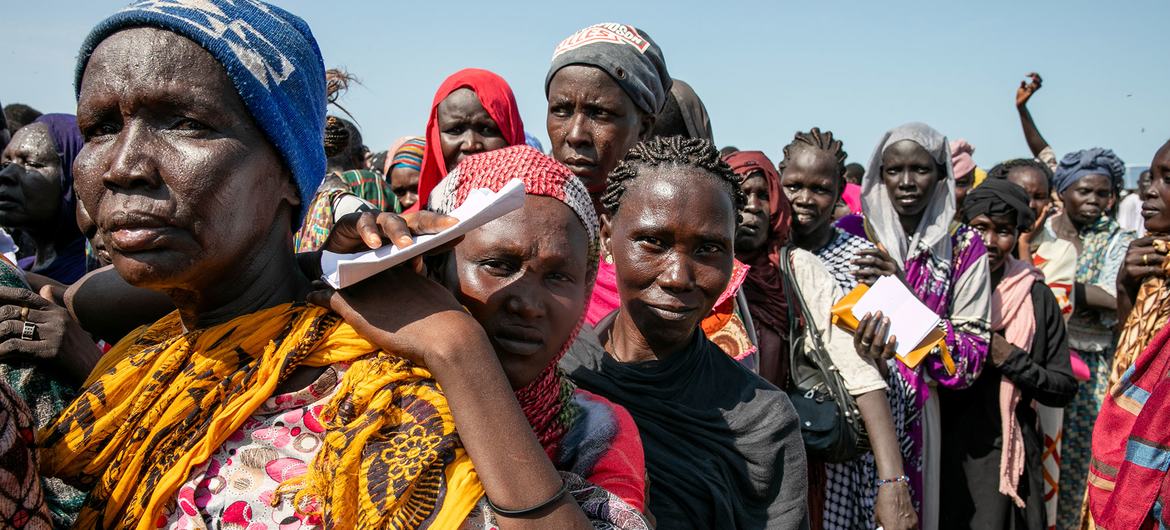
She said more than nine million people in South Sudan, 76 per cent of the population, require humanitarian protection and assistance. The majority, 54 per cent, are children and 24 per cent are women. 

In total, just over seven million South Sudanese are acutely food insecure, an increase of around 1.5 million since last year.  Additionally, 2.5 million children and women are at risk of acute malnutrition, which is projected to climb to 2.7 million by December due to the impact of the crisis in Sudan. 

‘Pockets of famine’ predicted

“Mid-year projections by our food security experts suggest that flooding combined with conflict could result in pockets of famine between June 2024 and January 2025,” she said.

The impact from flooding is already being felt in some communities. Since May, heavy rains and the calculated release of water from Lake Victoria have caused the Nile River to rise, affecting up to 300,000 people.

“At the peak of the flood season, anticipated between September and October, flooding could impact up to 3.3 million people.,” Ms. Wosurnu said.

“This includes communities yet to recover from the devastating floods which occurred between 2019 and 2022, and which displaced more than one million people each year.”

Sudan war’s impact

Meanwhile, South Sudan has been the country worst hit by the displacement crisis caused by the war in Sudan, which began in April 2023.

Nearly 780,000 people fleeing the fighting have crossed over the border, including 580,000 South Sudan returnees. 

“Many are arriving in areas already deprioritized for assistance. They are often malnourished, in poor physical condition, and require immediate life-saving assistance,” she said.

Once again, the arrivals are mostly women and children, with many requiring specialized support for trauma and gender-based violence.

Humanitarians under fire

Ms. Wosurnu said that despite the challenges, humanitarians continue to deliver in South Sudan, reaching more than 2.6 million out of the six million people targeted for support this year, but she also highlighted the dangers they face.

“As we prepare to mark World Humanitarian Day next week, it is worth reminding the Council that South Sudan remains one of the most dangerous places for humanitarians to operate,” she said.

During the first half of 2024, 237 “humanitarian access incidents” were reported and 46 per cent involved violence against personnel and assets. Four humanitarian workers have been killed in the line of duty since 2023, she added, while aid convoys have been subjected to illegal taxation and looting.

Humanitarian response also continues to be underfunded, she added.  A $1.8 billion plan to fund operations this year has received only $561 million to date.


https://news.un.org/en/story/2024/08/1153186


https://creativecommons.org/licenses/by/4.0/legalcode

вторник, 16 июля 2024 г.

South Sudan faces growing humanitarian crisis, warns WHO


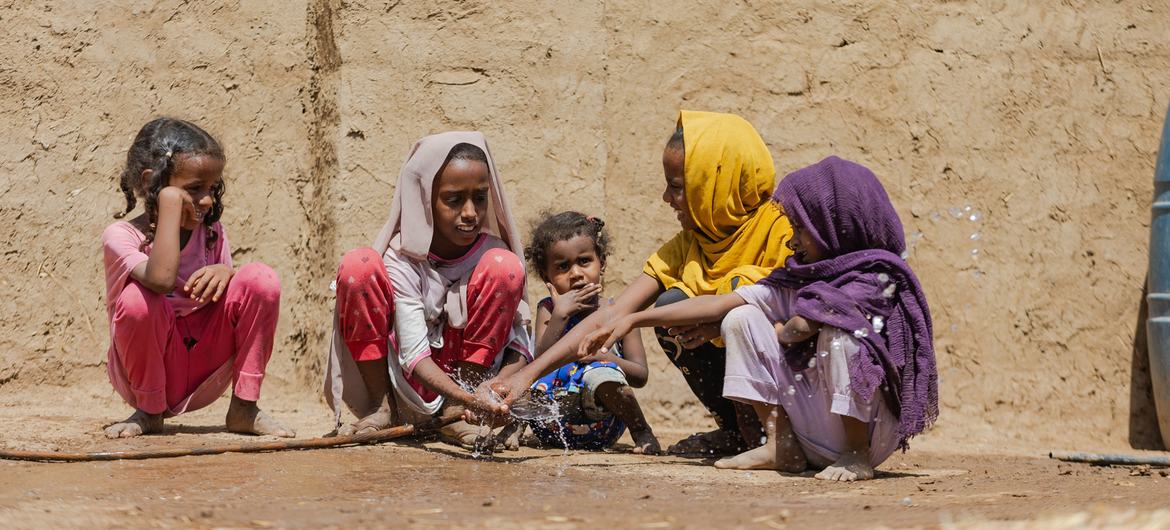
Children collect clean water from a pipe connected to their household.
© UNICEF/Ahmed Mohamdeen Elfatih
 
Children collect clean water from a pipe connected to their household.


15 July 2024
 Humanitarian Aid

Twelve years on from independence the people of South Sudan continue to face huge challenges, exacerbated now by the war in neighbouring Sudan, the World Health Organization (WHO) said on Monday.

The UN health agency insisted that the humanitarian, economic, social and political crises that began with brutal civil conflict in 2013 have been worsened by the recent influx of refugees from Sudan following the war between rival militaries there - with over 650,000 new arrivals since April 2023.

Right now, approaching six million people - or 46 per cent of the population – face crisis levels of food insecurity – a number that’s expected to rise to around 7.1 million during the current lean season.

El Niño and flooding

The WHO report also highlighted that the 2023-24 El Niño weather phenomenon - one of the strongest on record - brought dry conditions, erratic rainfall and significantly impacted harvests.

It also resulted in year-round flooding, which occurred in new previously unaffected areas.

Severe flooding, recurrent violence, weak governance, poverty and lack of infrastructure have created a complex humanitarian crisis which is hindering South Sudan’s development, the UN health agency warned.

A staggering 8.9 million people mostly in flood and conflict-affected areas have been affected, with women, children, the elderly and people with disabilities at higher risk.

UNHCR´s first-ever Forced Displacement Survey (FDS)

A pilot household survey by The UN refugee agency (UNHCR) on Monday, further underscores the dire conditions, revealing alarming levels of suffering among both refugee and host communities.

The Forced Displacement Survey (FDS) was conducted between April and December 2023 and covered around 3,100 households in South Sudan.

It found that all communities face many challenges including limited services, high unemployment, no education, poor infrastructure and overcrowded shelters.

74 per cent of households going hungry

Food is a major issue with 74 per cent of both refugee and host community households experiencing hunger in the past month.

And over 40 per cent of both groups had less income than the previous year. Refugees from the Sudan crisis have added to the already volatile areas and overstretched services. The conflict has also affected South Sudan’s economy by closing the main oil pipeline.

Marie-Helene Verney, UNHCR Representative in South Sudan, said that “we need to link humanitarian assistance to stabilization and development programmes to the extent possible…Substantive long-term investments are crucial to improving the wellbeing of refugees and the communities hosting them.”

South Sudan has over 460,000 refugees from Sudan, DRC and Ethiopia.

With the conflict in Sudan, South Sudan is receiving 1,600 people daily including refugees and returnees. The FDS provides comprehensive socioeconomic data on refugees and host communities to inform programming and policy. This data is key to targeting assistance where it matters most and bridging the humanitarian-development gap.


https://news.un.org/en/story/2024/07/1152106


https://creativecommons.org/licenses/by/4.0/legalcode

вторник, 30 апреля 2024 г.

Security Council Renews United Nations Mission in South Sudan for One Year


9620TH MEETING (PM)
SC/15687

Security Council Renews United Nations Mission in South Sudan for One Year

(Note:  Due to the financial liquidity crisis affecting the United Nations and the resulting constraints, the full press release will be published at a later date.)

The Security Council today extended the mandate of the United Nations Mission in South Sudan (UNMISS) for one year to prevent a return to civil war and an escalation of violence in the African country.

Adopting resolution 2729 (2024) by a vote of 13 in favour to none against, with two abstentions (the Russian Federation and China), the Council decided to renew the Mission’s mandate until 30 April 2025 and maintained its force levels with a troop ceiling of 17,000 personnel and a police ceiling of 2,101 personnel, including 88 justice and corrections advisors.


https://press.un.org/en/2024/sc15687.doc.htm

https://creativecommons.org/licenses/by/3.0/legalcode

UN official urges South Sudan to lift taxes halting aid


29 April 2024

Humanitarian Aid

The UN’s top humanitarian official in South Sudan has urged the government to lift newly imposed taxes and charges that are causing aid deliveries to be suspended, affecting tens of thousands of people.

Since February, authorities have imposed a series of new taxes and charges at border crossings and within the country.

These measures have impacted over 60,000 people, particularly in remote areas where humanitarian operations are already limited. This number is expected to rise to 145,000 by the end of May if the measures remain in place.

Anita Kiki Gbeho, the Humanitarian Coordinator for South Sudan, underscored the urgent situation, stating that UN agencies have been forced to halt lifesaving airdrops of food assistance due to dwindling fuel supplies.

“We call on the Government of South Sudan to uphold all agreements with humanitarians, including our NGO [non-governmental organizations] partners, and immediately remove new taxes and fees so that we can continue to support people in need,” she said on Sunday.

Tweet URL
OCHASouthSudan

Her office further noted that the new taxes contravene the Status of Forces Agreement signed by individual agencies with the South Sudanese Government as well as Section 7 of the Convention on the Privileges and Immunities of the UN, which exempts the UN from all direct taxes and duties on imports of supplies for its official use.

Funds for saving lives

According to the Humanitarian Coordinator’s office, the new measures would increase the cost of food assistance and the UN Humanitarian Air Service (UNHAS) operations by $339,000 per month.  

This amount could otherwise be used to feed over 16,300 people for a month.

“It is vital that our limited funds are spent on saving lives and not bureaucratic impediments,” she stressed.

Government assurances

Ms. Gbeho acknowledged assurances by many members of the Government of South Sudan that humanitarians are exempt.  

However, there have been no written commitments to date, her office added.

Humanitarian situation

The humanitarian situation in South Sudan remains dire, with approximately nine million people, including 1.6 million children, requiring assistance and protection due to ongoing insecurity and conflict.

Since the war in Sudan began in April 2023, coupled with violence and the cessation of food distribution in parts of Ethiopia, thousands of people have returned to South Sudan, often arriving in underdeveloped areas as highly vulnerable populations.

Despite increasing needs, funding for humanitarian efforts remains inadequate. The $1.8 billion Humanitarian Needs and Response Plan for 2024, aimed at supporting six million of the most vulnerable, is currently only 18.5 per cent funded.


https://news.un.org/en/story/2024/04/1149111


https://creativecommons.org/licenses/by/3.0/legalcode

четверг, 14 марта 2024 г.

Security Council Extends Mandate of United Nations Mission in South Sudan, Unanimously Adopting Resolution 2726 (2024)


9575TH MEETING (AM)
SC/15624

Security Council Extends Mandate of United Nations Mission in South Sudan, Unanimously Adopting Resolution 2726 (2024)

The Security Council today decided to extend the mandate of the United Nations peacekeeping mission in South Sudan until 30 April 2024, unanimously adopting resolution 2726 (to be issued as document S/RES/2726 (2024)) under Chapter VII of the Charter of the United Nations. 

By the text, the Council authorized the United Nations Mission in Sudan (UNMISS) to use all necessary means to carry out its tasks, determining that the situation in the country continues to constitute a threat to international peace and security.

By other terms, it recalled its previous resolutions, statements of its President and press statements concerning the situation in South Sudan, and decided to remain actively seized of the matter.


https://creativecommons.org/licenses/by/3.0/legalcode


https://press.un.org/en/2024/sc15624.doc.htm

вторник, 5 марта 2024 г.

South Sudan: Top UN official calls for greater political investment as polls loom


People return to South Sudan from Sudan.
© WFP/Eulalia Berlanga
 
People return to South Sudan from Sudan.


5 March 2024
Peace and Security

With only nine months remaining before the polls in December, South Sudan is not ready to hold elections and a lot more needs to be done, the head of UN peace operations said on Tuesday.

Briefing ambassadors at the Security Council, Jean-Pierre Lacroix said that if the parties display greater political will and invest adequate resources, credible elections can still take place before the end of the transition period.

“Despite the shortcomings in implementation, the peace agreement did instill a period of stability at the national level and brought opponents who fought two civil wars to the table and enabled them to govern from within a Government of National Unity (GNU),” he explained.

It is now time for all to come together to build on this achievement. Peaceful conduct and implementation of the outcome of the elections should, therefore, be a shared strategic goal of all stakeholders,” he added.

‘Only viable framework’

During his briefing, Under-Secretary-General Lacroix highlighted that the peace agreement remains the “only viable framework” to achieve peace and stability in South Sudan.

In that context, he stressed the that was “imperative” to harmonize the UN position on key political issues with those of the east African regional development bloc IGAD and the African Union (AU).

With both IGAD and the AU having expressed support for the elections the UN “will, therefore, offer as much support as possible in line with its mandate,” he said, stressing the importance of having the requisite architecture to ensure that polls are peaceful and credible.

“As things stand, South Sudan is not ready for elections and a lot needs to be done. But as stated in the Secretary-General’s report, if the parties display political will and timely invest adequate resources, credible elections can still take place before the end of the transition period,” he added.

‘A myriad of factors’

Mr. Lacroix further noted that a myriad of factors will likely affect elections in South Sudan.

“A fledgling economy has intensified fights over resources and led to high unemployment particularly impacting the youth,” he said, noting also political competition amongst the ruling elite, increased inter communal clashes and the added strain inflicted by the influx of those escaping the conflict in neighboring Sudan.

These factors contribute to the assessment that elections, when held, may occur in an environment of heightened tensions and restricted civic and political space in the country, he cautioned.

“Therefore, if not managed carefully, they carry the potential for violence with disastrous consequences for an already fragile country and the wider region,” he said.


https://creativecommons.org/licenses/by/3.0/legalcode

https://news.un.org/en/story/2024/03/1147267

четверг, 14 декабря 2023 г.

South Sudan Not Ready for Conducting Credible Elections, Special Representative Tells Security Council, Outlining Important Prerequisites to Be Met

9507TH MEETING (AM)
SC/15531

South Sudan Not Ready for Conducting Credible Elections, Special Representative Tells Security Council, Outlining Important Prerequisites to Be Met

South Sudan is not yet ready to hold credible elections in 2024, a senior United Nations official said today, as the Security Council examined the recent developments in that country, including implementation of the 2018 peace agreement and the dire humanitarian situation exacerbated by the influx of people fleeing the conflict in Sudan.

Briefing the 15-nation organ, Nicholas Haysom, Special Representative of the Secretary-General and Head of the United Nations Mission in South Sudan (UNMISS), said that with only 11 months remaining, the pace of overall implementation of the Revitalized Peace Agreement towards December 2024 elections has been uneven. The transitional security arrangements are significantly behind schedule, and the permanent constitution-making process is now 15  months behind the timeline set out in the road map and the peace agreement.

“As matters stand, the country is not yet in a position to hold credible elections, a view shared by key stakeholders across the political spectrum,” he said, stressing that a critical mass of prerequisites must be in place by April 2024 if credible and peaceful elections are to be conducted by December  2024.

He added that the necessary conditions which must be met include:  a new permanent constitutional framework in place; properly trained and equipped unified forces deployed; an operational election security plan formulated; a clear electoral framework agreed upon; electoral institutions and mechanisms in place; and voter registration modalities and electoral dispute resolution mechanisms agreed through consensus.

Also briefing the Council was Michel Xavier Biang (Gabon), Chair of the Security Council Committee established pursuant to resolution 2206 (2015) concerning South Sudan, who reported on the Committee’s work in 2023.  During a visit in October, the Chair and his delegation met with South Sudan Government and Parliament officials, UNMISS leadership, the UN country team, diplomatic corps and civil society representatives.

He said that the discussions focused on the arms embargo and the implementation of the key benchmarks established by resolution 2577 (2021), as well as progress in the implementation of the Revitalized Peace Agreement.  Since January 2023, the Committee has received four exemptions requests concerning the travel ban and asset freeze measures, three of which were granted, he added.

In the ensuing debate, delegates welcomed a series of strides South Sudan made on the political front, including the enactment of electoral laws and restructuring State institutions, but echoed the concern expressed by the Special Representative about delays in implementation of the peace agreement and in preparations for elections.  Many speakers also highlighted the need to address acute humanitarian conditions.

The representative of the United States said that the root cause of implementation delays is a lack of political will, stressing that people of South Sudan expect and deserve a peaceful, prosperous and democratic future. However, basic questions around who will vote and how they will do so are still unanswered, she pointed out, noting that “the transitional Government has done so little to prepare for the elections”.

China’s delegate, however, said that the international community must have patience and understand the situation in South Sudan.  He opposed imposing external solutions and called for lifting the arms embargo on the country, which has negative impacts on its security capacity-building — calls also supported by his counterpart from the Russian Federation.

South Sudan’s representative said that the transitional Government is focused on matters related to the permanent constitution and transitional security arrangements and has undertaken a comprehensive strategy to combat conflict-related sexual violence, including strengthening legal frameworks to ensure accountability.  She asked the Council to lift the arms embargo and remove individual targeted sanctions to enable the development of a secure environment.

On the humanitarian situation, Ghana’s representative, also speaking for Gabon and Mozambique, warned that almost 76 per cent of South Sudan’s population requires assistance and its 2023 response plan is only 48 per cent funded.  International donors must honour their pledges as support is still required for the country’s economy, food security and infrastructure.

Adding to that, Switzerland’s delegate said that with the continuing violence at the subnational level, the negative impacts of climate change and the consequences of the ongoing conflict in Sudan, the humanitarian situation is likely to get worse.  To alleviate the suffering, her country has increased its humanitarian aid by over $17  million in recent months, she noted.

Briefings

NICHOLAS HAYSOM, Special Representative of the Secretary-General and Head of the United Nations Mission in South Sudan (UNMISS), said that with only 11 months remaining, the pace of overall implementation of the Revitalized Peace Agreement towards December 2024 elections has been uneven.  The transitional security arrangements are significantly behind schedule. He noted distinct challenges to the full deployment of the Necessary Unified Forces, which is critical in providing a secure environment to protect civilians before, during and after elections. Among them are the distribution of salaries and equipment, and their operationalization under a single unified command.  Regarding the permanent constitution-making process, it is now 15 months behind the timeline set out in the road map and the peace agreement.

In July, the Trilateral Mechanism comprising the UN, African Union and Intergovernmental Authority on Development (IGAD) presented a list of 10 questions to the parties, but those have not been answered by the parties, nor has an appropriate legal framework been set up to resolve these issues.  To facilitate proper preparations for elections, UNMISS has convened political party forums, engaged with faith-based leaders, civil society organizations, internally displaced persons and refugees, and other stakeholders. Elections could possibly trigger a relapse into violence in societies emerging from conflict unless adequate time, resources and confidence-building are invested in their preparation.  South Sudan faces a similar risk.

Member States have enquired of UNMISS as to whether South Sudan can be considered capable of holding free, fair, credible and peaceful elections.  “As matters stand, the country is not yet in a position to hold credible elections, a view shared by key stakeholders across the political spectrum,” he said.  The necessary conditions which must be met include: a new permanent constitutional framework in place; properly trained and equipped unified forces deployed; an operational election security plan formulated; a clear electoral framework agreed upon; electoral institutions and mechanisms in place; and voter registration modalities and electoral dispute resolution mechanisms agreed through consensus. A critical mass of these prerequisites must be in place by April 2024 if credible and peaceful elections are to be conducted by December 2024.

UNMISS is actively engaged in promoting an enabling environment for elections through repurposing its staff within existing resources.  This involves providing capacity-building support to establish trusted election management bodies and a political environment encompassing the necessary political and civic space for a real competitive process.  Scaling up UN electoral assistance under Phase two would involve concrete logistical and similar support to the conduct of the actual elections.  This serves as a yardstick for the international community’s support to an election which would be “a nation-building event rather than a divisive exercise”.  UNMISS remains committed to the protection of civilians and prioritizes it as a key mandated task.  It is now time for Juba to take decisive actions to address these challenges and put in place conditions that not only lead to peaceful and credible elections but also deliver genuine peace dividends and stability after a vote, he said.

MICHEL XAVIER BIANG (Gabon), Chair of the Security Council Committee established pursuant to resolution 2206 (2015) concerning South Sudan, provided a brief overview of the developments in the Committee since the beginning of 2023.  In July, the Secretary-General appointed five experts to serve on the Committee’s Panel of Experts.  Throughout the reporting period, the Committee convened on eight occasions in informal consultations.  During these meetings, the Coordinator of the Panel of Experts presented interim and final reports, along with the work plan for the renewed mandate under resolution 2683 (2023).  Additionally, the Committee received a briefing by the Special Representative of the Secretary-General for Children and Armed Conflict, a representative of the Office for the Coordination of Humanitarian Affairs and discussed the Chair’s report of his October visit to South Sudan.

During the visit to South Sudan, the Chair and his delegation met with South Sudan Government and Parliament officials, UNMISS leadership, the United Nations country team, diplomatic corps and civil society representatives.  The discussions focused on the arms embargo and the implementation of the key benchmarks established by resolution 2577 (2021), as well as progress in the implementation of the Revitalized Peace Agreement.  Since January 2023, the Committee has received four exemptions requests concerning the travel ban and asset freeze measures, three of which were granted, he added.

Statements

LINDA THOMAS-GREENFIELD (United States) cited the lack of political will as the root cause of implementation delays of the Revitalized Peace Agreement since its signing in 2018. Reminding the transitional Government of its obligations to the people of South Sudan, she stressed that “they expect and deserve a peaceful, prosperous and democratic future”. However, basic questions around who will vote and how they will vote are still unanswered, she pointed out, noting that “the transitional Government has done so little to prepare for the elections”. Future funding must be coupled with the renewed push on the South Sudan peace process and improved humanitarian access. In addition, the South Sudanese people have the fundamental right to know how their country’s own money is being spent, she emphasized, calling on the transitional Government to start using public revenue transparently for appropriate public purposes.  She further voiced concern over the high level of violence and criminality in South Sudan, in particular abuses perpetrated against women and girls by armed groups, including rape and gang rape.

DAI BING (China) noted a series of strides South Sudan has made in implementing the Revitalized Peace Agreement, including the enactment of electoral laws and the reorganization of State institutions. Elections to be held in December 2024 are critical to national development and stability, he said, stressing the need to create enabling conditions to hold them.  The international community must have patience and understand the situation in South Sudan.  He opposed imposing external solutions and called for lifting the arms embargo on the country, which has negative impacts on its security capacity-building.  The management of petroleum is also an internal affair.  The Council should help improve the protection of civilian mandate of UNMISS.  The fourteenth batch of Chinese peacekeepers have arrived in South Sudan, he said, reaffirming Beijing’s contribution to stability there.  Given the deteriorating humanitarian situation, traditional donors must step up their support.

JAMES KARIUKI (United Kingdom) said that, despite only 12 months remaining until South Sudan is due to hold elections, few of the basic building blocks for a credible process are in place.  Welcoming the passing of the Elections Act and the reconstitution of the Electoral and Political Parties Commissions, he said that such laws, however, need to be implemented and the institutions they create well resourced.  There are fundamental questions for South Sudan to urgently address, including on how the South Sudanese casts their vote and how many levels of Government they are voting for.  For elections to be free and fair, he urged the South Sudanese authorities to ensure the necessary political and civic space so political parties, civil society and voters can freely express views — without fear of reprisal.  “The South Sudanese population should feel safe during and after elections,” he stressed, calling on South Sudan to finalize the deployment of a single, unified national army.  Turning to the continued impacts of the military clashes in Sudan, he said over 434,000 people have now arrived into South Sudan since the outbreak of conflict.

FRANCESCA MARIA GATT (Malta), welcoming recent political developments in South Sudan, expressed regret that only the Political Parties Council met the 35 per cent quota for women members. She emphasized the need for accelerated implementation of the Revitalized Peace Agreement, adding that political leaders must demonstrate tangible progress in completing critical tasks without delays.  Women should participate safely in the election as candidates, voters and observers, she said, emphasizing civic and voter education as well as protection against harassment as priorities necessary to support civil society’s role in the peace process.  Voicing grave concerns about conflict-related sexual violence, she condemned gross human rights violations and abuses by armed groups in the Greater Upper Nile. Support should be provided to the national authorities in conducting independent and transparent investigations. She also highlighted the work of UNMISS as “crucial in laying down the foundations for sustainable peace”.

SHINO MITSUKO (Japan) expressed concern about the limited progress made towards implementing the Revitalized Peace Agreement.  Highlighting the constrained amount of time remaining before the elections — a crucial step in concluding the transitional period — she urged political leaders to cooperatively address key outstanding issues.  On the security risks, she emphasized their exacerbation due to climate change, conflict in Sudan, food insecurity and insufficient basic services as well as socioeconomic factors.  Against the backdrop of delayed deployment of the Necessary Unified Forces and the Government’s limited readiness to handle security of its population, she stressed the crucial importance of UNMISS in protecting civilians. Turning to the challenging humanitarian situation in South Sudan, including fragile infrastructure and risks to humanitarian workers, she pointed to expected resource cuts in 2024. In this regard, she emphasized the urgent need for the Government to facilitate a supportive environment for humanitarian efforts.

ANNA M. EVSTIGNEEVA (Russian Federation) expressed concern about the humanitarian situation in South Sudan which is experiencing consequences of the conflict in neighbouring Sudan. Deploring any violations of the Revitalized Peace Agreement by the parties as well as acts of violence against civilians, she supported the decision to extend the transition period to February 2025, while stressing the importance of observing time frames. Pointing to the overall improvement in the security situation in South Sudan, she called upon UNMISS to pay priority attention to the political and security tasks, including preventing intercommunal violence.  On the existing sanctions regime, she said it is hindering the deployment of a Necessary Unified Forces contingent in Upper Nile State and the reinforcement of State security structures, adding that:  “We categorically oppose the use of Security Council sanctions to exert pressure on that country [South Sudan].”  She also urged the international community to support the Government in successfully holding elections slated for 2024.

HAROLD ADLAI AGYEMAN (Ghana), also speaking on behalf of Gabon and Mozambique, voiced grave concern over insecurity in South Sudan and condemned attacks in the Upper Nile State. Voicing further concern over violence in Leer County between armed groups, he called on the Transitional Security Arrangement Monitoring and Verification Mechanism to ensure accountability.  Detailing further violence in Warrap State and the southern Abyei Administrative Area, he called on all parties to end hostilities and refrain from harming civilians. “We implore all South Sudanese actors to remain committed to the Revitalized Agreement” he said, also calling on non-signatories to refrain from hampering the Agreement’s implementation. Addressing the humanitarian situation, he said that almost 76 per cent of South Sudan’s population requires humanitarian assistance and its 2023 humanitarian response plan is only 48 per cent funded.  International donors must honour their pledges as support is still required for the country’s economy, food security and infrastructure. 

Furthermore, the bloc call on all parties to conflict in Sudan, Jonglei and Warrap and Upper Nile States to allow for the delivery of humanitarian assistance, he said, condemning attacks against humanitarian workers and looting of aid.  Perpetrators must be held accountable.  Welcoming the presidential decree to reconstitute South Sudan’s National Constitutional Review Commission, National Elections Commission and the Political Parties’ Council, he called on all parties to the Revitalized Peace Agreement to resolve remaining issues and for Juba to ensure institutional readiness of the elections institutions.  He noted that additional funding is required to implement the 12 December agreement on election conduct.  Turning to the security situation, he welcomed the deployment of 750 Necessary Unified Forces troops to Malakal as well as future deployments in other regions.  His group of countries supports cooperation between all stakeholders to ensure stability in South Sudan and the region.

RICCARDA CHRISTIANA CHANDA (Switzerland), stressing the need to make progress on the implementation of key political milestones in South Sudan, welcomed the fact that in recent days the parties have reached a common understanding on some of these issues.  She particularly welcomed the commitment to a free civic and political space and to a representation of women, who are heavily involved in the transition process.  However, she expressed deep concern about the continuing violence at the subnational level.  The recent attacks in Unity State have shown once again that civilians are the most affected by this violence.  Full implementation of the transitional security arrangements is essential, she stressed, welcoming the support of UNMISS in this regard.  Turning to the grave humanitarian situation in the country, she said nearly 60 per cent of the South Sudanese population is suffering from hunger.  With the continuing violence at the subnational level, the negative impacts of climate change and the consequences of the ongoing conflict in Sudan, the situation is likely to get worse.  To alleviate the suffering, Switzerland has increased its humanitarian aid by over $17 million in recent months, she noted.

ALEXANDRE OLMEDO (France) voiced concern over the delayed preparations for elections.  In that regard, France welcomed the presidential decree to concretize the elections process while recognizing that much work remains, namely, to implement the Revitalized Peace Agreement.  France encourages South Sudan to continue cooperating with UNMISS, especially in the areas of civilian protection and capacity-building in the justice system and police — the Mission’s exit depends on order on the ground.  Such a partnership will be instrumental in the fight against impunity.  Voicing concerns that the conflict in Sudan will destabilize South Sudan, he underscored that France and the European Union remain in solidarity with the countries of the region, recalling the bloc’s financial support.  Welcoming efforts by IGAD in Djibouti on 9 December, he called on the two parties to respect the ceasefire.

SÉRGIO FRANÇA DANESE (Brazil) expressed regret that the implementation of South Sudan’s road map remains slow, calling on the parties to the Revitalized Peace Agreement to decide which conditions are necessary for holding free, fair and credible elections.  He also urged the transitional Government to streamline the measures endorsed by the United Nations, the African Union and IGAD as steps for credible, peaceful and inclusive elections.  A stable conclusion to the transitional period will bolster many hard-fought gains for South Sudanese society, such as decreasing levels of violence and greater participation of women in politics and reconciliation processes.  Juba’s commitment to peacebuilding, coupled with the continuous support from the international community, will be critical to achieving lasting peace and stability in the country.

AMEIRAH OBAID MOHAMED OBAID ALHEFEITI (United Arab Emirates), expressing concern about the continued deterioration of the security situation in South Sudan for civilians, stressed the need to address the root causes of violence and strengthen the capabilities of security institutions.  In this regard, she underscored the important role played by UNMISS in protecting civilians and facilitating reconciliation between communities.  As South Sudan heads into its next phase, the role of women in building the society must be an integral part of the electoral process.  “While focusing on the complex security and political challenges, we must not lose sight of the difficult humanitarian conditions in South Sudan,” she said, voicing concern over the continuation of violence, the influx of displaced persons and returnees, and attacks on humanitarian personnel. Further, she underlined the need to focus on climate change as one of the most important challenges that greatly affects the humanitarian situation in South Sudan, specifically in terms of its repercussions on pastoral and agricultural communities.

JOSÉ JAVIER DE LA GASCA LOPEZDOMÍNGUEZ (Ecuador), Council President for December, speaking in his national capacity, expressed concerns about the humanitarian situation in South Sudan, where 9.4 million people, including 330,000 refugees from Sudan and over 2 million internally displaced, require assistance.  Despite the vital role of humanitarian organizations, their effectiveness is hindered by attacks and insufficient funding, he said, calling on Juba to address basic needs, ensure security for humanitarian staff and take concrete actions to reduce tensions among communities.  Voicing alarm over attacks on civilians, kidnappings and acts of sexual violence in Upper Nile State, he stressed the urgency of prioritizing security and protection.  In this regard, he welcomed the deployment of the Necessary Unified Forces to the country. Warning of political instability from slow progress in elections legal frameworks development and Revitalized Peace Agreement implementation, he urged the Government to speed up legislative advancements.  Turning to the electoral process, he welcomed the appointment of women in certain high-level positions.

CECILIA A. M. ADENG (South Sudan) said that the recent presidential decrees signify a critical step in the reconstitution process and address key components of the road map, including the National Constitutional Review Commission, National Elections Commission and the Political Parties’ Council.  On 15 November, the South Sudanese Government deployed 750 personnel of the Necessary Unified Forces to Upper Nile State, signifying another step towards a peaceful transition set out in the road map.  The Government is focused on matters related to the permanent constitution and transitional security arrangements and has undertaken a comprehensive strategy to combat conflict-related sexual violence, including strengthening legal frameworks to ensure accountability.  Specialized courts and mechanisms have been established. The security sector is also undergoing reforms.

Climate change is exacerbating existing vulnerabilities in South Sudan, she said, calling for international cooperation and support, including investment in climate-resilient infrastructure, promoting sustainable agricultural practices and helping communities diversify their livelihoods.  On elections in 2024, she expressed her country’s commitment to fostering a democratic process and invited international observers to ensure transparency. Juba appeals for the lifting of the arms embargo and the removal of individual targeted sanctions to enable the development of a secure environment.

https://press.un.org/en/2023/sc15531.doc.htm

https://creativecommons.org/licenses/by/3.0/legalcode

понедельник, 11 декабря 2023 г.

Security Council Press Statement on Violence in South Sudan and Abyei


SC/15523

Security Council Press Statement on Violence in South Sudan and Abyei

The following Security Council press statement was issued today by Council President José Javier de la Gasca Lopezdominguez (Ecuador):

The members of the Security Council strongly condemn the violence in Warrap State, South Sudan, and southern Abyei Administrative Area that has claimed approximately 75 lives in November 2023 and 10 lives in Abyei in early December 2023.

The members of the Security Council note with grave concern the continued presence of some forces as well as armed elements of the local communities in Abyei and reiterate that the Abyei Area be fully demilitarized without delay, recalling in this regard the 2011 Agreement and relevant Security Council resolutions.

The members of the Security Council echo the calls of the Special Representative of the Secretary-General for South Sudan, Nicholas Haysom, stressing the need for the transitional government of South Sudan to investigate the killings and attacks on civilians in Warrap and the Abyei Area.  They call on the transitional government of South Sudan to contain the violence and defuse tension between the affected communities.

The members of the Security Council underscore the important role the United Nations Interim Security Force for Abyei (UNISFA) should play in the protection of civilians, including refugees, and in supporting community dialogue and facilitating reconciliation, and with the Joint Border Verification and Monitoring Mechanism in support of achieving peace, security and stability in Abyei and the broader region.


https://press.un.org/en/2023/sc15523.doc.htm

https://creativecommons.org/licenses/by/3.0/legalcode

среда, 29 ноября 2023 г.

Security Council Sanctions Committee concerning South Sudan Discusses Interim Report of Panel of Experts


SC/15509

Security Council Sanctions Committee concerning South Sudan Discusses Interim Report of Panel of Experts

On 17 November 2023, the Coordinator of the Panel of Experts on South Sudan briefed the members of the Security Council Committee established pursuant to resolution 2206 (2015) in connection with the Panel’s interim report, which was submitted in pursuance of paragraph 19 of resolution 2683 (2023).

During the briefing, the Coordinator provided an overview of the findings and recommendations contained in the Panel’s report, noting inter alia that the Panel had observed that the conflict in Sudan has had serious consequences for South Sudan, stressing humanitarian and economic crises particularly in Upper Nile State and Jonglei State, while also reporting on progress and challenges in the implementation of the Revitalized Agreement on the Resolution of the Conflict in South Sudan.

Following the Coordinator’s briefing, members of the Committee asked questions and exchanged views regarding the findings and recommendations contained in the interim report.


https://press.un.org/en/2023/sc15509.doc.htm


https://creativecommons.org/licenses/by/3.0/legalcode

вторник, 7 ноября 2023 г.

Security Council Calls on Sudan, South Sudan, to Demilitarize Abyei, Highlights Impact of Sudan Conflict on Area’s Political Process, Humanitarian Needs

9467TH MEETING (AM)
SC/15481

Security Council Calls on Sudan, South Sudan, to Demilitarize Abyei, Highlights Impact of Sudan Conflict on Area’s Political Process, Humanitarian Needs

Sudan and South Sudan must respect the demilitarization of Abyei and evacuate their forces, Security Council members urged today, as senior officials reported on the latest political, security and humanitarian developments, including the impact of ongoing fighting in Sudan on agreement on the final status of the disputed area.

Jean-Pierre Lacroix, Under-Secretary-General for Peacekeeping Operations, briefing the Council on the United Nations Interim Security Force for Abyei (UNISFA), whose mandate renewal will be considered by the Council next week, said the outbreak of armed conflict in Sudan in April interrupted encouraging signs of dialogue between Sudan and South Sudan earlier in 2023 and effectively put on hold the political process with regard to the final status of Abyei and border issues.  “The United Nations, in close coordination with the African Union, remains ready to support a resumption of dialogue and is monitoring the situation for the conditions that might allow for this,” he said. 

The presence of approximately 200 South Sudan People’s Defence Forces and South Sudan National Police Service personnel in southern Abyei, and an estimated 60 Sudanese oil police in northern Abyei contradict UNISFA’s mandate and Abyei’s demilitarized and weapons-free status, resulting in restrictions on the Mission's freedom of movement, he pointed out, calling once again on relevant authorities for their withdrawal.

The Mission has worked to facilitate humanitarian assistance to an estimated 220,000 vulnerable people in the central and southern parts of Abyei, including those displaced in intercommunal clashes and others fleeing the fighting in Sudan, he continued, reporting that, in Abyei, the Sudan crisis has resulted in an influx of displaced people, with the UN’s humanitarian partners recording over 9,000 people at Amiet Market who have sought refuge from the fighting.   

“With the conflict in Sudan, the conditions are not conducive for talks on the final status of Abyei,” said Hanna Serwaa Tetteh, Special Envoy of the Secretary-General for the Horn of Africa.  Nevertheless, representatives of Abyei communities expressed the need to maintain the Abyei issue on the agenda of the UN and African Union.  Pointing to the tense security and dire humanitarian situations in South Kordofan and Blue Nile states, exacerbated by the conflict between the Sudanese Armed Forces and Rapid Support Forces, she urged the international community to pursue a comprehensive political strategy dealing with the conflicts in South Kordofan and Blue Nile and the final status of Abyei. 

In the debate that followed, Council members voiced concern about stalled political progress towards Abyei’s permanent settlement, and the impact of the conflict in Sudan to that end.  Speakers also pointed to the presence of security forces from both Sudan and South Sudan in Abyei in violation of its demilitarized and weapons-free status and called on both sides to withdraw their troops and return to dialogue. 

Ghana’s representative, speaking also on behalf of Gabon and Mozambique, emphasized the central role of the African Union and the Intergovernmental Authority on Development (IGAD) in supporting both countries towards a comprehensive agreement on the final status of Abyei, stressing that leadership of the region is crucial for a sustainable solution to the situation there.  He expressed regret that no progress has been made in the Abyei political process and, like other speakers, called on the warring parties in Sudan to cease hostilities and embrace dialogue and diplomacy to allow for peacebuilding and reconciliation in the country.

The representative of the United States was among speakers who voiced concern over the continued presence in Abyei of South Sudanese and Sudanese armed groups, threatening its demilitarized status.  He called on all armed groups to depart the region and called on the Governments of Sudan and South Sudan to evacuate their forces.  Emphasizing the importance of UNISFA peacekeepers’ safety, he urged the parties to the conflict to provide safe passage and freedom of movement to all personnel — a call also made by other delegations.

Malta’s delegate encouraged Sudan and South Sudan to build on previous exchanges held in Khartoum and Juba and to revive further discussions on the final status of Abyei.  Pointing to the continued military occupation of schools and community centres, she reiterated the need for establishment of the Abyei Police Service until parties agree on the final status of Abyei.  The recent establishment of an internal gender focal point system within UNISFA and the launch of the UN Police Women Network are key to ensure a coordinated and integrated response to the protection needs of women in Abyei, she added.

Switzerland’s delegate, on that note, stressed that more needs to be done to protect the population in Abyei and mitigate the impact of people fleeing Sudan’s conflict as well as displacement due to intercommunal tensions.  Ecuador’s representative, highlighting reports of the Office of the UN High Commissioner for Human Rights on enslavement of women and girls, called for their immediate release and for perpetrators to be brought to justice. High food insecurity exacerbates the regional situation, he added, stressing:  “Today, more than ever, humanitarian assistance and the protection of those who provide it are essential.” 

Sudan’s representative, regarding the impact of the ongoing armed conflict in his country between Sudan Armed Forces and Rapid Support Forces, said the latter is receiving military support from regional countries, stressing that regional conferences should get in touch with those countries supporting the Rapid Support Forces. Noting that Abyei is free of military presence, except for buffer areas in the north and south, he said his Government awaits an agreement on the final status, based on a reasonable approach that will help resolve outstanding issues and ensure social cohesion, and called for unilateral measures to be avoided. 

South Sudan’s representative, reaffirming her country’s commitment to the peaceful resolution of the Abyei dispute and acceptance of the proposal of the African Union High-level Implementation Panel, which provides for a referendum to determine the final status of the Abyei Area, said:  “We call on the Government of Sudan to demonstrate the same political will and to engage constructively in dialogue and in negotiations with us, under the auspices of the African Union and the United Nations, to reach an agreement on this matter as soon as possible.”...


https://press.un.org/en/2023/sc15481.doc.htm


https://creativecommons.org/licenses/by/3.0/legalcode

вторник, 31 октября 2023 г.

Security Council Sanctions Committee Concerning South Sudan Receives Briefing on Behalf of Emergency Relief Coordinator in Pursuance of Resolution 2664 (2022)

SC/15478

Security Council Sanctions Committee Concerning South Sudan Receives Briefing on Behalf of Emergency Relief Coordinator in Pursuance of Resolution 2664 (2022)

On 19 October 2023, and in pursuance of paragraph 5 of resolution 2664 (2022), a representative of the Office for the Coordination of Humanitarian Affairs (OCHA), on behalf of the Emergency Relief Coordinator, briefed the Security Council Committee established pursuant to resolution 2206 (2015) concerning South Sudan on the delivery of life-saving assistance and other activities that support essential human needs in South Sudan.

Members of the Committee thanked the representative for the briefing delivered on behalf of the Emergency Relief Coordinator and expressed support for the mandate.


https://press.un.org/en/2023/sc15478.doc.htm
https://creativecommons.org/licenses/by/3.0/legalcode

четверг, 21 сентября 2023 г.

Security Council Sanctions Committee Concerning South Sudan Meets with Panel of Experts

SC/15419

Security Council Sanctions Committee Concerning South Sudan Meets with Panel of Experts

On 7 September 2023, members of the Security Council Committee established pursuant to resolution 2206 (2015) concerning South Sudan were briefed by the Coordinator of the Panel of Experts on South Sudan in connection with the Panel’s workplan for its mandate in pursuance of Security Council resolution 2683 (2023) of 30 May 2023.

Members of the Committee welcomed the Panel’s appointment on 21 July 2023 (S/2023/548) and the Coordinator’s briefing on the workplan.  The Committee noted the Panel’s commitment to the guiding principles of impartiality, objectivity, and independence, and looks forward to receiving the Panel’s interim and final reports as well as its monthly updates in pursuance of resolution 2683 (2023).


https://press.un.org/en/2023/sc15419.doc.htm


https://creativecommons.org/licenses/by/3.0/legalcode

четверг, 3 августа 2023 г.

Time running out on election timeline for South Sudan, UN official warns


Nicholas Haysom, the UN Secretary-General’s Special Representative in South Sudan briefs the media on the current political situation in the country.
UNMISS/Gregório Cunha
 
Nicholas Haysom, the UN Secretary-General’s Special Representative in South Sudan briefs the media on the current political situation in the country.
2 August 2023
Peace and Security

Action is needed now to pave the way for timely and credible elections in South Sudan next December, the UN Special Representative for the country told journalists in the capital, Juba, on Wednesday.

“With only 17 months remaining on the Roadmap timelines before elections in 2024, I repeat what I had said in an earlier press conference, that 2023 is a ‘make or break’ year,” Nicholas Haysom said.

Mr. Haysom heads the UN Mission in South Sudan (UNMISS) which reported that “a race against time” is now underway in the world’s youngest nation as the vote looms against a backdrop of surging intercommunal violence and the impacts of the crisis in its neighbour to the north.

Road to transition

The elections, which were originally scheduled for February 2023, will mark the completion of democratic transition following years of conflict. 

South Sudan gained independence in July 2011 but fighting erupted in December 2013 between forces loyal to President Salva Kiir and his former deputy, Riek Machar. A 2018 peace deal ended the war.

Mr. Haysom noted that with the countdown on for the elections, “foundational tasks” necessary for South Sudanese to head to the polls remain incomplete.

Credibility is crucial

Chief among them is the need to reconstitute three essential bodies, namely, the National Constitutional Review Commission, the National Elections Commission, and the Political Parties Council.

“These foundational tasks also encompass the drafting of a new Constitution, where the parties must reach consensus on the constitutional provisions and have realistic expectations on what can be done in the remaining time and within existing resource constraints,” he added.

Leaders will also have to finalize transitional security arrangements and create a conducive political and civic environment that promotes free and open debate. 

“Simply holding elections is not enough – the credibility, transparency and inclusivity of the process is what brings legitimacy,” he said.

“This includes that political parties must be able to register and campaign freely; a civil society that will serve as extended arms for civic education and act as observer watchdog of the process. It includes a media that can report on the process and give space to the variety of voices and opinions for voters to make informed choices.” 

Tweet URL

Sudan war’s impact

Mr. Haysom reiterated the UN Mission’s ongoing support for electoral and constitution-making processes in, together with regional partners such as the African Union and the East African bloc IGAD.  

He also highlighted the impact of the Sudan crisis on the country. 

“The war in Sudan dominates regional and global attention, while South Sudan bears a share of the crisis. Food prices have increased, lowering the ability of vulnerable households’ access food and meet basic requirements, while reduced cross-border trade has led to localized scarcity of food commodities,” he said.

South Sudan has so far received some 190,000 people who have fled the fighting, most of whom are returnees. With numbers rising, humanitarians have urgently appealed for $26.4 million to provide the arrivals with onward transportation from border areas.  He also pointed to the potential for violence, given the daily influx of people.

“The congestion and increased competition over scarce resources could exacerbate existing inter-communal tensions between the returnees and host communities and between some of the returnee communities and this needs to be averted,” he said.

In response, UNMISS has intensified patrols and reinforced its military presence in the border town of Renk to mitigate and prevent any outbreak of violence. 

Strengthen trust

Mr. Haysom also spoke about other critical issues, including ongoing efforts by UNMISS to protect civilians in and around the city of Malakal following communal clashes last month in the UN Protection Site, and its proactive response to reported escalations in Jonglei and Greater Pibor.

In conclusion, he highlighted the pressing need within South Sudan to deepen mutual trust between communities and their leaders, build common purpose and a shared vision of the future. 

“I believe there will be international willingness to support the peace process and the elections if there are demonstrable actions by the principal stakeholders in those elections and the right frameworks to allow for the receipt of such assistance,” he said.

“But key decisions about electoral, constitutional and security structures must be made urgently; and these decisions do not require special additional resources. Success in this area will persuade donors and international partners that a peaceful and secure South Sudan is a viable place for investment and support.”


https://news.un.org/en/story/2023/08/1139372


https://creativecommons.org/licenses/by/3.0/legalcode