Показаны сообщения с ярлыком WHO. Показать все сообщения

вторник, 16 июля 2024 г.

South Sudan faces growing humanitarian crisis, warns WHO


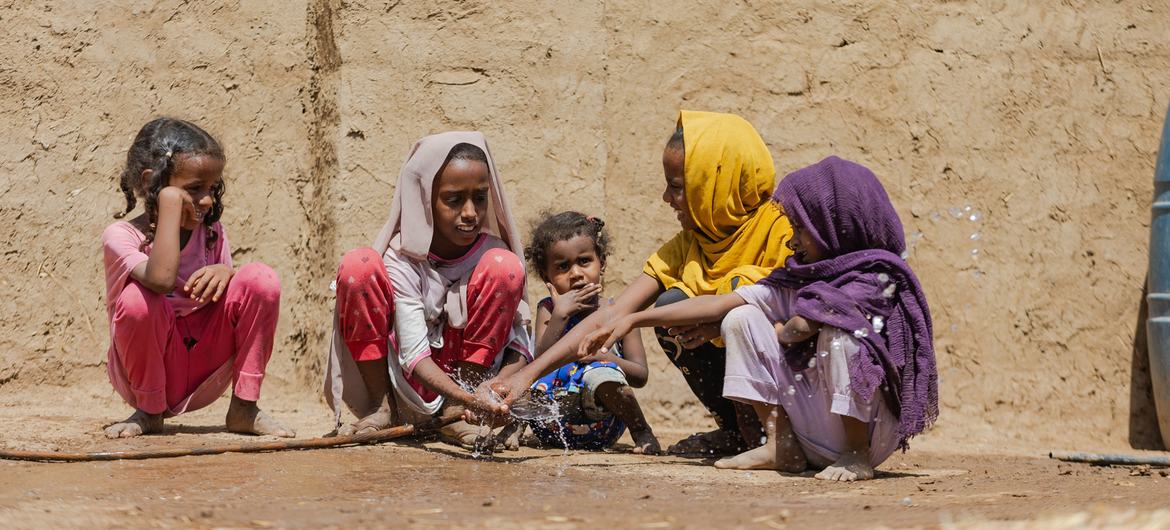
Children collect clean water from a pipe connected to their household.
© UNICEF/Ahmed Mohamdeen Elfatih
 
Children collect clean water from a pipe connected to their household.


15 July 2024
 Humanitarian Aid

Twelve years on from independence the people of South Sudan continue to face huge challenges, exacerbated now by the war in neighbouring Sudan, the World Health Organization (WHO) said on Monday.

The UN health agency insisted that the humanitarian, economic, social and political crises that began with brutal civil conflict in 2013 have been worsened by the recent influx of refugees from Sudan following the war between rival militaries there - with over 650,000 new arrivals since April 2023.

Right now, approaching six million people - or 46 per cent of the population – face crisis levels of food insecurity – a number that’s expected to rise to around 7.1 million during the current lean season.

El Niño and flooding

The WHO report also highlighted that the 2023-24 El Niño weather phenomenon - one of the strongest on record - brought dry conditions, erratic rainfall and significantly impacted harvests.

It also resulted in year-round flooding, which occurred in new previously unaffected areas.

Severe flooding, recurrent violence, weak governance, poverty and lack of infrastructure have created a complex humanitarian crisis which is hindering South Sudan’s development, the UN health agency warned.

A staggering 8.9 million people mostly in flood and conflict-affected areas have been affected, with women, children, the elderly and people with disabilities at higher risk.

UNHCR´s first-ever Forced Displacement Survey (FDS)

A pilot household survey by The UN refugee agency (UNHCR) on Monday, further underscores the dire conditions, revealing alarming levels of suffering among both refugee and host communities.

The Forced Displacement Survey (FDS) was conducted between April and December 2023 and covered around 3,100 households in South Sudan.

It found that all communities face many challenges including limited services, high unemployment, no education, poor infrastructure and overcrowded shelters.

74 per cent of households going hungry

Food is a major issue with 74 per cent of both refugee and host community households experiencing hunger in the past month.

And over 40 per cent of both groups had less income than the previous year. Refugees from the Sudan crisis have added to the already volatile areas and overstretched services. The conflict has also affected South Sudan’s economy by closing the main oil pipeline.

Marie-Helene Verney, UNHCR Representative in South Sudan, said that “we need to link humanitarian assistance to stabilization and development programmes to the extent possible…Substantive long-term investments are crucial to improving the wellbeing of refugees and the communities hosting them.”

South Sudan has over 460,000 refugees from Sudan, DRC and Ethiopia.

With the conflict in Sudan, South Sudan is receiving 1,600 people daily including refugees and returnees. The FDS provides comprehensive socioeconomic data on refugees and host communities to inform programming and policy. This data is key to targeting assistance where it matters most and bridging the humanitarian-development gap.


https://news.un.org/en/story/2024/07/1152106


https://creativecommons.org/licenses/by/4.0/legalcode

пятница, 21 июня 2024 г.

Haiti faces record displacement amid escalating gang violence

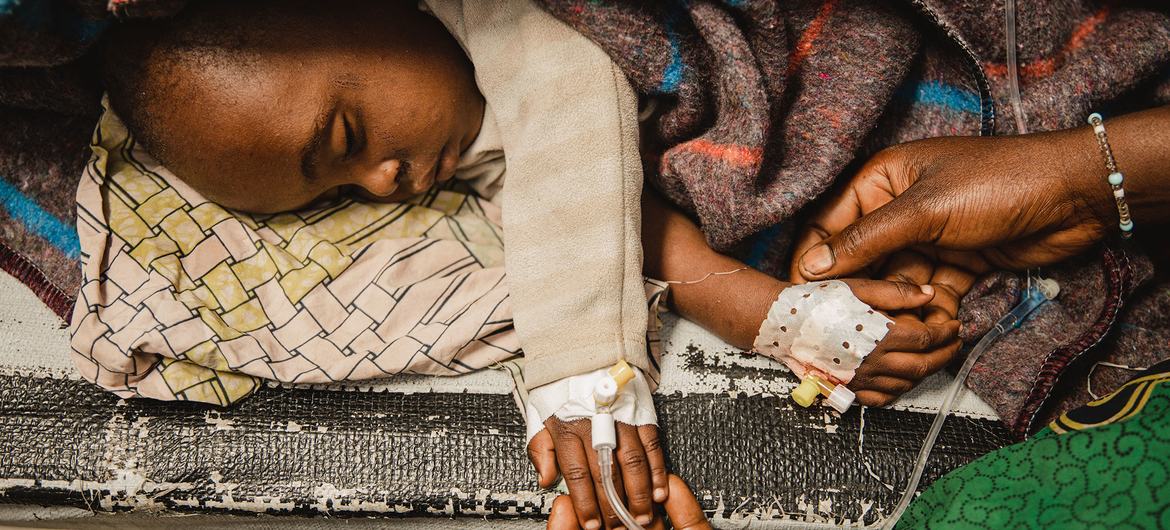
A child receives medical care at a cholera treatment centre in North Kivu, DR Congo.
© UNICEF/Jospin Benekire
 
A child receives medical care at a cholera treatment centre in North Kivu, DR Congo.


20 June 2024
Health

The UN World Health Organization (WHO) has announced a spike in cholera in several regions of the world, with almost 195,000 cases and over 1,900 deaths reported in 24 countries since the start of this year. 

The agency’s Eastern Mediterranean Region reported the highest number of cases, followed by the African Region, the Region of the Americas, the Southeast Asia Region, and the European Region.

There were no reported cases in the Western Pacific Region, it said in a bulletin issued on Wednesday.

Vaccines and resurgence

The UN health agency said it exhausted its global stockpile of Oral Cholera Vaccines (OCV) by March but was able to exceed “the emergency target of five million doses in early June for the first time in 2024.”

Yet, the supply of the vaccine does not equate to its demand. 

WHO reported that since January last year, 16 countries requested 92 million doses of OCV – almost double the 49 million produced during that time.

WHO, the UN Children’s Fund (UNICEF) and other partners are working together to use resources to find long-term solutions for cholera.

Tweet URL
DrTedros

Sleeping sickness eliminated in Chad

On the positive side of health news, WHO announced on Thursday that Chad successfully eradicated “sleeping sickness” as a public health problem.

The agency applauded the Government and people of Chad for eradicating the gambiense form of human African trypanosomiasis, (also known as sleeping sickness).

“I congratulate the government and the people of Chad for this achievement. It is great to see Chad join the growing group of countries that have eliminated at least one neglected tropical disease (NTD),” said Tedros Adhanom Ghebreyesus, WHO Director-General.

Target within reach

In eliminating the disease, Chad joining some 50 others globally that have succeeded in this endeavour.  

“The 100-country target is nearer and within reach,” Tedros added, referring to the target set out in the road map for address neglected tropical diseases by 2030.

Sleeping sickness can cause flu-like symptoms initially but eventually causing behaviour change, confusion, sleep cycle disturbances or even coma, often leading to death.

Improved access to early diagnosis and treatment, as well as surveillance and response has proven that countries can control and eventually eliminate transmission.

 https://news.un.org/en/story/2024/06/1151306 https://creativecommons.org/licenses/by/4.0/

понедельник, 10 июня 2024 г.

Sudan crisis: UN health agency alerts over attack on key hospital


People continue to be uprooted in Sudan's Darfurs and elsewhere by nearly 14 months of heavy fighting between rival militaries.
UN Photo/Albert González Farran
 
People continue to be uprooted in Sudan's Darfurs and elsewhere by nearly 14 months of heavy fighting between rival militaries.

10 June 2024
Peace and Security

Further deadly violence in Sudan’s besieged Al Fasher city has forced a major hospital to shut over the weekend after soldiers stormed the facility, prompting alarm on Monday from the UN World Health Organization (WHO) about the serious impact on sick and injured patients.

WHO is appalled by the recent attack on South Hospital, the only facility with surgical capacity in Al Fasher, Darfur,” the UN agency said in a post on X. “The hospital's closure following the attack has stretched the two other hospitals there beyond capacity, further limiting access to lifesaving services.”

According to reports, the hospital had to close after Rapid Support Forces (RSF) soldiers entered the building and opened fire. The NGO which helps to run the hospital, Médecins Sans Frontières (MSF), said on X that the armed fighters stole equipment and an ambulance.

Latest victim of Wal Al-Nura attack

In a related social media post, the WHO condemned “another attack” on a health facility in Wad Al-Nura in Al-Jazirah state south of Khartoum, that caused the death of a nurse who was on duty and caring for patients at the time.

Tweet URL
whosudan

“WHO strongly condemns attacks on healthcare. Health workers and patients should not have to risk their lives to provide and access health services,” the UN agency said, after the attack reportedly by RSF paramilitaries involving heavy artillery left more than 100 dead.

Rights chief’s warning

UN human rights chief Volker Türk added his voice on Friday to widespread international condemnation of the attack in which he cited evidence gathered by his Office which “indicates that the RSF used weapons with wide-area effects, including artillery shells, during the attack”.

Previously, the UN High Commissioner for Human Rights spoke out against the “deeply devastating impact” on civilians of the clashes between the Sudan Armed Forces and the RSF in Al Fasher in the far west of the vast country.

In addition to personal appeals in separate phone calls to the generals of the rival militaries, Mr. Türk warned that more than 1.8 million residents and internally displaced people were besieged in the city “and at imminent risk of famine”.

Any further escalation “would have a catastrophic impact on civilians and would deepen intercommunal conflict with disastrous humanitarian consequences”, the High Commissioner insisted.

Hunger crisis

The humanitarian emergency caused by heavy fighting which erupted across Sudan last April is now close to becoming the world’s largest hunger crisis.

According to the UN World Food Programme (WFP), 18 million people in Sudan are acutely food insecure including nearly five million who are now in the grip of emergency levels of hunger.

“This is the highest number ever recorded during the harvest season… Around 90 per cent of those in emergency are in areas where access is extremely limited due to heavy fighting and restriction,” WFP said, in an appeal for urgent funding. 


https://news.un.org/en/story/2024/06/1150861


https://creativecommons.org/licenses/by/3.0/legalcode

вторник, 19 марта 2024 г.

World News in Brief: Haiti aid delivery continues, South Sudan violence, pandemic treaty talks near end, Guterres on Myanmar crisis


In the heart of Port-au-Prince, the capital of Haiti, escalating violence has become a grim reality, leading to the mass displacement of women and children.
© UNICEF/Herold Joseph
 
In the heart of Port-au-Prince, the capital of Haiti, escalating violence has become a grim reality, leading to the mass displacement of women and children.


18 March 2024
Humanitarian Aid

Aid workers continue to deliver assistance to people in Haiti’s capital, Port-au-Prince, amid ongoing tension and volatility, the UN humanitarian affairs office, OCHA, said on Monday. 

Rampant gang violence has created a humanitarian crisis in the Caribbean country, whose Prime Minister, Ariel Henry, resigned last week.

UN children’s agency UNICEF reported that on Saturday, one of its containers was looted at the main port in the capital city. 

Tweet URL
UNICEFHaiti

The container held essential items for maternal, neonatal and child survival, including resuscitators, as well as water equipment and critical supplies for early childhood development and education. 

Condemning the looting, UNICEF emphasized that depriving children of vital health supplies amidst a collapsing healthcare system is a violation of their rights.

Discussions continue with port and State authorities on efforts to secure more than 300 containers belonging to UN agencies and non-governmental organizations (NGOs) in Port-au-Prince. 

Delivering meals, tracking displacement 

Meanwhile, since early March, the World Food Programme (WFP) has delivered 115,000 hot meals to people displaced in the capital.

UN health agency WHO and its regional office, the Pan American Health Organization (PAHO), continue to support the Hôpital Universitaire la Paix, the sole public hospital in Port-au-Prince with the capacity to treat trauma. 

A new survey by the International Organization for Migration (IOM) found that in addition to creating displacement within the capital area, attacks and insecurity are pushing more and more people to leave the city to find refuge in provinces, taking the risk of passing through gang-controlled routes. 

IOM said nearly 17,000 people left the capital from 8 to 14 March, and more than half are heading towards the Grand Sud departments – a region that is already hosting more than 116,000 people who have fled the metropolitan area of Port-au-Prince in recent months. 

South Sudan: Surge in intercommunal conflict harms civilians

Civilians are bearing the brunt of a surge in intercommunal conflict in pockets of South Sudan, the UN Mission in the country, UNMISSsaid on Monday.

UNMISS published its latest quarterly report on violence affecting civilians, which covers the period from October to December 2023.

A total of 233 incidents were documented during these months, with 862 victims either killed, injured, abducted or subjected to conflict-related sexual violence.

Warrap state was the main hotspot, with a staggering 87 per cent spike in victims as compared to the previous quarter, rising from 244 to 457.

Retaliatory attacks

The report specifies that more than half of those affected by overall subnational violence were caught up in retaliatory attacks related to the ongoing dispute between Dinka Twic Mayardit in Warrap and Dinka Ngok communities in the Abyei region. 

“UNMISS is doing all it can to prevent violence and build peace in the affected areas, but urgent intervention by authorities at the national, state and local levels is needed to resolve underlying grievances and build peace,” said Nicholas Haysom, Special Representative of the Secretary-General and Head of UNMISS.

The report also revealed a nearly 55 per cent increase in abduction victims, from 65 to 100, mainly men and boys. 

Additionally, 104 victims were subjected to sexual violence. Of this number, 63, including 12 minors, experienced conflict-related sexual violence. Another 41, mainly girls and women, suffered sexual and gender-based violence.

UNMISS said that although this represented a 20 per cent decrease in victims compared to the previous quarter, sexual and gender-based violence remains among the most critical threats.

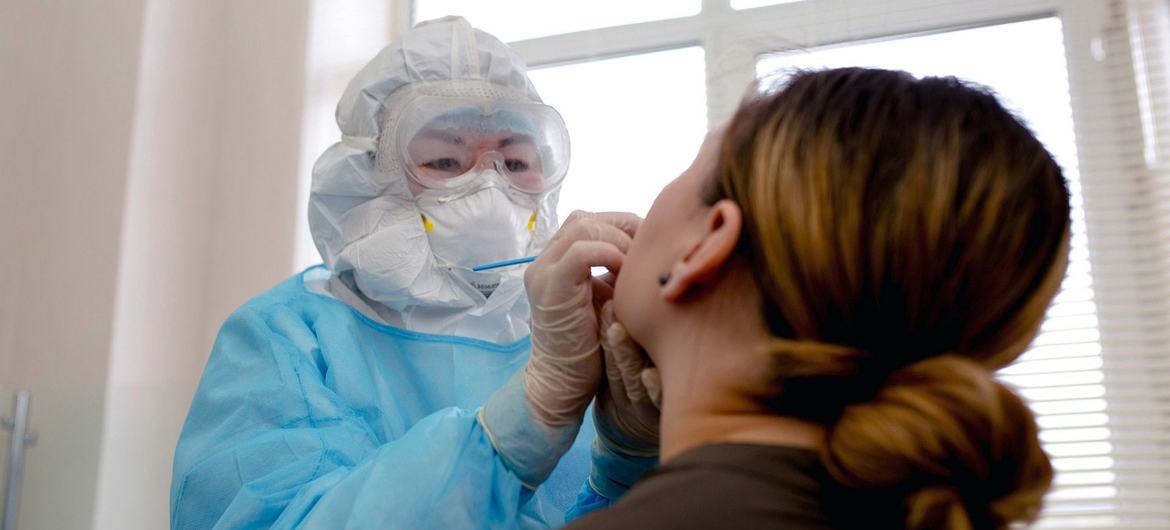
Testing for COVID-10 (file)
© WHO
 
Testing for COVID-10 (file)

UN chief ‘deeply concerned’ at deteriorating situation across Myanmar

The Secretary-General is deeply concerned by the deteriorating situation and escalation of conflict in Myanmar, said his Deputy Spokesperson in a statement issued on Monday.

Tweet URL
UN_Spokesperson

“He condemns all forms of violence and reiterates his call for the protection of civilians including aid workers in accordance with international humanitarian law, for the cessation of hostilities, and humanitarian access”, said Farhan Haq.

An expansion of the fighting in Rakhine state between the forces of the military regime - which overthrew the democratically elected Government in February 2021 – and separatist and independent militia, is driving a new wave of displacement.

It is also exacerbating pre-existing vulnerabilities and discrimination.

“The Secretary-General calls on all parties to prevent further incitement of communal tensions”, said Mr. Haq.

“He is alarmed by reports of ongoing airstrikes by the military, including today in Minbya township that reportedly killed and injured many civilians. He is concerned by reports of forcible detention and recruitment of youths, including Rohingya, and the potential impact of forced conscription on human rights and on the social fabric of communities in Myanmar.”

Mr. Guterres also called for “sustained” international and regional attention to the Myanmar crisis.

“Addressing the root causes of systemic discrimination in Myanmar and seeking accountability for serious violations of international law will be central to any lasting solution to the crisis.”

Meanwhile the UN is committed to staying and delivering in Myanmar, including the ASEAN regional bloc “to attain sustainable peace.”‘

Pandemic treaty’ deal enters final round of negotiations 

The head of the UN health agency issued an appeal on Monday to the international community not to miss the chance to sign on to the so-called Pandemic Treaty.

“We cannot forget the trauma of the COVID-19 pandemic and the painful lessons it taught all of us,” said Tedros Adhanom Ghebreyesus, as he urged Member States not to forget “the seven million people” at least who died during the coronavirus emergency.

Countries gathered at World Health Organization (WHO) headquarters in Geneva have begun a nine-day negotiating marathon towards finalising a draft agreement.

Tedros told delegations that the “potential benefit” of the treaty “cannot be measured and will endure for generations”.

But, media reports have indicated that potential obstacles to a deal include concerns among low- and middle-income countries that they may not be compensated sufficiently for working with drug manufacturers nor given enough technical know-how to make medicines themselves. 


https://news.un.org/en/story/2024/03/1147691

https://creativecommons.org/licenses/by/3.0/legalcode

суббота, 11 ноября 2023 г.

World Health Organization Chief, Briefing Security Council on War in Gaza, Joins Calls for Immediate Ceasefire, Unfettered Humanitarian Access

9472ND MEETING (PM)
SC/15487

World Health Organization Chief, Briefing Security Council on War in Gaza, Joins Calls for Immediate Ceasefire, Unfettered Humanitarian Access

One Child Killed Every Minute; Risk of Disease Growing; ‘Nowhere is Safe’

Describing a health system that is on the verge of collapse, the head of the United Nations health agency urged the Security Council today to secure an immediate ceasefire and unfettered humanitarian access in Gaza where “nowhere and no one is safe” as the war between Israel and Hamas rages on.

Tedros Adhanom Ghebreyesus, Director-General of the World Health Organization (WHO) said that the situation is impossible to describe, with hospital corridors crammed with the injured, the sick and the dying, morgues overflowing, and surgical procedures conducted without anaesthesia. Thousands of displaced people are sheltering at hospitals, with 70 per cent of the more than 10,800 people so far killed being women and children.  “On average, a child is killed every 10 minutes in Gaza,” he stated.

Some 1.5 million people now are displaced and looking for shelter anywhere, but “nowhere and no one is safe” and overcrowding is increasing the risk diarrheal and respiratory diseases and skin infections, he said. WHO, which was part of the first aid convoy to enter Gaza through the Rafah Crossing on 21 October, has since delivered 63 metric tons of specialist medical equipment and supplies, but this does not address the scale of needs, he added.

Since 7 October, WHO has verified more than 250 attacks on health-care facilities in Gaza and the West Bank, in addition to 25 attacks on similar sites facilities in Israel, he added.  He called for unfettered access into Gaza to deliver humanitarian aid, for Hamas to release its hostages and for Israel to restore electricity, water and fuel supplies.  He also called for a ceasefire and for both sides to abide by international humanitarian law.

Marwan Jilani, Director General of the Palestine Red Crescent Society, which is responsible for receiving and distributing humanitarian aid through the Rafah Crossing, said that not a single drop of fuel has entered — and without fuel or aid, particularly in the north of the Gaza Strip, many people will starve or die of thirst and disease.  The Council and the international community must ensure that an effective and immediate ceasefire is enforced, that fuel gets into Gaza immediately and that humanitarian aid is increased, with deliveries getting into northern Gaza, he said.

The Council must also ensure respect for international humanitarian law and the protection of civilians in all parts of Gaza, he stated.  Moreover, it must ensure that hospitals get much-needed fuel, medicine and medical supplies, and that fresh medical teams be allowed to enter to relieve health workers who have been working tirelessly for the past 34 days.  Council members must urgently do all they can to spare further deaths and suffering of civilians, he stressed.

“Where should Palestinians go?  To the sea?  Or out of the Gaza Strip?” asked the Permanent Observer for the State of Palestine, at the start of the ensuing debate.  Hospitals in Gaza have become Israel’s primary target, he said, adding that while Israel calls for the release of 200 hostages, it has itself taken 2 million hostages — a reference to Gaza’s population.  The only options that Israel has ever given the Palestinians is to submit, leave or die — or in international legal terms, apartheid, ethnic cleansing or genocide, he stated.

Israel's representative said that his country is providing safe passage for Gazans to exit an active war zone, but Hamas is preventing them from leaving.  Israel has also exposed to the world that Hamas has its headquarters in and under Al-Shifa Hospital, he added, stating that over 16 years, Hamas has turned every inch of Gaza into a “terror trap”, using medical workers and patients as human shields. The Government of Israel has gone above and beyond to mitigate civilian casualties, but Hamas must be held accountable, he said, emphasizing:  “Israel is fighting the war for its very future and existence.”

Among Council members, speakers were united in their concern about the catastrophic humanitarian situation in Gaza and renewed their call for unimpeded and sustained humanitarian access.  They remained divided, however, on how the 15-member organ should respond — with some urging an immediate ceasefire, while others underlined the importance of humanitarian pauses.

The United States’ representative detailed how his country is working with Israel, Egypt and the United Nations to ensure the entry of food, fuel, water and medicines into Gaza, but acknowledged that the quantity is nowhere near enough.  Beginning today, Israel will enact four-hour pauses in its military operations in northern Gaza, to be announced three hours ahead, he said, adding that such pauses will also help in the context of the safe release of hostages.

The Russian Federation’s delegate noted his country’s efforts, including an announcement by its Emergency Ministry on 10 November of the delivery of a fourth consignment of 25 tons of food and medicine to Egypt.  However, the United States is obstructing peace initiatives, he said, emphasizing the importance of a ceasefire.  “Only this, and not certain short-term pauses, is the only real measure that would help avoid new casualties,” he said.

The representative of the United Arab Emirates, which requested today’s meeting, said that Israel must end its siege of Gaza and reinstate essential services.  Its attacks will not bring security to that country, she added.  Sustained and multi-day humanitarian pauses or truces — which are fundamental for achieving the goal of a durable and sustained ceasefire — must be activated, she stated, emphasizing that the two-State solution must be the overarching goal for achieving peace and stability in the Middle East.

THE SITUATION IN THE MIDDLE EAST, INCLUDING THE PALESTINIAN QUESTION


https://press.un.org/en/2023/sc15487.doc.htm

https://creativecommons.org/licenses/by/3.0/legalcode


среда, 18 октября 2023 г.

Israel-Gaza: UN chief urges ceasefire; humanitarian supplies given green light to enter enclave


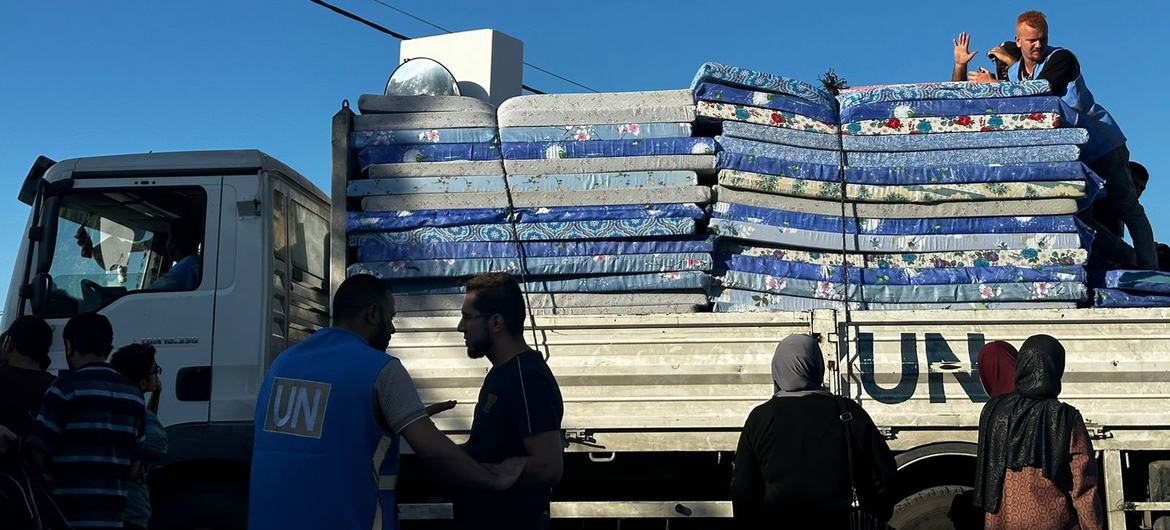
Mattresses are delivered by a UN truck in the south of Gaza.
© UNRWA
 
Mattresses are delivered by a UN truck in the south of Gaza.
18 October 2023

Peace and Security

UN chief António Guterres called on Wednesday for an immediate humanitarian ceasefire in the Middle East to ease the “epic human suffering” in the Israel-Gaza conflict. The head of the UN health agency (WHO) said he welcomed the reported agreement between the US and Israel, which would allow food, water and medical aid into the battered enclave via the Egyptian border. 

Speaking in Beijing, Mr. Guterres said that a ceasefire would “provide sufficient time and space” to realize two essential appeals which he made earlier this week: to Hamas, for the immediate and unconditional release of the hostages held in Gaza, and to Israel, to immediately allow aid to enter the sealed-off enclave in the throes of a devastating humanitarian crisis.

“The region is on the precipice,” he warned.

Tweet URL

The call came a day after hundreds were killed in a strike at Al-Ahli Hospital in Gaza City, which Mr. Guterres strongly condemned, stressing that hospitals and all medical personnel are protected under international law.

Both sides have blamed each other, with Gaza’s de facto authorities accusing the Israeli military, who in turn held misfired rockets launched by Islamic Jihad militants towards Israel responsible.

US President Joe Biden is in Israel where he was met by Prime Minister Benjamin Netanyahu. Mr. Biden pledged support for Israel and said he was "deeply saddened and outraged" by the lethal explosion at the hospital in Gaza City.

Aid to enter Gaza

Mr. Biden also announced that Israel had agreed to let aid into the Gaza Strip across the border with Egypt, which was confirmed by Mr. Netanyahu's office, according to news reports. 

In response, WHO chief Tedros Adhanom Ghebreyesus tweeted that he welcomed US leadership and the Israeli decision allowing essential aid into Gaza saying that "many lives depend on this happening."

'Unprecedented catastrophe' 

The head of the UN Palestine refugee agency, Philippe Lazzarini addressed an emergency meeting of the Council of Foreign Ministers of the Organization of Islamic Cooperation, and said "an unprecedented catastrophe is unfolding before our eyes."

"Gaza is being strangled and the world seems to have lost its humanity", he added. "Every hour we receive more and more desperate calls for help from people across the Gaza Strip. Thousands of civilians were killed over the last 12 days, including women and children."

Aid stuck at the border

Trucks carrying lifesaving aid, still remain lined up at the Rafah crossing between Gaza and Egypt. In a post on social platform X early Wednesday, WHO chief Tedros deplored that WHO supplies have been “stuck” at the border for four days.

“Every second we wait to get medical aid in, we lose lives,” he said.

Relentless diplomatic efforts by senior UN officials in favour of humanitarian access were set to continue, with the organization’s relief chief Martin Griffiths on the ground in Cairo, where he will be joined by Secretary-General Guterres on Thursday.

Mr. Griffiths wrote on X on Wednesday that providing aid to the people of Gaza is “a matter of life or death”.

“Doing so in a “sustained, unimpeded, predictable manner” is a “humanitarian imperative,” he added.

‘Too many lives in the balance’

Food, water, critical medicines and health supplies are running out fast in the enclave, where over a quarter of the population has been displaced since the start of the conflict. WHO said on Tuesday that out of 35 hospitals there, four are not functioning “due to severe damage and targeting”. Only eight of the 22 primary healthcare centres run by the UN agency for Palestine refugees (UNRWA) are partially functional.

Mr. Guterres underscored that aid is desperately needed to respond to the “most basic needs” of the people of Gaza, the “overwhelming majority” of whom are women and children.

“Too many lives – and the fate of the entire region – hang in the balance,” he said.

More to come on this developing story soon...


https://news.un.org/en/story/2023/10/1142492

https://creativecommons.org/licenses/by/3.0/legalcode