Показаны сообщения с ярлыком election. Показать все сообщения

четверг, 21 декабря 2023 г.

UN official appeals for calm ahead of DR Congo election outcome

20.12.2023

UN official appeals for calm ahead of DR Congo election outcome 

The UN Special Representative in the Democratic Republic of the Congo (DRC) has called for a peaceful and electoral process as voting got underway on Wednesday.

Bintou Keita urged the Congolese population and political actors to calmly exercise their civic duty and to strictly follow the laws of the country. 

She also called on political parties and their candidates to maintain calm while waiting for results to be posted by the Independent Electoral Commission (CENI) and appealed to them and the general population to avoid unnecessary gatherings around polling stations to prevent the risk of confrontations.  

Ms. Keita commended official national election observers for their efforts to ensure a credible process and reiterated the Secretary-General’s ongoing support for the Congolese people in their pursuit of peace, democracy, and stability.


https://news.un.org/en/story/2023/12/1145002


https://creativecommons.org/licenses/by/3.0/legalcode

среда, 30 августа 2023 г.

UN chief ‘firmly condemns’ Gabon coup, notes reports of election abuses


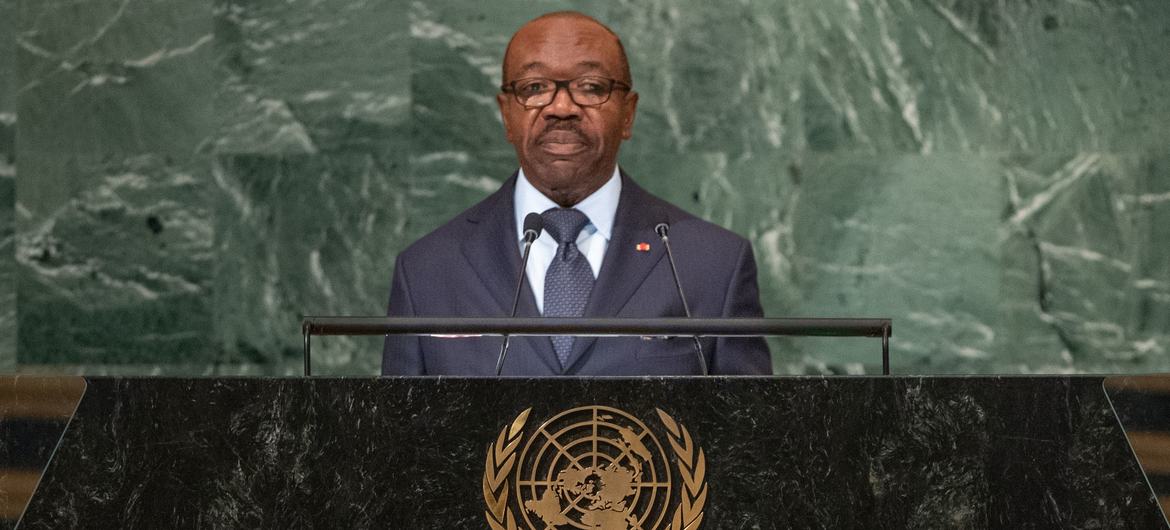
Ali Bongo Ondimba, President of the Gabonese Republic, addresses the general debate of the General Assembly’s 77th session.
UN Photo/Cia Pak
 
Ali Bongo Ondimba, President of the Gabonese Republic, addresses the general debate of the General Assembly’s 77th session.
30 August 2023
Peace and Security

The UN Secretary-General on Wednesday firmly condemned the on-going coup attempt in Gabon, while acknowledging that “serious infringements of fundamental freedoms” appear to have taken place during elections at the weekend.

Spokesperson Stéphane Dujarric said that UN chief António Guterres was following the evolving situation in the capital Libreville “very closely”.

While condemning military action as “a means to resolve the post electoral crisis”, the Secretary-General said he had noted the announcement by the Central African nation’s electoral body of a win for incumbent president Ali Bongo with “deep concern” given reports of serious irregularities at the polls.

‘Strong opposition’ to coups

This announcement of a military takeover in the capital by a group of officers who declared the election results void and the dissolution of State institutions, would mark the eighth coup – if successful – in West and Central Africa since 2020.

“The Secretary-General reaffirms his strong opposition to military coups”, said the UN Spokesperson.

According to news reports, the coup leaders have placed President Bongo under house arrest, ending in effect more than half a century of dynastic rule.

The current president’s father, Omar, came to power in 1967, and after violent unrest erupted following his disputed election victory in 2016, there was a foiled coup attempt in 2019.

News reports said the coup leaders calling themselves The Committee of Transition and the Restoration of Institutions, had declared the country to be in a state of institutional, political, economic and social crisis.

So far, there has been no response from the existing Government and the president’s whereabouts are unknown.

Tweet URL

The country is currently an elected member of the UN Security Council.

Dialogue and restraint call

“The Secretary-General calls on all actors involved to exercise restraint, engage in an inclusive and meaningful dialogue and ensure that the rule of law and human rights are fully respected”, said the statement issued by his Spokeperson. 

“He also calls on the national army and security forces to guarantee the physical integrity of the President of the Republic and his family.”

Standing with the people

Mr. Dujarric also stressed that the UN “stands by the people of Gabon.”

Questioned by correspondents at the daily Noon Briefing in New York on the pattern of military coups across the region, he said the best way of dealing with them “is in fact to invest more in preventing them prior, in investing in strong institutions, in ensuring that elections are safe, that people are able to express themselves, that human rights are respected.”

The UN has 81 international staff and 163 national staff working in the country and Mr. Dujarric said that latest information suggested that all staff and their families were safe and sound.

“Our broader concern is really for the people of Gabon, and people of countries that have undergone military coups recently which is a clear violation of their rights.”


https://news.un.org/en/story/2023/08/1140227

https://creativecommons.org/licenses/by/3.0/legalcode

суббота, 26 августа 2023 г.

Guterres calls for peaceful resolution of election disputes in Zimbabwe


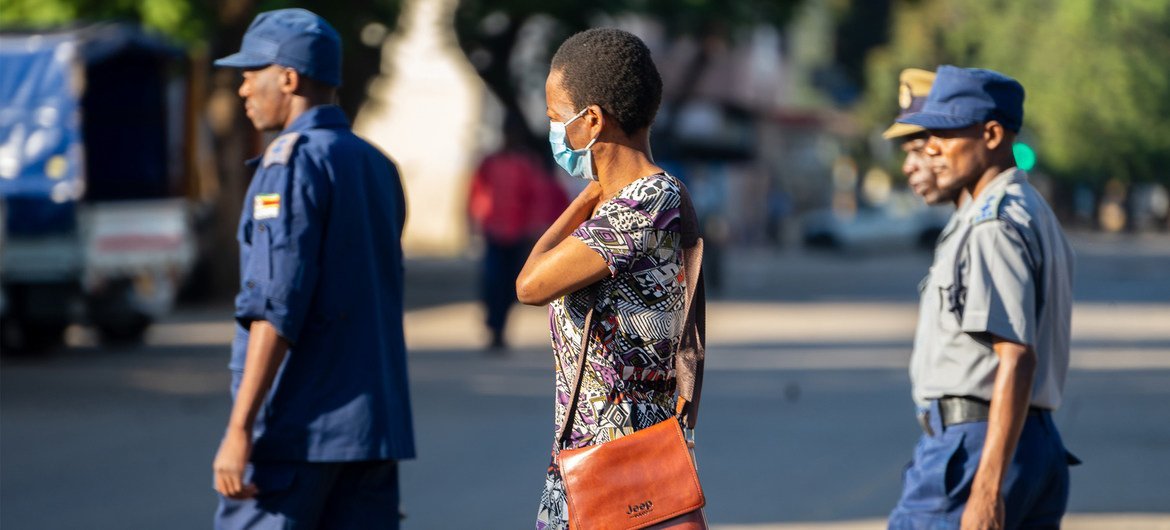
A woman wearing a COVID-19 protective mask walks past a group of police officers on patrol in Harare, Zimbabwe (file).
ILO/KB Mpofu
 
A woman wearing a COVID-19 protective mask walks past a group of police officers on patrol in Harare, Zimbabwe (file).

27 August 2023
Peace and Security

UN Secretary-General António Guterres is closely following developments in Zimbabwe’s elections, his spokesperson said on Sunday.

Citizens went to the polls on Wednesday but voting had to be extended into Thursday in some areas, including the capital, Harare, due to a lack of ballot papers.

President Emmerson Mnangagwa secured a second five-year term in results announced late on Saturday. 

His party, ZANU-PF, has been in power since 1980, following the end of white minority rule in the southern African country, formerly known as Rhodesia.

Mr. Mnangagwa, 80, received more than 52 per cent of the vote, according to media reports. Opposition candidate Nelson Chamisa, 45, received 44 per cent. His party, Citizens Coalition for Change, rejected the results.

Arrests, intimidation and harassment

The UN chief was concerned about the arrest of electoral observers, reports of voter intimidation, threats of violence, harassment and coercion.

“The Secretary-General calls on political leaders and their supporters to reject any and all forms of violence, threats of violence, or incitement to violence, and to ensure that human rights and the rule of law are fully respected,” the statement said.

“The Secretary-General calls on political actors to peacefully settle any disputes through established legal and institutional channels, and urges the competent authorities to resolve any disputes in a fair, expeditious, and transparent manner to ensure that the results are a true reflection of the will of the people.”


https://news.un.org/en/story/2023/08/1140117


https://creativecommons.org/licenses/by/3.0/legalcode

среда, 23 августа 2023 г.

Presidential, Parliamentary Elections in Libya Only Way to Restore Legitimacy of Country’s Institutions, Delegates Tell Security Council

SC/15392

Presidential, Parliamentary Elections in Libya Only Way to Restore Legitimacy of Country’s Institutions, Delegates Tell Security Council

Women’s Rights Activist Expresses Concern over Severe Restrictions on Civil Society Space, Stresses Need for Legal Reform, International Cooperation

Libya needs more than ever to close the current page of institutional fragmentation, a senior United Nations official today told the Security Council, calling for an inclusive political agreement that would pave the way for peaceful and transparent elections across the country.

Abdoulaye Bathily, Special Representative of the Secretary-General and Head of the United Nations Support Mission in Libya (UNSMIL), said his exchanges with local actors throughout the country illustrate that Libyans want to end successive interim arrangements towards an elected and legitimate leadership.  All Libyan leaders have agreed to amendment of the draft laws, he said, urging the country’s two chambers to finalize and make electoral laws implementable towards a reasonable electoral timeline.  “The electoral landscape should be a level playing field for all candidates”, he stressed, noting that citizens yearn for unified political, military, security and economic institutions to safeguard the territorial integrity and national identity of the country.

Highlighting economic progress, he noted that the reunification of the Central Bank of Libya as a sovereign Libyan institution has been finalized.  However, the fragile stability that had prevailed in Tripoli since August 2022 was shattered by fierce armed clashes on 14 and 15 August between the Deterrence Apparatus for Combating Organized Crime and Terrorism and the 444 Brigade, with 55 killed.  Stressing the need for all parties to preserve security gains achieved in recent years, he said UNSMIL will continue to engage relevant actors to advance the reunification of military and security institutions.

Voicing concern over severe restrictions on civil society space in Libya, Noura Al Jerbi, civil society briefer and women’s rights activist, spotlighted draconian laws and regulations, unwarranted investigations and enforced disappearance of human rights defenders and activists.  Libya’s legal framework only serves to supress civil society, she asserted, calling for a new civil society law and an independent civil society commission whose work will not be subject to interference from political authorities or the security sector.  Detailing new procedures which discriminate against females by imposing unjust restrictions on women’s travel in Libya, she stressed the need for legal reform and international cooperation.

Also briefing the Council today was Ishikane Kimihiro (Japan), in his capacity as Chair of the Council Committee established pursuant to resolution 1970 (2011) concerning Libya.  He detailed the Committee’s work from 20 June to 22 August 2023.  The update for the two-month period covered acts by armed groups that threaten the peace and security of the country; violations of human rights, including human trafficking and migrant smuggling; illicit exports of petroleum products; and implementation of the asset freeze.  He further discussed the arms embargo, the travel ban and the sanctions list, including new delisting requests received by the Committee.

In the ensuing debate, Council members underscored that presidential and parliamentary elections in Libya are the only way to restore the legitimacy of the country’s institutions.  However, security is also a precondition for an environment conducive to elections, numerous delegates pointed out, as they expressed concern about the fragile security context recently manifested in armed clashes between rival groups in Tripoli.

“We have already seen the cost of violence and instability in Libya’s neighbourhood this year, from Sudan to Niger,” said the representative of the United Kingdom with regard to the recent violence in Tripoli.  It is imperative that civic space is protected to allow Libyans to hold their leaders accountable and to empower everyone to play a role in developing an open, democratic society that allows for freedom of association and assembly, he underscored.

The representative of China welcomed the work of the joint 6+6 committee in reaching the draft electoral law and its approval by Libya’s House of Representatives.  Citing external interference and pressure as important sources of instability in Libya, he urged the international community to adhere to the principle of a Libyan-led and -owned process, instead of blindly imposing solutions........


https://press.un.org/en/2023/sc15392.doc.htm

https://creativecommons.org/licenses/by/3.0/legalcode

вторник, 15 августа 2023 г.

United Nations Calls on All Stakeholders in Gabon to Ensure Peaceful, Inclusive, Credible Electoral Process


SG/SM/21907

United Nations Calls on All Stakeholders in Gabon to Ensure Peaceful, Inclusive, Credible Electoral Process

The following statement was issued today by the Spokesman for UN Secretary-General António Guterres:

At the start of the electoral campaign for the presidential, legislative and municipal elections in Gabon scheduled for 26 August, the United Nations calls on all stakeholders to ensure a peaceful, inclusive and credible electoral process.

The United Nations urges all political stakeholders to refrain from any inflammatory action or speech that could undermine the process.

The United Nations calls on all candidates to contribute to the integrity of the electoral process by overcoming any disagreements through dialogue and addressing any complaints that may arise through established legal channels.


https://press.un.org/en/2023/sgsm21907.doc.htm

https://creativecommons.org/licenses/by/3.0/legalcode

четверг, 3 августа 2023 г.

Time running out on election timeline for South Sudan, UN official warns


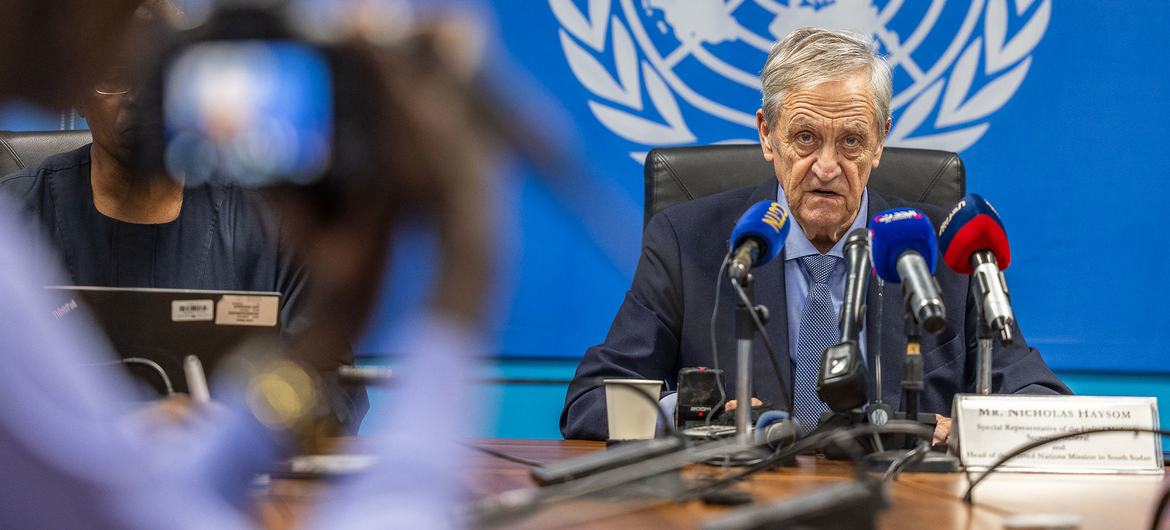
Nicholas Haysom, the UN Secretary-General’s Special Representative in South Sudan briefs the media on the current political situation in the country.
UNMISS/Gregório Cunha
 
Nicholas Haysom, the UN Secretary-General’s Special Representative in South Sudan briefs the media on the current political situation in the country.
2 August 2023
Peace and Security

Action is needed now to pave the way for timely and credible elections in South Sudan next December, the UN Special Representative for the country told journalists in the capital, Juba, on Wednesday.

“With only 17 months remaining on the Roadmap timelines before elections in 2024, I repeat what I had said in an earlier press conference, that 2023 is a ‘make or break’ year,” Nicholas Haysom said.

Mr. Haysom heads the UN Mission in South Sudan (UNMISS) which reported that “a race against time” is now underway in the world’s youngest nation as the vote looms against a backdrop of surging intercommunal violence and the impacts of the crisis in its neighbour to the north.

Road to transition

The elections, which were originally scheduled for February 2023, will mark the completion of democratic transition following years of conflict. 

South Sudan gained independence in July 2011 but fighting erupted in December 2013 between forces loyal to President Salva Kiir and his former deputy, Riek Machar. A 2018 peace deal ended the war.

Mr. Haysom noted that with the countdown on for the elections, “foundational tasks” necessary for South Sudanese to head to the polls remain incomplete.

Credibility is crucial

Chief among them is the need to reconstitute three essential bodies, namely, the National Constitutional Review Commission, the National Elections Commission, and the Political Parties Council.

“These foundational tasks also encompass the drafting of a new Constitution, where the parties must reach consensus on the constitutional provisions and have realistic expectations on what can be done in the remaining time and within existing resource constraints,” he added.

Leaders will also have to finalize transitional security arrangements and create a conducive political and civic environment that promotes free and open debate. 

“Simply holding elections is not enough – the credibility, transparency and inclusivity of the process is what brings legitimacy,” he said.

“This includes that political parties must be able to register and campaign freely; a civil society that will serve as extended arms for civic education and act as observer watchdog of the process. It includes a media that can report on the process and give space to the variety of voices and opinions for voters to make informed choices.” 

Tweet URL

Sudan war’s impact

Mr. Haysom reiterated the UN Mission’s ongoing support for electoral and constitution-making processes in, together with regional partners such as the African Union and the East African bloc IGAD.  

He also highlighted the impact of the Sudan crisis on the country. 

“The war in Sudan dominates regional and global attention, while South Sudan bears a share of the crisis. Food prices have increased, lowering the ability of vulnerable households’ access food and meet basic requirements, while reduced cross-border trade has led to localized scarcity of food commodities,” he said.

South Sudan has so far received some 190,000 people who have fled the fighting, most of whom are returnees. With numbers rising, humanitarians have urgently appealed for $26.4 million to provide the arrivals with onward transportation from border areas.  He also pointed to the potential for violence, given the daily influx of people.

“The congestion and increased competition over scarce resources could exacerbate existing inter-communal tensions between the returnees and host communities and between some of the returnee communities and this needs to be averted,” he said.

In response, UNMISS has intensified patrols and reinforced its military presence in the border town of Renk to mitigate and prevent any outbreak of violence. 

Strengthen trust

Mr. Haysom also spoke about other critical issues, including ongoing efforts by UNMISS to protect civilians in and around the city of Malakal following communal clashes last month in the UN Protection Site, and its proactive response to reported escalations in Jonglei and Greater Pibor.

In conclusion, he highlighted the pressing need within South Sudan to deepen mutual trust between communities and their leaders, build common purpose and a shared vision of the future. 

“I believe there will be international willingness to support the peace process and the elections if there are demonstrable actions by the principal stakeholders in those elections and the right frameworks to allow for the receipt of such assistance,” he said.

“But key decisions about electoral, constitutional and security structures must be made urgently; and these decisions do not require special additional resources. Success in this area will persuade donors and international partners that a peaceful and secure South Sudan is a viable place for investment and support.”


https://news.un.org/en/story/2023/08/1139372


https://creativecommons.org/licenses/by/3.0/legalcode

четверг, 27 июля 2023 г.

Cambodia: UN rights chief regrets ‘severely restricted’ poll and opposition clampdown


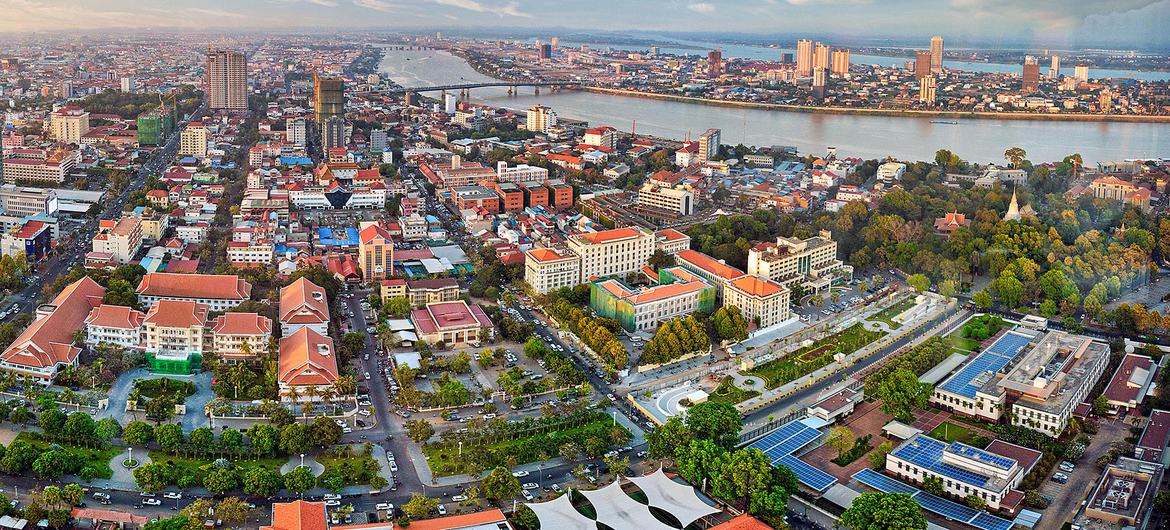
Phnom Penh, the capital of Cambodia.
© Unsplash/Paul Szewczyk
 
Phnom Penh, the capital of Cambodia.
26 July 2023
Human Rights

The UN human rights chief on Wednesday lamented the severe electoral clampdown by the Cambodian Government during the weekend vote, including restrictions on opposition parties, NGOs and media.

In a news release issued by his Office, Volker Türk, UN High Commissioner for Human Rights, denounced “constant shrinkage” in Cambodia’s democratic space in recent years, which he said is undermining citizen’s fundamental freedoms and their right to participate in the public square.

In the lead up to the elections, Cambodia’s National Election Committee disqualified two leading opposition political parties and, immediately prior to polling day, authorities ordered internet service providers to block social media accounts of three media organizations which they deemed critical of the Government, OHCHR said.

“Opposition political parties, activists, members of the media and others have faced numerous restrictions and reprisals that appear intended to curb political campaigning and to hinder the exercise of fundamental freedoms essential for free and fully participatory elections,” said Mr. Türk.

‘A chilling effect’

The UN rights chief also expressed concerns that the restrictions and other intimidatory measures, including some physical attacks, created a “chilling effect”, depriving people of credible news and information sources needed to make informed choices.

According to media reports, Cambodia’s longtime ruling party, led by incumbent Prime Minister Hun Sen, won an overwhelming number of seats in what was practically an uncontested election.  

Tweet URL

Multiple news outlets also reported on Wednesday that Hun Sen had announced he will resign and hand over power to his son, who is also the country’s army chief, in early August.

‘Address shortcomings’

Mr. Türk called on the Government to address the shortcomings and hold dialogue with all political parties and civil society actors to create an enabling and inclusive civic space for all Cambodians.

“A vibrant strong and inclusive democracy that nurtures and respects a plurality of voices and opinions is fundamental to ensuring the respect and protection of human rights and is key to peaceful social and economic development,” he said.

He also urged Cambodian authorities to boost participation of marginalized groups, including women, indigenous peoples, persons with disabilities, and youth, to foster a more inclusive and representative democracy.


 https://news.un.org/en/story/2023/07/1139107

https://creativecommons.org/licenses/by/3.0/legalcode