Показаны сообщения с ярлыком DR Congo. Показать все сообщения

пятница, 28 марта 2025 г.

DR Congo: Record numbers face acute or emergency hunger


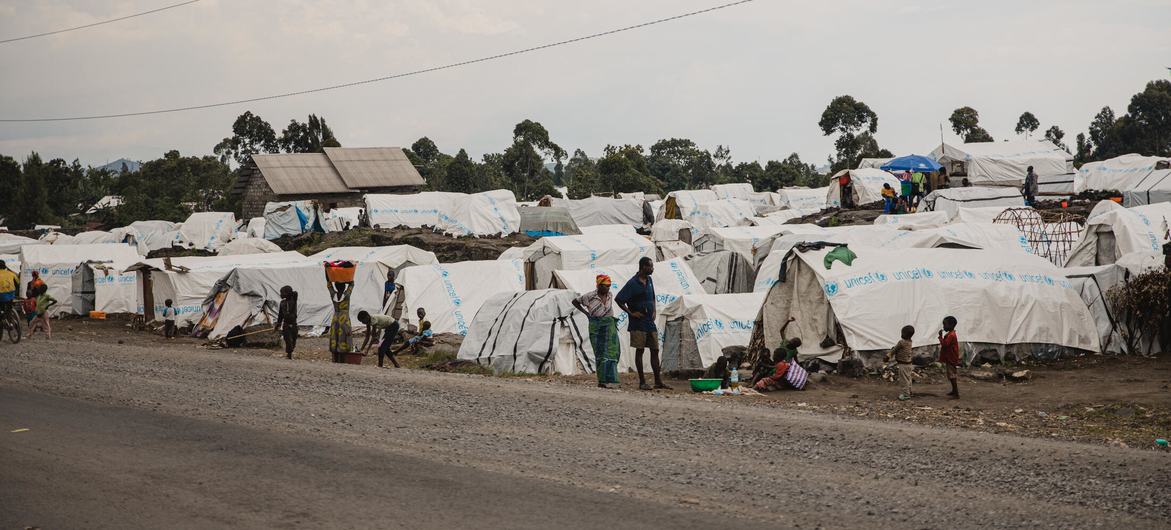
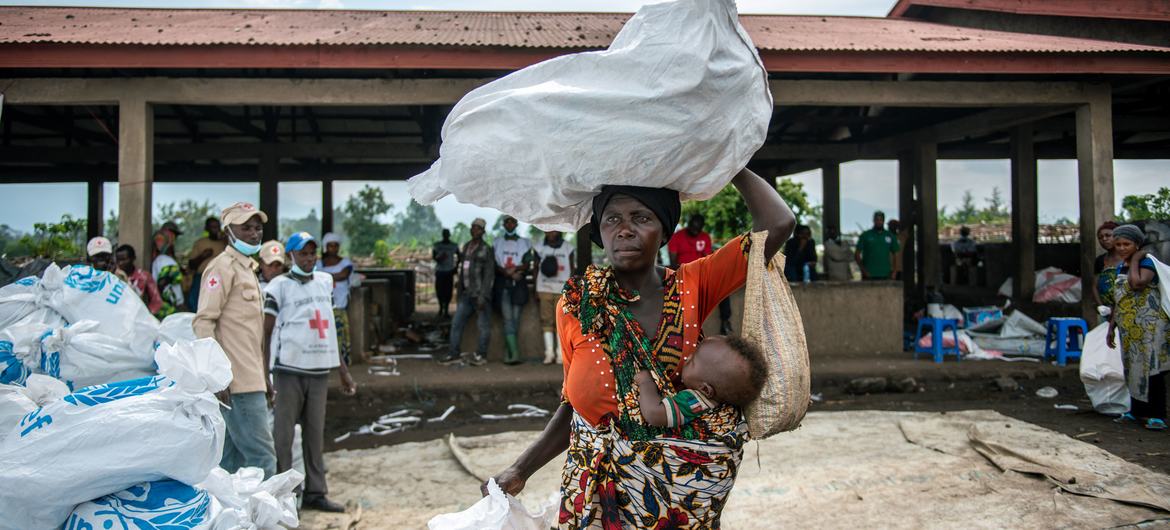
A woman collects her possessions before leaving a camp for displaced people near Goma in teastern DR Congo.
© UNICEF/Jospin Benekire
 
A woman collects her possessions before leaving a camp for displaced people near Goma in teastern DR Congo.


27 March 2025 
Humanitarian Aid

A record 27.7 million people are in the grip of acute hunger in the Democratic Republic of the Congo (DRC), amid ongoing conflict linked to massive displacement and rising food prices, global food security experts warned on Thursday.

The situation represents one of the world’s worst food crises, according to the UN-partnered Integrated Food Security Phase Classification (IPC) platform.

“The humanitarian situation in the DRC is deteriorating at an alarming rate. Families who were already struggling to feed themselves are now facing an even harsher reality,” said Eric Perdison, WFP’s Regional Director for Southern Africa and ad interim WFP DRC Country Director.

Tweet URL

On a scale of one to five – where five indicates famine – 3.9 million people in DRC are classified as IPC Phase 4, which indicates “emergency” levels of hunger - and a 23.8 million are enduring Phase 3 “crisis” levels.

Check out our explainer on how hunger and famine levels are classified, here.

Chaos in the east

The situation is worst in the conflict-affected eastern provinces of DRC – North Kivu, South Kivu, Ituri and Tanganyika – where families have lost access to their livestock and livelihoods.

Rebels from the Rwanda-backed M23 armed group have wrested control of the main cities of Goma and Bukavu since the year began, amid continued fighting, economic collapse and continuing efforts by regional mediators to agree ceasefire terms. 

Mapping shows that the outbreak of violence in December in eastern DRC led by Rwanda-backed M23 rebels has pushed an additional 2.5 million people into acute food insecurity.

Situation worse for those uprooted

“Internally displaced people escaping violence remain among the most vulnerable, bearing the brunt of the worsening food crisis,” said the UN World Food Programme (WFP), in a joint statement with the UN Food and Agriculture Organization of the United Nations (FAO).

They are just two of the UN agencies committed to helping the most vulnerable communities in the war-torn east by providing life-saving food and nutrition assistance and strengthening resilience.

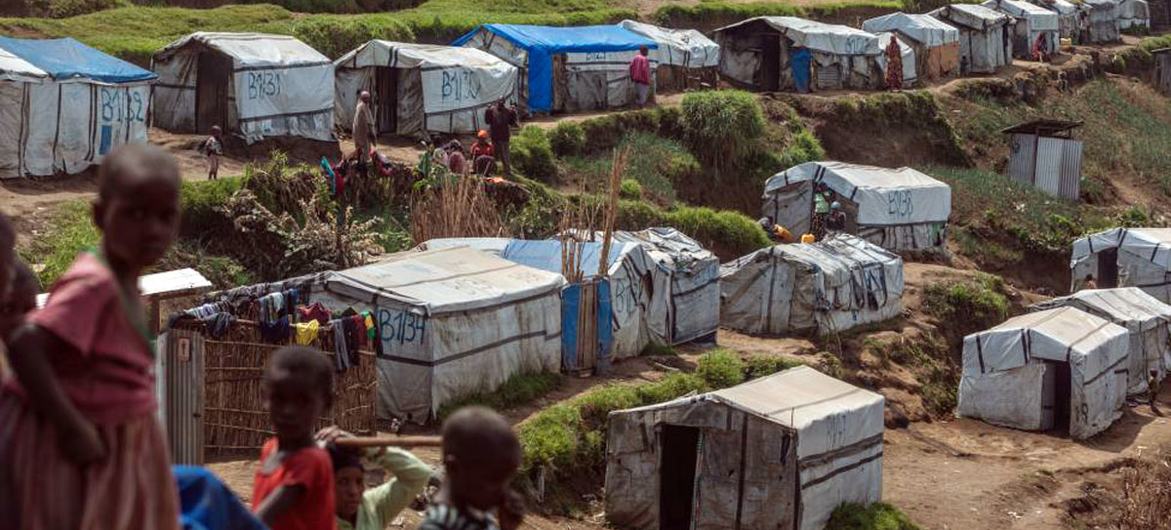
These include tens of thousands of people uprooted by M23 rebels from camps in North Kivu - and in particular six sites around Goma – and the territories of Kalehe and Uvira in South Kivu in February 2025, amid intensified conflict.

“All IDP sites in North Kivu, particularly in the Goma region, are now completely empty,” the IPC said, adding that of the 3.7 million internally displaced people formerly based in camps in eastern DRC, more than 2.2 million are in “crisis” and 738,000 face “emergency” levels of hunger.

In total, the DRC has more than 7.8 million displaced people, most live with host families in eastern regions.

“We have resumed operations in parts of North and South Kivu, and we are committed to do more to support those at risk, but we urgently need more resources,” WFP’s Mr. Perdison said.

Armed clashes continue to disrupt food production and trade routes, while humanitarian access remains limited, as security risks hinder the ability to deliver essential assistance,” WFP added.

Inflationary pressures

The sharp depreciation of the Congolese franc, shuttered banks and lost incomes have also made it increasingly difficult for families to afford even the basics.

At the same time, inflation and disrupted supply chains have contributed to a rise in food prices. The price of basic foods such as maize flour, palm oil and cassava flour have increased by up to 37 per cent compared to pre-crisis levels in December 2024.

Soundcloud

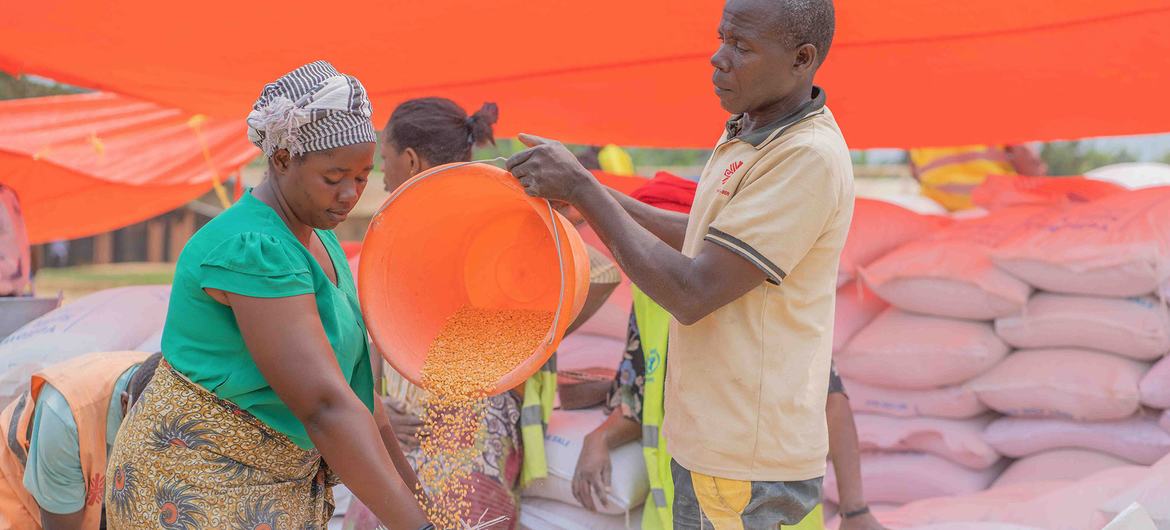
To date this year, 464,000 people have received WFP food, cash for food, and nutrition treatment in accessible areas of eastern DRC; WFP has managed to reach 237,000 people in Bunia alone.

Beyond emergency food assistance in eastern DRC, FAO and WFP have invested in skills-based training in North and South Kivu to help communities improve their long-term food security.

“The current situation is dire for the population, as harvests are lost, food prices soar, millions of people face acute food insecurity and are increasingly vulnerable,” said Athman Mravili, FAO Representative ad interim.

Urgent appeal

To help WFP reach 6.4 million people in DRC with food and nutrition assistance – and invest in long-term solutions – the UN agency needs $399 million to sustain operations amid growing humanitarian needs over the next six months.

“WFP and FAO call on the international community to step up funding and humanitarian access to prevent a full-scale catastrophe,” they said. 


https://news.un.org/en/story/2025/03/1161606


https://creativecommons.org/licenses/by/4.0/legalcode

вторник, 1 октября 2024 г.

Collective effort essential to get DR Congo on firm path to peace


Millions of people displaced by the ongoing violence in eastern DRC need urgent humanitarian assistance. (file)
© IOM/Muse Mohammed
 
Millions of people displaced by the ongoing violence in eastern DRC need urgent humanitarian assistance. (file)

30 September 2024

 Peace and Security

Mobilization at the national, regional and international level are needed to support the Democratic Republic of the Congo (DRC) in the face of continued violence in the east, trafficking of natural resources, and other challenges, the UN Security Council heard on Monday. 

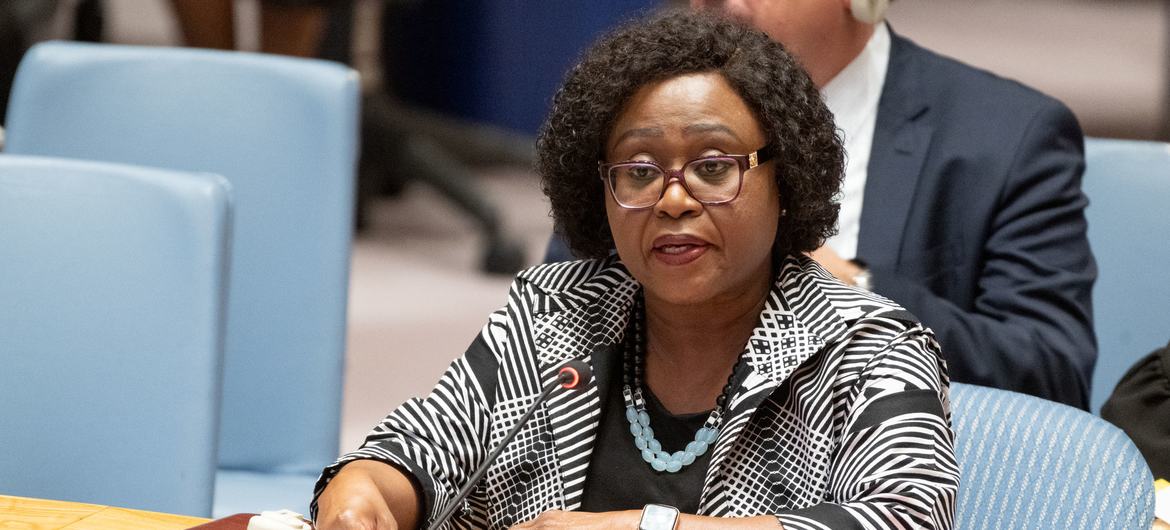
We need to collectively remain engaged in assisting the country on its path to peace and stability,” said Bintou Keita, the Secretary-General’s Special Representative for the DRC and head of the UN Mission there, MONUSCO.

Ceasefire and dialogue ‘framework’

There has been a notable reduction in fighting among warring parties in the volatile east since a 30 July ceasefire - announced by the DRC and Rwanda during a meeting facilitated by Angola - “but peace is not yet won”, she said.

“However, today, there is an active framework for dialogue between the DRC and Rwanda invested in proactive mediation, sparing no efforts to resolve this conflict, an operational instrument supporting this mediation and genuine prospects for peace which are now possible,” she added.

Ms. Keita told ambassadors that the DRC has made recent incremental progress in political and institutional reform but daunting challenges remain.

Natural resource exploitation

The past few months have seen competition over the exploitation and trade of natural resources which has further entrenched and exacerbated conflict dynamics in the east.

She said the recent intensification of violence in Ituri province is mainly driven by armed groups’ attempts to control mining areas.

“As profits have surged with the expansion of semi-mechanized goldmining, armed groups have become militarized entrepreneurs,” she continued. 

“As a consequence, community leaders and depleted Government forces are struggling to contain armed groups, which have become stronger both militarily and financially.”

Thousands in profit

Additionally, the consolidation of the M23 military group’s administrative control over Masisi and Rutshuru territories in neighbouring North Kivu province has allowed it to establish full control over coltan production.  The metallic ore is used in the manufacture of mobile phones and electronic devices.

Trade from the Rubaya area, which is estimated to supply over 15 per cent of global production of the metal tantalum, generates some $300,000 a month for the group, which she said is deeply concerning and must be stopped.

“The criminal laundering of the DRC’s natural resources smuggled out of the country is strengthening armed groups, sustaining the exploitation of civilian populations, some of them reduced to de-facto slavery, and undermining peace-making efforts,” Ms. Keita said.

She warned that “unless international sanctions are imposed on those benefitting from this criminal trade, peace will remain elusive, and civilians will continue to suffer.”

ADF group attacks

Meanwhile, eliminating the threat posed by the Allied Defense Forces (ADF) armed group in North Kivu and Ituri “has proven elusive”.  

The ADF has intensified attacks in recent months, exploiting a vacuum left by Congolese armed forces’ redeployment to fight the M23.  In June, 272 civilians were killed, making it probably the deadliest month ever for the group whose “neutralization remains a priority for the Mission.” 

Ms. Keita told the Council that since January, some 2.4 million people have been displaced. Many are sheltering in overcrowded sites where they are vulnerable to diseases such as cholera, measles and a new threat, mpox. The DRC is the epicentre of the current epidemic on the continent.

Political tensions are also growing in the DRC, with opposition parties voicing concern over restrictions on political freedoms, arbitrary arrests, and the shrinking democratic space. 

Other important issues include the “plague” of sexual and gender-based violence affecting the country.  Humanitarian partners treated over 61,000 victims during the first half of this year - a 10 per cent increase over the same period in 2023. 

Support peace efforts 

Ms. Keita said the risks and opportunities that she highlighted require national, regional and international mobilization in order to support the people of the DRC. 

“First and foremost, we must support peace efforts wherever conflicts exist,” she continued. 

“The mediation process undertaken by Angola remains the best opportunity for reducing tensions between Rwanda and the DRC, but peace cannot be built in Luanda alone. It also requires investment in the provinces, the territories, the chieftaincies and the villages.” 

She pointed to UN efforts in this regard. For example, following MONUSCO’s departure from South Kivu in June, the UN has supported the establishment of mechanisms for the unarmed protection of civilians. 

Consolidating gains, protecting civilians

The Mission is also working together with national and international non-governmental organizations and religious institutions to consolidate gains achieved after years of investment in communities, women, young people and local institutions.

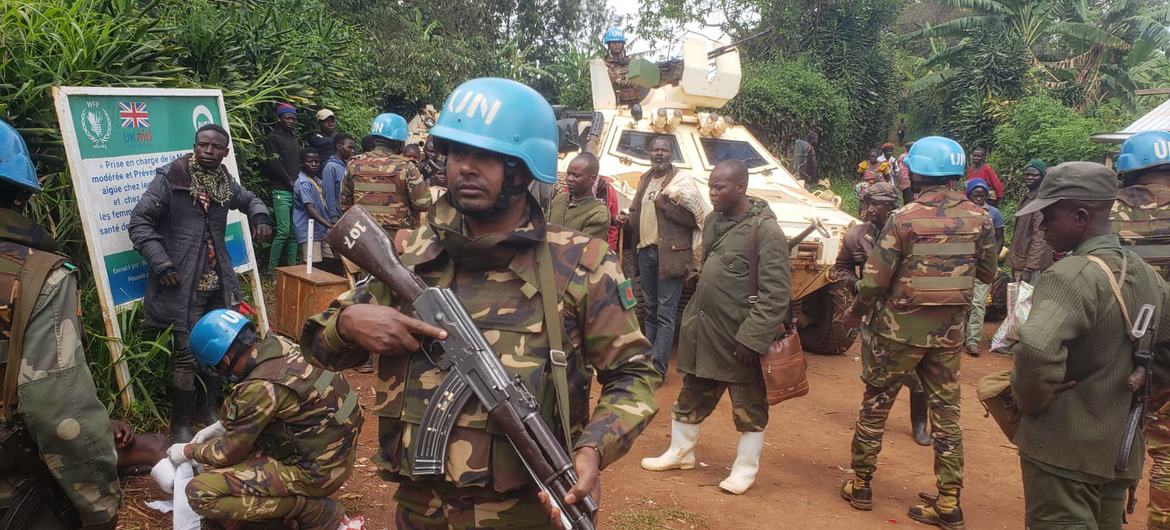
Peacekeepers are also continuing to protect civilians in Ituri. Together with the Congolese army, the FARDC, they have established a joint coordination and operations centre in the provincial capital, Bunia, and response times to warnings have dropped. 

In North Kivu, MONUSCO continues to participate in maintaining a defense zone around the cities of Goma and Sake and is providing guarantees to protect civilians by maintaining bases in several locations, including in areas under M23 control. 

Modalities for disengagement

Recalling that MONUSCO ended activities in South Kivu in June, Ms. Keita said that at the request of the authorities, the Mission is now engaged in an evaluation process “to ensure that we consolidate our departure and that we plan for the way forward following our withdrawal.”

It is estimated that $57 million will be required for the DRC to be able to take over the Mission in the province and the authorities have already committed some $30 million in a display of goodwill. 

MONUSCO and the Government are working to define modalities for implementing the next steps for the Mission's disengagement, which will be ramped up in the coming weeks. 

"MONUSCO is leaving, but until our very last day, we will continue to protect civilians, support meaningful peace initiatives, facilitate the delivery of humanitarian assistance and assist the Congolese State in its stabilization efforts," she said.


https://news.un.org/en/story/2024/09/1155156


https://creativecommons.org/licenses/by/4.0/legalcode

пятница, 12 июля 2024 г.

DR Congo: Conflict escalation linked to deadly Mpox threat


Food assistance is distributed to displaced people in the eastern DR Congo.
© WFP/Benjamin Anguandia
 
Food assistance is distributed to displaced people in the eastern DR Congo.


12 July 2024 

Peace and Security

At least 25 million people have been caught up in the humanitarian crisis in the Democratic Republic of the Congo (DRC) where a neglected health emergency continues to unfold at an alarming rate, the UN health agency said on Friday.

For decades, conflict in the mineral-rich eastern DRC has triggered alarming levels of violence, mass displacement, widespread disease, gender-based violence and severe mental trauma, explained Dr Adelheid Marschang, Senior Emergency Officer at the World Health Organization (WHO).

‘Chronic and acute shock’

Today, the vast central African nation now has the “highest number of people in need of humanitarian aid in the entire world, with 25.4 million affected” and many in “chronic and acute shock”, she told journalists in Geneva.

Tweet URL

A staggering 7.4 million people have been displaced, including 2.8 million in North Kivu alone.

The number of people forcibly uprooted has increased since the separatist M23 movement launched a major offensive in 2022, prompting national and regional military responses that have struggled to restrain the militia's advance.

Left with nothing

The resulting mass displacement has overwhelmed water and sanitation systems and brought an additional burden to the population’s scarce resources, the WHO official warned.

“About 40 per cent of the population, that is 40.8 million people, face serious food shortages, with 15.7 million facing severe food insecurity and as a result, a higher risk of malnutrition and infectious diseases,” Dr Marschang said. “If immediate action is not taken to address basic needs in DRC, over one million children will suffer from acute malnutrition.”

Mpox one of many health threats
Outbreaks of cholera, measles, meningitis, Mpox and plague have all been reported, exacerbated by severe flooding and landslides.

Specifically on Mpox – which remains a global health threat with 26 countries reporting cases to WHO this month – Dr Marschang said that DRC has seen 20,000 cases and more than 1,000 deaths from the virus since the start of 2023.

Over 11,000 cases, including 443 deaths, have been reported so far this year, “again affecting mostly children”, she noted.

Mpox spreads through close contact, causing flu-like symptoms and skin rash. Scientists raised the alarm last month about the spread of a dangerous new strain of Mpox in South Kivu and fear it will spread in overcrowded camps in and around Goma.

Military activity around those camps has made it difficult for health authorities to contain the virus if security is not granted, the UN health agency explained.

Rights crisis neglected

Earlier this week, the Special Representative of the Secretary-General, Bintou Keita, told the UN Security Council that the DRC faces one of the most severe and neglected humanitarian crises of our times.

Dr Marschang echoed that observation, explaining that the Humanitarian Response Plan for 2024 aims to assist 8.7 million people and requires $2.6 billion for all UN and partner agencies.

“The underfunding is severe,” she stressed, as “16 per cent of the Humanitarian Response plan is currently funded. For WHO, we are looking for something like $30 million to address the situation until the end of the year.”

Soundcloud

The deterioration of the security situation has accompanied the full withdrawal from South Kivu of the UN Stabilization Mission in DRC (MONUSCO), ending the first phase of disengagement from DRC following a request to close the mission from the Government in Kinshasa.

MONUSCO’s operations began winding down in January after two decades of operations, but its Head, Bintou Keita, told the UN Security Council on Monday there should not be a rush to further disengagement since this process has thrown up unexpected challenges. She explained the rebel activity from the M23 carries a “very real risk of provoking a wider regional conflict”.

Violent insecurity in DRC has reached alarming levels, UN human rights chief Volker Türk has warned, “with an absence of State authority over large swathes of territory has also cleared the way for brutal levels of violence and attacks”.


https://news.un.org/en/story/2024/07/1152031


https://creativecommons.org/licenses/by/4.0/legalcode

понедельник, 8 июля 2024 г.

UN envoy highlights alarming violence and neglected humanitarian crisis in DR Congo


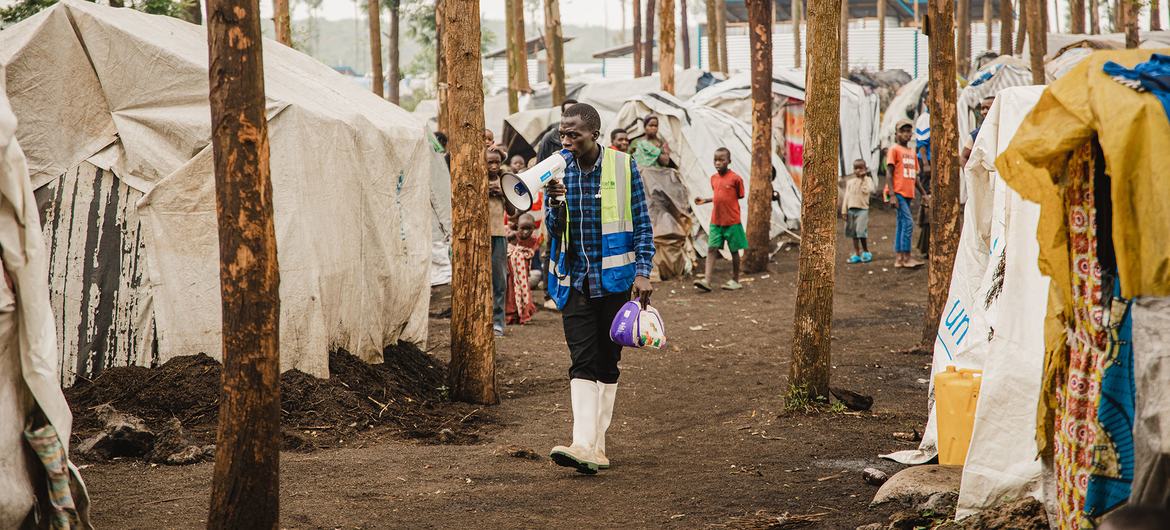
A community health worker walks through an IDP camp in North Kivu in eastern Democratic Republic of the Congo.
© UNICEF/Jospin Benekire
 
A community health worker walks through an IDP camp in North Kivu in eastern Democratic Republic of the Congo.


8 July 2024 

Peace and Security

The security situation in eastern Democratic Republic of the Congo (DRC) has resulted in alarming levels of violence and widespread civilian displacement, the UN envoy for the country reported on Monday.

Special Representative of the Secretary-General, Bintou Keita, informed the Security Council of an attack on the residence of a Congolese politician, during which two police officers were killed.

M23’s rapid expansion

Ms. Keita, who also heads the UN peacekeeping mission in the country (MONUSCO), expressed grave concern over the rapid growth of the armed group Mouvement du 23 mars (M23) in North and South Kivu provinces.

The group has overtaken strategic locations in North Kivu, including Kanyabayonga, Lubero, and Rutshuru territories in the last two weeks.  

During their latest attack, M23 and its supporters burned several DRC Armed Forces (FARDC) bases, causing further displacement and exacerbating an already catastrophic humanitarian and human rights situation.

Other M23 attacks have killed and injured several civilians and worsened community tensions, Ms. Keita said, warning that the “the rapidly escalating M23 crisis carries the very real risk of provoking a wider regional conflict.”

Tweet URL

Gender-based violence

Ms. Keita also reported of a rise in cases of sexual and gender-based violence with 122,960 cases recorded in 2023, an increase of 3 per cent from 2022.

Female victims, including girls, accounted for almost 90 per cent of all cases, with incidents of sexual violence against children increasing by 40 per cent.  

“This is solely the tip of the iceberg, as many cases remain unreported,” she said, warning that 2024 could see even higher numbers of gender-based violence.

Dreadful humanitarian crisis

The Special Representative further informed the Security Council that the DRC is facing one of the most severe, complex, and neglected humanitarian crises of our times.

“The escalating violence in the east continues to trigger massive population displacements, exacerbating an already dreadful humanitarian situation,” Ms. Keita said.

About 7.3 million people in the country are displaced, with the majority in the east.  

Humanitarian efforts face complex challenges due to the proximity of conflict frontlines and the presence of heavy weapons around displacement camps, she said.

Address root causes

Ms. Keita called on Member States and regional organizations to strengthen their engagement towards political and regional solutions to reduce humanitarian suffering.  

She urged them to recommit to addressing the root causes of the conflicts driving the dramatic increase in humanitarian needs.


https://news.un.org/en/story/2024/07/1151846

https://creativecommons.org/licenses/by/4.0/legalcode

среда, 21 февраля 2024 г.

DR Congo: Fighting threatens stability of entire region, envoy warns


DR Congo: Fighting threatens stability of entire region, envoy warns

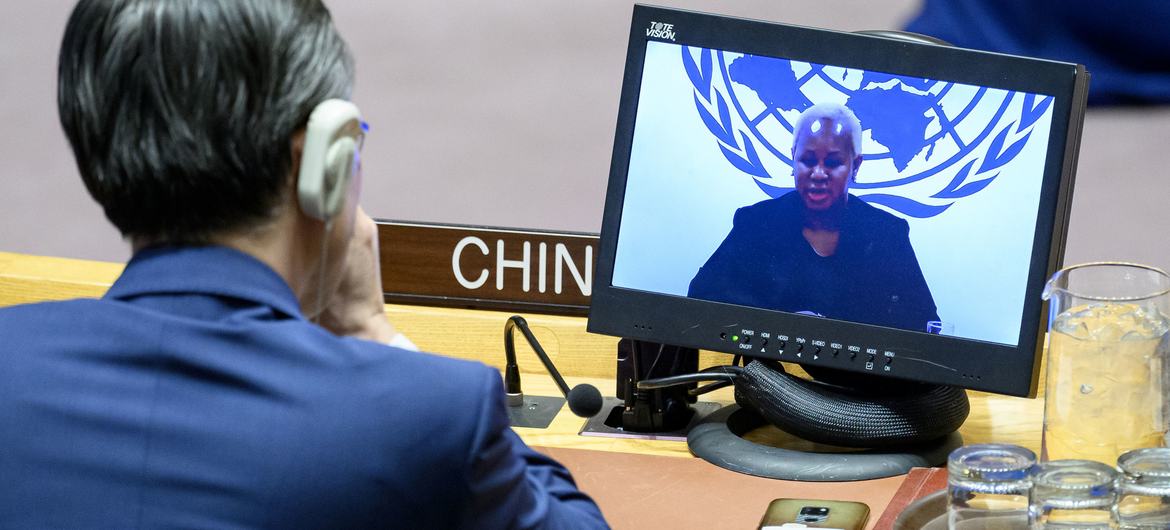
Bintou Keita (on screen), Special Representative of the Secretary-General and Head of the UN Organization Stabilization Mission in the Democratic Republic of the Congo, briefs the Security Council meeting on the situation concerning the country.
UN Photo/Loey Felipe
 
Bintou Keita (on screen), Special Representative of the Secretary-General and Head of the UN Organization Stabilization Mission in the Democratic Republic of the Congo, briefs the Security Council meeting on the situation concerning the country.


20 February 2024
Peace and Security

In the Democratic Republic of the Congo (DRC), fighting between the M23 armed group and national forces has further compounded the dire humanitarian situation in the east, the head of the UN Mission in the country, MONUSCO, said on Tuesday. 

Briefing the Security Council in New York, UN Special Representative Bintou Keita urged ambassadors to do all they can to prevent the fighting in North Kivu province from spreading beyond the border. 

It is crucial to underscore the risk of an expansion of the conflict on a regional scale if the diplomatic efforts that are underway that seek to appease tensions and find sustainable political solutions to the current conflict fail,” she said, speaking from the capital, Kinshasa. 

‘Deeply worrisome’ 

The situation in the eastern DRC is among the most complex, prolonged and protracted crises in the world, lasting some three decades. The latest violence is occurring against a backdrop of the eventual drawdown of MONUSCO this year, and at a time when historic flooding is affecting some two million people.

Hostilities have escalated dramatically since the expiration of a ceasefire in December, leading to a “deeply worrisome situation” around the town of Sake and the provincial capital, Goma.

Fighting has intensified in several areas in recent weeks, and the M23 has expanded further south, sparking more displacement towards Goma and neighbouring South Kivu province.

Goma: Scenes of desperation 

Ms. Keita said conditions are desperate in the severely overcrowded displacement sites in and around Goma. 

More than 400,000 displaced persons have now sought refuge in the city, including 65,000 in the past two weeks, triggering a dramatic increase in cases of cholera due to a lack of safe drinking water, adequate hygiene, and sanitation.”

Sake currently remains under the control of the Congolese army, known as the FARDC, with support from MONUSCO.

However, “restricted access to M23-controlled territories is isolating Goma from inland territories and disrupting food production, supply chains,” she said.  Prices of basic commodities are rising, increasing the risk of public unrest.

Violations and abuses 

The redeployment of Congolese troops to the front with M23 has exacerbated the security vacuum in other territories in North Kivu and drawn in new combatants, notably from South Kivu, the Council heard. 

Groups including the Allied Defense Forces (ADF) are increasingly committing human rights violations and abuses such as summary executions, abductions, property appropriation, extortion and conflict-related sexual violence. 

Ms. Keita expressed deep concern over serious violations committed in areas under M23 control, where human rights defenders, journalists and other civil society representatives are being targeted.  At least 150 people have been killed since November, 77 in January alone. 

Misinformation campaigns 

Meanwhile, MONUSCO continues to confront mis and disinformation surrounding its role in the ongoing clashes, mainly through online campaigns carried out by accounts mostly located outside of the DRC.

“This has resulted in hostile acts against UN peacekeepers and restrictions of movement by local armed groups and government soldiers,” Ms. Keita said. 

Violent protests against the UN and the diplomatic community erupted in Kinshasa on 10 February, “fueled by a perception of the international community’s inaction and inefficiency over the situation in the eastern DRC.” 

UN entities and MONUSCO were targeted in 11 incidents and 32 staff members had to either be extracted or rescued by peacekeepers. Two UN vehicles were burnt and eight were severely damaged by stoning. 

Appeal to ambassadors 

Ms. Keita commended ongoing diplomatic efforts by Angola to stop the fighting, and reaffirmed MONUSCO’s commitment to support regional peace processes. 

“I also appeal strongly to the Security Council to use its influence to support regional peace initiatives that are underway to ensure that all parties respect international law, their commitments, and work constructively to put an end to the current crisis,” she said. 

Alarm rising across the east 

The UN envoy also voiced concern over the security situation in other areas of North Kivu, Ituri and South Kivu provinces. 

She said there has been a significant escalation of violence in Djugu territory in Ituri, where MONUSCO continues to ensure the protection of more than 100,000 people displaced last week due to deadly fighting between the Zaïre and CODECO factions. 

The ADF continues to kill and kidnap civilians in both Ituri and North Kivu. The group has also started to attack military targets after nearly a year of avoiding direct clashes with the security forces, and at time when a joint operation by the Ugandan and Congolese armies has been suspended. 

Clashes have also broken out between Twirwaneho militia and Mai-Mai groups in South Kivu, where MONUSCO is preparing to withdraw within the coming months. 

Ms. Keita concluded her remarks by expressing gratitude to countries that have provided uniformed personnel to the mission, whose service is far from over.  


https://news.un.org/en/story/2024/02/1146782


https://creativecommons.org/licenses/by/3.0/legalcode

вторник, 20 февраля 2024 г.

UN agencies sound alarm over renewed clashes in eastern DR Congo


UN agencies sound alarm over renewed clashes in eastern DR Congo

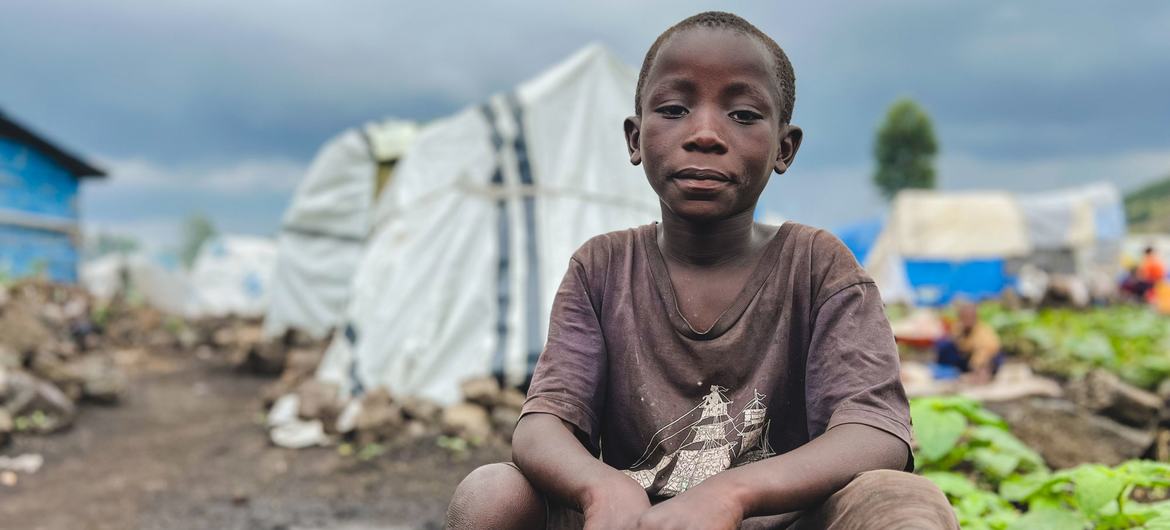
A young boy sits in a displaced persons site in Goma, North Kivu province, DR Congo.
© UNICEF/Jospin Benekire
 
A young boy sits in a displaced persons site in Goma, North Kivu province, DR Congo.
20 February 2024
Peace and Security

Amid reports of a renewed escalation of hostilities in eastern Democratic Republic of the Congo (DRC), the UN peacekeeping mission in the country has called on the M23 rebels to cease its offensive, the UN Spokesperson said on Monday as the Security Council prepares to meet on Tuesday at 3 PM New York time to discuss the situation.

The UN Mission, MONUSCO, also called on the group to respect the Luanda roadmap, an agreement signed in 2022 by Angola, DRC and Rwanda that strives for peace in the conflict-affected eastern part of the country.

MONUSCO is carrying out a three-phase process of withdrawal from the country following a UN Security Council resolution adopted in December that would see the gradual handover of responsibility to the Congolese Government later this year.

Indiscriminate bombing

Recent fighting between Government forces and the M23 group alongside indiscriminate bombing has recently strained already limited resources to accommodate 800,000 internally displaced people in the region, and 2.5 million others displaced across North Kivu province.

At the same time, the impact of devastating flooding continues to affect the country, the UN refugee agency, UNHCR, reported last week. 

Some 100,000 houses, 1,325 schools, 267 health facilities and large swathes of agricultural land have been damaged or destroyed, leaving an estimated two million people – nearly 60 per cent of them children – in need of assistance.

UN peacekeepers patrol the city of Goma in the eastern Democratic Republic of the Congo. (file)
MONUSCO/Kevin N. Jordan
 
UN peacekeepers patrol the city of Goma in the eastern Democratic Republic of the Congo. (file)

Continued security support

Meanwhile, the UN Mission in the country, MONUSCO, has continued to support the Congolese army by defending major routes leading to key towns of Sake and Goma in North Kivu province, the UN Spokesperson said.

Due to the deteriorating security situation around Sake and Goma, the Mission is reinforcing its presence there by bringing in peacekeepers from its Force Intervention Brigade based in Beni, in the northern part of the province, he added.

Over the weekend, MONUSCO met with the coordinator of the Congolese armed forces in North Kivu to coordinate joint military action in the defence of both Sake and Goma, he said.

The Mission also expressed concern over recent disinformation campaigns targeting peacekeepers, which is hampering the peacekeepers’ ability to implement their mandate.

Peacekeepers are continuing to facilitate safe passage of civilians fleeing the fighting to more secure areas, including around the Kitchanga base, where some 25,000 civilians have sought UN protection, the spokesperson said.

UN peacekeeping chief visits DR Congo

Last Tuesday, Peace Operations head Jean-Pierre Lacroix visited MONUSCO with Catherine Pollard, Under-Secretary-General for Management Strategy, Policy and Compliance, and Christian Saunders, Special Coordinator for Improving UN Response to Sexual Exploitation and Abuse.

The peacekeeping chief reviewed the Mission’s ongoing work in the context of the disengagement plan jointly agreed upon by the Government.

“It is essential that the transfer of responsibility for security and the protection of civilians takes place at the same time as MONUSCO withdraws from certain sensitive areas where peacekeepers ensure the physical safety of several hundred thousand civilians,” Mr. Lacroix said last Tuesday.

He also called on the M23 group to cease hostilities.

Earlier this month, UN Special Representative for DR Congo, Bintou Keita, who also heads MONUSCO, condemned a series of attacks on UN staff in Kinshasa, calling on Congolese authorities to launch an investigation.


https://news.un.org/en/story/2024/02/1146692


https://creativecommons.org/licenses/by/3.0/legalcode

четверг, 15 февраля 2024 г.

Massive displacement as fighting surges in eastern DR Congo


An IDP settlement in Sake, North Kivu, in eastern Democratic Republic of the Congo.
© UNICEF/Jospin Benekire
 
An IDP settlement in Sake, North Kivu, in eastern Democratic Republic of the Congo.


14 February 2024
Peace and Security

Civilians in the eastern Democratic Republic of the Congo (DRC) are once again bearing the brunt of localized violence, amid a sharp uptick in fighting between Government forces and the M23 armed group, the UN refugee agency reported on Wednesday.

Fresh fighting since last week in the region has displaced an estimated 135,000 people from the town of Sake – on the northern banks of Lake Kivu – who are moving towards the provincial capital, Goma, about 25 kilometres away, according to UNHCR.

The agency further said that it received reports of bombs falling on civilian areas in Sake and Goma, where an estimated 65,000 internally displaced persons (IDPs) are sheltering, prompting “significant concerns” for their safety.

“The escalating use of heavy artillery and shelling in clashes around Goma poses grave threats to civilian and displaced populations, threatening more casualties and the destruction of buildings used as communal shelters,” UNHCR said.

The presence of unexploded ordnance poses a particular threat to children, it added, noting that since the first week of February, at least 15 civilians had been killed and 29 injured around Goma and Sake.

‘Tragic and unacceptable’ situation

Chansa Kapaya, UNHCR Regional Director for Southern Africa said that men, women and children have been targeted in relentless confrontations.

“The situation is tragic and unacceptable. We urgently call on all parties to protect civilians, respect humanitarian law and establish safe corridors for aid,” she said.

The indiscriminate bombing is amplifying the strain on already limited resources to accommodate 800,000 IDPs in the region, and 2.5 million displaced across North Kivu Province.

Access challenges

The violence continues to restrict access to isolated populations in Masisi territory and Rutshuru, compounding the challenges faced by humanitarian agencies in delivering essential assistance, UNHCR said.

With few viable options for safe passage from Goma, the growing displaced communities in the town face rapidly deteriorating conditions, it added.

UNHCR emphasized the imperative to safeguard the lives and well-being of civilians and those driven from their homes.

It also called for an immediate halt to fighting, and for urgent negotiations to resolve the conflict and alleviate the suffering of innocent civilians caught in the violence.

Floods, cholera outbreak

The fighting and displacement come against the backdrop of a devastating cholera outbreak and massive floods in January that wreaked havoc across the DRC.

Some 100,000 houses, 1,325 schools, 267 health facilities and large swathes of agricultural land have been damaged or destroyed as of last week, leaving an estimated two million people – nearly 60 per cent of them children – in need of assistance.


https://news.un.org/en/story/2024/02/1146552


https://creativecommons.org/licenses/by/3.0/legalcode

вторник, 27 июня 2023 г.

Top UN official urges Israeli, Palestinian leaders to ‘put on the brakes’


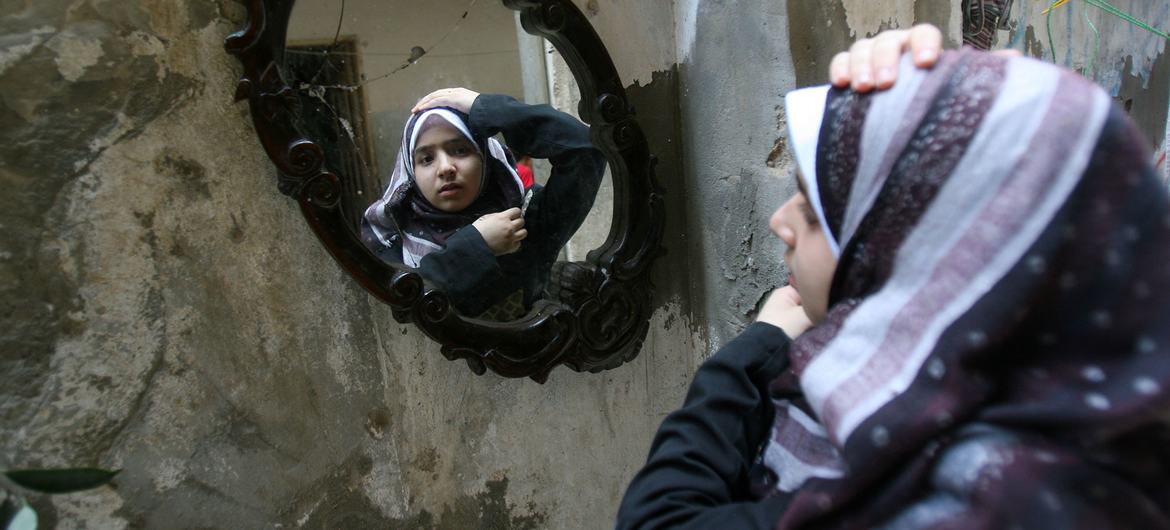
A 15-year-old girl at home in the Gaza Strip.
© UNICEF/Eyad El Baba
 
A 15-year-old girl at home in the Gaza Strip.
27 June 2023
Peace and Security

Unless decisive steps are swiftly taken to rein in Israeli-Palestinian violence, there is a “significant risk” that the situation could deteriorate, the top UN Middle East official told the Security Council on Tuesday.

“The choice is clear,” said Tor Wennesland, the UN Special Coordinator for the Middle East Peace Process (UNSCO). “Either continue along the downward spiral of violence and provocations leading to a political vacuum or turn towards constructive dialogue linked to concrete actions that can create hope and a political horizon.”

‘Alarming spike’

Urging Israeli and Palestinian leaders to “put on the brakes and rethink the options”, he warned of an “alarming spike in violence” across the northern and central occupied West Bank that has led to numerous Palestinian and Israeli casualties over the past 13 days, since the submission of his latest monthly report, covering the period between mid-May and mid-June.

Providing a grim snapshot of current hotspots, he said military operations – including airstrikes in the West Bank – clashes, attacks, and extremely high levels of settler-related violence, have continued and intensified dramatically.

In addition, he reported the use of more sophisticated weapons by Palestinians, including an advanced improvised explosive device and rockets launched towards Israel.

‘Settler rampage’

From 20 to 25 June, Israeli settlers perpetrated 28 violent attacks against Palestinian villages, he said, adding that the “settler rampage” had caused one death and dozens of injuries.

Israel, as the occupying power, has an obligation to protect Palestinians and their property in the Occupied Territory and to ensure prompt, independent, impartial, and transparent investigations into all acts of violence, he said.

“The deepening occupation, settlement expansion, the high levels of violence against civilians, including acts of terror, and, critically, the absence of a political horizon are rapidly eroding hope among Palestinians and Israelis, and particularly among youth, that a resolution of the conflict is achievable,” he said.

‘Extremely dangerous’

“The speed and intensity of the security deterioration we are witnessing on the ground are extremely dangerous,” he said.

“The unfolding events seriously challenge broader stability and undermine the Palestinian Authority,” he added.

While the ceasefire following the Gaza escalation in May has held, there is a constant risk that events in the West Bank could spill over into the Gaza Strip, he said.

Tweet URL

Aid consequences

Equally concerning are the Palestinian Authority’s fiscal and institutional challenges, exacerbated by funding shortages, including for UN agencies, that impact the delivery of crucial basic services. This may further aggravate the deterioration of the situation on the ground, he cautioned.

“Let there be no doubt, neither the Palestinian Authority nor the UN will be able to provide humanitarian assistance without donors urgently stepping up financial support,” he warned.

Regarding other significant developments, he said that the UN’s Palestine refugee agency, UNRWA, resumed after four months full service delivery in the West Bank, including at 42 health clinics and 90 schools serving more than 40,000 children. The disruption was due to a work dispute with the local staff union and a strike, he noted.

‘We must urgently act’

But, the ongoing security situation remains a grave challenge, he said.

“We must urgently act collectively to stop the violence,” he said. “At the same time, it is crucial to bring the parties back onto a path that addresses the political issues driving the current dynamics, so that a process to resolve the core issues can begin.”

Council renews DR Congo sanctions, Somalia mission

At the outset of the morning meeting, the Council unanimously adopted two resolutions, renewing for six months the African Union Transition Mission in Somalia (ATMIS) and extending by one year the current sanctions regime covering an arms embargo, travel ban, and asset freeze that require States to refrain from, among other things, providing weapons to non-governmental entities operating in the Democratic Republic of the Congo.

For more details on this and other meetings occurring throughout the UN system, visit our dedicated UN Meetings Coverage page.

 https://news.un.org/en/story/2023/06/1138142
https://creativecommons.org/licenses/by/3.0/legalcode

понедельник, 26 июня 2023 г.

Security in eastern DR Congo continues to worsen, Security Council hears


UN peacekeepers patrol the village of Logo in Djugu territory in eastern DR Congo.
MONUSCO
 
UN peacekeepers patrol the village of Logo in Djugu territory in eastern DR Congo.
26 June 2023
Peace and Security

A senior UN official warned the Security Council on Monday that the security situation in eastern Democratic Republic of Congo (DRC) has continued to deteriorate over the past three months, despite a lull in fighting between M23 rebels and the national army (FARDC). 

"So far, the ceasefire between the M23 and the FARDC has held up relatively well and has contributed to some security gains”, said UN Assistant Secretary-General for Africa Martha Pobee.

“The relative calm in Rutshuru territory, for example, allowed more than 45,000 people from the Bishusha group to return home", she said. 

She noted, however, that M23's withdrawal from territory has been "piecemeal, tactical, and political”, while the armed group still controls much of Masisi and Rutshuru, together with the movement of people and goods in these areas. 

Moreover, its “offensive repositioning in recent weeks” raises fears that hostilities could resume at any time.

Disarming M23

She applauded the efforts of regional leaders to engage the parties concerned in implementing the decisions of the Luanda Road Map and the Nairobi process. She reiterated the readiness of the UN mission in DRC, MONUSCO, to back up Congolese authorities with the “pre-cantonment and disarmament” of the powerful rebel force. 

Ms. Pobee said she was pleased to note that last week, MONUSCO, the East African Community Regional Force and the expanded Joint Verification Mechanism had undertaken a reconnaissance mission to the Rumangabo base, to assess the conditions for beginning the disarmament and demobilization process of M23 in earnest.

"For these efforts to bear fruit, it is urgent that the M23 withdraw completely from the occupied territories, lay down its arms unconditionally and join the Demobilization, Disarmament, Recovery and Community Stabilization Programme," she added.

She noted the security gains in North Kivu are fragile and overshadowed by the deteriorating situation in Ituri province, which has suffered from the security vacuum created by the redeployment of FARDC to North Kivu.

More than 600 people have been killed by armed groups in the past three months, with CODECO, the Zairean militia and the ADF, being the main perpetrators of these atrocities.

The senior UN official urged all armed groups to "cease hostilities" and called for the redeployment of national security forces, particularly in Ituri, to restore State authority.

In response to the ongoing insecurity in eastern DRC, MONUSCO continues  to "do everything possible to fulfill its mandate to protect civilians." In Beni, Bunia, Bukavu and Goma, Mission-supported workshops eased tensions and strengthened local capacity to better respond to security challenges, including disinformation. At the same time, the Mission provided direct physical protection for civilians.

To date, between 50.000 and 70.000 displaced people are being protected by MONUSCO forces in the Roe site, located in Djugu territory, Ituri.

Martha Ama Akyaa Pobee, Assistant Secretary-General for Africa in the Departments of Political and Peacebuilding Affairs and Peace Operations, briefs members of the UN Security Council.
UN Photo/Eskinder Debebe
 
Martha Ama Akyaa Pobee, Assistant Secretary-General for Africa in the Departments of Political and Peacebuilding Affairs and Peace Operations, briefs members of the UN Security Council.

Often ignored crisis

Insecurity in eastern DRC continued to fuel a long-standing humanitarian crisis often ignored by the international community, said Ms. Pobee.

An estimated 6.3 million people have been displaced within the country and since March 2022, more than 2.8 million have fled their homes in Ituri, North Kivu and South Kivu provinces due to insecurity. 

Currently, around 28 per cent of the population of North Kivu and 39 per cent of Ituri’s regular population are displaced.

This situation has been further aggravated by inflation, epidemics and natural disasters, including last month's floods in Kahele territory in South Kivu, which killed more than 470 people and left thousands missing. At the same time, nearly 26 million people, more than a quarter of the population, face food insecurity in the DRC.

The top Africa official expressed particular concern about the increasing number of women and girls who are becoming victims of gender-based violence and sexual exploitation. Gender-based violence increased by 2.3 per cent across the country and by 73 per cent in North Kivu province alone, compared to the same period last year.

She said the humanitarian response falls far short of the unprecedented level of need, welcoming the start of a system-wide scale-up response in eastern DRC for an initial period of three months. 

Pockets of instability

In addition to security and humanitarian challenges in the east, pockets of instability have resurfaced in the west and south of the country. Violence persisted in Mai-Ndombe, Kwilu and Kwango provinces, and has spread to Maluku in Kinshasa province, Ms. Pobee said. Tensions and violence were also reported in Kindu, Tshopo and Katanga. 

She urged authorities to hold perpetrators to account and take steps to strengthen social cohesion in order to preserve stability in these areas.

Hate speech continues

She said she was particularly alarmed by “the restriction of civic space and the increase in hate speech” and expressed concern at reports of an increase in violence against women political leaders and activists. 

Regarding the scheduled departure of the peacekeeping mission MONUSCO, she said it was necessary to "stay the course for an orderly, gradual and responsible transition".

"MONUSCO's departure is planned and initial steps are being taken in several areas. However, MONUSCO's withdrawal must not compromise the protection of civilians. We must avoid creating security vacuums," she said.

"An orderly and responsible transition depends on the ability of national security forces to deploy and respond effectively wherever the security situation requires it," she insisted.


 https://news.un.org/en/story/2023/06/1138107

https://creativecommons.org/licenses/by/3.0/legalcode

четверг, 15 июня 2023 г.

DR Congo: Armed group attacks displace nearly 1 million since January

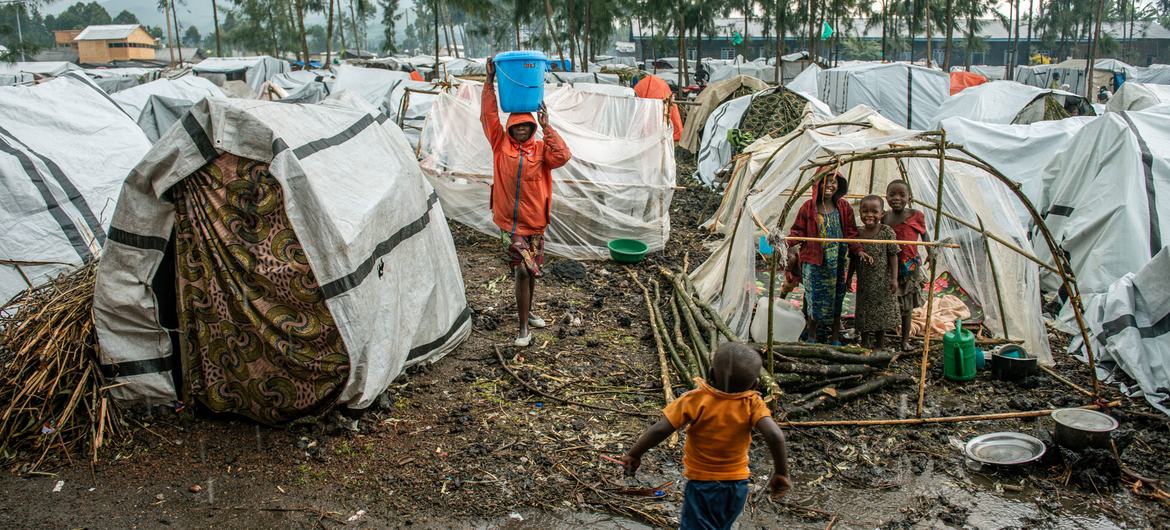
A child carries water through the Kanyaruchinya site for displaced people in eastern Democratic Republic of the Congo...
© UNICEF/Arlette Bashizi
 
A child carries water through the Kanyaruchinya site for displaced people in eastern Democratic Republic of the Congo...
15 June 2023
Migrants and Refugees

Escalating violence in the eastern Democratic Republic of the Congo (DRC) has displaced nearly one million people since January, the International Organization for Migration (IOM) said on Thursday. 

An estimated 6.1 million are internally displaced, a 17 per cent increase from October, according to its Displacement Tracking Matrix.

IOM said civilians have been killed or forced to flee their homes due to a surge in violence and attacks by armed groups.

Deadly attack, intolerable dangers

At least 46 people were killed in the latest incident which occurred at a camp for displaced persons in eastern Ituri province on Sunday.

Tweet URL

IOM strongly condemned the attack, which was reportedly carried out by Coopérative pour le développement du Congo (CODECO), a coalition of militia groups.

“This recent gruesome attack is a testament to the intolerable dangers displaced people in DRC face daily,” said Federico Soda, Director for the Department of Emergencies.

“IOM strongly condemns this heinous violation of international humanitarian law and recalls that attacks against civilians may constitute war crimes. Concerted efforts are desperately needed to end the violence and help the Congolese people find peace.”

Humanitarian situation worsens

As conflict intensifies, the humanitarian situation continues to deteriorate, with millions facing acute food insecurity as well as other critical needs.   Overall, more than 26 million people across the DRC need humanitarian aid.

Despite insecurity, and limited access to parts of the country, IOM and partners have been striving to provide emergency relief to displaced people and those affected by the violence.

The UN agency said it is scaling-up operations which will enable a more effective crisis response to the humanitarian emergency caused by the surge in violence. 


 https://news.un.org/en/story/2023/06/1137722
https://creativecommons.org/licenses/by/3.0/legalcode

четверг, 25 мая 2023 г.

UN representative alarmed by sexual violence against women and girls in DRC


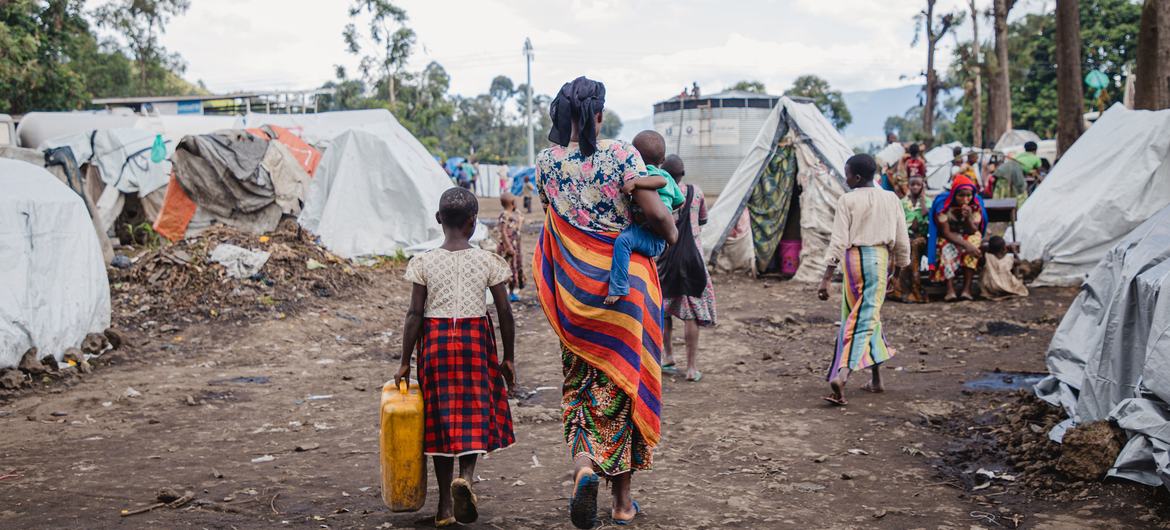
A mother and her children walk through a camp for displaced people in Goma, eastern DR Congo.
© UNICEF/Jospin Benekire
 
A mother and her children walk through a camp for displaced people in Goma, eastern DR Congo.

25 May 2023
Human Rights

UN Special Representative, Pramila Patten, expressed her ‘deep concern’ on Thursday over increasing allegations of sexual violence against women and girls being carried out in camps for the internally displaced (IDPs) around Goma, in the Democratic Republic of the Congo (DRC).

“Allegations of grave cases of sexual violence against civilians, including children, in particular affecting IDPs fleeing conflict in the eastern DRC, is a matter of profound concern which requires immediate action,” said the top UN official who advocates for women and girls impacted by sexual violence.

The representative spoke of how she was “deeply troubled” by some attacks which have been taking place in broad daylight, affecting the daily lives and livelihoods of women and girls in Goma, the capital of North Kivu province.

Protecting women and girls

She noted that the UN Children’s Fund (UNICEF), has reported an alarming number of Gender Based Violence (GBV) cases in 2022, and that IDP camps represent a ‘volatile security environment’ , especially for displaced women and girls.

“More than 38,000 cases of Gender Based Violence (GBV) were reported by UNICEF for all of 2022 in North Kivu alone. Humanitarian actors report they have provided assistance to over 600 survivors of conflict-related sexual violence in six IDP camps over the course of two weeks in a volatile security environment. In most cases, survivors reported being attacked by armed men and displaced men in and around the camps,” she pointed out.

No immediate ‘life-saving’ aid

Ms. Patten also called attention to how women and girls are disproportionally affected by sexual violence in thousands of cases reported by humanitarian partners, with some unable to “access life-saving services, including Post-Exposure Prophylaxis kits, during the crucial 72-hour window after an attack”.

She said the best way to protect women and girls in such conditions was to provide medical assistance, but also offer routes for escaping violence and other insecurities in the first place.

“Immediate medical and psychosocial assistance must be accompanied by protection measures, to ensure that those who have been forced from their homes due to violence and insecurity, including women and girls fleeing conflict in Masisi and Rutshuru territories in North Kivu province, are able to access services and are not placed at further risk of sexual violence.”

She said the UN rights office in DRC (OHCHR) was liaising with humanitarian partners and other UN agencies in the country to document allegations and provide needed support.

Justice for victims of sexual violence

Ms. Patten also called on authorities to fulfill their human rights obligations by working with the UN to provide protection to civilians fleeing conflict violence, in addition to investigating and prosecuting perpetrators.

“I urge the Government to ensure its national police secures all IDP camps in accordance with their primary obligation to protect civilians under international humanitarian law and their responsibilities to respect, protect, and fulfill human rights obligations.

Ms. Patten called on donors to help ensure protection for victims of sexual violence in DRC and said her office was available to assist partners in providing support.


 https://news.un.org/en/story/2023/05/1137042


https://creativecommons.org/licenses/by/3.0/legalcode

пятница, 5 мая 2023 г.

DR Congo: Desperate situation facing millions displaced by armed violence

The UN continues to provide humanitarian aid to people displaced by armed clashes in North Kivu province in the eastern DRC.
© UNICEF/Arlette Bashizi
 
The UN continues to provide humanitarian aid to people displaced by armed clashes in North Kivu province in the eastern DRC.
5 May 2023
Humanitarian Aid

Recurring attacks by armed groups in the Democratic Republic of the Congo (DRC) continue to drive forced displacement and extreme hardship for millions of Congolese, the UN refugee agency (UNHCR) said on Friday.

The country has 6.2 million internally displaced people, while more than 1.3 million have become refugees.

Tweet URL

UNHCR said that Goma, the capital of eastern DRC’s North Kivu province, hosts over 560,000 displaced people in and around the city. Many live in spontaneous sites on the side of the road, in dire conditions, despite the efforts of humanitarian actors.

Constant fear of attack

Elizabeth Tan, UNHCR’s Director of International Protection, recently returned from North Kivu, and she told reporters about one woman she had met, with five children:

“She didn’t have any food even for that day and so she had sent her children out to collect firewood and to try and make a little bit of money. And her main concern was, would her girls come back, without having suffered an attack in the forest.”

UNHCR warned that the lack of adequate sanitation and overcrowding are fuelling risks of cholera and measles outbreaks, while people desperately try to survive.

Emergency shelters

She said in Buchagara, an official IDP site on the outskirts of Goma hosting more than 15,500 displaced people, vulnerable individuals and families were now being housed in 3,000 emergency shelters alongside recently installed community kitchens, with water and sanitation facilities up and running.

“Currently, the emergency shelter provided only covers three per cent of the estimated needs. Women and youth are particularly exposed to protection risks, including gender-based violence”, she warned.

Adequate shelter is key to restoring personal security and dignity - Elizabeth Tan, UNHCR

She said IDPs had appealed for more shelters, and ways of making some income, through agriculture or small business opportunities.

Safety and dignity

Adequate shelter is key to restoring personal security and dignity”, said Ms. Tan.

More than 180,000 have recently arrived in Kalehe territory, tens of thousands of whom are sheltering in the town of Minova, she added, a two-hour drive south of Goma.

“Local hosting communities have generously shared their limited resources with the displaced populations so far, but they are under enormous strain.”

She said UNHCR had scaled up shelter, site management and protection responses, thanks to generous support from the international community.

“However, the needs are great. The DRC is one of the most underfunded humanitarian situations globally. UNHCR requires $233 million to respond to the needs of displaced people in DRC this year, but so far, has only received 15 per cent of that amount.”


 https://news.un.org/en/story/2023/05/1136377

https://creativecommons.org/licenses/by/3.0/legalcode