Показаны сообщения с ярлыком sexual violence. Показать все сообщения

четверг, 20 июня 2024 г.

Adequate healthcare crucial to support survivors of sexual violence

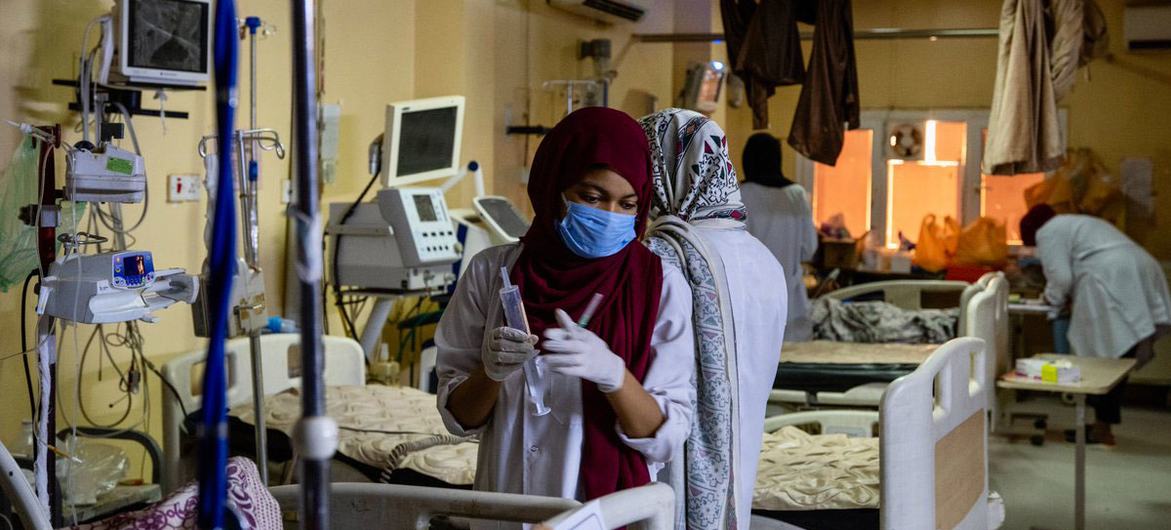
A ward at a hospital in Sudan. Under international law, healthcare facilities must be protected from hostilities.
© WHO/Lindsay Mackenzie
 
A ward at a hospital in Sudan. Under international law, healthcare facilities must be protected from hostilities.


19 June 2024

Peace and Security

The United Nations on Wednesday commemorated the International Day for the Elimination of Sexual Violence in Conflict, highlighting the vital role hospital’s play in helping survivors heal.

In his message for the day Secretary-General António Guterres reiterated that the protection of healthcare facilities is a “fundamental tenet” of international humanitarian law, which governs the conduct of war.

“But attacks on hospitals and healthcare facilities, and the targeting of healthcare workers, can severely limit access to medical care and psychosocial support for survivors,” he said.

He also highlighted the long-term impact on women and girls, as well as men and boys.

“Women and girls who experience sexual violence may become pregnant from rape and require immediate sexual and reproductive healthcare. Men and boys may be at risk of increased isolation if they cannot access appropriate care.”

Tweet URL
antonioguterres

World cannot stand silent

The far-reaching impacts of attacks on healthcare are as disturbing as their frequency.

For instance, in Sudan, 67 per cent of health facilities in areas affected by the war between rival militaries that erupted in April last year have closed and in Haiti, six out of ten hospitals are barely operational due to recent escalating violence in capital Port-Au-Prince.

Such attacks leave survivors of sexual violence without access to critical medical care and services to mitigate risk of unwanted pregnancy or sexually transmitted infection, including HIV.

Pramila Patten, Special Representative of the Secretary-General on sexual violence in conflict stressed that such attacks are unacceptable violations of international law and that the right to seek medical assistance, especially in times of crisis, should never be denied.

“The world cannot stand silent while hospitals, which should be safe havens, are transformed into scenes of death, devastation, and despair … ensuring the inviolability of healthcare facilities, even in the midst of war, is paramount for the protection of the basic human rights of survivors of sexual violence,” she said.

Include survivors in solutions

The UN Population Fund (UNFPA) emphasized the devastating impacts of sexual violence, particularly in conflicts, noting that the voices of women and girl survivors “remain mutated” in decisions on peace and security or humanitarian assistance, isolating them from solutions.

“Life-saving gender-based violence services, which address the needs, rights and wishes of survivors, continue to be insufficient across countries engaged in conflicts,” the agency said in a separate message.

“Survivors, as well as women and girls more generally, must be engaged as leaders of humanitarian-response programming, as they are best placed to create solutions for the challenges they face” UNFPA added, calling for greater funding for protection and support programmes.

A war crime that must be punished

Sexual violence in conflicts is a war crime and perpetrators must be held to account, the sexual and reproductive health agency said. Few cases of conflict-related sexual violence are reported and even fewer investigated or prosecuted.

“Sexual violence destroys lives and violates human rights. It must not be ‘normalized’ as something that is destined to happen, something that cannot be stopped,” Natalia Kanem, UNFPA Executive Director, said.

“We must work together to end this horror, not allow it to endlessly repeat.”
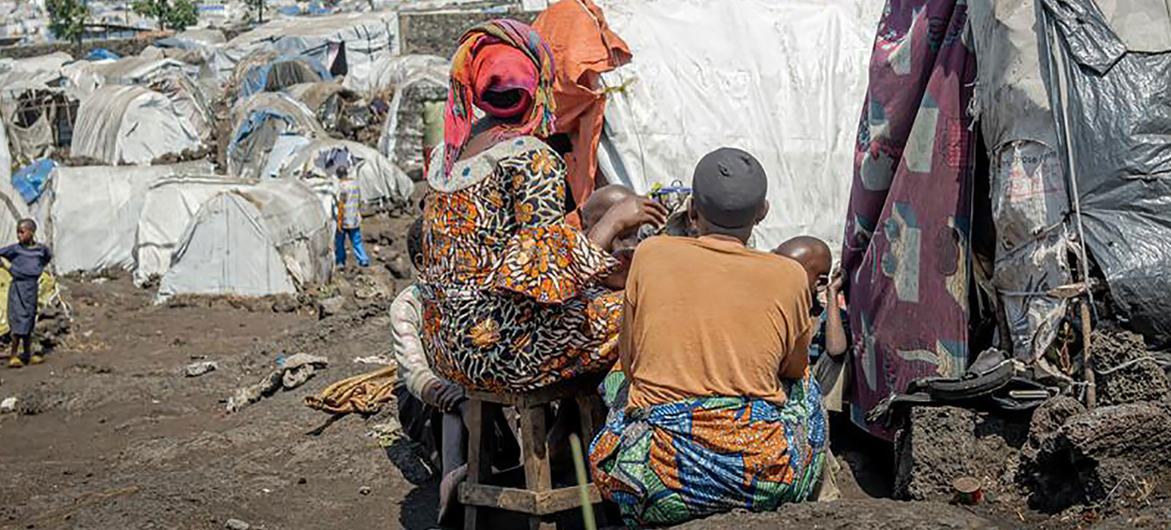
Survivors of sexual violence in DR Congo are healing with the help of UNFPA’s frontline workers.
© UNFPA/Junior Mayindu
 
Survivors of sexual violence in DR Congo are healing with the help of UNFPA’s frontline workers.

Solidarity with survivors

Civilians, especially vulnerable groups, are under increased threat of sexual violence and other abuses globally amid a multiplication of wars and crises that have forced a record 117 million people to flee their homes and communities.

Attacks on civilian infrastructure, such as healthcare facilities, and their use for military purposes have further deprived survivors of critical services, posing challenges for safe reporting and response.

“Hospitals and other healthcare facilities should be beacons of safety and healing for all those injured in conflict, including the survivors of sexual violence,” Mr. Guterres stressed.

“On this International Day for the Elimination of Sexual Violence in Conflict, let us pledge to eliminate this scourge, stand in solidarity with survivors, and reaffirm our commitment to protecting hospitals and healthcare facilities during conflict.”

International Day

The UN General Assembly, in 2015, proclaimed 19 June as the International Day for the Elimination of Sexual Violence in Conflict in June 2015.

The day is commemorated annually to raise awareness of the need to end conflict-related sexual violence, honour the victims and survivors, and pay tribute to those who have stood up for the eradication of these crimes.

The date also marks the adoption in 2008 of Security Council resolution 1820, that condemned sexual violence as a tactic of war and an impediment to peace.

Commemorative events

Several events were held marking the day.

In New York, a special event was hosted by the offices of the UN special envoys on children and armed conflict and on sexual violence in conflict, along with the Permanent Mission of Argentina to the UN.

Discussions focused on attacks against healthcare in conflict-affected areas, with nations reiterating their commitment to addressing conflict-related sexual violence and supporting survivors through a dedicated trust fund.

A microsite was also produced, featuring key messages and important resources, alongside a virtual exhibition on a survivor’s journey.


https://news.un.org/en/story/2024/06/1151206


https://creativecommons.org/licenses/by/4.0/legalcode

суббота, 15 июля 2023 г.

Security Council urged to address ‘most silenced and least condemned crime

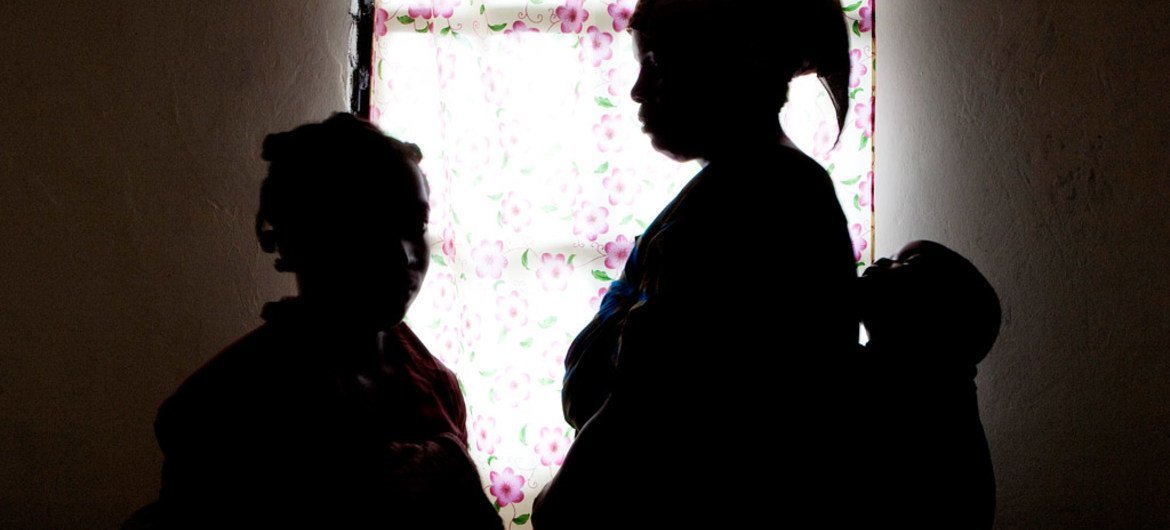
Victims of sexual violence at a shelter in Goma, Democratic Republic of the Congo. UN Photo/Marie Frechon (file)
UN Photo/Marie Frechon (file)
 
Victims of sexual violence at a shelter in Goma, Democratic Republic of the Congo. UN Photo/Marie Frechon (file)
14 July 2023
Peace and Security

The international community must act now to protect future generations from the scourge of conflict-related sexual violence, the UN’s advocate on the issue, Pramila Patten, told the Security Council on Friday. 

“Every new wave of warfare brings with it a rising tide of human tragedy, including new waves of war’s oldest, most silenced and least condemned crime,” she said.

The Council meeting to examine implementation of its resolutions on conflict-related sexual violence was convened by the United Kingdom, which holds the rotating presidency this month.

Meetings survivors in DRC 

Ms. Patten presented data from her latest report, published last month, which documented 2,455 UN-verified cases of wartime rape committed during 2022.  Women and girls accounted for 94 per cent, with six per cent against men and boys.

Tweet URL

The Democratic Republic of the Congo (DRC) was again the country with the highest number of cases, 701. The UN expert visited the country in June and was horrified by the testimonies of women and girls, many of whom had been very recently raped.

“So many of them stressed the daily risk of sexual violence while carrying out livelihood activities around the camps, such as searching for food, collecting wood or water. Just imagine facing the reality each day that you are likely to be raped, yet having no choice,” she said.

Visit to Ukraine

Ms. Patten also conducted her first field visit to Ukraine last year. She was struck by both the occurrence of sexual violence in conflict zones and the vulnerability of women and children forced to flee to countries such as Poland and Moldova. 

“I witnessed first-hand the extraordinary toll on women, children and the elderly, including their vulnerability to unscrupulous individuals and criminal networks for whom the rapid and unprecedented mass displacement of people is not a tragedy but an opportunity for trafficking and sexual exploitation,” she said. 

Impunity going unpunished 

Ms. Patten’s annual report also detailed horrors committed in other countries, such as Haiti, Ethiopia and Iraq.  Serious allegations of conflict-related sexual violence in Sudan have also surfaced since fighting erupted in April.

The report also clearly demonstrates the emboldening effects of impunity, she said. Nearly 50 parties, mostly non-State actors, are listed for systematically committing sexual violence.  More than 70 per cent have appeared on the list for five years or more.

“The reality is that until we effectively raise the cost and consequences for committing, commanding or condoning sexual violence, we will never stem the tide of such violations,” she said.

Resolve and resources 

Ms. Patten called for greater political resolve and resources. She said there is more knowledge today about what motivates sexual violence, who the perpetrators are, and the response required by survivors. 

It is essential that prevention efforts are grounded in this enhanced knowledge, she said, which is at the heart of a strategy launched by her office last September. 

She advised that the international community must ensure implementation of Security Council resolutions while adapting actions to today’s conflicts and emerging global challenges, such as cyber threats and climate-related insecurity.

“The time is now to double down on the institutional and accountability frameworks put in place by successive resolutions,” she said.  “We must act urgently, and with sustained resolve, to save succeeding generations from this scourge.” 

https://creativecommons.org/licenses/by/3.0/legalcode

 https://news.un.org/en/story/2023/07/1138727

четверг, 25 мая 2023 г.

UN representative alarmed by sexual violence against women and girls in DRC


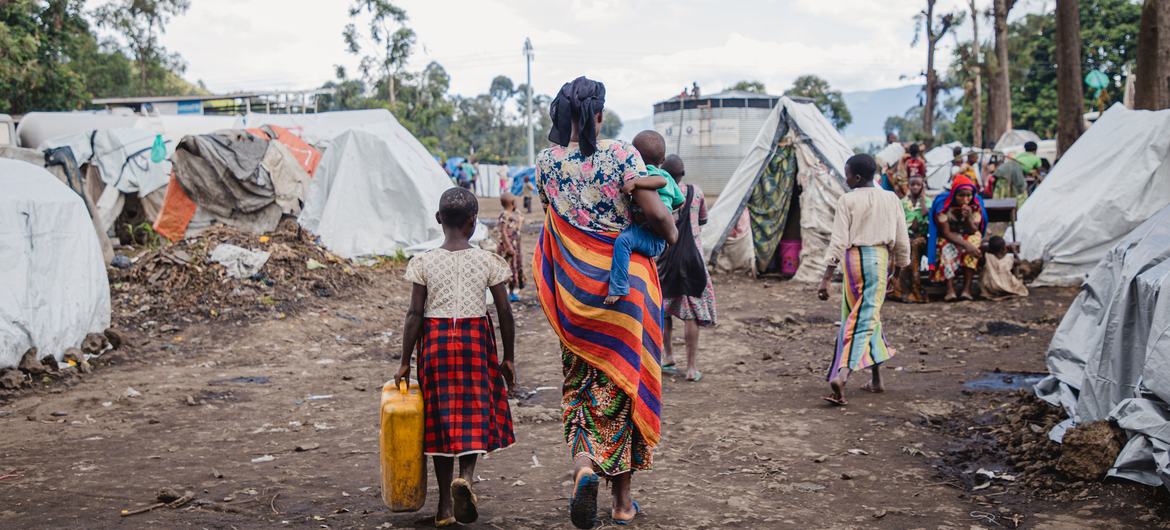
A mother and her children walk through a camp for displaced people in Goma, eastern DR Congo.
© UNICEF/Jospin Benekire
 
A mother and her children walk through a camp for displaced people in Goma, eastern DR Congo.

25 May 2023
Human Rights

UN Special Representative, Pramila Patten, expressed her ‘deep concern’ on Thursday over increasing allegations of sexual violence against women and girls being carried out in camps for the internally displaced (IDPs) around Goma, in the Democratic Republic of the Congo (DRC).

“Allegations of grave cases of sexual violence against civilians, including children, in particular affecting IDPs fleeing conflict in the eastern DRC, is a matter of profound concern which requires immediate action,” said the top UN official who advocates for women and girls impacted by sexual violence.

The representative spoke of how she was “deeply troubled” by some attacks which have been taking place in broad daylight, affecting the daily lives and livelihoods of women and girls in Goma, the capital of North Kivu province.

Protecting women and girls

She noted that the UN Children’s Fund (UNICEF), has reported an alarming number of Gender Based Violence (GBV) cases in 2022, and that IDP camps represent a ‘volatile security environment’ , especially for displaced women and girls.

“More than 38,000 cases of Gender Based Violence (GBV) were reported by UNICEF for all of 2022 in North Kivu alone. Humanitarian actors report they have provided assistance to over 600 survivors of conflict-related sexual violence in six IDP camps over the course of two weeks in a volatile security environment. In most cases, survivors reported being attacked by armed men and displaced men in and around the camps,” she pointed out.

No immediate ‘life-saving’ aid

Ms. Patten also called attention to how women and girls are disproportionally affected by sexual violence in thousands of cases reported by humanitarian partners, with some unable to “access life-saving services, including Post-Exposure Prophylaxis kits, during the crucial 72-hour window after an attack”.

She said the best way to protect women and girls in such conditions was to provide medical assistance, but also offer routes for escaping violence and other insecurities in the first place.

“Immediate medical and psychosocial assistance must be accompanied by protection measures, to ensure that those who have been forced from their homes due to violence and insecurity, including women and girls fleeing conflict in Masisi and Rutshuru territories in North Kivu province, are able to access services and are not placed at further risk of sexual violence.”

She said the UN rights office in DRC (OHCHR) was liaising with humanitarian partners and other UN agencies in the country to document allegations and provide needed support.

Justice for victims of sexual violence

Ms. Patten also called on authorities to fulfill their human rights obligations by working with the UN to provide protection to civilians fleeing conflict violence, in addition to investigating and prosecuting perpetrators.

“I urge the Government to ensure its national police secures all IDP camps in accordance with their primary obligation to protect civilians under international humanitarian law and their responsibilities to respect, protect, and fulfill human rights obligations.

Ms. Patten called on donors to help ensure protection for victims of sexual violence in DRC and said her office was available to assist partners in providing support.


 https://news.un.org/en/story/2023/05/1137042


https://creativecommons.org/licenses/by/3.0/legalcode