четверг, 1 мая 2025 г.

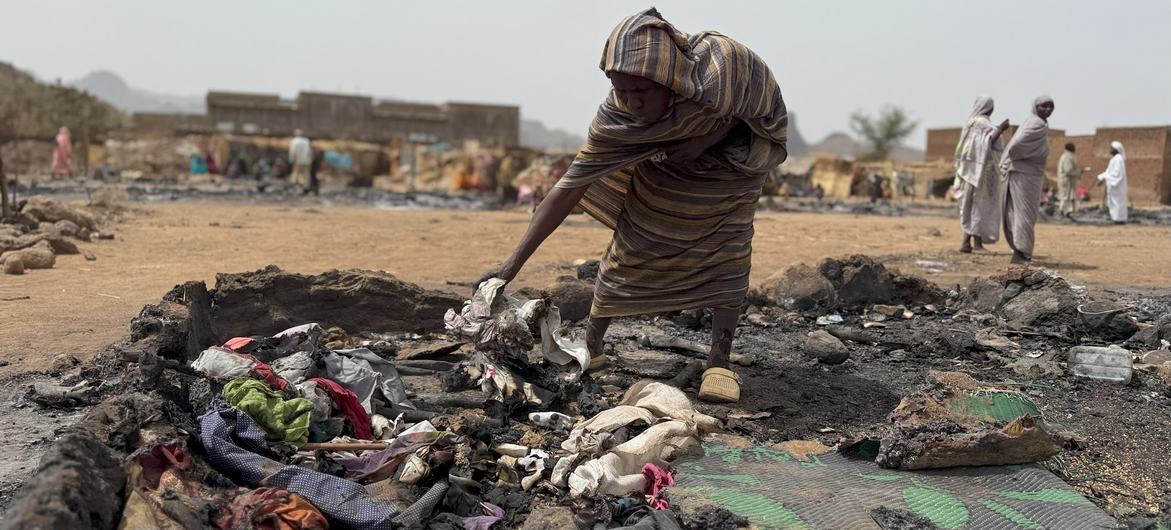
UN alert over deepening crisis in Sudan as famine spreads and violence escalates


A woman searches through the burnt remains of her shelter at a displacement camp in Darfur, Sudan.
© UNICEF/Mohammed Jamal
 
A woman searches through the burnt remains of her shelter at a displacement camp in Darfur, Sudan.


By Vibhu Mishra
30 April 2025 Peace and Security

The United Nations has warned that Sudan is sliding deeper into catastrophe, with growing famine and surging violence – particularly in North Darfur – driving mass displacement and an alarming rise in civilian deaths.

In a statement issued by his Spokesperson on Wednesday, UN Secretary-General António Guterres said he was “appalled” by the deteriorating situation in North Darfur, where the regional capital, El Fasher, is under intense and sustained attack.

The onslaught comes just two weeks after deadly assaults on the nearby Zamzam and Abu Shouk displacement camps, where hundreds of civilians, including humanitarian workers, were reportedly killed.

Mass displacement

More than 400,000 people have fled Zamzam camp alone, with the majority now seeking safety in Tawila, west of El Fasher.

There are also increasing reports of harassment, intimidation and arbitrary detention of displaced people at checkpoints, adding to the already dire humanitarian emergency.

“With the conflict now in its third year and increasingly destabilizing the broader region, the Secretary-General reiterates his call for the facilitation of safe and unhindered humanitarian access to all areas of need by all necessary routes,” UN Spokesperson Stéphane Dujarric said.

He also called for the protection of civilians, in line with the warring parties’ clear obligations under international humanitarian law.

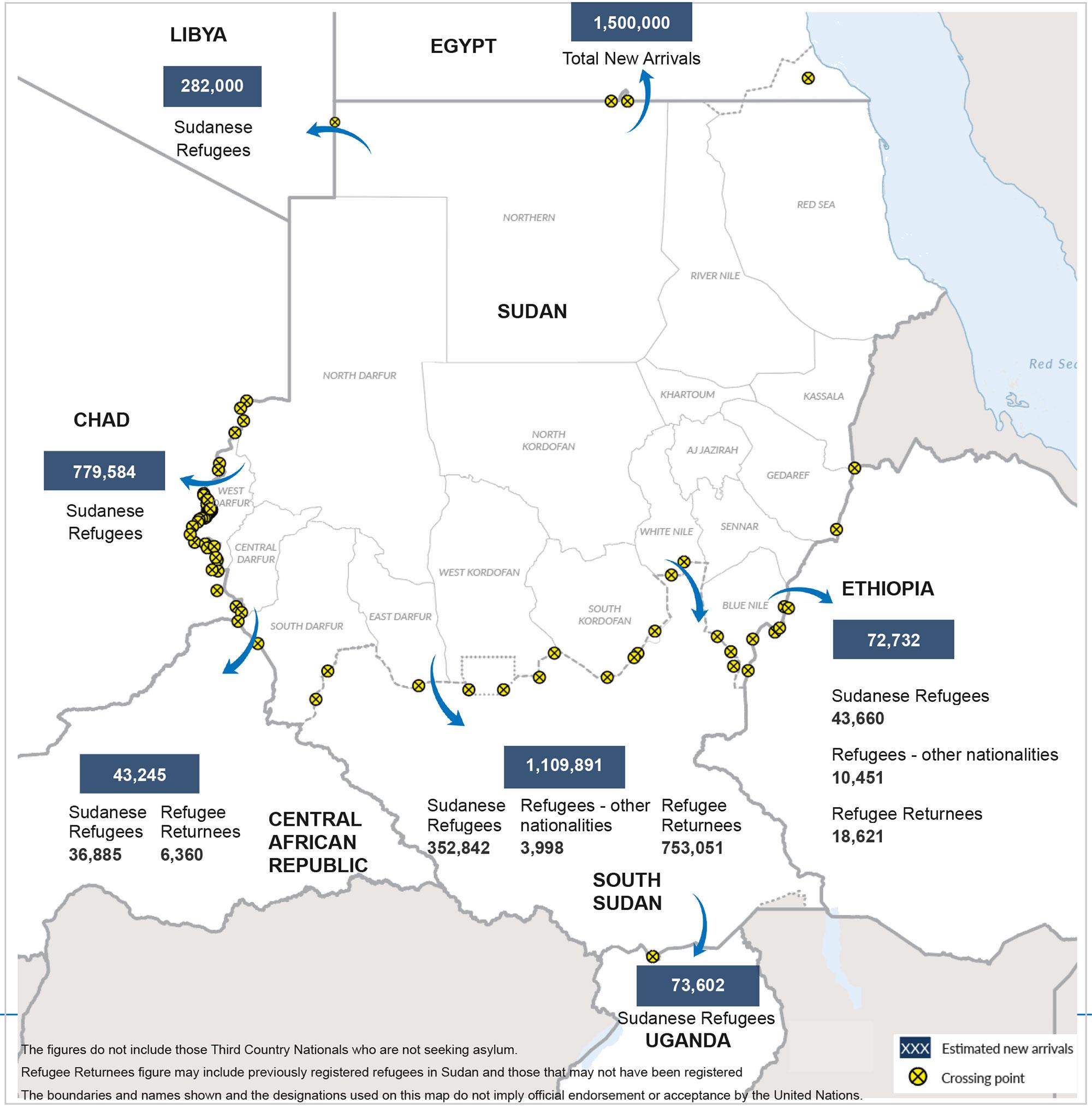
Refugee movements from Sudan.
Source: UNHCR
 
Refugee movements from Sudan.

Accountability is paramount

“Perpetrators of serious violations must be held accountable,” Mr. Dujarric stressed.

The civil war between rival militaries – the national Sudanese Armed Forces (SAF) and the paramilitary Rapid Support Forces (RSF) and allied militias – has claimed tens of thousands of lives and driven more than 12.7 million people from their homes, including nearly four million as refugees in neighbouring countries.

Violence and insecurity has also sparked a catastrophic hunger crisis, with over half the population suffering acute food insecurity and famine conditions confirmed in various regions, leaving millions at risk of starvation.

Emergency response underway in Tawila

Despite the escalating violence and dwindling funds, humanitarian agencies continue their efforts to deliver lifesaving aid.

The UN relief coordination office, OCHA, reported on Wednesday that an inter-agency convoy led by UN Deputy Humanitarian Coordinator Antoine Gérard crossed into Darfur from Chad earlier this week via the Adré border, en route to Tawila.

The convoy is transporting critical supplies including nutrition and medical items, dignity kits, and other essential goods.

Food and nutrition assistance for approximately 220,000 people has already reached Tawila, with the UN World Food Programme (WFP) confirming that distributions began this week and are already 20 per cent complete.

Additional convoys are in motion, including one expected to depart Chad on Wednesday with 19 trucks of nutrition supplies.

Tweet URL

Aid reaches capital Khartoum

WFP has begun the first food distributions in the centre of the capital Khartoum since the conflict erupted two years ago.

Deliveries of 70 metric tonnes of food to the Burri neighbourhood are set to begin on Thursday, attempting to reach nearly 8,000 people.

Aid distributions have also started in Alazhari, one of the areas at high risk of famine, where 20,000 people are receiving assistance.

Despite these efforts, WFP warned that the impending rainy season and severe funding shortfalls could undermine recent progress.

The agency, which assists about four million people monthly, aims to expand coverage to seven million – but that still represents only a fraction of those in need.

https://creativecommons.org/licenses/by/4.0/legalcode

https://news.un.org//en/story/2025/04/1162771

вторник, 29 апреля 2025 г.

You Are Undermining Your Own Stability’, High Commissioner for Refugees Tells Security Council, Warning against Retrenching from Aid, Multilateralism


9905th Meeting (AM)
SC/16051


In what he described as possibly his last address to the Security Council, the head of the Office of the United Nations High Commissioner for Refugees (UNHCR) warned today that “violence has become the defining currency of our age” — from Sudan to Ukraine, from the Sahel to Myanmar and beyond — and urged the 15-member organ to fulfil its responsibility for maintaining peace.

Despite knowing the gravity of the crises, the Council’s inaction itself is “an indictment”, said Filippo Grandi, UN High Commissioner for Refugees, asserting that the organ has “chronically failed to live up to” its responsibility.

He painted a bleak picture of today’s wars, driven by the “perverse, yet powerful delusion:  that peace is for the weak”, where victory is pursued not through negotiation but by inflicting unbearable suffering.  As a result, “the norms of international humanitarian law… are cast aside, dismissed as easily as the thousands of lives destroyed in the pursuit of supremacy”.  Quoting Pope Francis, he reminded members that “every war represents not only a defeat of politics but also a shameful surrender”.

Highlighting the plight of 123 million forcibly displaced people worldwide, he described their hope for safety and eventual return, noting especially the devastating situation in Sudan, where “one out of every three people” has been displaced.  Refugee-receiving countries are doing their part.  “You must be more committed and more united to do yours,” he urged.

  In Myanmar, he urged breaking eight years of “dangerous inertia” concerning the Rohingya crisis, stressing that while challenges are immense, dialogue with all parties is “a critical first step” towards creating conditions for the safe, voluntary and dignified return of refugees.  “It is a long shot, for sure”, he admitted, but insisted that stagnation is no longer an option, urging the Council to sustain its robust focus on the situation in Myanmar.

Referencing the symbolic moment of the new Syrian flag being raised at the UN on 25 April, he said:  “For the first time in decades, there is a spark of hope, including for the millions of Syrians who remain displaced today, 4.5 million of them refugees in neighbouring countries.”  But achieving lasting solutions will require prioritizing the Syrian people over “long-standing politics, some of which are frankly outdated”.

Finally, he warned against the global trend of retrenching from aid and multilateralism at a critical time for several displacement crises.  “Aid is stability,” he declared, noting that by freezing or cutting aid budgets — which means taking support away from very fragile host countries and abandoning displaced people to their fate — “you are undermining your own stability”.

In the discussion that followed, some members warned of the global trend of aid cuts, while others called for more equal burden-sharing.

China’s delegate emphasized that “solving the refugee problem requires strengthening international cooperation”. However, a certain country has drastically cut foreign aid, forcing many humanitarian organizations to reduce their aid activities.  “This is undoubtedly a serious blow to refugee relief,” he said, warning that more people would be displaced.  He called on developed countries to shoulder their responsibilities by fulfilling their aid commitments and providing more support to refugee-hosting countries and multilateral humanitarian organizations.  He also warned against unilateralism and “hegemonic and bullying” behaviour.

The representative of the United States said that “the UN exists for collective action, and collective action demands collective responsibility”.  Underscoring the responsibility for every Member State to share the burden of humanitarian response to conflict, she said that “the United States has disproportionately shouldered this burden for decades”.

Denmark’s delegate, noting that her country is the fourth-largest donor to UNHCR, pointed out that with the humanitarian system “being reset”, the agency is undergoing dramatic organizational adjustments.  During this period of change, it is vital to collectively support UNHCR in preserving its ability to uphold core aspects of its mandate, she added.

The representative of the Russian Federation said that Western countries, “who have provoked a lion’s share of conflict throughout the world”, are very reluctant to finance UNHCR’s programmes to assist refugees from Syria, Afghanistan, Sudan and many other conflict-ridden countries.

As one of the front-line European Union member States receiving still large numbers of mixed arrivals, Greece contributes to the implementation of the agency’s mandate by hosting a significant number of refugees and asylum-seekers, said its delegate.  Noting his country’s support for the protection of unaccompanied minors, he further expressed concern about the involvement of criminal smuggling networks that exploit human suffering along migration routes.

On that, the representative of the United Kingdom highlighted his country’s initiatives, including holding a successful border security summit, where agreements between participating countries were reached to drive efforts to disrupt organized immigration crime and save lives.

Algeria’s delegate said that a decline in international funding has left millions of vulnerable individuals without access to life-saving assistance, particularly noting the plight of Palestinian refugees in Gaza and the West Bank.  For over half a century, Algeria has hosted Sahrawi refugees who were “forcibly displaced due to the Moroccan occupation of their homeland”.  Despite huge challenges, Algeria — in cooperation with UN agencies and humanitarian partners — has consistently ensured access to basic services for Sahrawi refugees, he added.

Panama’s representative drew attention to Venezuelan nationals who account for a significant portion of displaced persons worldwide.  “We cannot ignore the fact that the current economic situation, the democracy vacuum and the rampant insecurity in Venezuela has worsened the migratory crisis throughout the hemisphere,” he stated, also adding that “our region is going through challenging times with a lack of democratic guarantees and the resurgence of transnational organized crime”.

Pakistan’s delegate, noting that his country has provided shelter, protection and opportunities to millions of Afghans, expressed concern that developing countries — many grappling with their own socioeconomic challenges — continue to shoulder the greatest burden. Meanwhile, developed nations, despite their far greater resources and moral obligations, have increasingly turned inward.  “Physical and political barriers have been erected, closing doors to those most in need,” he said.

“We should shed more light on those who have no choice but to flee their homes due to systematic violations of basic human rights and humanitarian risks, and who risk persecution, torture, or other brutalities if forced to return,” said the representative from the Republic of Korea, adding that “the North Korean escapees are case in point”.

Several speakers highlighted other factors causing mass displacement, with Guyana’s delegate stating that climate change is also becoming a major driver of such movement.  Citing the 2024 global data over the past decade, she said that weather-related disasters have caused 220 million people to be internally displaced.  Slovenia’s representative added:  “Climate-fuelled floods, fires and prolonged droughts now drive families from their homes as ruthlessly as any gunman or bombs.”

Citing Sudanese women fleeing to Chad, Congolese women in displacement camps around Goma, and Rohingya women and girls in long-term refugee camps in Bangladesh, Sierra Leone’s delegate said that climate-induced disasters further compound their vulnerability and increase the severity of such violence.

The representative of France, Council President for April, speaking in his national capacity, highlighted the significance of the Global Compact on Refugees, which has established a framework for concerted action.  “This is an investment in stability,” he emphasized.

Somalia’s delegate was among many who recognized the severe financial constraints facing UNHCR, appealing to all Member States and donors to increase their support.  The agency requires adequate, predictable and flexible funding to fulfil its mandate and respond effectively to growing displacement needs. “Every refugee, regardless of background or skill set, deserves dignity and a durable solution,” he said.

Responding to comments and questions by Council members, Mr. Grandi said that “I am leading an internal effort, which may conclude with the retrenchment of my organization to up to one third of its capacity.”  There will be fewer offices, fewer programmes and fewer operations, he added, noting that UNHCR — founded in 1950 — will “unfortunately” observe its seventy-fifth anniversary in 2025.  “It is not a date to celebrate, but one perhaps on which to reflect on the challenges that we all face, and to try and find some inspiration to address them together,” he concluded.


https://press.un.org/en/2025/sc16051.doc.htm

https://creativecommons.org/licenses/by/4.0/legalcode

пятница, 28 марта 2025 г.

DR Congo: Record numbers face acute or emergency hunger


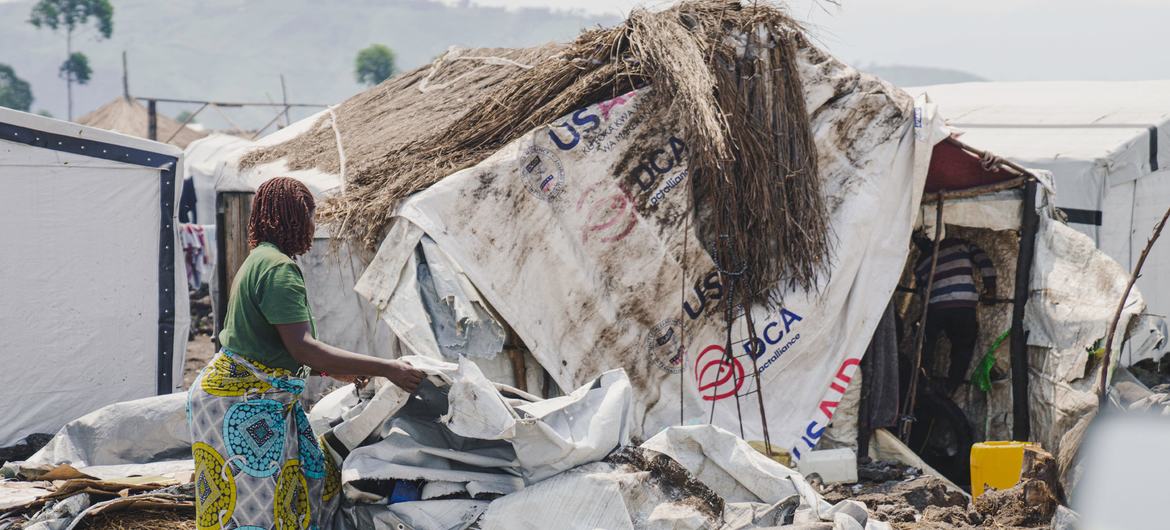
A woman collects her possessions before leaving a camp for displaced people near Goma in teastern DR Congo.
© UNICEF/Jospin Benekire
 
A woman collects her possessions before leaving a camp for displaced people near Goma in teastern DR Congo.


27 March 2025 
Humanitarian Aid

A record 27.7 million people are in the grip of acute hunger in the Democratic Republic of the Congo (DRC), amid ongoing conflict linked to massive displacement and rising food prices, global food security experts warned on Thursday.

The situation represents one of the world’s worst food crises, according to the UN-partnered Integrated Food Security Phase Classification (IPC) platform.

“The humanitarian situation in the DRC is deteriorating at an alarming rate. Families who were already struggling to feed themselves are now facing an even harsher reality,” said Eric Perdison, WFP’s Regional Director for Southern Africa and ad interim WFP DRC Country Director.

Tweet URL

On a scale of one to five – where five indicates famine – 3.9 million people in DRC are classified as IPC Phase 4, which indicates “emergency” levels of hunger - and a 23.8 million are enduring Phase 3 “crisis” levels.

Check out our explainer on how hunger and famine levels are classified, here.

Chaos in the east

The situation is worst in the conflict-affected eastern provinces of DRC – North Kivu, South Kivu, Ituri and Tanganyika – where families have lost access to their livestock and livelihoods.

Rebels from the Rwanda-backed M23 armed group have wrested control of the main cities of Goma and Bukavu since the year began, amid continued fighting, economic collapse and continuing efforts by regional mediators to agree ceasefire terms. 

Mapping shows that the outbreak of violence in December in eastern DRC led by Rwanda-backed M23 rebels has pushed an additional 2.5 million people into acute food insecurity.

Situation worse for those uprooted

“Internally displaced people escaping violence remain among the most vulnerable, bearing the brunt of the worsening food crisis,” said the UN World Food Programme (WFP), in a joint statement with the UN Food and Agriculture Organization of the United Nations (FAO).

They are just two of the UN agencies committed to helping the most vulnerable communities in the war-torn east by providing life-saving food and nutrition assistance and strengthening resilience.

These include tens of thousands of people uprooted by M23 rebels from camps in North Kivu - and in particular six sites around Goma – and the territories of Kalehe and Uvira in South Kivu in February 2025, amid intensified conflict.

“All IDP sites in North Kivu, particularly in the Goma region, are now completely empty,” the IPC said, adding that of the 3.7 million internally displaced people formerly based in camps in eastern DRC, more than 2.2 million are in “crisis” and 738,000 face “emergency” levels of hunger.

In total, the DRC has more than 7.8 million displaced people, most live with host families in eastern regions.

“We have resumed operations in parts of North and South Kivu, and we are committed to do more to support those at risk, but we urgently need more resources,” WFP’s Mr. Perdison said.

“Armed clashes continue to disrupt food production and trade routes, while humanitarian access remains limited, as security risks hinder the ability to deliver essential assistance,” WFP added.

Inflationary pressures

The sharp depreciation of the Congolese franc, shuttered banks and lost incomes have also made it increasingly difficult for families to afford even the basics.

At the same time, inflation and disrupted supply chains have contributed to a rise in food prices. The price of basic foods such as maize flour, palm oil and cassava flour have increased by up to 37 per cent compared to pre-crisis levels in December 2024.

Soundcloud

To date this year, 464,000 people have received WFP food, cash for food, and nutrition treatment in accessible areas of eastern DRC; WFP has managed to reach 237,000 people in Bunia alone.

Beyond emergency food assistance in eastern DRC, FAO and WFP have invested in skills-based training in North and South Kivu to help communities improve their long-term food security.

“The current situation is dire for the population, as harvests are lost, food prices soar, millions of people face acute food insecurity and are increasingly vulnerable,” said Athman Mravili, FAO Representative ad interim.

Urgent appeal

To help WFP reach 6.4 million people in DRC with food and nutrition assistance – and invest in long-term solutions – the UN agency needs $399 million to sustain operations amid growing humanitarian needs over the next six months.

“WFP and FAO call on the international community to step up funding and humanitarian access to prevent a full-scale catastrophe,” they said. 


https://news.un.org/en/story/2025/03/1161606


https://creativecommons.org/licenses/by/4.0/legalcode

вторник, 25 марта 2025 г.

UN peace missions strained, with trust ‘in short supply’ and widening divisions


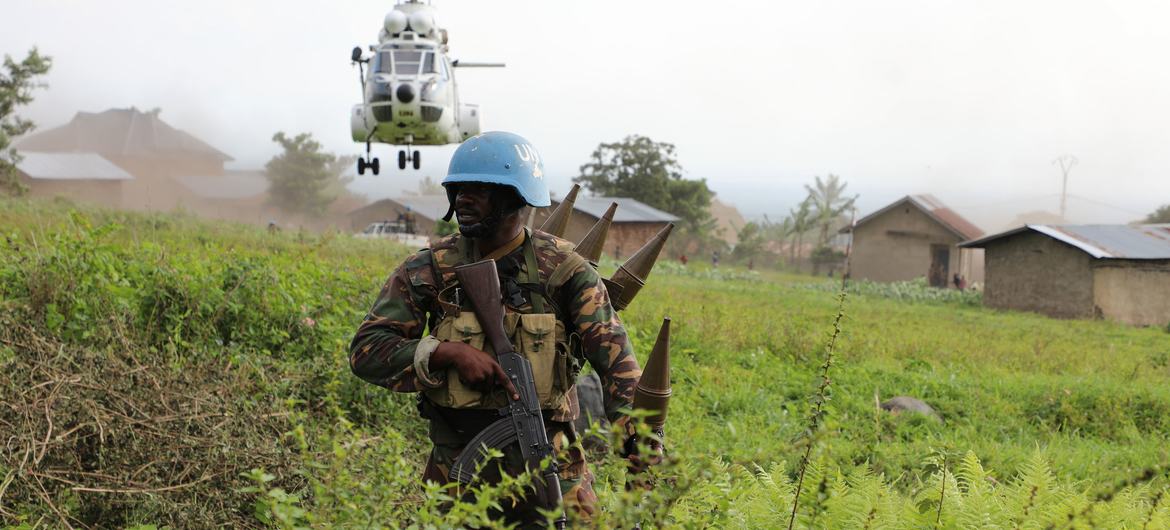
UN peacekeepers patrol Mutwanga in the eastern Democratic Republic of the Congo.
UN Photo/Michael Ali
 
UN peacekeepers patrol Mutwanga in the eastern Democratic Republic of the Congo.


By Vibhu Mishra
24 March 2025 
Peace and Security

United Nations peace operations are facing mounting challenges as conflicts become more protracted, geopolitical divisions widen and transnational threats multiply, Secretary-General António Guterres warned on Monday.

Addressing a high-level open debate in the Security Council, he called for urgent reforms to make peacekeeping more adaptable to today’s increasingly complex security landscape.

“Wars are becoming more complex and more deadly. They last longer and are more enmeshed in global and regional dynamics. Negotiated settlements have been harder to achieve,” Mr. Guterres said.

He noted that many conflicts transcend national borders, with terrorism, organized crime and the weaponisation of new technologies posing additional threats. At the same time, multifaceted impacts of climate change are further complicating efforts to secure peace.

Adding to the mix, divisions within the Security Council itself have made it harder to find common ground on approaching and addressing conflicts.

“Trust is in short supply among – and within – countries and regions…this is a grim diagnosis, but we must face facts.”

Gap between mandates and resources

Mr. Guterres highlighted that one of the biggest hurdles facing UN peace operations is the growing gap between what missions are expected to achieve and the resources available to them.

“We see a persistent mismatch between mandates and available resources,” he said, adding that the Council must recognise the limitations of peacekeeping in situations “where there is little or no peace to keep”.

Despite these challenges, the UN chief emphasised that the Organization has the tools to adapt peace operations to better meet modern realities. He highlighted several recent efforts to make missions more effective and responsive.

UN Secretary-General António Guterres addresses the Security Council.
UN Photo/Manuel Elías
 
UN Secretary-General António Guterres addresses the Security Council.

Adapting peace operations

This includes a proposal for Haiti, where criminal gangs have overrun large parts of the country. The UN has a clear role to play in supporting stability and security, he said, while addressing the root causes of the crisis.

Similarly, in Lebanon, the UN Interim Force (UNIFIL) has developed an adaptation plan to strengthen its mandate and support compliance with Security Council resolution 1701.

Another key example is the recent Security Council resolution 2719, which enhanced the UN’s partnership with the African Union (AU), paving the way for stronger collaboration in peace enforcement missions.

“This breakthrough has lifted our partnership with the AU to a new level,” Mr. Guterres said, urging Member States to fully support the initiative.

Appeal for unity

Mr. Guterres noted that work is underway for a comprehensive review of UN peace operations as called for by Member States in the Pact for the Future, adopted in September last year.

The review will examine existing peacekeeping models, explore new approaches and ensure missions have realistic mandates with viable exit strategies and transition plans.

In closing, he urged all nations to overcome divides and provide the unified support necessary for peacekeeping missions to succeed.

“I call on this Security Council to continue working to overcome divisions and disagreements around peace operations and build the unified and consistent political support our peace operations – and the women and men who conduct them – need and deserve.”

https://news.un.org/en/story/2025/03/1161441


https://creativecommons.org/licenses/by/4.0/legalcode

понедельник, 24 марта 2025 г.

Генассамблея приняла резолюцию о постоянном нейтралитете Туркменистана


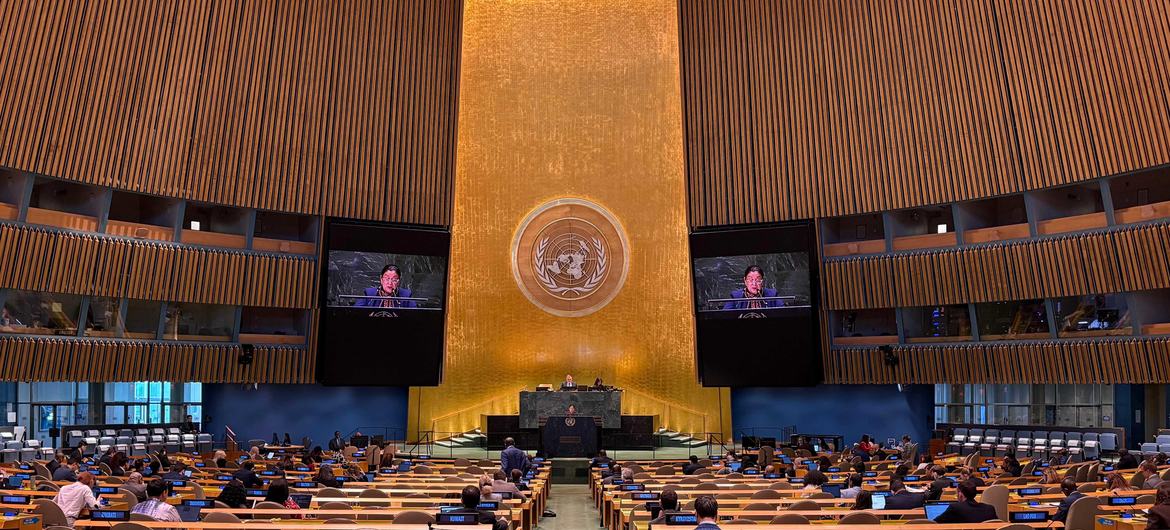
Постоянный представитель Туркменистана при ООН Аксолтан Атаева на трибуне Генассамблеи.
Фото Постоянного представительства Туркменистана при ООН
 
Постоянный представитель Туркменистана при ООН Аксолтан Атаева на трибуне Генассамблеи.


21 марта 2025
 Мир и безопасность

21 марта Генеральная Ассамблея ООН консенсусом приняла резолюцию «Постоянный нейтралитет Туркменистана». Ее соавторами стали 67 государств. В резолюции, в частности, рекомендуется использовать территории нейтральных стран для проведения мирных переговоров. В документе также отмечено предложение Туркменистана о создании на его территории Палаты посредничества во имя мира под эгидой ООН.

Представляя резолюцию, Постоянный представитель Туркменистана при ООН Аксолтан Атаева подчеркнула, что статус постоянного нейтралитета является стержнем внешней политики Туркменистана, основой для реализации сбалансированной миротворческой доктрины страны на международной арене.

Постпред отметила, что Туркменистан, опираясь на всеобъемлющую поддержку своего нейтрального курса со стороны мирового сообщества с момента принятия первой резолюции Генеральной Ассамблеей ООН о постоянном нейтралитете Туркменистана 12 декабря 1995 года, неуклонно демонстрирует его эффективность как ключевого инструмента для осуществления превентивной дипломатии на региональном и глобальном уровнях.

Атаева особо подчеркнула, что нейтралитет глубоко укоренен как во внешней, так и во внутренней политике страны, закреплен Конституционным законом Туркменистана о постоянном нейтралитете и основан на историческом наследии и традициях туркменского народа, которые ставят мир, диалог и взаимное уважение в основу государственного строительства.

Руководство страны, по словам Постпреда, сохраняет преемственность нейтрального курса, продвигая миротворческие инициативы и укрепляя внеблоковый статус Туркменистана.

Особое внимание Атаева уделила активному и практическому характеру нейтральной политики Туркменистана, в рамках которой, в частности, были созданы такие ключевые институты и формы поддержания и укрепления мира и безопасности в регионе, как Региональный центр ООН по превентивной дипломатии для Центральной Азии в Ашхабаде и Зона мира и доверия в Центральной Азии.

По инициативе Туркменистана в 2017 году Генеральная Ассамблея ООН провозгласила 12 декабря Международным днем нейтралитета, на площадке ООН создана Группа друзей нейтралитета, а в нынешнем году проводится глобальная кампания в рамках Международного года мира и доверия.


https://news.un.org/ru/story/2025/03/1462566


https://creativecommons.org/licenses/by/4.0/legalcode

четверг, 13 марта 2025 г.

Guterres prioritises UN reform to ensure taxpayers’ money reaches those in need


Secretary-General António Guterres briefs the media about the UN80 Initiative.
UN Photo/Manuel Elías
 
Secretary-General António Guterres briefs the media about the UN80 Initiative.


By Vibhu Mishra
12 March 2025 
UN Affairs

The United Nations is prioritising reform to ensure it remains effective, cost-efficient and responsive to the people it serves, Secretary-General António Guterres announced Wednesday, as part of a continued push to modernize the Organization.

Speaking to reporters at UN Headquarters, in New York, Mr. Guterres emphasised that the reforms are not just about internal processes but aimed at delivering tangible improvements in peace, development and humanitarian aid – all while ensuring that public funds are used wisely and transparently.

“These efforts are not ends in themselves. They are about better serving people whose very lives depend on us. They are about hardworking taxpayers around the world who underwrite everything we do,” he said.

As the UN turns 80 this year, the UN80 Initiative builds on ongoing efforts, including the Pact for the Future and UN 2.0, which aim to update the UN’s structures, priorities, and operations for the 21st century.

Tweet URL

Urgency and ambition

Since taking office in 2017, Mr. Guterres has led a comprehensive reform agenda focused on simplifying procedures, decentralising decision-making, enhancing transparency and prioritising data and digital capacity to make the UN more efficient and cost-effective.

“It is essential that an organizational system as complex and crucial as the United Nations – subjects itself to rigorous and regular scrutiny to assess its fitness for purpose in carrying out its goals efficiently,” he said.

“And this 80th anniversary year of the United Nations is a prime moment to expand all our efforts, recognising the need for even greater urgency and ambition.”

Not just about numbers

Under the UN80 Initiative, a dedicated internal Task Force led by Under-Secretary-General Guy Ryder will develop proposals in three key areas, the UN chief said.

These include identifying efficiencies and improvements, reviewing the implementation of mandates from Member States, and a strategic review of deeper, more structural changes and programme realignment.

These efforts go “far beyond the technical,” Mr. Guterres said.

“Budgets at the United Nations are not just numbers on a balance sheet – they are a matter of life and death for millions around the world.”

Liquidity crisis

Though the UN remains a “one-of-a-kind” forum for nations to advance peace and security collectively, promote sustainable development and human rights, it has been facing significant fiscal headwinds.

“Resources are shrinking across the board – and they have been for a long time,” Mr. Guterres said.

“For at least the past seven years, the United Nations has faced a liquidity crisis because not all Member States pay in full, and many also do not pay on time,” he added.

As of 11 March, only 75 of the 193 Member States have paid their assessed contributions in full towards the $3.72 billion 2025 budget for the Organization – approved by the General Assembly in December last year.

Last year, 152 nations paid their share in full by December 31, while in 2023 the number was 142.

The regular budget funds UN programmes across key areas, including political affairs, international justice and law, regional cooperation for development, human rights and humanitarian affairs. UN peacekeeping operations are funded through a separate account.

Member States’ decisions

Mr. Guterres also pledged to consult closely and regularly with all Member States on the progress made – under the leadership of the President of the General Assembly – seeking guidance on the way forward and presenting concrete proposals.

“My objective is to move as soon as possible in areas where I have the authority – and to urge Member States to consider the many decisions that rest with them,” he said.

He concluded emphasising, “need is great, and the goal is clear:  an even stronger and more effective United Nations that delivers for people and is tuned to the 21st century.”

Secretary-General Guterres speaking to the media on the UN80 initiative.

https://news.un.org/en/story/2025/03/1161046
https://creativecommons.org/licenses/by/4.0/legalcode

четверг, 6 марта 2025 г.

12 400 ядерных боеголовок и 2,4 триллиона долларов на военные расходы: почему мир нуждается в разоружении


Мир и безопасность
5 марта 2025
Сегодня в мире насчитывается около 12 400 ядерных боеголовок. Они представляют экзистенциальную угрозу для человечества. Мировые военные расходы в 2023 году достигли рекордных 2,4 триллиона долларов.
 5 марта отмечается Международный день просвещения по вопросам разоружения и нераспространения. Этот день призван напомнить международному сообществу о необходимости сдерживания гонки вооружений и продвижения инициатив, направленных на мирное сосуществование.В ООН также отмечают, что использование в военных целях новых технологий, таких как искусственный интеллект и автономное оружие летального действия, создает новые глобальные угрозы.Генеральный секретарь ООН Антониу Гутерреш призвал мировых лидеров инвестировать в «механизмы мира, а не в машину войны» и выполнять свои обязательства по разоружению.«Я призываю лидеров укреплять системы и инструменты, которые предотвращают распространение, испытания и применение смертоносного оружия, и выполнять свои обязательства по разоружению», – сказал глава ООН.

55 лет Договору о нераспространении ядерного оружия
Одним из ключевых инструментов контроля над вооружениями остается Договор о нераспространении ядерного оружия (ДНЯО), подписанный в 1968 году в Москве, Лондоне и Вашингтоне 59-ю странами и вступивший в силу в 1970 году.Он официально закрепил статус ядерных держав за пятью странами – США, Россией (тогда СССР), Великобританией, Францией и Китаем – и обязал остальные государства отказаться от разработки ядерного оружия. Однако Индия, Пакистан и Израиль так и не присоединились к договору, а Северная Корея объявила о выходе из него, хотя этот шаг не был признан международным сообществом.Договор призван сдерживать угрозу распространения ядерного оружия, гарантировать развитие международного сотрудничества в области мирного использования атомной энергии, обеспечивать поэтапное продвижение по пути ядерного разоружения.Тем не менее мир сегодня сталкивается с новыми вызовами. В частности, помимо традиционных ядерных угроз, возрастает риск использования ядерного оружия в космосе.Каждый человек заслуживает мирное будущееСегодня, когда международные договоренности размываются, а геополитическая напряженность растет, инициативы по разоружению важны как никогда. ООН призывает страны не только соблюдать взятые на себя обязательства, но и разрабатывать новые стратегии по предотвращению гонки вооружений.«Пришло время лидерам перейти от слов к действиям и инвестировать в решения по разоружению, а также в мирное будущее, которого заслуживает каждый человек», – сказал Генеральный секретарь. 

https://news.un.org/ru/story/2025/03/1461926


https://creativecommons.org/licenses/by/4.0/legalcode