Показаны сообщения с ярлыком crisis. Показать все сообщения

четверг, 1 мая 2025 г.

UN alert over deepening crisis in Sudan as famine spreads and violence escalates


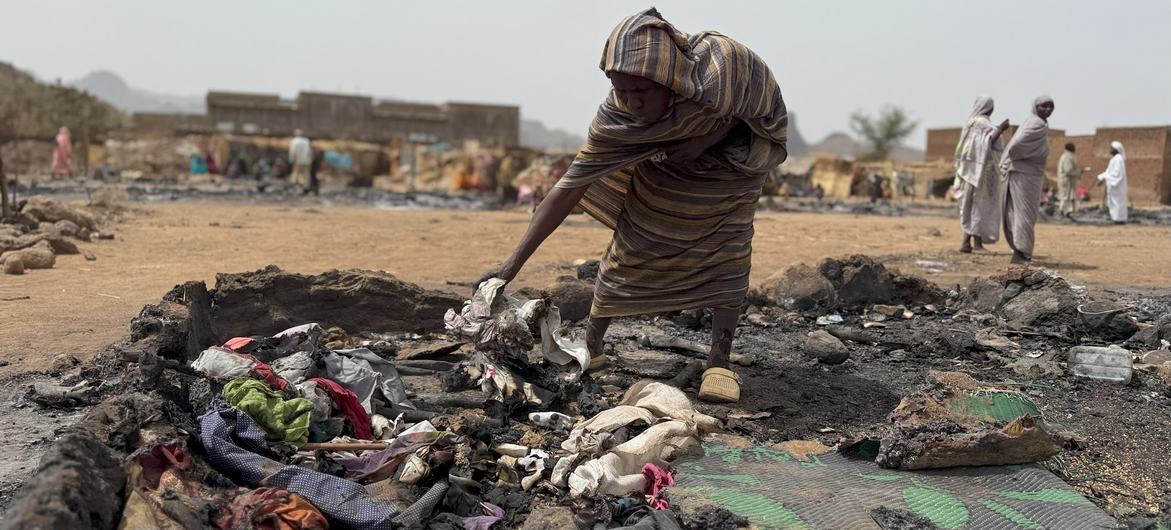
A woman searches through the burnt remains of her shelter at a displacement camp in Darfur, Sudan.
© UNICEF/Mohammed Jamal
 
A woman searches through the burnt remains of her shelter at a displacement camp in Darfur, Sudan.


By Vibhu Mishra
30 April 2025 Peace and Security

The United Nations has warned that Sudan is sliding deeper into catastrophe, with growing famine and surging violence – particularly in North Darfur – driving mass displacement and an alarming rise in civilian deaths.

In a statement issued by his Spokesperson on Wednesday, UN Secretary-General António Guterres said he was “appalled” by the deteriorating situation in North Darfur, where the regional capital, El Fasher, is under intense and sustained attack.

The onslaught comes just two weeks after deadly assaults on the nearby Zamzam and Abu Shouk displacement camps, where hundreds of civilians, including humanitarian workers, were reportedly killed.

Mass displacement

More than 400,000 people have fled Zamzam camp alone, with the majority now seeking safety in Tawila, west of El Fasher.

There are also increasing reports of harassment, intimidation and arbitrary detention of displaced people at checkpoints, adding to the already dire humanitarian emergency.

“With the conflict now in its third year and increasingly destabilizing the broader region, the Secretary-General reiterates his call for the facilitation of safe and unhindered humanitarian access to all areas of need by all necessary routes,” UN Spokesperson Stéphane Dujarric said.

He also called for the protection of civilians, in line with the warring parties’ clear obligations under international humanitarian law.
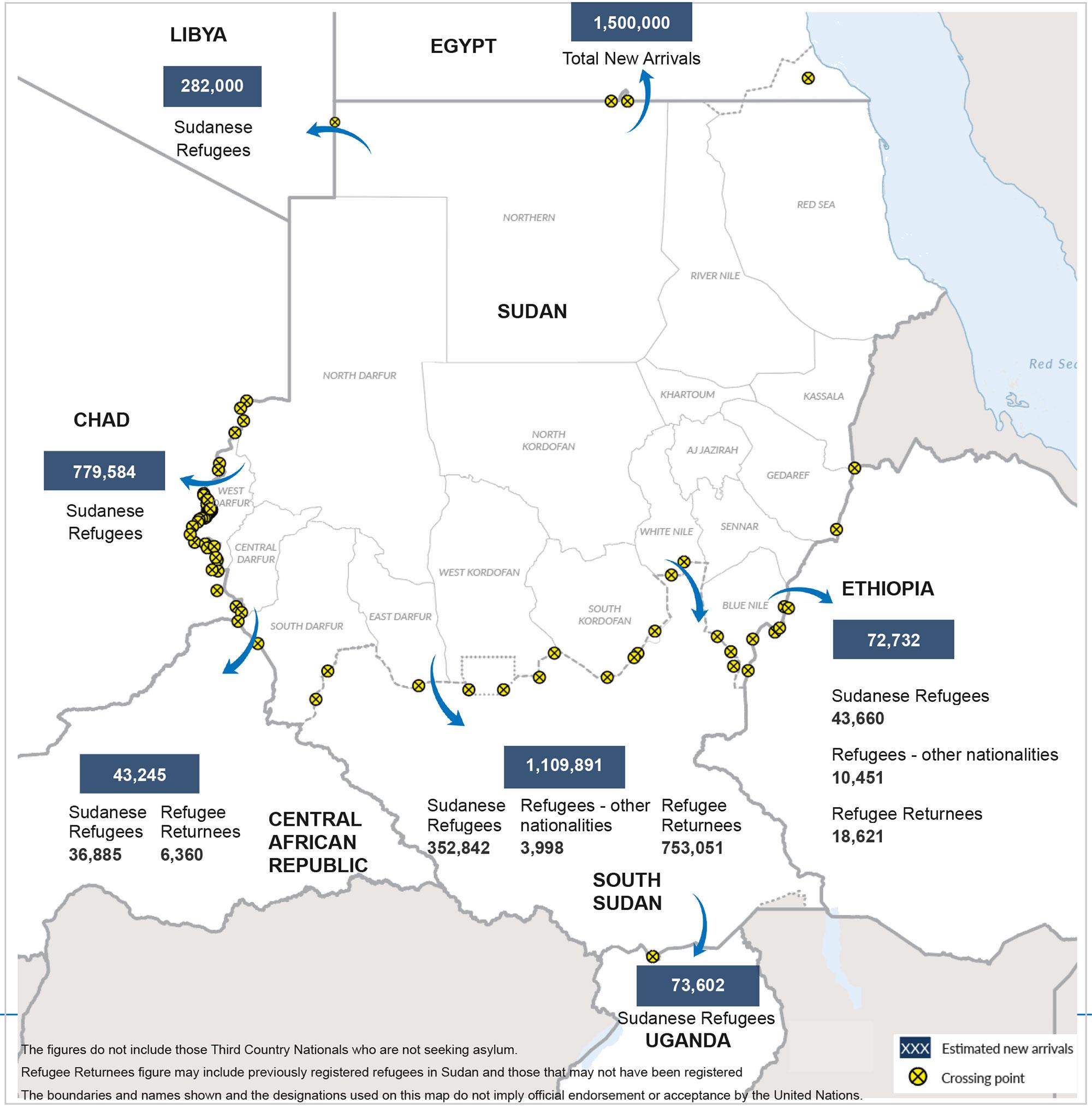
Refugee movements from Sudan.
Source: UNHCR
 
Refugee movements from Sudan.

Accountability is paramount

“Perpetrators of serious violations must be held accountable,” Mr. Dujarric stressed.

The civil war between rival militaries – the national Sudanese Armed Forces (SAF) and the paramilitary Rapid Support Forces (RSF) and allied militias – has claimed tens of thousands of lives and driven more than 12.7 million people from their homes, including nearly four million as refugees in neighbouring countries.

Violence and insecurity has also sparked a catastrophic hunger crisis, with over half the population suffering acute food insecurity and famine conditions confirmed in various regions, leaving millions at risk of starvation.

Emergency response underway in Tawila

Despite the escalating violence and dwindling funds, humanitarian agencies continue their efforts to deliver lifesaving aid.

The UN relief coordination office, OCHA, reported on Wednesday that an inter-agency convoy led by UN Deputy Humanitarian Coordinator Antoine Gérard crossed into Darfur from Chad earlier this week via the Adré border, en route to Tawila.

The convoy is transporting critical supplies including nutrition and medical items, dignity kits, and other essential goods.

Food and nutrition assistance for approximately 220,000 people has already reached Tawila, with the UN World Food Programme (WFP) confirming that distributions began this week and are already 20 per cent complete.

Additional convoys are in motion, including one expected to depart Chad on Wednesday with 19 trucks of nutrition supplies.

Tweet URL

Aid reaches capital Khartoum

WFP has begun the first food distributions in the centre of the capital Khartoum since the conflict erupted two years ago.

Deliveries of 70 metric tonnes of food to the Burri neighbourhood are set to begin on Thursday, attempting to reach nearly 8,000 people.

Aid distributions have also started in Alazhari, one of the areas at high risk of famine, where 20,000 people are receiving assistance.

Despite these efforts, WFP warned that the impending rainy season and severe funding shortfalls could undermine recent progress.

The agency, which assists about four million people monthly, aims to expand coverage to seven million – but that still represents only a fraction of those in need.

https://creativecommons.org/licenses/by/4.0/legalcode

https://news.un.org//en/story/2025/04/1162771

пятница, 26 января 2024 г.

The Red Sea shipping crisis is having a ‘dramatic’ impact, warns logistics chief

War ( conflict)
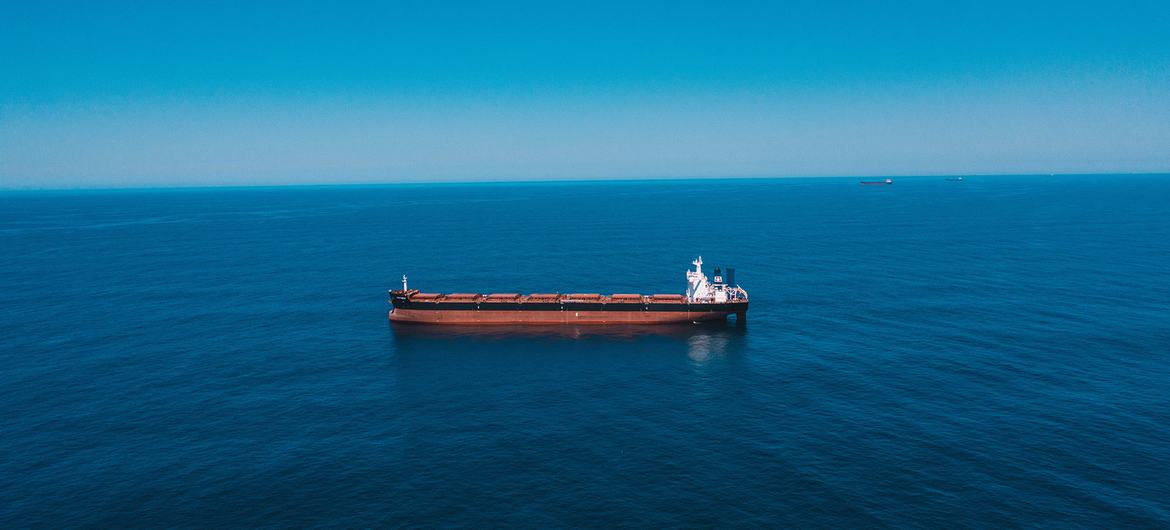
Attacks on commercial vessels in the Red Sea have severely disrupted international shipping. (file)
© Unsplash/Angus Gray
 
Attacks on commercial vessels in the Red Sea have severely disrupted international shipping. (file)


25 January 2024
Peace and Security

Attacks against shipping in the Red Sea by Houthis are devastating for global trade and supply chains, already reeling under the impacts of the war in Ukraine and climate change-linked conditions in the Panama Canal, said the UN trade and development body, UNCTAD, on Thursday.

According to Jan Hoffmann, Chief of Trade Logistics at UNCTAD, the attacks are not only adding to geopolitical tensions but also raising costs and leading to increased greenhouse gases (GHG) emissions.

“Maritime transport is really the lifeline of global trade,” he said, speaking to journalists at UN Headquarters in New York via video link from Geneva.

“These disruptions underline their vulnerability to geopolitics, tensions, and climate changes.”

Tweet URL
UN_News_Centre

Attacks and counter strikes

Also known as Ansar Allah, Houthi rebels control large parts of Yemen, including the Red Sea coast.

Since November, they have intensified attacks against ships passing through the narrow waters towards the Suez Canal, claiming they have been targeting those heading to Israeli ports.

In response, the United States, United Kingdom and other countries launched airstrikes against the group at sea and now on land, further increasing tensions in the region.

A crucial link

The Suez Canal is a vital link for international shipping and accounts for between 12 and 15 per cent of global trade and about 20 per cent of container trade.

Disruptions there have a catastrophic, cascading effect worldwide, as seen during the March 2021 grounding of the vast Ever Given container ship that blocked the waterway for days.

Given the risk of attacks, ships are avoiding the route, traveling along the much longer passage around the southern tip of Africa.

Container ship transits are down 67 per cent compared to a year ago. The largest impact is on liquefied natural gas (LNG) carriers, which have stopped altogether since 16 January, according to UNCTAD.

Prior to the crisis, normally two or sometimes three gas carriers used to pass through the region daily.

Global shipping in crisis

The challenges come on the back of pre-existing disruptions to global trade caused by the war in Ukraine and the abnormally low water levels in the Panama Canal due to climate change impacts.

Low water levels have caused a decrease of 36 per cent in ship transits compared to a year ago and are almost 62 per cent down on two years ago.

The impacts have been “dramatic”, Mr. Hoffmann said, pointing to a surge in average container spot rates.

Average shipping cost rates from Shanghai have more than doubled since early December 2023, those to Europe over tripled and those to the US west coast also increased “even though they don’t go through the Suez Canal”.

“We are seeing multiple impacts,” he highlighted, warning of rising costs, potential inflation, global delays and disruptions and worsening of climate change contributors.


https://news.un.org/en/story/2024/01/1145902


https://creativecommons.org/licenses/by/3.0/legalcode