пятница, 28 июля 2023 г.

Protecting Civilians Must Be Overarching Priority in Mandate Implementation, Force Commander Tells Security Council Meeting on Peacekeeping Operations


9389TH MEETING (AM)
SC/15371

Protecting Civilians Must Be Overarching Priority in Mandate Implementation, Force Commander Tells Security Council Meeting on Peacekeeping Operations

Conflict prevention is the best method to protect civilians from harm, the Security Council heard today, as the Force Commanders of United Nations peacekeeping operations in South Sudan, Democratic Republic of the Congo and Lebanon shared their experience and insight into how missions’ military components can help to implement such tasks.

Mohan Subramanian, Force Commander of the United Nations Mission in South Sudan (UNMISS), said the protection of civilians remains the Mission’s overarching priority in implementing its mandate.  UNMISS engages with the Government and its defence forces to prevent conflicts through proactive actions, including pre-planned deployment at bases in identified potential conflict areas, and long- and short-duration patrols in locations where early warning on imminent conflicts is received.

Otávio Rodrigues De Miranda Filho, Force Commander for the United Nations Organization Stabilization Mission in the Democratic Republic of the Congo (MONUSCO), spoke of the hostile environment in which illegal armed groups often target civilians, underscoring the essential need to focus on boosting engagement and dialogue, create safe civilian spaces and advocate their protection with political leaders in both the national and provincial levels.

Aroldo Lázaro Sáenz, Head of Mission and Force Commander of the United Nations Interim Force in Lebanon (UNIFIL), said the Force has established a tripartite forum — a key confidence-building and conflict-management tool — which is the only venue where Lebanese and Israeli forces are in the same room in addressing security concerns.  Following cross-Blue Line rocket fire on 6 April and subsequent Israeli air strikes, the parties were able to pass messages to prevent further escalation.

Jean-Pierre Lacroix, Under-Secretary-General for Peace Operations, said that this annual gathering of Force Commanders provides an important occasion for in‑depth exchanges between them and various actors at United Nations Headquarters to improve the impact of peacekeeping, noting that they have engaged in discussions on various topics, including the safety of peacekeepers, strategic communications to counter false information and leveraging emerging technology to enhance peacekeeping impact.

In the ensuing discussion, Council members exchanged their views on the topic, with France’s representative stressing that the protection of civilians must also be at the heart of African peacekeeping operations.  The Council must give operations clear mandates with clear hierarchies and achievable goals, she insisted.

Injecting a different view, the Russian Federation’s delegate said that the protection-of-civilians mandate requires additional reflection. In recent years, the scope of this task has expanded to include secondary work, such as human rights monitoring and sexual-violence prevention.  The need to protect the population stems from conflicts, and only the removal of their causes can effectively guarantee the safety of civilians.

Gabon’s representative underlined new threats that are undermining peacekeeping operations, such as climate change, terrorism and violent extremism, the use of explosive devices and lethal autonomous-weapon systems by armed groups, cyberwarfare, drones or the malicious use of artificial intelligence.

The speaker from the United States underscored the dilemma forces’ leadership faces.  Force Commanders and subordinate leaders often make difficult decisions between the protection of civilians and the protection of peacekeepers.  “Sound leadership with an eye to robust mandate implementation is fundamental to our efforts in protecting civilians,” he said.....


https://press.un.org/en/2023/sc15371.doc.htm


https://creativecommons.org/licenses/by/3.0/legalcode

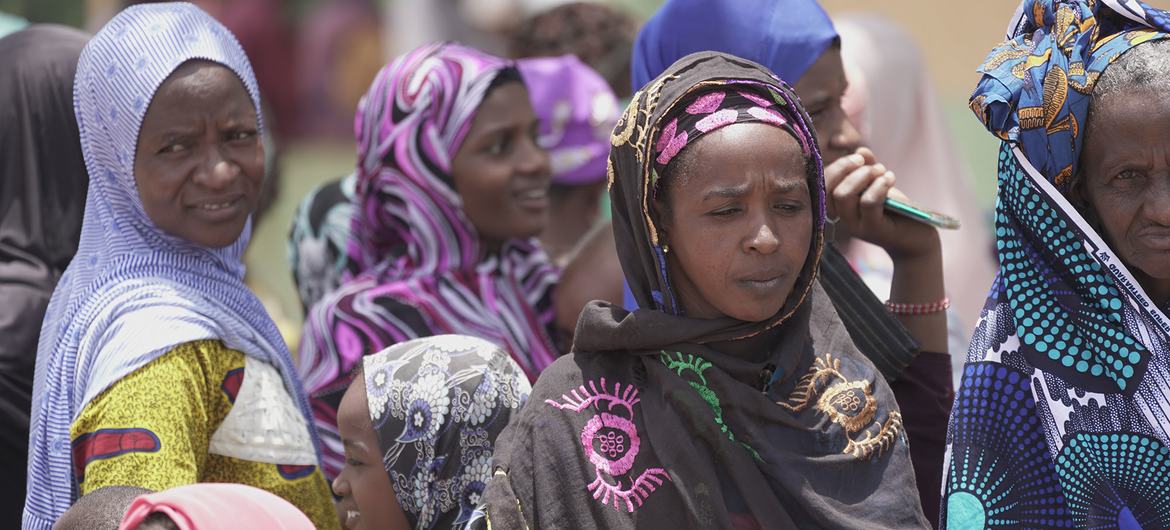
UNHCR urges solidarity with Burkina Faso’s victims of extremist violence


Women and children who have fled violence in Burkina Faso seek help in Côte d'Ivoire.
© UNHCR/Insa Wawa Diatta
 
Women and children who have fled violence in Burkina Faso seek help in Côte d'Ivoire.
28 July 2023

Migrants and Refugees

Civilians fleeing attacks by extremist groups in Burkina Faso must be allowed to shelter in neighbouring countries and not sent back, amid a spike in violence and horrifying rights abuses, the UN refugee agency (UNHCR) said on Friday.

“We're urgently appealing for all States to refrain from forcibly returning any individuals originating from the regions in Burkina Faso where there is an ongoing crisis,” said Elizabeth Tan, UNHCR Director of International Protection.

Speaking in Geneva, Ms. Tan highlighted “killings, forced disappearances, torture and kidnappings”, while in several instances, civilians had been targeted and killed, resulting in mass civilian casualties.

Spike in needs

Humanitarians have warned about mass internal displacement in Burkina Faso caused by non-state armed groups since 2015, “but it’s in 2022 that we’ve really seen large increase in the number of displaced in the country, and that is due to the increased activities by extremist, violent, violent extremist groups as well as increasing humanitarian needs”, the UNHCR official explained.

Latest UN estimates indicate that 4.7 million people across the country are now in need of humanitarian assistance in the west African nation, which is more than 20 per cent of the country’s entire population.

Violence and conflict have also destroyed critical infrastructure and impacted state services and institutions, including in conflict-affected areas.

The humanitarian situation is especially severe for people living in towns that have been blockaded by violent extremist groups, including large numbers of internally displaced people.

Refugees from Burkina Faso arrive in Togo after fleeing their country due to violence.
© UNHCR/Fidélia Bohissou
 
Refugees from Burkina Faso arrive in Togo after fleeing their country due to violence.

Youngsters targeted

Children have not been spared serious human rights violations, including forced recruitment by armed groups, child labour “as well as other types of violence, abuse, exploitation and gender-based violence”, Ms. Tan told journalists at a scheduled briefing.

The number of school closures has increased from approximately 3,000 in November 2021 to 6,334 schools as of 31 March 2023.

Tweet URL

The majority of displaced children are unable to attend classes at all. Early and child marriage is prevalent and forced marriages continue to be reported. Half of all children in Burkina Faso are estimated to be exposed to gender-based violence or mistreatment, with the estimate as high as 82 per cent for girls.

Ongoing violence and displacement have also left many women vulnerable to sexual violence and have restricted services available to survivors.

Border refuge

In addition to the more than two million people internally displaced in Burkina Faso, as of June this year – “making this one of the worst internal displacement crises on the African continent” - the UNHCR official added that 67,000 people from Burkina Faso have sought refuge in neighbouring countries including Mali, Niger, Cote d'Ivoire, Togo, Benin and Ghana.

Fighting is believed to have killed thousands and placed vast numbers at risk of abuse by armed groups, including reportedly being whipped and raped while fleeing their villages. 

“The principle of non-refoulement must be respected and upheld. That means that no-one should be forcibly returned to places where their lives, freedom or human rights are at risk. So, UNHCR calls on all countries to allow civilians fleeing Burkina Faso to access their territories.”


https://news.un.org/en/story/2023/07/1139222


https://creativecommons.org/licenses/by/3.0/legalcode
Security Council Press Statement on Situation in Niger

The following Security Council press statement was issued today by Council President Barbara Woodward (United Kingdom):

The members of the Security Council strongly condemned the efforts to unconstitutionally change the legitimate Government of the Niger on 26 July 2023.

The members of the Security Council called for the immediate and unconditional release of the democratically elected President of the Republic, Mohammed Bazoum, and underscored the need to protect him, his family and members of his Government.

The members of the Security Council expressed concern over the negative impact of unconstitutional changes of government in the region, increase in terrorist activities and the dire socioeconomic situation.  They underlined their regret over the developments in Niger, which undermine efforts at consolidating the institutions of governance and peace in that country.

The members of the Security Council expressed support for the efforts of the Economic Community of West African States (ECOWAS) and the African Union, as well as the United Nations, and welcomed their statements reaffirming their opposition to any seizure of power by unconstitutional means and for those involved to refrain from violence, hand over power and return to their barracks.  They underscored the urgent need for the restoration of constitutional order in Niger in accordance with the ECOWAS Protocol on Democracy and Good Governance and expressed their support for regional and continental mediation efforts.

The members of the Security Council reiterated their support to the efforts of ECOWAS and the African Union to reverse the trends of unconstitutional changes in governments through the strengthening of the existing governance and normative frameworks.

The members of the Security Council expressed their solidarity with the people of Niger and underlined the importance of the protection of population and continued humanitarian assistance.


https://press.un.org/en/2023/sc15372.doc.htm

https://creativecommons.org/licenses/by/3.0/legalcode
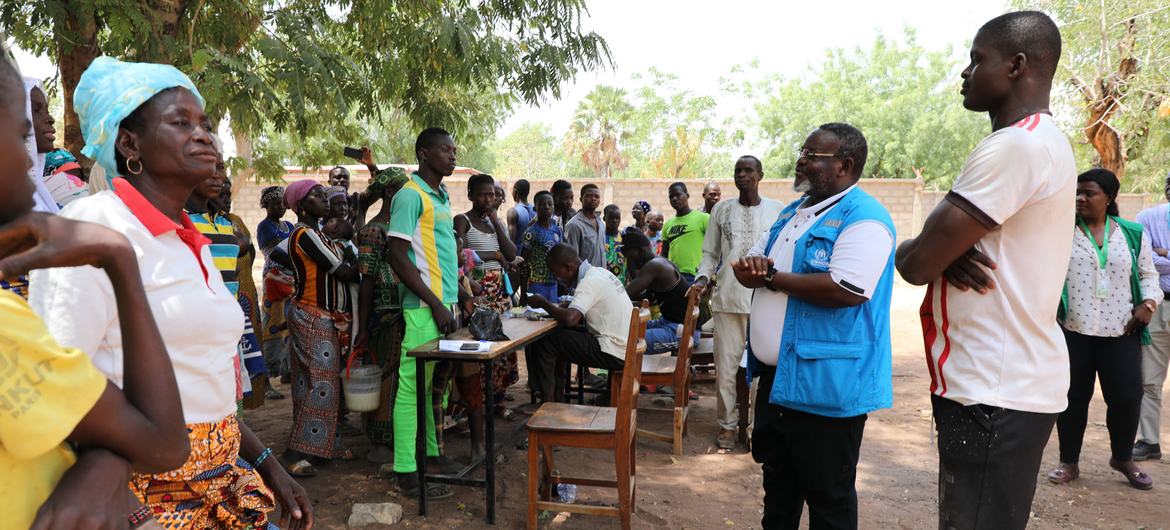
UN pledges to ‘remain engaged and committed’ amid Niger coup


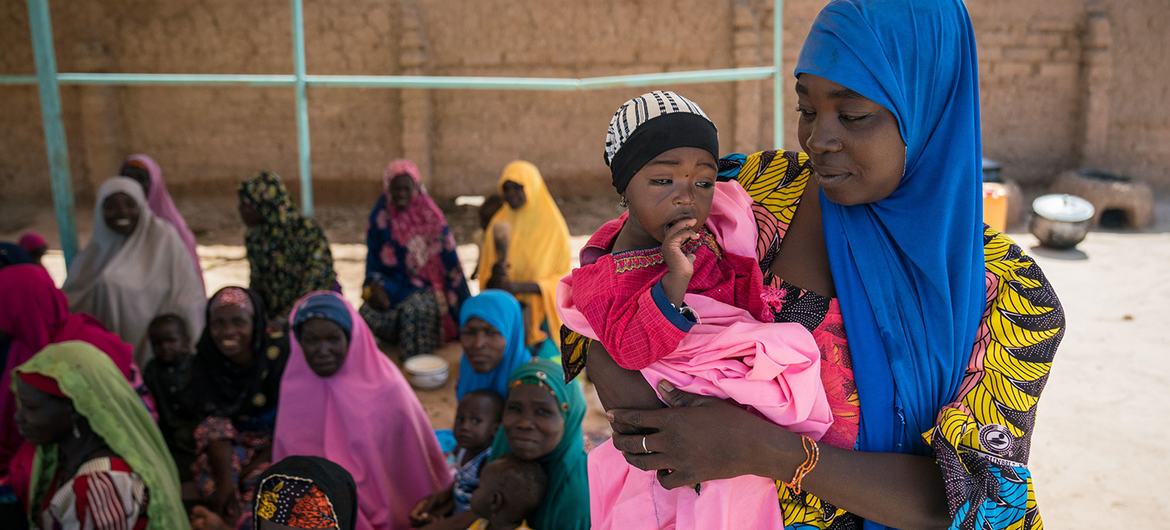
Mothers in Niger are receiving guidance from the UN on how to feed under-nourished children.
© WFP/Evelyn Fey
 
Mothers in Niger are receiving guidance from the UN on how to feed under-nourished children.
28 July 2023
Humanitarian Aid

Humanitarian operations, development support and peace programmes in Niger continue in the wake of the military coup this week, the top UN official in the country said on Friday in a briefing to journalists in New York. 

Nicole Kouassi, UN Acting Resident Coordinator and Humanitarian Coordinator, was speaking from the capital, Niamey, just hours after the general whose troops seized the democratically elected president, declared that he was assuming control of the country.

On behalf of UN agencies on the ground, she echoed the Secretary-General’s condemnation of Wednesday's coup against President Mohamed Bazoum, who reportedly remains in detention at his home.

A ‘difficult situation’

Ms. Kouassi expressed concern over the current “difficult situation” in Niger, where 4.3 million people, mainly women and children, were already dependent on aid prior to the power grab.  

Some 3.3 million are facing food insecurity, while a $534 million appeal is just over 30 per cent funded, she said, calling for greater support.

The UN and international aid groups have not stopped delivering amid the crisis.  However, UN Humanitarian Air Service (UNHAS) flights have been temporarily suspended because the air space is closed, along with the territorial borders.

“All the humanitarian partners and development partners remain engaged and committed to supporting the vulnerable population of Niger who are affected by a combination of climate issues, economic and security shocks in the context of very high humanitarian and development needs,” she said.

Response never stopped

Jean-Noel Gentile, Country Director for the World Food Programme (WFP) affirmed that “humanitarian response continues on the ground and has never stopped”.  

WFP is providing both cash assistance and food assistance in Niger and will continuously assess the situation to ensure its staff and partners can safely access people in need.

“Only if security is an issue, we will temporarily possibly suspend certain operations in certain areas. But this is not currently the case,” he said.

Border closure impacts

The crisis could potentially affect the humanitarian response in the wider region, which continues to face impacts from conflict, drought, insecurity and other challenges.

Mr. Gentile said WFP recently established a logistics hub in Niamey as a transit point for hard-to-reach areas in neighbouring Burkina Faso and Mali, which are only accessible through Niger.

The agency has also been facilitating delivery of humanitarian aid to Chad, which is now hosting hundreds of thousands fleeing the conflict in Sudan, “so the closure of the borders will temporarily suspend this vital cross-border logistics support.” As a result, WFP is examining the possibility of alternative routes.

Meanwhile, the UN refugee agency, UNHCR, has not witnessed “any particular movements” related to the coup, said Emmanuel Gignac, Deputy Representative in Niger.

UNHCR monitors regular movements of internally displaced people in Niger, or refugee flows from Burkina Faso, Mali and northwest Nigeria.

No warning signs

Ms. Kouassi was asked if UN agencies were in contact with the military, but she said no, stressing that they do not have political mandates.

Journalists asked if there were any warning signs ahead of the coup, or if the UN officials had seen personnel from the Russian private military company Wagner Group in Niger. Ms. Kouassi answered no to both questions.

“No early signs were noticed,” she said. “We woke up in the morning and we were faced with the situation. And as of now, no sign of Wagner from the UN perspective.” 


  https://news.un.org/en/story/2023/07/1139247


https://creativecommons.org/licenses/by/3.0/legalcode
четверг, 27 июля 2023 г.

Security Council 2140 Committee Receives Briefing by Secretary-General’s Special Representative for Children and Armed Conflict

SC/15370

Security Council 2140 Committee Receives Briefing by Secretary-General’s Special Representative for Children and Armed Conflict

On 19 June 2023, the Security Council Committee established pursuant to resolution 2140 (2014) was briefed by Special Representative of the Secretary-General for Children and Armed Conflict Virginia Gamba on the situation of children and armed conflict in Yemen, upon invitation by the Committee.

Ms. Gamba provided an update on the patterns and trends of grave violations against children in Yemen, stressing a decrease in such violations since the agreement on a truce in April 2022, and called upon the international community to seize the opportunity to deliver peace and stability for children in Yemen.  She also presented recommendations to the Committee.

Ms. Gamba further informed the Committee that the Secretary-General will issue a report on children and armed conflict in Yemen to the Security Council in the second half of 2023.

The presentation was followed by an interactive discussion between Committee members and Ms. Gamba.


https://press.un.org/en/2023/sc15370.doc.htm


https://creativecommons.org/licenses/by/3.0/legalcode
Surge in Israeli-Palestinian Violence Must be ‘Wake-up Call’ for Global Community to Redouble Efforts towards Achieving Peace, Delegate Tells Security Council


9387TH MEETING (AM & PM)
SC/15368

Surge in Israeli-Palestinian Violence Must be ‘Wake-up Call’ for Global Community to Redouble Efforts towards Achieving Peace, Delegate Tells Security Council

The security situation in the West Bank has significantly deteriorated, highlighted by the most intensive Israeli operation in nearly 20 years, further jeopardizing the Israel-Palestine peace process, a senior United Nations official told the Security Council today.

Khaled Khiari, Assistant Secretary-General for Middle East, Asia and the Pacific in the Departments of Political and Peacebuilding Affairs and Peace Operations, said that from 27 June through 24 July in the occupied West Bank, 25 Palestinians, including 5 children, were killed, and 249 Palestinians were injured by Israeli security forces.  According to Israel, 2 Israeli security forces personnel were killed while another 39 Israelis were injured by Palestinians.

“This deterioration is taking place alongside ongoing unilateral steps that undermine a two-State solution, the absence of a peace process and the continuing economic challenges facing Palestinians and the Palestinian Authority,” he stressed.

On 3 and 4 July in the Jenin refugee camp in the occupied West Bank, Israeli security forces carried out an operation marked by multiple drone strikes and over 1,000 ground troops.  Twelve Palestinians, including four children, were killed and over 140 injured — the most in a single operation in the West Bank since the United Nations began tracking casualties in 2005.  Palestinian Islamic Jihad al‑Quds Brigades claimed 8 of the 12 fatalities as members, including children.

Israeli settler violence continues, albeit not at the scale witnessed in June, he pointed out, reminding Israel of its responsibility to abide by international humanitarian law when carrying out security measures.  The funding gap faced by the United Nations Relief and Works Agency for Palestine Refugees in the Near East (UNRWA) is of grave concern, he went on to say, urging the international community to contribute the $200 million the Agency urgently needs to maintain services from September onwards.

When the floor opened for discussion, the Permanent Observer for the State of Palestine, said that there are more than 700,000 Israeli settlers in the Occupied Palestinian Territory, including East Jerusalem.  “So, let us start by calling things by their name,” he urged, stating that “the Israeli occupation is a settler-colonial occupation”, and that the only way the international community can end it is to address its settler-colonial nature.

“We need an action plan, with the necessary resources and the will to implement it,” he stressed.  The International Criminal Court investigations must start yielding results by providing justice for victims and deterring perpetrators.  The International Court of Justice advisory opinion will give the United Nations and all States guidance on their legal obligations.

Israel’s representative said that Palestine poisons the minds of children and fosters hate-filled youth.  Among the recent victims of Palestinian violence was a pregnant Israeli woman who lost her baby when she was run over by a Hamas truck.  In Jenin refugee camp, Israel conducted two days of counter-terrorism operations with surgical precision targeting terrorists and avoiding civilian casualties.

In total, 12 Palestinian terrorists were killed, and Israeli forces found tunnels and explosive devices and weapons stored there, he said.  Yet, the Secretary-General did not commend Israel for uprooting terrorists, but instead repeated Palestinian lies. Noting the growing tensions at the border with Lebanon, he urged the Council to hold an emergency meeting before it’s too late.

The representative of the United States urged all parties to take proactive measures to counter all forms of violence and to ensure that justice and accountability are pursued with equal rigour in all cases.  Israel faces real security challenges, he said, expressing support for the country’s legitimate right to defend its people — including against the threats posed by Hamas.

Trust between the parties is at rock-bottom, France’s delegate pointed out, condemning all attacks targeting civilians — both Israeli and Palestinian.  While condemning terrorist acts against Israel and reiterating unwavering commitment to that country’s security, he also condemned the continued Israeli colonization of the Territory.  “That is why France will never recognize the illegal annexation of territories, nor the legalization of illegal settlements,” he added.......


https://press.un.org/en/2023/sc15368.doc.htm

https://creativecommons.org/licenses/by/3.0/legalcode

Security Council Extends Arms Embargo on Central African Republic, Mandate of Expert Panel, Adopting Resolution 2693 (2023) by 13 Votes in Favour, 2 Abstentions


9388TH MEETING (PM)
SC/15369

Security Council Extends Arms Embargo on Central African Republic, Mandate of Expert Panel, Adopting Resolution 2693 (2023) by 13 Votes in Favour, 2 Abstentions

The Security Council today extended its arms embargo against the Central African Republic for one year until 31 July 2024 yet lifted certain notification requirements that applied to the transfer and sales of arms to the country’s security forces, including State civilian law enforcement institutions. 

With the adoption of resolution 2693(2023), the Council — by a vote of 13 in favour to none against, with 2 abstentions (China, Russian Federation) — also renewed for 13 months — until 31 August 2024 — the mandate of the Panel of Experts tasked with assisting its Sanctions Committee.

The Council decided that the arms embargo measures established through resolution 2127 (2013) and the notification requirements laid out in paragraph 1 of resolution 2648 (2022) shall no longer apply to the supply, sale or transfer of arms and related materiel, as well as the assistance, advice and training for the country’s security forces.  In addition, all other provisions set out in that first paragraph shall apply until 31 July 2024.  That means a supplying Member State or organization is primarily responsible for notifying the Sanctions Committee in advance of the delivery of supplies or provision of assistance. 

The Council also decided to renew until 31 July 2024 the measures and provisions set out in paragraph 4 of resolution 2488 (2019), except for the supply, sale or transfer of arms and related materiel, and the provision of assistance, advice and training to the Central African Republic security forces, in paragraph 5 of resolution 2488 (2019) and in paragraph 2 of resolution 2399 (2018).  It recalls paragraph 9 of resolution 2488 (2019).

Strongly condemning attacks committed by armed groups of the Coalition des patriotes pour le changement, the Council asked the Panel of Experts to consider proposing or updating further statements of cases for possible designation pursuant to paragraphs 20 to 21 of resolution 2399 (2018).  Further, the Council asked the Panel for a midterm report no later than 31 January 2024 and a final report no later than 15 June 2024, as well as appropriate updates.

Speaking after the vote, Dmitry A. Polyanskiy (Russian Federation) said his country abstained as the Council must respond to the Central African Republic Government’s request to lift the arms embargo, a move broadly supported by the country’s people.  The sanctions hinder efforts by the Central African Armed Forces to combat illegal armed groups and have not added any value to prevent the entry of arms into the country.  The sanctions regime should be approached in a sober, rational way and include modalities to meet the needs of the Central African Republic while curbing arms smuggling, he said.  Moreover, the Council should review its stance on the Central African Republic, correct elements of the sanctions regime that are no longer needed and remove any form of sanctions that impinge on the efforts of a sovereign State to maintain its security.

Robert A. Wood (United States) said he voted in favour of the resolution because its measures are crucial to promoting peace and stability in the Central African Republic and the Central African region and will help to keep dangerous weapons and resources from reaching armed groups.  Acknowledging the Central African Republic’s call to lift the arms embargo, he said nothing in the current or previous sanctions regimes has prevented that country’s security forces from receiving any weapons or training they requested.  The United States is committed to lifting sanctions when conditions permit, but that is not yet the case.  He further expressed regret that the Council did not include an annex of weapons that would require notification to the Sanctions Committee.  Reporting that man pads have been transported through the Central African Republic to Sudan by the Wagner Group, he expressed concern over the threat these weapons could pose to the safety and security of United Nations Multidimensional Integrated Stabilization Mission in the Central African Republic (MINUSCA) peacekeepers.

Nana Akua Barnor (Ghana) said that, despite her Government’s aspirations to the full lifting of an arms embargo throughout the entire territory of the Central African Republic, her delegation voted in favour of the resolution, as it represents a significant step towards satisfying that country’s long-standing request for complete removal of sanctions throughout its territory.  The text is an encouraging response to ensure that the country’s authorities are better equipped to fight armed violence and destabilizing activities by armed groups.  Sanctions on the Governments of sovereign countries should not exist in perpetuity, especially when the Government in question has continually demonstrated its commitment to meet the conditions for the lifting of sanctions in the face of considerable constraints, she asserted.  Further, she encouraged the Central African Republic to continue developing its capacity for enhanced weapons and ammunition management practices to prevent arms from slipping into the hands of unauthorized armed groups.

Zhang Jun (China), while positively viewing the work of all parties and of France as the resolution’s penholder, said the text has failed to fully meet the aspirations of the Central African Republic, and regional countries, for a complete lifting of all sanctions.  For this reason, China had to abstain.  The 10-year long Council-mandated embargo no longer meets the country’s needs and hinders its ability to maintain its security.  The Government has asked for a complete lifting of the arms embargo to help increase its security capacity, he said, stressing China’s belief that the Council should consider lifting unnecessary sanctions throughout Africa in a timely manner.

Sérgio França Danese (Brazil) said that his delegation voted in favor of the resolution.  Its gradual approach to lifting the sanctions strikes a good balance and respects differing views presented during negotiations.  Noting progress made in adopting benchmarks, he encouraged the Central African Republic to continue its effort to improve and stabilize the country’s security situation.

James Kariuki (United Kingdom), Council’s President for July, speaking in his national capacity, said that, while he voted in favour of the resolution, he sees merit in the notification requirement as an important tool for monitoring the flow of weapons to armed groups operating in the Central African Republic.  He expressed concern over the worsening political, humanitarian and security situations in that country, including atrocities committed by the Wagner Group.  Progress on the peace agreement will remain an important factor in future conversations on arms control and on a promoting peaceful resolution to the long-term violence. Underscoring that notification processes do not inhibit Governments from building security capabilities, he took note of the Government’s request and the calls from the region in that regard.

Sylvie Baïpo Temon, Minister for Foreign Affairs of the Central African Republic, said today, the Security Council gave its verdict:  Member States decided to maintain, or, more specifically, roll over the text on the arms embargo against her country, while also mentioning that the resolution does not apply to Government forces.  She criticized the “confused and vague” language of the text, noting that it tries to explain that the embargo against Government forces has been lifted; at the same time, it attempts to justify the maintenance of a resolution establishing the embargo, rolling over this text so it remains applicable to armed groups.  The Council said that there is no longer an embargo against Government forces that now have access to equip themselves without notifying the Council.  However, she underscored, the text has been extended, qualifying the Central African Republic as an armed group. 

“This is an arbitrary decision that the people of the Central African Republic cannot accept,” she stressed, adding that the resolution ignores the reality in her country.  The Central African Republic is not among armed groups, she asserted, noting that the text should have been called “embargo on the armed groups operating in the Central African Republic” rather than “embargo on the Central African Republic”.  She cited as “unacceptable and intolerable” and “a matter of dignity” to equate a sovereign State with armed groups.  The maintenance of the arms embargo is not something that satisfied her country.  The text adopted today reflects double standards. “The Central African Republic calls for help at a moment of distress and emergency and would like humanity to not simply be a subject of words but actions,” she said.


https://press.un.org/en/2023/sc15369.doc.htm


https://creativecommons.org/licenses/by/3.0/legalcode

Cambodia: UN rights chief regrets ‘severely restricted’ poll and opposition clampdown


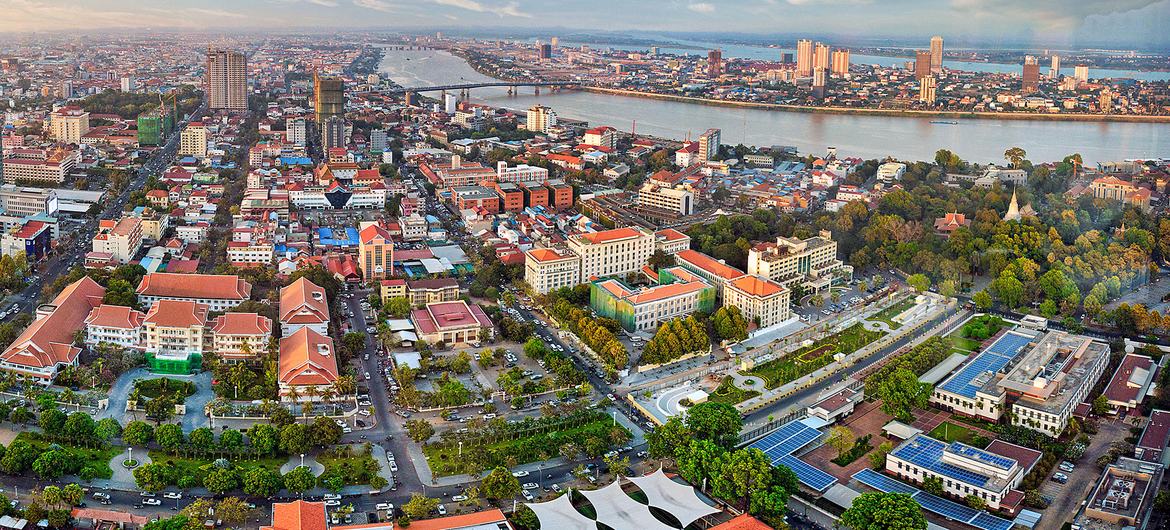
Phnom Penh, the capital of Cambodia.
© Unsplash/Paul Szewczyk
 
Phnom Penh, the capital of Cambodia.
26 July 2023
Human Rights

The UN human rights chief on Wednesday lamented the severe electoral clampdown by the Cambodian Government during the weekend vote, including restrictions on opposition parties, NGOs and media.

In a news release issued by his Office, Volker Türk, UN High Commissioner for Human Rights, denounced “constant shrinkage” in Cambodia’s democratic space in recent years, which he said is undermining citizen’s fundamental freedoms and their right to participate in the public square.

In the lead up to the elections, Cambodia’s National Election Committee disqualified two leading opposition political parties and, immediately prior to polling day, authorities ordered internet service providers to block social media accounts of three media organizations which they deemed critical of the Government, OHCHR said.

“Opposition political parties, activists, members of the media and others have faced numerous restrictions and reprisals that appear intended to curb political campaigning and to hinder the exercise of fundamental freedoms essential for free and fully participatory elections,” said Mr. Türk.

‘A chilling effect’

The UN rights chief also expressed concerns that the restrictions and other intimidatory measures, including some physical attacks, created a “chilling effect”, depriving people of credible news and information sources needed to make informed choices.

According to media reports, Cambodia’s longtime ruling party, led by incumbent Prime Minister Hun Sen, won an overwhelming number of seats in what was practically an uncontested election.  

Tweet URL

Multiple news outlets also reported on Wednesday that Hun Sen had announced he will resign and hand over power to his son, who is also the country’s army chief, in early August.

‘Address shortcomings’

Mr. Türk called on the Government to address the shortcomings and hold dialogue with all political parties and civil society actors to create an enabling and inclusive civic space for all Cambodians.

“A vibrant strong and inclusive democracy that nurtures and respects a plurality of voices and opinions is fundamental to ensuring the respect and protection of human rights and is key to peaceful social and economic development,” he said.

He also urged Cambodian authorities to boost participation of marginalized groups, including women, indigenous peoples, persons with disabilities, and youth, to foster a more inclusive and representative democracy.


 https://news.un.org/en/story/2023/07/1139107

https://creativecommons.org/licenses/by/3.0/legalcode

среда, 26 июля 2023 г.

Peacebuilding Commission Should Advise More, Be Funded Properly, Speakers Stress in General Assembly While Spotlighting Its Successes


92ND & 93RD MEETINGS (AM & PM)
GA/12518

Peacebuilding Commission Should Advise More, Be Funded Properly, Speakers Stress in General Assembly While Spotlighting Its Successes

Organ also Adopts Resolutions on International Observances and Decision on Second Committee’s Work

As the General Assembly adopted two resolutions and one decision without a vote today, delegates also debated the annual report on the Peacebuilding Commission and the Peacebuilding Fund, with a view to achieving sustainable peace, taking stock of successes in that regard, urging an enhanced advisory role for the body who helped notch them and ensuring that these efforts are sufficiently funded.

Through the first text adopted, the Assembly proclaimed 11 August as World Steelpan Day. Randall Mitchell, Minister for Tourism, Culture and the Arts of Trinidad and Tobago, introducing it, said that the “melodious sound of the steelpan is a true reflection” of his country’s dynamic culture, history and traditions that encapsulates its national aspirations for robust innovation and product development.

The Assembly also adopted a draft decision relating to revitalizing the work of the Second Committee (Economic and Financial) and a draft resolution proclaiming 29 October as the International Day of Care and Support.  Introducing the latter text, Ana Jimenez de la Hoz (Spain) observed:  “If care work were valued on the basis of a minimum wage per hour, it would amount to 9 per cent of world gross domestic product.” 

The bulk of the day’s meeting, however, focused on the Peacebuilding Commission’s role in building and sustaining peace — and on the Peacebuilding Fund’s ability to finance those endeavours.  Speakers, underlining the importance of the Commission, spotlighted the value of national experience and ownership, along with the need for adequate funding.

Csaba Kőrösi (Hungary), President of the General Assembly, underscoring the importance of joint efforts before conflict erupts, said:  “Peace cannot be kept by force.”  Unless Member States place conflict prevention at the core of their peace efforts, the 2030 promise for a safe, sustainable future “will slip beyond the reach of many”, he stressed.  Emphasizing that, 18 years after its creation, the Peacebuilding Commission is strategically placed to keep pace with evolving threats, he encouraged the entity to make greater use of its advisory functions. 

Muhammad Abdul Muhith (Bangladesh), the Commission’s former Chair, then presented that body’s report, noting that its engagement with the General Assembly, Security Council and Economic and Social Council enabled Member States to calibrate their support mechanisms for countries in need.  For the first time, in 2022 the Commission engaged with Timor-Leste and South Sudan in country-specific settings, and with Central Asian countries in a regional setting.  As well, it held its first-ever meeting with regional development banks and engaged with international and regional financial institutions.

Building on that, Irena Zubcevic (Croatia), current Chair of the Commission, said that the entity — while continuing to address cross-cutting issues — has promoted system-wide coherence and strengthened engagement with partners outside the United Nations. She also reported that Mozambique, Honduras, Canada and Norway have engaged voluntarily with the Commission, while a number of countries have shared their experience relating to peacebuilding, transitional justice, Indigenous Peoples and reconciliation.

Against that backdrop, New Zealand’s representative, also speaking for Canada and Australia, spotlighted the Commission’s pivotal role to deepen discussions on challenges with which other organs struggle to contend.  He said that Canada was proud to join Norway and Colombia in June to describe the difficult journey it is still undertaking to address historical injustices against First Nations, Métis and Inuit and to embrace reconciliation.

Colombia’s delegate noted that the Truth Commission — established in her country with support from the Peacebuilding Fund — delivered a complete report in 2022 on the events that transpired during the conflict in Colombia.  Further, the country’s transitional-justice system has been strengthened alongside the development of institutions such as the unit designed to search for missing persons.

The European Union’s representative recalled that the President of Mozambique presented his country’s peacebuilding experience while chairing a Security Council meeting on the Commission.  He observed that such meetings help to remove stigma of being “examined” by the Commission, setting an example for others to speak openly about their peacebuilding challenges.

In that vein, South Sudan’s representative said that her country is at a critical point in its peace process, having made notable progress towards peace and stability.  It has identified priorities to address remaining challenges but needs more support from the United Nations and other partners.  Voicing appreciation for the contributions of the international community and the Peacebuilding Fund, she called for predictable, sustainable financing aligned with her country’s national priorities.

Similarly, Niger’s delegate said that his country’s cooperation with the Peacebuilding Commission — which began in 2012 — comprises 13 projects with funding of $30 million.  Pointing to the Fund’s major achievements, he spotlighted the empowerment of youth, previously exposed to terrorist recruitment and migration, through vocational training.  Further, former terrorists have been reintegrated into 18 host communities — an experience being duplicated across the country.

The representative of Cambodia, underscoring the need to support the Peacebuilding Commission, stated that her country — having emerged from a tragic history of conflict and wishing to impart its experience of revival — has been contributing peacekeepers since 2006.  Many other delegates — including Ethiopia’s representative — underscored the need for financial support as well, calling for enhanced voluntary contributions and innovative modes of financing.  Ireland’s representative noted that without adequate, sustainable funding, Member States risk hindering their ability to create change in conflict-affected regions.  “Peace is a dividend worth investment,” he emphasized.

“Peacebuilding is a demanding, unending process,” Rwanda’s delegate added, stating that success also relies on the ability to rebuild trust between citizens and their institutions and shape political processes.  On this, Gambia’s delegate recalled that the Commission’s critical support was the “oxygen that sustained his country’s transitional-justice process” and underscored that a “debt of unforgettable gratitude” is owed to that entity for allowing his people to enjoy democratic dividends.

The General Assembly will reconvene at 10 a.m. on Tuesday, 25 July, to continue its work.

Peacebuilding and Sustaining Peace

The General Assembly first considered the Report of the Peacebuilding Commission on its sixteenth session (document A/77/720) and the Report of the Secretary-General on the Peacebuilding Fund (documents A/77/756 and A/77/756/Corr.1).

CSABA KŐRÖSI (Hungary), President of the General Assembly, underscoring the importance of joint efforts before conflict erupts, said:  “Peace cannot be kept by force.”  Pointing to 27 armed conflicts that continue to devastate life today, he recalled that, two decades ago, about five countries each year suffered from more than one simultaneous war or insurgency.  Now 15 do, the number of conflict-related deaths has reached a 28-year high and over 1 million people have been forcibly displaced. Moreover, a 1°C increase in local temperature raises the chance of conflict by more than 10 per cent, he stressed, adding:  “Unless we place conflict prevention at the core of peace efforts, our 2030 promise of a safe, sustainable future will slip beyond the reach of many.”

Turning to the “New Agenda for Peace”, which emphasizes prevention, he said that — 18 years after its creation — the Peacebuilding Commission is strategically placed to keep pace with evolving threats.  Through various reviews, Member States have called for a more-effective, better-resourced form of peacebuilding that places stronger focus on prevention, and he encouraged the Commission to make greater use of its advisory functions.  In this regard, he suggested that the President of the General Assembly and the Chair of the Peacebuilding Commission hold regular consultations.  Citing Eleanor Roosevelt, he stated:  “It isn’t enough to talk about peace.  One must believe in it.  And it isn’t enough to believe in it.  One must work at it.”

MUHAMMAD ABDUL MUHITH (Bangladesh), former Chair of the Peacebuilding Commission, presented that body’s report, noting that many countries continued to seek more partnership opportunities to overcome challenges relating to the COVID‑19 pandemic and its socioeconomic consequences. Conforming to its annual work plan and with a focus on national ownership and inclusivity, the Commission held 27 ambassadorial-level meetings during its sixteenth session, including on 14 separate country- and region-specific settings.  In this context, the Commission sent 17 advisories to the Security Council in 2022 — almost double compared to the previous session. Additionally, the Commission’s annual work plan was formally shared with the General Assembly and the Security Council for the first time, while, also for the first time, it started receiving copies of certain reports of the Secretary-General.  This has enabled the entity to come up with more practical advisory suggestions.

The Commission’s engagement with the General Assembly, the Security Council and the Economic and Social Council resulted in 65 outcome documents, which enabled Member States to calibrate their support mechanisms for countries in need, he continued.  For the first time, in 2022 the Commission engaged with Timor-Leste and South Sudan in country-specific settings, and with Central Asian countries in a regional setting. Further, guided by its gender strategy and action plan, the Commission continued to prioritize women, peace and security objectives and to enhance women’s participation in peacebuilding. To this end, it convened a meeting to explore complementarity between women peacekeepers and peacebuilders, also hearing from Central Asian women about how climate change has negatively impacted them.  The participation rate of women peacebuilders in the Commission’s meetings reached 87.5 per cent in 2022, an increase from 22 per cent in 2019 and 74 per cent in 2021.

He went on to say that, in 2022, 27 civil-society representatives participated in the Commission’s meetings, as it also held a dedicated meeting on youth, peace and security.  The Commission also heard from peacekeeping operations, special political missions and country teams.  As well, it held its first-ever meeting with regional development banks and engaged with international and regional financial institutions, while also holding a joint meeting with the African Union on 28 November 2022. Building on its previous sessions, the Commission issued advice to the General Assembly on peacebuilding financing, which resulted in the adoption of landmark resolution 76/305 in September 2022.  “The Peacebuilding Commission has come a long way since its inception in 2005,” he stressed, spotlighting the Commission’s potential for building and sustaining peace.

IRENA ZUBCEVIC (Croatia), Chair of the Peacebuilding Commission, said that interlinked crises have shown the body’s value in connecting all relevant stakeholders and forging partnerships in achieving peace.  While the Commission continued to address cross-cutting issues, it has promoted system-wide coherence and strengthened engagement with partners outside the United Nations.  In addition, efforts have been made to enhance financing for peacebuilding.  She also reported that Mozambique, Honduras, Canada and Norway have engaged voluntarily with the Commission, and that a number of countries have shared their experience relating to peacebuilding, transitional justice, Indigenous Peoples and reconciliation.

She said the Commission continues to bring all relevant United Nations entities together while also exploring ways to increase outreach and interaction through informal coordinators for its relations with the General Assembly, the Security Council and the Economic and Social Council.  In this regard, she reported that the Commission’s Chair holds meetings with the Economic and Social Council’s President every two months.

She went on to say that, as the United Nations discusses the “New Agenda for Peace” and prepares for the Summit of the Future, the Peacebuilding Commission’s ministerial-level meeting on 22 September will be an opportunity for ministers to provide their vision and political guidance on strengthening the Commission in the run-up to the 2025 review of peacebuilding architecture.  “We hope that all PBC [Peacebuilding Commission] members will participate at the ministerial level,” she underscored.


https://press.un.org/en/2023/ga12518.doc.htm


https://creativecommons.org/licenses/by/3.0/legalcode

West Africa, Sahel Requires Tangible, Long-Term Support to Eliminate Terrorism, Address Humanitarian Crisis, Special Representative Tells Security Council


9384TH MEETING (AM)
SC/15365

West Africa, Sahel Requires Tangible, Long-Term Support to Eliminate Terrorism, Address Humanitarian Crisis, Special Representative Tells Security Council

A senior United Nations official today told the Security Council that the situation in West Africa and the Sahel has deteriorated against a backdrop of shrinking civic and political space.

Special Representative and Head of the United Nations Office for West Africa and the Sahel (UNOWAS) Leonardo Santos Simaõ, speaking to the 15-member Council for the first time since assuming office, welcomed recent elections in Benin, the Gambia, Guinea-Bissau, Mauritania, Nigeria and Sierra Leone.

However, he also warned that various roadblocks in some countries, such as a lack of transparency in vote tabulation, undermining citizens’ trust in the region’s critical electoral processes, were severely hindering progress.

“These challenges should be addressed way ahead of future elections,” he stressed, outlining various ways UNOWAS had supported the region’s electoral processes through dialogues and confidence-building initiatives in Benin and Nigeria.  UNOWAS had also engaged in strengthening rule of law amid concerns of impartiality of the judiciary, he said, further urging the region’s leaders to advance the role of women and young people in decision-making processes.

The crisis in the Sahel requires tangible and long-term support to stamp out the scourge of terrorism and address the region’s burgeoning humanitarian crisis, he continued, expressing particular concern for the 6.3 million displaced persons across the Sahel region.

Omar Alieu Touray, President of the Economic Community of West African States Commission, also briefing the Council, said that from 1 January to 30 June 2023, the region recorded 1,814 incidents of terrorist attacks, which resulted in 4,593 fatalities.  By end of April 2023, half a million refugees were recorded in the region.

Nearly 30 million people are in need of food assistance, and without adequate response, this number will increase to 42 million by the end of August, he warned, also adding:  “This is just a snippet of the horrendous impact of insecurity in West Africa.”

The multiplicity of various initiatives aimed at helping remedy the security, political and humanitarian issues presents a challenge in coordination, ownership and inclusion, he pointed out, presenting an ECOWAS proposal to integrate them into the regional Plan of Action.

In the ensuing discussion, Council members voiced concern over the worsening security situation in the region, and particularly in the Sahelian countries, where loss of territory to terrorist and armed groups has led to new waves of displacement.  Many stressed that UNOWAS’ mandate is as critical as ever, especially with the United Nations Multidimensional Integrated Stabilization Mission in Mali (MINUSMA) readying to depart that country.

Ghana’s delegate, also speaking on behalf of Gabon and Mozambique, encouraged the countries of the region to fulfil their obligations under regional arrangements such as the ECOWAS Protocol on Democracy and Good Governance.  Growing incidence of terrorism and violent extremism and their evolving methods of operation are of major concern.  As MINUSMA carries on with its withdrawal from Mali, he urged coordinated action with neighbouring countries to minimize any further adverse security impact on the region.

The representative of the United States expressed concern over the lack of transparency of the tabulation process in the June general elections in Sierra Leone.  Transition Governments must be held accountable to their stated timelines to return to constitutional order, he also added.

“Any truly inclusive democratic process cannot have opposition candidates jailed or barred from running,” stressed Japan’s delegate, also expressing regret that MINUSMA must withdraw after a decade of dedicated work, despite the many challenges Mali faces.

Several speakers also expressed concern over the presence of foreign fighters in the region, with France’s delegate stressing that Wagner Group mercenaries represent an extremely destabilizing threat in the Sahel.  They violate human rights under the guise of fighting terrorism and plundering resources across the African continent, she said.

Many other speakers said they were deeply alarmed over the deteriorating humanitarian crisis in the Sahel, which continues to be made worse by a perfect storm of violence, displacement and growing food insecurity.

Addressing this critical situation requires the combined efforts by all relevant countries in the region, supported by the international community, Brazil’s delegate stressed.  “The figure of 6.3 million displaced persons is staggering,” he added.

Briefings

LEONARDO SANTOS SIMAÕ, Special Representative and Head of the United Nations Office for West Africa and the Sahel (UNOWAS), speaking to the Security Council for the first time since assuming office, presented the report of the Secretary-General on the activities of the United Nations Office for West Africa and the Sahel (document S/2023/490).  He welcomed recent elections in several countries in West Africa and the Sahel, namely in Benin, the Gambia, Guinea-Bissau, Mauritania, Nigeria and Sierra Leone, saying the initiatives marked critical milestones towards democratic consolidation, offering opportunities for citizens to choose their leaders. However, in several countries, there were concerns over a shrinking civic and political space, as well as a lack of transparency in vote tabulation, which undermined citizens’ trust in the electoral processes.  “These challenges should be addressed way ahead of future elections,” he stressed.

For its part, UNOWAS supported the various electoral processes through high-level good offices and support for pre-electoral inter-party dialogues and confidence-building initiatives among stakeholders in Benin and Nigeria.  UNOWAS is enhancing its partnerships with regional partners to reinforce the rule of law, against the backdrop of concerns over the impartiality of the judiciary in parts of the region.  Further, he expressed alarm for the underrepresentation of women across the region in political processes and decision-making.  Moreover, with more than 60 per cent of the population being younger than 25, youth are an important group whose voice must be fully heard in peacebuilding efforts, he added.

Recalling his visits to various countries in the region, he said that meeting with leaders on the ground gave him an understanding of the magnitude of the crises in the Sahel.  “In Mali, we are tackling major challenges,” he said, adding that the crisis in the Sahel requires tangible and long-term support to stamp out the scourge of terrorism.  “The security situation in the Central Sahel has deteriorated further, with multiple attacks against civilians and defence and security forces, especially in the Liptako Gourma area,” he continued.  As coastal countries enhance their efforts, strengthening internal security capabilities and reinforcing bilateral cooperation, the southward expansion of insecurity remains a potent threat.  To that end, sustained political and financial engagement will be needed to operationalize the activities under the Accra Initiative.

Emphasizing the urgency of the humanitarian crisis in the region, he expressed particular concern for the 6.3 million displaced persons across the Sahel.  “A growing number of these people have been forced to flee,” he said, urging all stakeholders to pool efforts to safeguard the dignity of refugees.  Insecurity impacts future generations.  More than 11,000 schools have been shut down in Burkina Faso, Mali, Niger and Nigeria, stripping children of their basic rights.  Further, he commended the progress achieved by the Cameroon-Nigeria Mixed Commission, which, he said, is “another example of peacebuilding beyond the limelight of everyday news”.

OMAR ALIEU TOURAY, President of the Economic Community of West African States Commission, said the region has a population of 400 million largely made up of young ambitious and dynamic people.  The youthful population, the fertile land and natural resources of the region hold considerable promise for the region, but that promise hinges on governance and security.  Stressing the importance of inclusive democratic processes and accountability in the management of public resources, he said 12 of the 15 countries in the region have democratically elected Governments.  However, the other three [Burkina Faso, Guinea and Mali] are under military rule, he said, calling for Council support for the transition to constitutional order in all the three countries.

Reversal of democratic gains runs parallel to insecurity in West Africa and the Sahel, he said, pointing out that terrorism, armed rebellion, organized crime, unconstitutional change of Government, illegal maritime activities, environmental crises and fake news are the key drivers of insecurity.  From 1 January to 30 June 2023, the region recorded 1,814 incidents of terrorist attacks, which resulted in 4,593 fatalities.  By end of April 2023, half a million refugees were recorded in the region, with the number of internally displaced persons exceeding 6 million.  Nearly 30 million people need food assistance, and without adequate response, this number will increase to 42 million by the end of August.  “This is just a snippet of the horrendous impact of insecurity in West Africa,” he deplored.

Responses to insecurity in the region have been diverse, he said, citing bilateral, plurilateral and multilateral arrangements, such as Barkhane, Takuba, G5 Sahel, Accra Initiative, Multinational Joint Task Force, United Nations Multidimensional Integrated Stabilization Mission in Mali (MINUSMA) and ECOWAS’ own Plan of Action for the Eradication of Terrorism and Extremism.  The multiplicity of these initiatives, however, presents a challenge in coordination, ownership and inclusion, he pointed out, presenting an ECOWAS proposal to integrate them into the regional Plan of Action.  ECOWAS Heads of State and Government have taken three decisions aimed at facilitating the transition to such an inclusive arrangement, including a review of the Regional Standby Force with two options:  a brigade of 5,000 troops at an annual cost of $2.3 billion or the deployment of troops on demand at an annual cost of $360 million.

On the political front, he said, the regional leaders have decided to re-engage the three Member States in transition at the highest level, reaffirming ECOWAS’ commitment to supporting credible and inclusive democratic elections there while also seeking support for the Algiers peace process that aims to facilitate peaceful settlement between the Government of Mali and the armed groups.  Turning to the security issues, he said the regional response shall include:  the expeditious operationalization of a revised ECOWAS Plan of Action for the Eradication of Terrorism; collaboration with other security initiatives; and direct support to Member States including countries in transition in their fight against terrorism.  The leaders reiterated their strong commitment to financing the regional security mechanism from the region’s own resources, but also expressed their support for the African Union’s request for a predictable funding of Africa-led missions through the United Nations assessed contribution, he added.

Statements

HAROLD ADLAI AGYEMAN (Ghana), also speaking for Gabon and Mozambique, said that, since the renewal of UNOWAS’ mandate, the international community has seen the consolidation of democracy in Nigeria, Sierra Leone, Benin, Guinea-Bissau, Mauritania and the Gambia.  He encouraged ongoing efforts to restore constitutional order in Mali, urging the Malian Authorities and the Signatory Groups to remain engaged in realizing the objectives of the Agreement on Peace and Reconciliation in Mali emanating from the Algiers process.  However, he voiced concern over the security situation in the region, especially in the Sahelian countries, where loss of territory to terrorist and armed groups is leading to new waves of displacement and humanitarian consequences.  Turning to the political situation, he encouraged the countries of the region to fulfil their obligations under regional arrangements such as the ECOWAS Protocol on Democracy and Good Governance.

With respect to the security situation, he highlighted that the growing incidence of terrorism and violent extremism, and their evolving methods of operation are of major concern.  He strongly condemned attacks by terrorist groups against civilian and security personnel in the region.  As MINUSMA carries on with its withdrawal from Mali, he urged coordinated action with neighbouring countries to minimize any further adverse security impact on the region. Now more than ever, logistical and funding support for regional mechanisms such as the Multinational Joint Task Force, the G5 Sahel joint force and the Agreement on Peace and Reconciliation in Mali is critical, he said, welcoming the decision to activate the ECOWAS Standby Force.  As for the humanitarian situation, which has been spawned by the escalation of conflicts and the adverse impact of climate change, he drew attention to the 6 million displaced persons.  Accordingly, he called for donor partners to prioritize the implementation of humanitarian response plans for countries in West Africa and the Sahel by helping to meet the $3.5 billion target required to tackle the increasing humanitarian needs.

PASCALE BAERISWYL (Switzerland) said the security situation in the region remains fragile and humanitarian needs are increasing.  On elections, she noted that the polls have so far been largely peaceful, welcoming UNOWAS’ ongoing commitment to promoting democratic governance and peaceful electoral processes.  Although some notable progress has been made at the State level — notably in Benin and Mauritania — women remain largely underrepresented throughout the region in political processes and decision-making.  Turning to the security front, she said investing in violence prevention and peacebuilding requires a commitment to various security, political and socioeconomic causes.  The situation of young people and children in West Africa and the Sahel remains particularly worrying, she cautioned, adding that attacks on schools are often accompanied by other serious violations, such as sexual and gender-based violence.  She also highlighted Switzerland’s programme aimed at strengthening the resilience of 700,000 people in Burkina Faso by easing conflicts between farmers and herders by adapting farming methods and subsistence livelihoods to climate challenges.

ROBERT A. WOOD (United States) recognized the continued efforts of UNOWAS to help promote and sustain democratic processes in Mali, Burkina Faso, Guinea and Sierra Leone.  He expressed concern over the lack of transparency of the tabulation process in the June general elections in Sierra Leone but also applauded the people of that country for participating in the electoral process.  The United States reiterates support to transition processes in Mali, Burkina Faso and Guinea, and continues to call for a return to democratic governance.  Transition Governments must be held accountable to their stated timelines to return to constitutional order.  Turning to humanitarian needs, he underscored the urgency of the arrival of the new United Nations resident coordinator in Burkina Faso.  UNOWAS’ mandate is as critical as ever as MINUSMA readies to depart Mali. The United States is deeply concerned by the spread of instability in coastal West Africa, he said, also underscoring the role of the Wagner Group in contributing to the violence in the region.

MOHAMED ABUSHAHAB (United Arab Emirates), noting the dual challenge of insecurity and changing climate in the region and the resultant mass displacement and aggravating humanitarian situation, called for a rethink of long-held assumptions.  To improve security, the region must maintain a multitrack approach.  Four countries in the region are among the group most impacted by terrorism in the world.  It is imperative to proactively create a secure environment through both soft and hard measures.  Building resilience in the communities is part of a comprehensive security strategy for the region.  All parties to conflict must adhere to international humanitarian law, he said, warning against sexual violence against women and girls, who are also at greater risk of being abducted.  The Council must approach insecurity through a climate-sensitive lens.  Reduced crops due to scarce rainfall and desertification render people vulnerable to recruitment by armed groups.  “We see these dynamics in West Africa,” he said, calling for concerted effort to understand the interplay between security and climate change.

GENG SHUANG (China) emphasized that countries in West Africa and the Sahel have achieved positive results in maintaining peace and stability and deepening regional cooperation.  At the same time, they are facing multiple challenges, such as terrorism, food insecurity and climate change.  He welcomed the regional electoral results since the beginning of 2023, including the general elections in Nigeria and Sierra Leone and the constitutional referendum in Mali.  Further, he expressed hope that under the Nigerian leadership, ECOWAS will continue to play an active role in promoting development and maintaining security in the region.  He also commended countries in the region for stepping up their counter-terrorism efforts. The international financial institutions should not reduce aid to and investment in the region due to other crises, he stressed.  Highlighting challenges posed by climate change to the countries in the Sahel, he said the lack of technology is one of the primary obstacles to climate response in the region.

SHINO MITSUKO (Japan) said that while most of the elections in 2023 have been conducted peacefully, not all have been without controversy.  “Any truly inclusive democratic process cannot have opposition candidates jailed or barred from running,” she stressed.  Japan calls on Mali to continue to make every effort towards holding elections.  Turning to the political transitions in Guinea and Burkina Faso, she said that security cannot be achieved without accountable and inclusive governance.  The situation in the Sahel has deteriorated, she said. Hence, it is regrettable that MINUSMA must withdraw after a decade of its dedicated work, despite the many challenges Mali faces.  In tackling the many challenges of the region, people must be placed at the centre of all peacebuilding initiatives and Governments must build strong and robust institutions to provide for their well-being.

HERNÁN PÉREZ LOOSE (Ecuador) said that robust and stable institutions are key to improving the living conditions of populations. The holding of elections in Nigeria, Sierra Leone, Benin, Guinea-Bissau and Mauritania are a welcomed step in that regard.  He expressed concern at the worsening security situation in Central Sahel, particularly in Burkina Faso and Mali.  He condemned all terrorist acts, while at the same time reiterating that steps taken by States to fight and combat this scourge must be in line with international law and international humanitarian law.  Turning to the growing humanitarian needs in the region, he underscored that it is women, young people, children and older persons who suffer the most under such conditions.  Food insecurity is affecting 21.8 million people in the region. It is crucial, therefore, to continue coordination efforts at the international and regional levels and boost initiatives to deliver aid to those who need it.

FRANCESCA GATT (Malta) welcomed the increased representation of women as local councillors and mayors in the Gambia, the highest ever proportion of women in Benin’s National Assembly, increased women parliamentarians in Mauritania and a quota for women’s representation in Liberia.  She, however, expressed concern over the setbacks to women’s representation and political participation in Nigeria, where the number of females in the National Assembly decreased by 19 per cent.  Calling for a holistic approach towards deterring any extension of violence in the region, she underlined the need to tackle the root causes of violent extremism and conflict.  “Education, human rights, sustainable development, justice and the rule of law must run parallel to counter-terrorism operations,” she stressed, voicing continued support for UNOWAS in advocating for best practices on climate-change resilience and adaptation on the ground.  On this note, she expressed hope that the Council reaches an agreement on a presidential statement that truly reflects the situation on the ground.

ARIAN SPASSE (Albania) welcomed the holding of elections in several countries, promoting the consolidation of democratic processes.  However, the shrinking of civic and political space remains worrisome, he said, underscoring the importance of inclusive political dialogue and consensus-building among all stakeholders to sustain the progress achieved thus far.  Further, the security situation is increasingly perilous, with terrorism, transnational organized crime, intercommunal violence and illicit financial flows expanding.  Violent extremist groups in Mali and Burkina Faso continue to target military and civilian infrastructure, resulting in severe human rights violations.  “It is frustrating that approximately 10,000 schools across Burkina Faso, Mali, Niger and Nigeria were closed or non-operational due to violence,” he added.  The Sahel is grappling with escalating food insecurity, climate change implications, displaced persons and humanitarian assistance reaching unprecedented levels, he observed, calling for a holistic approach that addresses the multifaceted challenges facing the region.

NATHALIE BROADHURST ESTIVAL (France), welcoming positive democratic developments in some countries in the region, stressed that elections must be held in a climate conducive to dialogue and allowing for the participation and free expression of all, including women, journalists and human rights defenders.  “This is particularly important in countries where the constitutional order has been disrupted”, she said, urging Burkina Faso, Guinea and Mali to hold credible elections within the time frame agreed with ECOWAS.  France remains committed to working alongside the countries of the Sahel region in the fight against terrorism and in assisting in the strengthening of maritime security, she stressed, welcoming that ECOWAS Heads of State have requested a report on the presence of foreign private armies in the region.  Wagner Group mercenaries represent an extremely destabilizing threat, violating human rights under the guise of fighting terrorism and plundering resources across the African continent.  Her country, together with the European Union, has long supported security initiatives by the countries in the region and pledges to do more to support the coastal States of the Gulf of Guinea to counter expanding terrorist threats from the Sahel.  There is an urgent need to support regional initiatives and enable them to benefit from United Nations funding, she added.

ANNA M. EVSTIGNEEVA (Russian Federation), citing the border regions of Mali, Burkina Faso and Niger as “the epicentre of tensions”, voiced concern over an increased activity by fighters from Islamic State in the Greater Sahara and the Group of Support for Islam and Muslims.  Moreover, the subversive activities of Boko Haram and Da’esh in West Africa exacerbate the alarming situation in the countries of the Lake Chad Basin region. Evidently, “the attempts of the EU countries to facilitate stabilization in the Sahel were not crowned with success,” she said, adding that threats to the region have only escalated due to the unilateral termination of the activities of the French “Barkhan” force and the European Union’s “Takuba” force in Mali.  The announcement of the representative of France that somebody is “plundering Africa’s resources” sounds “absolutely unacceptable”, especially in light of the colonialist history of that country in the region. Criticizing “the envious posture of Western countries vis-à-vis the development of cooperation between the States of the region with the Russian Federation”, she emphasized that the main role in maintaining peace and security in the region should belong to its Member States.

NORBERTO MORETTI (Brazil) commended UNOWAS’ emphasis on partnerships with regional and subregional organizations, such as the African Union, ECOWAS and the African Development Bank.  Political participation under the rule of law is vital.  He expressed concern over the security situation in Burkina Faso and Mali due to the persistence of terrorist activities.  It is encouraging to see improvements in the Lake Chad Basin region and in maritime security in the Gulf of Guinea.  Brazil stands ready to further assist counter-piracy efforts, through boosting cooperation among regional navies and reinforcing the Yaoundé Architecture.  He said that the persistent humanitarian crisis in several parts of the region is marked by violence, displacement and food insecurity.  “The figure of 6.3 million displaced persons is staggering,” he said. Addressing this critical situation requires the combined efforts by all relevant countries in the region, supported by the international community.

JAMES KARIUKI (United Kingdom), Council President for July, spoke in his national capacity, welcoming democratic progress in some parts of the region while expressing concern over democratic uncertainty and the shrinkage of civic space in other States.  Restoration of constitutional government in Mali, Burkina Faso and Guinea has been too slow, he pointed out, calling for redoubled efforts on election timetables.  Election discrepancy in Sierra Leone is also concerning, he added.  On the security situation, he said his country has been committed to protecting civil rights, expressing concern about the damage being done by the Russian Federation’s Wagner mercenary group, whose track record shows that they cannot deliver long-term security in the region.  Now that President Vladimir Putin has acknowledged that the Kremlin funded the Wagner Group, Moscow must hold the perpetrators of human rights abuses accountable.  The Council heard today that the dire humanitarian situation and security situations in West Africa are exacerbated by climate change, he said, calling for the adoption of a Council presidential statement in support of UNOWAS


https://press.un.org/en/2023/sc15365.doc.htm


https://creativecommons.org/licenses/by/3.0/legalcode