Показаны сообщения с ярлыком UNHCR. Показать все сообщения

четверг, 13 июня 2024 г.

Worldwide levels of forced displacement hit new high: UNHCR

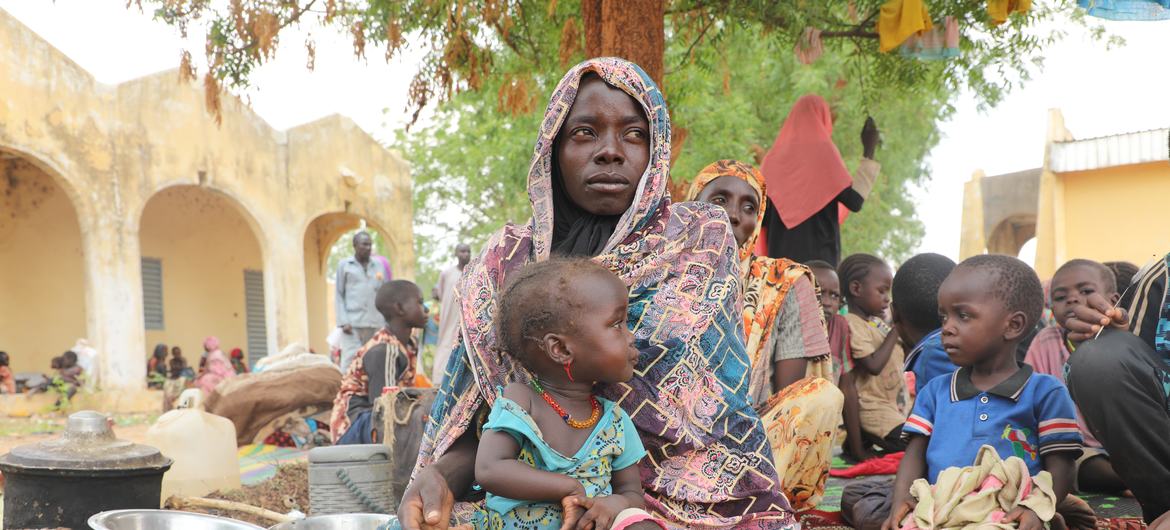
Mariam Djimé Adam, 33, is sitting in the yard of Adre’s secondary school in Chad. She arrived from Sudan with her 8 children. "We were attacked in our home, my husband was killed and all our belongings were taken. I managed to escape with my children
© UNICEF/Mahamat
 
Mariam Djimé Adam, 33, is sitting in the yard of Adre’s secondary school in Chad. She arrived from Sudan with her 8 children. "We were attacked in our home, my husband was killed and all our belongings were taken. I managed to escape with my children


12 June 2024
Migrants and Refugees

This year and last have seen historically high levels of forced displacement worldwide according to the UN refugee agency’s (UNHCR) 2024 flagship Global Trends Report published on Thursday.  

The report found that forced displacement rose to 120 million in May 2024, marking the 12th consecutive annual increase – a result of ongoing crises and newly emerging and evolving conflicts.

Key contributing factors  

A major contributor to the egregious numbers found in the report is due to war between rival militaries in Sudan which saw 10.8 million uprooted by the end of 2023.

Further, millions were internally displaced in the Democratic Republic of the Congo (DRC) and Myanmar last year because of brutal fighting.

The report said that the UN agency for Palestinian refugees (UNWRA) estimated that about 75 per cent of the population in the Gaza Strip – about 1.7 million people – have been displaced.

Yet, Syria holds the record in terms of sheer numbers with 13.8 million people forcibly displaced in and outside its borders.

Filippo Grandi, the UN High Commissioner for Refugees said, “Behind these stark and rising numbers lie countless human tragedies. That suffering must galvanise the international community to act urgently to tackle the root causes of forced displacement.” 

50 per cent increase in five years

The UNHCR trend report noted that people trying to escape conflict who remain in their country contribute to the greatest increase in displacement. According to the Internal Displacement Monitoring Centre, this number has risen to 68.3  million people – a nearly 50 per cent increase in five years.

Additionally, the number of refugees and those needing international protection increased to 43.4 million based on UNHCR and UNWRA mandates.

“It is high time for warring parties to respect the basic laws of war and international law,” Mr. Grandi said. “The fact is that without better cooperation and concerted efforts to address conflict, human rights violations and the climate crisis, displacement figures will keep rising, bringing fresh misery and costly humanitarian responses.”

Refugees returning home

According to the report, over five million internally displaced people and a million refugees worldwide returned home in 2023. That same year, resettlement arrivals increased to 154,300.

The UN High Commissioner for Refugees said last year millions of people had returned home “representing an important glimmer of hope. Solutions are out there – we’ve seen countries like Kenya lead the way in refugee inclusion – but it takes real commitment.” 

He also said that “refugees – and the communities hosting them – need solidarity and a helping hand. They can and do contribute to societies when they are included.” 

UNHCR said they are committed to providing “new approaches and solutions” to assist the millions of displaced people worldwide.  

https://creativecommons.org/licenses/by/3.0/legalcode

https://news.un.org/en/story/2024/06/1150981

вторник, 14 мая 2024 г.

Complementary admissions for refugees reach record highs: UNHCR report


Complementary admissions for refugees reach record highs: UNHCR report

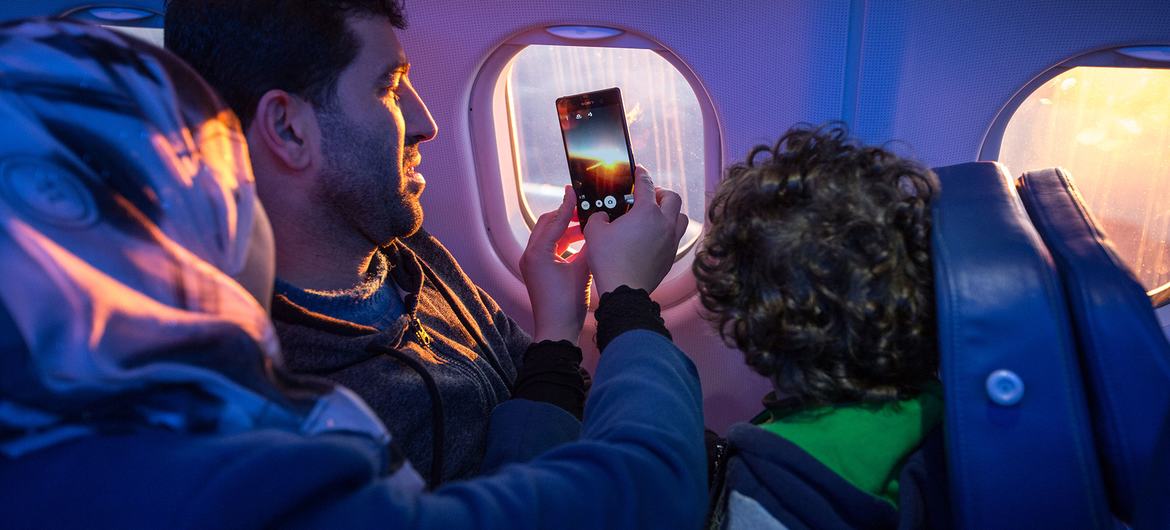
A migrant family looks out the window and take pictures as they undertake their journey for resettling.
IOM/Muse Mohammed
 
A migrant family looks out the window and take pictures as they undertake their journey for resettling.


13 May 2024

Migrants and Refugees

A new report jointly issued by the UN refugee agency (UNHCR) and the Organisation for Economic Co-operation and Development (OECD) reveals a significant increase in the issuance of study, work, family reunification and sponsorship permits to refugees by OECD countries and Brazil.

According to the report, Safe Pathways for Refugees – released on Monday – nearly 215,000 permits were granted to individuals displaced by conflict and crises by 37 OECD countries and Brazil in 2022, an increase of about 38 per cent over 2021.

Approximately 156,000 permits were issued that year, while the figure in 2020 was about 127,000.

The report focused on entry permits provided to individuals from Afghanistan, Eritrea, Iran, Iraq, Somalia, Syria, and Venezuela by OECD countries and Brazil.

Overall, Europe accounted for 56 per cent of all permits, with the Americas providing 39 per cent. Germany and Canada provided the largest numbers of work, study and family reunification entry permits to refugees from the seven nationalities covered.

Family reunification

Notably, family reunification permits constituted over 50 per cent of all permits issued in 2022, with work and study permits also showing a steady increase.

Ruven Menikdiwela, UNHCR Assistant High Commissioner for Protection, highlighted the significance of these complementary admissions in the context of rising global displacement.

“With most of the world’s refugees hosted in developing regions, these forms of complementary admissions to third countries can help better protect them, provide them with opportunities to contribute to their new communities, and ease pressures on over-stretched host countries.”

She also emphasized the importance of the family reunification permits, stating that alongside being a human right, it was encouraging to see that family reunification remains the most relied upon third-country solution.

Safe and legal pathways

The senior UNHCR official also commended the efforts of governments and partners to ensure refugees’ access to safe and lawful pathways, in alignment with the agency’s Roadmap 2030.

The roadmap envisions expanding third-country solutions to reach 2.1 million complementary admissions by 2030, with 35 per cent of this target achieved through progress made in 2022.

It also underscored the importance of improving data collection to inform policy decisions and enhance refugee inclusion in regular migration streams.

It urged sustained collaborative efforts among states and stakeholders to ensure refugees have access to safe and sustainable pathways towards rebuilding their lives.


https://news.un.org/en/story/2024/05/1149681


https://creativecommons.org/licenses/by/3.0/legalcode

среда, 6 сентября 2023 г.

‘Hope Away from Home’: UNHCR launches new global campaign


Rohingya children living in a refugee camp in Cox’s Bazar, Bangladesh enjoy a lighter moment.
© UNHCR/Vincent Tremeau
 
Rohingya children living in a refugee camp in Cox’s Bazar, Bangladesh enjoy a lighter moment.
6 September 2023
Migrants and Refugees

The UN refugee agency (UNHCR) on Wednesday launched a new global campaign to rally support and firm commitments from nations to protect the rights of people fleeing conflict, violence and persecution.

Hope Away from Home gets underway at a time of unprecedented, forced displacement.

There are a staggering 110 million people displaced from their homes, and access to asylum and protection is under threat in various regions due to increasingly harsh policies.

“People fleeing war, violence and persecution should be met with compassion and kindness, not barriers, restrictions and discrimination, which should have no place in today’s world,” said Elizabeth Tan, Director of UNHCR’s Division of International Protection.

“They need safety and protection, and it is the responsibility of the international community to come together to find lasting solutions that allow them to live in safety and dignity.”

Demonstrate solidarity

According to UNHCR, in many places, anti-refugee sentiments, externalization of asylum obligations, growing discrimination and xenophobia, and stricter admission policies are endangering the fundamental right to seek safety.

Moreover, the absence of safe and legal routes to asylum compels many to undertake perilous journeys, often across treacherous land and sea routes in search of safety.

While many nations and communities generously welcome and protect refugees, helping them to rebuild their lives and contribute positively to their host societies, it is crucial for more States to follow suit, said UNHCR.

Solidarity with other nations is essential, particularly low and middle-income countries that receive the majority of refugees.

Tangible actions

The campaign aims to translate global solidarity into tangible action and solutions - promoting international cooperation, legal reforms, and policy reform.

Over the next three years, UNHCR and its partners will advocate for law and policy changes in five key areas: access to safe territory and protecting individuals from harm during their journey; guaranteeing adequate conditions and treatment for refugees; encouraging countries to accede to the Refugee Convention; and increasing access to durable solutions, including resettlement.

Tweet URL

Countries will also be urged to provide support to under-resourced nations and communities hosting large refugee populations.

Shared humanity

“Many States are showing commendable solidarity in welcoming people who have been forced to flee, despite their own domestic challenges. But more needs to be done to support those communities that receive them,” said Dominique Hyde, Director of UNHCR’s Division of External Relations.

“With this campaign, there is an opportunity to do more in solidarity with millions of forcibly displaced people and the communities hosting them, by focusing on our shared humanity and working together to find solutions.”

The campaign also includes a global call for petitions from the public, organizations, and world leaders to stand in solidarity with refugees and their right to seek safety from conflict, violence, and persecution.

Global Refugee Forum

The launch of the campaign coincides with the 100 day countdown to the Global Refugee Forum (GRF), a major international gathering, in Geneva, that will bring together world leaders, civil society organizations, international institutions, and other stakeholders to seek solutions for refugees and host communities.

https://news.un.org/en/story/2023/09/1140442

https://creativecommons.org/licenses/by/3.0/legalcode

пятница, 28 июля 2023 г.

UNHCR urges solidarity with Burkina Faso’s victims of extremist violence


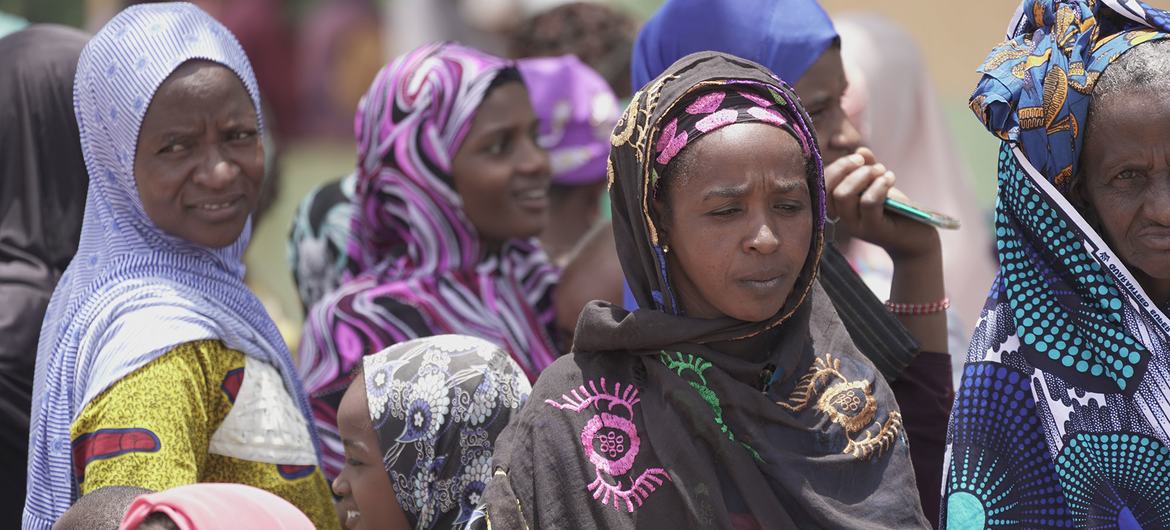
Women and children who have fled violence in Burkina Faso seek help in Côte d'Ivoire.
© UNHCR/Insa Wawa Diatta
 
Women and children who have fled violence in Burkina Faso seek help in Côte d'Ivoire.
28 July 2023

Migrants and Refugees

Civilians fleeing attacks by extremist groups in Burkina Faso must be allowed to shelter in neighbouring countries and not sent back, amid a spike in violence and horrifying rights abuses, the UN refugee agency (UNHCR) said on Friday.

“We're urgently appealing for all States to refrain from forcibly returning any individuals originating from the regions in Burkina Faso where there is an ongoing crisis,” said Elizabeth Tan, UNHCR Director of International Protection.

Speaking in Geneva, Ms. Tan highlighted “killings, forced disappearances, torture and kidnappings”, while in several instances, civilians had been targeted and killed, resulting in mass civilian casualties.

Spike in needs

Humanitarians have warned about mass internal displacement in Burkina Faso caused by non-state armed groups since 2015, “but it’s in 2022 that we’ve really seen large increase in the number of displaced in the country, and that is due to the increased activities by extremist, violent, violent extremist groups as well as increasing humanitarian needs”, the UNHCR official explained.

Latest UN estimates indicate that 4.7 million people across the country are now in need of humanitarian assistance in the west African nation, which is more than 20 per cent of the country’s entire population.

Violence and conflict have also destroyed critical infrastructure and impacted state services and institutions, including in conflict-affected areas.

The humanitarian situation is especially severe for people living in towns that have been blockaded by violent extremist groups, including large numbers of internally displaced people.

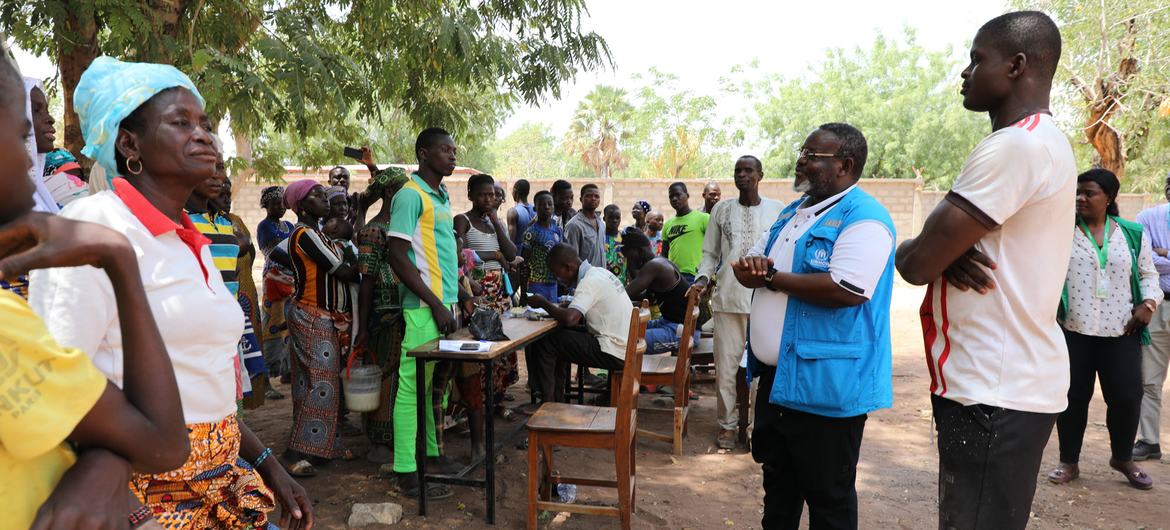
Refugees from Burkina Faso arrive in Togo after fleeing their country due to violence.
© UNHCR/Fidélia Bohissou
 
Refugees from Burkina Faso arrive in Togo after fleeing their country due to violence.

Youngsters targeted

Children have not been spared serious human rights violations, including forced recruitment by armed groups, child labour “as well as other types of violence, abuse, exploitation and gender-based violence”, Ms. Tan told journalists at a scheduled briefing.

The number of school closures has increased from approximately 3,000 in November 2021 to 6,334 schools as of 31 March 2023.

Tweet URL

The majority of displaced children are unable to attend classes at all. Early and child marriage is prevalent and forced marriages continue to be reported. Half of all children in Burkina Faso are estimated to be exposed to gender-based violence or mistreatment, with the estimate as high as 82 per cent for girls.

Ongoing violence and displacement have also left many women vulnerable to sexual violence and have restricted services available to survivors.

Border refuge

In addition to the more than two million people internally displaced in Burkina Faso, as of June this year – “making this one of the worst internal displacement crises on the African continent” - the UNHCR official added that 67,000 people from Burkina Faso have sought refuge in neighbouring countries including Mali, Niger, Cote d'Ivoire, Togo, Benin and Ghana.

Fighting is believed to have killed thousands and placed vast numbers at risk of abuse by armed groups, including reportedly being whipped and raped while fleeing their villages. 

“The principle of non-refoulement must be respected and upheld. That means that no-one should be forcibly returned to places where their lives, freedom or human rights are at risk. So, UNHCR calls on all countries to allow civilians fleeing Burkina Faso to access their territories.”


https://news.un.org/en/story/2023/07/1139222


https://creativecommons.org/licenses/by/3.0/legalcode