Показаны сообщения с ярлыком west Africa. Показать все сообщения

суббота, 8 июня 2024 г.

Terrorism, humanitarian crises threaten stability of West Africa: UN deputy chief


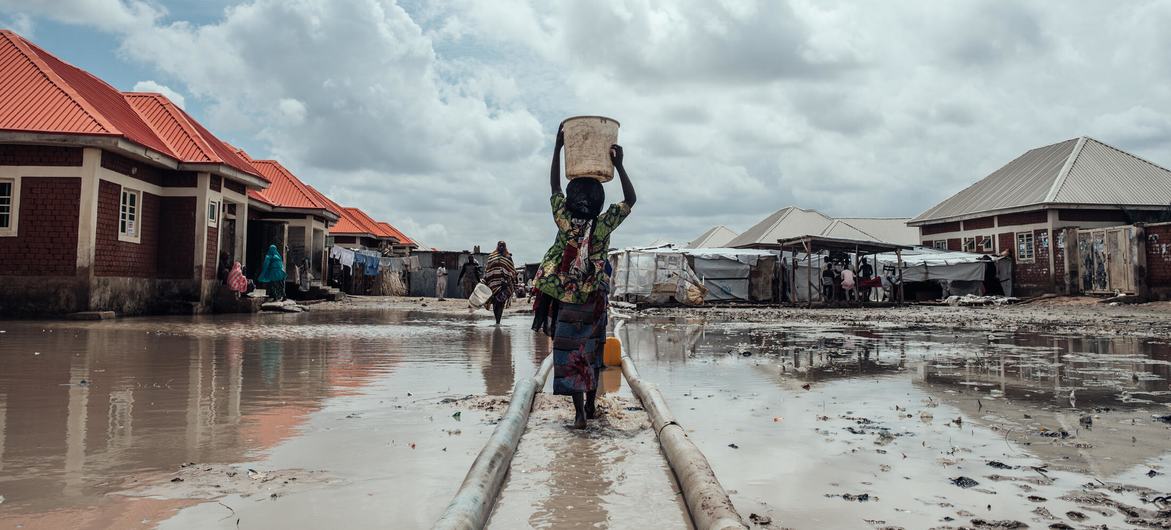
Millions remain displaced across Nigeria due to conflict, climate change impacts and natural disasters. In this file photo, a girl carries water to her shelter at an IDP camp in the country's northeast.
© UNICEF/KC Nwakalor
 
Millions remain displaced across Nigeria due to conflict, climate change impacts and natural disasters. In this file photo, a girl carries water to her shelter at an IDP camp in the country's northeast.


7 June 2024
Economic Development

Rapidly evolving global political, social, environmental and security challenges risk undermining peace and economic development across West Africa, the UN deputy chief said on Friday, reiterating the importance of a multilateral and inclusive response.

At an event commemorating the 49th anniversary of the Economic Community of West African States (ECOWAS), UN Deputy Secretary-General Amina Mohammed noted progress made, alongside immediate challenges.  

“Over the last decade, the region has seen an exponential rise in terrorism that has reversed its development gains. This has been further exacerbated by the resurgence of unconstitutional changes of government posing a significant threat to regional stability,” she said.

Humanitarian needs are rising amid the web of crises, “creating new dynamics, bringing new risks of conflicts, beyond the region”.

“ECOWAS at 49 serves as a reminder that the road ahead is challenging, but it is also filled with potential. This requires both a multilateral and regional response to the complexities each country faces,” Ms. Mohammed added.

Collective solutions

The Deputy Secretary-General underscored the need to use “all existing tools”, while also designing new solutions collectively to meet the expectations of the people.

Peace and security must underpin the ‘Vision for Africa’ in the African Union’s Agenda 2063 socio-economic development framework, with a strong emphasis on strong democratic institutions, she said.

“The values of democracy and good governance still hold true for our region. But recent developments tell us that populations are putting in question our models of democracy and the need to be made fit for purpose in line with local realities,” she added, also urging root causes of conflicts in the region to be addressed.

Rescue SDGs

The Sustainable Development Goals (SDGs) – woefully off track – must be rescued, the deputy UN chief said.

Efforts must be stepped up to achieve the development targets by the 2030 deadline, with “bold and transformative” actions, Ms. Mohammed said.

She emphasized the need for investments in just energy transitions, food systems, digital connectivity, education and skills, as well as in climate action and social protection.

Once-in-a-generation opportunity

Mr. Mohammed also underscored that September’s Summit of the Future provides a “once-in-a-generation opportunity” to address gaps in global governance, including for peace and security as part of the Secretary-General’s New Agenda for Peace.

In that context, Africa will be a vital player in finding ways to end existing conflicts and prevent new ones – with women playing a central role.

“As negotiations for a new Pact for the Future (the outcome of the Summit of the Future) intensify, I encourage all of you to engage in all aspects,” she said.

Silence guns in Gaza, Sudan

In conclusion, the Deputy Secretary-General drew attention to the conflicts in Sudan and in Gaza, “which continue to cause unimaginable suffering, particularly for women and children”.

She reiterated the necessity for an immediate humanitarian ceasefire in Gaza, the unconditional release of all hostages and a pathway to a lasting two-State solution.

“We are united in our call for peace, for silencing the guns across Africa, and for working to end all conflicts around the world,” she concluded.


https://news.un.org/en/story/2024/06/1150816

https://creativecommons.org/licenses/by/3.0/legalcode
суббота, 25 мая 2024 г.

Concerned by Ongoing Conflict in West Africa, Sahel, Security Council Adopts Presidential Statement Aimed at Tackling Political, Humanitarian Challenges


9634TH MEETING (AM)
SC/15708

Concerned by Ongoing Conflict in West Africa, Sahel, Security Council Adopts Presidential Statement Aimed at Tackling Political, Humanitarian Challenges

‘Members Call on Relevant Stakeholder to Engage Constructively and Fully’
With Secretary-General’s Newly Appointed Special Representative for Region

The Security Council today unanimously adopted a presidential statement aimed at addressing security, political and humanitarian challenges in West Africa and the Sahel.

Through the text (to be issued as S/PRST/2024/3), the 15-member organ welcomed the appointment of Leonardo Santos Simão on 2 May 2023 as the Secretary-General’s Special Representative and head of the United Nations Office for West Africa and the Sahel (UNOWAS), calling on all relevant stakeholders to “engage constructively and fully” with him.

On the security front, the Council welcomed efforts by countries in that region, ECOWAS and the African Union to strengthen regional cooperation in preventing and addressing challenges, but expressed “great concern at the violent actions of non-State actors, including individuals, groups, undertakings, and entities associated with ISIL (Da’esh) and Al-Qaida”.

In that regard, the Council reaffirmed “the importance of addressing, in a manner consistent with international law, the underlying conditions conducive to terrorism,” including by implementing the United Nations Integrated Strategy for the Sahel and its support plan.  Furthermore, the Council called upon all parties to armed conflict to end and prevent all six grave violations against children, urging compliance with their obligations under international law, and to respect the rights of the child.

Also by the text, the Council recognized the adverse impact of climate change, ecological changes and natural disasters — including floods, drought, desertification, and land degradation — as well as how they exacerbate food security and other humanitarian, social and economic challenges, “which impact the security and stability of West Africa and the Sahel region”.  Stressing the “particular relevance” of these elements to the specific situation in West Africa and the Sahel, the Council acknowledged the United Nations Framework Convention on Climate Change and the Paris Agreement as the primary international, intergovernmental forums for negotiating the global response to climate change.

The Council also commended the efforts of civil society and religious and community leaders to resolve conflict in the Sahel, emphasizing the importance of the full, equal, meaningful and safe participation of women and youth in all stages of conflict prevention, conflict resolution and peacebuilding processes.

On the political front, the Council expressed serious concern at the unconstitutional changes of Governments and attempted coup d’états and underscored the importance of the timely, nationally owned transition processes and restoration of constitutional order in the concerned regional countries.  In that vein, the Council expressed the importance of UNOWAS’s good-office roles to prevent conflict and election- and transition-related tensions, as well as to sustain peace and consolidate peacebuilding efforts and political stability.

Regarding the humanitarian situation, the Council expressed serious concern at deteriorating conditions in some parts of the region, caused by armed conflicts and exacerbated by violations of international humanitarian law, climate change, and development, social and economic challenges.  It, therefore, called for full, safe, rapid and unhindered access for the delivery of humanitarian and medical aid to all persons in need, including timely and non-discriminatory access to sexual and reproductive health care, mental health and psychosocial services for survivors of sexual violence in conflict and post-conflict situations.


https://press.un.org/en/2024/sc15708.doc.htm


https://creativecommons.org/licenses/by/3.0/legalcode

вторник, 9 января 2024 г.

Reconfigured Regional Coordination Mechanism Key to Quell Widespread Insecurity, Avert More Coups in West Africa, Sahel, Special Representative Tells Security Council

9529TH MEETING* (AM)
SC/15562

Reconfigured Regional Coordination Mechanism Key to Quell Widespread Insecurity, Avert More Coups in West Africa, Sahel, Special Representative Tells Security Council

Amid growing fears of widespread insecurity in West Africa and the Sahel, a senior United Nations official told the Security Council today of the need to reconfigure the region’s security coordination mechanism, including the possible deployment of an African Union standby team.

Over the past six months, the situation in the region has been marked by “diverging” developments, said Leonardo Santos Simaõ, Special Representative of the Secretary-General and Head of the United Nations Office for West Africa and the Sahel (UNOWAS) in his biannual briefing to the 15-member body.  While the region has achieved significant progress in consolidating democracy, he observed that security and governance remain fragile.

“Against the multiple challenges, UNOWAS will stay the course and deploy its capacities, using good offices, urging for humanitarian access, and promoting the observance of human rights and the rule of law,” he pledged.

Also briefing the Council was Lori-Anne Theroux-Benoni, Regional Director of the Office for West Africa, the Sahel and the Lake Chad Basin of the Institute for Security Studies, who underscored challenges in the region, such as the rapid expansion of terrorism and a series of coups d’état. She also cited the withdrawal of the United Nations Multidimensional Integrated Stabilization Mission in Mali (MINUSMA) and the dissolution of the Group of Five for the Sahel (G5 Sahel) and its joint force as conditions for creating a regional security vacuum.

“There is no short-term miracle solution,” she asserted, stressing the need to strengthen national and regional coordination and implement a preventive approach to avoid creating the conditions for a subsequent coup d’état.  “The time has come to be pragmatic,” she declared, noting that the goal is “not to encourage long-standing military transitions” but “to return to constitutional order”.

In the ensuing discussion, delegates underscored the imperative for countries in political transition to adhere to their electoral timelines and ensure democratic consolidation, good governance, the rule of law, respect for human rights, gender equality, and sustainable development.

Sierra Leone’s representative, speaking also for Algeria, Guyana and Mozambique, pointed to growing disengagement with the Economic Community of West African States (ECOWAS), expressing regret over “rising political tensions caused by the shift from democratic to unconstitutional changes of Government in some countries in the region.”  There must be continuous engagement between the UN, African Union and ECOWAS to ensure support for enhancing governance and the rule of law in these countries, he emphasized.

Echoing such a view, many speakers called for the Council’s increased attention to the region, with Slovenia’s representative declaring: “This is not the time to turn a blind eye to the region, but a time to invest in prevention, peacebuilding and regional stabilization.”

To that end, Malta’s delegate expressed support for increased reporting on West Africa and the Sahel by the Secretary-General, supplemented by Council briefings, on the region’s multidimensional challenges.  Her counterpart from the Russian Federation, however, objected to the establishment of additional reporting, saying the Secretary-General’s reports on UNOWAS sufficiently cover the region.

While several delegations, among them the Republic of Korea and Japan, called for a swift return to constitutional order in some countries, China’s representative cautioned that the imposition of governance models from the outside has proven of no value in addressing the root causes of armed unrest and has in some cases led to new chaos.

Switzerland’s representative stressed that mitigating the risk of a deepening regional crisis requires close collaboration with the African Union and subregional organizations.  “Now is not the time to disengage,” she said.

Briefings

LEONARDO SANTOS SIMAÕ, Special Representative and Head of the United Nations Office for West Africa and the Sahel (UNOWAS), presented the Secretary-General’s latest report on UNOWAS’ activities (document S/2023/1075) from 30 June to 31 December 2023, highlighting that over the past six months, the situation in the region has been marked by “diverging” developments.  While significant progress has been made in consolidating democracy, the security situation and governance challenges remain major concerns.  Liberia’s presidential election has shown the capacity of institutions to conduct credible polls and establish a Government with constitutional legitimacy.  In Senegal, the enthusiasm for choosing the country’s next leader in the upcoming 25 February presidential election is also palpable.  Ghana has also shown its commitment to democracy with the engagement of the two main parties in a transparent process leading up to the December 2024 general elections.

Sierra Leone and Guinea-Bissau each saw confrontations among national security services, he observed.  These events, in the wake of electoral processes, illustrate the need to build credible institutions and democratic governance in a sustained manner. In the central Sahel, another unconstitutional change of government in Niger in July created a belt of military-led Governments in the subregion adding to the existing substantial governance, humanitarian, and security challenges.  Respect for basic freedoms, notably of assembly and expression, is indispensable for building trust between citizens and institutions.  Regrettably, arrests of journalists and human rights defenders, as well as restrictions to internet access and freedom of the press, among other concerns, again fuelled perceptions of a decline of the civic and political space in some countries. 

In Mali, there is great uncertainty about the status of the 2015 Agreement for Peace and Reconciliation and the political transition, he said, noting that a date has yet to be set for the country’s pre-agreed elections.  Insecurity remains prevalent, as do attacks on military camps and civilians; swathes of the country are currently blockaded by terrorist groups.  While human rights groups in Burkina Faso denounce a forced enrolment of critics into the security forces, a large-scale attack on the northern city of Djibo, after years of blockades and deprivation, has again highlighted the challenges faced by the transitional authorities to re-establish security across the national territory.  “Against this background, the humanitarian situation in the Sahel remains dire,” he said.  Despite marginal improvements in some areas, the number of people in the central Sahel requiring humanitarian assistance and protection jumped 80 per cent in 2023 to 34.5 million people. 

The closure of United Nations Multidimensional Integrated Stabilization Mission in Mali (MINUSMA), the departure of foreign forces, and the uncertainty about the Group of Five for the Sahel (G5 Sahel) following the withdrawal of Burkina Faso and Niger portend a reconfiguration of regional security coordination mechanisms.  Congratulating the Council for adopting a framework for assessed funding for African Union-led peace operations in resolution 2719 (2023), he expressed hope for the possible deployment of an African Union Standby Team as part of addressing regional security needs.  “Against the multiple challenges, UNOWAS will stay the course and deploy its capacities, using good offices, urging for humanitarian access, and promoting the observance of human rights and the rule of law,” he pledged, also welcoming the decision by the Economic Community of West African States (ECOWAS) to resume dialogue with the respective transitional authorities and to consider reviewing sanctions.  UNOWAS will continue to work with regional and international partners to consolidate peace, security and democracy in West Africa and the Sahel, he stressed.

LORI-ANNE THEROUX-BENONI, Regional Director of the Office for West Africa, the Sahel and the Lake Chad Basin, Institute for Security Studies, said that, with the drawdown of MINUSMA and the announced dissolution of G5 Sahel and its joint force, the Council’s biannual meetings remains one of the rare opportunities for exchange on West Africa and the Sahel with the 15-member body.  Spotlighting the growing political, security, climate and humanitarian challenges faced by the region, she recalled the beginning of the crisis in Mali in 2012.  “If we had been asked to project scenarios, the situation the region currently finds itself in would undoubtedly be one of the worst-case scenarios,” she said, pointing to the rapid expansion of insecurity due to terrorist groups and succession of anti-constitutional Government changes. Voicing concern over progressive weakening of regional cooperation and challenges to the peace process — primarily in Mali — she said lessons should be drawn from the past so that “the next 10 years will not be considered a lost decade”. 

“There is no short-term miracle solution,” she asserted, adding that States’ immediate actions must be a part of a medium- and long-term approach to promote structural change for West African societies. Faced with growing insecurities and management of military transitions, the Institute for Security Studies has interviewed hundreds of people linked to terrorist groups in the affected countries of the region and determined that armed groups operating in the Sahel in 2012 were already supplying their groups primarily with fuel from some coastal countries and by selling stolen gold to finance some of them.  On redirecting efforts and resources towards the coastal countries — guided by the logic that the Sahel is considered “lost” — she said:  “that is misguided thinking”, with repercussions which will have a lasting effect on the region’s stability.

Instead, she underscored the need to “rethink our answers”, bearing in mind the connectivity and multidimensional nature of the supply chain and the financing and recruitment which fuel insecurity.  The spillover from the Sahel to the coast has been “seriously underestimated”.  Anticipating the inevitable withdrawal of terrorist groups is crucial, as “sooner or later, people linked to or associated with active terrorist groups in the Sahel and in the coastal countries will try to get out”.  That was the case in the Lake Chad Basin where combatants from various Boko Haram factions withdrew after military victories of Governments in the region.  States in the region as well as the United Nations should draw on the lessons learnt in the demobilization and reintegration process.  Additionally, she underlined the need to strengthen national and regional coordination and implement a preventive approach to avoid creating conditions for a subsequent coup d’état.  “The time has come to be pragmatic,” she declared, noting that the goal is “not to encourage long-standing military transitions” but “to return to constitutional order”.

Statements

MICHAEL IMRAN KANU (Sierra Leone), also speaking for Algeria, Guyana and Mozambique, underscored the need for countries undergoing political transition to adhere to their electoral timelines and ensure democratic consolidation, good governance, the rule of law, human rights, gender equality, sustainable development and the inclusion of civil society in democratic processes.  On Mali, he reiterated the centrality of the 2015 Agreement on Peace and Reconciliation and urged all signatories to resume dialogue and commit to implementing that instrument.  He also called on Mali to remain engaged with regional organizations, ECOWAS and the African Union in realizing peace and stability in that country.  Expressing concern over the security situation in the region — especially in Sahel States — he also spotlighted growing disengagement with ECOWAS, the security vacuum created by the withdrawal of MINUSMA and the dissolution of the G5 Sahel.  While reaffirming respect for the territorial integrity and sovereignty of all countries in the region, he called on the same to engage in dialogue with ECOWAS to create inclusive solutions to regional issues.

He went on to express regret over “rising political tensions caused by the shift from democratic to unconstitutional changes of Government in some countries in the region”, encouraging all States to fulfil their obligations under regional arrangements.  Current transitional authorities must restore constitutional order, and there must be continuous engagement between the UN, African Union and ECOWAS to ensure support for enhancing governance and the rule of law in these countries.  Turning to the security situation, he underscored that the spread of terrorism from the Sahel to coastal States remains a major concern.  With MINUSMA’s closure, he urged coordinated action with neighbouring countries to minimize any further adverse security impact on Mali and the region.  Among further points, he urged a comprehensive approach that addresses the root causes of socioeconomic challenges in West Africa and the Sahel, which requires support to address governance and development deficits, as well as commitment to building national consensus that will ensure meaningful participation by women and youth in decision-making processes.

PASCALE CHRISTINE BAERISWYL (Switzerland) expressed concern over the worrying security situation in some of the region’s countries, particularly in the Sahel, as well as growing humanitarian needs.  On the political front, some transitional processes towards a return to constitutional order are not progressing as planned, she said, pointing to a new coup d’état and several attempts in 2023.  Calling for urgent preventive action, notably through inclusive elections, she recalled that, in Nigeria, Switzerland supported national partners to reduce electoral violence during campaigns and elections, thus enabling a peaceful outcome.  Further, UNOWAS is supporting Burkina Faso, Ghana, Mali, Mauritania, Senegal and Togo ahead of their elections in 2024.  In light of the fragile security situation in some regions, with recurrent attacks on the civilian population by armed jihadist groups, the withdrawal of MINUSMA and the end of the G5 Sahel, she stressed:  “Now is not the time to disengage”.  Instead, it is crucial mitigate the risk of a deepening regional crisis through close collaboration with the African Union and subregional organizations.

ROBERT A. WOOD (United States), expressing support for the crucial role of UNOWAS in mitigating conflict and promoting inclusive dialogue, said the transition Government of Mali must fully cooperate in the safe and orderly liquidation of the Mission.  Also voicing regret about the dissolution of the G5 Sahel, he said there should be an increase in the number of UNOWAS reports the Council receives per year.  “This Council needs more, not less, visibility” regarding a region with complex security threats and development needs, he said.  Welcoming the release of Salem Bazoum in Niger, he called for further negotiations between the National Council for the Safeguard of the Homeland and ECOWAS.  Highlighting the need for United Nations resident coordinators in Burkina Faso and Niger, he said they are vital to the delivery of much-needed humanitarian assistance.  The growing instability in coastal West Africa is exacerbated by internal political tensions as well as terrorism and violent extremism in the Sahel.  Further, he said, the Wagner Group is committing human rights abuses and endangering the safety and security of civilians and peacekeepers.

JOONKOOK HWANG (Republic of Korea) said that West Africa and the Sahel is a fast-evolving region with heightened political tensions and instability.  Establishing strong and inclusive democratic governance is essential to bringing stability there.  He expressed concern about the slow restoration of constitutional order in transitional Governments of several countries and urged them to adhere to a timely return to constitutional order in collaboration with ECOWAS.  Terrorism-related deaths have increased 20-fold over the past 15 years.  In recent months, heightened insecurity has been observed in the central Sahel countries, particularly against the backdrop of MINUSMA’s withdrawal and the disbanding of the G5 Sahel and its joint force.  The international community should prevent a security vacuum in the region, he said, calling for the Council’s continued engagement.

DAI BING (China), pointing to considerable efforts to maintain peace and stability in the region, said Nigeria, Sierra Leone and Côte d'Ivoire have successfully completed their elections, while Senegal and Togo are fully engaged in the political dialogue which has yielded positive results. However, the political situation in some countries remains volatile, with growing social tensions.  In 2024, general elections are scheduled in several countries in West Africa and the political transition in Mali and Niger have entered a critical change, he observed.  Expressing support for regional countries in bridging their internal differences through political dialogue to create conditions for peace and reconciliation, he stressed that the international community should support them in independently choosing their own path of development.  The imposition of governance models from the outside has proven of no value in addressing the root causes of armed unrest and has in some cases led to new chaos, he added.  Moreover, the international community should provide financial and technical support to the region’s countries for infrastructure, development and income generation.

VANESSA FRAZIER (Malta) welcomed 2023 elections in Nigeria, Liberia and Guinea-Bissau, also recognizing increased representation of women in political positions in Sierra Leone and Côte d’Ivoire following recent elections in those countries.  Looking forward to elections in Senegal, Mauritania and Ghana in 2024, she called for free, fair and transparent electoral processes that allow all eligible citizens to participate as voters, candidates and observers.  Turning to the situation in Mali — and spotlighting MINUSMA’s closure at the request of Mali’s transitional Government — she called on the international community to “continue to play its part” to support and safeguard the well-being of the Malian people.  Further, she called on the transitional Government to openly engage with the UN and define a new role for UNOWAS and the UN country team in transferring the Mission’s tasks.  Concluding, she expressed support for increased reporting on West Africa and the Sahel by the Secretary-General, supplemented by Council briefings, on the region’s multidimensional challenges.

JAMES KARIUKI (United Kingdom), expressing concern about the security situation Mali, encouraged UNOWAS to help bring all signatories to the 2015 Agreement on Peace and Reconciliation in Mali back to the negotiating table.  Voicing support for the upcoming Africa Counter-Terrorism Summit, he stressed that the region’s security challenges cannot be resolved through the destabilizing chaos of the Russian mercenary group Wagner.  Further, timelines for restoration of constitutional Governments in Mali, Burkina Faso and Guinea continue to slip.  Calling on Niger to agree to a transition timeline with ECOWAS, he congratulated Liberia for its recent peaceful transfer of power. Noting that the Security Council has recognized the adverse effects of climate change on security and stability in the region, he welcomed UNOWAS’ work in the climate-security nexus. Turning to the dire humanitarian situation, he called on all actors to ensure safe and unimpeded access for humanitarian assistance.

SAMUEL ZBOGAR (Slovenia) said that his country can testify, from its own experience, how integral the support of regional and international partners is to ensure a successful political transition.  Close coordination between UNOWAS, ECOWAS and the countries in such processes is crucial for a timely return to constitutional order.  With MINUSMA’s withdrawal, the Council should consider reinforcing UN efforts through UNOWAS and the country team, he said, emphasizing:  “This is not the time to turn a blind eye to the region, but a time to invest in prevention, peacebuilding and regional stabilization.” The Central Sahel urgently needs the Council’s increased attention on the impact of climate change on peace and security.  The need was reaffirmed in the recently adopted landmark declaration on climate security at the Sahel Climate, Peace and Security Forum in Bamako.

JOSÉ JAVIER DE LA GASCA (Ecuador) emphasized that a solid institutional framework is needed to effectively address the root causes of violence.  In recent years, Government changes outside the constitutional order have proliferated in the region, he observed, condemning any attempt to disrupt the constitutional order and, in particular, the coup d’état carried out in Niger.  Highlighting positive developments, he welcomed the important steps taken by the countries in the region to consolidate their democratic processes and their institutions through the holding of peaceful elections in recent months, particularly Côte d'Ivoire and Liberia.  He also expressed support for efforts by ECOWAS to restore constitutional order in Burkina Faso, Guinea, Mali and Niger.  Further, he voiced concern over the constant deterioration of the security situation in the Central Sahel, particularly in Burkina Faso, Niger and Mali, and the persistent danger of the expansion of terrorist violence towards the south.

ANNA M. EVSTIGNEEVA (Russian Federation) stressed that achieving long-term stability requires the international community to collectively support Mali, Burkina Faso and Niger — the vanguard in the fight against transnational terrorist groups in the region. Welcoming such States’ coordinated efforts to combat terrorism, she called on ECOWAS, for its part, to establish dialogue with these three States, overcome internal divisions and focus on addressing regional threats.  The leading role in maintaining regional security should by regional States themselves, she went on to say, emphasizing that efforts between Mali, Burkina Faso and Niger towards comprehensive integration are justified.  Increased cooperation between these States is yielding positive results and effective joint counter-terrorism operations, and she also noted Bamako’s efforts to conduct political and institutional reform. She added that it is unnecessary to establish additional reporting on the situation in the Sahel or its constituent States, as the Secretary-General’s reports on UNOWAS sufficiently cover the region at this stage.

SHINO MITSUKO (Japan), applauding the laudable work of UNOWAS in enhancing regional cooperation and promoting good governance, said the Council must speak in one voice to support its mission through the adoption of a presidential statement.  Noting some positive political developments in the region, including the peaceful election in Liberia, she added that the region continues to be marked by heightened political tensions, shrinking civic space and instability, such as the military takeover in Niger in July 2023.  Stressing the need for a swift return to constitutional order in Burkina Faso, Guinea, Mali and Niger, she expressed concern about spillover effects to the littoral States of the Gulf of Guinea.  Noting the upsurge in violence in Mali in the wake of MINUSMA’s withdrawal, she commended efforts by regional partners, including through the Accra Initiative.  Now is not the time for the Council to lessen its attention on this region, she stressed.

NICOLAS DE RIVIÈRE (France), Council President for January, speaking in his national capacity, highlighted the populations made vulnerable by the political insecurity in the region, particularly the 26 million people in need of humanitarian assistance.  Acknowledging some positive developments, such as the peaceful and inclusive elections held in Côte d'Ivoire and Liberia, he also highlighted the Truth, Reconciliation and Reparations Commission in The Gambia.  Further, he commended the tireless efforts of ECOWAS to promote democracy and a return to constitutional order in various countries.  National political situations must not lead the international community to lose sight of the cross-cutting threats that affect the entire region, he said, pointing to terrorism, maritime insecurity, food insecurity and climate change.  His country will continue “to collaborate with stakeholders in the region who wish to do so”, he said, calling for the Council’s continued attention to West Africa.


https://press.un.org/en/2024/sc15562.doc.htm


https://creativecommons.org/licenses/by/3.0/legalcode

среда, 26 июля 2023 г.

West Africa, Sahel Requires Tangible, Long-Term Support to Eliminate Terrorism, Address Humanitarian Crisis, Special Representative Tells Security Council


9384TH MEETING (AM)
SC/15365

West Africa, Sahel Requires Tangible, Long-Term Support to Eliminate Terrorism, Address Humanitarian Crisis, Special Representative Tells Security Council

A senior United Nations official today told the Security Council that the situation in West Africa and the Sahel has deteriorated against a backdrop of shrinking civic and political space.

Special Representative and Head of the United Nations Office for West Africa and the Sahel (UNOWAS) Leonardo Santos Simaõ, speaking to the 15-member Council for the first time since assuming office, welcomed recent elections in Benin, the Gambia, Guinea-Bissau, Mauritania, Nigeria and Sierra Leone.

However, he also warned that various roadblocks in some countries, such as a lack of transparency in vote tabulation, undermining citizens’ trust in the region’s critical electoral processes, were severely hindering progress.

“These challenges should be addressed way ahead of future elections,” he stressed, outlining various ways UNOWAS had supported the region’s electoral processes through dialogues and confidence-building initiatives in Benin and Nigeria.  UNOWAS had also engaged in strengthening rule of law amid concerns of impartiality of the judiciary, he said, further urging the region’s leaders to advance the role of women and young people in decision-making processes.

The crisis in the Sahel requires tangible and long-term support to stamp out the scourge of terrorism and address the region’s burgeoning humanitarian crisis, he continued, expressing particular concern for the 6.3 million displaced persons across the Sahel region.

Omar Alieu Touray, President of the Economic Community of West African States Commission, also briefing the Council, said that from 1 January to 30 June 2023, the region recorded 1,814 incidents of terrorist attacks, which resulted in 4,593 fatalities.  By end of April 2023, half a million refugees were recorded in the region.

Nearly 30 million people are in need of food assistance, and without adequate response, this number will increase to 42 million by the end of August, he warned, also adding:  “This is just a snippet of the horrendous impact of insecurity in West Africa.”

The multiplicity of various initiatives aimed at helping remedy the security, political and humanitarian issues presents a challenge in coordination, ownership and inclusion, he pointed out, presenting an ECOWAS proposal to integrate them into the regional Plan of Action.

In the ensuing discussion, Council members voiced concern over the worsening security situation in the region, and particularly in the Sahelian countries, where loss of territory to terrorist and armed groups has led to new waves of displacement.  Many stressed that UNOWAS’ mandate is as critical as ever, especially with the United Nations Multidimensional Integrated Stabilization Mission in Mali (MINUSMA) readying to depart that country.

Ghana’s delegate, also speaking on behalf of Gabon and Mozambique, encouraged the countries of the region to fulfil their obligations under regional arrangements such as the ECOWAS Protocol on Democracy and Good Governance.  Growing incidence of terrorism and violent extremism and their evolving methods of operation are of major concern.  As MINUSMA carries on with its withdrawal from Mali, he urged coordinated action with neighbouring countries to minimize any further adverse security impact on the region.

The representative of the United States expressed concern over the lack of transparency of the tabulation process in the June general elections in Sierra Leone.  Transition Governments must be held accountable to their stated timelines to return to constitutional order, he also added.

“Any truly inclusive democratic process cannot have opposition candidates jailed or barred from running,” stressed Japan’s delegate, also expressing regret that MINUSMA must withdraw after a decade of dedicated work, despite the many challenges Mali faces.

Several speakers also expressed concern over the presence of foreign fighters in the region, with France’s delegate stressing that Wagner Group mercenaries represent an extremely destabilizing threat in the Sahel.  They violate human rights under the guise of fighting terrorism and plundering resources across the African continent, she said.

Many other speakers said they were deeply alarmed over the deteriorating humanitarian crisis in the Sahel, which continues to be made worse by a perfect storm of violence, displacement and growing food insecurity.

Addressing this critical situation requires the combined efforts by all relevant countries in the region, supported by the international community, Brazil’s delegate stressed.  “The figure of 6.3 million displaced persons is staggering,” he added.

Briefings

LEONARDO SANTOS SIMAÕ, Special Representative and Head of the United Nations Office for West Africa and the Sahel (UNOWAS), speaking to the Security Council for the first time since assuming office, presented the report of the Secretary-General on the activities of the United Nations Office for West Africa and the Sahel (document S/2023/490).  He welcomed recent elections in several countries in West Africa and the Sahel, namely in Benin, the Gambia, Guinea-Bissau, Mauritania, Nigeria and Sierra Leone, saying the initiatives marked critical milestones towards democratic consolidation, offering opportunities for citizens to choose their leaders. However, in several countries, there were concerns over a shrinking civic and political space, as well as a lack of transparency in vote tabulation, which undermined citizens’ trust in the electoral processes.  “These challenges should be addressed way ahead of future elections,” he stressed.

For its part, UNOWAS supported the various electoral processes through high-level good offices and support for pre-electoral inter-party dialogues and confidence-building initiatives among stakeholders in Benin and Nigeria.  UNOWAS is enhancing its partnerships with regional partners to reinforce the rule of law, against the backdrop of concerns over the impartiality of the judiciary in parts of the region.  Further, he expressed alarm for the underrepresentation of women across the region in political processes and decision-making.  Moreover, with more than 60 per cent of the population being younger than 25, youth are an important group whose voice must be fully heard in peacebuilding efforts, he added.

Recalling his visits to various countries in the region, he said that meeting with leaders on the ground gave him an understanding of the magnitude of the crises in the Sahel.  “In Mali, we are tackling major challenges,” he said, adding that the crisis in the Sahel requires tangible and long-term support to stamp out the scourge of terrorism.  “The security situation in the Central Sahel has deteriorated further, with multiple attacks against civilians and defence and security forces, especially in the Liptako Gourma area,” he continued.  As coastal countries enhance their efforts, strengthening internal security capabilities and reinforcing bilateral cooperation, the southward expansion of insecurity remains a potent threat.  To that end, sustained political and financial engagement will be needed to operationalize the activities under the Accra Initiative.

Emphasizing the urgency of the humanitarian crisis in the region, he expressed particular concern for the 6.3 million displaced persons across the Sahel.  “A growing number of these people have been forced to flee,” he said, urging all stakeholders to pool efforts to safeguard the dignity of refugees.  Insecurity impacts future generations.  More than 11,000 schools have been shut down in Burkina Faso, Mali, Niger and Nigeria, stripping children of their basic rights.  Further, he commended the progress achieved by the Cameroon-Nigeria Mixed Commission, which, he said, is “another example of peacebuilding beyond the limelight of everyday news”.

OMAR ALIEU TOURAY, President of the Economic Community of West African States Commission, said the region has a population of 400 million largely made up of young ambitious and dynamic people.  The youthful population, the fertile land and natural resources of the region hold considerable promise for the region, but that promise hinges on governance and security.  Stressing the importance of inclusive democratic processes and accountability in the management of public resources, he said 12 of the 15 countries in the region have democratically elected Governments.  However, the other three [Burkina Faso, Guinea and Mali] are under military rule, he said, calling for Council support for the transition to constitutional order in all the three countries.

Reversal of democratic gains runs parallel to insecurity in West Africa and the Sahel, he said, pointing out that terrorism, armed rebellion, organized crime, unconstitutional change of Government, illegal maritime activities, environmental crises and fake news are the key drivers of insecurity.  From 1 January to 30 June 2023, the region recorded 1,814 incidents of terrorist attacks, which resulted in 4,593 fatalities.  By end of April 2023, half a million refugees were recorded in the region, with the number of internally displaced persons exceeding 6 million.  Nearly 30 million people need food assistance, and without adequate response, this number will increase to 42 million by the end of August.  “This is just a snippet of the horrendous impact of insecurity in West Africa,” he deplored.

Responses to insecurity in the region have been diverse, he said, citing bilateral, plurilateral and multilateral arrangements, such as Barkhane, Takuba, G5 Sahel, Accra Initiative, Multinational Joint Task Force, United Nations Multidimensional Integrated Stabilization Mission in Mali (MINUSMA) and ECOWAS’ own Plan of Action for the Eradication of Terrorism and Extremism.  The multiplicity of these initiatives, however, presents a challenge in coordination, ownership and inclusion, he pointed out, presenting an ECOWAS proposal to integrate them into the regional Plan of Action.  ECOWAS Heads of State and Government have taken three decisions aimed at facilitating the transition to such an inclusive arrangement, including a review of the Regional Standby Force with two options:  a brigade of 5,000 troops at an annual cost of $2.3 billion or the deployment of troops on demand at an annual cost of $360 million.

On the political front, he said, the regional leaders have decided to re-engage the three Member States in transition at the highest level, reaffirming ECOWAS’ commitment to supporting credible and inclusive democratic elections there while also seeking support for the Algiers peace process that aims to facilitate peaceful settlement between the Government of Mali and the armed groups.  Turning to the security issues, he said the regional response shall include:  the expeditious operationalization of a revised ECOWAS Plan of Action for the Eradication of Terrorism; collaboration with other security initiatives; and direct support to Member States including countries in transition in their fight against terrorism.  The leaders reiterated their strong commitment to financing the regional security mechanism from the region’s own resources, but also expressed their support for the African Union’s request for a predictable funding of Africa-led missions through the United Nations assessed contribution, he added.

Statements

HAROLD ADLAI AGYEMAN (Ghana), also speaking for Gabon and Mozambique, said that, since the renewal of UNOWAS’ mandate, the international community has seen the consolidation of democracy in Nigeria, Sierra Leone, Benin, Guinea-Bissau, Mauritania and the Gambia.  He encouraged ongoing efforts to restore constitutional order in Mali, urging the Malian Authorities and the Signatory Groups to remain engaged in realizing the objectives of the Agreement on Peace and Reconciliation in Mali emanating from the Algiers process.  However, he voiced concern over the security situation in the region, especially in the Sahelian countries, where loss of territory to terrorist and armed groups is leading to new waves of displacement and humanitarian consequences.  Turning to the political situation, he encouraged the countries of the region to fulfil their obligations under regional arrangements such as the ECOWAS Protocol on Democracy and Good Governance.

With respect to the security situation, he highlighted that the growing incidence of terrorism and violent extremism, and their evolving methods of operation are of major concern.  He strongly condemned attacks by terrorist groups against civilian and security personnel in the region.  As MINUSMA carries on with its withdrawal from Mali, he urged coordinated action with neighbouring countries to minimize any further adverse security impact on the region. Now more than ever, logistical and funding support for regional mechanisms such as the Multinational Joint Task Force, the G5 Sahel joint force and the Agreement on Peace and Reconciliation in Mali is critical, he said, welcoming the decision to activate the ECOWAS Standby Force.  As for the humanitarian situation, which has been spawned by the escalation of conflicts and the adverse impact of climate change, he drew attention to the 6 million displaced persons.  Accordingly, he called for donor partners to prioritize the implementation of humanitarian response plans for countries in West Africa and the Sahel by helping to meet the $3.5 billion target required to tackle the increasing humanitarian needs.

PASCALE BAERISWYL (Switzerland) said the security situation in the region remains fragile and humanitarian needs are increasing.  On elections, she noted that the polls have so far been largely peaceful, welcoming UNOWAS’ ongoing commitment to promoting democratic governance and peaceful electoral processes.  Although some notable progress has been made at the State level — notably in Benin and Mauritania — women remain largely underrepresented throughout the region in political processes and decision-making.  Turning to the security front, she said investing in violence prevention and peacebuilding requires a commitment to various security, political and socioeconomic causes.  The situation of young people and children in West Africa and the Sahel remains particularly worrying, she cautioned, adding that attacks on schools are often accompanied by other serious violations, such as sexual and gender-based violence.  She also highlighted Switzerland’s programme aimed at strengthening the resilience of 700,000 people in Burkina Faso by easing conflicts between farmers and herders by adapting farming methods and subsistence livelihoods to climate challenges.

ROBERT A. WOOD (United States) recognized the continued efforts of UNOWAS to help promote and sustain democratic processes in Mali, Burkina Faso, Guinea and Sierra Leone.  He expressed concern over the lack of transparency of the tabulation process in the June general elections in Sierra Leone but also applauded the people of that country for participating in the electoral process.  The United States reiterates support to transition processes in Mali, Burkina Faso and Guinea, and continues to call for a return to democratic governance.  Transition Governments must be held accountable to their stated timelines to return to constitutional order.  Turning to humanitarian needs, he underscored the urgency of the arrival of the new United Nations resident coordinator in Burkina Faso.  UNOWAS’ mandate is as critical as ever as MINUSMA readies to depart Mali. The United States is deeply concerned by the spread of instability in coastal West Africa, he said, also underscoring the role of the Wagner Group in contributing to the violence in the region.

MOHAMED ABUSHAHAB (United Arab Emirates), noting the dual challenge of insecurity and changing climate in the region and the resultant mass displacement and aggravating humanitarian situation, called for a rethink of long-held assumptions.  To improve security, the region must maintain a multitrack approach.  Four countries in the region are among the group most impacted by terrorism in the world.  It is imperative to proactively create a secure environment through both soft and hard measures.  Building resilience in the communities is part of a comprehensive security strategy for the region.  All parties to conflict must adhere to international humanitarian law, he said, warning against sexual violence against women and girls, who are also at greater risk of being abducted.  The Council must approach insecurity through a climate-sensitive lens.  Reduced crops due to scarce rainfall and desertification render people vulnerable to recruitment by armed groups.  “We see these dynamics in West Africa,” he said, calling for concerted effort to understand the interplay between security and climate change.

GENG SHUANG (China) emphasized that countries in West Africa and the Sahel have achieved positive results in maintaining peace and stability and deepening regional cooperation.  At the same time, they are facing multiple challenges, such as terrorism, food insecurity and climate change.  He welcomed the regional electoral results since the beginning of 2023, including the general elections in Nigeria and Sierra Leone and the constitutional referendum in Mali.  Further, he expressed hope that under the Nigerian leadership, ECOWAS will continue to play an active role in promoting development and maintaining security in the region.  He also commended countries in the region for stepping up their counter-terrorism efforts. The international financial institutions should not reduce aid to and investment in the region due to other crises, he stressed.  Highlighting challenges posed by climate change to the countries in the Sahel, he said the lack of technology is one of the primary obstacles to climate response in the region.

SHINO MITSUKO (Japan) said that while most of the elections in 2023 have been conducted peacefully, not all have been without controversy.  “Any truly inclusive democratic process cannot have opposition candidates jailed or barred from running,” she stressed.  Japan calls on Mali to continue to make every effort towards holding elections.  Turning to the political transitions in Guinea and Burkina Faso, she said that security cannot be achieved without accountable and inclusive governance.  The situation in the Sahel has deteriorated, she said. Hence, it is regrettable that MINUSMA must withdraw after a decade of its dedicated work, despite the many challenges Mali faces.  In tackling the many challenges of the region, people must be placed at the centre of all peacebuilding initiatives and Governments must build strong and robust institutions to provide for their well-being.

HERNÁN PÉREZ LOOSE (Ecuador) said that robust and stable institutions are key to improving the living conditions of populations. The holding of elections in Nigeria, Sierra Leone, Benin, Guinea-Bissau and Mauritania are a welcomed step in that regard.  He expressed concern at the worsening security situation in Central Sahel, particularly in Burkina Faso and Mali.  He condemned all terrorist acts, while at the same time reiterating that steps taken by States to fight and combat this scourge must be in line with international law and international humanitarian law.  Turning to the growing humanitarian needs in the region, he underscored that it is women, young people, children and older persons who suffer the most under such conditions.  Food insecurity is affecting 21.8 million people in the region. It is crucial, therefore, to continue coordination efforts at the international and regional levels and boost initiatives to deliver aid to those who need it.

FRANCESCA GATT (Malta) welcomed the increased representation of women as local councillors and mayors in the Gambia, the highest ever proportion of women in Benin’s National Assembly, increased women parliamentarians in Mauritania and a quota for women’s representation in Liberia.  She, however, expressed concern over the setbacks to women’s representation and political participation in Nigeria, where the number of females in the National Assembly decreased by 19 per cent.  Calling for a holistic approach towards deterring any extension of violence in the region, she underlined the need to tackle the root causes of violent extremism and conflict.  “Education, human rights, sustainable development, justice and the rule of law must run parallel to counter-terrorism operations,” she stressed, voicing continued support for UNOWAS in advocating for best practices on climate-change resilience and adaptation on the ground.  On this note, she expressed hope that the Council reaches an agreement on a presidential statement that truly reflects the situation on the ground.

ARIAN SPASSE (Albania) welcomed the holding of elections in several countries, promoting the consolidation of democratic processes.  However, the shrinking of civic and political space remains worrisome, he said, underscoring the importance of inclusive political dialogue and consensus-building among all stakeholders to sustain the progress achieved thus far.  Further, the security situation is increasingly perilous, with terrorism, transnational organized crime, intercommunal violence and illicit financial flows expanding.  Violent extremist groups in Mali and Burkina Faso continue to target military and civilian infrastructure, resulting in severe human rights violations.  “It is frustrating that approximately 10,000 schools across Burkina Faso, Mali, Niger and Nigeria were closed or non-operational due to violence,” he added.  The Sahel is grappling with escalating food insecurity, climate change implications, displaced persons and humanitarian assistance reaching unprecedented levels, he observed, calling for a holistic approach that addresses the multifaceted challenges facing the region.

NATHALIE BROADHURST ESTIVAL (France), welcoming positive democratic developments in some countries in the region, stressed that elections must be held in a climate conducive to dialogue and allowing for the participation and free expression of all, including women, journalists and human rights defenders.  “This is particularly important in countries where the constitutional order has been disrupted”, she said, urging Burkina Faso, Guinea and Mali to hold credible elections within the time frame agreed with ECOWAS.  France remains committed to working alongside the countries of the Sahel region in the fight against terrorism and in assisting in the strengthening of maritime security, she stressed, welcoming that ECOWAS Heads of State have requested a report on the presence of foreign private armies in the region.  Wagner Group mercenaries represent an extremely destabilizing threat, violating human rights under the guise of fighting terrorism and plundering resources across the African continent.  Her country, together with the European Union, has long supported security initiatives by the countries in the region and pledges to do more to support the coastal States of the Gulf of Guinea to counter expanding terrorist threats from the Sahel.  There is an urgent need to support regional initiatives and enable them to benefit from United Nations funding, she added.

ANNA M. EVSTIGNEEVA (Russian Federation), citing the border regions of Mali, Burkina Faso and Niger as “the epicentre of tensions”, voiced concern over an increased activity by fighters from Islamic State in the Greater Sahara and the Group of Support for Islam and Muslims.  Moreover, the subversive activities of Boko Haram and Da’esh in West Africa exacerbate the alarming situation in the countries of the Lake Chad Basin region. Evidently, “the attempts of the EU countries to facilitate stabilization in the Sahel were not crowned with success,” she said, adding that threats to the region have only escalated due to the unilateral termination of the activities of the French “Barkhan” force and the European Union’s “Takuba” force in Mali.  The announcement of the representative of France that somebody is “plundering Africa’s resources” sounds “absolutely unacceptable”, especially in light of the colonialist history of that country in the region. Criticizing “the envious posture of Western countries vis-à-vis the development of cooperation between the States of the region with the Russian Federation”, she emphasized that the main role in maintaining peace and security in the region should belong to its Member States.

NORBERTO MORETTI (Brazil) commended UNOWAS’ emphasis on partnerships with regional and subregional organizations, such as the African Union, ECOWAS and the African Development Bank.  Political participation under the rule of law is vital.  He expressed concern over the security situation in Burkina Faso and Mali due to the persistence of terrorist activities.  It is encouraging to see improvements in the Lake Chad Basin region and in maritime security in the Gulf of Guinea.  Brazil stands ready to further assist counter-piracy efforts, through boosting cooperation among regional navies and reinforcing the Yaoundé Architecture.  He said that the persistent humanitarian crisis in several parts of the region is marked by violence, displacement and food insecurity.  “The figure of 6.3 million displaced persons is staggering,” he said. Addressing this critical situation requires the combined efforts by all relevant countries in the region, supported by the international community.

JAMES KARIUKI (United Kingdom), Council President for July, spoke in his national capacity, welcoming democratic progress in some parts of the region while expressing concern over democratic uncertainty and the shrinkage of civic space in other States.  Restoration of constitutional government in Mali, Burkina Faso and Guinea has been too slow, he pointed out, calling for redoubled efforts on election timetables.  Election discrepancy in Sierra Leone is also concerning, he added.  On the security situation, he said his country has been committed to protecting civil rights, expressing concern about the damage being done by the Russian Federation’s Wagner mercenary group, whose track record shows that they cannot deliver long-term security in the region.  Now that President Vladimir Putin has acknowledged that the Kremlin funded the Wagner Group, Moscow must hold the perpetrators of human rights abuses accountable.  The Council heard today that the dire humanitarian situation and security situations in West Africa are exacerbated by climate change, he said, calling for the adoption of a Council presidential statement in support of UNOWAS


https://press.un.org/en/2023/sc15365.doc.htm


https://creativecommons.org/licenses/by/3.0/legalcode