среда, 9 октября 2024 г.

Continued Engagement in Libya Still Needed to Unite Fragmented Government, Support National Reconciliation, Political Unity, Senior Official Tells Security Council


9743rd Meeting (AM)
SC/15847


Highlighting the recent solution to the Central Bank of Libya crisis and the resumption of oil production, the United Nations’ senior official in that country urged Libyan authorities’ and the Organization’s continued engagement to unite the still fragmented Government and to forge a path toward national reconciliation and unity.

Stephanie Koury, Deputy Special Representative and Political Officer for the United Nations Support Mission in Libya (UNSMIL), recalling various Libyan factions’ destabilizing unilateral decisions earlier this year, detailed positive developments since her last briefing. Those include the 2 October assumption into office of a new Central Bank of Libya Governor and Deputy Governor and the 3 October announcement of the National Oil Corporation’s lifting of the force majeure, thereby enabling the full resumption of oil operations and exports.  Commending the constructive engagement of the House of Representatives, the High Council of State and the Presidential Council and other Libyan leaders in finding a solution to the Central Bank crisis, she said further steps remain to be taken, starting with the appointment of a Board of Directors.

“Regrettably, other actions continue to fuel divisions,” she noted, including, among others, the dispute over the authority to adjudicate on constitutional matters.  The task at hand is paving the way to a comprehensive political solution, which addresses the current division of State institutions, the need for a unified Government and the restoration of democratic legitimacy through elections. Detailing other challenges, including human rights violations across the country, she spotlighted positive developments in preparation for elections scheduled in November and the start of cooperation between UNSMIL and Libyan authorities on strengthening human rights standards.  Stressing that “the status quo in Libya has persisted for too long and is unsustainable,” she urged Council support in advancing an inclusive political process in the coming weeks and moving towards national elections.  “The Libyan people deserve better,” she declared.

Addressing the Council via video conference, Hala Bugaighis of the Libyan Women, Peace and Security Advisory Group recalled the women who were killed while standing up for their rights.  Restrictions on women's movements and on civil society organizations and the systematic targeting of women human rights defenders, particularly online, are continuing.  More so, "women were notably absent from the ceasefire agreement negotiations, and thus excluded from key discussions regarding protection of human rights and security sector reform,” she reported, urging UNSMIL to do more to ensure women's participation in all decision-making processes related to the ceasefire arrangements.

Detailing further the absence of women’s meaningful participation in reconciliation efforts and representation in Government, she pointed to the “false sense of political stability” and noted that "efforts to activate the national reconciliation process remain constrained by the interests of both national and international actors”.  The safeguarding of victims’ rights to justice, accountability and reparation, as well as their guaranteed meaningful participation in transition processes, were needed.  Further, she called on the Security Council to, among others, urgently appoint a new Special Representative of the Secretary-General of UNSMIL to facilitate Libya’s transition to a democratic State, renew UNSMIL’s mandate for a full 12 months and demand that all actors end intimidation and attacks against women civil society and political activists.

Also briefing the Council was the representative of Japan, Chair of the Security Council Committee established pursuant to resolution 1970 (2011) concerning Libya, who presented its report for the period from 21 August to 9 October 2024, including its activities related to the arms embargo and assets freeze and its consideration of the interim report of the Panel of Experts.

In the ensuing discussion, Council members welcomed the agreement reached on the Central Bank of Libya and the resumption of crude oil production, with several outlining critical next steps.  Among them was the representative of Mozambique, also speaking for Algeria, Guyana and Sierra Leone, who stressed that the successful implementation of the agreement on the Central Bank of Libya will be crucial for the country's economic and political future.   Urging relevant institutions to work together, he underlined the urgency of appointing the Bank’s Board of Directors, accelerating financial arrangements and establishing a unified national budget.

The Central Bank crisis has demonstrated that “the status quo is ever more unstable”, the United Kingdom’s representative pointed out. While welcoming the agreement for the appointment of the new Governor, she underlined the need for stakeholders to swiftly agree on a Board of Directors that is credible, competent and free from political influence.  Also needed were transparent operations and for all actors to rebuild the Central Bank’s legitimacy and credibility, especially with international institutions.

Echoing that, the United States’ representative called for a robust implementation of the deal that brought an end to the leadership dispute that had damaged the Central Bank’s reputation and undermined the international financial system’s confidence in it.  The swift appointment of a new technocratic qualified Board of Directors would enable the Bank to implement much-needed reform and enact monetary policy to stabilize the Libyan economy, in line with the International Monetary Fund’s Article IV report.  He also called for an east-west budget to be drawn up to enable the equitable distribution of the country’s oil revenue.

Council members were near-unanimous in expressing support for UNSMIL’s role in facilitating a Libyan-led and Libyan-owned political process and promoting a peaceful resolution to current challenges, ahead of its mandate renewal at the end of the month, with some speakers, including Switzerland’s representative, Council President for October, who spoke in his national capacity, encouraging the Secretary-General to appoint a Special Representative as soon as possible.

While echoing that call, the Russian Federation’s representative observed that without the appointment of a new UNSMIL head, “we cannot agree to extend the UNSMIL mandate for a long period”.  Echoing other speakers’ concerns about the dual power structure in Libya and the political impasse, he said an inclusive political process should finalize work on the modalities for the presidential parliamentary elections and a unified Government.  The international community must help in that endeavour, without imposing “artificial timelines or foreign recipes” but by facilitating a genuine dialogue between Libyan protagonists.

Similarly, China’s representative underscored that the international community should continue to support efforts to seek African solutions to African problems.  Strengthened dialogue and consultation were needed to break the political impasse. “The peaceful reconciliation of Libya is now at a critical stage,” he emphasized, calling for the withdrawal as soon as possible of external armed forces and mercenaries in a smooth and orderly manner.  About the Council’s forthcoming consideration of the UNSMIL mandate renewal, China was ready to engage constructively and work toward consensus, he said.

Many speakers underscored the still fragile situation on the ground and the need to relaunch a political process, with the representative of France noting that positive recent steps to resolve the crisis involving the Central Bank were not enough.  The deadlocked political process was fuelling insecurity and instability, following the indefinite postponement of presidential and legislative elections in 2021. The political process needed to be relaunched to form a unified Government and allow for simultaneous elections to be held, according to the will of the Libyan people.

Slovenia’s delegate, highlighting the visit undertaken to Libya last month by Under-Secretary-General Rosemary DiCarlo and her engagement with a wide variety of interlocutors, echoed her sentiment that credible, inclusive national elections are the only way to end the political deadlock and achieve a durable peace.  In that context, the preparations for the holding of local elections are an important step in the democratic process, she said.

Similarly, Ecuador’s delegate appealed to parties to resolve pending issues through dialogue, given the worsening political and security situation.  This would pave the way for unifying institutions and restoring their legitimacy, a goal that could only be achieved through a political process and unified Government that respects civic space, and can hold fair, free and transparent elections that guarantee the participation of women and youth.  However, any reconciliation process must have accountability as one of its pillars, he added.

The representatives of the Republic of Korea and Japan were among speakers who spotlighted the “shocking” report issued by UNSMIL and the Office of the High Commissioner for Human Rights (OHCHR) detailing mass graves, large-scale human rights violations and abuses committed in Tarhuna, between 2013 and 2022.  The latter also voiced support for the International Criminal Court Pre‑Trial Chamber’s granting the Prosecutor’s request to unseal six arrest warrants issued on the matter.  “These crimes are not merely events in Libya’s past,” he said.  Adding to that, Malta’s delegate stressed:  “We need to ensure that all Libyans can enjoy their fundamental human rights.”

Taking the floor, the representative of Libya reported that his country was never formally informed by the Sanctions Committee of correspondence it received requesting permits or exceptions related to frozen assets and the Libyan Investment Authority.  Recalling the Chair’s desire to update working methods, he appealed to the Committee to formally inform Libya of such correspondence.  He also recalled the last Council briefing, reporting that the situation in his country remains the same, and that to date “there is no real progress in the political process”.

Increasing regional and international crises have had a negative impact on the situation in Libya and on the Council and its priorities, he observed.  He urged the Council, among other things, to respect the Libyan Political Agreement and to put an end to some individuals’ or countries’ attempts to deepen the political divide.  Also needed was support for national political processes to resolve pending issues on elections, end the deadlock and organize elections under UN supervision. Noting that he was looking ahead to the African Union’s visit, he called on the international community to support the reconciliation process and help resolve issues toward rebuilding trust among Libyans.


https://press.un.org/en/2024/sc15487.doc.htm


https://creativecommons.org/licenses/by/4.0/legalcode

‘Alarming’ situation in Great Lakes Region of DR Congo


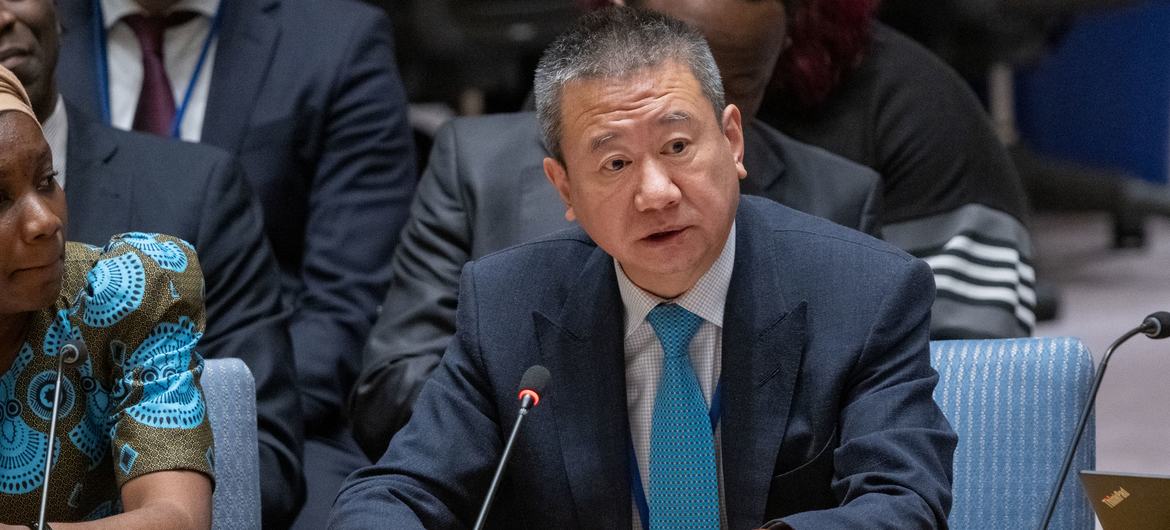
Huang Xia, Special Envoy of the Secretary-General for the Great Lakes region, briefs the Security Council meeting on the situation in the Great Lakes region.
UN Photo/Eskinder Debebe
 
Huang Xia, Special Envoy of the Secretary-General for the Great Lakes region, briefs the Security Council meeting on the situation in the Great Lakes region.


8 October 2024 

Peace and Security

The situation in Africa’s Great Lakes Region, in particular the Democratic Republic of the Congo (DRC), has remained “alarming” amid ongoing violence in the restive country’s east, said the UN Special Envoy to the Region in a briefing to the Security Council on Tuesday. 

“It is the civilian population who will continue to bear the heavy toll of war daily: loss of life, sexual violence, health problems and malnutrition in displacement camps,” said Huang Xia.

The violence is driven by both the M23 armed group which continues to expand its territory and the so-called Allied Democratic Forces (AFD) whose “terrorist links” and attacks against civilians in Ituri and North Kivu threaten the region, according to Mr. Xia

DRC is now the country which has the second highest number of displaced persons, after Sudan.

‘Glimmer of hope’

Despite the situation, for the first time since the resurgence of the M23 rebel group in November 2021, Mr. Xia sees “a real glimmer of hope”.

“I can testify that the recent peace talks within the framework of the Luanda process are encouraging and represent an important step toward silencing the guns and achieving lasting peace,” he said.

The Luanda process is a regional initiative under the leadership of Angolan President João Lourenço that aims to de-escalate tensions between the DRC and Rwanda.

The ceasefire agreement, which was signed last July 30, has contributed to “a relative calm and seems, despite some skirmishes, to be largely respected”.

Soundcloud

‘Three essential avenues’

While there have been encouraging steps taken, “much remains to be done to end the suffering of the Congolese population and achieve lasting peace in the Great Lakes region,” Mr. Xia warned.

He made a “solemn appeal” to the Security Council to remember the crisis in the region and ensure that a ceasefire endures in eastern DRC.

The “three essential avenues” to such a lasting peace include strengthening mutual trust between the countries of the region, enhancing inclusivity, especially the full participation of women and youth, and consistent international efforts in support of regional peace processes.

Regional consensus

To his first point on mutual trust, Mr. Xia is “convinced that all the main ingredients already exist,” as they are “enshrined in the Framework Agreement, which continues to enjoy regional consensus in addressing the root causes of the conflict”.

“Beyond that, development initiatives remain crucial,” Mr. Xia added, pointing to the UN Strategy for the Great Lakes region with its Action Plan currently being drafted as an example of an ideal framework for collective action.

“As the Summit of the Future concluded with a new global consensus bringing hope, we have once again accepted the collective responsibility to no longer accept the suffering of civilians caught in endless conflicts,” he concluded. 


https://news.un.org/en/story/2024/10/1155481

https://creativecommons.org/licenses/by/4.0/legalcode

понедельник, 7 октября 2024 г.

Gang attack in Haiti's Pont Sondé leaves 70 dead


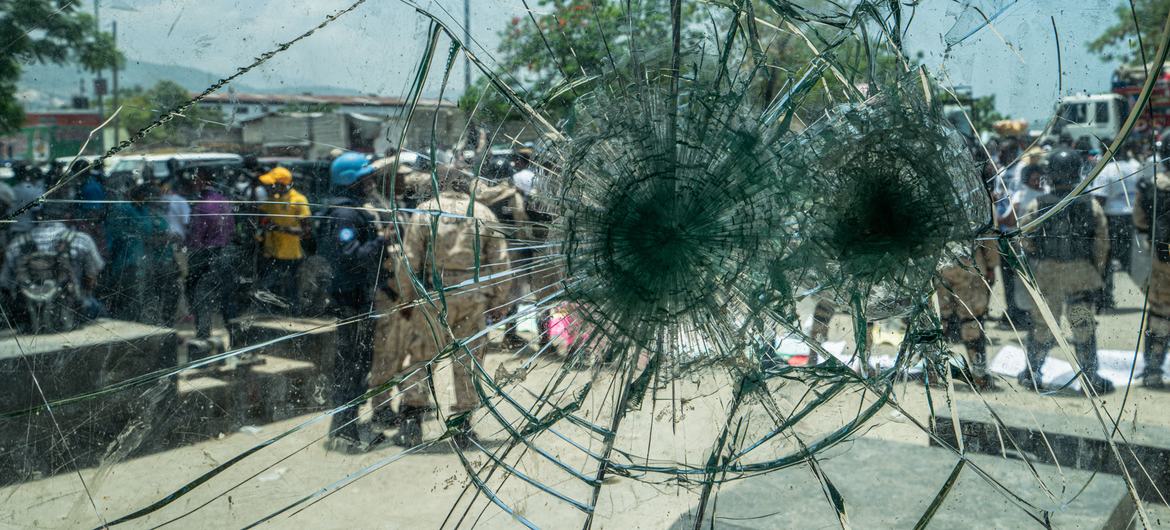
Rampant violence and claimed many lives and displaced hundreds of thousands from their homes in Haiti. (file)
© UNOCHA/Giles Clarke
 
Rampant violence and claimed many lives and displaced hundreds of thousands from their homes in Haiti. (file)


4 October 2024 

Peace and Security

An attack by a notorious gang in the town of Pont Sondé, Haiti, left at least 70 people dead on Thursday, after gunmen armed with automatic rifles opened fire, a spokesperson for the UN human rights office, OHCHR, said on Friday.

Among the victims at the hands of the so-called Gran Grif gang were 10 women and three infants.

“As the attacks unfolded, gang members reportedly set fire to at least 45 houses and 34 vehicles, forcing a number of residents to flee,” said Thameen Al-Kheetan in a statement released in Geneva.

He called for a “prompt and thorough investigation” into the attack, for those responsible to be held to account and guaranteed reparations for the victims and their families.

Rights violations soar

The attack comes in the wider context of indiscriminate gang violence across Haiti, leading to an alarming escalation of human rights violations and large-scale internal displacement.

Over 700,000 people have been forced to flee their homes, making Haiti the country with the largest number of displacements globally due to crime-related violence.

Mass displacement has led to widespread insecurity in the nation, with almost half of Haiti’s 11.9 million civilians in dire need of humanitarian assistance.

The gang violence against the Haitian population has spread from the capital, Port-au-Prince, to isolated rural areas. The pervasive assaults include sexual violence, kidnapping, looting, roadblocks to intimidate and rob civilians and forced recruitment by armed gangs.

‘We cannot turn a blind eye’

The UN refugee agency, UNHCR, is calling for increased and urgent attention, support, and solutions for Haitians affected by violence and insecurity, including those who have been forcibly displaced.

“Now more than ever, Haitians need our collective support, and we cannot turn a blind eye,” said UNHCR’s Assistant High Commissioner for Operations Raouf Mazou on Thursday after a three-day visit to the nation.

“Increased funding, enhanced security and international solidarity are essential to providing life-saving humanitarian assistance and restoring stability and hope in Haiti,” he added.

Despite the growing urgency of the crisis, funding for Haiti's humanitarian response remains critically low and the 2024 Humanitarian Response Plan asking for $674 million is currently only 39 per cent funded.

UNHCR is calling on the international community to increase its support to address humanitarian needs and to pursue solutions for displaced populations in Haiti and for people fleeing Haiti.


https://news.un.org/en/story/2024/10/1155381

https://creativecommons.org/licenses/by/4.0/legalcode

Lebanon: UNHCR chief issues urgent aid appeal to stem humanitarian catastrophe


A flight with medical supplies arrives in Beirut, Lebanon.
© WHO
 
A flight with medical supplies arrives in Beirut, Lebanon.

6 October 2024 

Peace and Security 

The UN High Commissioner for Refugees called on Sunday for greater international support to stem the “humanitarian catastrophe” now engulfing Lebanon following a massive escalation in Israeli airstrikes and a “limited” ground invasion there targeting Hezbollah militants.

According to the Lebanese health ministry over 2,000 Lebanese have been killed and nearly 10,000 wounded since the start of Israel’s offensive against Hamas in Gaza a year ago.

Israel intensified its bombing campaign across the whole of Lebanon following the killing of Hezbollah’s leader last month, and Iran’s ballistic missile assault on Israeli cities, in a bid to allow some 60,000 Israelis to return to their homes in the north where rocket fire across the UN-patrolled Blue Line of separation has caused mass evacuations on both sides.

UNHCR chief Filippo Grandi, who arrived in the capital Beirut on Saturday, said hundreds of thousands have been made destitute in recent days and appealed for an immediate ceasfire.

Two weeks of deadly Israeli airstrikes have forced over a million people to flee their homes. Mr. Grandi visited Beirut to express his solidarity with Lebanon and to mobilize more support for all those affected, both Lebanese and refugees.

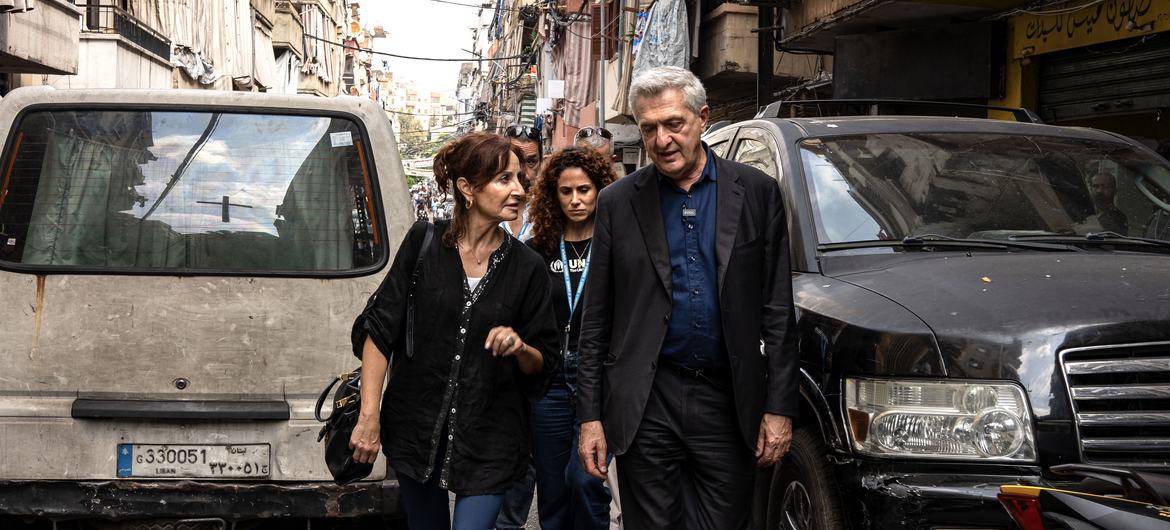
UN High Commissioner for Refugees Filippo Grandi visits Lebanon on a solidarity mission as humanitarian needs grow.
© UNHCR
 
UN High Commissioner for Refugees Filippo Grandi visits Lebanon on a solidarity mission as humanitarian needs grow.

Tragic toll

The conflict ravaging the country is disrupting urgently required supply shipments, said UNHCR, calling for supply routes within and into Lebanon to be preserved, so the flow of relief items can continue.

During his visit, Mr. Grandi met Prime Minister Najib Mikati and other senior officials, together with senior humanitarians, UNHCR staff, and displaced families.

“I’ve witnessed today the tragic toll this war is taking on entire communities,” said Mr. Grandi.

Tweet URL

“International humanitarian law must be respected and cannot be ignored. Families have been left homeless, stranded in the open air with traumatized children unable to understand what’s happening. They all told me how desperate they are to feel safe, and for the airstrikes to stop so they can return to their towns and villages.”

He said it was an “urgent moral imperative to help the people affected by this recent escalation. They should not pay the price for the abysmal failure to find political solutions and end this vicious cycle of violence. Now, in this hour of overwhelming need, the world must come to Lebanon’s aid.”

With large numbers displaced within the country in just two weeks, government-run shelters are overwhelmed and UNHCR is working with humanitarian partners and the authorities to urgently find safe shelter for those forced to flee.

UNHCR relief

UNHCR is also providing people with essential relief items, cash assistance, shelter assistance, medical care and other support. But the international community must significantly increase funding in order for humanitarians to respond adequately, the agency said on Sunday.

UNHCR has launched an appeal for $111 million to assist one million displaced people in Lebanon through the end of 2024, as part of a wider UN appeal for $425.7 million.

Mr. Grandi’s visit to Lebanon included meeting displaced Syrian refugees in Beirut’s Nabaa neighbourhood.

“I deeply appreciate Lebanon’s generosity in hosting so many refugees over the years – including those forced to flee Syria – despite the considerable challenges the country has faced. These refugees are now forced to flee again with scant resources and nowhere safe to go.”

UNIFIL alert

The UN peacekeeping mission that patrols the Blue Line and offers support to civilians in southern Lebanon, UNIFIL, has expressed deep concern over military activity by the Israeli Defense Forces close to one of the mission's positions inside Lebanese territory.

UNIFIL has said all it's Blue Helmets are remaining in place at observation points and bases along the line of separation in accordance with their UN mandate.

"The IDF has been repeatedly informed of this ongoing situation through regular channels. This is an extremely dangerous development," said UNIFIL in a tweet.

"It is unacceptable to compromise the safety of UN peacekeepers carrying out their Security Council-mandated tasks."

UNIFIL reminded all combatants of their obligations to protect UN personnel and property.

In an update on the situation facing Irish military personnel serving with UNIFIL, the Irish Defence Forces said in a post on X that despite the "tough conditions", personnel remain steadfast in their determination and resilience to fulfill the mission."


https://news.un.org/en/story/2024/10/1155411

https://creativecommons.org/licenses/by/4.0/legalcode

суббота, 5 октября 2024 г.

At Security Council Meeting on Sabotage of Nord Stream Pipeline, Many Speakers Condemn Attacks on Critical Infrastructure, Stress Need for Accountability


9741st Meeting (AM)
SC/15844


Several Members Call Out Russian Federation for Wasting Organ’s Time, Resources while Moscow Destroys Ukraine’s Infrastructure

Two years after the September 2022 explosions that severely damaged the Nord Stream 1 and 2 natural gas pipelines in the Baltic Sea, the Security Council met today at the request of the Russian Federation, who, in the absence of a briefer, assessed national investigations into the blasts, while criticizing the lack of conclusive findings and the 15-member organ’s collective action on the matter.

“Stockholm and Copenhagen have stated the obvious — that the gas pipelines were blown up” and that “it was not possible to continue the criminal proceedings within their countries’ jurisdictions”, said the Russian Federation’s representative, recalling the completed investigations announced by Sweden and Denmark in February.

He criticized Western colleagues for asserting that those investigations were effective and met the highest standards of the rule of law, and for now trying to convince the Council that Germany’s ongoing investigation is effective and transparent.  German authorities’ failure to date to provide information, not even interim results, raises doubts and has resulted in media conjecture, which must be countered with facts, he emphasized.

Voicing disappointment, he said that Moscow’s requests for legal assistance, as an affected party, sent to all three States were simply ignored.  Similarly, all attempts by the Russian Federation to reach a Council agreement calling on Germany to make transparent and expedite its investigation were “always blocked by the U.S. and its allies”, who urge that no pressure be exerted on German investigators.

Lamenting the lack of collective decision or Council statements, as well as an apparent cover-up, he further criticized Western colleagues’ “duplicitous manoeuvres to obstruct” the Council’s work and said the Russian Federation will not be deterred in establishing the truth, determining who is responsible for the explosions and punishing them.

Several delegations excoriated the Russian Federation for calling yet another meeting on the topic and wasting the Council’s time and resources.  They expressed full support for Germany’s ongoing investigation and called out Moscow for its hypocrisy in decrying the Nord Stream explosions while continuing to systematically attack Ukrainian water and energy infrastructure.

The representative of France pointed out that the Russian Federation was not considering the convergent concerns expressed by many Council members in discussions under way on the presidential statement.  Moreover, its characterization of the explosions as a terrorist attack, which prejudges the outcome, requires the establishment of facts, he added.

The speaker for the United States, disputing the Russian Federation’s accusation that his country was involved, stressed:  “There is no shred of evidence of U.S. involvement and there never will be because the United States was not involved.”

The best way to get answers is to support Germany’s ongoing national investigation, emphasized the representative of the United Kingdom. The Council should focus its efforts on supporting the process rather than engaging in unhelpful speculation or trying to undermine it.

Countering this view, however, were speakers who criticized the national investigations.  Mozambique’s delegate, noting that progress on the file, “much like the investigations themselves”, has remained largely stalled over the past two years, voiced concern over the way national jurisdictions have handled the issue, as well as the reported lack of coordination and information-sharing.  As a result, there is “international speculation that the investigation is being deliberately protracted due to the potential diplomatic repercussions and the risk of escalation should the perpetrators’ identities be revealed”, he pointed out, calling for a transparent and conclusive investigation.

China’s representative echoed that view and called on countries concerned to actively communicate and cooperate with the Russian Federation and avoid politicizing the investigation.  The Russian delegation’s proposed draft presidential statement on the Nord Stream pipeline explosions is “generally balanced” and reflects all parties’ concerns, he said, voicing hope that all parties will intensify consultations and reach agreement on the draft as soon as possible.  He also called on the Council to keep its attention on this matter and not allow it to “fade away”.

Speakers also expressed concern over the economic and social costs of the blasts, as well as the environmental impact of the attack on critical undersea infrastructure.  Among them was Slovenia’s representative, who voiced support for action in the framework of the UN in relation to the security of such infrastructure, including Nord Stream pipelines.  As well, she voiced support for existing national investigations into the incident, including the ongoing efforts by German authorities.

Guyana’s delegate voiced concern over the grave ecological risks posed to marine life by the “criminal attacks” on the pipeline, noting that the German authorities have issued an arrest warrant in connection with the matter and that an investigation is ongoing.

Looking ahead to the future of investigations into the Nord Stream pipeline explosions, Algeria’s representative voiced support for the investigation by German authorities as well as a potential UN investigation.  Any future international effort, particularly under the auspices of the United Nations, could shed further light on those attacks, he pointed out.

Malta’s representative, however, disagreed, stating that “seeking to introduce further investigations at this time could be counterproductive and may risk undermining the work of the German authorities”.  Moreover, she urged Council members to avoid language that imposes timelines on ongoing investigations.

The delegate of the Republic of Korea, echoing other speakers, reiterated his country’s opposition to attacks or sabotage of critical infrastructure and stressed the need for accountability.  He voiced support for ongoing national investigations by relevant authorities, including the German authorities, seeking fact-based conclusions related to the deliberate sabotage of the pipelines.

Ecuador’s representative concurred with those who warned against the dangers of actions and proposals that would make events more difficult to clarify. Therefore, his delegation awaited the conclusions of the ongoing investigation by Germany.  However, given the seriousness of the incident and the time elapsed, he said, “no options should be ruled out if they contribute to getting to the truth with the cooperation of interested parties”.


https://press.un.org/en/2024/sc15844.doc.htm

https://creativecommons.org/licenses/by/4.0/legalcode

пятница, 4 октября 2024 г.

Somalia Advancing Democratization Process, Other National Priorities ahead of UN Assistance Mission’s Transition, Special Representative Tells Security Council


9740th Meeting (AM)
SC/15843


Delegates Urge Adequate Funds, Preparation to Preserve Counter-terrorism Gains

Despite persisting security challenges, Somalia continues to forge progress on national priorities, including in assuming full responsibility for its own security, senior officials told the Security Council today, as members underscored the need for counter-terrorism gains to be preserved through adequate funding and preparation ahead of the transition by the UN Assistance Mission in Somalia (UNSOM) to a UN country team at the end of the month.

James Swan, Acting Special Representative of the Secretary-General and Head of UNSOM, commended the Federal Government’s political efforts, including the amendment in March of the first four chapters of the Provisional Constitution by Parliament and in defining the process for one-person-one-vote elections, with the Federal Cabinet endorsing three critical bills for universal suffrage elections.  He also welcomed the 2 October meeting of the National Consultative Council, which will discuss these bills before they are submitted to Parliament for debate and adoption.  

“The transition from the previous, indirect electoral system to the planned new system of universal suffrage will require broad and inclusive consultations and a willingness of all stakeholders to engage in dialogue in order to build political consensus,” he said.  

Turning to the fight against Al-Shabaab, a key security priority, he said the Somali Government is sustaining military operations while also tackling the challenges of force generation; taking over security responsibilities from the African Union Transition Mission in Somalia (ATMIS); planning the transition to the African Union Support and Stabilization Mission in Somalia (AUSSOM); and implementing stabilization programmes in recovered areas. While the lifting of the arms embargo on the national Government has facilitated its access to more weapons and supplies, other entities must respect the embargo, which was established by resolution 2713 (2023).

Mohamed el-Amine Souef, Special Representative of the Chairperson of the African Union Commission for Somalia and Head of ATMIS, also commended the recent convening of the tenth National Consultative Council, focused on military operations against Al-Shabaab and advancing the democratization process.  He noted progress in reviewing and amending the Provisional Constitution, which followed the establishment of an Independent National Electoral and Boundaries Commission.  “This will strengthen the country’s democratic processes and promote transparency and accountability in future elections,” he said, encouraging the return of Puntland to the Council to ensure inclusive dialogue. 

As well, he urged advancement of Somalia’s Arms and Ammunition Control Procedures to prevent the proliferation of illegal weapons following the lifting of the arms embargo, and he welcomed talks between Somalia and Ethiopia to address tensions persisting between the countries since January 2024.  On the security front, he said that while the Somali Security Forces had degraded Al-Shabaab capabilities through targeted counter-terrorism operations, the group’s asymmetric tactics in attacks against civilian and military targets in Mogadishu and across the four ATMIS sectors underscored the need for robust intelligence-sharing and sustained international cooperation.  Turning to post-ATMIS planning, he commended the Federal Government’s formulation of a Concept of Operations and highlighted efforts to ensure it predictable, adequate and sustainable financial support. 

Ilwad Elman, a civil society representative with the Elman Peace and Human Rights Centre, observing that 75 per cent of its population was under the age of 30, spotlighted an event to empower young leaders held by her organization on 31 July in Mogadishu.  Nearly 6,000 people, mostly youth, showed up, with some informing her that it was “the best day they ever experienced”.  Two days later, the news cycle was taken over by horrific images of dead people, mostly youth, on the beach, she said, adding that they were deliberately targeted by Al-Shabaab.

Against this backdrop, she underscored the need for civil society organizations to go beyond mere tokenism in ensuring the participation of youth and women, critical stakeholders for sustainable peace in the country.  “This need is especially pressing in newly liberated areas, where the complex social and political dynamics shaped by years of Al-Shabaab rule demand sensitive, context-specific interventions,” she added. 

In the ensuing discussion, Council members deplored the recent Al-Shabaab attack in Mogadishu.  Some speakers welcomed progress made on the transfer of UNSOM’s responsibilities, while others voiced concern over the truncated timeline, with the reconfigured mission slated to replace ATMIS on 1 January 2025. Among them was the representative of France, who said that challenges in Somalia call for the utmost vigilance to ensure that these preparations are not delayed at the risk of creating a security vacuum.  His country will carefully study the report by the United Nations, the African Union and Somalia by 15 November on the possible shape of that future mission and its exit strategy, the planned involvement of its donors, its budget and financing and the logistical support to be provided by the United Nations, he said.

Echoing such points, the United States’ delegate urged stakeholders to complete the necessary transition planning as soon as possible, adding:  “Reaching an agreement on a post-ATMIS force is urgent […] The international community must maintain focus on this transition, which is critical to our shared security.”

The speaker for the United Kingdom said his country is working with stakeholders to ensure a gradual, responsible and sustainable drawdown of UNSOM, including the progressive and phased transfer of its tasks to the Federal Government of Somalia, the UN Country Team and other stakeholders.  “It is essential that during the transition the mission has the resources and capabilities necessary for continued delivery on those areas that remain critical to Somalia’s needs,” he added.

The Russian Federation’s delegate, meanwhile, stressed that it is the federal Government which should have the “last word” in determining the parameters for the special political mission in the agreed-upon two-year period, adding:  “We expect that the British penholders will take into account the position of the Somali side on this issue.”

Japan’s representative, echoing widespread concerns about the ongoing threat posed by Al-Shabaab, urged a long-term perspective and a comprehensive approach based on the humanitarian-development-peace nexus — even more necessary during the critical transition of UNSOM and ATMIS. As such, he said, “the proposal from the Federal Government of Somalia last month presented a reasonable two-year transition period from UNSOM to the UN Country Team, with a phased handover of responsibilities to Somali institutions”.  Support from the neighbouring ATMIS troop-contributing countries is needed to ensure the transition’s success, he said, adding: “There should be no room for regional tensions to give breathing space for Al-Shabaab.”

China and Ecuador’s delegates were among several speakers underscoring the need to ensure uninterrupted funding, communication and coordination during the ATMIS transition, with Ecuador’s representative emphasizing that “only continued solid financial backing will ensure stability and peacebuilding in Somalia”.  Similarly, the Republic of Korea said that an effective and financially sustainable post-ATMIS mission led by the African Union and authorized by the Security Council is “crucial to preserving the counter-terrorism security gains achieved by ATMIS and Somali forces so far and preventing any security vacuum after the withdrawal of ATMIS”.

The representative of Slovenia, voicing concerns about the persisting tensions between Somalia and Ethiopia, urged both countries to de-escalate and refrain from any unilateral acts that could negatively affect their good neighbourly relations.  She also encouraged both countries to engage in all mediation initiatives, including by the African Union and Türkiye, to find peaceful resolution on mutually acceptable terms and in accordance with international law.

For his part, Sierra Leone’s representative, also speaking for Algeria, Guyana and Mozambique, commended strides made towards the country’s democratization, noting the Government’s commitment to institute measures on the constitutional review process, which is central to the Statebuilding process.  “The transition to universal voting rights — that is, one person, one vote — underscores the commitment of the Somali authorities to enhancing democratic participation, especially for women and youth,” he added.

Malta’s delegate highlighted the need to ensure women’s participation in these political processes, including through ensuring a minimum 30 per cent quota for women in elected positions and appointed bodies.  While voicing support for recent efforts towards the finalization of the bill on female genital mutilation, she expressed alarm over the trafficking of young girls for forced marriages to Al-Shabaab members and other incidents of conflict-related sexual violence.

The representative of Switzerland, Council President for October, speaking in her national capacity, voiced alarm at the number of serious violations of children’s rights and called for the implementation of the Council Working Group’s conclusions in this regard.  Condemning the recent execution of four young adults in Puntland for crimes committed when they were minors and associated with Al‑Shabaab, she emphasized that “the Age Verification Committee recommended against imposing the death penalty”.

Rounding out the meeting, Somalia’s representative, Ahmed Moallin Fiqi Ahmed, Minister for Foreign Affairs and International Cooperation, outlined progress made by his Government, including its efforts to reach consensus on an electoral process and Constitutional amendments, and in intensifying operations against Al-Shabaab.  On the political front, he highlighted the approval of the draft bill establishing the Independent National Electoral Boundaries Commission by the Council of Ministers, and regional elections set to take place on 13 November in northern Somalia.  On the security situation, he said his Government is engaged in consultations with the African Union and United Nations on the groundwork of post-ATMIS security arrangements in 2025. 

Turning to the dispute with Ethiopia, which he called “an unlawful annexation attempt […] under the guise of counter-terrorism”, he highlighted recent seizures of illegal weapon shipments from the Ethiopian border for the use of non-State actors in Somalia.  Such attempted transfers violate Council resolution 2713 (2024), he said, adding that Addis Ababa is acting outside the boundaries of its mandate as a troop-contributing country under ATMIS.


https://creativecommons.org/licenses/by/4.0/legalcode

https://press.un.org/en/2024/sc15843.doc.hm

четверг, 3 октября 2024 г.

As Destabilizing Conflicts Escalate across Africa, United Nations-African Union Partnership Has Never Been More Critical, Top Officials Tell Security Council


9739th Meeting (PM)
SC/15842


(Note:  A full summary of today's meeting will be available after its completion.)

The partnership between the United Nations and African Union has never been more critical, several senior officials told the Security Council today, as they laid out the myriad challenges facing the continent from the world’s largest forced displacement crisis and numerous instances of political instability to territorial disputes and climate-change-driven insecurity. 

“As the Council is aware, several African countries and sub-regions continue to face significant challenges to achieving lasting peace, security and sustainable development,” Parfait Onanga-Anyanga, Special Representative of the Secretary-General to the African Union and Head of the United Nations Office to the African Union, told the 15-member body. 

The first of three briefers to outline developments on the ground in Africa and describe in detail what issues and challenges the UN-African Union collaboration was taking on, Mr. Onanga-Anyanga said the Secretary-General’s latest report (document S/2024/629) underscores the strategic importance of and need for the two organizations — including the work of his Office — to closely coordinate efforts to help address complex political transitions. 

In the Horn of Africa, political instability, territorial disputes and an ever-worsening humanitarian situation are driving several destabilizing conflicts, he said.  The conflict in Sudan has caused a grave humanitarian emergency, leading to the largest forced displacement crisis in the world, involving over 10 million people. In the Sahel region, political instability and violence have intensified, while uncertainty characterizes transition processes in Burkina Faso, Guinea, Mali and Niger.  And in the Great Lake region, the 30 July ceasefire agreement between the Democratic Republic of the Congo and Rwanda, facilitated by Angola, has translated into a reduction of fighting, but concerns remain. “All groups must lay down their weapons and disarm,” he stressed. 

The commitment of the member States of the Southern African Development Community (SADC) to support peace efforts through the deployment of a mission in the Democratic Republic of the Congo is commendable, he continued.  However, the link between climate change and peace and security is “a reality that cannot be denied in Africa”, he said, adding that the impact of climate change is putting to the test the resilience of States.  Welcoming the recent adoption of the Pact of the Future, he said that accord calls for stronger cooperation between the UN and regional organizations, and underscores Africa’s key role in promoting an effective and inclusive multilateral system. 

Also briefing the Council today was Fatima Kyari Mohammed, Permanent Observer of the African Union to the United Nations, who commended the African Union for utilizing its capacity to prevent and resolve conflicts while tapping into the UN’s political legitimacy, experience, and support to achieve its peace and security goals.  “The collaboration between the two institutions is founded on the principle of complementarity, recognizing that no single entity can fully tackle current and future security challenges alone,” she said. 

“Given the evolving security landscape in Africa, and instances where United Nations peacekeeping missions may not be suitable, it is critical to recognize how African Union-led peace support operations, including enforcement actions, contribute to both regional and global peace and security efforts,” she added.  The Security Council and the Peacebuilding Commission should identify countries where Council resolution 2719 (2023) — on financing African Union-led peace support operations — can serve as the financing framework for peace-building efforts, thereby enhancing national capacity to consolidate the achievements of such operations.  She pointed out how the African Union-United Nations Joint Framework on Human Rights explicitly highlights the need to promote women's full and equal participation in political, economic and social life, and recognizes the critical role of young people in promoting peace, development and human rights. 

Prioritizing Africa in the reform of the Security Council is crucial, she said.  She also called for collective efforts to address the conflicts in Sudan and the eastern Democratic Republic of the Congo, consolidate gains in Mozambique and Somalia, and combat the spread of violent extremism in the Sahel, the Lake Chad Basin and West Africa.  Equally critical is the need to tackle the ongoing threat of piracy in the Gulf of Aden, and take action to support countries facing both climate change and conflict.  “The time has come for our two institutions to take bold, coordinated action to achieve our critical shared objectives in Africa,” she said.

Martha Ama Akyaa Pobee, Assistant Secretary-General for Africa in the Departments of Political and Peacebuilding Affairs and Peace Operations, said since the adoption of Council resolution 2719 (2023), which “marked a major milestone” in the UN-African Union partnership, the United Nations Secretariat has intensified its collaboration with the African Union Commission.  “As a result, significant progress has already been achieved towards the operationalization of the resolution,” she said, citing the need for close working relations between the African Union Peace and Security Council and the United Nations Security Council to ensure smooth joint planning. 

The text’s implementation will present complex challenges, specifically on peace enforcement missions due to the inherent risks, she said.  A possible first test case for the implementation of the c framework is currently being discussed, based on Security Council resolution 2748 (2024), adopted in August.  The African Union Commission and the UN Secretariat in consultation with Somalia’s Government and relevant international and regional stakeholders are jointly planning for the successor of the African Union Transition Mission in Somalia (ATMIS).  “As requested by the council, we are preparing a report that articulates clearly a range of options for financing it,” she added. 

Several Council members expressed the need to ensure predictable, reliable, and sustainable financing for such operations, hailing the adoption of resolution 2719 (2023), while also voicing broad support for strengthening the UN-African Union partnership to deal with the myriad challenges plaguing the continent. 

The representative of Sierra Leone, speaking also for Algeria, Mozambique and Guyana — known as the A3+ group — said such cooperation is essential for the collaboration outlined in the UN’s New Agenda for Peace.  The African Union “has consistently demonstrated its capacity to leverage its comparative advantages and act as the first responder to the continent’s security threats, whether through mediation efforts or the deployment of peace support operations”, he said, adding that as penholders and Africa’s voice in the Council, the group will continue to lead as it keenly refines implementation of resolution 2719 (2023), a crucial tool in the peace and security toolbox. 

As the African Union Peace and Security Council commemorates two decades of life, the continent’s peace and security architecture must have the agency, resources and political support to effectively shape its security landscape.  “This effort includes reflecting Africa’s positions into the deliberations of the UN Security Council,” he said, whether in establishing mandates for the Organization’s peacekeeping operations, reviewing sanctions regimes, mediation efforts or coordinating humanitarian interventions. Ensuring women, youth and marginalized communities are “not just beneficiaries of peace, but also its architects” is also crucial, as is addressing the persistent threat of terrorism and violent extremism, particularly the Sahel region of West Africa. 

Also supporting the adoption of resolution 2719 (2023) as a historic step towards expanding the available toolkit to foster peace and security on the African continent, the United States’ speaker said “it is much more than a funding mechanism.  It is an opportunity for a stronger partnership between the UN and the AU,” noting that collaboration will be carried out in areas from human rights compliance to legal frameworks to procurement.  He recognized the needs of civilians are critical to its success, “We must take up this work together and to uphold its credibility,” he said. “People will be watching this mechanism closely.”


https://press.un.org/en/2024/sc15842.doc.htm


https://creativecommons.org/licenses/by/4.0/legalcode