Показаны сообщения с ярлыком Lebanon. Показать все сообщения

четверг, 14 ноября 2024 г.

Security Council Press Statement on Attack against United Nations Interim Force in Lebanon


SC/15897


The following Security Council press statement was issued today by Council President Barbara Woodward (United Kingdom):

Against the backdrop of ongoing hostilities along the Blue Line, the members of the Security Council condemned the several incidents that impacted the United Nations Interim Force in Lebanon (UNIFIL) positions and injured UNIFIL peacekeepers in the past weeks, including the ones on 29 October, 7 November and 8 November.

They urged all parties to take all measures to respect the safety and security of UNIFIL personnel and premises.  They recalled that peacekeepers must never be the target of an attack.

They reiterated their full support to UNIFIL, underscoring its role in supporting regional stability and expressed their deep appreciation to UNIFIL’s troop-contributing countries.

They expressed their deep concern for civilian casualties and sufferings, the destruction of civilian infrastructure, the damage to cultural heritage sites in Lebanon and endangerment of the UNESCO world heritage sites in Baalbeck and Tyre and the rising number of internally displaced people.  They called on all parties to abide by international humanitarian law.

They called for the full implementation of Security Council resolution 1701 (2006).


https://creativecommons.org/licenses/by/4.0/legalcode


 https://press.un.org/en/2024/sc15897.doc.htm

понедельник, 21 октября 2024 г.

Israeli army ‘deliberately demolished’ watchtower, fence at UN peacekeeping site in southern Lebanon


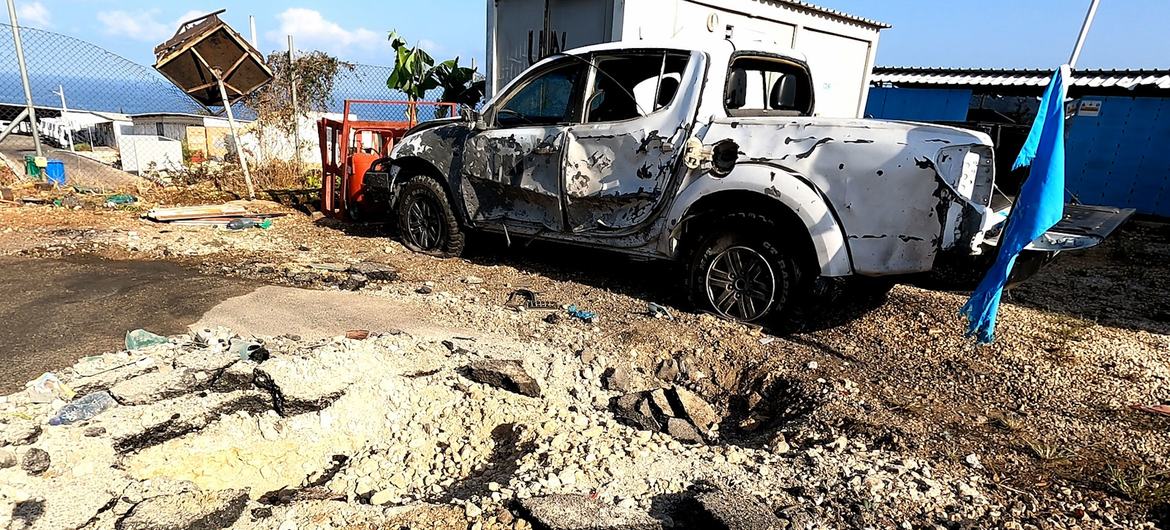
A crater marks the impact of an explosion at the UNIFIL headquarters in Naqoura.
© UNIFIL
 
A crater marks the impact of an explosion at the UNIFIL headquarters in Naqoura.


20 October 2024 
Peace and Security

The UN peacekeeping force in Lebanon (UNIFIL) has said that an Israeli army bulldozer demolished an observation tower and the perimeter fence of a UN position earlier on Sunday in Marwahin, in the southern part of the country.

A press statement issued by the Mission, formally known as the UN Interim Force in Lebanon, said Israeli Defense Forces (IDF) “deliberately demolished” the watchtower and the fence surrounding the Marwahin site.

“Yet again, we remind the IDF and all actors of their obligations to ensure the safety and security of UN personnel and property and to respect the inviolability of UN premises at all times,” UNIFIL stated.

The mission also reiterated that the violation of a UN site and damage to its assets constitutes a flagrant violation of international law and Security Council resolution 1701, the unanimously adopted text to end to a 2006 war between Israel and Hezbollah and chart a path towards security on the border between Israel and Lebanon.

The statement went on to note that the Israeli army has repeatedly asked UNIFIL to vacate its positions along the Blue Line and has deliberately damaged UN positions.

Despite the pressure on the mission and troop-contributing countries, UNIFIL stressed that peacekeepers remain in all their positions, the mission’s statement said on Sunday.  

“We will continue to carry out our mandated tasks of monitoring and reporting,” the statement concluded. 

Other security incidents

Sunday’s developments come after a series of worrying incidents in the past days in which a total of five peacekeepers have been injured.

Just four days ago, UNIFIL issued a statement saying peacekeepers at a position near Kafer Kela had observed an IDF Merkava tank firing at their watchtower.

Two cameras were destroyed, and the tower was damaged.

“Yet again we see direct and apparently deliberate fire on a UNIFIL position,” the mission stated at the time.

In addition, last Sunday, 13 October, 15 peacekeepers suffered from “smoke effects”, after the IDF fired several rounds some 100 metres from their position, which had been deliberately breached around two hours earlier the same day.

Several UN positions have been damaged, and cameras and lights destroyed.

Top UN officials, including the Secretary-General voiced concern over the situation, reiterating that safety and security of UN personnel and property “must be guaranteed” and that the inviolability of UN premises “must be respected at all times without qualification”.

He also warned that attacks against peacekeepers contravene international law and may constitute war crimes.


https://news.un.org/en/story/2024/10/1155906


https://creativecommons.org/licenses/by/4.0/legalcode

воскресенье, 13 октября 2024 г.

UN chief condemns attacks against peacekeepers in Lebanon


A UNIFIL armoured personnel carrier. (file)
UN Photo/Pasqual Gorriz
 
A UNIFIL armoured personnel carrier. (file)


By Vibhu Mishra, with additional reporting by Daniel Johnson in Geneva
11 October 2024 Peace and Security

The UN Secretary-General on Friday condemned recent attacks against peacekeeping personnel and premises in southern Lebanon.

According to the UN Interim Force in Lebanon (UNIFIL), two peacekeepers were injured on Friday after two explosions occurred close to an observation tower.

This followed an incident on Thursday when an Israel Defense Forces (IDF) Merkava tank fired at an observation tower at UNIFIL’s headquarters in Naqoura, directly hitting it and injuring two additional personnel.

Established by the UN Security Council, UNIFIL is tasked with monitoring the cessation of hostilities following the war between Israel and Hezbollah, confirming the withdrawal of Israeli forces from southern Lebanon, and assisting the Lebanese government in restoring its authority in the area.

‘Blue helmets’ must be protected

Speaking at a press stakeout during the ASEAN Summit in Vientiane, the capital of Lao People’s Democratic Republic, Secretary-General António Guterres “condemned the fact that there was shooting against the UN premises, wounding two peacekeepers, which is a violation of international humanitarian law.”

“Peacekeepers must be protected by all parties of the conflict, and what has happened is obviously condemnable.”

Tweet URL

He also expressed alarm over the escalating violence in Lebanon.

“What we are witnessing in Lebanon is a massive operation which strikes, heavy bombardments, obviously also with bombardments from the Hezbollah side, but that are causing dramatic number of civilians being killed,” he said.

Reports indicate that more than 2,000 people have been killed, and over one million have been displaced.

“We see an enormous tragedy in Lebanon, and we must do everything to avoid an all-out war In Lebanon,” Mr. Guterres added.

Peacekeepers remain at their posts

Despite the challenging conditions, UNIFIL peacekeepers continue their operations.

According to the Mission, several security walls at the UN position 1-31, near the Blue Line in Labbouneh, collapsed when an IDF vehicle hit the perimeter and IDF tanks moved close to the UN post.  

Set by the UN and stretching for 120 kilometres along Lebanon’s southern frontier, the Blue Line is a “line of withdrawal”. Its practical purpose is to confirm the withdrawal of Israeli forces from the south of Lebanon. Several of UNIFIL’s positions are located on or near it.

A UNIFIL Quick Reaction Force was dispatched to assist and reinforce the position, with peacekeepers remaining on-site.

“These incidents put again UN peacekeepers, who are serving in south Lebanon at the request of the Security Council, at very serious risks,” UNIFIL stated on social media platform X.  

“The safety and security of UN personnel and property must be guaranteed and that the inviolability of UN premises must be respected at all times.”

Any deliberate attack on peacekeepers is a grave violation of international humanitarian law and UN Security Council Resolution 1701, which mandates UNIFIL’s presence in the region, it added.

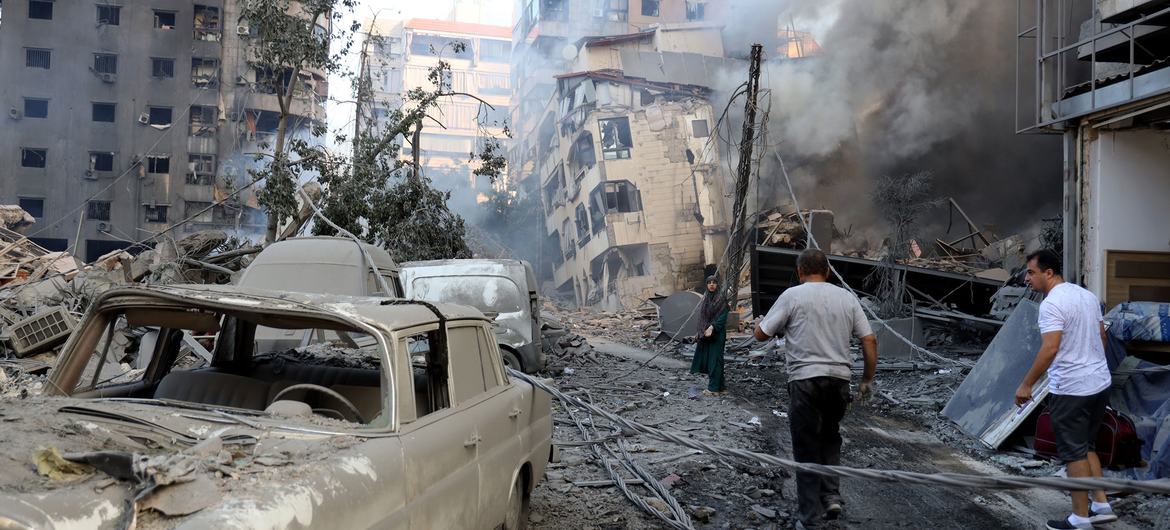
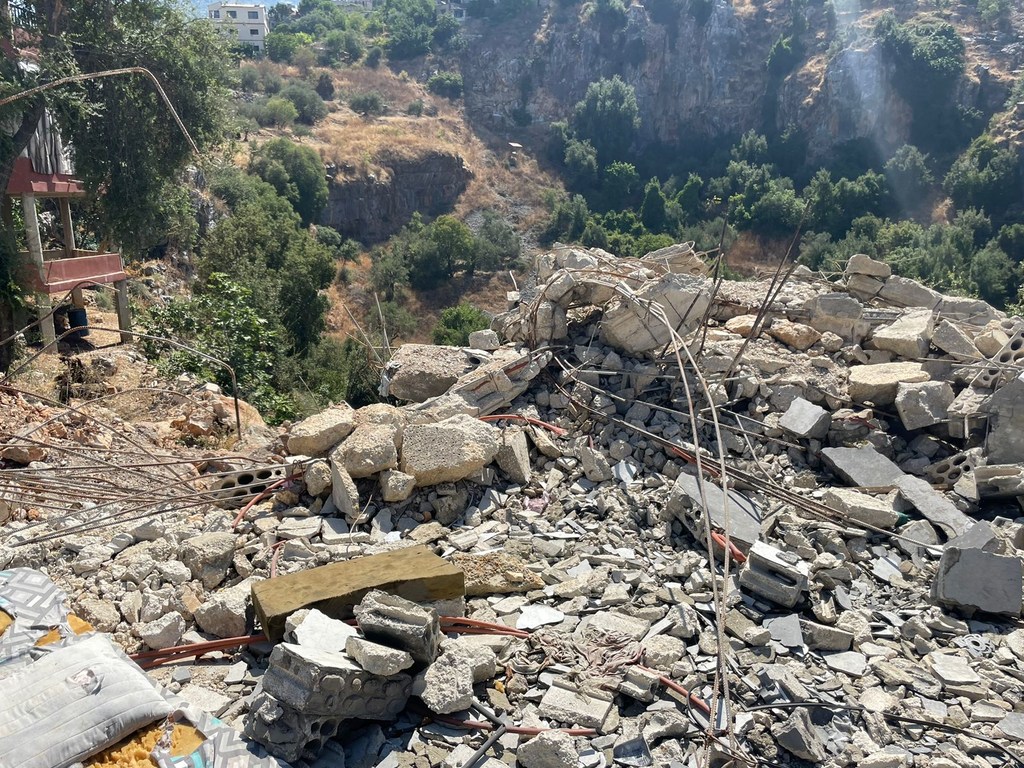
Destruction in a suburb of Beirut.
© UNICEF
 
Destruction in a suburb of Beirut.

Situation worsening for civilians

In Geneva, the UN human rights office, OHCHR, called for an end to the “killing, destruction [and] bellicose posturing” by those in power, adding that the situation for civilians on the ground “in Lebanon, Gaza, Israel and Syria is getting worse by the day”.

On Thursday, airstrikes – without warning – targeted densely populated areas in Beirut’s central district, marking the third major attack on the city since late September, according to the UN Office for the Coordination of Humanitarian Affairs (OCHA).  

Twenty-two people were killed, and hundreds injured, according to Lebanese authorities.

OHCHR spokesperson Ravina Shamdasani described how the densely populated capital of Beirut “is increasingly being hit by Israeli airstrikes” which have left more than 2,100 dead over the last year, according to the Lebanese authorities.

The development comes as Hezbollah and other armed groups “continue to fire rockets into Israel, resulting in the first civilian fatalities in the north since the most recent escalation of hostilities between Israel and Lebanon last month”, the OHCHR spokesperson noted.

Tweet URL

Healthcare centres and emergency workers have not been spared from the intensifying Israeli strikes, with 96 primary health care centres and clinics closed by 5 October, according to the Lebanese authorities.

“We’ve had several reports also of airstrikes, targeting other medical centres and of paramedics as well as firefighters, being killed,” Ms. Shamdasani said.

Since 30 September, 49 health workers have been killed in nine confirmed attacks, according to the UN World Health Organization (WHO).

Humanitarian response

UN agencies are ramping up efforts to respond to the escalating humanitarian crisis.

The UN World Food Programme (WFP) and the UN Children’s Fund (UNICEF) dispatched a humanitarian convoy from Beirut to the village of Rmaych, where 6,000 people are sheltering.

Together with partners, the agencies have distributed over one million meals and more than 143,000 ready-to-eat kits to at least 440 designated shelters.

These agencies continue to provide vital protection, psychosocial support, nutrition, health, and water, sanitation, and hygiene services.

WHO has also delivered medical supplies to treat 650 trauma patients in six major Beirut hospitals, as assessments continue to evaluate the needs of displaced people outside formal shelters.

With nearly three-quarters of the 1,000 designated shelters at full capacity, the humanitarian needs are only increasing, particularly as winter approaches.


https://news.un.org/en/story/2024/10/1155621


https://creativecommons.org/licenses/by/4.0/legalcode

понедельник, 7 октября 2024 г.

Lebanon: UNHCR chief issues urgent aid appeal to stem humanitarian catastrophe


A flight with medical supplies arrives in Beirut, Lebanon.
© WHO
 
A flight with medical supplies arrives in Beirut, Lebanon.

6 October 2024 

Peace and Security 

The UN High Commissioner for Refugees called on Sunday for greater international support to stem the “humanitarian catastrophe” now engulfing Lebanon following a massive escalation in Israeli airstrikes and a “limited” ground invasion there targeting Hezbollah militants.

According to the Lebanese health ministry over 2,000 Lebanese have been killed and nearly 10,000 wounded since the start of Israel’s offensive against Hamas in Gaza a year ago.

Israel intensified its bombing campaign across the whole of Lebanon following the killing of Hezbollah’s leader last month, and Iran’s ballistic missile assault on Israeli cities, in a bid to allow some 60,000 Israelis to return to their homes in the north where rocket fire across the UN-patrolled Blue Line of separation has caused mass evacuations on both sides.

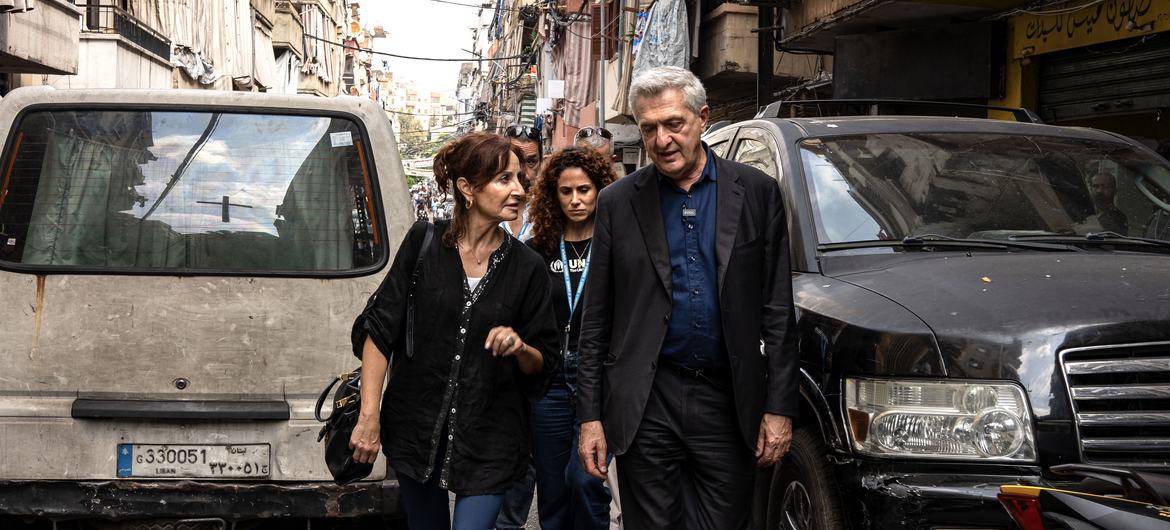
UNHCR chief Filippo Grandi, who arrived in the capital Beirut on Saturday, said hundreds of thousands have been made destitute in recent days and appealed for an immediate ceasfire.

Two weeks of deadly Israeli airstrikes have forced over a million people to flee their homes. Mr. Grandi visited Beirut to express his solidarity with Lebanon and to mobilize more support for all those affected, both Lebanese and refugees.

UN High Commissioner for Refugees Filippo Grandi visits Lebanon on a solidarity mission as humanitarian needs grow.
© UNHCR
 
UN High Commissioner for Refugees Filippo Grandi visits Lebanon on a solidarity mission as humanitarian needs grow.

Tragic toll

The conflict ravaging the country is disrupting urgently required supply shipments, said UNHCR, calling for supply routes within and into Lebanon to be preserved, so the flow of relief items can continue.

During his visit, Mr. Grandi met Prime Minister Najib Mikati and other senior officials, together with senior humanitarians, UNHCR staff, and displaced families.

“I’ve witnessed today the tragic toll this war is taking on entire communities,” said Mr. Grandi.

Tweet URL

“International humanitarian law must be respected and cannot be ignored. Families have been left homeless, stranded in the open air with traumatized children unable to understand what’s happening. They all told me how desperate they are to feel safe, and for the airstrikes to stop so they can return to their towns and villages.”

He said it was an “urgent moral imperative to help the people affected by this recent escalation. They should not pay the price for the abysmal failure to find political solutions and end this vicious cycle of violence. Now, in this hour of overwhelming need, the world must come to Lebanon’s aid.”

With large numbers displaced within the country in just two weeks, government-run shelters are overwhelmed and UNHCR is working with humanitarian partners and the authorities to urgently find safe shelter for those forced to flee.

UNHCR relief

UNHCR is also providing people with essential relief items, cash assistance, shelter assistance, medical care and other support. But the international community must significantly increase funding in order for humanitarians to respond adequately, the agency said on Sunday.

UNHCR has launched an appeal for $111 million to assist one million displaced people in Lebanon through the end of 2024, as part of a wider UN appeal for $425.7 million.

Mr. Grandi’s visit to Lebanon included meeting displaced Syrian refugees in Beirut’s Nabaa neighbourhood.

“I deeply appreciate Lebanon’s generosity in hosting so many refugees over the years – including those forced to flee Syria – despite the considerable challenges the country has faced. These refugees are now forced to flee again with scant resources and nowhere safe to go.”

UNIFIL alert

The UN peacekeeping mission that patrols the Blue Line and offers support to civilians in southern Lebanon, UNIFIL, has expressed deep concern over military activity by the Israeli Defense Forces close to one of the mission's positions inside Lebanese territory.

UNIFIL has said all it's Blue Helmets are remaining in place at observation points and bases along the line of separation in accordance with their UN mandate.

"The IDF has been repeatedly informed of this ongoing situation through regular channels. This is an extremely dangerous development," said UNIFIL in a tweet.

"It is unacceptable to compromise the safety of UN peacekeepers carrying out their Security Council-mandated tasks."

UNIFIL reminded all combatants of their obligations to protect UN personnel and property.

In an update on the situation facing Irish military personnel serving with UNIFIL, the Irish Defence Forces said in a post on X that despite the "tough conditions", personnel remain steadfast in their determination and resilience to fulfill the mission."


https://news.un.org/en/story/2024/10/1155411

https://creativecommons.org/licenses/by/4.0/legalcode

четверг, 26 сентября 2024 г.

‘Hell is breaking loose in Lebanon’, Guterres warns Security Council


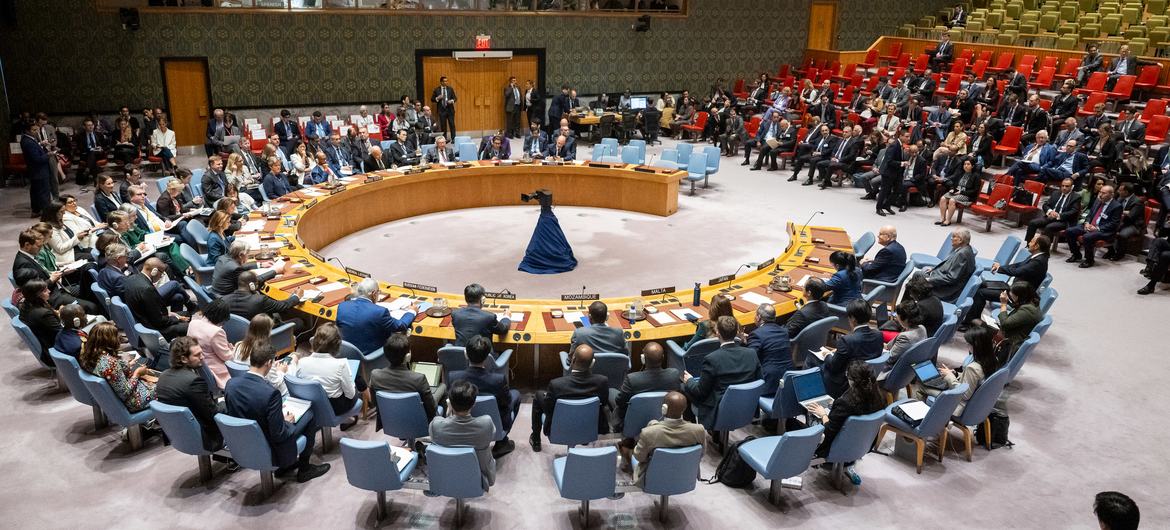
The UN Security Council meets to discuss the situation in Lebanon
UN Photo/Manuel Elías
 
The UN Security Council meets to discuss the situation in Lebanon


25 September 20

 Peace and Security

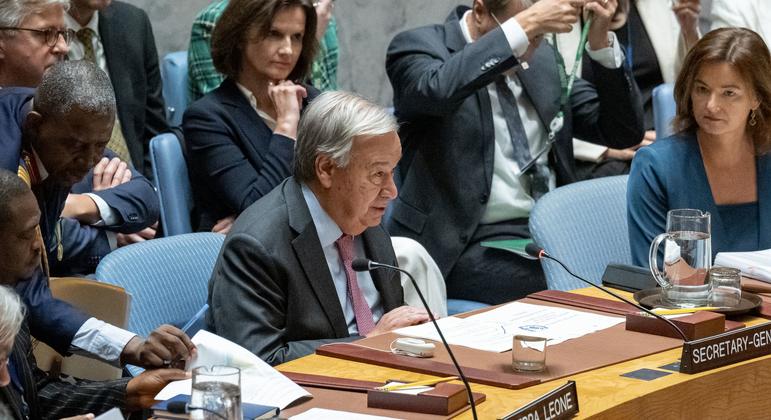
UN Secretary-General António Guterres urged the Security Council on Wednesday “to work in lock-step” to end the escalating violence between Israeli forces and Hezbollah militants across the Blue Line in southern Lebanon.

“Hell is breaking loose in Lebanon” the UN chief warned, noting that the exchanges of fire along the UN-patrolled line of separation “have expanded in scope, depth and intensity.”

Monday saw Lebanon’s bloodiest day in a generation, as Israel continues to bombard largely Hezbollah-controlled territory, doubling down on the devastating electronic device attacks which killed hundreds last week.

With an appeal for both sides to respect Lebanese sovereignty, Mr. Guterres said that the State “must have full control of its weapons” throughout the country.

“We support all efforts to strengthen the Lebanese Armed Forces”, he added.

Hebbariyeh village in southern Lebanon lies in partial ruins following hostilities across the Blue Line.
OCHA/Lebanon
 
Hebbariyeh village in southern Lebanon lies in partial ruins following hostilities across the Blue Line.

The UN chief said the daily violations across the Blue Line were in violation of key Council resolutions 1559 and 1701

Civilians must be allowed to return home

With nearly 200,000 Lebanese now internally displaced, along with more than 60,000 northern Israelis, many lives have been lost since Hezbollah first began firing rockets over the line of separation in support of Hamas in Gaza, he added.

The communities on both sides “must be able to return to their homes and live in safety and security, without fear”, the Secretary-General said.

He applauded all diplomatic efforts taken so far towards escalation and pledged the UN’s continuing support for a ceasefire and increase in humanitarian relief for stricken Lebanese civilians.

“Despite the dangerous conditions, our peacekeepers remain in position”, he said, referring to the UN Interim Force, UNIFIL, although most civilian personnel have temporarily relocated.

“I implore the Council to work in lock-step to help put out this fire”, the UN chief told ambassadors.

“Civilians must be protected. Civilian infrastructure most not be targeted…To all sides, let us say in one clear voice: stop the killing and destruction. Tone down the rhetoric and threats. Step back from the brink.”

He said an all-out war must be avoided at all costs. “It would surely be an all-out catastrophe.”

Secretary-General António Guterres briefs the UN Security Council meeting on the situation in Lebanon.
UN Photo/Manuel Elías

Israel attempting to make Lebanon ‘a new Gaza’: Algerian Foreign Minister

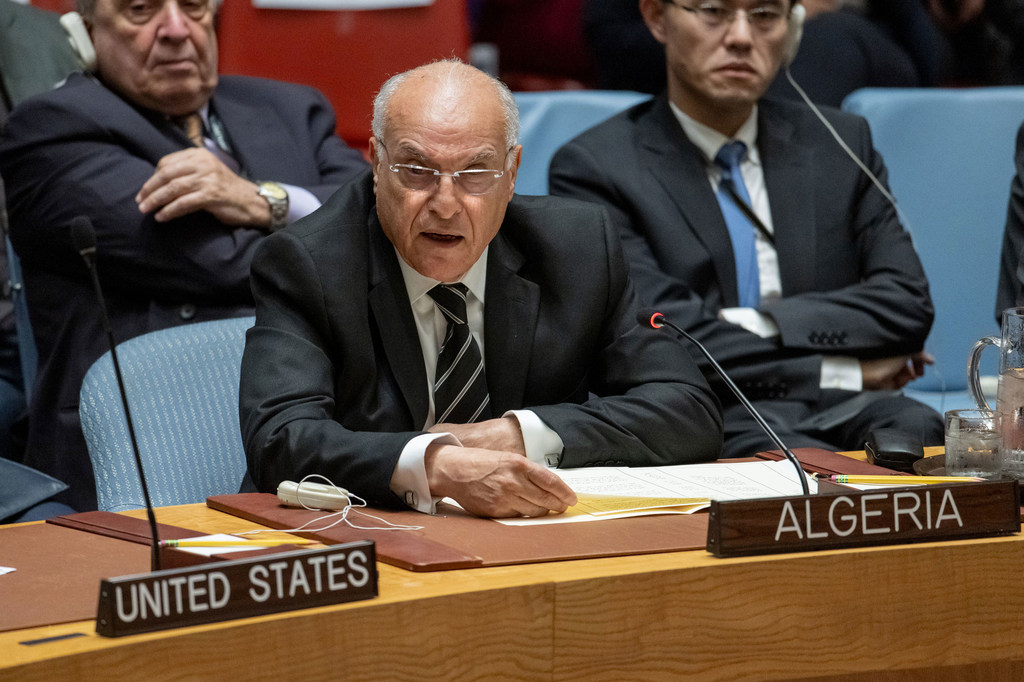
Once again, Lebanon is facing “flagrant Israeli aggression, brutal aggression and hateful aggression,” said Algerian Foreign Minister Ahmed Attaf.

Foreign Minister Ahmed Attaf of Algeria addresses the Security Council meeting on the situation in Lebanon.
UN Photo/Manuel Elías
 
Foreign Minister Ahmed Attaf of Algeria addresses the Security Council meeting on the situation in Lebanon.

He told the Council that what is happening there is “part and parcel of the policy of escalation” that Israel uses as a deliberate strategy elsewhere in the Middle East.

He said Lebanon is facing an attack on its sovereignty, and its security and stability are being undermined.

“All the elements of the crime have come together now in accordance with Israeli occupation.  As they have done in Gaza, they are doing the same in Lebanon,” he said.

“This is a crime against peace,” he continued. “It's a crime of aggression, a crime against humanity, a crime of war, a genocide. In other words, it is an attempt to change Lebanon and to make it into a new Gaza.”

Nobody wants a repeat of 2006 war: US

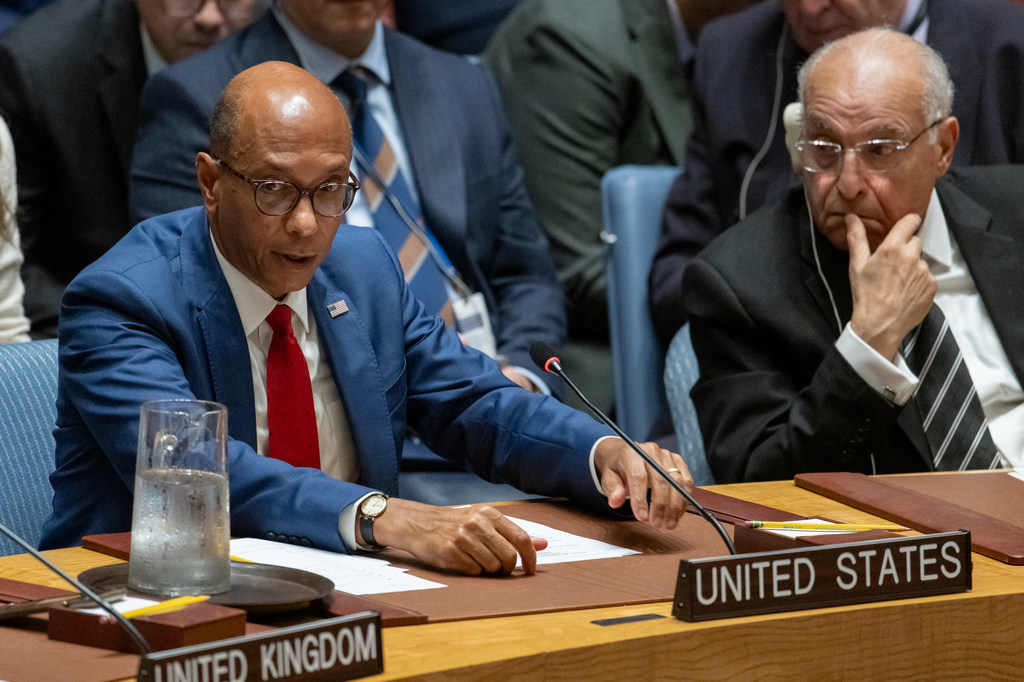
United States Ambassador Robert Wood said his country has engaged extensively with all parties in the region since the Council last met to discussion the situation along the Blue Line frontier.

US Ambassador Robert Wood  addresses the Security Council meeting on Lebanon.
UN Photo/Manuel Elías
 
US Ambassador Robert Wood addresses the Security Council meeting on Lebanon.

He recalled that President Biden emphasized to the General Assembly that a diplomatic solution consistent with resolution 1701 remains the only path to durably reverse the cycle of escalation and enable displaced people on both sides to return to their homes.

Mr. Wood said the US has “repeatedly made clear” that the Council cannot ignore the origins of this particular conflict between Israel and Hezbollah.

He noted that hundreds of thousands of Lebanese civilians, and more than 65,000 Israeli civilians, have been displaced as a result of Hezbollah's decision on 8 October to break the peace that had largely endured along the Blue Line since 2006, when the UN interim force was established.

Furthermore, Hezbollah's buildup of weapons, many of which are supplied by Iran, and its presence along the Blue Line in defiance of resolutions 1559 and 1701, have long been a source of instability, he added.

"Nobody wants to see a repeat of the full-blown war that occurred in 2006, but the path to enduring stability goes beyond ending cross-Blue Line strikes. It must end with a comprehensive understanding relating to the Blue Line that has real implementation mechanisms,” he said.

Pull back from the brink: UK

United Kingdom Foreign Secretary David Lammy told the Council this was a moment of “maximum danger. We are on the brink, the precipice.”

He said though top diplomats talk about a regional war, “the truth is we are already witnessing conflict on multiple fronts: in Gaza, in the West Bank, in Lebanon and the Red Sea.”

He said some 550 Lebanese had been killed in recent days, while Hezbollah rockets that have killed Israelis, “are just the latest in the cycle of pain, anguish and loss.”

“On both sides, now is time to pull back from the brink”, Mr. Lammy continued, adding that his Government had been working hard with the US and France to formalise a wider demand for a ceasefire and a political plan to implement resolution 1701.

Lebanon a victim of ‘electronic cyber aggression’

Mohammad Najib Azmi Mikati, President of Lebanon’s Council of Ministers, said his country is facing “a blatant violation of our sovereignty and human rights”.

Lebanon is the “victim of an electronic cyber aggression and of an air and maritime aggression that can turn into a ground aggression and can become an all-out regional war,” he warned.

“We are witnessing today an unprecedented escalation resorting to new tools, especially electronic tools, to harm my people,” he continued.

“The aggressor is claiming that they are only targeting combatants and weapons, but I assure you that the hospitals of Lebanon are full of civilian injured people, including dozens of women and children.”

Mr. Azmi Mikati said he hoped to come out of the meeting “with a serious solution based on the joint efforts of all the members of the Security Council to put pressure on Israel to achieve an immediate ceasefire on all fronts and to restore stability and security to our region.”

A family takes refuge in an emergency shelter opened by the UN following missile strikes by Israel on Lebanon.
© UNRWA
 
A family takes refuge in an emergency shelter opened by the UN following missile strikes by Israel on Lebanon.

Israel: ‘No nation would sit idly by’

Israel’s Ambassador to the UN Danny Danon said no other country would behave any differently to Israel, faced with attacks across its borders from north and south.

“No nation would sit idly by as their citizens were attacked. Over the past week Israel has been conducting precise strikes in Lebanon against Hezbollah’s command centres” and missile launch sites, he added.

Given the chance, Hezbollah would carry out another 7 October, he warned, saying that with regard to the 2006 peace settlement outlined through resolution 1701, “the time for half measures is over, it must be enforced in full, without delay” – including the provision which says the Lebanese army should be on the border, not Iran’s proxy force: Hezbollah.

“Never again will the Jewish people hide from the monsters whose purpose in life is to murder Jews”, Mr. Danon said, adding that Iran was the spider at the centre of the web of violence engulfing the Middle East. 

‘Weaponization’ of communication devices a ‘new version of terrorism’: Iran

Iran’s Foreign Minister Seyed Abbas Araghchi described the situation in the region as “extremely explosive”.  If left unchecked, an “all out unprecedented catastrophe would be inevitable.”

He said that “in continuation of its brutality in occupied Palestine”, Israel is now waging an unjust war of aggression against Lebanon.

He added that “the deliberate and indiscriminate targeting of civilians in Lebanon by detonating pagers, walkie-talkies and other electronic devices used by rank-and-file citizens across the country, must sound the alarm for the entire international community.”

Calling this “the most outrageous manifestation of the weaponization of ordinary communication devices,” he said “this new version of terrorism must be profoundly condemned by all,” otherwise it could “establish a very dangerous precedent that could be easily replicated by other terrorist groups and entities besides Israel.”


https://news.un.org/en/story/2024/09/1154896


https://creativecommons.org/licenses/by/4.0/legalcode

пятница, 21 июня 2024 г.

‘World cannot afford Lebanon to become another Gaza’: Guterres


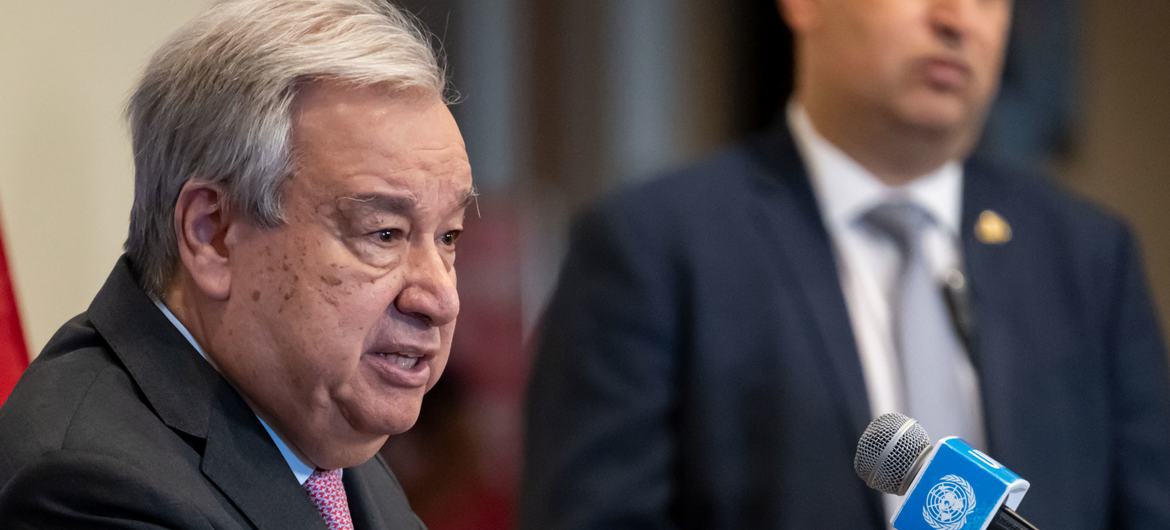
Secretary-General António Guterres speaking at the press stakeout.
UN Photo/Mark Garten
 
Secretary-General António Guterres speaking at the press stakeout.


21 June 2024
Peace and Security

The UN Secretary-General on Friday voiced profound concern over escalating violence and “bellicose rhetoric” between Israel and Hezbollah militants across the frontier with Lebanon, warning that one false move could trigger a catastrophe for the whole region and beyond.

The situation along the Blue Line, the demarcation between Israeli and Lebanese armed forces, has been deteriorating since Israel launched its offensive in the Gaza Strip following the brutal 7 October attack by Hamas and other Palestinian armed groups against communities in the country’s south.

On Thursday Hezbollah leader Hassan Nasrallah reportedly issued a stern warning to Israel amid reports that the Israeli military has approved plans for an offensive on southern Lebanon.

Prevent a catastrophe

Speaking to the press at the UN Headquarters, in New York, Secretary-General António Guterres underscored that a widening of the conflict in the Middle East must be avoided.

“Let’s be clear: The people of the region and the people of the world cannot afford Lebanon to become another Gaza,” he stressed.

“One rash move – one miscalculation – could trigger a catastrophe that goes far beyond the border, and frankly, beyond imagination,” he said.

Tweet URL
UN_News_Centre

The UN chief also highlighted that on both sides of the Blue Line, many people have already lost their lives and been driven from their homes and livelihoods.

De-escalation now

He urged both sides to “urgently recommit” to the full implementation of Security Council resolution 1701 and immediately return to a cessation of hostilities.

Adopted in 2006, the resolution set in motion a ceasefire between Israel and Hezbollah, the withdrawal of Israeli forces from southern Lebanon and the establishment of demilitarized zone.

“The world must say loudly and clearly: immediate de-escalation is not only possible – it is essential,” Mr. Guterres said, declaring that “there is no military solution.”

He also underscored the need to protect civilians, ensure that children, journalists and medical workers are not targeted, and ensure the displaced can return to their homes.

UN peacekeepers on the ground

The Secretary-General also emphasized that the UN is “actively engaging” to promote peace, security and stability, in line with resolution 1701.

“UN peacekeepers, UNIFIL, are on the ground working to de-escalate tensions and help prevent miscalculation, in an extremely challenging environment” he said, adding that the Organization fully supports diplomatic efforts to end the violence, restore stability and avoid even greater human suffering in the region.

“And we do so as we continue to press for an immediate humanitarian ceasefire in Gaza, the immediate and unconditional release of the hostages and a real pathway to a two-State solution,” Mr. Guterres concluded.

Secretary-General Guterres speaking to the press at the UN Headquarters, in New York

https://news.un.org/en/story/2024/06/1151331


https://creativecommons.org/licenses/by/4.0/legalcode

четверг, 31 августа 2023 г.

Adopting Resolution 2695 (2023), Security Council Extends Mandate of United Nations Interim Force in Lebanon for One Year

SC/15400

Adopting Resolution 2695 (2023), Security Council Extends Mandate of United Nations Interim Force in Lebanon for One Year

The Security Council today extended the mandate of the United Nations Interim Force in Lebanon (UNIFIL) until 31 August 2024, as speakers debated the matter of the Force being allowed access to some areas around the Blue Line.

Adopting resolution 2695 (2023) (to be issued as document S/RES/2695) — by a recorded vote of 13 in favour to none against, with 2 abstentions (China, Russian Federation) — the Security Council decided to extend the present mandate of UNIFIL for a period of twelve months, until 31 August 2024.

By the text, the Council reiterated its call for the Government of Lebanon to present a plan to increase its naval capabilities as soon as possible, including with appropriate support from the international community, with the goal of ultimately decreasing UNIFIL’s Maritime Taskforce and transitioning its responsibilities to the Lebanese Armed Forces. 

Further, the Council condemned all violations of the Blue Line — both by air and ground — and strongly called on all parties to respect their obligations under international law as well as the cessation of hostilities, to prevent any violation of the Blue Line and to respect it in its entirety, and to cooperate fully with the United Nations and UNIFIL.

In addition, the Council reaffirmed that UNIFIL does not require prior authorization or permission to undertake its mandated tasks and that UNIFIL is authorized to conduct its operation independently.

It also urged all parties to make tangible progress towards a permanent ceasefire and a long-term solution as envisioned in resolution 1701 (2006) and Israel to expedite the withdrawal of its army from northern Ghajar and the adjacent area north of the Blue Line without further delay in coordination with UNIFIL.

By other terms, the Council commended UNIFIL’s operational changes to address misinformation and disinformation in line with resolution 2650 (2022).

After the adoption, Council members highlighted UNIFIL’s critical role in maintaining peace and stability across the Blue Line and preventing any further escalation, with many stressing the importance of the Interim Force’s unimpeded access, freedom of movement and the security of the peacekeepers.

On that note, the representative of the United Kingdom welcomed the language clarifying UNIFIL’s long-standing mandate to exercise freedom of movement that allows it to respond quickly to Blue Line violations. However, it is unacceptable that UNIFIL is unable to access some locations along the Blue Line border, particularly given Hizbullah’s self-acknowledged stockpiling of weapons, he stressed. 

Adding to that, the United Arab Emirates’ representative warned that tensions on the Blue Line are at a level unseen since the 2006 war, with Hizbullah erecting observation towers, conducting military drills with live fire and preventing UNIFIL’s freedom of movement while brazenly attacking peacekeeping forces.  “These extremely inflammatory actions threaten a dangerous escalation in our region”, she emphasized, calling on Lebanon to meet its responsibilities regarding UNIFIL’s freedom of movement.

For his part, Ghana’s delegate urged Israel and Lebanon to work towards a permanent ceasefire and to fully respect the Blue Line.  Noting the urgency in consolidating the authority of the Lebanese armed forces and State security institutions over Lebanese territory, he underlined the need for an early, nationally oriented resolution of Lebanon’s political situation.

The representative of China, whose delegation abstained in the vote, meanwhile underscored that respect for the sovereignty and territorial integrity of the State concerned is a basic prerequisite for peacekeeping operations. Accordingly, the Council should properly address the views and appeals of Lebanon, he asserted.

Echoing his stance, the Russian Federation’s representative said that his delegation abstained due to a “series of contentious changes introduced to the text in the final stages of the negotiating process”.  His delegation nevertheless supports UNIFIL as a stabilizing factor along the Blue Line, he emphasized.

Rounding out the discussion, Lebanon’s delegate urged States to listen to her country’s concerns and cited the historic abstention of two Council members on the extension of UNIFIL’s mandate as “a very significant indicator”.  She also voiced regret that the text failed to take into consideration her country’s sovereignty.  Stressing the demand of having peacekeeping troops on the ground in Lebanon, she said that Beirut has never denounced the principle of UNIFIL’s freedom of movement. 

Opposing language that “looks like resolutions under Chapter VII [of the Charter of the United Nations]”, she said the resolution to extend UNIFIL’s mandate is under Chapter VI of the Charter of the United Nations — “a resolution that was prompted by a request from Lebanon, […] not imposed on Lebanon”.  She emphasized that UNIFIL’s presence in South Lebanon is mainly prompted by an outstanding conflict between Lebanon and Israel.....


https://press.un.org/en/2023/sc15400.doc.htm


https://creativecommons.org/licenses/by/3.0/legalcode