Показаны сообщения с ярлыком Ethiopia. Показать все сообщения

понедельник, 21 августа 2023 г.

Ethiopia: Mass killings continue, risk of further ‘large-scale’ atrocities

Ethiopia: Mass killings continue, risk of further ‘large-scale’ atrocities
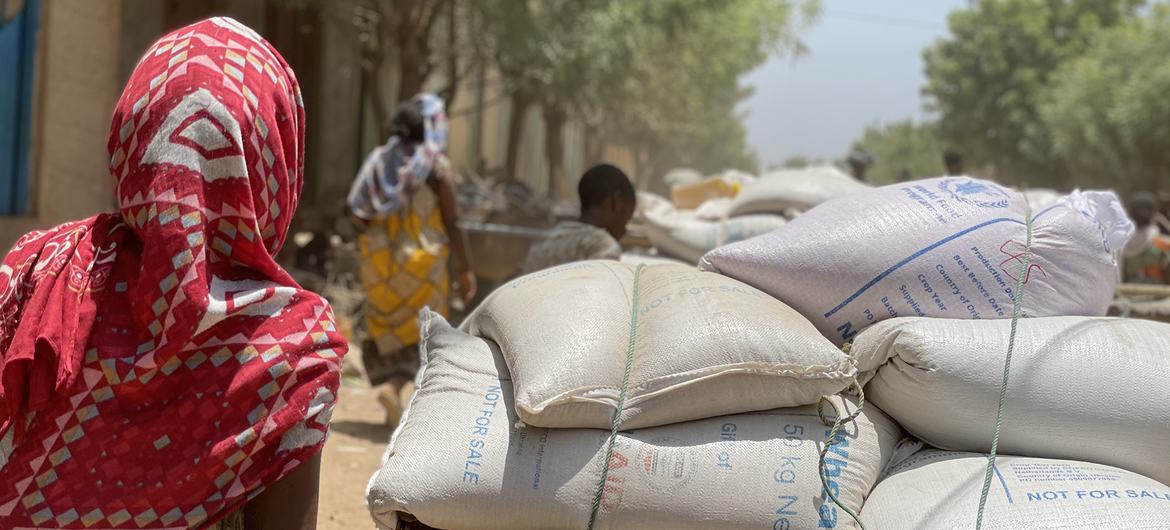
The UN continues to provide life-saving assistance in the Tigray region of Ethiopia.
© WFP/Claire Nevill
 
The UN continues to provide life-saving assistance in the Tigray region of Ethiopia.
18 September 2023
Human Rights

In Ethiopia, war crimes have continued unabated almost a year after a ceasefire was agreed between the country’s Government and forces from the northern Tigray region, UN-appointed independent rights experts said on Monday.

The latest report from the International Commission of Human Rights Experts on Ethiopia documents atrocities perpetrated “by all parties to the conflict” since 3 November 2020 – the start date of the armed conflict in Tigray -  including mass killings, rape, starvation, destruction of schools and medical facilities, forced displacement and arbitrary detention.

Commission Chair Mohamed Chande Othman said that violent confrontations were now “at a near-national scale” and highlighted “alarming” reports of violations against civilians in the Amhara region as well as on-going atrocities.

 “The situation in Oromia, Amhara and other parts of the country - including ongoing patterns of violations, entrenched impunity, and increasing securitization of the State - bear hallmarked risks of further atrocities and crimes,” he warned.

Amhara: ‘mass arbitrary detention’

In the Amhara region, where the Government announced a state of emergency last month, the Commission said that it was receiving reports of “mass arbitrary detention” of civilians and “at least one drone strike” carried out by the State.

Multiple urban centres in the region are under curfew, and a militarized “Command Post” system without civilian oversight has been deployed. The Commissioners said “such structures are often accompanied by serious violations”. 

“We are deeply alarmed by the deteriorating security situation in Amhara and the continued presence of risk factors for atrocity crimes,” they said.

Humanitarian needs in the region have surged. In early August WHO Director-General Tedros Adhanom Ghebreyesus said that the people of Amhara “could not bear another conflict”, emphasizing that almost two million required health assistance – a situation made even more complex by the influx of refugees from war-torn Sudan.

Tigray: intergenerational trauma

Turning to Tigray, Commissioner Radhika Coomaraswamy warned that rape and sexual violence against women and girls by Eritrean forces was “ongoing” in the region.

“The ongoing presence of Eritrean troops in Ethiopia is a clear sign not only of an entrenched policy of impunity, but also continued support for and tolerance of such violations by the Federal Government,” she said.

The Commissioner highlighted the trauma brought on by atrocities in Tigray, which is “likely to persist for generations”.

‘Flawed’ justice process

The Commissioners called for a “credible” process of truth, justice, reconciliation and healing, while pointing out the shortcomings of the consultation process initiated by Ethiopia’s Government.

Their report maintained that Ethiopia’s Government has “failed to effectively prevent or investigate violations” and has instead launched a “flawed” transitional justice process where victims “remain overlooked”.

The Commission

The International Commission was established by the UN Human Rights Council in December 2021 to conduct an impartial investigation into violations committed in Ethiopia since the start of the conflict in Tigray in November 2020.

It is composed of three human rights experts appointed by the President of the Council, who are not UN staff and do not receive a salary for their work. 

https://news.un.org/en/story/2023/09/1140872

https://creativecommons.org/licenses/by/3.0/legalcode

четверг, 10 августа 2023 г.

Ethiopia: De-escalate tensions in Amhara, international rights experts urge


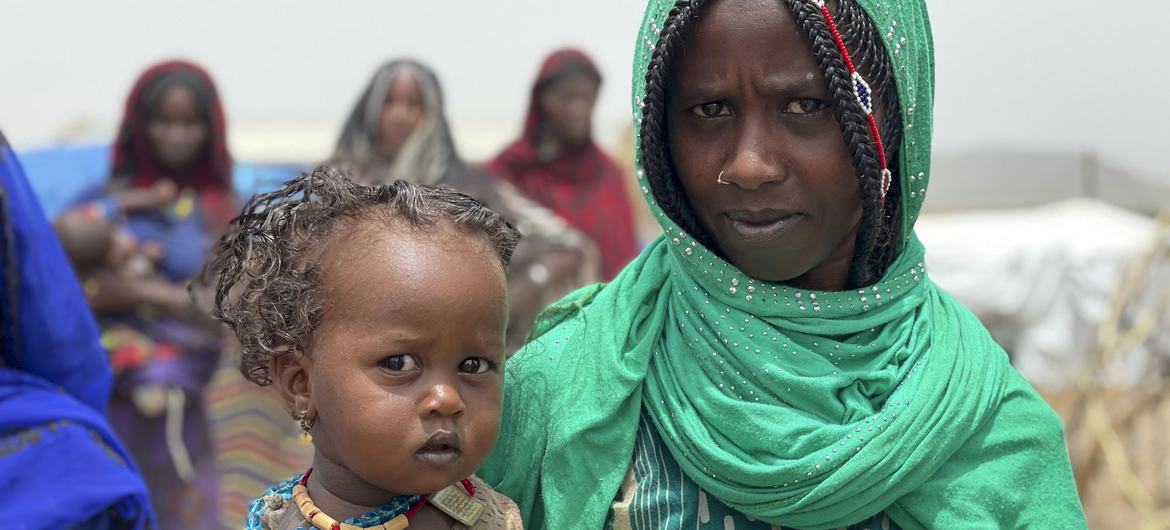
A woman and her child displaced by conflict in northern Ethiopia. (file)
© WFP/Claire Nevill
 
A woman and her child displaced by conflict in northern Ethiopia. (file)
10 August 2023
Human Rights

An international human rights body focused on Ethiopia has voiced deep concerns over the worsening security situation in the northwest of the country, particularly in the Amhara region.

On 4 August, the Ethiopian Council of Ministers declared a state of emergency in the region after, according to media reports, the regional leader said he was no longer able to contain a surge of violence between a local militia and the army over a disputed plan to absorb the regional security forces into the national army.

The International Commission of Human Rights Experts took note of the declaration of the state of emergency, adding that it required approval by the House of Peoples’ Representatives, as per the Ethiopian Constitution.

“Previous states of emergency have been accompanied by violations of human rights,” the Commission said in a statement on Thursday.

“[We] therefore urge the Government to strictly adhere to the principles of necessity, proportionality, and non-discrimination in accordance with its international legal obligations under Article 4 of the International Covenant on Civil and Political Rights.”

The Commission also called on all sides to respect human rights and take steps to deescalate the situation and prioritize efforts towards a peaceful resolution of differences.

Amhara cannot bear another conflict

Meanwhile, the Director-General of the UN World Health Organization (WHO), Tedros Adhanom Ghebreyesus, raised an alarm over the humanitarian situation in Amhara.

“The people of Amhara cannot bear another conflict. WHO calls on all parties to the conflict to cease hostilities and return to talks,” he said at a regular press briefing in Geneva on Wednesday.

According to WHO, almost two million people are in need of health assistance, and the situation is made more complex by the influx of refugees from the conflict in neighbouring Sudan.

The International Commission

The International Commission was established by the UN Human Rights Council in December 2021 to conduct an impartial investigation into allegations of violations of international human rights law, international humanitarian law and international refugee law in Ethiopia committed since 3 November 2020, which marked the start of the conflict in Tigray.  

The Commission’s mandate was most recently extended for a period of one year, until December 2023.

The body comprises three human rights experts appointed by the President of the HRC. The current members of the body are Mohamed Chande Othman (Tanzania, Chair); Steven Ratner (United States of America); and Radhika Coomaraswamy (Sri Lanka). 


https://news.un.org/en/story/2023/08/1139652


https://creativecommons.org/licenses/by/3.0/legalcode