Показаны сообщения с ярлыком Iraq. Показать все сообщения

пятница, 28 июня 2024 г.

World News in Brief: Trafficking victims need more support, deadly risks of inactivity, executions in Iraq

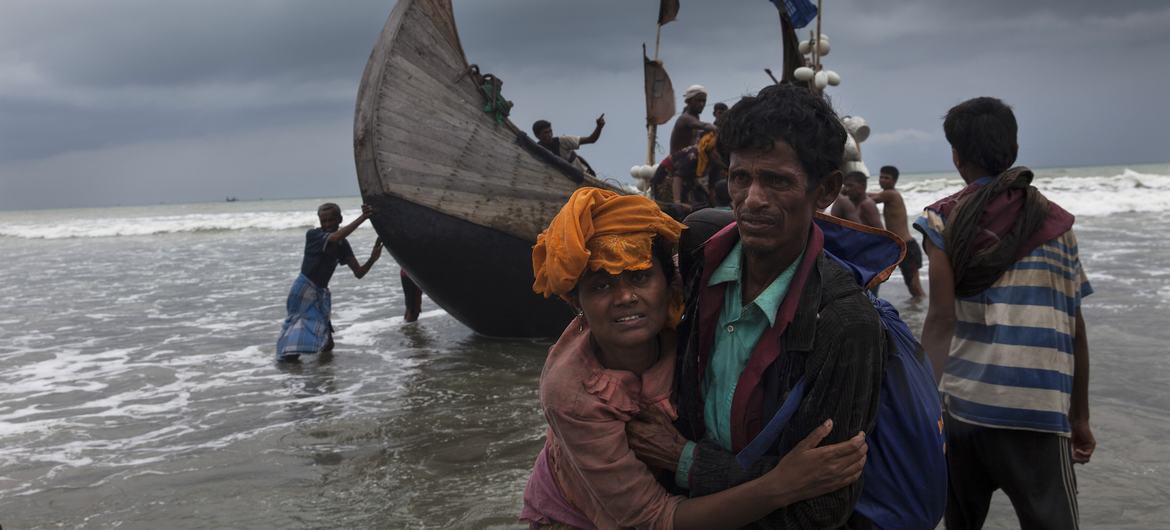
A man helps a woman to the shore as a boat arrives with Rohingya refugees in Teknaf, Cox’s Bazar, Bangladesh. (file)
UNICEF/Patrick Brown
 
A man helps a woman to the shore as a boat arrives with Rohingya refugees in Teknaf, Cox’s Bazar, Bangladesh. (file)


27 June 2024 

Human Rights

Victims of people-trafficking need more countries to respect international law and protect them, but thousands continue to die along land and sea routes every year, a top independent human rights expert said on Thursday.

Tweet URL

In her report to the Human Rights Council in Geneva, Special Rapporteur Siobhán Mullally said that the 2018 Global Compact for Safe, Orderly and Regular Migration commits countries “to save lives and prevent migrant deaths and injuries through individual or joint search and rescue operations” at sea.

But, that hasn’t stopped at least 8,565 people from dying on routes worldwide in 2023, “making it the deadliest year on record”, Ms. Mullally said. Slightly more than half the deaths were a result of drowning, she added.

“For victims of trafficking at sea, first and foremost, the right to life must be ensured as a fundamental and non-derogable human right. States have an obligation to ensure that maritime actors can fulfil their duties towards persons in distress at sea,” she said.

Search and rescue

“It is essential, therefore, that maritime actors are fully supported in meeting their search and rescue obligations under international law. Those obligations must be implemented without discrimination or regard to the status of the persons being rescued.”

Ms. Mullally highlighted the critical situation facing Rohingya refugees, many of whom are at risk from trafficking at sea, including many child refugees.

She said that nearly 4,500 Rohingya embarked on perilous sea journeys in 2023, and 569 were reported dead or missing. Compared with a year earlier, the number of people leaving the shore increased by 21 per cent, while the number of dead or missing rose by 63 per cent.

A third of adults at risk of disease due to physical inactivity

Nearly one third of adults worldwide, approximately 1.8 billion people, did not meet the recommended levels of physical activity in 2022, a new study undertaken by researchers from the World Health Organization (WHO) has revealed.

If the trend continues, levels of inactivity are projected to rise to 35 per cent by 2030.

“Physical inactivity is a silent threat to global health, contributing significantly to the burden of chronic diseases,” said Dr. Rüdiger Krech, director of health promotion at WHO.

Adults should have 150 minutes of moderate intensity exercise – or 75 minutes of vigorous intensity activity – each week, according to WHO recommendations. Physical inactivity puts adults at greater risk of cardiovascular diseases such as heart attacks and strokes, type 2 diabetes, dementia and cancers such as breast and colon.

The highest rates of physical inactivity were observed in the high-income Asia-Pacific region (48 per cent) and South Asia (45 per cent), with levels of inactivity in other regions ranging from 14 per cent in Oceania to 28 per cent in high-income Western countries.

Gender disparity

Physical inactivity is still more common among women globally compared with men, with inactivity rates of 34 per cent compared to 29 per cent. In some countries, this difference is as much as 20 percentage points.

Additionally, people over 60 are less active than other adults, highlighting the importance of promoting physical activity for that age group.

Despite the worrying results, almost half of the world’s countries have made some improvements over the past decade, and 22 countries were identified as likely to reach the global target of reducing inactivity by 15 per cent by 2030.

Scale of Iraq’s arbitrary executions may be a crime against humanity

The “systematic” execution of prisoners sentenced to death based on confessions extracted through torture under an “ambiguous” counterterrorism law, amount to arbitrary deprivation of life and may amount to a crime against humanity, a group of human rights experts said on Thursday.

Tweet URL

“We are alarmed by the high number of executions publicly reported since 2016, nearly 400 in total, including 30 this year, and the explicit political commitment to continue implementing death sentences,” the UN Human Rights Council-appointed experts said.

This carries on “in total disregard” of reported irregularities in the administration of justice, cases of enforced disappearances and torture-tainted confessions, which have fuelled the sentencing policy, the Special Rapporteurs added.

As there are some 8,000 prisoners on death row in Iraq, the experts said that when arbitrary executions are widespread and systematic, they may amount to crimes against humanity.

They said Iraq and other countries which retain the death penalty for ordinary crimes must reserve the penalty for only the “most serious crimes”, meaning intentional killing.

‘Deeply troubling’

“We insist that most of the crimes detailed in articles two and three of the counterterrorism law no.13 of 2005…fail to meet the threshold of the ‘most serious crimes’, rendering these executions arbitrary in nature,” the experts said.

“The alleged political use of death sentences, mainly against Sunni Iraqi males, is deeply troubling.”

They again urged the Iraqi Government to immediately halt all executions, ensure a fair retrial for prisoners on death row, particularly those accused of terrorism offences, and promptly initiate thorough and impartial investigations.

Special Rapporteurs and other UN Human Rights Council-appointed rights experts are independent of any government, receive no salary for their work and serve in their individual capacity.


https://news.un.org/en/story/2024/06/1151581


https://creativecommons.org/licenses/by/4.0/legalcode

четверг, 6 июня 2024 г.

UN investigative team hands over key ISIL crime data to Iraq


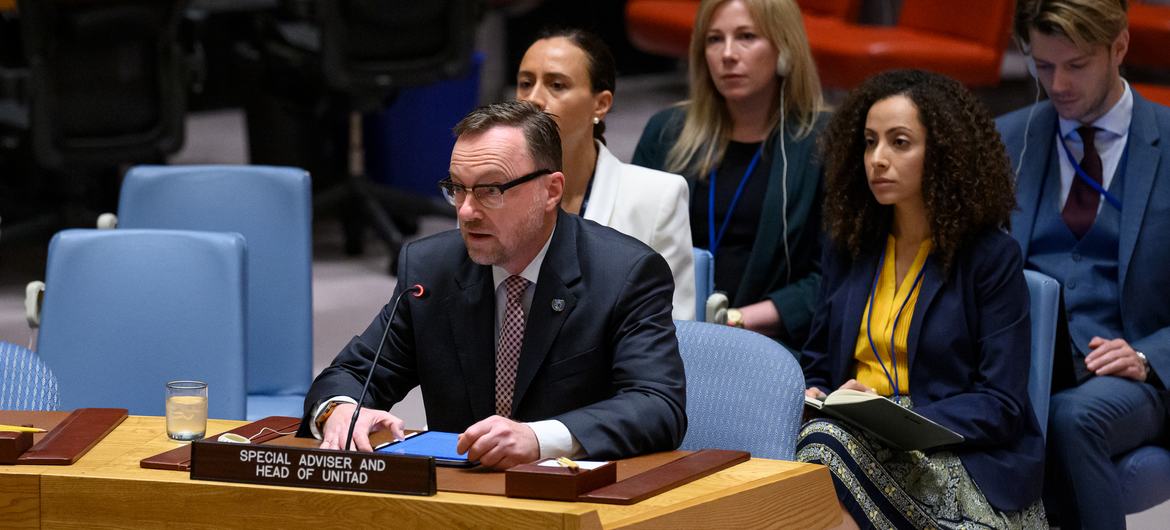
Ana Peyró Llopis, Acting Special Adviser and Head of UNITAD, briefs the Security Council.
UN Photo/Loey Felipe
 
Ana Peyró Llopis, Acting Special Adviser and Head of UNITAD, briefs the Security Council.

5 June 2024
Peace and Security

As the UN investigation team charged with investigating crimes committed by the Da’esh terrorist group in Iraq prepares to conclude its mandate in September, significant strides have been made in transferring crucial evidence to the authorities, its acting head said on Wednesday.

Thus far, some 28 terabytes (TB) of data have been transferred, representing a majority of the 40TB held by UN Investigative Team to Promote Accountability for Crimes Committed by Da'esh/ISIL (UNITAD).

Briefing ambassadors at the Security Council, UNITAD acting head Ana Peyró Llopis said she has regularly engaged with Iraqi officials, notably the judiciary, survivors of terrorist violence and civil society organizations.

“All stakeholders were eager to intensify cooperation prior to the conclusion of the mandate, particularly on the delivery of evidence, other materials and analyses as well as on capacity-building.”

Ana Peyró Llopis, acting head of UNITAD, briefing the Security Council.

The legacy

Since its inception, the UNITAD has been pivotal towards ensuring accountability for the atrocities committed by the Islamic State of Iraq and the Levant (ISIL/ Da’esh) between 2014 and 2017, which may constitute war crimes, crimes against humanity, and genocide, Ms. Peyró Llopis said.

The evidence, meticulously collected and preserved by the Team, includes testimonials from witnesses, data from ISIL’s digital devices, on the ground investigations and content extracted using advanced forensic methods.

This vast repository of information has been compiled into a digital archive adhering to rigorous international standards for evidence, ensuring that it can be used in ongoing and future judicial proceedings, Ms. Peyró Llopis said.

“These products will remain, beyond the closure of the Team, and Member States, including Iraq, could consider them in the future to hold ISIL perpetrators accountable for the international crimes they committed in Iraq,” she added.

Handing over evidence

Ms. Peyró Llopis further informed Council members that UNITAD had transferred its 28TB of evidence in March

On Monday, another tranche of evidence, including online and open-source information, was transferred, while evidence collected from the Kurdistan Regional authorities is ready for delivery.

“Some of this returned evidence was generated because of the close collaboration between the Team and the Iraqi authorities,” she added, through activities such as excavating a mass grave or data from seized ISIL held devices.

Drawdown and liquidation

Ms. Peyró Llopis further briefed the ambassadors of the progress towards the drawdown and liquidation of the Team by 17 September.

This includes the closure of its offices, proper management of its human resources and assets, and archiving of both evidentiary and non-evidentiary records.

“The importance of maintaining, preserving, and managing these archives has been at the center of my discussions,” she said, noting that Iraqi authorities would retain custody and preserve, store, and manage the original evidence in Iraq.

“This will be for use in domestic criminal proceedings and achieving accountability at the national level,” she added.

A copy of the original evidence will be kept by the UN Secretariat as part of its archives.


https://news.un.org/en/story/2024/06/1150701

https://creativecommons.org/licenses/by/3.0/legalcode

четверг, 16 мая 2024 г.

Security Council Hears Briefing on Situation in Iraq

9628TH MEETING (AM)
SC/15698

Security Council Hears Briefing on Situation in Iraq

(Note: The final summary of this meeting will be available at a later time.)

The Security Council met this morning to discuss the situation in Iraq.  Briefing the Council was Jeanine Hennis-Plasschaert, Special Representative of the Secretary-General and Head of the United Nations Assistance Mission for Iraq.

Briefing

JEANINE HENNIS-PLASSCHAERT, Special Representative of the Secretary-General for Iraq, noted that several important steps and promising initiatives have emerged in Iraq, especially in the past 18 months in the areas of service provision and construction.  The country is also grasping opportunities through its pivotal position in the region and beyond; the enhancement of its investment climate; the rollout of financial and economic reforms; plans for water management and environmental mitigation and adaptation; and reduced dependence on imported fuels.  Affirming that Iraq looks different to the country to which the United Nations Assistance Mission for Iraq (UNAMI) was first deployed some 20 years ago, she stated: “We are, so to speak, witnessing an Iraq on the rise.”  While past decades of turmoil still impact the present, she called for turning the page “on the darker images of Iraq’s past”. However, corruption, factionalism, impunity, undue interference in State functions and armed actors operating outside State control remain — and while the Government is tackling these scourges, they still represent major hurdles to be overcome.

She warned that feelings of marginalization and exclusion are spreading in and among certain components, which risk fanning the flames of intra- and inter-community tension.  Power grabs or punitive policies may benefit one segment of society or community in the short-term, “but, in the end, everyone loses”, she stressed.  Within this context, the recent increase in mass unannounced executions of individuals convicted under anti-terrorism laws is a cause for great concern.  She further stated that “women’s empowerment must move beyond symbolism.  But again, the Iraq of 2024 is evolving — and fast.”  Recalling her previous briefing on the successful holding of Iraq’s local elections in December 2023, she noted that almost all governorate councils are now up and running.  However, two provinces — Diyala and Kirkuk — remain at an impasse, as five months have passed with no immediate resolution in sight.  Further, six months of negotiations on the replacement of Iraq’s parliamentary speaker have failed to produce results. 

In a related issue, Iraq’s Federal Supreme Court appears to be increasingly filling the void created by divisive politics.  Turning to the Kurdistan region, she warned that the political landscape has become even more polarized.  Inclusive regional elections, capable of producing political finality and certainty, are desperately needed.  On Sinjar, despite 9 years since the area was liberated from Da’esh, “anyone traveling to Sinjar today would be forgiven for thinking that time has stood still”.  The city continues to lie in ruins.  This summer will mark a sombre anniversary:  10 years since Da’esh committed a genocide against the Yazidi people.  She expressed hope that the upcoming tenth anniversary will not be wasted but rather used — by all authorities, actors and stakeholders — “to unite and step up to the plate with the sole aim of serving the people of Sinjar”.  

She emphasized that “yesterday’s fight against Da’esh may still compound the problems of tomorrow — problems which will not stop at Iraq’s doorstep.  Hence, any other Government with nationals in Al-Hol and/or other facilities in north-eastern Syria carries a duty to act urgently.  On the issue of missing Kuwaiti and third-country nationals, and missing Kuwaiti property, including the national archives, she called for swifter progress.  “And this must involve the overcoming of bureaucratic hurdles and immediate follow-up on outstanding issues,” she added.  Yet, while Iraq has teetered on the edge, several times, it has found a way to step back from the brink, to continue its journey forward.  “As I made clear earlier on, there are persistent and serious challenges, but Iraq’s horizon is replete with opportunities.  And yes, the country is also teeming with people who are ready and willing to seize them,” she affirmed.

Statements

The representative of the United States underlined the importance of UNAMI’s work in resolving outstanding issues between Iraq and Kuwait, pursuant to resolution 2107 (2013).  Recalling that the Mission attended, in its observer capacity, technical meetings of the Tripartite Commission held in Baghdad in early March, she commended Iraq’s commitment to determining the fate and whereabouts of missing Kuwaiti and third-country nationals.  “It is clear that the UN should continue to be involved in efforts to resolve these outstanding issues,” she said, also welcoming UNAMI’s efforts to support Iraqi elections.  Ahead of upcoming parliamentary elections in the Iraqi Kurdistan region, she urged the Mission to continue such support and noted that the Mission’s independent strategic review recommended that the formation of a Government after parliamentary elections “be regarded as a milestone for the orderly and responsible completion of UNAMI’s mandate”.  She added that UNAMI provides “invaluable” assistance in promoting human rights and economic development in Iraq.

The representative of the Russian Federation said that despite certain socioeconomic and political challenges and heightened regional tensions in the wake of a military escalation in the Palestine-Israel conflict, Iraq is addressing emerging challenges.  The effective measures taken by the authorities have contained terrorist activities.  Any further presence of United States troops on Iraq’s territory under the umbrella of the international coalition against Islamic State in Iraq and the Levant (ISIL/Da’esh) only exacerbates the internal situation and negatively impacts the regional environment.  UNAMI — after more than 20 years since its establishment — has fully fulfilled its potential to support the rebuilding of Iraqi Statehood, including by normalizing political life and organizing the electoral process.  Drawing out an international presence in the country any further would only hinder the development of national decisions.  “The remaining problems should not be used as an excuse for the Mission’s endless presence there,” he said.

The representative of China noted that Iraq finds itself at the forefront of the global fight against terrorism and still faces security threats, calling for the international community to support the build-up of its counter-terrorism capacity and eliminate the remnants of terrorist forces.  He welcomed Iraq’s continued efforts for the repatriation and resettlement of Iraqi citizens from the Al-Hol camp in Syria and efforts in developing good neighbourly relations.  While UNAMI has made important contributions since its inception in 2003, in light of the steadily improving situation in the country and the continuous progress in institution-building and governance, “it is high time to streamline the Mission’s mandate and implement a gradual drawdown”, he stated.  He recalled the 8 May letter from Iraq’s Prime Minister to UN Secretary-General António Guterres requesting that the mandate of UNAMI be closed in December 2025, calling for ensuring a gradual drawdown towards an eventual withdrawal.

The representative of the Republic of Korea noted that 13 of 15 local administrations were formed following successful elections in December 2023.  He also welcomed Iraq’s adoption of a national strategy to combat violence against women and girls, as well as UNAMI’s assistance in this process.  Acknowledging, however, that there is “a ways to go to realize a better, more stable future for Iraq and its people”, he underlined the need to avoid vacuums in legislative leadership.  Therefore, the seat of speaker for the Council of Representatives of Iraq — vacant for nearly six months — should be filled.  He also welcomed UNAMI’s assistance in identifying missing Kuwaiti and third-country nationals, calling for further aerial analysis in the search for potential burial sites.  Recalling that his country dispatched more than 3,000 troops to Iraq for peacekeeping and reconstruction efforts between 2004 and 2008, he said Seoul will support Iraqi-led efforts to achieve greater stability, prosperity and security alongside UNAMI.

The representative of Slovenia noted the recommendation in the independent strategic review of UNAMI that it begin transitioning its tasks to national institutions and the UN country team as well as the letter of Iraq’s Prime Minister addressed to the Secretary-General regarding the Mission’s future.  Slovenia believes it is important to allow enough time for the transition to happen “in a responsible, orderly and gradual manner, and to the best benefit for Iraq and its people”, he said.  To that end, he encouraged the Government of Iraq to maintain its commitment to reforms regarding human rights, institution-building, economy and anti-corruption measures.

The representative of Guyana, also speaking for Algeria, Mozambique and Sierra Leone, recognized the strides made by Iraqi authorities in effectively managing crises and overcoming challenges that the country has faced — while remaining cognizant of the persisting challenges, particularly the fragility of key institutions governing the nation’s political and socioeconomic processes.  Furthermore, the proliferation of armed factions and the potential resurgence of entities akin to Da’esh present formidable threats to Iraq’s stability.  While commending the progress made in the formation of local governments in 13 of 15 federal governorates following the certification of the results of the December 2023 Governorate Council elections, she stressed that scattered Da’esh attacks underscore the need for continued international support and collaboration for Iraq’s counter-terrorism efforts.

As the Iraqi people emerge from years of war, she stated, they cannot afford to become entangled again in an international conflict.  She called on all parties to exercise maximum restraint and to recommit to preventing further escalation of violence in the region.  Underscoring the imperative of addressing underlying socioeconomic disparities and grievances that fuel instability and conflict, she affirmed that efforts to promote inclusive economic growth, job creation, and equitable distribution of resources are essential in fostering social cohesion and resilience against extremist ideologies.  Taking note of the Iraqi Government’ wish for UNAMI’s mandate to be terminated by 31 December 2025, she recalled that no UN political mission is meant to have a permanent presence in any country.  It is therefore important to respect Iraq’s position regarding the future of the Mission and for national institutions to fully assume responsibilities for all aspects of State governance.

The representative of France encouraged the Iraqi Government to continue reforms aimed at diversifying the economy, combating corruption and impunity, and protecting human rights.  Welcoming the work done by the United Nations Investigative Team to Promote Accountability for Crimes Committed by Da‘esh/Islamic State in Iraq and the Levant (UNITAD), she underlined the need for such work to continue — including the management and use of databases to combat impunity.  She also welcomed UNAMI’s efforts to support Iraq, while noting the letter sent by that country’s Government to the Council on 8 May requesting the closure of the Mission by 31 December 2025.  On that, she said:  “France will continue to listen to Iraqi authorities with regard to UNAMI’s future and think about the most useful and effective contours and modalities for the United Nations in Iraq.”  Further, she expressed support for a gradual, ordered and responsible transition leading to UNAMI’s definitive closure.

The representative of Japan acknowledged that UNAMI has contributed significantly to the stability of Iraq and the region.  In examining the possibilities and modalities of the Mission’s transition, priority must be given to preserving the progress and ensuring future stability.  Strengthening relations between Baghdad and Erbil remains critical to realizing more resilient State institutions, she said, echoing the Secretary-General’s call on both Federal and Kurdistan Regional political leaders to redouble their efforts in this regard.  Iraq continues its active engagement in building confidence among neighbouring countries, enhancing its regional economic relationships, she observed, encouraging further engagement to explore solutions to emerging challenges, such as climate-related water scarcity.

The representative of Switzerland welcomed the formation of 13 of the 15 local governments following the local elections; however, the further postponement of parliamentary elections in the Kurdistan region remains a cause for concern.  On the security and regional fronts, he noted it is essential that the Iraqi State controls the use of force throughout its territory.  He expressed support for UNAMI in continuing its work in support of the Government regarding climate change, as the latter wishes.  He welcomed Government efforts in finding lasting solutions for internally displaced people, while calling for particular attention to be paid to the needs and rights of vulnerable groups.  Noting that negotiations on UNAMI’s mandate will be decisive in setting the course for the future of the UN presence in Iraq, he emphasized that Iraq and its people must continue to consolidate peace in the country — both during and after this reconfiguration of relations between Iraq and the UN. 

The representative of Ecuador said that the political will of the Iraqi Government “proved fundamental” in fostering national reconciliation, security-sector reform and strategies to tackle the effects of climate change.  He stressed, however, that this political will must be accompanied by access to climate and development financing through effective bilateral and multilateral cooperation.  Expressing concern over persistent attacks by terrorist groups, he observed that this coincides with the findings of the independent strategic review team, which warn that “one of the looming threats in the country is that of the proliferation and reconfiguration of armed non-State actors”.  It is important, therefore, to strengthen bilateral security cooperation and consolidate regional partnerships to combat terrorism and violent extremism.  This, he said, will facilitate addressing the root causes of violence, such as religious intolerance, poverty and inequality.

The representative of Malta said that “a successful and responsible completion of UNAMI’s task should include leaving behind effective UN capacities to support the Government’s progress in areas including human rights, women empowerment, and electoral assistance”.  On the political front, she called for constructive steps from the federal and Kurdistan regional governments to address several outstanding issues.  She also underscored the importance of promoting justice, equality and human rights, encouraging the Iraqi legislature to enact the domestic violence law.  She highlighted the need to ensure women’s full, equal, and meaningful participation in all political, electoral, and peace and security processes, and address the climate-security nexus in Iraq.

The representative of the United Kingdom, noting the important contribution of UNAMI to Iraq over the last 20 years, affirmed that “now is the time to transition to a new partnership between Iraq and the United Nations”. She welcomed the findings of the Independent Strategic Review, noting that her delegation will work closely with all parties to consider the future of the mission in line with its recommendations and the will of the Government of Iraq.  Citing the timely formation of 13 out of 15 local government administrations following successful elections, she urged all parties to commit to agree a date for free, fair and inclusive elections in the Kurdistan Region of Iraq as soon as possible.  She further welcomed the update on missing Kuwaiti and third-country nationals and missing Kuwaiti property.  While the transition period of UNAMI provides the parties with an opportunity to fully resolve these outstanding issues, should this not happen, the Council will need to consider further options for this file.

The representative of Iraq reported that the Government has adopted a “balanced policy” in its foreign relations, focusing on building partnerships through official visits around the world and participating in the “most important international meetings, forums and venues”.  Domestically, it works to improve economic prospects, security and living standards for its citizens.  Detailing efforts to maintain stable relations between Baghdad and Erbil — especially on budgetary matters — he underlined efforts that focus on the principles of partnership, complementarity and balance stipulated in the Constitution.  On security, he stressed that “Iraq is witnessing a true security convalescence” and added that “Da’esh is no longer a danger to Iraq” due to the “high readiness of Iraqi security forces”.  He therefore expressed the Government’s desire to move towards bilateral security relations with the members of the international counter-Da’esh coalition. He also stated that all attacks targeting Iraqi territory “under flimsy excuses” are “no different from the terrorist actions that the international community is seeking to combat collectively”. 

Stressing that “Iran is a neighbour” and “the United States is a strategic ally”, he urged relations that focus on joint interests and mutual respect.  He also called on all domestic political parties to cooperate “so we can navigate our way to the shores of security and development”, detailing national efforts towards this end such as promoting energy self-sufficiency, attracting investment, combating desertification and cooperating with Kuwait. On UNAMI’s future, he recalled that resolution 2682 (2023) formed an independent strategic review team and noted the resultant conclusion that UNAMI is no longer needed “due to the positive developments and important accomplishments Iraq has witnessed in all fields”.  He therefore requested that UNAMI’s work be concluded by 31 December 2025 and that its efforts, until that time, focus on economic reform, service delivery, sustainable development, climate change and other developmental matters.

The representative of Kuwait lauded efforts by all parties to collect information and evidence in preparing the fourteenth report of the Secretary-General on the fate of missing Kuwaiti nationals, third-country nationals and Kuwaiti property, including the Kuwaiti National Archives, pursuant to operative paragraph 4 of resolution 2107 (2013).  With 308 still missing, he stressed the importance of continuing the search beyond UNAMI’s termination, calling for greater efforts to resolve outstanding issues to “close this painful chapter once and for all”.  If the remaining files are not definitively closed, “we need to collectively find other alternatives”, such as a UN mechanism with a high-level coordinator tasked with following up on this issue who would report periodically to the Council.


https://press.un.org/en/2024/sc15698.doc.htm


https://creativecommons.org/licenses/by/3.0/legalcode

среда, 7 февраля 2024 г.

Restraint Crucial to Preserve Hard-Won Stability, Achieve Durable Progress in Iraq, Top UN Official Tells Security Council, Amid US Air Strikes, Ongoing Gaza Conflict


9543RD MEETING (AM)
SC/15578

Restraint Crucial to Preserve Hard-Won Stability, Achieve Durable Progress in Iraq, Top UN Official Tells Security Council, Amid US Air Strikes, Ongoing Gaza Conflict

Restraint is required to create the environment Iraq needs to consolidate hard-won stability and realize sustainable progress, the senior United Nations official in the country told the Security Council today, amidst United States air strikes in Iraqi territory on 2 February and the ongoing conflict in nearby Gaza.

“Messaging by strikes only serves to heighten tensions, to kill or injure people and to destroy property,” stressed Jeanine Hennis-Plasschaert, Special Representative of the Secretary-General and Head of the United Nations Assistance Mission for Iraq (UNAMI), as she briefed the Council on the Secretary-General’s reports concerning missing Kuwaiti and third-country nationals and missing Kuwaiti property (document S/2024/95) and concerning UNAMI (document S/2024/96).

If attacks originating from within and outside of Iraq’s borders continue, this will undo the country’s hard-won stability and other achievements made over the past 18 months, she said.  An enabling environment is essential for Iraq to continue on its path of stability and progress, but such an environment requires restraint from all sides.  While spotlighting certain progress — including the holding of local elections for the first time in 10 years on 18 December 2023 — she emphasized that climate-change-related events “combine to paint a rather bleak picture, in which existing fault lines come under increasing pressure”.

Also updating on events in the Kurdistan region and the Iraqi Government’s commitment to the issue of missing Kuwaiti and third-country nationals and missing Kuwaiti property, she nevertheless emphasized that swifter progress is needed.  Further, the Government’s plans for sustainable progress, real reform and better living standards will become more difficult to realize with each passing year.  Therefore reiterating the importance of ceasing attacks and creating an enabling environment, she stated:  “It is quite simple:  the enormous risks and potential devastating consequences of continued escalation cannot be overstated.”

In the discussion that followed, many Council members welcomed the holding of elections on 18 December 2023, as well as the Government’s efforts towards economic reform, improved access to public services and human rights.  Many also urged support for Iraq and its people, with some emphasizing the stabilizing role that Iraq can play in the Middle East.  However, members expressed concern that the ongoing situation in Gaza is spilling over into the wider region, urging all parties to de-escalate tensions.

Among them was Algeria’s representative — also speaking for Guyana, Mozambique and Sierra Leone — who said that such spillover risks undermining Iraq’s progress.  Underscoring that Iraq is an important partner in the fight for regional development and stability in the Middle East, he expressed support for actions that advance progress and sustainable development in Iraq — provided they align with the priorities of that country’s Government and people.

External attempts to benefit from internecine fighting are “unacceptable”, said the representative of the Russian Federation, stating that — despite the Iraqi Government’s security successes — the situation on the ground remains tenuous.  This is a result of attempts by Washington, D.C., to transform Iraq into a stage for geopolitical score-settling.  “For Washington, international law simply does not exist,” he said, condemning the United States’ aggression that continues to “fan the flames of instability in an already volatile region”.

The representative of the United States, meanwhile, recalled that three of his country’s soldiers were killed, and dozens injured, by Iran-aligned militia groups on 28 January.  “This is unacceptable, and attacks like it cannot continue,” he stressed.  Armed groups operating outside State control challenge the Government’s authority and threaten to upend the stability that Iraqis have fought hard to achieve.  Also noting that his country is the penholder for the upcoming renewal of UNAMI’s mandate, he looked forward to inclusive discussions on what such mandate might look like after the upcoming independent strategic review of the Mission.

On that, China’s representative urged that UNAMI’s mandate be streamlined.  Further, noting that UNAMI has aided Iraq’s reconstruction and development since the Mission’s inception in 2003, he urged that UNAMI make timely adjustments given the evolving situation.  Voicing concern over the escalating Palestinian-Israeli conflict — and the worrying risk of regional spillover — he called on major countries with influence to respect Iraq’s sovereignty and play a constructive, de-escalating role.

For his part, the representative of Iraq condemned violations of his country’s sovereignty by the United States, Türkiye and Iran under the pretext of “weak excuses”, which led to civilian casualties and property damage.  Urging countries not to export their internal problems abroad, he stated that Baghdad called for an end to the war on Gaza, for humanitarian aid to enter and for a halt to the expanding radius of that conflict.  He also detailed Government efforts in various spheres, including its cooperation with Kuwait on outstanding issues pertaining to missing persons.

“As long as this file remains outstanding, the wounds of the Kuwaiti people — the wounds of us all — will not be healed,” underscored Kuwait’s representative, urging Iraq to continue and accelerate cooperation in this context.  Stressing the importance of the file — as well as the need to continue submitting periodic reports to the Council thereon — he added:  “Halting any of these mechanisms that have proven to be successful and effective could undermine the extensive efforts that have been made since 1991.”
We'd like your feedback. Would you take part in a short survey about our products to help us serve you better?
Link: Meetings Coverage Section Survey 2023

THE SITUATION CONCERNING IRAQ

Briefing

JEANINE HENNIS-PLASSCHAERT, Special Representative of the Secretary-General and Head of the United Nations Assistance Mission for Iraq (UNAMI), told the Council that, if attacks originating from within and outside of Iraq’s borders continue, this will undo the country’s hard-won stability and other achievements made over the past 18 months. Pointing out that history’s ability to impact the present is “searingly true for the Middle East”, she said that various Iraqi armed groups acting outside of State control “reference, as a justification for their operations, a doctrine which transcends politics and State borders”.  Other expressed motivations pertain specifically to Iraq; however, she underscored that an enabling environment is essential for Iraq to continue on its path of stability and progress.  Further, such an environment requires restraint from all sides, and she stressed: “Messaging by strikes only serves to heighten tensions, to kill or injure people and to destroy property.”

While stating that Iraq and the wider region “remain on a knife-edge, with the tiniest miscalculation threatening a major conflagration”, she reported — on a more optimistic note — that Iraq held local elections for the first time in 10 years on 18 December 2023.  This electoral process took place in a broadly peaceful and technically sound manner and marked another milestone in the Government’s efforts to break from past cycles of dysfunction.  A challenge for future elections, however, will be to rally higher voter turnout and encourage eligible voters to register.  Noting that around 60 per cent of registered voters did not cast ballots, and that millions of Iraqis did not even register to begin with, she stressed that building public trust — and, thus, encouraging participation in the democratic process — will entail continuous, hard work.  Aside from that, she spotlighted another positive development — the Government’s continued strengthening of the national finance and banking sectors.

Detailing additional progress, she noted that “ambitious construction projects continue apace”, and that national incentives for development projects indicate the Government’s determination to see these visions “take concrete shape”.  However, she said that water scarcity, desertification, forced migration, conflict over natural resources and extreme weather events in Iraq “combine to paint a rather bleak picture, in which existing fault lines come under increasing pressure”.  Focus must now shift to mitigation and adaptation, including through the implementation of inclusive, peace-positive environmental management programmes; the modernization of irrigation infrastructure; and immediate steps to reduce oil reliance.  She stressed: “Without moving from promises to action, opportunities may slip away – and fast.”  Also highlighting existing feelings of exclusion and marginalization — which often lead to recurring cycles of conflict — she underlined the importance of the rule of law.

Turning to the Kurdistan region, she reported that parliamentary elections there have been held up and emphasized that continued postponements neither help already-low trust levels nor contribute to Iraq’s stability.  She also underscored that, if stability is to be preserved, the Kurdistan region must receive funding to pay its civil servants their monthly salaries.  On the issue of missing Kuwaiti and third-country nationals — and missing Kuwaiti property, including the national archives — she said:  “The Government of Iraq remains undoubtedly committed to this file.” However, swifter progress is needed. She also said that the need for sustainable progress, for real reform and for better living standards will not decline.  While many of the Government’s plans hold the key to meeting these needs, they will become more difficult to realize with each passing year and, thus, the time to act is now.  Reiterating the importance of the need to cease attacks to create an enabling environment, she stated:  “It is quite simple:  the enormous risks and potential devastating consequences of continued escalation cannot be overstated.”

Statements

The representative of Malta stated that respect for Iraq’s sovereignty, territorial integrity and democratic process is essential for enhancing domestic and regional stability.  All parties must act with restraint to avoid escalation.  He also highlighted the risk of the situation in Gaza leading to regional spillover.  On the domestic front, he hailed the governate council elections of 18 December as an important step for the democratic process, voicing hope that they will lead to new local governments able to deliver socioeconomic progress. Further welcoming preparations for elections in the Kurdistan region, he called for enhanced dialogue between Baghdad and Erbil.  Stressing the need to promote social justice and equality and strengthening human rights, he expressed concern over grave violations against children and casualties caused by explosive remnants of war.  He further reaffirmed support for the work of the Investigative Team to Promote Accountability for Crimes Committed by Da’esh/ISIL (UNITAD).

The representative of China welcomed the smooth completion of provincial council elections, as well as steps taken by the Iraqi Government towards economic reform, fighting against corruption and improving access to public services.  He voiced hope that dialogue will continue between the Central Government and the Kurdistan regional government on outstanding issues to reach sustainable solutions.  As well, he hoped Iraq and Kuwait would make headway on the issue of missing Kuwaiti and third-country nationals and missing Kuwaiti property.  Since UNAMI’s inception in 2003, it has aided Iraq’s reconstruction and development, he said, calling for the Mission to make timely adjustments, given the evolving situation.  Turning to UNAMI’s forthcoming independent strategic review, he called for its mandate to be streamlined.  Finally, he voiced concern over the escalating Palestinian-Israeli conflict, and the worrying risk of regional spillover, calling on major countries with influence to respect Iraq’s sovereignty and play a constructive role in de-escalating the situation.

The representative of Japan, voicing concern over the steep uptick in attacks by non-State armed groups since October, echoed the Secretary-General’s call on all concerned parties to urgently act to de-escalate tensions.  Japan welcomes the cooperation between Iraq and Kuwait on missing Kuwaiti and third-country nationals and missing Kuwaiti property.  As well, she welcomed that the provincial council elections were held in an orderly manner last December as scheduled, and voiced hope that the Kurdistan Region’s parliamentary elections will occur according to the specified timeline.  Underscoring the need to address humanitarian issues, she called for durable solutions to be found for internally displaced persons and returnees, as well as repatriating people from Al-Hol Camp.  Turning to UNAMI’s forthcoming independent strategic review, she said that, given political and security developments in the country, it should provide a foundation on which the Council can deepen its discussion under this agenda item from a long-term perspective.

The representative of Algeria, also speaking for Guyana, Mozambique, and Sierra Leone, welcomed the 18 December 2023 elections, as well as the Government’s commitment to improving public services and carrying out important economic reforms.  Further, Baghdad’s efforts to pursue economic diversification and social protection are encouraging.  He also welcomed UNAMI’s support for Iraq’s constitutional and legislative processes; for strengthening governance and accountability; for internally displaced persons; and for enhancing the role of women and youth in peace- and nation-building initiatives.  However, while commending the Iraqi security forces’ continued commitment to respond to threats posed by Da’esh, he expressed concern over both the group’s continued attacks and the increasing strikes against Iraq’s sovereign territory.  The regional spillover of the ongoing situation in Gaza risks undermining Iraq’s progress, and he therefore called on all parties to exercise maximum restraint and take urgent steps to de-escalate tensions in the Middle East.

He went on to commend UNAMI’s efforts to promote human rights in Iraq, noting progress made by that country to uphold children’s rights. He expressed concern, however, over instances of child casualties due to explosive remnants of war, urging continued technical support to Iraq in this context.  Further, addressing ongoing humanitarian needs and achieving durable solutions for internally displaced persons are critical for Iraq’s long-term stability and prosperity.  Calling on the international community to continue supporting the people of Iraq, he underscored that Iraq is an important partner in the fight for regional development and stability in the Middle East.  As such, he said that the States for whom he speaks will support actions that advance progress and sustainable development in Iraq that align with the priorities of that country’s Government and people.

The representative of the United Kingdom spotlighted UNAMI’s contribution to the progress being made by Iraq across the breadth of issues. “Iraq has the potential to play a strong stabilizing role in the region,” he pointed out.  However, to do so, it is critical that its territory not be used by Iranian proxies to destabilize the region.  Turning to Iran’s 15 January strike on Erbil, he urged that country to de-escalate tensions in the region and reiterated his country’s commitment to the Global Coalition against Da’esh — which operates within Iraq at the invitation of its Government.  Commending Iraq’s holding of its first provincial elections for a decade, he encouraged all relevant actors to ensure free, fair and timely elections in the Kurdistan Region of Iraq without further delay.  He also expressed hope that a sustainable outcome on the transfer of budget allocations from Baghdad to Erbil can be agreed and called on all relevant political parties to play a constructive role to support that.

The representative of France welcomed government efforts to implement reforms awaited by the Iraqi people, as well as the smooth conduct of provincial elections on 18 December — the first since 2013 — and the support provided by UNAMI.  Calling for parliamentary elections in Iraqi Kurdistan as soon as possible, she further encouraged Iraq to continue its reforms, especially in diversifying its economy, fighting corruption and impunity, and protecting human rights.  She urged Baghdad and Erbil to resume dialogue, particularly on sharing oil revenue and security issues, welcoming the essential role of UNAMI in providing assistance to Iraq in many areas, in full respect of its sovereignty.  Voicing concern over the conflict in the Gaza Strip and its repercussions throughout the region, she reiterated condemnation of the December attack in the Kurdistan region, as well as the strike of 15 January in Erbil claimed by the Iranian Revolutionary Guards.

The representative of Switzerland highlighted the progress Iraq has made in reconstruction and reconciliation, supported by UNAMI. On the political front, an important step for democracy in the country was taken with the first provincial council elections in 10 years.  The fact that these elections took place in an orderly fashion and that women reached the quota laid down by law is positive.  At the same time, she expressed hope that the legislative elections in the Kurdistan region can be held quickly.  Expressing concern about the growing impact of the hostilities in Gaza on the region, she pointed to a sharp increase in security incidents in Iraq over the last four months.  To achieve a de-escalation, it is important that all parties show maximum restraint, she asserted, noting that Iraq’s sovereignty and territorial integrity must be respected. She further underscored that the promotion of the rule of law and respect for human rights and fundamental freedoms remain essential.  In this respect, she categorically opposed the use of the death penalty and voiced concern over the restriction of the right to freedom of expression.

The representative of Ecuador welcomed the positive outcome of the provincial elections, noting that, for the first time in 10 years, authorities were elected in 15 federal provinces, spotlighting that 75 of 285 seats were taken up by women.  He hoped this trend will increase in the future, as the Iraqi Government implements its second national action plan on women, peace and security.  He voiced concern over the presence of terrorist groups and armed non-State actors, as well as the creeping hostilities due to regional instability.  On that, he echoed the Secretary-General’s call for a reduction in escalation and called for a definitive ceasefire.  Ecuador deplores the deaths and maiming of civilians, including children, in crossfire and through detonating explosive remnants of war.   He also voiced concern over restrictions on freedom of expression and the institutionalization of the death penalty.  He called for a lasting solution to be reached on the humanitarian situation faced by internally displaced persons and refugees.

The representative of the Russian Federation welcomed the Government’s efforts to improve the country under difficult circumstances, calling on all internal actors to resolve their differences solely through dialogue for the benefit of all ethno-religious communities and social groups. Only through inclusive dialogue will it be possible to conduct parliamentary elections in the Kurdistan region, he added, stressing that any external attempts to benefit from internecine fighting are “unacceptable”.  He went on to say that, despite the Government’s security successes, the situation on the ground remains tenuous as a result of the United States’ attempts to transform Iraq into a stage for geopolitical score-settling and to advance its “parochial internal agendas” against the backdrop of its failed policy for Middle East settlement.  “For Washington, international law simply does not exist,” he said, condemning that country’s acts of aggression against sovereign States that continue to “fan the flames of instability in an already volatile region”.

The representative of Slovenia welcomed Iraq’s commitment to reforms that include protecting human rights, providing basic social services, fighting corruption and building accountable institutions and economy.  Regional and transboundary cooperation on climate and water security — in particular on desertification and droughts — is crucial for stability and resilience.  The recent regional elections, conducted in an orderly and peaceful manner, mark another important milestone in Iraq’s progress.  On relations between Baghdad and Erbil, he encouraged the federal and regional authorities to engage in a constructive dialogue on the sharing of oil revenues and security issues.  Regrettably, the security situation in Iraq remains volatile, he cautioned, noting:  “Da’esh has been contained; but not eliminated.”  The increased attacks by militias against the Coalition presence in Iraq represent “an alarming trend”, he said, underlining the need to respect the country’s sovereignty and territorial integrity.

The representative of the Republic of Korea cited the holding of the first provincial election in Iraq in 10 years as “a major step forward” to achieve stable democracy.  He also welcomed Baghdad’s measures to empower women in both political and social arenas.  In this context, he noted the importance of accelerating the implementation of the 2021 Yazidi Survivors Law, ensuring accountability for atrocities committed by Da’esh, including sexual and gender-based violence, and upholding survivor’s rights to reparation.  He further voiced concern over climate-related displacement of more than 130,000 people across the country since 2016, welcoming Baghdad’s efforts to combat the adverse impacts of climate change and water scarcity.  “Iraq’s security and stability are all the more important as a result of growing apprehension regarding spillover of the Gaza crisis in the region,” he observed, emphasizing that “any attempts to exploit the fluctuating regional situation at the cost of regional stability are unacceptable”.  In this connection, he commended Baghdad’s continuing dialogue with neighbouring countries to address the transborder security situation.

The representative of the United States welcomed progress in Iraq, reaffirming his country’s commitment to a secure, stable and sovereign country.  Unfortunately, Iran-aligned militia groups threaten to undermine hard-won gains since the defeat of Da’esh/ISIL seven years ago.  Since October 2023, those groups have attacked United States and Coalition forces in Iraq, Syria and Jordan over 165 times, with three United States soldiers killed and dozens injured on 28 January in an attack by those forces.  “This is unacceptable, and attacks like it cannot continue,” he stressed.  Armed groups operating outside State control represent a significant challenge to the Iraqi Government’s authority, threatening to upend the stability that Iraqis have fought hard to achieve.

He looked forward to recommendations from the independent strategic review on how UNAMI can help further Iraq’s plans to build a sustainable future for its citizens and adapt to its political transition and ever-changing security risks.  Voicing strong support for the Mission’s mandate, he recalled that it has already provided assistance in elections, human rights, climate change and government reform.  Further, elections on 18 December were generally orderly and peaceful thanks to UNAMI’s trained election staff and equipment.  Welcoming the Mission’s continued support to the Government of Iraq in protecting human rights and combating impunity for violations, he encouraged the Government to ensure that its Iraqi High Commission for Human Rights is appropriately empowered.  As penholder for the upcoming UNAMI mandate renewal, he looked forward to inclusive discussions on what that mandate might look like after the independent strategic review.

The representative of Iraq outlined his country’s regional and international diplomatic efforts, as well as its domestic efforts to raise living standards and security, by combating poverty, unemployment and corruption.  Provincial council elections delayed since 2013 were held on 18 December 2023, he said, spotlighting the accomplishment of holding them in Kirkuk, which was “a mini-Iraq, with diverse components”.  Turning to relations between the Governments of Baghdad and Erbil, he touched on discussions between relevant officials on important issues, including salaries of employees, the federal budget law and oil production. Both parties are working to reactivate the Iraq-Turkish oil pipeline, which has not been operational for a year.  Stressing the need for countries to not export their internal problems abroad, he stated that, on the Palestinian question, his country called for an end to the war on Gaza, for humanitarian aid to enter, and to halt the expanding radius of the conflict.

On the future of the presence of United States and other Coalition forces in Iraq, a first round of talks was held, he said, adding that his country continues to cooperate on tracking down sources funding terrorist networks.  However, he condemned the United States’, Turkish and Iranian violations of his country’s sovereignty and security under the pretext of “weak excuses”, leading to the martyrdom of civilians and damages to property.  Iraq is working towards achieving the Sustainable Development Goals by 2030, including through a focus on infrastructure and clean energy, he said, pointing to the Development Fund for Iraq.  He also outlined plans to make Iraq a hub of international trade, including through a railroad link with Iran.  On cooperation between Iraq and Kuwait on outstanding issues pertaining to the missing Kuwaiti and third-party nationals files, he noted ongoing work between the International Committee of the Red Cross (ICRC) and Ministry of Defence, using satellite imagery and aerial footage provided by the United States to help collect information on possible internment sites.

The representative of Kuwait, pointing out that today is the first time his country participates in a Council meeting on UNAMI, said that this indicates his country’s belief that this file is humanitarian in nature, rather than political.  The reason for such participation is to convey concerns regarding the issue of Kuwaiti prisoners and missing Kuwaiti and third-State persons, as well as the return of Kuwaiti property — including the national archives. On that, he noted the Council’s adoption of various resolutions concerning this file, urging Iraq to continue and accelerate cooperation in this context.  “As long as this file remains outstanding, the wounds of the Kuwaiti people — the wounds of us all — will not be healed, particularly the wounds of the families of the prisoners and the missing people,” he underscored.  Stressing the importance of this file — as well as the need to continue submitting periodic reports to the Council thereon — he added:  “Halting any of these mechanisms that have proven to be successful and effective could undermine the extensive efforts that have been made since 1991.”


https://press.un.org/en/2024/sc15578.doc.htm

https://creativecommons.org/licenses/by/3.0/legalcode

суббота, 14 октября 2023 г.

Buoyed by Political Stability Gains, Robust Federal Budget, Iraq Poised to Seize Opportunities on Multiple Fronts, Special Representative Tells Security Council

9432ND MEETING (AM)
SC/15435

Buoyed by Political Stability Gains, Robust Federal Budget, Iraq Poised to Seize Opportunities on Multiple Fronts, Special Representative Tells Security Council

Structural Reforms Key to Meeting Rapidly Growing Population’s Needs

With long-overdue financial reforms and an ambitious federal budget, Iraq’s Government continues to forge progress in tackling the challenges it faces, the senior United Nations official in the country told the Security Council today, adding that more efforts are required to address its rapidly growing population’s needs.

Jeanine Hennis-Plasschaert, Special Representative of the Secretary-General and Head of the United Nations Assistance Mission for Iraq (UNAMI), presented the Secretary-General’s latest report (document S/2023/700) on key political, security and operational developments in the country since May.  Outlining initiatives of Iraq’s current Government, headed by Prime Minister Mohammed Shia al-Sudani, in its year in power, including the recently adopted federal budget and the passage of a new law on social security, she said, “To cut a long story short:  with last year’s gains in political stability and an ambitious federal budget in hand, Iraq is well-positioned to seize the many opportunities in front of it.”

Nonetheless, she cautioned that without structural reforms to guarantee job opportunities or advances in quality of life to Iraq’s growing population, which is poised to double over the next three to four decades, the embers of discontent could flare up easily “again and again”.  As well, she stressed the need to tackle other obvious “threat multipliers”, such as water scarcity, citing figures from the International Organization for Migration (IOM), which recorded almost 14,000 families as internally displaced because of drought conditions across 10 of Iraq’s governorates this June, adding:  “Needless to say, if left unaddressed, this is only the beginning of a rather nightmarish situation.”

She also underscored the need to tackle feelings of exclusion and marginalization, calling for progress on enabling people to return to their areas of origin, including Jurf al-Sakhr and Sinjar, and for legislation to be enacted on enforced disappearances.  On the Kurdistan region, whose parliamentary elections have been repeatedly postponed, most recently to 25 February 2024, she said: “With the current administration in a caretaker capacity, the region’s democratic process must prevail.  There is so much at stake.”

Also briefing the Council was Dhefaf Al-Jarahi, Country Manager of the Iraq Foundation, who highlighted remarkable progress made in the last two decades in the political participation of women in Iraq, pointing to an increase in the percentage of women in the House of Representatives as well as in their membership in political parties and in decision-making positions.  Nonetheless, gender-based discrimination still impeded women’s formal participation in decision-making and in investing materiel and political resources, she said.

Against this backdrop, she called on the Iraqi Government to complete the plans and policies aimed at integrating the National Strategy for Women 2023-2030 in cooperation with the United Nations, and to bolster the role of women as pivotal actors in formulating public policies and implementing relevant programmes.  “Achieving equality and supporting women's participation in political life must be a joint and cooperative issue between the international community and Iraq,” especially as the country is about to engage in an electoral process, she said.

In the ensuing discussion, Council members welcomed the progress made by the Iraqi Government, in combating corruption and improving public services.  Many delegates commended the support lent by UNAMI to Baghdad, ahead of its independent strategic review slated for 2024.  Several speakers voiced concern over the acute water scarcity, calling for more efforts to tackle the adverse impacts of climate change.

Among them was the delegate of Ghana, also speaking for Mozambique and Gabon, who underlined the importance of addressing Iraq’s increasing vulnerability to climate change impacts, noting that they were an argument in favour of raising the Council’s profile on climate, peace, and security. On the electoral front, he welcomed that the number of registered women candidates in December’s provincial council elections represents 27 per cent, stressing:  “An inclusive electoral process is essential for Iraq’s democracy.”  He also commended the holding of parliamentary elections in February 2024 in the Kurdistan region.

On that, the representative of the United Kingdom urged the Kurdistan regional government to take all necessary steps to ensure that the planned elections take place on 25 February 2024 without further postponement.  He also welcomed steps taken by the country to tackle climate change, including through ending gas flaring by 2030, noting that progress on this crucial priority will bolster its security.

The United States’ delegate encouraged the federal Government of Iraq and the Kurdistan regional government to find solutions to all outstanding issues.  He commended considerable progress made by the Iraqi Government and UNAMI in recent years, including on female participation in politics, and looked forward to UNAMI’s independent strategic review and the team’s continued work, as the country transitions from conflict to peace to prosperity.

Meanwhile, the representative of the Russian Federation, noting Prime Minister Al-Sudani’s recent meeting with President Vladimir Putin in Moscow, commended the ongoing dialogue between Baghdad and Erbil to address existing disagreements, primarily in the oil and gas sector.  While voicing support for UNAMI’s efforts, including to improve State functioning, he objected to any attempts to refocus its mandate onto issues not appropriate to a UN special political mission, such as climate change and transboundary environmental disputes.

Rounding out the discussion, the speaker for Iraq outlined his Government’s ambitious reforms over the past year — among them repairing infrastructure and tackling the scourges of drugs and corruption — as well as important developments over the past four months, including agreements on fundamental issues on Kurdistan, implementation of a federal budget allocation, protection for Constitutional rights, as well as a draft law on oil and gas. He spotlighted the country’s “Development Road Project”, a network of interconnected roads and railways intended to turn the country into a regional transport hub, pointing out that the initiative will generate jobs and help reduce oil dependence.  Tackling water scarcity is a major Government priority, given that it affects 7 million Iraqis and has led to the displacement of hundreds of thousands of others, he said, outlining steps to strengthen renewable energy, reduce greenhouse gas emissions, and manage water.


https://creativecommons.org/licenses/by/3.0/legalcode

https://press.un.org/en/2023/sc15435.doc.htm

среда, 7 июня 2023 г.

Admissible evidence, competent courts, critical to ensuring justice for ISIL victims in Iraq


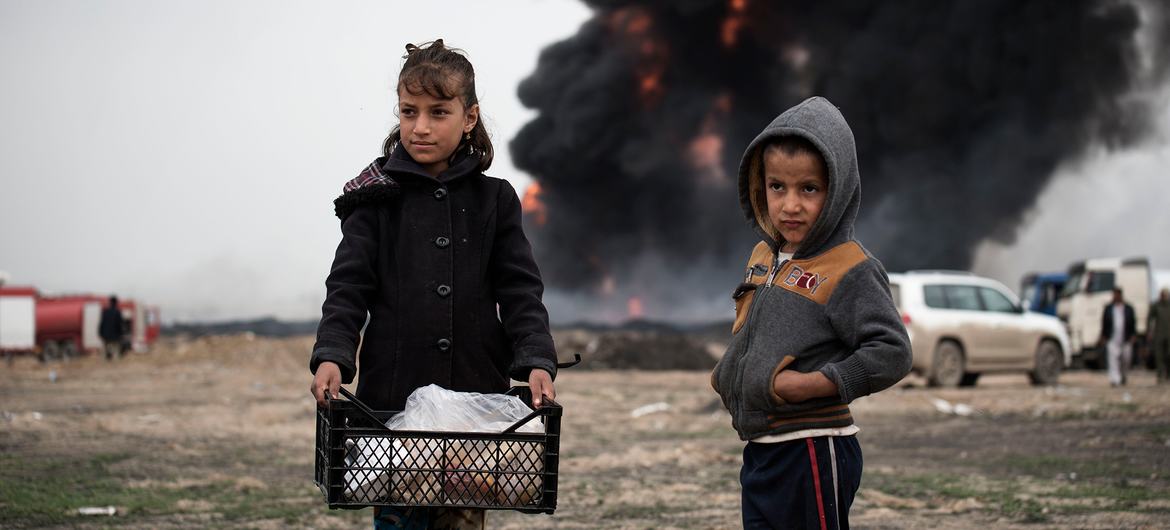
Oil wells in Qayyara, Iraq, set alight by ISIL members as they retreated (file).)
© UNICEF/Alessio Romenzi
 
Oil wells in Qayyara, Iraq, set alight by ISIL members as they retreated (file).)
7 June 2023
Peace and Security

Competent courts, admissible and reliable evidence, and an appropriate legal framework are needed to ensure that ISIL extremist militants can be prosecuted for the atrocities they committed during their reign of terror in Iraq, the UN Security Council heard on Wednesday. 

Ambassadors were briefed by Christian Ritscher, Special Adviser and Head of the UN Investigative Team to promote accountability for these crimes, UNITAD, established five years ago. 

Tweet URL

The Islamist group declared a self-styled caliphate across parts of Iraq and northern Syria in 2014, before being militarily defeated and driven from Iraq in December 2017. 

Commitment stronger than ever 

Presenting UNITAD's 10th report, he informed of progress to date, including supporting the digitization of millions of documents which are now in the possession of the Iraqi judiciary. 

Investigators have also produced a case-assessment on ISIL’s development and use of chemical weapons.  Further details will be outlined during an event at UN Headquarters in New York on Thursday, co-hosted alongside Iraq and India. 

“Today, the commitment of the Iraqi Government, in partnership with UNITAD, to advance the fight against impunity, seek justice in the name of victims and survivors - most of whom are Iraqis - and to address the remaining threat posed by ISIL, is stronger than ever,” he said. 

Mission not over 

However, the mission is far from over.  Mr. Ritscher stressed that “UNITAD’s work is to not simply establish a record for ISIL crimes, but to hold ISIL members who committed such heinous international crimes accountable, through evidence-based trials and before competent courts.” 

“International crimes” refers to the serious violations of war crimes, crimes against humanity and genocide.  The UN team is already working closely with competent Iraqi investigative judges who support their investigations, he said. 

“In turn, UNITAD is enhancing their capacities and ensuring that Iraqi courts are ready to hold ISIL perpetrators accountable for their international crimes, when the moment comes,” he added. 

Christian Ritscher, Special Adviser and Head of the Investigative Team established pursuant to Security Council resolution 2379 (2017) (UNITAD), briefs the Security Council meeting on threats to international peace and security.
UN Photo/Loey Felipe
 
Christian Ritscher, Special Adviser and Head of the Investigative Team established pursuant to Security Council resolution 2379 (2017) (UNITAD), briefs the Security Council meeting on threats to international peace and security.

Mountains of evidence 

Mr. Ritscher assured the Council that there is no shortage of evidence of ISIL crimes, describing the terrorist group as “a large-scale bureaucracy that documented and maintained a State-like administrative system.”   

“What we aim to do is to ensure that this evidence is admissible before any competent court, whether in Iraq or in other States where prosecutions of ISIL members for international crimes are taking place,” he said. 

Archiving digitized documents 

In this regard, UNITAD has been leading a largescale project to digitize “considerable volumes” of ISIL records and battlefield evidence. So far, eight million pages from the holdings of the Iraqi and Kurdish authorities have been digitized.  

“Senior Iraqi Judges have informed me that their response times in relation to case files and requests for information have significantly improved, signalling lasting change because of these innovative efforts,” he said. 

As a next step, UNITAD is establishing a central archive that will be the unified repository of all digitized evidence against ISIL. The archive will be located at the Supreme Judicial Council of Iraq and launched in the coming days. 

“This central repository will play a key role to support prosecutions of ISIL perpetrators for their international crimes in Iraq. Moreover, it could be a milestone to founding a comprehensive e-justice system in Iraq, which can be upheld as a leading example, not only in the region, but also globally,” he said. 

Legal framework key 

Meanwhile, adopting an appropriate domestic legal framework remains the main challenge, Mr. Ritscher told the Council. 

He underlined UNITAD’s committed to supporting the Iraqi-led process towards a legal framework that enables national courts to prosecute ISIL criminal acts as international crimes.  

He pointed to the recent establishment of a joint working group bringing together Government, legal and judicial representatives, as well as key parliamentarians, as an important step forward. 

“Once an appropriate domestic legislation on international criminal law has been adopted, the way forward will be clearer. I remain hopeful that this will happen sooner rather than later,” he said. 

Preparing for future trials 

In parallel, UNITAD has already begun to contribute to the preparation of future trials. 

The Team has intensified cooperation with counterparts in the Iraqi judiciary, to jointly build cases against specific persons of interest and alleged perpetrators, prioritizing those living outside Iraq.  

Investigators are currently supporting some 17 countries, by conducting witness interviews, as well as providing expert testimonies and technical analysis in criminal proceedings against alleged ISIL members and supporters. 

 https://news.un.org/en/story/2023/06/1137432

https://creativecommons.org/licenses/by/3.0/legalcode

четверг, 18 мая 2023 г.

Despite gains, Iraq has not yet ‘turned the corner’, Security Council hears

Jeanine Hennis-Plasschaert (right), Special Representative of the Secretary-General and Head of the UN Assistance Mission for Iraq, briefs Security Council members on the situation in the country.
UN Photo/Loey Felipe

Jeanine Hennis-Plasschaert (right), Special Representative of the Secretary-General and Head of the UN Assistance Mission for Iraq, briefs Security Council members on the situation in the country.

18 May 2023
Peace and Security

Iraq’s stability and hard-won gains require robust support amid concerns of shrinking civic space, postponed elections, and an unfolding climate emergency, the top UN official in the country told the Security Council on Thursday.

“Now is not the time to be complacent, or to take for granted that Iraq has turned a corner,” said the UN Special Representative for Iraq Jeanine Hennis-Plasschaert.

Achievements range from fighting corruption to advancing energy independence, said Ms. Hennis-Plasschaert, who also heads the UN Assistance Mission for Iraq (UNAMI), briefing on recent developments.

But going forward, she said, critical actions must tackle outstanding issues, including forging an agreement on a functioning budget and ensure the long-awaited provincial council elections occur by the end of 2023.

Baghdad-Erbil nearing brink

Turning to the Kurdistan region, she said disagreements between the two ruling parties in recent months drove the region “close to the brink” amid an increasingly reckless and irresponsible political situation.

Among a range of concerns, she raised the issue of the long-overdue parliamentary elections.

“Time is of the essence,” she said, adding that agreement on outstanding electoral issues must urgently be found. “Another postponement would be detrimental to public trust.”

Rise in tensions

Despite repeated declarations of commitment from Baghdad and Erbil, she remained disappointed over the scant progress made so far, in implementing the 2020 Sinjar Agreement, which outlined a road map for reconstructing the north of the country.

“Such stagnation creates further space for spoilers to exploit the situation to their own ends, and it blocks thousands of displaced Sinjaris from returning to their areas of origin,” she said.

A recent rise in tensions between communities in Sinjar was in large part further fuelled by online disinformation targeting the Yazidi community.

While local leaders from all sides have collectively worked to dispel this spike in tensions, she said, challenges to reconciliation will persist until meaningful steps are taken, including those towards a unified administration, stable security structures and reconstruction.

Be it the budget, questions surrounding hydrocarbon resources, disputed territories, the implementation of the Sinjar Agreement, or any other outstanding issue for that matter, she said it remains essential to move beyond ad hoc engagements between Baghdad and Erbil.

Developing countries, like Iraq (pictured) lack the resources to invest in recovery, climate action and the SDGs.
© WMO/Abbas Raad
 
Developing countries, like Iraq (pictured) lack the resources to invest in recovery, climate action and the SDGs.

Climate emergency

Water represents the most critical climate emergency for Iraq. By 2035, it is estimated that Iraq will have the capacity to meet only 15 per cent of its water demands. Around 90 per cent of Iraq's rivers are polluted, and seven million people are currently suffering from reduced access to water. This is a significant multiplier of threats to Iraq’s stability.

Welcoming the priority placed on the issue of water security by Iraq’s Government, she said plans for the extensive updating of water management systems are said to be underway, which will be vital in meeting demands driven by population growth and urbanization.

Scaling up diplomacy

“The fair sharing of resources among Iraq’s neighbours is equally important,” she said. If water access becomes a competition, everyone loses; bold domestic actions and close regional cooperation offer the only winning solution.

Regional security, economic and political developments will continue to impact Iraq, she said, emphasizing that the importance of the Government’s efforts to scale up diplomacy with and among its neighbours in a number of areas, from border security and trade to water-sharing and climate issues.

Shrinking civic space

Underlining the need for active, empowered and protected civic space, she expressed hope that Iraq’s leaders and authorities publicly embrace civic engagement, and the freedom of expression at that, to avoid fomenting a renewed sense of isolation and disillusion among Iraqi people, particularly the younger generation and women.

“Accountability, rule of law, and respect for human rights are equally essential to preventing recurring cycles of crises,” she said.

Kuwaiti concerns

Turning to the issue of missing Kuwaiti and third-party nationals and of Kuwaiti property as a result of Iraq’s short-lived invasion of the country in 1990, she noted progress in locating witnesses and possible burial sites and welcomed welcome the Prime Minister’s decision to establish a committee to continue these efforts.

However, she said her Officer continues to await progress on the retrieval of missing Kuwaiti property, including the national archives.

Fragile gains

These gains “could be easily spoiled”, whether through unchecked corruption, interference from within, intrusion from the outside, a groundswell of disillusion or political horse-trading against the common good, she said.

“Iraq has tremendous potential,” she said. “Through ambitious Government plans, provided they are fully implemented, many drivers of instability can be addressed.”


 https://news.un.org/en/story/2023/05/1136787


https://creativecommons.org/licenses/by/3.0/legalcode