Показаны сообщения с ярлыком Afghanistan. Показать все сообщения

четверг, 19 сентября 2024 г.

Afghanistan: UN warns of growing crisis under increasingly authoritarian Taliban rule


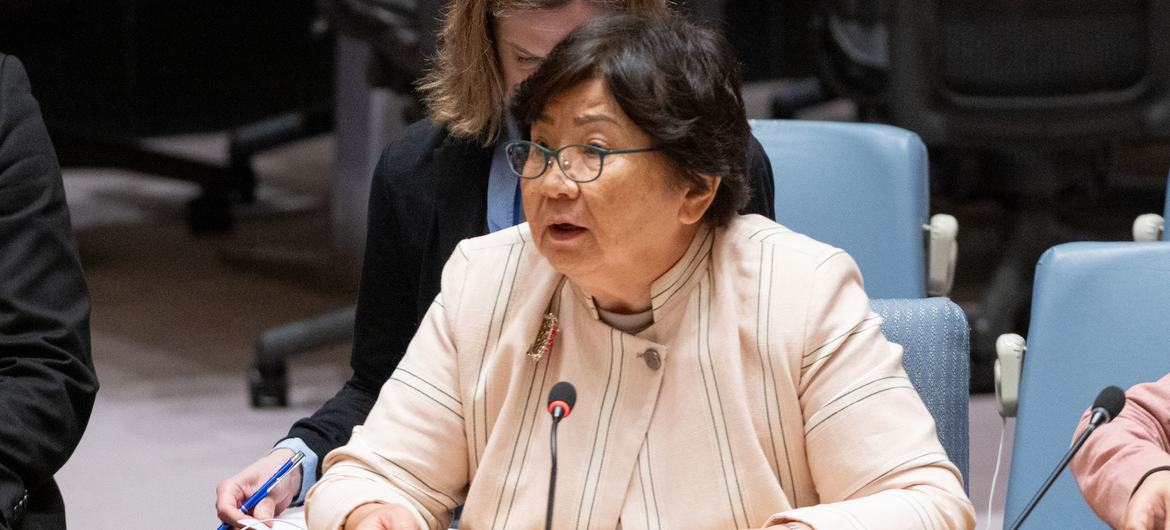
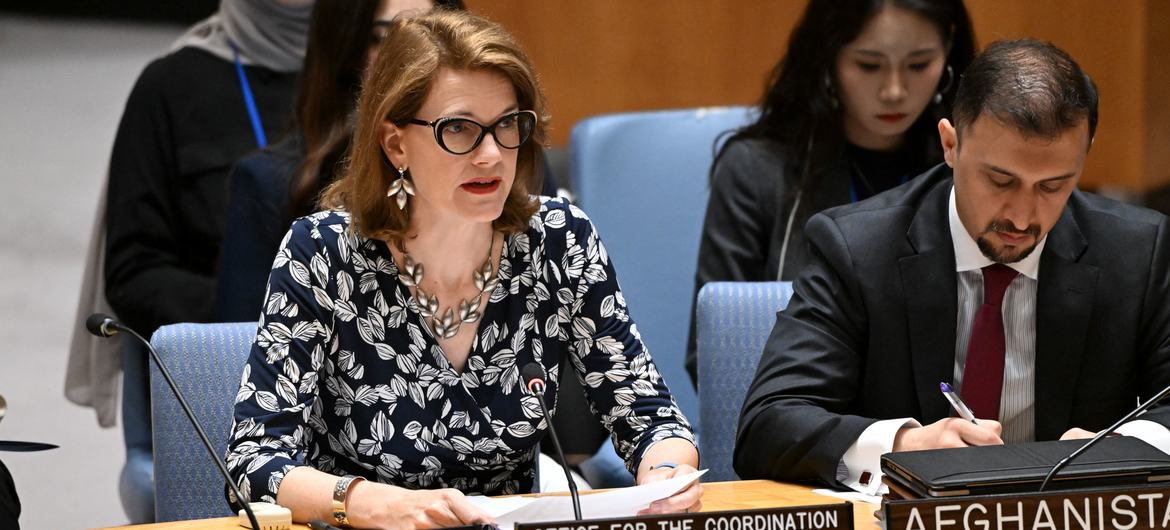
Special Representative and Head of the UN Assistance Mission in Afghanistan (UNAMA) Roza Otunbayeva addresses the Security Council meeting on Afghanistan.
UN Photo/Loey Felipe
 
Special Representative and Head of the UN Assistance Mission in Afghanistan (UNAMA) Roza Otunbayeva addresses the Security Council meeting on Afghanistan.


18 September 2024 

Peace and Security

Concerns for women and the overall state of humanitarian rights in Afghanistan are growing following further legal clampdowns by the Taliban, the UN Security Council heard on Wednesday.

The Special Representative of the Secretary-General in Afghanistan, Roza Otunbayeva, said the country’s de facto rulers who have imposed their own interpretation of strict Islamic law have “delivered a period of stability not seen in decades” in Afghanistan, yet the population is at risk of a worsened humanitarian and development crisis as international funding declines.

“The de facto authorities are exacerbating this crisis by policies that focus insufficiently on the real needs of its people and undermine its economic potential,” Ms. Otunbayeva said.

Humanitarian response

She noted that the current humanitarian response plan, which requires $3 billion dollars, is only 30 per cent funded.

“There are no indications that significant additional resources will be provided as we approach the final quarter of the year,” Ms. Otunbayeva said.

The lack of funding has contributed to the discontinuation of over 200 mobile and static healthcare services this year, and another 171 health facilities are set to close in the next few months.

Furthermore, food rations in communities already experiencing hunger have been cut from 75 to 50 per cent of the required amount and several million vulnerable civilians live in areas where they lack access to safe water.

“The humanitarian crisis will soon become a development crisis, given Afghanistan’s quickly growing youth population, an economy that is unable to absorb them and international donors who are reluctant to provide development aid due in large part to restrictions on the movement and activities of half the population,” the Special Representative said.

Restrictions on women

Ms. Otunbayeva told Council members Afghanistan is currently ostracised by the international community, noting that the Taliban would not need foreign intervention if they only “​​unlocked the resourcefulness of their entire population”.

In July, at a meeting on Afghanistan in Doha, Qatar, UN Member States and international organizations met to consider next steps to aid the civilian population in the country.
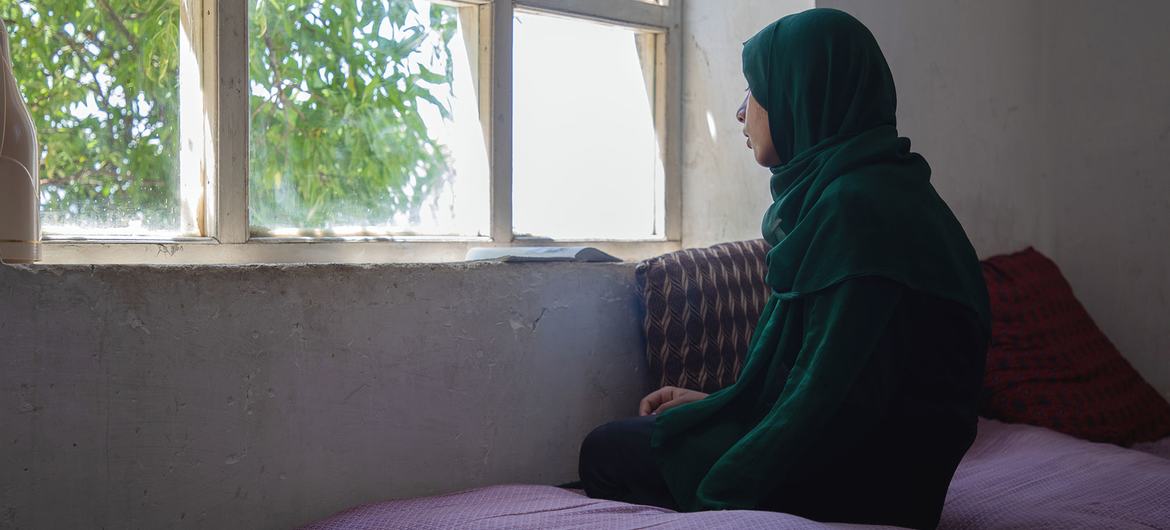
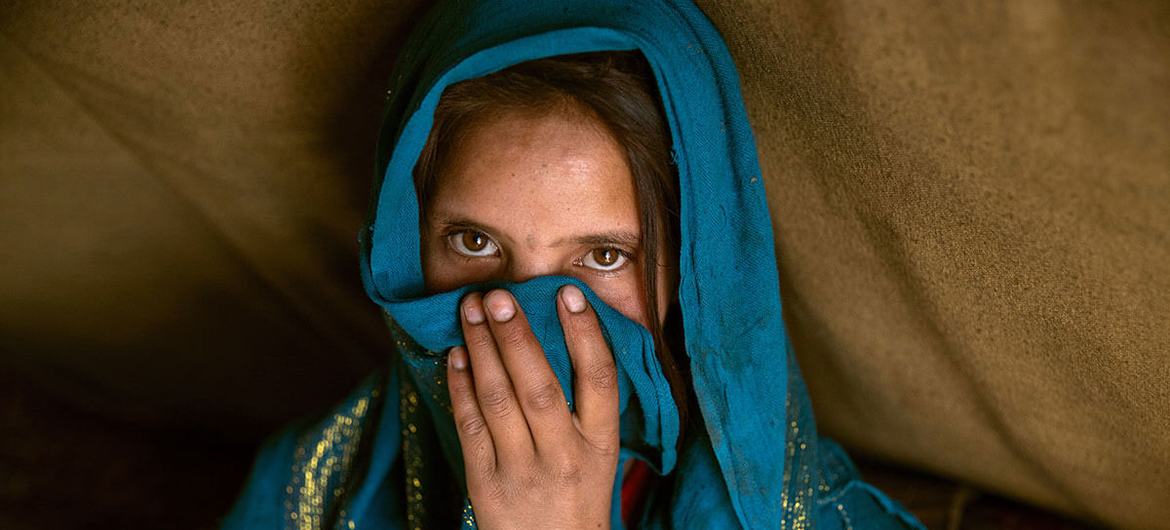
A teenage girl in Afghanistan stays at home as she is no longer allowed to attend school.
© UNICEF/Amin Meerzad
 
A teenage girl in Afghanistan stays at home as she is no longer allowed to attend school.

But, Ms. Otunbayeva told the Council that progress was quickly undermined shortly after the meetings convened as the authorities adopted a “moral oversight law” which placed further restrictions on women.

Increasingly oppressive laws

UN Women Executive Director Sima Bahous provided further details on this law, noting that it requires women and girls to cover their bodies completely when leaving the home and prohibits them from speaking in public and from looking at men they are not related to.

“Afghanistan’s women do not only fear these oppressive laws, they also fear their capricious application,” Ms. Bahous said. “A life lived in such circumstances is truly incomprehensible.”

The Executive Director also mentioned continued restrictions on women’s education, noting that only Afghan boys remain in school and receive an education based on a curriculum whose details are only known by the Taliban.

‘We must listen to the girls in Afghanistan’

Also briefing the Council, a 21-year-old Afghan girl referred to as Mina who no longer resides in the country explained that action needs to be taken now to address restrictions imposed on women by the de facto authorities.

She shared her concerns that the next generation of Afghan girls would believe they are not worthy of an education.

“We must listen to the girls in Afghanistan and do anything we can to stop this oppression,” she said.

Briefers call on Council to act now

UN Women chief Bahous and other briefers called on the 15-member Council for action to be taken to defend women and other civilians in Afghanistan.

“We can decide now to put our political will and resources behind our solidarity with Afghan women,” she said.

“I implore you again not only to stay this course but to commit to it with renewed determination.”


https://creativecommons.org/licenses/by/4.0/legalcode


https://news.un.org/en/story/2024/09/1154491


пятница, 6 сентября 2024 г.

Security Council Press Statement on Afghanistan


SC/15812


The following Security Council press statement was issued today by Council President Samuel Žbogar (Slovenia):

The members of the Security Council condemned in the strongest terms the heinous terrorist attack that occurred in Kabul, the capital of Afghanistan, on 2 September, which was claimed by ISIL (Da’esh)-K and resulted in multiple people killed and many wounded.

The members of the Security Council expressed their deepest sympathy and condolences to the families of the victims, and they wished a speedy and full recovery to those who were injured.

The members of the Security Council reaffirmed that terrorism in all its forms and manifestations constitutes one of the most serious threats to peace and security in Afghanistan, as well as in the world.

The members of the Security Council underlined the need to hold perpetrators, organizers, financiers and sponsors of these reprehensible acts of terrorism accountable and bring them to justice.  They urged all States, in accordance with their obligations under international law and relevant Security Council resolutions, to cooperate actively with all relevant authorities in this regard.

The members of the Security Council reiterated that any acts of terrorism are criminal and unjustifiable, regardless of their motivation, wherever, whenever and by whomsoever committed.  They reaffirmed the need for all States to combat by all means, in accordance with the Charter of the United Nations and other obligations under international law, including international human rights law, international refugee law and international humanitarian law, threats to international peace and security caused by terrorist acts.


https://press.un.org/en/2024/sc15812.doc.htm


https://creativecommons.org/licenses/by/4.0/legalcode

суббота, 31 августа 2024 г.

Afghanistan: UN will ‘continue to engage’ with Taliban, following threat to withdraw cooperation


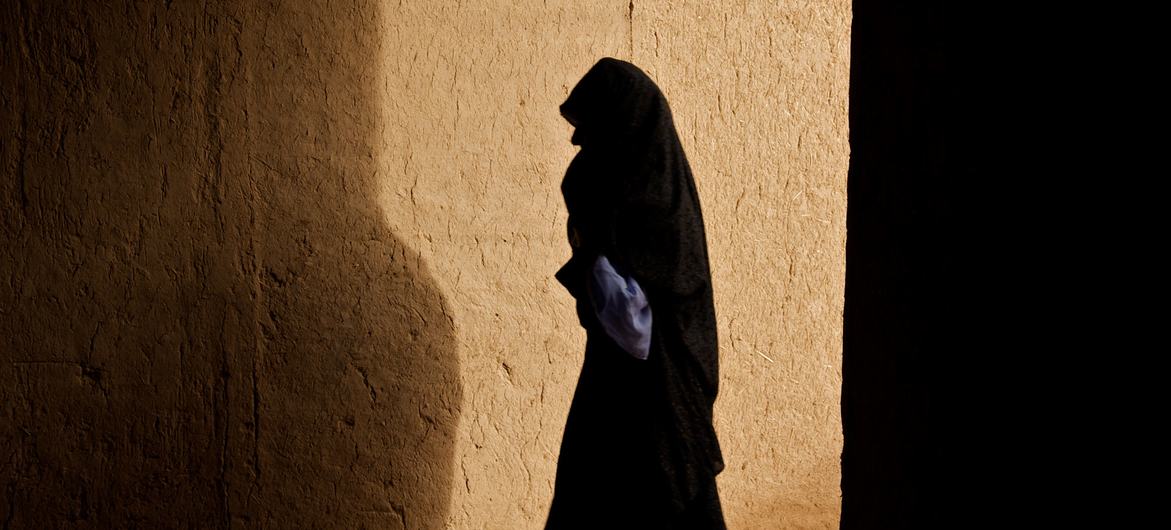
A woman walks through a corridor in a village in Afghanistan. (file)
© UNICEF/Shehzad Noorani
 
A woman walks through a corridor in a village in Afghanistan. (file)


30 August 2024 

Human Rights

The United Nations will continue engaging with all stakeholders in Afghanistan, advocating for human rights and equality, the global body’s Spokesperson said on Friday, amid the Taliban’s reported rejection of criticism by UN officials of a strict morality law.

According to media reports, the Taliban “morality police” said earlier in the day that they would no longer cooperate with the UN Assistance Mission in Afghanistan (UNAMA) because of criticism of the law adopted last week.

UNAMA – alongside other parts of the UN system – denounced the new law, describing it a “distressing vision” for the country’s future.

“I think we have been very vocal on the decision to further make women's presence almost disappear in Afghanistan,” UN Spokesperson Stéphane Dujarric said, responding to a question at the regular press briefing in New York.

Will continue to engage

He added that the Organization “will continue to engage with all stakeholders in Afghanistan, including the Taliban,” and that it will continue its work, as mandated by the Security Council.

“We have always done so following our mandate and I would say impartially and in good faith, always upholding the norms of the UN, pushing the messages of human rights and equality,” he said.

He further urged the Taliban de facto authorities “to, in fact, open more avenues for diplomatic engagement”.

Repressive provisions

The law, formally titled “Law on the Promotion of Virtue and the Prevention of Vice”, was adopted last week.

It imposes a lengthy list of repressive provisions on women, including mandates that they wear clothing covering their entire bodies, bans on their voices being heard in public, and further restrictions on their movement without a male relative.

Even the sound of a female voice outside the home is apparently deemed a moral violation.

It also requires men to grow beards, bans drivers from playing music, and restricts the media from publishing images of people. State officials are granted broad powers to detain individuals and impose punishments.

Rights experts condemn measures

Tweet URL

The law’s enactment, UN independent human rights experts stressed, marked a significant regression in human rights in Afghanistan, echoing the oppressive regime of the Taliban’s rule in the 1990s.

“These measures are disturbingly similar to the Taliban's draconian rule in the 1990s and provide further evidence that the group has not moderated its approach since its return to power,” the experts said.

The experts also voiced concern over the Taliban’s morality inspectors’ extensive authority to arbitrarily detain and physically punish individuals for alleged moral crimes, often based on mere suspicion without any requirement for evidence or due process.

They urged international actors, particularly UN Member States, to formulate a robust, principled, and coordinated strategy on Afghanistan that prioritizes human rights, with a strong emphasis on women’s rights and gender equality.

Appointed by the Geneva-based Human Rights Council, the experts are mandated to monitor and report on specific human rights situations, both thematic and country-specific.

Independent of governments and the United Nations, they are not UN staff nor do they receive a salary.


https://news.un.org/en/story/2024/08/1153806


https://creativecommons.org/licenses/by/4.0/legalcode

вторник, 2 июля 2024 г.

UN pushes for inclusive future in Afghanistan at Doha talks


Women and girls across Afghanistan face multiple restrictions, including education and employment.
© UN Women/Sayed Habib Bidell
 
Women and girls across Afghanistan face multiple restrictions, including education and employment.


1 July 2024
 Peace and Security

UN-led efforts to nudge Afghanistan towards a more peaceful and inclusive future with a more equal role for women and girls continued Monday at international talks, which for the first time included the Taliban de facto authorities.

Speaking in the Qatari capital, Doha, after the Third Meeting of Special Envoys on Afghanistan, UN political chief Rosemary DiCarlo expressed deep concern over the situation of women and girls in the country.

“Running through all the discussions was the deep international concern – from special envoys and from me – about the ongoing and serious restrictions on women and girls,” she stated.

“Afghanistan cannot return to the international fold, or fully develop economically and socially, if it is deprived of the contributions and potential of half its population,” asserted Ms. DiCarlo, the UN Under-Secretary-General for Political and Peacebuilding Affairs.

The consultations follow talks in May 2023 and February 2024. They build upon the proposals outlined in an independent review on an integrated and coherent approach conducted by Feridun Sinirlioğlu, in line with Security Council resolution 2679.

Focused discussions with Afghan women and civil society are scheduled to take place on Tuesday.

Tweet URL

Civil society’s ‘rightful role’

Ms. DiCarlo further stressed that the concerns and views of Afghan women and civil society remain “front and center”.  

“For the United Nations, the meaningful inclusion of women in political and peace processes is a guiding principle,” she said.

“And while women and civil society were not sitting across the table from the de facto authorities the last two days, they made their voices heard. Civil society has a rightful role to play in shaping Afghanistan’s future,” she asserted.

‘Heartbreaking’ ban

Since the Taliban seized power in Afghanistan in August 2021, women and girls have faced systemic discrimination, including a ban on girls’ education.

That ban is “heartbreaking”, Ms. DiCarlo maintained.

“If you prevent half the population from education, from being involved in the economy and various professions, it just means that it delays the develop of Afghanistan,” Ms. DiCarlo replied to one woman reporter.  

“Just imagine if you were only allowed to go through sixth grade, you would not be sitting here being a journalist, I would not be here being a UN official. [It is] heartbreaking frankly but let us see and let us keep at it, that is all I can say. We have to make clear how important is and how it is going to be better for Afghanistan.”

A tough choice

She explained that in organizing the meeting, the UN “faced a very tough, maybe impossible, choice”, aiming to bring the Taliban and the special envoys together for direct talks.

“Regrettably, the de facto authorities will not sit across the table with Afghan civil society in this format. But they heard very clearly the need to include women and civil society in all aspects of public life,” she said.

Engagement is not recognition

She further emphasized that the meeting and process of engagement “does not mean normalization or recognition” of the Taliban de facto authorities.

Ms. DiCarlo expressed hope that the exchanges on the various issues during the meeting “moved us a little closer” to resolving some of the problems devastating the Afghan people.

“To conclude, I would like to reiterate the United Nations commitment to continue to support this process of principled engagement for the benefit of all Afghans,” she said.


https://news.un.org/en/story/2024/07/1151666


https://creativecommons.org/licenses/by/4.0/legalcode

пятница, 21 июня 2024 г.

Officials highlight massive poverty, humanitarian despair in Afghanistan


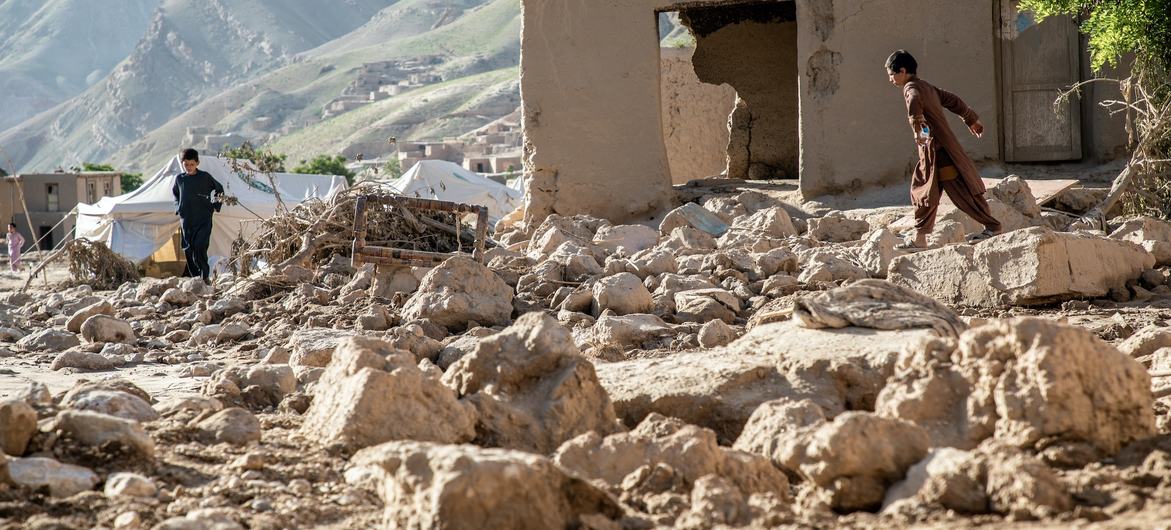
Aftermath of the May 2024 floods in Baghlan province, Afghanistan.
© UNICEF/Amin Meerzad
 
Aftermath of the May 2024 floods in Baghlan province, Afghanistan.


21 June 2024

Peace and Security

The humanitarian needs in Afghanistan are “alarmingly high” and the international community is in “crisis management mode”, the UN Security Council heard on Friday.

Top officials from the UN Assistance Mission in Afghanistan (UNAMA) and the UN Office for the Coordination of Humanitarian Affairs (OCHA) briefed ambassadors at the 15-member Council, describing the impact on civilians since the Taliban took over in August 2021.

Roza Otunbayeva, Special Representative of the Secretary-General for Afghanistan and head of UNAMA highlighted “massive poverty” across the country.

“Afghanistan remains beset by massive poverty that leaves the population even more vulnerable to the many natural disasters that we have seen over the past few years as a result of climate change,” she said.

This is despite over $7 billion in international support for humanitarian assistance and over $4 billion for civilian support since the de facto authority assumed power.

Brain drain

Furthermore, Afghan women civil servants who were told they could not return to work until “necessary conditions” were approved by the Taliban, are now experiencing major salary cuts.

Special Representative Otunbayeva briefs the Security Council.
UN Photo/Eskinder Debebe
 
Special Representative Otunbayeva briefs the Security Council.

This provokes concerns over inability to pay rent or to offer familial support.

“These restrictions deprive the country of vital human capital that it needs to implement the Taliban’s own policy of self-reliance,” Ms. Otunbayeva said.

“They contribute to a brain drain that undermines Afghanistan’s future.”

Impact on women and girls

Lisa Doughten, Director of Financing and Partnerships at OCHA, echoed concerns over the situation of women and girls.

“Afghanistan will soon enter its fourth year under the Taliban de-facto authority,” she said, adding: “no one has felt the impact more profoundly than women and girls.”

Further, the de facto authority has restricted girls past the sixth grade from receiving an education – a policy that has been set for over 1,000 days.

The ban, Ms. Doughten said, fuels an increase in child marriage and early childbearing.

It has also led to increase levels of depression and reported suicide attempts in young women and girls.

Climate change woes

Ms. Doughten also underscored that climate change effects, including extreme weather and more frequent and intense droughts, have further complicated the crisis.

Director Doughten briefs the Security Council.
UN Photo/Evan Schneider
 
Director Doughten briefs the Security Council.

About 120,000 people were affected by flash flooding and mudslides in several regions in the country. Hundreds were killed, villages were destroyed and tens of thousands of acres of agricultural land devastated.

“Afghanistan remains wholly unprepared to deal with these increasingly persistent threats and will require significant investments in early warning and early response systems,” Ms. Doughten said.

She called for longer-term solutions to help Afghans overcome poverty and adapt to climate impacts.

“Nothing is easy in Afghanistan, but with sustained assistance, we can support people in the realisation of a life with peace, stability and hope.”

A hope to move forward

On 30 June, the UN will host a meeting in the Qatari capital, Doha, to continue discussions over the situation in Afghanistan.

Special Representative Otunbayeva expressed hope that key stakeholders at the meeting will come to an agreement on what can be done to “alleviate the uncertainties” facing Afghan people.

This will only happen if there is great flexibility among stakeholders and “a clearer political willingness on all sides to move beyond crisis management to addressing the larger problems within Afghanistan and among Afghans, and those between Afghanistan and the international community,” she concluded.


https://news.un.org/en/story/2024/06/1151346


https://creativecommons.org/licenses/by/4.0/legalcode

суббота, 16 марта 2024 г.

Security Council Extends Mandate of United Nations Mission in Afghanistan, Unanimously Adopting Resolution 2727 (2024)


9577TH MEETING (PM)
SC/15628


Cooperation with De Facto Authorities Vital to Establishing Lasting Peace, Delegate Notes

The Security Council today decided to extend the mandate of the United Nations Assistance Mission in Afghanistan (UNAMA) until 17 March 2025, expressing its appreciation for the Organization’s long-term commitment to support the people of that country and stressing the need for a continued field presence.

Unanimously adopting resolution 2727 (2024), the Council stressed the importance of the continued presence of UNAMA and other UN agencies, funds and programmes across Afghanistan.  Further, it called on all relevant stakeholders to coordinate with UNAMA in the implementation of its mandate and to ensure the safety, security and freedom of movement of UN and associated personnel throughout the country.  The Council also requested that the Secretary-General report every three months on the situation in Afghanistan and the implementation of UNAMA’s mandate.

Speaking after the vote, the representative of Japan — Council President for March — spoke in his national capacity to state that the resolution ensures that UNAMA will remain equipped with a sufficient, robust and flexible mandate as it tackles the multifaceted challenges faced by Afghanistan.  The Mission’s presence is indispensable as the international community seeks to deepen engagement and build confidence with the Taliban, and it sends a strong message to the people of Afghanistan that the United Nations — backed by the Council — “will continue to work tirelessly for them”, he said.

Similarly, the representative of the United States said that, by extending UNAMA’s mandate, the Council has enabled the United Nations to continue addressing the international community’s priorities in Afghanistan, promoting peace and stability and facilitating dialogue among all national political actors.  She underscored, however, the need to support efforts to restore the human rights and fundamental freedoms of all Afghans — particularly women and girls.  She stressed:  “The Afghan people deserve to see peace, security and stability.”  Ecuador’s representative also underlined UNAMA’s role in addressing growing humanitarian needs in Afghanistan, especially for women and girls.

Slovenia’s representative echoed that, observing that the situation in Afghanistan remains alarming — particularly when it comes to human rights, the dire humanitarian and economic situations and challenging security threats, which all have a devastating impact on the people of Afghanistan.  She also expressed concern over the Taliban’s policies that restrict women’s and girls’ full enjoyment of their human rights and fundamental freedoms, calling on the Taliban to respect and fulfil Afghanistan’s obligations under binding human-rights treaties.

“A new school year starts soon in Afghanistan, but 1.4 million girls have been excluded from secondary education,” noted the representative of the Republic of Korea.  Expressing support for the women and girls of Afghanistan who continue to endure systematic oppression, he said that suffering increases every day and urged:  “We should never get used to this.”  The international community stands at a critical juncture regarding the reintegration of Afghanistan into the fold, and he stressed that the needs and aspirations of the country’s people should be “the main rationale behind our consideration”.

On that subject, the representative of the Russian Federation asserted that cooperation with the de facto authorities is vital to establishing a lasting peace in Afghanistan.  While the UN’s consistent support sends a message about the international community’s commitment to peace and stability in that country, she rejected unjustifiable attempts to politicize the humanitarian sphere.

The representative of China, meanwhile, expressed regret that the resolution failed to reflect the latest developments in Afghanistan, stating that — over two years after the withdrawal of foreign troops — the country’s overall domestic situation is stable.  However, it still faces humanitarian, economic and terrorism challenges, and he expressed hope that UNAMA will continue to play an active role in promoting stable development, facilitating regional integration and helping Afghanistan’s people build a better life.

“This renewal is critical as Afghanistan faces a severe crisis, exacerbated by the Taliban’s lack of commitment and failure to address the situation, engage constructively and establish a just, responsible, inclusive and representative system of governance,” stressed the representative of Afghanistan at the close of the meeting.  Welcoming that the resolution highlights UNAMA’s crucial role in promoting peace, stability and inclusive governance in his country — particularly in monitoring and reporting on human rights, including the situation faced by women and girls — he urged continued unity and consensus in the international community’s “principled engagement with Afghanistan to guide the country toward stability”.


https://press.un.org/en/2024/sc15628.doc.htm


https://creativecommons.org/licenses/by/3.0/legalcode

понедельник, 19 февраля 2024 г.

We all want an Afghanistan at peace, UN chief says in Doha

We all want an Afghanistan at peace, UN chief says in Doha
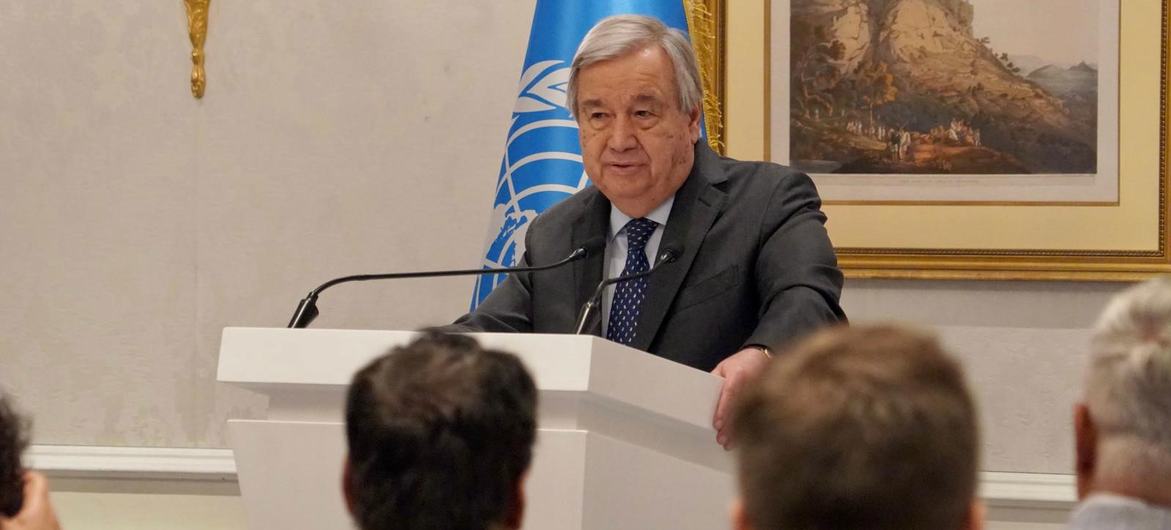
UN Secretary-General António Guterres speaking to the media in Doha.
United Nations/Khava Mukhieva
 
UN Secretary-General António Guterres speaking to the media in Doha.
19 February 2024
Peace and Security

The UN Secretary-General on Monday highlighted the urgent need for an end to restrictions imposed by the Taliban de facto authorities on women and girls in Afghanistan.

Speaking to journalists during a two-day meeting with regional and national special envoys for Afghanistan, António Guterres said that there was consensus among delegates over what needs to happen, although the Taliban are not taking part.

“We want an Afghanistan in peace, peace with itself and peace with its neighbours and able to assume the commitments and the international obligations of a sovereign State … in relation to the international community, its neighbours and in relation to the rights of its own populations,” he said.

There was also consensus on the process to reach this objective, he added, noting proposals outlined in an independent review on an integrated and coherent approach conducted by Feridun Sinirlioğlu, in line with Security Council resolution 2679.

Key concerns

It covered all the main areas of concern, Mr. Guterres said, including ensuring Afghanistan does not become a “hotbed” of terrorist activity, becoming an inclusive institutions, in which all its diverse groups feel represented in a “truly inclusive” State.

The review notes the importance of upholding human rights, in particular for women and girls; and concern but also a recognition of the progress made in combatting drug production and drug trafficking.

The UN chief also underscored the need for effective humanitarian assistance to the country, as well as long-term questions on Afghanistan’s future development.

Mr. Guterres further noted ongoing cooperation between Afghanistan and neighbouring countries, such as trade and infrastructure development, or bilateral arrangements on combatting illicit drugs trade.

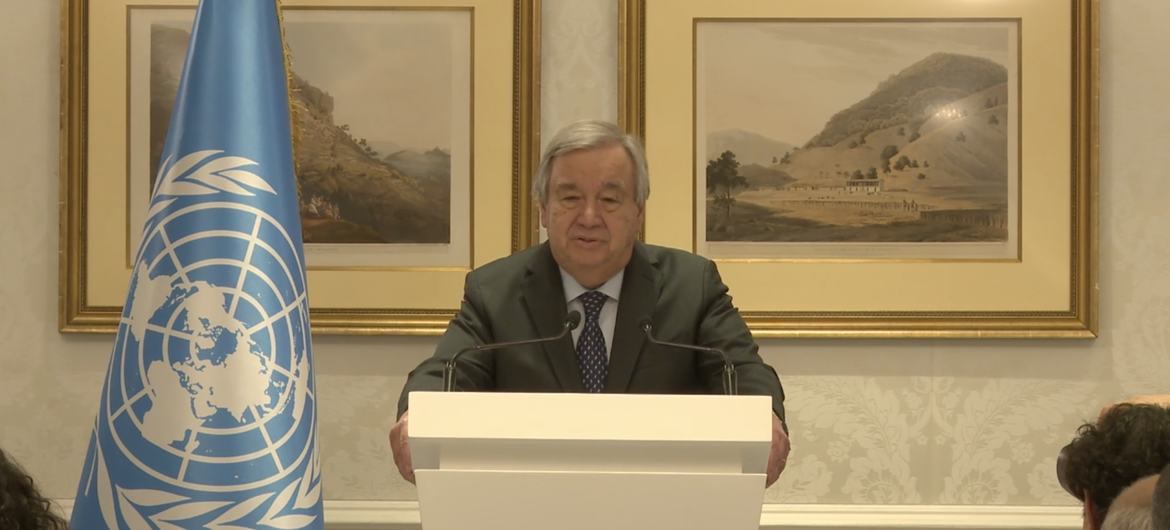
UN Secretary-General António Guterres speaking to the press in Doha.
United Nations
 
UN Secretary-General António Guterres speaking to the press in Doha.

Key questions

However, there are a set of key questions, “in which we are stuck”, he added.

“On one hand Afghanistan remains with a government that is not recognized internationally, and in many aspects not integrated in the global institutions and global economy,” he said.

And on the other hand, there is a common international perception of deteriorating human rights, particularly for women and girls.

“To a certain except we are in the kind of a situation of the chicken or the egg,” he said, stating the need to overcome the deadlock and produce a common roadmap, which addresses international concerns and those of the de facto authorities simultaneously.

Tweet URL
UN_News_Centre

Unacceptable pre-conditions

In response to a correspondent’s question on the lack of participation of Taliban de facto authorities, the UN chief said that the group presented a set of conditions for its participation, “that were not acceptable.”

“These conditions first of all denied us the right to talk to other representatives of the Afghan society and demanded a treatment that would, I would say, to a large extent be similar to recognition.”

On another question, Mr. Guterres said the meeting was very useful and the discussions were “absolutely needed”.

“Obviously it would be better if we would also have the opportunity after the meeting ... to discuss our conclusions with the de facto authorities. It did not happen today, it will happen in the near future.”


https://news.un.org/en/story/2024/02/1146657


https://creativecommons.org/licenses/by/3.0/legalcode

пятница, 15 декабря 2023 г.

Security Council Renews for One Year Mandate of Team Monitoring Sanctions against Taliban, with Some Regretting Travel Exemptions Not Extended

9506TH MEETING (AM)
SC/15530

Security Council Renews for One Year Mandate of Team Monitoring Sanctions against Taliban, with Some Regretting Travel Exemptions Not Extended

The Security Council today extended for a further year the mandate of the team monitoring sanctions against the Taliban and associated individuals and entities, which threaten Afghanistan’s peace, security and stability.

The 15-member body unanimously adopted resolution 2716 (2023) (to be issued as document S/RES/2716(2023)), directing the Monitoring Team to support the Committee established by resolution 1988 (2011), designating sanctions on individuals, groups, undertakings and entities found to be part of and linked to the Taliban.  The new mandate expires in December 2024.

Further to the text, the Monitoring Team is to gather information on instances of non-compliance with measures that include the freezing of funds and assets, prevention of travel and supply or transfer of arms and related equipment, established by resolution 2255 (2015).  It is also to facilitate, upon request of Member States, assistance with capacity-building, and provide recommendations to the Committee for actions to respond to non-compliance.

Speaking after the vote, Linda Thomas-Greenfield (United States), whose delegation was the penholder on Afghanistan sanctions issues, welcomed the mandate’s renewal, saying the voting result is a “confirmation of the continuing importance of the 1988 sanctions regime” in supporting peace and security in Afghanistan. The Team’s reporting remains crucial to understanding both the impact of the sanctions and the events on the ground in Afghanistan.  “These insights enable Member States to track whether the Taliban follows through on its commitments,” including on counter-terrorism, human rights for women and girls and unhindered humanitarian access.

Geng Shuang (China) said it is vital to ensure that Afghanistan does not become a hub for terrorist organizations.  The international community must integrate the country into “the family of nations”, he said, expressing appreciation for the provision encouraging the Monitoring Team to visit Afghanistan and communicate with all Afghan parties.  The Council must make timely adjustments to sanctions measures to avoid any negative impact on the Afghan people.  Further, it should resume the travel exemptions granted to some Taliban officials, as those are a necessary tool for dialogue and engagement and “not a bargaining chip for pressure”.  Regretting that the specific proposal his delegation put forward was not reflected in the current text, he called on Council members to demonstrate pragmatism and flexibility and support the next phase of engagement with the Afghan authorities.

The Team’s reports are a useful support for the Committee, Anna M. Evstigneeva (Russian Federation) said.  She is pleased that the text of the adopted resolution notes the importance of the travel of the Team to Afghanistan, which remains a key condition for the mandate’s implementation.  She welcomed the call for it to travel to Afghanistan and have contact with the de facto authorities.  She noted the text’s reference to the need for a revision of the 1988 sanctions regime, on the basis of the recommendations prepared by the Monitoring Team.  She regrets that it does not include the extension of exemptions to the travel ban. She believes it is important to continue discussions on these issues within the 1988 sanctions Committee.


https://press.un.org/en/2023/sc15530.doc.htm


https://creativecommons.org/licenses/by/3.0/legalcode

вторник, 24 октября 2023 г.

World News in Brief, Afghanistan rights abuses, Sudan crisis deepens, Australia votes no


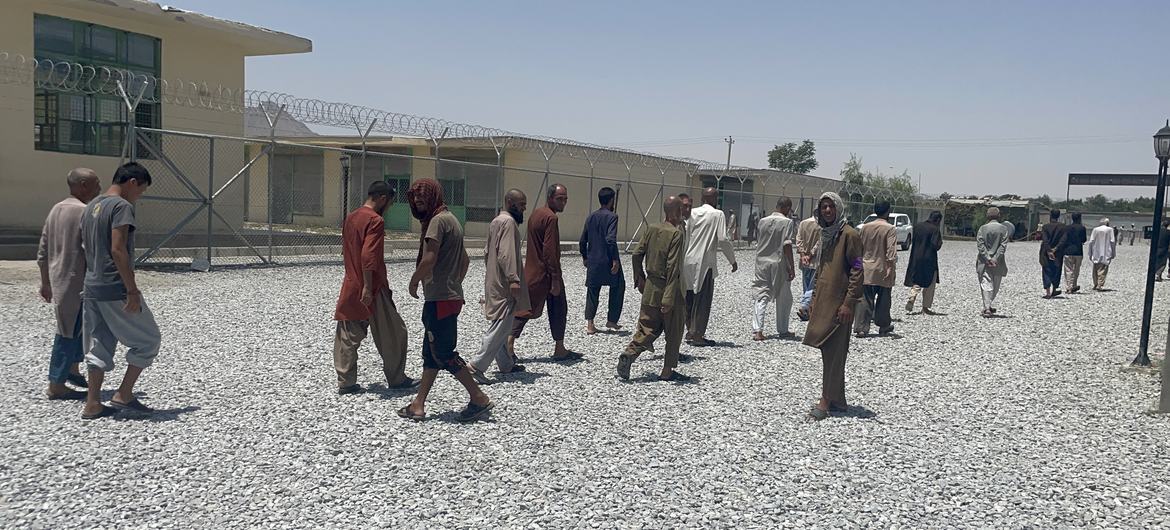
The Taliban-run Agoosh drug treatment centre in the Afghan capital Kabul.
UN News / Ezzat El-Ferri
 
The Taliban-run Agoosh drug treatment centre in the Afghan capital Kabul.
24 October 2023
UN Affairs

Afghanistan is facing a deteriorating human rights situation due to the Taliban's repressive policies, a culture of impunity and an ongoing humanitarian and economic crisis, the UN’s independent expert on the country said on Tuesday.

The series of deadly earthquakes and possibility of massive involuntary returns, all add up to the need for urgent action to avoid further suffering and potential instability, said Richard Bennett. 

Tweet URL

“A grave picture has emerged, providing a glimpse of what may lie ahead for the human rights of many Afghans, particularly women and girls, and also for other groups including human rights defenders, journalists, ethnic and linguistic minorities, LGBTI persons, persons with disabilities, former government officials and military and security personnel,” he added. 

‘Perfect storm’ of challenges 

Presenting his report to the General Assembly, Mr. Bennett urged the international community to provide more aid to the beleaguered Herat region, devastated by the recent quakes.

“There is a culture of impunity for torture and inhumane treatment in detention centres, as well as for human rights violations against former government officials and military personnel, despite promises made to the contrary,” he said.

The Special Rapporteur alerted the General Assembly to the ongoing detention of Afghans exercising their rights to peaceful protest and freedom of expression, including human rights defenders.

Rapporteurs and other UN Human Rights Council-appointed experts do not receive any salary for their work, serve in their individual capacity and are independent of any government.

The fact women and children accounted for almost 90 per cent of those killed was in large part due to the restrictions placed on them under Taliban rule, confining them to a life indoors, according to the UN Development Programme (UNDP).

UNDP Resident Representative in Afghanistan, Stephen Rodriques, told UN News more in an interview.

Soundcloud

Sudan humanitarian crisis deepens; more than 5.6 million displaced 

Over six months since conflict broke out in Sudan, more than 5.6 million people have fled their homes and 25 million need aid to survive, in what has become “one of the world’s fastest-growing humanitarian crises”.

The UN’s top humanitarian official in the country, Clementine Nkweta-Salami, shared the grim update on Tuesday; she stressed that “the longer this fighting continues, the more devastating its impact”.

More than 4.2 million women and girls are at risk of gender-based violence, Ms. Nkweta-Salami said, and one in every three children has no access to school.

The UN official underscored that since the start of the crisis, the UN and its partners have delivered food to three million people in 17 of Sudan’s 18 states, provided safe drinking water to over two million people and health supplies to three million women and children.

They have also “received and recorded reports of human rights violations and abuses”, she said.

In a call to Sudan’s rival militaries to “stop the fighting”, Ms. Nkweta-Salami urged them to commit to “a durable cessation of hostilities, abide by their obligations under international humanitarian and human rights law to protect civilians, and enable safe humanitarian access to those in need”.

Australia: ‘No’ vote on Indigenous Peoples’ recognition a ‘missed opportunity’: Türk

In Australia, the failure of a referendum to enshrine recognition of Indigenous Peoples in the constitution is a “missed opportunity”, UN rights chief Volker Türk said on Tuesday.

Mr. Türk was speaking after Australians decided in a 14 October referendum not to officially recognize Aboriginal and Torres Strait Islander Peoples in the country’s Constitution.

Over 60 per cent of Australian voters and a majority in all six states voted ‘No’ to the proposals.

While he deplored the “scaremongering, misinformation and disinformation” in the campaign against the vote, the UN rights chief stressed the importance of the debate within the country on the “exclusion and disadvantage suffered by Indigenous Peoples”.

“Realizing rights to equality, to self-determination and to participation of Indigenous Peoples in decisions that affect them, including through their self-governing bodies, remains central to Australia’s future – and is reinforced by Australia’s international human rights obligations,” Mr. Türk said.

He called on the country’s political leaders to “work to unite rather than divide” the population on this issue and intensify efforts to address the continued exclusion and disadvantage of the First Peoples of Australia. 


https://news.un.org/en/story/2023/10/1142767

https://creativecommons.org/licenses/by/3.0/legalcode

воскресенье, 24 сентября 2023 г.

Engagement key to reform of Taliban decrees restricting women’s rights

Women wait at a maternal health hospital, the only one of its type in Afghanistan.
© UNICEF/Shehzad Noorani
 
Women wait at a maternal health hospital, the only one of its type in Afghanistan.
26 September 2023
Peace and Security

The international community must continue to engage with Taliban leaders in Afghanistan despite deep disagreement with their approach to women’s rights and inclusive governance, the UN Special Representative for the country told the Security Council on Tuesday. 

Roza Otunbayeva, who also heads the UN Assistance Mission in Afghanistan (UNAMA), called for a “reframed engagement strategy”, expressing concern over the “lack of positive direction” in current efforts.

Tweet URL

“The lack of trust on all sides is a serious impediment to building confidence but the doors to dialogue are still open,” she said.

“This moment, despite its problems, is an opportunity. We must ensure that the doors to dialogue are not shut.”

Taliban policies ‘unacceptable’

Ms. Otunbayeva said engagement has been significantly undermined by the more than 50 Taliban decrees aimed at eliminating women from public life and education.  

“The policies that drive the exclusion of women are unacceptable to the international community,” she said.

She also cited a new UN report based on more than 500 interviews with Afghan women, 46 per cent of whom said the Taliban should not be recognized under any circumstances.

“The question, however, is whether to continue engaging with the de facto authorities despite these policies, or to cease engaging because of them,” she said.  

“UNAMA’s view is that we must continue to engage and to maintain a dialogue.  

“Dialogue is not recognition. Engagement is not acceptance of these policies. On the contrary: dialogue and engagement are how we are attempting to change these policies.”

Reframed strategy

Ms. Otunbayeza told the Council that this engagement could be more structured and purposeful while remaining principled.

“A reframed engagement strategy must first acknowledge that the de facto authority bears responsibility for the well-being of the Afghan people, in all dimensions but especially concerning women,” she stressed.

Other components would include mechanisms to address the de facto authorities’ long-term concerns, as well as “a sincere intra-Afghan dialogue of the sort that was interrupted when the Taliban took power in August 2021.”  

Additionally, “a more coherent position of the international community” would also be required.

The cost of discrimination

Sima Bahous, head of the UN’s gender equality agency, UN Women, also briefed the Council. She told ambassadors that Taliban decrees are costing Afghanistan roughly one billion dollars a year, which will only increase.

The edicts are also exacerbating the dire humanitarian situation in a country where more than two-thirds of the population depend on assistance to survive and some 20 million, mainly women and girls, are facing acute hunger.  

She insisted that the way forward must be guided by women’s voices and the principles of the UN Charter.

“The past is full of examples of neglecting or ignoring women; the present is filled with the consequences. So, the future must be focused on listening to, investing in, and supporting women, as well as including them,” she said.

Call for action

Ms. Bahous recommended that the Security Council Committee that oversees sanctions against Afghanistan convene a session to examine the role it can play in responding to violations of women’s rights in the country.

“We must consider the messages we send when we frame the situation in Afghanistan purely or exclusively as a humanitarian crisis,” she further advised.

“It is an economic crisis, a mental health crisis, a development crisis, and more. And the thread that connects these different facets is the underlying women’s rights crisis. This must be the primary lens through which we understand what is going on and what we must do.”

Against 'gender apartheid'

She also urged ambassadors to fully support efforts to explicitly codify “gender apartheid” in international law.

“This systematic and planned assault on women’s rights is foundational to the Taliban’s vision of state and society and it must be named, defined and proscribed in our global norms so that we can respond appropriately,” she said.

Legal expert Karima Bennoune, who also briefed ambassadors, recalled that some Afghan women activists recently went on a hunger strike to demand that the international community recognize that gender apartheid is being practiced in their country.

“This Council has repeatedly called on the Taliban to end its grave abuses, but there is more you must do to hold them accountable for their decimation of women's rights. I am here today to ask the Council to make clear through action that the international community will not tolerate the system of gender apartheid the Taliban have imposed,” she said.

The Special Representative later took questions from correspondents outside the Security Council chamber:


https://creativecommons.org/licenses/by/3.0/legalcode

среда, 13 сентября 2023 г.

Afghanistan: Human rights ‘in a state of collapse’, warns Türk


Volker Türk, UN High Commissioner for Human Rights, addresses the 54th Session of the Human Rights Council.
12 September 2023
Human Rights

The “shocking” and “cruel” oppression of Afghan women and girls by the Taliban against the backdrop of a severe humanitarian crisis has put the country’s future in jeopardy, UN rights chief Volker Türk warned on Tuesday.

“Human rights in Afghanistan are in a state of collapse,” he told the Human Rights Council, before sounding the alarm over ongoing reports of extrajudicial killings, torture and ill-treatment and arbitrary arrests and detentions, as well as serious violations against former Government officials, as documented in a new human rights office (OHCHR) report

“Compounding all of this is a deeply troubling lack of accountability for perpetrators of human rights violations,” he said.

Women cancelled out

Highlighting the “devastating precedent” set by Afghanistan as the only country in the world where women and girls are denied access to secondary and higher education. Mr. Türk underscored the “long list of misogynistic restrictions” confining the country’s women “to the four walls of their homes”, before asking: “What can possibly come next?”

The High Commissioner insisted that any prospect of a stable, prosperous Afghanistan rests on the participation of men and women.

“Denying women and girls’ rights to participate in daily and public life not only denies them their human rights, it denies Afghanistan the benefit of the contributions they have to offer,” he said.

Soundcloud

Constitution on hold

Mr. Türk said that the suspension of the Afghan constitution and of laws protecting women from violence or guaranteeing media freedom, as well as the dissolution of the country’s Independent Human Rights Commission, were elements of the “systematic erosion of the institutions that once provided some protection for human rights”. 

The High Commissioner called on the de facto authorities to “change course” and bring Afghanistan back to the international fold with full respect for its international human rights obligations.

Tweet URL

He insisted that the UN Assistance Mission in Afghanistan (UNAMA

Mr. Türk paid tribute to the work of his human rights colleagues on the ground, especially Afghan female staff.

He also exhorted the international community not to “turn its back on Afghanistan” at a time when rights were being eroded and two-thirds of the population were in need of aid, while humanitarian operations were hindered by the ban on women working for the UN and NGOs.

‘Feeling betrayed’

Mr. Türk’s comments came a day after the Special Rapporteur on Afghanistan, Richard Bennett, delivered a sombre update to the Council.

Many Afghans living abroad “say they feel ‘betrayed’ by the international community”, the Special Rapporteur explained. They are calling for concrete action and some have even started a hunger strike “calling for recognition of gender apartheid”.

In June, Mr. Bennett had said

Repression of minorities

Mr. Bennett also briefed the Council on Monday on the “collapse of civic space” and “absence of rule of law” since the Taliban takeover, the long-term impacts on children’s development and mental health, and the repression and lack of representation of minorities such as Tajiks, Hazaras, Uzbeks and Turkmen.

“I’m concerned about the effect [that the] strong sense of discrimination and exclusion held by large parts of the population may have on the stability of Afghanistan,” he said.

Special Rapporteurs are not UN staff and are independent from any government or organisation. They serve in their individual capacity and receive no salary for their work.


https://news.un.org/en/story/2023/09/1140637


https://creativecommons.org/licenses/by/3.0/legalcode

среда, 21 июня 2023 г.

Afghanistan mission chief to Taliban: Bans on women and girls cost you legitimacy at home and abroad


21 June 2023
Human Rights

The multiple restrictions placed on women and girls by Afghanistan’s de facto rulers are costing the Taliban “both domestic and international legitimacy” and are highly unpopular across the country, said the top UN official based there on Wednesday.

UN Special Representative Roza Otunbayeva was briefing the Security Council on the dire situation facing the country and the international aid effort, with UN women workers among those now prevented by Taliban edicts from working.

“We will not put our national staff in danger and therefore we are asking them not to report to the office” she said, adding that the UN Assistance Mission she also heads, UNAMA, has no intention of replacing them with male staff.

No assurances

She said the Taliban had given her no explanation for the ban, “and no assurances that it will be lifted.”

She said she had been “blunt” with the all-male leadership about the obstacles their decrees and restrictions on women in public life were creating, which include denying schooling beyond primary level, bans on visiting parks, gyms and playing a role in public life in general.

She has conveyed that while they persist with the human rights clamp down on women and girls, “it is nearly impossible that their government will be recognized”.

Half the population suffering

She said based on UNAMA’s engagement with civil society around the country: “it is also clear that these decrees are highly unpopular among the Afghan population. They cost the Taliban both domestic and international legitimacy while inflicting suffering on half of their population and damaging the economy.”

The UNAMA chief called on ambassadors and the international community to do more to ensure the future stability of the Afghan economy, especially in light of an expected decline in humanitarian funding this year. 

The spotlight on women’s rights has also obscured some “more positive achievements” of Taliban rule, she said, mentioning the growing evidence of an effective ban on opium poppy cultivation.

Stable economy

The economy too “remains stable” with inflation down and exchange rates steady – due in part to a reduction in high level corruption.

“This macroeconomic stability, however, coexists with severe household poverty” with 58 per cent struggling to satisfy basic needs, according to the World Bank.

On other areas of concern, the UNAMA head said despite concerted counter-terrorism efforts, the terrorist group ISIL-KP continued to target both Taliban official and civilians.

Although the Taliban takeover has led to a sharp fall in civilian casualties, she said the UN Mine Action Service was reporting there continue to be around 100 casualties per month from unexploded ordinance. 

In conclusion, she told the Council that UNAMA and the UN system in Afghanistan would continue to engage with the Taliban, building on “established reliable working channels”.

“We could do much more however, if the Taliban rescinded its punishing restrictions on its female population.” 

Tweet URL

Fanning the flames

Shabana Basij-Rasikh, the co-founder of Afghan girls’ education non-profit SOLA, told ambassadors she had lived through the darkness of Taliban rule in the 1990s and the secret schools she attended, are back.

“I am the inheritor of the bravery of Afghan women and men too, who kindled fires in the darkness of our nation as the world’s attention drifted away. Those fires are burning even now. The secret schools have reopened in Kabul and the provinces. My school SOLA, forced into exile, is thriving in Rwanda”.

She said a record 2,000 applications had been received from Afghan communities spread across the world. “2,000 fires in the darkness, and each one represents the unquenchable, and unconquerable desire for access to the basic human right of education.”

“It is our task - the world’s task - to ensure that these flames never go out”, she said. 

“What we want is summed up in a single world. That word is stability. And what makes that word possible is education.”

 https://news.un.org/en/story/2023/06/1137962

https://creativecommons.org/licenses/by/3.0/legalcode

пятница, 12 мая 2023 г.

Afghanistan: Rights experts alarmed over Taliban use of ‘brutal’ punishments

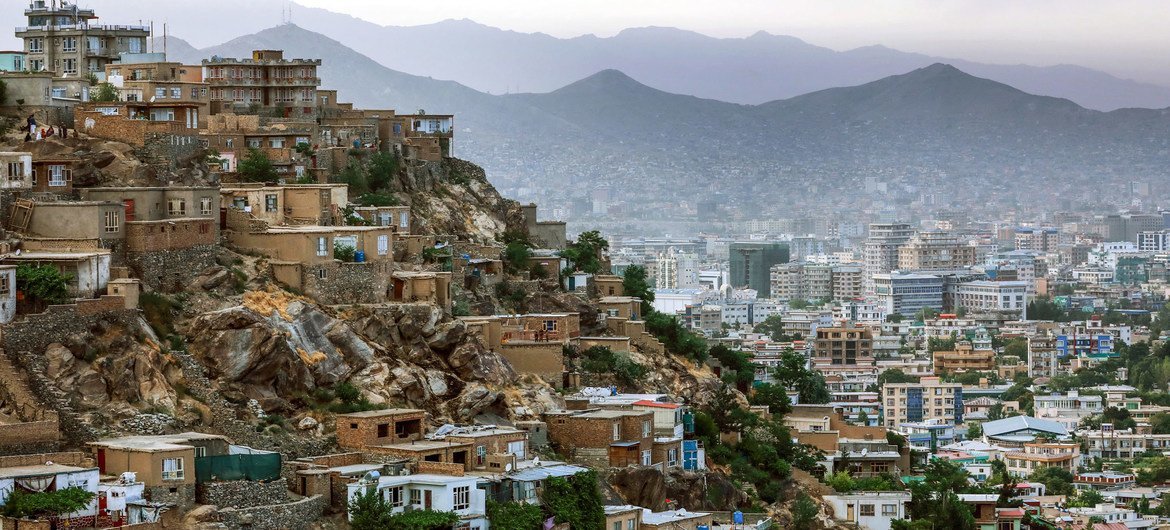
Kabul, the capital of Afghanistan, pictured in June 2020.
ADB/Jawad Jalali
 
Kabul, the capital of Afghanistan, pictured in June 2020.
11 May 2023
Human Rights

“Brutal and undignified” forms of punishment in Afghanistan and the use of capital punishment coupled with a lack of fair trial guarantees, violate international law and must stop immediately, a group of UN-appointed independent human rights experts said on Thursday.

The urgent call from the ten Special Rapporteurs and members of the Working Group on discrimination against women and girls, came in response to an announcement by the Taliban-appointed Supreme Court in favour of punishments including stoning, flogging and burying people under a wall.

Tweet URL

Women most vulnerable

The de facto deputy chief of the court, announced on 4 May that they had sentenced 175 individuals to “retribution in kind” punishments, and 37 to be stoned. Dozens of others were condemned to “crimes against God” punishments such as lashing, said the press statement.

The experts, including the Special Rapporteur on Afghanistan Richard Bennett, noted that “women are more likely to be sentenced to death by stoning, due to deeply entrenched discrimination and stereotypes against them… held by the exclusively male judiciary”.

Cruel, inhuman, degrading

The said that stoning or being buried alive under a wall, constituted torture, or other cruel, inhuman or degrading treatment or punishment. “These cruel punishments are contrary to international law.”

According to a recent report by the UN Assistance Mission in the country, UNAMA, 274 men, 58 women and two boys have been publicly flogged and one judicially sanctioned execution has been carried out within the last six months alone.

Both the International Covenant on Civil and Political Rights and the Convention against Torture and Other Cruel, Inhuman or Degrading Treatment or Punishment, to which Afghanistan is a State party, prohibit torture and other cruel, inhuman or degrading punishment.

Discrimination outlawed

Afghanistan is also a State party to the Convention on the Elimination of All Forms of Discrimination Against Women, which outlaws discrimination against women as well as “prejudices and customary and all other practices which are based on the idea of the inferiority or the superiority of either of the sexes or on stereotyped roles for men and women.”

The experts expressed serious concerns about the fairness of trials preceding corporal punishment and death sentences.

“We urge the de facto authorities to immediately establish a moratorium on the death penalty and all forms of corporal punishment” including flogging and amputation, “each of which constitute torture or another form of cruel and inhuman punishment,” the experts said.

Special Rapporteurs and other UN Human Rights Council-appointed rights experts, work on a voluntary and unpaid basis, are not UN staff, and work independently from any government or organisation.


 https://news.un.org/en/story/2023/05/1136562

https://creativecommons.org/licenses/by/3.0/legalcode


пятница, 28 апреля 2023 г.

"Afghanistan: Security Council condemns Taliban’s ban on women working for UN | UN News"

Young girls attend class at a UNICEF-supported school in Helmand Province, Afghanistan. (file)
© UNICEF/Mark Naftalin
 
Young girls attend class at a UNICEF-supported school in Helmand Province, Afghanistan. (file)
27 April 2023
Women

In a landmark resolution, the UN Security Council on Thursday condemned the de facto rulers of Afghanistan’s decision to ban women nationals from working for the United Nations, calling for Taliban leaders to “swiftly reverse” their decision.

The resolution passed unanimously by the 15-member body in New York, calls for the “full, equal, meaningful and safe participation of women and girls in Afghanistan”, and urges all countries and organisations with influence on the fundamentalist rulers of the country, “to promote an urgent reversal” of policies which have in effect erased women from public life.

Since the Taliban takeover of July 2021, when its forces toppled the democratically-elected Government, it has rolled back a wide range of human rights of women and girls, including a ban on attending high school and university, restrictions on movement and work, and in December, a decree banning female nationals from working from most NGOs.

Earlier this month the Taliban extended their ban to women working for the United Nations.

Afghan girls arrive in Rwanda to continue their education.
IOM/Robert Kovacs
 
Afghan girls arrive in Rwanda to continue their education.

The UN underlined its “unequivocal condemnation” of the move in early April, noting that it contravenes international law, including the UN Charter. All UN staff have been told not to report to the office, except for some critical tasks, while an operational review is carried out, concluding on 5 May.

A record 28.3 million people in Afghanistan are in need of assistance this year, making Afghanistan the world’s largest aid operation, with the UN asking for $4.6 billion to fully fund relief efforts this year. The UN Humanitarian Coordinator warned this month that Afghanistan was also the world’s least well-funded operation, with less than five per cent funding pledged so far.

‘Deep concern’

The Security Council resolution lays out ambassadors’ “deep concern” over the ban on women working at the UN, saying that – along with the other erosions of basic rights – “will negatively and severely impact” the UN aid operations throughout the country, “including the delivery of life-saving assistance and basic services to the most vulnerable”.

Security Council Meets on Situation in Afghanistan
UN Photo/Manuel Elías
 
Security Council Meets on Situation in Afghanistan

It stresses that the UN Assistance Mission in the country, UNAMA, will also be unable to implement its humanitarian mandate until the ban ends. The resolution emphasizes that the ban “is unprecedented in the history of the United Nations.”

‘Dire’ economic and humanitarian conditions

The resolution also stresses the urgent need to keep addressing Afghanistan’s “dire economic and humanitarian situation” and help the country restore self-reliance, recognizing the importance of allowing the Central Bank to use assets which are currently frozen outside the country, “for the benefit of the Afghan people.”

The Council backed the continued work of UNAMA reiterating its “full support”, and called on all with a stake in Afghanistan, including Taliban authorities, “to ensure the safety, security and freedom of movement of the United Nations and associated personnel throughout  the country.”


https://creativecommons.org/licenses/by/3.0/legalcode


 https://news.un.org/en/story/2023/04/1136162