воскресенье, 25 июня 2023 г.

Speakers Outline Steps to Strengthen International Cooperation, Fight Impunity as General Assembly Concludes Review of Global Counter-Terrorism Strategy


SEVENTY-SEVENTH SESSION,
 
82ND MEETING (AM)
GA/12512

Speakers Outline Steps to Strengthen International Cooperation, Fight Impunity as General Assembly Concludes Review of Global Counter-Terrorism Strategy

Wrapping up their eighth annual review of the United Nations Global Counter-Terrorism Strategy, several delegates in the General Assembly today outlined the specific measures their countries are taking to curb the spread of terrorism while recognizing the victims of this global menace.

The Assembly on Thursday adopted by consensus a 28-page resolution that unequivocally condemned terrorism in all its forms, underscored the importance of the 2006 road map, and reaffirmed the Strategy’s four Pillars.  (For background, see Press Release GA/12511.)

The representative of Spain welcomed the text’s reference to the 2022 United Nations Global Congress of Victims of Terrorism.  He said that remembering the victims of terrorism is a priority for his Government, which, on 22 June, inaugurated a museum in Victoria, Spain, to commemorate victims.  He also commended the institutional development of the United Nations Counter-Terrorism Office and said the Madrid Programme Office — inaugurated last week — shows Spain’s commitment.

The representative of Morocco said his Government’s dedication to combat terrorism and violent extremism can be seen through its creation of the first Programme Office for Counter-Terrorism Training in Africa and the launch of the Marrakech Platform — the first African Platform of Africa’s Heads of Counter-Terrorism and Security Agencies.  The country co-chairs the Africa Focus Group and the Global Coalition to Defeat Da’esh/ISIS, he said, adding that, as a Co-Chair of the Global Counter-Terrorism Forum from 2015 to 2023, Morocco has guided its efforts on international counter-terrorism cooperation.

El Salvador works strongly and diligently to fight terrorism and its links with transnational organized crime, including by controlling unauthorized border crossings, its delegate said.  A Territorial Control Plan, which includes training officers in the National Civil Police, was developed to strengthen border control.  He said the country’s population has regained trust in State security institutions’ efforts to denounce terrorists who try to hide in their communities.

Lebanon’s delegate stressed the importance of using a bottom-up approach that envelopes grass-roots groups, along with international organizations, to fight terrorism.  The battle against impunity must be a cornerstone of countering terrorism, he said.  Prosecuting these crimes before the International Criminal Court would tell terrorists that they could not escape international justice, even though they are not a part of any State.  “Terrorists must be shown the international community will not tolerate zones of impunity,” she said.

Several delegates also recognized the spirit of partnership that led to the resolution’s adoption by consensus, despite the many differences that emerged during negotiations.  This consensus “made this resolution a living document by reflecting the changing reality of the global terrorism landscape in it”, said the Republic of Korea’s delegate, calling on all Member States to evenly implement the Strategy’s four Pillars while ensuring respect for human rights, fundamental freedoms and the rule of law.

The Director of Counter-Terrorism for the International Criminal Police Organization (INTERPOL) recognized the importance of coordinating international efforts to address terrorist threats, which are evolving and have become less predictable in nature.  The organization, whose databases present the largest repository of information on foreign terrorist fighters, aims to align Member States’ foreign policy interests with forceful law enforcement action in a complex operating environment.  “We want to be more collaborative and forward-looking in the fight against terrorism. You are all vital partners in this common endeavour,” he said.

Statements

DAVID IZQUIERDO ORTIZ DE ZARATE (Spain), welcoming the participation of many delegations and civil society in the review process, said:  “We are all united against terrorism.”  While highlighting the inclusion of the reference to the High-Level Conference on Human Rights, Civil Society and Counter-Terrorism — held in Malaga, Spain, in May — he expressed hope that the Conference’s inclusive nature will enhance stakeholders’ cooperation.  He also welcomed the reference to the 2022 United Nations Global Congress of Victims of Terrorism, noting that this topic is a priority for Spain. In this context, he reported on the inauguration of a museum to commemorate the victims of terrorism in Victoria, Spain, on 22 June, while expressing hope that the second meeting of the Congress — that will take place in Spain in 2024 — will help to develop this concept.  Commending the institutional development of the United Nations Counter-Terrorism Office, he said that Madrid Programme Office — inaugurated last week — shows Spain’s commitment to this end.

FABIÁN ODDONE (Argentina) said terrorism must be combated through the rule of law and respect for human rights.  This requires permanent international cooperation based on absolute respect for international law and the principles enshrined in the Charter of the United Nations.  His country suffered two terrorist attacks on its own territory:  the 1992 attack on the Israeli Embassy in Buenos Aires and the attack on the Argentine Israelite Mutual Association in 1994.  Argentina has worked to carry out the Global Counter-Terrorism Strategy since its last review, he said.  For example, under Pillar I, it has anti-terrorism legislation in place that meets international standards, including guaranteeing rights for victims. This includes advice, legal representation, protection and access to justice.  Within the framework of Pillar II of the Global Strategy, Argentina continues to strengthen its preventive capacities, such as coordinating work between security forces to controls its borders, he said.

TOFIG F. MUSAYEV (Azerbaijan) said that, for 30 years, his country’s occupied territories have been a zone of presence of infiltrated terrorists, mercenaries and other armed groups.  Noting that radical ethnic diaspora communities are facilitating the recruitment of foreign terrorist fighters and mercenaries and fund their activities, he underscored the importance of border security in tackling illegal cross-border trafficking and organized crime.  Further, he pointed to the increase of terrorist acts against diplomatic and consular missions and representatives, while pointing out that the efforts of the receiving States were insufficient or fertile.  “Bringing the perpetrators of acts of terrorist acts to justice must remain a priority,” he said, advocating against granting amnesty or any other form of early release to terrorists.  In this context, “shielding and glorification of terrorists cannot be tolerated”, he added, while expressing support for the relevant accountability provisions to this end.

JOSÉ EDUARDO PEREIRA SOSA (Paraguay) said his delegation voted in favour of the Counter-Terrorism Strategy resolution, which offers a common approach for Member States to fight terrorism in all its forms.  Paraguay is committed to fighting terrorism and to work with the international community in that regard.  Technology can strengthen States’ capacity to address the forms of terrorism that use the Internet and social media.  The biannual review of the Global Strategy is an essential opportunity to revive international efforts and identify areas that require greater attention in the future, he said, adding that the Secretary-General’s report provides a solid foundation for future discussions.  Cooperation in all modalities is essential, such as the sharing of best practices, he said.  He recognized the important role of the United Nations Counter-Terrorism Office.

KHALID LAHSAINI (Morocco), associating himself with the Organisation of the Islamic Cooperation (OIC), said that his country engaged in the review process through a cumulative approach, building on the last seven reviews, and submitted constructive proposals. Noting that combating terrorism and violent extremism is Morocco’s priority, he said this approach is aligned with the high instructions of King Mohammed VI.  To this end, the Government supported the creation of the first Programme Office for Counter-Terrorism Training in Africa and the launch of the Marrakech Platform — the first African Platform of Africa’s Heads of Counter-Terrorism and Security Agencies.  In addition, the country co-chairs the Africa Focus Group and the Global Coalition to Defeat Da’esh/ISIS, he said, adding that as a Co-Chair of the Global Counter-Terrorism Forum from 2015 to 2023, Morocco has guided its efforts on international counter-terrorism cooperation. He also pointed out that his country is a President of the Group of Friends on Counter-Terrorism and a member of the Counter-Terrorism Centre’s Advisory Committee. 

SHINO MITSUKO (Japan) said many different views were expressed during negotiations and not all views were reflected in the adopted resolution.  Yet, the spirit of consensus was a show of united good will and commitment.  She welcomed the inclusion of language on Council resolution 2664 (2002).  “We emphasize that this is a landmark resolution at the nexus between humanitarian activities and Security Council sanction measures,” she said, adding that Council sanctions are an important tool to maintain and restore international peace and security.  She also welcomed language on ensuring appropriate follow-up efforts on the Kyoto Declaration towards the fifteenth United Nations Congress on Crime Prevention and Criminal Justice in 2026.  It is critical that Member States update their policies to meet the global challenges of fighting crime and terrorism.  She reiterated the importance of human rights, gender and upholding the rule of law, which make up Pillar IV of the Strategy.

RUCHIRA KAMBOJ (India) said that, because States that are motivated by narrow political agendas look for a reason to justify terrorist acts, the global resolve to fight terrorism gets diminished.  Noting that India has faced State‑sponsored, cross-border terrorism in the past three decades, she said counter-terrorism must be one of the top priorities of the United Nations.  Pointing to the Special Counter-Terrorism Committee, that was held in Mumbai and New Delhi in October 2022, she recalled that the Delhi Declaration provided a road map to address terrorism.  In this regard, she expressed regret that co-facilitators not only disregarded her delegation’s support and trust, but also acted in a non-transparent, non-consultative and partial manner, making an exception to accommodate concerns of one delegation, while ignoring India’s contributions and concerns.  Explaining her disassociation, she said that co-facilitators forced her delegation to “accept an outcome that the wider membership does not deserve”, adding:  “This was a path that we did not choose willingly, but the one that was, regretfully, forced upon us.”

CARLOS EFRAÍN SEGURA ARAGÓN (El Salvador) said that, as a founding member and signatory to the Charter, his delegation remains firmly committed to all initiatives to promote international peace and security.  He strongly condemned terrorism in all its forms and manifestations and welcomed the Counter-Terrorism Committee's Delhi Declaration on Countering the Use of New and Emerging Technologies for Terrorist Purposes.  The emphasis on cooperation will help Member States build capacity and technical assistance programmes.  His delegation always works strongly and diligently to fight terrorism and its links with transnational organized crime, such as using measures to control unauthorized border crossings, he said.  El Salvador has trained officers in the National Civil Police and mobilized resources to strengthen border controls.  The central policy of these efforts has been the Government’s Territorial Control Plan.  He said the country’s population has regained trust in State security institutions to denounce terrorists who try to hide in their communities.

DANG HOANG GIANG (Viet Nam) said that regional destabilization, power vacuums, sectarian divisions, arms proliferation and ideological polarization create favorable conditions for terrorist organizations.  While the COVID-19 pandemic has exacerbated the conditions conducive to terrorism, it has also deepened socioeconomic disparities that provided ground for terrorist exploitation.  “Terrorism and extremism have become a global menace, impacting countries worldwide, and Viet Nam is no exception,” he stressed, reporting on an incident in Dak Lak Province that occurred 10 days ago where an armed group employed military firearms and improvised weapons to carry out terrorist attacks, claiming nine lives.  The perpetrators “exhibited ruthless violence and an utter disregard for human life”, while hijacking vehicles, targeting and killing civilians and tacking hostages, he said, calling for condemnation and punishment for the individuals and organizations responsible to this end.

JEANNE MRAD (Lebanon) said the adoption of the resolution by consensus is a strong sign of the role that multilateralism can play in fighting terrorism. Her country has been hard hit by the scourge.  Terrorism has existed for a long time, yet a troubling evolution is the use of technology to recruit terrorists and terrorism’s symbiosis with international crime.  The battle against impunity must be a cornerstone of countering terrorism, he said, adding that prosecuting these crimes before the International Criminal Court would send a strong signal to terrorists that they could not escape international justice, even though they are not a part of any State.  “Terrorists must be shown the international community will not tolerate zones of impunity,” she said.  A bottom-up approach that uses grass-roots organizations, along with international organizations, to fight terrorism is imperative.  Political stability and decent standards of living are essential to address terrorism’s the root causes, she said, adding that countries facing inequality and weak institutions are at greater risk.

ROSALIND NYAWIRA (Kenya) said that its Global Programme on Preventing and Countering Violent Extremism shows the advantages of popular participation and community-led interventions in creating local ownership, partnerships and peer-to-peer learning, while also empowering communities to better understand and respond to the evolving threats.  “The threat of terrorism is not waning,” she stressed, pointing out that terrorist groups have acquired endurance, resilience and ability to regenerate. Recognizing that Africa has become a global epicenter of terrorist activity, she also said that youths’ deprival of education and employment, poverty and inequality, as well as uncontrolled arms and bad Governance trigger radicalization.  These challenges demand innovative multilateral approaches, she underscored, noting that the adoption of the “forward-looking and responsive” Strategy meets these challenges and effectively responds to the global threat of terrorism.

KIM HYUNSOO (Republic of Korea) said the evolving nature of global terrorism means the international community must keep the Counter Terrorism Strategy relevant and up to date to effectively respond to new and emerging terrorist threats.  At the same time, national capacities in compliance with international law must be supported.  He said all Member States reached consensus despite some differences and “made this resolution a living document by reflecting the changing reality of the global terrorism landscape in it”.  He called on all Member States to evenly implement all Pillars of the Strategy while ensuring respect for human rights, fundamental freedoms and the rule of law.  Sharing concerns about terrorists’ expanding use of information and communications technology (ICT) for terrorist purposes, his delegation commits to working with Member States and otherstakeholders, including academia, the private sector and civil society.  He encouraged the full, equal and meaningful participation of women and youth in this process.

LARBI ABDELFATTAH LEBBAZ (Algeria), associating himself with OIC, said that his country is at the forefront of the fight against terrorism.  Focusing on the implementation of policies, strategies and programme development, Algeria is also securing its borders against residual terrorism.  Moreover, the country maintains focus on the terrorism criminalization and financing, while also preventing the activities of foreign terrorist fighters, maintaining vigilance and reinforcing military measures to secure its borders.  While implementing its multidimensional de-radicalization policy — that combines political, economic, social and cultural measures — Algeria engages public institutions, civil society and individual citizens to that end.  In addition, the Government also counters terrorism and violent extremism on the Internet and social media, while strengthening regional and international cooperation and information-sharing.

ANDRANIK GRIGORYAN (Armenia) noted the review resolution contains several paragraphs on addressing threats posed by the recruitment, financing and transfer of foreign terrorist fighters between different regions and to conflict zones.  The rapid advancement of technology, along with new forms of terrorism financing and the illicit flow of weapons, have created conducive environments for these fighters in almost every region.  His delegation has undertaken several practical measures to prevent the free movement of terrorists and combat transnational organized crime, money-laundering and terrorism financing, in line with the Global Counter-Terrorism Strategy and relevant Security Council resolutions.  The recruitment of foreign terrorist fighters and their transfer to conflict zones in Armenia’s region has been extensively documented by law enforcement agencies and independent observers.  He acknowledged the Council Sanctions Committees’ important role in ensuring accountability for terrorist entities and individuals and monitoring Member States compliance with the sanction regimes.

PETER MOHAN MAITHRI PIERIS (Sri Lanka) said that his country rehabilitated 12,000 former Liberation Tigers of Tamil Eelam cadres, including 594 child soldiers, and reintegrated them back into society after 2009.  In addition, the Government has resettled internally displaced persons and demined territories to enabling civilian life to resume after conflict.  Through its legal framework, Sri Lanka has enabled law enforcement and the legal system to address terrorism.  In particular, the Prevention of Terrorism Act and the Public Security Ordinance provide the means for national counter-terrorism efforts.  These laws are currently under review to ensure their consonance with global best practices and international law.  In this context, the Government has implemented legislative measures, including the establishment of the Financial Intelligence Unit, and enacted laws to prevent money-laundering.  Recalling that his country has dealt with terrorism for three decades and is the “only nation to have eradicated terrorism”, he stressed:  “We need to embark on concrete collective measures.”

RIYAD H. MANSOUR, Permanent Observer for the State of Palestine, said the gravest form of terrorism is one in which an entire nation’s rights, people and land are under a constant and systematic campaign of terror.  Israeli occupying forces and settlers continue killing and maiming Palestinians.  The international community has recognized that upholding international law and fundamental freedoms and developing counter-terrorism measures are mutually reinforcing.  It has learned that violating the former, under the pretext of pursuing the latter, undermines global efforts to eliminate terrorism.  Israel’s unlawful criminalization of civil society organizations, under the rubric of “terrorism”, aims to oppress any opposition to its perpetual military colonial rule.  “The counter-terrorism discourse cannot and must not become the way to justify a counter-rights strategy,” he added.  The Global Counter Terrorism Strategy should be about promoting the rule of law, not justifying its breach.  It should address the root causes of terrorism, not perpetuate them, he stressed.

GREGORY HINDS, Director of Counter-Terrorism of the International Criminal Police Organization (INTERPOL), recognizing the importance of coordinating international efforts in addressing terrorist threats, said INTERPOL’s databases present the largest repository of information on foreign terrorist fighters. In 2022, 2,500 wanted fugitives for terrorism and other serious offences were apprehended across the world thanks to information-sharing through INTERPOL channels, he reported.  The organization’s Counter-Terrorism Strategy aims at enhancing information-sharing, better informing operational and investigative responses by using intelligence, and providing needs-driven focal support and technical expertise-tailored assistance.  Noting that in 2023 INTERPOL will commemorate its centenary, he pointed to the evolving, less-predictable terrorist threats.  In this context, INTERPOL aims at aligning Member States’ foreign policy interests with impactful law enforcement action in its complex operating environment, he stressed, adding:  “We want to be more collaborative and forward-looking in the fight against terrorism.  You are all vital partners in this common endeavor.”


https://press.un.org/en/2023/ga12512.doc.htm


https://creativecommons.org/licenses/by/3.0/legalcode

пятница, 23 июня 2023 г.

Sudan: OHCHR calls for ‘urgent action’ to end militia attacks on people fleeing El Geneina


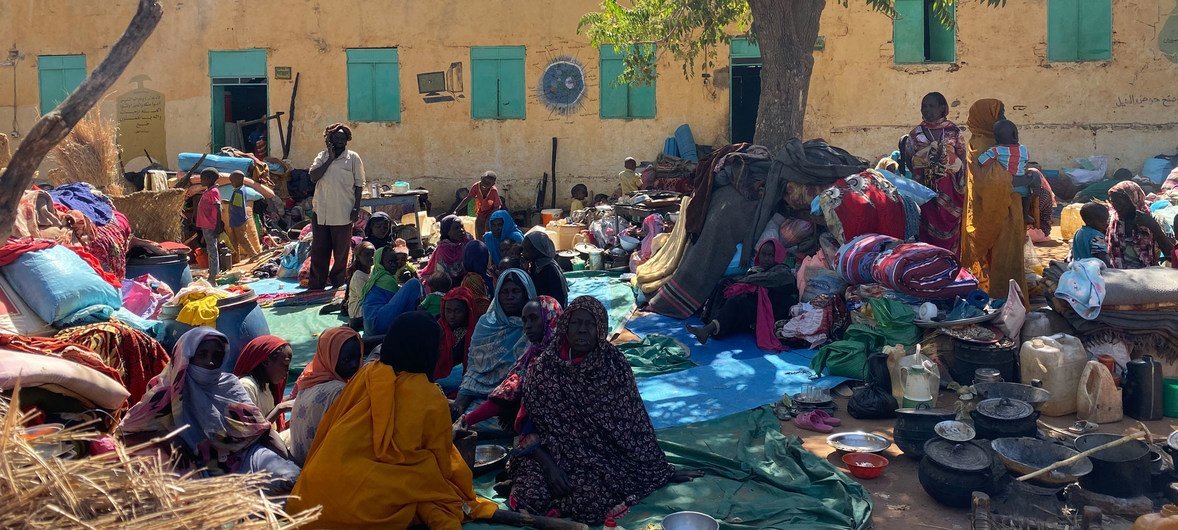
Violence between communities in West Darfur has forced many people to flee their homes around El Geneina town.
©UNHCR/Modesta Ndubi
 
Violence between communities in West Darfur has forced many people to flee their homes around El Geneina town.

24 June 2023
Peace and Security

The UN human rights office (OHCHR) on Saturday said it was gravely concerned at reports of “wanton killings” by “Arab” militia in Sudan’s West Darfur backed by the Rapid Support Forces (RSF), primarily targeting men from the Masalit community.

The explosion of ethnic violence in Darfur largely by nomadic “Arab” groups in alliance with the RSF who have been battling national army forces for control of the country since mid-April, has led tens of thousands to flee into neighbouring Chad.

‘Horrifying accounts’

In a statement, OHCHR Spokesperson Ravina Shamdasani said interviews with people fleeing the decimated city of El Geneina have revealed “horrifying accounts” of people being killed on foot by the RSF-supported militia.

“All those interviewed also spoke of seeing dead bodies scattered along the road – and the stench of decomposition”, she said. “Several people spoke off seeing dozens of bodies in an area referred to as Shukri, around 10km from the border, where one or more of the Arab militias reportedly has a base.”

She said immediate action to halt the killings was essential.

The High Commissioner for Human Rights calls on the RSF leadership to immediately, unequivocally condemn and stop the killing of people fleeing El-Geneina, and other violence and hate speech against them on the basis of their ethnicity. Those responsible for the killings and other violence must be held accountable.”

Safe passage

She added that people fleeing El Geneina must be guaranteed safe passage and humanitarian agencies allowed access to the area so they can collect the bodies of the dead.

“Out of 16 people we have so far been able to interview, 14 testified that they witnessed summary executions and the targeting of groups of civilians on the road between El-Geneina and the border – either the shooting at close range of people ordered to lie on the ground or the opening of fire into crowds.”

The civilian exodus from the city intensified following the killing of the state governor on 14 June just hours after he accused the RSF and militias of “genocide” – raising the spectre of the hundreds of thousands killed between 2003-2005 during a Government-orchestrated campaign of violence.

Tweet URL

Ms. Shamdasani said the testimonies recounted killings that took place on 15 and 16 June, but also during the past week.

Deadly hate speech

“We understand the killings and other violence are continuing and being accompanied by persistent hate speech against the Masalit community, including calls to kill and expel them from Sudan.”

One 37-year-old told the UN that from his group of 30 people fleeing to the Chad border, only 17 made it across, the Spokesperson recounted.

“Some were killed after coming under fire from vehicles belonging to the RSF and ‘Arab’ militia near the Chad border, while others were summarily executed, he said. Those who survived had their phones and money looted from them by armed men shouting: ‘You are slaves, you are Nuba’”.

A 22-year-old woman gave similar accounts of killings. She told how one badly wounded young man had to be left on the ground: “We had to leave him because we had only one donkey with us".

El Geneina has become uninhabitable”, said Ms. Shamdasani with essential infrastructure destroyed and movement of humanitarian aid to the city, blocked.

We urge the immediate establishment of a humanitarian corridor between Chad and El-Geneina, and safe passage for civilians out of areas affected by the hostilities.”


 https://news.un.org/en/story/2023/06/1138072


https://creativecommons.org/licenses/by/3.0/legalcode

Somalia in danger of losing hard-won gains, Security Council hears


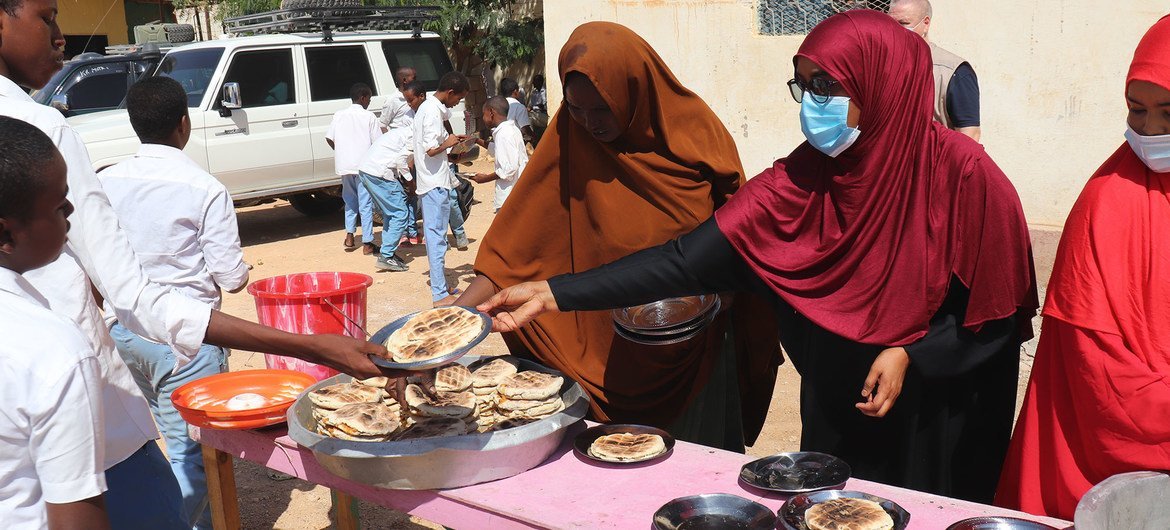
Meals are served in Garowe, Somalia, as part of a project for schools, supported by the World Food Programme (WFP).
© WFP/Petroc Wilton
 
Meals are served in Garowe, Somalia, as part of a project for schools, supported by the World Food Programme (WFP).
22 June 2023
Peace and Security

Despite gains made in tackling terrorism and advancing the electoral process in Somalia, top UN officials warned the Security Council on Thursday that extra effort and funding are needed to address multiple threats, from climate shocks to spates of violence amid a looming food crisis.

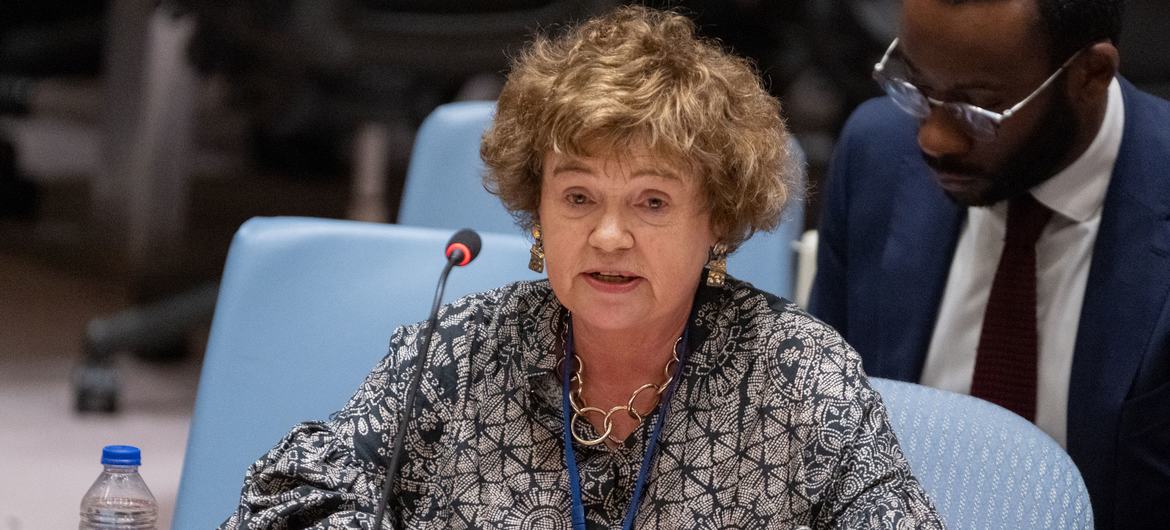
“Whilst many challenges and risks lie ahead, there are also many opportunities, and I urge all international partners to lean in and provide additional support to the people,” said the UN Secretary-General’s Special Representative for Somalia Catriona Laing.

Regarding current security conditions, Ms. Laing, who also heads the UN Assistance Mission in Somalia (UNSOM), raised concerns about terrorist attacks as well as violence, including in Laascaanood, the capital of the Sool region, long disputed between “Somaliland” and Puntland.

Clashes there between “Somaliland” forces and local Dhulbahante clan militia continued at varying levels of intensity, causing significant casualties, destruction of infrastructure and displacement of civilians, according to the UN Secretary-General’s latest report on the situation.

To date, there have been 308 civilian casualties, with 36 people killed and 272 injured, she said.

Commending efforts by all parties and the Security Council to bring about a ceasefire, she pledged UNSOM’s support towards a peaceful way forward.

Catriona Laing, Special Representative of the UN Secretary-General for Somalia, briefs the Security Council.
UN Photo/Eskinder Debebe
 
Catriona Laing, Special Representative of the UN Secretary-General for Somalia, briefs the Security Council.

Gains made

Reporting several positive political developments, she highlighted the Government’s “significant progress” in advancing key national priorities, including the electoral process, and its leadership in the fight against terrorism.

Efforts have dislodged the terrorist group from parts of the country “but, Al Shabaab remains a significant threat,” Ms. Laing cautioned, pointing to a resurgence of attacks, including the deadly incident at the Pearl Beach Hotel in early June.

“The first three months of 2023 also saw the highest number of improvised explosive device attacks since 2017,” she said.

More support needed

Ongoing stabilization activities related to Al Shabaab will require support, she said, adding that UNSOM has stepped up its response in this regard.

The challenge remains the sustainability of these gains,” she added.

Efforts to stabilize areas recovered from the terrorist group will require ongoing security, basic services, reconciliation, and long-term political and State-building processes, she said.

Outlining a three-phase transition plan, she said an overriding driver is in the security sector, which must be considered alongside plans for the possible drawdown of the UN Support Office in Somalia (UNSOS) and the eventual handover of UNSOM to the UN Country Team.

Going forward, she outlined priorities for the rest of 2023, which include a lead role for UNSOM in galvanizing the international community’s efforts on stabilizing the country, supporting the State-building process, and resolving the conflict in Laascaanood.

Precarious living conditions

Meanwhile, the humanitarian situation remains “precarious”, she said. While the current operation against Al Shabaab has contributed to improving security, she said that from January to March, 430,000 people have been displaced by violence and 580,000 people live in areas controlled by non-State armed actors.

In addition, climate shocks are becoming more severe, and women still need appropriate representation in the political, peace, and security fields, she warned.

“Their representation needs to be codified,” she said, pointing to Somalia’s failure to fulfill its commitment to ensure a 30 per cent quota of women represented in federal elections.

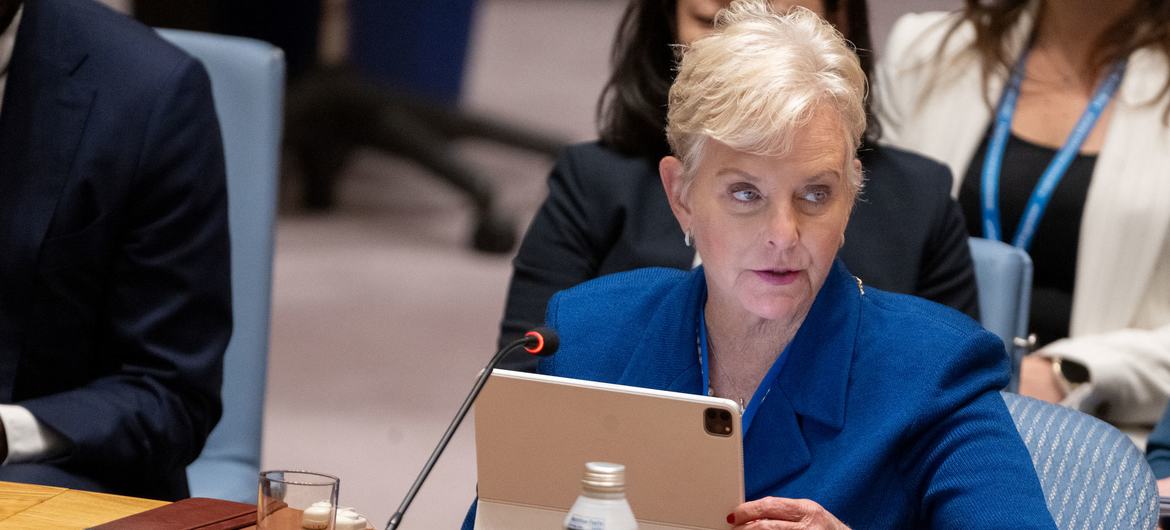
Cindy McCain, Executive Director of the World Food Programme, briefs members of the Security Council on the situation in Somalia.
UN Photo/Eskinder Debebe
 
Cindy McCain, Executive Director of the World Food Programme, briefs members of the Security Council on the situation in Somalia.

Food insecurity

Executive Director of the World Food Programme (WFP) Cindy McCain, said the violence and instability scarring the country has destroyed much of the infrastructure needed to support food production and distribution.

“Somalia was hauled back from the abyss of famine in 2022 because the international community saw the warning signs flashing red and raced to respond,” she said. “But, now we are in danger of losing the precious gains we have made since those dark days last year.”

Recalling a recent country visit, she said violence, fear, and starvation “are a daily reality there”, with mothers she spoke to recounting entire livestock herds wiped out by drought and terrorist groups recruiting children as young as 11.

Growing emergency

Since the start of 2022, conflict has triggered over one million internal displacements, and climate disasters have fuelled a further 2.1 million displacements over the past three years, she said.

The latest food security data show that food insecurity is spiralling across Somalia, with more than 6.6 million people – one third of the population – expected to face crisis or worse levels of hunger, including 40,000 people fighting for survival in famine-like conditions.

Even worse, 1.8 million children are expected to suffer acute malnutrition in 2023, she said.

Highlighting an action plan to address the serious and growing emergency, she said collective efforts must ensure safe aid deliveries, with the Security Council leading to secure unimpeded humanitarian access to all vulnerable communities in Somalia.

Breaking vicious cycles

In addition, food assistance must be matched with investments to rebuild livelihoods, strengthen resilience, and support climate adaptation programmes, she said.

She called on Member States to immediately contribute to the country’s humanitarian response plan, which is seriously underfunded. 

“At WFP, we’re being forced to cut back on our life-saving assistance programmes, just when they’re needed the most,” she said, adding that the agency had, in April, reduced assistance to 3 million from the 4.7 million people it was serving each month.

“Without an immediate cash injection, we will have to cut distribution lists again in July to just 1.8 million per month,” she said, emphasizing that with the required funding, WFP will “reverse these life-threatening cuts” and continue supporting the millions who rely on the agency for survival.

She said these “proven solutions” are the only way to finally break the vicious cycle of hunger and poverty.

“We all have to work together to find political solutions to create stability and peace in Somalia,” she said. “This is what the exhausted people of Somalia want and need, above all.”

For more details on this and other meetings occurring throughout the UN system, visit our dedicated UN Meetings Coverage page.


https://creativecommons.org/licenses/by/3.0/legalcode

 https://news.un.org/en/story/2023/06/1138027

четверг, 22 июня 2023 г.

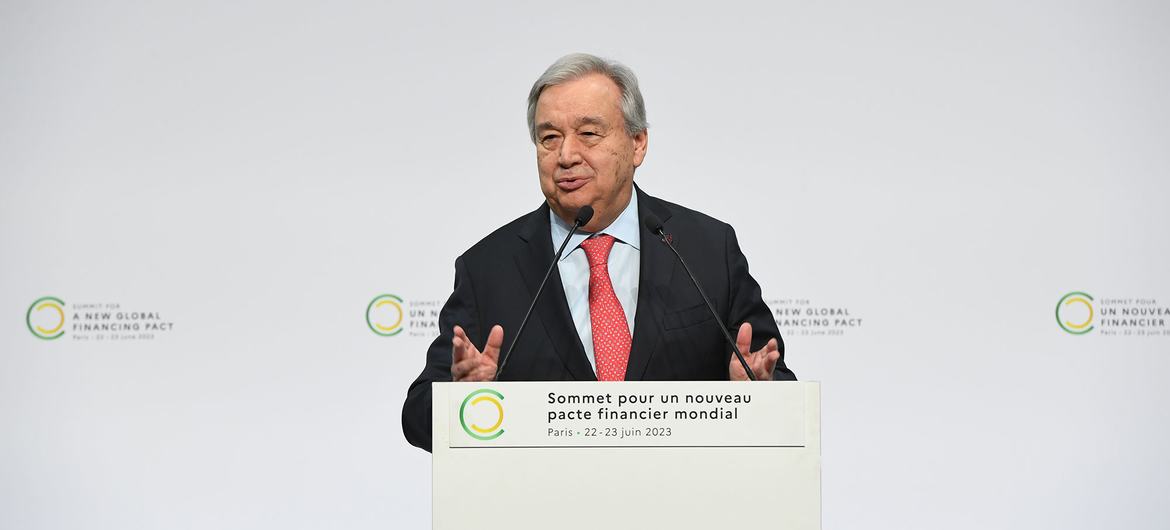
Financial system must evolve in ‘giant leap towards global justice’: Guterres


UN Secretary-General António Guterres addresses the Summit for a New Global Financial Pact in Paris, France.
United Nations/Cyril Bailleul
 
UN Secretary-General António Guterres addresses the Summit for a New Global Financial Pact in Paris, France.

22 June 2023
Economic Development

Developing countries are buckling under high debt and exorbitant borrowing costs, that prevent them from reviving their economies, UN chief António Guterres said on Thursday.

Speaking at the Paris Finance Summit, Mr. Guterres said many African States were spending more on debt repayments than on desperately needed healthcare, and that over 50 countries were either in default or “dangerously” close to it.

The UN chief called for a debt relief mechanism that supports payment suspensions, longer lending terms and lower rates to make borrowing more affordable for poorer nations, as well as increased access to liquidity for developing countries via the International Monetary Fund’s Special Drawing Rights.

Mr. Guterres also repeated his urgent call to end fossil fuel subsidies and increase climate adaptation funding for vulnerable countries.

French President Emmanuel Macron addresses the Summit for a New Global Financial Pact in Paris, France.
United Nations/Cyril Bailleul
 
French President Emmanuel Macron addresses the Summit for a New Global Financial Pact in Paris, France.

Steps to beat poverty, hunger

“Taken together, these steps would help to beat poverty and hunger, uplift developing and emerging economies, and support investments in health, education and climate action,” he said, stressing that the measures would enable a “giant leap” towards global justice.

Doing nothing is simply not an option and at the halfway point to reaching the 17 Sustainable Development Goals (SDGs) they are “drifting further away by the day”, he warned delegates to the Summit for a New Global Financing Pact.

He said it was clear the international financial architecture built in the aftermath of World War Two “has failed in its mission to provide a global safety net for developing countries.

“It essentially reflects, even with some changes, the political and economic power dynamics of that time”, when three quarters of today’s nations weren’t around the table at Bretton Woods. 

Tweet URL

‘Outdated, dysfunctional, unjust’

“Nearly 80 years later, the global financial architecture is outdated, dysfunctional, and unjust. It is no longer capable of meeting the needs of the 21st century world: a multipolar world characterized by deeply integrated economies and financial markets. But also marked by geopolitical tensions and growing systemic risks.”

He warned the current global financial system exacerbates inequalities, denying the poorest countries the credit and debt support they need and deserve. 

European citizens received nearly 13 times more than African citizens under current rules for Special Drawing Rights to weather recent crises, a situation that is “profoundly immoral” said Mr. Guterres. 

“A financial architecture which does not represent today’s world is at risk of leading to its own fragmentation in a world where geopolitics is in itself a factor for fragmentation.

No solution without reform

“There will be no serious solution to this crisis without serious reforms.”

He said change would not happen fast and was a question of power and political will.

“But as we work for the deep reforms that are needed, we can take urgent action today to meet the urgent needs of developing and emerging economies.”

He said richer nations could establish “a really effective and time effective debt relief mechanism that supports payment suspensions, longer lending terms and lower rates, including for middle income countries with particular vulnerabilities, namely in relation to climate.”

Development and climate finance can be better capitalized, and development banks reformed, allowing better coordination. He said credit rating agencies had become “deeply biased” and contributed to many of the recent financial crises, rather than helping avoid them.

He said taking immediate action towards wholesale reform could curb hunger, “uplift developing and emerging economies, and support investments in health, education and climate action.”

We can take steps right now – and take a giant leap towards global justice.” 

The UN chief said he was aware of the scale of the challenges the international community now faces. 

‘Urgent action’

“Power dynamics and constraints on global cooperation in today’s world make problems more difficult to solve. But solutions are not impossible.  And we can start now.”

He said the following two days of discussion could yield results for millions of people in need. 

“I urge you to make this meeting not just a cri du cœur for change, but a cri de guerre – a rallying cry for urgent action”, the Secretary-General told the Summit.

“We are at a moment of truth and reckoning. Together, we can make it a moment of hope.”

Top Paris School welcomes Guterres

The UN chief shared his perspective on the state of world affairs overall later in the day in the French capital, receiving a warm welcome at the celebrated Paris School of International Affairs, Sciences Po. 

In an address and taking questions from students, he presented ideas for transforming multilateralism to make it fit for today's global challenges. You can

watch it all here on UN Web TV:
https://creativecommons.org/licenses/by/3.0/legalcode

UN Counter-Terrorism Week: Preventing violent extremism


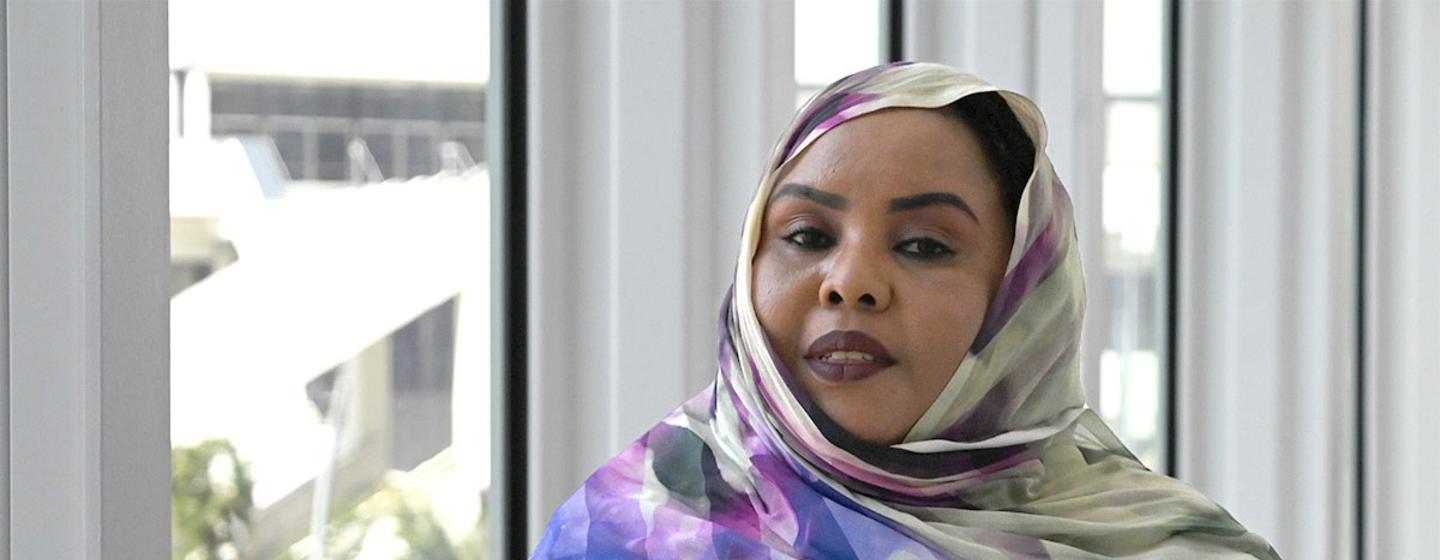
Zeinabou Maata is among a group of women working, with UN support, to prevent the spread of violent extremism in Mauritania.


© UNODC
 
Zeinabou Maata is among a group of women working, with UN support, to prevent the spread of violent extremism in Mauritania.
21 June 2023
Law and Crime Prevention

Zeinabou Maata, a Muslim from Mauritania, is one of 50 women serving on the frontlines of preventing the spread of violent extremism in her country, with UN support.

“Our religion is a true, honest religion that treats women with justice and fairness,” she said, leaning forward for emphasis. 

She knows of what she speaks. She is the daughter of Baba Ould Maata, a highly respected Mauritanian scholar.

Inspired by her father, Ms. Maata has embarked on her own journey of studying the Quran and other traditional texts from a young age, graduating from Mauritania’s largest Islamic institution and studying Islamic law at the post-graduate level. 

Brought up in an Islamic household, Ms. Maata believes it is her responsibility and duty to give back to her community.

Community outreach

Known as the Mourchidates, religiously trained women like Ms. Maata are educating their communities on the risks of violent extremism.

Established in 2021 with the support of the UN Office on Drugs and Crime (UNODC), the Mauritanian Ministry of Islamic Affairs, and the Association of Women Heads of Household, the Mourchidates network works to combat violent extremism in various settings, including prisons, in Mauritania. 

Mauritania belongs to the Sahel region in Africa, an area which has faced “an expansion of terrorism and extremist movements”, Ms. Maata said.

Starting in 2005, Islamic terrorists have carried out several attacks across the country, much to the dismay of devout Muslims and proud Mauritanians, she said. 

Countering messages of hate

“We Mauritanians are tolerant and understanding of others, and we accept and welcome people from other religions,” she said. “These attacks were contrary to both Mauritanian culture and Islamic sharia.”

When asked how best to fight back against rhetoric that uses and distorts Islam, she said the answer is simple: “the Quran”.

Chosen specifically for their expertise on Islam, the women focus on using Islamic arguments to counter messages of hate and violence.

“We clarify verses from the Quran and explain the hadith [a collection of sayings from the Prophet Muhammad], both of which urge peace and civil and community security,” she said. “We point out the seven concepts that are used in extremist discourse, such as jihad, and use Islamic arguments that show the correct intention of these verses, which combats extremist ideologies.”

The Mourchidates determine where and which groups are at risk of falling prey to extremist arguments. They then use their network to facilitate dialogues at prisons, mosques, schools, markets, or even homes.

Extreme prison sentences birth extremist ideas

“Once, we Mourchidates visited a prison, the first time something like this had been allowed in Mauritania,” she said.

Inside, they discovered that one of the female prisoners had been a powerful leader within the Salafist Group, a conservative Islamic movement that follows the practices of early generations of Muslims. 

“Extreme sentences often generate extremist ideas in prisons,” she relates. “We are proud that we were able to persuade her with religious arguments that Islam is a righteous and tolerant religion.”

Eventually, the prisoner announced her withdrawal from these extremist ideas and promised to get involved in activities that serve Mauritania’s security and civil peace, Ms. Maata said, adding that the woman had agreed to participate in a dialogue between religious scholars and former Salafists, sponsored by the Mauritanian Government.

A boy walks on a sand bank surrounding a refugee camp in M'bera, Mauritania.
UNICEF/Dragaj
 
A boy walks on a sand bank surrounding a refugee camp in M'bera, Mauritania.

Early warning systems

In 2022, Mourchidate assistance reached more than 10,000 people. In Nouakchott, the Mourchidates supported the wives, sisters, and mothers of detainees, helping them to abandon violent, extremist ideas.

In Ould Yengé, near the borders with Mali and Senegal, the Mourchidates have contributed to an early warning system by alerting law enforcement forces of suspicious cases.

Meanwhile, in Adel Bagrou, a city bordering Mali, the Mourchidates network provided support to young victims of terrorism who had found refuge in Mauritania, facilitating their integration into everyday life in their new country. 

Mauritania has not experienced a single terrorist attack since 2011, thanks in part to the efforts of people like Zeinabou and the network, according to UNODC.

“Women are capable of achieving anything they set their mind to,” Ms. Maata said. “They have the gift of being persuasive, tipping the scales in their favour, and they should use this ability to help serve their countries.”

Learn more about UNODC’s Sahel gender initiatives here.

UN Counter-Terrorism Week is being held at UN Headquarters in New York from 19 to 23 June. Learn more here.


 https://news.un.org/en/story/2023/06/1138002


https://creativecommons.org/licenses/by/3.0/legalcode

Ongoing Decline in Gulf of Guinea’s Piracy, Armed Robbery Encouraging, But Support Needed to Fully Implement Yaoundé Architecture, Briefers Tell Security Council


9355TH MEETING (PM)
SC/15331


Providing encouraging news about the decline in piracy and armed robbery at sea in the Gulf of Guinea, briefers from both the United Nations and regional organizations also stressed the need to address obstacles hindering the complete implementation of the interregional maritime security mechanism — the Yaoundé Architecture — as the  Security Council took up the matter of peace and security in Africa today.

Martha Ama Akyaa Pobee, Assistant Secretary-General for Africa in the Departments of Political and Peacebuilding Affairs and Peace Operations, attributed the decline in piracy and armed robbery at sea to the concerted efforts of national authorities and support received from regional and international partners.  Expressing her appreciation for the progress achieved by the Gulf of Guinea States and subregional organizations, such as the Economic Community of Central African States (ECCAS), Economic Community of West African States (ECOWAS) and the Gulf of Guinea Commission, she reported that, over the past decade, these entities have demonstrated commendable strides in operationalizing the key pillars of the Yaoundé Architecture.

However, while that mechanism has yielded significant outcomes, including improved information-sharing and optimized utilization of limited naval assets, she said it was imperative to secure increased support to overcome obstacles hindering its full potential, such as inadequate staffing, insufficient equipment and unpredictable financing.  As well, recent data indicates a shift in incidents from the ECOWAS waters to the ECCAS maritime domain.  In this context, she emphasized the necessity of reviewing the Yaoundé Code of Conduct, particularly with regard to addressing underlying economic challenges that contribute to the recruitment of individuals into these criminal networks.

Also briefing the Council, Gilberto Da Piedade Verissimo, President of the Commission of the Economic Community of Central African States, said the Gulf of Guinea region of Central Africa faces many challenges linked to security and illegal and unregulated fishing, among others.  The downward trend in armed robbery at sea can be attributed to States that are now equipped with improved international vessels, a greater international presence in the area and a boost in the sharing of information.  Recalling the 2013 agreement among ECCAS, ECOWAS and the Gulf of Guinea Commission through the Yaoundé Architecture, he noted that much progress has been achieved, but more remains to be done to advance maritime security there.

Echoing those sentiments, Omar Alieu Touray, President of the Economic Community of West African States Commission, underscored the positive outcomes resulting from the establishment of networks between his organization and ECCAS.  Such collaborations have significantly enhanced trust among key stakeholders and the execution of joint maritime operations and exercises. Regarding the Yaoundé Architecture, he expressed the possibility of transforming the Yaoundé Code of Conduct into a legally binding framework, which would further strengthen its effectiveness.

Jose Mba Abeso, Executive Secretary of the Gulf of Guinea Commission, told the Council that piracy remains a persistent challenge in the Gulf of Guinea.  While acknowledging the efficacy of the Yaoundé Architecture, he expressed concern that some countries have been too slow in adopting its Code of Conduct into their national legislation.  “The countries of the Gulf of Guinea region should be encouraged to ratify the Code and fully implement its provisions,” he said.

Taking the floor, many Council members lauded progress in the Gulf of Guinea, but also urged regional actors to remain diligent and committed to maritime security, lest hard-won gains be reversed.

Ghana’s delegate warned that the region is not “out of the woods yet, as we continue to witness vestiges of piracy, armed robbery and illegal fishing”.  She urged regional and international players to implement agreements designed to fight maritime insecurity.  On the root causes of piracy, she said they can be addressed with the prioritization of investments aimed at resolving increasing levels of poverty and high unemployment among the region’s young people.

Echoing a similar sentiment, the representative of the United Kingdom encouraged continued focus on the impact of youth unemployment, as well as environmental degradation in creating conditions for such criminal activity. Any efforts to tackle piracy and armed robbery must comply with the United Nations Convention on the Law of the Sea, he added.

The representative of the Russian Federation expressed concern that piracy activity increasingly resembles a “finely tuned criminal business”. Given that piracy and armed robbery at sea are often associated with other types of crime, she called for the establishment of a specialized mechanism under the auspices of the United Nations.

Brazil’s representative, hailing progress achieved in the Gulf of Guinea as a stellar example of “bringing African solutions to African problems”, also emphasized:  “This is, first and foremost, an accomplishment by the States of the region, as they bear the leadership and primary responsibility to counter piracy and armed robbery in the Gulf of Guinea.”

The meeting began at 3:01 p.m. and ended at 5:30 p.m.

Briefings

MARTHA AMA AKYAA POBEE, Assistant Secretary-General for Africa in the Departments of Political and Peacebuilding Affairs and Peace Operations, said that, since her last briefing to the Council on the matter in November 2022, instances of piracy and armed robbery at sea in the Gulf of Guinea have continued to steadily decline.  This decrease is due to the significant efforts of national authorities and the support of regional and international partners.  Another key factor contributing to this positive trend is the ongoing operationalization of the interregional maritime security mechanism, the Yaoundé Architecture.  She welcomed the steady progress made by the Gulf of Guinea states and subregional organizations, notably the Economic Community of Central African States (ECCAS), Economic Community of West African States (ECOWAS) and the Gulf of Guinea Commission, towards operationalizing the Architecture’s key pillars of the over the past decade.

The operationalization of the Yaoundé Architecture has resulted in enhanced information-sharing, as well as a simplified process for disseminating security-related information with key stakeholders, she continued.  In addition, it has facilitated the efficient use of limited naval assets through the formation of joint naval task groups.  This effective pooling of resources of Gulf of Guinea States has allowed for the bridging of national and regional capacity gaps.  Still, she called for increased support to address several challenges holding back the full operationalization of the Yaoundé Architecture.  These include insufficient staffing, a lack of appropriate equipment and a lack of predictable financing.  Rapidly addressing the challenges that hamper the full operationalization of the Yaoundé Architecture is critical to maintaining current gains.

Recent figures suggest that incidents are shifting from the waters of ECOWAS towards the ECCAS maritime domain, she noted, urging ECCAS, ECOWAS, the Gulf of Guinea Commission and the Interregional Coordination Centre to boost efforts towards the review of the status of its operationalization. Any review of the Yaoundé Code of Conduct must include a focus on three key issues.  First, the criminalization of acts of piracy and the establishment of universal jurisdiction over such acts under national law, in accordance with the United Nations Convention on the Law of the Sea remains necessary. Second, to effectively eliminate the threat posed by piracy, key stakeholders must actively seek to address underlying economic and environmental challenges that underpin the recruitment of individuals into these criminal networks.  Finally, enhanced coordination between the signatory parties, the Interregional Coordination Centre, the Gulf of Guinea Commission, ECOWAS and ECCAS remains essential, she said.

GILBERTO DA PIEDADE VERISSIMO, President of the Commission of the Economic Community of Central African States (ECCAS), speaking via videoconference, said this Council meeting indicates the multidimensional importance of maritime security issues in Africa and the challenges faced by African States in the region.  As a maritime African area in the Atlantic Ocean, the space covers Central and Western Africa; in Central Africa, the Gulf of Guinea extends from Angola in the south to Cameroon in the north.  The area holds tremendous hydraulic, aviation, mining, commercial and tourism potential and is a source of hydrocarbons.  Yet, the Gulf of Guinea region of Central Africa faces many challenges linked, inter alia, to security and monitoring; the protection of marine ecosystems and threatened species; illegal and unregulated fishing, climate change and natural disasters; and coastal erosion and environmental security.

Regarding security issues, he said that, beyond unregulated fishing, there was an attack 25 March on the tanker Monjasa Reformer off the coast of Port Pointe-Noire.  Yet, overall, there were 55 incidents of maritime security during the first six months of 2023, a reduction of piracy and hostage-taking over the past several years.  This downward trend can be attributed to States that are now equipped with improved international vessels, a greater international presence in the area and greater sharing of information.  The creation of the Gulf of Guinea Maritime Collaboration Forum, established in April 2021, has helped coordination work.  Over the past decade, member States of ECCAS have worked to increase maritime security through such activities as expanding the exchange of information, carrying out community monitoring of maritime space; harmonizing relations among Member States; and creating financing mechanisms.

He went on to say that, in 2009, ECCAS adopted a commitment to coordinate efforts and counter insecurity in the maritime space of the Gulf of Guinea.  This protocol established a security strategy for ECCAS member States with vital interests in the Gulf of Guinea.  This protocol also established a regional maritime security centre for Central Africa and boosted coordination.  In 2013, ECCAS decided to formalize its cooperation with ECOWAS and the Gulf of Guinea Commission through the Yaoundé Architecture. It has organized maritime conferences and has increased cooperation with bilateral and regional partners, as well as advocated for Member States’ sovereignty over their waters, he noted.

OMAR ALIEU TOURAY, President, Economic Community of West African States Commission, said that piracy in the Gulf of Guinea has evolved considerably over the last 14 years.  The response of the region and the international community included joined bilateral maritime operations among countries and the adoption of landmark resolutions by the Security Council.  Highlighting substantial progress in inter-institutional coordination, he pointed to the adoption of the Maritime Strategy and the deployment of critical maritime infrastructure in the area which has improved maritime awareness in the Gulf of Guinea.  In this context, he stressed that the ECCAS Maritime Security Architecture established a Regional Centre for Maritime Security in Central Africa in Pointe Noire in the Republic of Congo, as well as multinational maritime coordination centres in Zone D in Douala, Cameroon, and Zone A in Luanda, Angola.

The establishment of networks between ECOWAS and ECCAS has improved information-sharing on maritime situational awareness, conduct and planning of joint maritime operations and exercises with various multinational maritime coordination centres and national maritime operational centres, he continued.  This improved information sharing led to Nigeria’s first arrest and successful prosecution of suspected pirates who attacked a Chinese Fishing vessel — HAILUFENG 11 — in the Ivorian Exclusive Economic Zone.  Similarly, in Togo, in July 2021, suspected pirates were arrested by Togolese forces.  The Global Maritime Crime Programme facilitated the Supplementary Act on the conditions of transfer of persons suspected of having committed acts of piracy and their associated property and evidence for prosecution among member States, adopted in Accra, Ghana, in July 2022.  Other coordinated operational activities included the Nigerian Navy Ship Okpabana’sspecial forces arresting pirates that attacked Panamanian Oil Tanker MT Maximus within the waterways of Sao Tome.

Spotlighting collective responses that led to the improved maritime security situation in the Gulf of Guinea, with continuous downward trends in piracy and armed attacks, he said that actual and attempted piracy and sea attacks declined from 31 in 2015 to 15 in 2022. In 2023, incidence of piracy and armed attacks further declined to five attacks in the first quarter of 2023. Accordingly, he called on the international community to improve its potential investment in the region. Turning to the Yaoundé Architecture, he emphasized that the International Criminal Court should extensively review the planning and organization of the process.  As such, the Yaoundé Code of Conduct can be transformed to a legally binding framework.  He also noted that critical stakeholders like G7++ Friends of Gulf of Guinea — under the Co-Chair of Côte d’Ivoire and Germany — should be involved in hosting the tenth year anniversary of the Yaoundé Architecture within the West African subregion.

JOSE MBA ABESO, Executive Secretary of the Gulf of Guinea Commission, speaking by videoconference, said that safety and security challenges in the region continue to impede economic activities.  Recalling that, on 25 March, a product tanker was hijacked from Pointe Noire, in the Republic of the Congo, and its six crew members kidnapped, he said piracy is a “recurring decimal” in the Gulf. However, he recognized the effectiveness of the Yaoundé Architecture, reporting that in the first quarter of 2023, only five incidents of criminal activities at sea were reported, as compared to 16 in 2021.  Regional cooperation — through information-sharing, joint maritime operations and coordinated naval exercises — strengthened response capabilities in the Gulf.  More so, the countries in the region continue to enhance their legal framework and legislation on maritime security by adopting and implementing laws criminalizing piracy and armed robbery at sea, including Nigeria, which just enacted into law the Suppression of Piracy and other Maritime Offences Act 2019.

The countries in the region are also joining efforts to establish a Combined Maritime Task Force, he said, adding that on 22 May — on the margins of the Presidential Fleet Review in Lagos — 11 Gulf of Guinea countries signed the Concept of Operations.  He urged the Council members to endorse and mobilize international support for the Task Force.  Turning to the regional challenges, he said some countries have been slow in adopting and incorporating the Yaoundé Code of Conduct into their national legislation, while pointing out that not all countries have ratified it.  Also noting that the Inter-regional Coordination Centre in Yaoundé is hampered by the lack of resources, equipment and personnel, he underlined its need for funding.  To review progress and challenges of the Centre, ECOWAS, ECCAS and the Gulf of Guinea Commission will organize a fourth annual meeting of the Heads of Institutions of the Inter-regional Coordination Centre in the third quarter of 2023.

He went on to underscore the importance of engaging non-State actors, including criminal networks and armed groups.  While maritime crimes in the region are linked to poverty, unemployment and lack of alternative livelihood opportunities, it was important to address socioeconomic challenges by resource allocation, capacity-building and information-sharing, among others.  “The countries of the Gulf of Guinea region should be encouraged to ratify the Code and fully implement its provisions,” he stressed, calling on regional and international stakeholders to provide assistance to countries in overcoming barriers to the Code’s ratification and implementation.  In addition, he encouraged them to conduct training programmes and provide technical assistance for naval forces, coast guards and law enforcement agencies, while also undertaking routine patrols, incident responses and investigations.  Highlighting the importance of regular evaluation of the Code’s provisions and strategies to adapt to emerging threats, he said the Gulf of Guinea Commission will occasionally organize sensibilization workshops and outreach activities to this end.

Statements

CAROLYN ABENA ANIMA OPPONG-NTIRI (Ghana), while welcoming the decline in maritime insecurity in the region in recent times, noted that it did not happen by chance.  The positive development can be attributed to several factors, including strong concerted action in strengthening cooperation among stakeholders at the national, regional and international levels, increased naval presence and sharing of intelligence and strengthened judicial processes that have led to the prosecution and conviction of pirates. These efforts need to be sustained, she stressed.  Despite gains made, she noted that the region is not “out of the woods yet as we continue to witness vestiges of piracy, armed robbery and illegal fishing”.

It is essential to prioritize implementation of regional instruments designed to tackle maritime insecurity, tackle the root causes of piracy and armed robbery at sea, and adopt a whole-of-society approach that includes the private sector and local communities, she continued.  Regarding the Yaoundé Code of Conduct, she noted the operational, logistical, funding, and technical gaps hampering its full implementation.  Turning to the root causes of piracy, she said that they can be effectively addressed with the prioritization of investments aimed at resolving increasing levels of poverty and high unemployment, especially among the region’s youth.  It is important to strengthen cooperation under continental initiatives such as the 2050 Africa Integrated Maritime Strategy with critical agencies in the United Nations family.

ISHIKANE KIMIHIRO (Japan) noted the decline in acts of piracy and armed robbery at sea keep is a result of strengthened national efforts and increased regional cooperation, naval patrols and piracy convictions.  The progress must be sustained through continued national ownership and partnerships, as well as addressing the root causes of maritime insecurity.  Coastal States should maintain ownership as they work to criminalize acts of piracy and other forms of maritime crime in their respective national laws.  They must also establish prosecution procedures and improve enforcement capabilities.  All efforts to tackle piracy and armed robbery must comply with the United Nations Convention on the Law of the Sea, which is the legal framework used to monitor all activities in the ocean and seas.

NORBERTO MORETTI (Brazil) said that maritime security in the Gulf of Guinea is a positive result achieved in Africa in recent years.  “This is, first and foremost, an accomplishment by the States of the region, as they bear the leadership and primary responsibility to counter piracy and armed robbery in the Gulf of Guinea,” he said.  Regional groups working together towards this end is an example of “bringing African solutions to African problems”.  Having said that, a recent uptick in maritime crime in the Gulf of Guinea show that the joint efforts by regional countries and organizations must continue, lest hard-won gains be reversed.  Piracy and armed robbery at sea in the Gulf have an impact on the economy of the whole region.  They disrupt shipping, trade and Government revenues, he said, noting the connection between maritime security and the social and economic development of coastal regions.

ALEXANDRE OLMEDO (France), commending the significant drop in acts of piracy in the Gulf of Guinea, said that the countries of the region should criminalize acts of piracy, conduct investigations and facilitate prosecutions. Further, he stressed the need to operationalize the Yaoundé Architecture.  The Council must remain mobilized and continue to closely monitor maritime security issues in the Gulf of Guinea as these threats are constantly evolving.  Also, the international community must be vigilant about any link between organized crime and terrorism, he said, adding that coastal countries are under increasing security and humanitarian pressure from Sahelian terrorist groups.  In this context, he recalled that the European Union is the only partner to deploy a continuous maritime presence in support of the States of the Gulf of Guinea.  Highlighting the link between piracy, climate change and illegal fishing, he called for a broad approach, also integrating issues of governance, development, support for local communities and the preservation of ecosystems.

LILLY STELLA NGYEMA NDONG (Gabon), spotlighting the tangible results in maritime security cooperation facilitated by the Yaoundé Architecture, pointed out that States situated along the Gulf of Guinea are better coordinating to surveil waters, increase naval patrols and improve information-sharing.  This, along with joint patrols conducted by coastal States and international partners, has resulted in a reduction in acts of piracy and armed robbery at sea in the region.  Despite this notable progress, however, maritime piracy continues to impact the everyday activities of coastal populations.  Such piracy is affected by — and goes hand in hand with — the rising tide of violent extremism, terrorism and the negative impact of climate change on the livelihoods of local communities.  She stressed that the fight against piracy, therefore, must go hand in hand with measures to foster socioeconomic development.  Any response will only be effective if it tackles the crime’s root causes, which include poverty, social inequality, youth unemployment and the consequences of climate change.

FERGUS JOHN ECKERSLEY (United Kingdom) pointed out that international efforts are having a positive impact, demonstrated by a continued decline in incidents of piracy in the Gulf of Guinea.  This is largely thanks to the strength of regional cooperation in tackling this issue.  He also expressed pride in his country’s collaboration with partners to promote security and stability, including the visit by the HMS Trent in 2022 to deter attacks on maritime trade.  Further, the Yaoundé Code of Conduct has provided a crucial framework that underpins increased regional integration, and he urged signatory States and relevant regional bodies to continue enhancing their collaboration.  However, he stated that any efforts to tackle piracy and armed robbery must comply with the United Nations Convention on the Law of the Sea.  Adding that the drivers of piracy remain complex and multi-faceted, he encouraged continued focus on the impact of poverty, youth unemployment and environmental degradation in creating conditions for this criminal activity.

ALBANA DAUTLLARI (Albania) commended the actions taken in the past decade by countries situated along the Gulf of Guinea and the advancement of intraregional cooperation, noting that these efforts have led to a steady decline in maritime incidents.  Such countries must continue their work to combat piracy and maritime crime.  That requires a holistic approach addressing root causes, including the adverse effects of climate change, employment opportunities for youth and governance deficits.  The Yaoundé Architecture — led and owned by regional States — has been effective in tackling maritime insecurities, but such States must provide further strategic guidance and bolster cooperation to disrupt and dismantle criminal networks, strengthen intelligence-sharing and leverage the private sector.  She added that maritime security efforts must be in accordance with the United Nations Convention on the Law of the Sea, which provides a comprehensive framework to establish peace, good order and security for coastal States.

MARIA ZABOLOTSKAYA (Russian Federation) said that, in addressing new threats, it is important not to lose sight of old and seemingly long-forgotten challenges, such as piracy and armed robbery at sea.  Modern "flibustier” are well organized and their actions are becoming more daring and their tactics more sophisticated, attacking ships primarily to take hostages for ransom.  This poses a real threat to the lives of seafarers and jeopardizes the safety of navigation, international trade and the economic well-being of coastal States. Piracy activity increasingly resembles a “finely tuned criminal business”, she observed, detailing attacks on ships.  Most occur closely to the shore, and in such cases, they are by definition not piracy but armed robbery at sea.  Given that piracy and armed robbery at sea are often associated with other types of crime, she advocated for the creation of a specialized structure under the auspices of the United Nations.

DARREN CAMILLERI (Malta) said a comprehensive review process of the Yaoundé Code of Conduct should be regionally led by the Gulf of Guinea States and regional organizations and structures, with the involvement of international partners and other relevant stakeholders.  Enhanced coordination is required and an exchange of information and shared strategies are essential to help coastal States protect their national waters. The Yaoundé Architecture must also be underpinned by sustainable funding.  This includes sufficient financing from Member States and regional structures and international partners.  The Gulf of Guinea countries should also strengthen their efforts to introduce robust legal frameworks to prosecute perpetrators of piracy, armed robbery, illegal, unreported and unregulated fishing and other crimes that obstruct maritime security in the region.  Without an effective legal framework, there can be no deterrence to the crimes committed and he welcomed the agreement reached by ECOWAS States on the Supplementary Act on the conditions of transfer of persons suspected of acts of piracy.

ANDRÉS EFREN MONTALVO SOSA (Ecuador), underscoring the importance of joint international action — as illustrated by the Yaoundé Architecture — welcomed the third Extraordinary Session of Heads of State and Government of the Gulf of Guinea Commission, held on 25 April, that called for development of a strategic framework.  Highlighting the support of the G77++ Group of Friends of the Gulf of Guinea, he expressed hope that the downward trend in piracy — observed since 2021 — will continue until piracy is eradicated once and for all.  He also recalled the Peacebuilding Commission’s meeting in May, where his country appealed for continued and improved cooperation between the United Nations Regional Office for Central Africa (UNOCA), UNODC and UNOWAS in relation to maritime activities in the Gulf of Guinea, pointing out that this work should be carried out under the national ownership principle and in consultation with the countries concerned.

RICCARDA CHRISTINA CHANDA (Switzerland), highlighting the Gulf’s decline in incidents of piracy, said that the operationalisation of the Yaoundé Code of Conduct remains essential to enhance maritime safety. She encouraged countries in the region to extend their collaboration in the areas of justice and information-sharing. Likewise, the cooperation of regional organizations, such as ECOWAS, ECCAS and the Gulf of Guinea Commission, is key to making progress in this area.  To tackle the root causes of piracy and maritime crime, the development of a sustainable blue economy is essential.  This would reduce the vulnerability of coastal populations, and therefore, offer young people the economic opportunities they deserve, reducing the risk of them being drawn into illicit activities.  It also means recognizing the growing role of women in the fishing industry, she emphasized, adding that all the States in the region should adopt laws criminalizing piracy.

PEDRO COMISSÁRIO AFONSO (Mozambique) said that his country — as a maritime nation by nature and destiny — recognizes the importance of secure waters for the economic and social progress.  Recalling that the Mozambique Channel — a 1,800-kilometer-long waterway between Madagascar and East Africa — carries around 30 per cent of global tanker traffic annually and is thought to have the world’s largest gas reserves, he said that Mozambique defends this Channel — along with the Gulf of Aden and the Gulf of Guinea — from piracy. The decrease of piracy and armed robbery at sea in recent years was ensured by the Yaoundé Code of Conduct. Calling on the Council to continue its support in combating transnational organized crimes in the Gulf, he highlighted the importance of addressing the root causes of maritime insecurity; implementing international, regional and national legal frameworks; supporting the Code of Conduct’s operationalization; and enhancing capacity.

DAI BING (China), pointing out that the Gulf of Guinea is a shipping route of global importance, stressed that safeguarding its maritime security is a responsibility shared between regional countries and the international community.  The Gulf covers a vast area rimmed by many countries and piracy therein is characterized by a high degree of elusiveness.  Stepping up regional cooperation therefore is integral to an effective response, and regional countries must embrace the concept of common maritime security and leverage regional organizations to advance the development of a regional piracy strategy.  He also stressed that, as anti-piracy operations implicate the maritime sovereignty of coastal States, countries outside the region should respect the leadership of coastal States while playing a constructive role.  He added that the international community must help coastal States improve the operational efficiency of their maritime enforcement agencies and navies and accord due attention to the root causes of piracy.

JEFFREY DELAURENTIS (United States) stressed that maritime security in the Gulf is essential to a safe and prosperous Atlantic Ocean, both for Atlantic nations and those who depend on its waters for their livelihood. He commended the African Union, ECCAS, ECOWAS, the Gulf of Guinea Commission and their partners for their coordination in enhancing cooperation on maritime security.  Citing the importance of resolution 2634 (2022), he noted his country will continue to assist partners as they address the grave and persistent threat of piracy, armed robbery and transnational organized crime and support the aim to criminalize those acts.  Through the collaborative efforts of many nations, the frequency of piracy has greatly decreased, and he encouraged regional actors to maintain that progress.  Further, the United States has pledged to increase its collaboration and coordination with nations across the Atlantic to address security threats in the Gulf of Guinea and beyond, he said.

AMEIRAH ALHEFEITI (United Arab Emirates), Council President for June, speaking in her national capacity, underscored the importance of regional perspectives in enhancing maritime security and reducing crime in the Gulf of Guinea.  With 20 commercial ports representing 25 per cent of Africa’s maritime traffic, she noted the Gulf’s 70 per cent decrease of piracy and armed robbery compared to 2021.  Underscoring the need to combat arms-smuggling and illegal trafficking of natural resources — which non-State actors employ as sources of financing - she also called for protecting seafarers.  She also suggested finding sustainable solutions for the environmental degradation, exacerbated by climate change, and the increasing incidence of illegal, unregulated and unreported fishing by foreign industrial vessels. “The next 10 years will be decisive in terms of making more innovative, effective and coordinated efforts,” she stressed, highlighting the need for building on the experiences of other Africa’s regions.


https://press.un.org/en/2023/sc15331.doc.htm

https://creativecommons.org/licenses/by/3.0/legalcode