четверг, 29 июня 2023 г.

Briefers Stress to Security Council Syria’s Worsening Situation Needs Fully Funded Humanitarian Response Plan, 12-Month Extension of Cross-Border Aid Mechanism

9363RD MEETING (AM)
SC/15339


Describing a worsening humanitarian and security situation in Syria, amid an uptick in violence in the north-west of the country and with 90 per cent of Syrians living below the poverty line, senior United Nations officials called for the Humanitarian Response Plan to be fully funded and the cross-border aid mechanism to be renewed for another 12 months, as they briefed the Security Council today.

Najat Rochdi, Deputy Special Envoy of the Secretary-General for Syria, briefing the 15-nation organ, detailed the escalation in violence in the north-west and in the Idlib de-escalation zone, among other areas.  Urging that humanitarian action be depoliticized, she also stressed the need for more resources and welcomed the pledges made at the Brussels Conference.  Calling for access via all modalities, including cross-line and cross-border, she also spotlighted, ahead of the expiration of the Council’s cross-border resolution, the need for a 12-month extension.

Highlighting Special Envoy Geir O. Pedersen’s recent diplomatic efforts on numerous fronts, ranging from the Syrian Negotiations Commission in Geneva to his travels to Moscow to meet the Foreign Minister, as well as his attendance of high-level meetings in Astana with the Deputy Foreign Ministers of Iran, Russian Federation, Türkiye and the delegations of the Syrian Government and Syrian opposition, she said that these engagements made clear that “moving from intention to action requires genuine engagement, flexibility and commitments from more than just one group of actors”.

Martin Griffiths, Under-Secretary-General for Humanitarian Affairs and Emergency Relief Coordinator, briefing the Council on his trip to Damascus, said that, after 12 years of conflict and economic collapse, “the people of Syria are suffering more than we can truly appreciate”.  Noting that 90 per cent of the population live below the poverty line, he pointed out that this year’s Humanitarian Response Plan, the largest in the world at $5.4 billion, is less than 12 per cent funded.

He, too, stressed the need to reauthorize the Council’s cross-border resolution, due to expire on 10 July, for an additional 12 months, adding that such an authorization reflects a pragmatic outlook on the current operation.  The United Nations and its partners reach some 2.7 million of the most vulnerable men, women and children monthly with essential and life-saving assistance.  The vast majority of this comes through the Security Council-authorized Bab al-Hawa border crossing, he said, adding that cross-line modalities cannot at present match the volume of desperately needed aid that comes cross-border.

In the ensuing discussion, Council members voiced concern about the recent escalation in violence and worsening humanitarian situation, with many calling for the cross-border aid mechanism, set forth in resolution 2672 (2023), to be renewed for 12 months, while others emphasized the urgent need for a ceasefire and for progress to be made on an inclusive political process to ensure lasting security and stability in the country.

Switzerland, speaking also for Brazil as co-penholders of the Syria humanitarian file, highlighted that 70 per cent of the population needs humanitarian aid and protection in every district of Syria. Voicing concern over the stark situation of children who are affected disproportionally by the crisis, she emphasized the need for a political solution, starting with a relaunching of the work of the Constitutional Committee.

The representative of the Russian Federation, addressing the upcoming cross-border mechanism authorization renewal, took issue with “hypocritical Western propaganda” that stresses that, without the renewal, millions of Syrians will starve and freeze, and there is no choice but to extend the scheme once again, thereby violating Syria’s sovereignty and territorial integrity.  They know full well that there is an alternative:  deliveries across the contact line provided for by resolution 2672 (2023), he said.

In a similar vein, China’s delegate said that the cross-border mechanism is an exceptional arrangement that should eventually be phased out in an orderly manner, with cross-line operations being the primary approach for humanitarian relief.  Pointing out that some countries voiced concern over Syria’s humanitarian situation but continue to impose unilateral sanctions, worsening the country’s plight, he stressed:  “Such self-contradictory and hypocritical behaviour is no different from pretending to be giving CPR to a patient without losing the chokehold on the patient’s throat.”

Meanwhile, the representative of the United States said that Moscow’s role in the recent upswing in violent attacks in Idlib is a grim reminder of its “long history of brutality against the Syrian people”.  He also emphasized the urgent need for cross-border aid, adding that “the Assad regime” is making United Nations access unpredictable.  The best option to provide certainty and flexibility for humanitarian operations is a 12-month extension of cross-border aid.

Nonetheless, Syria’s delegate, highlighting urgent measures taken by his country following the February earthquake, said it has provided approvals for and has facilitated United Nations efforts to address rising humanitarian needs.  However, noting the lack of progress in providing such assistance to people who are difficult to reach across the border, he said that some hostile States, in coordination with their terrorist accomplices, have only allowed one convoy to pass.

He went on to excoriate the United States and European Union for the unilateral coercive measures imposed on his country, adding that the so-called exemptions they announced after the earthquake have not had any impact on the ground.  Further, they also excluded Syria from the Brussels Conference, he said, calling on donors to uphold their commitments to the Humanitarian Response Plan and early recovery projects, and for the immediate and unconditional lifting of unilateral coercive.

The meeting began at 10:07 a.m. and ended at 12:21 p.m.

Briefings

NAJAT ROCHDI, Deputy Special Envoy of the Secretary-General for Syria, described recent air strikes in the north-west, including a strike on a market in that area that reportedly killed and wounded civilians, along with strikes by the Russian Federation in the Idlib de-escalation zone, and drone strikes from areas controlled by listed terrorist group Hayat Tahrir al-Sham, into Government-controlled areas.  She also noted other concerning incidents, including reports of Turkish drone and artillery strikes on Syrian Democratic Forces and Syrian Government positions and civilian infrastructure; Syrian Democratic Forces shelling of Turkish positions; Israeli air strikes; and ongoing attacks by listed terrorist groups.  In recent days, Geir O. Pedersen, Special Envoy of the Secretary-General for Syria called for restored and sustained calm with key actors in the Ceasefire Task Force.

As was stressed to the Humanitarian Task Force this week in Geneva, she said that the needs of Syrians must be prioritized and humanitarian action depoliticized, adding:  “This means resources.”  She welcomed the pledges made in the Brussels Conference and looked forward to swift disbursements.  Calling for access via all modalities, including cross-line and cross-border, she spotlighted, ahead of the expiration of the Council’s cross-border resolution, the need for a 12-month extension.  She underscored the need for sanctioning States to, in response to the earthquakes, step up efforts to counter overcompliance, noting that more children than in the past crossed combat lines to take exams over the past month, and adding that was “a welcome development which signals that all sides have it within themselves to depoliticize access to aid and services”.

Regarding the detained, disappeared and missing, she said that many look to today’s General Assembly vote with hope that a new entity dedicated to that issue could bring some measure of relief to families across Syria and outside of it.  However, thousands of Syrians remained subject to arbitrary detention every day, she said, adding that these concerns had been aired by her colleagues in the latest meeting of the Astana Working Group.  Millions of displaced Syrians, in the country and abroad, have seen no concrete shift in conditions for them to return voluntarily and in safety and in dignity.  Recalling that many Syrians were among those drowned in the sinking of an overcrowded boat in the Mediterranean Sea, she said:  This was “a tragic reminder to all of us of what hopelessness can bring”.

Giving an overview of Mr. Pedersen’s recent engagements with parties, including the Syrian Negotiations Commission in Geneva; senior American, British and European officials in Paris; and the foreign ministers of Jordan, Iraq, Lebanon and Egypt, to name a few, she highlighted his travels to Moscow to meet the Foreign Minister, as well as his attendance of high-level meetings in Astana, to meet with Deputy Foreign Ministers of Iran, Russian Federation, Türkiye and the delegations of the Syrian Government and Syrian opposition.  Such engagements made clear that “moving from intention to action requires genuine engagement, flexibility and commitments from more than just one group of actors. Even modest steps to forge progress on the political track requires action from many different sides — each of whom has easy means to spoil if excluded.  Syrians’ voices must be amplified in diplomatic efforts, including the Civil Society Support Room and the Women’s Advisory Board.  While “diplomatic moves have yet to produce concrete results”, she emphasized that the opportunity is still there, and voiced hope that, in the coming weeks, the efforts of the Special Envoy can help build confidence towards the resumption of the intra-Syrian political process and implement Security Council resolution 2254 (2015).

MARTIN GRIFFITHS, Under-Secretary-General for Humanitarian Affairs and Emergency Relief Coordinator, reported that he had just returned yesterday from Damascus with a greater sense of the profound humanitarian challenges facing Syria.  “The people of Syria are suffering more than we can truly appreciate,” he said. Twelve years of conflict, economic collapse and other factors have pushed 90 per cent of the population below the poverty line.  This year’s Humanitarian Response Plan, the largest in the world at $5.4 billion, is less than 12 per cent funded.  A deficit will force the World Food Programme (WFP) to slash its emergency food aid in Syria in July by 40 per cent.  The United Nations Relief and Works Agency for Palestine Refugees in the Near East (UNRWA) only has funds for 18 per cent of its annual budget, the lowest since the crisis began in 2011.  With donor support lagging behind soaring needs and operational costs, such pledges must swiftly turn into contributions to keep programmes running.

Any move towards a more sustainable response will require a fresh approach, one with longer timelines and fewer donor red lines, he continued.  Young people can receive vocational training, but must also be mentored to turn these capacities into new incomes and livelihoods.  Further, distinctions between a “rehabilitated school” and a “reconstructed school” can be relaxed to provide students with safe places to learn, he said, underscoring that stronger international consensus is needed on the importance of early recovery programmes.  As well, irrigation systems can be constructed for communities of farmers without qualifying as development, he said, adding:  “I look forward to returning in the coming weeks with ideas on how to forge such a consensus in partnership with the region.”  Turning to violence in the country, he said there has been a marked increase in fighting in the north-west, particularly in Lattakia and Idlib.  “It is with great sadness that we learn of the deaths of at least 11 people, including 9 individuals who lost their lives in a bombing near a market outside Jisr al-Shughour,” he said. 

Warning that the Council’s cross-border resolution will expire in 11 days, on 10 July, he stressed the need to reauthorize the operation for an additional 12 months.  “A 12-month authorization reflects a pragmatic outlook on the current operation,” he stressed.  The United Nations and its partners reach, on a monthly basis, some 2.7 million of the most vulnerable men, women and children with essential and life-saving assistance.  The vast majority of this assistance comes through the Security Council-authorized Bab al-Hawa border crossing, including a recent 10-truck convoy from Aleppo safely reaching Idlib, with assistance for some 22,000 people.  This is an important result, but it is also a reminder that, at the moment, cross-line modalities cannot match the volume of desperately needed aid that comes cross border.  More time, support and negotiations will be needed to enable cross-line assistance to comprise a larger portion of the total humanitarian response in north-west Syria.  A 12-month authorization will ensure aid flows throughout the desperate winter season. It will also be a critical step in the demonstrable efforts to improve the humanitarian situation across Syria, he said.

Statements

VASSILY A. NEBENZIA (Russian Federation) underscored the Astana format’s leading role in promoting a long-term settlement to the Syrian crisis.  Noting Syria's long-awaited return to the Arab League, he voiced hope that Arab States will assist in rebuilding Syria’s infrastructure.  However, such efforts are complicated by the illegitimate unilateral sanctions imposed by Western States who are trying to bargain with Damascus for political concessions while continuing to espouse anti-Damascus attitudes.  The lack of any proper response from United Nations leadership is cause for deep regret and condemnation.  His country continues to work with the Syrian army to combat the terrorists entrenched in Idlib.  The hypocritical Western propaganda — stressing that, without the cross-border mechanism, millions of Syrians will starve and freeze and there is no choice but to extend the scheme once again — violates Syria's sovereignty and territorial integrity.  They know full well that there is an alternative:  deliveries across the contact line provided for by resolution 2672 (2023), among others.  It is just that those alternatives are not profitable for the internationally recognized terrorists in Idlib, he said, calling on the penholders of the Syrian humanitarian dossier to put the true interests of the long-suffering Syrian people living in territories under the control of the internationally recognized Government of Syria first.

JEFFREY DELAURENTIS (United States) highlighted that 90 per cent of the 4.5 million people in north-west Syria require humanitarian assistance to survive.  Accordingly, cross-border aid remains essential, he said, noting that “the Assad regime” is making United Nations access unpredictable.  He stressed the need to sustain the Syrian people, who have experienced more than a decade of insufficient food, inadequate shelter, attacks on health and education facilities, and diminished services as a direct result of Syrian President Bashar al-Assad’s war.  However, “donations alone are not enough”, he stressed, noting that aid must reach those in need.  The best option to provide certainty and flexibility for humanitarian operations is a 12-month extension of cross-border aid.  “The regime and its Russian backers have also continued to strike hospitals and other civilian sites,” he added, noting that Moscow’s role in the recent upswing in violent attacks in Idlib is a grim reminder of its “long history of brutality against the Syrian people”.

PASCALE CHRISTINE BAERISWYL (Switzerland), also speaking for Brazil, said that the humanitarian situation in Syria is worse than ever in its 12-year history of conflict, with the February earthquakes compounding the already dire circumstances.  Highlighting that 70 per cent of the population is in need of humanitarian aid and protection in every district of Syria, she voiced concern over the stark situation of children who are affected disproportionally by the drivers of the crisis.  She emphasized that only a political solution — within the parameters defined by resolution 2254 (2015) — can put an end to the conflict.  Calling for the work of the Constitutional Committee to be relaunched, she said that Switzerland remains ready to make Geneva available to host meetings of the Committee.  However, efforts for peace and dialogue cannot bear fruit without a commitment from all parties to the establishment and observance of a nationwide ceasefire.

PEDRO COMISSÁRIO AFONSO (Mozambique), also speaking for Gabon and Ghana, said that factors including the earthquakes in February, were making the humanitarian and security situation worse than it was at the start of the conflict in 2011.  In this “particularly difficult” context, he commended Special Envoy Pedersen’s efforts to usher in stability and lasting peace, calling on parties to respect the principles of distinction and proportionality, and to spare civilians, as well as infrastructure, in line with international humanitarian law.  As well, he called on Syrian parties to commit to an inclusive political process, involving all stakeholders and without foreign interference.  He also encouraged Syrian authorities to make progress on the issue of abducted and missing Syrians so that survivors and families can get answers.  He underscored the need for existing humanitarian efforts to be expanded, urging the United Nations and partners to step up funding for early recovery programmes, and to increase cross-line assistance to supplement cross-border aid.

GENG SHUANG (China) said Syrian sovereignty and the Syrian Government’s ownership must be respected. The cross-border mechanism is an exceptional arrangement that should eventually be phased out in an orderly manner, and cross-line operations should be the primary approach for humanitarian relief in Syria.  However, in the past six months, such operations were interrupted, he said, urging the Council to do more to ensure greater stability and predictability in relief work.  He also expressed concern over huge gaps in humanitarian funding for Syria, urging donors to stay committed to their pledges and continue to fund aid operations. Some countries have voiced concern over Syria’s humanitarian situation but have continued wilfully imposing unilateral sanctions, which have caused Syria’s economic and humanitarian plight to worsen.  “Such self-contradictory and hypocritical behaviour is no different from pretending to be giving CPR to a patient without losing the chokehold on the patient’s throat,” he said.

NICOLAS DE RIVIÈRE (France), spotlighting the recent shelling in the province of Idlib, condemned those attacks and stressed that Bashar al-Assad, who is behind unprecedented tragedies, cannot be unconditionally brought back into the fold as those responsible for crimes must be held accountable.  France and the European Union have funded civil society actors and United Nations agencies with €30 billion in Syria and neighbouring countries.  The seventh edition Brussels Conference was an opportunity to renew this support, he said, noting France’s pledge of €540 million for 2023.  Only a political solution can put an end to the Syrians' suffering, he underscored, noting that the February earthquakes have only worsened an already dire humanitarian situation.  As the Secretary-General has made clear, the cross-border mechanism remains essential, he added, noting that its renewal for a further 12 months would provide humanitarian actors with the necessary predictability.

BARBARA WOODWARD (United Kingdom), noting that “needs are at their highest levels ever in Syria”, stressed that predictable and sustained humanitarian access to 4.1 million people in the north-west region must be ensured. Recalling her recent visit to the Türkiye-Syria border, she said front-line humanitarians and local authorities need more access for longer of periods of time.  Despite the progress of a cross-line convoy last week, nothing can replace the scope of the indispensable cross-border operation, she observed, adding:  “Sixty trucks filled with life-saving supplies crossed the border on the day of my visit alone”.  Citing the 12-month extension of the Council’s cross-border authorization as a “moral and humanitarian imperative”, she underlined that all three crossings — at Bab al-Hawa, Bab al-Salam, and Al Rai — are essential for an effective United Nations response.  “Let’s be clear: this is not a ‘maximalist’ approach.  This is a humanitarian approach,” she added.

NORBERTO MORETTI (Brazil), associating himself with the statement made by Switzerland in its capacity as co-penholder of the Syria humanitarian file, underscored the need to address outstanding issues incrementally and collectively.  He welcomed positive political developments in the region since the earthquakes in February, highlighting Syria’s admittance to the League of Arab States, which opens avenues for dialogue.  As well, he welcomed the commitment to implementing Council resolution 2254 (2015), along with the joint statement recently adopted in the twentieth round of Astana talks.  Such a statement reiterates that there can be no military solution to the Syrian conflict, and calls for the resumption of the ninth round of the Syrian Constitutional Committee’s Drafting Commission without delay.  In this context, he underlined the need for the Committee to resume its activities, for sustained and visible political will and for an urgent, comprehensive ceasefire.

HERNÁN PÉREZ LOOSE (Ecuador) expressed support to the Secretary-General’s proposal to renew access through the border-crossing for 12 further months to protect the predictability of humanitarian operations. The return of Syria to the League of Arab States must constitute a commitment to a definitive ceasefire and to the establishment of a transparent, transitional justice system.  It is also critical to step up joint efforts to halt violent extremism in Syria.  He noted that the precarious humanitarian situation and deterioration of public infrastructure point to just how truly grave the crisis in Syria is.  Boys and girls disproportionately shoulder the impact of the conflict, he continued, recognizing efforts made to rehabilitate schools and shelters.  Donors must continue to make the necessary contributions.  The only possibility for Syria is to see the will of all actors on the ground unite to find a lasting and sustainable solution to that country’s conflict.

ISHIKANE KIMIHIRO (Japan) recalled that, at the Brussels Conference, State Minister for Foreign of Affairs Kenji Yamada reiterated Japan's determination to continue to provide assistance in line with the needs of Syrian citizens and neighbouring countries. Highlighting the visit by Under-Secretary-General Griffiths to Syria to discuss with Syrian leadership humanitarian assistance and early recovery, he also stressed that simply sending relief supplies and supporting early recovery efforts are not enough.  Voicing regret at the lack of movement on the Syrian political track, he called for a renewal of dialogue among all Syrian parties at the Constitutional Committee.  Noting that cross-border assistance is a lifeline to 4.1 million people in north-west Syria, he said the Council must renew the cross-border aid mechanism for at least 12 months.  “Failure to reauthorize the cross-border aid mechanism would be a disaster,” he warned, urging Council members to strive to find common ground in a spirit of compromise.

ALBANA DAUTLLARI (Albania) said that Syria is one of the most demanding humanitarian crises in the world and the humanitarian needs of its people remain a priority.  Accordingly, she called on all members to support the 12-month extension of the Council’s cross-border authorization to ensure that all three crossings — at Bab al-Hawa, Bab al-Salam, and Al Rai — remain open for as long as they are needed.  There is no reason for reducing humanitarian access, she said, adding that the 12-month extension will support early recovery assistance.  It is time to recommit and address the dire needs of Syrians as “there is no other alternative”, she said, noting that humanitarian aid must never be politicized.  The political solution is the only way to end the suffering of the Syrian people.  Without it, humanitarian needs will continue to rise further.

DARREN CAMILLERI (Malta) voiced regret that needs are higher than ever after 13 years of conflict, with continued fighting and political obstruction leading to the destruction of life-sustaining infrastructure and basic services across much of the country.  With families facing hunger, violence, disease and a profoundly insecure future, the Council must overcome differences to ensure the continued delivery of critical protection, medical and humanitarian care, “which is the difference between life and death for too many in Syria”.  While welcoming the increase in early recovery, livelihood and resilience efforts across all governorates, as well as last Friday’s successful crossline operation from Aleppo into north-west Syria, which was the first since the earthquake in February, he emphasized that the scale, scope and transparency of the United Nations’ cross-border mechanism at Bab al-Hawa cannot be matched.  Echoing the Secretary-General’s call for its renewal for 12 months as a minimum, he stressed:  “Anything less would amount to cynical politicization of humanitarian assistance.”

LANA ZAKI NUSSEIBEH (United Arab Emirates), Council President for June, spoke in her national capacity and welcomed the Syrian Government's recent decision to extend the opening of two additional crossings for another three months in response to the urgent needs resulting from the earthquake.  Aid should not be used as a “bargaining chip” by any of the obstructive parties on the ground.  More than 12 million people in Syria are food insecure, and more than 15 million people are in need for aid.  As part of its efforts to support early recovery projects in earthquake affected areas, the United Arab Emirates has worked to build 1,000 temporary housing units and rehabilitate 40 schools.  She noted the importance of supporting demining efforts in the Syrian territories. “These activities help facilitate a return to normal life, as well as avoid the catastrophic repercussions of these mines on civilians,” she noted.  Further, she affirmed the need to extend the cross-border aid mechanism.

BASSAM SABBAGH (Syria) condemned the crimes and illegal acts of Israel and called on the Council to break its silence and hold perpetrators accountable.  Recalling the twentieth meeting of the Astana process, he said that format has made numerous achievements to push back terrorism in his country.  As well, his Government has taken urgent measures following the February earthquake and has provided approvals for and has facilitated United Nations efforts to address rising humanitarian needs.  However, noting the lack of progress in providing such assistance to people who are difficult to reach across the border, he said terrorist groups have prevented such deliveries since the beginning of the year.  Some hostile States, in coordination with their terrorist accomplices, have only allowed one convoy to pass.  Further, given the limited increase in the number of early recovery projects and a very small increase in funding, the real impact of those projects remains unclear, he said.  Moreover, lack of funding for the humanitarian response plan hampers the full implementation of resolution 2672 (2023).

Turning to the United States’ and European Union’s unilateral coercive measures, he said the so-called exemptions they announced after the earthquake have not had any impact on the ground.  Moreover, they excluded Syria from the Brussels Conference, he pointed out, stressing that Syria is first and foremost concerned with the needs of its people.  The United States is responsible for the worsening humanitarian situation in the camps in areas illegitimately controlled by their forces, he said, stressing that the only solution is to close those camps.  Member States must uphold their responsibility and repatriate their citizens who are part of foreign terrorist combatants.  As well, the return of refugees, which requires the rebuilding of infrastructure, must not be politicized.  Donors must uphold their commitments to the humanitarian response plan and early recovery projects, he stressed, calling for the immediate and unconditional lifting of unilateral coercive measures as a moral and human duty that must be fulfilled by those countries.

AMIR SAEID IRAVANI (Iran) said that the Syrian Government's opening of the Bab al-Salam and Al Rai border crossings — and its three-month extension until 13 August — has significantly facilitated access to affected individuals.  However, the ongoing unilateral sanctions have impeded humanitarian assistance, including a significant impact on procurement and payments, with banks’ compliance sections refusing or delaying the processing of financial transactions. He underlined the urgent need to repeal the alleged humanitarian exemptions, noting their ineffectiveness and illegality. Humanitarian assistance must be provided unconditionally, he said, adding that political considerations should not obstruct the delivery of assistance to those in need.  Despite the clear emphasis placed on resolution 2672 (2023), there has been no significant improvement in cross-line delivery over the past month.  The cross-border mechanism is a temporary arrangement that must be implemented in a non-discriminatory manner while fully respecting Syria's sovereignty and territorial integrity.  Citing the illegal presence of foreign military forces — including United States forces — as the primary source of insecurity in Syria, he called for their immediate and complete withdrawal.  He also condemned the continuous acts of aggression by the Israeli regime against Syria, particularly those that target civilian infrastructure, alongside the persistent occupation of the Syrian Golan.

SEDAT ÖNAL (Türkiye) highlighted his country’s participation in the twentieth high-level meeting in the Astana platform last week where they emphasized the need to fight effectively against terrorism and disrupt separatist agendas, while creating calm, and safe conditions for the voluntary return of refugees and facilitating humanitarian access.  He also voiced support for the efforts of Special Envoy Pedersen to reconvene the Constitutional Committee amid the current political impasse.  Turning to activities of the PKK-YPG [Kurdish Workers’ Party] in Syria, he cited 67 attacks this year by the group on Türkiye and opposition-controlled areas in Syria, stressing that his country is determined to eliminate the threat and safeguard its borders in line with international law.  On the grim humanitarian situation, he underscored the need for predictability to be ensured to sustain crucial United Nations operations and for new modalities of assistance to be strengthened, including through early recovery efforts in line with resolution 2672 (2023). However, given the current conditions, he underlined the critical importance of renewing cross-border assistance for 12 months and for expanding the scope of the mandate through additional border crossings, calling on Council members to be guided by humanitarian considerations and “act accordingly”.


https://press.un.org/en/2023/sc15339.doc.htm


https://creativecommons.org/licenses/by/3.0/legalcode

Unanimously Adopting Resolution 2689 (2023), Security Council Renews Mandate of United Nations Disengagement Observer Force for Six Months

9362ND MEETING (AM)
SC/15338

The Security Council today decided to renew the mandate of the United Nations Disengagement Observer Force (UNDOF) in the Golan for six months, until 31 December 2023, while requesting the Secretary-General to ensure that it has the required capacity and resources to fulfil its mandate in a safe manner.

Unanimously adopting resolution 2689 (2023) (to be issued as document S/RES/2689(2023)), the 15-member organ called on the concerned parties to immediately implement its resolution 338 (1973) of 22 October 1973 and stressed both parties’ obligation to scrupulously and fully respect the terms of the 1974 Disengagement of Forces Agreement.

Further, the Council called on the parties to exercise maximum restraint and prevent any breaches of the ceasefire and the area of separation.  It underlined that UNDOF remains an impartial entity, stressing the importance of halting all activities that endanger United Nations peacekeepers on the ground.

Among other provisions, the Council called on all parties to cooperate fully with UNDOF’s operations, to provide all necessary support to allow for the full utilization of the Quneitra crossing by UNDOF and to lift COVID-19-related restrictions as soon as sanitary conditions permit.  The organ also requested UNDOF, Member States and relevant parties to take all appropriate steps to protect the safety, security and health of all UNDOF personnel.

Additionally, the Council underscored the importance of progress in the deployment of appropriate technology, including counter-improvised-explosive-device capabilities and a sense-and-warn system, as well as in addressing civilian staffing needs, to ensure the safety and security of UNDOF personnel and equipment.

The meeting began at 10:04 a.m. and ended at 10:06 a.m.

https://press.un.org/en/2023/sc15338.doc.htm


https://creativecommons.org/licenses/by/3.0/legalcode

вторник, 27 июня 2023 г.

Legal protection essential for people displaced by climate change: UN expert


A family displaced by prolonged drought in Ethiopia now live in a makeshift tent in Mogadishu, Somalia.
27 June 2023
Migrants and Refugees

An independent UN-appointed climate expert on Tuesday called for full legal protection to be given to those displaced by the impacts of climate change, to guarantee their human rights.

“The effects of climate change are becoming more severe, and the number of people displaced across international borders is rapidly increasing,” said Ian Fry, independent human rights expert on climate change, who took up the new post last year. 

“In 2020 alone, 30.7 million people were displaced from their homes due to weather-related events. Droughts were the main factor,” Mr. Fry said in his latest thematic report to the Human Rights Council in Geneva. “We must take immediate steps to give legal protection to these people.”

Multiple rights violations 

The independent expert said that people displaced by climate change face multiple human rights violations including of their rights to food, water, sanitation, housing, health, education and, for some, their basic right to life.

“The human rights implications of climate change displacement, in particular across international borders, are significant and truly disturbing,” the expert said.

He called it “profoundly worrying” that large numbers of people displaced across borders, die or go missing every year on both land and sea. 

More than 50,000 lost their lives during migratory movements between 2014 and 2022. “It is equally shocking to note that more than half of those deaths occurred on routes to and within Europe, including in the Mediterranean Sea,” he said.

Displacement and natural disasters 

According to the independent expert, displacement due to climate change can take many different forms.

It can involve sudden events or more slow acting factors such sea level rise or drought. Most people affected by these events feel they have no choice but to move. Women and children are the most impacted by disasters and the effects of climate change, and also account for the majority of displaced people.

“The international community must realise its responsibility to protect people displaced across borders by climate change impacts,” the expert said.

Legal protection

Mr. Fry explained that the world was not operating in a total vacuum in terms of legal protection safeguards, with several options already in place.

“The Human Rights Council should prepare a resolution for submission to the UN General Assembly urging the body to develop an optional protocol under the Convention relating to the Status of Refugees to address displacement and legal protection for people all over the world affected by the climate crisis,” the expert said.

“Until then, I urge all nations to develop national legislation to provide humanitarian visas for persons displaced across international borders due to climate change, as an interim measure,” he said.

Independent experts and other UN Human Rights Council-appointed rights experts, work on a voluntary and unpaid basis, are not UN staff, and work independently from any government or organisation.


 https://news.un.org/en/story/2023/06/1138147

https://creativecommons.org/licenses/by/3.0/legalcode

Top UN official urges Israeli, Palestinian leaders to ‘put on the brakes’


A 15-year-old girl at home in the Gaza Strip.
© UNICEF/Eyad El Baba
 
A 15-year-old girl at home in the Gaza Strip.
27 June 2023
Peace and Security

Unless decisive steps are swiftly taken to rein in Israeli-Palestinian violence, there is a “significant risk” that the situation could deteriorate, the top UN Middle East official told the Security Council on Tuesday.

“The choice is clear,” said Tor Wennesland, the UN Special Coordinator for the Middle East Peace Process (UNSCO). “Either continue along the downward spiral of violence and provocations leading to a political vacuum or turn towards constructive dialogue linked to concrete actions that can create hope and a political horizon.”

‘Alarming spike’

Urging Israeli and Palestinian leaders to “put on the brakes and rethink the options”, he warned of an “alarming spike in violence” across the northern and central occupied West Bank that has led to numerous Palestinian and Israeli casualties over the past 13 days, since the submission of his latest monthly report, covering the period between mid-May and mid-June.

Providing a grim snapshot of current hotspots, he said military operations – including airstrikes in the West Bank – clashes, attacks, and extremely high levels of settler-related violence, have continued and intensified dramatically.

In addition, he reported the use of more sophisticated weapons by Palestinians, including an advanced improvised explosive device and rockets launched towards Israel.

‘Settler rampage’

From 20 to 25 June, Israeli settlers perpetrated 28 violent attacks against Palestinian villages, he said, adding that the “settler rampage” had caused one death and dozens of injuries.

Israel, as the occupying power, has an obligation to protect Palestinians and their property in the Occupied Territory and to ensure prompt, independent, impartial, and transparent investigations into all acts of violence, he said.

“The deepening occupation, settlement expansion, the high levels of violence against civilians, including acts of terror, and, critically, the absence of a political horizon are rapidly eroding hope among Palestinians and Israelis, and particularly among youth, that a resolution of the conflict is achievable,” he said.

‘Extremely dangerous’

“The speed and intensity of the security deterioration we are witnessing on the ground are extremely dangerous,” he said.

“The unfolding events seriously challenge broader stability and undermine the Palestinian Authority,” he added.

While the ceasefire following the Gaza escalation in May has held, there is a constant risk that events in the West Bank could spill over into the Gaza Strip, he said.

Tweet URL

Aid consequences

Equally concerning are the Palestinian Authority’s fiscal and institutional challenges, exacerbated by funding shortages, including for UN agencies, that impact the delivery of crucial basic services. This may further aggravate the deterioration of the situation on the ground, he cautioned.

“Let there be no doubt, neither the Palestinian Authority nor the UN will be able to provide humanitarian assistance without donors urgently stepping up financial support,” he warned.

Regarding other significant developments, he said that the UN’s Palestine refugee agency, UNRWA, resumed after four months full service delivery in the West Bank, including at 42 health clinics and 90 schools serving more than 40,000 children. The disruption was due to a work dispute with the local staff union and a strike, he noted.

‘We must urgently act’

But, the ongoing security situation remains a grave challenge, he said.

“We must urgently act collectively to stop the violence,” he said. “At the same time, it is crucial to bring the parties back onto a path that addresses the political issues driving the current dynamics, so that a process to resolve the core issues can begin.”

Council renews DR Congo sanctions, Somalia mission

At the outset of the morning meeting, the Council unanimously adopted two resolutions, renewing for six months the African Union Transition Mission in Somalia (ATMIS) and extending by one year the current sanctions regime covering an arms embargo, travel ban, and asset freeze that require States to refrain from, among other things, providing weapons to non-governmental entities operating in the Democratic Republic of the Congo.

For more details on this and other meetings occurring throughout the UN system, visit our dedicated UN Meetings Coverage page.

 https://news.un.org/en/story/2023/06/1138142
https://creativecommons.org/licenses/by/3.0/legalcode

понедельник, 26 июня 2023 г.

Torture as a weapon of war must cease, rights experts demand


Torture is a crime under international law and it must cease as a weapon of war, urge human rights experts.
© Unsplash/Marcin Czerniawski
 
Torture is a crime under international law and it must cease as a weapon of war, urge human rights experts.
26 June 2023
Human Rights

UN rights experts marked the International Day in Support of Victims of Torture on Monday, by reiterating their call for an “absolute prohibition” on the use of torture during armed conflict, calling also for a push to end the international trade in instruments of torture.  

Today, more than 100 armed conflicts are raging worldwide, devastating communities, winding back development, and leading to grave violations of human rights. 

Ranging from severe beatings to sexual humiliation and rape, torture is widely used as a means of war. And often, torture involves the use of tools or instruments, mock executions, and forcing victims to watch family members also being tortured, said the UN human rights chief Volker Türk.

Torture happens in both official detention centres as well as secret sites, away from any scrutiny.

In a video address Mr. Türk, UN High Commissioner for Human Rights, recalled meeting a victim of torture whose harrowing story left an indelible mark: “It revealed the horror of what human beings are capable of inflicting on one another. He will carry that deep trauma for the rest of his life.”

Zero-tolerance to torture

Torture is a serious crime, unequivocally prohibited under international law, and never justified under any circumstances.

Under the UN Convention against Torture all States must investigate and prosecute allegations of torture, as well as cruel, inhuman, or degrading treatment. They are obligated to prevent torture through every possible means

“Yet in almost all cases, the people who ordered and commit the crime of torture escape justice”, said the OHCHR chief. 

The Committee against Torture, a body of 10 independent human rights experts that monitors implementation of the Convention, regularly reminds States of their obligations to educate and inform all military personnel, especially those charged with duties related to detention, about the prohibition.

“States must take a zero-tolerance approach in investigating and prosecuting acts of torture committed by their regular armed forces, and those forces under their effective control,” said Claude Heller, the Committee’s chair, “A vital first step in this is the explicit criminalization of torture at the domestic level.”

Help to the victims

Tweet URL

The scale of torture is alarming, with hundreds of thousands of victims spanning prisoners of war, human rights activists, and innocent civilians who can be caught up in random sweeps. Such acts of brutality occur in thousands of locations across countries on every continent, the UN rights chief reminded. 

He said it was especially important to ensure that “torture - wherever it takes place - is documented, investigated, prosecuted and punished.” 

By establishing the facts and seeking accountability, much needed help can be extended to victims of torture.

“Every torture victim has a right to acknowledgement, justice and redress”, said Mr. Türk.

Over four decades ago, the UN Voluntary Fund for Victims of Torture was established to provide social assistance, medical care, psychological support, and to help victims secure justice and deter future acts of torture.

It works with civil society groups in more than 120 countries and has reached over one million survivors. Today, however, the demand for the Fund's assistance is so high, that thousands of requests for aid have had to be turned down

“We need more funds to match rising demand,” said the rights chief in a tweet. 

Taking away torture tools

The High Commissioner said that another effective way of preventing future cases of torture away from the battlefield, was to go after the trade in instruments of torture.

"I am fully supportive of all efforts to limit trade in items that could be used for torture, including through a new international torture-free trade treaty”, he said. 

Special Rapporteurs and other independent rights experts who serve on commissions or panels, are appointed by the UN Human Rights Council. They are mandated to monitor and report on specific thematic issues or country situations, are not UN staff and do not receive a salary for their work.


 https://news.un.org/en/story/2023/06/1138102

https://creativecommons.org/licenses/by/3.0/legalcode

Security in eastern DR Congo continues to worsen, Security Council hears


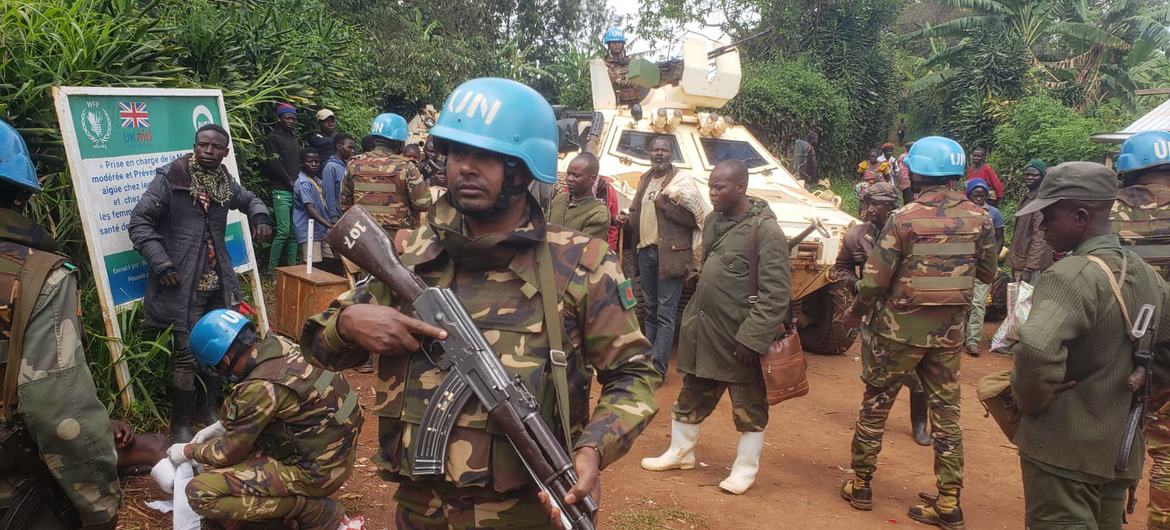
UN peacekeepers patrol the village of Logo in Djugu territory in eastern DR Congo.
MONUSCO
 
UN peacekeepers patrol the village of Logo in Djugu territory in eastern DR Congo.
26 June 2023
Peace and Security

A senior UN official warned the Security Council on Monday that the security situation in eastern Democratic Republic of Congo (DRC) has continued to deteriorate over the past three months, despite a lull in fighting between M23 rebels and the national army (FARDC). 

"So far, the ceasefire between the M23 and the FARDC has held up relatively well and has contributed to some security gains”, said UN Assistant Secretary-General for Africa Martha Pobee.

“The relative calm in Rutshuru territory, for example, allowed more than 45,000 people from the Bishusha group to return home", she said. 

She noted, however, that M23's withdrawal from territory has been "piecemeal, tactical, and political”, while the armed group still controls much of Masisi and Rutshuru, together with the movement of people and goods in these areas. 

Moreover, its “offensive repositioning in recent weeks” raises fears that hostilities could resume at any time.

Disarming M23

She applauded the efforts of regional leaders to engage the parties concerned in implementing the decisions of the Luanda Road Map and the Nairobi process. She reiterated the readiness of the UN mission in DRC, MONUSCO, to back up Congolese authorities with the “pre-cantonment and disarmament” of the powerful rebel force. 

Ms. Pobee said she was pleased to note that last week, MONUSCO, the East African Community Regional Force and the expanded Joint Verification Mechanism had undertaken a reconnaissance mission to the Rumangabo base, to assess the conditions for beginning the disarmament and demobilization process of M23 in earnest.

"For these efforts to bear fruit, it is urgent that the M23 withdraw completely from the occupied territories, lay down its arms unconditionally and join the Demobilization, Disarmament, Recovery and Community Stabilization Programme," she added.

She noted the security gains in North Kivu are fragile and overshadowed by the deteriorating situation in Ituri province, which has suffered from the security vacuum created by the redeployment of FARDC to North Kivu.

More than 600 people have been killed by armed groups in the past three months, with CODECO, the Zairean militia and the ADF, being the main perpetrators of these atrocities.

The senior UN official urged all armed groups to "cease hostilities" and called for the redeployment of national security forces, particularly in Ituri, to restore State authority.

In response to the ongoing insecurity in eastern DRC, MONUSCO continues  to "do everything possible to fulfill its mandate to protect civilians." In Beni, Bunia, Bukavu and Goma, Mission-supported workshops eased tensions and strengthened local capacity to better respond to security challenges, including disinformation. At the same time, the Mission provided direct physical protection for civilians.

To date, between 50.000 and 70.000 displaced people are being protected by MONUSCO forces in the Roe site, located in Djugu territory, Ituri.

Martha Ama Akyaa Pobee, Assistant Secretary-General for Africa in the Departments of Political and Peacebuilding Affairs and Peace Operations, briefs members of the UN Security Council.
UN Photo/Eskinder Debebe
 
Martha Ama Akyaa Pobee, Assistant Secretary-General for Africa in the Departments of Political and Peacebuilding Affairs and Peace Operations, briefs members of the UN Security Council.

Often ignored crisis

Insecurity in eastern DRC continued to fuel a long-standing humanitarian crisis often ignored by the international community, said Ms. Pobee.

An estimated 6.3 million people have been displaced within the country and since March 2022, more than 2.8 million have fled their homes in Ituri, North Kivu and South Kivu provinces due to insecurity. 

Currently, around 28 per cent of the population of North Kivu and 39 per cent of Ituri’s regular population are displaced.

This situation has been further aggravated by inflation, epidemics and natural disasters, including last month's floods in Kahele territory in South Kivu, which killed more than 470 people and left thousands missing. At the same time, nearly 26 million people, more than a quarter of the population, face food insecurity in the DRC.

The top Africa official expressed particular concern about the increasing number of women and girls who are becoming victims of gender-based violence and sexual exploitation. Gender-based violence increased by 2.3 per cent across the country and by 73 per cent in North Kivu province alone, compared to the same period last year.

She said the humanitarian response falls far short of the unprecedented level of need, welcoming the start of a system-wide scale-up response in eastern DRC for an initial period of three months. 

Pockets of instability

In addition to security and humanitarian challenges in the east, pockets of instability have resurfaced in the west and south of the country. Violence persisted in Mai-Ndombe, Kwilu and Kwango provinces, and has spread to Maluku in Kinshasa province, Ms. Pobee said. Tensions and violence were also reported in Kindu, Tshopo and Katanga. 

She urged authorities to hold perpetrators to account and take steps to strengthen social cohesion in order to preserve stability in these areas.

Hate speech continues

She said she was particularly alarmed by “the restriction of civic space and the increase in hate speech” and expressed concern at reports of an increase in violence against women political leaders and activists. 

Regarding the scheduled departure of the peacekeeping mission MONUSCO, she said it was necessary to "stay the course for an orderly, gradual and responsible transition".

"MONUSCO's departure is planned and initial steps are being taken in several areas. However, MONUSCO's withdrawal must not compromise the protection of civilians. We must avoid creating security vacuums," she said.

"An orderly and responsible transition depends on the ability of national security forces to deploy and respond effectively wherever the security situation requires it," she insisted.


 https://news.un.org/en/story/2023/06/1138107

https://creativecommons.org/licenses/by/3.0/legalcode

воскресенье, 25 июня 2023 г.

Speakers Outline Steps to Strengthen International Cooperation, Fight Impunity as General Assembly Concludes Review of Global Counter-Terrorism Strategy


SEVENTY-SEVENTH SESSION,
 
82ND MEETING (AM)
GA/12512

Speakers Outline Steps to Strengthen International Cooperation, Fight Impunity as General Assembly Concludes Review of Global Counter-Terrorism Strategy

Wrapping up their eighth annual review of the United Nations Global Counter-Terrorism Strategy, several delegates in the General Assembly today outlined the specific measures their countries are taking to curb the spread of terrorism while recognizing the victims of this global menace.

The Assembly on Thursday adopted by consensus a 28-page resolution that unequivocally condemned terrorism in all its forms, underscored the importance of the 2006 road map, and reaffirmed the Strategy’s four Pillars.  (For background, see Press Release GA/12511.)

The representative of Spain welcomed the text’s reference to the 2022 United Nations Global Congress of Victims of Terrorism.  He said that remembering the victims of terrorism is a priority for his Government, which, on 22 June, inaugurated a museum in Victoria, Spain, to commemorate victims.  He also commended the institutional development of the United Nations Counter-Terrorism Office and said the Madrid Programme Office — inaugurated last week — shows Spain’s commitment.

The representative of Morocco said his Government’s dedication to combat terrorism and violent extremism can be seen through its creation of the first Programme Office for Counter-Terrorism Training in Africa and the launch of the Marrakech Platform — the first African Platform of Africa’s Heads of Counter-Terrorism and Security Agencies.  The country co-chairs the Africa Focus Group and the Global Coalition to Defeat Da’esh/ISIS, he said, adding that, as a Co-Chair of the Global Counter-Terrorism Forum from 2015 to 2023, Morocco has guided its efforts on international counter-terrorism cooperation.

El Salvador works strongly and diligently to fight terrorism and its links with transnational organized crime, including by controlling unauthorized border crossings, its delegate said.  A Territorial Control Plan, which includes training officers in the National Civil Police, was developed to strengthen border control.  He said the country’s population has regained trust in State security institutions’ efforts to denounce terrorists who try to hide in their communities.

Lebanon’s delegate stressed the importance of using a bottom-up approach that envelopes grass-roots groups, along with international organizations, to fight terrorism.  The battle against impunity must be a cornerstone of countering terrorism, he said.  Prosecuting these crimes before the International Criminal Court would tell terrorists that they could not escape international justice, even though they are not a part of any State.  “Terrorists must be shown the international community will not tolerate zones of impunity,” she said.

Several delegates also recognized the spirit of partnership that led to the resolution’s adoption by consensus, despite the many differences that emerged during negotiations.  This consensus “made this resolution a living document by reflecting the changing reality of the global terrorism landscape in it”, said the Republic of Korea’s delegate, calling on all Member States to evenly implement the Strategy’s four Pillars while ensuring respect for human rights, fundamental freedoms and the rule of law.

The Director of Counter-Terrorism for the International Criminal Police Organization (INTERPOL) recognized the importance of coordinating international efforts to address terrorist threats, which are evolving and have become less predictable in nature.  The organization, whose databases present the largest repository of information on foreign terrorist fighters, aims to align Member States’ foreign policy interests with forceful law enforcement action in a complex operating environment.  “We want to be more collaborative and forward-looking in the fight against terrorism. You are all vital partners in this common endeavour,” he said.

Statements

DAVID IZQUIERDO ORTIZ DE ZARATE (Spain), welcoming the participation of many delegations and civil society in the review process, said:  “We are all united against terrorism.”  While highlighting the inclusion of the reference to the High-Level Conference on Human Rights, Civil Society and Counter-Terrorism — held in Malaga, Spain, in May — he expressed hope that the Conference’s inclusive nature will enhance stakeholders’ cooperation.  He also welcomed the reference to the 2022 United Nations Global Congress of Victims of Terrorism, noting that this topic is a priority for Spain. In this context, he reported on the inauguration of a museum to commemorate the victims of terrorism in Victoria, Spain, on 22 June, while expressing hope that the second meeting of the Congress — that will take place in Spain in 2024 — will help to develop this concept.  Commending the institutional development of the United Nations Counter-Terrorism Office, he said that Madrid Programme Office — inaugurated last week — shows Spain’s commitment to this end.

FABIÁN ODDONE (Argentina) said terrorism must be combated through the rule of law and respect for human rights.  This requires permanent international cooperation based on absolute respect for international law and the principles enshrined in the Charter of the United Nations.  His country suffered two terrorist attacks on its own territory:  the 1992 attack on the Israeli Embassy in Buenos Aires and the attack on the Argentine Israelite Mutual Association in 1994.  Argentina has worked to carry out the Global Counter-Terrorism Strategy since its last review, he said.  For example, under Pillar I, it has anti-terrorism legislation in place that meets international standards, including guaranteeing rights for victims. This includes advice, legal representation, protection and access to justice.  Within the framework of Pillar II of the Global Strategy, Argentina continues to strengthen its preventive capacities, such as coordinating work between security forces to controls its borders, he said.

TOFIG F. MUSAYEV (Azerbaijan) said that, for 30 years, his country’s occupied territories have been a zone of presence of infiltrated terrorists, mercenaries and other armed groups.  Noting that radical ethnic diaspora communities are facilitating the recruitment of foreign terrorist fighters and mercenaries and fund their activities, he underscored the importance of border security in tackling illegal cross-border trafficking and organized crime.  Further, he pointed to the increase of terrorist acts against diplomatic and consular missions and representatives, while pointing out that the efforts of the receiving States were insufficient or fertile.  “Bringing the perpetrators of acts of terrorist acts to justice must remain a priority,” he said, advocating against granting amnesty or any other form of early release to terrorists.  In this context, “shielding and glorification of terrorists cannot be tolerated”, he added, while expressing support for the relevant accountability provisions to this end.

JOSÉ EDUARDO PEREIRA SOSA (Paraguay) said his delegation voted in favour of the Counter-Terrorism Strategy resolution, which offers a common approach for Member States to fight terrorism in all its forms.  Paraguay is committed to fighting terrorism and to work with the international community in that regard.  Technology can strengthen States’ capacity to address the forms of terrorism that use the Internet and social media.  The biannual review of the Global Strategy is an essential opportunity to revive international efforts and identify areas that require greater attention in the future, he said, adding that the Secretary-General’s report provides a solid foundation for future discussions.  Cooperation in all modalities is essential, such as the sharing of best practices, he said.  He recognized the important role of the United Nations Counter-Terrorism Office.

KHALID LAHSAINI (Morocco), associating himself with the Organisation of the Islamic Cooperation (OIC), said that his country engaged in the review process through a cumulative approach, building on the last seven reviews, and submitted constructive proposals. Noting that combating terrorism and violent extremism is Morocco’s priority, he said this approach is aligned with the high instructions of King Mohammed VI.  To this end, the Government supported the creation of the first Programme Office for Counter-Terrorism Training in Africa and the launch of the Marrakech Platform — the first African Platform of Africa’s Heads of Counter-Terrorism and Security Agencies.  In addition, the country co-chairs the Africa Focus Group and the Global Coalition to Defeat Da’esh/ISIS, he said, adding that as a Co-Chair of the Global Counter-Terrorism Forum from 2015 to 2023, Morocco has guided its efforts on international counter-terrorism cooperation. He also pointed out that his country is a President of the Group of Friends on Counter-Terrorism and a member of the Counter-Terrorism Centre’s Advisory Committee. 

SHINO MITSUKO (Japan) said many different views were expressed during negotiations and not all views were reflected in the adopted resolution.  Yet, the spirit of consensus was a show of united good will and commitment.  She welcomed the inclusion of language on Council resolution 2664 (2002).  “We emphasize that this is a landmark resolution at the nexus between humanitarian activities and Security Council sanction measures,” she said, adding that Council sanctions are an important tool to maintain and restore international peace and security.  She also welcomed language on ensuring appropriate follow-up efforts on the Kyoto Declaration towards the fifteenth United Nations Congress on Crime Prevention and Criminal Justice in 2026.  It is critical that Member States update their policies to meet the global challenges of fighting crime and terrorism.  She reiterated the importance of human rights, gender and upholding the rule of law, which make up Pillar IV of the Strategy.

RUCHIRA KAMBOJ (India) said that, because States that are motivated by narrow political agendas look for a reason to justify terrorist acts, the global resolve to fight terrorism gets diminished.  Noting that India has faced State‑sponsored, cross-border terrorism in the past three decades, she said counter-terrorism must be one of the top priorities of the United Nations.  Pointing to the Special Counter-Terrorism Committee, that was held in Mumbai and New Delhi in October 2022, she recalled that the Delhi Declaration provided a road map to address terrorism.  In this regard, she expressed regret that co-facilitators not only disregarded her delegation’s support and trust, but also acted in a non-transparent, non-consultative and partial manner, making an exception to accommodate concerns of one delegation, while ignoring India’s contributions and concerns.  Explaining her disassociation, she said that co-facilitators forced her delegation to “accept an outcome that the wider membership does not deserve”, adding:  “This was a path that we did not choose willingly, but the one that was, regretfully, forced upon us.”

CARLOS EFRAÍN SEGURA ARAGÓN (El Salvador) said that, as a founding member and signatory to the Charter, his delegation remains firmly committed to all initiatives to promote international peace and security.  He strongly condemned terrorism in all its forms and manifestations and welcomed the Counter-Terrorism Committee's Delhi Declaration on Countering the Use of New and Emerging Technologies for Terrorist Purposes.  The emphasis on cooperation will help Member States build capacity and technical assistance programmes.  His delegation always works strongly and diligently to fight terrorism and its links with transnational organized crime, such as using measures to control unauthorized border crossings, he said.  El Salvador has trained officers in the National Civil Police and mobilized resources to strengthen border controls.  The central policy of these efforts has been the Government’s Territorial Control Plan.  He said the country’s population has regained trust in State security institutions to denounce terrorists who try to hide in their communities.

DANG HOANG GIANG (Viet Nam) said that regional destabilization, power vacuums, sectarian divisions, arms proliferation and ideological polarization create favorable conditions for terrorist organizations.  While the COVID-19 pandemic has exacerbated the conditions conducive to terrorism, it has also deepened socioeconomic disparities that provided ground for terrorist exploitation.  “Terrorism and extremism have become a global menace, impacting countries worldwide, and Viet Nam is no exception,” he stressed, reporting on an incident in Dak Lak Province that occurred 10 days ago where an armed group employed military firearms and improvised weapons to carry out terrorist attacks, claiming nine lives.  The perpetrators “exhibited ruthless violence and an utter disregard for human life”, while hijacking vehicles, targeting and killing civilians and tacking hostages, he said, calling for condemnation and punishment for the individuals and organizations responsible to this end.

JEANNE MRAD (Lebanon) said the adoption of the resolution by consensus is a strong sign of the role that multilateralism can play in fighting terrorism. Her country has been hard hit by the scourge.  Terrorism has existed for a long time, yet a troubling evolution is the use of technology to recruit terrorists and terrorism’s symbiosis with international crime.  The battle against impunity must be a cornerstone of countering terrorism, he said, adding that prosecuting these crimes before the International Criminal Court would send a strong signal to terrorists that they could not escape international justice, even though they are not a part of any State.  “Terrorists must be shown the international community will not tolerate zones of impunity,” she said.  A bottom-up approach that uses grass-roots organizations, along with international organizations, to fight terrorism is imperative.  Political stability and decent standards of living are essential to address terrorism’s the root causes, she said, adding that countries facing inequality and weak institutions are at greater risk.

ROSALIND NYAWIRA (Kenya) said that its Global Programme on Preventing and Countering Violent Extremism shows the advantages of popular participation and community-led interventions in creating local ownership, partnerships and peer-to-peer learning, while also empowering communities to better understand and respond to the evolving threats.  “The threat of terrorism is not waning,” she stressed, pointing out that terrorist groups have acquired endurance, resilience and ability to regenerate. Recognizing that Africa has become a global epicenter of terrorist activity, she also said that youths’ deprival of education and employment, poverty and inequality, as well as uncontrolled arms and bad Governance trigger radicalization.  These challenges demand innovative multilateral approaches, she underscored, noting that the adoption of the “forward-looking and responsive” Strategy meets these challenges and effectively responds to the global threat of terrorism.

KIM HYUNSOO (Republic of Korea) said the evolving nature of global terrorism means the international community must keep the Counter Terrorism Strategy relevant and up to date to effectively respond to new and emerging terrorist threats.  At the same time, national capacities in compliance with international law must be supported.  He said all Member States reached consensus despite some differences and “made this resolution a living document by reflecting the changing reality of the global terrorism landscape in it”.  He called on all Member States to evenly implement all Pillars of the Strategy while ensuring respect for human rights, fundamental freedoms and the rule of law.  Sharing concerns about terrorists’ expanding use of information and communications technology (ICT) for terrorist purposes, his delegation commits to working with Member States and otherstakeholders, including academia, the private sector and civil society.  He encouraged the full, equal and meaningful participation of women and youth in this process.

LARBI ABDELFATTAH LEBBAZ (Algeria), associating himself with OIC, said that his country is at the forefront of the fight against terrorism.  Focusing on the implementation of policies, strategies and programme development, Algeria is also securing its borders against residual terrorism.  Moreover, the country maintains focus on the terrorism criminalization and financing, while also preventing the activities of foreign terrorist fighters, maintaining vigilance and reinforcing military measures to secure its borders.  While implementing its multidimensional de-radicalization policy — that combines political, economic, social and cultural measures — Algeria engages public institutions, civil society and individual citizens to that end.  In addition, the Government also counters terrorism and violent extremism on the Internet and social media, while strengthening regional and international cooperation and information-sharing.

ANDRANIK GRIGORYAN (Armenia) noted the review resolution contains several paragraphs on addressing threats posed by the recruitment, financing and transfer of foreign terrorist fighters between different regions and to conflict zones.  The rapid advancement of technology, along with new forms of terrorism financing and the illicit flow of weapons, have created conducive environments for these fighters in almost every region.  His delegation has undertaken several practical measures to prevent the free movement of terrorists and combat transnational organized crime, money-laundering and terrorism financing, in line with the Global Counter-Terrorism Strategy and relevant Security Council resolutions.  The recruitment of foreign terrorist fighters and their transfer to conflict zones in Armenia’s region has been extensively documented by law enforcement agencies and independent observers.  He acknowledged the Council Sanctions Committees’ important role in ensuring accountability for terrorist entities and individuals and monitoring Member States compliance with the sanction regimes.

PETER MOHAN MAITHRI PIERIS (Sri Lanka) said that his country rehabilitated 12,000 former Liberation Tigers of Tamil Eelam cadres, including 594 child soldiers, and reintegrated them back into society after 2009.  In addition, the Government has resettled internally displaced persons and demined territories to enabling civilian life to resume after conflict.  Through its legal framework, Sri Lanka has enabled law enforcement and the legal system to address terrorism.  In particular, the Prevention of Terrorism Act and the Public Security Ordinance provide the means for national counter-terrorism efforts.  These laws are currently under review to ensure their consonance with global best practices and international law.  In this context, the Government has implemented legislative measures, including the establishment of the Financial Intelligence Unit, and enacted laws to prevent money-laundering.  Recalling that his country has dealt with terrorism for three decades and is the “only nation to have eradicated terrorism”, he stressed:  “We need to embark on concrete collective measures.”

RIYAD H. MANSOUR, Permanent Observer for the State of Palestine, said the gravest form of terrorism is one in which an entire nation’s rights, people and land are under a constant and systematic campaign of terror.  Israeli occupying forces and settlers continue killing and maiming Palestinians.  The international community has recognized that upholding international law and fundamental freedoms and developing counter-terrorism measures are mutually reinforcing.  It has learned that violating the former, under the pretext of pursuing the latter, undermines global efforts to eliminate terrorism.  Israel’s unlawful criminalization of civil society organizations, under the rubric of “terrorism”, aims to oppress any opposition to its perpetual military colonial rule.  “The counter-terrorism discourse cannot and must not become the way to justify a counter-rights strategy,” he added.  The Global Counter Terrorism Strategy should be about promoting the rule of law, not justifying its breach.  It should address the root causes of terrorism, not perpetuate them, he stressed.

GREGORY HINDS, Director of Counter-Terrorism of the International Criminal Police Organization (INTERPOL), recognizing the importance of coordinating international efforts in addressing terrorist threats, said INTERPOL’s databases present the largest repository of information on foreign terrorist fighters. In 2022, 2,500 wanted fugitives for terrorism and other serious offences were apprehended across the world thanks to information-sharing through INTERPOL channels, he reported.  The organization’s Counter-Terrorism Strategy aims at enhancing information-sharing, better informing operational and investigative responses by using intelligence, and providing needs-driven focal support and technical expertise-tailored assistance.  Noting that in 2023 INTERPOL will commemorate its centenary, he pointed to the evolving, less-predictable terrorist threats.  In this context, INTERPOL aims at aligning Member States’ foreign policy interests with impactful law enforcement action in its complex operating environment, he stressed, adding:  “We want to be more collaborative and forward-looking in the fight against terrorism.  You are all vital partners in this common endeavor.”


https://press.un.org/en/2023/ga12512.doc.htm


https://creativecommons.org/licenses/by/3.0/legalcode