Показаны сообщения с ярлыком Guterres. Показать все сообщения
понедельник, 5 мая 2025 г.
‘Step back from the brink’, Guterres urges India and Pakistan | UN News
5 May 2025
Peace and Security
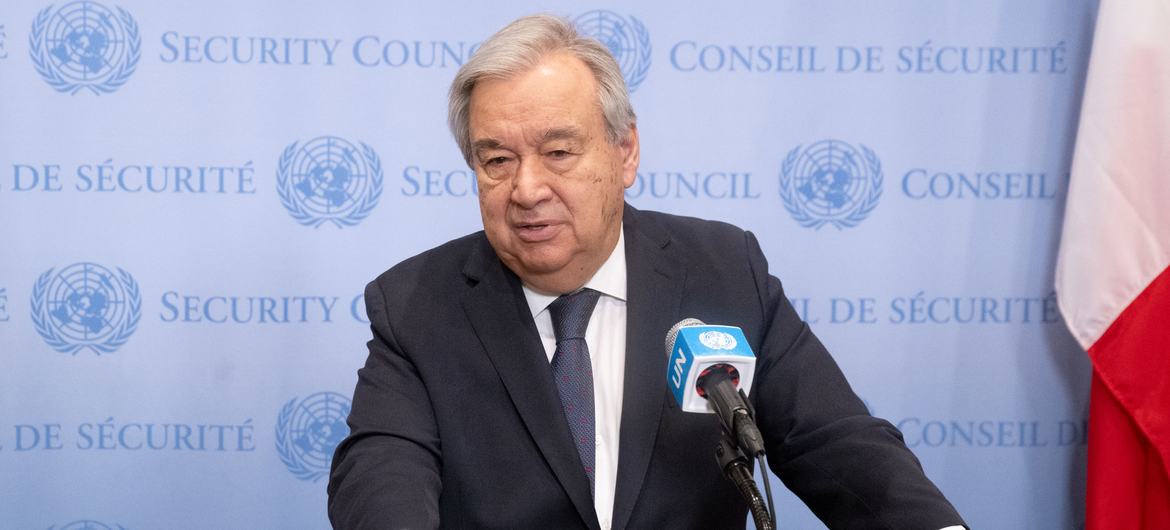
UN Secretary-General António Guterres on Monday called for “maximum restraint” from India and Pakistan, warning that escalating tensions over a recent deadly terror attack in Kashmir risk spiralling into outright military confrontation.
Addressing journalists outside the Security Council at UN Headquarters in New York, Mr. Guterres expressed deep concern over deteriorating relations between the two South Asian neighbours, saying they had reached “their highest in years.”
He reiterated his condemnation of the 22 April terror attack in the Pahalgam area of Jammu and Kashmir, which killed at least 26 civilians and injured many more.
“Targeting civilians is unacceptable – and those responsible must be brought to justice through credible and lawful means,” Mr. Guterres said.
“It is also essential – especially at this critical hour – to avoid a military confrontation that could easily spin out of control.”
India and Pakistan both administer parts of Kashmir but claim the territory in full.
The Security Council is due to meet behind closed doors later on Monday to discuss the rising tensions between the two nations.
UN ready to help de-escalate
He offered his good offices to both governments to help defuse tensions and promote diplomacy, stressing that “a military solution is no solution.”
“Now is the time for maximum restraint and stepping back from the brink,” he said.
Mr. Guterres also praised both countries for their long-standing contributions to UN peacekeeping operations and expressed hope that their shared history of cooperation could form the basis for renewed dialogue.
“The United Nations stands ready to support any initiative that promotes de-escalation, diplomacy, and a renewed commitment to peace,” he said.
https://news.un.org/en/story/2025/05/1162901
пятница, 24 мая 2024 г.
‘Now is the time to unleash Africa’s peace power’ Guterres tells Security Council

© UN Women/Ryan Brown
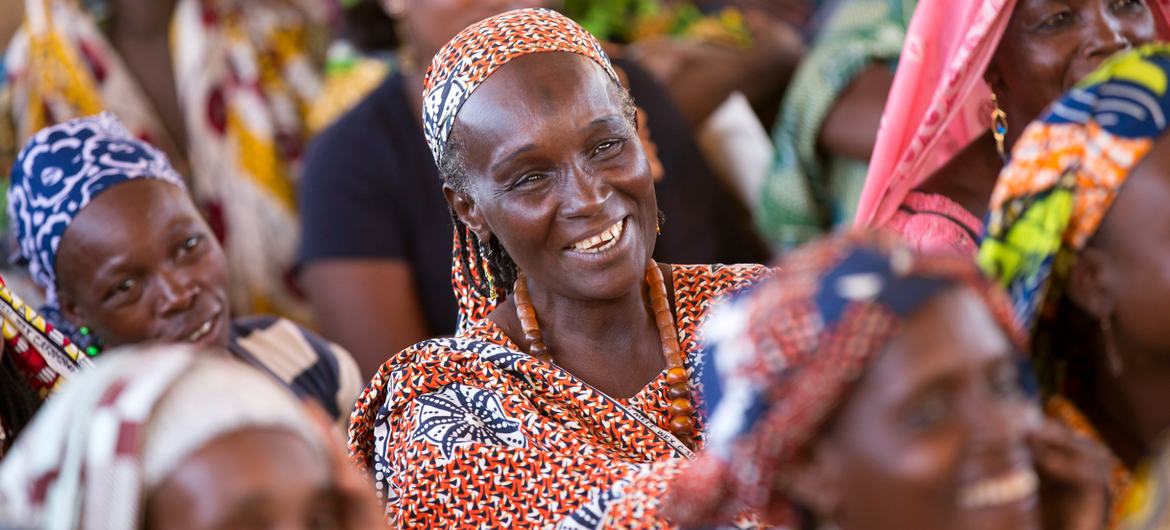
Women attend a community meeting held at the UN Women multipurpose centre in the Ngam refugee camp in Cameroon (file).
23 May 2024
Peace and Security
Peace is the key to unlocking Africa’s future and for strengthening the continent’s voice and influence in building peace globally, UN Secretary-General António Guterres told the Security Council on Thursday.
“Now is the time to unleash Africa’s peace power,” he said, opening a debate on its critical role in addressing global security and development challenges, convened by Mozambique, the Council president for May.
Calling Africa “an important voice for the global good”, he cited examples of how the continent has shown “unity and solidarity in a fractured world”, which include focusing on ending poverty and hunger, supporting refugees, achieving sustainable development, and pushing for reform of the decades-old global financial system.
Ceasefire for Sudan
Mr. Guterres said that although efforts like these require peace in Africa and beyond, “too many Africans are caught up in the hell of conflicts or living with the relentless danger of terrorism and violent extremism in their communities.”
Addressing the war and “deepening humanitarian nightmare” in Sudan, he warned that increased hostilities in El Fasher are “opening an alarming new chapter” in the conflict, now in its second year.
“We need a concerted global push for a ceasefire, followed by a comprehensive peace process to end the bloodshed,” he said.

UN Photo/Loey Felipe
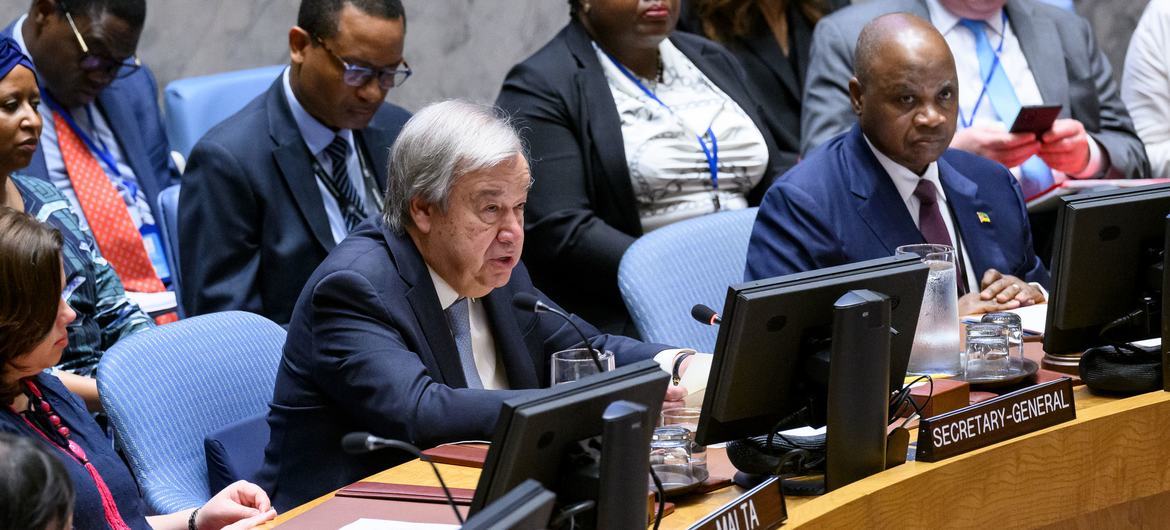
Secretary-General António Guterres addresses the Security Council meeting on maintenance of international peace and security of African States.
Silence the guns
Mr. Guterres outlined three steps to strengthen Africa’s peace leadership, both on the continent and on the global stage.
“First – we need peace in Africa itself,” he said, highlighting the UN’s partnership with the African Union (AU) and support for its ‘Silencing the Guns’ initiative.
He also commended the Security Council’s adoption of resolution 2719 last year which allows AU-led peace support operations that receive their mandates from the Council to access UN assessed contributions.
The two organizations “will continue working together to defuse conflicts before they escalate, manage them effectively when they occur, and build sustainable peace when they are resolved,” he said.
Reform outdated institutions
Secondly, African participation and leadership must be embedded across “the global peace and security architecture”.
He stressed the need to reform the UN Security Council and other global institutions that were established following the Second World War, which are now outdated.
Structural inequalities have resulted in African states suffering disproportionately from the effects of conflicts, an unjust global financial system, and the climate crisis.
Praise for Kenya
Yet at the same time, they are also stepping up and contributing to global peace efforts, he added.
He commended Kenya for spearheading the upcoming Multilateral Security Support Mission that will be deployed to Haiti to bolster national efforts to quell rampant gang violence. He also extended praise to other African countries that have offered to send troops.
The Secretary-General insisted that Africa deserves a voice in the global peace and security architecture.
A voice among equals
“But strengthening Africa’s voice can only happen if African countries can participate in global governance structures as equals,” he said. “This must include correcting the lack of permanent African representation at this Council.”
The Secretary-General pointed to the Summit of the Future at UN Headquarters in September as an opportunity to push forward on this and other issues, such as reform of the global financial system.

UN Photo/Loey Felipe
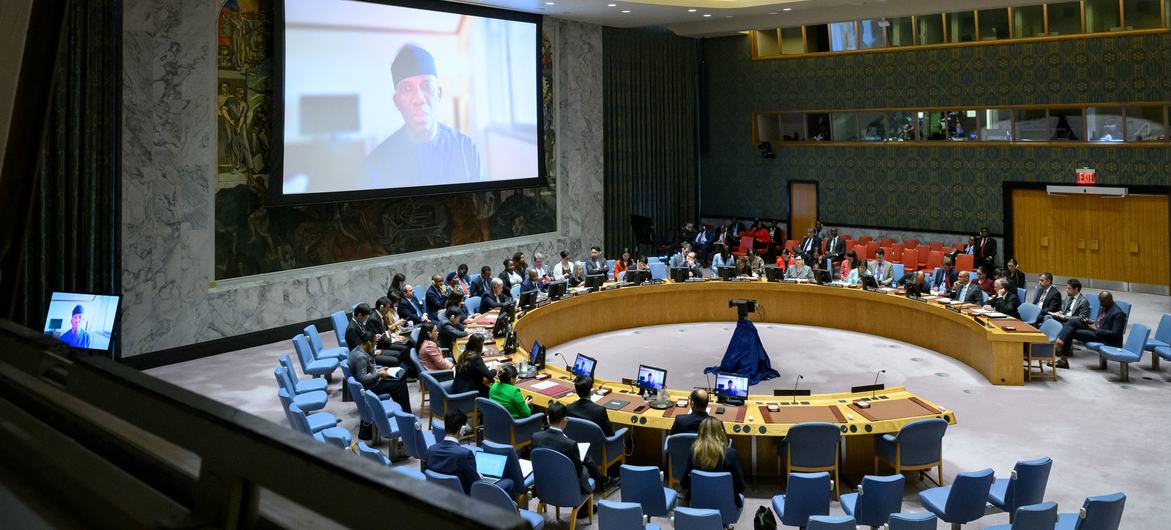
Bankole Adeoye (on screen), AU Commissioner for Political Affairs, Peace and Security, briefs the Security Council meeting on maintenance of international peace and security of African States.
A new Security Council
The AU Commissioner for Political Affairs, Peace and Security, Bankole Adeoye, underscored that reconfiguration of the global peace and security architecture is imperative.
“The emerging global order must promote renewed and networked multilateralism for the sake of global stability. This is Africa's right and not just a demand,” he said, speaking via video conference.
Furthermore, the new UN Security Council “must be enlarged, must be inclusive, must be pro-Africa, must be more democratic, must be responsive, must be legitimate, must be equitable, and must be accountable.”
Mr. Adeoye also highlighted the issue of financing for peace operations, calling for “100 per cent unhindered, unconditional access to United Nations assessed contributions for peace and security activities.”

UN Photo/Loey Felipe
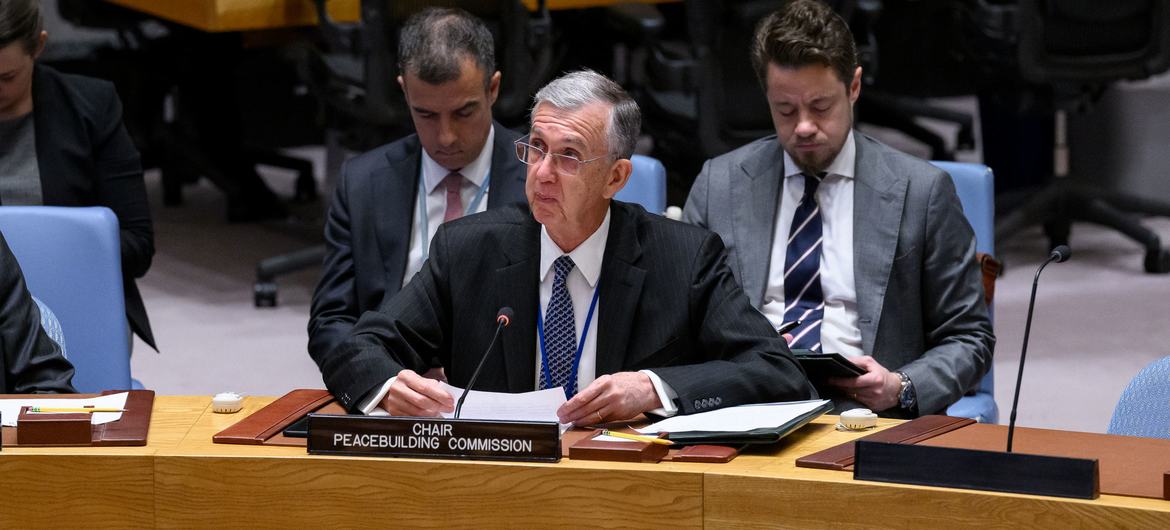
Ambassador Sérgio França Danese of Brazil, Chair of the Peacebuilding Commission, briefs the Security Council meeting on maintenance of international peace and security of African States.
Building lasting peace
The Chair of the UN Peacebuilding Commission (PBC), Ambassador Sérgio França Danese of Brazil, upheld its full commitment to assist African countries seeking support.
He spoke of the PBCs work across several pillars, including institution building, electoral processes, rule of law, transitional justice, security sector reform, and the women, peace and security agenda.
“These are only starting points for normalizing states in transition and post-conflict situations,” he said.
"Investment in sustainable development is crucial to long-term social cohesion and stability and must be undertaken in tandem with other initiatives.”
https://news.un.org/en/story/2024/05/1150146
среда, 1 мая 2024 г.
Guterres calls on Israel and Hamas to end Gaza war

UN Photo/Eskinder Debebe
Secretary-General António Guterres briefs the press on the situation in Gaza.
30 April 2024
With the situation in Gaza “worsening by the day”, UN Secretary-General António Guterres on Tuesday appealed for Israeli and Hamas leaders currently taking part in intense negotiations to reach a ceasefire agreement.
“For the sake of the people of Gaza, for the sake of the hostages and their families in Israel and for the sake of the region and the wider world, I strongly encourage the Government of Israel and the Hamas leadership to reach now an agreement,” he said, speaking to journalists in New York.
Mr. Guterres expressed fear that without an agreement, “the war, with all its consequences both in Gaza and across the region, will worsen exponentially”.
Prevent Rafah escalation
Nearly seven months have passed since the brutal Hamas-led attacks on Israel which sparked the current hostilities.
Recent weeks have seen airstrikes on the Rafah area in southern Gaza, where more than 1.2 million people are now sheltering with limited access to food, medical care and other services and with nowhere safe to go.
Mr. Guterres said a military assault there “would be an unbearable escalation, killing thousands more civilians and forcing hundreds of thousands to flee”. Furthermore, it would have a devastating impact on Palestinians in Gaza, with serious repercussions in the occupied West Bank and across the wider region.
“All members of the Security Council, and many other governments, have clearly expressed their opposition to such an operation. I appeal for all those with influence over Israel to do everything in their power to prevent it,” he said.
Avert ‘human-made famine’
Turning to the north, where vulnerable people are already dying of hunger and disease, he urged the international community to “do everything possible to avert an entirely preventable human-made famine”.
Although incremental progress has been made, much more is urgently needed, including the promised opening of two crossing points between Israel and northern Gaza, so that aid can be brought in from Ashdod Port and Jordan.
Lack of security is a major obstacle to distributing aid across Gaza, and he stressed that humanitarian convoys, facilities and personnel as well as people in need “must not be targets”.
“We welcome aid delivery by air and sea, but there is no alternative to the massive use of land routes,” he said, before again calling on Israel to allow and facilitate safe, rapid and unimpeded humanitarian access throughout Gaza, including for the UN’s Palestine relief agency, UNRWA.

WHO
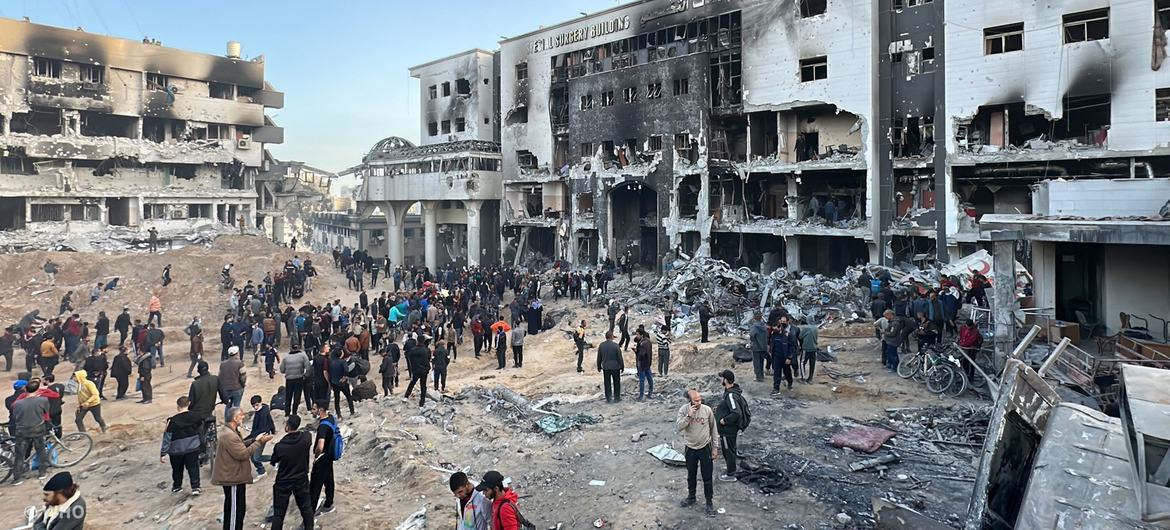
People gather outside the remains of Al Shifa hospital, Gaza's largest health facility.
Health system ‘decimated’
Mr. Guterres also addressed how the war has “decimated” the health system in the enclave, where two thirds of hospitals and health centres are out of commission, while many of those remaining are seriously damaged.
“Some hospitals now resemble cemeteries,” he said, voicing deep alarm over reports of the discovery of mass graves at several locations, including at Al-Shifa and Nasser hospitals.
Mass graves and accountability
More than 390 bodies reportedly have been exhumed at Nasser Hospital alone, and “there are competing narratives around several of these mass graves, including serious allegations that some of those buried were unlawfully killed,” he added.
The UN chief said it is imperative that independent international forensic investigators are allowed immediate access to these sites to determine the precise circumstances under which hundreds of Palestinians lost their lives and were buried or reburied.
“The families of the dead and missing have a right to know what happened, and the world has a right to accountability for any violations of international law that may have taken place,” he said.
Praise for UNRWA
The Secretary-General ended his remarks by drawing attention to UNRWA and its “irreplaceable and indispensable work” supporting millions of Palestinians in Gaza, the West Bank, Jordan, Syria and Lebanon.
“UNRWA’s presence across the region is a source of hope and stability. Its education, healthcare and other services provide a sense of normality, safety and stability to desperate communities,” he said.
The agency recently appealed for $1.2 billion to address the humanitarian crisis in Gaza and to respond to needs in the West Bank, where violence is rising.
UNRWA largely depends on donors and some 16 countries halted their contributions earlier this year following Israeli allegations that 12 staff were involved in the 7 October attacks. The UN appointed an independent body to review the agency's efforts to ensure the humanitarian principle of neutrality.
The panel, headed by former French foreign minister Catherine Colonna, recently published its report which found that “the set of rules and the mechanisms and procedures in place [at UNRWA] are the most elaborate within the UN system”.
Mr. Guterres said an action plan is being put in place to implement the report’s recommendations, and he appealed for cooperation from donors, host countries and staff.
Step up support
Meanwhile, most countries that suspended contributions to UNRWA have resumed them, and the Secretary-General said “we are optimistic that others will join.” Additionally, some UN Member States have given to the agency for the first time, while private donors have also provided support.
However, as a funding gap persists, he urged Member States and donors to pledge generously to ensure the agency’s work continues.
“This is the moment to reaffirm our hope for and contributions to a two-State solution – the only sustainable path to peace and security for Israelis, Palestinians and the wider region,” he concluded.
https://news.un.org/en/story/2024/04/1149176
понедельник, 11 декабря 2023 г.
‘I will not give up’ on push for Gaza humanitarian ceasefire: Guterres

UN/Florencia Soto Nino-Martinez
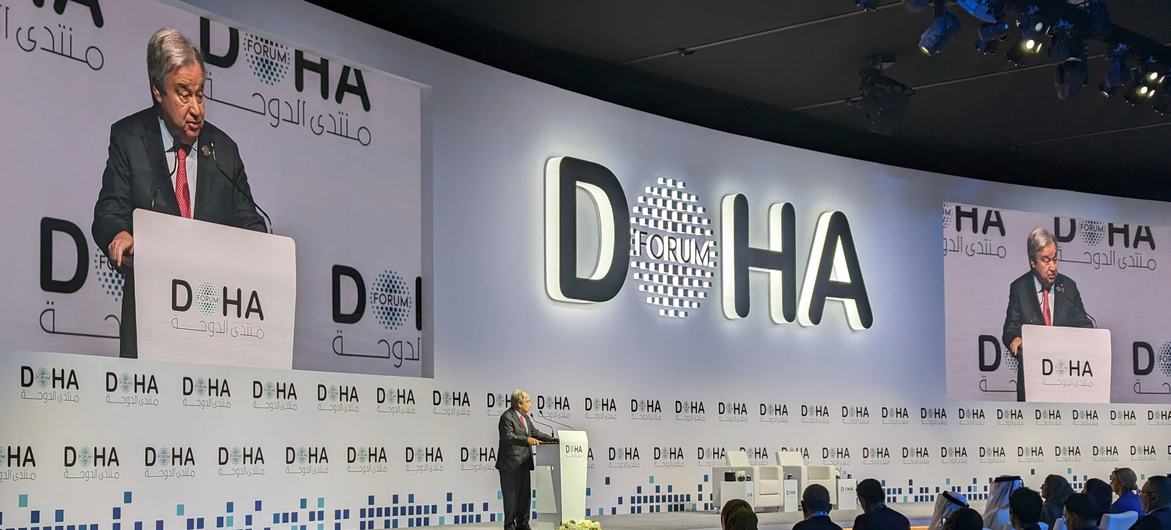
UN Secretary-General António Guterres delivers remarks to the opening ceremony of the Doha Forum 2023, in Qatar, under the theme ‘Building Shared Futures’.
10 December 2023
Peace and Security
The UN Secretary-General on Sunday pledged that he would “not give up” on appealing for a humanitarian ceasefire in Gaza, adding that inaction on the Security Council was undermining its credibility.
“The preeminent forum for the peaceful resolution of international disputes is paralysed by geostrategic divisions”, António Guterres told the Doha Forum taking place in Qatar, following Friday’s meeting in New York during which the United States vetoed a resolution demanding that Israel and Palestinian militants end the intense fighting across the enclave which erupted on 7 October with the Hamas terror attacks.
“I urged the Security Council to press to avert a humanitarian catastrophe and I reiterated my appeal for a humanitarian ceasefire to be declared”, said the UN chief.
“Regrettably the Security Council failed to do it but that does not make it less necessary. So, I can promise I will not give up”, he told delegates to the global platform in Qatar, which brings world leaders together to discuss collective security and other challenges.
He said a sclerotic Security Council where splits between the permanent members, China, France, Russia, the United Kingdom and the US have produced only one resolution narrowly focused on aid delivery, needed reform.
‘Equality and solidarity’ essential
“We need a serious effort to bring global structures up to date, rooted in equality and solidarity and based on the United Nations Charter and international law”, he said, noting that the Council’s divisions were “undermining solutions from Ukraine to Myanmar and the Middle East.”
The horrific terror attacks by Hamas and resulting “relentless bombardment” of Gaza, have only produced a single resolution “which I welcome. But that delay comes at a cost”, he added.
“And the resolution is not being implemented”.
Also addressing the conference in Qatar, the head of the UN agency for Palestinian refugees, UNRWA, said the dehumanisation of Palestinians has allowed the international community to tolerate Israel’s continued bombardment of Gaza, which has led to more than 17,000 deaths since 7 October.
“There is no doubt that a humanitarian ceasefire is needed if we want to put an end to hell of earth right now in Gaza”, said Philippe Lazzarini.
Later on Sunday in New York, the President of the UN General Assembly announced that following requests from the Chair of the Arab Group and the Organization for Islamic Cooperation, calling for the emergency special session on the Israel-Palestine crisis to resume, delegates from the Assembly will reconvene this coming Tuesday.
When the special session first resumed in October, Member States voted overwhelmingly in favour of a resolution calling for an immediate and sustained humanitarian truce.
Weak global governance
Together with other ‘forces of fragmentation’ gaining ground, Mr. Guterres said now is the time to build bridges and find shared solutions to global challenges.Beyond the Security Council, Mr Guterres said global governance is failing to manage two existential threats.
First, on the climate catastrophe, he said far more ambition was needed to reduce greenhouse gas emissions and ensure climate justice.
“Despite promises and pledges, our climate is in breakdown. Emissions are at an all-time high. And fossil fuels are a major cause,” he said and added: “Renewable energy is cheap, clean, and infinite,” and can meet world’s growing energy demand without poisoning the environment and suffocating our planet.
He urged fossil fuel companies and their backers to use their enormous resources to lead the renewables revolution. And likewise urged leaders at COP28 in Dubai to agree on deep cuts to emissions, in line with the 1.5-degree limit.
“This is the only road not only to climate sustainability, but economic sustainability,” the Secretary-General said.
Multilateral Development Banks must change their business model and leverage far more private finance at reasonable cost for developing countries to invest in climate action and the Sustainable Development Goals.
Second, he highlighted the threat posed by new technologies, saying generative AI could provide solutions to many global challenges, but without adequate regulation, “it will also lead us into deep and troubled waters.”
“These technologies cry out for governance,” Mr. Guterres continued, lamenting that AI is already supercharging hate speech and division, enabling data harvesting and mass surveillance, and exacerbating vast inequalities.
To help advance the search for solutions, he has appointed a multistakeholder High-Level Advisory Body on AI which will provide preliminary recommendations by the end of this year. It met in New York last week.
Summit of the Future
He went on to say that reforms to global governance must be grounded in the Universal Declaration and the enduring values of the UN Charter.
Next September’s Summit of the Future is a once-in-a-generation opportunity for these important decisions.
“We have put forward a series of proposals to Member States and I look forward to their engagement and support,” he said, laying out a three-point ‘to-do’ list for the Summit:
- A Global Digital Compact to mitigate the risks of digital technologies and help to harness their benefits.
- Reforms to the global financial architecture that would enable governments in developing countries to invest in education, health, jobs and social protection for their people.
- Reforms to the Security Council, and a proposed New Agenda for Peace, that would help to prevent and resolve conflict, deliver equity and justice, rebalance geopolitical relations, and give developing countries a greater voice on the international stage.
“Now is truly the time for building shared futures – uniting behind solutions and transforming our world for good,” he told the Doha Forum, concluding his remarks.
https://news.un.org/en/story/2023/12/1144622
https://creativecommons.org/licenses/by/3.0/legalcode
вторник, 5 декабря 2023 г.
Guterres urges Security Council to act over Israel-Palestine crisis as threat to international peace and security

© UNRWA/Ashraf Amra
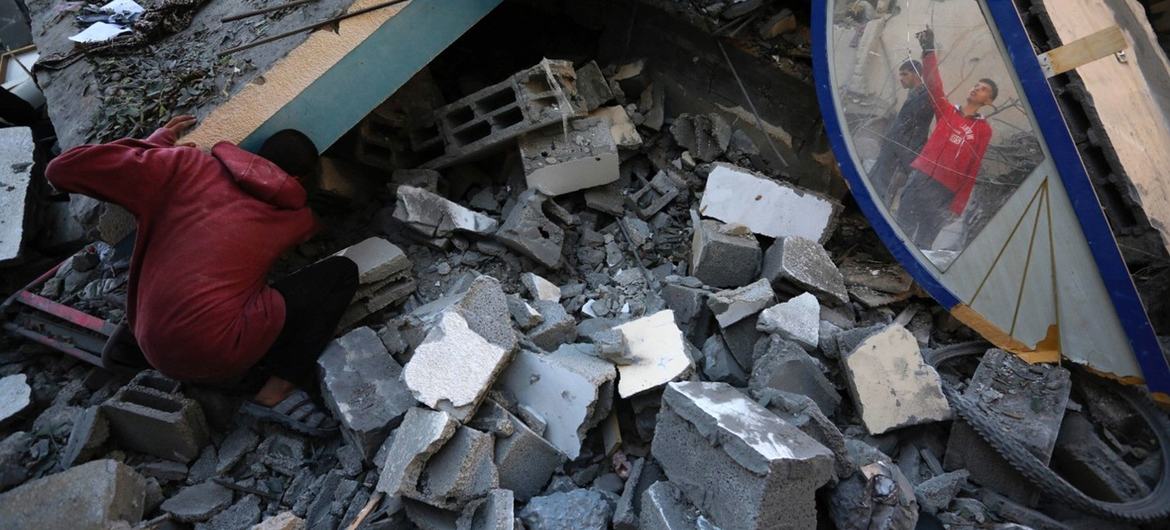
People search for their belongings in the rubble in the Nuseirat refugee camp in Gaza.
6 December 2023Peace and Security
Invoking a rarely used article of the UN Charter, Secretary-General António Guterres on Wednesday called on the Security Council to “press to avert a humanitarian catastrophe” in Gaza and unite in a call for a full humanitarian ceasefire between Israel and Palestinian militants.
In a letter to the Council, Mr. Guterres invoked Article 99, contained in Chapter XV of the Charter.
This says that the UN chief “may bring to attention of the Security Council any matter which in his opinion, may threaten the maintenance of international peace and security.”
In a statement to journalists along with the letter, UN Spokesperson Stéphane Dujarric said that this was the first time Mr. Guterres had felt compelled to invoke Chapter 99, since taking office in 2017.
Scale of loss
Mr. Dujarric explained that the UN chief was taking the step “given the scale of the loss of human life in Gaza and Israel, in such a short amount of time”.
He described the use of Article 99 as a "dramatic constitutional move" that Mr. Guterres hoped would put more pressure on the Council - and the international community at large - to demand a ceasefire between the warring parties.
"I think it's arguably the most important invocation", Mr. Dujarric told reporters at UN Headquarters, "in my opinion, the most powerful tool that he [the Secretary-General] has."
The letter was sent to the President of the Security Council in New York late on Wednesday morning.
Since the 7 October terror attacks by Hamas militants in southern Israel and the ongoing bombardment and ground operation by Israeli forces into the Gaza Strip, the Security Council passed one resolution in mid-November, after four failed attempts to find consensus previously, calling for “urgent and extended humanitarian pauses”.
Following a week-long pause in hostilities during which some of the 240 hostages being held by militants in Gaza were exchanged for Palestinian prisoners, fighting began again on 1 December, leading the Secretary-General to register his deep regret.
‘Appalling human suffering’
In his letter to the Council president, Mr. Guterres said the more than eight weeks of fighting overall had “created appalling human suffering, physical destruction and collective trauma across Israel and the Occupied Palestinian Territory.”
He highlighted the more than 1,200 “brutally killed” by militants on 7 October, including 33 children, and the 130 people still being held captive.
“They must be immediately and unconditionally released. Accounts of sexual violence during these attacks are appalling”, the UN chief added.
As Israel continues to target Hamas fighters, he said civilians throughout the Strip face grave danger, with over 15,000 reportedly killed, over 40 per cent of them children.
Around 80 per cent of Gazans are displaced, over 1.1 million seeking refuge in UN Palestine refugee agency (UNRWA) shelters.
Hospitals now ‘battlegrounds’
Mr. Guterres said there is simply no effective protection for civilians and nowhere is safe.
“Hospitals have turned into battlegrounds”, he added, saying that amid the constant bombardment of all parts of Gaza “and without shelter or the essentials to survive, I expect public order to completely break down soon”.
Turning to the 15 November Council Resolution 2712, he said the current conditions were making it impossible to scale up humanitarian supplies, to meet the huge needs of civilians – as the resolution demands.
“We are simply unable to meet those in need inside Gaza”, he wrote, and facing “a severe risk of collapse of the humanitarian system.”
The consequences of that have irreversible implications for Palestinians and the peace and security of the entire region, he argued.
‘This is urgent’
“Such an outcome must be avoided at all cost. The international community has a responsibility to use all its influence to prevent further escalation and end this crisis.
“I reiterate my appeal for a humanitarian ceasefire to be declared. This is urgent. The civilian population must be spared from greater harm.”
He stressed that with a ceasefire, there was hope “and humanitarian assistance can be delivered in a safe and timely manner”.
https://news.un.org/en/story/2023/12/1144447
https://creativecommons.org/licenses/by/3.0/legalcode
Подписаться на:
Сообщения (Atom)