пятница, 5 декабря 2025 г.

UN and partners back new measures to help millions move from vulnerability to opportunity

Many LDCs are also landlocked, like Nepal (pictured), leaving them particularly vulnerable to economic and climate shocks.
© UNICEF
 
Many LDCs are also landlocked, like Nepal (pictured), leaving them particularly vulnerable to economic and climate shocks.


4 December 2025 
Economic Development

A major UN meeting in Doha wrapped up on Thursday with a renewed drive to help the world’s poorest countries move towards long-term stability and prosperity, as senior officials urged stronger global partnerships to ensure that development gains are not lost once States exit the Least Developed Country (LDC) category.

Over three days, ministers, development partners and international agencies met to explore how LDCs can “graduate” successfully – meaning they have reached levels of income, education and resilience that lift them out of the UN’s most vulnerable grouping – and, crucially, stay out.

The meeting focused on the Doha Programme of Action (DPOA), which aims to help 15 more countries reach graduation by 2031.

Many LDCs remain highly exposed to climate shocks, conflict, debt pressures and trade disruptions. Without tailored support, experts warn that progress can quickly unravel.

Speaking at the closing session, Rabab Fatima, UN High Representative for LDCs, said the gathering had shown “a strong collective will to ensure that graduation becomes a gateway to resilience, opportunity and sustainable prosperity.”

“Let us leave Doha inspired and united,” she said, calling for deeper cooperation and “real incentives that help every country advance with the full support of the global community.”

Learning from experience

Countries preparing to graduate – including Bangladesh, Lao People’s Democratic Republic, and Nepal – shared lessons from their own transition plans, while States that have already graduated discussed how to manage the shift away from preferential trade benefits and other forms of targeted international assistance.

A recurring theme was the importance of Smooth Transition Strategies, national plans that help governments adjust to the phase-out of LDC-specific support.

Delegates stressed that these strategies must be realistic, nationally driven and fully embedded in long-term development planning.

The meeting also highlighted the need to build productive capacity, especially through digital and green transitions, and to expand trade opportunities for economies facing volatile global conditions.

New boost for support facility

A central element of the discussions was the iGRAD Facility, a mechanism designed to help LDCs navigate the transition period. Qatar announced a $10 million pledge to strengthen the facility, drawing praise from participants.

Fahad Hamad Al-Sulaiti, Director General of the Qatar Fund for Development, said his country was committed to turning the DPOA “into measurable progress for Least Developed Countries.”

The meeting, he added, had shown “the power of collective action” and the importance of providing LDCs with “the tools, resources and partnerships they need to navigate the transition with confidence.”

Next steps

The conference concluded with the Doha Agreed Statement on Global Partnerships for Sustainable Graduation, which sets out principles for a stronger, incentive-based approach to supporting graduating countries.

A full summary of recommendations will be published by OHRLLS and sent to the UN General Assembly ahead of key discussions in 2027, when the DPOA undergoes its midterm review.

More information is available on the event website and on the dedicated page for the Doha Programme of Action.


https://creativecommons.org/licenses/by/4.0/legalcode

https://news.un.org/en/story/2025/12/1166518


вторник, 2 декабря 2025 г.

Secretary-General Introduces Revised Estimates Report for 2026 Proposed Programme Budget, Support Account for 2025/26, Highlighting Urgency of UN80 Initiative


SG/SM/22937

Secretary-General Introduces Revised Estimates Report for 2026 Proposed Programme Budget, Support Account for 2025/26, Highlighting Urgency of UN80 Initiative

Following are UN Secretary-General António Guterres’ remarks to the Fifth Committee (Administrative and Budgetary) on the revised estimates, UN80, relating to the proposed programme budget for 2026 and the support account for 2025/26, in New York today:

It is a pleasure to formally introduce the revised estimates report relating to the proposed programme budget for 2026 and the support account for peacekeeping operations for the 2025/26 period.

A few weeks ago, I introduced the proposed programme budget for 2026 which had been for the most part prepared before the launch of the UN80 Initiative.

As such, the initial budget proposal did not yet reflect the first outcomes of the Secretariat’s comprehensive review of its resource requirements for 2026.

The revised estimates report before you today does so — highlighting both the urgency and the ambition of the UN80 Initiative.

It responds to your call for a more effective, agile and resilient Secretariat and contains proposals to align resources with organizational priorities, modernize our internal operations and reflect a pragmatic response to the evolving fiscal context.

The report consists of two interlinked components:

First, initial measures to improve the management and operations of the Secretariat resulting from the first workstream of the UN80 Initiative;

And second, targeted efficiencies and cost reductions to the proposed programme budget for 2026 and the support account budget for 2025/26.

Building on earlier management reforms and significant investments in [Enterprise Resource Planning] ERP and [Information and Communications Technologies] ICT infrastructure, the proposals include:

  • The creation of a common administrative platform to provide administrative services to Secretariat entities located in each duty station, beginning with New York and Bangkok. This represents a considerable improvement of our efficiency, putting together what is done separately by different entities with naturally much more costs.
  • The consolidation of payroll processing into a single global team operating across three centres — UN Headquarters, the Regional Service Centre in Entebbe, and the United Nations Office at Nairobi.
  • And a systematic review by entities in New York and Geneva of functions that could be performed effectively in lower cost duty stations.

This is part of a broader strategy to reduce our commercial footprint and achieve a long-term cost reduction.

Since 2017, the Secretariat has saved $126 million from terminating commercial leases in New York.

Further consolidation in existing premises — including terminating leases in two buildings by late 2027 — is projected to save an additional $24.5 million annually from 2028.

And this naturally represents the need to progressively reduce areas that will do better in other locations than in New York.

Allow me to now turn to targeted efficiencies and cost reductions.

The review we conducted earlier in the year aimed to identify measurable efficiencies across the Secretariat, in a holistic manner and irrespective of funding sources.

The reductions therefore are not limited to the proposed programme budget for 2026, and the report includes reductions for the last six months of the support account period.

I would emphasize that we have been very deliberate in putting forward a strategic proposal, not one that takes an across-the-board approach.

While the proposed reductions are substantial, they have been carefully calibrated to preserve balance across the three pillars of the Organization — peace and security, sustainable development and human rights.

For example, I made the decision to exempt [the United Nations Relief and Works Agency for Palestine Refugees in the Near East] UNRWA from any reductions that would have dramatic consequences on the backbone of the entire humanitarian response in Gaza.

The Development Account and advocacy for Africa’s development were also exempted from reductions that would inevitably impact directly our support to Member States, hindering efforts towards the 2030 Agenda [for Sustainable Development], the Sustainable Development Goals and the African Union’s Agenda 2063.

We also seek to further strengthen direct support to countries, in particular the most vulnerable, in the pursuit of their development aspirations.

This includes a $1 million increase to the Regular Programme of Technical Cooperation, and a $300,000 increase to the Office of the High Representative for the Least Developed Countries, Landlocked Developing Countries and Small Island Developing States.

These countries are the most impacted by climate action, are the ones that are in a more fragile situation in many aspects and they always corresponded [to] the priority of my mandate.  The same applies, and it is the decision of the General Assembly, the African continent that we were particularly careful in creating the conditions to be more active, both in relation to the African continent and in relation to small island developing States, landlocked developing countries and least developed countries.

Overall for the regular budget, I am proposing to bring the resource requirements for 2026 down to $3.238 billion — a reduction of $577 million, or 15.1 per cent, compared with the 2025 appropriation.

The proposed staffing table is revised to 11,594 posts — including Special Political Missions — a reduction of 2,681 posts, or 18.8 per cent, compared with the approved staffing table for 2025.

To deliver these changes responsibly, the report also includes one-time costs related to separations and relocations, as well as requests for time-limited transitional capacities that will be needed in the areas of human resources, administration of justice and legal affairs.

To that end, I am requesting an appropriation in the amount of $5.4 million and a commitment authority for 2026 to cover eligible one-time costs triggered by separations resulting from approved post abolishments or relocations for the programme budget.

Given dependencies — such as incumbency status of posts proposed for abolition or relocation and the outcome of early separation programmes — the estimates for one-time costs will be updated as implementation advances.

I have to say that we had a particular concern in relation to the impact on staff.  The present situation is strictly for liquidity reasons.  It is a situation in which we have about 18 per cent of vacancies.  But those vacancies do not correspond to a political decision oriented by a strategic priority, but simply by the fact that people left and we have not the money to pay for the replacement because of the liquidity crisis.  What we are doing now is a reduction of 18.8 per cent posts — not those that are now vacant, but those that correspond to functions that, in our opinion, can be done better by others or can be reduced by efficiencies in the way that we work.  But this has an advantage, and I note the concerns of the members of the Fifth Committee about the impact on staff and especially the request of the geographic distribution.  The fact is that we have established already programmes for voluntary separation that are being quite successful, and at the same time, we will have a mechanism allowing for those whose posts are abolished to have the conditions to compete in a positive way to the posts that are vacant.  And it is my deep belief that in the end, the number of members of the staff that will be released will be relatively small.  And we are making everything in the way we handle the voluntary separation and in the way we will handle the filling of the vacancies and we are doing everything to guarantee that there will be no deterioration in relation to the necessary equilibrium of geographic distribution, and if possible, to have some improvement in relation to that geographic distribution.  Two main concerns of our work:  Limit as much as possible the impact on staff through the voluntary separations and the possibility of occupational vacancies; second, utilize these instruments in order to guarantee that there will not be this equilibrium that will undermine the geographic distribution which, by the way, is still far from being entirely correct.  So, this is to be an absolute priority and all the instructions given to the services are in order to guarantee that this objective is attained.

For the special political missions, the revised proposed budget amounts to $543.6 million, reflecting a reduction of $96.3 million or 15.0 per cent compared with the initial proposed programme budget for 2026, and a reduction of $149.5 million or 21.6 per cent compared with the appropriation for 2025.

The proposed reduction compared to 2025 comprises:  A net decrease of $84.7 million due to the closure of missions, and a net decrease of $64.8 million for continuing missions.

This would be achieved through conscious efforts to optimize staffing components, critically review needs, align with historical patterns and seek opportunities to strengthen a culture of efficiency.

For the special political missions, the revised estimates include a proposed net decrease of 1,215 posts and positions — from 4,086 approved for 2025.

This reflects both the closure of missions and efforts to streamline the staffing component and strengthen national capacity.

For the support account for the period January to June 2026, the revised estimates amount to $188.9 million, representing a decrease of $23.9 million or 11.2 per cent.

This includes a decrease of 206 posts, or 13.5 per cent, compared with the approved staffing table for 2025/26.

The staffing changes reflect an overall downward adjustment in line with the new staffing model endorsed as a framework by the General Assembly.

The revised level for January to June 2026 represents the largest share of reductions attributable to that model, with further operational efficiencies complementing the adjustment.

One-time costs for the support account will be accommodated within its 2025/26 approved budget and financial implications set out in the performance report.

The targeted reductions being proposed reflect hard choices taken across entities to streamline structures, eliminate duplication, and prioritize resources for greatest impact.

Reductions of this scale will inevitably have programmatic and operational impacts across entities and come with adjustments in the way the Secretariat delivers on mandated activities.

Accordingly, entities have identified the anticipated impact on their deliverables and put forward how they are planning to adapt their activities and their mitigation strategies.

These measures constitute substantial budgetary reductions that affect real people, families and futures — and we must never lose sight of this human dimension.

In your engagements with us, you have stressed the importance of maintaining our efforts to advance equitable geographical distribution in our workforce.

I wish to assure you again that we will make every effort to mitigate the impact of reductions in the overall composition of our workforce, and to ensure that colleagues affected are supported through the transition.

To advance these objectives, we have launched two early separation programmes, which will generate additional vacancies for placement and for accommodating staff — through lateral placements within their entities, and then across entities and duty stations.

These mitigation measures will allow us to significantly reduce the number of involuntary separations and that will also diminish the impact on the overall geographic balance and reduce the cost of terminations.

This will mean that, once triggered, the downsizing policy will be applied to a smaller number of staff, and will help ensure fairness and due process.

Looking ahead, Workstreams 2 and 3 of the UN80 Initiative are also under way.

To ensure a coherent organization of the different actions across all three workstreams and the UN system, the UN80 Initiative Action Plan was released three weeks ago.

This coordination framework, developed following extensive consultations across the UN system, is also a planning and an accountability tool, which will allow us to align responsibilities and actions.

I welcome the establishment of the ad hoc working group of Member States and its ongoing work to carry forward the process in Workstream 2 — on improving every step in the mandate life cycle.

The process will provide an important opportunity to enhance mandate implementation — and my team will continue to provide full support.

Simultaneously, I have committed to 15 actions focused on enhancing mandate visibility, improving our reporting, strengthening how we manage mandate delivery and harmonizing how results are measured and communicated across the UN system.

And allow me to say something that I believe is very important to all the members of the Fifth Committee:  We are reducing the budget.  Is that going to have a negative implication in the capacity to deliver our mandate?  Well, unfortunately our reduced budget is still bigger than the expenditure we are forecasting for 2025 because of the liquidity crisis.  With one difference — with the present situation, we are spending less than we will spend next year if the budget is fully funded, and on the other hand, the staff that is missing is not based on solid criteria in relation to optimization of the distribution of the staff for the different functions and for the implementation of the mandate, but result of the vacancies created by people that leave — which means that I am absolutely sure that there will be a considerable improvement in mandate implementation with these revised estimates than what we have in 2025 and they were exactly designed in order to guarantee that there will be no negative implications in relation to the implementation of mandates.  Obviously, we will fully respect the work of […] and eventually there will be changes in the mandate, and if there are changes in the mandate, there will be changes in the way we implement them.  But what we are now [doing] is preparing a budget that is prepared to guarantee the full implementation of the mandates that we have at the present moment.

On Workstream 3 focusing on changing structures and realigning programmes, I have presented a report which reflects a system-wide effort with a single purpose:  to change how we work.

The proposals span across the Secretariat, funds, programmes, specialized agencies and related organizations.

They represent a paradigm shift  within pillars, across pillars and through the enablers that support our work — to reduce fragmentation, duplication and inefficiency.

Any budgetary implications arising from Workstreams 2 and 3 will be assessed rigorously and reflected in future budget proposals for your consideration for 2027.

The revised estimates report before you is not a routine technical revision.

For the first time, the revised estimates reduce global regular budget resource requirements compared to what was originally proposed, and reductions for the support account for a period already approved by the Assembly.

I want to repeat that this is a deliberate and considered adjustment to an already conservative proposal for 2026.

It reflects both the urgency and ambition of the reforms we are undertaking, while also emphasizing a particular sense of responsibility to the most vulnerable in need of UN support.

The goal is not temporary adjustment — but lasting cost reductions and modernization of Secretariat operations.

That also means ensuring capacities needed for the future — for example in technology, data and protection safeguards.

The United Nations operates in a world of great political and financial uncertainty.

Resources are shrinking across the board — and have been for years.

Meanwhile, the needs of Member States and the people we serve are increasing, making our mission even more urgent and more relevant.

The proposals contained in the revised estimates represent our commitment to rebuild trust — by demonstrating that every contribution is well-used and every decision delivers results for the people we serve.

Liquidity remains fragile, and this challenge will persist regardless of the final budget approved by the General Assembly — given the unacceptable volume of arrears.

We ended 2024 with $760 million in arrears, of which $709 million is still outstanding from 2024.  We have also not received $877 million of 2025 dues, and so, thus, arrears now stand at $1,586 million.

I have repeatedly appealed to Member States to pay their assessed contributions in full and on time.

We continue to manage cash flows carefully, well below budget levels, and have proposed temporarily suspending the return of credits to safeguard liquidity and avoid disruption of programme implementation.

It is difficult for us to give back money that we have not because we didn’t receive it, and so it is very important to find a solution for this question — a temporary solution — based on an account in which the rights of Member States are clearly established and returns will be paid as soon as our liquidity situation allows.

The UN80 Initiative is our blueprint for a stronger, more effective, results-oriented and cost-effective UN — one that is more agile, responsive and resilient.

Together, we can ensure that the United Nations is not only fit for purpose — but also fit for the future.

Once again, I extend my profound gratitude for your engagement, your expertise, your partnership in this shared endeavour and the considerable effort to review these proposals on a compressed schedule.  Thank you.

https://press.un.org/en/2025/sgsm22937.doc.htm


https://creativecommons.org/licenses/by/4.0/legalcode

среда, 26 ноября 2025 г.

В ООН дали старт процессу отбора кандидатов на пост Генерального секретаря


Штаб-квартира ООН в Нью-Йорке.
Фото ООН Штаб-квартира ООН в Нью-Йорке.
   

25 ноября 2025
 ООН
Во вторник Председатель Генеральной Ассамблеи ООН и Председатель Совета Безопасности – двух основных органов Организации Объединенных Наций – официально дали старт процессу отбора кандидатов на пост Генерального секретаря, направив странам-членам соответствующее письмо. Напомним, что полномочия нынешнего главы ООН истекают в конце 2026 года.

Авторы письма предлагают государствам-членам выдвигать своих кандидатов на пост Генсека. Отмечается, что человек, занимающий эту важную должность, должен соответствовать самым высоким стандартам эффективности и компетентности, а также демонстрировать приверженность принципам Устава ООН.

Кандидат должен обладать качествами лидера и профессиональными навыками в области дипломатии, коммуникаций, знать несколько языков и иметь большой опыт работы в сфере международных отношений.

Авторы послания также с сожалением отмечают, что пост Генсека ООН никогда не занимала женщина, и призывают стран-члены Организации всерьез задуматься о выдвижении женщины в качестве кандидата. «Мы также обращаем внимание на важность регионального аспекта при выборе Генерального секретаря», – говорится в письме.

Кандидат может быть выдвинут страной или группой стран, но каждое государство имеет право номинировать одного человека.

Кандидаты, согласно утвержденной Генассамблеей процедуре, обязаны представить при выдвижении свое концептуальное заявление, которое будет опубликовано на специальной веб-странице Организации Объединенных Наций, а также раскрыть источники финансирования. Председатель Генеральной Ассамблеи проведет интерактивный диалог в режиме веб-трансляции с каждым кандидатами. 

Генерального секретаря, согласно Уставу ООН, назначает Генеральная Ассамблея ООН по рекомендации Совета Безопасности.


https://news.un.org/ru/story/2025/11/1466910


https://creativecommons.org/licenses/by/4.0/legalcode


суббота, 22 ноября 2025 г.

UN presents UN80 Initiative Action Plan, setting coordinated path for system-wide reforms


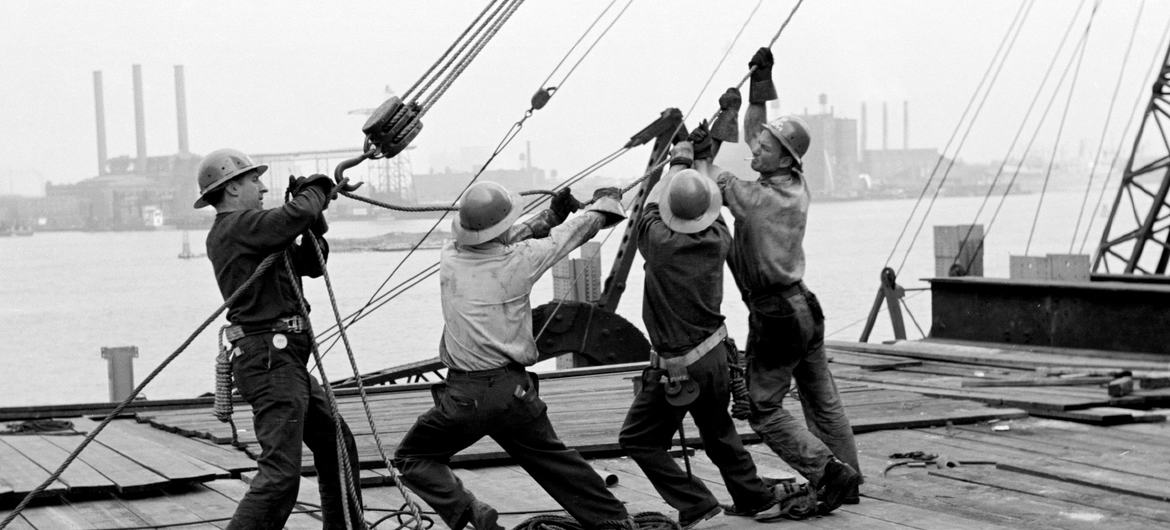
Steel workers hoist a girder in place in the meeting hall area of the UN Headquarters where construction was completed in June 1951.
UN Photo
 
Steel workers hoist a girder in place in the meeting hall area of the UN Headquarters where construction was completed in June 1951.


21 November 2025 
UN Affairs

The United Nations outlined how it intends to advance one of its most comprehensive system-wide reform efforts in decades, as Under-Secretary-General for Policy Guy Ryder presented the UN80 Initiative Action Plan. The plan brings the Secretary-General’s major UN80 reform proposals into a single, coherent structure to streamline efforts that will make the UN system deliver better.

The plan does not introduce new proposals but sets out how the UN system intends to advance the ones already on the table: 87 actions, grouped into 31 work packages across 3 workstreams, stretching from peace operations and humanitarian response to technology, shared services and institutional mergers.

“Its purpose is to bring structure, transparency and coherence and an operational framework to move ahead with all aspects of the UN80 Initiative - and also to enable you to see how each element will move forward: who is responsible for what, and on what timeline” Mr Ryder told Member States during an Informal Meeting of the General Assembly.

A plan for how the UN changes

The Action Plan sits at the heart of the UN80 Initiative, a bold, system-wide transformation to make the UN system work better - so that every dollar, decision and mandate delivers greater results for people and the planet.

Launched in March 2025, and welcomed by the General Assembly in resolution 79/318, the Initiative is not about redefining what the UN system does. The focus is on how it is structured, managed, and coordinated: modernising outdated arrangements, reducing bureaucracy, fragmentation and duplication, and strengthening impact.

The UN80 Initiative advances through three workstreams – all united in the Action Plan: proposals to improve efficiency across the UN system, with initial proposals reflected in the revised estimates for the 2026 Secretariat proposed programme budget; the Report of the Mandate Implementation Review, now under consideration by the Member State–led Informal Ad Hoc Working Group; and “Shifting Paradigms: United to Deliver,” the Secretary-General’s report outlining potential structural and programmatic realignments.

The Action Plan brings these three workstreams under one roof, translating their recommendations into a clear structure that identifies responsibilities, timelines and the intergovernmental bodies that will consider the proposals.

“If we maintain the momentum and approach this initiative in the right spirit, the months ahead can be a moment of real transformation”, Mr Ryder told Member States.

From three reports to 31 work packages

In practical terms, the Action Plan is a roadmap. It takes up the dense architecture of the UN80 Initiative and breaks it down into work packages, ranging from discreet technical changes to far-reaching system shifts.

Some of the most consequential packages focus on what senior officials call the “big tickets” for a more coherent UN system. On the peace and security side, this means new models for peace operations, including how tasks and resources are delegated to entities best placed to deliver. In the humanitarian sphere, it advances the New Humanitarian Compact to simplify emergency response plans, integrate supply chains, expand common services so that every dollar can deliver more.

Another cluster of work packages centres on how the UN development system is configured, including a “reset” of regional capacities and a reconfiguration of UN Country Teams that better combines expertise and cost-effectiveness.

The plan will also advance the assessments of possible mergers between UNDP and UNOPS, and UNFPA and UN Women, and the path forward for UNAIDS.

Critically, the Action Plan gives prominent place to joining up all “operational enablers” that underpin the UN system’s daily work: common data; shared technology platforms; unified services for supply chains and all other back-office functions; and a simpler approach to training and research.

Steering Committee and Task Force at the centre

A new Steering Committee, chaired by the Secretary-General every month, will ensure strategic direction and coherence among UN system leaders.

Beneath it, the UN80 Task Force, chaired by Mr Ryder, will meet weekly to coordinate implementation, monitor timelines and prepare recommendations for the Steering Committee’s review.

“As a basic principle, all actions will be undertaken in accordance with the applicable rules and procedures, as set out in the Charter, as well as the decisions, resolutions and established practice of the competent intergovernmental organs”, Mr Ryder recalled.

He noted that the Action Plan contains proposals falling under three different decision-making scenarios. The first scenario relates to proposals that fall within the Secretary-General's authority. The second relates to proposals that require further work, including the potential mergers outlined in the workstream 3 report. The third scenario relates to proposals involving financial considerations relating to the programme and peacekeeping budgets and are submitted to the General Assembly for review and approval in accordance with standard procedures.

Not a cure for the cash crunch – but part of the answer

The plan is being rolled out at a time when the UN System continues to grapple with serious funding cuts, with system resources estimated to fall 25 per cent (from $66 to $50 billion) in 2026, compared to 2024.

The Secretary-General has been explicit that the UN80 Initiative is not a solution to the UN system's financial crisis but a commitment to protect maximum impact, including in the most vulnerable settings.

A public dashboard for a complex overhaul

To help make sense of a reform that touches almost every corner of the UN system, the Secretariat has launched an interactive UN80 Initiative Actions dashboard.

The online platform allows users to see, at a glance, each work package, its objectives and leadership, and how it connects back to the three foundational reports. The dashboard will be expanded with timeline and milestones and updated regularly as work advances.

For an initiative whose success will ultimately be measured not in new documents but in real-world impact, the Action Plan is a turning point: moving from design into a phase where progress, gaps, and results will be tracked in one place.


https://news.un.org/en/story/2025/11/1166429


https://creativecommons.org/licenses/by/4.0/legalcode
воскресенье, 26 октября 2025 г.

Guterres calls for urgent reform of the Security Council


24 October 2025 
Peace and Security

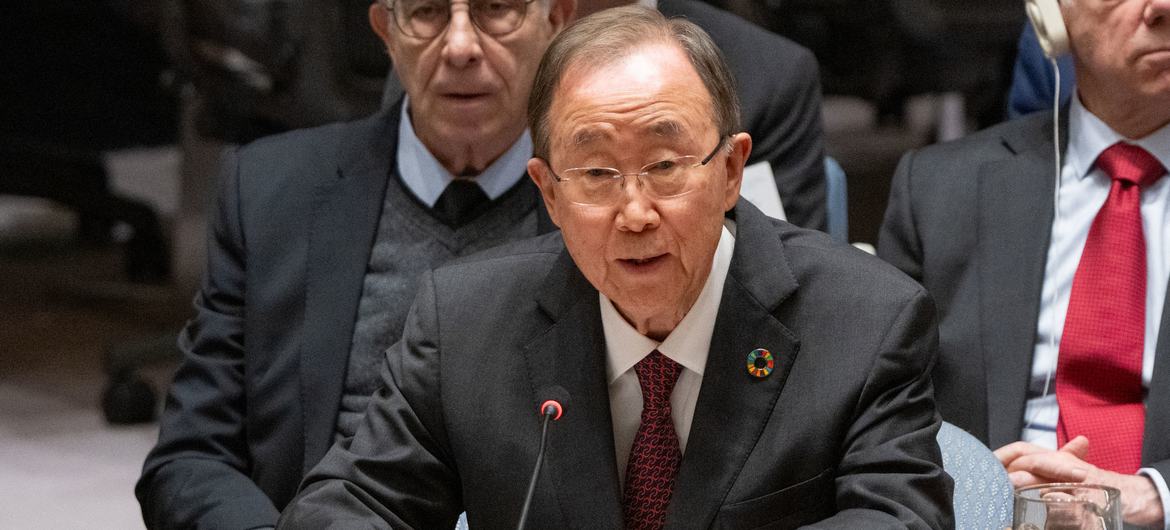
Secretary-General António Guterres on Friday warned that the “fragile” legitimacy of the Security Council could endanger global peace if it remains gridlocked and fails to fulfil its primary purpose.

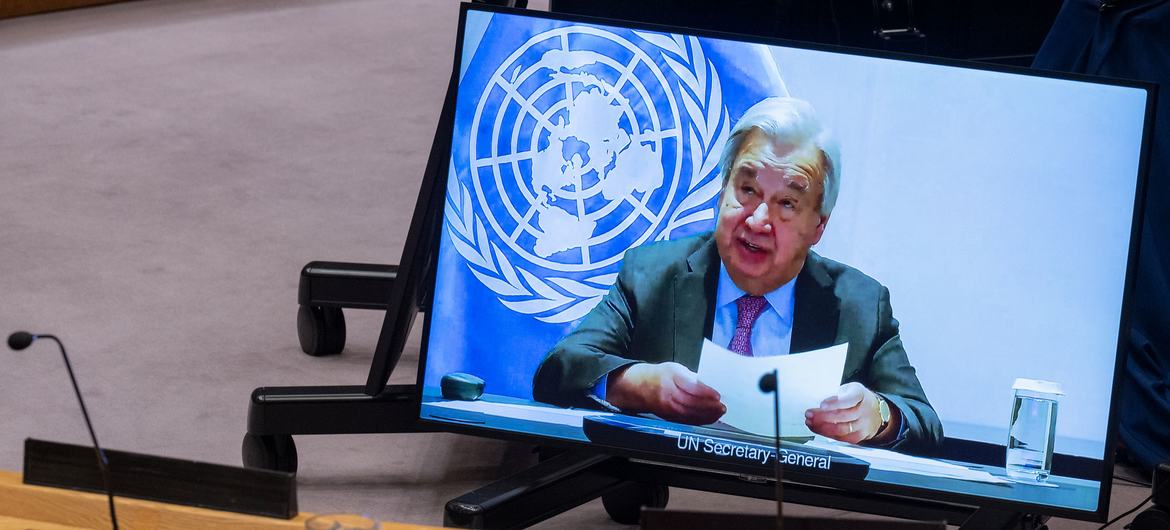
Mr. Guterres was addressing ambassadors in the iconic chamber in New York on United Nations Day, marking 80 years since its founding. He spoke via video link from the capital of Viet Nam, Hanoi, during a robust open debate on how the UN navigates an uncertain future.

Tweet URL

As the UN’s primary body for maintaining international peace and security, the council wields significant power, including the authority to impose sanctions and authorize military action.

Five of its 15 members have a permanent seat and were granted veto power under the UN Charter.

While the Council has played a central role in peacekeeping, conflict resolution and upholding international law, its veto system has often stalled action and sparked criticism.

The body’s structure is viewed by many countries and top officials as unrepresentative, leaving regions like Africa and Latin America without a permanent voice.

Invoking those who have looked to the council over 80 years to end wars, Mr. Guterres said that “the privilege to sit at this table carries a duty – above all – to honour the faith of those people,” he said. “Without a Security Council fit for purpose, the world is in grave danger.”

Debate over fundamentals

Presiding over the council for October, Russia praised the UN’s achievements but criticised the actions of Western governments, while elected (non-permanent) member Guyana, said the body was unrepresentative, advocating for greater and meaningful global representation.

The United States focused on operational reform, accountability, and called for a merit-based selection of the next Secretary-General – who takes the helm in January 2027 – emphasising the primacy of national sovereignty and transparency in the selection process.

The US representative called for an end to a selection process based on regions taking it in turns, arguing it was time to choose from a global roster of candidates.

For a full readout of the meeting click here.

Secretary-General António Guterres (on screen) addresses Security Council members.
UN Photo/Manuel Elías
 
Secretary-General António Guterres (on screen) addresses Security Council members.

A UN for the weak, not the powerful

The UN chief painted a vivid picture of how Council decisions can impact citizens worldwide:

The Security Council is not about hegemons and empires. It is about parents who have lost their children, refugees flung far from their homes, soldiers who have sacrificed their limbs.

In every shadow of this Chamber, you are surrounded by the ghosts of the dead. But beside them stands something else – the hopes of the living.

He urged Council members to listen to those hopes.

“Listen closely and you will hear the cries of your citizens who rally for peace; the whispers of families who long for safety...The United Nations emblem does not bear the laurel wreath of a victor, but the olive crown of a peacemaker.

But its legitimacy is fragile

Mr. Guterres highlighted the Council’s successes over eight decades, from helping Cambodia emerge from genocide to supporting South Africa’s transition from apartheid and deploying missions in Sierra Leone, Timor-Leste, and Liberia.

Yet its legitimacy remains fragile, he stressed, noting that violations of the UN Charter by some Member States erode trust and risk global stability.

He called for and expanded membership to better reflect the world’s demographics, including permanent representation for Africa, Latin America and the Caribbean.

Mr. Guterres also encouraged discussions on proposals to limit the use of the veto.

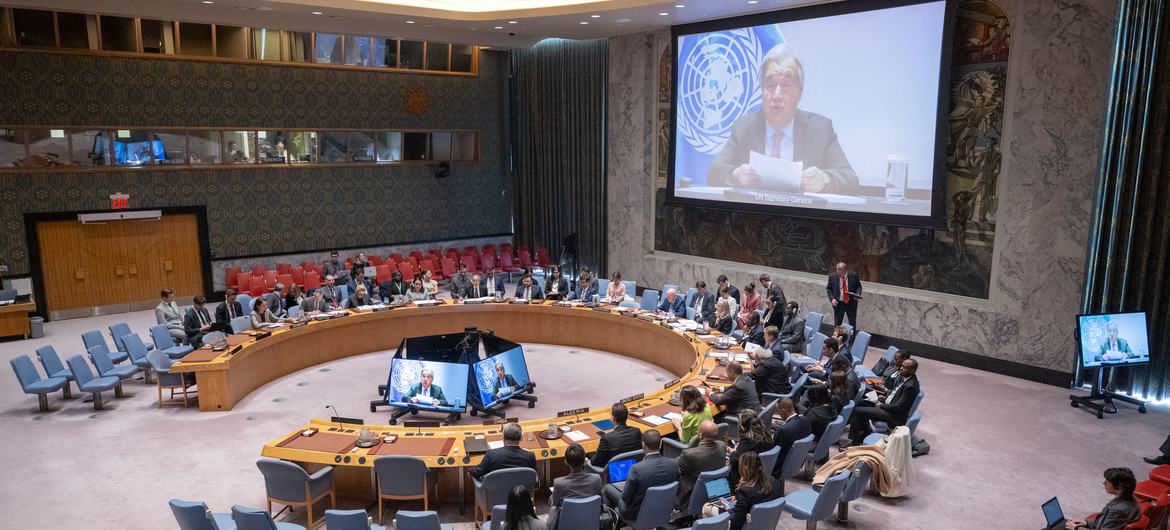
A wide view of the Security Council as Secretary-General António Guterres (on screen) addresses members.
UN Photo/Manuel Elías
 
A wide view of the Security Council as Secretary-General António Guterres (on screen) addresses members.

Russia: Divisive Western powers

Russia’s Ambassador Vassily Nebenzia praised the UN’s achievements but cautioned against the actions of Western powers.

“In an effort to maintain its waning influence, the West divided the world into ‘us’ and ‘them’ – ‘democracies’ and ‘autocracies’ – a group of those who are chosen, and those who are violating their imposed order,” he said.

As a result, many of the UN Charter’s principles remain concepts, not a reality. “Adventures” – from the Iraq invasion and Colour Revolutions to the recent invasion of Iran – have only led to tragedy, he said.

Guyana: Reform now

Guyana’s Ambassador Carolyn Rodrigues-Birkett echoed calls for reform, describing the current configuration of the Council as unrepresentative.

“The Security Council must be reformed. Notwithstanding the expansive breadth of the work of the UN, the reality is that this success or failure of the United Nations as a whole is judged in large measure through the action, or lack thereof, of the Security Council,” she said.

She called for permanent seats for Africa and Latin America and a rotating seat for small island developing States, emphasising that national interest and international cooperation are complementary.

US: UN ‘has lost its way’

The United States, represented by Ambassador Dorothy Shea, focused on accountability. She said the UN had become a “bloated bureaucracy” that has lost its way, calling for mandates with clear political objectives and measurable benchmarks.

“The UN should serve Member States rather than have Member States beholden to an unaccountable bureaucracy,” she said.

On the next Secretary-General, Ambassador Shea said the US seeks a leader who will restore the UN to its founding purpose, respecting state sovereignty and prioritising accountability and transparency.

She added that the selection process should be merit-based, drawing candidates from all regional groupings, and that the next Secretary-General should “bring the UN back to basics and by so doing, help achieve the bold vision of peace and prosperity to which we all committed.”

A humble ballot box

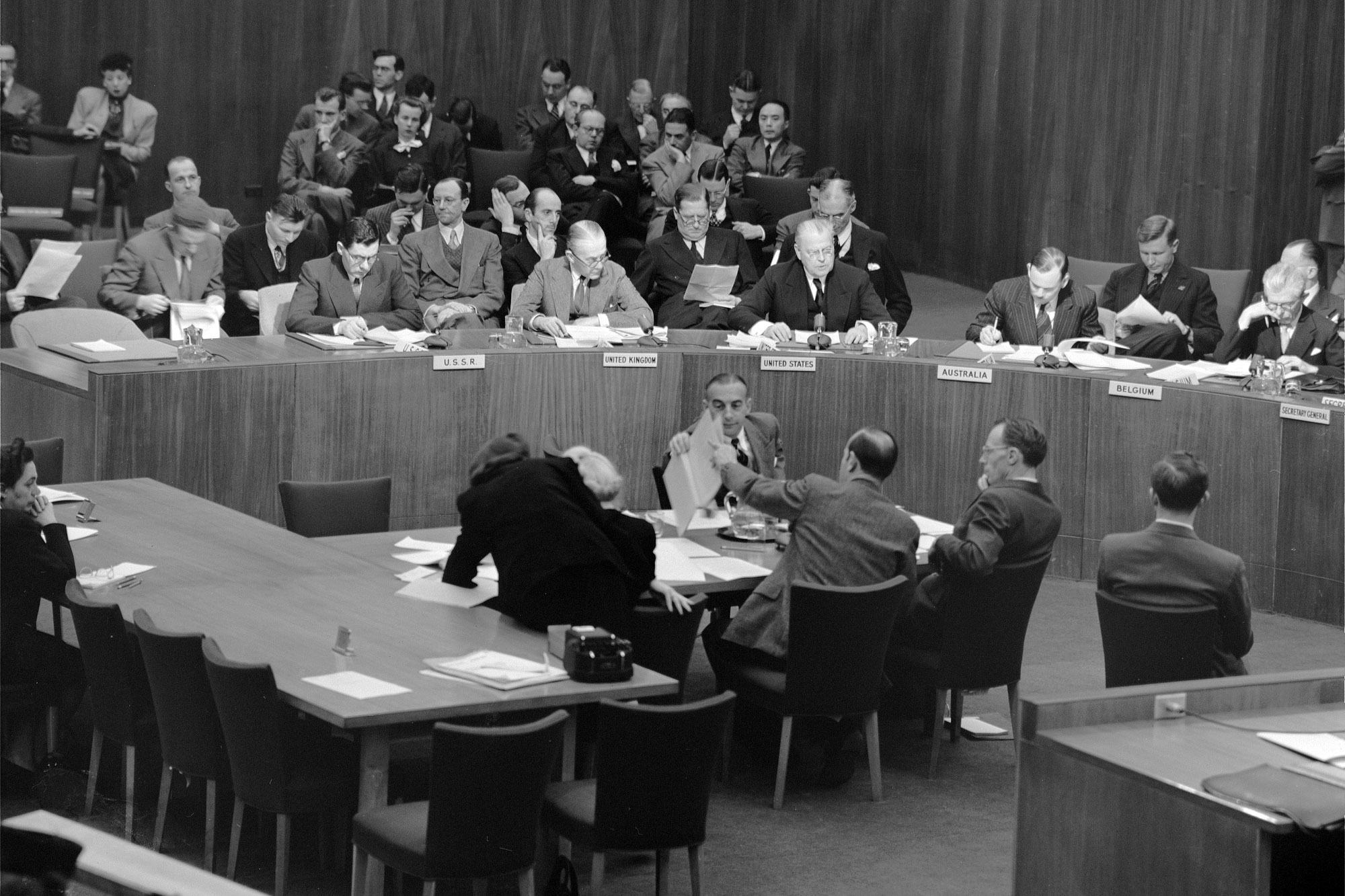
A photograph of a UN Security Council meeting on atomic energy in 1947.
UN Photo
 
A photograph of a UN Security Council meeting on atomic energy in 1947.

At the start of the meeting, the UN chief recalled a remarkable moment from the UN’s early days: the first Security Council ballot box in 1946. To everyone’s surprise, a slip of paper was already inside – a note from Paul Antonio, a local New York mechanic who had made the box.

“May I, who have had the privilege of fabricating this ballot box, cast the first vote? May God be with every member of the United Nations Organization, and through your noble efforts bring lasting peace to us all – all over the world,” Mr. Antonio wrote.

“Paul Antonio – the mechanic never sat at this table He never gave a speech or signed a treaty,” Mr. Guterres told ambassadors.

“But he believed in everyone here. He believed in you. I urge you: honour that trust. Make this chamber worthy of the hopes of every man, woman and child.”


https://creativecommons.org/licenses/by/4.0/legalcode

https://creativecommons.org/licenses/by/4.0/legalcode
понедельник, 20 октября 2025 г.

Президентом Боливии стал правоцентрист Родриго Пас

20.10.2025, 06:12

Президентом Боливии стал правоцентрист Родриго Пас

По предварительным итогам подсчета голосов во втором туре президентских выборов в Боливии победу одержал сенатор-правоцентрист Родриго Пас, получивший 54,5% голосов. Его соперник, считавшийся ранее главным претендентом на президентский пост, Хорхе «Туто» Кирога, получил 45,5%.

Как уточняет агентство Reuters, победа Паса стала «историческим сдвигом» для страны, которой с 2006 года управляли президенты от партии власти «Движение к социализму». В ходе предвыборной гонки Родриго Пас обещал сохранить социальные программы и одновременно стимулировать развитие частного бизнеса. Его соперник настаивал на мерах жесткой государственной экономии. Оба кандидата во втором туре пообещали укрепить дипломатические отношения с США.

Первый тур президентских выборов в Боливии состоялся 17 августа. По его итогам впервые в истории страны ни один из кандидатов не набрал 50%. Большинство голосов — 32,8% — досталось Родриго Пасу, второе место с 26,4% отошло Хорхе «Туто» Кироге, занимавшему в начале 2000-х пост президента. Выдвиженец от партии власти Эдуардо дель Кастильо набрал только 3,2% голосов. Прошедший во второй тур Хорхе «Туто» Кирога обещал избирателям отказаться от многомиллиардных контрактов с Россией и Китаем по добыче лития.

Влад Никифоров


https://www.kommersant.ru/doc/8138333

https://creativecommons.org/licenses/by/4.0/legalcode
понедельник, 29 сентября 2025 г.

Глава МИД Азербайджана призвал поддержать кандидатуру Баку для проведения «ЭКСПО – 2025»


Фото ООН


Министр иностранных дел Азербайджана Эльмар Мамедъяров выступил в Генассамблеи ООН


28 сентября 2018

ООН


Азербайджан поддерживает инициативы главы ООН по предупреждению войн и поддержанию мира, привержен выполнению Целей устойчивого развития и продвигает идеи мультикультурализма. Об этом заявил министр иностранных дел Азербайджана Эльмар Мамедъяров, выступая в ходе общих прений 73-й сессии Генассамблеи. При этом он напомнил об «оккупации Арменией» одной пятой территории Азербайджана и призвал международное сообщество «усилить давление на Ереван, чтобы добиться выполнения соответствующих резолюций Совета Безопасности».

Министр иностранных дел Азербайджана рассказал с трибуны Генассамблеи об успехах его страны в развитии экономики и ее участии в многочисленных региональных проектах – строительстве транспортных коридоров, объектов инфраструктуры и создании высокотехнологичных коммуникационных магистралей.

По его словам, устойчивый экономический рост позволяет Азербайджану оказывать помощь развивающимся странам, а также государствам, которые справляются с последствиями стихийных бедствий. Азербайджан, по его словам, борется с коррупцией и активно сотрудничает с правозащитными механизмами ООН.

Глава МИД Азербайджана сообщил, что Баку претендует на проведение международной выставки «ЭКСПО – 2025» и призвал страны, которым в ноябре предстоит определить победителя, поддержать кандидатуру Азербайджана. «Страны Восточной Европы, Кавказа и бассейна Каспия никогда не принимали у себя ЭКСПО», - сообщил Мамедъяров, подчеркнув, что избрание Баку позволит расширить географию проведения выставки.

По словам министра, Азербайджан как «один из признанных центров мультикультурализма» провел многочисленные международные мероприятия, направленные на укрепление межкультурного диалога. «Представители всех этнических и религиозных групп проживают в Азербайджане в мире и гармонии», - подчеркнул он.

Вместе с тем, глава МИД Азербайджана напомнил, что пятая часть территории его страны находится «под оккупацией со стороны Армении», а «один из девяти жителей страны является беженцем или внутренним переселенцем». Он призвал международное сообщество оказать давление на власти Армении, чтобы добиться немедленного выполнения соответствующих резолюций Совета Безопасности ООН.

«Новое руководство Армении должно понимать, что его обещания армянскому народу о превращении Армении в экономически развитое и процветающее государство невозможно выполнить, не установив мир и добрые взаимоотношения с соседями, не уважая их суверенитет и территориальную целостность», - подчеркнул Эльмар Мамедъяров.

Как заявил министр, в Азербайджане считают, что не существует «альтернативы миру, стабильности и взаимовыгодному региональному сотрудничеству».


https://news.un.org/ru/story/2018/09/1339582
http://creativecommons.org/licenses/by/3.0/legalcode

суббота, 27 сентября 2025 г.

AI must not decide humanity’s fate, UN chief warns Security Council


AI can help prevent crises and drive progress – but without guardrails, it risks fueling conflict, disinformation and instability.
Unsplash/Chris Yang
 
AI can help prevent crises and drive progress – but without guardrails, it risks fueling conflict, disinformation and instability.


By Vibhu Mishra
24 September 2025 Peace and Security

Artificial intelligence holds vast potential but poses grave risks if left unregulated, UN Secretary-General António Guterres told the Security Council on Wednesday.

“AI is no longer a distant horizon – it is here, transforming daily life, the information space, and the global economy at breathtaking speed,” Mr. Guterres said at the Council’s high-level debate on the technology’s security implications for transforming warfare.

“The question is not whether AI will influence international peace and security, but how we will shape that influence.”

Used responsibly, the UN chief said, AI can help anticipate food insecurity, support de-mining operations, and identify outbreaks of violence before it spills out of control.

“But without guardrails, it can also be weaponised,” he cautioned, pointing to AI-enabled targeting in recent conflicts, cyberattacks on critical infrastructure, and deepfakes capable of fuelling polarisation or derailing diplomacy.

The ability to fabricate and manipulate audio and video threatens information integrity, fuels polarisation and can trigger diplomatic crises…humanity’s fate cannot be left to an algorithm,” he stressed.

Tweet URL

Decisions must rest with us

Mr. Guterres set out four priorities for governments: maintaining human control over the use of force, building coherent global regulatory frameworks, protecting information integrity, and closing what he called the “AI capacity gap” between rich and poor nations.

I reiterate my call for a ban on lethal autonomous weapons systems operating without human control, with a view to concluding a legally binding instrument by next year,” he said.  

He also insisted that decisions on nuclear weapons “must rest with humans – not machines.”

The Secretary-General highlighted steps already underway, including the creation of an independent scientific panel on AI and a new global dialogue on AI governance – due to take place in New York on Thursday.

Together, these initiatives aim to connect science, policy and practice; provide every country a seat at the table; and reduce fragmentation,” he said.

A call to broaden access

Yejin Choi, Senior Fellow at Stanford University’s Institute for Human-Centered Artificial Intelligence, told the Security Council that current progress in AI is too concentrated among a handful of companies and countries.

“When only a few have the resources to build and benefit from AI, we leave the rest of the world waiting at the door,” she said.

Let us expand what intelligence can be – and let everyone everywhere have a role in building it.”

AI must reinforce inclusion

Ms. Choi urged governments and international institutions to invest in alternative approaches beyond scaling ever-larger models, arguing that smaller, more adaptive systems could lower barriers to entry.

Let us expand what intelligence can be, and let everyone have a role in building it
– Professor Choi

She also pressed for stronger representation of linguistic and cultural diversity, noting that today’s leading AI models “underperform for many non-English languages and reflect narrow cultural assumptions.”

Act without delay

Secretary-General Guterres closed by warning the window for effective regulation is closing fast.

“From nuclear arms control to aviation safety, the international community has risen to the challenge of technologies that could destabilise our societies – by agreeing to rules, building institutions, and insisting on human dignity,” he said.

The window is closing to shape AI – for peace, for justice, for humanity. We must act without delay.

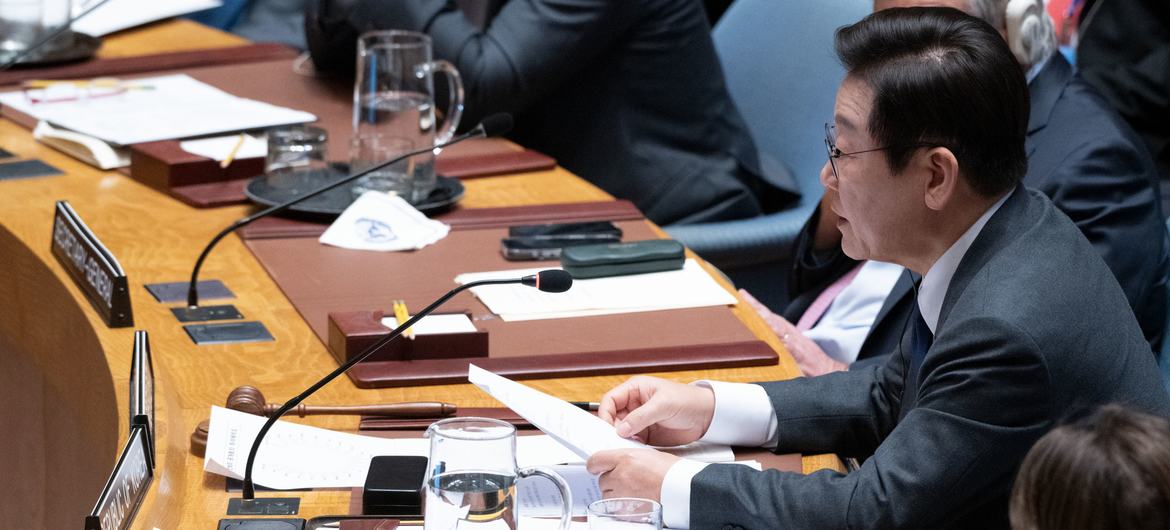
Lee Jae Myung, the President of the Republic of Korea, chairing the Security Council meeting.
UN Photo/Evan Schneider
 
Lee Jae Myung, the President of the Republic of Korea, chairing the Security Council meeting.

The Security Council session was held on the margins of the ongoing high-level week of the General Assembly’s 80th session.

The meeting was convened by Republic of Korea (Council President for September) and attended by heads of states and governments, including Lee Jae Myung, the President of the Republic of Korea, who chaired the meeting


https://news.un.org/en/story/2025/09/1165942


https://creativecommons.org/licenses/by/4.0/legalcode
воскресенье, 21 сентября 2025 г.

Iran’s uranium stockpile grows following three years of denied access


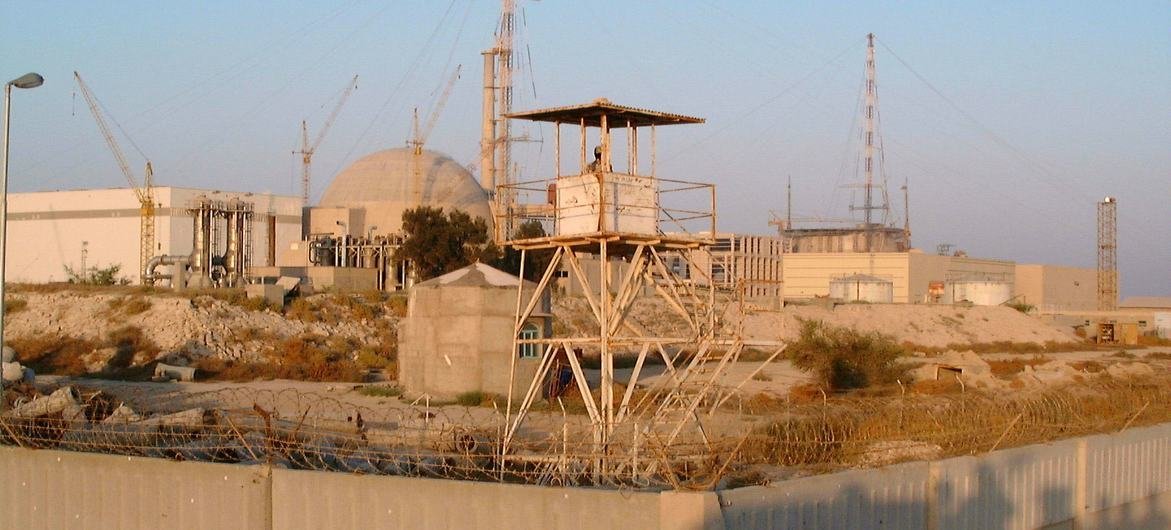
The Busher nuclear power plant in Iran. (file photo)
IAEA/Paolo Contri
 
The Busher nuclear power plant in Iran. (file photo)

3 June 2024
Peace and Security

Iran’s stockpile of enriched uranium continues to increase, the head of the UN atomic watchdog agency said on Monday, adding that it has been three years since the agency was able to access the country.

Addressing the Board of Governors of the International Atomic Energy Agency (IAEA), Director General Rafael Grossi indicated no progress had been made in resolving outstanding issues.

He mentioned that Iran is still not implementing provisions of the nuclear safeguards agreement, and that withdrawal of designations for several IAEA inspectors are yet to be reversed.

“These outstanding safeguards issues…need to be resolved for [IAEA] to be in a position to provide assurance that Iran’s nuclear programme is exclusively peaceful,” Mr. Grossi emphasized.

He also voiced concerns about public statements made in Iran regarding its technical capabilities to produce nuclear weapons and potential changes to its nuclear doctrine, which only deepen apprehensions about the “correctness and completeness” of the country’s safeguards declarations.

Ukraine’s power plants

Nuclear Safety, Security and Safeguards in Ukraine.
© IAEA
 
Nuclear Safety, Security and Safeguards in Ukraine.

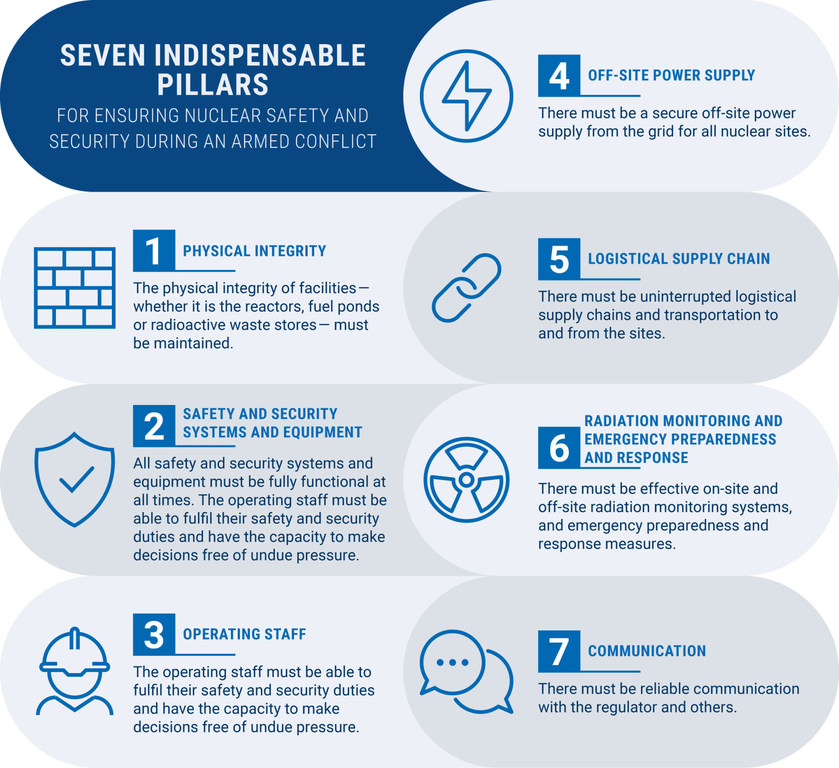
Turning to Ukraine, the IAEA chief warned the situation at the Zaporizhzhia Nuclear Power Plant “remains precarious” and that all seven Pillars of Nuclear Safety and Security have been “fully or partially compromised”.

These include physical integrity; functional safety and security systems and equipment; radiation monitoring and emergency response; secure and reliable off-site power supply; trained staff; an uninterrupted logistic supply chain; and open communication.

The attacks and the frequent disconnection of the off-site power lines due to military activity are creating a grave situation,” Mr. Grossi said.

All six reactor units at the plant have been in cold shutdown since April, a safety measure long recommended by the IAEA. Despite this, the agency’s ability to ensure the plant’s safety and security remains compromised due to restricted access, he added.

He further reported that Ukraine’s other four nuclear power plants continue to face compromised supply chains for spare parts and high levels of stress among staff.

DPR Korea’s nuclear programme

Mr. Grossi also voiced concern over the continued and further development of the Democratic People’s Republic of Korea’s (DPRK) nuclear programme.

The IAEA has observed intermittent cooling water discharge, consistent with the operation of the Light Water Reactor (LWR) at Yongbyon, along with ongoing activities at the reported centrifuge enrichment facility.

The Nuclear Test Site at Punggye-ri remains occupied and prepared to support a new test.

“The continuation and further development of the DPRK’s nuclear programme is a clear violation of relevant UN Security Council resolutions and is deeply regrettable,” Mr. Grossi said, urging the country to comply fully with its obligations and to cooperate promptly with IAEA.

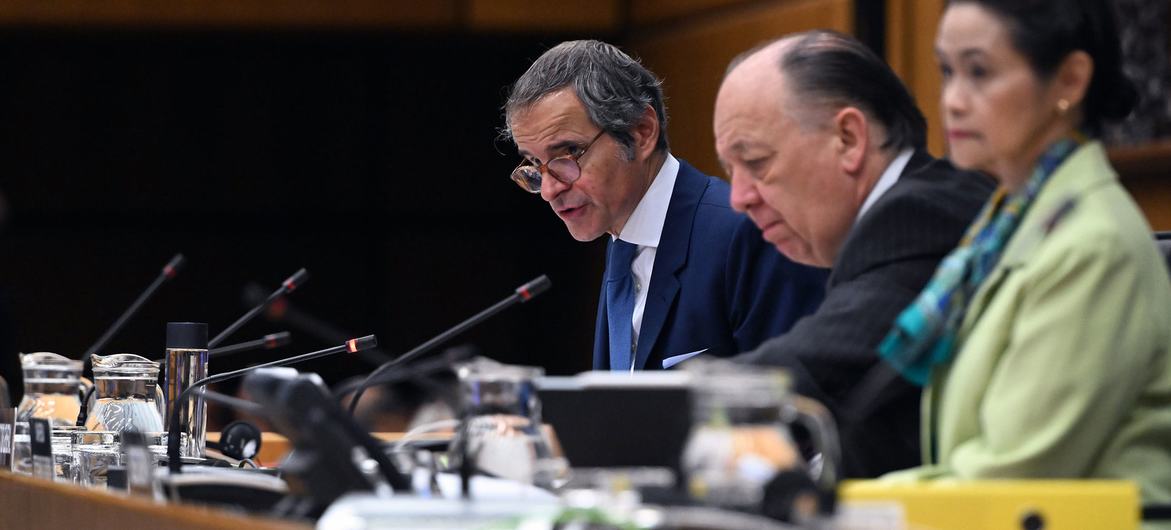
Rafael Mariano Grossi (right), IAEA Director General, delivers his opening statement at the 1717th Board of Governors meeting held at the IAEA Headquarters, in Vienna.
© IAEA/Dean Calma
 
Rafael Mariano Grossi (right), IAEA Director General, delivers his opening statement at the 1717th Board of Governors meeting held at the IAEA Headquarters, in Vienna.

Japan’s Fukushima Daiichi plant

In Japan, IAEA continues to monitor the discharge of Advanced Liquid Processing System)-treated water from the Fukushima Daiichi Nuclear Power Station, which suffered a meltdown 13 years ago, he reported.

Mr. Grossi confirmed that the discharge is progressing in accordance with the safety plan approved by Japan’s Nuclear Regulation Authority.

“Expert independent analysis of the six batches released so far have confirmed the tritium concentration in each batch of ALPS-treated water released to date is far below Japan’s operational limit.”

Nuclear technology for sustainable development

In his concluding remarks, the head of IAEA underscored the agency’s key role in promoting sustainable development.

“The IAEA is a crucially important vehicle for advancing sustainable development and international peace and security,” he said, urging member states to continue their support for the agency’s indispensable work.


https://news.un.org/en/story/2024/06/1150576


https://creativecommons.org/licenses/by/3.0/legalcode

пятница, 19 сентября 2025 г.

UN80 Initiative: New report charts proposals for change across UN structures and programmes

The corner-stone of the UN headquarters building was laid on UN Day at a special open-air General Assembly meeting held on 24 October 1949.
UN Photo
 
The corner-stone of the UN headquarters building was laid on UN Day at a special open-air General Assembly meeting held on 24 October 1949.


18 September 2025 UN Affairs

The Secretary-General shared a progress report on Thursday on structural reforms and programme realignments under the UN80 Initiative, setting out proposals to make the United Nations more coherent, effective and better equipped to respond to global challenges.

The report, Shifting Paradigms: United to Deliver, outlines possible adjustments in how the UN is structured, how its entities collaborate, and how it operates. It is the third major output of the Initiative, following earlier reports on efficiency measures and on mandate implementation review. Issued just before the General Assembly’s High-Level Week, the document is intended to inform Member States' deliberations.

“This is a work in progress,” Mr Guterres says in the preface. “We look forward to working with Member States – as owners of the process – to realize our common ambition: a United Nations system that is more coherent, more effective, and better equipped to serve ‘We the Peoples’.”

Main areas of focus

The proposals address all three pillars of UN work – peace and security, sustainable development and human rights – as well as humanitarian action, ways to strengthen cross-pillar collaboration and system-wide enablers. It calls for fewer silos, less duplication and more effective collaboration, noting that the UN system, built up over 80 years, must adapt to today’s far more complex challenges.

  • In peace and security, the report proposes consolidating offices and leadership layers, establishing centres of excellence for peacebuilding and for Women, Peace and Security, and preparing leaner, more integrated peace operations.
     
  • New Humanitarian Compact is proposed to streamline planning, integrate global supply chains, expand common back-office services and strengthen humanitarian diplomacy, with the goal of serving over 100 million people more quickly and effectively.
     
  • On sustainable development, the Secretary-General recommends assessing potential mergers of agencies, pooling expertise through new joint knowledge hubs, and reconfiguring regional and country-level operations for greater impact.
     
  • In human rights, the report proposes creating a UN Human Rights Group, led by the High Commissioner, to coordinate system-wide action and reduce duplication.
     
  • Among the system enablers, the report highlights the creation of a UN System Data Commons, a Technology Accelerator Platform, unified back-office services, streamlined training and research, and reforms to strengthen pooled and core funding.

Next steps

Several proposals in the report lie within the Secretary-General’s authority and can be advanced without delay. Most, however, rest with Member States. Mr. Guterres has been invited by the President of the General Assembly to brief on the report on 15 October 2025.


https://news.un.org/en/story/2025/09/1165883


https://creativecommons.org/licenses/by/4.0/legalcode
суббота, 2 августа 2025 г.

A mandate for change: UN releases proposals for streamlining of tasks as part of major reform agenda


Thousands of pages of documents used to be printed every day at the UN as pictured in June 1969.
UN Photo/Yutaka Nagata
 
Thousands of pages of documents used to be printed every day at the UN as pictured in June 1969.


1 August 2025 
UN Affairs

Millions of lives have been improved by the mandates assigned to the UN. Yet duplication, fragmentation and outdated tasks are stretching resources and undermining the organization’s ability to deliver for those who need it most. As part of the UN80 Initiative, UN Secretary-General António Guterres has presented a set of proposals to Member States to make the UN more efficient, coherent and impactful.

Mandates - requests or directives for action issued by the General Assembly, the Security Council and the Economic and Social Council - have multiplied significantly since 1945. Today, there are more than 40,000 active mandates, serviced by around 400 intergovernmental bodies. Together, they require more than 27,000 meetings a year and generate roughly 2,300 pages of documentation every day, at an estimated annual cost of $360 million.

A growing challenge

Mandates guide the UN’s work in over 190 countries and territories, from peacekeeping to humanitarian response and development. But many are outdated or overlapping, and their complexity is increasing. Since 2020, the average word count of General Assembly resolutions has risen by 55 per cent, while Security Council resolutions are now three times longer than they were 30 years ago.

“Let’s face facts,” said Secretary-General António Guterres during a briefing to the General Assembly on Friday, “we cannot expect far greater impact without the means to deliver. By spreading our capacities so thin, we risk becoming more focused on process than on results.”

A lack of coordination adds to the strain. Several UN entities cite the same mandates to justify separate programmes and budgets, leading to duplication and reduced impact. More than 85 per cent of mandates contain no provisions for review or termination. “Effective reviews are the exception, not the rule,” Mr. Guterres said. “The same mandates are discussed year after year – often with only marginal changes to existing texts.”

The UN has carried out mandates across the world including certifying the election in Namibia in 1989.
UN Photo/Milton Grant
 
The UN has carried out mandates across the world including certifying the election in Namibia in 1989.

The UN80 Initiative: a systemic approach

The Report of the Mandate Implementation Review, released on 31 July, is part of the Secretary-General’s broader UN80 Initiative - a multi-year effort to modernize how the UN works. Rather than assess mandates individually, the report takes a “lifecycle” approach, looking at how mandates are created, implemented and reviewed, and proposing ways to improve each stage.

“Let me be absolutely clear: mandates are the business of Member States,” Mr. Guterres told the General Assembly. “They are the expression of your will. And they are the sole property and responsibility of Member States. The vital task of creating, reviewing or retiring them lies with you – and you alone. Our role is to implement them – fully, faithfully, and efficiently.”

“This report respects that division,” he added. “It looks at how we carry out the mandates you entrust to us.”

From creation to delivery

To address duplication and complexity, the report calls for digital mandate registries that make it easier to track what has been adopted across different bodies. It also encourages shorter, clearer resolutions with realistic resource requirements. “We cannot expect far greater impact without the means to deliver,” Mr. Guterres said.

The report also highlights the growing operational burden of meetings and reports. Last year, the UN system supported 27,000 meetings and produced 1,100 reports - three out of five on recurring topics. “Meetings and reports are essential,” Mr. Guterres said. “But we must ask: Are we using our limited resources in the most effective way?”

The UN peacekeeping mission in South Sudan, UNMISS, was mandated by the Security Council.
© UNMISS
 
The UN peacekeeping mission in South Sudan, UNMISS, was mandated by the Security Council.

Funding and impact

Proposals include reducing the number of reports and meetings, streamlining formats and monitoring report usage to ensure relevance. The Secretary-General is also calling for stronger coordination among UN entities to avoid overlap and ensure each mandate is linked to clear deliverables.

The report warns that fragmented funding is undermining coherent delivery. In 2023, 80 per cent of the UN’s funding came from voluntary contributions, 85 per cent of which were earmarked. “Fragmented funding, combined with fragmented implementation, leads to fragmented impact,” said Mr. Guterres. “Each of us has a role to play to address this. And each of us must act on the levers within our control.”

Putting people first

For the Secretary-General, reforms are not only about process but about impact. “Mandates are not ends in themselves,” he said. “They are tools – to deliver real results, in real lives, in the real world.”

He praised UN staff as central to this effort. “None of the work in implementing mandates is possible without our staff – the women and men of the United Nations,” Mr. Guterres said. “Their expertise, dedication and courage are indispensable to this endeavor. If we are to improve how we implement mandates, we must also support and empower the people who carry them out.”

Many of the UN's mandates are agreed at the Security Council at UN Headquarters in New York.
UN Photo/Rick Bajornas
 
Many of the UN's mandates are agreed at the Security Council at UN Headquarters in New York.

A call to Member States

In his concluding remarks, the Secretary-General underscored that the next steps must come from Member States. “The path forward is yours to decide,” he said. “My responsibility is to ensure that the Secretariat provides the capacities and inputs required by the course of action that you choose.”

The report invites Member States to consider a time-bound intergovernmental process to carry proposals forward and ensure that this effort succeeds where earlier ones have fallen short. The upshot, the report says, would be a more agile, coherent and impactful UN that is better at delivering programmes and services. 

UN80

  • The UN80 Initiative is a system-wide push to streamline operations, sharpen impact, and reaffirm the UN’s relevance for a rapidly changing world. It is divided into three workstreams:
  • The first is focused on improving internal efficiency and effectiveness, cutting red tape, and optimizing the UN’s global footprint by relocating some functions to lower-cost duty stations.
  • The second is a mandate implementation review, which involves examining thousands of mandate documents underpinning the UN Secretariat’s work (a mandate refers to a task or responsibility assigned to the organisation by the Member States, usually through resolutions adopted by UN organs such as the General Assembly or the Security Council).
  • The third explores whether structural changes and programme realignment are needed across the UN System.
  • The work under the first two workstreams will help inform broader thinking around structural changes and programme realignment across the UN system.
https://news.un.org/en/story/2025/08/1165550


https://creativecommons.org/licenses/by/4.0/legalcode
воскресенье, 20 июля 2025 г.

World News in Brief: Violence in Haiti, rising insecurity in DR Congo, expert panel on nuclear war


An adult and child rest at centre for displaced people in Haiti.
© WFP/Pedro Rodrigues
 
An adult and child rest at centre for displaced people in Haiti.


18 July 2025
 Humanitarian Aid

The UN humanitarian affairs office OCHA is stressing the need to scale up support for displaced families in Haiti amid ongoing insecurity and violence. 

Displaced Haitians are dispersed among the 250 active displacement sites across the country, most of which are informal. Just over a fifth of these sites are managed by humanitarian organizations, meaning that many are living in precarious conditions.  

In June alone, more than 200 alerts were reported across displacement sites, over 80 per cent of which were related to essential needs such as lack of water, food, shelter or healthcare.

OCHA noted that nearly 1.3 million people are now internally displaced in Haiti, the highest number ever recorded in the country due to violence.

Constrained UN response

The UN and partners have supported more than 113,000 displaced Haitians this year, providing essential services such as water, shelter, sanitation and healthcare.

The humanitarian response is severely constrained by limited funding and persistent insecurity, hampering humanitarian access to the most affected areas and delaying the delivery of aid. 

Despite the challenges, the agency continues to work closely with Haitian authorities and humanitarian partners to coordinate relief efforts and mobilise additional resources to support displaced communities. 

DR Congo: Ongoing violence in the east drives displacement, impedes aid delivery

Ongoing violence in North and South Kivu provinces in the eastern Democratic Republic of the Congo (DRC) continues to claim the lives of civilians and to trigger new displacement. 

In North Kivu, UN partners on the ground in Rutshuru and Lubero territories reported that fighting between M23 and other armed groups was ongoing until Tuesday, resulting in eight civilian deaths and 42,500 displaced people as of earlier this week. 

Since early July, heavy clashes between M23 and other armed groups in South Kivu have also persisted, as local partners said the fighting has displaced at least 37,000 people from their homes. 

Aid access restrictions 

The surge in violence is making it harder for humanitarians to deliver assistance to vulnerable communities. 

While partners and teams on the ground are doing their best to maintain services for those affected, access restrictions and severe funding shortages pose significant obstacles. 

A humanitarian convoy coordinated by OCHA along the road between the provincial capital Bukavu and the city of Uvira, primarily planned for this Friday, has been postponed due to a lack of security guarantees on that route. 

Many UN partners on the ground are forced to scale back their operations, disrupting essential services for those in need. 

OCHA called on the international community to take urgent action to address these severe funding gaps and avert a humanitarian tragedy. 

New panel to examine the effects of a nuclear war

The UN Secretary-General has appointed an independent scientific panel of 21 experts to examine the physical and societal consequences of a nuclear war on a local, regional and planetary scale in the days, weeks and decades following such an event.

The creation of the panel, mandated by a General Assembly resolution, comes at a time when nuclear guardrails are being eroded and “the risk of nuclear war is higher than at any point since the depths of the Cold War,” UN deputy spokesperson Farhan Haq said on Friday during the daily media briefing from Headquarters in New York. 

The panelists will seek input from a wide range of stakeholders – including international and regional organizations, the International Committee of the Red Cross (ICRC), civil society and affected communities. 

Members will hold their first meeting in September and will submit a final report to the General Assembly in 2027. 


https://news.un.org/en/story/2025/07/1165439

https://creativecommons.org/licenses/by/4.0/legalcode

пятница, 4 июля 2025 г.

Press Conference by Security Council President on Programme of Work for July


The Security Council will convene its signature event on 22 July — a high-level open debate on promoting international peace and security through multilateralism and the peaceful settlement of disputes — the Council’s President for the month said at a United Nations Headquarters press conference today.

Asim Iftikhar Ahmad (Pakistan), who holds the 15-member organ’s rotating presidency for this month, said the open debate — held under the overarching theme of maintaining international peace and security — will be chaired by his country’s Deputy Prime Minister and Minister for Foreign Affairs, Mohammad Ishaq Dar. The Secretary-General is expected to brief the Council.  “The debate stems from the fact that today’s crises often emerge from unresolved disputes, erosion of international obligations and underutilization of peaceful means enshrined in the Charter,” he said.  The discussion will examine the effectiveness of existing dispute settlement mechanisms, identify barriers to implementing Council resolutions and explore ways to strengthen preventive diplomacy, mediation and technical support.  It will also reaffirm the commitments made in the Pact for the Future towards preventive diplomacy and the peaceful resolution of disputes.

The Council will further hold a signature event on “Cooperation between the UN and regional and subregional organizations”, chaired also by Pakistan’s Deputy Prime Minister and Minister for Foreign Affairs.  It will spotlight UN’s engagement with the Organisation of Islamic Cooperation (OIC), which represents 57 member States across four continents and has played an increasingly important role in conflict prevention and mediation, humanitarian response and post-conflict recovery.  This meeting will explore ways to institutionalize and deepen this cooperation, particularly in relation to peace processes in various contexts.

On 23 July, the Council will hold its quarterly open debate on the Middle East, including the Palestinian question, which will be elevated to the ministerial level.  The meeting will reaffirm the Council’s responsibility to protect civilians, uphold international humanitarian law and push for an immediate ceasefire, along with just and lasting solutions based on UN resolutions concerning the Palestinian question.

Throughout July, the Council will consider several country-specific and thematic issues, primarily through mandated briefings and situational updates.  These will include discussions on Colombia, Haiti, Cyprus, Sudan, Syria, Yemen and the International Criminal Court, as well as consultations on Lebanon within the framework of resolution 1701 (2006).  The President of the Security Council reaffirmed his readiness to convene additional meetings should developments on the ground — particularly in Africa, the Middle East or Asia — warrant timely engagement.  On 29 July, the Council will also hold a briefing on UN Peace Operations, in the context of the Secretary-General’s ongoing review.

“We are committed to an open and consultative Presidency,” he stated, outlining the Council’s working methods, which are grounded in transparency, inclusivity and close coordination among all 15 members.  He noted that the Council remains alert and responsive to global developments, with a particular focus on conflict zones such as in the Middle East, Africa, Sudan and the Democratic Republic of the Congo.

He also responded to several questions posed by media correspondents, many of which concerned the situation in Gaza.  In his national capacity, he said the objective of the draft resolution — jointly proposed by China, the Russian Federation and his own country — is to achieve a ceasefire to the conflict. 

In response to a question about the future role of Hamas in Gaza, he emphasized that this is an intra-Palestinian matter that “should be left to the Palestinians [themselves]”.

Addressing a query about the Special Representative of the Secretary-General of the United Nations for Children and Armed Conflict’s recent report on children in Gaza, which the reporter described as “unfair”, he stressed that mandates such as children and armed conflict must be upheld universally and without selectivity. “[By] failing to do that, […] we are undermining these important mandates,” he warned.

On the conflict between Israel and Iran, he spoke in his national capacity to reaffirm Pakistan’s principled position, grounded in international law and the Charter of the United Nations.  He noted that some discussions have deviated from Iran’s legitimate rights, highlighting that Tehran remains a party to the Treaty on the Non-Proliferation of Nuclear Weapons.  “The best way to address the Iranian nuclear issue in all its complexity is through dialogue and diplomacy,” he said.  However, he added, this path was seriously disrupted by the recent attacks, while expressing hope that “a window of opportunity” still exists to resume dialogue and reach a conclusive resolution in accordance with international law.

Regarding the UN’s cooperation with regional and subregional organizations, he pointed to OIC’s growing role in areas such as counter-terrorism, counter-extremism and humanitarian affairs.  He emphasized the importance of deepening engagement between OIC and the Security Council.

When asked about how the issue of Kashmir could be addressed in the Council, he responded in his national capacity that the dispute remains unresolved and continues to be a source of tension between India and Pakistan, hindering broader regional relations.  He emphasized that it is the Council’s responsibility — especially that of its permanent members — to take meaningful steps towards implementing their own resolutions.


https://press.un.org/en/2025/250701_sc.doc.htm


https://creativecommons.org/licenses/by/4.0/legalcode