вторник, 16 декабря 2025 г.

Ex-UN chief Ban warns Security Council risks irrelevance without reform


A wide view of the UN Security Council open debate on "Leadership for Peace".


By Vibhu Mishra
15 December 2025 
Peace and Security

Gathered around the Security Council’s iconic horseshoe table, ambassadors were challenged on Monday to look backwards – when, despite deep rivalry and distrust, the body chose leaders capable of steering the world away from catastrophe towards active cooperation.

That call came during an open debate on “Leadership for Peace,” where former Secretary-General Ban Ki-moon and academic Anjali Dayal pressed members to confront both the external crises facing the UN and internal constraints that have weakened its ability to act.

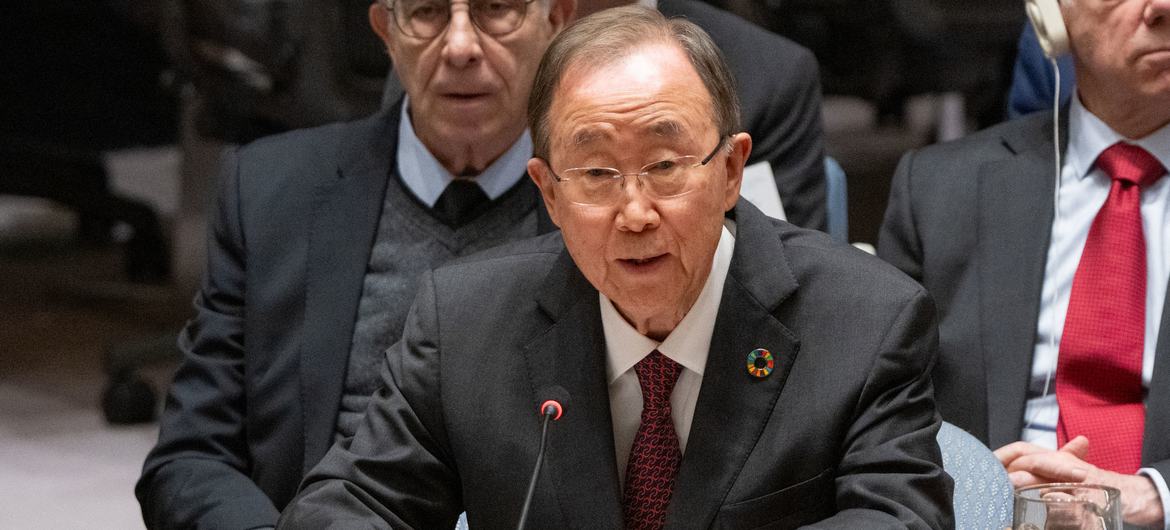
Mr. Ban, now an emeritus member of The Elders group, warned that global conditions have worsened since he left office at the end of 2016, marked by deepening confrontation among major powers, eroding multilateralism and conflicts in which civilians continue to pay the highest price.

“This deeply disappointing situation is characterized by confrontation rather than cooperation among major powers,” he told the Council, mass civilian casualties in Gaza and weakening international cooperation – even as the global climate crisis accelerates.

Lurching towards irrelevance

The former UN chief said the overall crisis cannot be separated from the Security Council’s own failures.

“The Security Council’s ongoing failure to properly function constitutes the most egregious cause,” he said, highlighting the repeated use of veto by permanent members “to shield themselves, their allies and their proxies from accountability.”

Without meaningful reform, Mr. Ban warned, civilians will remain unprotected and impunity will persist. “Without it, the UN risks lurching towards either collapse or irrelevance,” he said.

Former UN Secretary-General Ban Ki-moon speaking at a Security Council meeting on international peace and security.
UN Photo/Eskinder Debebe
 
Former Secretary-General Ban Ki-moon, addresses the Security Council.

Reduce political pressures

Turning to the selection of the next Secretary-General, Ban called for a single, non-renewable seven-year term to strengthen the independence of the office.

The current practice of two five-year terms, he said, leaves Secretaries-General “overly dependent on this Council’s Permanent Members for an extension,” even though the arrangement is a convention rather than a requirement of the UN Charter.

“The General Assembly holds the power to set the terms of the appointment itself,” Mr. Ban noted, urging member states to use that authority to empower the next UN leader more fully.

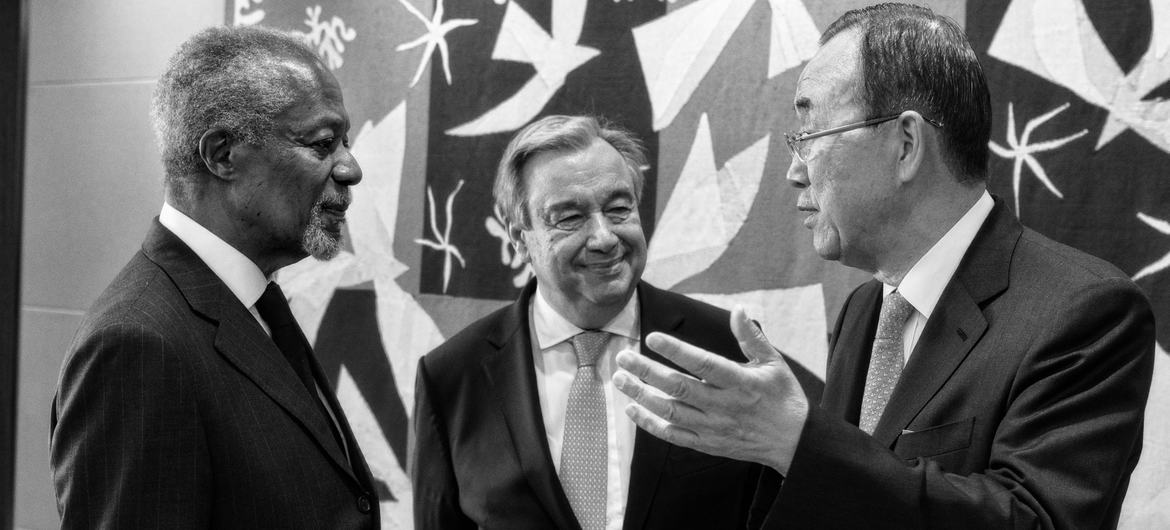
Former Secretaries-General Kofi Annan (left) and Ban Ki-moon (right) pay a courtesy call on Secretary-General António Guterres.
UN Photo/Mark Garten
 
Former Secretaries-General Kofi Annan (left) and Ban Ki-moon (right) with Secretary-General António Guterres at the UN Headquarters, in New York.

The selection process

Secretary-General António Guterres’ second term expires at the end of next year, and the formal selection process is already under way.

In November, the Presidents of the General Assembly and the Security Council launched the process together, in line with General Assembly resolution 79/327, which emphasises transparency and inclusivity.

Under the established procedure, candidates are nominated by Member States or groups and are required to submit a vision statement, curriculum vitae and campaign financing disclosures. The President of the General Assembly convenes publicly broadcast interactive dialogues with all candidates, while engaging closely with Member States throughout the process.

As of mid-December, only Rafael Mariano Grossi – the Director-General of the UN nuclear watchdog International Atomic Energy Agency (IAEA) – has been nominated by Argentina.

You can find the list of candidates on the UN website here.

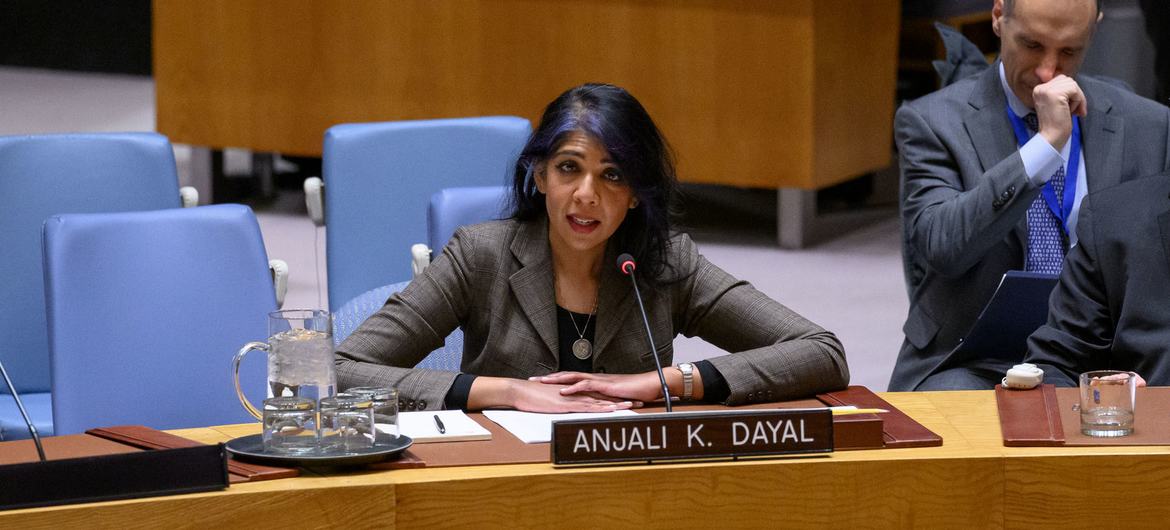
Professor Anjali Dayal of international relations at Fordham University’s Lincoln Center campus, addresses the  Security Council meeting on maintenance of international peace and security.
UN Photo/Loey Felipe
 
Anjali Dayal, Associate Professor for International Politics at Fordham University, addresses the Security Council.

Unprecedented strain

Anjali Dayal, Associate Professor for International Politics at Fordham University, told the Council that the next Secretary-General will assume office at a time of unprecedented strain, including a deepening funding crisis that is already shrinking the UN’s capacity to deliver essential services.

“That will result not just in shrinking this Organization, but also in less of the work that only the UN can do at scale,” she said, pointing to fewer vaccinations, reduced humanitarian aid and diminished mine-clearance efforts, even as global needs grow.

Ms. Dayal said history shows that even in periods of intense division, the Council has been capable of choosing leaders who advanced peace and cooperation.

She recalled the protracted deadlock that preceded the selection of Javier Pérez de Cuéllar in 1981 and the critique of U Thant, yet they deftly maneuvered an end to the Iran-Iraq war, resolve conflicts in Cambodia and Nicaragua, and help end the Cuban Missile Crisis.

Jaw-jaw better than war-war

Those examples, she said, underscore that the Secretary-General’s influence lies less in material power than in the ability to shape ideas, narratives and long-term cooperation – “to make conference rooms always more attractive than the battlefield.”

For Mr. Ban, that responsibility ultimately rests with the Council itself. Reforming veto use and renewing support for UN leadership, he said, are essential if the Organization is to remain relevant in the twenty-first century.

“The path of each for themselves is no different from the path of mutual destruction,” he warned.

https://news.un.org/en/story/2025/12/1166598


https://creativecommons.org/licenses/by/4.0/legalcode

понедельник, 15 декабря 2025 г.

Dialogue is ‘not naïve – it’s necessary’ as global divisions deepen, UN Riyadh forum hears

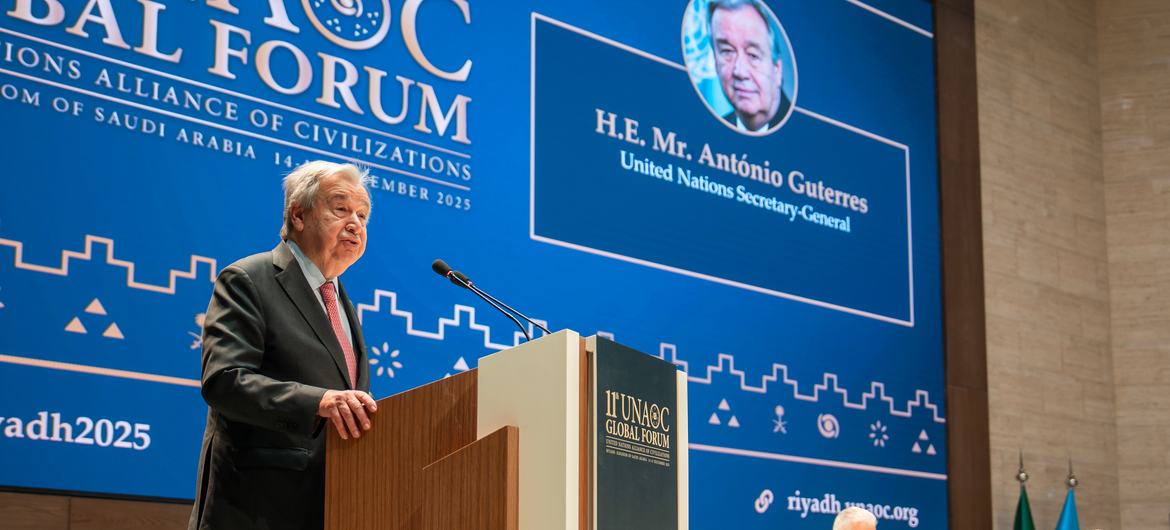
United Nations Secretary-General António Guterres delivers opening remarks at the 11th UN Alliance of Civilizations Global Forum in Riyadh, Saudi Arabia on December 14, 2025.
UNAOC
 
UN Secretary-General António Guterres delivers remarks to the opening of the 11th UN Alliance of Civilizations Global Forum, in Riyadh, Saudi Arabia.


By Reem Abaza in Riyadh
14 December 2025 
Culture and Education

The 11th Global Forum of the UN Alliance of Civilizations opened in Riyadh on Sunday with a blunt message for a world riven by distrust: dialogue is not a luxury – it’s a survival strategy.

The 11th Global Forum opened in Riyadh on Sunday with a blunt message for a world riven by distrust: dialogue is not a luxury – it’s a survival strategy.

Over the next two days, participants gathered in the Saudi capital are expected to insist that cooperation across cultures, religions, and communities remains the only viable way to navigate an era marked by rising polarization and conflict.

Speaking at the opening session, UN Secretary‑General António Guterres pushed back against the notion that the Alliance’s mission is unrealistic or, as critics suggest, “too soft for our hard world.”

Those who dismiss dialogue as naïve, he warned, are mistaken. Diplomacy and cooperation, he said, are not optional, they are essential.

Tweet URL

Two decades have passed since then‑Secretary‑General Kofi Annan launched the initiative in 2005 with support from Spain and Türkiye. The geopolitical landscape has shifted dramatically since, yet the Alliance’s core purpose remains constant: countering extremism and intolerance and helping societies of different cultures and faiths live together in dignity.

The UN chief described the paradox of an age in which humanity is “more connected, yet never more fragmented,” and outlined two divergent futures: one defined by fear, walls, and escalating wars; and another built on bridges between cultures.

Only the second path, he stressed, leads to sustainable peace: “No more 7th of Octobers. No more Gazas destroyed. No more El‑Fashers starved. No more communities massacred, expelled, or scapegoated.”

The Secretary-General pointed to three forces capable of driving positive global change: young people, women and girls, and people of faith. He urged delegates to advance the Alliance’s mission “with courage, clarity, and hope.”

Riyadh Communiqué: a call for coexistence

Countries participating in the Forum endorsed the Riyadh Communiqué, which calls for combating all forms of religious intolerance as a global priority. 

The document underscores the central role of education in fostering dialogue, human rights, and peaceful societies, and reaffirms the Alliance’s founding aim: strengthening cooperation among cultures and religions while promoting respect, mutual understanding, and inclusion.

Equal voices, shared responsibility

UNAOC High Representative Miguel Moratinos, who also serves as the UN Special Envoy to Combat Islamophobia, opened the session by stressing that every culture must have an equal voice in shaping the world’s future. 

No single perspective should dominate, he said; instead, a truly peaceful and inclusive global community must draw on the wisdom and values of all civilizations.

Mr. Moratinos warned of “the return of hatred,” urging vigilance against growing discrimination. Quoting a verse from the Qur’an’s Surat Al‑Hujurat, he emphasized that human diversity is a source of strength, not division.

He underscored that Islam is a religion of peace and reiterated that Islamophobia must have no place anywhere. At the same time, he insisted that antisemitism must be eradicated, adding: “Legitimate criticism of governments should not be perceived as antisemitic nor as a motive to demonize entire communities.”

Saudi Arabia’s message: Lean into dialogue, don’t retreat

Saudi Arabia’s Foreign Minister, Prince Faisal bin Farhan Al Saud, reaffirmed the Kingdom’s “longstanding commitment to intercultural dialogue.” He said Saudi support for the Alliance reflects a firm belief that engagement among cultures and civilizations is essential to peace, cooperation, and conflict prevention.

He highlighted several Saudi initiatives aimed at promoting dialogue and countering extremism and warned of the increasing spread of religiously and nationally motivated extremist movements, as well as a worrying rise in hate speech and Islamophobia over the past two decades.

Rather than prompting disengagement, he said, these challenges must push nations to reinforce – not abandon – the values of dialogue, communication, and coexistence.

Representatives from Spain and Türkiye, the Alliance’s original co‑sponsors, also spoke, reaffirming the enduring importance of inclusion, mutual respect, and sustained dialogue.

Deepfakes, hate speech, and the push for regulation

The opening day of the Forum also turned its attention to one of the fastest‑moving challenges shaping today’s information landscape: AI‑driven misinformation.

Speakers warned that deepfakes, algorithm‑amplified hate speech, and unregulated systems are already reshaping public debate – and not for the better.

Ismail Serageldin, co‑chair of the Nizami Ganjavi International Center and former Vice President of the World Bank Group, said the use of artificial intelligence is now unavoidable.

He urged the public not to fear new technologies, likening the current moment to the invention of the calculator, when many predicted the end of accounting jobs.

“Instead,” he noted, “they adapted,” and he argued society will do the same today. With the right safeguards, he added, AI could even help people achieve a better work‑life balance.

Mr. Serageldin went on to underscore that AI will not replace humans, but people who understand how to use it will gain a decisive advantage. Smart regulations must protect the public without smothering innovation or creativity, he explained.

Achraf Tasfaout, a data scientist working in the banking sector, warned that AI is accelerating the spread of hate speech and making it harder for people to tell real content from deepfakes.

He called for clear rules that set boundaries for safe use while still enabling new ideas to flourish. Policymakers and journalists, he said, have a crucial role to play in defending society. Moreover, young people, as the most active users of AI, will be central to creating the solutions. He added that AI itself can be harnessed to counter many of the problems it creates.

Atif Rashid, Editor‑in‑Chief of Analyst News, cautioned that AI systems are being released “too quickly,” often without essential safety measures. He said it can feel as if “humans are guinea pigs” in a global experiment, with regulation arriving only after widespread public exposure.

Mr. Rashid pointed to examples where AI has encouraged harmful behavior, which he described as ‘AI psychosis’, and stressed that new systems must be designed to serve all of humanity, grounded firmly in human values.https://news.un.org/en/story/2025/12/1166594


https://creativecommons.org/licenses/by/4.0/legalcode
среда, 10 декабря 2025 г.

Secretary-General's remarks to the High-level Pledging Event on the Central Emergency Response Fund for 2026


9 December 2025

New York UN

Secretary-General's remarks to the High-level Pledging Event on the Central Emergency Response Fund for 2026
Statements | António Guterres, Secretary-General
Welcome to this High-Level Pledging Event for the United Nations Central Emergency Response Fund – our global emergency lifeline.

We meet in very difficult times. 

Humanitarian needs are rising. 

Crises are multiplying.

And the humanitarian system’s tank is running on empty – with millions of lives hanging in the balance.

Yesterday, the Global Humanitarian Overview for 2026 estimated that we will need 23 billion US dollars to reach 87 million people in most desperate need.

Within that wider effort, CERF is our flexible, first-responder fund.

Since 2006, it has provided nearly 10 billion US dollars in life-saving assistance in more than 100 countries – working with over 20 UN agencies and hundreds of partners and reaching tens of millions of people every year.

CERF works – because it is fast, flexible and fair, often arriving before other sources of support.

When full-scale war erupted in Ukraine, CERF acted within hours.

In Bangladesh, CERF released funds just 16 minutes after early flood warnings – enabling aid workers to deliver cash, water and food before roads were cut off. 

This year alone, CERF has allocated some 110 million US dollars to neglected and underfunded emergencies – from Afghanistan to Somalia and beyond.

It stepped in as soon as humanitarian access opened in Gaza to help ensure essential fuel supplies to keep hospitals, water systems, and other critical services running. 

And in Sudan, it helped scale up support for 2.5 million people needing food, water and health support as violence intensified in El Fasher and across Darfur. 

In many places, CERF has made the difference between life-saving help and no help at all.

Through the CERF Climate Action Account, humanitarian projects are helping communities brace for floods, droughts and storms before disaster strikes.

And as Hurricane Melissa approached the Caribbean, CERF helped countries act early – providing funds, evacuation support and essential supplies that gave families invaluable time before landfall.

CERF continues to evolve – advancing innovative approaches, relying more on local partners, putting more cash in the hands of the most vulnerable, and tailoring support to women and girls.

It remains one of our most efficient instruments– with strong oversight and a proven record of getting funds where they are most needed, when they are most needed.

Today, the humanitarian system faces its greatest test.

Across the system, we are stretching every dollar as far as it can go.   

Together with you – Member States, NGOs and UN agencies – we are working to make CERF even more efficient, proactive, and accountable. 

The New Humanitarian Compact, a key element of the UN80 initiative, points in the same direction – making humanitarian action faster and more reliable by cutting coordination bureaucracy, joining up supply chains and common services, and using shared data to act as one.

But even the most efficient engine cannot run without fuel.

In 2025, donor contributions fell sharply – like never before. 

This year’s projected contributions are expected to be the lowest since 2015 – a dangerous trend that weakens our ability to respond. 

As a result – countless more people have died, others have gone hungry, or been left without health services, shelter and protection. 

This is a moment when we are asked to do more and more, with less and less.

This is simply unsustainable.

Today, I urge you: help us reach the 1 billion US dollars target for CERF endorsed by the General Assembly – and keep humanitarian funding predictable for the years ahead.

In creating CERF twenty years ago, the international community made a simple promise: when disaster strikes, help will come.

CERF has worked to keep that promise – from conflicts and climate shocks to earthquakes and epidemics – helping to save lives, feed families, keep hospitals running. 

Today, I ask you to renew that promise:

Contribute to the Central Emergency Response Fund.

Keep hope alive for millions of people who depend on us.

Thank you.

https://www.un.org/sg/en/content/sg/2025-12-09

https://creativecommons.org/licenses/by/4.0/legalcode
вторник, 2 декабря 2025 г.

Secretary-General Introduces Revised Estimates Report for 2026 Proposed Programme Budget, Support Account for 2025/26, Highlighting Urgency of UN80 Initiative


SG/SM/22937

Secretary-General Introduces Revised Estimates Report for 2026 Proposed Programme Budget, Support Account for 2025/26, Highlighting Urgency of UN80 Initiative

Following are UN Secretary-General António Guterres’ remarks to the Fifth Committee (Administrative and Budgetary) on the revised estimates, UN80, relating to the proposed programme budget for 2026 and the support account for 2025/26, in New York today:

It is a pleasure to formally introduce the revised estimates report relating to the proposed programme budget for 2026 and the support account for peacekeeping operations for the 2025/26 period.

A few weeks ago, I introduced the proposed programme budget for 2026 which had been for the most part prepared before the launch of the UN80 Initiative.

As such, the initial budget proposal did not yet reflect the first outcomes of the Secretariat’s comprehensive review of its resource requirements for 2026.

The revised estimates report before you today does so — highlighting both the urgency and the ambition of the UN80 Initiative.

It responds to your call for a more effective, agile and resilient Secretariat and contains proposals to align resources with organizational priorities, modernize our internal operations and reflect a pragmatic response to the evolving fiscal context.

The report consists of two interlinked components:

First, initial measures to improve the management and operations of the Secretariat resulting from the first workstream of the UN80 Initiative;

And second, targeted efficiencies and cost reductions to the proposed programme budget for 2026 and the support account budget for 2025/26.

Building on earlier management reforms and significant investments in [Enterprise Resource Planning] ERP and [Information and Communications Technologies] ICT infrastructure, the proposals include:

  • The creation of a common administrative platform to provide administrative services to Secretariat entities located in each duty station, beginning with New York and Bangkok. This represents a considerable improvement of our efficiency, putting together what is done separately by different entities with naturally much more costs.
  • The consolidation of payroll processing into a single global team operating across three centres — UN Headquarters, the Regional Service Centre in Entebbe, and the United Nations Office at Nairobi.
  • And a systematic review by entities in New York and Geneva of functions that could be performed effectively in lower cost duty stations.

This is part of a broader strategy to reduce our commercial footprint and achieve a long-term cost reduction.

Since 2017, the Secretariat has saved $126 million from terminating commercial leases in New York.

Further consolidation in existing premises — including terminating leases in two buildings by late 2027 — is projected to save an additional $24.5 million annually from 2028.

And this naturally represents the need to progressively reduce areas that will do better in other locations than in New York.

Allow me to now turn to targeted efficiencies and cost reductions.

The review we conducted earlier in the year aimed to identify measurable efficiencies across the Secretariat, in a holistic manner and irrespective of funding sources.

The reductions therefore are not limited to the proposed programme budget for 2026, and the report includes reductions for the last six months of the support account period.

I would emphasize that we have been very deliberate in putting forward a strategic proposal, not one that takes an across-the-board approach.

While the proposed reductions are substantial, they have been carefully calibrated to preserve balance across the three pillars of the Organization — peace and security, sustainable development and human rights.

For example, I made the decision to exempt [the United Nations Relief and Works Agency for Palestine Refugees in the Near East] UNRWA from any reductions that would have dramatic consequences on the backbone of the entire humanitarian response in Gaza.

The Development Account and advocacy for Africa’s development were also exempted from reductions that would inevitably impact directly our support to Member States, hindering efforts towards the 2030 Agenda [for Sustainable Development], the Sustainable Development Goals and the African Union’s Agenda 2063.

We also seek to further strengthen direct support to countries, in particular the most vulnerable, in the pursuit of their development aspirations.

This includes a $1 million increase to the Regular Programme of Technical Cooperation, and a $300,000 increase to the Office of the High Representative for the Least Developed Countries, Landlocked Developing Countries and Small Island Developing States.

These countries are the most impacted by climate action, are the ones that are in a more fragile situation in many aspects and they always corresponded [to] the priority of my mandate.  The same applies, and it is the decision of the General Assembly, the African continent that we were particularly careful in creating the conditions to be more active, both in relation to the African continent and in relation to small island developing States, landlocked developing countries and least developed countries.

Overall for the regular budget, I am proposing to bring the resource requirements for 2026 down to $3.238 billion — a reduction of $577 million, or 15.1 per cent, compared with the 2025 appropriation.

The proposed staffing table is revised to 11,594 posts — including Special Political Missions — a reduction of 2,681 posts, or 18.8 per cent, compared with the approved staffing table for 2025.

To deliver these changes responsibly, the report also includes one-time costs related to separations and relocations, as well as requests for time-limited transitional capacities that will be needed in the areas of human resources, administration of justice and legal affairs.

To that end, I am requesting an appropriation in the amount of $5.4 million and a commitment authority for 2026 to cover eligible one-time costs triggered by separations resulting from approved post abolishments or relocations for the programme budget.

Given dependencies — such as incumbency status of posts proposed for abolition or relocation and the outcome of early separation programmes — the estimates for one-time costs will be updated as implementation advances.

I have to say that we had a particular concern in relation to the impact on staff.  The present situation is strictly for liquidity reasons.  It is a situation in which we have about 18 per cent of vacancies.  But those vacancies do not correspond to a political decision oriented by a strategic priority, but simply by the fact that people left and we have not the money to pay for the replacement because of the liquidity crisis.  What we are doing now is a reduction of 18.8 per cent posts — not those that are now vacant, but those that correspond to functions that, in our opinion, can be done better by others or can be reduced by efficiencies in the way that we work.  But this has an advantage, and I note the concerns of the members of the Fifth Committee about the impact on staff and especially the request of the geographic distribution.  The fact is that we have established already programmes for voluntary separation that are being quite successful, and at the same time, we will have a mechanism allowing for those whose posts are abolished to have the conditions to compete in a positive way to the posts that are vacant.  And it is my deep belief that in the end, the number of members of the staff that will be released will be relatively small.  And we are making everything in the way we handle the voluntary separation and in the way we will handle the filling of the vacancies and we are doing everything to guarantee that there will be no deterioration in relation to the necessary equilibrium of geographic distribution, and if possible, to have some improvement in relation to that geographic distribution.  Two main concerns of our work:  Limit as much as possible the impact on staff through the voluntary separations and the possibility of occupational vacancies; second, utilize these instruments in order to guarantee that there will not be this equilibrium that will undermine the geographic distribution which, by the way, is still far from being entirely correct.  So, this is to be an absolute priority and all the instructions given to the services are in order to guarantee that this objective is attained.

For the special political missions, the revised proposed budget amounts to $543.6 million, reflecting a reduction of $96.3 million or 15.0 per cent compared with the initial proposed programme budget for 2026, and a reduction of $149.5 million or 21.6 per cent compared with the appropriation for 2025.

The proposed reduction compared to 2025 comprises:  A net decrease of $84.7 million due to the closure of missions, and a net decrease of $64.8 million for continuing missions.

This would be achieved through conscious efforts to optimize staffing components, critically review needs, align with historical patterns and seek opportunities to strengthen a culture of efficiency.

For the special political missions, the revised estimates include a proposed net decrease of 1,215 posts and positions — from 4,086 approved for 2025.

This reflects both the closure of missions and efforts to streamline the staffing component and strengthen national capacity.

For the support account for the period January to June 2026, the revised estimates amount to $188.9 million, representing a decrease of $23.9 million or 11.2 per cent.

This includes a decrease of 206 posts, or 13.5 per cent, compared with the approved staffing table for 2025/26.

The staffing changes reflect an overall downward adjustment in line with the new staffing model endorsed as a framework by the General Assembly.

The revised level for January to June 2026 represents the largest share of reductions attributable to that model, with further operational efficiencies complementing the adjustment.

One-time costs for the support account will be accommodated within its 2025/26 approved budget and financial implications set out in the performance report.

The targeted reductions being proposed reflect hard choices taken across entities to streamline structures, eliminate duplication, and prioritize resources for greatest impact.

Reductions of this scale will inevitably have programmatic and operational impacts across entities and come with adjustments in the way the Secretariat delivers on mandated activities.

Accordingly, entities have identified the anticipated impact on their deliverables and put forward how they are planning to adapt their activities and their mitigation strategies.

These measures constitute substantial budgetary reductions that affect real people, families and futures — and we must never lose sight of this human dimension.

In your engagements with us, you have stressed the importance of maintaining our efforts to advance equitable geographical distribution in our workforce.

I wish to assure you again that we will make every effort to mitigate the impact of reductions in the overall composition of our workforce, and to ensure that colleagues affected are supported through the transition.

To advance these objectives, we have launched two early separation programmes, which will generate additional vacancies for placement and for accommodating staff — through lateral placements within their entities, and then across entities and duty stations.

These mitigation measures will allow us to significantly reduce the number of involuntary separations and that will also diminish the impact on the overall geographic balance and reduce the cost of terminations.

This will mean that, once triggered, the downsizing policy will be applied to a smaller number of staff, and will help ensure fairness and due process.

Looking ahead, Workstreams 2 and 3 of the UN80 Initiative are also under way.

To ensure a coherent organization of the different actions across all three workstreams and the UN system, the UN80 Initiative Action Plan was released three weeks ago.

This coordination framework, developed following extensive consultations across the UN system, is also a planning and an accountability tool, which will allow us to align responsibilities and actions.

I welcome the establishment of the ad hoc working group of Member States and its ongoing work to carry forward the process in Workstream 2 — on improving every step in the mandate life cycle.

The process will provide an important opportunity to enhance mandate implementation — and my team will continue to provide full support.

Simultaneously, I have committed to 15 actions focused on enhancing mandate visibility, improving our reporting, strengthening how we manage mandate delivery and harmonizing how results are measured and communicated across the UN system.

And allow me to say something that I believe is very important to all the members of the Fifth Committee:  We are reducing the budget.  Is that going to have a negative implication in the capacity to deliver our mandate?  Well, unfortunately our reduced budget is still bigger than the expenditure we are forecasting for 2025 because of the liquidity crisis.  With one difference — with the present situation, we are spending less than we will spend next year if the budget is fully funded, and on the other hand, the staff that is missing is not based on solid criteria in relation to optimization of the distribution of the staff for the different functions and for the implementation of the mandate, but result of the vacancies created by people that leave — which means that I am absolutely sure that there will be a considerable improvement in mandate implementation with these revised estimates than what we have in 2025 and they were exactly designed in order to guarantee that there will be no negative implications in relation to the implementation of mandates.  Obviously, we will fully respect the work of […] and eventually there will be changes in the mandate, and if there are changes in the mandate, there will be changes in the way we implement them.  But what we are now [doing] is preparing a budget that is prepared to guarantee the full implementation of the mandates that we have at the present moment.

On Workstream 3 focusing on changing structures and realigning programmes, I have presented a report which reflects a system-wide effort with a single purpose:  to change how we work.

The proposals span across the Secretariat, funds, programmes, specialized agencies and related organizations.

They represent a paradigm shift  within pillars, across pillars and through the enablers that support our work — to reduce fragmentation, duplication and inefficiency.

Any budgetary implications arising from Workstreams 2 and 3 will be assessed rigorously and reflected in future budget proposals for your consideration for 2027.

The revised estimates report before you is not a routine technical revision.

For the first time, the revised estimates reduce global regular budget resource requirements compared to what was originally proposed, and reductions for the support account for a period already approved by the Assembly.

I want to repeat that this is a deliberate and considered adjustment to an already conservative proposal for 2026.

It reflects both the urgency and ambition of the reforms we are undertaking, while also emphasizing a particular sense of responsibility to the most vulnerable in need of UN support.

The goal is not temporary adjustment — but lasting cost reductions and modernization of Secretariat operations.

That also means ensuring capacities needed for the future — for example in technology, data and protection safeguards.

The United Nations operates in a world of great political and financial uncertainty.

Resources are shrinking across the board — and have been for years.

Meanwhile, the needs of Member States and the people we serve are increasing, making our mission even more urgent and more relevant.

The proposals contained in the revised estimates represent our commitment to rebuild trust — by demonstrating that every contribution is well-used and every decision delivers results for the people we serve.

Liquidity remains fragile, and this challenge will persist regardless of the final budget approved by the General Assembly — given the unacceptable volume of arrears.

We ended 2024 with $760 million in arrears, of which $709 million is still outstanding from 2024.  We have also not received $877 million of 2025 dues, and so, thus, arrears now stand at $1,586 million.

I have repeatedly appealed to Member States to pay their assessed contributions in full and on time.

We continue to manage cash flows carefully, well below budget levels, and have proposed temporarily suspending the return of credits to safeguard liquidity and avoid disruption of programme implementation.

It is difficult for us to give back money that we have not because we didn’t receive it, and so it is very important to find a solution for this question — a temporary solution — based on an account in which the rights of Member States are clearly established and returns will be paid as soon as our liquidity situation allows.

The UN80 Initiative is our blueprint for a stronger, more effective, results-oriented and cost-effective UN — one that is more agile, responsive and resilient.

Together, we can ensure that the United Nations is not only fit for purpose — but also fit for the future.

Once again, I extend my profound gratitude for your engagement, your expertise, your partnership in this shared endeavour and the considerable effort to review these proposals on a compressed schedule.  Thank you.

https://press.un.org/en/2025/sgsm22937.doc.htm


https://creativecommons.org/licenses/by/4.0/legalcode