суббота, 28 июня 2025 г.

New UN report charts path out of debt crisis threatening global development

Developing countries like Bangladesh (pictured) spend large amounts of money servicing international debt, diverting vital resources away from development efforts.
© UN-Habitat/Kirsten Milhahn
 
Developing countries like Bangladesh (pictured) spend large amounts of money servicing international debt, diverting vital resources away from development efforts.


27 June 2025
 Economic Development

A decade after the adoption of the Sustainable Development Goals (SDGs), development is facing serious headwinds – including what UN officials describe as a “silent crisis” of surging debt service payments in low-income countries.

On Friday, Deputy Secretary-General Amina Mohammed launched a new report, Confronting the Debt Crisis: 11 Actions to Unlock Sustainable Financing.

She was joined by experts Mahmoud Mohieldin and Paolo Gentiloni, along with Rebeca Grynspan, Head of the UN Conference on Trade and Development (UNCTAD).

A growing crisis

“Borrowing is critical for development,” Ms. Mohammed said, but today, “borrowing is not working for many developing countries, over two-thirds of our low income countries are either in debt distress or at a high risk of it.”

The crisis is accelerating, Ms. Grynspan warned.

More than 3.4 billion people now live in countries that spend more on interest payments than on health or education – 100 million more than last year.

Debt service payments by developing countries have soared by $74 billion in a single year, from $847 billion to $921 billion.

“The nature of this crisis is mostly connected to the increase of debt servicing costs,” Mr. Gentiloni explained. “Practically, the debt services costs doubled in the last ten years.”

Prepared by the UN Secretary-General’s Expert Group on Debt, the report reinforces the commitments put forward in the Compromiso de Sevilla, the outcome document of the Fourth International Conference on Financing for Development – taking place next week.

A path forward

The report outlines 11 actions that are both technically feasible and politically viable.

Mr. Mohieldin explained that the recommendations fall under two key goals: providing meaningful debt relief and preventing future crises.

It identifies three levels of action:

At the multilateral level: repurpose and replenish funds to inject liquidity into the system, with targeted support for low-income countries.

At the international level: establish a platform for borrowers and creditors to engage directly.

At the national level: strengthen institutional capacity, improve policy coordination, manage interest rates, and bolster risk management.

“These are eleven proposals that are doable and that only need the political will of all the actors to be able to make them real,” Ms. Grynspan stressed.


https://news.un.org/en/story/2025/06/1165051

https://creativecommons.org/licenses/by/4.0/legalcode

суббота, 14 июня 2025 г.

Доброе утро. Опять всё исчезло. Одни и те же постоянно портят приложение

Доброе утро. Опять всё исчезло. Одни и те же постоянно портят приложение

Meeting in Wake of Israeli Air Strikes on Iran, Delegates in Security Council Urge De-escalation, Diplomacy to Prevent Further Strain in Conflict-Ridden Region


9936th Meeting (PM)
SC/16085

Meeting in Wake of Israeli Air Strikes on Iran, Delegates in Security Council Urge De-escalation, Diplomacy to Prevent Further Strain in Conflict-Ridden Region

Meeting in the hours following Israel’s air strikes against targets in Iran, the Security Council today heard — and its members largely agreed — that de-escalation and diplomacy are imperative to avoid further strain in a region already groaning under the weight of compounding conflict.

“Today, at approximately 3:15 a.m. local time, the Israeli military launched waves of air strikes across Iran,” reported Rosemary DiCarlo, Under-Secretary-General for Political and Peacebuilding Affairs.  These attacks — “which are reportedly continuing this afternoon”, she added — have targeted headquarters of the Islamic Revolutionary Guard Corps, military bases, radar installations and nuclear facilities.  They have reportedly caused significant damage — including dozens of civilian casualties — and in retaliation, Iran launched some 100 drones towards Israel.  “As I speak, there are reports of Iranian missiles heading towards Israel,” she said.

She noted that the Israel Defense Forces have called this a “precise, pre-emptive strike”, prompted by the “imminent threat from Iran’s nuclear programme”.  Multiple nuclear installations were struck, including in Natanz — one of that programme’s “central sites”, she said.  Israel’s Prime Minister has stated that Israeli forces also attacked Iran’s ballistic-missile capabilities and top Iranian nuclear scientists.  She recalled that the Prime Minister stated these attacks were intended to “ward off an existential threat” and vowed that “the battle would continue for as many days as it takes”.

Middle East on High Alert

“The impact of these attacks has already been felt throughout the region,” she observed, as neighbouring countries have closed their airports and placed their security forces on high alert.  Further, the Houthis have reportedly launched missiles towards Israel, and Iran’s Supreme Leader has promised “severe punishment” for that State.  Noting that talks between Iran and the United States were to resume in Oman shortly, she urged the continuation of these diplomatic efforts.  She concluded:  “We must, at all costs, avoid a growing conflagration that would have enormous global consequences.”

Rafael Mariano Grossi, Director-General of the International Atomic Energy Agency (IAEA), then told the Council that IAEA was informed of Israel’s military operation and has been in permanent contact with Iranian authorities to ascertain the status of nuclear facilities.  Iran has initially confirmed that only the Natanz fuel-enrichment plant had been attacked.  The above-ground part of that plant — where Iran was producing uranium, including uranium-235 enriched to 60 per cent — “has been destroyed”, he reported, along with electrical infrastructure at the facility.

“There is no indication of a physical attack on the underground cascade hall containing part of the pilot fuel-enrichment plant and the main fuel-enrichment plant,” he reported.  However, he added that “loss of power to the cascade hall may have damaged the centrifuges there”.  While early indications suggest no external radiological impact to the population or environment from the event, he stated that there is “manageable” radiological and chemical contamination inside the facilities at Natanz.  Calling these developments “deeply concerning”, he underscored that nuclear facilities must never be attacked.

International Atomic Energy Agency Monitoring Situation 24/7

And calling on all parties to exercise maximum restraint to avoid further escalation, he underlined IAEA’s support for a diplomatic solution to the problems posed by Iran’s nuclear programme.  For its part, the Agency has established a task force to “monitor the situation 24/7” and may deploy experts in addition to inspectors already in Iran.  “It is clear that the only sustainable path forward —for Iran, for Israel, the entire region and the international community — is grounded in dialogue and diplomacy,” he stressed.

As the floor opened, the representative of the Russian Federation observed:  “One is left with the impression that the leadership of Israel is convinced that they have a completely free hand in the region.”  Condemning this “military adventure”, he underscored that its consequences lie “fully with the Israeli leadership — and those who encourage them”. Stressing that all issues relating to the Joint Comprehensive Plan of Action “began when the United States unilaterally left the nuclear deal in 2018”, he also pointed to “likely coordination between Israeli and British special services” involving the former’s aircraft sheltering at the latter’s base in Cyprus.

“Russia’s claim that British sovereign bases in Cyprus were in any way involved is nonsense,” underscored that country’s representative, adding that it is “deeply irresponsible at moments like this for Russia to be spreading disinformation”.  Expressing support for “any diplomatic efforts to return to stability”, she stressed: “Our first priority must be to prevent further escalation in the Middle East.”  On that, Somalia’s representative — also calling for restraint and de-escalation — observed that “the spill-over effects are no longer hypothetical”.

Timing of Israeli Attacks Mark New, Troubling Link in ‘Chain of Tension’ Threatening Regional, Global Stability 

Panama’s representative, stating that Colombian writer Gabriel García Márquez aptly “qualified a predictable situation” with the title of Chronicle of a Death Foretold, said:  “That could be applied to this situation.”  Last night’s events were “hardly surprising”, he said, “but they do represent a new and troubling link in a chain of tension that threatens regional and global stability”.  The representative of Sierra Leone, similarly, expressed regret over the “reversion to a period when a State can unilaterally resort to the use of force against another State”.  China’s representative stressed:  “The abrupt heating-up of the region serves no one’s interests.”

Condemning the “logic of unilateral force”, Algeria’s representative underscored:  “The only thing that pre-emptive action could prevent is peace.”  He also pointed out that Israel operates outside the framework of the Treaty on the Non-Proliferation of Nuclear Weapons and has consistently refused to join the negotiation process on establishing a zone free of nuclear weapons in the Middle East.  “Let us not overlook the timing,” he added, noting that Israel carried out these attacks when the United States and Iran are engaged in direct negotiations on the latter’s nuclear programme.

That these attacks occurred during such negotiations makes them “all the more morally repugnant”, said the representative of Pakistan.  “These actions risk eroding the trust and sanctity of the negotiations process so crucial for the peaceful settlement of these issues,” he stressed.  Greece’s representative also expressed concern that this escalation occurred as United States-Iran negotiations were under way.  While stating that “Iran must never be allowed to acquire a nuclear weapon”, and that Israel has the right to defend itself, he added:  “At the same time, we strongly believe that lasting security can only be achieved through diplomacy and a negotiated deal.”

Iran Must Never Be Allowed to Acquire Nuclear Weapons 

Also stressing that Iran must never acquire such a weapon was the representative of Denmark, who added that “it is further disturbing that IAEA is unable to provide assurances” that Iran’s nuclear programme is exclusively peaceful.  France’s representative, in that vein, said that such a programme “lacks any credible civilian justification”.  While the representative of Slovenia echoed these concerns, she stressed:  “However, strikes against civilian nuclear infrastructure — whether they happen in Eastern Europe, the Middle East or anywhere else — are unacceptable.”

“This dangerous regime cannot be allowed to have nuclear weapons,” stressed the representative of the United States.  While the United States was informed of Israel’s strikes ahead of time, it was not militarily involved.  Underscoring that “no Government, proxy or independent actor should target American citizens, American bases or other American infrastructure in the region”, he warned that “the consequences for Iran would be dire”.  He added that the United States will continue to seek a diplomatic resolution, emphasizing: “Iran’s leadership would be wise to negotiate at this time.”

“As a country neighbouring another that is seriously violating non-proliferation obligations, the Republic of Korea shares serious concerns over Iran’s continued expansion of its nuclear programme,” said Seoul’s representative.  Nevertheless, he stated:  “We believe both countries possess the wisdom to avert a broader conflict that the region can hardly afford.”  Along those lines, the representative of Guyana, Council President for June, spoke in her national capacity to call on all parties to commit to no further escalation in the region.  This was a common refrain today.

Iran’s Representative:  Israel Is ‘Most Dangerous and Terrorist Regime in the World’

Meanwhile, Iran’s representative stated that the actions of Israel — “the most dangerous and terrorist regime in the world” — amount to a “declaration of war”.  Warning of the potential radiological consequences of the attack on Natanz, he stressed:  “Only a regime devoid of humanity and responsibility would endanger millions of lives in pursuit of its destructive ambitions.”  Those who support Israel — foremost the United States — “are complicit in war crimes and crimes against humanity”, he said.  Urging the Council to condemn Israel, he stressed:  “Silence is complicity in this crime.”

Israel’s Representative:  Tel Aviv Acted in Self-Defence against Iran which Declared ‘Its Intent to Destroy Us’ 

“When a regime builds ballistic missiles, enriches uranium to near weapons-grade and openly declares its intent to destroy us, we believe them,” said Israel’s representative.  Underscoring that his country did not act “recklessly”, he said Israel waited while Iran enriched uranium to a level with no civilian justification; obstructed inspectors and destroyed monitoring equipment; developed trigger mechanisms, detonation systems and warhead plans; actively recruited more nuclear scientists; and made false concessions during extended negotiations.  “Last night,” he said, “the wait ended.”

For his part, Iraq’s representative condemned Israel’s “dangerous military aggression” against Iran and its “blatant violation of Iraq’s sovereignty and the inviolability of its airspace”.  He stressed:  “It pushes us into conflicts we are not party to.”  The representative of Kuwait, speaking for the Gulf Cooperation Council, also condemned Israel’s attacks — regardless of their justification.  Rejecting violations of sovereignty under any pretext, he warned that an expanded conflict will “only serve the forces of chaos and extremism”.

https://press.un.org/en/2025/sc16087.doc.htm


https://creativecommons.org/licenses/by/4.0/legalcode

пятница, 13 июня 2025 г.

General Assembly Adopts Resolution Demanding Israel Immediately End Blockade of Gaza, Open All Border Crossings, Ensure Aid Reaches Palestinian Civilian Population


10th Emergency Special Session
60th Meeting (PM)
GA/12690

General Assembly Adopts Resolution Demanding Israel Immediately End Blockade of Gaza, Open All Border Crossings, Ensure Aid Reaches Palestinian Civilian Population

Text Adopted by Recorded Vote of 148 in Favour, 12 Against, 19 Abstentions 

The General Assembly today demanded that Israel, the occupying Power, immediately end the blockade in Gaza, open all border crossings and ensure that aid reaches the Palestinian civilian population throughout the Gaza Strip immediately and at scale.

The 193-member organ resumed its Tenth Emergency Special Session on “Illegal Israeli actions in occupied East Jerusalem and the rest of the Occupied Palestinian Territory”, as a result of the Security Council’s failure on 4 June to adopt a resolution on the matter, due to a veto by the United States.  (For background, see Press Release SC/16078 and coverage to date of the General Assembly’s Tenth Emergency Special Session here.)

The text titled “Protection of civilians and upholding legal and humanitarian obligations (document A/ES-10/L.34/Rev.1) was adopted with 148 votes in favour to 12 against, with 19 abstentions.

By its terms, the Assembly also strongly condemned any use of starvation of civilians as a method of warfare and the unlawful denial of humanitarian access, and stresses the obligation not to deprive civilians in the Gaza Strip of objects indispensable to their survival, including by wilfully impeding relief supplies and access.

The Assembly also demanded an immediate, unconditional and permanent ceasefire and that all parties to the conflict comply with their obligations under international law, in particular concerning the conduct of hostilities and the protection of civilians.  It also recalled its demand for the immediate, dignified and unconditional release of all hostages held by Hamas and other groups.

Spain’s Representative Introduces Draft

The representative of Spain, introducing the draft resolution (document A/ES-10/L.34/rev.1), noted that his country together with Palestine had been working on the draft, which demands that parties to the conflict comply with their obligations under international law.  The draft resolution also expresses support for the UN coordinated plan to resume humanitarian aid deliveries to Gaza, he added.  “As a matter of urgency, the international community must launch a robust message with regard to the situation in Gaza,” he said, urging Member States to vote in favour of the text.

State of Palestine’s Speaker Says ‘Illegal, Immoral Situation’ Subjecting Over 2 Million People to Relentless Bombardments, Starvation Must Stop Immediately

“We meet here on the 614th day of a full-fledged assault against the Palestinian people,” underscored the Permanent Observer for the State of Palestine.  “This illegal, immoral situation cannot continue; it has to stop and stop immediately,” he said, pointing to Israel’s siege against Palestine — “where over 2 million people have been subjected to relentless bombardments, wanton destruction and engineered starvation”.

Israel’s continuing disregard for international law and the positions of States around the world must lead to resolute action and “it has to be done now”, he said, urging Member States to use all tools at their disposal to hold accountable those responsible for crimes and atrocities against an entire people.

He thanked Governments and peoples around the world “who are standing up for humanity and the defence of the entire nation of Palestine.  “Israel must abide by international law.  It cannot remain the exception to every rule,” he underscored.  “It is the States assembled here — all of you who through their actions — by translating their legitimate outrage into rightful needs can end this horrific reality,” he said.

Israel’s Speaker Says Resolution Does Not Advance Peace But ‘Tries to Place All the Pressure on Us’

Israel’s representative, in stark contrast, said that, if the Assembly seeks to maintain a shred of legitimacy and demonstrate the slightest bit of moral clarity, then any resolution on the Gaza situation “must begin with the words: ‘the General Assembly of the United Nations is appalled by the atrocities committed in the 7 October [2023] massacre and unequivocally condemns Hamas for these atrocities’”.

Moreover, the resolution claims “Israel is using starvation of civilians as a weapon of war”, he said, yet his country continues to provide humanitarian aid, with over 16 million meals delivered over the past weeks through the new international mechanism in Gaza, in coordination with the United States.

The resolution does not advance peace but “tries to place all the pressure on us”, he pointed out, adding that Israel has accepted multiple proposals, while Hamas has rejected every single one.  “You gather here today not to demand their release,” but to vote on a resolution that “rewards the terrorist responsible” for the suffering.  His Government, unlike the international community, will not abandon the hostages, but “do whatever it takes to bring our people home […] all of them”, he said.

Delegates Take the Floor Before Resolution Is Put to Vote

Several delegations took the floor in explanation of vote before the vote.  The Russian Federation’s representative said the Security Council’s 4 June draft resolution could have led to truly positive change on the ground, noting that his delegation was “bitterly disappointed” by the United States’ veto.  His country will vote in favour of the Assembly resolution, he said, calling on Member States to do the same to finally resolve the “most protracted conflict in the world”.

Libya’s representative echoed that view, stating:  “The international community watches paralysed, as a veto in the Security Council strangles justice.”  “History did not start on 7 October [2023]; this is a struggle of seven decades and still ongoing,” he emphasized, urging Member States to vote in favour of the resolution to help end this vicious cycle.

Several delegations, including Canada, voiced support for the resolution because of the urgent need to secure a ceasefire, the release of all hostages and the resumption of UN-led humanitarian aid delivery in Gaza. Other delegations, including Tunisia, echoed that urgency and their support for the resolution, notwithstanding their reservations on some parts of the text.  Iraq’s representative stressed:  “The Israeli occupation has gone beyond all limits.”

However, the United States’ delegate voiced its strong dissent, noting that today’s meeting “marks yet another failure on the part of the United Nations to condemn Hamas”.  She stressed that “any measure that undercuts our ally’s security is a non-starter for the United States”, urging Member States to “vote against this biased resolution”.

Delegates Explain Their Votes After Resolution Is Adopted 

After adoption of the resolution, several delegations, including Japan and the Republic of Korea, explained their vote in favour of the text.

Liechtenstein’s representative underscored that “the ongoing conflict is an overwhelming failure of civilian protection”.  He called on all parties “to let the UN to do its job”.  The last few weeks have shown that it is not possible to replace the life-saving work of the United Nations Relief and Works Agency for Palestine Refugees in the Near East (UNRWA) at scale.  “It is the least that can be done to save the civilian population in Gaza,” he said.

Meanwhile, the United Kingdom’s representative stressed that Hamas must be held accountable and can play no role in the future of Gaza, affirming her country’s resolute commitment to Israel’s security. She voiced concern, however, by its ongoing operations in the West Bank and called out its “to entrench a one-State reality”.

A few delegations explained their abstention from the vote, with the Czech Republic’s representative voicing regret that the text fails to condemn Hamas’ atrocities on 7 October 2023. The representative of the Marshall Islands lamented the “continued undertaking now dysfunctional where we vote on nearly the same words in repetition”.  The crisis deserves leadership and pragmatic results before it continues to worsen, he said, noting that “the dramatic scale of suffering deserves a more effective response” than the current outplay between the General Assembly and the Security Council.

Debate Preceding Action on Draft Resolution 

During the debate earlier in the meeting, which will be resumed at a later date, the representative of Kuwait, speaking for the Gulf Cooperation Council, condemned “in the harshest of terms” the Israeli aggression against the Gaza Strip.  Aid-distribution points managed by Israel do not comply with criteria for humanitarian action, he said.  Voicing support for UNRWA and the UN aid distribution mechanism, he urged the international community’s united support for the Agency.  Any interruption or suspension of the Agency’s critical work will lead to economic, political, humanitarian and security risks, he warned.

Speaking on behalf of the Arab Group, Yemen’s delegate echoed that support and called for the enabling of the UN aid distribution mechanism to fully access the Gaza Strip.  He warned against the use of assistance as a means for forced displacement, redrawing the demographic reality and forcibly annexing land.  This is a violation of international law, he said, amounting to war crimes and crime against humanity.  The Council’s inability to act on account of the veto does not relieve the international community of the duty to act, he emphasized, calling on the General Assembly as “the living conscience of the United Nations” to uphold the law, justice and humanitarian principles underpinning its existence.

General Assembly President Stresses International Community Must Work Together to ‘Finally End the Horrors in Gaza’

Philémon Yang (Cameroon), Assembly President, opened today’s meeting, declaring that: “After 20 months of war, the horrors in Gaza must end.”  Lamenting the ongoing paralysis in the Security Council, he said:  “It is unacceptable that the killing of innocent civilians […] persists with no end in sight.”  He called on Member States to translate their commitments to the Charter of the United Nations and to the dignity of every human being into meaningful action on the ground.  “Together we must work to finally end the horrors in Gaza,” he said.

https://press.un.org/en/2025/ga12690.doc.htm


https://creativecommons.org/licenses/by/4.0/legalcode

понедельник, 9 июня 2025 г.

Drifting architects: Plankton, climate, and the race to understand our changing ocean


Jean-Yves Carval (left), captain of the Sagitta III, and his chief mechanic, Christophe Kieger, fish zooplankton with a special net.

Drifting architects: Plankton, climate, and the race to understand our changing ocean

© Heyi Zou
 
Jean-Yves Carval (left), captain of the Sagitta III, and his chief mechanic, Christophe Kieger, fish zooplankton with a special net.


By Fabrice Robinet, our correspondent in Nice
8 June 2025
 Climate and Environment

They drift unseen, but everything depends on them. Plankton – the ocean’s lifeblood – regulate the climate, feed the seas, and shape life on Earth. Scientists along the French Riviera are in a race against time to unlock the mysteries of these tiny organisms before their decline reverberates across the planet.

On a sun-drenched morning off the coast of Villefranche-sur-Mer, the Sagitta III cuts through the cobalt waters of the Mediterranean, past the quiet marinas and pine-fringed terraces of France’s Côte d'Azur. The 40-foot scientific vessel – named after a fearsome zooplankton with hook-lined jaws – rumbles toward a lonely yellow buoy bobbing offshore.

In the distance, the resort town shimmers, a mirage of pastel villas and church towers clinging to the cliffs. But aboard the Sagitta III, the romance ends at the rail. Lionel Guidi, a local scientist at the Villefranche Oceanography Lab — known, with fitting Frenchness, by its acronym LOV — peers into the sea with a practiced intensity.

He is here to fish plankton.

“There’s life!” – marine technician Anthéa Bourhis

Around him, a veteran crew moves with precision, under the steely gaze of Captain Jean-Yves Carval. “Plankton is fragile,” cautions the rugged seaman, who’s spent nearly 50 years navigating freighters, trawlers – and now, scientific boats. “If you go too fast, you make compote.”

The craft slows as it reaches the buoy, a sampling site where Guidi and his LOV colleagues have gathered marine data every day for decades. Below deck, the boat’s bearded chief mechanic, Christophe Kieger, readies a large winch. Its 12,000-foot cable unfurls, sending a fine-meshed net – each pore no wider than a grain of salt – drifting toward the deep. Slowly, it sinks to 250 feet.

Minutes later, the net resurfaces, heavy with a brownish, gelatinous goo.

"There’s life!" cries Anthéa Bourhis, a 28-year-old lab technician from Brittany, as she carefully transfers the contents into a plastic bucket.

Indeed, that catch holds more than seawater and slime. It is the raw material of the planet’s past – and perhaps its future.

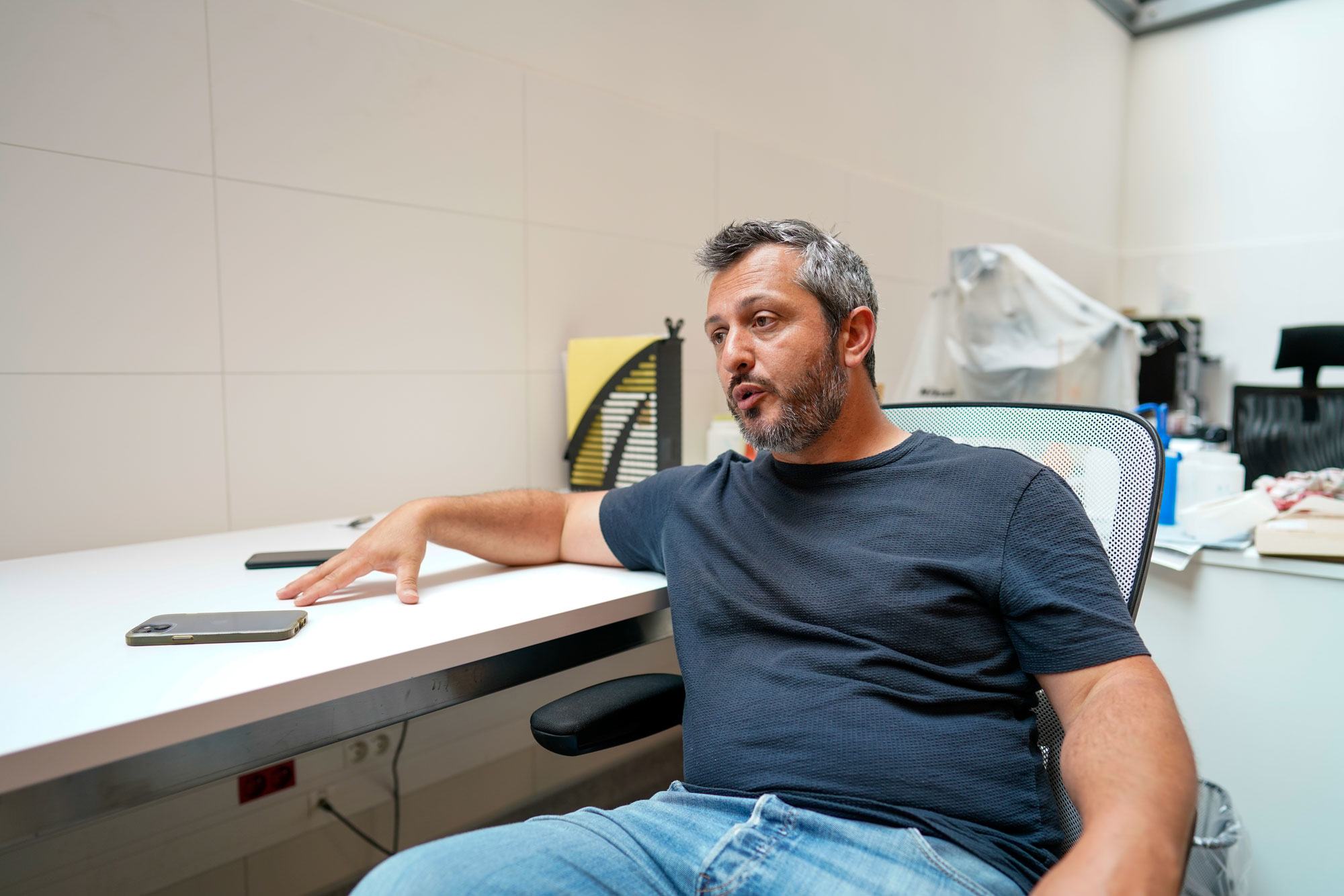
Lionel Guidi, 44, a plankton-research scientist at the Villefranche Oceanography Lab, known as LOV (part of IMEV-Institut de la Mer de Villefranche, Sorbonne University-CNRS).
© Heyi Zou
 
Lionel Guidi, 44, a plankton-research scientist at the Villefranche Oceanography Lab, known as LOV (part of IMEV-Institut de la Mer de Villefranche, Sorbonne University-CNRS).

A worrisome trend

Plankton form the beating heart of the ocean’s engine. These tiny organisms absorb carbon dioxide, release oxygen, and underpin the entire marine food web. Without them, life as we know it would not exist.

But what is plankton?

It’s not a single creature, but a vast cast of marine nomads, all bound by one trait: they can’t swim against the current. They drift with tides and eddies, riding invisible flows that govern their lives. Some are no bigger than a speck of dust; others, like jellyfish, can stretch more than a meter wide.

There are two main kinds. Those that harness sunlight: phytoplankton — microscopic marine plants that photosynthesize like greenery on land and, over geological time, have produced more than half the oxygen we breathe. And those that feed: zooplankton — tiny animals that graze on their plant-like cousins, hunt each other, and themselves become prey, sustaining fish, whales, and seabirds alike.

At the Villefranche Oceanography Lab, scientists have been tracking these creatures for decades. Their daily sampling, performed just a few miles offshore, has yielded one of the longest continuous records of plankton in the world.

And that record is now showing signs of stress.

“At our observation site, temperatures measured 10 meters below the surface have risen by about 1.5 degrees Celsius over the last 50 years,” Lionel Guidi tells UN News. “We’ve seen a general drop in phytoplankton primary production.”

The consequences could potentially be far-reaching. Phytoplankton form the foundation of the marine ecosystem, and a decline in their numbers might trigger a cascading effect, disrupting zooplankton, fish stocks, and ocean biodiversity as a whole. It could also weaken their ability to absorb carbon dioxide, drawing it from the atmosphere and carrying it into the deep – what scientists call ‘the biological pump’, one of Earth’s most vital natural climate regulators.

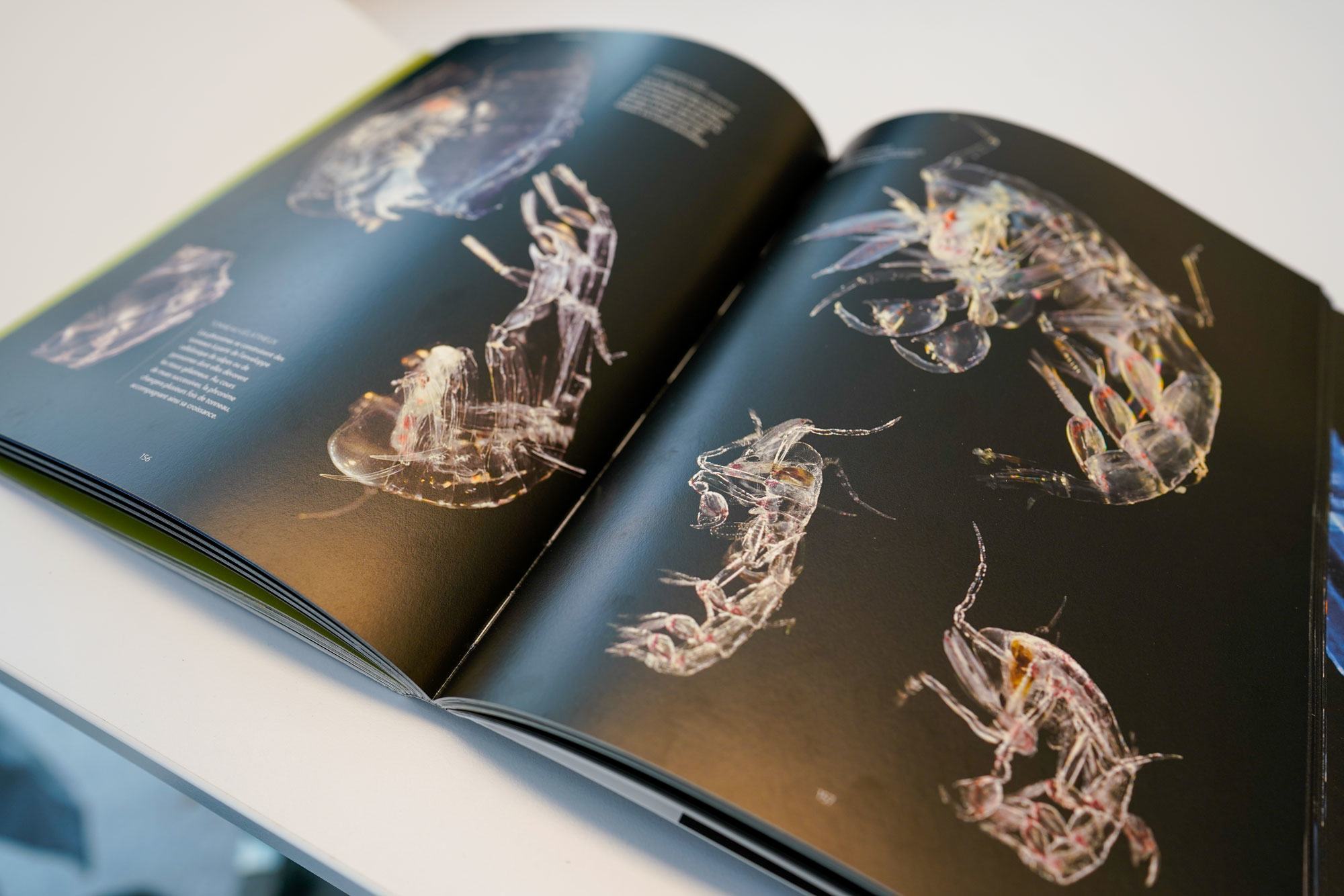
Phronima, a deep-sea zooplankton, inspired the design of the creature in the 1979 film, “Alien.”
© Heyi Zou
 
Phronima, a deep-sea zooplankton, inspired the design of the creature in the 1979 film, “Alien.”

Tiny aliens

Back at the LOV, with the Sagitta III now resting in its berth, Lionel Guidi gestures toward the day’s sample. “Everything starts with plankton,” says the scientist, who, before landing in Villefranche, conducted marine research in Texas and Hawaii.

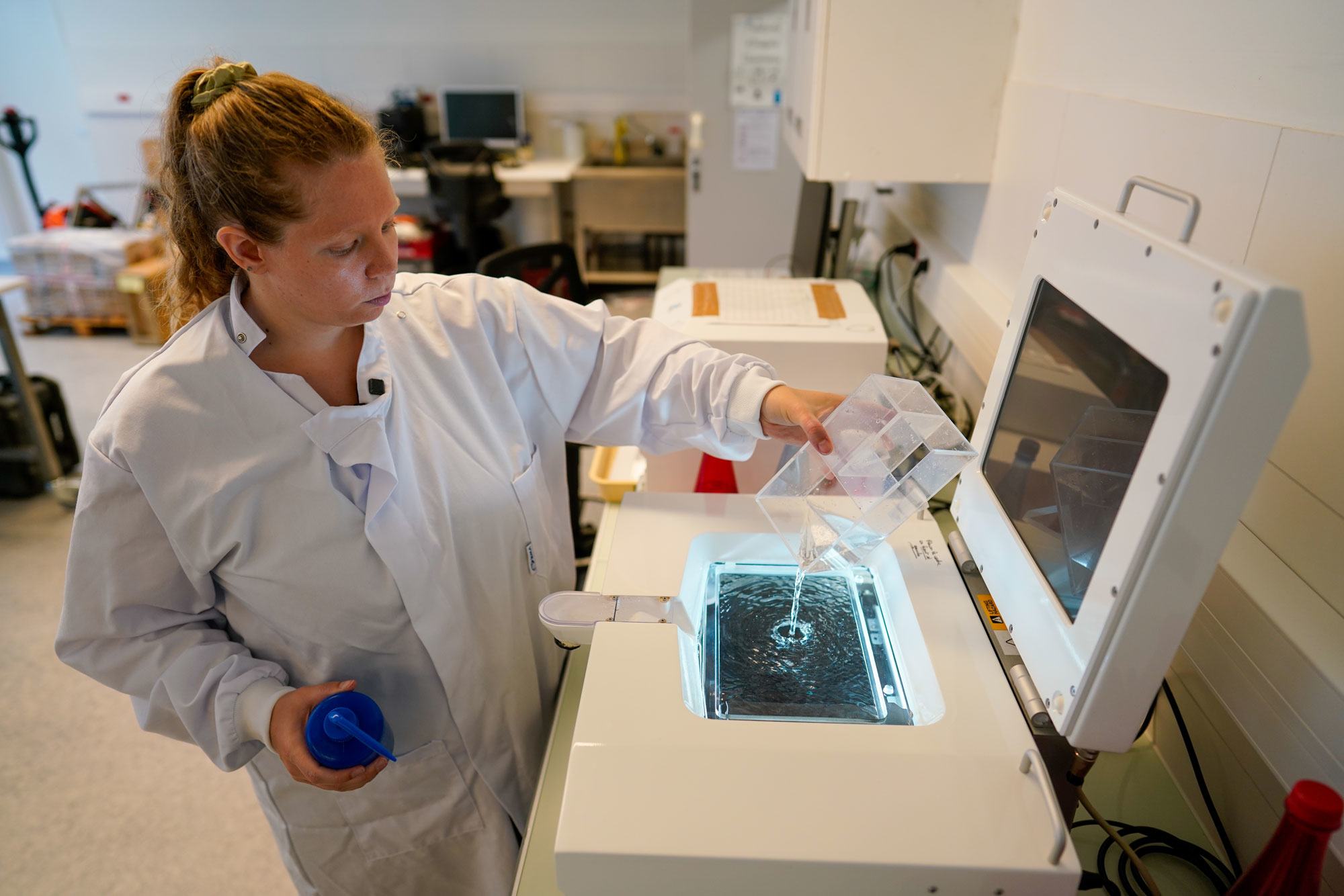
Meanwhile, Anthéa Bourhis, the young technician, has donned a white lab coat and is bent over the morning’s catch. She fixes the sample in formaldehyde, a step that will store the zooplankton but also kill them. “If they move, it messes with the scan,” she explains.

Once morbidly still, the small animals are fed into a scanner. Slowly, shapes blossom on Bourhis’s screen, as improbably graceful copepods – translucent and shrimp-like, with feathery antennae – float into view.

“You look through the microscope and there’s a whole world,” – plankton specialist Lionel Guidi

“We’ve got some good-looking ones,” she says, grinning.

She begins transferring the digital images into an AI-operated database capable of sorting zooplankton by group, family, and species. 

“They have appendages everywhere,” adds Lionel Guidi. “Arms pointing in all directions.”

One of these deep-sea creatures, called Phronima, even inspired the monster in Ridley Scott’s 1979 film Alien. “You look through the microscope,” Guidi says, “and there’s a whole world.”

Anthéa Bourhis, 28, a lab technician at the Villefranche Oceanography Lab, known as LOV, pours the morning’s catch into a scanning machine to produce a digital image of the zooplankton.
© Heyi Zou
 
Anthéa Bourhis, 28, a lab technician at the Villefranche Oceanography Lab, known as LOV, pours the morning’s catch into a scanning machine to produce a digital image of the zooplankton.

From science to policy

A world that is changing – and not fast enough to be understood by satellites or snapshots. That’s why LOV’s long-term series matters: it captures trends that span years and even decades, helping scientists distinguish natural cycles from climate-driven shifts.

“When we explain that if there’s no more plankton, there’s no more life in the ocean. And if there’s no more life in the ocean, life on land won’t last much longer either, then suddenly people become a lot more interested in why protecting plankton matters,” said Jean-Olivier Irisson, another plankton specialist at the LOV.

Next week, just 15 minutes down the coast, the city of Nice is hosting the Third UN Ocean Conference (UNOC3) – a five-day summit bringing together scientists, diplomats, activists, and business leaders to chart the course for marine conservation.

Among the gathering’s priorities: advancing the ‘30 by 30’ pledge to protect 30 per cent of the ocean by 2030 and bringing the landmark High Seas Treaty, or ‘BBNJ accord’ to safeguard life in international waters, closer to ratification.

Guidi underscored the urgency of these UN-led efforts, saying: “All of this must be thought through with people who are capable of making laws, but based on scientific reasoning.”

He doesn’t claim to write policy himself. But he knows where science fits. “We convey scientific results; we have proof of a phenomenon. These are not opinions, they’re facts.”

And so, in Villefranche, Lionel Guidi, Anthéa Bourhis and Captain Carval continue their work – hauling life from the sea, capturing it in pixels, counting its limbs, and sharing its data with scientists across the globe. In doing so, they chart not just a threatened ocean, but the unseen threads that bind life itself.


https://news.un.org/en/story/2025/06/1164141


https://creativecommons.org/licenses/by/4.0/legalcode

четверг, 5 июня 2025 г.

UN chief urges world leaders to keep two-State solution ‘alive’


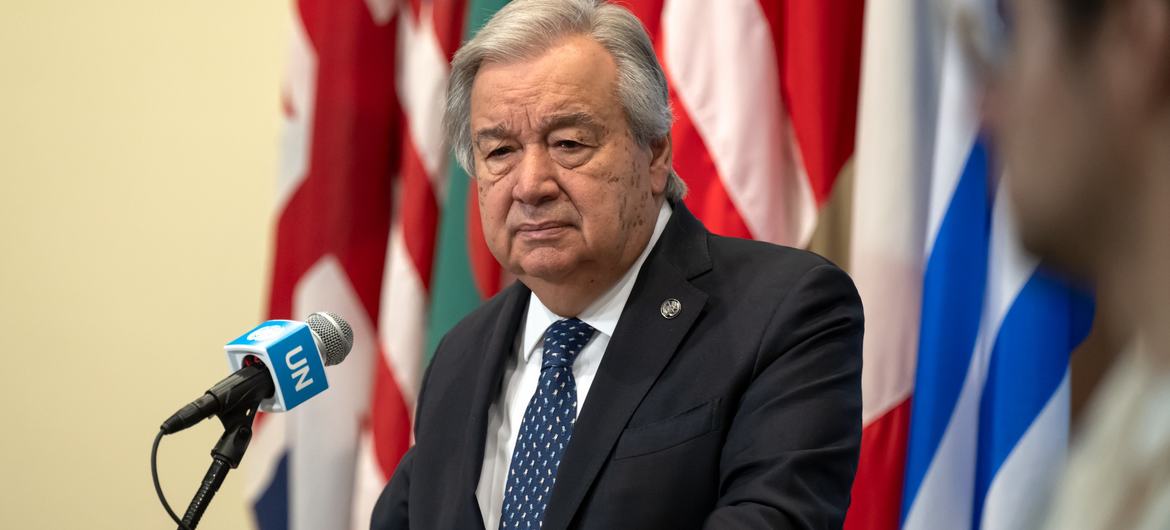
Secretary-General António Guterres speaks to the press at the UN Headquarters, in New York.
UN Photo/Mark Garten
 
Secretary-General António Guterres speaks to the press at the UN Headquarters, in New York.

By Vibhu Mishra
5 June 2025

UN chief urges world leaders to keep two-State solution ‘alive’
 Peace and Security

UN Secretary-General António Guterres on Thursday urged world leaders to revive efforts toward a two-State solution to the Israeli-Palestinian conflict, warning that there is no alternative.

It is absolutely essential to keep alive the two-State solution perspective with all the terrible things we are witnessing in Gaza and the West Bank,” Mr. Guterres told reporters at UN Headquarters in New York.

He was responding to a question about his message to leaders gathering at a high-level international conference later this month on a comprehensive and lasting peace in the region.

“And for those that doubt about the two-State solution, I ask: What is the alternative? Is it a one-state solution in which either the Palestinians are expelled or forced to live in their land without rights?

Mandated by the UN General Assembly, the high-level event is aimed at charting an “action-oriented” path toward a comprehensive and lasting peace based on the two-State formula.

The meeting will include thematic roundtables on key issues such as security, humanitarian reconstruction, and the economic viability of a Palestinian state.

Disappointed over failed resolution

Mr. Guterres also expressed deep disappointment following the Security Council’s failure on Wednesday to adopt a resolution demanding an immediate and permanent ceasefire in Gaza, and the release of all hostages.

The text, endorsed by all ten elected members of the Council, received support from the other four permanent members, but was vetoed by the United States.

“We are always disappointed when ceasefires do not materialise, releases of hostages [do not happen] and humanitarian aid is not distributed or is distributed in a way that puts at risk the lives of so many Palestinians,” he said, responding to another correspondent.

The Secretary-General reiterated that only a permanent ceasefire, the unconditional release of all hostages, and unimpeded humanitarian access would allow the UN to deliver meaningful relief to civilians in Gaza.

He emphasised that during previous temporary ceasefires, the UN was able to mobilise large-scale assistance.


https://news.un.org/en/story/2025/06/1164091


https://creativecommons.org/licenses/by/4.0/legalcode

вторник, 3 июня 2025 г.

Five countries elected to serve on UN Security Council

UN General Assembly elects five new non-permanent members of the UN Security Council.
UN Photo/Manuel Elías
 
UN General Assembly elects five new non-permanent members of the UN Security Council.


By Vibhu Mishra
3 June 2025
 Peace and Security

Bahrain, Colombia, the Democratic Republic of the Congo, Latvia, and Liberia were elected on Tuesday to serve as non-permanent members of the UN Security Council, with two-year terms beginning in January 2026.

They will serve through the end of 2027 on the UN body responsible for maintaining international peace and security.

They will join the five non-permanent members elected last year – Denmark, Greece, Pakistan, Panama, and Somalia – who will serve through 2026.

The Security Council has 15 members: five permanent members – China, France, Russia, the United Kingdom, and the United States – who hold veto power, and ten non-permanent members elected by the General Assembly for staggered two-year terms.

Elections are held annually by secret ballot, with seats allocated by regional group. Candidates must secure a two-thirds majority in the 193-member General Assembly to be elected.

More to follow..


https://creativecommons.org/licenses/by/4.0/legalcode
https://news.un.org//en/story/2025/06/1163971

В Южной Корее состоятся выборы президента страны


Москва. 3 июня. INTERFAX.RU 

 Во вторник граждане Южной Кореи направятся на избирательные участки, чтобы выбрать нового президента страны.

Избирательные участки по всей стране откроются в 6:00 по местному времени (00:00 по Москве) и будут работать до 20:00 (14:00 по Москве).

Первые результаты ожидаются сразу после закрытия участков. Новый президент вступит в должность после оглашения финальных результатов голосования, это должно произойти 4 июня.

В стране состоялось досрочное голосование и голосование для граждан, проживающих за рубежом. На досрочном голосовании, проходившем 29-30 мая, проголосовали 34,7% избирателей, что составляет около 15,4 млн человек. Также около 258 тыс. южнокорейцев проголосовали за рубежом.

Для обеспечения безопасности Национальное агентство полиции Южной Кореи направит 28 тыс. 590 офицеров на 14 тыс. 295 избирательных участков. В полиции пообещали поддерживать максимальный уровень готовности, начиная с раннего утра вторника и до того момента, когда новый президент въедет в свой офис.

Кандидатами в президенты являются Ли Чжэ Мен от крупнейшей оппозиционной Демократической партии, Ким Мун Су от правящей партии "Сила народа", Ли Джун Сок от "Партии новых реформ" и Квон Ён Гук от Демократической рабочей партии, а также независимые кандидаты - бывший премьер-министр (2015-2017) и и.о. президента (2016-2017) Хван Гёан и бизнесмен Сон Джин Хо.

По данным опросов, фаворитом считается Ли Чжэ Мен, вторым наиболее популярным кандидатом - Ким Мун Су. На прошлой неделе агентство "Ренхап" приводило данные, согласно которым за Ли Чжэ Мена голоса готовы отдать 49,2% избирателей, за Ким Мун Су - 36,8%. Третьим по популярности является Ли Джун Сок, получивший 10,3%.

Ли Чжэ Мен ранее заявлял, что, в случае избрания, будет строить отношения с Россией, ориентируясь на национальные интересы своей страны, и поддерживать отношения с Китаем. Также он планирует способствовать восстановлению Украины и проводить прагматичную дипломатию для обеспечения безопасности Корейского полуострова и южнокорейского бизнеса. Кандидат от оппозиции заявил, что намерен укреплять готовность Вооруженных сил противостоять "асимметричным" угрозам Северной Кореи и тесно координироваться с США. Однако вместе с тем он будет стремиться снизить напряженность в отношениях с Пхеньяном.

Его основной соперник, Ким Мун Су, по данным южнокорейских СМИ, разделяет мнение своего оппонента относительно сотрудничества с США, но имеет жесткую позицию по отношениям с КНДР, Россией и Китаем. Он выступил за немедленный саммит с президентом США Дональдом Трампом сразу после выборов для обсуждения пошлин, безопасности и реакции на действия Пхеньяна и Пекина. Ким Мун Су также планирует создать благоприятную для бизнеса среду, ослабив регламент, и увеличить производство ядерной энергии ради снижения цен на электричество.

В стране проводятся выборы в связи с импичментом бывшего президента Южной Кореи Юн Сок Ёля. В декабре прошлого года парламент отстранил президента от власти после его попытки ввести в стране военное положение 3 декабря для борьбы против политических оппонентов. В апреле 2025 года Конституционный суд Южной Кореи поддержал импичмент президента.

После этого южнокорейское правительство официально утвердило 3 июня текущего года как дату проведения президентских выборов.

Объявление президентом и последующая отмена парламентом военного положения привели к резкому падению одобрения "Силы народа" в стране. В декабре прошлого года работу президента одобряли всего 11% южнокорейцев, работу партии - менее 30%.

На прошлой неделе, по данным Gallup Korea, одобрение работы Демократической партии составило 49%, партии "Сила Народа" - 35%.


https://www.interfax.ru/world/1029198

https://creativecommons.org/licenses/by/4.0/legalcode

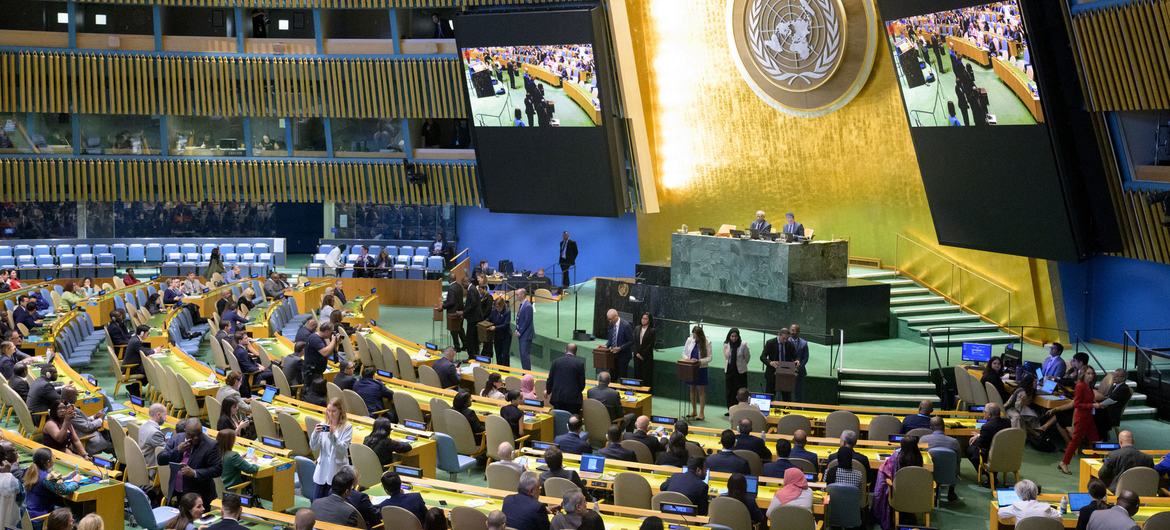
Germany’s Annalena Baerbock elected President of the 80th General Assembly


Annalena Baerbock, President-elect of the General Assembly at its eightieth session addresses delegations after her election.
UN Photo/Manuel Elías
 
Annalena Baerbock, President-elect of the General Assembly at its eightieth session addresses delegations after her election.


By Vibhu Mishra
2 June 2025 
UN Affairs

Former German foreign minister Annalena Baerbock was elected President of the General Assembly’s 80th session on Monday. Her appointment comes as the regional group that includes Western Europe takes its turn at the helm of the world body.

She assumes the role at a challenging time, with ongoing conflicts, faltering development goals, mounting financial pressures, and the upcoming selection of the next Secretary-General.

Ms. Baerbock received 167 votes following the secret ballot. Write-in candidate Helga Schmid (also from Germany) received seven. Fourteen delegations abstained.

She becomes the first woman from the Western European group to hold the post and the fifth woman overall to lead the General Assembly. The presidency rotates among the world body’s five regional groups.

At 44 years, Ms. Baerbock is also one of the youngest leaders to secure the top job.

Tweet URL

Crucial juncture

Ms. Baerbock’s election comes at a critical juncture for the multilateral system, spearheaded by the United Nations.

With the Security Council deadlocked – especially on moves to help end the wars in Ukraine and Gaza – the Assembly has become a vital forum for diplomatic engagement and consensus-building, even without binding authority on peace and security issues.

As conflicts rage, the Assembly has passed a series of resolutions calling for ceasefires, humanitarian access and the protection of civilians.

Many now see the Assembly as an essential platform for accountability and maintaining international focus on intractable crises, especially through the “Veto Initiative” adopted in 2022 which ensures that issues blocked by permanent members on the Security Council are debated in the Assembly as a priority.

A power wielded by the five permanent members – China, France, Russia, the United Kingdom, and the United States – a veto (or negative vote) can block Council action even when all other members support a motion.

Pledge to be an honest broker

In her acceptance speech, President-elect Baerbock acknowledged the current global challenges and pledged to serve as “an honest broker and a unifier” for all 193 Member States, emphasising her theme of “Better Together.”

She outlined three priorities for her presidency: making the Organization more efficient and effective; advancing the 2030 Agenda for Sustainable Development; and making the Assembly a “truly inclusive forum”.

She called for a UN “that embraces everyone. I see the diversity of the General Assembly as our strength. This is the place where all nations come together and where every country has a seat and a voice.”

She also highlighted the importance of promoting gender equality, multilingualism, and engagement with civil society and youth.

UN Video | Annalena Baerbock elected to lead 80th session of the UN General Assembly

UN80 initiative

Ms. Baerbock also touched on the UN80 initiative, which was launched by Secretary-General António Guterres in March.

The UN80 Initiative should not be a mere cost-cutting exercise,” she said, stressing the need for bold ambition and readiness to take difficult decisions.

Our common goal is a strong, focused, nimble and fit-for-purpose organization. One that is capable of realising its core objectives – we need a United Nations that delivers on peace, development and justice.”

A career defined by multilateralism

In congratulating Ms. Baerbock, current President Philemon Yang described her as a leader defined by “an unwavering commitment to multilateralism”, praising her “Better Together” vision.

Mr. Yang, who steered the Assembly through a year marked by the Summit of the Future and persistent global crises, expressed confidence in her ability to build trust and foster dialogue across divides.

Secretary-General António Guterres said Mr. Yang’s successor was taking the gavel amid a “difficult and uncertain moment for the multilateral system,” noting she was only the fifth woman to lead the body.

The UN chief warned that “conflicts, climate catastrophe, poverty and inequality continue to challenge the human family,” and called on the Assembly to unite in forging common solutions.

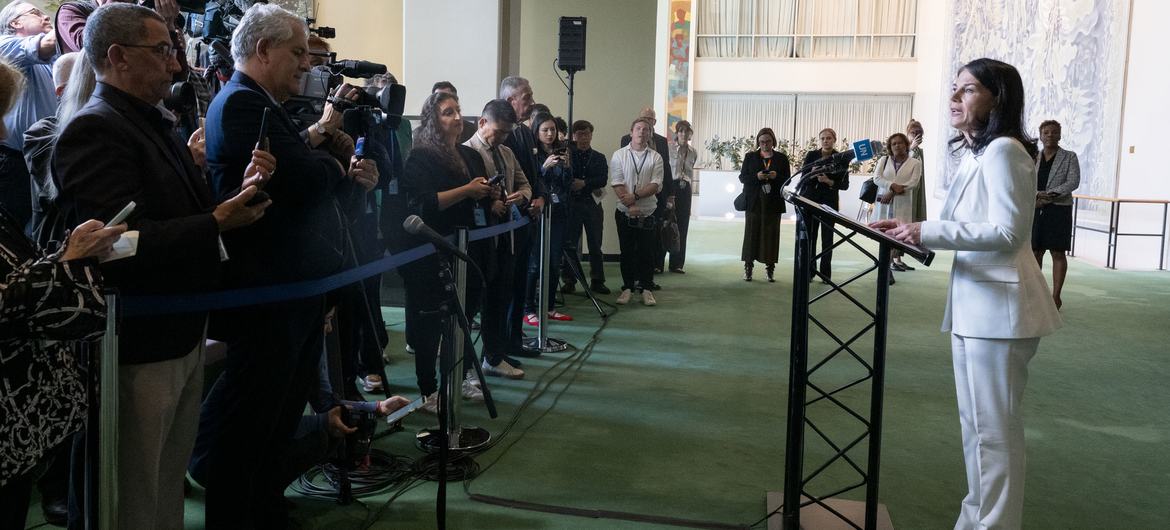
Annalena Baerbock, President-elect of the eightieth session of the UN General Assembly, speaks to the media following her election.
UN Photo/Eskinder Debebe
 
Annalena Baerbock, President-elect of the eightieth session of the UN General Assembly, speaks to the media following her election.

The world parliament

The General Assembly remains the UN’s most representative body, where each Member State has an equal voice – and an equal say in decisions.

While its resolutions are non-binding, the GA – as the acronym goes in New York – helps define global diplomatic norms, convenes dialogues on worldwide challenges and holds the Security Council to account.

The 80th session, starting 9 September, is expected to be pivotal – not only for sheer number and intensity of crises ongoing – but for advancing long-term reforms, including the UN80 initiative and the selection of the next Secretary-General before his term ends in 2026.


https://news.un.org/en/story/2025/06/1163936


https://creativecommons.org/licenses/by/4.0/legalcode

понедельник, 2 июня 2025 г.

Навроцкий побеждает на выборах в Польше после обработки 99,8% бюллетеней


  • 02.06.2025, 06:18

Кандидат в президенты Польши от оппозиционной партии «Право и справедливость» Кароль Навроцкий побеждает на выборах после обработки 99,8% бюллетеней Государственной избирательной комиссией республики. Данные опубликовал телеканал TVP Info.

Кароль Навроцкий (второй справа)

Кароль Навроцкий (второй справа)

Фото: Aleksandra Szmigiel / Reuters

Согласно данным, господин Навроцкий набирает 50,9% голосов избирателей, кандидат от правящей Гражданской коалиции мэр Варшавы Рафал Тшасковский — 49,1%. После обработки 99,93% бюллетеней расклад не изменился.

Голосование во втором туре президентских выборов в Польше прошло 1 июня. Явка составила 72,8%. Государственная избирательная комиссия объявит официальные результаты 2 июня.

В первом туре президентских выборов, который прошел 19 мая, Рафал Тшасковский набрал 31,36% голосов, а Кароль Навроцкий — 29,54%.

Подробнее о выборах — в материале «Ъ» «Польша надвое сказала»


https://www.kommersant.ru/doc/7774104?from=top_main_6


https://creativecommons.org/licenses/by/4.0/legalcode