Показаны сообщения с ярлыком Climate and Environment. Показать все сообщения

понедельник, 9 июня 2025 г.

Drifting architects: Plankton, climate, and the race to understand our changing ocean


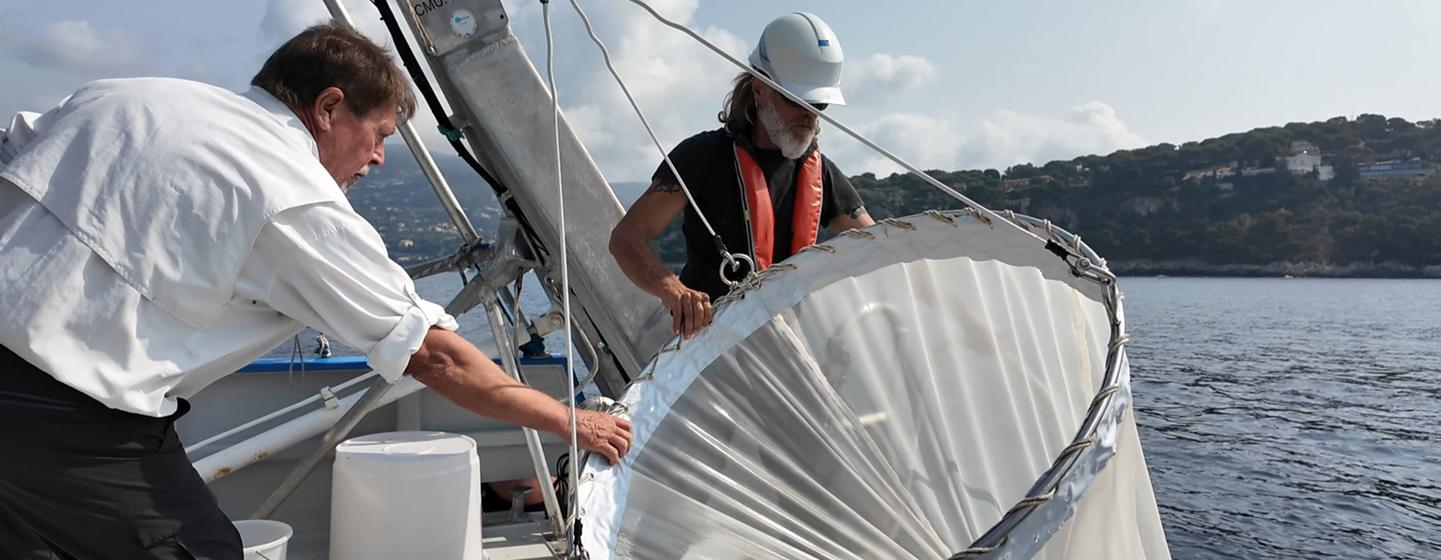
Jean-Yves Carval (left), captain of the Sagitta III, and his chief mechanic, Christophe Kieger, fish zooplankton with a special net.

Drifting architects: Plankton, climate, and the race to understand our changing ocean

© Heyi Zou
 
Jean-Yves Carval (left), captain of the Sagitta III, and his chief mechanic, Christophe Kieger, fish zooplankton with a special net.


By Fabrice Robinet, our correspondent in Nice
8 June 2025
 Climate and Environment

They drift unseen, but everything depends on them. Plankton – the ocean’s lifeblood – regulate the climate, feed the seas, and shape life on Earth. Scientists along the French Riviera are in a race against time to unlock the mysteries of these tiny organisms before their decline reverberates across the planet.

On a sun-drenched morning off the coast of Villefranche-sur-Mer, the Sagitta III cuts through the cobalt waters of the Mediterranean, past the quiet marinas and pine-fringed terraces of France’s Côte d'Azur. The 40-foot scientific vessel – named after a fearsome zooplankton with hook-lined jaws – rumbles toward a lonely yellow buoy bobbing offshore.

In the distance, the resort town shimmers, a mirage of pastel villas and church towers clinging to the cliffs. But aboard the Sagitta III, the romance ends at the rail. Lionel Guidi, a local scientist at the Villefranche Oceanography Lab — known, with fitting Frenchness, by its acronym LOV — peers into the sea with a practiced intensity.

He is here to fish plankton.

“There’s life!” – marine technician Anthéa Bourhis

Around him, a veteran crew moves with precision, under the steely gaze of Captain Jean-Yves Carval. “Plankton is fragile,” cautions the rugged seaman, who’s spent nearly 50 years navigating freighters, trawlers – and now, scientific boats. “If you go too fast, you make compote.”

The craft slows as it reaches the buoy, a sampling site where Guidi and his LOV colleagues have gathered marine data every day for decades. Below deck, the boat’s bearded chief mechanic, Christophe Kieger, readies a large winch. Its 12,000-foot cable unfurls, sending a fine-meshed net – each pore no wider than a grain of salt – drifting toward the deep. Slowly, it sinks to 250 feet.

Minutes later, the net resurfaces, heavy with a brownish, gelatinous goo.

"There’s life!" cries Anthéa Bourhis, a 28-year-old lab technician from Brittany, as she carefully transfers the contents into a plastic bucket.

Indeed, that catch holds more than seawater and slime. It is the raw material of the planet’s past – and perhaps its future.
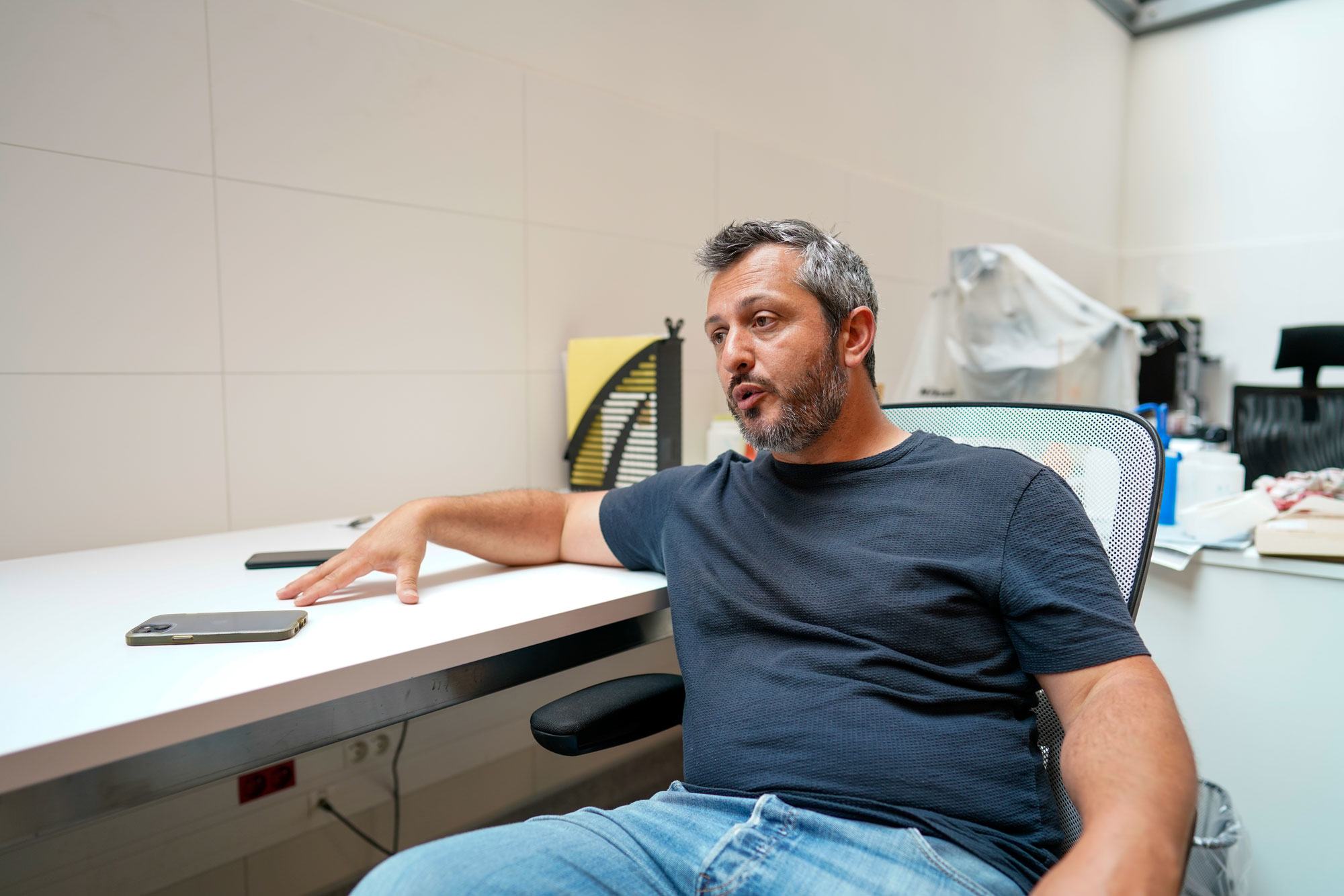
Lionel Guidi, 44, a plankton-research scientist at the Villefranche Oceanography Lab, known as LOV (part of IMEV-Institut de la Mer de Villefranche, Sorbonne University-CNRS).
© Heyi Zou
 
Lionel Guidi, 44, a plankton-research scientist at the Villefranche Oceanography Lab, known as LOV (part of IMEV-Institut de la Mer de Villefranche, Sorbonne University-CNRS).

A worrisome trend

Plankton form the beating heart of the ocean’s engine. These tiny organisms absorb carbon dioxide, release oxygen, and underpin the entire marine food web. Without them, life as we know it would not exist.

But what is plankton?

It’s not a single creature, but a vast cast of marine nomads, all bound by one trait: they can’t swim against the current. They drift with tides and eddies, riding invisible flows that govern their lives. Some are no bigger than a speck of dust; others, like jellyfish, can stretch more than a meter wide.

There are two main kinds. Those that harness sunlight: phytoplankton — microscopic marine plants that photosynthesize like greenery on land and, over geological time, have produced more than half the oxygen we breathe. And those that feed: zooplankton — tiny animals that graze on their plant-like cousins, hunt each other, and themselves become prey, sustaining fish, whales, and seabirds alike.

At the Villefranche Oceanography Lab, scientists have been tracking these creatures for decades. Their daily sampling, performed just a few miles offshore, has yielded one of the longest continuous records of plankton in the world.

And that record is now showing signs of stress.

“At our observation site, temperatures measured 10 meters below the surface have risen by about 1.5 degrees Celsius over the last 50 years,” Lionel Guidi tells UN News. “We’ve seen a general drop in phytoplankton primary production.”

The consequences could potentially be far-reaching. Phytoplankton form the foundation of the marine ecosystem, and a decline in their numbers might trigger a cascading effect, disrupting zooplankton, fish stocks, and ocean biodiversity as a whole. It could also weaken their ability to absorb carbon dioxide, drawing it from the atmosphere and carrying it into the deep – what scientists call ‘the biological pump’, one of Earth’s most vital natural climate regulators.
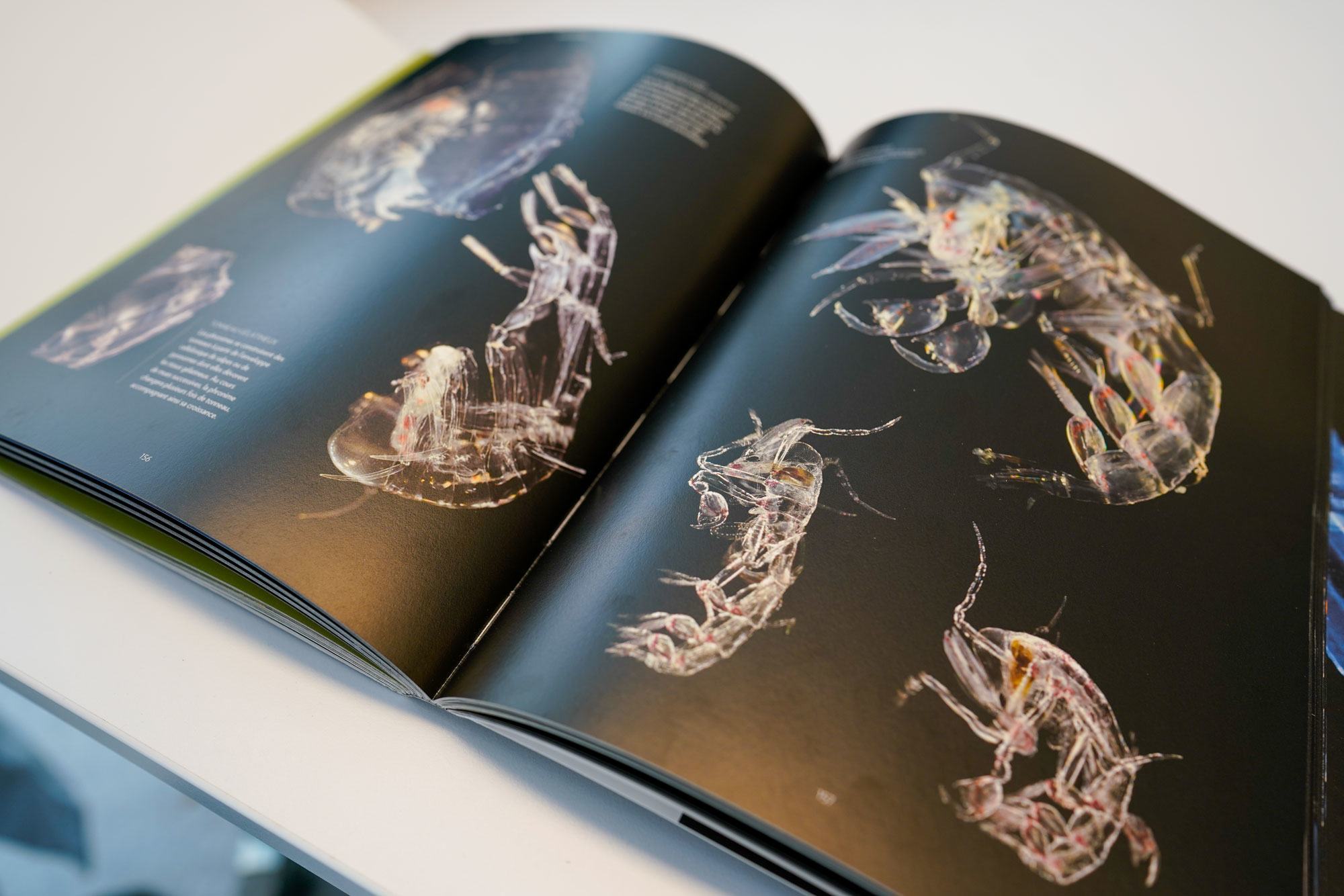
Phronima, a deep-sea zooplankton, inspired the design of the creature in the 1979 film, “Alien.”
© Heyi Zou
 
Phronima, a deep-sea zooplankton, inspired the design of the creature in the 1979 film, “Alien.”

Tiny aliens

Back at the LOV, with the Sagitta III now resting in its berth, Lionel Guidi gestures toward the day’s sample. “Everything starts with plankton,” says the scientist, who, before landing in Villefranche, conducted marine research in Texas and Hawaii.

Meanwhile, Anthéa Bourhis, the young technician, has donned a white lab coat and is bent over the morning’s catch. She fixes the sample in formaldehyde, a step that will store the zooplankton but also kill them. “If they move, it messes with the scan,” she explains.

Once morbidly still, the small animals are fed into a scanner. Slowly, shapes blossom on Bourhis’s screen, as improbably graceful copepods – translucent and shrimp-like, with feathery antennae – float into view.

“You look through the microscope and there’s a whole world,” – plankton specialist Lionel Guidi

“We’ve got some good-looking ones,” she says, grinning.

She begins transferring the digital images into an AI-operated database capable of sorting zooplankton by group, family, and species. 

“They have appendages everywhere,” adds Lionel Guidi. “Arms pointing in all directions.”

One of these deep-sea creatures, called Phronima, even inspired the monster in Ridley Scott’s 1979 film Alien. “You look through the microscope,” Guidi says, “and there’s a whole world.”
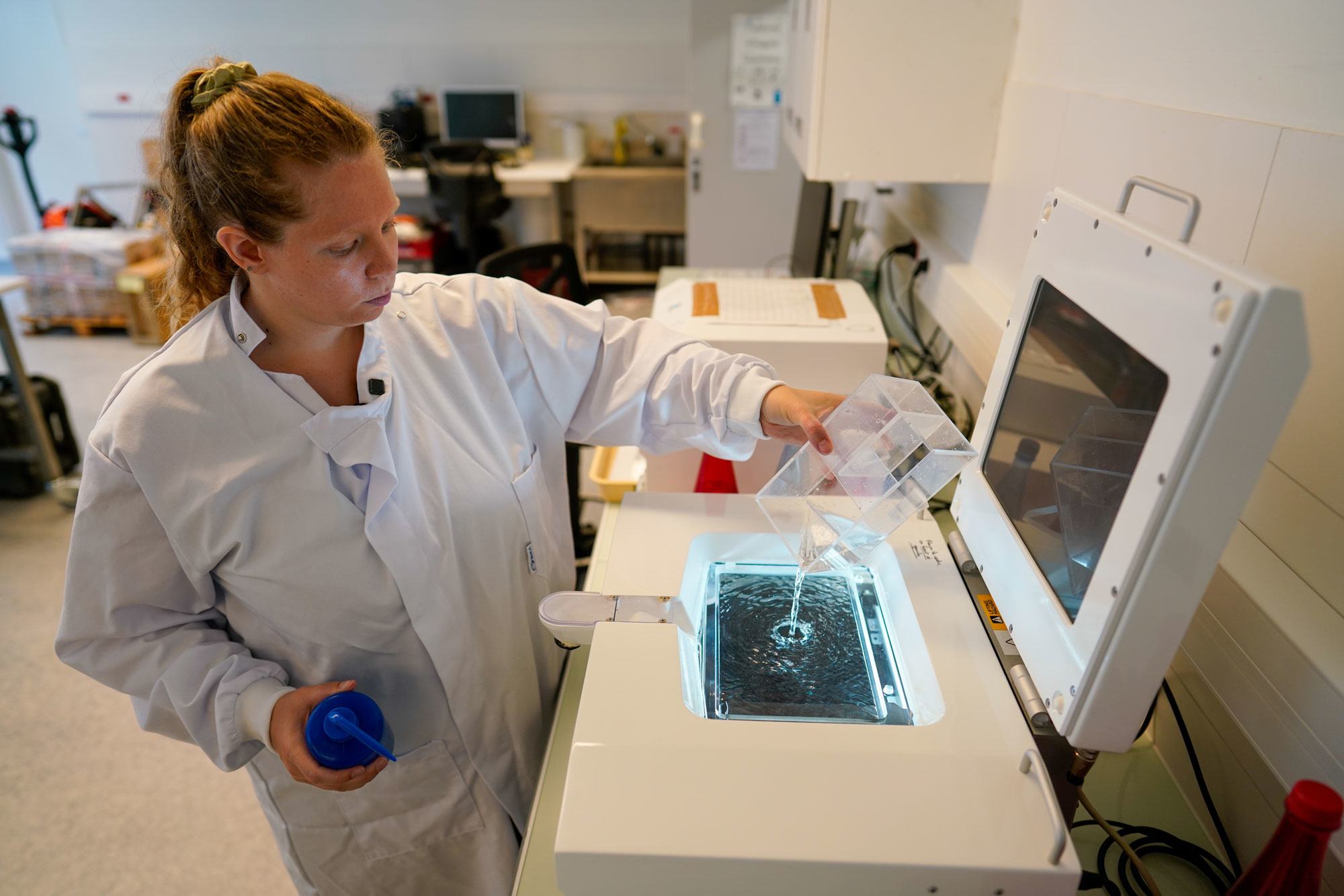
Anthéa Bourhis, 28, a lab technician at the Villefranche Oceanography Lab, known as LOV, pours the morning’s catch into a scanning machine to produce a digital image of the zooplankton.
© Heyi Zou
 
Anthéa Bourhis, 28, a lab technician at the Villefranche Oceanography Lab, known as LOV, pours the morning’s catch into a scanning machine to produce a digital image of the zooplankton.

From science to policy

A world that is changing – and not fast enough to be understood by satellites or snapshots. That’s why LOV’s long-term series matters: it captures trends that span years and even decades, helping scientists distinguish natural cycles from climate-driven shifts.

“When we explain that if there’s no more plankton, there’s no more life in the ocean. And if there’s no more life in the ocean, life on land won’t last much longer either, then suddenly people become a lot more interested in why protecting plankton matters,” said Jean-Olivier Irisson, another plankton specialist at the LOV.

Next week, just 15 minutes down the coast, the city of Nice is hosting the Third UN Ocean Conference (UNOC3) – a five-day summit bringing together scientists, diplomats, activists, and business leaders to chart the course for marine conservation.

Among the gathering’s priorities: advancing the ‘30 by 30’ pledge to protect 30 per cent of the ocean by 2030 and bringing the landmark High Seas Treaty, or ‘BBNJ accord’ to safeguard life in international waters, closer to ratification.

Guidi underscored the urgency of these UN-led efforts, saying: “All of this must be thought through with people who are capable of making laws, but based on scientific reasoning.”

He doesn’t claim to write policy himself. But he knows where science fits. “We convey scientific results; we have proof of a phenomenon. These are not opinions, they’re facts.”

And so, in Villefranche, Lionel Guidi, Anthéa Bourhis and Captain Carval continue their work – hauling life from the sea, capturing it in pixels, counting its limbs, and sharing its data with scientists across the globe. In doing so, they chart not just a threatened ocean, but the unseen threads that bind life itself.


https://news.un.org/en/story/2025/06/1164141


https://creativecommons.org/licenses/by/4.0/legalcode

понедельник, 17 июня 2024 г.

Stop ‘vandalising’ Earth and help the planet thrive, UN chief urges


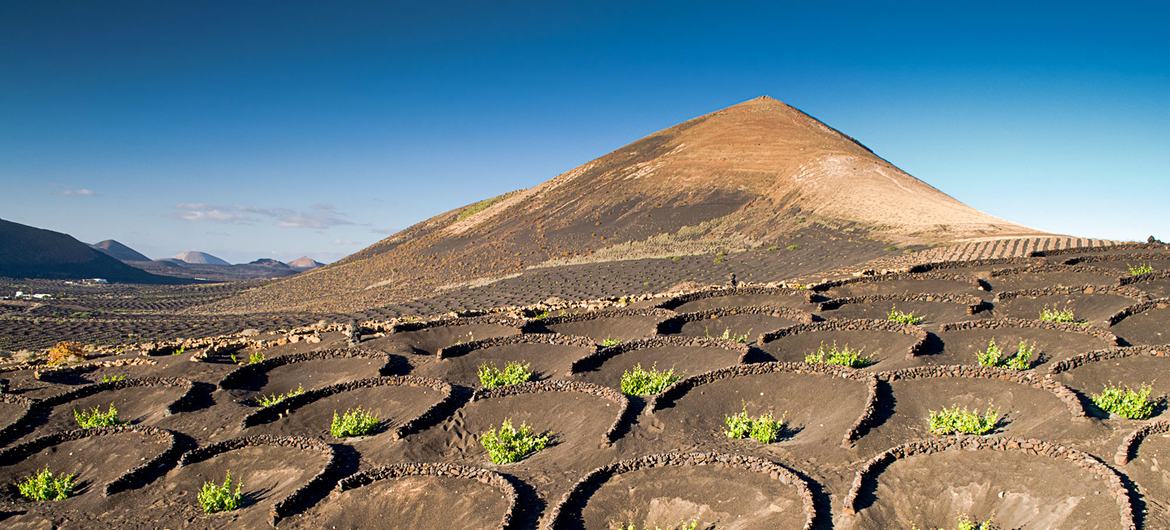
Agriculture in volcanic soils in the Lanzarote and Chinijo Islands UNESCO Global Geopark in Spain.
© UNESCO
 
Agriculture in volcanic soils in the Lanzarote and Chinijo Islands UNESCO Global Geopark in Spain.


16 June 2024

As nearly 40 per cent of land across the planet is degraded with more acres lost every second, governments, businesses and communities must galvanize action to reverse the damage and protect Earth, the UN chief said in a strong message for the World Day to Combat Desertification and Drought, marked annually on 17 June.

“Every second, around four football fields of healthy land are degraded,” said UN Secretary-General António Guterres.

“The security, prosperity and health of billions of people rely on thriving lands supporting lives, livelihoods and ecosystems, but we’re vandalising the Earth that sustains us.”

Desertification, land degradation and drought are currently among the most pressing environmental challenges.

Tweet URL
UNBiodiversity

United for land

The Day’s theme is United for Land. Our Legacy. Our Future, spotlighting the future of land stewardship, which is the planet’s most precious resource to ensure the stability and prosperity of billions of people around the world.

Healthy land not only provides us with almost 95 per cent of food eaten around the world, but so much more. It clothes and shelters people, provides jobs and livelihoods and protects communities from the worsening droughts, floods and wildfires.

“As the focus of this year’s World Day reminds us, we must be ‘United for Land’,” he said. “Governments, businesses, academics, communities and more must come together and act.”

‘We know what we need to do’

Growing populations coupled with unsustainable production and consumption patterns fuel demand for natural resources, putting excessive pressure on land to the point of degradation.

At the same time, desertification and drought are driving forced migration, putting tens of millions of people each year at risk of displacement.

Of the world’s eight billion inhabitants, over one billion of young people under the age of 25 years live in developing countries, particularly in regions directly dependent on land and natural resources for sustenance. Creating job prospects for rural populations is a viable solution that gives young people access to eco-entrepreneurship opportunities and at the same time to scale up best practices.

“We know what we need to do,” the UN chief said. “It’s set out clearly in the UN Convention to Combat Desertification (UNCCD). As we mark the thirtieth anniversary of the Convention, the world must dramatically pick up the pace of implementation.”

To do this, he pointed to building momentum towards UNCCD Conference of States Parties (COP16) in Riyadh and ensuring young people are heard in the negotiations.

“Together, let’s sow the seeds for a thriving future for nature and humanity,” he said.


Fast facts

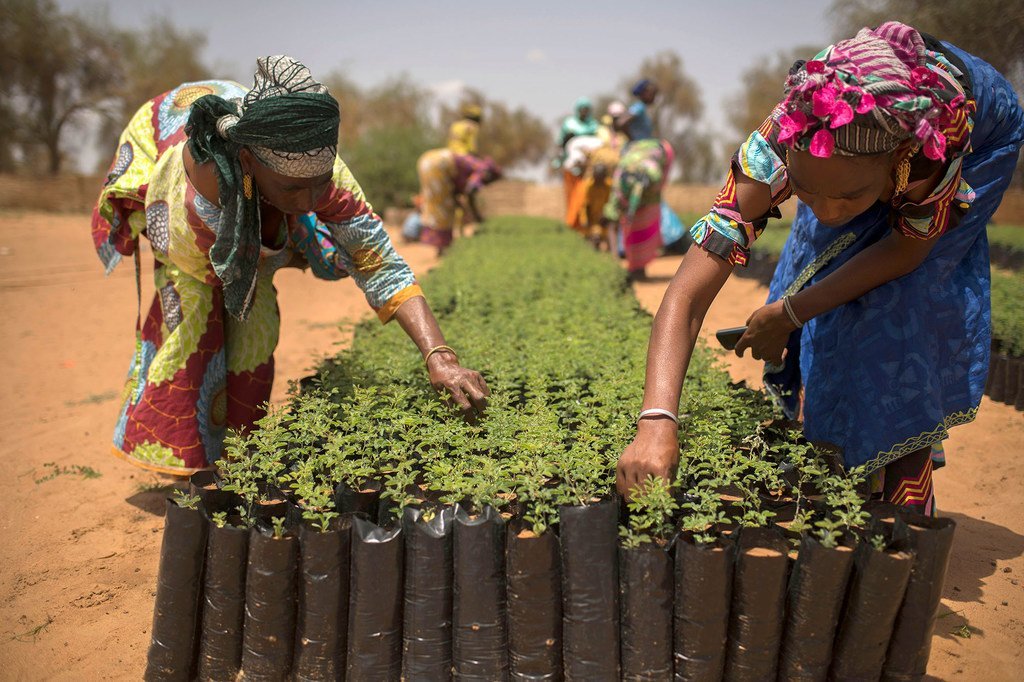
Women in Senegal work in tree nurseries created as part of the Great Green Wall initiative to improve living conditions, biodiversity conservation and the sustainability of the land in the Sahel region.
NOOR for FAO/Benedicte Kurzen
 
Women in Senegal work in tree nurseries created as part of the Great Green Wall initiative to improve living conditions, biodiversity conservation and the sustainability of the land in the Sahel region.
  • Every second, an equivalent of four football fields of healthy land becomes degraded, adding up to a total of 100 million hectares each year
  • Each dollar invested in land restoration can yield up to $30 in return
  • In many countries affected by desertification, land degradation and drought, agriculture represents a high share of economic revenue
  • Under UNCCD, over 130 countries have already pledged to achieve land degradation neutrality by 2030 towards a world where human activity has a neutral, or even positive, impact on the land
  • The UN supports innovative efforts worldwide, including the newly launched Great Green Wall Observatory, which tracks progress of Africa’s largest land restoration initiative to combat land degradation, desertification and the negative impacts of climate change in the Sahel region
  • The UN Educational. Scientific and Cultural Organization (UNESCO) established a growing national and global networks of “Geoparks” combining conservation and sustainable development, with 213 UNESCO Global Geoparks operating in 48 countries and counting
  • Learn more about how the UN is helping here

https://news.un.org/en/story/2024/06/1151121
https://creativecommons.org/licenses/by/3.0/legalcode

четверг, 23 ноября 2023 г.

World News in Brief: Delivering on health at COP28, aid for north Darfur, food standards watchdog turns 60


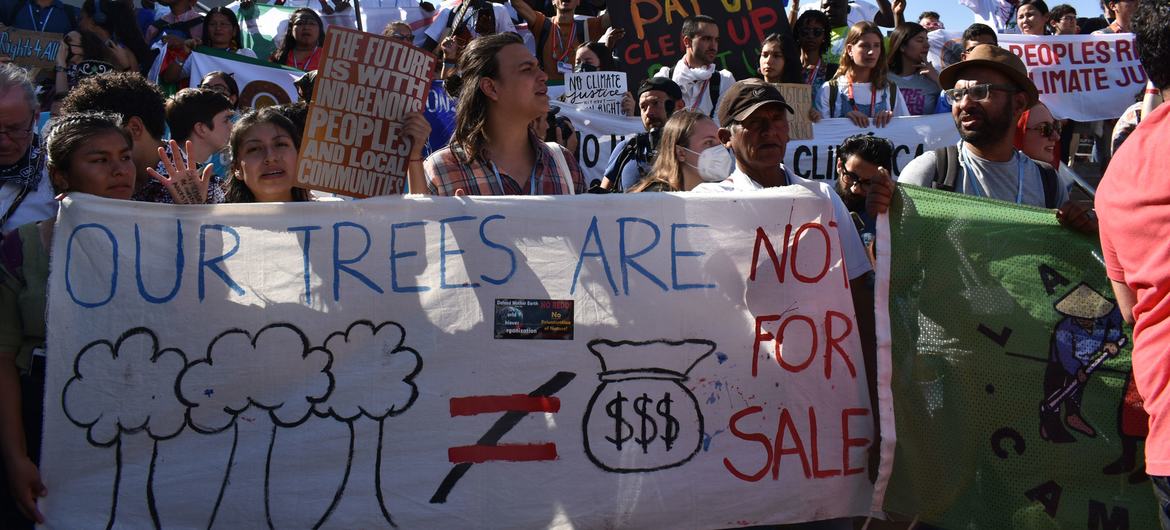
Activists stage massive protest at COP27 in Sharm El-Sheikh demanding leaders to address vital issues realted to agriculture, adaptation and climate resilience.
Laura Quinones
 
Activists stage massive protest at COP27 in Sharm El-Sheikh demanding leaders to address vital issues realted to agriculture, adaptation and climate resilience.
27 November 2023
Climate and Environment

Climate action is health action and the legacy of the COP 28 climate conference opening later this week in Dubai should be a commitment to a healthier planet.

That’s the message from UN health agency WHO

“Leaders must deliver in Dubai, providing the strong health outcomes their peoples expect and their economies urgently need,” said WHO chief Tedros

According to the UN Intergovernmental Panel on Climate Change (IPCC), some 3.5 billion people – nearly half of humanity – live in areas highly vulnerable to climate change, and curbing greenhouse gas emissions is urgent to mitigate the disastrous health effects of global warming.

Soundcloud

Deadly heat 

WHO said that rising temperatures have caused a 70 per cent increase in heat-related deaths among people aged 65 and over in the last two decades, while infectious diseases like dengue and cholera have surged. 

At the same time, flooding and drought have wrought havoc on food production.

Transitioning to clean energy sources is also urgent to help prevent the seven million premature air pollution deaths every year, WHO insisted.

Sudan: UN hails aid milestone in Darfur, calls for broader access

The conflict in Sudan has entered its eighth month, and while aid access remains extremely challenging, UN humanitarians are doing their utmost to reach people in need.

Tweet URL

On Monday, the UN’s top humanitarian official in Sudan, Clementine Nkweta-Salami, welcomed the arrival of the first cross-border humanitarian shipment from Chad to Al Fasher in North Darfur state.

Facilitated by UN aid coordination office OCHA

The development follows another milestone last week when humanitarians delivered medical supplies to Central Darfur for the first time since conflict broke out in April.

Humanitarians continue to call for sustained aid access across Sudan, where almost half the population face severe levels of hunger, according to the UN World Food Programme (WFP

Last week, UN emergency relief chief Martin Griffiths deplored the fact that the Sudanese capital Khartoum remains inaccessible to humanitarian relief and highlighted the “distressing” toll of the conflict on civilians in Darfur. 

The UN Children’s Fund has reported over 3,000 allegations of severe children’s rights violations in the country since the fighting started, with the Darfur region accounting for at least half of the cases. 

Global food standards body marks 60 years of consumer protection

The world global food standards body marked its 60th anniversary on Monday at the headquarters of the UN Food and Agriculture Organization (FAO).

The Codex Alimentarius Commission, as the consumer watchdog is officially known, began with just 30 countries but has now grown to 189 members, FAO chief QU Dongyu noted.

Tweet URL

“Sixty years ago, the objective was to highlight the rapidly growing importance of internationally accepted food standards as a means of protecting consumer and producers globally and to effectively reduce trade barriers – these objectives are still very relevant today,” he said.

“More than ever, there continues to be an important emphasis on science and risk assessment as the basis for standards, as we look to science to prevent food from becoming unsafe and to reduce the risk of foodborne illness,” he added.

The body brings together the world’s top scientists to crunch the key data and discuss specific microbiological or chemical hazards.

Protecting the most vulnerable

“Their deliberations concentrate on the protection of the most vulnerable, such as children and pregnant women, and take into consideration local and regional differences in food consumption," Qu explained, noting that due to the longer and more complex food chain of today, prevention and control systems for food safety, like Codex, have become increasingly important and significant. 

The Codex also defines the quality of food by providing guidance on hygiene, labeling, nutrition, and the measurement and sampling techniques that attest to its safety.

The 46th session of its ruling body will discuss adopting a range of new texts and guidelines in line with its objectives of ensuring the production and trade of safe food.

The standards assess scientific findings and potential risks, all while prioritizing food safety and decreasing the likelihood of food-borne illness.

The scientific foundation for these standards is provided by the WHO and FAO.

The recommendations are voluntary for Member States but provide a structure for national health laws, which help ensure consumers are increasingly protected from unsafe or low-quality food purchases, and importers have greater confidence that they will receive conforming shipments of goods.


https://news.un.org/en/story/2023/11/1143997


https://creativecommons.org/licenses/by/3.0/legalcode