Показаны сообщения с ярлыком Palestine. Показать все сообщения

четверг, 2 мая 2024 г.

Palestine: General Assembly discusses failed UN membership bid


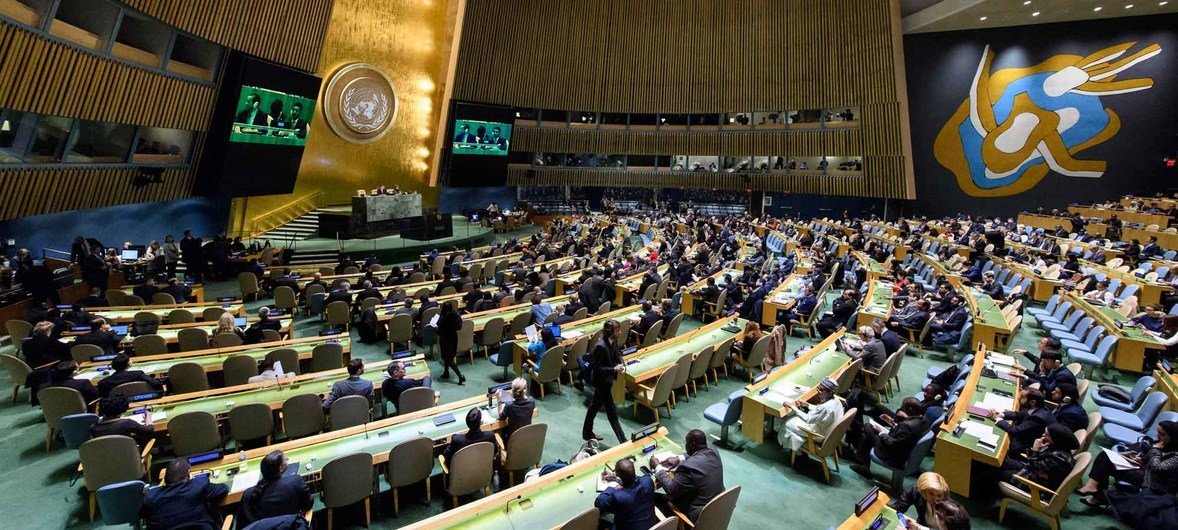
Wide view of the General Assembly Hall (file).
UN Photo/Manuel Elías
 
Wide view of the General Assembly Hall (file).


1 May 2024

UN Affairs

Palestine’s recent attempt to become a full member of the United Nations was the focus of discussion in the General Assembly on Wednesday. 

A 2022 initiative, resolution76/262, calls for the UN’s most representative body to meet within 10 days if the veto is used in the Security Council by one of its permanent members - China, France, Russia, the United Kingdom and the United States – who are granted this special voting power. 

During a Council meeting on 18 April,  the US vetoed a draft resolution that recommended that the General Assembly should hold a vote to allow Palestine full UN membership. 

Palestine is a ‘Permanent Observer State” at the UN, meaning that it can participate in all UN proceedings, except for voting on draft resolutions and decisions in its main organs and bodies. 

Council divisions persist 

Wednesday’s discussion took place against the backdrop of the ongoing war in Gaza, sparked by the bloody 7 October Hamas-led attacks on Israel. 

It was convened “as the divisions in the Security Council persist and hinder the Council's ability to effectively discharge its responsibilities,” Assembly President Dennis Francis said in remarks read on his behalf. 

He encouraged countries to use the discussion “as an opportunity to deliberate on how the two main organs of the United Nations, the General Assembly and the Security Council, can work together to achieve a comprehensive just and lasting solution to the Palestinian question.” 

Deputy Permanent Representative Robert A. Wood of the United States, addresses the UN General Assembly plenary meeting on the use of the veto on the situation in the Middle East, including the Palestinian question.
UN Photo/Evan Schneider
 
Deputy Permanent Representative Robert A. Wood of the United States, addresses the UN General Assembly plenary meeting on the use of the veto on the situation in the Middle East, including the Palestinian question.

US: No opposition to statehood 

US Deputy Representative Robert Wood said that as a permanent member of the Security Council, his country has a special responsibility to ensure that its actions further the cause of international peace and security, in addition to being consistent with the UN Charter. 

He said the report by the Committee on the Admission of New Members reflected that there was not unanimity among members as to whether the applicant met the criteria for membership, as set out in Article IV of the UN Charter, including questions around whether it meets the requirements to be considered a state. 

In this regard, he said the US has long called on the Palestinian Authority to undertake necessary reforms, noting that “Hamas, a terrorist organization is currently exerting power and influence in Gaza, an integral part of the State envisioned in this resolution”.  

Reiterating that Washington continues to strongly support a two-State solution between Israelis and Palestinians, he said the vote “does not reflect opposition to Palestinian statehood, but instead is an acknowledgment that it will only come from direct negotiations between the parties.” 

Mr. Wood concluded by noting that the General Assembly is holding two meetings on the casting of the same veto as a group of countries has formally requested a meeting of its 10th Emergency Special Session on the matter. 

“We think that the convening of this meeting today is both inconsistent with resolution 262 and is an improper use of the General Assembly's time and resources,” he said. 

Riyad Mansour, Permanent Observer of the State of Palestine to the United Nations, addresses the UN General Assembly plenary meeting on the use of the veto on the situation in the Middle East, including the Palestinian question.
UN Photo/Evan Schneider
 
Riyad Mansour, Permanent Observer of the State of Palestine to the United Nations, addresses the UN General Assembly plenary meeting on the use of the veto on the situation in the Middle East, including the Palestinian question.

Palestine: UN membership ‘long overdue’ 

The Permanent Observer of the State of Palestine, Riyad Mansour, said he stood before the General Assembly “as the massacres against the Palestinian people continue unabated”.  

He said an immediate ceasefire - long called for by the Assembly and demanded by the Security Council - is indispensable and cannot be delayed any further. 

Stating that Palestine’s membership in the UN is “long overdue”, he said “we will never accept that the Palestinian people's right to self- determination, to statehood and admission to the UN, could be in any way subject to an Israeli veto.” 

He said Palestine will now bring the matter for consideration by the General Assembly at the resumed 10th emergency special session and urged the Security Council to reconsider its application for admission. 

Mr. Mansour called for every State to use the means available to them to end the carnage in Gaza and advance freedom and peace. 

He said, “the time for recognition of the state of Palestine is right now,” and expressed gratitude to the more than 140 countries that have taken this “important step”. 

“For those who have not yet recognized the state of Palestine, we say there are no grounds for further delay. Those who want to destroy the Palestinian state, and with it any chance for peace, are not waiting,” he said. 

Ambassador Gilad Erdan of Israel addresses the UN General Assembly plenary meeting on the use of the veto on the situation in the Middle East, including the Palestinian question.
UN Photo/Evan Schneider
 
Ambassador Gilad Erdan of Israel addresses the UN General Assembly plenary meeting on the use of the veto on the situation in the Middle East, including the Palestinian question.

Israel: No ‘rogue state’ 

Israeli Ambassador Gilad Erdan noted that Tuesday marked the end of the Passover holiday and “every Jewish family had an empty hole in their hearts” as they were focused on the atrocities of 7 October and the suffering of Israelis being held hostage by Hamas. 

“Yet as my people mark this Passover with grief, the UN is again seeking to reward the perpetrators of the horrors,” he said.  “The UN couldn't care less about Israel. To hell with our safety, to hell with our future, and to hell with our hostages.” 

He said, “nothing exemplifies the UN’s rotten values more than the advancement of a Palestinian statehood.” 

Mr. Erdan stated that there has never been condemnation of Hamas, or a single UN initiative taken for the sake of the Israeli hostages, adding “instead this body has focused only on recognizing a Palestinian terror state” .

He said the Palestinian Authority does not meet the criteria for statehood, and not one Palestinian leader has condemned Hamas. 

Granting Palestine full UN membership would only have two “destructive results”, he said – furthering terrorism and sending a clear message to the Palestinians that they never have to sit at the negotiating table, let alone make compromises. 

“These UN sessions will be remembered in the future as one of the primary obstacles to resolving the conflict.  Remember my words. The UN today is the main impediment to peace,” he said. 


https://news.un.org/en/story/2024/05/1149231


https://creativecommons.org/licenses/by/3.0/legalcode

четверг, 18 апреля 2024 г.

Palestine’s status at the UN explained

The General Assembly adopted a resolution in 2012 granting to Palestine the status of non-member observer State in the United Nations. (file)

Palestine’s status at the UN explained


UN Photo/Rick Bajornas
 
The General Assembly adopted a resolution in 2012 granting to Palestine the status of non-member observer State in the United Nations. (file)


18 April 2024

UN Affairs

What will it take for Palestine to become a full UN Member State? As the Security Council takes up the matter while the devastating war in Gaza enters its seventh month, we looked at Palestine’s current status and what it takes to become a UN Member State.

Palestine’s current status

Right now, Palestine is a “Permanent Observer State” at the UN, enjoying the status that allows it to participate in all of the Organization’s proceedings, except for voting on draft resolutions and decisions in its main organs and bodies, from the Security Council to the General Assembly and its six main committees.

However, some other participation is off-limits to Permanent Observers. This was made clear by a General Assembly resolution, which temporarily, for the year 2019 during which Palestine served as chair of the Group of 77 developing countries and China (G77), accorded to Palestine additional rights: to submit proposals and amendments and introduce them, to exercise a right of reply and to raise procedural motions, including points of order and requests to put proposals to the vote. These rights temporarily accorded to Palestine then expired as of 2020.

On 2 April 2024, Palestine sent the UN Secretary-General a letter requesting renewed consideration be given to the application of Palestine for admission to membership in the UN, a request originally submitted in 2011. Upon receipt of the request, the UN chief forwarded it to the Security Council, which on 8 April took up the matter in an open meeting.

The process is a continuation of what happened in September 2011, when the Palestinian President sent a letter with the application request for UN membership to the UN chief, who promptly sent the application to the Security Council and the General Assembly. In accordance with the Council’s provisional rules of procedure, the Security Council referred the matter to its Committee on Admission of New Members, where members deliberated but were not unanimous on approving the request.

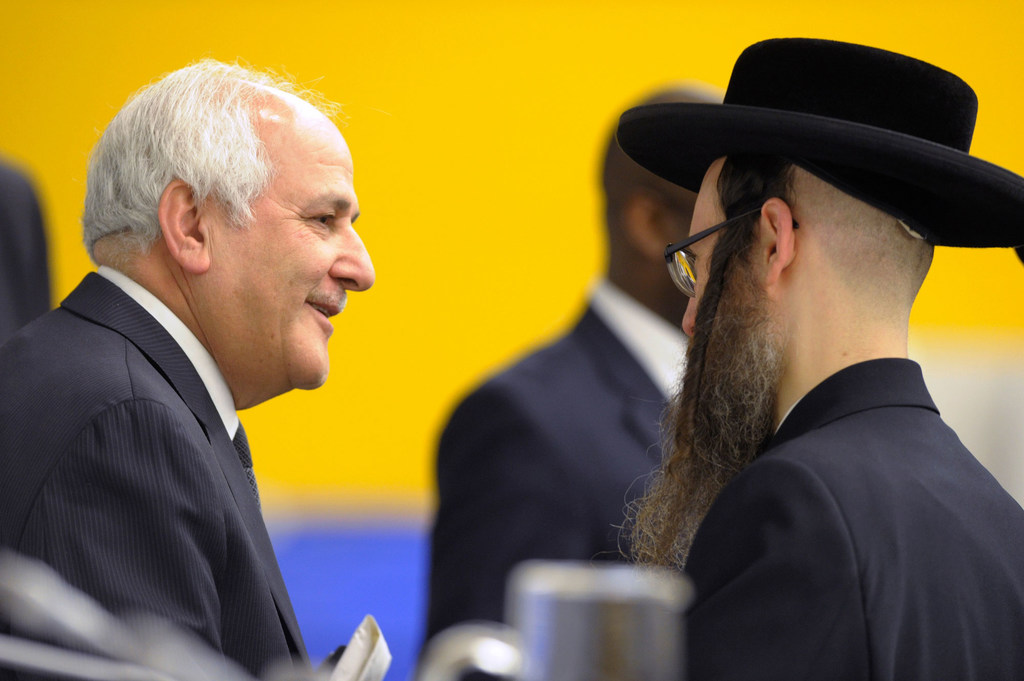
Riyad Mansour, Permanent Observer of Palestine to the UN, (left) talks with a participant at a special meeting held in observance of the International Day of Solidarity with the Palestinian People. (file)
UN Photo/Evan Schneider
 
Riyad Mansour, Permanent Observer of Palestine to the UN, (left) talks with a participant at a special meeting held in observance of the International Day of Solidarity with the Palestinian People. (file)

How UN Member States are born

Agreement between the UN General Assembly and the Security Council is needed to admit any new Member States.

Any application for UN membership comes to the UN Secretary-General and then is forwarded to the Security Council and the General Assembly.

The 15-member organ decides whether or not to recommend the admission to the 193-member General Assembly after its Committee on Admission of New Members deliberates on the matter.

The process is outlined in the UN Charter, whereby UN membership “is open to all other peace-loving States which accept the obligations contained in the present Charter” and “are able and willing to carry out these obligations”.

The Council can vote on the proposal and must have at least nine members in favour and none of its permanent members – China, France, Russia, United Kingdom, United States – using their veto power.

Committee of Admission of New Members

As per rule 59 of its provisional rules of procedure, the Security Council referred the matter to its Committee of the Admission of New Members. The Committee met twice, on 8 and 11 April 2024.

In 2011, Committee members considered Palestine’s request at meetings held over two months, but could not unanimously advise the Council to approve the application, with some members in favour, others noting that an abstention was envisaged in the event of a vote and several suggesting other options, including that as an intermediate step, “the General Assembly should adopt a resolution by which Palestine would be made an Observer State,” according to the Committee report.

Learn more about the Committee’s history of decisions here.

Israeli Foreign Minister Moshe Sharette (left) is congratulated by Haiti’s representative Stephen Alexis in the General Assembly after Israel’s admission in 1949 as the UN’s 59th Member State. (file)
UN Photo/Albert Fox
 
Israeli Foreign Minister Moshe Sharette (left) is congratulated by Haiti’s representative Stephen Alexis in the General Assembly after Israel’s admission in 1949 as the UN’s 59th Member State. (file)

World body holds a vote

After receiving the Council’s positive recommendation, the General Assembly plays its role.

In cases of approvals – like with Israel in 1948 and dozens of others, including South Sudan, in 2011, the newest UN Member State – the Assembly is tasked with drafting a resolution.

Shortly after receiving a Council recommendation, the General Assembly holds a vote on the matter, with all 193 Member States joining in the process.

Granting full membership status

In admitting more than 100 Member States since the founding of the UN in 1945, the General Assembly needs a two thirds majority in a vote to admit a new member.

Once a resolution is adopted, the new member is officially admitted to the UN.

Membership entails participating in UN meetings, paying annual dues and voting on all issues that come before the Organisation. The new member’s flag is then added to the row of members that stretch across the front of UN Headquarters in New York and other main UN offices around the world.

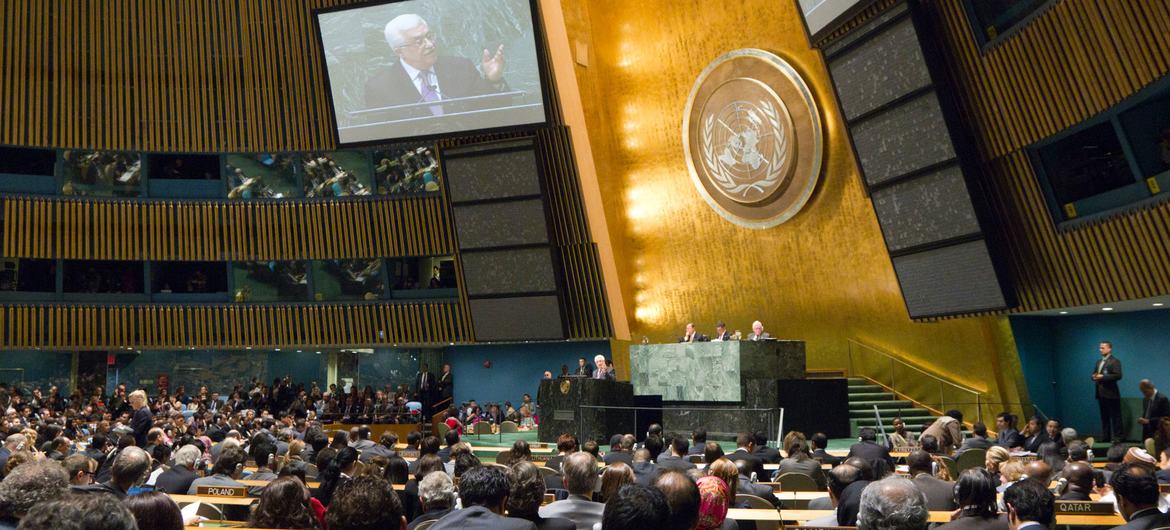
A view of the General Assembly Hall as Mahmoud Abbas (shown on screens), President of the Palestinian Authority, addresses the Assembly before the vote on its status in 2012. (file)
UN Photo/Rick Bajornas
 
A view of the General Assembly Hall as Mahmoud Abbas (shown on screens), President of the Palestinian Authority, addresses the Assembly before the vote on its status in 2012. (file)

Non-member Permanent Observer status

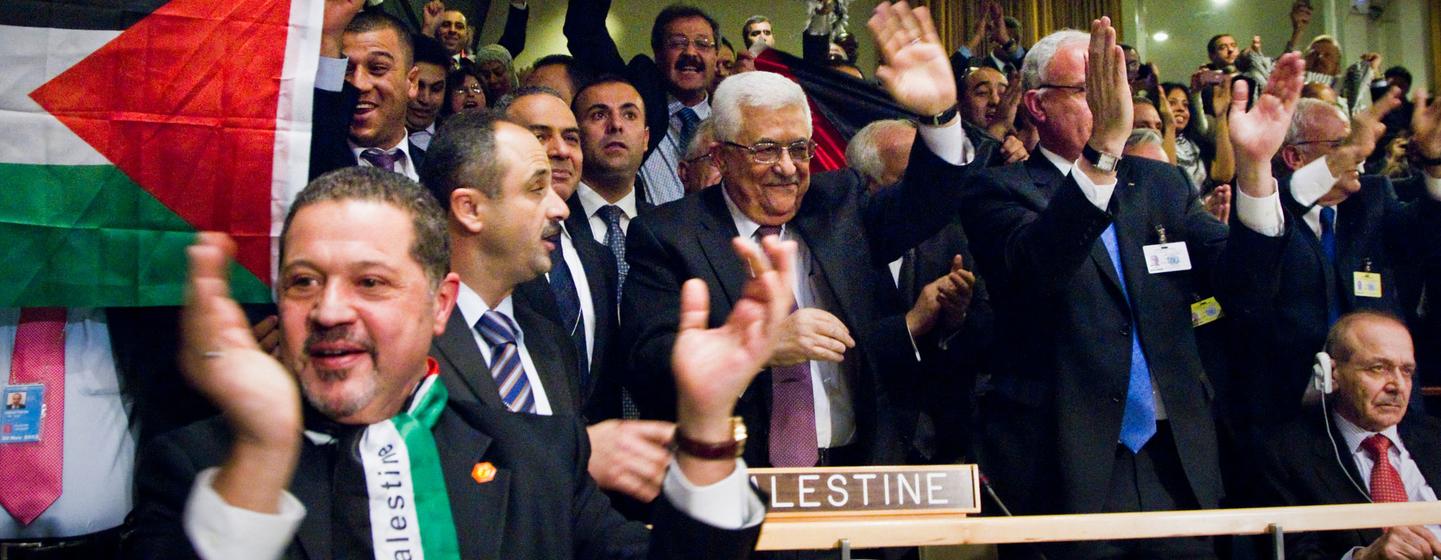
In the case of Palestine, one year later in 2012, the General Assembly decided to recognise it as a “non-member Permanent Observer State”.

While the only other current non-member Observer State is the Holy See, representing the Vatican, the practice of according the status dates from 1946, when the Secretary-General accepted the designation of the Swiss Government as a Permanent Observer to the United Nations. Observers were subsequently put forward by certain States that later became UN Member States, including Austria, Finland, Italy and Japan.

As a Permanent Observer State, Palestine’s flag does fly outside the UN Secretariat building in New York, although it is slightly separated from the UN Member State flags and is not part of the alphabetic line-up.

The flag of the State of Palestine is raised at the United Nations in Geneva. (file)
UN Photo/Jean Marc Ferré
 
The flag of the State of Palestine is raised at the United Nations in Geneva. (file)

How Palestine became a non-member Observer State

On 29 November 2012, the General Assembly adopted a resolution granting to Palestine the status of non-member observer State in the United Nations, with a vote of 138 for, nine against (Canada, Czech Republic, Federated States of Micronesia, Israel, Marshall Islands, Nauru, Panama, Palau, United States), with 41 abstentions.

Until 2012, Palestine had observer status in the UN General Assembly, but not as a State.

The vote came on the same day that the UN observed the annual International Day of Solidarity with the Palestinian People. Established in 1977, the Day marks the date in 1947 when the Assembly adopted a resolution partitioning then-mandated Palestine into two States, one Jewish and one Arab.

Upon the adoption in 2012, Mahmoud Abbas, President of the Palestinian Authority, said its aim in coming before the world body to change its status was to try to “breathe new life” into the peace process.


https://news.un.org/en/story/2024/04/1148351


https://creativecommons.org/licenses/by/3.0/legalcode

понедельник, 8 апреля 2024 г.

Security Council Refers Renewed Consideration of State of Palestine Application for United Nations Membership to Committee on Admissions


9597TH MEETING (PM)
SC/15655

The Security Council today decided to refer a renewed consideration of the State of Palestine’s 2011 application for United Nations membership to its Committee on the Admission of New Members, which would then meet at 3 p.m.

The representative of Malta, President of the Security Council for April, noted that in a 2 April 2024 letter addressed to Secretary-General António Guterres, the Permanent Observer of the State of Palestine referred to the application for membership in the United Nations (document S/2011/592) dated 23 September 2011, and requested that the renewed consideration be given to that application by the 15-member organ during the month of April 2024.  That letter was circulated (contained in document S/2024/286), and the Secretary-General had transmitted the request to the Council in a 3 April letter (also contained in document S/2024/286).

Citing the provisions of rule 59 of the provisional rules of procedure of the Council, and in the absence of any proposal to the contrary, she then referred the request to the Committee for consideration.


https://creativecommons.org/licenses/by/3.0/legalcode

https://press.un.org/en/2024/sc15655.doc.htm