Показаны сообщения с ярлыком Karabakh. Показать все сообщения

среда, 4 октября 2023 г.

Karabakh: Humanitarians respond to growing health needs

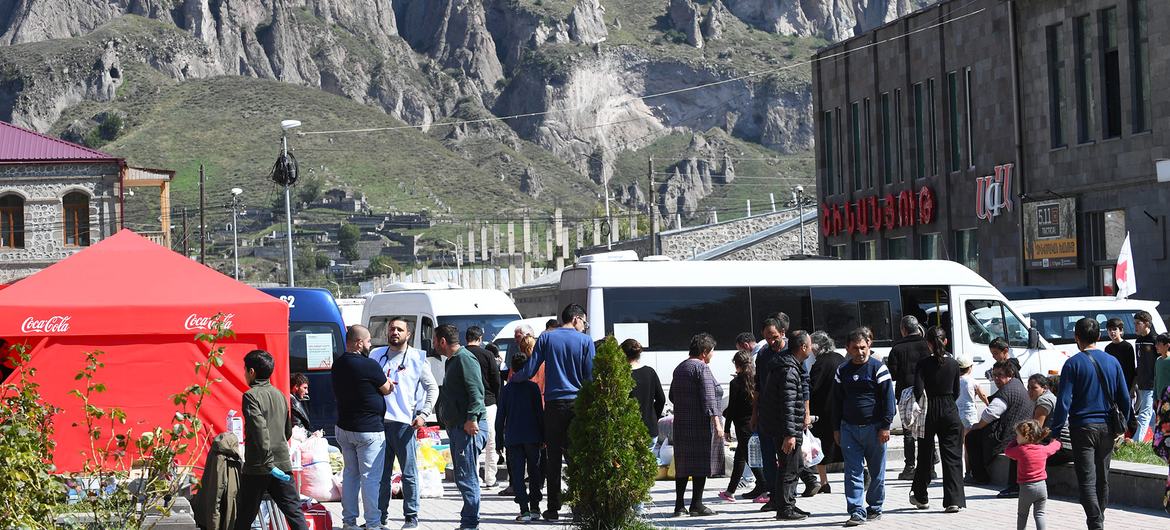
More than 100,000 people have fled the Karabakh region.
© UNOCHA
 
More than 100,000 people have fled the Karabakh region.

Concerns also remain for those unable to leave the Karabakh Region town of Khankendi – known as Stepanakert among Armenians – which the International Committee of the Red Cross (ICRC) said was close to empty.

Its priority remains finding those too vulnerable to help themselves.

Deserted city

“The city is now completely deserted. The hospitals, more than one, are not functioning,” said Marco Succi, ICRC Head of Rapid Deployment.

“The medical personnel have left. The water board authorities left. The director of the morgue…the stakeholders we were working with before, have also left. This scene is quite surreal.”

Mr. Succi confirmed that electricity and water were still available in the city and that the priority was to find those “extremely vulnerable cases, elderly, mentally disabled people, the people left without anybody”.

Helpless and alone

This included an elderly cancer patient, Susanna, who had been found in the last few days in a fourth-floor apartment building “alone and unable to get out of her bed. 

Tweet URL

“Neighbours had left her food and water several days beforehand but their supplies were running out. While she waited for help, she had started to lose all hope. After ensuring she was stable, she was evacuated by ambulance into Armenia.”

Among the humanitarian relief destined for the city, the ICRC official reported that some 300 food parcels were expected to arrive on Tuesday from Goris, a key point of entry from the Karabakh Region, to provide essential commodities to those left behind.

“Many people left their houses and shops open for those who may be in need,” said Mr. Succi, reporting how an elderly lady had cleaned her fridge and house, “leaving the door open to ventilate the house, you know, for the newcomers”.

Massive influx

Echoing the urgency of the situation in neighbouring Armenia, the UN World Health Organization’s Dr. Marthe Everard, Special Representative of the WHO Regional Director to Armenia, said that the country’s health system needed to be strengthened to cope with the “massive” influx of refugees.

Speaking to journalists in Geneva via Zoom after returning from the town of Goris, Dr. Everard said that infectious diseases needed to be monitored and treated, while measles vaccination gaps should also be addressed.

Mental health and psychosocial support remained “critical”, she insisted.

Additional urgent needs among the new arrivals beside shelter included treatment for chronic diseases such as hypertension, diabetes, heart disease and cancer, the WHO official continued, noting the agency’s commitment to support the “extensive” efforts of the Armenian Government.

Integrating health workers

“This includes supporting the integration of more than 2,000 nurses and over 2,200 doctors into the Armenian health system,” Dr Everard said.

The WHO official also noted that the UN agency had scaled up emergency support to Armenia by providing supplies to help treat more than 200 adults and children who received terrible burns in the fuel depot explosion in Karabakh last week, which also claimed 170 lives. 

A specialist burns team had also been deployed as part of WHO Emergency Medical Teams Initiative and arrived in Yerevan over the weekend, Dr. Erevard said. “We have issued a wider call for further specialist teams to complement this workforce and to support moving some of these most critical patients to specialized centres abroad.”

700 babies close to term

UNFPA, the UN’s sexual and reproductive health agency, is mobilizing health and protection services for tens of thousands of women and girls that have fled Karabakh.

Among the refugees, there are an estimated 2,070 women who are currently pregnant and nearly 700 are expected to give birth over the next three months.  

In collaboration with Armenia’s health ministry, UNFPA said it would be delivering 20 reproductive health kits that will meet the needs of a population of up to 150,000,  including equipment and supplies to help women deliver safely and to manage obstetric emergencies.

The agency has also distributed 13,000 dignity kits, which include sanitary pads, soap and shampoo. 

суббота, 30 сентября 2023 г.

Karabakh emergency escalates, thousands still pouring into Armenia: UN agencies

Refugees arrive in the border town of Goris in Armenia.
© UNHCR/Karen Minasyan
 
Refugees arrive in the border town of Goris in Armenia.
29 September 2023
Humanitarian Aid

Over 88,000 refugees from the Karabakh region have fled to Armenia in less than a week and humanitarian needs are surging, the UN refugee agency (UNHCR) said on Friday.

Some 65,000 have already been registered at Government-run centres where long lines have formed.

Late on Friday, UNHCR chief Filippo Grandi tweeted that more than 100,000 refugees had now arrived in Armenia from Karabakh. 

Anxiety and fear

The agency is supporting the refugees with core relief items, said agency representative in Armenia Kavita Belani, who has been on the ground since day one of the crisis.

“People are tired. This is a situation where they’ve lived under nine months of blockade. When they come in, they’re full of anxiety, they’re scared, they’re frightened and they want answers as to what’s going to happen next.”

Ms. Belani said that the most urgent needs included psychosocial support, medication and shelter for everybody, given the high volume of arrivals, as well as targeted support for the most vulnerable: the elderly and children.

The UN Children’s Fund (UNICEF) told reporters in Geneva that 30 per cent of those arriving are minors and many have been separated from their families.

Soundcloud

UN response in full gear

UNICEF is working with the authorities to make sure that family tracing is done right away so that the youngsters can be reunited with their relatives.

UNHCR is leading the inter-agency refugee response and coordination to complement the Armenian Government’s efforts, Ms. Belani said, and an appeal for funding is being finalized.

She stressed that while the response plan was for a duration of six months, the UN was already thinking of longer-term support to help Armenia integrate the new arrivals.

Earlier this week, Alice Wairimu Nderitu, the UN Special Adviser on the Prevention of Genocide, reiterated her “strong concern” over the ongoing situation and called for “all efforts to be made” to ensure the protection and human rights of the ethnic Armenian population who remain in the area and of those who have left.

Tweet URL

Family-tracing

A major concern for humanitarians is that many children have been separated from their families, said Regina De Dominicis, UNICEF Regional Director and Special Coordinator for Refugee and Migrant Response in Europe.

"So we are working in providing first of all psychosocial support and working with the ministries and local authorities as well to make sure that family-tracing is done immediately and families can unite,” 

Since Sunday, Armenian villages near the border with the Karabakh region have turned into makeshift refugee camps.

Some of those seeking shelter had only minutes to pack to leave by cars, buses and construction trucks, they said.  While many refugees expressed relief at reaching Armenia from Azerbaijan, they remain traumatized and confused about the future, according to the International Federation of the Red Cross and Red Crescent Societies (IFRC).

“It was so evident on everyone – children, men, women, elderly – the expressions on the faces of those who walk into registration points speak volumes,” said IFRC’s Hicham Diab, speaking from Armenia’s capital Yerevan.

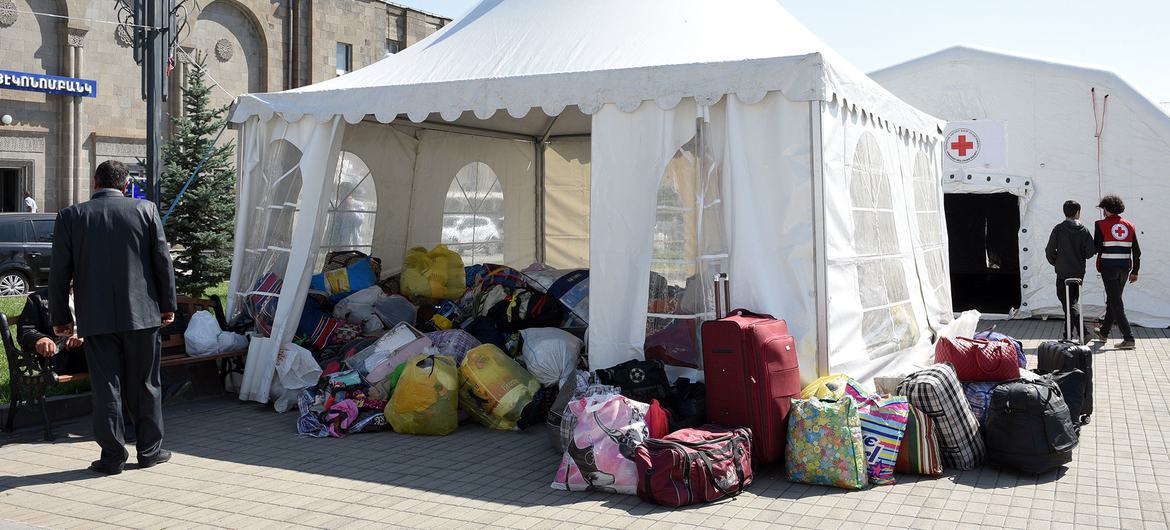
Refugees leave their possessions in a  tent in Goris, Armenia.
© UNHCR/Karen Minasyan
 
Refugees leave their possessions in a tent in Goris, Armenia.

Each face tells a story

“Each face tells a story of hardship, but also of hope, knowing they are in a place where they can receive aid.”

The desperate situation was compounded by an explosion on Monday at a fuel depot in the Karabakh region that killed at least 68 people, according to local authorities.

An additional 105 people are still missing following the blast, which reportedly occurred as many people were lining up to get fuel to help them leave.

Tweet URL

“The priority of the International Committee of the Red Cross (ICRC) in recent days has been on life-saving activities, including the transfer of the wounded to hospitals into Armenia for treatment and bringing in medical supplies,” said Carlos Morazzani, ICRC Operations Manager.

“Over the past week we have transferred around 130 people for medical care and after the explosion…we increased our engagement with all regional authorities.”

UN operation expands

The UN team in Armenia, led by acting Resident Coordinator Nanna Skau, is working with the Government to support the rapidly rising influx.

According to the latest official figures around 93,000 people have crossed into Armenia. The UN Population Fund (UNFPA) is supporting thousands of women in transit centres in the southeastern regions of Syunik and Vayots Dzor with 8,000 dignity kits, including drinking water, sanitary pads and soap.

Some 150,000 health kits have been distributed to support refugees and host communities.

The World Food Programme (WFP) has placed two mobile warehouses in Goris for non-food storage and a mobile kitchen serving up to 3,000 people every day.

The agency’s also delivered around 4,000 food parcels  to support 16,000 people in need in the Syunik region.

The UN Development Programme (UNDP) says it is preparing to launch a psychosocial support scheme to cover the needs of over 12,000 refugees.

UN team heads to region

Briefing correspondents at UN Headquarters the UN Spokesperson announced the Azerbaijani Government had agreed to allow the deployment of a UN mission to the region, due to take place over the weekend.

It would mark the first time in around 30 years that UN teams have gained access, he said.

Led by a senior official from the UN aid coordination office (OCHA) and the UN Resident Coordinator in Azerbaijan, Mr. Dujarric said it would include a technical team from OCHA.

“It's very important that we will be able to get in”, he added.

“While there, the team will seek to assess the situation on the ground and identify the humanitarian needs with both for both people remaining and the people that are on the move.”


https://news.un.org/en/story/2023/09/1141662

https://creativecommons.org/licenses/by/3.0/legalcode