вторник, 31 октября 2023 г.

Security Council Sanctions Committee Concerning South Sudan Receives Briefing on Behalf of Emergency Relief Coordinator in Pursuance of Resolution 2664 (2022)

SC/15478

Security Council Sanctions Committee Concerning South Sudan Receives Briefing on Behalf of Emergency Relief Coordinator in Pursuance of Resolution 2664 (2022)

On 19 October 2023, and in pursuance of paragraph 5 of resolution 2664 (2022), a representative of the Office for the Coordination of Humanitarian Affairs (OCHA), on behalf of the Emergency Relief Coordinator, briefed the Security Council Committee established pursuant to resolution 2206 (2015) concerning South Sudan on the delivery of life-saving assistance and other activities that support essential human needs in South Sudan.

Members of the Committee thanked the representative for the briefing delivered on behalf of the Emergency Relief Coordinator and expressed support for the mandate.


https://press.un.org/en/2023/sc15478.doc.htm
https://creativecommons.org/licenses/by/3.0/legalcode

Security Council Extends Mandate of United Nations Assistance Mission in Somalia, Unanimously Adopting Resolution 2705 (2023)

9463RD MEETING (AM)
SC/15475

Security Council Extends Mandate of United Nations Assistance Mission in Somalia, Unanimously Adopting Resolution 2705 (2023)

Following the Secretary-General’s strategic review of the United Nations Assistance Mission in Somalia (UNSOM), the Security Council today extended until 31 October 2024 the Mission’s mandate and tasks, as set out in resolutions 2158 (2014) and 2592 (2021).

Unanimously adopting resolution 2705 (2023) (to be issued as document S/RES/2705(2023)), the Council requested UNSOM to maintain and strengthen its presence across Somalia in consultation with the Federal Government and Somalia’s Federal Member States, and continue to strengthen its cooperation with the country and the African Union.

By the terms of the resolution, UNSOM is encouraged to coordinate United Nations efforts and support the Federal Government and Federal Member States in the acceleration of the implementation of the National Stabilization Strategy and State-Level Stabilization Plans and support peacebuilding.

Expressing serious concern about the humanitarian situation in Somalia, the Council, through the resolution, strongly condemns any misuse or obstruction of humanitarian assistance, including violence, attacks and threats against humanitarian and medical personnel, and against their means of transport and equipment, as well as hospitals and other medical facilities in violation of international law.  It demands that all parties allow and facilitate, in accordance with relevant provisions of international law, full, safe, rapid and unhindered access for the timely delivery of aid to persons in need across Somalia, in line with the humanitarian principles.

Speaking after the vote, the Anna M. Evstigneeva (Russian Federation) said her delegation supported the resolution as Somalia is at an important point in its modern history and the Federal Government is combating many challenges, including the continued arms embargo.  It is successfully combating extremism.  Somalia is experiencing results in State-building and her delegation welcomes Mogadishu’s work in resolving interclan conflicts.  The Mission’s role is growing, and necessary assistance should be provided within the bounds of its mandate.  Interference in the internal affairs of the country, including its legislative work, is unacceptable.

Geng Shuang (China) said his delegation voted in favour of the text because the extension of UNSOM is conducive to supporting the political process in Somalia.  However, he stressed, the Mission must adhere strictly to the Somalia-owned and Somalia-led principle.  Noting that the resolution was amended to reflect this, he said UNSOM must refrain from imposing external solutions.  Also stressing the importance of supporting Somalia’s adaption to climate change, he said lack of financial resources is the main bottleneck facing Somalia in that.  Expressing regret that the text just adopted does not speak to this, he said the Council should call on developed countries to provide climate financing that has been delayed for 14 years.  If the Council is serious about tackling climate change, it should facilitate “concrete actions and real money”.

Harold Adlai Agyeman (Ghana), speaking also on behalf of Mozambique and Gabon, said the group supported the resolution as UNSOM plays an important role in the effective implementation of State-building initiatives in the country.  It also recognizes the Mission’s role in the peacebuilding process as it brings stability to the country and region.  The resolution notes the need to address the persistent threat of terrorism facing the country and the use of improvised explosive devices.  Comprehensive assistance in the financial, technical and security domains are crucial to assist Somalia at this critical juncture.  He suggested careful consideration of fully lifting the arms embargo so Somalia can combat extremist groups like Al-Shabaab.  He noted the important role that women play in the peacebuilding process.  He commended the consensual approach used by the penholder.

Mohamed Rabi A. Yusuf (Somalia), noting that this is the tenth year since the establishment of the special political mission in Somalia, said UNSOM’s mandate should reflect the Somalia of today rather than that of 2013.  Welcoming the Council’s initiation of the transition into a United Nations country team presence, he stressed that the fight against terrorism is not won only through military means but also by addressing the drivers of violent extremism, such as lack of economic opportunities.  “There is no peace without development and no development without peace,” he said.  UNSOM must operate and fulfil its mandate in a way that meets the expectation of his Government, including full respect for the sovereignty and territorial integrity of Somalia.  He added that different interpretations regarding the adopted model of federalism or power-sharing among Somalis should not alter the commitment to a united Somalia.  Also drawing attention to the persistent issue of high staff vacancy rates, he said the prevalence of unfulfilled positions can signal the near end of a special political mission’s life cycle.  Encouraging the Secretariat to expedite the conclusion of the 2022 staffing and configuration review, he added that Somalia has taken significant steps towards achieving peace and political stability.


https://press.un.org/en/2023/sc15475.doc.htm

https://creativecommons.org/licenses/by/3.0/legalcode

‘Unceasing Death, Destruction, Suffering’ of Russian Federation’s War on Ukraine Must End, Senior Humanitarian Affairs Official Tells Security Council

9464TH MEETING (AM)
SC/15476


Many Delegates Express Concern Over Human Rights Violations, Strikes on Civilians

Detailing the death and destruction in the nearly two-year war in Ukraine, a senior UN official urged all parties to spare all civilians and civilian objects and facilitate the swift and unhindered provision of humanitarian relief during his briefing to the Security Council today, emphasizing that what Ukrainians need, above all, is an end to the devastating war.

Ramesh Rajasingham, Director of the Coordination Division, Office for the Coordination of Humanitarian Affairs, reported that at the latest count, more than 9,900 civilians have been killed since the start of the invasion.  “People’s lives are dominated by the constant sound of air raid sirens, as unrelenting air strikes rain down and destroy civilian objects,” he said, adding that the daily routines of those near front lines now include picking their way around land contaminated by landmines.  Voicing concern about the approaching winter, he noted:  “Significant damage and destruction of critical infrastructure continues to severely impact access of the civilian population to electricity, heating, water and telecommunications.”

He further detailed the impact of the Russian Federation’s strikes on civilians, especially children, women and vulnerable groups, as well as on civilian infrastructure.  He stressed that under international humanitarian law, parties must take constant care to spare all civilians and civilian objects, including homes, schools, hospitals and other essential infrastructure.  Voicing concern about the staggering levels of hunger around the world, he urged the Council to do everything in its power to prevent any broader escalation of the situation in the Black Sea, which could have far-reaching global consequences on global food security.

Pointing to the plight of civilians in areas under temporary Russian military control and whom the UN is unable to reach at any adequate scale, he said all parties must allow and facilitate the rapid and unimpeded passage of humanitarian relief and ensure that personnel have the freedom of movement required for their work.  “But what the people of Ukraine need more than anything else is for this devastating war — with its unceasing death, destruction and suffering — to be brought to an end,” he said.

In the ensuing discussion, many Council members lamented the devastating toll of the Russian Federation’s invasion on civilians and civilian infrastructure.  While some called for a cessation of hostilities and dialogue and negotiations, others called directly on Moscow to end the war and withdraw its troops from Ukraine.

Malta’s representative said the Russian Federation has been violating the Charter of the United Nations since the beginning of its war of aggression, and with its shelling deliberately targeting civilian populations and civilian infrastructure, also inflicting untold suffering on Ukraine. “Last week’s Ukraine peace formula meeting, which was held in Malta, is a clear example of the international community’s desire to reach a comprehensive, just and lasting peace in Ukraine,” she said, adding that this can only be achieved if Moscow withdraws completely and unconditionally from the entire territory of Ukraine.

Ecuador’s representative pointed to the deleterious effect of Moscow’s invasion on agriculture and livelihoods in Ukraine, with billions lost to households, as well as the destruction of equipment, crops and agricultural land.  He reiterated calls to the parties to abstain from using explosives in populated areas. Voicing concern about the human rights violations and abuses reflected in the report of the Independent International Commission of Inquiry on Ukraine, he stressed:  “Such violence cannot be tolerated in any region of the world.”

Ghana’s representative, in a similar vein, expressed serious concern with reports of several allegations of sexual and gender-based violence committed against women and girls.  Such violations must be treated and prosecuted like other war crimes, she said, adding:  “There must be no impunity in Ukraine, and we value a holistic approach to accountability involving a deliberate focus on providing justice and support to victims.”

Several speakers, including the representatives of Gabon, China and Brazil, urged the parties to comply with their obligations under international humanitarian law.  The latter called for the cessation of hostilities and, joining the delegates of Mozambique and the United Arab Emirates who called for direct negotiations, stressed that the resumption of dialogue between the parties is both essential and urgent to reverse the course of the war.

Echoing concerns about the fast-approaching winter and the almost 4 million people, living in areas under the Russian Federation’s current military control, who remain out of reach of humanitarian assistance, the Head of Delegation of the European Union said his bloc will intensify the provision of humanitarian and civil protection assistance to Ukraine, including equipment such as power generators, power transformers, mobile heating stations, and high-voltage and lighting equipment.  Like other speakers who voiced concern about global food security, he expressed support for all efforts to facilitate exports of Ukraine’s grain and other agricultural products.

The representative of the Russian Federation said that the tragedy of the population of Ukraine is very multifaceted, dating back to the Western-inspired coup in 2014 and growing worse every day by the “Kyiv regime’s” desire at any price to serve Western geopolitical interests to weaken Moscow. Addressing the allegedly indiscriminate Russian attacks, he said:  “Precision strikes target exclusively military objects or objects of infrastructure related to the military potential of the “Kyiv regime”.  He called on Western States to “namely stop the criminal neo-Nazi Zelenskyy regime from sacrificing the Ukrainian people on the altar of unrealistic geopolitical plans of the United States to weaken Russia.”

Ukraine’s representative, countering that assertion, also pointed to the devastating impact of the Russian Federation’s attacks on civilians, civilian infrastructure and the environment.  “It is crucial for Russia to understand that the international community is keenly aware of all its heinous crimes and atrocities, and they will not go unpunished.”  Further noting that Russian propaganda continues to actively promote hatred and violence against Ukraine, he expressed gratitude for Malta’s organization of the third peace formula meeting on 28 October, emphasizing that ending the Russian Federation’s war of aggression will send “a powerful message that peace is achievable and international law wins”.

MAINTENANCE OF PEACE AND SECURITY OF UKRAINE

https://press.un.org/en/2023/sc15476.doc.htm


https://creativecommons.org/licenses/by/3.0/legalcode

Индия проведет онлайн-саммит G20 22 ноября

30 октября, 16:54

Нью-Дели рассчитывает, что в нем примут участие как можно больше лидеров стран объединения, сообщал ранее официальный представитель МИД страны Ариндам Багчи


НЬЮ-ДЕЛИ, 30 октября.

 Онлайн-саммит Группы двадцати (G20) пройдет 22 ноября. Об этом ТАСС сообщили в штабе индийского председательства в "двадцатке".

"Виртуальный саммит лидеров Группы двадцати пройдет 22 ноября 2023 года", - отметили организаторы.

Ранее официальный представитель индийского МИД Ариндам Багчи сообщил, что Нью-Дели уже разослал приглашения на онлайн-саммит G20 и рассчитывает, что в нем примут участие как можно больше лидеров стран объединения.

В ходе очного саммита "двадцатки" в Нью-Дели, который прошел 9-10 сентября, премьер-министр Индии Нарендра Моди предложил провести в ноябре встречу лидеров группы в виртуальном формате. Он отметил, что на ней могут быть рассмотрены выдвинутые лидерами на саммите в сентябре предложения - чтобы ускорить их реализацию.


 https://tass.ru/mezhdunarodnaya-panorama/19154447


https://creativecommons.org/licenses/by/3.0/legalcode

As Regional Violence Spills over to Syria, Special Envoy, Briefing Security Council, Urges De-escalation, Refocus on Country’s Political Process

9459TH MEETING (AM)
SC/15470

As Regional Violence Spills over to Syria, Special Envoy, Briefing Security Council, Urges De-escalation, Refocus on Country’s Political Process

Immediate de-escalation and a refocus on a credible political process that respects Syria’s sovereignty is urgently needed, said the Secretary-General’s Special Envoy for the country during his briefing today to the Security Council, emphasizing that the spillover into Syria of the violence in Israel and the Occupied Palestinian Territory has already begun.

Geir O. Pedersen, Special Envoy of the Secretary-General for Syria, noted that even before the regional developments, the country was already seeing the worst surge in violence in more than three years, leaving civilians killed, maimed and displaced in higher numbers than at any point since 2020.  Detailing a significant intensification of attacks on Government-controlled areas and ongoing attacks by Da’esh, as well as hostilities between Israel and Syria and reports of attacks by Iranian-backed groups, he stressed:  “Spillover into Syria is not just a risk; it has already begun.”

“The only antidote would be an immediate de-escalation to stem the tide of violence and to refocus on a credible political process that charts a path forward in a framework that fully respects and restores Syria’s sovereignty, unity, independence and territorial integrity,” he stressed.  The international community must urgently work to reinstate calm, towards a nationwide ceasefire, alongside a cooperative approach to countering Council-listed terrorist groups.

“It is particularly indefensible that Syria seems to be treated as a free-for-all space, in which different actors can settle their scores with one other, with impunity,” he added.  He called on all actors to exercise maximum restraint and operate in full compliance with international law.  Warning of further instability across a region that is already at a breaking point, he stressed:  “We must de-escalate — and de-escalate now — for the sake of Syria.”

Edem Wosornu, Director of Operations and Advocacy, Office for the Coordination of Humanitarian Affairs, pointed to a deepening humanitarian emergency and a serious escalation in hostilities in October in several areas across northern Syria.  Over two weeks, from 5 to 18 October, more than 120,000 people were displaced in Idleb and western Aleppo, with hostilities damaging more than 40 health facilities, two dozen schools and more than 20 water systems.  Many people will go without the support they need to get through the harsh winter months, she warned, underscoring that 15 million Syrians needed critical humanitarian and protection support in ever more challenging conditions.

In the ensuing debate, speakers voiced concern about the escalating violence in Syria and the spillover into the country and the region of the Israel-Palestine conflict.  Several delegates underscored the need to, above all, protect civilians and ensure the delivery of humanitarian aid, while some, echoing the Special Envoy, urged a nationwide ceasefire and a sustained focus on a Syrian-led solution to the conflict.

Switzerland’s representative, also speaking for Brazil as co-penholders of the Syrian humanitarian file, said a long-lasting ceasefire is the only way to prevent further deaths, injury and human suffering. The parties must allow and facilitate the passage of humanitarian relief, halt attacks against civilians and civilian infrastructure and guarantee the safety and well-being of the people living in Syria.  Echoing other speakers, she voiced concern that the Humanitarian Response Plan remains heavily underfunded and reiterated the need for predictable arrangements to respond to growing needs on the ground.

Syria’s representative, pointing to Israel’s continued aggression in the region, reported that in only 10 days there have been four attacks against two civilian airports in Syria.  Objecting to the United States’ unconditional support of Israel and its illegal presence in his country, he said:  “It appears that the United States of America afford themselves of the right for their forces to exist anywhere at any time without any approval or consent in full violation of the law.”

He called on the Council to end its silence and condemn Israel’s attacks in his country.  He also urged Council members’ sincere political will to end illegal presence on Syrian territory and immediately and unconditionally remove coercive measures against his country.  The protection and guaranteed impunity provided to Israel by the United States and some other countries make them partners in the responsibility for serious violations of international law and the Charter of the United Nations, he stressed.

The representative of the United States, countering that assertion, said terrorist groups, some backed by Damascus and Tehran, are threatening to expand the conflict between Israel and Hamas beyond Gaza by using Syrian territory to attack Israel, adding that the Government of Syria allows Hizbullah and Iran to use its airports.  She called on the Government of Syria to “stop using the victim card”, stop the flow of fighters in its territory and cease escalatory action in the Golan Heights.

The delegate of the Russian Federation also referred to air strikes by the United States, stressing that the illegitimate action of Washington, D.C., whose economic interests have superseded other interests, is a gross violation of Syria’s sovereignty.  The Russian Federation, on the other hand, is targeting the terrorist organization Hay'at Tahrir al-Sham, which has been dubbed such by many nations in the Security Council, he underscored....


https://creativecommons.org/licenses/by/3.0/legalcode

https://press.un.org/en/2023/sc15470.doc.htm

понедельник, 30 октября 2023 г.

Security Council 1533 Committee Receives Briefing on Behalf of Emergency Relief Coordinator in Pursuance of Resolution 2664 (2022)

SC/15474

Security Council 1533 Committee Receives Briefing on Behalf of Emergency Relief Coordinator in Pursuance of Resolution 2664 (2022)

On 19 October 2023, and in pursuance of paragraph 5 of resolution 2664 (2022), a representative of the Office for the Coordination of Humanitarian Affairs, on behalf of the Emergency Relief Coordinator, briefed the Security Council Committee established pursuant to resolution 1533 (2004) concerning the Democratic Republic of the Congo on the delivery of life-saving assistance and other activities that support essential human needs in the Democratic Republic of the Congo. 

Members of the Committee thanked the representative for the briefing delivered on behalf of the Emergency Relief Coordinator and expressed support for the mandate.


https://press.un.org/en/2023/sc15474.doc.htm
https://creativecommons.org/licenses/by/3.0/legalcode

Security Council Extends United Nations Support Mission in Libya (UNSMIL) Mandate until 31 October 2024, Adopting Resolution 2702 (2023)

9458TH MEETING (AM)
SC/15469

Security Council Extends United Nations Support Mission in Libya (UNSMIL) Mandate until 31 October 2024, Adopting Resolution 2702 (2023)

The Security Council decided today to extend until 31 October 2024 the mandate of the United Nations Support Mission in Libya (UNSMIL), as it expressed concern about the humanitarian impact of catastrophic flooding in the east of the country and urged Libyan political institutions and key stakeholders to resolve outstanding differences on the road to nationwide elections.

Unanimously adopting resolution 2702 (2023) (to be issued as document S/RES/2702), the Council reiterated its support for the Special Representative of the Secretary-General and Head of UNSMIL, Abdoulaye Bathily, in his efforts to further an inclusive political process based on the Libyan Political Agreement and the Libyan Political Dialogue Forum Roadmap.

Through the text, it urged the Libyan political institutions and key stakeholders to resolve outstanding politically contentious issues pertaining to elections as soon as possible.  It called on them to fully engage with the Special Representative in a Libyan-led and Libyan-owned negotiation, led by UNSMIL, in order to deliver free, fair, transparent and inclusive presidential and parliamentary elections that would lead to a unified Libyan Government.

Expressing concern at the humanitarian situation, particularly after September’s flooding, the Council called on the Libyan authorities and relevant stakeholders to allow and facilitate full, safe and unhindered humanitarian access to those in need.  It also underscored the need for a coordinated national platform, supported by UNSMIL, to release funds for long-term reconstruction efforts that would be managed transparently with effective oversight and accountability to the Libyan people.

Recalling violent clashes in Tripoli in August and in Benghazi earlier this month, the 15-member organ called on all parties to refrain from violence and other actions that could escalate tensions and undermine the political process.  It also requested UNSMIL to facilitate confidence-building measures, dialogue and reconciliation between armed actors to prevent violence and conflict escalation through its mediation and good offices.


https://press.un.org/en/2023/sc15469.doc.htm


https://creativecommons.org/licenses/by/3.0/legalcode

UN seeks end to ‘colossal’ humanitarian tragedy as Sudan’s military factions resume Saudi-hosted talks


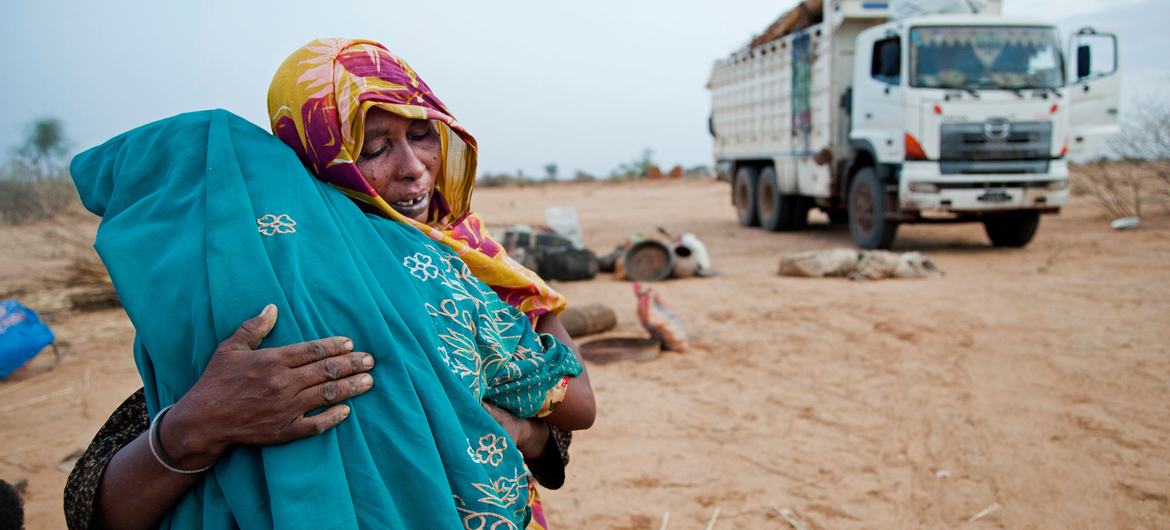
People continue to be displaced by conflict in Sudan.
UN Photo/Albert González Farran
 
People continue to be displaced by conflict in Sudan.
29 October 2023
Peace and Security

The United Nations has welcomed the resumption of talks in Jeddah, Saudi Arabia, to end the months-long conflict between the Sudanese army and its rival paramilitary force which lefts scores dead and sent the northeast African country spiraling into humanitarian crisis.

The Jeddah talks cannot have started soon enough. More than six months since the start of the crisis in Sudan, the humanitarian tragedy in the country continues to unfold unabated,” UN Emergency Relief Coordinator Martin Griffiths in a statement issued on Sunday.

While he welcomed the resumption of the talks and thanks Saudi Arabia for hosting them, Mr. Griffiths underscored the dire situation: “Thousands of people have been killed or injured. One in nine people has fled their homes. Nearly one-third of the population could soon become food insecure.”

Conflict broke out in Sudan in mid-April, when tensions between the Sudanese army and the paramilitary Rapid Support Force erupted into open warfare in the capital, Khartoum, and elsewhere across the east African nation. 

 ‘Colossal’ humanitarian crisis  

The UN emergency relief chief went on to say that Sudan's health system is in tatters, with the specter of disease outbreaks, including cholera, looming. Moreover, a generation of Sudanese children risk missing out on a full education.

Tweet URL

Mr. Griffiths stressed that the humanitarian community is doing everything possible to meet these ever-increasing needs.  

“Since mid-April, we have provided assistance to 3.6 million people, but this represents only 20 p er cent of the people we hope to help,” he explained, noting that humanitarian workers “are paralyzed by fighting, insecurity and red tape, making the operating environment in Sudan extremely difficult.”

This is why these Jeddah talks are critical: We need the Sudanese Armed Forces and the Rapid Support Forces to break the bureaucrat“ic logjam,” he stated.

Mr. Griffiths, who is also the UN Under-Secretary-General for Humanitarian Affairs, added: “We need them to fully adhere to international humanitarian law. We need them to secure safe, sustained and unhindered access to people in need, be it in Darfur, Khartoum or the Kordofans.”

In light of the “colossal humanitarian crisis”, Mr. Griffith said that the UN office he heads up, known as OCHA, will facilitate the humanitarian aspect of these negotiations.

Comprehensive ceasefire needed

Meanwhile, the UN Integrated Transition Assistance Mission in Sudan (UNITAMS) also welcomed the resumption of talks in Jeddah, which are being facilitated by Saudi Arabia, as well as the United States, the African Union and the Intergovernmental Authority on Development (IGAD).

In a press release, the Mission said that it hoped “this new round of negotiations results in the implementation of the Declaration of Commitment to Protect the Civilians of Sudan, signed on May 11, 2023, and in a comprehensive ceasefire, all of which are two crucial factors in alleviating the suffering of the Sudanese people.”

The mission also welcomed current initiatives from a wide range of civilian actors calling for an end to the war, emphasizing the urgent need for a solution that would lead to a resumption of the democratic political transition.


https://news.un.org/en/story/2023/10/1142962


https://creativecommons.org/licenses/by/3.0/legalcode

суббота, 28 октября 2023 г.

Arms Transfers Must Be Transparent, within International Legal Frameworks, Senior Disarmament Official Tells Security Council

9457TH MEETING* (PM)
SC/15468

Arms Transfers Must Be Transparent, within International Legal Frameworks, Senior Disarmament Official Tells Security Council

Several Delegates Call Repeated Meetings by Russian Federation Distraction from Moscow’s Own Violations

The Security Council discussed the transfer of arms supplies to Ukraine today, with some members voicing concern over potential unwarranted diversion of weaponry and calling for effective measures to prevent this, while speakers also said that the meeting’s call was a distraction from the Russian Federation’s own procurement of weapons from other countries.

The Director and Deputy to the High Representative for Disarmament Affairs, Adedeji Ebo, said that amid expanding provision of arms and ammunition to Ukraine, their transfer must be transparent and within international legal frameworks and have provisions for controls to prevent their irregular transfer.

“The supply of weapons and ammunition into any armed conflict situations raises significant concerns about the potential escalation of violence and the risks of diversion,” he said.  Measures to counter such diversion “will be key to post-conflict recovery and regional security and stability, as well as to conflict prevention in other regions,” he added.

He urged Member States to utilize various United Nations instruments to increase transparency, such as the UN Register of Conventional Arms, and to prevent diversion through instruments such as the Arms Trade Treaty, the Firearms Protocol, the Programme of Action on Small Arms and Light Weapons and its International Tracing Instrument.

Briefing the Council, political satirist and civil rights activist, Randy Credico, relayed what he had witnessed of the conflict in Ukraine and his consequent concerns about more arms entering the country.  He recounted being in Donetsk, moments after a university had been shelled by a United States-made missile.  “They hit the university and as emergency medical services carry out the wounded and dead, they shell the place again 20 minutes later, causing maximum damage to those who are helping.”  He recalled United States President Joseph R. Biden’s recent address on “the attacks in Israel and the genocide in Gaza”, in the middle of which he was “hustling Americans to shell out more money so they can kill more civilians to create more jobs”.

In the ensuing debate, several delegates criticized the Russian Federation for calling the meeting and for receiving arms from Iran and the Democratic People’s Republic of Korea.  Concern was also raised whether arms transfers to Ukraine are correctly controlled and monitored.

The representative of the Russian Federation, holding up military fragments from several shells, detailed how each was recovered and its country of origin, pointing to them as physical evidence of the West’s supply of weapons that are actively used to strike civilian infrastructure.  Detailing the impact of Ukrainian strikes, including against hospitals and Donetsk neighbourhoods, he said all that is a tragic consequence of the massive supply of lethal weapons.  The United States and its allies are eagerly increasing military supplies to Ukraine “to weaken Russia” and because of their “most ordinary desire to profit”, he continued.  The Western elites continue to look the other way regarding corruption in Ukraine, he added.

The representative of the United States said the Russian Federation undermines the Council’s credibility when it calls repeated meetings to spread false and misleading accusations regarding the assistance from allies and partners in support of Ukraine’s legitimate self-defence.  Noting the Russian Federation’s expansion of its military partnership with the Democratic People’s Republic of Korea, he condemned Pyongyang for providing Moscow with military equipment to be used to further attack Ukrainian citizens and civilians.

The delegate of the United Kingdom outlined Moscow’s “flouting of its obligations in arms control and disarmament” over the past two decades, which has accelerated since the Russian Federation’s invasion of Ukraine. In Ukraine, he noted that Moscow had sourced weapons from heavily sanctioned States such as Iran and the Democratic People’s Republic of Korea, showing its “scorn for international cooperation to prevent weapons proliferation” as well as its willingness to violate United Nations Security Council resolutions.

Likewise, Japan’s representative said Member States should refrain from supporting the Russian Federation’s aggression either directly or indirectly.  “In this regard, arms transfers from North Korea to Russia which directly violates relevant Security Council resolutions is absolutely unacceptable,” he said. Such transfer would not only exacerbate the situation in Ukraine, but also undermine the non-proliferation regime, he added.  “If Russia is truly concerned about the risks posed by the influx of weapons, it should immediately stop the war it started.”

Gabon’s delegate urged a redoubling of efforts to implement international commitments on disarmament, and nuclear non-proliferation.  The representative of the United Arab Emirates highlighted the need for effective oversight by national authorities of weapons transfers.  He welcomed efforts for stronger arms control in Ukraine and across the region, in particular those stopping any potential diversion of weapons.

Ukraine’s delegate condemned the Russian Federation’s misuse of the Council’s toolbox to divert the 15-member organ’s attention from the war crimes and crimes against humanity Moscow has committed.  “What is the value of this discussion?” he asked. If Moscow wants to use that Court’s rulings to support its position, it must start to implement its decisions concerning the Russian Federation itself, particularly the 16 March 2022 order of the International Court of Justice.  He noted that Moscow has received Iranian drones for more than a year and is now “ready to kneel down before the North Korean regime to beg for additional weapons and munition to continue its war of aggression against Ukraine”.

THREATS TO INTERNATIONAL PEACE AND SECURITY


https://press.un.org/en/2023/sc15468.doc.htm


https://creativecommons.org/licenses/by/3.0/legalcode

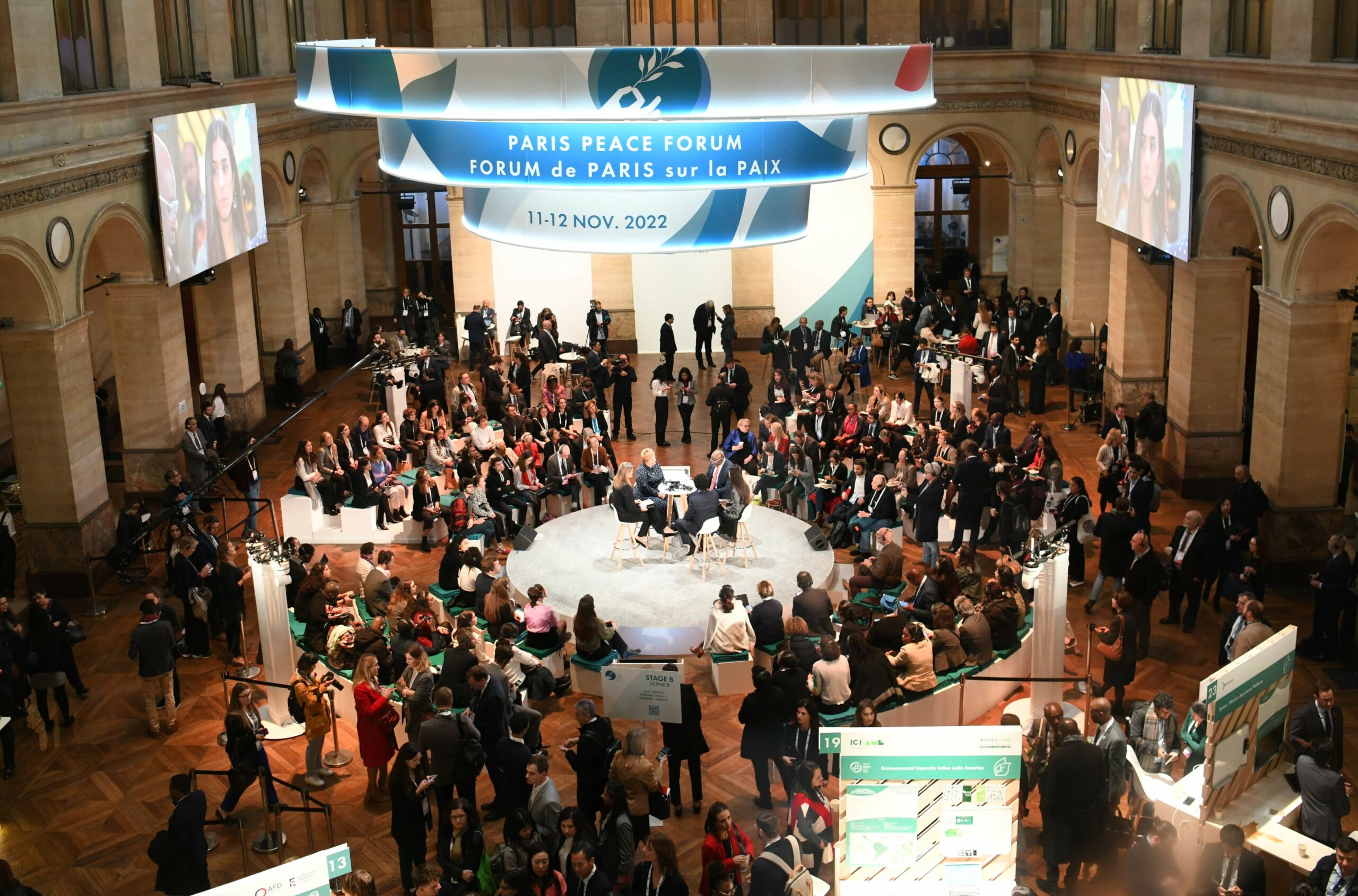
Paris Peace Forum2023


10 11 Nov. 2023


#ParisPeaceForum2023

Le thème de cette année

CONSTRUIRE ENSEMBLE DANS UN MONDE DE RIVALITÉ

Dans un monde dominé par une rivalité croissante entre les États-Unis et la Chine, il est plus urgent que jamais de trouver des terrains d’entente sur la gouvernance des espaces communs et des biens publics mondiaux dans des domaines tels que le changement climatique, l’espace extra­atmosphérique ou les minéraux critiques. Faciliter le dialogue, créer des coalitions orientées vers l’action et définir des normes ou des prénormes est la contribution spécifique du Forum de Paris sur la Paix aux défis urgents de notre époque.

Priorités 2023

Protéger la planète et les peuples

Garantir la confiance et la sécurité dans le monde numérique

Réduire les inégalités et accélérer la réalisation des ODD

Construire la paix et un monde plus sûr


https://parispeaceforum.org/fr/

https://creativecommons.org/licenses/by/3.0/legalcode

UN General Assembly adopts Gaza resolution calling for immediate and sustained ‘humanitarian truce’

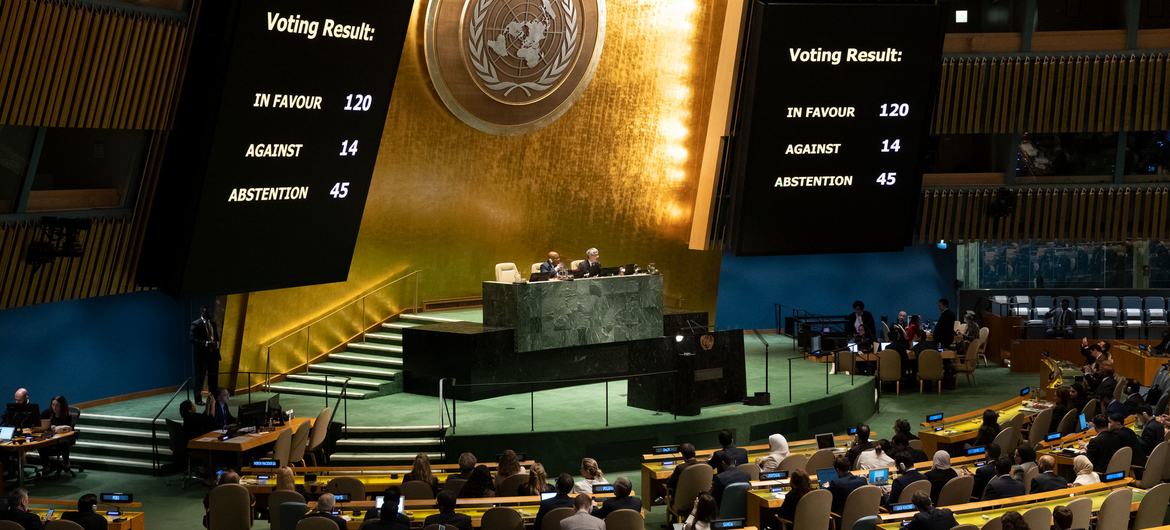
Members of the United Nations General Assembly vote on a resolution at the resumed 10th Emergency Special Session meeting on the situation in the Occupied Palestinian Territory.

UN Photo/Evan Schneider
 
Members of the United Nations General Assembly vote on a resolution at the resumed 10th Emergency Special Session meeting on the situation in the Occupied Palestinian Territory.
26 October 2023
Peace and Security

The United Nations General Assembly on Friday adopted a resolution calling for an “immediate, durable and sustained humanitarian truce” between Israeli forces and Hamas militants in Gaza. It also demands “continuous, sufficient and unhindered” provision of lifesaving supplies and services for civilians trapped inside the enclave, as news reports suggest Israel has expanded ground operations and intensified bombing campaign.

5: 30 PM

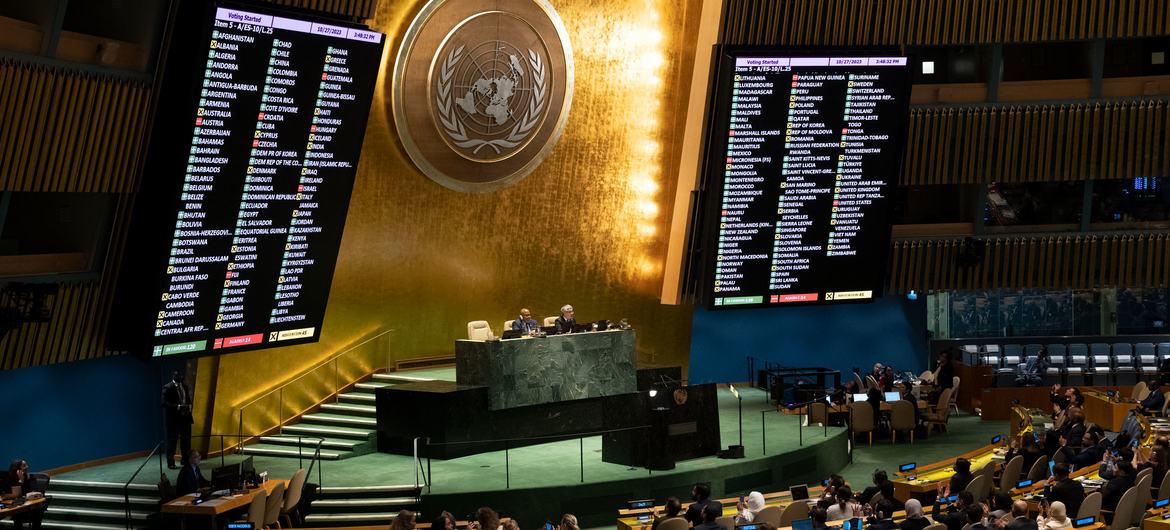
We'll be ending our live coverage of this emergency session shortly, which saw the adoption of a non-binding Jordanian resolution on Friday afternoon in New York by a large majority of Member States, with 120 votes in favour, 14 against and 45 abstentions.

It marks the first formal response of the United Nations to the escalation of violence in Israel and Palestine since the Hamas terror attacks of 7 October, after the Security Council failed on four occasions to reach consensus on any action.

Friday’s key things you need to know:

DAY 2 HIGHLIGHTS

  • Assembly adopted a major resolution, calling for an “immediate, durable and sustained humanitarian truce leading to a cessation of hostilities”; it was proposed by Jordan and backed by over 45 Member States
  • An amendment, proposed by Canada and backed by over 35 Member States, including the US, seeking an explicit condemnation of Hamas, did not pass, failing to get two-thirds support
  • Countries put forward arguments for and against the amendment, and explained their positions on the adopted resolution
  • Earlier in the day, several countries took the floor, reiterating the impact of the crisis on civilians and underscoring the imperative to ensure aid finally flows into the enclave as supplies of food, water and fuel reach critically low levels
  • The US declared that after the current crisis is over, “there is no going back to the status quo, as it stood on 6 October”, noting the importance of a two-State solution
  • The Emergency Special Session will continue on Tuesday, with countries continuing their debate 

4:50 PM

Ghana: World must find 'fierce agency' for peace

Ghana’s Ambassador and Deputy Permanent Representative Carolyn Oppong-Ntir, said her delegation voted in favour of the resolution because, among other reasons, the humanitarian crisis could not be ignored.

“We have a responsibility as an international community to help end the heart-breaking tragedies” in Israel and Palestine, she said. “Out of this tragedy, we must find the fierce agency to support the two parties to resume and conclude a peace agreement” and advance the two-State solution. 

She said her country - a current Security Council member - voted in favour of the resolution because, among other reasons, the humanitarian crisis could not be ignored.

“We have a responsibility as an international community to help end the heart-breaking tragedies” in Israel and Palestine, she said. “Out of this tragedy, we must find the fierce agency to support the two parties to resume and conclude a peace agreement” and advance the two-State solution.

4:38 PM

India calls for de-escalation

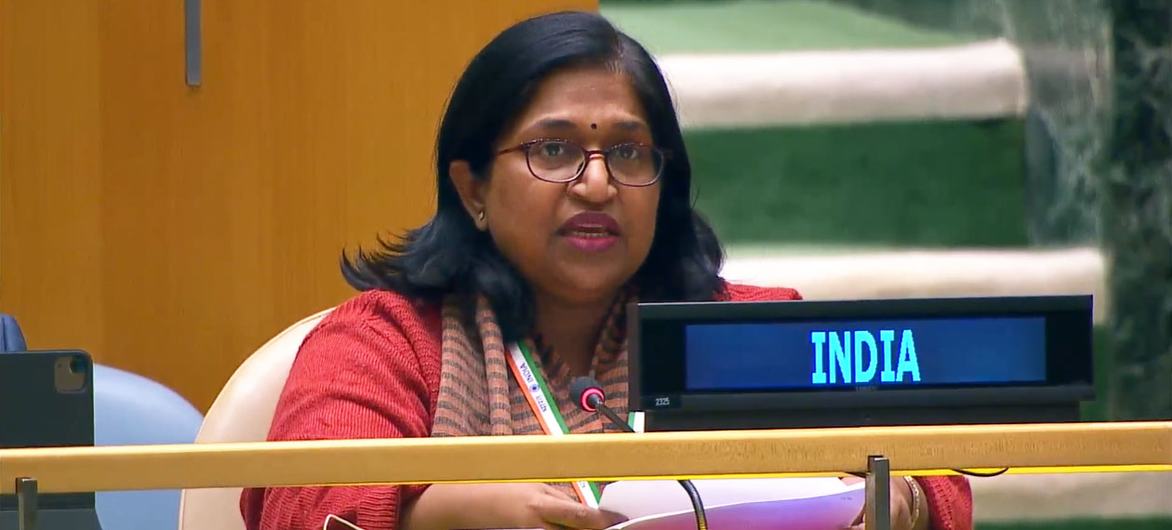
Ambassador Yojna Patel of India speaks in response to the resolution being adopted at the resumed 10th Emergency Special Session meeting on the situation in the Occupied Palestinian Territory.
United Nations
 
Ambassador Yojna Patel of India speaks in response to the resolution being adopted at the resumed 10th Emergency Special Session meeting on the situation in the Occupied Palestinian Territory.

India’s Deputy Permanent Representative Ambassador Yojna Patel said the 7 October terror attacks are shocking, calling for the immediate release of the hostages. Casualties in Gaza are a continuing concern and the crisis needs to be addressed, she said.

India abstained in the resolution vote. 

Welcoming ongoing efforts and reiterating support for the two-State solution, she urged the parties to de-escalate the violence and work towards resuming substantial peace negotiations.

4:23 PM

Israel: Day of 'infamy'

Gilad Erdan, Ambassador of Israel to the UN, said in response to the resolution passing that “today is a day that will go down in infamy”.

“We have all witnessed that the UN holds not even one ounce of legitimacy,” he said. “The UN is committed to ensuring further atrocity. According to the family of nations, Israel has no right to defend itself.”

There are no talks or discussions to be held with Hamas, he said, adding that Israel will not sit idly by to let them commit atrocities again. The resolution does not mention Hamas once, as if the war started on its own.

“What is going on here?” he asked, questioning whether the goal was to tie Israel’s hands. “The only way to destroy Hamas is to root them out. Why are you not holding Hamas accountable?”

“We know there is no humanitarian crisis in accordance with international humanitarian law,” he said, noting that every statistic comes from Hamas about information about Gaza.

Anyone interested in preventing violence should call on Hamas to lay down their arms, turn themselves in and return all hostages, he said.

“If this were to happen, the war would end immediately,” he said. “This is a dark day for the UN and mankind. Israel will defend itself and will do what must be done to eradicate Hamas’ capabilities and bring the hostages home.”

4:18 PM

France: Security Council must act

France’s Ambassador Nicolas de Rivière speaking after the resolution passed, said his delegation voted in favour, as “nothing justifies the killing of civilians”.

“We have to work collectively to set up a humanitarian truce because the situation in Gaza is catastrophic,” he said, noting that France has already sent an aid vessel. “The Assembly must call for the release of hostages.”

However, the adoption of this resolution cannot replace the Security Council’s efforts nor the decisions that the organ must now adopt, he said, expressing hope that the Council can reach a decision.

“We have a duty to prevent a worsening of the situation,” he said. “The only viable solution is a two-State solution.”

3:48 PM

Resolution adopted

The Jordanian resolution has been adopted by the General Assembly, with 120 votes in favour, 14 against and 45 abstentions.

Another reminder of the key provisions of the resolution now adopted, which is a non-binding expression of the majority view of UN Member States.

It marks the first formal response of the United Nations to the hostilities since the Hamas terror attacks of 7 October, after the Security Council failed on four occasions to reach consensus on any action.

Check out our explainer here, on how emergency special sessions of the Assembly work, and WHY they matter.

General Assembly adopts resolution on Protection of Civilians and Upholding Legal and Humanitarian Obligations in Gaza.
UN Photo/Evan Schneider
 
General Assembly adopts resolution on Protection of Civilians and Upholding Legal and Humanitarian Obligations in Gaza.

The resolution does not make specific mention of the militant group which controls Gaza, Hamas, one of the key issues which led to a Canadian amendment being proposed.

The resolution calls for an “immediate, durable and sustained humanitarian truce”, and demands all parties comply with international humanitarian law and “continuous, sufficient and unhindered” provision of essential supplies and services into the Gaza Strip.

It also calls for the “immediate and unconditional release” of all civilians held captive as well as demanding their safety, well-being and humane treatment in compliance with international law.

3:45 PM

Canadian amendment fails to get enough support

The votes on the amendment were 85 for, 55 against, with 23 abstentions, so it failed to get the required two-thirds majority.

3:45 PM

Israel must be named too: Pakistan

In a powerful speech rebutting Canada's explanation, Pakistan’s ambassador Munir Akram said that if Canada was being fair in its amendment it would agree to name Israel as well as Hamas.

Not naming either side was the best choice he said, as the Jordanian resolution does.

“Israel needs to be named too, if you are to be fair and equitable and just”, he said.

We all know who started this. It is 50 years of Israeli occupation and the killing of Palestinians with impunity, he said.

Israel can’t face the truth or face justice. The Israeli occupation is the original sin, not what happened on 7 October.

3: 28 PM

Canada: Terror attacks must be recognized

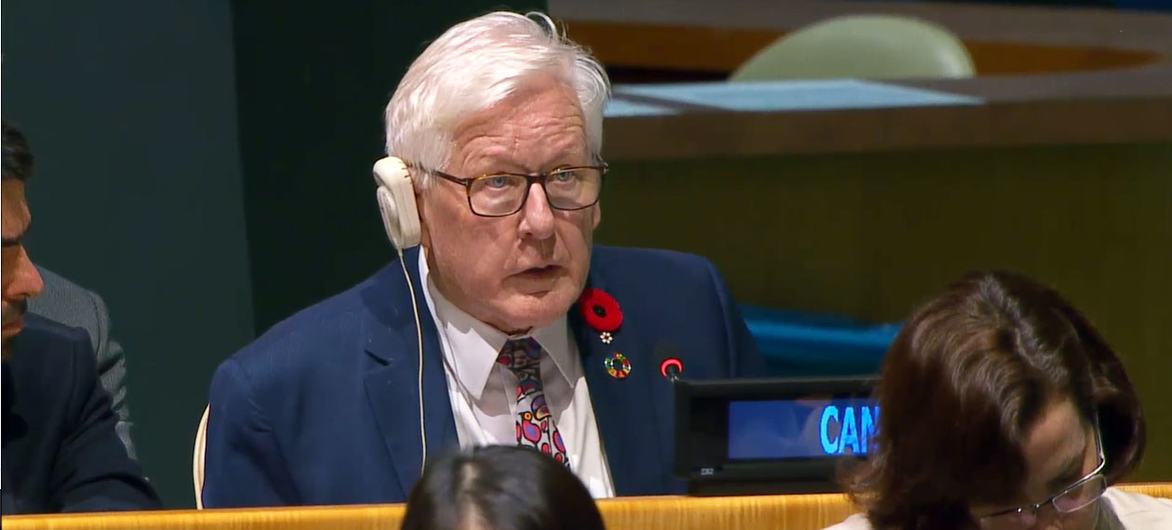
Canada’s Ambassador Bob Rae said the Assembly is meeting to show Israelis and Palestinians that any life lost is a tragedy. Yet, the critical reason for being here has been forgotten. On 7 October, Hamas wreaked terror on Israel. Since then, more that 7,000 Palestinians have been killed.

“We can see the need for a rapid response,” he said.

Unfortunately, Canada cannot support the current text, he said, adding that the Assembly cannot act without recognizing the 7 October terrorist attacks and the hostage taking.

If the proposed amendment is not adopted, the Assembly will not have recognized one of the world’s worst terrorist attacks and “we will all have to live with that failure as the tragedy continues to unfold,” he said.

Ambassador Bob Rae of Canada speaks ahead of the vote at the resumed 10th Emergency Special Session meeting on the situation in the Occupied Palestinian Territory.
United Nations
 
Ambassador Bob Rae of Canada speaks ahead of the vote at the resumed 10th Emergency Special Session meeting on the situation in the Occupied Palestinian Territory.

If the proposed amendment is not adopted, the Assembly will not have recognized one of the world’s worst terrorist attacks and “we will all have to live with that failure as the tragedy continues to unfold,” he said.

This amendment “names what has to be named”, he said. Emphasizing that the crisis must not spread through the region, he reiterated that Canada supports the two-State solution and continues to provide humanitarian aid for Gaza.

3:24 PM

'Simple yet vital goal'

Jordan’s ambassador Mahmoud Daifallah Hmoud spoke ahead of the voting, saying that the "urgent need for an immediate ceasefire cannot be overstated."

He said that the immeasurable suffering of the Palestinian people was destined to leave a lasting mark on generations to come.

He said that delegates were "witnessing a ground invasion by Israel as we speak" and failure four times by the Security Council to reach any consensus for action.

He said the was a "simple yet vital goal" of their resolution "that aligns with the very purpose for which the UN was established, peace and compliance with international law."

3:14 PM

With a palpable buzz among delegates inside the UN General Assembly Hall, the afternoon session is underway. 

Seven more countries have become co-sponsors of the Jordanian resolution in the past few hours and 36 more countries have become co-sponsors of the Canadian amendment.

2:45 PM

What does the resolution say?

Just a reminder as the voting looms at 3 PM of what the resolution and the Canadian amendment - which will be considered first - actually calls for...

The Jordanian resolution has the backing of more than 40 Member States, including Egypt, Oman and UAE.

It calls for an “immediate, durable and sustained humanitarian truce”, and demands all parties comply with international humanitarian law and “continuous, sufficient and unhindered” provision of essential supplies and services into the Gaza Strip.

It also calls for the “immediate and unconditional release” of all civilians held captive as well as demanding their safety, well-being and humane treatment in compliance with international law.

The resolution makes no specific mention of the Hamas terror attacks of 7 October.

Canada's amendment condemns Hamas

An amendment has been proposed by Canada that “unequivocally rejects and condemns the terrorist attacks by Hamas” in Israel starting 7 October and the taking of hostages.

Several countries including the US, have spoken out forcefully in favour of the amendment this morning. 

Draft resolutions do not represent the official position of the General Assembly until adopted.

13:08 PM

The morning session has ended and the General Assembly will reconvene at 3 PM to consider the draft resolution and any related amendments.

After voting, the debate will resume with dozens more countries due to take the podium.

12:51 PM

UK: Take all steps possible to protect civilian life

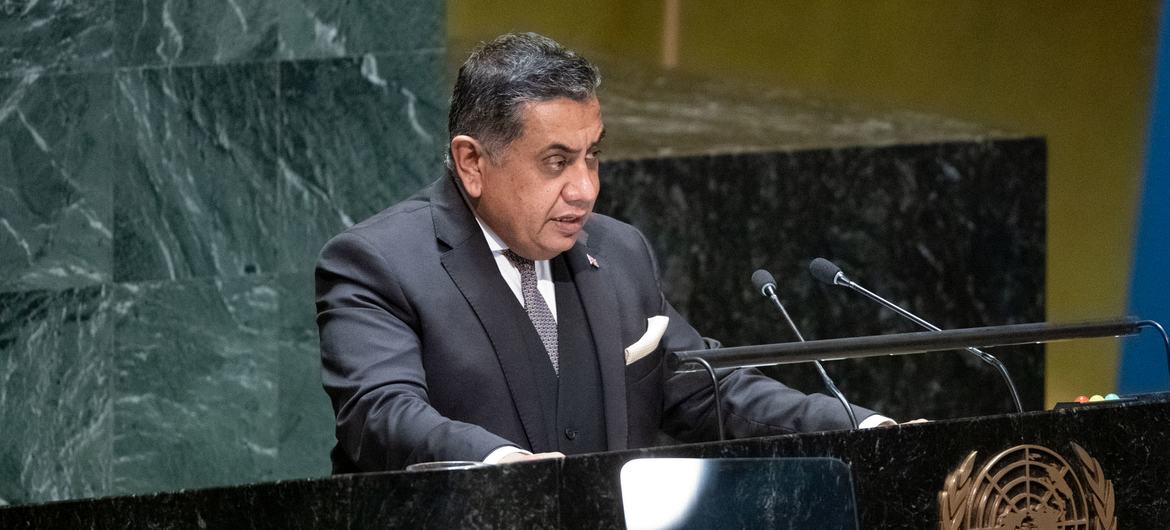
The United Kingdom’s Minister for the Middle East, Lord Tariq Ahmad, began by offering condolences to UN staff and medics who have lost their lives under bombardment in Gaza, together with the victims of the 7 October attacks in Israel and the families of innocent Palestinians killed.

“Every life that is lost is a tragedy. Not just for a family in Israel, Gaza or the West Bank but for all of humanity.”

He called on all parties to respect international humanitarian law, calling for the unconditional release of hostages and unhindered humanitarian access.

Lord Ahmad said it was urgent to scale up aid through the Rafah crossing, and praised the UN Secretary-General and all staff who are working tirelessly to ensure aid reaches those in need.

He said humanitarian pauses were essential to allow aid through.

United Kingdom’s Minister for the Middle East, Lord Tariq Ahmad, addresses the resumed 10th Emergency Special Session meeting on the situation in the Occupied Palestinian Territory.
UN Photo/Evan Schneider
 
United Kingdom’s Minister for the Middle East, Lord Tariq Ahmad, addresses the resumed 10th Emergency Special Session meeting on the situation in the Occupied Palestinian Territory.

Standing against terror

The UK stands with Israel in the face of Hamas terror and Israel’s right to self defence, he underlined, but stressed this must be within international law. 

Stating a "personal view", as a Muslim, the British peer said “terrorism is evil” and every act of terrorism is against humanity “and we must condemn it unequivocally”. 

On this basis, the resolution before the Assembly “should be clearer on this point.”

However, the UK has been equally clear that all steps must be taken to minimize harm and ensure civilian movements are voluntary and safe.

“In this moment of darkness” he said, let’s come together and not lose sight of the promise of a two-State solution to the conflict.

“We in the UK will continue to work closely with all partners in the region and beyond in these efforts because peace must prevail.”

12:39 PM

Brazil: Condemnation for all attacks on civilians

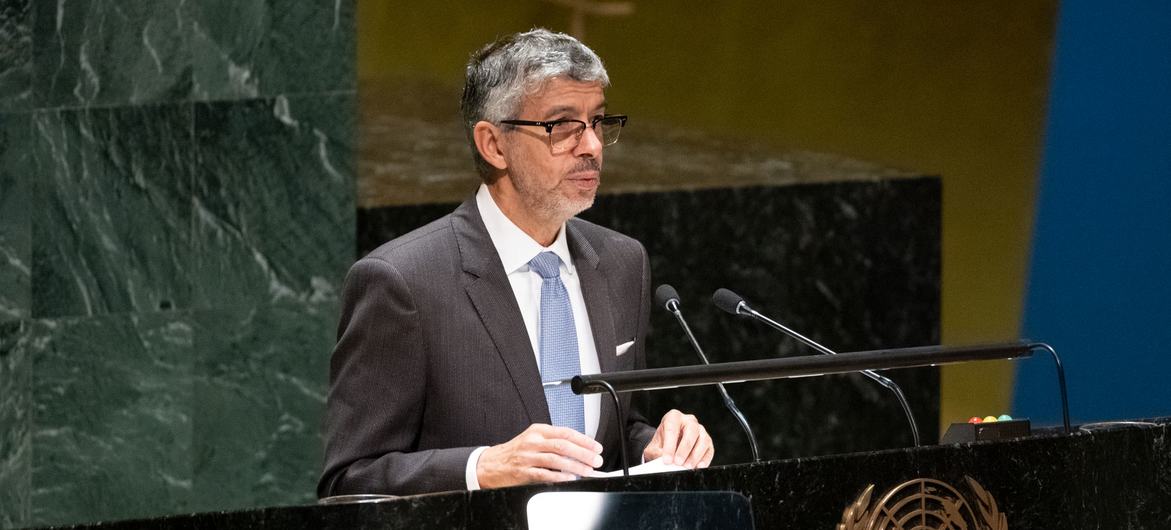
Sérgio França Danese, Ambassador and Permanent Representative of Brazil to the UN, expressed “unequivocal condemnation” of the heinous terrorist attacks by Hamas, including the taking of hostages.

He also “clearly condemned” the attacks that are indiscriminately killing and wounding civilians and destroying homes in the Gaza Strip, depriving them of basic tools for survival.

Mr. França Danese said Brazil, the President of the Security Council for October, welcomed the emergency session after the Security Council failed to adopt any of four draft resolutions on the crisis, including one proposed by his delegation, which drew 12 votes in favour.

The robust support given by Council members to the resolution “indicates that it was a balanced text,” he said, describing the resolution as “solidly rooted” in international humanitarian and human rights law, and “fundamentally committed to the humanitarian imperative.”

12:30 PM

Turkiye: Peace not possible if Palestine aspirations are denied 

Permanent Representative of Türkiye to the United Nations, Sedat Önal said that with a paralyzed Security Council, it is up to the General Assembly to rise to the occasion. Based on principle, Türkiye co-authored the resolution introduced today, which contains the minimum of what we need to put an end to the carnage and ease tensions on the ground.

Targeting civilians and civilian infrastructure will not bring security . Peace will not be possible as long as Palestinians aspirations for freedom, dignity and statehood continue to be denied.  .

11:52 AM

Saudi Arabia: International failures

Abdulaziz M. Alwasil, Ambassador and Permanent Representative of Saudi Arabia to the UN, said that the killing and destruction in the Gaza Strip is not only creating a humanitarian catastrophe but is also having dire consequences and repercussions on the security of the region and the world.

“We have clearly condemned the targeting of civilians by any party, called for a ceasefire, stop to the bloodshed, immediate lifting of the siege, release of hostages, and providing humanitarian assistance and support to those affected,” he said.

Ambassador Abdulaziz M. Alwasil of Saudi Arabia addresses the resumed 10th Emergency Special Session meeting on the situation in the Occupied Palestinian Territory.
UN Photo/Evan Schneider
 
Ambassador Abdulaziz M. Alwasil of Saudi Arabia addresses the resumed 10th Emergency Special Session meeting on the situation in the Occupied Palestinian Territory.

“We also condemned the attempts at forcible displacement and policies of collective punishment against the population in Gaza, including starvation of civilians as a weapon of war,” he added.

Reaffirming the priority should be to work for peace, Ambassador Alwasil called for compliance with international conventions and laws.

He stressed the current crisis was due to the failure on the part of the international community to end Israeli occupation and implement a two-State solution.

“Silence in the face of illegitimate Israeli practices, whether over the past 70 years, or even  recently is what led the region to the current crisis,” he said, warning of a possible spillover of the conflict that would threaten global peace and security. 

11:47 AM

European Union: Humanitarian access essential

The European Union's UN Representative, Olof Skoog, said the EU deeply regretted the use of veto in the Security Council because the crisis requires a strong, timely, united message by the Security Council.

The urgency is to provide safe, rapid, unhindered humanitarian access to populations in need, by all possible means, whether a “corridor” or a “humanitarian pause” - but this must not be exploited by terrorists.

He said the EU is ready to contribute to the resumption of the political process on the basis of a two-State solution and supports the holding of an international peace conference as soon as possible.

He understood the need to reach a consensus in the General Assembly in the absence of a Security Council’s resolution adding that the EU had worked constructively and formulated amendments, to overcome divisions.

11:24 AM

US: 'Omissions of evil' to avoid reference to Hamas or hostages

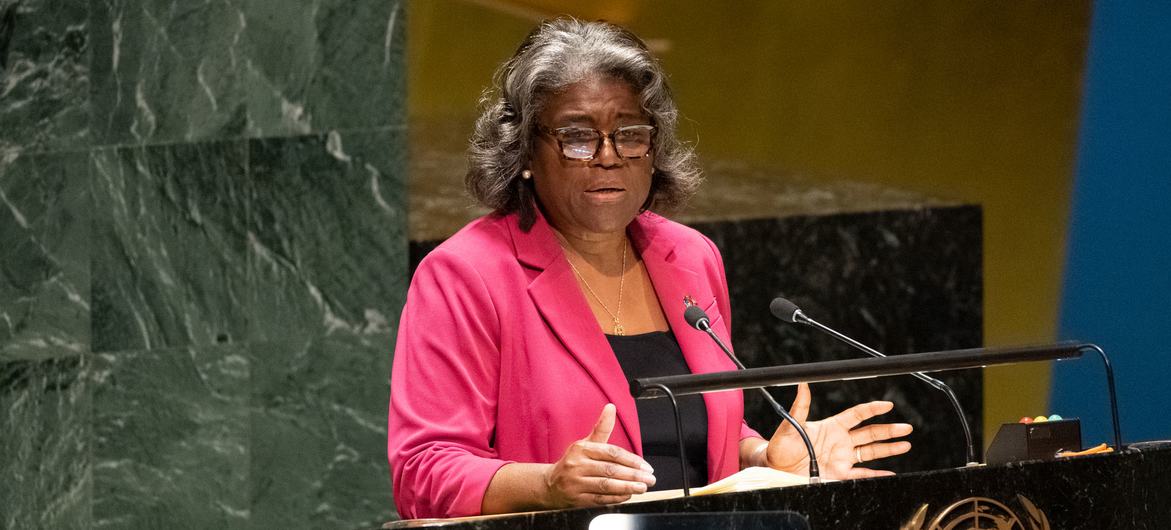
Linda Thomas-Greenfield, Ambassador and Permanent Representative of US to the UN, emphasized that the death, destruction and desperation “playing out before our eyes is enough for anyone to lose faith in humanity.”

Citing “barbaric acts of terror by Hamas”, Ms. Thomas-Greenfield stressed “there is no justification for terror – none whatsoever. You all know that and we must condemn Hamas’ acts of terror.”  

Ms. Thomas-Greenfield said that to the terrorists of Hamas, civilians “are expendable.”

She said Israel was exercising its right and responsibility to defend its people from Hamas, but “it must do so in line with rules of war” and with respect for international humanitarian law.  

Recalling her country’s work to help protect civilian lives and ensure humanitarian assistance into Gaza, she called on all Member States to also alleviate the humanitarian suffering there.

Ambassador Linda Thomas-Greenfield of the United States addresses the resumed 10th Emergency Special Session meeting on the situation in the Occupied Palestinian Territory.
UN Photo/Evan Schneider
 
Ambassador Linda Thomas-Greenfield of the United States addresses the resumed 10th Emergency Special Session meeting on the situation in the Occupied Palestinian Territory.

'Lives hang in the balance'

“Time is of the essence and lives hang in the balance,” she said.

Turning to the resolution, the US Ambassador emphasized that two key words were missing in the draft.

“First is Hamas, it is outrageous that the resolution fails to name the perpetrators of the 7 October terrorist attack,” she said, adding that the other “key word missing is hostage; this resolution makes no mention of the innocent people, including citizens of many of you in this room, who have citizens that are held hostage by Hamas and other terrorist groups.”

“These are omissions of evil, they give cover to and empower Hamas’ brutality, and no Member State should allow that to happen,” she stressed.

Ms. Thomas-Greenfield noted that the US has co-sponsored an amendment by Canada that corrects these omissions, condemning Hamas’ terrorist attacks and calling for immediate and unconditional release of hostages.

“This is the bare minimum we would hope to see on this resolution,” she said, urging all Member States to support the amendment.

“The General Assembly must send a clear message to the world that we stand against all acts of terror and that we stand with all those who are being held hostage,” she added.

Status quo must shift

The Ambassador recalled a statement by President Joe Biden that “there is no going back to the status quo, as it stood on 6 October.”

“We must not go back to a status quo, where Hamas terrorizes Israel and uses Palestinian civilians as human shields, and we must not go back to a status quo where extremist settlers can attack and terrorize Palestinians in the West Bank.”

This means that when this crisis is over, there has to be a vision of what comes next, in our view that vision must be centred around a two-State solution. Getting there will require concerted effort by all of us, she said.

10:58 AM

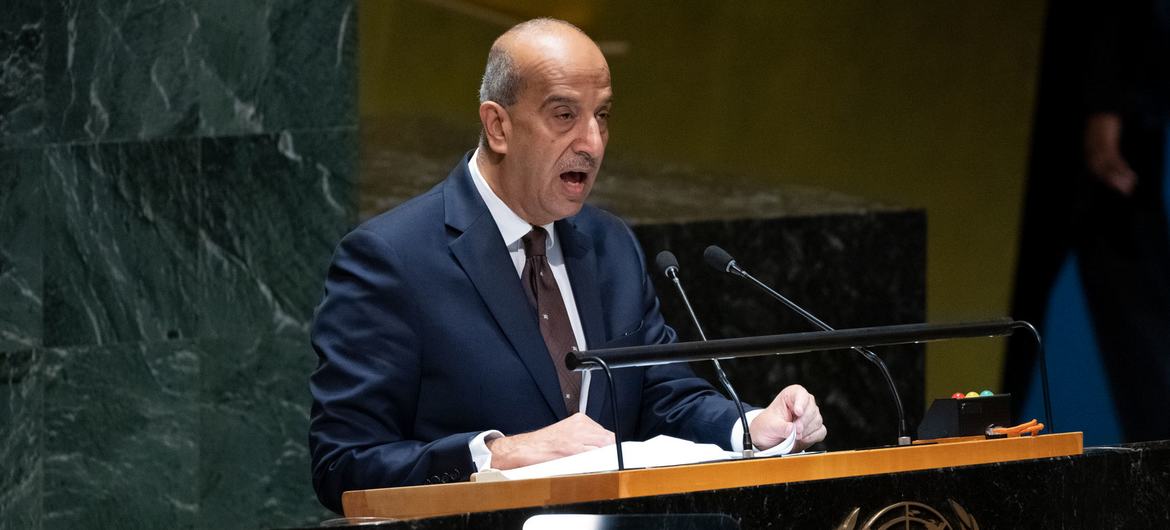
Egypt: ‘Enough is enough’

Silence over the basic rights of Palestinians under fire in Gaza “is no longer an option” said Egypt’s ambassador Osama Mahmoud Abdelkhalek.

He said there had to one standard applied to all, including Palestinians, as opposed to double standards.

“No to targeting civilians, no to terrorism, no to violating international humanitarian law, no to bombarding hospitals and medical centres, no to killing children, no to the siege and no to cutting off all basic necessities of life.”

He said no to forcible displacement and liquidating human rights: “No to genocide – all people are equal.”

Ambassador Osama Mahmoud Abdelkhalek of Egypt addresses the resumed 10th Emergency Special Session meeting on the situation in the Occupied Palestinian Territory.
UN Photo/Evan Schneider
 
Ambassador Osama Mahmoud Abdelkhalek of Egypt addresses the resumed 10th Emergency Special Session meeting on the situation in the Occupied Palestinian Territory.

He said it was key to speak out to not be – quoting an Arab proverb – a “mute devil that does not speak out for the truth.”

“Enough is enough” he said. “We can no longer bear what is happening to the Palestinians.”

Defending the work of the UN in Gaza and its calls for a humanitarian ceasefire, Ambassador Abdelkhalek said that that had nothing to do with supporting terrorist aggression, but was an important first step “to stop the bloodshed.”

He denounced the policy of besieging and starving civilians of the Gaza Strip, saying that denying them water had “no place in the 21st century. They are reminiscent of practices of the Middle Ages.”

He called on the Assembly to demand aid is delivered to Gaza, “without any conditions”, adding that otherwise it would mean “a death sentence for the people of Gaza.”

Displacing Gazans for the third time in history from their land must be “rejected categorically”, he added.

10:50 AM

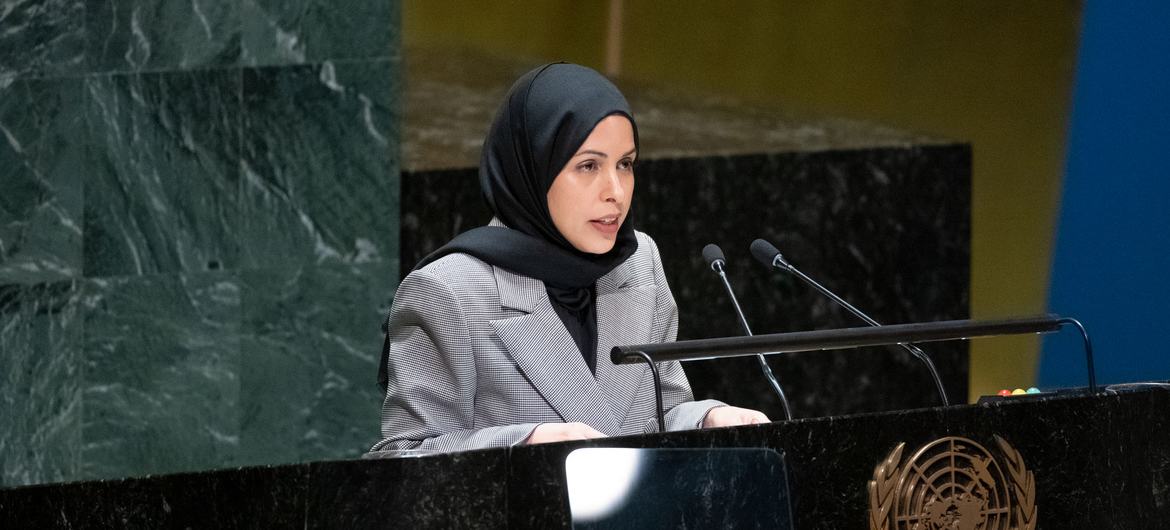
Qatar condemns targetting of civilians

Alya Ahmed Saif Al-Thani, Ambassador and Permanent Representative of Qatar to UN, said the crisis threatens the security of the region and the world, and voiced regret over the failure of the Security Council to act.

She called on all parties to deescalate and move towards a full ceasefire; immediate release of all prisoners, particularly civilians; delivery of humanitarian aid into the Gaza Strip; and opening of safe humanitarian corridors.

Ambassador Alya Ahmed Saif Al-Thani of Qatar addresses the resumed 10th Emergency Special Session meeting on the situation in the Occupied Palestinian Territory.
UN Photo/Evan Schneider
 
Ambassador Alya Ahmed Saif Al-Thani of Qatar addresses the resumed 10th Emergency Special Session meeting on the situation in the Occupied Palestinian Territory.

Ms. Al-Thani reaffirmed her country’s condemnation of targeting civilians, particularly women and children, as well as “our unequivocal rejection of the siege imposed by Israel, the occupying power”, depriving 2.3 million people - half of them children - of their basic needs.

She urged all Member States to support the Jordanian-led draft resolution and to send a “message of hope".

In conclusion, she said “Qatar continues to contribute to the ongoing diplomatic efforts to find a way out, that will stop the bloodshed of our Palestinian brothers and ensure a sustainable political solution in accordance to the well known terms of reference and steer the region away from spiralling into chaos and violence.”

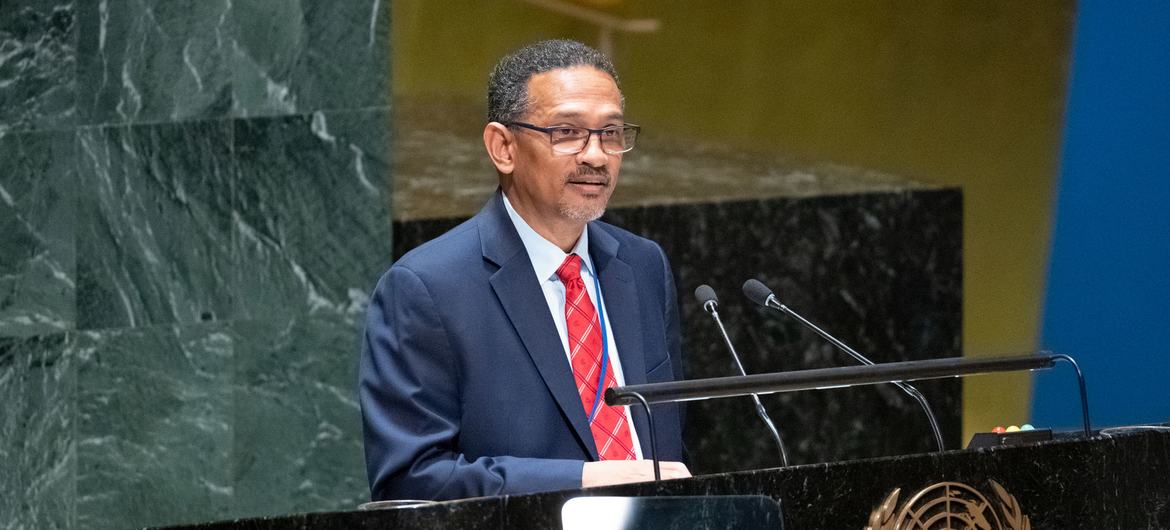
Ambassador Brian Wallace of Jamaica addresses the resumed 10th Emergency Special Session meeting on the situation in the Occupied Palestinian Territory.
UN Photo/Evan Schneider
 
Ambassador Brian Wallace of Jamaica addresses the resumed 10th Emergency Special Session meeting on the situation in the Occupied Palestinian Territory.

Jamaica: Devasting consequences of escalation

Brian Wallace, Jamaica's Permanent Representative who spoke for Caribbean Community CARICOM, said that If we do not immediately put an end to conflict, it could escalate into a wider regional war.

He expressed concerns about the implications for international stability, with devastating consequences, particularly for small vulnerable island states such as those in CARICOM, which are "already struggling to overcome multi-faceted challenges.” 

“Let us recognize once and for all the utter futility of war, violence and terror,” he said, reaffirming CARICOM's continued support for UN Security Council resolution 242, calling for accelerated efforts for a peaceful and lasting resolution to the conflict. 

10:30 AM

Venezuela: End 'inflammatory rhetoric'

Taking the floor first on Friday, Joaquín Alberto Pérez Ayestarán, Ambassador and Deputy Permanent Representative of Venezuela, also spoke on behalf of the Group of Friends in Defense of the Charter of the United Nations.

He called for an immediate ceasefire and end to all hostilities directed towards civilians and civilian infrastructure, including hospitals, refugee centres and food warehouses.

“We also call for restraint and urge an end to all inflammatory rhetoric and dehumanizing language, which in no way serves ongoing political and diplomatic efforts to deescalate...and on the contrary only further stokes tension and violence endangering thousands of innocent lives,” he said.

On behalf of the Group, he called on the Security Council to urge Israel to heed the latest calls by the UN Secretary-General including sticking to the principles of the UN Charter, the Geneva Conventions, and relevant international law.

10:25 AM

There's no objection to holding a vote at 3 PM. Venezuela is now taking its turn to speak at the podium.

The Assembly also decided by general consent that for the adoption of any draft resolution, and any amendments to it, a two-thirds majority will be required.

10:20 AM:

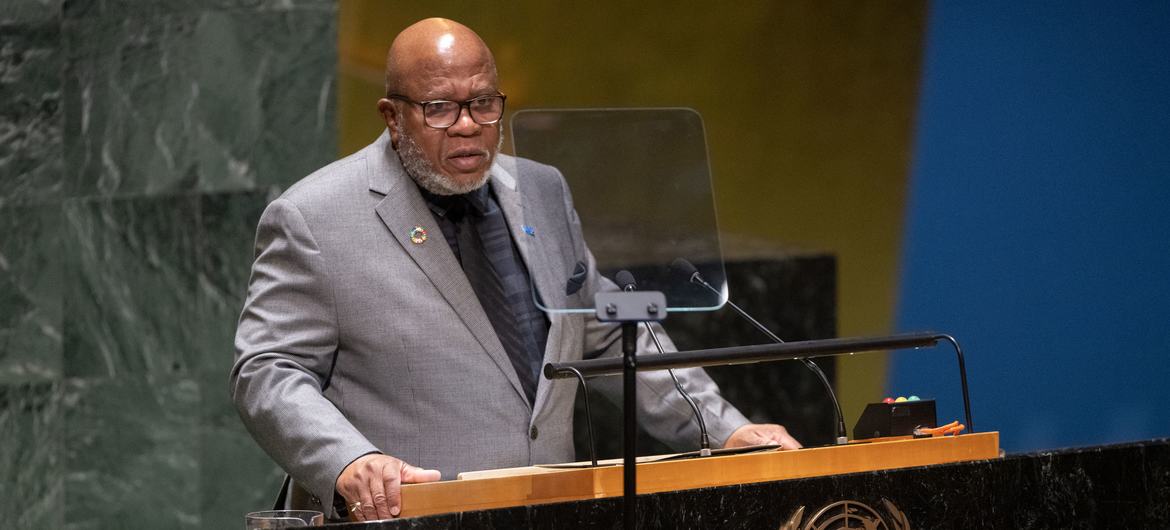
The President of the General Assembly Dennis Francis has taken his seat and gavelled the special session to order. The Jordanian ambassador is making a point of order. 

He's calling for the suspension of the debate at 3 PM today, to initiate “immediate action” on their resolution.

10:06 AM

Delegates are gathering in the gilded General Assembly Hall for a long day ahead.

A dozen of the 110 speakers due to take the floor spoke on Thursday and we’ll continue coverage here on Friday for day two from 10 AM New York time.

The emergency session is expected to vote on a Jordanian-backed draft resolution on the crisis, which among others calls for an “immediate, durable and sustained humanitarian truce”, all parties comply with international law, and continuous and unhindered aid into the Gaza Strip.

Venezuela is expected to take the floor first first on Friday, followed by Jamaica. Qatar, Egypt and the United States are also expected to be among the early speakers. 

DAY 2

09:00 AM

The draft resolution

The Jordanian-led draft resolution on the crisis is expected to be put to a vote at the end of the emergency session which may extend beyond Friday. It has the backing of over 40 Member States, including Egypt, Oman and UAE.

Key issues in the draft include calls for an “immediate, durable and sustained humanitarian truce”, as well as “demands” that all parties comply with international humanitarian law and for “continuous, sufficient and unhindered” provision of essential supplies and services into the Gaza Strip.

It also calls for the “immediate and unconditional release” of all civilians held captive as well as demanding their safety, well-being and humane treatment in compliance with international law.

An amendment has been proposed by Canada that “unequivocally rejects and condemns the terrorist attacks by Hamas” in Israel starting 7 October and the taking of hostages.

Draft resolutions do not represent the official position of the General Assembly until adopted.

Voting at the UN General Assembly

At the General Assembly, the 193 Member States each have one vote, and in contrast with the Security Council, there are no vetoes.

Decisions of the Assembly on important questions are made by a two-thirds majority of the members present and voting. These questions include: recommendations with respect to the maintenance of international peace and security, or other subjects defined under rule 83 of the General Assembly Rules of Procedures

Decisions on questions other than those provided for in rule 83, including the determination of additional categories of questions to be decided by a two-thirds majority, are made by a majority of the members present and voting.

The phrase “members present and voting” means members casting an affirmative or negative vote. Members which abstain from voting are considered as not voting.

Permanent Observers of the UN, the Holy See and the State of Palestine do not have a say in decisions of the General Assembly. 


DAY 1 HIGHLIGHTS

  • The session convened under the “Uniting for Peace” mandate, empowering the Assembly to act when the Security Council is deadlocked over a critical matter of international peace and security
  • Assembly President Dennis Francis called for an immediate and unconditional humanitarian ceasefire and the opening of aid corridors to save lives
  • The State of Palestine spoke first, making a powerful appeal to stop the killing for the sake of “all those who can be saved”
  • Israel spoke next in another powerful address, describing the brutality of Hamas attacks on Israeli civilians and others, stressing that its siege of Gaza and war against the militant group is to ensure that such “depravity and atrocity never occurs again”
  • Jordan, on behalf of the Arab Group, said it will table a resolution to “make a stand for peace”, after Security Council’s repeated failure to reach any consensus

1:03 PM

The President of the General Assembly Dennis Francis brought Thursday's emergency session to a close saying it would reconvene at 10 am on Friday.

For a full story tying together all the highlights of the first day of the session, visit our Meetings Coverage page here.

Many key countries with a stake in the region have yet to take the iconic podium in the Assembly Hall, and tomorrow's speakers' list will likely see the session last through the entire day. 

For an explainer on how the Security Council and General Assembly work in times of acute international crisis and what happens when no agreement on action can be reached, check out our piece here.

12:47 PM

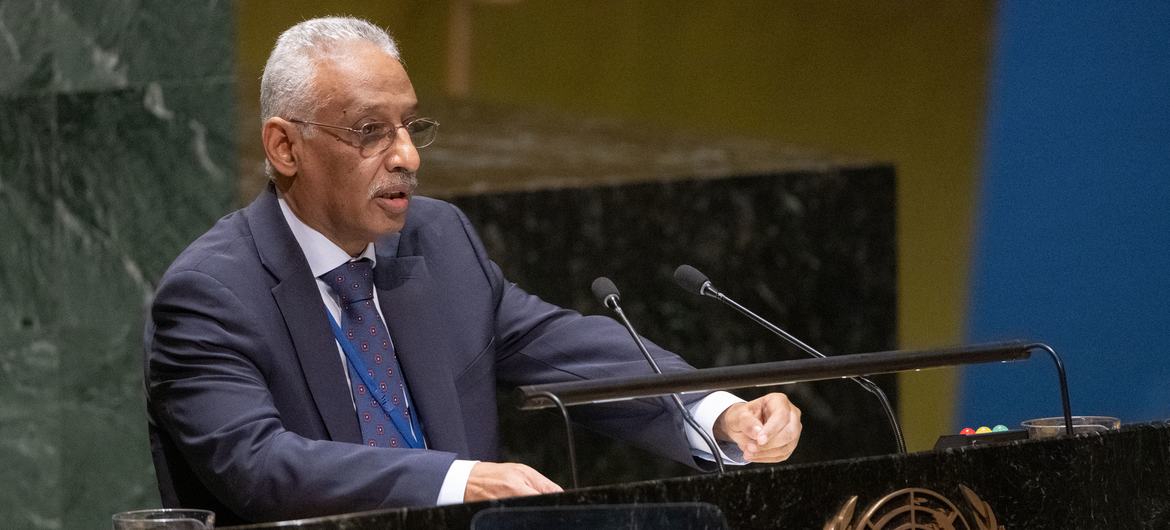
Mauritania bemoans lack of consensus

Ambassador Sidi Mohamed Laghdaf of Mauritania addresses the resumed 10th Emergency Special Session meeting on the situation in the Occupied Palestinian Territory.
UN Photo/Manuel Elías
 
Ambassador Sidi Mohamed Laghdaf of Mauritania addresses the resumed 10th Emergency Special Session meeting on the situation in the Occupied Palestinian Territory.

Sidi Mohamed Laghdaf, Ambassador of Mauritania to UN, spoke on behalf of the Organization of Islamic Cooperation saying the absence of any moral, legal, or political consensus has only emboldened the occupying power to carry on with impunity its illegal policy of colonial settlement and annexation.

He pointed to Israel's years-long blockade, forced displacement of Palestinian civilians, systematic ethnic cleansing, organized acts of terrorism, and desecration of holy places, including Jerusalem's Al-Aqsa Mosque.

He added that Israel was persisting with its denial of the violation of the inalienable right of people to self-determination and independence. This unacceptable situation must be brought to an end, he said.

11:51 AM

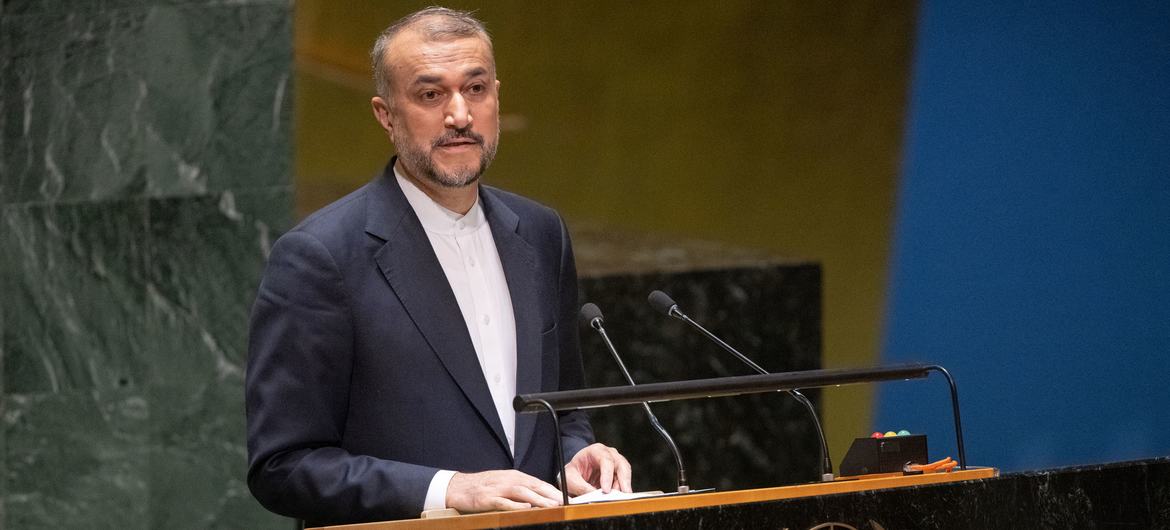
Iran slams 'genocide'

Hossein Amir-Abdollahian, Minister of Foreign Affairs of Iran, said that it has been three weeks that the international community has been a witness to the “war crime and genocide of the occupying Israeli regime in Gaza and the West Bank of Palestine.”

Foreign Minister Hossein Amir-Abdollahian of Iran addresses the resumed 10th Emergency Special Session meeting on the situation in the Occupied Palestinian Territory.
UN Photo/Manuel Elías
 
Foreign Minister Hossein Amir-Abdollahian of Iran addresses the resumed 10th Emergency Special Session meeting on the situation in the Occupied Palestinian Territory.

He said that the US and several European countries sided with Israel and they refer to the Palestinian liberation movement as "terrorists”.

“Unfortunately this is the state of our world today. This is the situation of the Security Council, which was supposed to try to establish world peace and security,” he said.

Mr. Amir-Abdollahian called on the US to work for peace and security and not war against people, women and children, stating “instead of sending rockets, tanks and bombs, to be used against Gaza, the United States should stop supporting genocide in Gaza and Palestine.”

Hamas ready to release civilian hostages

“I say frankly to the American statesmen who are now managing the genocide in Palestine, that we do not welcome the expansion of war in the region, but I warn if the genocide in Gaza continues, they will not be spared from this fire,” he stressed.

“It is our home and West Asia is our region, we do not compromise with any party and any side, and we have no reservation when it comes to our homes’ security.”

He also noted that according to Iranian negotiations, Hamas is ready to release civilian prisoners, on the other hand the international community should support the release of 6,000 Palestinians held in Israeli prisons.

11:28 AM

We must stand for peace: Jordan

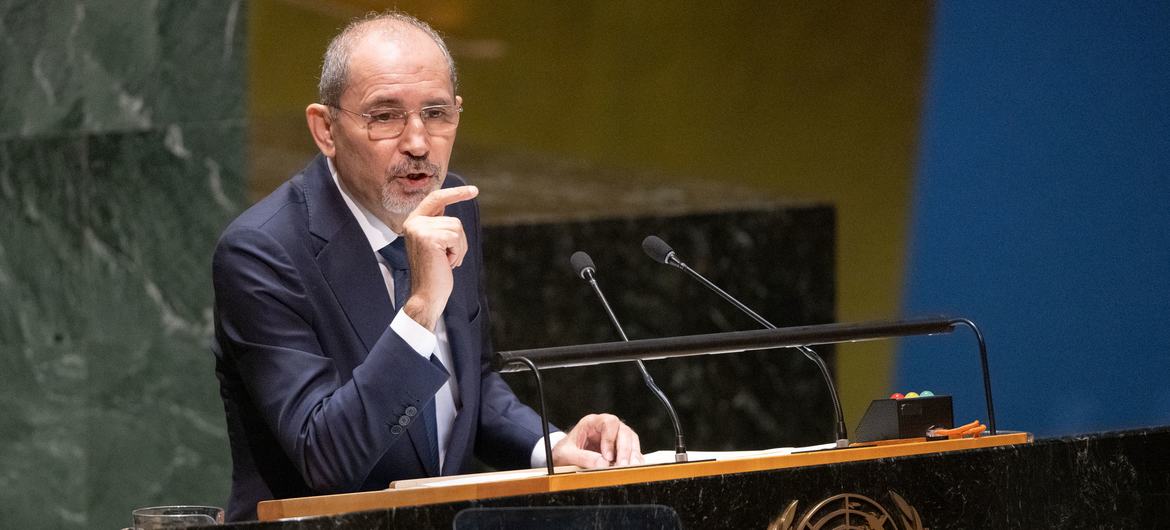
On behalf of the Arab Group, Jordan’s Deputy Prime Minister Ayman Safadi said “there is no room for grey areas”.

Foreign Minister Ayman Safadi of Jordan addresses the resumed 10th Emergency Special Session meeting on the situation in the Occupied Palestinian Territory.
UN Photo/Manuel Elías
 
Foreign Minister Ayman Safadi of Jordan addresses the resumed 10th Emergency Special Session meeting on the situation in the Occupied Palestinian Territory.

“We must stand for peace, our human values and the UN Charter,” he said. “History will judge us. Say no to war. Say no to the killing. Call out war crimes.”

As the killing continues, he said the Israeli Government have cabinet members that call for “wiping out Palestinians from the face of this Earth”.

“Israel is making Gaza a hell on Earth,” he said. “The trauma will haunt generations to come.”

Israel must uphold values, he said. “The right to self-defence is not a right to impunity; Israel cannot remain above the law,” he said. “Let the guns go silent and let the will to live and let live prevail. Let’s restore faith in the peace process as the only path to ending this conflict once and for all.”

Mr. Safadi said Jordan, on behalf of the Arab Group, will table a draft resolution after the UN Security Council failed to do so again on Wednesday.

“Vote for it; make a stand,” he said.

“Let’s make a collective cry, a cry out against more bloodletting,” he said. “Let’s unite for peace.”

“Make a stand for peace, make a stand for life, make it clear, make it firm,” he said, calling for a moment of silence for all the civilians and innocents who have perished during this war. 

10:58 AM

At war with Hamas: Israel

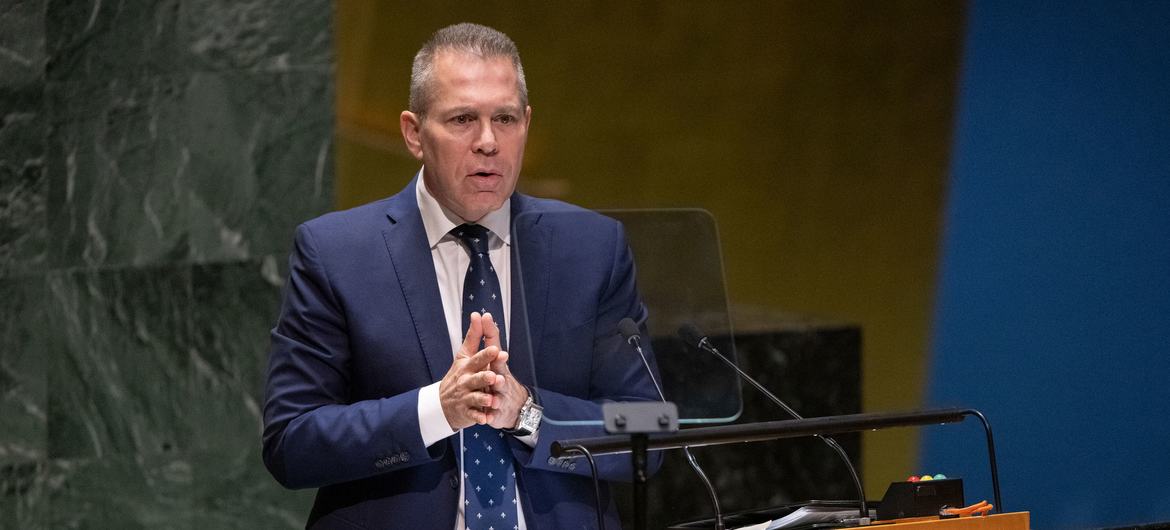
Gilad Erdan, Ambassador and Permanent Representative of Israel to UN, said that the 7 October massacre and what ensued “has nothing” to do with the Palestinians, the Arab-Israeli conflict or the Palestinian question.

Ambassador Gilad Erdan of Israel addresses the resumed 10th Emergency Special Session meeting on the situation in the Occupied Palestinian Territory.
UN Photo/Manuel Elías
 
Ambassador Gilad Erdan of Israel addresses the resumed 10th Emergency Special Session meeting on the situation in the Occupied Palestinian Territory.

“This is not a war with the Palestinians, he said. “Israel is at war with the genocidal jihadist Hamas terror organization. It is the law abiding democracy of Israel against modern day Nazis.”

He went on to note that Hamas does not care about Palestinian people, peace or dialogue. Its only goal is to “annihilate Israel and murder every single Jew on the face of the Earth.”

Mr. Erdan spoke of the brutal killings of innocent Israeli civilians and intentional targeting of Israeli medical teams that were trying to help the injured during the terror attack. He questioned the “hypocrisy” that there is not a single condemnation of the barbarity against Israelis.

“The hypocrisy is beyond belief,” he stressed.

Emergency workers in Israel respond to missile attacks.
© Magen David Adom Israel
 
Emergency workers in Israel respond to missile attacks.

From the podium of the General Assembly Hall, Ambassador UN Erdan presented a video on a tablet, turning the screen towards the delegates, that he said depicted a brutal decapitation with a garden tool against a helpless agricultural worker from Thailand.

'No words' for evil of Hamas

“There are no words in any language to describe the evil we just witnessed,” at the hands of a Hamas militant, he said, adding that it is not describable because it has no place in humankind.

“ISIS was the Islamic State of Iraq and Syria and Hamas is the Islamic State of Gaza. Just as was done with ISIS, Hamas must be no more,” he declared, stating that the goal of Israel is to “completely eradicate Hamas’ capabilities and we will use every means at our disposal to accomplish this.”

“Not for revenge, not for retaliation. But to ensure such depravity and atrocity never occurs again,” said the Israeli ambassador.

10:32 AM

Meeting amidst death in Gaza: Palestine

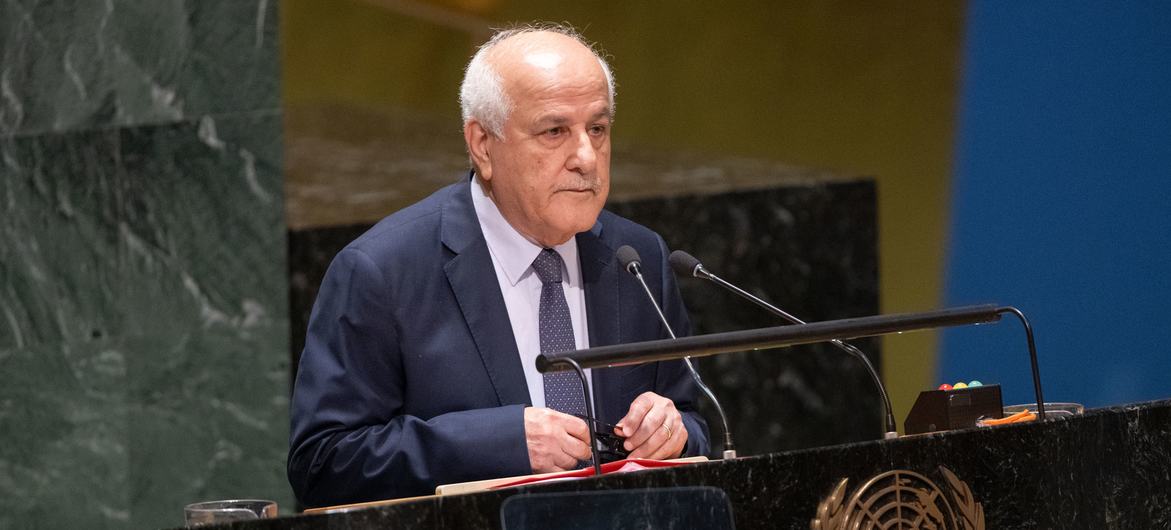
“We are meeting here while Palestinians in Gaza are under the bombs,” Riyad Mansour, Permanent Observer of the State of Palestine, said, speaking first. 

Riyad Mansour, Permanent Observer of the State of Palestine to the United Nations, addresses the resumed 10th Emergency Special Session meeting on the situation in the Occupied Palestinian Territory.
UN Photo/Manuel Elías
 
Riyad Mansour, Permanent Observer of the State of Palestine to the United Nations, addresses the resumed 10th Emergency Special Session meeting on the situation in the Occupied Palestinian Territory.

“You are speaking while families are being killed, while hospitals are coming to a halt, while neighbourhoods are being destroyed, while people are fleeing from one place to another with no safe place to go.”

“There is no time to mourn,” he said tearfully, pointing to the rising death toll. “If you do not stop it for all those who have been killed, stop it for all those who can be saved.”

Citing personal accounts of life on the ground, he said humanitarian aid is badly needed. Hospitals are operating without anaesthetics, with doctors and patients alike wondering if help is on the way.

“This time, it’s just too much,” he said.

Mr. Mansour, recalling Israel’s recent comments in the UN Security Council about how its people are suffering, said Palestinians are suffering too. Israel’s representative had called to “release the hostages, then takes two million Palestinians hostage”, he added.

There are 1,000 Palestinians killed every day, he said, adding that nothing can justify war crimes and crimes against humanity.

“Why not feel a sense of urgency to ending the killing,” he said. “You are setting us back 80 years by trying to justify what Israel is doing now.”

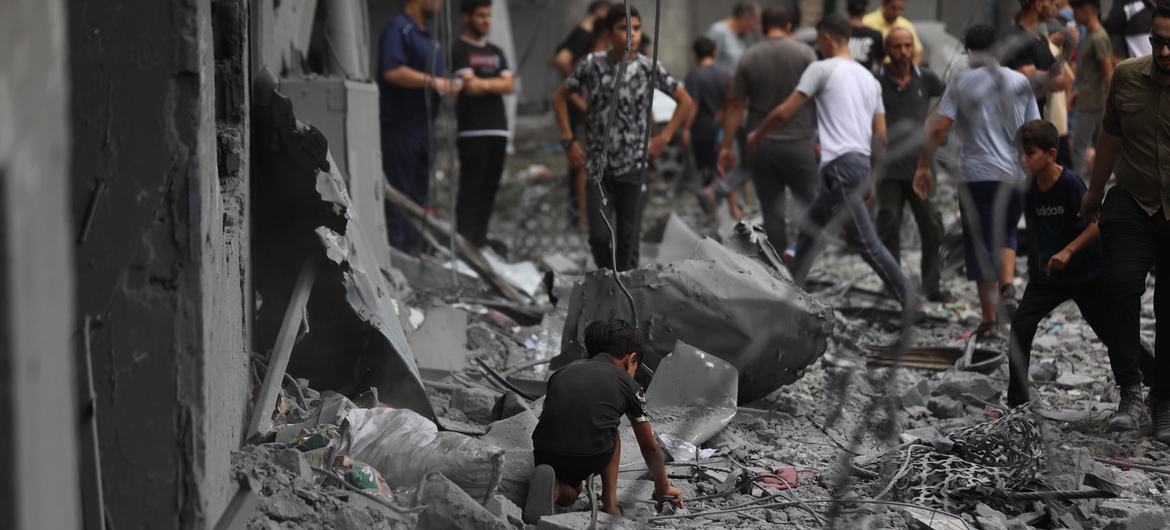
The Al Shati refugee camp in Gaza has been hit by air strikes.
© UNICEF/Mohammad Ajjour
 
The Al Shati refugee camp in Gaza has been hit by air strikes.

Decades of occupation

Palestinians have survived decades of occupation, 16 years of a blockade and five wars in Gaza, he said.

The answer to the killing of Israelis and Palestinians is not more killing, he said, asking the UN membership to uphold UN principles and keep future generations from the scourge of war.

“The only path forward is justice for the Palestinian people,” he said.

“Vote to stop the killing, vote to stop this madness,” he said. “Choose justice, not vengeance. Choose peace, not more wars. Vote to put an end to almost three weeks of the worst double standards we have seen in decades. Do not miss this chance. Lives are hanging in the balance. Please, save lives, save lives, save lives.”

10:17 AM 

Protect and save lives: Assembly President

Mr. Francis said he was “deeply disturbed and distraught” at the events unfolding in Israel and Palestine.

“Yet again, we gather amidst the gravest escalation of violence and hostility in the Middle East in decades.”

The violence “must end now”, he declared, calling for an immediate and unconditional humanitarian ceasefire and the opening of aid corridors.

He voiced his condemnation of the attack on Israel by Hamas on 7 October, stating “the brutality of the Hamas assault is shocking and unacceptable and has no place in our world.”

He also condemned the indiscriminate targeting of innocent civilians in Gaza and the destruction of critical infrastructure by Israel, he said, adding that “the ceaseless bombardment of the Gaza Strip by Israel and its consequences are deeply alarming.”

Assembly President Francis underscored that the preeminent priority of the collective UN membership “must be to protect and to save civilian lives.”

“All parties to this conflict must abide by international humanitarian law, and immediately create the necessary conditions to allow for an opening of humanitarian corridor to the Gaza Strip,” he said, emphasizing that urgently needed lifesaving assistance must reach those in need.

He also praised the work of UN personnel in Gaza, offering condolences to the families of the 35 UNRWA staff members who were killed since the start of the crisis.

General Assembly President Dennis Francis addresses the resumed 10th Emergency Special Session meeting on the situation in the Occupied Palestinian Territory.
UN Photo/Manuel Elías
 
General Assembly President Dennis Francis addresses the resumed 10th Emergency Special Session meeting on the situation in the Occupied Palestinian Territory.

10:10 AM

Session starts

The President of the General Assembly Dennis Francis gavelled the session open shortly after 10 but he will make the first address in the ornate General Assembly Hall.

He reminded delegates that the emergency session is reconvening following a request by Member States and letters signed by Jordan, Mauritania, Nicaragua and Russia, together with Syria.

Members who have not paid their dues aren't allowed to vote in General Assembly meetings like this, but Mr. Francis agreed by general consent to allow those in arrears a waiver so they can take part. 

09:00 AM (New York)

The tenth Emergency Special Session of the Assembly is expected to start at 10 AM, New York time, and as of now, 110 speakers are inscribed on the list.

The State of Palestine is expected to address Member States first, with Israel expected to go second.

Tweet URL

Emergency Special Session

Under the “Uniting for Peace” landmark resolution, adopted by the General Assembly in 1950, the body can convene an “emergency special session” within 24 hours, should the Security Council “fail to exercise its primary responsibility” for the maintenance of international peace and security.

This tenth Emergency Special Session was convened for the first time in April 1997, following a request from Qatar. It followed a series of Security Council and General Assembly meetings regarding the Israeli decision to build a large housing project in an area of East Jerusalem.

The Session last came together on 13 June 2018 to consider a draft resolution entitled “Protection of the Palestinian civilian population”.

At the end of that session, the Assembly decided to adjourn “temporarily and to authorize the President of the General Assembly at its most recent session to resume its meeting upon request from Member States.”

Ongoing crisis

According to several UN agencies on the ground, critical lifesaving supplies, fuels to keep hospitals running and drinking water is running out.

Meanwhile on Wednesday, the Security Council failed to adopt two resolutions on addressing the humanitarian crisis. China and Russia vetoed a United States-led draft resolution and a second Russian-backed resolution failed to secure sufficient votes in favour.

This followed failures for unity at the Council, last week. A Russian-led draft resolution calling for an “immediate humanitarian ceasefire” was voted down last Monday and the following Wednesday, the US vetoed a Brazilian-led text that urged “humanitarian pauses” to deliver aid to millions in the Gaza Strip.


https://news.un.org/en/story/2023/10/1142847


https://creativecommons.org/licenses/by/3.0/legalcode