Показаны сообщения с ярлыком COP28. Показать все сообщения

понедельник, 4 декабря 2023 г.

UN cites ‘alarming surge’ in climate change over the past decade as COP28 pushes for global emissions cuts


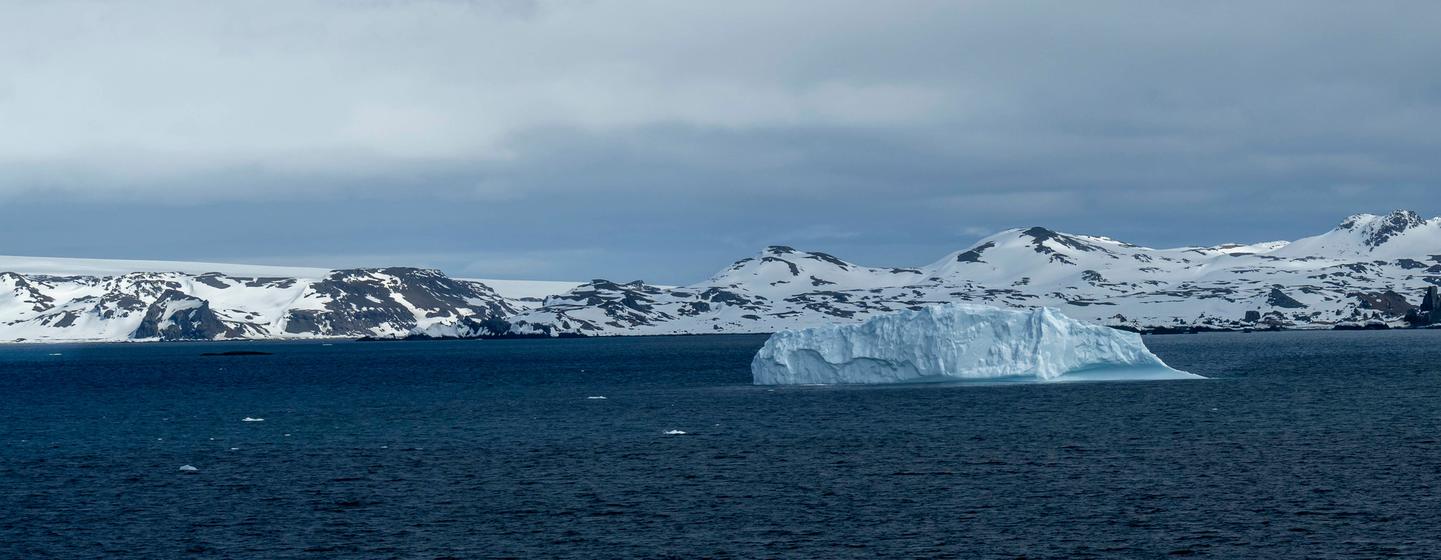
Secretary-General Visits Antarctica

UN cites ‘alarming surge’ in climate change over the past decade as COP28 pushes for global emissions cuts

UN Photo/Mark Garten
 
Secretary-General Visits Antarctica
5 December 2023
Climate and Environment

The past decade has been confirmed the warmest ever recorded, continuing an alarming 30-year trend that the UN weather chief said on Tuesday is “unequivocally driven by greenhouse gas emissions from human activities.” 

Marked by record breaking land and ocean temperatures, the decade between 2011-2020 saw continued rising concentrations of greenhouse gasses that “turbo charged” dramatic glacier loss and sea-level rise, according to a new report from the UN World Meteorological Organization (WMO). 

The report comes as the latest annual UN climate conference, COP28, reaches its midway point in Dubai, where countries have agreed on a new voluntary fund to pay vulnerable nations for losses and damages due to climate change. 

But tough negotiations are ahead in the coming days regarding targets to curb greenhouse emissions and the phase out fossil fuels. 

‘Profound’ impacts on Polar, mountain regions

The WMO Decadal State of the Climate report, which was launched in Dubai, reveals that between 2011 and 2020, more countries reported record high temperatures than in any other decade. 

It also sounds the alarm at the “particularly profound transformation” taking place in the polar regions and high mountains. 

WMO goes on to warn that climate shocks are undermining sustainable development, with a dire impact on global food security, displacement, and migration. 

“Each decade since the 1990s has been warmer than the one before it, and we see no immediate sign of this trend reversing,” WMO Secretary-General Petteri Taalas said, and underscored: “We are losing the race to save our melting glaciers and ice sheets.” 

Tweet URL

“We have to cut greenhouse gas emissions as a top and overriding priority for the planet in order to prevent climate change spiralling out of control,” he urged.

‘A glimmer of hope’

The report paints a grim picture, but it also highlights positive developments, including that successful international efforts to phase out ozone-depleting chemicals under the Montreal Protocol have resulted in a smaller Antarctic ozone hole during the 2011-2020 period. 

In addition, advancements in forecasts, early warning systems, and coordinated disaster management have reduced casualties from extreme events, even though economic losses have increased, the WMO researchers observed. 

Overall, however, the report underscores the need for more substantial measures. Indeed, while public and private climate finance nearly doubled from 2011 to 2020, a sevenfold increase is necessary by the decade’s end to meet climate objectives


https://news.un.org/en/story/2023/12/1144372

https://creativecommons.org/licenses/by/3.0/legalcode

суббота, 2 декабря 2023 г.

COP28: UN chief previews panel on management of minerals essential for green energy transition


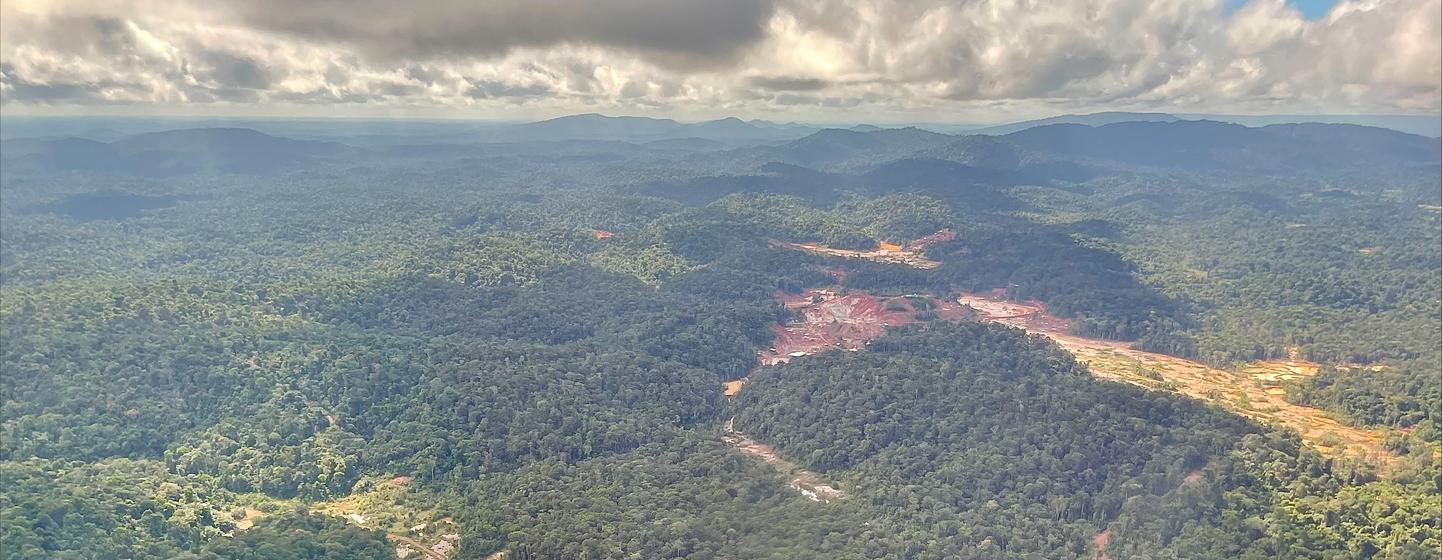
Suriname is the most forested country in the world, but its pristine rainforests are being threatened, among others, by mining for gold, bauxite and kaolin.

COP28: UN chief previews panel on management of minerals essential for green energy transition

UN News/Laura Quiñones
 
Suriname is the most forested country in the world, but its pristine rainforests are being threatened, among others, by mining for gold, bauxite and kaolin.
2 December 2023Climate and Environment

UN Secretary-General António Guterres on Saturday announced his plan to set up a panel aimed to ensure the move from fossil fuels towards renewable energy is just, sustainable and benefits all countries.

The UN chief made this announcement in an address to a summit of developing country leaders taking place at the latest UN climate conference, COP28, now under way in Dubai, United Arab Emirates.

Mr. Guterres, who has been a strong proponent of moving away from fossil fuels, told leaders of the Group of 77 Developing Countries, which includes China, that the availability and accessibility of critical energy transition minerals is crucial to reach the goals set by the 2015 Paris Agreement.

“COP28 must commit countries to triple renewables capacity, double energy efficiency, and bring clean energy to all, by 2030,” stated the UN chief, stressing that the phase out fossil fuels with a roadmap that is equitable and with a timeframe compatible with 1.5 degrees is also essential. 

As such, he said, “we need a just, fair and equitable transition from fossil fuels to renewables…The very existence of some countries in this room depends on it.” 

The green energy boom is an opportunity for commodity-rich developing countries to transform and diversify their economies.

However, a lack of global guidance to manage these resources could exacerbate geopolitical risks and environmental and social challenges, including impacts on water, biodiversity, health and indigenous peoples’ rights.

“The extraction of critical minerals for the clean energy revolution – from wind farms to solar panels and battery manufacturing – must be done in a sustainable, fair and just way,” the UN chief said, adding that the demand for minerals, such as copper, lithium and cobalt, is set to increase almost fourfold by 2030.

“We cannot repeat the mistakes of the past,” with a systematic exploitation of developing countries reduced to the production of basic raw materials.

The proposed Panel on Critical Energy Transition Minerals will bring together governments, international organizations, industry, and civil society to develop common and voluntary principles to guide extractive industries in the years ahead “in the name of justice and sustainability.”

‘Keep pushing the needle’

In his remarks, UN General Assembly President Dennis Francis praised the G77 and China for leading the charge to shift to renewable energy and leading the calls for building resilience.

“They have spearheaded debates on climate finance – including pushing for the reform of the international financial architecture, that would afford developing countries better access to development funding without the overhang of unsustainable debt levels,” he added.

The Assembly President noted his intention to convene a ‘Sustainability Week’ in April 2024, to address the dynamics of sustainability in relation to infrastructure, transportation, tourism, and, of course, energy.

“We must continue to push the needle on these sectors that are so essential to modern economies, that yet constitute some of the greatest contributors to atmospheric emissions,” he said invited the developing country leaders to come to New York for that ‘week’ to build on the impact of the decisions taken at COP28.

‘Renewables revolution’

The second and final day of the World Climate Action Summit – the ministerial-level segment of COP28, where world leaders have been laying out their national strategies – also saw the Secretary General press for accelerated climate action that would help offset the challenges faced by mountainous and landlocked developing countries.

UN Secretary-General António Guterres (centre left) and other panellist at the High-Level meeting on Landlocked Developing Countries (LLDCs) held during the World Climate Action Summit at COP28, in Dubai, United Arab Emirates.
UNFCCC/Kiara Worth
 
UN Secretary-General António Guterres (centre left) and other panellist at the High-Level meeting on Landlocked Developing Countries (LLDCs) held during the World Climate Action Summit at COP28, in Dubai, United Arab Emirates.

At a high-level meeting of the landlocked developing countries (LLDc), the UN chief highlighted that they are on the frontlines of climate change, facing a range of dramatic impacts: desertification and prolonged droughts, catastrophic biodiversity loss and rapidly melting glaciers.

According to Mr. Guterres, there are no LLDCs that are big emitters, but all landlocked nations are coping with the negative and devastating impacts of runaway emissions and the climate chaos it drives.

“So I think you have a moral authority to tell big emitters, namely the G20 countries that represent 80 per cent of the emissions, it’s time to seriously reduce emissions,” so the more than 500 million people living in least developed countries are not so impacted by the accelerated effects of climate change and benefit from “the same levels of well-being that we want for everyone everywhere in the world.”

At the same time, he pointed out how they could also harness it to their advantage, reaping the “rewards of the renewables revolution.”

“You can be champions of an energy transition that is sustainable, just, inclusive, and equitable. But to do all of this, you need much, much more support,” said Mr. Guterres.

‘Distress call’

Addressing the high-level side event ‘Call of the Mountain: Who Saves us from the Climate Crisis?’, the UN chief said mountains are issuing a distress call, and COP28 must respond with a strong rescue plan.

Mr. Guterres described his recent “unforgettable visit” to Nepal, where he was deeply shocked to learn about the rapid pace of glacier melting and its “terrible impact” on local communities.

The Himalayan nation has lost close to a third of its ice in just over 30 years – a direct result of the greenhouse [gas] pollution heating our planet.

“Nepal, and other vulnerable mountain countries, are being pounded by a crisis that is not of their making. Unless we change course, we will unleash catastrophe,” he explained.

Screenshot of a monitor in the meeting room at the COP28 event in Expo City in Dubai on ‘Call of the Mountains: who saves us from the climate crisis?’
UNFCCC/Kiara Worth
 
Screenshot of a monitor in the meeting room at the COP28 event in Expo City in Dubai on ‘Call of the Mountains: who saves us from the climate crisis?’

COP28: Towards solutions

Against the backdrop of the challenges faced by vulnerable landlocks and mountainous nations, The Secretary-General underscored the critical importance of the expected decisions by delegates at COP28 on the so-called ‘Global Stocktake’, which should set the stage for a “surge in global climate ambition in 2025 and beyond.”

The stocktake is a crucial mechanism established under the landmark 2015 Paris Agreement, aimed at measuring progress towards the accord’s goals and encouraging countries to ramp up their climate action plans.

An ambitious outcome from the global stocktake process will require major progress on three fronts, Mr. Guterres explained.

Finance: “We need to see a boosting of contributions to the new Loss and Damage Fund.” Developed countries need to make good on their financial commitments.

Reducing emissions: “We must preserve the limit of 1.5-degrees of heating, as set out in the Paris Agreement, to avert the worst of climate chaos.” It must advance a just, fair and equitable transition from fossil fuels to renewables.

More international cooperation: Achieving the climate goals agreed in Paris “depend on new levels of collaboration between government, and between countries and companies, to drive down emissions, and to protect everyone on earth with an effective early warning system by 2027.”


https://creativecommons.org/licenses/by/3.0/legalcode


https://news.un.org/en/story/2023/12/1144267
четверг, 30 ноября 2023 г.

Science points to ‘climate collapse’ as UN chief calls COP28 to action


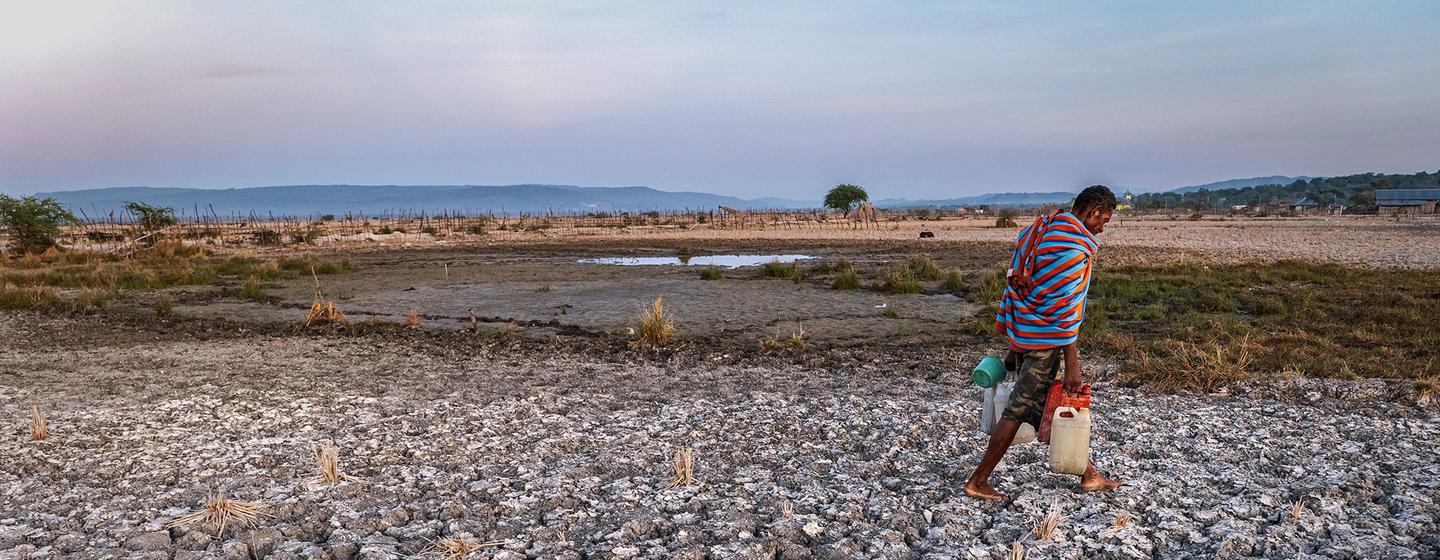
A man crosses parched farmland in East Nusa Tenggara Province, Indonesia

Science points to ‘climate collapse’ as UN chief calls COP28 to action

© UNICEF/Ulet Ifansasti
 
A man crosses parched farmland in East Nusa Tenggara Province, Indonesia
30 November 2023
Climate and Environment

The world is heating up at an unprecedented pace, new climate data shows, and leaders gathered for the COP28 conference which opened in Dubai on Thursday must get us out of “deep trouble”, UN chief António Guterres said.

While 2023 is not yet over, a provisional report from the UN World Meteorological Organization (WMO) confirmed that it is set to be the warmest on record, with global temperatures rising 1.4 degrees Celsius above pre-industrial levels.

Mr. Guterres said that the race is on to keep alive the 1.5-degree limit agreed by world leaders in Paris in 2015.

“We are living through climate collapse in real time – and the impact is devastating,” he warned in a video statement accompanying the launch of the report on the first day of this year’s annual UN climate talks. 

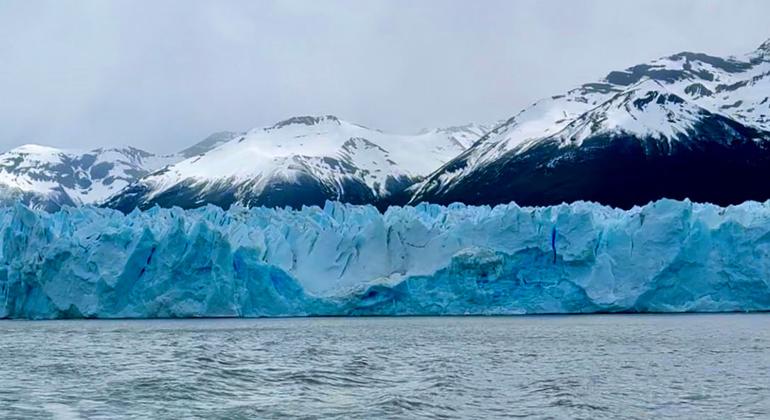
Glaciers are breaking off from the Patagonian ice field in the far reaches of South America.
UN News/Nargiz Shekinskaya

Melting glaciers, rising seas

The UN Secretary-General recently visited two global warming hotspots, Antarctica and Nepal, where he bore witness to record low sea ice and was “shocked at the speed of receding glaciers”.

According to WMO’s report, the maximum Antarctic Sea ice extent for the year was a staggering one million square kilometres less than the previous record low, at the end of southern hemisphere winter.  

Glaciers in western North America and the European Alps also experienced an “extreme melt season”.

Because of continued ocean warming and melting of glaciers and ice sheets, record sea level rise was also observed, WMO said.  

Greenhouse gas levels keep climbing

Meanwhile, concentrations in the atmosphere of heat-trapping carbon dioxide, methane and nitrous oxide reached a record high last year and continued to increase in 2023.  

WMO stressed that carbon dioxide levels are 50 per cent above the pre-industrial era and that the gas’s long lifetime “means that temperatures will continue to rise for many years to come”.

“These are more than just statistics,” said WMO chief Petteri Taalas, calling for action to “limit the risks of an increasingly inhospitable climate in this and the coming centuries”.

Dire consequences

From deadly Cyclone Daniel in Libya in September to devastating floods in the Horn of Africa following five consecutive seasons of drought and severe smoke pollution from Canada’s forest blazes, WMO’s report highlights the grim effects of climate upheaval on lives, health and livelihoods.  

Throughout the year, communities suffering from extreme weather around the world faced food insecurity and displacement.  

“Record global heat should send shivers down the spines of world leaders,” Mr. Guterres said. “And it should trigger them to act”.

Follow the roadmap

The UN chief reiterated his call on countries to “triple renewables, double energy efficiency… and phase out fossil fuels”.

According to WMO, last year renewable energy capacity grew by some 10 per cent worldwide, led by solar and wind power.

Mr. Guterres pointed to the existing roadmap to limit global temperature rise to 1.5 degrees Celsius. Eight years on, he urged governments to set “clear expectations” for the next round of climate action plans and invest in their implementation.

Protect people

The COP 28 conference will see the first-ever “global stocktake” to assess collective progress on cutting emissions and ramping up adaptation efforts and support to developing countries hard hit by a warming climate.

The UN Secretary-General said that countries must “go further and faster in protecting people from climate chaos”.

This includes ensuring that every person on Earth is covered by early warnings against extreme weather by 2027 and operationalizing a “loss and damage fund” to assist vulnerable hit hard by floods, droughts and other climate disasters with “generous, early contributions” from richer nations, he said. 

Developed countries must honour the promise to deliver $100 billion per year in climate finance, which was first made at COP15 in 2009, and double the amount of funding going towards adaptation efforts, he insisted.

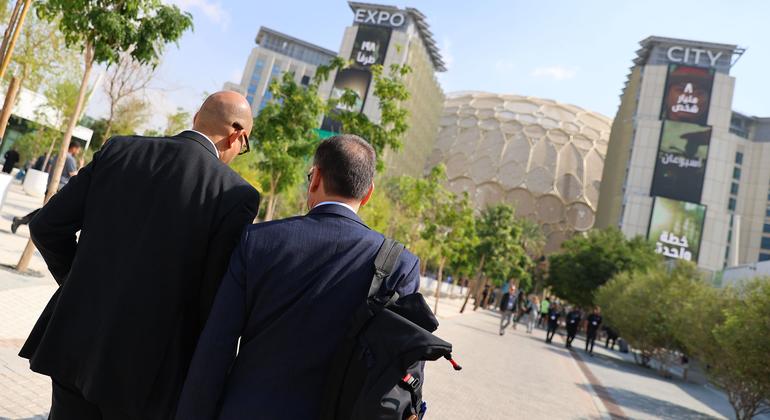
Delegates arrive at Expo City in Dubai for COP28.
© UNFCCC

COP28

The UN climate conference taking place from 30 November to 12 December in Dubai is the 28th Conference of Parties to the UN Framework Convention on Climate Change (UNFCCC), which entered into force in 1994.  

Over 60,000 delegates are expected to attend, including the member states of the UNFCCC, industry leaders, youth activists and representatives of indigenous communities.  

All eyes will be on the conclusions of the first global stocktake – referred to as a ‘temperature check’ on where the world stands in meeting commitments under the Paris Agreement – and countries’ willingness to use them as a springboard towards more ambitious, accelerated climate action. 


https://creativecommons.org/licenses/by/3.0/legalcode


https://news.un.org/en/story/2023/11/1144147

COP28 talks open in Dubai with breakthrough deal on loss and damage fund


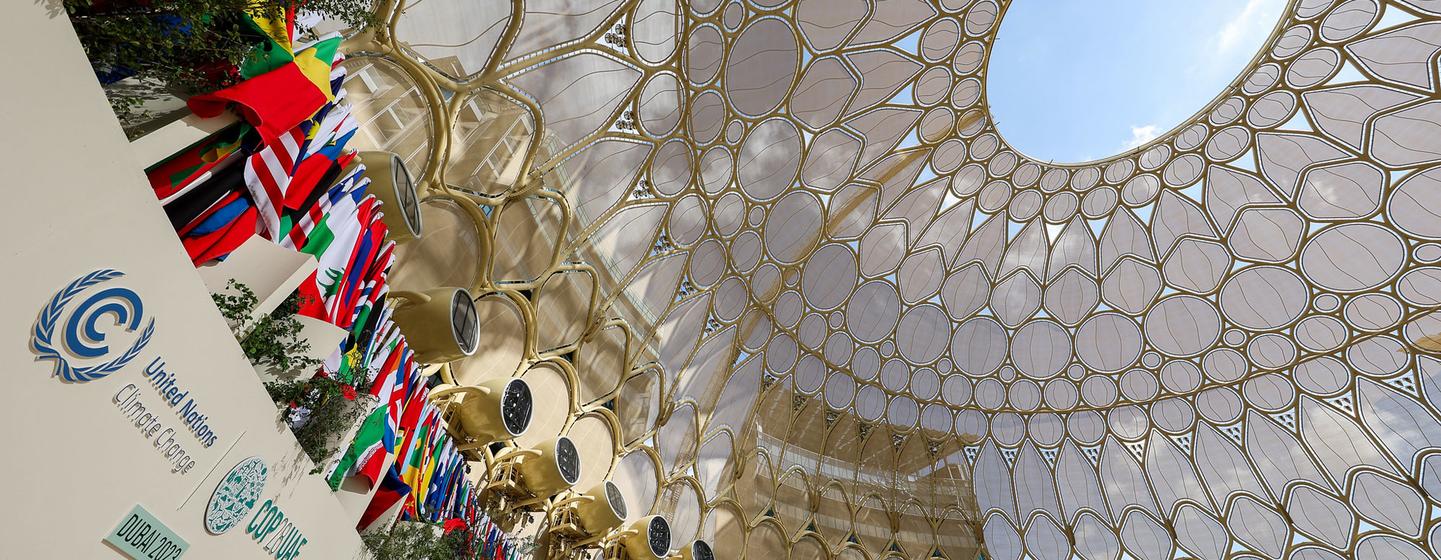
View of the iconic Al Wasl Dome at Expo City in Dubai, United Arab Emirates, which is hosting the UN climate conference COP28.


COP28/Neville Hopwood
 
View of the iconic Al Wasl Dome at Expo City in Dubai, United Arab Emirates, which is hosting the UN climate conference COP28.
30 November 2023
Climate and Environment

Delegates meeting in Dubai agreed Thursday on the operationalization of a fund that would help compensate vulnerable countries coping with loss and damage caused by climate change, a major breakthrough on the first day of this year’s UN climate conference.

“Today’s news on loss and damage gives this UN climate conference a running start. All governments and negotiators must use this momentum to deliver ambitious outcomes here in Dubai,” said UN climate chief Simon Stiell during a press conference at which the announcement was made. 

The fund has been a long-standing demand of developing nations on the frontlines of climate change coping with the cost of the devastation caused by ever-increasing extreme weather events such as drought, floods, and rising seas.

Following several years of intense negotiations at annual UN climate meetings, developed nations extended their support for the need to set up the fund last year during COP27 in Sharm el-Sheikh, Egypt.

Reportedly, Sultan al-Jaber, the President of the COP28 climate conference, has said that his country, the United Arab Emirates, would commit $100 million to the fund.  

Germany has also reportedly pledged a contribution of $100 million to the fund. The United States and Japan have also announced contributions to the fund. 

The 28th annual meeting known as ‘COP’ after the Conference of Parties to the UN Framework Convention on Cli​mate Change (UNFCCC), opened today and is scheduled to run through to 12 December. 

The action is taking place at the sprawling campus of Expo City, which has been decorated with trees and foliage. It is located on the outskirts of Dubai and is expected to host over 70,000 delegates, climate negotiators and other participants coming together to shape a better future for the planet. 

‘Bold action, now’

Speaking earlier on Thursday at the opening of the conference, Mr. Stiell, who is the UNFCCC Executive Secretary, issued a warning that the world is taking “baby steps” in the face of a terrifying planetary climate crisis that requires bold action now. 

“We are taking baby steps and stepping far too slowly to work out the best responses to the complex climate impacts we are faced with,” he told delegates gathered for COP28. 

The UN climate chief’s warning came just hours after the UN weather agency, known as WMO, issued a provisional report saying that this has “shattered” climate records accompanied by extreme weather which has left a trail of devastation and despair.

What’s at stake

Mr Stiell then outlined what’s at stake. “This has been the hottest year ever for humanity. So many terrifying records were broken,” he said, adding: We are paying with people’s lives and livelihoods.” 
 
“Science tells us we have around six years before we exhaust the planet’s ability to cope with our emissions. Before we blow through the 1.5-degree limit,” he warned, referring to one of the keystone targets under the landmark Paris Agreement. 
 
Ominously, a steady stream of reports published in the lead up to COP28 have shown that the world is way off-track in achieving climate goals. and in the absence of ambitious action, we are heading towards a temperature increase of 3 degrees by the end of this century. 
 
Against this backdrop, Mr. Stiell called on countries to deliver ambitious new Nationally Determined Contributions (NDCs), or national climate action plans where every single commitment in 2025 – on finance, adaptation, and mitigation – must be in line with a 1.5-degree world.

Progress on Paris Goals

The Dubai COP will mark the culmination of a process known as the ‘Global Stocktake’ – an evaluation of the progress so far on achieving key provisions of the Paris accord: namely curbing greenhouse gas emissions, building climate resilience and mobilizing financial support for vulnerable countries. 

As such, the UNFCCC Executive Secretary said delegations at COP28 face two options: The first would be to note the lack of progress, tweak current best practices “and encourage ourselves to do more ‘at some other point in time’.”

Or the conference could decide at what point it will have made everyone on the planet safe and resilient; to fund this transition properly including the response to loss and damage; and decide to commit to a new energy system.  
  
Indeed, he warned: “If we do not signal the terminal decline of the fossil fuel era as we know it, we welcome our own terminal decline. And we choose to pay with people’s lives. If this transition isn’t just, we won’t transition at all. That means justice within and between countries.” 

He also emphasized his focus on ensuring accountability for climate promises. 
 
“Yes, this is the biggest COP yet – but attending a COP does not tick the climate box for the year. The badges around your necks make you responsible for delivering climate action here and at home.” 
 
“I am committing the UNFCCC to track all announcements made and initiatives launched. So that long after the cameras have gone, we can ensure our promises continue to serve the planet,” Mr. Stiell added. 

Thursday’s events marked the meeting’s procedural opening, but the conference will begin in earnest on Friday with a ‘climate action summit’ featuring the UN Secretary General alongside world leaders who will present national statements on what their governments are doing to address the global climate crisis. 

COP27: A call we heeded together

Egyptian Minister of Foreign Affairs and President of COP27 Sameh Shoukry reminded delegates that despite global challenges such as COVID-19 and the war in Ukraine, COP27 turned out to be a moment for effective and global climate action, and succeeded in delivering a number of long-awaited elements of the global climate action agenda. 

He recalled that the ‘loss and damage’ funding arrangement had been established, the so-named ‘Just Transition’ work programme had been launched, and parties had also agreed on a pathway to cutting greenhouse gas emissions, providing a boost to climate action during this critical decade.

He underscored that Together for Implementation had not just been a slogan for COP27, but rather a timely call to move from setting rules, frameworks and commitments to a clear focus on the tangible implementation these commitments on the ground.

World at a crossroads:

Addressing the opening plenary, Sultan al-Jaber, the President of the COP28 said: “We feel, as you feel, the urgency of the work, and we see, as you see, that the world has reached a crossroads.” 

“The science has spoken. It has confirmed that the moment is now to find a new road, wide enough for all of us. That new road starts with a decision on the global stocktake.” 

He expressed his commitment to ensuring an inclusive and transparent process, one that encourages free and open discussion between all parties.


https://news.un.org/en/story/2023/11/1144162

https://creativecommons.org/licenses/by/3.0/legalcode

четверг, 23 ноября 2023 г.

World News in Brief: Delivering on health at COP28, aid for north Darfur, food standards watchdog turns 60


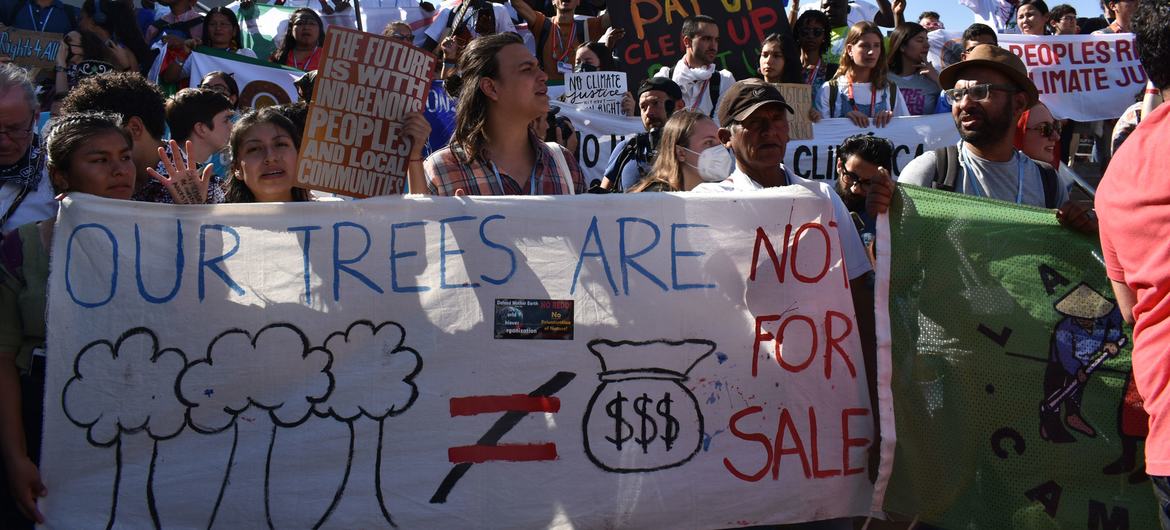
Activists stage massive protest at COP27 in Sharm El-Sheikh demanding leaders to address vital issues realted to agriculture, adaptation and climate resilience.
Laura Quinones
 
Activists stage massive protest at COP27 in Sharm El-Sheikh demanding leaders to address vital issues realted to agriculture, adaptation and climate resilience.
27 November 2023
Climate and Environment

Climate action is health action and the legacy of the COP 28 climate conference opening later this week in Dubai should be a commitment to a healthier planet.

That’s the message from UN health agency WHO

“Leaders must deliver in Dubai, providing the strong health outcomes their peoples expect and their economies urgently need,” said WHO chief Tedros

According to the UN Intergovernmental Panel on Climate Change (IPCC), some 3.5 billion people – nearly half of humanity – live in areas highly vulnerable to climate change, and curbing greenhouse gas emissions is urgent to mitigate the disastrous health effects of global warming.

Soundcloud

Deadly heat 

WHO said that rising temperatures have caused a 70 per cent increase in heat-related deaths among people aged 65 and over in the last two decades, while infectious diseases like dengue and cholera have surged. 

At the same time, flooding and drought have wrought havoc on food production.

Transitioning to clean energy sources is also urgent to help prevent the seven million premature air pollution deaths every year, WHO insisted.

Sudan: UN hails aid milestone in Darfur, calls for broader access

The conflict in Sudan has entered its eighth month, and while aid access remains extremely challenging, UN humanitarians are doing their utmost to reach people in need.

Tweet URL

On Monday, the UN’s top humanitarian official in Sudan, Clementine Nkweta-Salami, welcomed the arrival of the first cross-border humanitarian shipment from Chad to Al Fasher in North Darfur state.

Facilitated by UN aid coordination office OCHA

The development follows another milestone last week when humanitarians delivered medical supplies to Central Darfur for the first time since conflict broke out in April.

Humanitarians continue to call for sustained aid access across Sudan, where almost half the population face severe levels of hunger, according to the UN World Food Programme (WFP

Last week, UN emergency relief chief Martin Griffiths deplored the fact that the Sudanese capital Khartoum remains inaccessible to humanitarian relief and highlighted the “distressing” toll of the conflict on civilians in Darfur. 

The UN Children’s Fund has reported over 3,000 allegations of severe children’s rights violations in the country since the fighting started, with the Darfur region accounting for at least half of the cases. 

Global food standards body marks 60 years of consumer protection

The world global food standards body marked its 60th anniversary on Monday at the headquarters of the UN Food and Agriculture Organization (FAO).

The Codex Alimentarius Commission, as the consumer watchdog is officially known, began with just 30 countries but has now grown to 189 members, FAO chief QU Dongyu noted.

Tweet URL

“Sixty years ago, the objective was to highlight the rapidly growing importance of internationally accepted food standards as a means of protecting consumer and producers globally and to effectively reduce trade barriers – these objectives are still very relevant today,” he said.

“More than ever, there continues to be an important emphasis on science and risk assessment as the basis for standards, as we look to science to prevent food from becoming unsafe and to reduce the risk of foodborne illness,” he added.

The body brings together the world’s top scientists to crunch the key data and discuss specific microbiological or chemical hazards.

Protecting the most vulnerable

“Their deliberations concentrate on the protection of the most vulnerable, such as children and pregnant women, and take into consideration local and regional differences in food consumption," Qu explained, noting that due to the longer and more complex food chain of today, prevention and control systems for food safety, like Codex, have become increasingly important and significant. 

The Codex also defines the quality of food by providing guidance on hygiene, labeling, nutrition, and the measurement and sampling techniques that attest to its safety.

The 46th session of its ruling body will discuss adopting a range of new texts and guidelines in line with its objectives of ensuring the production and trade of safe food.

The standards assess scientific findings and potential risks, all while prioritizing food safety and decreasing the likelihood of food-borne illness.

The scientific foundation for these standards is provided by the WHO and FAO.

The recommendations are voluntary for Member States but provide a structure for national health laws, which help ensure consumers are increasingly protected from unsafe or low-quality food purchases, and importers have greater confidence that they will receive conforming shipments of goods.


https://news.un.org/en/story/2023/11/1143997


https://creativecommons.org/licenses/by/3.0/legalcode