воскресенье, 30 апреля 2023 г.

Guterres dispatches UN 'relief chief' to Sudan as humanitarian crisis deepens

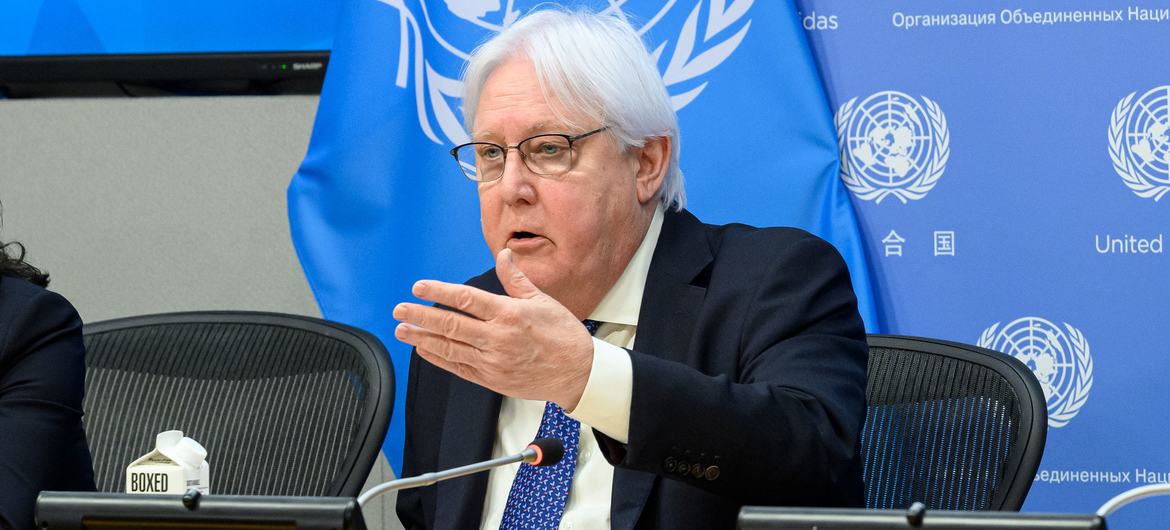
Martin Griffiths, Under-Secretary-General for Humanitarian Affairs and Emergency Relief Coordinator, briefs reporters at UN Headquarters in New York following a visit to Afghanistan in January (file).
UN Photo/Loey Felipe
 
Martin Griffiths, Under-Secretary-General for Humanitarian Affairs and Emergency Relief Coordinator, briefs reporters at UN Headquarters in New York following a visit to Afghanistan in January (file).
30 April 2023
Peace and Security

In light of the rapidly deteriorating humanitarian crisis in Sudan, Secretary-General António Guterres is sending UN Humanitarian Affairs chief Martin Griffiths to the region immediately, the global body announced on Sunday.  

“The scale and speed of what is unfolding is unprecedented in Sudan. We are extremely concerned by the immediate as well as long-term impact on all people in Sudan, and the broader region,” UN Spokesperson Stéphane Dujarric said in a statement.

Tweet URL

The UN again urged the warring sides to protect civilians and civilian infrastructure, allow safe passage for civilians fleeing hostilities, and respect humanitarian workers and assets.

Nearing the 'breaking point' 

The humanitarian situation in Sudan “is reaching breaking point,” Mr. Griffiths warned in a separate statement, underscoring the need to stop the fighting.

Essential goods are becoming scarce, especially in the capital, Khartoum, and families are struggling to access water, food, fuel and other critical supplies.

Furthermore, vulnerable people are unable to leave areas worst-hit areas as transportation costs have risen exponentially, while those injured in the violence find it difficult to access urgent healthcare.

Aid stocks dwindling

“The United Nations and our partners are doing our best to reboot the humanitarian response in the country," he said.

"Massive looting of the offices and warehouses of humanitarian organizations has depleted most of our supplies. We are exploring urgent ways to bring in and distribute additional supplies.”  

The UN “relief chief” said a shipment with five containers of intravenous fluids and other emergency supplies is currently docked in the city of Port Sudan, located on the Red Sea coast, awaiting clearance by the authorities. 
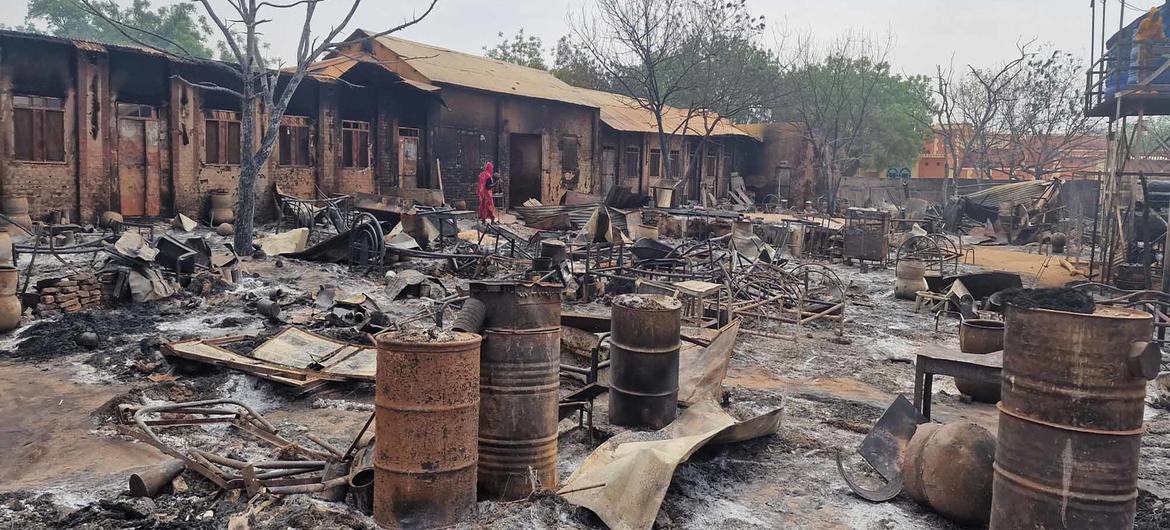
On April 27, 2023, the Al-Imam Al-Kadhim School in Al-Geneina City, West Darfur State, which had been serving as an Internally Displaced Persons (IDP) shelter, was burned to the ground amidst the ongoing crisis in Sudan.
Mohamed Khalil
 
On April 27, 2023, the Al-Imam Al-Kadhim School in Al-Geneina City, West Darfur State, which had been serving as an Internally Displaced Persons (IDP) shelter, was burned to the ground amidst the ongoing crisis in Sudan.

Appeal for renewed ceasefire

The announcement of his deployment came just hours after the UN and international partners appealed for Generals Abdel Fattah al-Burhan and Mohamed Hamdan Daglo, known as “Hemedti”, to agree to extend a 72-hour ceasefire for another three days, amid reports of ongoing airstrikes in Khartoum.

The Trilateral Mechanism – which brings together the African Union, East African bloc IGAD and the UN – also called on the rivals to ensure their forces fully implement the truce.

“As the people of Sudan urgently need a humanitarian pause, the Trilateral Mechanism urges the parties to the conflict to respect the ceasefire, to protect civilians and to refrain from attacks on civilian populated areas, schools, and healthcare facilities,” they said in a statement

Tweet URL

“This ceasefire would also pave the way for talks between both sides towards the establishment of a permanent cessation of hostilities,” they added.

Death and displacement

Sudan has been undergoing a turbulent transition to civilian rule in the wake of the April 2019 overthrow of President Omar al-Bashir.  A power-sharing government that brought together military and civilian leaders was also toppled in a coup in October 2021.

The Trilateral Mechanism has been facilitating talks since May 2022 which resulted in an agreement towards restoring civilian rule, signed that December. 

However, hopes shattered two weeks ago when fighting erupted between the regular Sudanese army, led by General al-Burhan, and paramilitary forces under General Dagalo, known as the RSF.

Hundreds of people have been killed, and thousands have been fleeing, including to neighbouring Chad, where some 20,000 Sudanese have found refuge.  Others are sheltering in the Central African Republic, Egypt, Ethiopia, Libya and South Sudan, often among already vulnerable communities.

The fighting has also forced the UN to essentially halt all aid operations in a country where nearly 16 million people, roughly one third of the population, already were in need.

Commitment to stay

The UN relocated and evacuated staff from Khartoum and other locations over the past week, who will continue to work remotely, whether from inside Sudan or in other countries.

The UN and partners are establishing a core team in Port Sudan, which will be responsible for overseeing aid operations and negotiating humanitarian access with de facto authorities.

Humanitarians now based in the coastal city, capital of Red Sea state, are determined to quickly return to Khartoum, as the UN continues to uphold its commitment to Sudan.

Earlier on Sunday, Volker Perthes, head of the UN Mission supporting the transition, UNITAMS, was briefed by the Wali (Governor) and other officials in Red Sea State on the humanitarian and security situation there.

"He assured them that the UN is not leaving Sudan and that he will work from Port Sudan until the security situation in Khartoum allows our return," UNITAMS said in a tweet.


 https://news.un.org/en/story/2023/04/1136212

https://creativecommons.org/licenses/by/3.0/legalcode

суббота, 29 апреля 2023 г.

Transitional justice hinges on ‘equal footing’, say UN peacebuilders


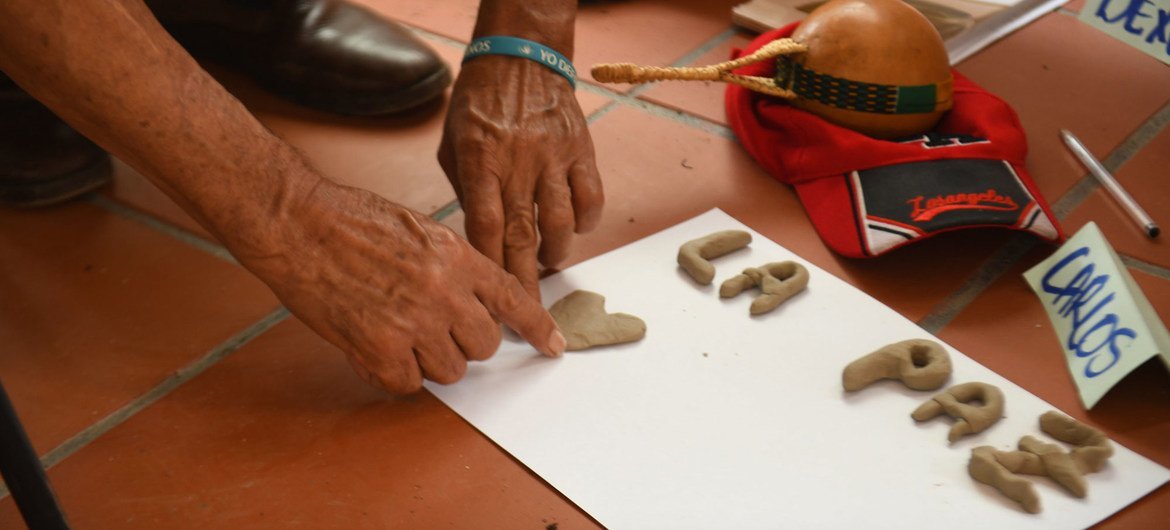
A participant in a reconciliation programme in Colombia spells out the word 'peace', in Spanish.
UN Verification Mission in Colombia/Héctor Latorre
 
A participant in a reconciliation programme in Colombia spells out the word 'peace', in Spanish.
28 April 2023
Peace and Security

Lasting peace hinges on everyone being on an “equal footing” and an all-of-society approach, a top UN official on Friday told the UN Peacebuilding Commission as it met to discuss national report cards on the pace of transitional justice reforms.

“A society can only succeed on its path towards sustainable peace and development when all its constituencies can participate on an equal footing,” Ilze Brands Kehris, Assistant Secretary-General for Human Rights, said ahead of progress reports delivered by high-level representatives of Colombia, The Gambia, and Timor-Leste.

Tweet URL

The preventive potential of transitional justice can only be fully leveraged if victims are fully engaged and involved, she said at the meeting.

“States should proactively seek the active participation of victims and civil society from the outset,” she said. “In addition, broad, inclusive and meaningful public consultations are a key component – and pre-condition – to successful transitional justice processes.”

‘Equal’ justice for all

Commission Chair Ivan Šimonović, of Croatia, shared his first-hand experience in being heavily involved in post-conflict transitional justice, while serving as a high level politician at home.

Victims need to be recognized and perpetrators need to be brought to justice, respect for human rights, rule of law, trust in institutions and good governance need to be restored, and the root causes that led to crimes, abuses and other violations, need to be addressed,” said the former Justice Minister.

But, that is “easier said than done”, he said, adding that transparency, accountability, building trust, access to justice and respect for human rights, are essential.

Overcoming post-conflict hurdles

Justice needs to be equal for everyone,” he said.

“In today’s world, we are confronted with many threats such as transnational terrorism, health insecurity, massive displacement of populations, overwhelming humanitarian crises, and they all create a complex operating environment,” he said.

“Challenges to transitional justice have also become more complex. Fortunately, some countries have managed to overcome numerous challenges and achieved successes in transitional justice process.”

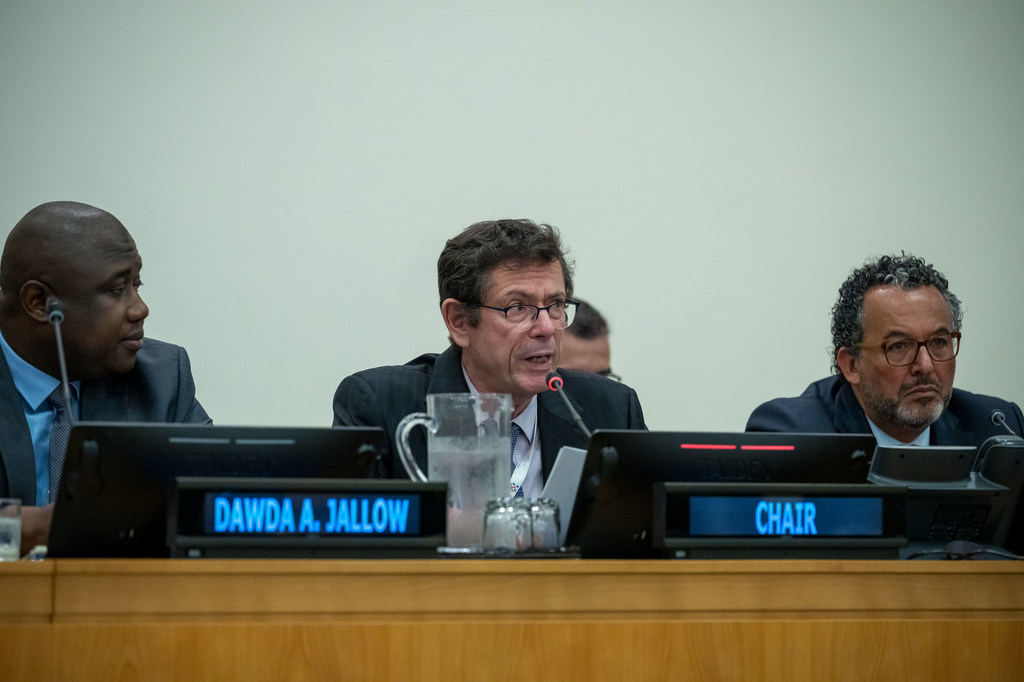
Ambassador Ivan Šimonović of Croatia, Chair of the Peacebuilding Commission, opens a meeting on transitional justice in Colombia, The Gambia, and Timor-Leste.
UN Photo/Loey Felipe
 
Ambassador Ivan Šimonović of Croatia, Chair of the Peacebuilding Commission, opens a meeting on transitional justice in Colombia, The Gambia, and Timor-Leste.

Colombia: Getting to ‘the bottom of everything’

“We need to try to get to the bottom of everything,” said Roberto Carlos Vidal, president of the Colombia’s Special Jurisdiction for Peace tribunal, which is part of the transition justice system stemming from the 2016 Peace Agreement that ended over five decades of armed conflict.

Elaborating on efforts to balance justice and reconciliation, he said mechanisms are addressing a range of concerns, including reintegration of former combatants and the issue of missing persons. Truth is key, he said.

“Up until now, 90 per cent of those who are coming before our courts recognize their responsibility,” he said, adding that the tribunal’s unique features help it to fulfil its mandate.

Instead of prison sentences, he said the tribunal hands down “sanctions” to work on relevant, meaningful projects. In addition, rather than taking on individual cases, it can conduct widespread thematic investigations on the most serious crimes committed during the conflict, he said, adding that the tribunal is examining 11 such cases.

The Gambia: Progress made, challenges remain

Dawda Jallow, Attorney General and Minister of Justice of The Gambia, described the small West African nation – with a population of 2.4 million people – as having a complex history of human rights abuses, particularly during the 22-year rule of former President Yahya Jammeh that began in 1994, characterized by widespread human rights violations.

Discussing the implementation of recommendations from its Truth, Reconciliation, and Reparations Commission, he said The Gambia has made significant progress in providing justice, but numerous challenges remain, including political, financial, and capacity-related obstacles.

“The Government continues to demonstrate its unwavering commitment to implementing the recommendations, the constitutional review process, and the security sector reform project,” he said.

Timor-Leste: Truth contributes to ‘lasting peace’

“Peace is not possible without an honest reckoning with the past,” said Hugo Maria Fernandes, chief executive officer of Centro Nacional Chega, which the Government of Timor-Leste established to implement the Peacebuilding Commission’s recommendations. “Truth is a contribution to lasting peace.”

Timor-Leste had faced internal conflict and widespread bloodshed leading up to its independence in 2002. Since then, the nation has adopted a range of measures to pursue and mete out justice.

“Peace is not possible without an honest reckoning with the past.”

– Hugo Maria Fernandes, chief executive officer of Centro Nacional Chega, Timor-Leste.

While the refusal to hold a historical dialogue or address calls for correcting perceived sins of the past has led to continued conflict, he said, the current truth-seeking process in Timor-Leste has helped to underpin continued relative stability and domestic peace for two decades.

UN approach

The Organization’s approach to transitional justice stems from the Secretary-General’s guidance note of March 2010, and comprises four interlinked and mutually reinforcing elements: justice, truth, reparations, and guarantees of non-recurrence.

The path to substantive justice includes processes and mechanisms associated with a society’s attempts to come to terms with a legacy of large-scale past abuses, in order to ensure accountability, provide satisfaction to victims, prevent reoccurrence of abuses, and achieve reconciliation.

The Peacebuilding Commission is an intergovernmental advisory body that supports peace efforts in conflict-affected countries, and comprises 31 Member States, elected from the General Assembly, Security Council, and Economic and Social Council (ECOSOC).

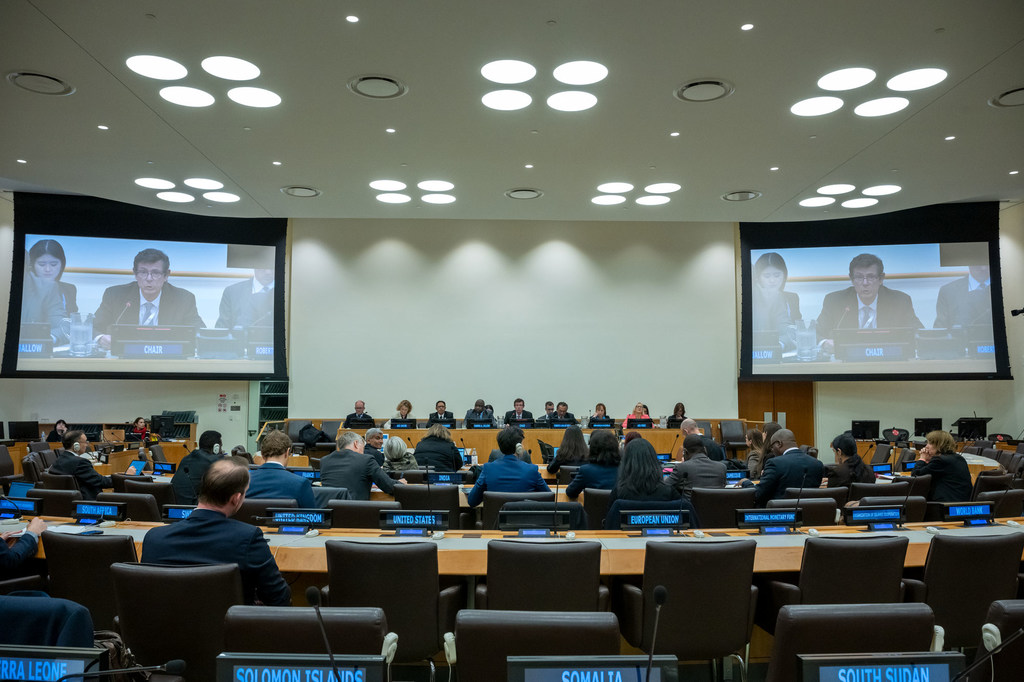
The UN Peacebuilding Commission meets on transitional justice in Colombia, The Gambia, and Timor-Leste.
UN Photo/Loey Felipe
 
The UN Peacebuilding Commission meets on transitional justice in Colombia, The Gambia, and Timor-Leste.

 https://news.un.org/en/story/2023/04/1136197
https://creativecommons.org/licenses/by/3.0/legalcode

пятница, 28 апреля 2023 г.

Sudan latest: Tens of thousands on the move; spectre of ethnic clashes, hunger draws closer


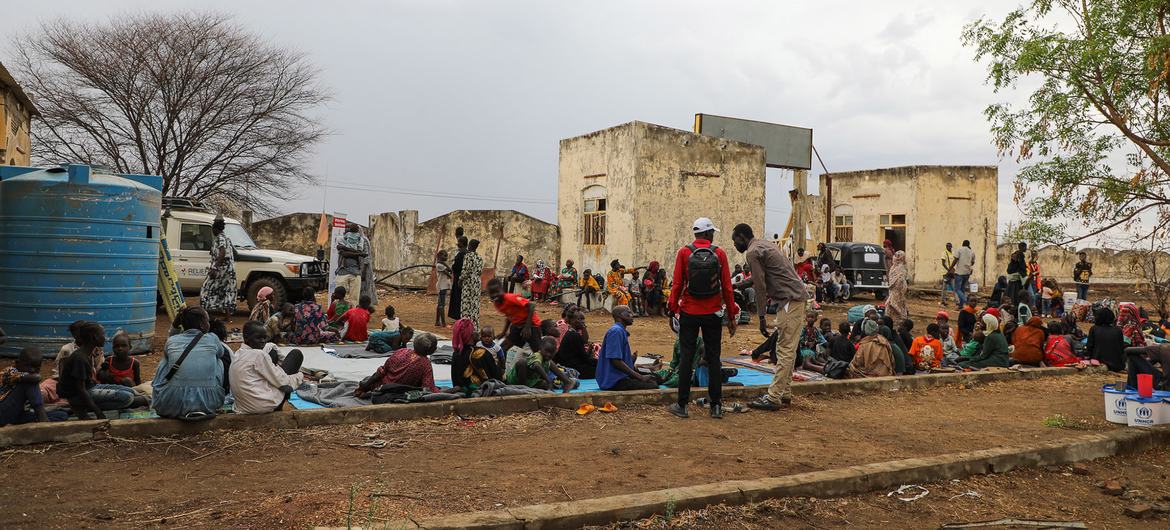
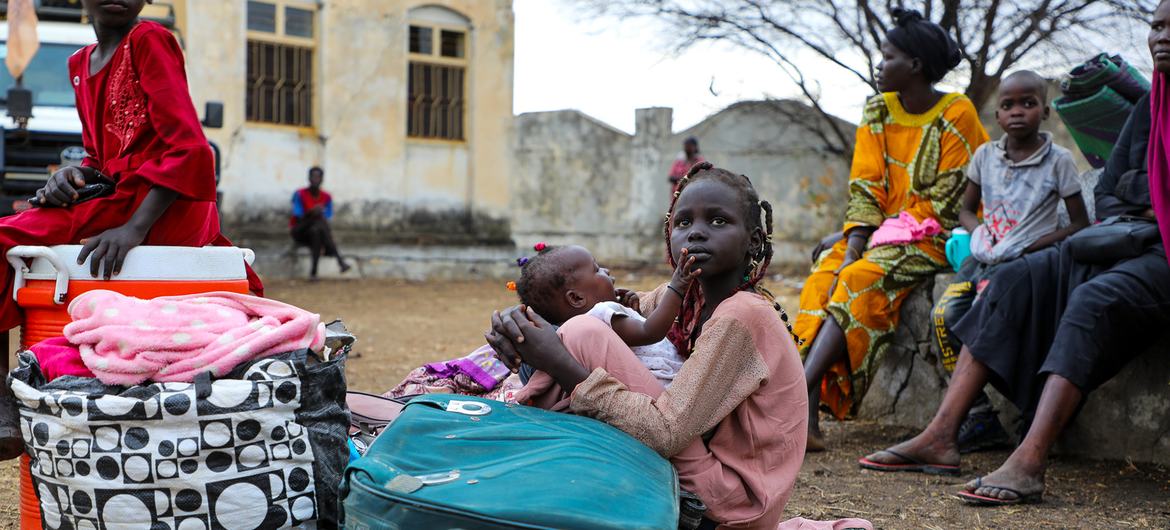
UNHCR has set up a transit centre in Renk in South Sudan for people fleeing violence in Sudan.
© UNHCR/Charlotte Hallqvist
 
UNHCR has set up a transit centre in Renk in South Sudan for people fleeing violence in Sudan.

28 April 2023
Humanitarian Aid

Civilians in Sudan, including scores of internally displaced people and refugees, are scrambling for safety and suffering the disastrous consequences of the violence there, as many aid operations have been forced to pause, UN humanitarians said on Friday.

The UN refugee agency (UNHCR) said that tens of thousands of refugees from South Sudan, Ethiopia and Eritrea living in the country have fled the fighting between the Sudanese Armed Forces (SAF) and the Rapid Support Forces (RSF) in the Khartoum area.

Tweet URL

The newly displaced have found shelter in existing refugee camps further east and south, creating new humanitarian challenges.

UNHCR is also particularly concerned about the situation in the Darfur region, where fears are deepening of a revival of ethnic tensions.

Darfur alert

The agency’s representative in Sudan, Axel Bisschop, told reporters in Geneva that Darfur might present the “biggest challenge” from a humanitarian point of view. “We’re concerned that the intercommunal violence is going to increase and that we might have some situations which will repeat in relation to what we had a couple of years ago,” in a region which has already experienced severe conflict and displacement, he said.

UNHCR stressed that Darfur presents “a myriad of pressing protection issues”, highlighting that a number of sites hosting internally displaced people have been burned to the ground, while civilian houses and humanitarian premises have been hit by bullets.

Concerns over the region are shared by the UN rights office (OHCHR), which warned on Friday of a “serious risk” of violence escalating in West Darfur as the hostilities between the RSF and SAF have triggered intercommunal violence.

OHCHR spokesperson Ravina Shamdasani said that in El Geneina, West Darfur, “deadly ethnic clashes” have been reported and an estimated 96 people have been killed since 24 April.

Soundcloud

Guterres ‘deeply grateful’ to governments aiding UN evacuation

The UN Secretary-General expressed his gratitude to France and other nations who have helped with the relocation and evacuation of UN staff from Khartoum and elsewhere this week.

In a statement issued by his Spokesperson, António Guterres highlighted help from France in safely transporting more than 400 UN personnel and dependents out of Sudan.

“The French Navy transported more than 350 of our colleagues and their families from Port Sudan to Jeddah, in Saudi Arabia, on Tuesday night.”

On Thursday, more than 70 UN and affiliated personnel, as well as others, were flown on a French Air Force plane from El Fasher, Sudan, to the capital of Chad.

“We also thank the authorities in the Kingdom of Saudi Arabia, Chad, Kenya and Uganda for facilitating the arrival of our colleagues and their families.

The Secretary-General is also very thankful to the many other Member States, including the United States, Jordan, Sweden, Germany, the United Kingdom and Canada, who have assisted in ensuring the safe transport of UN personnel.”

Rights abuses rise

The overall death toll in the conflict has risen to at least 512, according to the latest figures from the Sudanese Ministry of Health quoted by OHCHR on Friday, with the understanding that this is almost certainly a very conservative estimate.

While the fragile ceasefire has led to a decrease in fighting in some areas, allowing some to flee their homes in search of safety, human rights abuses against people on the move - such as extortion - have been rife, Ms. Shamdasani said.

A UNHCR emergency transit centre in Renk in South Sudan is receiving displaced people from Sudan.
© UNHCR/Charlotte Hallqvist
 
A UNHCR emergency transit centre in Renk in South Sudan is receiving displaced people from Sudan.

Growing displacement

Mr. Bisschop said that Sudan hosts over a million refugees, notably from South Sudan, Ethiopia and Eritrea.

UNHCR has received reports of around 33,000 refugees having fled from Khartoum to refugee camps in White Nile State, 2,000 to the camps in Gedaref and 5,000 to Kassala since the start of the crisis two weeks ago.

Thousands of people - Sudanese citizens, including many internally displaced people, and refugees living in Sudan - have also fled the country.

UNHCR spokesperson Matthew Saltmarsh said that in Chad, UNHCR together with the Government has registered around 5,000 arrivals so far, and that at least 20,000 have crossed. 

Some 10,000 people have crossed to South Sudan, while in Egypt, Central African Republic and Ethiopia, there have been an unknown number of arrivals, given the speed at which the situation is unfolding and the scale of the country.

Dispalced people who arrive at the UNHCR transit centre in Renk, South Sudan, receive relief items.
© UNHCR/Charlotte Hallqvist
 
Dispalced people who arrive at the UNHCR transit centre in Renk, South Sudan, receive relief items.

Lifesaving assistance on pause

UNHCR said the security situation has forced it to “temporarily pause” most of its aid operations in Khartoum, the Darfurs and North Kordofan, where it has become “too dangerous to operate”.

“The suspension of some humanitarian programmes is likely to exacerbate protection risks faced by those who rely on humanitarian assistance to survive,” UNHCR warned.

Mr. Bisschop said that UNHCR was working closely with the UN World Food Programme (WFP), to see how the food that is already positioned in the country can be provided.

Brenda Kariuki, WFP’s Regional Communications Officer for East Africa, said that amid the crisis, millions more across the region could be plunged into hunger. In Sudan, security threats to humanitarian operations, as well as the looting of WFP supplies from warehouses and the theft of vehicles used to transport aid, were depriving the most vulnerable of desperately needed assistance, the UN agency said.

Around one-third of the country’s population, or some 15.8 million people, were already in need of aid before the fighting started. The UN’s 2023 Sudan Humanitarian Response Plan, for a total of $1.7 billion, remains only 13.5 per cent funded.

Fleeing into CAR

Briefing correspondents in New York, Deputy UN Spokesperson Stephane Dujarric, said that humanitarians were reporting some 3,000 people have crossed the Sudanese border into northern Central African Republic, CAR, setting up makeshift settlements.

“Local authorities are exploring the possibility of relocating them in Birao, far from the border region”, and more arrivals are expected.

With Sudan a major supplier of essential goods to CAR, especially during the rainy season, which runs from now through October, prices are ticking up and some items such as sugar and millet have doubled in price in CAR since the fighting began.

Some 120,000 people were already in need of humanitarian assistance in the northern part of the country, highlighting the damaging impact of the fighting spilling across Sudan’s borders.

Healthcare in jeopardy

Meanwhile, the World Health Organization (WHO) reported on Thursday that in Khartoum, more than 60 per cent of health facilities are closed and only 16 per cent are operating as normal.

WHO spokesperson Christian Lindmeier told media in Geneva on Friday that WHO has verified 25 attacks on healthcare since the start of the fighting, which killed eight people and injured 18.

The UN Children’s Fund (UNICEF) previously warned that the ongoing violence has disrupted “critical, life-saving care” for some 50,000 children suffering from severe acute malnutrition.

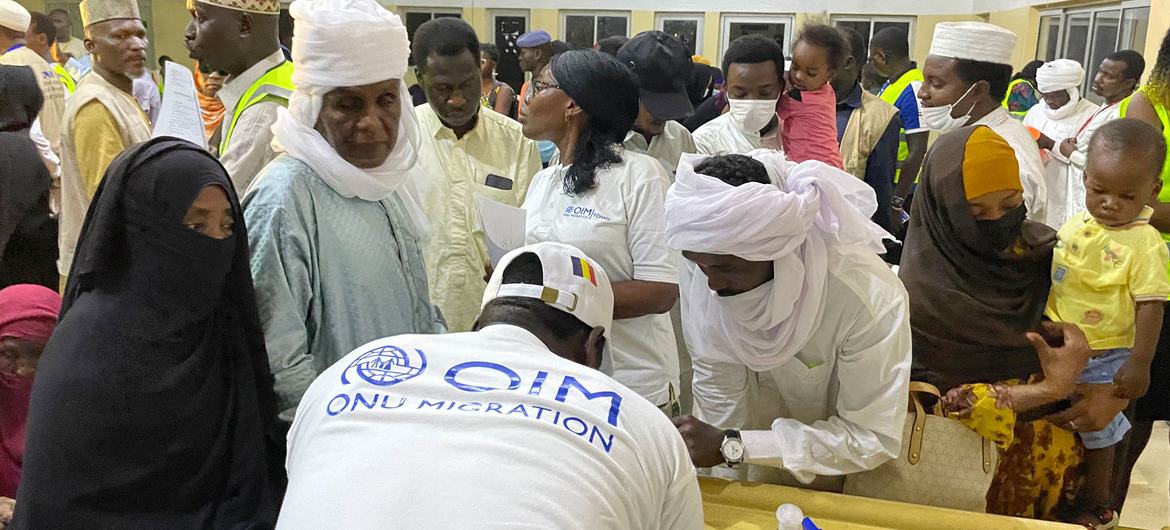
Evacuees from Sudan are assisted by Chadian authorities and IOM staff on their arrival in N’Djamena, the country's capital.
IOM
 
Evacuees from Sudan are assisted by Chadian authorities and IOM staff on their arrival in N’Djamena, the country's capital.

Evacuees arrive in Chadian capital from Sudan

The first group of evacuees from Sudan to be assisted by the UN migration agency IOM, arrived at N’Djamena’s Hassan Djamous International Airport in Chad late on Thursday, in two special flights chartered by the Chadian authorities.

The group included 116 males and 110 females, 39 of whom were children. 

IOM helped the Chadian authorities with the registration of the new arrivals, the identification and referral of vulnerable cases, and post-arrival assistance including cash to support onwards transportation to reunite evacuees with their families

“We are working around the clock to continue supporting the Government of Chad in this delicate and complex situation, despite massive gaps in much needed funding,” says Anne Kathrin Schaefer, IOM Chief of Mission in Chad. 

These efforts are closely coordinated with the Ministry of Foreign Affairs, Chadians Abroad and International Cooperation which heads a Government Crisis Cell, established to coordinate the evacuation operations from Sudan. 

“Our priority is to ensure that all those who have arrived receive adequate support to help them reunite with their families, but also medical assistance, including mental health and psychosocial support,” she added.


 https://news.un.org/en/story/2023/04/1136172

https://creativecommons.org/licenses/by/3.0/legalcode

Background to a crisis: In Sudan, the stakes are high for the whole of Africa

 
A UNHCR emergency transit centre in Renk in South Sudan is receiving displaced people from Sudan.
© UNHCR/Charlotte Hallqvist
 
A UNHCR emergency transit centre in Renk in South Sudan is receiving displaced people from Sudan.
28 April 2023
Peace and Security

A turbulent transition to civilian rule has been underway in Sudan since the ouster of former President Omar Hassan El-Bashir in April 2019. The civilian-led transitional Government put in place later that year, through a power-sharing agreement between military and civilian leaders, was toppled by a military coup in October 2021.

Since then, the country has been without a civilian-led government.

subsequent political process facilitated jointly by the United Nations, the African Union and the Intergovernmental Authority on Development (IGAD) resulted in an agreement being signed in December 2022 between the military and some key civilian political stakeholders, jumpstarting efforts aimed at restoring a credible democratic civilian government.

At the same time, the country’s economy has struggled, and communal clashes and other acts of armed violence increased, with civilians paying a heavy price, with many lives lost and homes destroyed in the Darfur region and the South Kordofan and Blue Nile states.

The continued political crisis compounded marginalization and political grievances, as well as unresolved conflicts over land ownership. 

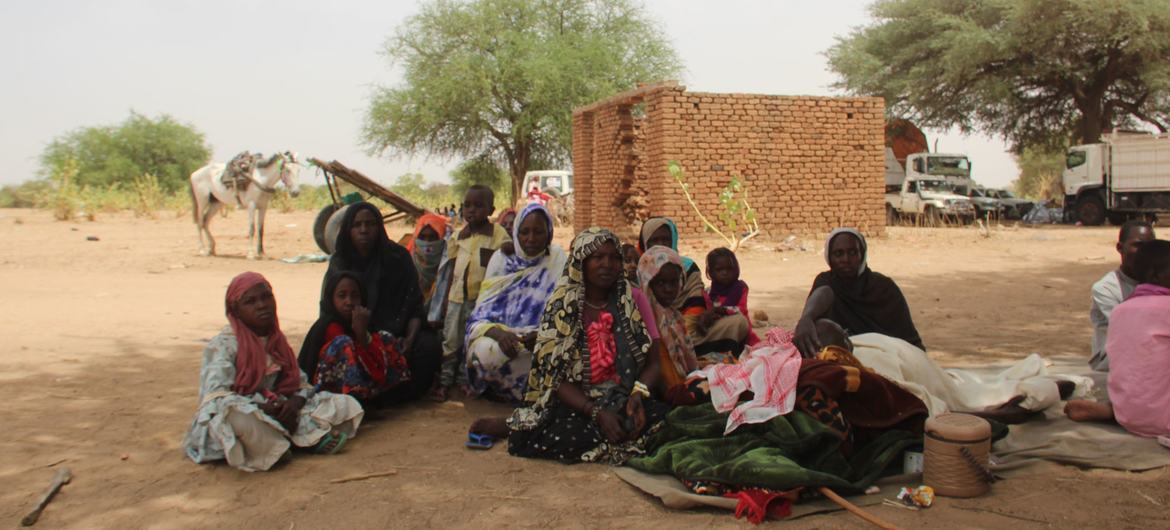
A group of refugees from Sudan rest under a tree after crossing into Chad.
© UNICEF/Donaig Le Du
 
A group of refugees from Sudan rest under a tree after crossing into Chad.

Complex challenges

The challenges facing Sudan are many, including pressing humanitarian and economic needs, ensuring security and justice and respect for human rights, peacemaking, and advancing the democratic transition.

Despite this, following the signing of the political framework agreement in December 2022, the political process continued to make progress at the start of the year with efforts focused on resolving outstanding issues that would pave the way for a final political agreement.

Some facts:

  • Sudan has a population of 48 million
  • It is the third largest on the African continent
  • There are 25 UN entities operating in Sudan

In March, the Secretary-General’s Special Representative for Sudan, Volker Perthes, reported that Sudanese stakeholders were “closer than they have every been” to a settlement and the return to a civilian government.

Fresh clashes derail political talks

Those hopes were dashed when fighting erupted on 15 April between the Sudanese Armed Forces (SAF), led by Lieutenant General Abdel-Fattah Al-Burhan, and the Rapid Support Forces (RSF), led by Lieutenant General Mohamed Hamdan Dagalo, leaving hundreds dead and thousands injured. 

Even before the current fighting began, humanitarian needs across the Sudan had reached record levels, with 15.8 million people – about a third of the total population – requiring humanitarian assistance this year. The latest violence has led to acute shortages of food, water, medicines and fuel, while the price of essential items, including transport, have skyrocketed.

The country also hosts over a million refugees and asylum-seekers, including from South Sudan, Eritrea, Syria, Ethiopia, the Central African Republic, Chad and Yemen. Secretary-General António Guterres has called on the parties to immediately cease hostilities and allow all civilians to evacuate from areas affected by the fighting.

Refugees from Sudan continue to arrive in Chad.
© UNICEF/Donaig Le Du
 
Refugees from Sudan continue to arrive in Chad.

The UN in Sudan

The UN has been supporting the Sudanese democratic transition through the efforts of the UN Integrated Transition Assistance Mission in Sudan (UNITAMS), a special political mission headed by Special Representative Perthes.

While hundreds of UN staff members and their families have been temporarily relocated within Sudan or evacuated outside of Sudan, the Organization has pledged to carry on with its lifesaving work with its personnel, both inside and outside the country, focused on the immediate priorities of a sustained ceasefire with a monitoring mechanism; a return to political negotiations; and the alleviation of human suffering.


 https://news.un.org/en/story/2023/04/1136187

https://creativecommons.org/licenses/by/3.0/legalcode

UN expert urges Japan to ‘step up pressure’ on Myanmar junta

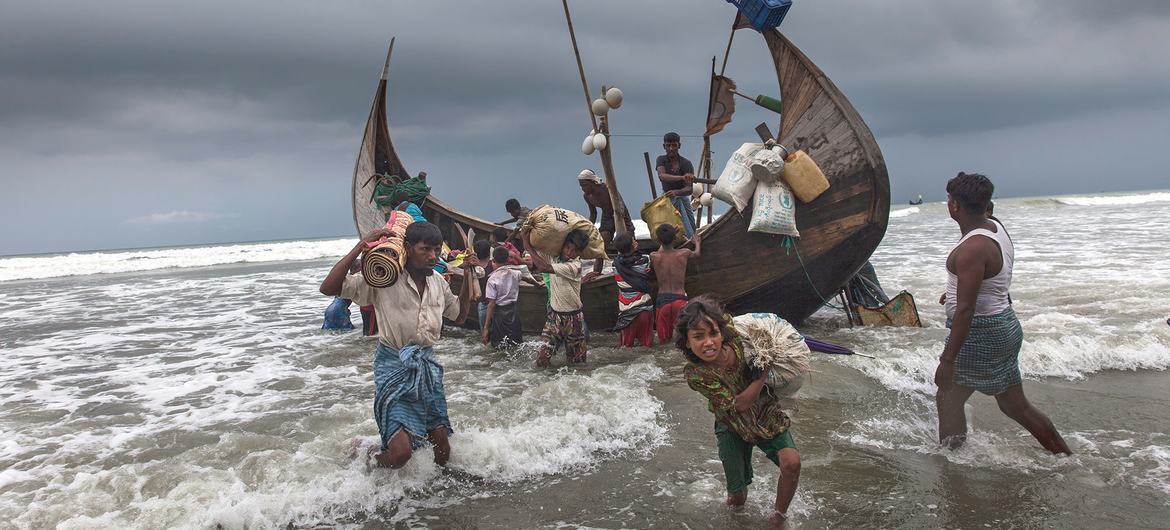
Rohingya refugees walk ashore after traveling by boat from Myanmar on the Bay of Bengal to Cox's Bazar in Bangladesh. (file)
© UNICEF/Patrick Brown
 
Rohingya refugees walk ashore after traveling by boat from Myanmar on the Bay of Bengal to Cox's Bazar in Bangladesh. (file)
28 April 2023
Human Rights

Japan must assume a greater leadership role to address the deteriorating crisis in Myanmar and “step up pressure on the country’s military junta”, a UN-appointed independent rights expert urged on Friday.

“The international community’s response to the crisis in Myanmar is failing, and that failure has contributed to a lethal downward spiral that is devastating the lives of millions of people,” Tom Andrews, Special Rapporteur on the situation of human rights in Myanmar, said at the end of a 10-day official visit to Japan.

Tweet URL

Referring to the worsening situation in the country, he said Senior General Min Aung Hlaing, who has led the junta since the February 2021 coup, had responded to widespread opposition to their rule with “barbarism and oppression” against the people of Myanmar.

‘Hallmarks of the junta’

Arbitrary detention, torture and systematic attacks on villages have become hallmarks of the junta,” he said. “The military is repeatedly attacking civilian populations throughout the country and has quite literally made war on the Myanmar people.”

Japan’s leadership will be “vital” in recalibrating a failing international response to the crisis, he said, calling on Tokyo to work with regional and global allies to weaken the capacity of Myanmar’s military junta to attack its citizens.

‘This is an emergency’

The Special Rapporteur also raised alarms about an impending humanitarian disaster in the Rohingya refugee camps in Bangladesh. Without immediate additional funding, a decision to cut food rations by an additional 20 per cent will be made in the coming weeks, reducing daily food rations to 27 cents per person. The cuts would also potentially eliminate food rations completely for hundreds of thousands.

This is an emergency,” he warned, adding that he had visited Japan based on his belief Tokyo has an “essential” role to play in resolving the crisis. “Further cuts will leave the Rohingya, already victims of genocidal attacks in Myanmar, at risk of starvation and drive thousands into boats and dangerous land routes in utter desperation.”

Impose sanctions

As such, he called on the Government of Japan and all Member States to immediately increase humanitarian contributions, including by redirecting funds from development programmes in Myanmar. He also urged Japan to impose targeted economic sanctions on the Myanmar military and its key sources of funding, just as it is doing in response to the crisis in Ukraine.

“Economic sanctions that deprive the junta of the resources required to operate its war-making machinery would weaken the capacity of the junta to attack its people,” the Special Rapporteur said.

Renounce ‘fraudulent’ elections

In addition, he urged Japan to terminate a Ministry of Defence training programme for military personnel from Myanmar, referencing credible reports linking previous trainees to military units that have committed atrocities against civilians.

He also called on the Government of Japan to clearly and consistently renounce the junta’s plan to stage fraudulent national elections as a means of legitimizing itself.

“It is not possible to hold a genuine election when opposition leaders are arrested, detained, tortured and executed, when key political parties have been dissolved, when it is illegal to criticize the junta, and when journalists are imprisoned for doing their job,” he said.

The upcoming Group of Seven (G7) Summit of leading economies in Hiroshima presents an opportunity for Japan to shine a light on the situation in Myanmar before the world, he said, urging the Prime Minister to ensure that the crisis is high on the agenda and that a strong, unified message and action emerges.

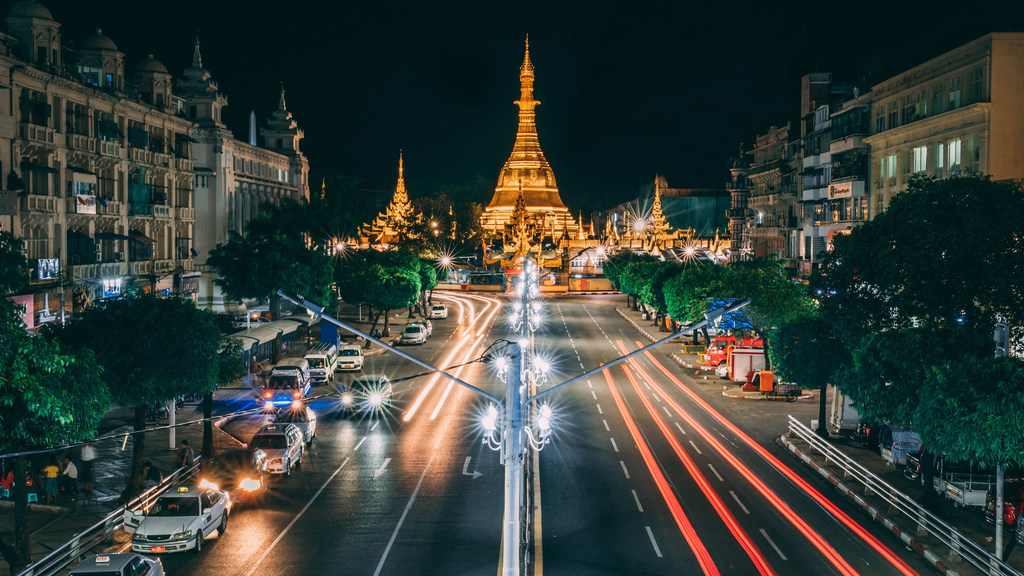
The Sule Pagoda in downtown Yangon, Myanmar.
Unsplash/Harish Shivaraman
 
The Sule Pagoda in downtown Yangon, Myanmar.

Special Rapporteurs

Special Rapporteurs and other rights experts are appointed by the UN Human Rights Council, are mandated to monitor and report on thematic issues or country situations, are not UN staff, and do not receive a salary for their work.


 https://news.un.org/en/story/2023/04/1136182

https://creativecommons.org/licenses/by/3.0/legalcode

"Afghanistan: Security Council condemns Taliban’s ban on women working for UN | UN News"

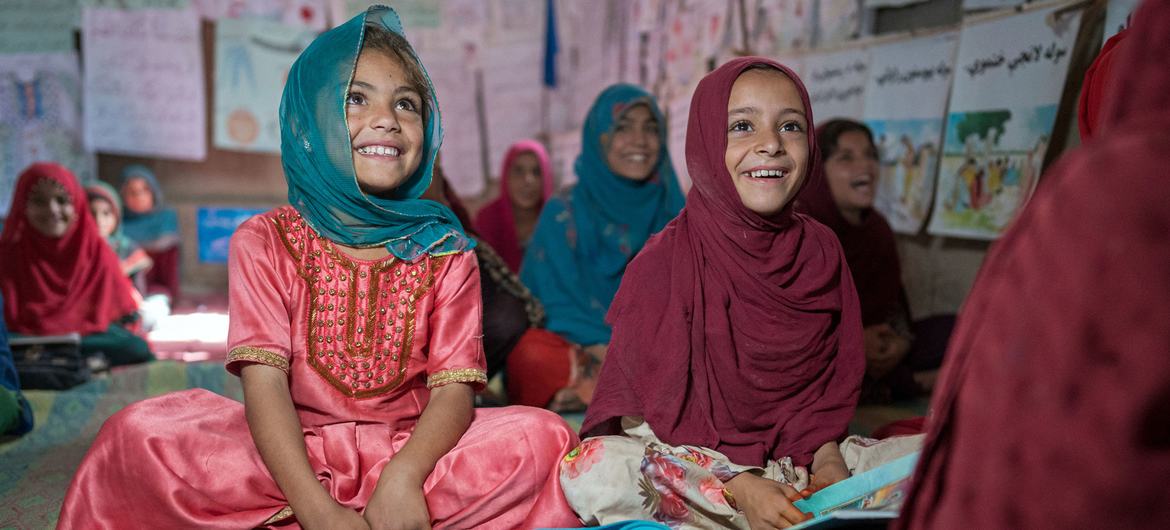
Young girls attend class at a UNICEF-supported school in Helmand Province, Afghanistan. (file)
© UNICEF/Mark Naftalin
 
Young girls attend class at a UNICEF-supported school in Helmand Province, Afghanistan. (file)
27 April 2023
Women

In a landmark resolution, the UN Security Council on Thursday condemned the de facto rulers of Afghanistan’s decision to ban women nationals from working for the United Nations, calling for Taliban leaders to “swiftly reverse” their decision.

The resolution passed unanimously by the 15-member body in New York, calls for the “full, equal, meaningful and safe participation of women and girls in Afghanistan”, and urges all countries and organisations with influence on the fundamentalist rulers of the country, “to promote an urgent reversal” of policies which have in effect erased women from public life.

Since the Taliban takeover of July 2021, when its forces toppled the democratically-elected Government, it has rolled back a wide range of human rights of women and girls, including a ban on attending high school and university, restrictions on movement and work, and in December, a decree banning female nationals from working from most NGOs.

Earlier this month the Taliban extended their ban to women working for the United Nations.

Afghan girls arrive in Rwanda to continue their education.
IOM/Robert Kovacs
 
Afghan girls arrive in Rwanda to continue their education.

The UN underlined its “unequivocal condemnation” of the move in early April, noting that it contravenes international law, including the UN Charter. All UN staff have been told not to report to the office, except for some critical tasks, while an operational review is carried out, concluding on 5 May.

record 28.3 million people in Afghanistan are in need of assistance this year, making Afghanistan the world’s largest aid operation, with the UN asking for $4.6 billion to fully fund relief efforts this year. The UN Humanitarian Coordinator warned this month that Afghanistan was also the world’s least well-funded operation, with less than five per cent funding pledged so far.

‘Deep concern’

The Security Council resolution lays out ambassadors’ “deep concern” over the ban on women working at the UN, saying that – along with the other erosions of basic rights – “will negatively and severely impact” the UN aid operations throughout the country, “including the delivery of life-saving assistance and basic services to the most vulnerable”.

Security Council Meets on Situation in Afghanistan
UN Photo/Manuel Elías
 
Security Council Meets on Situation in Afghanistan

It stresses that the UN Assistance Mission in the country, UNAMA, will also be unable to implement its humanitarian mandate until the ban ends. The resolution emphasizes that the ban “is unprecedented in the history of the United Nations.”

‘Dire’ economic and humanitarian conditions

The resolution also stresses the urgent need to keep addressing Afghanistan’s “dire economic and humanitarian situation” and help the country restore self-reliance, recognizing the importance of allowing the Central Bank to use assets which are currently frozen outside the country, “for the benefit of the Afghan people.”

The Council backed the continued work of UNAMA reiterating its “full support”, and called on all with a stake in Afghanistan, including Taliban authorities, “to ensure the safety, security and freedom of movement of the United Nations and associated personnel throughout  the country.”


https://creativecommons.org/licenses/by/3.0/legalcode


 https://news.un.org/en/story/2023/04/1136162

четверг, 27 апреля 2023 г.

Syria: UN envoy points to ‘important juncture’ in efforts towards peace


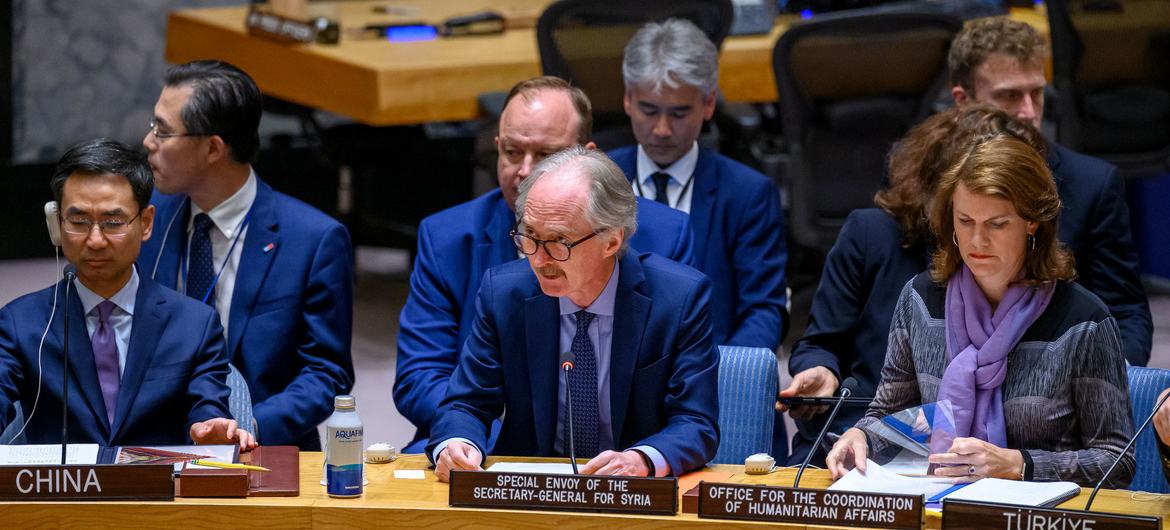
Geir Pedersen, Special Envoy of the Secretary-General for Syria, briefs the Security Council meeting on the situation in Syria.
UN Photo/Loey Felipe
 
Geir Pedersen, Special Envoy of the Secretary-General for Syria, briefs the Security Council meeting on the situation in Syria.
27 April 2023
Peace and Security

Renewed diplomatic attention on Syria in the aftermath of the recent devastating earthquakes that hit the country and neighbouring Türkiye could help to unlock stalled peace efforts, UN Special Envoy Geir Pedersen told the Security Council on Thursday. 

“We are at a potentially important juncture, with renewed attention on Syria – particularly from the region – that could assist our efforts in advancing a political solution to this conflict”, he said. 

Tweet URL

“But for this renewed attention to help unlock progress, many actors will need to take concrete steps – not just one set of actors.” 

Diplomatic engagement continues 

Mr. Pedersen said since the February earthquakes, diplomacy has continued involving the Syrian Government and the “Astana players”- a reference to the December 2019 meeting between Russia, Türkiye and Iran in the Kazakh capital - as well as “new openings of engagement” between Syria and Arab countries. 

The envoy also continues his engagement towards facilitating a Syrian-led, Syrian-owned political process.  He stressed that “the UN cannot do this alone” and needs the support of all key players. 

“No existing groups of players – not the Syrian parties, not the Astana players, not the Western players, not the Arab players – can alone bring about a political solution,” he said.  

“Unlocking each of Syria’s myriad problems requires several keys – each held by a different stakeholder, who cannot be overlooked, and who can block if excluded.” 

Seize the opportunity 

Progress will require getting a wider group of players to work together, he said, who will all have to make contributions, in a coordinated, multilateral effort.  

“I will continue to engage directly with the Syrian parties and to remind them, and in particular at this juncture the Government of Syria, that they should seize the opportunity with a readiness to move forward on substantive issues,” he said. 

Mr. Pedersen also underlined his readiness to facilitate inter-Syrian dialogue, including reconvening the Constitutional Committee in Geneva, which has not met in nearly a year. 

In the interim, he continues to convene a broad spectrum of Syrians in Geneva and the region, including women’s and civil society representatives.  “These meetings show that Syrians still have much that they can agree upon, across many divides,” he said. 

Violence on the rise 

Mr. Pedersen also expressed concern that the brief calm that followed February’s deadly earthquakes has further eroded.  Violent incidents have been increasing in the northwest involving pro-Government forces, armed opposition forces and the terrorist group HTS. 

He said relative calm in the northeast has been punctuated by Turkish and armed opposition groups targeting positions of the Syrian Democratic Forces (SDF), a Kurdish-led militia, reportedly in response to SDF shelling and rocket attacks, including on Turkish soldiers. 

Israeli strikes are becoming increasingly more frequent, while southwest Syria remains turbulent. Sporadic ISIL attacks also appear to be on the rise in some areas, with increasing Government, Russian and US-led coalition strikes in response. 

‘Unprecedented’ needs 

The current scale of humanitarian need in Syria is “unprecedented, even in the long and brutal history of the Syria crisis”, said Lisa Doughten, Resource Mobilization Director for UN humanitarian coordination office, OCHA, speaking on behalf of relief chief Martin Griffiths. 

Referring to the devastating earthquakes that struck Türkiye and Syria almost three months ago, she said the UN was continuing to support recovery in the battered northwest of Syria. 

More than three million have received hot meals and rations, while 1.1 million have received some form of healthcare. 

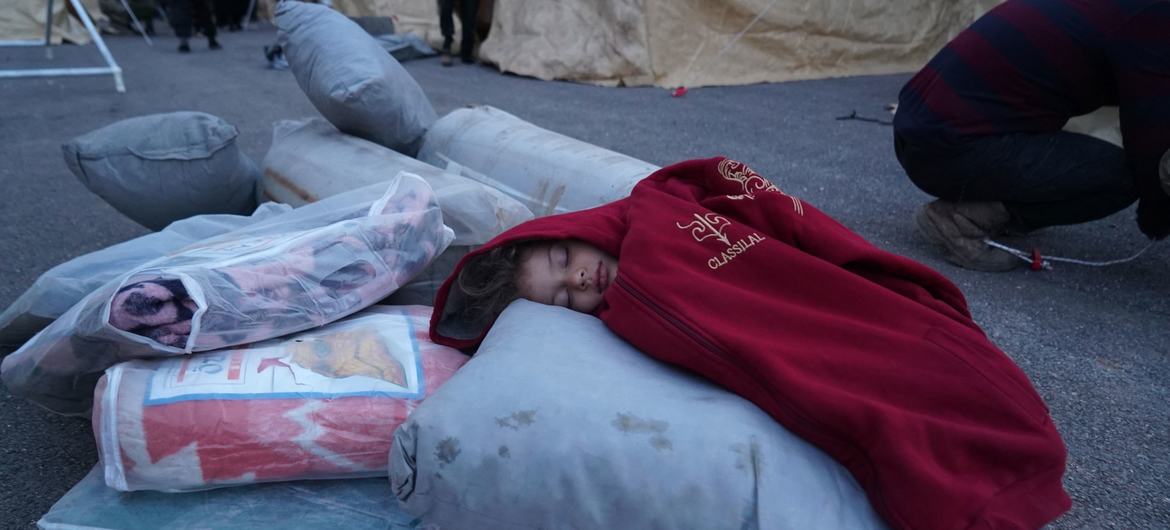
A child sleeps on relief items at a reception centre in Jandairis town in northern Syria.
© UNOCHA/Mohanad Zayat
 
A child sleeps on relief items at a reception centre in Jandairis town in northern Syria.

Rubble removal 

Over 470,000 cubic metres of rubble have been removed, but although progress has been made, “so much more needs to be done”, she told ambassadors. She said the devastation underscored the “dire reality” facing millions of Syrians: 

“That 12 years of armed conflict, growing macroeconomic pressures, dwindling public services and decaying critical infrastructure, have left the population of Syria acutely vulnerable to shocks and stresses, let alone those as devastating as the recent earthquakes.” 

Nearly seven million are internally displaced nationwide, many multiple times, she reminded. Around 80 per cent have been displaced “for at least five years”. 

“Durable solutions are needed for this crisis, starting with an end to the conflict.” 

She said the three available border crossings in the northwest, on the Turkish border, continued to be an essential aid corridor, with “near daily” interagency convoys reaching millions each month. 

She told ambassadors that sustained support from donors, authorities on the ground, Member States “and this Council”, was essential “to keep pace with the humanitarian needs of today, and even more so, those of tomorrow.” 


 https://news.un.org/en/story/2023/04/1136157


https://creativecommons.org/licenses/by/3.0/legalcode