суббота, 22 мая 2021 г.

Libya: Ceasefire, planned elections, offer rare window of hope, Security Council hears


UNSMIL
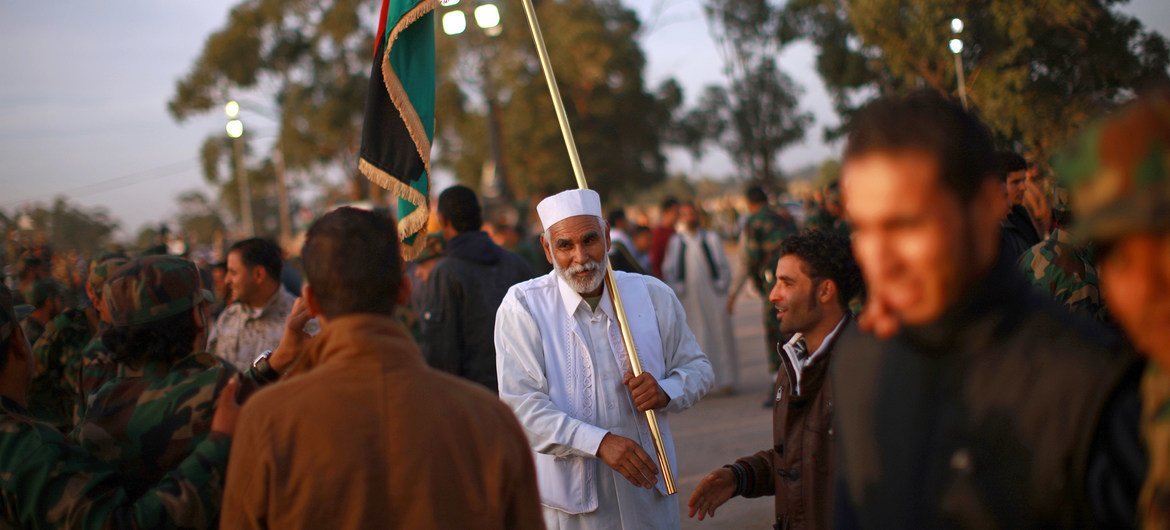
An old man holds Libya’s revived flag during a military graduation ceremony in the western city of Zawia. December 2011.
21 May 2021

On the heels of recent positive developments, the Secretary-General’s Special Envoy for Libya pointed to renewed hope for peace in the conflict-affected country, and stability across the wider region, in a briefing to the Security Council on Friday.

Ján Kubiš, who is the Secretary-General’s Special Envoy on Libya and heads the UN support mission in the country (UNSMIL), outlined progress made since the agreement of a ceasefire in October 2020, the launch of a Libyan Political Dialogue Forum and the start of a process of reunifying its State institutions.

He called for all parties to redouble their commitment to Libya’s peace process and stay the course ahead of critical elections in December.

Strides and stalls

Welcoming the continued holding of Libya’s ceasefire agreement, Mr. Kubiš said confidence-building between the parties continues notwithstanding occasional clashes between armed groups.

In recent months, hundreds of prisoners and detainees were released by both sides, with releases taking place almost weekly in different parts of the country during the month of Ramadan. 

Efforts also continue toward deploying UNSMIL monitors in support of the Libyan-led and Libyan-owned Ceasefire Monitoring Mechanism.

However, progress on key issues such as the reopening of a main coastal road and the withdrawal of foreign mercenaries and foreign fighters – laid out in the October ceasefire agreement and endorsed by the Security Council in resolution 2570 (2021) – has been stalled.

In addition, he said, a recent report of the panel of experts tasked with overseeing painted a bleak picture of non-compliance with Libya’s arms embargo. 

A critical election

“It is up to the Libyan authorities and institutions to use the opportunities of the newly regained nascent unity and sovereignty to continue the political transition,” said Mr. Kubiš. 

Outlining progress made in preparing for the presidential and parliamentary elections scheduled for 24 December, including the production of 2.3 million voter cards, he nevertheless said many steps remain.

The House of Representatives has the responsibility to clarify the constitutional basis for elections and adopt the necessary electoral legislation by 1 July, allowing the country’s High National Elections Commission enough time to prepare ahead of voting.

A draft legislation on direct presidential elections is ready to be presented to the House of Representatives, according to its Speaker.  Mr. Kubiš warned that election preparations will be futile if the law is not adopted.

Mercenaries and foreign fighters 

As Libya continues along the road towards elections and institution-building, the presence and activities of thousands of mercenaries, foreign fighters and armed groups remains a critical threat – not just to Libya, but to the wider region.

In his briefing today, Mr. Kubiš cited recent violent incidents in Chad, including clashes with armed groups that killed the country’s President, Idriss Déby Itno, in April. 

The high mobility of terrorists and armed groups, as well as the movement of migrants and refugees trafficked across porous borders by organized criminal networks, all increase the risk of instability.

In that context, Mr. Kubiš said foreign fighters and armed groups with origins in the region must be withdrawn in an orderly fashion, accompanied by disarmament, demobilization and reintegration (DDR) programmes and coupled with efforts to address the root causes of conflict.

https://news.un.org/feed/view/en/story/2021/05/1092542
https://creativecommons.org/licenses/by/3.0/legalcode

пятница, 21 мая 2021 г.

UN chief welcomes ceasefire announcement between Israel and Hamas


UN Photo/Evan Schneider
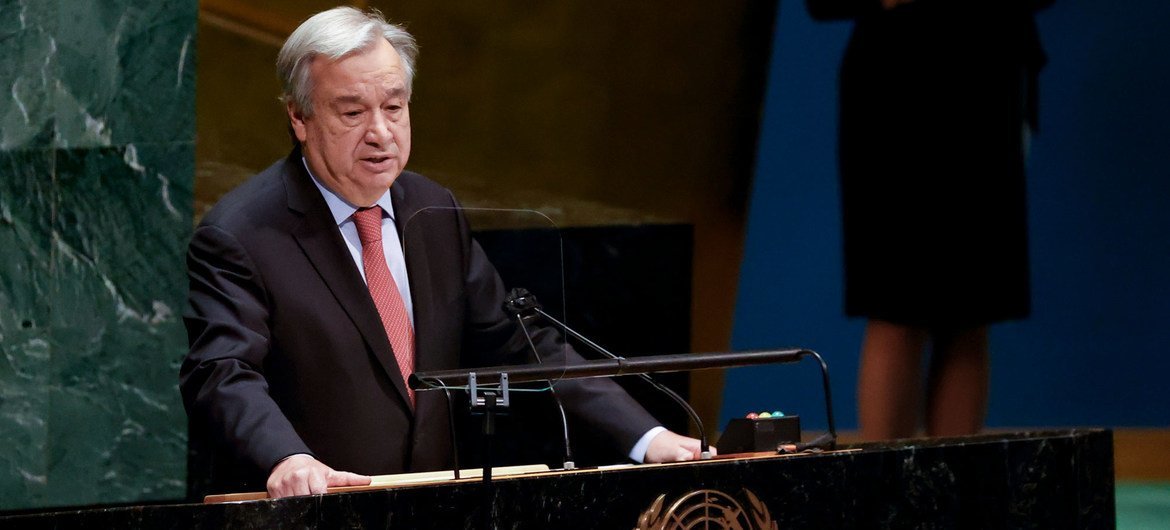
Secretary-General António Guterres addresses the General Assembly meeting on the Situation in the Middle East and the Question of Palestine.
20 May 2021

The UN chief has welcomed the ceasefire declared between Israel and Palestinian militant group Hamas, following 11 days of rocket and air attacks, which have left more than 240 reportedly dead and thousands injured, the majority in the occupied Palestinian enclave of Gaza.

Secretary-General António Guterres made a statement to reporters at UN Headquarters in New York, a few minutes before the negotiated ceasefire was due to take effect.

“I welcome the ceasefire between Gaza and Israel, after 11 days of deadly hostilities”, he said, extending his deepest condolences to all the victims of the violence, and their loved ones, across Israel and the occupied Palestinian territories.

According to latest news reports, at least 232 Palestinians, including more than 60 children have been killed since violence erupted across the Gaza-southern Israeli border on Monday. At least 12 were killed in Israel, as Hamas and other extremist groups unleashed indiscriminate rocket fire, sometimes deep into Israeli territory.

Close coordination

“I commend Egypt and Qatar for the efforts carried out, in close coordination with the UN, to help restore calm to Gaza and Israel”, the UN chief added, calling on all sides to observe the ceasefire.

Mr. Guterres said it was essential for the wider international community to work with the UN, to develop “an integrated, robust package of support for a swift, sustainable reconstruction and recovery, that supports the Palestinian people and strengthens their institutions.”

Tackle root causes

He stressed that leaders in Israel and Palestine had a responsibility “beyond the restoration of calm, to start a serious dialogue to address the root causes of the conflict.”

He described Gaza as an “integral part of the future Palestinian State” saying no effort should be spared to bring about “real national reconciliation that ends the division.” Hamas has controlled the enclave since winning elections in 2006 and driving our the rival Fatah faction, which holds power in the West Bank.

Invested in peace

Mr. Guterres underscored the UN’s “deep commitment” to working with Israelis and Palestinians, and with all international and regional partners, including through the Middle East Quartet, “to return to the path of meaningful negotiations to end the occupation and allow for the realization of a two-State solution on the basis of the 1967 lines, UN resolutions, international law and mutual agreements.”

Asked what he thought the next step should be, the Secretary-General said that stabilizing the ceasefire was the immediate priority.


https://news.un.org/feed/view/en/story/2021/05/1092372

https://creativecommons.org/licenses/by/3.0/legalcode

Израиль и «Хамас» объявили о прекращении огня


Кабинет безопасности Израиля принял инициативу Египта одобрил введение режима прекращения огня в секторе Газа, сообщается на сайте правительства Израиля. Огонь будет прекращен 21 мая в 2:00 по местному времени (совпадает с московским), уточняет издание N12. Представитель движения «Хамас» подтвердил Reuters, что режим «взаимного и одновременного» прекращения огня вступает в силу с 2:00.

«Кабинет по вопросам безопасности единогласно принял рекомендацию всех глав служб безопасности, начальника генштаба, главы "Шабак" (Служба общей безопасности Израиля.— “Ъ”), главы "Моссада" и главы Совета национальной безопасности принять египетскую инициативу о двустороннем прекращении огня, которое вступит в силу позже»,— указано в заявлении кабинета (перевод «РИА Новости»)

Армия обороны Израиля немедленно прекращает атаки по сектору Газа, сообщили издания «Едиот ахранот» и N12 со ссылкой на источники.

Вооруженный израильско-палестинский конфликт продолжался 11 дней. Поводом стали столкновения между израильской полицией и палестинцами в районе мечети Аль-Акса, а также выселение палестинских семей из квартала Шейх-Джаррах в Восточном Иерусалиме. По данным Минздрава Палестины, в ходе конфликта погибли 230 палестинцев. Израиль сообщал о 12 погибших.

 https://www.kommersant.ru/doc/4818639
https://creativecommons.org/licenses/by/3.0/legalcode

‘Spirt of unity, partnership and collaboration’ needed to realize Sudan’s aspirations


UNDP/Ahmed Alsamani
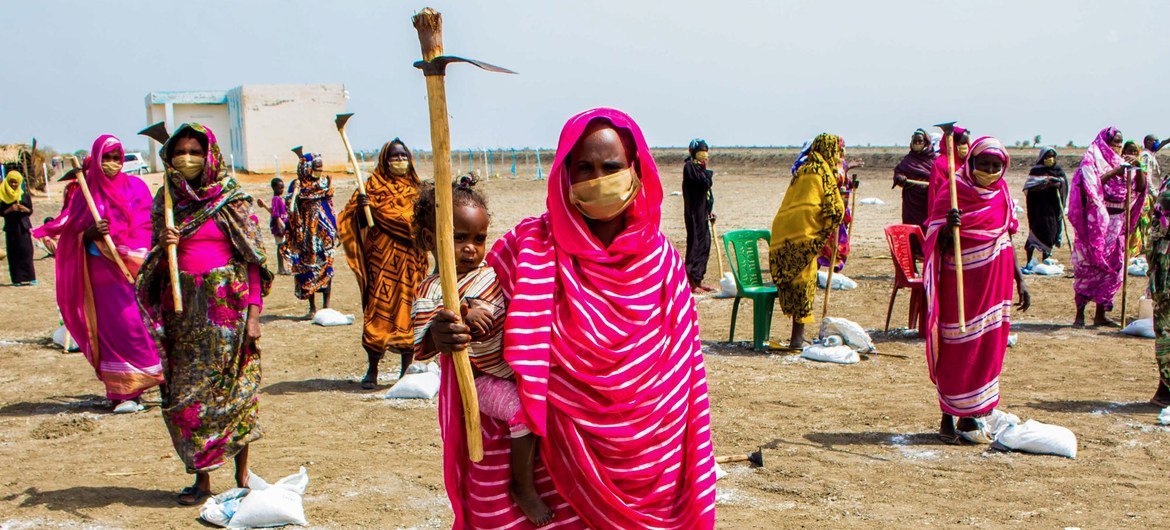
UNDP is supporting Sudanese farmers whose incomes and crop yields have been impacted by COVID-19 lockdowns.
20 May 2021

Moving from Sudan’s current fragile transition period towards stable civilian rule, requires a continued “spirt of unity, partnership and collaboration”, a senior UN official told the Security Council on Thursday.
 

“One of the key messages remains that we expect all parts of Sudan to work together for all of Sudan”, Special Representative Volker Perthes said after consulting on the country’s future with a wide and diverse group of participants.  

Paris Conference 

Having just returned from the Paris Conference, designed to encourage the economic revitalization of the country, he told ambassadors that Member States had announced bilateral debt forgiveness to help Sudan clear its arrears with international financial institutions. 

Sudanese civil society also shared their vision of a new Sudan based on freedom, justice and economic opportunity, while Prime Minister Abadalla Hamdok reiterated his commitment to peace, said Mr. Perthes, who also heads the UN Assistance Mission in Sudan (UNITAMS). 

“I encourage all of Sudan’s international and domestic partners to continue supporting Sudan as it implements key economic and political reforms”.  

Road to comprehensive peace  

Beginning with the peace process, the UN envoy said that on 28 March the Chairman of Sudan’s Sovereign Council – which combines military and civilian representatives - and the leader of rebel group, the Sudan People Liberation Movement, had signed a Declaration of Principles, which paves the way for a final agreement. 

He also said that during talks scheduled for next week, UNITAMS would support the parties as well as neighbouring South Sudan, the mediator, as required. 

The UN official also discussed with Abdulwahid al Nur, leader of the Sudan Liberation Movement/Army, in Darfur, one of the other main non-signatory factions, the importance of engaging politically with the Government for “a comprehensive peace”. 

Political overview 

The Government continues its efforts to advance the political transition, including the “important steps” of establishing a Peace Commission, Anti-corruption Commission, and Transitional Justice Commission, among others, said Mr. Perthes. 

Turning to delays in the transition process, he pointed “most importantly” to the fact that an inclusive and representative Transitional Legislative Council with at least 40 per cent female participation has yet to be realized. 

Amidst “great concern” over the limited progress in implementing the Juba Peace Agreement of October last year, the UN envoy noted some advances, such as preparations to establish its Monitoring and Evaluation Mechanism.  

“Other critical aspects remain unfulfilled”, he said, pointing to security arrangements, a ceasefire, a Joint Protection Force and other security committees, all of which have “a direct bearing on protection of civilians and overall stability”. 

Resolving armed conflict 

After intercommunal clashes that left 144 dead and some 65,000 displaced last month in Darfur, the Special Representative told the Council that the Government had decided to implement further critical security measures, including joint security forces, enhanced security arrangements, related ceasefire committees, and more humanitarian relief. 

Despite the willingness of armed movements to put forward named representatives for ceasefire committees and identify personnel for joint security forces, he said, “deployments have yet to commence”. 

“I fear that without the speedy establishment of these Joint Forces, and the implementation of Sudan’s National Plan for the Protection of Civilians, we could see similar incidents like Geneina be repeated”, the UN official warned, referring to five days of fighting in West Darfur that left scores dead.

Continue supporting Sudan -- Special Representative

Sudanese women

Meanwhile, Sudanese women leaders have continued to draw attention to disparities in safety, basic needs and political participation, demanding their rights as continued reports reveal human rights violations against women and girls, including through social media campaigns inciting violence. 

The Special Representative the Government’s decision to ratify the Convention on the Elimination of Discrimination Against Women was “an important step forward” as well as the Protocol to the African Charter on Human and Peoples’ Rights on the Rights of Women in Africa, and pledged the mission’s continued support for “an environment where women live free of fear for their safety and exercise their full rights”


https://news.un.org/feed/view/en/story/2021/05/1092362

https://creativecommons.org/licenses/by/3.0/legalcode

Myanmar: Rights expert welcomes fresh sanctions against junta, urges other nations ‘step up’


Unsplash/Gayatri Malhotra
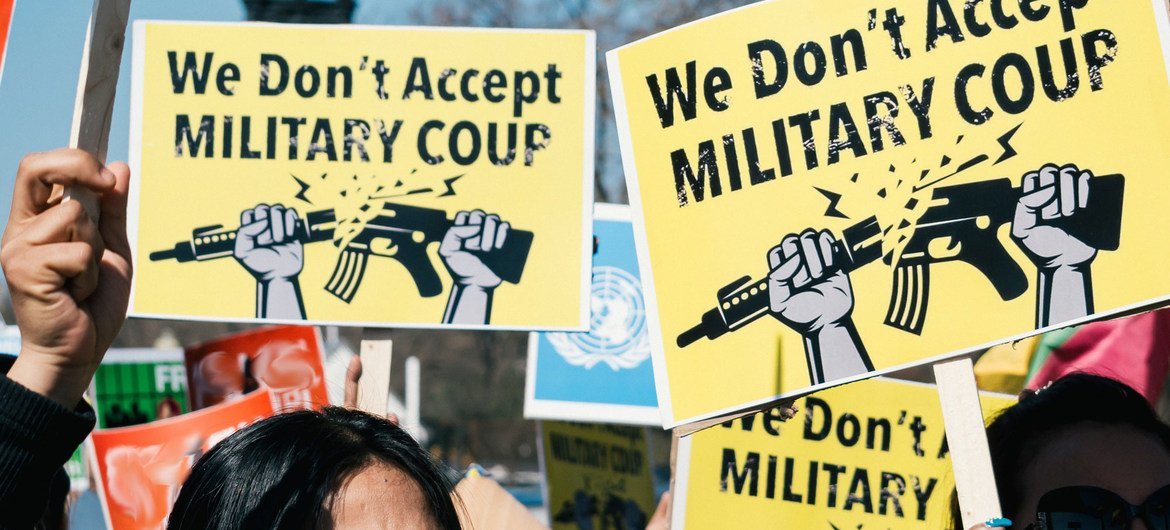
A demonstration against Myanmar's military coup takes place outside the White House in Washington, DC, USA.
20 May 2021

The announcement this week of new coordinated sanctions against Myanmar’s military rulers by a handful of Western governments has been welcomed by the UN independent expert monitoring the human rights situation in the country. 

UN Special Rapporteur Tom Andrews on Thursday urged all countries to follow the path taken by the United States, the United Kingdom and Canada. 

Ramp up sanctions 

“It is imperative that the international community ramp up the size and scope of sanctions as the junta ramps up its repression of the people of Myanmar”, he said

Myanmar’s military leaders, known as the State Administrative Council (SAC), seized power in a coup in February and have launched brutal crackdowns against pro-democracy demonstrators.   

UN Secretary-General António Guterres has repeatedly called on the military to respect the will of the people, and his Special Envoy, Christine Schraner Burgener, continues ongoing dialogue with key stakeholders in the region.  

‘A new blow’ 

Mr. Andrews particularly highlighted the US decision to target the SAC and 16 individuals, announced on Monday, which freezes their assets and bars US nationals from providing funds, goods or services that benefit the coup leaders.  

“This week the United States has taken one of the most significant steps to date against the Myanmar junta, first by sanctioning not only individuals but the State Administrative Council itself; and second, by opening the door to targeting those who continue to do business with the junta and therefore aid and abet their relentless attacks against the people of Myanmar,” he said. 

“The designation of the SAC strikes a new blow to the junta’s finances. It is a significant step in the right direction.”  

A wake-up call 

Mr Andrews added that the naming of the SAC paves the way for further designations of individuals or entities determined to have “materially assisted, sponsored, or provided financial, material, or technological support for, or goods or services to” the Council. 

“This is a warning to all those who are willing to conduct business as usual with the junta,” he said. “Those who continue to aid and abet this murderous enterprise — be they international businesses, banks, arms traffickers, or government entities providing financial, technological or other support — are now on notice that they themselves could face sanctions.”    

The rights expert added “I am hopeful that this action will be a wake-up call.  Not only is doing business with the junta morally reprehensible, it could now mean being cut off from the U.S. financial system and/or facing criminal or civil penalties in the United States.  If doing the right and just thing is not a factor in one’s decision making, then perhaps protecting one’s self interest will be.”  

John Boal
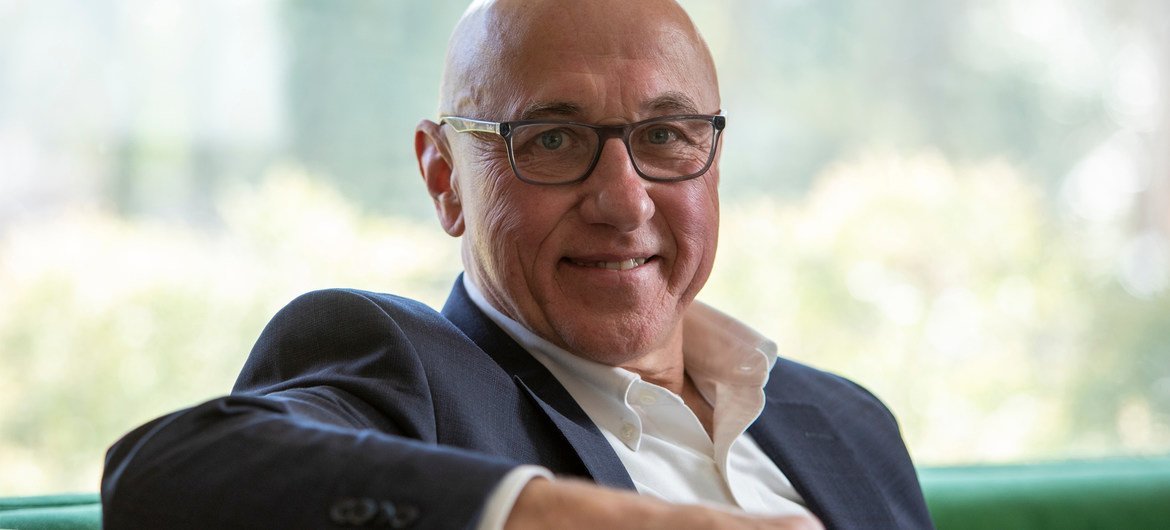
Tom Andrews, Special Rapporteur on the situation of human rights in Myanmar.

Step up now 

Mr Andrews also welcomed fresh sanctions imposed on Monday by the UK and Canada, including those which target the military from profiting from the timber and gems trade.   

“The coordination of these sanctions by the US, UK, and Canada is a welcome development”, the UN expert said. “Hopefully it will lead to a tough, fully coordinated multilateral sanctions regime that enables nations to deliver the most powerful blow possible against the horror that is being inflicted on the people of Myanmar.”   

He said, however, more must be done, and quickly.   

“The revenue that they continue to seize from the oil and gas sector has become a lifeline for the junta.  Profits from this sector are estimated to be close to what is needed to supply the forces that are keeping them in power,” he said.  

“We know the junta’s sources of funds are limited and that the income from oil and gas sales helped previous juntas withstand international sanctions. The people of Myanmar cannot afford for history to repeat itself.” 

Mr Andrews also called for other nations to take action. “I urge those countries that have yet to impose costs on the junta for its illegal coup and its systematic atrocities and human rights violations to reconsider,” he said. “Now is the time to step up.”  

Role of Special Rapporteurs  

Special Rapporteurs, like Mr. Andrews, are appointed by the UN Human Rights Council to monitor specific countries or thematic issues.  

They serve in their individual capacity and are not UN staff, nor are they paid by the Organization. 


https://news.un.org/feed/view/en/story/2021/05/1092302
https://creativecommons.org/licenses/by/3.0/legalcode

четверг, 20 мая 2021 г.

Syria: Prolonged violence, violation and abuse ‘bound to affect generations to come’


© WFP/Jessica Lawson
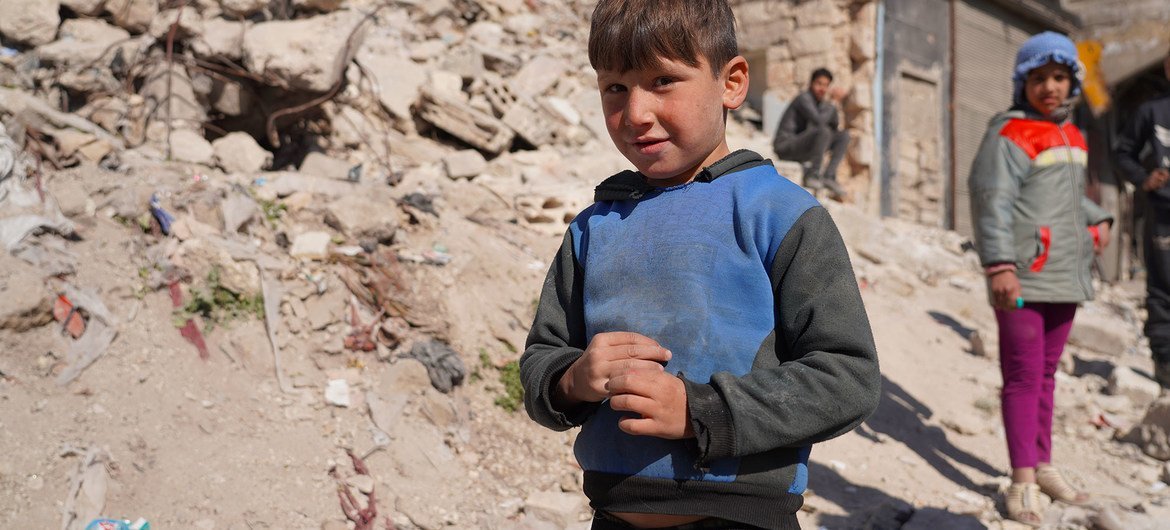
Children wait for food distribution during the COVID-19 crisis in Aleppo, Syria.
19 May 2021

Millions of children trapped in protracted conflict in Syria continue to endure severe violence with little support for survivors, according to the UN Secretary-General’s third report on the situation, launched on Wednesday.  

“In Syria, all children below the age of 10 have lived their entire life in a country ravaged by conflict. They have known nothing but war”, said Virginia Gamba, the Special Representative for Children and Armed Conflict

This latest report covers the two-year period in which the COVID-19 pandemic hit and related-restrictions were imposed – making children more vulnerable, while impeding the work of humanitarians.  

Prioritize children 

The actual number of grave violations is believed to be higher than the 4,724 verified in the report. And at least 32 parties to conflict were found responsible for them. 

“The consequences of such prolonged exposition to violence, to the violation and abuse of their most fundamental rights and to enormous stress, are dramatic”, said the UN expert. “It is bound to affect generations to come”.  

Refugee camps 

The killing, maiming, recruitment and use of children were the most prevalent grave violations verified, according to the report. 

Between July 2018 and June 2020, airstrikes, explosive remnants of war and indiscriminate shelling, maimed or took the lives of more than 2,700 children. 

During that same time, more than 1,400 children were recruited or used by at least 25 parties to conflict.  

Particularly concerning was the emerging trend of transnational recruitment whereby children were enlisted and trained in Syria before being trafficked to Libya to participate in hostilities, all by armed groups.  

Attacks on schools and hospitals was the third most verified violation, with 236 assaults on classrooms and 135 on medical facilities. 

Liberty denied 

Citing 258 verified cases, the report also revealed that children have also been detained, for their alleged or actual association with parties to conflict.  

The Special Representative reminded that children must be treated primarily as victims with detention to be used only as a last resort, and for the shortest period possible. Alternatives must be sought in line with international standards for juvenile justice. 

Ms. Gamba underscored that it was of “the utmost importance” to prioritize the rights and needs of boys and girls, including in the protracted Syria peace talks, “to avoid a lost generation”. 

Repatriate boys and girls 

The report highlighted an extremely concerning humanitarian situation in al-Hol and al-Roj camps where more than 65,000 are being held, the vast majority women and children.  

Children below the age of 10...have known nothing but war -- UN Special Representative Gamba

In conditions that Emergency Relief Coordinator and UN Humanitarian chief Mark Lowcock has called “scandalous”, at least 960 unaccompanied and separated children are among 11,000 foreign nationals being held there. 

Ms. Gamba said countries should “facilitate and prioritize the repatriation of foreign children to their country of origin”, in line with the best interests of the child.  

Reminding that they have lost a huge part of their childhood, she said that “these boys and girls must be provided with assistance in reintegration, education, access to health and to livelihoods”. 

“It is our common responsibility to give it back to them so they can recover and thrive in a safe and protective environment where they can build a future away from violence”. 

The Special Representative reiterated the Secretary-General’s call to all parties to abide by international humanitarian law and human rights law, to better protect children in Syria and to ensure that their well-being is a core part of the ongoing discussions and peace process. 


https://news.un.org/feed/view/en/story/2021/05/1092252

https://creativecommons.org/licenses/by/3.0/legalcode

Sexual violence survivors in DR Congo caught in crisis of ‘catastrophic magnitude


UNFPA/Luis Tato
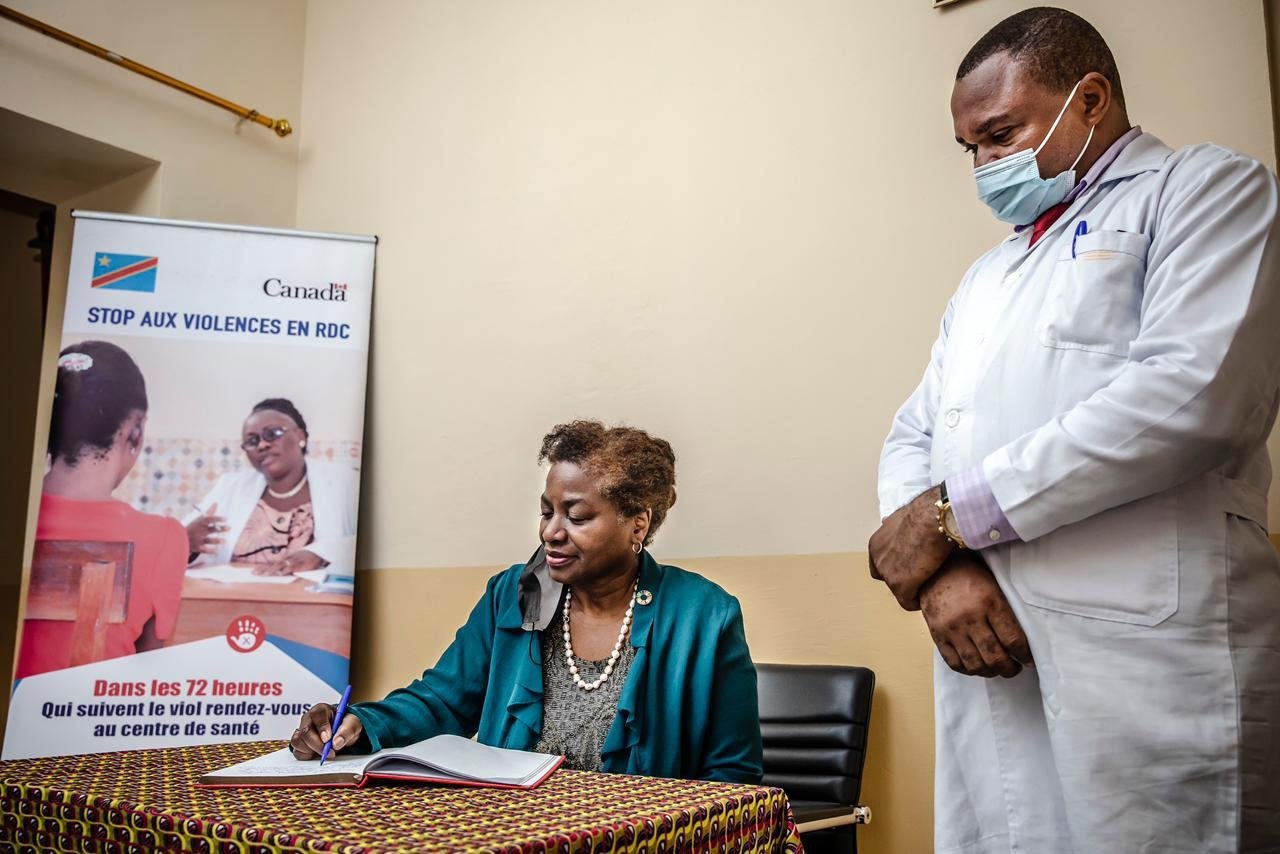
UNFPA Executive Director Dr. Natalia Kanem visits a hospital in the Democratic Republic of the Congo.
19 May 2021

On a recent visit to the Democratic Republic of the Congo (DRC), Dr. Natalie Kanem, the head of the UN Population Fund (UNFPA), the UN’s sexual and reproductive health agency, bore witness to the horrific legacy of sexual violence in the country, which is undergoing one of the world’s longest-running humanitarian crises.

‘The men broke my body and shattered my soul’

 “We waited for hours in the distribution point until they eventually told us to go home. Hungry and empty-handed, I walked with three other women and two little girls. It was dusk, and I heard the little girls scream.

My last thought before I lost consciousness, was how pure evil can exist in this world.

 “I turned around and, in the dim light, I saw men and boys coming towards us. They grabbed us and they were jeering when they distributed us among them, including the children. Five men took turns raping me and violating my body. My last thought before I lost consciousness, was how pure evil can exist in this world.”

This was the wrenching story from Larise*, an internally displaced person from Eastern Congo (in the Democratic Republic of the Congo, DRC), during Dr. Kanem’s visit to Bukavu, earlier this week.

Larise handed the UNFPA chief a creased picture showing her battered body in the aftermath of the assault. “I was in the hospital for five months. The men broke my body into many pieces and shattered my soul.”

‘A perfect storm of humanitarian crises’

This horrific experience is all too common. With one of the world’s most protracted and complex humanitarian crises, the DRC has more than five million displaced people and communities that continue to be upended by armed conflict, violence, and insecurity.

“This is not just a perfect storm of humanitarian crises; it goes beyond that, as the magnitude is catastrophic”, said Dr. Kanem who, as lead official of the UN system-wide efforts to protect women and girls, came to listen to the voices and needs of survivors of sexual violence.

After listening to women’s stories, she shared their recommendations with a team dedicated to the protection of women and girls from sexual exploitation and abuse, and sexual harassment.

They discussed priorities, accountability and efforts to make zero tolerance a reality. Dr. Kanem also shared the recommendations with the UN country team and the Special Representative of the Secretary-General.

“We have to look into three priorities: bolstering our response; improving victims’ access to quality assistance and information; and strengthening our coordination and cohesion. Women and girls are caught in the middle, paying a heavy price with their rights, their bodies and their lives.”

Pressing challenges

DRC faces pressing humanitarian challenges, compounded by the impact of COVID-19, natural disasters, localized conflict and disease outbreaks. DRC is geographically the second largest country in the world, one of the most populous, and one of the richest in natural resources in Africa.

Despite its vast resources, 63 per cent of the population are living below the poverty line and food insecurity is taking its toll, especially on pregnant and lactating women and newborns.

More than 25 million people in DRC are projected to need humanitarian assistance this year. Of those, UNFPA aims to reach 5.7 million women and girls of reproductive age with lifesaving sexual and reproductive health services and supplies, prevention and response to gender-based violence and psychosocial support.

Against this backdrop, the UN and partners launched a humanitarian response plan that requires nearly $2 billion to provide life-saving assistance to the most vulnerable. UNFPA estimates that $67 million is required to provide reproductive healthcare and women’s protection services through the end of 2021.

Hoping for a brighter future

The country’s multiple challenges call for coherent and collaborative interventions to support affected communities before, during and after crises, says Dr. Kanem. “We are looking at humanitarian interventions that pave the way for the longer-term objectives of advancing human rights and gender equality, building social cohesion and sustaining peace”.

UNFPA/Luis Tato
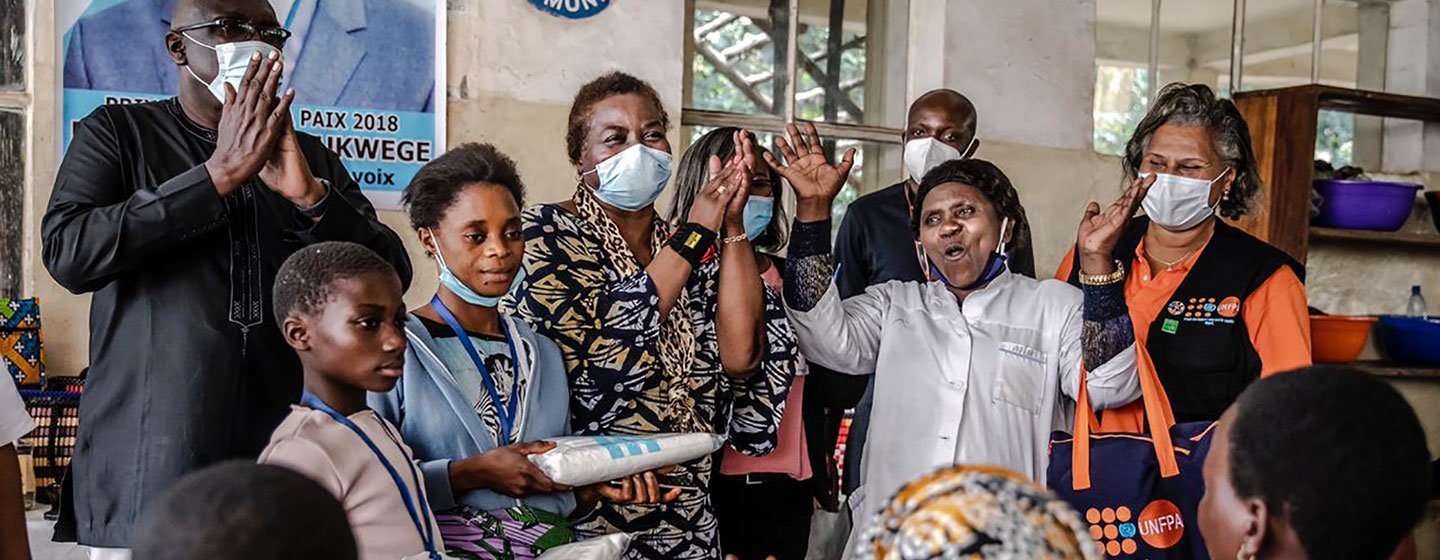
UNFPA Executive Director Dr. Natalia Kanem visits a 'one-stop centre' in Kinshasa, Democratic Republic of the Congo.

Strengthening the resilience of people, communities, and systems, and fostering fair and equitable access to essential services such as sexual and reproductive health care, she added, are crucial to successful efforts.

UNFPA works towards the achievement of three transformative results by 2030 – zero preventable maternal deaths, zero unmet needs for family planning, and zero gender-based violence and harmful practices, including child marriage and female genital mutilation.

Dr. Kanem declares that she is optimistic about the country’s commitment, and the continental vision, citing the African Union Peace & Security Council session, held in March.

*Name changed to protect the survivor’s identity

Strengthening partnerships in DRC

  • During her visit to DR Congo, Dr. Kanem travelled from Kinshasa to Bukavu, to meet with municipal leaders, UN officials, and Nobel Prize laureate, Dr. Denis Mukwege. She visited his renowned Panzi Hospital, and the ward for fistula patients and survivors of sexual and gender-based violence. They discussed holistic care for GBV survivors and strengthened partnership.
     
  • The UNFPA chief met with senior Government officials, the first lady, women leaders, and representatives of UN agencies, and civil society. She also visited a ‘one-stop center’ in Kinshasa’s Kintambo municipality, that provides survivors of gender-based violence with multi-sector care.

https://news.un.org/feed/view/en/story/2021/05/1092292
https://creativecommons.org/licenses/by/3.0/legalcode