суббота, 27 апреля 2019 г.

Friday’s Daily Brief: UN chief in China, counter-terrorism, updates from Bangladesh, Mali and Mozambique


WFP
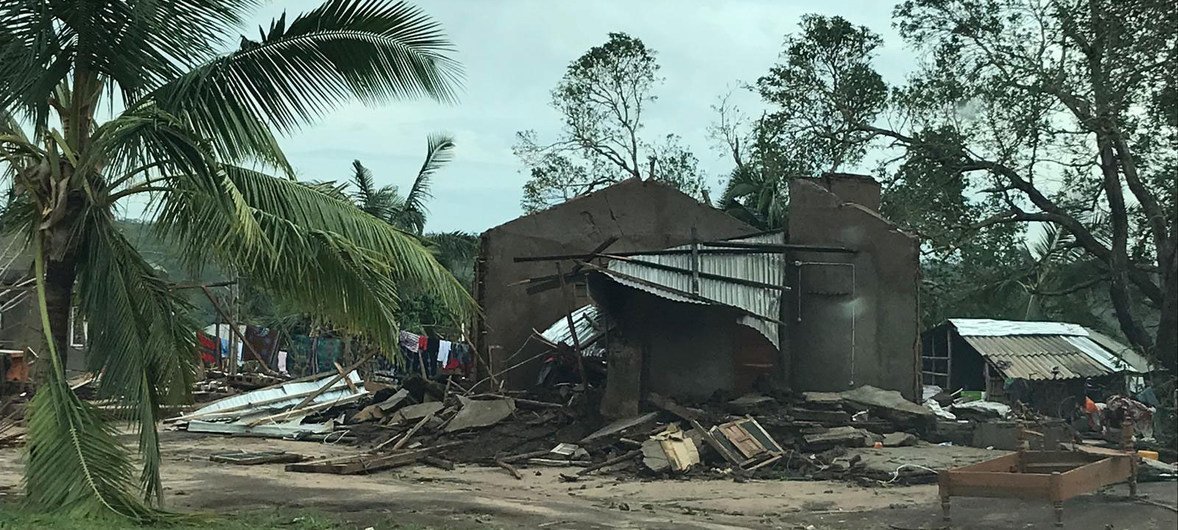
Some of the destruction left behind in the aftermath of Cyclone Kenneth which struck Mozambique on 25 April 2019.


26 April 2019

Economic Development


This Friday, we cover: the UN Secretary-General's message in China for sustainable development; the toll of a second cyclone in Mozambique; what UN officials saw first-hand in the Rohingya refugee camp of Cox's Bazar in Bangladesh; the impact of insecurity on education in Mali; and the importance of information-sharing in the fight against terrorism.

At China’s Belt and Road Forum, Guterres calls for 'inclusive, sustainable and durable' development
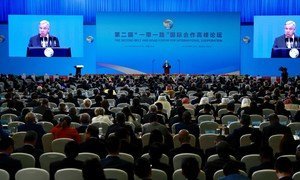

China’s international trade and economic development plan – known as the Belt and Road Initiative – could contribute to a more equitable, prosperous world, and to reversing the negative impact of climate change, Secretary-General António Guterres said on Friday, speaking in Beijing, China.

Addressing Chinese President Xi Jinping and dozens of other state leaders at the Second Belt and Road Forum for International Cooperation, Mr. Guterres urged the international community to “come together” in mobilizing resources to implement the Sustainable Development Goals (SDGs) and “to stop runaway climate change.”

Our full coverage here.

New Mozambique storm rips off roofs, brings lashing rain as aid response kicks in
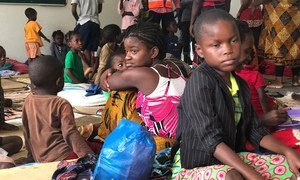

Tropical Cyclone Kenneth swept into northern Mozambique on Thursday evening bringing heavy rain and winds in excess of 225 kilometres per hour (140 miles per hour) after lashing the Comoros islands, where it claimed at least three lives, UN agencies said on Friday.

“Tropical Cyclone Kenneth made landfall in northern Mozambique near the border with Tanzania in an area where no storm since the satellite-era has ever been observed,” said Clare Nullis, spokesperson for the World Meteorological Organization (WMO).

Find the full story here.

Future of Rohingya refugees in Bangladesh ‘hangs in the balance’ – UNHCR chief
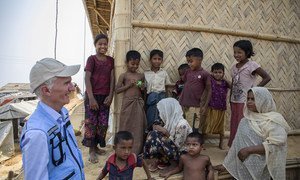

The critical needs of 1.2 million mostly Rohingya refugees in south-eastern Bangladesh were top of the agenda for a fact-finding mission to the region by three senior United Nations officials, who called for continuing support on Friday for them from the international community.

At the end of a joint visit to the country, UN Emergency Relief Coordinator Mark Lowcock, head of UN migration agency (IOM) António Vitorino, and UN High Commissioner for Refugees (UNHCR), Filippo Grandi, reiterated their commitment to find safe and sustainable solutions for Rohingya refugees in Bangladesh, as well as helping them to make a safe and dignified return home.

Learn more about what they saw on the ground.

Mali insecurity leaves one in three Mopti schools closed
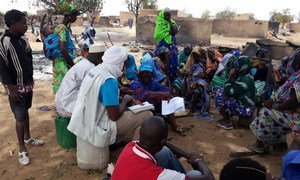

In Mali, one in three schools in the central Mopti region have been forced to close because of worsening violence that’s affected more than 157,000 children. The warning, from UN Children’s Fund (UNICEF), follows the killing of more than 130 people from a village in Bankass a month ago that included 46 youngsters.

Spokesperson Christophe Boulierac told journalists that at least 525 schools are closed in Mopti, out of 866 schools closed nationally: “UNICEF is working closely with the education cluster and the Ministry of Education in order to provide uninterrupted learning for affected children through temporary mechanisms such as informal community learning centres. We are also rolling out innovations such as the training of teachers through tablets.”

Outside the classroom, Mr. Boulierac said that rising prices and the threat of food insecurity linked to a breakdown in State control and the rise in violent extremists have also put additional pressure on families.

Overcome barriers to information-sharing in counter-terror effort, Security Council Committee urges
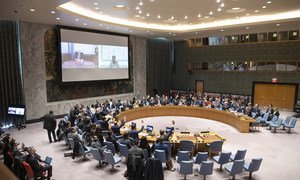

Countries, organizations and institutions driving the fight against the growing scourge of terrorism need to share more information, and focus more on “financial intelligence”, said the deputy head of the UN Security Council’s counter-terrorism directorate, CTED.

Weixiong Chen, was speaking at the beginning of special meeting organized by the Council on Friday, involving Member States, international and regional organizations and civil society, looking at the nexus between international terrorism and organized crime.

“We must work to overcome inter-institutional barriers to information-sharing among institutions, and interlocutors responsible for countering terrorism, and those responsible for combating organized crime”, he said, adding that “we must also address the current limited use of financial intelligence and limited understanding of the factors and vulnerabilities that could foster the establishment of some forms of cooperation between criminal groups” and terrorist groups, or their affiliates, he added.

The Council’s Counter-Terrorism Committee recently adopted an addendum to its guiding principles on foreign terrorist fighters, recalling the “need to intensify and accelerate” exchanging financial information to expose links with organized crime. “Rest assured that CTED will continue to make a full contribution to those efforts”, he added.
.


https://news.un.org/en/story/2019/04/1037431
http://creativecommons.org/licenses/by/3.0/legalcode

At China’s Belt and Road Forum, Guterres calls for 'inclusive, sustainable and durable' development


26 April 2019


SDGs


China’s international trade and economic development plan – known as the Belt and Road Initiative – could contribute to a more equitable, prosperous world, and to reversing the negative impact of climate change, Secretary-General António Guterres said on Friday, speaking in Beijing, China.


Addressing Chinese President Xi Jinping and dozens of other state leaders at the Second Belt and Road Forum for International Cooperation, Mr. Guterres urged the international community to “come together” in mobilizing resources to implement the Sustainable Development Goals (SDGs) and “to stop runaway climate change.”


“China’s leadership on climate action is helping to show the way,” said the UN chief, noting the $125 billion investment made by the Government in 2017, in renewable energy.


He pledged the support of United Nations country teams – which comprise UN agencies, founds and programmes operating in a country - saying the pillars of the Belt and Road Initiative link to the 17 SDGs, which include ending extreme poverty and hunger, and can translate into “real-life progress for people.”


We must reimagine and rebuild our world in a way that works for everyone, brings women into the leadership of the economy of the future and expands the opportunities for young peopleUN chief Guterres


That means also helping to close the financing gaps for achieving the SDGs, he said noting the nearly $1 trillion needed for infrastructure investments in developing countries.


Looking globally, Mr. Guterres said that countries today need a way to transition from an “unsustainable, fossil-fuelled grey economy to a clean, green, low-carbon energy future.”


Noting that at least 75 per cent of the infrastructure the world needs by 2050 has yet to be built, Mr. Guterres lauded China for its investment in renewable energy job creation and technologies.


“I see the Belt and Road Initiative as an important space where green principles can be reflected in green action,” he told the Forum.


Earlier, noted there was now “a unique opportunity to build a new generation of climate resilient and people-centred cities and transit systems, and energy grids that prioritize low emissions and sustainability.”


While in Beijing, Mr. Guterres, who is joined on the visit by Liu Zhenmin, Under-Secretary-General at the UN Department of Economic and Social Affairs (DESA), will meet one-on-one with President Xi and other senior officials. On Saturday, he is due to participate in a roundtable on promoting green and sustainable development.


https://news.un.org/en/story/2019/04/1037381
http://creativecommons.org/licenses/by/3.0/legalcode

На Московской конференции расслышали американские авианосцы


Газета "Коммерсантъ" №74 от 25.04.2019, стр. 1

В Москве открылась VIII Международная конференция по безопасности. На ее площадке российские военные постарались объединить десятки стран для обсуждения самых насущных проблем, в числе которых развитие ракетно-ядерного вооружения и региональная безопасность. Двухдневный форум открылся на фоне заявлений посла США в России Джона Хантсмана о том, что Запад посылает Москве четкий сигнал: улучшение отношений станет возможно, только если она прекратит «свою дестабилизирующую активность по всему миру». Представителям Минобороны и российским дипломатам с американцами пришлось дискутировать заочно: оппонентов из США и Евросоюза на конференции нет, а есть лишь единомышленники из стран Азии, Африки и Латинской Америки.


Подготовка к восьмой по счету Международной конференции по безопасности активно велась по линии Минобороны РФ последние полгода: это время требовалось для отбора руководством сотни стран-участниц свыше 1 тыс. своих делегатов. Накануне мероприятия для нескольких десятков министров обороны и начальников генштабов вооруженных сил государств-участников была организована культурная программа: они посетили парк «Патриот», где осмотрели музей «Партизанская деревня», а также выставку вооружения, изъятого российскими военными у боевиков в Сирии. Кроме того, гости протестировали в огневом центре автоматы Калашникова и пистолеты Макарова. Стрельба по мишеням главам военных ведомств особенно запомнилась: отстрелявшись на рубеже, глава Минобороны Намибии Джафет Пенда-я-Ндаколо заявил, что «автоматы Калашникова — лучшие автоматы в мире», а замминистра обороны Парагвая Глэдис Арсения де Печи скромно призналась: «Мне очень понравилось».


От России участие в конференции приняли секретарь Совета безопасности Николай Патрушев, министр обороны Сергей Шойгу, глава МИДа Сергей Лавров и многие другие. Президент Владимир Путин мероприятие посетить не смог из-за загруженности своего графика: 24 апреля он проводил Совет законодателей, а после отправился во Владивосток на встречу с лидером КНДР Ким Чен Ыном.


На конференции по безопасности традиционно происходит «перепись» дружественных России стран и покупателей оружия, поэтому основную массу иностранных участников составляют представители СНГ, стран Азии, Африки и Латинской Америки.


Не стал исключением и этот раз. Источник “Ъ” среди дипломатического корпуса Евросоюза сообщил, что одной из причин неприезда на форум представителей стран ЕС стало предполагаемое присутствие на нем министра обороны Венесуэлы Владимира Падрино Лопеса: многие страны союза не признают легитимность правительства его непосредственного руководителя, президента Николаса Мадуро. Другой причиной их неявки, впрочем, источник назвал консолидированное несогласие ЕС с внешней политикой Москвы. Венесуэльский министр, отметим, до конференции так и не добрался.


В первый день участники мероприятия в основном слушали выступления по вопросам, волнующим страну-хозяйку. Главным из них уже много лет остается политика США. «Сегодня насчитывается целый ряд стран, ставших жертвой гибридного воздействия, их список пополняется,— заявил Николай Патрушев.— Самый свежий пример — Венесуэла». Под гибридным воздействием, пояснил он, понимается «экономическое и политическое давление в обход решений ООН и норм международного права». Поддержавший господина Патрушева Сергей Шойгу заявил: Вашингтон «реабилитирует доктрину Монро» с целью «ограничить суверенитет латиноамериканских государств, оказать давление на тех, кто проводит не согласованную с Вашингтоном политику».

Все российские участники высказали опасение по поводу судьбы Договора об ограничении стратегических наступательных вооружений (СНВ-3). Сергей Шойгу заявил, что перспективы его продления после 2021 года «остаются неясными», и подчеркнул, что Россия все взятые на себя обязательства в его рамках выполняет. Николай Патрушев поддержал коллегу, заявив о «взятом США курсе на демонтаж договоренностей по безопасности». Начальник Генерального штаба ВС РФ Валерий Герасимов предостерег, что в случае выхода США из СНВ-3прекратит действие механизм двусторонних проверок. При таком раскладе Москва в ходе анализа численности американского ядерного оружия будет вынуждена исходить из максимально возможных оценок. Это, по его словам, приведет к «обострению недоверия и новому витку гонки ракетных вооружений».

А первый замначальника главного оперативного управления Генштаба ВС РФ Виктор Познихир добавил: судя по развитию ракетно-ядерных вооружений США, американцы намерены добиваться решающего преимущества перед Москвой и Пекином.

Анализ вероятных действий США показывает, что американцы намерены добиться стратегического превосходства за счет реализации так называемого достартового перехвата, когда подавляющее количество баллистических ракет должно быть уничтожено еще в пусковых установках»,— сообщил он.

По утверждению одного из военно-дипломатических источников “Ъ”, после решения США о выходе из договора о ракетах средней и меньшей дальности Россия «вообще не испытывает каких-либо иллюзий относительно приверженности США к стремлению снизить градус напряжения».


Что нужно знать о договоре о ликвидации ракет средней и меньшей дальности


Отметим, что накануне конференции с неожиданным заявлением выступил посол США в России Джон Хантсман, который проинспектировал прибывшие в Средиземное море для учений авианосцы Abraham Lincoln и John C. Stennis. «Каждый из этих кораблей, находящихся сейчас в Средиземноморье,— это 100 тыс. тонн международной дипломатии,— объявил он.— Дипломатические переговоры и диалог вкупе с мощной защитой, которую демонстрируют эти корабли, посылают России четкий сигнал: если вы хотите улучшения отношений с нами — прекратите свою дестабилизирующую активность по всему миру». Ответ господину Хантсману последовал достаточно быстро. «Хотелось бы верить, что американская мегафонная дипломатия не обернется в итоге мегатонной дипломатией,— отметил заместитель главы МИД РФ Сергей Рябков.— Потому что в этом случае победителей не будет, и американские дипломаты пожалеют о том, как они не могли найти возможности для нормального, конструктивного диалога с партнерами в мире».


https://www.kommersant.ru/doc/3954680
http://creativecommons.org/licenses/by/3.0/legalcode
пятница, 26 апреля 2019 г.

Красный Крест направил в Донбасс 13 грузовиков с гуманитарной помощью


Вчера, 09:41

КИЕВ, 25 апр – РИА Новости. Международный комитет Красного Креста (МККК) направил в Донбасс 13 грузовиков с гуманитарной помощью, сообщила в четверг пресс-служба государственной пограничной службы Украины.

"Через КПВВ "Новотроицкое" на выезд на временно оккупированную территорию Украины проследовало 13 грузовиков с гуманитарной помощью от Международного комитета Красного Креста. Оформлен гуманитарный груз (строительные материалы, товары медицинского назначения, продуктовые наборы, оргтехника, корм для животных) весом почти 217 тонн", - говорится в сообщении.


11 февраля 2018, 10:00

Минские соглашенияМинские соглашения предусматривают незамедлительное и всеобъемлющее прекращение огня, отвод тяжелых вооружений, проведение конституционной реформы на Украине и начало диалога о проведении местных выборов на юго-востоке страны. Подробнее – в инфографике ria.ru


Международные организации регулярно направляют гуманитарные грузы в Донбасс.


https://ria.ru/20190425/1553030592.html
http://creativecommons.org/licenses/by/3.0/legalcode
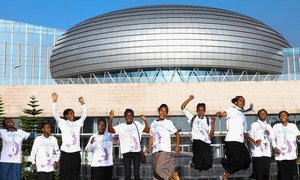
Thursday’s Daily Brief: Malaria Day, women in tech, updates on Mozambique, the Sahel, Myanmar, Israel and Syria


UNICEF/James Oatway


Lucio Carlos, a volunteer social mobiliser, carried Luisa Daniel, 5, suffering from fever and vomiting to a medical tent where she was tested for Malaria. Dondo, Mozambique.


25 April 2019

Human Rights


This Thursday, we cover: where we stand on tackling malaria; bracing up for a new storm in Mozambique; the need to make more room for women in tech; boosting resilience in the Sahel; a resurgence of violence in Syria; and human rights in Myanmar and Israel.

‘Zero malaria starts with me’ UN health agency urges grassroots responsibility on World Day

After more than a decade of steady advances in fighting malaria, progress has leveled off, which is why this World Malaria Day, the World Health Organization (WHO) is supporting a grassroots campaign to emphasize country ownership and community empowerment to improve malaria prevention and care.

“Every two minutes a child dies from this preventable and treatable disease”, said WHO Director-General Tedros Adhanom Ghebreyesus.

Read our in-depth coverage.


Aid preparations gear up as Mozambique braces for second massive storm


Emergency measures are being stepped up by the UN and partners in northern Mozambique, amid fears that another devastating tropical storm could batter coastal areas on Thursday evening, weeks after Cyclone Idai claimed hundreds of lives and flooded vast swathes of the south of the country.

“We are expecting that heavy rain will provoke flash floods and landslides impacting the north-eastern provinces of Cabo Delgado and Nampula,” Word Food Programme (WFP) spokesperson Herve Verhoosel said.

Find our full story here.

Change attitudes for future generations of women in tech, UN urges


When women and girls are empowered with technology, the whole world benefits. That’s one key message from the International Day for girls in the field of information and communications technology, or ICT, marked on Thursday.

Celebrated every year on the fourth Thursday of April, the Day is an initiative of the International Telecommunications Union (ITU) and aims to encourage and empower girls and young women to consider entering the growing field of ICT,​ enabling both girls and technology companies to reap the benefits of greater female participation in the sector.

Find more details here.

UN project to aid 140,000 in the Sahel


The Food and Agriculture Organization (FAO) and European Union announced on Thursday a new project to strengthen the resilience of agropastoral communities which cross national boundaries in the Sahel.

Targeting several priority zones, including Senegal, Burkina Faso, Mali and Niger, the aim is to improve food security, country-level investments in building resilient livelihoods, and policies to support communities.

“Major investments in rural development and agriculture must be integral to peacebuilding efforts”, FAO Director-General José Graziano da Silva said while visiting Senegal.

The Sahel remains affected by conflict, malnutrition and population displacement rendering millions in need of urgent assistance each year. The project, which will benefit 140,000 people – many of whom are vulnerable pastoralists – will help to address these crises at their roots, according to FAO.
‘A dark day’ for media freedoms in Myanmar


UN human rights experts said on Thursday that the refusal of Myanmar’s top court to consider a final appeal by two jailed Reuters journalists “represented a dark day for media freedoms and democracy in the country”.

Incarcerated for seven years in connection with their 2017 investigation into the massacre of Rohingya men and boys at Inn Din village in Rakhine State, the Supreme Court on Tuesday rejected the appeal by Wa Lone and Kyaw Soe Oo.

The experts underscored that neither committed a crime, saying: “They were doing their job as investigative journalists, reporting on issues of the upmost concern to the people of Myanmar” and performing an essential “democratic function". The Special Rapporteur on the Situation of Human Rights in Myanmar, Yanghee Lee and Special Rapporteur on Freedom of Expression, David Kaye, called the upholding of their convictions “a grave injustice".

Last week, both journalists were awarded the journalists a Pulitzer Prize for their reporting.
UN human rights experts call on Israel to overturn deportation of Human Rights Watch director

UN independent human rights experts expressed grave concern on Thursday at the revocation of the work permit for Mr. Omar Shakir, the Israel and Palestine Director of Human Rights Watch. They urge Israel to reverse a deportation order and to allow him to carry on with his human rights work.

On 16 April, an Israeli court upheld a deportation order against Mr. Shakir. Human Rights Watch will appeal the ruling of the District Court to the Israeli Supreme Court.

“This ruling threatens advocacy, research, and free expression for all and reflects a troubling resistance to open debate,” the three human rights experts said, calling it “a setback for the rights of human rights defenders in Israel and the Occupied Palestinian Territory”.

“The grounds for revoking Mr. Shakir’s work permit appear to be tied directly to his human rights advocacy, and have nothing to do with any assertion of illegal conduct.”

Israel had revoked Mr. Shakir’s work permit on the grounds that he had supported the boycott, divestment and sanctions (BDS) movement in the past. The UN experts noted that Human Rights Watch has stated that neither the organisation nor Mr. Shakir promote the boycott of Israel and that they work “to discourage economic support for Israel’s illegal settlement enterprise”.

The UN experts pointed out that expressing support for, or opposition to, BDS, is fully guaranteed by the rights to freedom of opinion, expression and association; they urged Israel to reverse the order.
UN official ‘alarmed’ at recent escalation of violence in Syria


In the past week, at least 36 civilians have been killed and dozens more injured in an escalation of violence and hostilities in north-western Syria, including a new wave of shelling and airstrikes across Idlib, said Panos Moumtzis, the UN Regional Humanitarian Coordinator for the Syria Crisis.

Strikes on schools, markets and displacement camps are creating panic and havoc among the civilian population. Moreover, 17 civilians were killed during an “unidentified” explosion in a market on Wednesday.

“Rescue workers worked into the night to remove people from the rubble of the buildings, with one woman successfully being rescued after 10 hours”, Mr. Moumtzis explained.

Such attacks and violence are “abhorrent” and cause “unconscionable suffering” for civilians,” he said, adding that the most recent violence has forced large numbers of people from their homes, “compounding an already precarious humanitarian situation on the ground”.


https://news.un.org/en/story/2019/04/1037361
http://creativecommons.org/licenses/by/3.0/legalcode
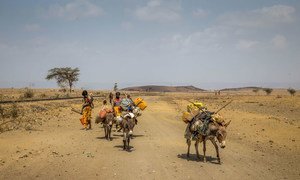
Security Council: UN calls for ‘spirit and letter’ of Ukraine agreements to be upheld, as Russia issues simplified citizenship decree


UNICEF/Tomas Vlach
UNICEF distributes aid supplies to women in the village of Petrivske, Donetsk region, Ukraine. (February 2015)


25 April 2019

Peace and Security


The UN’s political affairs chief has urged all parties to the peace plan protocol for eastern Ukraine known as the Minsk Agreements, to avoid “any unilateral steps” that could undermine efforts to demilitarize the eastern conflict zone.


Rosemary DiCarlo was addressing the Security Council on Thursday in a meeting requested by Ukraine, and in the wake of Ukrainian presidential elections and the signing of a decree by Russian President Vladimir Putin a day earlier, that reportedly aims to allow citizens in parts of eastern Ukraine, to apply for Russian passports, under a simplified procedure.

Conflict in Ukraine between Government forces and largely pro-Russian separatists in the east during the past five years, have resulted in the deaths of more than 3,300 civilians, up to 9,000 injured, with around 3.5 million in need of humanitarian assistance and protection.

Ms. DiCarlo quoted from the Russian citizenship decree, saying that the decision had been made “with a view to protecting human and citizens’ rights and freedoms”, adding that it had been welcomed by “entities in control in certain areas of the Donetsk and Luhansk regions of Ukraine.”

‘Unprecedented interference’ - Ukraine

Ukrainian authorities, in contrast, had “strongly protested the decree as an unprecedented interference by the Russian Federation in the country’s internal affairs and a violation of sovereignty…contrary to the Minsk Agreements”, she added.

“The United Nations expects that the spirit and the letter of the Minsk agreements will be respected by all concerned”, said the Political and Peacebuilding Affairs chief. “To that end, we urge all parties to avoid any unilateral steps that may potentially undermine the implementation of these agreements and to address concerns through constructive dialogue in the existing negotiation formats.”

She also underlined the UN’s commitment to the sovereignty and territorial integrity of Ukraine.

“Against the prevailing dangerous trajectory over the past five years, it is our sincere hope that at long-last, a new positive dynamic can emerge” she said. “This is essential for fostering national cohesion and lasting stability in Ukraine, and critical to the maintenance of peace and security in Europe.”
Solutions needed for Ukraine crisis ‘to avoid further suffering’

With half a million Ukrainians living within five kilometres of the “contact line” dividing the areas of military control, civilians on both sides face daily risks with “coping mechanisms” stretched to the limit, said Ursula Mueller, UN deputy Emergency Relief Coordinator.

She called on all parties to immediately stop using landmines, which were the leading cause of child casualties last year, noting that more than 1,000 civilians had been killed or injured by mines or explosive remnants of war since 2014.


Secondly, Ms. Mueller called for an end to “unpredictable” humanitarian access to the east, urging that it “should not be politicized”. Finally, she implored Council members and donors in the wider international community, to step up humanitarian funding.

The UN 2019 Humanitarian Response Plan, aims to provide 2.3 million people with “protection and assistance to restore their access to livelihoods, essential services and critical infrastructure”, she said, but so far only 9 per cent of the funding has been received.

She called on the parties involved with the 2014 Minsk protocol, to find “solutions to this crisis, in order to avoid further suffering. The people of Ukraine deserve nothing less.”

Talks in Minsk ‘inconclusive’

Latest talks between the Trilateral Contact Group, consisting of Ukraine, Russia and the Organization for the Security and Cooperation in Europe (OSCE), proved “inconclusive” in recent days, on a new ceasefire recommitment, said Ms. DiCarlo, calling for a withdrawal of heavy weapons, disengagement of forces and more protection in the east, for civilians.

Briefing for the OSCE, alongside the Chief Monitor of the Special Monitoring Mission to Ukraine, Ertugrul Apakan, Special Representative Martin Sajdik, said that a “deepening divide” between parts of the east and the rest of Ukraine, was making the task of unifying the country harder, with different currency being used, and increasingly difficult journeys across the contact line.


“It is not enough to mitigate the effects of the divide”, said the Special Representative of the OSCE Chairperson-in-Office in Ukraine and in the Trilateral Contact Group. “We have to undertake all efforts to narrow and even to eradicate it. Statements by the future leadership of Ukraine make me optimistic that there is resolve, to actively work against this divide.”


https://news.un.org/en/story/2019/04/1037371
http://creativecommons.org/licenses/by/3.0/legalcode

четверг, 25 апреля 2019 г.

Минобороны РФ проводит Московскую конференцию по международной безопасности


23.04.2019   00:00:00


Москва. 23 апреля. ИНТЕРФАКС - Контроль над вооружениями и ситуация на Ближнем Востоке будет в центре внимания на VIII Московской конференции по международной безопасности, которая пройдет в период с 23 по 25 апреля в российской столице.

Конференцию проводит Минобороны РФ. Основной день форума - 24 апреля.

На форуме запланированы выступления секретаря Совбеза РФ Николая Патрушева, министра обороны РФ Сергея Шойгу, главы МИД Сергея Лаврова, директора ФСБ Александра Бортникова, директора Службы внешней разведки Сергея Нарышкина, сообщил ранее замминистра обороны РФ Александр Фомин.

"Отдельные пленарные заседания будут посвящены обмену мнениями по вопросам современных военных опасностей и угроз, включая совершенствование системы контроля над вооружениями. Будет обсуждаться ситуация на Ближнем Востоке с акцентом на всесторонней стабилизации обстановки в Сирии", - сообщили в военном ведомстве.

Ранее министр обороны РФ Сергей Шойгу сообщил, что в ходе конференции также планируется обсудить "проблемы противоракетной обороны, миротворчества и новые подходы к международному военному сотрудничеству".

По словам С.Шойгу, в этом году в российскую столицу для участия в конференции прибудут руководители оборонных ведомств 35 стран.

Всего, как сообщал А.Фомин, на конференцию прибудут делегации более чем 100 государств.

США и страны-члены НАТО принять участие в форуме отказались, отметил замминистра обороны.

Ожидается, что на полях конференции пройдут двусторонние встречи российского министра обороны с его зарубежными коллегами, на которых будут обсуждаться вопросы военного и военно-технического сотрудничества.

Также в этом году часть конференции впервые пройдет в подмосковном парке "Патриот".


https://www.militarynews.ru/story.asp?rid=1&nid=506665&lang=RU
http://creativecommons.org/licenses/by/3.0/legalcode