четверг, 27 декабря 2018 г.

Libya: Attack on foreign ministry, an attack on all Libyans, stresses UN envoy


UNSMIL

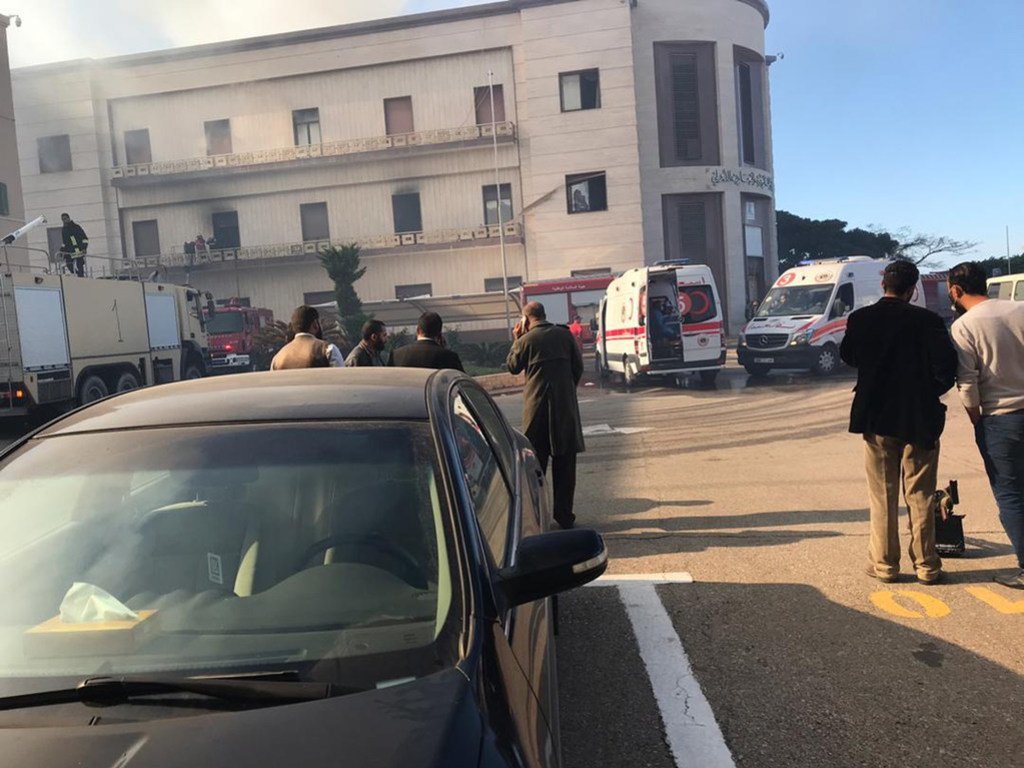
Emergency response vehciles in the aftermath of the attack on the Libyan foreign ministry in Tripoli.

26 December 2018

Peace and Security

The United Nations peace mission in Libya has “strongly” condemned a terrorist attack on the country’s foreign ministry in the capital, Tripoli.


According to media reports, the ISIL, or Da’esh terror group has claimed responsibility for the attack on Tuesday. At least three people are said to have been killed and more than ten injured. Three attackers who stormed the building were also killed.


In a statement, Ghassan Salamé, the head of the UN Support Mission in Libya (UNSMIL), underscored that the Organization “will not accept any attack on a state institution, especially one committed by a terrorist group”.


“Terrorism will not triumph over the Libyans’ decision to move forward towards building their state and renouncing violence,” he stressed.


Mr. Salamé, who is also the Special Representative of the Secretary-General, said that the UN will continue to work with the Libyan people to “prevent terrorist groups from turning Libya into a haven or an arena for their crimes.”


He also contacted the Government of National Accord (GNA) to denounce the terrorist act, offer his condolences, and called on authorities “to enhance their protection of public institutions”. UNSMIL is following up with the authorities in Tripoli following on from the “tragic incident and stands ready to support”, added the statement.


The GNA was formed under the terms of a national political agreement, supported by the UN, in December 2015. Its formation was welcomed by the Security Council as the “sole legitimate government of Libya.”


In spite of efforts to establish peace and security across Libya, the country remains plagued by violence, often perpetrated by terrorist groups, including a deadly attack at the end of last month, on a police station in the country’s south-east.


https://news.un.org/en/story/2018/12/1029341
http://creativecommons.org/licenses/by/3.0/legalcode

среда, 26 декабря 2018 г.

THE COMMITTEES: Setting out to ‘transform the world’ in the General Assembly's Second Committee


UN Photo/Cia Pak

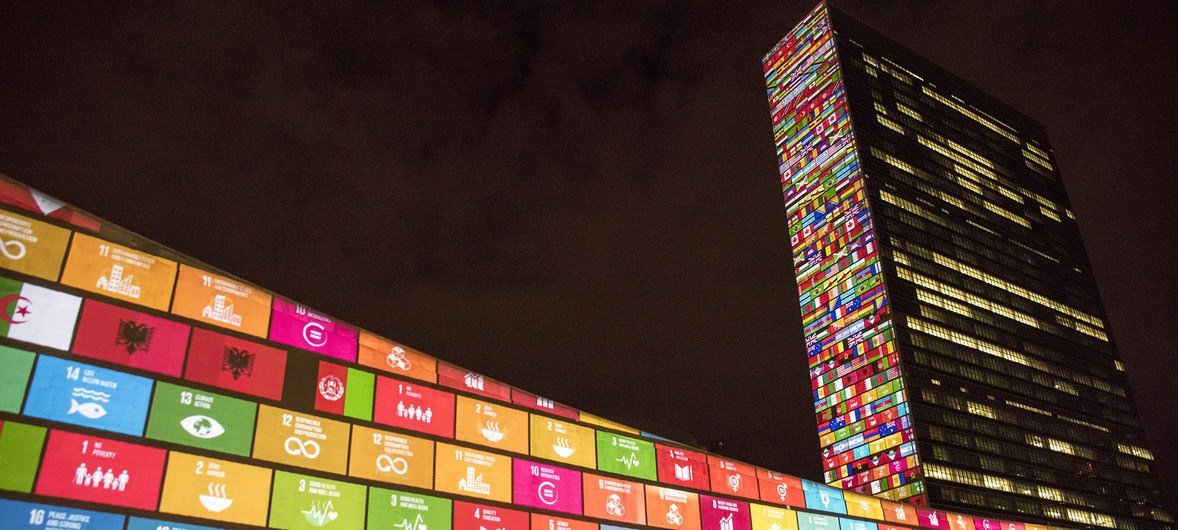
To mark the 70th anniversary of the United Nations, a 10-minute film introducing the Sustainable Development Goals is projected onto the UN Headquarters, Secretariat and General Assembly buildings. The projection brings to life each of the 17 Goals, to raise awareness about the 2030 Agenda for Sustainable Development. (2015)


25 December 2018

SDGs


How is the UN tackling its most ambitious and far-reaching project: the 2030 Agendato “transform the world”? This is the mammoth responsibility of the UN’s General Assembly’s Second Committee – the body which deals with “economic and financial matters”. Here is the second in our series on what happens at the UN when the world leaders have gone home at the end of September, and the Committees get going on turning pledges and ideas into action.


In this, the second in our ongoing series looking at how the headlines generated by the pronouncements of UN officials and world leaders are translated into action, we find out the Committee is breaking down this task.

Many of the topics discussed during the Committee session were relevant to the 17 Sustainable Development Goals (SDGs); that included all aspects of sustainable development, from macro-economic policy, human settlements, the eradication of poverty, and the best use of communications technologies for development.

In recent years, the committee’s work has begun with a keynote address from Homi Kharas, the director of the Global Economy and Development program at the Brookings Institute.

Mr. Kharas has an intimate knowledge of the 2030 Agenda, having led the High Level Panel in 2015 which decided what should replace the Millenium Development Goals, the first example of the UN setting specific targets to make the world a better place for all.

The answer was the SDGs, which are grouped in 5 specific themes: people, planet, prosperity, peace and the partnerships that are necessary to make them happen.

In an interview with UN News, he explained that it soon became clear how connected various pieces of the economic agenda are: “all of these different pieces, whether it's alleviating poverty ending hunger, girls' education, environmental issues…what we realized was that they all had to be tackled as a seamless whole, and that's why the committee's work is really so all embracing.”

Getting the international community on the same page

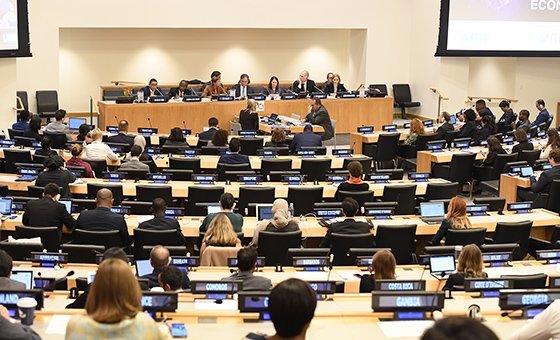
Joint Meeting of ECOSOC and the Second Committee. (October 2018).
​​​​​​​UN Photo/Evan Schneider

So how does the committee manage to get the representatives from the Member States, the 193 countries of the United Nations, together on the same page?

For this session just ended, that job went to Mr. Jorge Skinner-Klée, Guatemala’s Permanent Representative to the United Nations and current Chair of the 2nd Committee.

Mr. Skinner-Klée is a career diplomat with over 30 years experience who describes himself as a “specialist in generalities…everything from the bottom of the sea, to outer space and in-between.”

He told UN News that the legacy of the creation of the committees, over 70 years old,is one of the big challenges that he, and other Chairs have to deal with: "there are a lot of anachronisms…that have permeated the agenda and have been there for some time… so many resolutions, and the momentum, come from the past, and now we have to figure out how best to procure resolutions that come into action and play into the SDG agenda.”

In terms of getting the 193 countries to pull in the same direction, Mr. Skinner-Klée says that the skill of the Chair is not enough: “It takes political will. So that means reciprocal transactions. There are people [countries] who have vested interests….and the mainstay of the committee is the negotiation that happens between the G77 – which is 134 countries plus China – and, on the other side, the European Union.”

Hopes and fears for the future

Mr. Skinner-Klée says that he is encouraged by the global community’s commitment to the 2030 Agenda over the last three years, but is concerned that the current geo-political climate, which he characterizes as one of “atomization, confrontation and polarization,” will have an impact on his ability to make progress on the items on the Committee’s agenda.

For Homi Kharas as well, the world is carrying all the cards it needs to fulfil the 2030 Agenda, but for various reasons, the international community is moving too slowly: “I think that we have the understanding, the resources, and technology to do much more than is currently being done. But we're also distracted by many factors, and on the international stage we now have far lower levels of international cooperation, including in scientific exchange, than we have had in some time.”

His fears echo those expressed by the UN Secretary-General António Guterres, who has warned that “climate change is running faster than we are – and we are running out of time.” The message from the UN Chief is clear: for the work of the 2nd Committee and the 2030 Agenda to succeed, world leaders need to show more leadership and greater ambition, and avoid “a fate that none of us wants – a fate that will resonate through generations in the damage done to humankind and life on earth.”


https://news.un.org/en/story/2018/12/1029201
http://creativecommons.org/licenses/by/3.0/legalcode
вторник, 25 декабря 2018 г.

В результате атаки на правительственное здание в Кабуле погибли 25 человек


24.12.2018 22:29:40


Дубай. 24 декабря. ИНТЕРФАКС - Минимум 25 человек погибли и более 20 получили ранения в понедельник в результате атаки на правительственное здание в Кабуле, сообщает агентство ЭФЭ.

Погибшие - сотрудники управления по делам инвалидов и семей погибших, отмечает агентство.

Также были убиты трое нападавших.

"Операция по зачистке территории завершилась спустя почти семь часов... На данный момент нам известно о 25 погибших и более 20 раненых в ходе атаки", - заявил представитель МВД Афганистана Насрат Рахими.

Афганский телеканал "Толо Ньюс" сообщает, что из-з атаки пришлось эвакуировать порядка 200 госслужащих. Атака, по данным телеканала, произошла в нескольких километрах от "зеленой зоны" Кабула, где расположены дипломатические объекты.


http://www.militarynews.ru/story.asp?rid=1&nid=498589
http://creativecommons.org/licenses/by/3.0/legalcode
Генсек ОБСЕ оценил последствия инцидента в Черном море


Вчера, 14:19


© РИА Новости / Алексей Мальгавко


Перейти в фотобанк


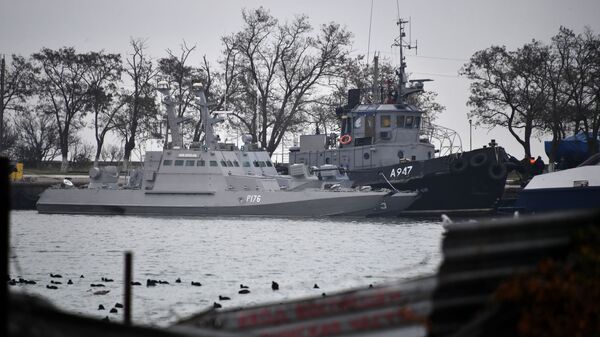
Малые бронированные артиллерийские катера «Никополь», «Бердянск» и рейдовый буксир «Яны Капу» ВМС Украины, задержанные пограничной службой России за нарушение государственной границы, в порту Керчи. Архивное фото


МОСКВА, 24 дек — РИА Новости. Генсек ОБСЕ Томас Гремингер в интервью изданию Neue Osnabrücker Zeitung предостерег Москву и Киев от дальнейшей эскалации после инцидента в Черном море, где украинские моряки на трех кораблях нарушили госграницу России.


"Это была очень щекотливая ситуация", — описал Гремингер керченский инцидент.


Вчера, 02:44

На Украине военные разгромили пансионат на границе с Крымом


Он отметил, что в ОБСЕ многократно обращали внимание на нарастающую напряженность в регионе.


"Наша работа заключается в том, чтобы наблюдать, комментировать и при необходимости предостерегать. Но ни одна сторона не сочла необходимым говорить об этом. Это вписывается в более широкую картину российско-украинских отношений с целым рядом дальнейших острых вопросов", — отметил генсек организации.


В качестве примеров он привел украинский закон о языке, создание "новой церкви", ситуацию с Крымом, выборы глав и депутатов в самопровозглашенных ДНР и ЛНР, ситуацию на линии соприкосновения в Донбассе.


"Вновь и вновь случаются провокации с обеих сторон. Везде мы видим либо застой ситуации, либо то, что она медленно раскачивается", — утверждает Гремингер.


23 декабря, 06:29

На Украине предложили отправить в Керченский пролив британский корабль


Глава ОБСЕ призвал Россию и Украину к диалогу и деэскалации. В качестве первого шага Россия может отпустить 24 задержанных моряка и три корабля, уверен Гремингер.


Однако прорыва на пути к миру в обозримом будущем генсек не видит.


"Сейчас просто нет политической воли к миру", — считает он.


Гремингер также выразил надежду на новый политический импульс от "нормандской четверки" (Россия, Украина, Германия и Франция), но констатировал, что пока "они от этого очень далеко".

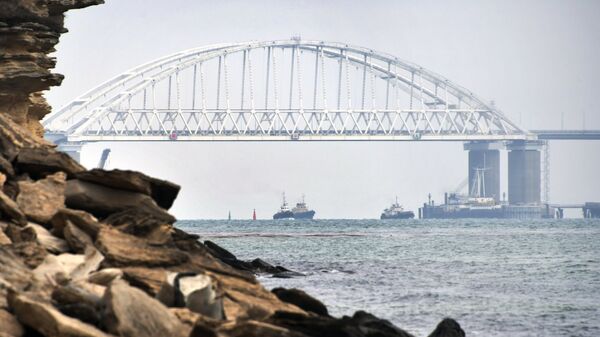
Инцидент в Керченском проливе


Утром 25 ноября три украинских корабля нарушили государственную границу России и несколько часов опасно маневрировали, не реагируя на законные требования российских властей.


21 декабря, 23:10

Daily Express назвала ситуацию в Азовском море "третьей мировой"


Российские пограничники задержали корабли, при этом им пришлось применить оружие. На борту оказалось 24 украинских военных, в том числе cотрудники СБУ. Трое моряков получили легкие ранения. Всем задержанным предъявили обвинения в незаконном пересечении государственной границы России.


Президент Владимир Путин назвал этот инцидент провокацией, которая потребовалась Петру Порошенко в преддверии президентских выборов из-за его низкого рейтинга. При этом глава государства подчеркнул, что российские пограничники выполняли свой долг по защите государственной границы.


https://ria.ru/20181224/1548572309.html
http://creativecommons.org/licenses/by/3.0/legalcode
THE COMMITTEES: Disarmament for a peaceful world, defines work of UN General Assembly's First Committee


UNICEF/Ashley Gilbertson


UN peacekeepers escort a UNICEF convoy to towns north-east of Bambari in Central African Republic in September 2018.


24 December 2018

Peace and Security


Every year in September, the United Nations General Assembly makes the headlines as world leaders gather at UN headquarters to set the agenda for the year ahead. But for the nitty-gritty discussions of how to turn decisions into action, Member States break out into six specialized “Main Committees”. For this first in our series of Committee explainers, we'll take you inside the work of the First – tasked with addressing issues of disarmament and international security.


How to ensure that perpetrators of chemical weapons attacks are accountable? How do we stop digital technologies from being used for malicious purposes across the globe? How can we really create a nuclear-weapon-free world, bringing all nations on board and what limits should the world set on the use of poweful new "automous weapons"? How can we curb illegal arms sales?

The First Committee handles all of these tricky questions, and more, concerning threats to the security of States and individuals, across the world.

A central pillar of the UN, from the ashes of World War

The six General Assembly’s Main Committees were established in 1945, at the UN's founding. As the world was coming out of devastating conflict – including the first use of nuclear weapons – issues of war and peace were at the very top of the founders’ agenda. In fact, the very first resolution ever to be adopted by the UN General Assembly was the product of the work of the First Committee, and proposed the creation of a special commission “to deal with the problems raised by the discovery of atomic energy.”

Since then, the First Committee has pushed through hundreds of war-and-peace-related resolutions approved by the UN General Assembly. Although they are non-legally binding for Member States, these resolutions set important standards and principles, and ensure that constant dialogue takes place on the issues that most directly threaten the security of societies everywhere.

Who makes up the First Committee?

Just as in the plenary of the General Assembly, all 193 Member States are represented in each of the Main Committees. The officers of the Committees this year were elected in June. For the disarmament Committee, Ambassador Ion Jinga of Romania was elected to the position of Chair, with three Vice-Chairs, Marissa Edwards of Guyana, Noël Diarra of Mali, and José Ataíde Amaral of Portugal.

How do they go about tackling world peace?

For its 73rd session, the Committee held a total of 26 meetings from 4 October to 8 November.

The whole thing started with the “General Debate” where a series of statements were made by Member States, high level officials, as well as NGO representatives. In her opening statement this year, the UN disarmament chief, Izumi Nakamitsu, told Member States that the stakes were high as issues of security and peace "are now at their worst state since the end of the Cold War.”

The second phase focused on thematic discussions according to seven clusters: nuclear weapons, other weapons of mass destruction, outer space disarmament, conventional weapons, regional disarmament and security; other disarmament measures and international security, and disarmament machinery. This is where resolutions to be recommended for adoption at the General Assembly are proposed and drafted.

The last week, called “Action on drafts,” was dedicated to finalizing and voting on resolutions, as well as statements by Member States, explaining their decisions.

What did the First Committee achieve this year?

On 8 November, the Committee wrapped up its work programme with 68 draft resolutions and decisions sent to the General Assembly, out of which 26 were approved without a vote.

Notably this year, among the proposals approved were two which created working groups loo develop rules for States on responsible behaviour in cyberspace. In addition, with a view to reducing the ever-widening gap between developed and developing countries, the Committee approved the draft resolution “Relationship between disarmament and development.”

In the last meeting, the Committee Chair in his closing remarks told the country representatives in the room that “disarmament and international security are in [their] hands and [their] actions as Member 

States result in consequences which we must all face.”

Take a look at the Disarmament and International Security Committee session of t he First Committee, from November 8 below, and look out for further explainers on the work and makeup of the other General Assembly Committees, in the days ahead as we go into 1019:


https://news.un.org/en/story/2018/12/1029221
http://creativecommons.org/licenses/by/3.0/legalcode
UN ceasefire monitoring chief tours Yemeni port of Hudaydah


© UNICEF


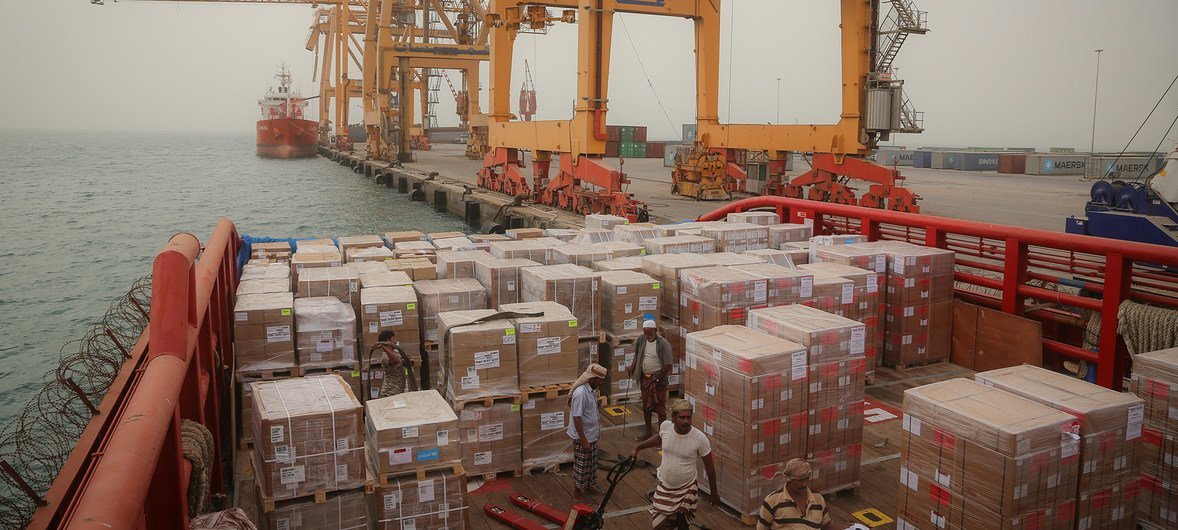
On 30 June 2018 in Yemen, a ship berths in Hudaydah port and emergency humanitarian supplies sent by UNICEF are offloaded.


24 December 2018


Peace and Security

The head of the UN team which is monitoring and helping implement a ground-breaking ceasefire across Yemen’s crucial port city of Hudaydah, had his first face-to-face meeting with authorities there on Monday.

Retired Dutch General Patrick Cammaert and his advance team, also undertook “a familiarization visit” to the Port itself, where close to eighty per cent of life-saving humanitarian aid, food and commercial goods arrive before being distributed.

The UN Spokesperson’s Office said that the team took note of the “current boundaries and related access roads, particularly eastern and southern access roads into and out of the city.”
Houthi opposition fighters have control of the centre of Hudaydah and the port, and an offensive launched by the internationally-recognized Government and their allies last June, to take the port, threatened the lives of around 300,000 children trapped in the city, and a humanitarian disaster, said the UN.

Historic consultations convened in Sweden by UN Special Envoy Martin Griffiths earlier in December resulted in a Security Council resolution last Friday, endorsing a deal to continue peace talks in January, and a fragile ceasefire that has held since last Tuesday.

According to the UN, General Cammaert’s team were also encouraged on Monday by the presence of returning internally-displaced civilians who had fled the city before the ceasefire agreement.

The presence of returning IDP’s in the city was an encouraging sign of the positive effects of the ceasefire which appears to be holding, since it entered into force on 18 December.

The team arrived in Hudaydah on Sunday, and prior to their arrival, the General met with Houthi members who will be working as part of the team, formally known as the Redeployment 

Coordination Committee (RCC), in the capital, Sana’a.


In a note to correspondents at UN Headquarters in New York, the UN Spokesman’s office said that General Cammaert had been “reassured of their commitment to the implementation of the Stockholm agreement,” adding that he was “encouraged by the general enthusiasm of both sides to get to work, immediately.” The first joint RCC meeting, is scheduled to take place on Wednesday.


https://news.un.org/en/story/2018/12/1029301
http://creativecommons.org/licenses/by/3.0/legalcode
понедельник, 24 декабря 2018 г.

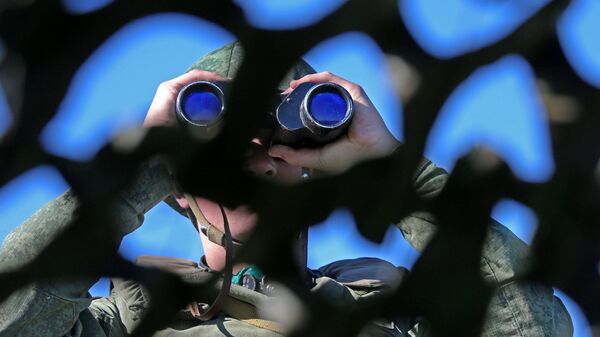
Афганские военные сообщают о скоплении боевиков ИГ на границе с Таджикистаном


21:13, 23 декабря 2018 


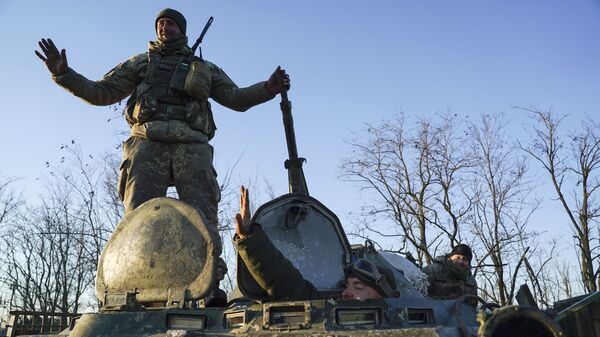
CA-NEWS (TJ) - Министерство обороны Афганистана 23 декабря сообщило об активизации боевиков террористической организации «Исламское государство» на севере страны, в том числе, на границе с Таджикистаном.

Группировка ИГ в настоящее время создает новые тренировочные базы на севере и северо-востоке страны, заявил 23 декабря в беседе с Радио Озоди генерал Алимухаммад Ахмадзай, командующий 209-й дивизией Минобороны Афганистана.

«Сейчас наблюдается скопление боевиков ИГ в провинциях Бадахшан, Фарьяб и Джузджан», - отметил он. По словам боевого генерала, правительственные силы Афганистана совместно с международной коалицией провели несколько воздушных операций против боевиков на севере страны, но уничтожить их так и не удалось.

«Наши спецслужбы выяснили, что в некоторых районах провинций Бадахшан, Тахор, Джузджан и Фарьяб боевики «Исламского государства» проходят обучение под руководством иностранных «советников» и военных инструкторов»,- отметил генерал Алимухаммад Ахмадзай.

Ранее МВД Афганистана сообщило, что в результате операций правительственных сил и международной коалиции на севере страны группировка ИГ ослабла и находится на грани полного уничтожения. По словам афганских экспертов, последние месяцы боевики ИГ изменили тактику и стараются не вступить в открытый бой с афганскими военными.


http://ca-news.org/news:1487581
http://creativecommons.org/licenses/by/3.0/legalcode