Премьер-министр Японии Суга Ёсихидэ заявил, что он не будет участвовать в предстоящих выборах председателя главной в правящей коалиции Либерально-демократической партии. Это означает, что он отказывается от поста премьер-министра, и в Японии в скором времени появится новый глава правительства.
Суга выступил с этим заявлением на экстренном заседании руководства ЛДП в пятницу. Он, как сообщается, сказал, что не будет выставлять свою кандидатуру на выборах, потому что хочет сосредоточить внимание на мерах по борьбе с коронавирусом. Выборы председателя ЛДП намечены на 29 сентября.
По сообщениям, Суга также указал, что не станет производить кадровые перестановки в руководстве партии, которые он ранее рассчитывал осуществить в понедельник.
На встрече с генеральным секретарем ЛДП Никаи Тосихиро в четверг Суга выразил намерение участвовать в выборах.
После встречи партийного руководства в пятницу Суга сказал журналистам, что он изменил свою позицию. Он заявил: «Я подумал, что должен выбрать между участием в предвыборной кампании и сосредоточением усилий на мерах по борьбе с коронавирусом, так как я не смогу справиться с обеими этими задачами, требующими огромных затрат энергии. Я принял решение сконцентрироваться на антивирусных мерах, чтобы сдержать дальнейшее распространение инфекции».
Один из кандидатов на пост председателя ЛДП – бывший министр иностранных дел Японии Кисида Фумио. Бывший министр по общенациональным делам Такаити Санаэ также заинтересована в выдвижении своей кандидатуры, однако для этого ей придется заручиться подписями 20 парламентариев от ЛДП.
Для многих в Японии объявление Суга было неожиданным. Мужчина в возрасте 60 с лишним лет сказал: «Японцы испытывают чувство неопределенности в отношении политической ситуации и хотят видеть политиков, которые активно борются с коронавирусом».
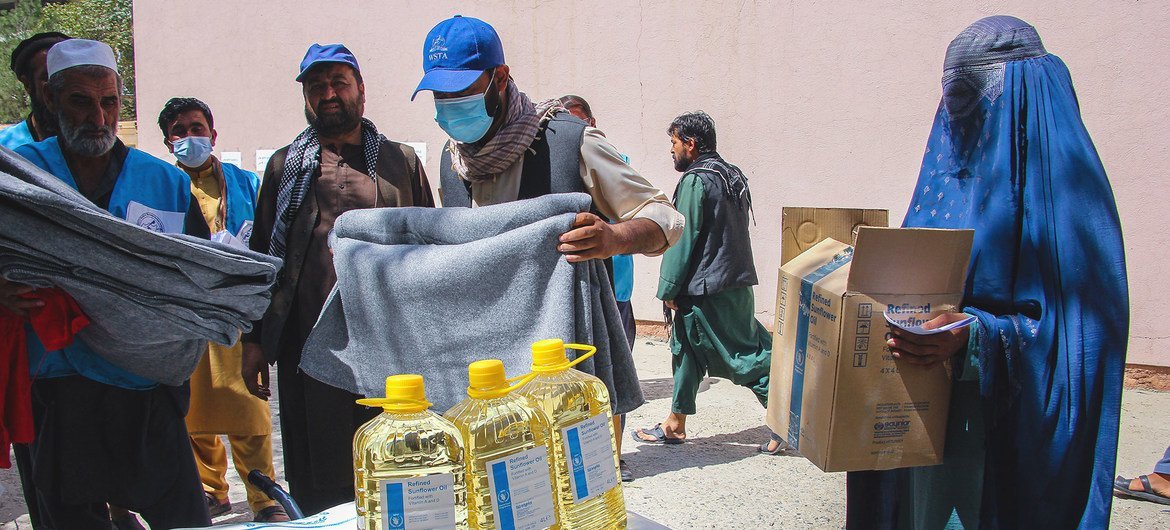
Food and blankets are handed out to people in need in Kabul, the capital of Afghanistan. UNHCR warned that the world cannot allow this “to become a humanitarian catastrophe”
A major humanitarian crisis is looming in Afghanistan, the UN refugee agency, UNHCR, warned again on Friday, amid ongoing uncertainty about the situation for vulnerable Afghans seeking shelter across the country's borders. To address the crisis, the UN announced a major fundraising conference to take place in Geneva on 13 September.
"The conference will advocate for a swift scale-up in funding so the lifesaving humanitarian operation can continue; and appeal for full and unimpeded humanitarian access to make sure Afghans continue to get the essential services they need", said a statement issued on Friday by the UN Spokesperson.
Stéphane Dujarric, said that the UN remains committed to delivering humanitarian assistance to millions of people in need across Afghanistan. "Development gains must also be protected to link the humanitarian response with the medium and long-term stability of Afghanistan. The rights, safety and wellbeing of women and girls are an essential part of this link."
Displacement rife
The “reality is, the displacement crisis is inside Afghanistan”, with more than 600,000 Afghans displaced this year, “80 per cent of which are women and children”, said UNHCR spokesperson, Babar Baloch, who was speaking from Pakistan earlier on Friday.
In an appeal to the world not to turn away its attention or focus from Afghans and Afghanistan, he warned that we cannot allow this “to become a humanitarian catastrophe”.
Describing the situation at the country’s borders with Pakistan, Mr. Baloch said UNHCR had not seen such a “large refugee influx”, crossing over into Pakistan and Iran before.
The explanation for this is unclear: “It could be that some of those people may not think they have the right documents, others may not be so comfortable in terms of confronting armed guards at the borders”, he said. “Afghans are still able to come through Pakistan”, he explained, “but it is very regulated,” and you must show documents such as your ID card, passport or visa.
Mr. Baloch’s appeal follows the UNHCR’s repeated call on Tuesday for Afghanistan’s neighbouring States to keep their borders open to those fleeing.
Journalists need urgent protection: rights experts
States must provide urgent protection to Afghan journalists and media workers, who fear for their lives and are seeking safety abroad, UN-appointed independent rights experts said on Friday.
The safety of women is of particular concern as they are facing heightened risks since the Taliban’s political takeover of Afghanistan,” they added, as “they may be targeted for working in the media or simply being a woman in public life”.
Reminding the Human Rights Council of the various resolutions on the safety of journalists adopted in recent years, the experts called for expedited visas, assistance with evacuation, and open borders for those who wish to leave Afghanistan.
Increasingly targeted
Reports of targeted killings of journalists and their family members, home raids, threats and intimidation in areas controlled by the Taliban, have sharply increased in recent months, according to the rights experts.
This is taking place “in a context where Afghanistan is already considered one of the most dangerous countries for journalists,” they pointed out. They called on the Council to consider setting up “an investigative and monitoring mechanism for accountability for all human rights violations that have been taking place, including attacks, reprisals and violence against journalists and media workers.
Accountability for human rights violations is critical not only for individual justice but also the prevention of future violations,” they argued.
Emphasizing the crucial prevention role of the Human Rights Council, they called on the Council and all States, to do their utmost to preserve the hard-won gains for media freedom, including for women journalists and media workers.
“Last week’s Council resolution on human rights in Afghanistan fails to address the specific risks faced by journalists and human rights defenders in the country,” they pointed out.
“The safety of journalists, women and men alike, human rights defenders and gender equality activists, must be a key consideration of their engagement on the human rights situation in Afghanistan. It is imperative for all States to stand firmly with the people of Afghanistan,” the experts said.
Independent human rights experts are appointed under the Special Procedures of the Human Rights Council, and are not UN staff, nor are they paid for their work.
Министр японского кабинета, председательствующий в 11-стороннем Всеобъемлющем и прогрессивном соглашении о Транcтихоокеанском партнерстве (ТТП-11), дал понять, что первая встреча на рабочем уровне для обсуждения заявки на вступление Великобритании может пройти позже в этом месяце.
Переговоры на министерском уровне стран-участниц соглашения состоялись в режиме онлайн в среду по японскому времени. Стороны договорились провести первую рабочую встречу, чтобы обсудить вступление Великобритании, примерно через месяц. Они также договорились создать подкомиссию по электронной коммерции с целью продвижения торговли посредством развития цифровой инфраструктуры.
Выступая перед журналистами после встречи, японский министр по вопросам экономической и финансовой политики Нисимура Ясутоси сказал, что вступление в соглашение Великобритании может значительно поспособствовать тому, чтобы правила этого партнерства распространились за пределы Азиатско-Тихоокеанского региона.
31 августа РК и США возобновили совместные поиски останков солдат, погибших во время Корейской войны 1950-53 годов на месте сражений в районе межкорейской границы. Как сообщили в министерстве обороны РК, в раскопках, которые будут проходить до 16 сентября, участвуют около 60 южнокорейских и 10 американских военнослужащих. Поиски проходят на горе Пэксоксан в уезде Янгу-гун провинции Канвондо. В 1951 году этот район был местом ожесточённого сражения, продолжавшегося несколько недель. Ранее там было обнаружено более 580 фрагментов останков. 18 из них удалось идентифицировать. РК и США сотрудничают в поисках останков погибших в Корейской войне с 2000 года.
Киев. 31 августа. ИНЕРФАКС-УКРАИНА - Министры обороны Украины и США Андрей Таран и Ллойд Остин подписали во вторник в Вашингтоне соглашение о стратегических основах оборонного партнерства. Президент Украины Владимир Зеленский назвал это соглашение "новым этапом в сотрудничестве Украины и США в оборонной сфере". "Для нас очень важна поддержка со стороны США территориальной целостности Украины, получение членства в НАТО и совместное противодействие агрессии РФ ", - написал он в твиттере. Главы военных ведомств подписали также межправительственное соглашение о проектах в сфере исследований, разработок, испытаний и оценки. Как сообщается на сайте Министерства обороны Украины, выстраиваются международно-правовые основы для заключения контрактов по реализации совместных научно-исследовательских и опытно-конструкторских работ в оборонной сфере. В частности, создаются условия для внедрения передовых оборонных технологий, старта проектов в сфере модернизации вооружения и военной техники с привлечением инвестиций с американской стороны. Кроме того, положения соглашения позволяют проводить тестирования вооружений и военной техники, научно-исследовательские работы, оценивать их эффективность с использованием оборудования и технологий, отсутствующих на Украине. Украинские же научно-исследовательские учреждения смогут привлекаться к выполнению проектов американской стороны. Предусматривается и продвижение продукции и услуг обоих государств на рынках третьих стран с учетом стандартов стран-членов НАТО, отмечается в сообщении. В свою очередь, между Государственным космическим агентством Украины и Министерством обороны США заключен Меморандум о взаимопонимании в сфере безопасности космических полетов и предоставления услуг и информации по космической ситуационной осведомленности. Как сообщает пресс-служба Минобороны Украины, документ создаст условия для получения конкретной системной информации в космической сфере для украинских специалистов органов государственного и военного управления, космического агентства Украины, научных и других работников. Отмечается, что это позволит идентифицировать действующие космические аппараты во всех доступных открытых ресурсах и моделировать их орбитальный полет, исследовать их функциональные возможности, формировать отечественные каталоги космических объектов. https://www.militarynews.ru/story.asp?rid=1&nid=556534&lang=RU
США больше не будут прибегать к крупным военным операциям, чтобы изменить устройство других государств, сказал американский президент Джо Байден. Выступая по случаю вывода войск из Афганистана, он отметил, что завершение войны в стране знаменует окончание эпохи подобных действий.
«Это решение по Афганистану касается не только Афганистана. Оно означает конец эпохи крупных военных операций по переустройству других стран»,— сказал господин Байден во время обращения к нации по случаю вывода войск (трансляция велась на канале Белого дома на YouTube).
По словам господина Байдена, миссия в Афганистане, изначально ведущаяся как контртеррористическая, с течением времени «превратилась в миссию против мятежников, по построению нации, с попытками создать демократический, сплоченный и единый Афганистан». Подобное, по его словам, «не достигалось ни разу на протяжении многовековой афганской истории».
Господин Байден назвал миссию США в Афганистане «невероятно успешной». Он отметил, что у Вашингтона был выбор между уходом из страны и эскалацией конфликта, и добавил, что выступает как против «"вечной" войны», так и против «"вечной" эвакуации».
США завершили вывод войск из Афганистана в ночь на 31 августа по московскому времени. Госсекретарь США Энтони Блинкен отметил, что талибы (члены запрещенного в России террористического движения «Талибан») должны заслужить легитимность и поддержку, а США продолжат работать по вопросу Афганистана посредством дипломатии. Президент США Джо Байден поручил господину Блинкену продолжить международное сотрудничество.
The UN Security Council passed a resolution on Monday that calls for the Taliban to facilitate safe passage for people wanting to leave Afghanistan, allow humanitarians to access the country, and uphold human rights, including for women and children.
Thirteen of the 15 ambassadors voted in favour of the resolution, which further demands that Afghanistan not be used as a shelter for terrorism.
Permanent members China and Russia abstained.
Airport attack condemned
Countries condemned in the strongest terms the deadly blasts at Kabul airport on Thursday, which killed more than 150 people and injured upwards of 200 more. The terrorist group Islamic State in Khorosan Province (ISKP) claimed responsibility.
The attack targeted people fleeing Afghanistan in the wake of the Taliban’s takeover two weeks ago, and international forces assisting the evacuations.
Thousands of Afghans have been trying to escape from the country ahead of the full withdrawal of the United States by its self-imposed Tuesday deadline.
UN Photo/Eskinder Debebe
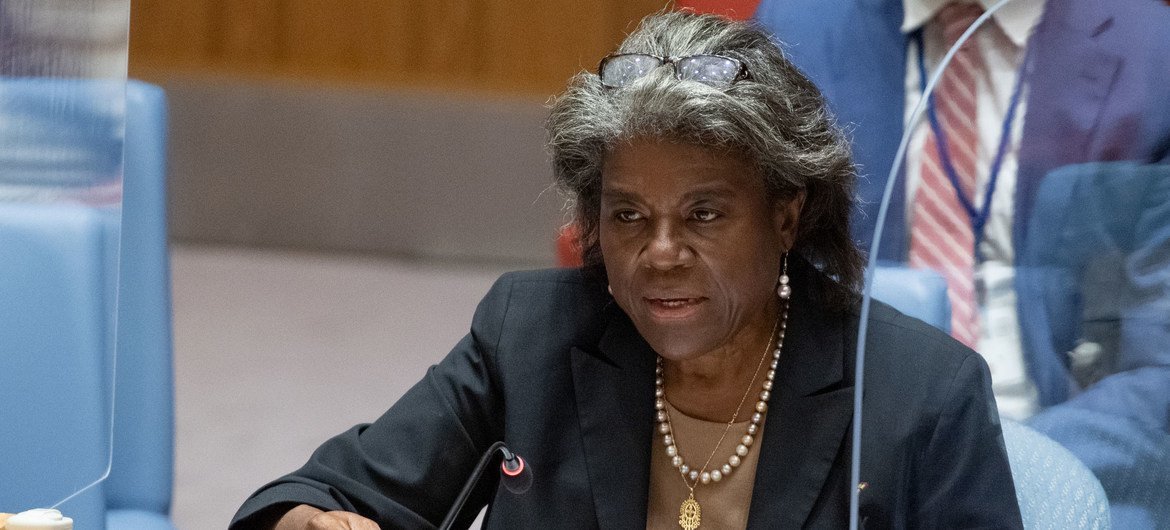
Ambassador Linda Thomas-Greenfield of the United States addresses the Security Council meeting on the situation in Afghanistan.
USA: Live up to commitment
The resolution was tabled by the United States, alongside fellow permanent Council members France and the United Kingdom.
“The Security Council expects the Taliban to live up to its commitment to facilitate safe passage for Afghans and foreign nationals who want to leave Afghanistan, whether it’s today, tomorrow, or after August 31,” said US Ambassador Linda Thomas-Greenfield.
“Consistent with the right to leave any country, including one’s own, everybody must be allowed to safely leave Afghanistan, for whatever reason, whenever they want, by air or by land. This is of the utmost importance to us.”
Since July, the USA has evacuated more than 122,000 Americans, foreign nationals and at-risk Afghan citizens, she reported. Ms. Thomas-Greenfield added that the resolution also reflects the Council’s "crystal clear" commitment to assisting those who remain in Afghanistan.
“It underscores that all parties need to facilitate humanitarian assistance, and that humanitarian actors be given full safe and unhindered access to continue service delivery to those in need,” she said.
France: Reach all in need
The resolution takes note of a Taliban statement this week which allows Afghans to leave the country at any time. Nathalie Estival-Broadhurst, Deputy Permanent Representative of France, called for that commitment to be upheld.
UN Photo/Eskinder Debebe
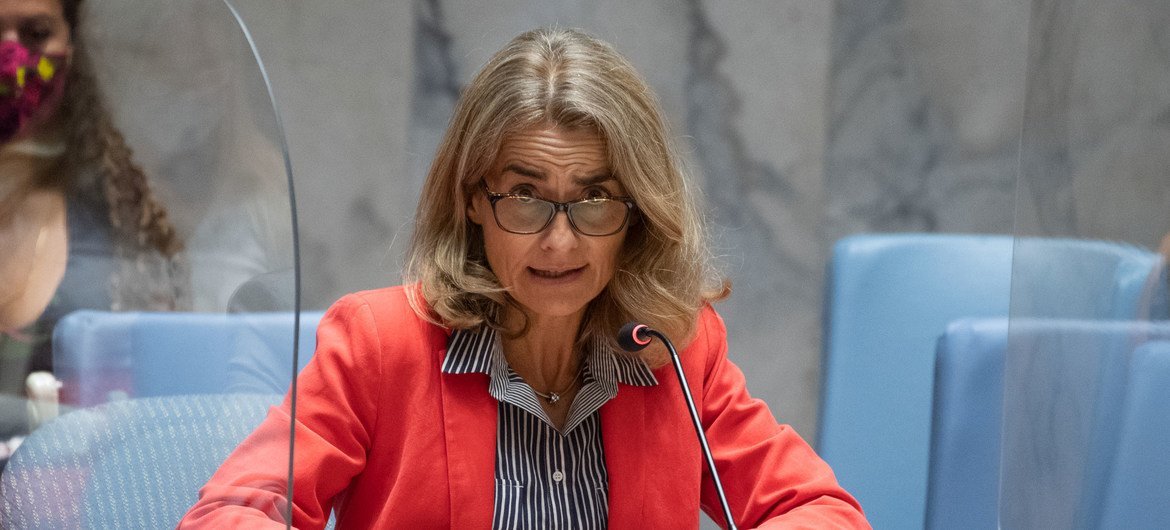
Nathalie Estival-Broadhurst, Deputy Permanent Representative of France addresses the Security Council meeting on the situation in Afghanistan.
“This resolution calls on everyone to make all efforts to secure the airport and the surrounding area.,” she said, speaking through an interpreter.
“And to create this safe passage and protection is a sine qua non condition to ensure that threatened Afghans who wish to leave can do so safely, but also to ensure that humanitarian assistance can reach all of those who need it through the airport, of course, but also over land borders.”
UK: Protect rights gains
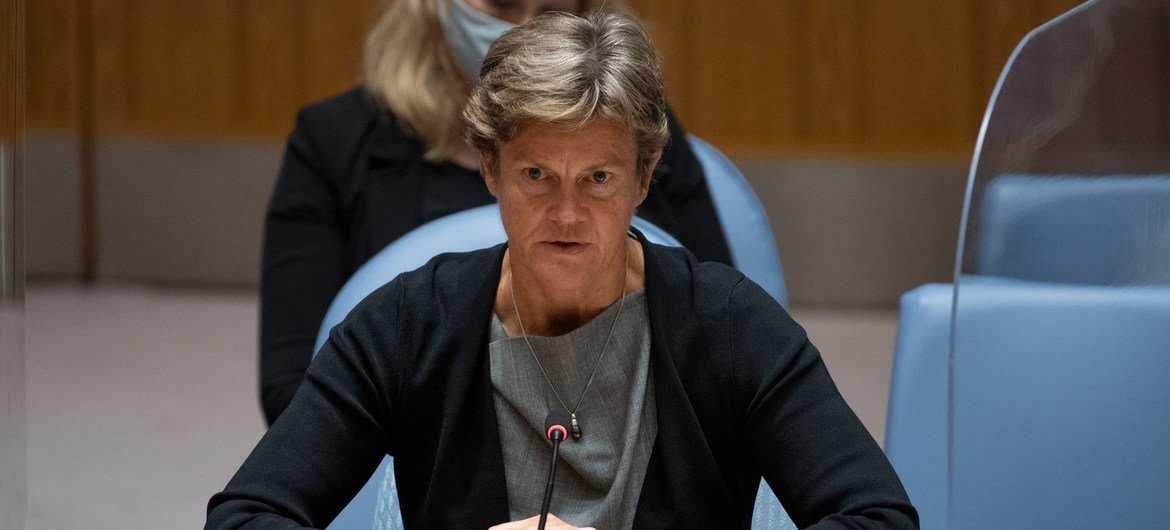
On the issue of human rights, UK Ambassador Barbara Woodward emphasized the need to protect gains made over the past two decades, stressing that the rights of women, children and minorities must be safeguarded.
UN Photo/Eskinder Debebe
Ambassador Barbara Woodward of the United Kingdom addresses the Security Council meeting on the situation in Afghanistan.
She described the resolution as an important step towards a unified international response to the situation in Afghanistan.
“We will continue to build on this to ensure the Council holds the Taliban accountable on its commitments. The Taliban will be judged by the international community on the basis of their actions on the ground, not their words,” she stated.
Russia: Concerns not included
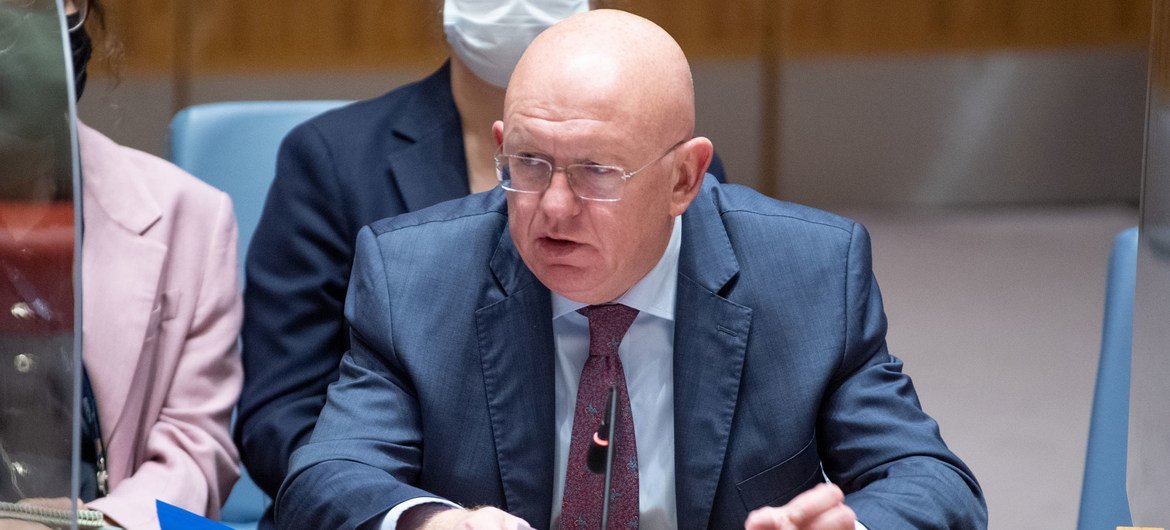
In explaining his vote, Ambassador Vassily Nebenzia said Russia was forced to abstain because certain “principled concerns” were not reflected in the draft text, which was circulated on Friday.
UN Photo/Eskinder Debebe
Ambassador Vassily Nebenzia of the Russian Federation addresses the Security Council meeting on the situation in Afghanistan.
“Firstly, despite the fact that the resolution was proposed against the backdrop of a terrible terrorist attack, the authors categorically refused to refer to a passage on the fight against terrorism containing internationally recognized terrorist organizations ISIL and the East Turkistan Islamic Movement,” he said, speaking through an interpreter.
“We see this as a reluctance to acknowledge the obvious, and a desire to divide terrorists into ‘ours’ and ‘theirs’; and that is to say, to downplay the terrorist threat coming from these groups.”
China: Reflection and correction
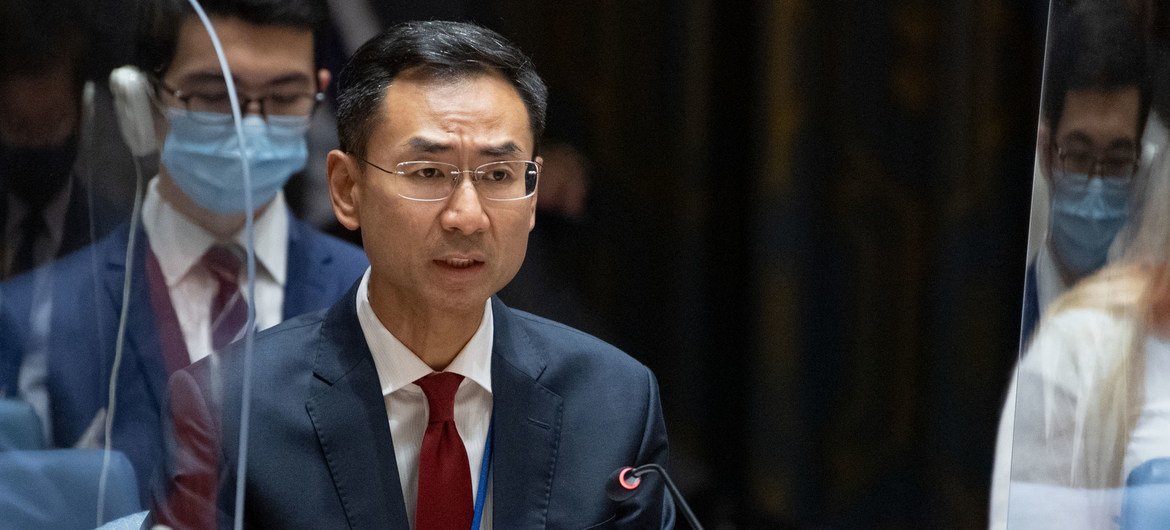
Ambassador Geng Shuang of China stated that given the fragile situation on the ground, and the uncertainties, any Council action should help ease tensions, and not intensify them.
UN Photo/Eskinder Debebe
Ambassador Geng Shuang of China addresses the Security Council meeting on the situation in Afghanistan.
“The recent chaos in Afghanistan is directly related to the hasty and disorderly withdrawal of foreign troops,” he said. “We hope that relevant countries will realize the fact that withdrawal is not the end of responsibility, but the beginning of reflection and correction.”