воскресенье, 27 июня 2021 г.

Tigray: UN condemns murder of 3 MSF humanitarians as ‘appalling violation’ of international law


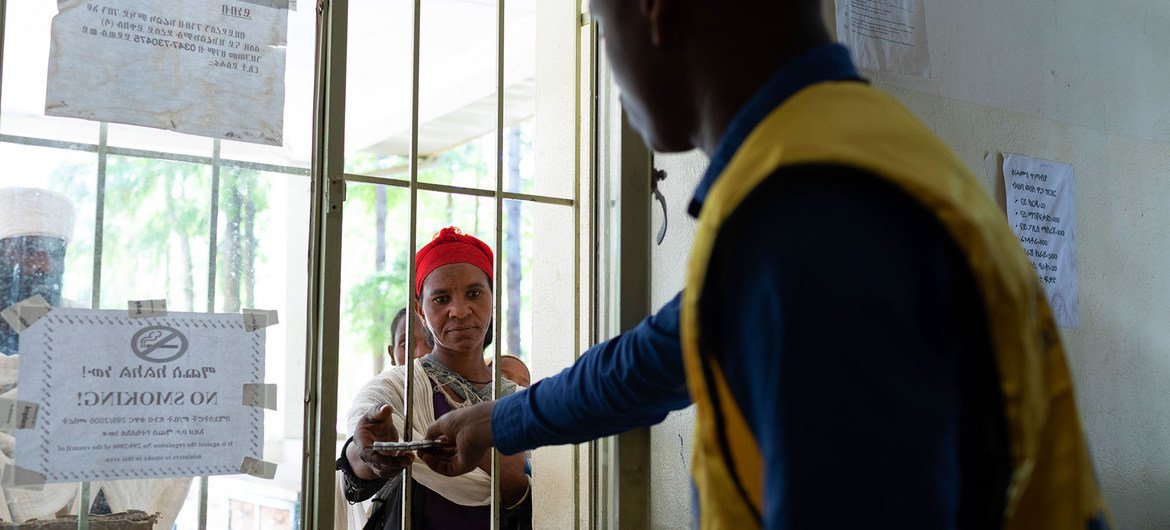
© UNICEF/Mulugeta Ayene
A woman receives medicine at a health centre in the Tigray region of Ethiopia.
26 June 2021

Three employees of the Médecins Sans Frontières (MSF) agency have been killed by unknown attackers in the restive Tigray region of Ethiopia, drawing swift condemnation from UN Secretary-General António Guterres who said on Saturday he was “deeply shocked” by the murders.

According to news reports, MSF lost contact with a vehicle that had been carrying workers from the Spanish branch of the agency, on Thursday afternoon, and their bodies were discovered on Friday morning, close to the empty vehicle.

The victims were identified as Spanish national, Maria Hernandez, and Ethiopian staff members Yohannes Halefom Reda, and Tedros Gebremariam Gebremichael. “No words can truly convey our sadness, shock, and outrage against this horrific attack”, said MSF in a statement.

MSF is an independent, international medical humanitarian organisation, made up of tens of thousands of health professionals, logistical and administrative staff, operating worldwide.

Conflict began in Tigray last November, between central Government forces and regional forces of the Tigray People’s Liberation Front (TPLF), throwing the region into a humanitarian crisis with fighting sparking massive displacement and warnings from the UN, of a looming famine.

Standing ‘in solidarity’

In a statement, the UN chief described the murders as “totally unacceptable and an appalling violation of International Humanitarian Law. The perpetrators must be found and severely punished.

“I stand in solidarity with our humanitarian partners who are risking their lives to provide protection and relief to people in Tigray”, Mr. Guterres added.

The UN human rights chief, Michelle Bachelet, said in a statement, she was outraged at the brutal murders. “Humanitarian and human rights workers are civilians and as such can never be targeted. Parties to the conflict must fully respect international human rights and humanitarian law.”

The “shocking killings come as we continue to receive reports of ongoing serious violations of international humanitarian law and gross human rights violations and abuses in Tigray”, she added, calling for a “timely, transparent, thorough investigation into the killing of our humanitarian colleagues and all reports of violations, and perpetrators must be held accountable.”

In a message on Twitter, the head of the International Organization for Migration (IOM), António Vitorino, said he was shocked by the killing of the MSF workers, “who were serving some of the most vulnerable people…IOM condemns in the strongest terms, the targeting of aid workers in conflicts.”

Executive Director of the UN World Food Programme (WFP), David Beasley, said he was “shocked by the terrible news”, adding that the workers had been “simply trying to help others in great need…our thoughts and prayers are with their families and friends during this difficult time.”

Missile strike

The Tigray conflict has continued unabated in recent days, with civilians bearing the brunt of the violence. On Tuesday, amidst conflicting accounts, an Ethiopian Government air strike hit a market in the village of Togoga, reportedly killing many civilians, including women and children.

On Friday, Secretary-General António Guterres issued a statement strongly condemning the attack, expressing his “deepest condolences to the families of the victims”.

“The Secretary-General reiterates the need for all parties to uphold their responsibilities under international humanitarian and human rights law and to ensure the protection of civilians. He calls for an independent and swift investigation into this incident.”

He called once again, “for an immediate end to the fighting and for urgent steps to peacefully resolve the conflict.”

The UN humanitarian response to the highly volatile and complex security situation, includes getting food assistance to around 5.2 million in need. So far around 3.7 million people have been accessed.

More than 1,000 children were treated for severe acute malnutrition and around 5,000 for moderate acute malnutrition in recent days, while more than 22,000 received medical services in the second week of June.

https://news.un.org/feed/view/en/story/2021/06/1094892
https://creativecommons.org/licenses/by/3.0/legalcode

суббота, 26 июня 2021 г.

Note to Correspondents – on Mali


25 June 2021

Note to Correspondents – on Mali

Stéphane Dujarric, Spokesman for the Secretary-General

The UN Multidimensional Integrated Stabilization Mission in Mali (MINUSMA) updates that 13 peacekeepers, including 12 German and one Belgian, were wounded in this morning’s attack in Gao region. The peacekeepers are receiving medical attention

https://www.un.org/sg/en/content/sg/note-correspondents/2021-06-25/note-correspondents-%E2%80%93-mali
https://creativecommons.org/licenses/by/3.0/legalcode

Syria: ‘Gulf of mistrust’, complex realities, prevent political progress


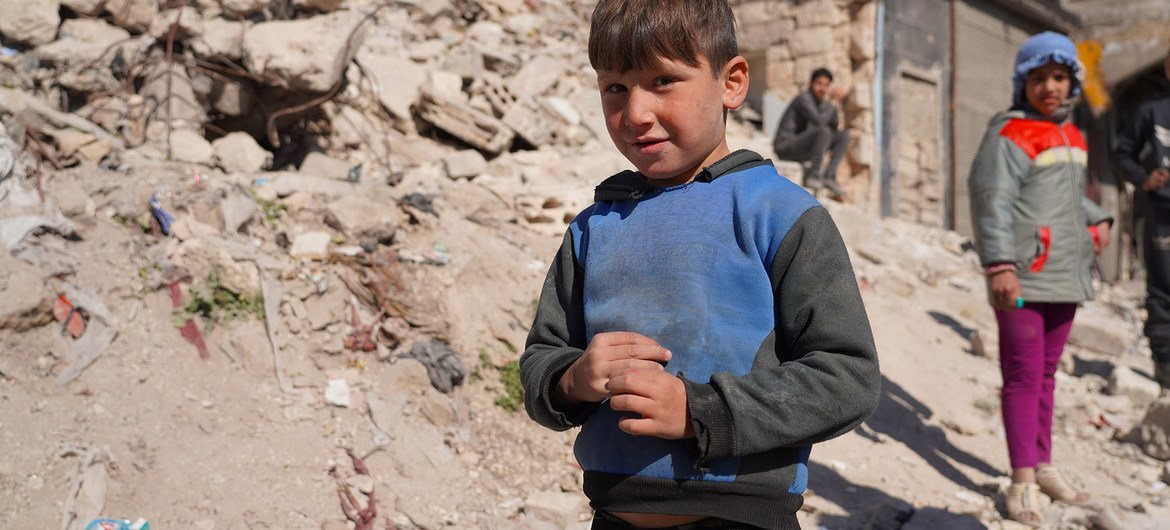
© WFP/Jessica Lawson
Children wait for food distribution during the COVID-19 crisis in Aleppo, Syria.
25 June 2021

Progress towards resolving Syria’s decade-long war is unlikely, given the ‘gulf of mistrust’ among parties and complexity of conditions on the ground, the chief UN mediator for the country told the Security Council on Friday, as he urged delegates to unite around elements of resolution 2254 (2015) and called for a new international dialogue to achieve a breakthrough.

“I think we are all disappointed that we are not making real advances on the political track”, said Geir Pedersen, Special Envoy for Syria, namely constitutional reform and future elections slated to be administered under UN supervision.

Contours of a new international dialogue

Against that backdrop, he unveiled a proposal for a new international dialogue on Syria aimed at achieving steps that are reciprocal and mutual, “defined with realism and precision” and carried out in parallel.  Key players should be ready to come to the table with the necessary goodwill.

The aim is to deepen exploratory substantive consultations to identify the “very first steps that Syrian and international players could deliver”, he explained, pressing the parties to not only explore what they ask of others - but also what actions they can entertain.  “I sense that all key players are interested in deepening this conversation.”

Diplomatic overtures

He said he has been in regular contact with senior officials from the Russian Federation and the United States before and since the recent Geneva summit, as well as other Council members and States in the region.

He said he will soon fly to Rome for consultations with foreign ministers participating in a Ministerial Meeting on Syria convened by Italy and the US, before heading to Moscow to consult with Turkey and Iran – and then to Nur Sultan, Kazakhstan, for an ‘Astana format’ meeting in early July, which lies outside the UN framework.

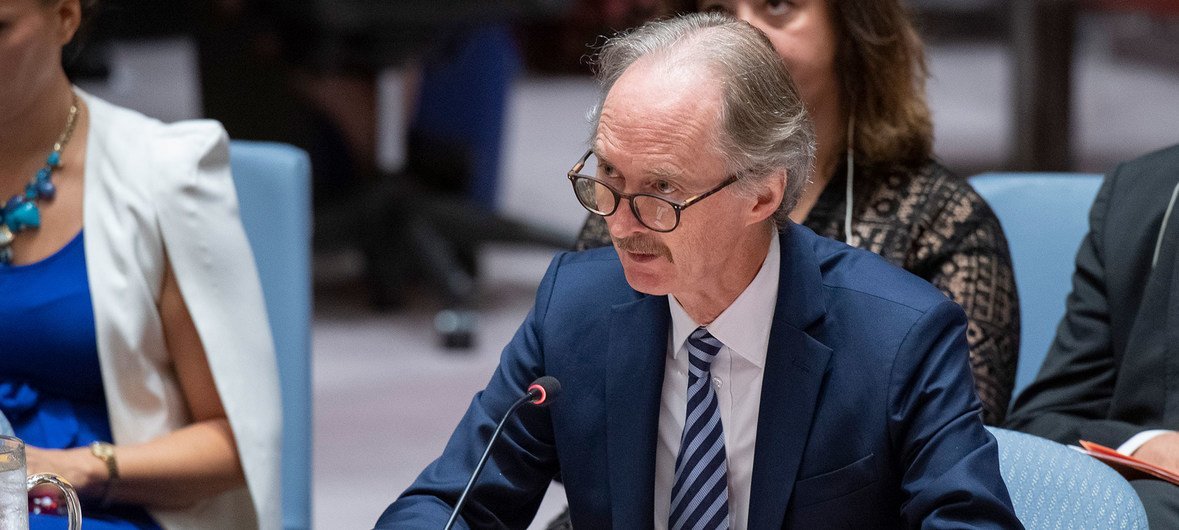
Geir O. Pedersen, Special Envoy of the Secretary-General for Syria (file)
UN Photo/Eskinder Debebe
Geir O. Pedersen, Special Envoy of the Secretary-General for Syria (file)

‘Steps for steps’

Outlining areas where initial steps might be found, he pointed first to the call for action on detainees, abductees and missing persons in resolution 2254 (2015) – which calls for a ceasefire and settlement to the conflict - noting that he has engaged Syria’s Government again on the topic, seeking information on the 2 May presidential decree and recent reported releases.

“A steps-for-steps discussion could help unlock more serious progress”, he suggested.

Nationwide ceasefire needed

He identified the resolution’s call for a nationwide ceasefire as another area for potential cooperation, as the patchwork of regional de-escalation agreements could collapse with a dramatic escalation of violence across the frontlines.  He also pointed to economic recovery and the displacement crisis as other areas for a possible common cause.

A family arrives in Afrin in northern Aleppo governorate in Syria after escaping conflict in rural Idlib. (file)
UNICEF/Ashawi
A family arrives in Afrin in northern Aleppo governorate in Syria after escaping conflict in rural Idlib. (file)

Unlocking progress in Constitutional Committee

In the meantime, he said he will seek to facilitate the Constitutional Committee as an important contribution to a broader process. “I think most Syrians and most of us here in this chamber are disappointed that the Committee, which has met five times, is not yet working expeditiously to produce results.”

Civil society voices must be heard

Underscoring his priority to involve the widest spectrum of Syrian civil society in the political process he said his team has launched the first of several thematic working groups, providing a structured way for them to contribute their expertise.  A series of virtual regional consultations began earlier this week, involving 120 Syrian civil society actors – more than one third of them women.

“My own thinking continues to be shaped by these encounters with Syrians”, he said.  “The vast majority of Syrians are desperately looking for signals that the international community, despite their differences, can work together.” He urged the Council to assist his team in the weeks and the months ahead.


https://news.un.org/feed/view/en/story/2021/06/1094842

https://creativecommons.org/licenses/by/3.0/legalcode

пятница, 25 июня 2021 г.

Узбекистан усиливает боеготовность в связи с ростом напряженности на афганской границе


24.06.2021 19:09:37
       Ташкент. 24 июня. ИНТЕРФАКС - В двух военных округах министерства обороны Узбекистана начались занятия по приведению войск в боевую готовность на фоне эскалации ситуации в соседнем Афганистане, сообщила в четверг пресс-служба ведомства.
       По ее данным, под руководством министра обороны Узбекистана Баходира Курбанова проводятся внезапные проверки в Ташкентском и Юго-Западном особом военных округах, а также в воинских частях и отделениях войск противовоздушной обороны и военно-воздушных сил.
       "Будет проверяться готовность личного состава и боевой техники", - говорится в сообщении.
       Кроме того, на общевойсковых учебных полигонах пройдут батальонно-тактические учения.
       Ранее в четверг министерство иностранных дел республики сообщило, что накануне границу с Узбекистаном в районе уезда Шортепа пересекли 53 афганских военных и ополченцев с оружием. После проведения процедур дознания и следственных действий афганские граждане были возвращены на родину.
       "Любые попытки незаконного перехода на узбекскую территорию будут жестко пресекаться, в отношении нарушителей государственной границы будут приниматься самые строгие меры", - говорилось в сообщении.
       Ранее также сообщалось о переходе свыше 130 военнослужащих правительственных войск Афганистана на территорию Таджикистана.
       На прошлой неделе боевики запрещенного в России движения "Талибана" захватили семь районов Афганистана, включая приграничные районы. Талибы также захватили таможенный пункт на границе между Таджикистаном и Афганистаном и взяли под контроль центральную автотрассу, ведущую в Таджикистан. Во время ожесточенного боя за это КПП афганские правительственные силы не выдержали натиска противника и отступили на таджикскую территорию.
       23 июня лидеры Узбекистана и Таджикистана в телефонном разговоре расценили обстановку на линии границы с Афганистаном как  "весьма напряженную".
      

https://www.militarynews.ru/story.asp?rid=1&nid=552300&lang=RU напряженную".
      
https://creativecommons.org/licenses/by/3.0/legalcode

DR Congo: Grave consequences for children witnessing ‘appalling violence’, UNICEF reports


© UNICEF/Roger LeMoyne
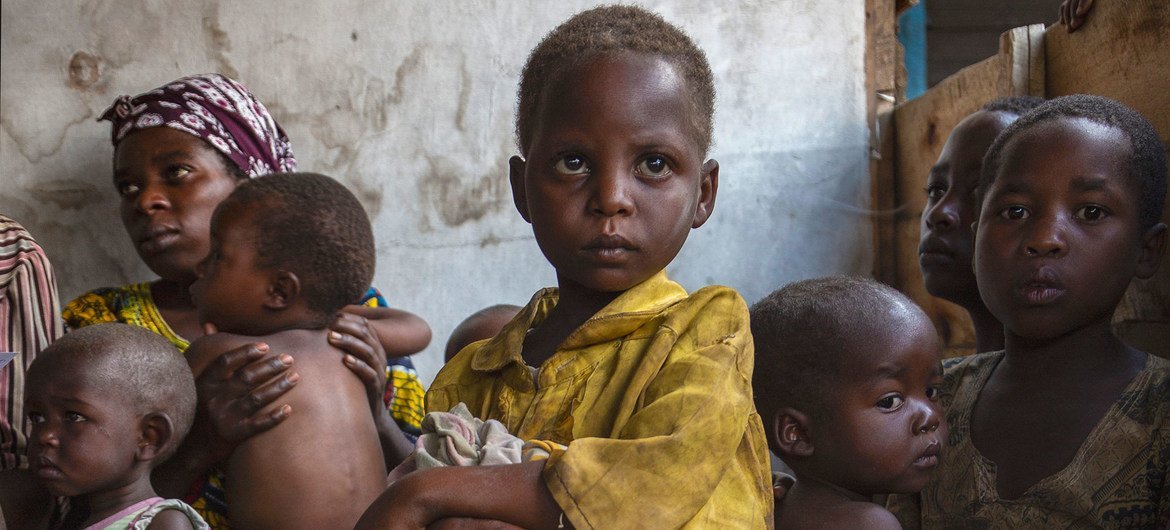
More than three million children have been displaced in eastern Democratic Republic of the Congo due to militia violence.
24 June 2021

The UN Children’s Fund, UNICEF, appealed on Thursday for urgent resources to support thousands of people who have fled armed violence in two small towns in the eastern part of the Democratic Republic of the Congo (DRC) over the past two months. 

The simultaneous attacks on Boga and Tchabi, located in Ituri Province, have been devastating for children, the agency said, as many have witnessed brutal acts committed by assailants wielding machetes and heavy weapons. 

A 12-year-old orphan called Grace is among them.   

A child’s plea 

Grace arrived unaccompanied at a camp in the provincial capital, Bunia, in early June after she was separated from her grandmother during the attack on her hometown, Boga. 

“I was watching television in our house in the middle of the night when the gunmen attacked at four in the morning,” she recalled.  “They were firing bullets everywhere and everyone took different paths to flee. As I fled, I saw a mother whose head had been cut off.”  

Grace managed to find a vehicle that was taking displaced people from Boga to Bunia, a journey of more than 100 km.  UNICEF and partners are trying to reunite her with her grandmother.   

Meanwhile, Grace is being cared for by a foster mother in a crowded shelter in one of two main camps in Bunia housing more than 20,000 displaced people. 

“I ask the world not to ignore the appalling violence that is going on here,” she said.  “We must do all we can to get rid of people who kill innocent civilians.” 

Entire families killed 

Similar attacks like the ones on Boga and Tchabi have uprooted whole communities, UNICEF said, with reports of entire families, including children, hacked to death.  Health centres and schools have been ransacked, and whole villages set on fire. 

Around 90 per cent of the population fled the Boga area in the wake of the twin assaults, with people seeking sanctuary north, south and east of the town. 

“It is estimated that about 30,000 people have fled their homes in the recent displacements, including more than 9,500 in Bunia,” said Dr. Ibrahim Cisse, UNICEF Bunia Chief Field Officer. 

Most of the displaced stay with friends and relatives in the host community, not in camps, and needs are great, particularly for food, essential household items and other non-food items. 

Support for displaced people

UNICEF is working with humanitarian partners to distribute thousands of household essentials, and sanitary and hygiene kits, in addition to providing tarpaulins to more than 4,000 households. 

Dr Cisse said it was unlikely that people will be able to return to their homes despite military operations to eliminate armed groups in the Boga area. 

UNICEF has urgently appealed for resources to support the displaced, mostly children and women, who have suffered serious rights violations, including rape. 

Top priorities include working to reunite children separated from their families, or recruited into armed groups, as well as providing access to healthcare, nutrition, drinking water, education and other basic necessities. 

In a report published earlier this year, UNICEF called for an end to the conflict in the eastern DRC, which has generated one of the worst humanitarian crises in the world. 

Some 1.6 million people were driven from their homes in the first six months of 2020 alone. 

Overall, 5.2 million Congolese are displaced, which is more than in any country, except Syria.

 
https://news.un.org/feed/view/en/story/2021/06/1094692
https://creativecommons.org/licenses/by/3.0/legalcode

четверг, 24 июня 2021 г.

Central African Republic entrenched in ‘unprecedented humanitarian crisis’


MINUSCA/Herve Cyriauqe Serefio
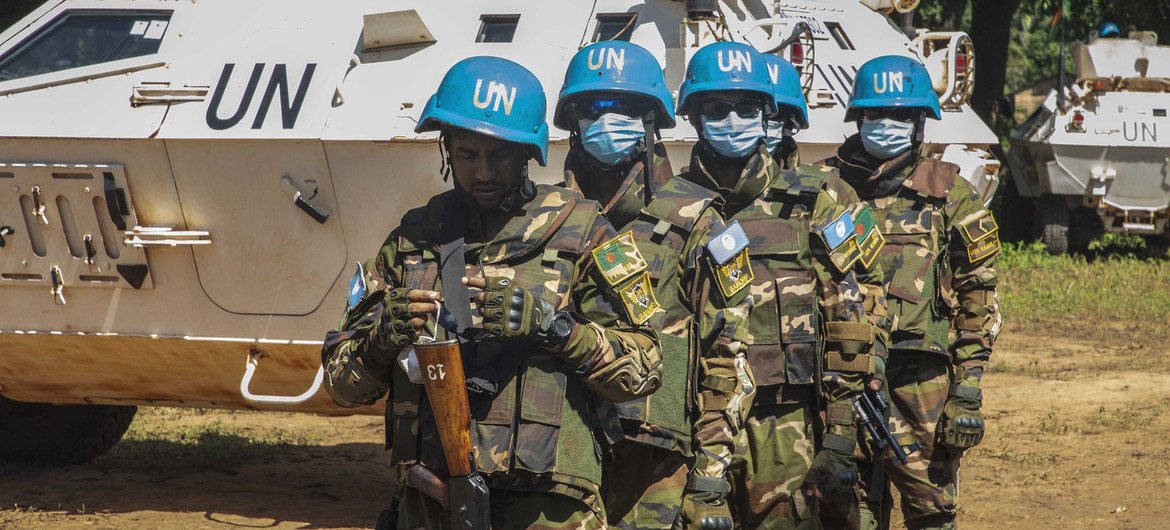
UN peacekeepers patrol Bakouma in the Central African Republic.
23 June 2021

Defense forces, soldiers from nearby countries and other security personnel have been fighting an “asymmetric war” against armed groups, sparking an “unprecedented humanitarian crisis”, the top UN official in the country told the Security Council on Wednesday.

Mankeur Ndiaye, CAR Special Representative and Head of the UN Multidimensional Integrated Stabilization Mission (MINUSCA) voiced his concern over a military counter-offensive against the Coalition of Patriots for Change (CPC) – an alliance of armed groups that launched attacks against forces loyal to the Government ahead of the presidential vote in December, which returned incumbent Faustin-Archange Touadéra to power on 4 January.    

“The result has been an unprecedented humanitarian crisis with new waves of displacement and 57 per cent of the population in need of humanitarian assistance”, he said, addressing ambassadors in French, inside the Council chamber. 

Widespread rights abuses 

The Special Representative underscored that recent widespread rights abuses committed by State forces embolden armed groups, exacerbate fears of radicalization and compromise any chance of establishing trust between citizens and their leaders. 

“This is a new trend that, if not careful, will ruin the meagre progress that has been hard won in the quest for social cohesion and national reconciliation”, he warned, adding that bilateral forces would be useful only if they contributed to protecting civilians from armed groups and creating an environment conducive to a lasting political solution. 

Mr. Ndiaye also reported that conflict-related sexual violence in the first quarter of this year is five times higher than that of the last quarter of 2020. 

Noting the development of a special investigative commission on abuses committed by CAR State forces and their partners, he said that MINUSCA intends to continue documenting rights violations to be reported publicly, to “preserve a framework for frank, transparent and constructive dialogue” with the authorities. 

‘Scourge’ of IEDs 

The looting and militarization of civilian infrastructure, such as schools and hospitals, hinder already inadequate access to basic services, and undermine the protection of civilians and humanitarian assistance, and peace and stability efforts, the MINUSCA chief said. 

He also drew the Council’s attention to the frequency of explosive devices being deployed, which have restricted peacekeepers’ movement, hindered economic activities and reduce the mobility of MINUSCA and humanitarian actors.  

“We have shared our concerns with the relevant national authorities and have encouraged the ratification of the relevant international conventions to have a mechanism for preventing and combating this scourge”, Mr. Ndiaye said.  

The Mission’s mission 

Pointing to the presence of international forces along with MINUSCA as diminishing the mission’s effectiveness, the UN official said that with the Council’s support, he would take “immediate measures” to create the optimal conditions to improve efficiency and enhance the performance of  UN ‘blue helmets’.  

He told Ambassadors that MINUSCA had received assurances that the President had instructed CAR military leaders to explore new ways of working with the mission.  

Meanwhile, citing incidents against peacekeepers on 30 May and 19 June, the MINUSCA chief underscored that the safety of UN troops and personnel remains “an imperative”.  

He also noted that hate speech and incitement to violence against MINUSCA and CAR partners have become “increasingly strident the past few months”. 

“Today more than ever, we need the Council's support”, he said, stressing that multifaceted threats endanger MINUSCA’s mandate and put peacekeepers and UN personnel at greater risk.  

Needed support  

Mr. Ndiaye thanked the Security Council, Angola, the African Union (AU) and other international partners for their support and appealed for financial assistance to fill an estimated $9 million gap for local elections, early in 2022. 

Noting that those elections should contribute significantly to decentralized governance, local development and the participation of many more citizens in political life, he said that President Touadéra and others in the political process have committed to complete the electoral cycle. 

“We must seize this new opportunity to harmonize regional initiatives and encourage the new Government to mobilize the support of all international partners for the success of the inclusive political dialogue”, concluded the Special Representative.


https://news.un.org/feed/view/en/story/2021/06/1094622
https://creativecommons.org/licenses/by/3.0/legalcode

Глава ООН призвал Совбез продлить механизм трансграничных поставок в Сирию


Фото Управления ООН по координации гуманитарных вопросов
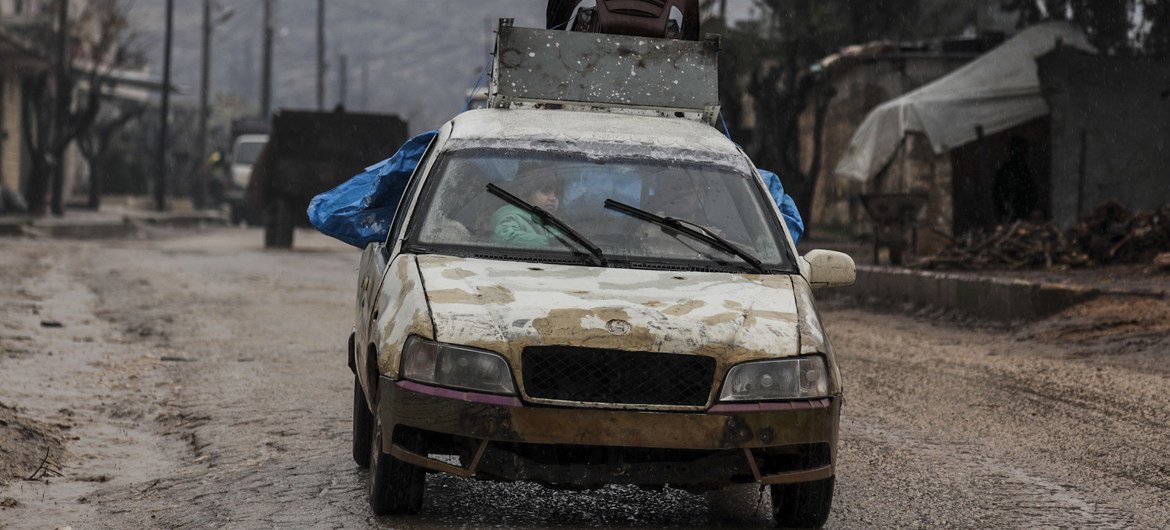
Дети возле лагеря для перемещенных лиц в Идлибе, Сирия
23 июня 2021

Генеральный секретарь ООН Антониу Гутерриш проинформировал членов Совета Безопасности ООН о тяжелой гуманитарной ситуации в Сирии и призвал продлить механизм трансграничных поставок в эту страну.

Глава ООН подчеркнул, что в Сирии сложилас крайне тяжелая гуманитарная ситуация – возможно хуже, чем когда-либо за весь период конфликта. В помощи нуждаются 13,4 миллиона человек. Более 12 миллионов сирийцев столкнулись с продовольственным дефицитом. ВПП страны с 2011 года упал на 60 процентов. В Сирии растет безработица, а также цены на продукты питания и топливо. Экономический кризис усугубляется засухой из-за дефицита воды в бассейне Евфрата.

Глава ООН предупредил, что падение уровня воды еще ниже чревато тем, что плотины Тишрин и Табка перестанут вырабатывать электроэнергию. При этом в Сирии с ее и без того хрупкой системой здравоохранения быстро распространяется пандемия.

Что касается договоренностей о перемирии, то в целом они соблюдаются, однако периодически поступают сообщения о нарушении этого режима. В начале этого месяца было совершено нападение на больницу Аль-Шифа.

ООН прилагает все необходимые усилия для спасения сирийского народа и оказания гуманитарной помощи. На сегодняшний день гуманитарная операция ООН в Сирии – крупнейшая в мире.

В своем последнем призыве ООН запросила у доноров 4,2 миллиарда долларов на проекты в Сирии и 5,8 миллиарда долларов - на поддержку беженцев в регионе. Глава ООН призвал доноров отозваться на эту просьбу. 

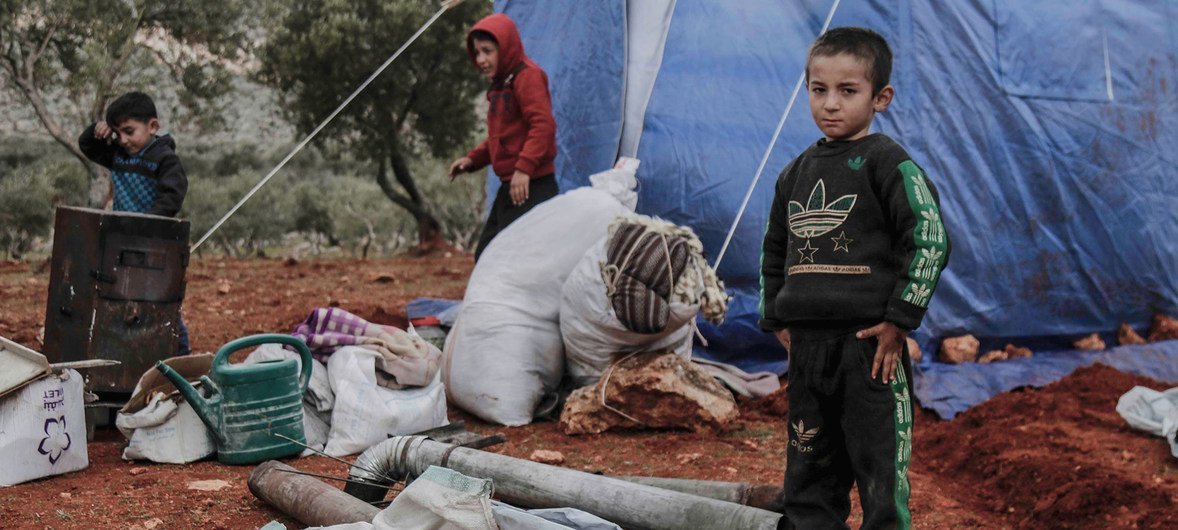
Январь 2021 года, лагерь для внутренних переселенцев в Сирии.

Говоря о крайне тяжелой ситуации на северо-западе страны, глава ООН отметил, что там в гуманитарной помощи нуждаются более 70 процентов населения. В их числе - 2,7 миллиона перемещенных лиц.

«ООН осуществляет крупномасштабную гуманитарную операцию в Сирии и во всем регионе. Однако нам необходим больший гуманитарный доступ с тем, чтобы оказывать помощь наиболее нуждающимся в ней людям. Вот почему я настаиваю на необходимости поддерживать и расширять гуманитарный доступ, включая трансграничную доставку помощи и ее доставку через линии размежевания», – заявил Генеральный секретарь.

Он сообщил о том, что ООН ведет диалог с Турцией и группами, контролирующими этот район [на северо-западе Сирии]. Гутерриш выразил надежду на то, что вскоре появится возможность начать операции через линию размежевания, однако, он полагает, что «такие операции никогда не смогут заменить трансграничную помощь».

«Мне самому это хорошо известно. В бытность Верховным комиссаром ООН по делам беженцев я организовал первые крупные автоколонны через линию фронта в Сирии, а сейчас я внимательно отслеживаю нынешние операции через линию размежевания в северо-восточном направлении. Даже несмотря на активизацию мирных усилий, ситуация там стала более сложной после закрытия в прошлом году трансграничных переходов», – отметил Генсек. 

Он подчеркнул, что в течение двенадцати месяцев ООН осуществляла трансграничные операции на северо-западе – более тысячи грузовиков ежемесячно пересекали один пункт пропуска. При этом каждый этап доставки тщательно контролировался на местах с тем, чтобы гарантировать, что эта помощь дойдет до места назначения. 

«Я настоятельно призываю членов Совета достичь консенсуса и разрешить продлить на год трансграничные операции – жизненно важный канал гуманитарной поддержки. Неспособность продлить разрешение Совета обернется разрушительными последствиями», – предупредил Генеральный секретарь ООН.

Он добавил, что сирийский народ испытывает острую нужду в помощи, и сегодня очень важно мобилизовать все возможности по всем каналам. 

«И не будем забывать, что решение сирийской трагедии может быть только политическим», – подчеркнул глава ООН.

Напомним, что в июле 2014 года Совет Безопасности принял резолюцию, которая предусматривала разрешение на поставки гуманитарных грузов в Сирию через четыре пограничных пункта: Баб-эс-Салям, Баб-Аль-Хава, Эль-Ярубия и Аль-Рамата, расположенных на границе с Иорданией, Ираком и Турцией.  С тех пор это разрешение неоднократно продлевалось. В резолюции от 10 января 2020 года Совбез дал разрешение на пропуск грузов через два из четырех пунктов: Баб-эс-Салям и Баб-Аль-Хава. 

В резолюции, принятой 11 июля 2020 года,  Совет Безопасности ООН ограничил количество действующих пропускных пунктов одним – КПП «Баб Аль-Хава» - на границе с Турцией.

https://creativecommons.org/licenses/by/3.0/legalcode